
Thea Price never imagined her career would face such turbulence during Trump’s second presidency.
Price joined 300 colleagues at the United States Institute of Peace in experiencing a roller coaster of termination, rehiring, and dismissal again as President Donald Trump pursued his goal of reducing federal government size through widespread job eliminations and agency restructuring.
Twelve months have passed, leaving many affected workers questioning if their suffering served any meaningful purpose.
“Nobody was prepared for the complete destruction,” said Price, a former program operations manager. “And for what?”
Elon Musk’s Department of Government Efficiency, known as DOGE, orchestrated sweeping federal agency eliminations under the banner of eliminating fraud, waste and abuse.
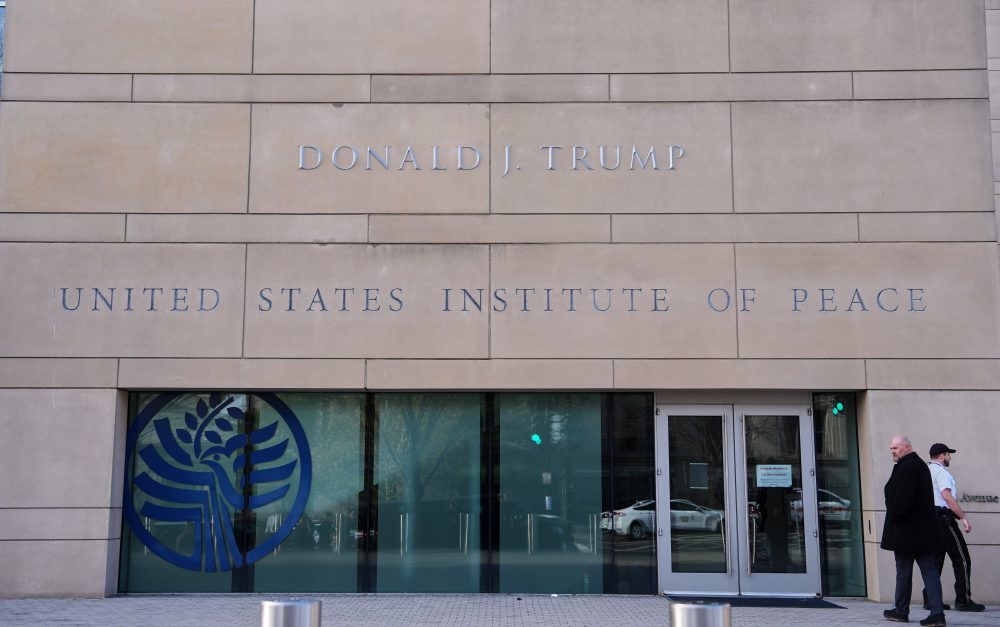
The United States Institute of Peace became emblematic of this disruption. DOGE personnel occupied the USIP facility in early 2025, triggering a conflict over institutional control that culminated with Trump adding his name to the Washington headquarters building.
Workers faced termination on March 28, 2025, in a decision that courts later overturned before reinstating again—creating ongoing uncertainty for former employees.
Twelve months later, DOGE’s human impact remains evident while actual financial benefits stay murky.
Musk established a $2 trillion reduction goal. DOGE’s website reports approximately $215 billion in savings through employment cuts, contract terminations, lease cancellations, asset disposals, and grant withdrawals.
Office of Management and Budget data shows over 260,000 federal employees departed in 2025 due to Trump administration policies, including forced reductions, early retirement programs, delayed resignations and recruitment freezes.
“President Trump was given a clear mandate to eliminate waste, fraud and abuse from the federal government,” said White House spokesperson Davis Ingle when asked how much was saved. “In just a year, he has made significant progress in making the federal government more efficient to better serve the American taxpayer.”
Research organizations studying DOGE operations, alongside the Government Accountability Office—Congress’s financial watchdog—cannot determine precise savings or losses from these reform initiatives. Many dispute the Republican administration’s calculations.
Dominik Lett, a budget analyst at the Cato Institute, a libertarian think tank, said there were basic mistakes on the DOGE pages tracking savings, leading him to believe the numbers were too high. He said Cato and other organizations have shied away from trying to arrive at a number because of the complexity of the moves.
“Who is getting fired matters. How they’re getting fired, will there be lawsuits?” was among the questions Lett has. Even terminating leases and contracts wasn’t as simple as it sounds.
In the end, he said, “we don’t know how much DOGE has saved.”
Brookings Institution senior fellow Elaine Kamarck discovered through media analysis and public records that roughly 25,000 terminated individuals returned to work after being classified as essential personnel.
“What DOGE did is it cut so big and so deep and so randomly that when the Cabinet secretaries came in, and Elon Musk was gone, they realized that they had to bring some of these people back,” Kamarck said.
Based on this pattern, Kamarck projects savings between $100 billion and $200 billion, though final totals remain highly speculative.
GAO research revealed Education Department civil rights division layoffs potentially cost $38 million through continued employee payments following termination.
DOGE’s actions face extensive legal challenges. Over a dozen lawsuits target the Trump administration regarding DOGE activities, contesting grant cancellations, mass terminations, buyout programs, Treasury data access, payment system changes, and major federally-funded program closures.
During a December interview with conservative influencer Katie Miller, Musk described his DOGE leadership as only “somewhat successful” and stated he wouldn’t repeat the experience.
Congress established USIP during Reagan’s presidency to advance peace initiatives and conflict prevention. When operations ceased, the institute maintained programs across more than 20 conflict regions, including Pakistan and Afghanistan.
Staff witnessed DOGE’s dismantling of the U.S. Agency for International Development before DOGE personnel repeatedly visited USIP and eventually assumed control of headquarters. Most board members and the acting president faced dismissal.
Termination notifications arrived in employees’ personal email accounts on March 28, 2025 evening. Within two hours, over 300 staff members lost their positions.
USIP leadership and workers filed suit, claiming independence from executive branch authority. A federal judge determined Trump exceeded his powers, restoring institutional control and reinstating employees with back pay—though few returned as operations slowly resumed.
An appeals court suspended that ruling in June, resulting in staff terminations for the second time.
The case remains on hold pending a Supreme Court decision on related personnel matters that could expand presidential authority over traditionally independent federal agencies.
Although DOGE’s original structure has faded from public attention, its influence persists within government sectors. Former high-level DOGE officials now hold permanent federal agency positions, including Treasury Department roles.
Former USIP employees have endured a turbulent year.
Some secured new employment, but many struggle in a job market saturated with qualified candidates. Regular gatherings allow former colleagues to share job search updates and discuss pending court cases they hope might restore their previous workplace.
Price returned from maternity leave one day before her termination. Following her second dismissal, she and her husband—who lost his museum contractor position due to funding cuts—relied on savings and applied for Supplemental Nutrition Assistance Program benefits, which took months to approve.
Government shutdown delays in SNAP payments forced her to use food pantries. After submitting dozens of applications, her family relocated from the capital region to Seattle.
She currently works for a nonprofit focused on affordable housing. While the work holds meaning, she misses her former institute, its mission and her team.
Liz Callihan, former USIP communications staff member, has submitted 140 job applications since her termination. She frequently questions why her former organization—with its humanitarian mission and modest $50 million annual budget—became a DOGE target.
“I absolutely ask myself every day what all this was for,” she said.