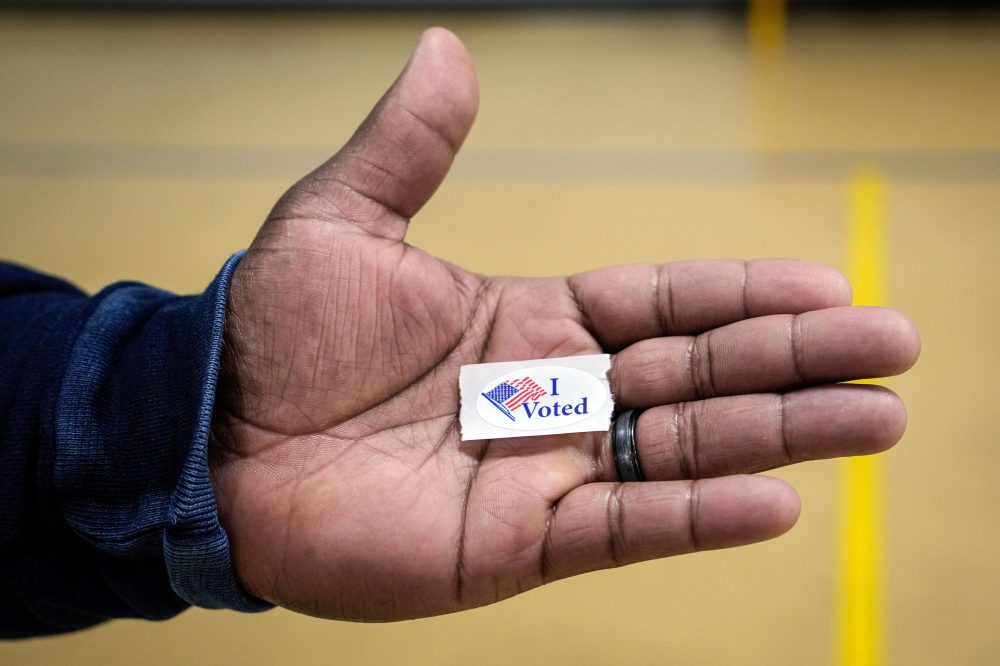

RALEIGH, N.C. — A federal judge has ruled that North Carolina may continue enforcing its photo identification requirement for voters, dismissing claims from civil rights organizations that the law was designed to discriminate against Black and Hispanic voters.
U.S. District Judge Loretta Biggs delivered the Thursday ruling, handing Republican state legislators a major courtroom win for the measure they implemented in late 2018, just weeks following voter approval of a constitutional amendment supporting the concept.
In a statement following Biggs’ ruling, North Carolina Senate leader Phil Berger declared that “we can put to rest any doubt that our state’s Voter I.D. law is constitutional.”
The judge oversaw a bench trial during spring 2024 regarding a challenge brought by the state NAACP, which contended the identification mandate violated both the U.S. Constitution and federal Voting Rights Act. During proceedings, the NAACP claimed Republican legislators implemented the voter ID measure to solidify their political control by deterring traditionally Democratic-leaning voters from participating in elections.
However, attorneys representing the state and defending Republican lawmakers countered that Republicans would not have enacted such a permissive identification law if their goal was political entrenchment. They maintained the statute is racially neutral and permits significantly more qualifying identification types compared to a 2013 voter ID measure that courts previously invalidated.
Defense attorneys also contended the General Assembly had valid state purposes in enhancing public confidence in elections and deterring voter fraud, though experts note that nationwide voter impersonation fraud occurs infrequently.
State NAACP President Deborah Dicks Maxwell described the court’s latest decision as “deeply disappointing and ignores the real and documented barriers” that identification requirements create for certain voting groups. The organization has not yet determined whether to file an appeal.
Despite ongoing federal court battles, the 2018 identification law has been operational since 2023 municipal elections, following a separate state Supreme Court ruling that upheld the measure. Recent elections under the law include the March 3 primary, with nearly all results certified this Wednesday.
In her extensive 134-page ruling, Judge Biggs, an Obama administration appointee, acknowledged that trial evidence indicated the burden of obtaining identification disproportionately affects Black and Hispanic voters. Consequently, a disproportionate number of racial minority voters will be among thousands lacking required identification on Election Day, and “for many their vote will not count when the election is certified.”
Biggs noted that the state’s documented history of racial discrimination and voter suppression supports finding discriminatory intent behind the law. However, she explained that subsequent court decisions since the lawsuit’s filing, including rulings from a federal appeals panel, require “this Court to assign less weight to the historical background” and provide “almost impenetrable deference to the presumption” that legislators acted in good faith.
The judge had initially blocked the 2018 law’s implementation through a 2019 preliminary injunction, arguing it was compromised because the earlier 2013 voter ID statute was invalidated on similar racial bias grounds.
The 4th U.S. Circuit Court of Appeals subsequently overturned her injunction, determining she had given excessive weight to the General Assembly’s previous actions when assessing the 2018 legislation.
Based on the “preliminary injunction record, the limited evidence presented at trial, and the arguments of counsel,” Biggs wrote Thursday that the court “concludes that it is compelled by controlling case law” to rule in favor of the state and legislative leadership.
North Carolina’s voter identification statute provides free identification cards through the Division of Motor Vehicles and county election offices across the state. Voters without photo identification at polling locations can still have their ballots counted by completing an exception form or presenting their identification to election officials before final vote tallies.
In the parallel state court challenge, the 2018 measure was initially struck down. However, after the state Supreme Court shifted from Democratic to Republican control, the justices agreed to reconsider the issue and ultimately upheld the photo identification requirement.
According to the National Conference of State Legislatures, 36 states currently have laws requesting or mandating identification at polling places, with 23 of those specifically requiring photo identification.