
Legal experts are demanding investigations into suspicious trading activity that generated potentially millions in profits just before President Donald Trump announced major policy decisions during his second term.
A comprehensive analysis by Reuters identified at least four instances where investors appeared to have advance knowledge of significant government announcements affecting markets. These trades spanned various platforms including options markets, commodity futures, and prediction betting sites.
The timing and scale of these investments have prompted calls for regulatory scrutiny to determine whether confidential government information was illegally leaked, according to legal specialists including a former Commodity Futures Trading Commission enforcement chief and three academic researchers focused on insider trading.
“It looks deeply suspicious,” stated Andrew Verstein, a UCLA School of Law insider trading specialist. He noted that while the cases are few in number, they display characteristics “you would expect to see if there were informed trading by government officials and their friends.”
Former CFTC enforcement director and ex-federal prosecutor Aitan Goelman indicated such trading activity would typically trigger regulatory attention, though he noted that insider trading regulations for commodity markets remain complicated and largely untested.
According to Goelman, exchanges, the CFTC, and Department of Justice would normally consider these trades “anomalous and interesting.”
White House spokesman Kush Desai responded that federal ethics rules prohibit government workers from using nonpublic information for financial gain. “Any implication that Administration officials are engaged in such activity without evidence is baseless and irresponsible,” Desai stated via email.
A CFTC representative confirmed the agency maintains ongoing communication with exchanges regarding “trades that raise red flags” and performs independent monitoring, but would not confirm whether an investigation had been launched into these specific wagers.
The Securities and Exchange Commission refused to provide comment, and the Justice Department failed to respond to inquiries.
However, some traders might have simply been fortunate or detected early warning signs that other market participants overlooked, particularly as Wall Street increasingly employs former military and national security experts. Some transactions could have been protective measures against other portfolio positions, a standard practice in macro-focused commodity investments.
INCONSISTENT ENFORCEMENT HISTORY
Using material nonpublic information for trading purposes is generally illegal when individuals have obligations not to do so, such as through employment contracts or confidentiality agreements. However, enforcement varies significantly across different asset types and trading platforms.
Although insider trading has been prohibited in commodities and derivatives markets for more than ten years, legal experts note there is minimal precedent for prosecuting such cases in these venues. Regulation of prediction markets, where some bets occurred, remains uncertain.
Senior SEC officials have indicated their intention to prioritize traditional securities market fraud, including insider trading, yet numerous attorneys, investors, and industry watchers believe regulators have adopted a more lenient enforcement approach during Trump’s second presidency.
Interactive Brokers chief strategist Steve Sosnick explained that the questionable trades involved multiple regulatory bodies including the SEC, CFTC, and prediction markets with unclear legal foundations. “If this was a single actor or a set of cooperating actors, it would require a high level of coordination between a diverse and dedicated group of regulators to get to the root of the issue,” Sosnick observed. “We have seen no evidence that this is occurring.”
Sosnick added that the recent departure of the SEC’s enforcement director amid reported frustrations made it “hard to imagine this becoming a high priority among regulators.”
PRECISELY TIMED INVESTMENTS
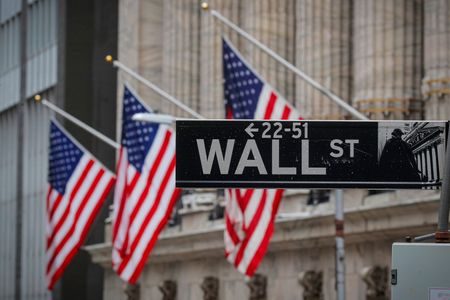
The Reuters investigation discovered four notable cases where trades were remarkable for their timing. In April 2025, options investors earned millions through last-minute wagers placed moments before Trump declared a suspension of his comprehensive “Liberation Day” tariffs, triggering a 9.5% surge in the S&P 500.
In January, an unidentified Polymarket participant collected over $400,000 after wagering on Venezuelan President Nicolas Maduro’s removal that month. The anonymous profile was established the prior month and placed more than $30,000 in bets that would profit if the U.S. invaded Venezuela by January 31.
Wagers made on prediction platforms like Polymarket and Kalshi before the February 28 assassination of Iranian Supreme Leader Ayatollah Ali Khamenei generated renewed insider trading and ethical questions. Analytics company Bubblemaps discovered six accounts that earned a combined $1.2 million from Polymarket bets funded in the hours directly preceding the U.S.-Israeli strikes that eliminated Khamenei.
This week, unknown traders placed a $500 million oil wager minutes before Trump caused crude prices to plummet by announcing he was postponing an attack on Iranian energy infrastructure. These bets were executed on the New York Mercantile Exchange, operated by CME Group.
A CME representative declined to discuss the oil futures transactions or confirm whether the exchange was examining the trades.
Earlier in March, both Kalshi and Polymarket implemented new policies to address potential insider trading on their prediction market services. A Kalshi representative said the company will continue to “enforce as necessary and iterate on our existing technologies and partnerships,” noting that wagers comparable to the March 23 oil futures transactions would have been detected if placed on Kalshi’s platform.
During an interview, Polymarket chief legal officer Neal Kumar explained that Polymarket observes and tracks all transactions on its U.S. platform continuously, and maintains controls capable of quickly addressing suspicious trading behavior.
Several experts suggested the enormous size and all-or-nothing nature of some wagers indicated individuals may have possessed advance information. Monday’s $500 million oil market transaction, for instance, demonstrates extreme confidence and substantial financial resources, according to some specialists.
“When you’re dealing with bets on unique events and things like that, those do raise a lot more suspicion that somebody has some specific inside information,” explained David Rosenfeld, former co-head of enforcement at the SEC’s New York division.