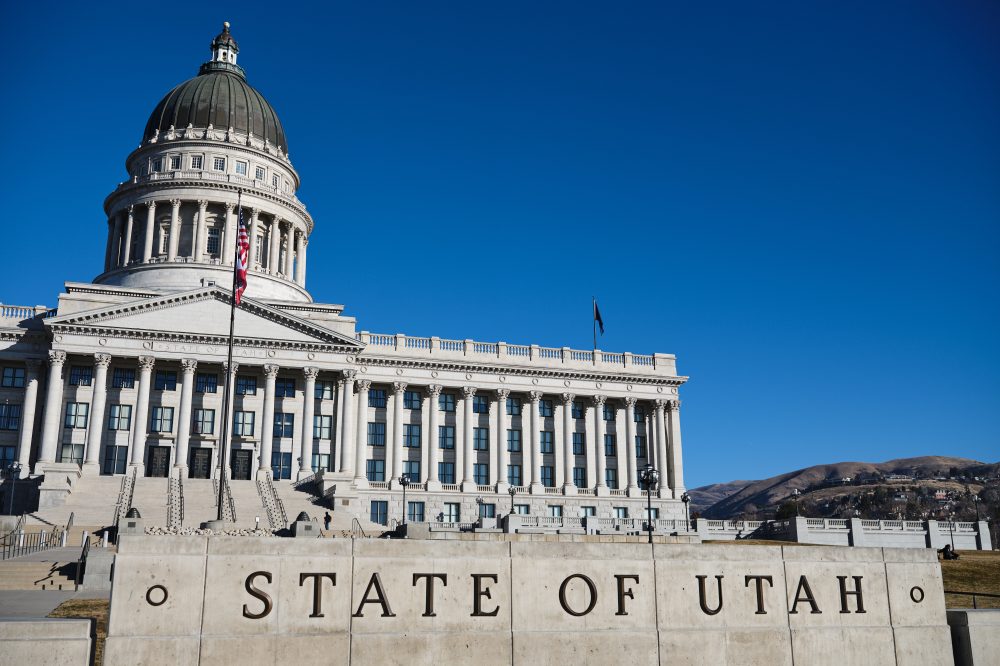

SALT LAKE CITY — A Republican-backed campaign to eliminate Utah’s redistricting protections has come up short of the signature requirements needed to appear on this November’s ballot, leaving in place congressional boundaries that could help Democrats capture a House seat in the Salt Lake City region.
The initiative, which received backing from former President Donald Trump, sought to overturn redistricting reforms that Utah voters approved in 2018. Those reforms created an independent commission for drawing district lines and prohibited maps designed to give unfair advantages to either political party.
A state court determined that Republican legislators violated these principles following the 2020 census when they created boundaries that split Salt Lake City’s Democratic-leaning voters across all four congressional districts. Judge Dianna Gibson implemented replacement maps that provide Democrats with a strong chance to gain a seat as they work to regain control of the House.
Had the repeal succeeded, it would have enabled Republicans to implement more advantageous congressional districts before the 2028 elections. However, their expensive petition drive failed to meet ballot requirements after anti-gerrymandering supporters successfully convinced thousands of signers to withdraw their names, according to election data made public Thursday.
Better Boundaries, the organization that spearheaded the signature withdrawal campaign, praised Thursday’s results.
“A majority of Utah voters approved Prop 4 in 2018, and we look forward to the day when Utah voters can finally pick their politicians, not the other way around,” said Executive Director Elizabeth Rasmussen.
Utah Republican Party Chair Rob Axson indicated that efforts to eliminate the law are “not over, but just beginning.”
“We have significant concerns about the practices utilized by the opposition and continue to review the signature validation and removal process,” he said in a statement.
The unexpected Democratic gains in heavily Republican Utah reflect the ongoing nationwide redistricting battles between the parties.
Following Trump’s call for Texas Republicans to redraw House districts in their favor last year, Democrats responded with new congressional maps in California, sparking redistricting conflicts across multiple states.
Republican-controlled legislatures in Missouri, North Carolina and Ohio have all approved new congressional boundaries they hope will help secure additional seats in midterm races. Virginia voters will determine on April 21 whether to authorize mid-decade redistricting that could benefit Democratic House candidates. Florida Governor Ron DeSantis has scheduled a special legislative session on congressional redistricting for mid-April.
Legislative bodies in various other states, including Democratic-controlled Maryland and Republican-led Indiana and Kansas, have also explored congressional redistricting options without enacting new maps.