
WASHINGTON — Early Friday morning, before sunrise, Senate negotiators believed they had successfully crafted a solution to fund the Department of Homeland Security and prevent what could become the agency’s longest partial shutdown ever.
Senators delivered their agreement to House Speaker Mike Johnson, R-La., and departed for their home districts, expecting the deal would move forward smoothly.
Instead, the arrangement fell apart in dramatic fashion.
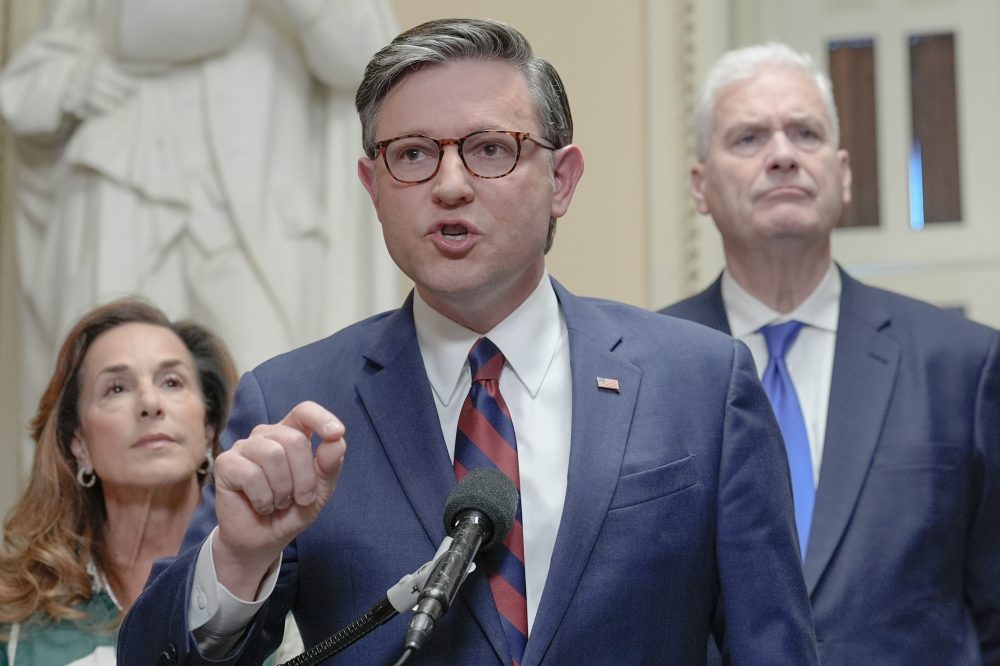
An angry Johnson emerged from his office Friday afternoon, furiously dismissing the Senate’s unanimous agreement as nothing more than a “joke.”
“I have to protect the House, and I have to protect the American people,” Johnson declared to members of the press.
Johnson’s harsh rejection of the agreement negotiated by his Republican colleague, Senate Majority Leader John Thune of South Dakota, marked another sudden twist in the ongoing funding battle that has plagued GOP leadership throughout the year.
With Congress now departing for a two-week spring recess, the failed negotiations leave lawmakers without a clear solution to end the DHS shutdown that began in mid-February. The breakdown has also created an unusual public rift between the top Republican leaders in both chambers, straining their working relationship as they attempt to advance President Donald Trump’s agenda ahead of November’s elections.
The path forward appears increasingly challenging.
Thune had reached his agreement with Democratic senators following weeks of negotiations over their demands for new limitations on the department’s immigration enforcement activities. Multiple proposals were exchanged during the lengthy talks, which proceeded in fits and starts with repeated failed votes.
Running out of both time and options, senators ultimately agreed to a compromise that would exclude funding for U.S. Immigration and Customs Enforcement and U.S. Border Patrol while dropping all Democratic requests for new agency restrictions.
Thune noted that Congress had previously allocated immigration enforcement funding and explained to reporters that “we can get at least a lot of the government opened up again and then we’ll go from there.”
When asked whether he had coordinated the compromise with Johnson, Thune indicated they had exchanged text messages.
“I don’t know what the House will do,” the senator acknowledged early Friday as the agreement took shape.
However, House Republicans reacted with immediate fury upon learning of the Senate deal.
Rep. Nick LaLota, R-N.Y., reported that during a GOP conference call that morning to discuss their response, several dozen members from across the ideological spectrum voiced opposition to the Senate’s actions.
“The Senate chickened out,” he declared. “The cowards there, only a few of them in the middle of the night with I think only three to five senators present on the floor, chickened out because they wanted to go home for two weeks. We need to raise the bar.”
This sharp division threatens to complicate Republican leaders’ efforts to advance their legislative priorities while maintaining control of both congressional chambers. Trump has identified legislation requiring strict citizenship verification for voting as his primary goal, though the Senate’s 60-vote requirement for advancing bills makes passage unlikely.
Some Republicans have suggested pursuing a budget reconciliation package that might implement portions of voter identification requirements. GOP lawmakers are also considering how to handle an anticipated White House request for war funding against Iran that could exceed $200 billion, among other priorities.
The funding deal’s failure has provided Democrats with another opportunity to blame House Republicans for the ongoing partial shutdown.
“They know this is a continuation of the shutdown because the Senate is gone,” stated Massachusetts Rep. Katherine Clark, the second-ranking Democratic leader. “So they know fully well what they’re doing.”
The Senate’s next steps remain uncertain, with a quick return to negotiations appearing unlikely. The talks concluded on a bitter note, with both parties accusing the other of changing their demands throughout the process.
Senate Democratic leader Chuck Schumer of New York expressed pride in his caucus for “holding the line.” However, Republican Sen. Susan Collins of Maine, who chairs the Senate Appropriations Committee, characterized Democrats as “intransigent and unreasonable.”
Thune expressed his belief that Democrats never genuinely wanted an agreement and would refuse to support ICE funding under any conditions.
“I felt like from the beginning, they just didn’t want to get to ‘yes,’” Thune commented following the vote.
This situation convinced senators that their compromise represented the only viable path to resolve their differences and reopen DHS.
Meanwhile, House Republicans Friday evening appeared to celebrate their defiance of the Senate’s wishes. GOP members argued they operate from a perspective more aligned with their constituents’ preferences.
Rep. Virginia Foxx, R-N.C., characterized the Senate’s proposal as “nothing more than unconditional surrender masquerading as a solution.” She insisted the House “will not bend itself into submission by acquiescing.”
Those hoping for a resolution to the shutdown expressed frustration with the situation.
“This takes two chambers to get the job done,” observed Pennsylvania Rep. Brian Fitzpatrick, a moderate Republican. “Apparently, there’s not enough communication between those chambers.”