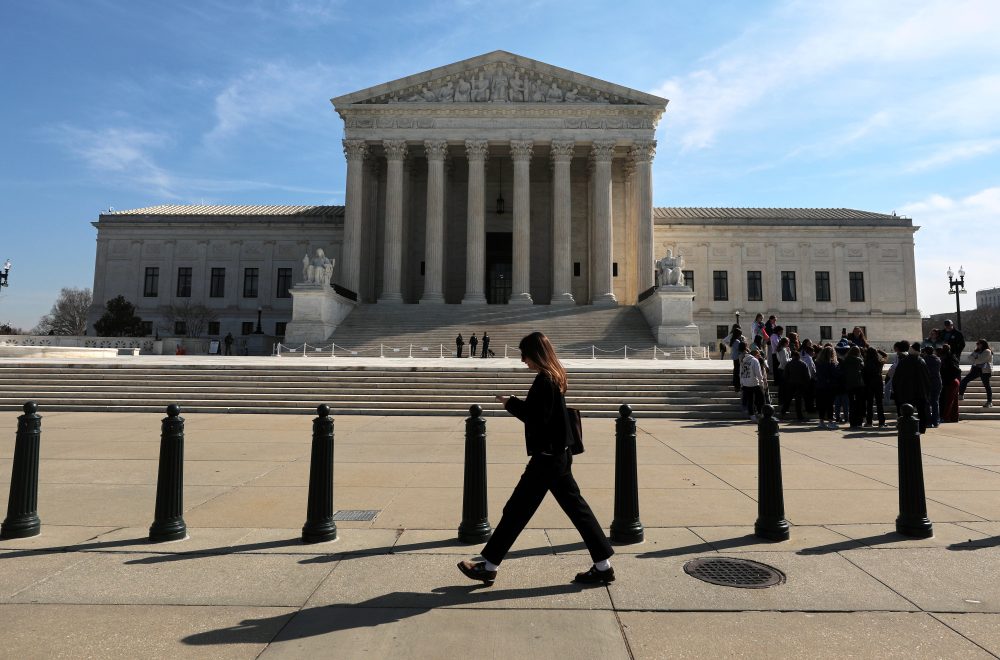

WASHINGTON — The U.S. Supreme Court will encounter recognizable figures Tuesday when justices hear arguments in another Mississippi death penalty case centered on allegations of racial discrimination during jury selection.
The case involves Terry Pitchford, a Black man on death row, and features Doug Evans, the former prosecutor who has a documented pattern of excluding Black jurors from capital cases. During Pitchford’s trial, Evans eliminated all but one African American from the jury panel.
Presiding Judge Joseph Loper permitted these jury dismissals to proceed. The Mississippi Supreme Court later affirmed the conviction.
This scenario mirrors events from seven years earlier involving identical participants — the same prosecutor, judge, and state supreme court. In that instance, the U.S. Supreme Court reversed Curtis Flowers’ death sentence and conviction after Justice Brett Kavanaugh characterized Evans’ conduct as a “relentless, determined effort to rid the jury of Black individuals.”
Seven current justices participated in the Flowers decision.
While the Supreme Court has generally been skeptical of death row appeals in recent years, particularly last-minute execution challenges, the justices agreed in December to review Pitchford’s case focusing on racial discrimination claims that have previously resonated with some conservative members.
Pitchford received a death sentence for his involvement in the 2004 murder of Reuben Britt, who owned Crossroads Grocery near Grenada in northern Mississippi. Pitchford was 18 when he and an accomplice attempted to rob the store. The accomplice fired three fatal shots at Britt but avoided the death penalty due to being under 18. Pitchford, now 40, was convicted of capital murder and sentenced to death.
After two decades of legal proceedings, U.S. District Judge Michael P. Mills reversed Pitchford’s conviction in 2023, determining that the trial judge failed to provide adequate opportunity for defense attorneys to challenge the prosecution’s improper dismissal of Black jurors.
Mills indicated his decision was influenced partly by Evans’ conduct in previous cases. However, a unanimous three-judge panel from the 5th U.S. Circuit Court of Appeals overturned Mills’ ruling.
During jury selection, attorneys may dismiss potential jurors based on concerns they might vote unfavorably for their client.
The Supreme Court addressed discrimination in jury composition through its 1986 Batson v. Kentucky decision, prohibiting the exclusion of jurors based on race and establishing procedures for trial judges to assess discrimination claims and prosecutors’ race-neutral justifications.
In Pitchford’s situation, prosecutors dismissed four of five remaining Black individuals from the jury pool, prompting defense objections. Judge Loper accepted all four explanations without analyzing whether racial bias motivated the decisions, according to Mills’ findings.
The current Supreme Court case centers on whether Pitchford’s attorneys adequately objected to Loper’s decisions and whether the state Supreme Court reasonably concluded they had not.
Joseph Perkovich, representing Pitchford in Tuesday’s arguments, maintains the case record clearly supports his client. Loper “did not grasp he had to a constitutional duty to determine whether the reasons the district attorney gave for striking the Black citizens were credible and truthful,” Perkovich stated via email. “The judge simply failed even to try to discharge that critical duty, despite the defense’s efforts.”
In state filings, Mississippi Attorney General Lynn Fitch defended the state Supreme Court’s decision and argued Evans did not improperly exclude Black jurors.
Pitchford’s attorneys contend he should be freed or retried if the Supreme Court rules in his favor. Mississippi argues the case should return to the state Supreme Court for review of discrimination claims regarding jury selection.
Flowers endured six trials for the shooting deaths of four individuals. He was released in 2019, and prosecutors dropped charges the following year after Evans transferred the case to state officials. Evans retired in 2023.
Mills noted that while the Flowers case alone doesn’t establish a pattern, the Mississippi Supreme Court should have considered this history when reviewing Pitchford’s appeal.
“The court merely believes that it should have been included in a ‘totality of the circumstances’ analysis of the issue,” Mills concluded.