
MINNEAPOLIS — A federal judge in Minnesota has made permanent her directive that immigration officials must provide detained immigrants with immediate access to legal representation following their arrest and prior to any out-of-state transfers.
U.S. District Judge Nancy Brasel issued the preliminary injunction Thursday, mandating that Immigration and Customs Enforcement guarantee detainees at a Minneapolis holding center can quickly contact attorneys and speak with them confidentially throughout their legal proceedings.
“Due process is not a game of keep-away,” Brasel stated in her ruling. “ICE recognizes detainees’ right to access counsel in theory and written policy, but not in practice. Instead, it has placed obstacle after obstacle in front of detainees and their attorneys, blocking communication between clients and counsel.”
The decision builds upon a temporary restraining order Brasel implemented on February 12, when she determined the federal agency appeared unprepared to safeguard constitutional protections for individuals detained during the Trump administration’s immigration enforcement initiative called Operation Metro Surge.
“The Constitution does not permit the government to arrest thousands of individuals and then disregard their constitutional rights because it would be too challenging to honor those rights,” the judge previously wrote in February.
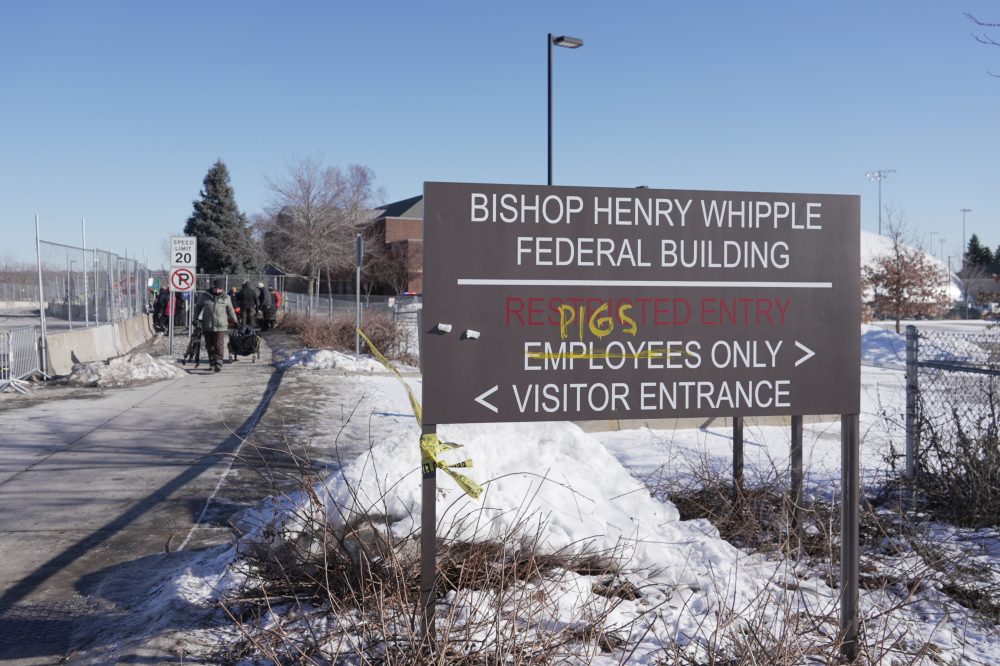
Thursday’s ruling reinforces Brasel’s original mandate requiring officials to guarantee every non-citizen detained at the Bishop Henry Whipple Federal Building receives the chance to reach an attorney within 60 minutes of detention.
The order continues the 72-hour restriction on interstate transfers, providing sufficient time for detainees to secure legal counsel and for attorneys to potentially prevent relocations.
The Advocates for Human Rights initiated the legal challenge in January, asserting that detained immigrants possess a basic right to legal representation. The organization praised Thursday’s decision, which remains effective during ongoing legal proceedings.
“The ability to speak freely and privately to an attorney is crucial to due process and essential to protecting people from unjust rulings, coercive detention, and life-threatening deportation,” stated Michele Garnett McKenzie, the public interest law firm’s executive director.
Department of Homeland Security and ICE representatives did not immediately provide responses to requests for comment regarding the court decision.
During last week’s court hearing, plaintiff attorney Jeffrey Dubner informed the judge that government adherence to her temporary order had been “fitful at best.”
Brasel issued her initial directive on the same date border czar Tom Homan officially ended Operation Metro Surge. Government representatives report that new detentions have decreased since then, with ICE personnel in Minnesota dropping from approximately 3,000 officers to their previous levels of just over 100. Officials indicate the Whipple facility sometimes holds no detainees currently.
Government lawyer Christina Parascandola argued to the judge that ICE had been following her directive and that extending it through a preliminary injunction was unwarranted. She claimed conditions at Whipple had “returned to a more manageable pace” as the surge operation concluded.
However, local immigration lawyers testified they frequently could not contact clients at Whipple, even during in-person visits, or obtain information about whether clients remained there or had been moved to larger Texas facilities.
Attorney Hanne Sandison testified that during her court-ordered visit to assess facility conditions, she could not operate the phones properly. In the single location where phones functioned, she noted that ICE personnel would have overheard all conversations.