
The nation’s highest court will examine on Monday how far a federal law extends in allowing American businesses to pursue compensation for assets confiscated by Cuba’s government, with cases involving ExxonMobil and major cruise companies taking center stage during heightened tensions with the island nation.
Two separate cases will come before the justices involving the Helms-Burton Act of 1996, legislation that opened the door for legal action in American courts against entities that “traffic” in assets taken by Cuba’s communist leadership following the 1959 revolution that installed Fidel Castro.
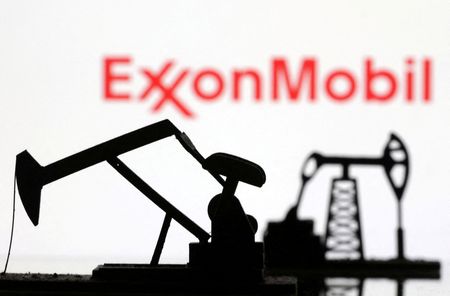
ExxonMobil is pursuing more than $1 billion from Cuban government-controlled companies for the oil giant’s energy holdings that were confiscated by Cuban authorities in 1960.
The second case centers on whether four major cruise companies — Carnival, Royal Caribbean, Norwegian Cruise Line and MSC Cruises — bear responsibility for utilizing port facilities constructed by an American firm that Cuba also seized in 1960. The cruise industry case will be presented to the court first.
The Trump administration is supporting ExxonMobil’s position in the legal battle.
Current U.S. policy has labeled Cuba “an unusual and extraordinary threat” to American national security, blocking Venezuelan oil shipments to the Caribbean nation and warning of potential tariffs on any country providing fuel supplies.
Though the cases address different legal questions, both examine how extensive Congress meant the Helms-Burton Act’s remedies to be. The Supreme Court could remove obstacles that plaintiffs encounter when filing suits under this legislation.
Castro’s seizure of ExxonMobil’s entire Cuban energy portfolio represented a $70 million loss when it occurred. The company’s present-day claim carries a much higher value due to accumulated interest and possible enhanced damages.
In 2019, ExxonMobil filed suit against Corporación CIMEX, Cuba’s biggest business conglomerate. The energy company alleged that CIMEX continues to possess and generate profits from the seized assets.
ExxonMobil brought the case to the Supreme Court following a lower court decision that Cuban government-owned entities facing Helms-Burton Act litigation can claim foreign sovereign immunity, a legal protection that shields foreign governments and their representatives from American lawsuits unless specific exceptions exist.
The cruise ship dispute was initiated by Havana Docks, an American entity that held a 99-year agreement for building and managing dock facilities at Havana’s port, originally granted in 1934 by Cuba’s then-government. Castro’s administration canceled that contract.
The four cruise companies targeted by Havana Docks operated at the terminal between 2016 and 2019, following former President Barack Obama’s relaxation of travel restrictions to the Caribbean island.
A federal judge determined that the cruise operators had illegally participated in trafficking by utilizing the terminal, ordering judgments exceeding $100 million against them. Havana Docks filed an appeal after a lower court dismissed those judgments, determining the company lacked a valid claim since its agreement would have ended in 2004, years before the cruise lines operated there.
When Congress enacted the Helms-Burton Act, lawmakers gave the president authority to suspend its court lawsuit provision based on national security considerations. Three presidents subsequently suspended this provision to prevent diplomatic disputes with allies including Canada and Spain, whose businesses had invested in Cuba. Trump removed that suspension in 2019 during his initial presidency.