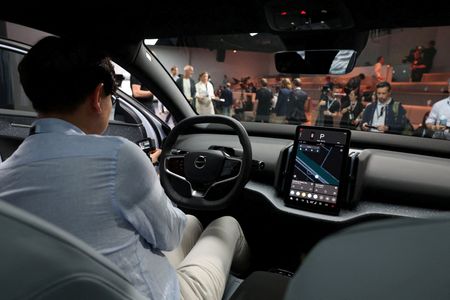

Swedish automaker Volvo announced Monday it will recall more than 40,000 of its EX30 electric SUVs worldwide due to dangerous battery defects that could cause fires.
The recall affects 40,323 vehicles – specifically the EX30 Single-Motor Extended Range and Twin-Motor Performance models – whose high-voltage battery systems pose an overheating risk. The Swedish company, which is owned by Chinese manufacturer Geely, confirmed the recall details to Reuters.
“We are now contacting the owners of all affected cars to advise them of next steps,” Volvo stated.
This safety issue strikes at the core of Volvo’s brand identity, which has long been built around vehicle safety. The recall involves the company’s compact electric SUV that plays a key role in Volvo’s strategy to compete against lower-priced Chinese electric vehicle manufacturers.
Since December, Volvo has instructed EX30 owners across more than a dozen nations – including the United States, Australia, and Brazil – to park their vehicles away from structures and restrict battery charging to 70% capacity to prevent fire risks, according to regulatory documents and company statements.
The automaker will provide replacement battery modules at no cost to owners while maintaining the charging restrictions until repairs are completed. The defective batteries were manufactured by Shandong Geely Sunwoda Power Battery Co., a joint venture backed by Volvo’s parent company Geely. Volvo says the supplier has resolved the manufacturing problem and will provide the replacement battery components.
Industry expert Sam Fiorani from AutoForecast Solutions emphasized the stakes for Volvo: “The EX30 especially is very important to Volvo, so they have to get it right.”
Former Nissan executive Andy Palmer, who led the development of the pioneering Leaf electric vehicle, noted that Volvo faces unique pressure due to its safety-focused reputation. “Volvo can’t afford a safety issue because that strikes at the heart of their brand,” Palmer explained.
The recall comes as Volvo pursues cost-cutting measures worth $1.9 billion and works toward closer integration with its Chinese parent company. Battery safety remains a critical concern for both electric vehicle manufacturers and consumers, as defects can result in massive financial losses.
General Motors faced similar challenges in 2020 when battery problems forced the recall of 140,000 Chevrolet Bolt vehicles, with repair costs reaching $2 billion. Those batteries were supplied by South Korean company LG Electronics.
According to Reuters analysis, the replacement batteries alone could cost Volvo approximately $195 million, not including shipping and installation expenses. The company called these estimates “speculative in nature” and said it continues negotiating with the battery supplier.
Some EX30 owners have expressed frustration with the situation. British insurance agent Matthew Owen, who selected the EX30 for its driving range and Volvo’s safety record, believes the company should accept full responsibility for “producing a car that is dangerous.”
New Zealand owner Tony Lu reported increased costs due to the charging limitations reducing his vehicle’s range. “I would be absolutely delighted if they bought the car back,” Lu said.