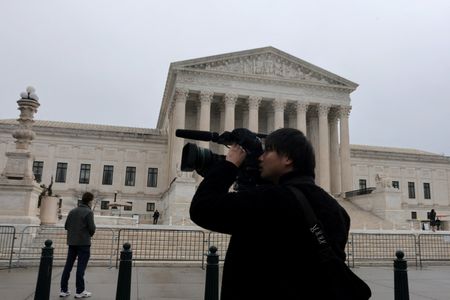

President Donald Trump announced plans to implement a 15% temporary tariff on imports from all nations, up from the current 10%, after the Supreme Court invalidated a significant portion of his previous trade measures. The administration is basing these new import duties on Section 122, a different legal provision that has not been previously tested.
Trade Representative Jamieson Greer indicated that nations with existing trade agreements with the United States have not indicated they plan to abandon those deals despite the high court’s decision.
The announcement has sparked responses from trading partners worldwide.
China’s commerce ministry released a statement Monday saying the country is conducting a “full assessment” of the Supreme Court’s tariff decision while calling on Washington to remove “relevant unilateral tariff measures” imposed on trading partners.
“U.S. unilateral tariffs … violate international trade rules and U.S. domestic law, and are not in the interests of any party,” the Chinese ministry stated. “China will continue to pay close attention to this and firmly safeguard its interests.”
The European Commission called on the United States to honor the conditions of a trade agreement between the EU and U.S. that was established last year.
“The current situation is not conducive to delivering ‘fair, balanced, and mutually beneficial’ transatlantic trade and investment, as agreed to by both sides” in the joint statement outlining last year’s trade deal, the Commission stated. “A deal is a deal.”
European Central Bank President Christine Lagarde expressed concerns Sunday that changes in U.S. trade policy could create business disruptions again, hoping any new tariff strategies are “sufficiently thought through” so businesses understand what to anticipate.
“To sort of shake it up again is going to bring about disruptions,” Lagarde commented on CBS’ “Face the Nation.”
She added that people “want to do business. They don’t want to go into…lawsuits. So I hope it’s going to be clarified, and it’s going to be sufficiently thought through so that we don’t have, again, more challenges, and the proposals will be in compliance with the (U.S.) Constitution.”
Helene Budliger Artieda, who leads Switzerland’s State Secretariat for Economic Affairs, told Swiss publication SonntagsBlick that Switzerland should prepare for U.S. tariffs to become a permanent fixture.
“I suspect we will have to come to terms with U.S. tariffs. It is clear that the U.S. administration remains committed to its trade policy goals: reducing the U.S. trade deficit, achieving greater reciprocity in international trade, and bringing production back to the United States.”