A major Finnish elevator manufacturer is reportedly pursuing a massive acquisition deal worth nearly $29 billion, according to a Bloomberg News report released Monday.
Kone Oyj has entered negotiations to purchase competitor TK Elevator, which had been making preparations for a public stock offering, sources familiar with the discussions told Bloomberg.
The potential transaction carries a price tag of up to 25 billion euros, equivalent to $28.74 billion when including debt obligations, according to the report.
Bloomberg’s sources indicate that Kone hopes to finalize an agreement within the next few weeks. Meanwhile, TK Elevator’s ownership group continues advancing their public listing preparations while simultaneously engaging in sale discussions.
The elevator company’s current owners, private equity firms Advent International and Cinven, had been developing plans for an initial public offering. However, recent instability in stock markets has made a direct sale appear more attractive, the Bloomberg report noted.
When Reuters reached out for comment, representatives from Cinven, Advent, Kone, and TK Elevator all declined to provide statements.
Last year, Reuters reported that TK Elevator’s ownership was considering the United States as a potential location for their IPO. Industry sources at that time suggested the company would likely receive a valuation exceeding 20 billion euros.
READING, Mass. — When St. Patrick’s Day approached, residents of a Massachusetts neighborhood got an unexpected surprise: a genuine Irish pub materialized overnight in someone’s driveway, complete with flowing Guinness and live music.
The mobile tavern, called “The Wee Irish Pub,” represents the creative vision of brothers Matt and Craig Taylor, who operate Tiny Pubs — a unique enterprise that delivers authentic Irish drinking establishments on wheels to celebrations throughout New England.
These portable pubs feature genuine antique signage, salvaged church pews for seating, electric fireplaces, and bars constructed from the front section of an 1864 piano, all designed to capture the authentic atmosphere of traditional Irish taverns while fitting perfectly into residential driveways.
“It’s really just a time to forget about whatever’s going on in the world,” explained Mark Cote, who welcomed the pub to his Andover driveway for a recent Friday celebration. “That’s what pubs are supposed to be — for people coming together and having fun.”
Cote’s annual holiday gathering brought together approximately 20 guests from five neighboring families whose children had grown up as friends, all cramming into the roughly 20-foot-long mobile venue that successfully recreated the feeling of an authentic neighborhood tavern.
The concept originated during COVID-19 restrictions, when the Taylor brothers — both retired from corporate finance careers — found themselves longing for their beloved Irish pub experiences.
Their initial prototype was constructed in Matt Taylor’s Reading driveway, located 12 miles north of Boston.
“When we were building the pub in this neighborhood, neighbors thought a pub was going to be living here full time,” he recalled. “We had to kind of settle them down a little bit.”
The brothers worked frantically until approximately 1 a.m. before their inaugural rental. Matt admitted to concerns about potential window damage during highway transport, but the maiden voyage proceeded without incident.
What started as a pandemic hobby has evolved into a successful enterprise featuring four different bars, including two Irish-themed establishments, with bookings filling most weekends year-round.
The brothers prioritized authenticity over novelty in their designs, aiming for genuine pub atmosphere rather than stereotypical party decorations.
“We have Irish friends who told us, ‘You better not have leprechauns and stuff in there,’” Craig Taylor explained. “So we said, ‘No — it’s going to be authentic.’”
Their research included visits to numerous Irish establishments across New England during the design phase, ultimately selecting traditional color schemes featuring jasper green and Irish cream.
Every interior element carries significance, from the piano-panel bar to church pews rescued from a local congregation for guest seating.
Horseshoes from an Ipswich farm hang above the entrance for good fortune: pointing downward as guests arrive and upward when they depart.
A hymn rack displays a book containing Irish family names where visitors can mark their heritage, often leaving dollar bills on relevant pages, which frequently sparks discussions about ancestral connections.
Imported Scampi Fries — a genuine Irish pub snack — are available, alongside a bulletin board displaying patches from police and fire departments, reflecting the tradition of first responder gathering places common in authentic pubs.
Craig Taylor noted that guest reactions serve as validation of their authenticity efforts, particularly when visitors begin recognizing familiar elements — the Scampi Fries, family surnames, or beloved songs — transforming the experience from novelty to personal connection.
Guinness has contracted the Taylor brothers’ establishments for extended periods. Political figures, including a state senator, have utilized them during South Boston’s St. Patrick’s Day parade. The venues have even served memorial celebrations following funeral services.
Jarred Guthrie of Swampscott has become a repeat customer, renting the original pub annually for his family’s established St. Patrick’s Day tradition.
Guthrie’s celebration attracts approximately 125 attendees, featuring an Irish band performing inside the house while guests circulate between indoor rooms, the mobile pub, and the waterfront yard overlooking the ocean.
Visitors crowd inside to take bartending turns, share stories, and spontaneously burst into song — often traditional Irish melodies or Gaelic verses that Guthrie says rarely surface outside family gatherings.
“People feel emboldened,” he observed. “There’s a lot of singing that happens in that pub. It’s a place where people naturally come together.”
Prior to each event, the brothers customize the space with personalized posters frequently incorporating family crests that designate the host as the pub’s temporary “proprietor.”
“It’s a special thing for a lot of people to be able to come into an authentic Irish pub,” Matt Taylor reflected. “Maybe they’re not able to get back to the old country, so it’s meaningful to them.”
Celebrations continue regardless of weather conditions — rain, heat, or snow. Each establishment includes both heating and air conditioning systems for year-round comfort.
The Taylors ensure everything is perfectly prepared — dimmed lighting, background music, functioning taps — before permitting guests to enter their miniature establishment.
Craig Taylor described first-time visitor reactions: “it’s like Christmas morning.”
He explained that initial moment often feels like transportation to another place, connected to memories of family heritage, tradition, and Ireland itself.
“People say you’re like Santa Claus,” Craig Taylor noted. “You’re delivering joy every day.”
When celebrations wind down, the brothers avoid rushing removal of their establishment.
“We never want to kick anybody out of an Irish pub,” Matt Taylor emphasized.
Rather than late-night pickup, they return the following morning.
Craig Taylor revealed that when he inquires about party duration, hosts typically provide identical responses: “Like, three in the morning.”
When the brothers arrive for morning retrieval, “there’s sometimes people sleeping on the pew,” he joked.
Federal officials announced Monday that electric car manufacturer Tesla has partnered with South Korean battery maker LG Energy Solution to construct a massive $4.3 billion lithium iron phosphate battery production plant in Lansing, Michigan, with operations expected to commence in 2027.
According to the U.S. Department of the Interior, “American-made cells will power Tesla’s Megapack 3 energy storage systems produced in Houston, creating a robust domestic battery supply chain.”
The partnership announcement came as part of President Donald Trump’s administration’s Indo-Pacific Energy Security Summit, where multiple energy deals were showcased.
Reuters previously reported in July that LG Energy Solution had entered into the multi-billion dollar agreement with Tesla to provide energy storage batteries, as the electric vehicle company seeks to decrease its dependence on Chinese battery imports amid ongoing trade tariffs.
When the deal was initially revealed, the South Korean battery manufacturer confirmed a $4.3 billion three-year global contract for LFP batteries but declined to name the customer or specify whether the batteries would be used in electric vehicles or energy storage applications.
LG Energy Solution represents one of the limited number of lithium iron phosphate battery manufacturers operating in the United States. Chinese companies have historically controlled the LFP battery market but maintain minimal operations within American borders.
JPMorgan Chase has successfully recruited a senior Goldman Sachs executive to bolster its Asian operations, according to an internal company memo reviewed by Reuters on Tuesday.
Yi Zhang will assume the role of co-head of China investment banking this summer, working in partnership with Michelle Wang, who will continue in her existing co-leadership position, the memo revealed.
A JPMorgan representative verified the memo’s contents and noted that the financial institution has brought on more than twelve investment banking professionals over the past year.
This recruitment drive reflects the heightened competition for skilled professionals as initial public offering activity surges in Hong Kong and merger and acquisition deals flourish across Japan and Australia.
Zhang brings extensive expertise to his new position, having most recently managed China industrials coverage at Goldman Sachs with 22 years of investment banking experience under his belt, the internal communication stated.
Goldman Sachs chose not to provide comment on Zhang’s departure, and Zhang himself has not responded to outreach attempts through LinkedIn.
The personnel changes also include a promotion for David Lau, JPMorgan’s existing China investment banking co-head, who will transition to a broader position as vice chair of investment banking for the Asia Pacific region, according to the memo.
In his expanded capacity, Lau will manage relationships with several major Hong Kong-based clients, strengthen connections with Hong Kong regulatory authorities, and maintain oversight of the bank’s Asia Pacific healthcare division, the document outlined.
JPMorgan’s recruitment efforts extend beyond Zhang’s appointment. In December, the bank secured Yu Chikami, another former Goldman professional, to serve as Japan co-head of investment banking.
Additional notable 2025 hires include Jane Wu as head of China healthcare investment banking and Dragi Ristevski, recruited from Macquarie to serve as co-head of general industrials and head of financial sponsors for Australia and New Zealand.
The competitive hiring landscape extends across Wall Street, with institutions including Morgan Stanley and Citi also expanding their teams to handle the growing volume of financial transactions.
Reuters previously reported in August 2025 that JPMorgan had added more than 300 banking professionals between January and April across its worldwide banking division.
BEIJING – Chinese technology conglomerate Alibaba Group introduced a new artificial intelligence system for business customers on Tuesday, escalating rivalry in the nation’s booming AI agent marketplace amid widespread enthusiasm for automated technology solutions.
The enterprise-focused system, named Wukong, enables multiple AI agents to work together on sophisticated business operations such as document creation, data spreadsheet management, meeting notes, and research activities through one unified interface. The platform is currently being offered through an invitation-only testing phase.
This announcement followed Alibaba’s Monday reveal of its corporate restructuring under the newly formed Alibaba Token Hub (ATH) division, demonstrating the company’s comprehensive commitment to business-oriented AI agents. Wukong represents the primary offering from the Wukong Business Unit within ATH.
Business customers can utilize Wukong either as an independent desktop software or via DingTalk, Alibaba’s workplace collaboration service that currently supports over 20 million business users.
According to company statements, the system will integrate with additional communication platforms such as Slack, Microsoft Teams, and WeChat.
This development occurs as OpenClaw, an open-source AI agent application, has captivated China over recent weeks, sparking widespread interest among users wanting to test agent-based products.
The phenomenon has encouraged technology companies to enter the market despite government warnings about potential security concerns. Major firms including ByteDance, Tencent, and AI company Zhipu have similarly introduced comparable products.
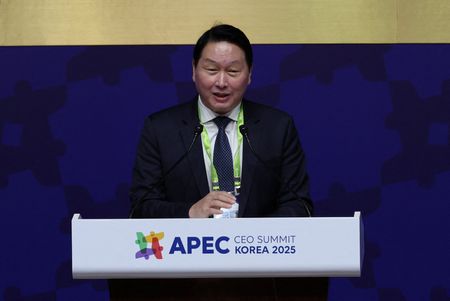
The chairman of South Korea’s SK Group delivered a sobering forecast Monday, predicting that the global semiconductor wafer shortage will extend through the end of this decade as artificial intelligence technology continues driving demand far beyond available supply.
Chey Tae-won made the announcement while speaking with media representatives at Nvidia’s GTC Conference in San Jose, California. He also revealed that SK Hynix is considering launching American Depositary Receipts to attract more international investors, while company leadership prepares to announce strategies for stabilizing memory chip costs.
SK Hynix serves as Nvidia’s primary supplier of high-bandwidth memory chips, commanding 57% of that specialized market and holding 32% of the worldwide DRAM memory market as the industry’s second-largest competitor, according to Counterpoint research.
“AI actually wants to have a lot of HBM, and once you make the HBM…we have to use a lot of wafers,” Chey explained when discussing the wafer supply constraints.
“So we need some time to build up more wafers, at least four to five years. The current shortage could continue until 2030, so we expect more than a 20% shortage of the wafers,” he stated.
The executive indicated that SK Hynix plans to develop approaches for bringing stability to DRAM pricing fluctuations.
“So I cannot just announce right here, but I guess that our CEO is going to announce a new plan for how to stabilise the price of the DRAM,” Chey commented.
Regarding questions about increasing semiconductor production capacity within the United States, where most of SK Hynix’s client companies operate, Chey emphasized that building international manufacturing facilities demands sufficient electrical power, water access, suitable construction environments, and skilled engineering personnel. He noted these requirements cannot be easily fulfilled on short notice, explaining that the company remains concentrated on Korean production operations.
Concerning the potential American stock listing, Chey suggested this approach could help SK Hynix diversify its ownership beyond Korean borders, providing greater access to U.S. and global investment markets while enhancing the company’s international profile.
Chey additionally mentioned that Middle Eastern conflicts have generated significant challenges through elevated energy costs, prompting the corporate group to investigate alternative power supply options.
SK Hynix stock prices climbed 2.7% during Tuesday morning trading in Seoul, outperforming the benchmark KOSPI index’s 2.4% increase.
International currency trading remained unstable Tuesday as financial markets continued to react to the ongoing conflict involving Iran, with rising oil prices creating ripple effects across global economies.
During Asian trading sessions, the euro declined 0.12% to $1.1492, while the British pound fell 0.1% to $1.33, reversing gains from Monday’s trading. The dollar index showed minimal movement at 99.913.
Market confidence took another hit when several American allies declined President Donald Trump’s appeal to deploy naval vessels for protecting oil tanker routes through the Strait of Hormuz, raising additional concerns about when energy supply chains might stabilize.
Rising crude oil costs stemming from the U.S. and Israel’s military actions against Iran have heightened investor concerns about inflation, leading to significant adjustments in interest rate expectations worldwide. These developments have strengthened the U.S. dollar relative to most other currencies.
Financial attention has turned to Australia’s Reserve Bank meeting scheduled for later in the Asia-Pacific trading day, with market analysts calculating approximately a 78% probability of a quarter-point rate increase.
The Australian dollar traded at $0.706, dropping 0.16%, while New Zealand’s currency fell 0.24% to $0.5848.
“The policy response to the crisis will begin to crystallise in the coming days” with market pricing shifting to reflect either imminent hikes or at least less easing than what was expected prior to the crisis, said Kyle Rodda, a senior analyst at capital.com.
Rodda noted that policy uncertainty has increased, predicting disagreement among central bank officials regarding whether monetary policy should respond to supply disruptions or maintain current course.
Australia’s central bank meeting launches a week of monetary policy gatherings that investors will monitor closely to understand how policymakers view the war’s effects on both inflation and economic growth.
Japan’s yen declined to 159.35 against the dollar, approaching the critical 160 threshold despite verbal intervention warnings from Japanese officials Tuesday. Market experts believe intervention thresholds may be higher due to elevated oil prices.
The yen has lost over 2% against the dollar since hostilities began in late February.
“While the sharp rise in the oil price is helping drive a bid for USDs, the yen is coming under pressure simply because high oil prices and Japan’s heavy reliance on energy imports risks stoking inflation and a significant deterioration in its trade balance,” said Prashant Newnaha, senior rates strategist at TD Securities.
“At some point authorities will need to determine whether to protect the yen or the bond market. They can’t have both.”
Asian financial markets showed positive momentum during Tuesday’s early trading session, marking a second consecutive day of upward movement as investors prepare for a busy week of central bank announcements while monitoring escalating Middle East tensions.
Financial markets remain nervous as they attempt to assess the economic consequences of President Donald Trump’s conflict with Iran and potential policy responses from global monetary authorities.
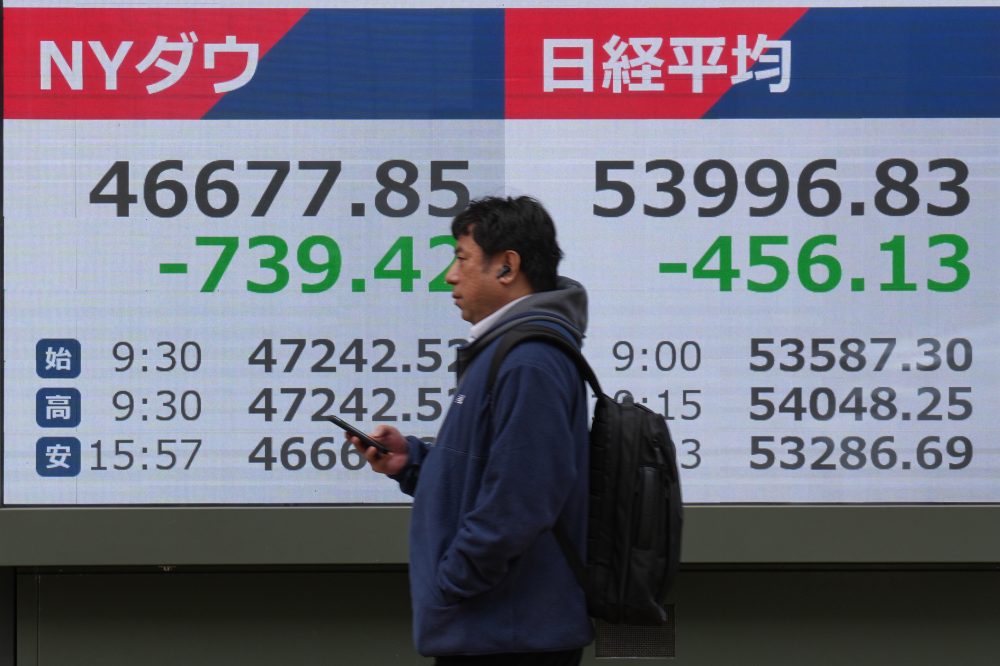
The MSCI Asia-Pacific stock index excluding Japan advanced 0.9%, with South Korea’s Kospi leading gains at 2.4% higher. Japan’s Nikkei 225 increased 0.3%, though S&P 500 futures declined 0.3%.
Monday’s Wall Street session saw the S&P 500 climb 1.0%, ending a four-day decline thanks to artificial intelligence stock gains, although the index remains 3% lower than pre-conflict levels.
“The rally still has the feel of a positioning squeeze rather than the start of a new directional trend,” commented Chris Weston, head of research at Pepperstone Group Ltd in Melbourne. “I remain reluctant to buy dips at this stage.”
Oil prices surged with Brent crude jumping 2.7% to $102.89 per barrel following several U.S. allies’ rejection of Trump’s Monday request to deploy naval vessels for tanker escorts through the Strait of Hormuz, a critical passage handling one-fifth of global energy shipments.
The Reserve Bank of Australia will reveal its latest interest rate decision at 0330 GMT Tuesday, with economist surveys anticipating the central bank will implement its second rate increase this year to 4.1%.
Australia’s central bank leads a parade of major monetary institutions meeting this week, including the Federal Reserve, European Central Bank, Bank of England and Bank of Japan, all evaluating the worldwide economic ramifications of the Iran war, though policy changes are not anticipated.
The Bank for International Settlements advised policymakers Monday against hasty responses to Iran crisis-related global energy price increases, describing it as a classic example of when to “look through” a supply disruption.
Federal funds futures indicate a 99.1% likelihood that the U.S. central bank will maintain current rates following its two-day meeting concluding Wednesday, based on CME Group’s FedWatch tool.
“The Federal Open Market Committee is likely to defer action until it becomes clear whether the output or price effects are dominant,” stated Steve Englander, global head of G10 FX research at Standard Chartered in New York.
“We would be surprised if the FOMC indicated a strong direction on the impact of the war, as it has no way of knowing how long the war will last or whether the biggest response will be on activity or inflation.”
The 10-year U.S. Treasury bond yield increased 1.8 basis points to 4.236%.
The dollar index, tracking the currency against six major counterparts, edged 0.1% higher to 99.963 after breaking a four-day winning streak Monday.
Japan’s yen declined 0.2% to 159.415 against the dollar, approaching the significant 160 threshold despite Tuesday warnings from Japanese officials.
Market analysts anticipate higher intervention thresholds due to rising oil costs. Bank of Japan Governor Kazuo Ueda noted Tuesday that core inflation was steadily moving toward the central bank’s 2% objective.
Gold remained relatively stable, gaining 0.1% to $5,011.53. Bitcoin jumped 2.0% to $75,705.24, while ethereum rose 0.7% to $2,362.25.
The artificial intelligence company behind ChatGPT is preparing a significant strategic overhaul that will concentrate efforts on coding and business customers, according to a Wall Street Journal report published Monday.
The company’s leadership team is working to finalize plans for this major directional change, the newspaper reported. Fidji Simo, who serves as OpenAI’s applications chief, discussed the upcoming modifications with staff during a company-wide meeting.
During that presentation to employees, Simo indicated that key leaders, including CEO Sam Altman and chief research officer Mark Chen, are actively evaluating which business areas should receive less priority moving forward, the Journal reported.
According to the newspaper’s sources, company staff members should expect to receive official notification about these strategic changes within the next few weeks.
When contacted for verification, OpenAI had not provided a response to requests for comment about the reported strategy shift.
The leader of South Korea’s SK Group delivered a sobering forecast Monday, predicting the worldwide semiconductor wafer shortage will continue for the remainder of this decade as artificial intelligence applications drive demand far beyond manufacturing capacity.
Chairman Chey Tae-won shared his outlook with media representatives during Nvidia’s GTC Conference in San Jose, California, where he indicated the supply crunch will likely extend through 2030.
During the same discussion, Chey revealed that SK Hynix is considering launching American Depositary Receipts on U.S. exchanges as part of efforts to expand its international investor reach. The company’s chief executive is also expected to announce strategies for stabilizing memory chip pricing while the conglomerate investigates renewable energy options.
Mining company Rio Tinto announced Monday it has secured control of Arizona property necessary for developing the Resolution Copper mine, concluding a lengthy legal battle that has stretched over two decades with Native American opposition.
The development signals the likely conclusion of an intricate court dispute that placed the spiritual rights of San Carlos Apache communities against increasing copper demand for clean energy initiatives and federal goals to reduce dependence on international mineral sources.
The Anglo-Australian mining corporation transferred 5,400 acres of Arizona territory to the U.S. Forest Service, receiving access to 2,400 acres containing over 40 billion pounds of copper reserves. This metal serves as an essential component for electric car manufacturing, electrical wiring, and various electronic products.
The property exchange proceeded after federal appeals courts rejected blocking attempts last week, and the Supreme Court declined to intervene with emergency action.
Rio Tinto plans to begin a $500 million exploration drilling program to assess the mineral deposit, which represents a required phase before determining potential copper production timelines.
San Carlos Apache representatives and their legal counsel were unavailable for immediate response. The tribal nation has maintained that federal authorities lacked legitimate rights to the exchanged territory, even filing a property claim in 2021.
“This responsible mining project fulfills President Trump’s vision of American mineral independence,” stated U.S. Agriculture Secretary Brooke Rollins on Monday. The Forest Service operates under Agriculture Department oversight.
Apache communities and supporting groups have battled for years against the congressional land arrangement from 2014, citing concerns that mining operations will eventually destroy Oak Flat, known as Chi’chil Biłdagoteel in Apache language, where tribal members conduct religious ceremonies.
Various judicial bodies, including the nation’s highest court, have consistently dismissed attempts to halt the Resolution project.
Former President Trump expressed public backing for the initiative last August, writing on his Truth Social platform that project opponents “are Anti-American, and representing other copper competitive Countries.”
Rio Tinto and partner company BHP Group have invested over $2 billion in the venture without generating copper output.
“As demand for copper continues to grow, projects like Resolution can play an important role in strengthening domestic supply chains,” commented Katie Jackson, who leads Rio’s copper operations.
BHP, holding a 45% stake compared to Rio’s 55% ownership, described Resolution as positioned “to be an engine for economic growth in the U.S., creating thousands of high-value, local jobs and billions in economic activity nationwide.”
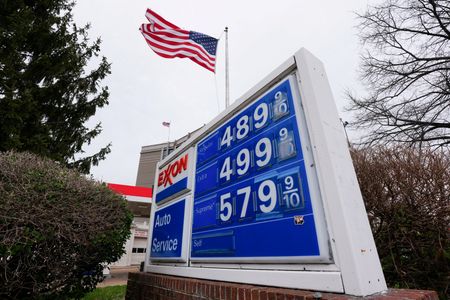
Diesel fuel prices across the United States have climbed to $5 per gallon, marking just the second occurrence of this milestone as ongoing conflict in the Middle East creates supply shortages for the critical industrial fuel, data from GasBuddy revealed Monday.
Economic experts are raising concerns that escalating diesel costs could hamper global economic growth, given the fuel’s essential role in manufacturing and transportation sectors. As expenses for producing and shipping goods increase, these costs typically get transferred to consumers. The rising fuel costs may also create significant political challenges for President Donald Trump and the Republican Party heading into November’s midterm elections.
Monday’s milestone represents only the second instance diesel has exceeded the $5 threshold, according to GasBuddy tracking data. The previous occurrence happened in December 2022, when international oil markets were still experiencing volatility following Russia’s military action in Ukraine.
The ongoing U.S.-Israeli conflict with Iran, now entering its third week, has created major disruptions in worldwide diesel distribution networks. This region serves as a crucial source for both the fuel itself and the specific crude oil varieties best suited for diesel production.
Iran’s extensive blockade of the Strait of Hormuz is affecting approximately 10% to 20% of worldwide maritime diesel shipments. Additionally, reduced Middle Eastern crude oil deliveries to Asian refineries have forced many facilities to decrease output, further limiting global diesel supplies.
Various actions taken by Trump and international leaders, including an unprecedented release from strategic oil reserves by developed nations, have failed to significantly reduce climbing fuel costs.
Regular gasoline prices nationwide reached $3.76 per gallon as of 6:10 p.m. EDT, representing the highest levels since October 2023, GasBuddy information indicated.
“Until we see a meaningful resumption of oil flows through the Strait of Hormuz, upward pressure on fuel prices is likely to persist,” stated Patrick De Haan, head of petroleum analysis at GasBuddy, in Monday’s blog post.
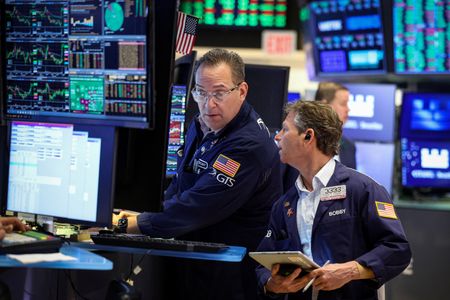
Wall Street finished Monday with impressive gains driven by technology stocks, as crude oil prices declined amid optimism that Middle Eastern supply disruptions could be resolved in the near future.
The market rally occurred alongside a weakening dollar and dropping bond yields, with investors betting that supply shortages from the Middle East conflict might be temporary rather than long-lasting.
This week marks a historically significant period for monetary policy, as the world’s four major central banks convene for meetings – the first time this has happened since 2021. Market analysts are questioning whether the global interest rate adjustments following the outbreak of Middle Eastern conflict have been too dramatic.
Key market performance showed mixed results across Asia, with South Korea climbing 1.7% while Japan declined 0.5%. European markets gained 0.5%, and U.S. exchanges saw solid increases with the S&P 500 up 1% and Nasdaq rising 1.2%.
All eleven sectors within the S&P 500 posted gains, led by technology’s 1.4% increase and consumer discretionary stocks advancing 1.3%. Notable individual performers included Meta with a 2.2% jump and Nvidia gaining 1.6%.
Currency markets saw the dollar index fall 0.6% in its steepest decline in over a month. Australian and New Zealand dollars led gains among major currencies, both climbing 1.4%, while emerging market currencies from Brazil, South Africa, and Mexico rose 1.5%. Bitcoin surged 4%.
Bond markets experienced significant movement as U.S. yields dropped as much as 7 basis points, with the yield curve flattening slightly. Traders are now fully pricing in Federal Reserve rate reductions by year’s end.
Commodity markets showed oil declining 3%-5%, while gold remained steady. Platinum and palladium both jumped 4%. Average U.S. gasoline prices reached $3.72 per gallon, representing a 27% increase over the past month.
Several traditional U.S. allies have declined to support American efforts to reopen the Strait of Hormuz, which would restore tanker traffic and potentially reduce oil prices. Countries including Germany, Italy, and Spain have rejected President Trump’s requests for assistance.
German Chancellor Friedrich Merz explained there is no authorization from the UN, EU, or NATO for such action, noting that Washington failed to consult Germany before initiating military action. Trump’s earlier threats regarding Greenland have strained relationships with European and NATO partners, making future cooperation more challenging.
The dollar’s significant decline Monday was attributed to falling Treasury yields and traders repositioning for potential Fed rate cuts. Losses against the Australian and New Zealand dollars were particularly pronounced.
However, currency volatility is expected to remain high this week as the Federal Reserve and seven other major central banks hold policy meetings. The Reserve Bank of Australia meets first on Tuesday, and even without rate changes, markets will have substantial guidance to process.
U.S. Treasury Secretary Scott Bessent and Chinese Vice Premier He Lifeng conducted what officials described as ‘candid and constructive’ discussions in Paris, outlining potential agreements for a Trump-Xi summit scheduled for March 31-April 2 in Beijing.
The timing of that summit is now uncertain, as Bessent and White House officials indicated it might be delayed if Trump needs to remain in Washington to manage the conflict with Iran. With two weeks remaining, the situation could evolve significantly.
Looking ahead, market-moving factors include Middle East developments, energy market fluctuations, Australia’s interest rate decision with Governor Michele Bullock’s press conference, Indonesia’s rate decision, Germany’s ZEW investor sentiment index, U.S. pending home sales data, a $13 billion Treasury auction of 20-year bonds, and the start of the Federal Reserve’s two-day policy meeting.
Workers at Samsung Electronics are preparing for a potential strike that could severely impact global semiconductor supplies, according to the head of the company’s largest labor union.
The Samsung Electronics Labour Union (SELU) is moving forward with plans for an 18-day work stoppage beginning May 21, pending ongoing negotiations with management. Union members are currently voting on the strike proposal through Wednesday.
“I expect there would be production disruption,” stated Choi Seung-ho, who leads the union representing thousands of Samsung workers.
The proposed strike could affect approximately half of the production at Samsung’s massive semiconductor facility in Pyeongtaek, located south of Seoul. This disruption comes at a critical time when global chip demand for artificial intelligence data centers has already strained supplies across multiple industries, from automotive to smartphones and computers.
Samsung, as the world’s leading memory chip producer, plays a crucial role in the global semiconductor supply chain. Any significant production halt could worsen existing supply bottlenecks affecting various technology sectors.
The labor dispute centers on compensation disparities between Samsung and its competitors. Workers have grown increasingly frustrated after rival chipmaker SK Hynix agreed to significant compensation reforms last September, including lifting bonus caps and dedicating 10% of operating profits to employee bonuses.
“The chip industry is booming, but those gains aren’t trickling down to us. That’s why we’re fighting,” Choi explained.
The union is demanding a 7% increase in base wages, elimination of the current 50% cap on performance pay relative to annual base salary, and implementation of a profit-sharing bonus system to replace what they describe as outdated compensation criteria.
Employee frustration has led to significant turnover, with more than 100 union members leaving Samsung for competitors like SK Hynix in recent months, according to Choi.
The union represents roughly 66,000 members, including 51,000 from Samsung’s chip division. About 90,000 unionized employees from Samsung’s 125,000-person South Korean workforce are eligible to participate in the strike vote.
Samsung has attempted to address worker concerns through what the company called “unprecedented” compensation proposals in an internal memo earlier this month, including a 6.2% pay increase and special bonuses. A company spokesperson indicated Samsung would continue engaging with employees “in a sincere manner.”
However, company officials express concern about the financial implications of removing bonus caps, citing the need to fund future investments in the capital-intensive semiconductor industry.
“If even a single strike halts production lines and damages trust with customers, it could take years” to recover, warned a Samsung official who requested anonymity due to the sensitive nature of the negotiations.
The current labor tensions represent a significant shift for Samsung, which maintained a “no-union” policy until Chairman Jay Y. Lee pledged to change that approach in 2020. The company’s first worker walkout occurred in 2024.
Business administration professor Seo Ji-yong from Sangmyung University noted that Samsung lacks experience managing labor relations compared to other major Korean industrial groups like Hyundai Motor.
“If the management is stuck in the past and ignores union demands, the disputes could throw cold water on Samsung’s earnings momentum,” Seo warned.
The compensation gap between Samsung and its competitors has become a significant recruitment challenge. According to union calculations, a Samsung chip division employee earning a base salary of 76 million won ($50,800) would receive 38 million won in performance pay for 2025, compared to significantly higher compensation for similarly-paid SK Hynix employees.
The competitive pressure extends beyond traditional rivals, with Tesla CEO Elon Musk recently encouraging Korean chip industry workers to apply for positions at his company as it expands into AI chips for autonomous vehicles and robotics.
“If we’re number one, we should be treated like number one,” Choi emphasized, arguing that better compensation would motivate employees and strengthen Samsung’s competitive position.
Samsung reported record fourth-quarter profits in 2025, with analysts projecting annual operating profits could more than quadruple to exceed 200 trillion won ($134 billion) this year, highlighting the financial success that workers want reflected in their compensation packages.
During a lengthy presentation at a crowded San Jose arena on Monday, Nvidia’s chief executive Jensen Huang shared his strategy for maintaining the company’s leadership position in artificial intelligence technology, projecting that chip orders will reach $1 trillion within twelve months.
Wearing his characteristic black leather jacket, the 63-year-old executive spent over two hours walking around the stage, describing how Nvidia’s computer processors have become essential components for AI systems and showcasing new products designed to extend the company’s market dominance.
Huang revisited familiar themes he has emphasized since becoming one of Silicon Valley’s most prominent figures in recent years, particularly his belief that artificial intelligence development is still in its early stages.
“We reinvented computing, just like the PC (personal computer) revolution and the internet revolution,” Huang proclaimed. “We are now at the beginning of a new platform change.”
To emphasize his message, Huang forecasted that Nvidia will face a $1 trillion backlog of chip orders by December, which represents double his projection from the previous year.
The Santa Clara, California-based company has used its commanding position in AI chip manufacturing to boost yearly revenue from $27 billion in 2022 to $216 billion in the most recent year — explosive growth that has propelled the company to a $4.5 trillion market valuation.
However, Nvidia’s previously soaring stock price has declined since the company momentarily became the first to exceed $5 trillion in market value last October, as investors question whether AI enthusiasm has become excessive.
“This is just a white-knuckle period for the technology industry,” said Wedbush Securities analyst Dan Ives.
Despite Nvidia publishing quarterly earnings in late February that significantly beat analyst predictions and company leadership offering optimistic forecasts, the stock price remains 6% lower than before those results were announced.
Although analysts project Nvidia’s revenue will exceed $330 billion in the coming year, the company confronts its first substantial competition in the AI processor market as technology giants including Google and Facebook’s parent company Meta Platforms work to create their own chips.
U.S. security and trade restrictions are also limiting Nvidia’s potential expansion by blocking the company’s ability to market advanced processors in China.
Huang sees Nvidia preserving its central AI role by continuing to supply the intense demand for processors that run chatbots such as OpenAI’s ChatGPT and Google’s Gemini, while also entering the developing market for inference chips.
After an AI system completes its training phase, inference processors allow the technology to apply its knowledge and generate responses — whether composing text or producing images — more effectively than the chips used during the initial model development.
“The inference inflection has arrived,” Huang said.
To assist with its move into the inference sector, Nvidia completed a multi-billion dollar licensing agreement with industry specialist Groq that involved recruiting that startup’s leading engineers.
“Nvidia isn’t going to cede any market share to Google or Meta,” said Ives, who anticipates Nvidia’s market value will surpass $6 trillion within the next year.
The Walt Disney Company made a significant leadership announcement Monday, appointing Debra OConnell to serve as chairman of Disney Entertainment Television.
In her new executive position, OConnell will be responsible for managing multiple high-profile entertainment divisions within the Disney portfolio. Her oversight will include ABC Entertainment, Disney Branded Television, Hulu Originals, and National Geographic Content operations.
The appointment represents a major restructuring move for the entertainment giant as it continues to organize its television and streaming content operations under unified leadership.
Plant-based meat manufacturer Beyond Meat announced Monday it will postpone filing its annual report while citing significant weaknesses in its internal financial oversight systems.
The company’s stock price dropped approximately 5% during after-hours trading following the announcement.
Beyond Meat indicated it requires extra time to conduct a thorough examination of its inventory records, particularly focusing on calculations related to surplus and outdated stock. The company anticipates submitting its Form 10-K filing to securities regulators no later than March 31.
Company officials stated they are examining their internal oversight processes and are working to create a corrective action plan.
The plant-based food producer disclosed preliminary fourth-quarter earnings of approximately $61 million, falling short of analyst projections of $62.6 million according to LSEG data compilation.
For the complete 2025 fiscal year, Beyond Meat projects net earnings of roughly $275 million, slightly below analyst expectations of $276.5 million.
The company acknowledged it has not yet calculated how the inventory assessment might affect its financial reporting.
Beyond Meat plans to release its complete fourth-quarter financial results following market closure on March 25.
Swedish car manufacturer Volvo Cars announced Monday that it plans to halt sales of its compact electric SUV, the EX30, along with the EX30 Cross Country variant, in the American market by the end of this year.
According to a company spokesperson’s statement to Reuters, both models will be phased out following the 2026 model year in the United States, though the EX30 will continue being sold in neighboring markets like Canada and Mexico.
The decision was first reported by Business Insider earlier Monday.
Sales figures show the EX30 had limited success in the U.S. market, with approximately 5,400 units sold in 2025, representing roughly 4.4% of Volvo’s total American sales volume.
The automaker has faced broader challenges recently, with overall sales dropping 10% during the first quarter through February, attributed to trade tariffs and various market obstacles, even as electric vehicle sales showed growth.
The electric vehicle market has experienced difficulties globally, with February sales declining once again, particularly hurt by China’s steepest sales decline since the early days of the COVID-19 pandemic in 2020. This downturn comes as governments worldwide have reduced incentive programs that previously encouraged electric car purchases.
Volvo introduced the EX30 in 2023 during a period when automakers were racing to offer more budget-friendly electric vehicles to consumers.
At the vehicle’s debut, former CEO Jim Rowan characterized it as a “small SUV doing Volvo things” during the launch presentation.
Exchange operator Cboe Global Markets announced Monday that it has filed documentation with federal securities regulators seeking authorization to provide nearly continuous trading of U.S. stocks on one of its trading platforms.
The filing reflects growing efforts by major exchanges to meet increasing investor appetite for around-the-clock access to American stock markets.
Competitor Nasdaq, which hosts major technology firms including Nvidia, Apple, and Amazon, previously indicated to Reuters in December that it planned to file similar documentation for continuous trading operations.
Under Cboe’s plan, the extended trading hours would launch on its EDGX Equities Exchange in December 2026, subject to Securities and Exchange Commission approval. The system would enable stock transactions from 9 p.m. Sunday through 8 p.m. Friday Eastern Time, with just one hour of downtime each weekday evening between 8 p.m. and 9 p.m.
“Cboe’s filing with the SEC is the latest step in ensuring we are ready to offer overnight trading once the industry launches in December,” stated Oliver Sung, head of North American Equities.
The company reported experiencing a 590% increase in average daily trading volume between February 2022 and February 2026, noting that it already provides early morning trading from 4 a.m. to 7 a.m. Eastern Time on two of its four exchange platforms.
Cboe operates trading systems for both stocks and derivatives, including instruments tied to its well-known VIX volatility index, commonly called the market’s “fear gauge.”
Investment funds worldwide have intensively targeted financial sector stocks with short-selling strategies during the week ending March 13, according to a Goldman Sachs client report obtained by Reuters on Monday.
The investment strategy involved betting against shares of banking institutions, insurance companies, financial technology firms, and trading organizations, making financials the most heavily targeted sector throughout this year.
Goldman Sachs described the approach as investment funds “aggressively shorting” global financial stocks, with the sector experiencing net selling activity across international markets.
Short-selling strategies generate profits when stock prices decrease.
Financial sector performance has struggled significantly, with the S&P financials index declining more than 11% year-to-date, while European banking stocks have dropped approximately 8%.
The selling pressure stems from multiple concerns affecting the sector and broader markets, including potential economic consequences from Middle Eastern conflicts and growing awareness of deeper connections between traditional financial institutions and private lending operations.
A recent Moody’s analysis revealed that U.S. banking institutions had provided nearly $300 billion in loans to private credit companies as of June 2025.
JPMorgan Chase recently decreased valuations on certain loans made to private credit funds following their assessment of market disruption affecting software sector companies, as Reuters reported last week based on Financial Times coverage.
“When a large institution like JPM (JPMorgan) starts marking deals lower, markets pay attention because it raises the possibility that others may eventually have to follow,” said Bruno Schneller, managing director at Erlen Capital Management.
Schneller explained that investor concerns about potential valuation adjustments throughout the financial system lead to protective strategies. “If investors worry the marks across the system could move, the easiest way to hedge that risk is through liquid proxies like banks, insurers and financial indices,” he noted.
According to Schneller, short positions targeting financial stocks may represent less of a direct opinion on banking institutions themselves and more of a protective measure against credit risks affecting the broader financial ecosystem.
He suggested this approach might also provide investors with a method to protect their investment portfolios against potential recession impacts.
The Goldman Sachs report indicated that all financial sub-sectors except regional banks experienced net selling activity this year, with capital markets companies, financial services firms, and consumer finance organizations leading the decline.
The company that produces Jack Daniel’s whiskey announced Monday it has selected Jim Peters, a veteran executive from Whirlpool, to serve as its new chief financial officer beginning March 31.
Peters will take over from Leanne Cunningham, who plans to retire May 1, according to Brown-Forman’s announcement. Cunningham held the CFO position for almost five years and worked at the company for more than 30 years.
During Cunningham’s time as finance chief, Brown-Forman’s stock price dropped 68% as the company struggled with declining alcohol sales across multiple markets, including the United States, while broader economic instability created additional headwinds for the spirits industry.
Although the whiskey producer reported better-than-expected quarterly earnings in early March, company officials warned that fiscal 2026 will likely bring continued difficulties due to economic uncertainty and cautious consumer spending.
Peters brings a decade of experience from Whirlpool, where he will step down March 30, according to the appliance manufacturer’s separate announcement. He had already transitioned out of his CFO role at Whirlpool at the end of December.
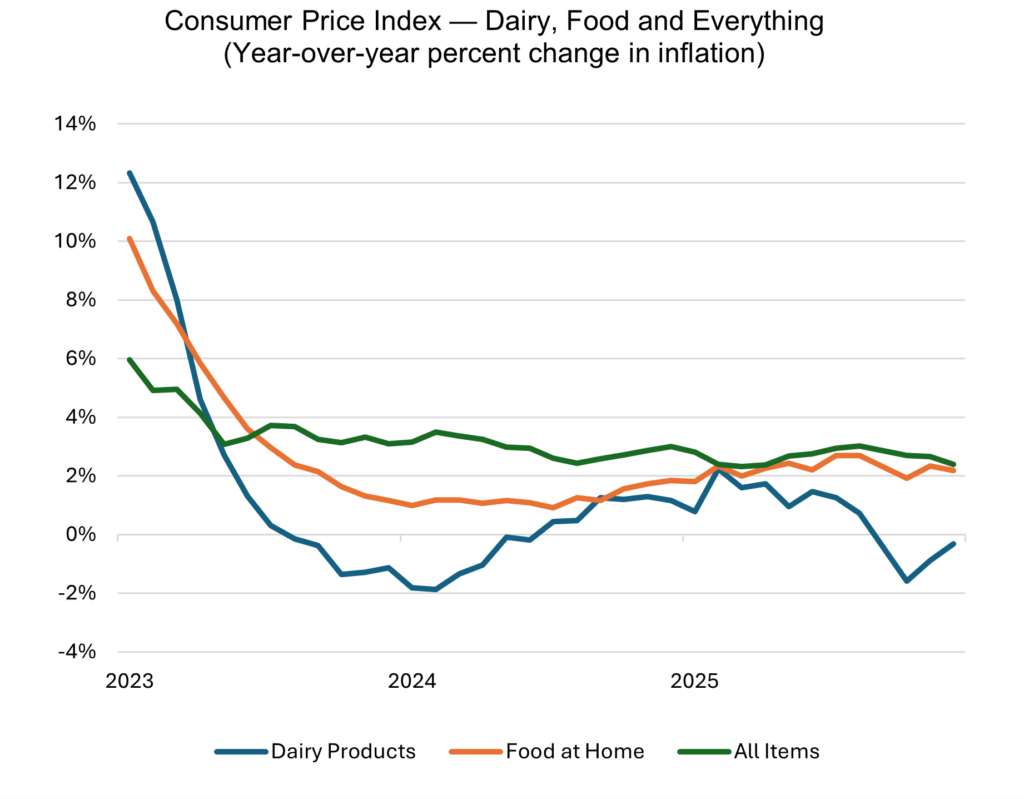
Three prominent dairy industry organizations celebrated on Friday after the United States and Ecuador signed a new trade agreement that will open doors for American dairy exports in what has historically been a challenging market with high tariffs and restrictive trade policies.
The new deal will remove tariffs on multiple American dairy products, acknowledge U.S. regulatory standards including eliminating facility registration requirements and accepting dairy certificates from American authorities, reform Ecuador’s complex import licensing procedures for farm products, and safeguard 40 commonly-used cheese names such as parmesan. American dairy companies have struggled with these specific issues when trying to enter Ecuador’s market.
“Ecuador has long been a difficult market for U.S. dairy exporters to crack,” said Krysta Harden, president and CEO of USDEC. “This agreement puts in place the strong nontariff disciplines needed for U.S. dairy exporters of ingredients and various cheeses to make headway in growing their sales to Ecuador, while also improving the tariff landscape in this market.”
“Ambassador Greer, Ambassador Callahan and the USTR team have racked up yet another win for American dairy farmers with this Ecuador agreement,” said Gregg Doud, president and CEO of NMPF. “With an unprecedented investment in U.S. dairy manufacturing capacity, deals like this are vital to making it easier for international buyers to source the great products our dairy companies are making.”
“The European Union has been working aggressively in Ecuador for several years now to pursue market restrictions impacting sales opportunities for both local product and other non-EU products,” said Jaime Castaneda, executive director of CCFN. “Our thanks to the USTR team, in particular Ambassador Callahan, for delivering strong common names protection that will provide greater opportunities to sell U.S. products like ‘parmesan’ and ‘bologna’ in a growing region of Latin America.”
This marks the tenth trade agreement reached by the current Administration that creates new market opportunities for American dairy exports. The National Milk Producers Federation, U.S. Dairy Export Council, and Consortium for Common Food Names have committed to collaborating with the Administration to ensure successful implementation of the agreement’s terms.
A federal antitrust case against entertainment giant Live Nation and its Ticketmaster subsidiary moved forward Monday in New York, with three dozen states continuing their legal battle after the U.S. Justice Department reached a settlement deal last week.
In Manhattan federal court, Judge Arun Subramanian asked jurors whether they had seen any media coverage during the week-long break in proceedings. When no hands went up, he informed them that Arkansas, Nebraska and South Dakota had reached settlements and dropped out of the lawsuit.
The trial then continued with state attorneys questioning Jay Marciano, who heads AEG Presents, Live Nation’s primary rival in the concert promotion business.
The case nearly collapsed last week when federal prosecutors announced their tentative agreement with Live Nation. State attorneys requested a mistrial, but later withdrew that motion after Judge Subramanian encouraged several days of negotiations between the parties.
On Friday, attorneys indicated seven additional states were close to joining the federal settlement, but the judge ruled that any state without a finalized agreement by Monday would stay in the case.
The 36 remaining states plus Washington D.C. maintain that Live Nation Entertainment and Ticketmaster use intimidation, punishment and other anti-competitive methods to dominate concert promotion and ticket sales, ultimately harming consumers with higher prices.
Defense attorneys for the companies argue the entertainment ticketing market is far more complex than states claim, contending it’s impossible to monopolize an industry where artists, sports franchises and venues ultimately control pricing and sales methods.
Federal officials announced their settlement after securing promises from Live Nation to allow competing ticketing companies greater market access, which they say will reduce consumer costs. However, multiple states have criticized the federal deal as insufficient, arguing the government didn’t extract enough meaningful changes from the company.
Financial markets are showing signs of nervousness as bond investors retreat to safer positions amid escalating Middle East tensions, particularly focusing on short-term U.S. Treasury securities before the Federal Reserve announces its latest policy decision.
Market analysts anticipate the Federal Open Market Committee will maintain its current benchmark interest rate between 3.50% and 3.75% when its two-day meeting concludes Wednesday. Fed officials are carefully weighing how the Iran conflict might affect their core objectives of maintaining stable prices and full employment.
Despite growing caution, many market participants expect the Middle East situation to remain limited in scope and duration, potentially restricting oil price impacts on inflation. This scenario could provide the Federal Reserve flexibility to reduce rates later this year, potentially boosting Treasury bonds and broader debt markets, according to some investors.
However, the current mix of international tensions, persistent inflation, and employment market softening has created uncertainty about the Fed’s future policy path, leading portfolio managers to exercise increased caution. This ambiguity has driven some investors away from long-term bonds until greater clarity emerges regarding both the conflict’s progression and central bank responses.
Danny Zaid, a portfolio manager at TwentyFour Asset Management, explained the current market sentiment: “Investors are more cautiously positioned and have avoided riskier parts of the bond market.”
“Volatility in rates is going to continue to be high. We continue to be neutral in duration at least until we get more clarity on the conflict,” Zaid added.
Duration represents bond risk by measuring how security values respond to interest rate changes. Maintaining neutral duration involves matching portfolio composition to benchmark standards – essentially a cautious approach that avoids extended-term commitments currently.
Recent data from J.P. Morgan’s Treasury Client Survey reveals that active clients now maintain their highest short positions since early February, demonstrating efforts to minimize interest-rate exposure.
This month has seen two-year Treasury yields surge 31 basis points, heading toward their largest monthly jump since October 2024. This reflects concerns that central banks may be unable to cut rates due to oil price-driven inflation pressures. Current U.S. two-year yields stand at 3.69%.
Many investors believe two-year yields have room to decline, arguing that short-term Treasuries have absorbed most selling pressure since the war started, pushing yields to seven-month highs.
U.S. crude oil futures have surged 46% this month, tracking toward their biggest monthly increase since May 2020.
Brad Conger, chief investment officer at Philadelphia-based Hirtle Callaghan, which manages assets for endowments and charitable organizations, outlined a critical economic threshold: “There’s a tipping point where the increase from energy-driven inflation becomes demand destruction that starts to reduce consumer spending.”
“Treasuries are a hedge against a slowdown in the economy whether the war ends quickly or whether it drags on,” Conger noted.
Interest rate futures markets have essentially eliminated expectations for Fed cuts this year. Current pricing reflects just 24 basis points of potential easing, down from 55 basis points before the war began, according to LSEG data.
Seth Meyer, global head of client portfolio management at Janus Henderson Investors, sees opportunity in the current environment: “Rates to me are becoming an opportunity, particularly on the front end of the curve. You’re eliminating most cuts in the near term.”
Wednesday’s Fed meeting will provide sharper focus on rate direction when officials release their economic projections summary, including rate forecasts called the “dot plot.”
December’s “dots,” from the Fed’s last rate cut to the current 3.50%-3.75% range, indicated only one additional 25-basis-point reduction this year. The median policymaker’s neutral rate estimate – neither restraining nor stimulating economic growth – remained at 3%.
Investors generally don’t anticipate significant guidance changes from the Fed at the upcoming meeting, given the ongoing Iran conflict.
Olumide Owolabi, head of the U.S. rates team at Neuberger Berman, expressed the prevailing uncertainty: “Determining the next step is anybody’s guess at this point. I don’t see the Fed changing its long-term outlook…just because the level of uncertainty is super elevated.”
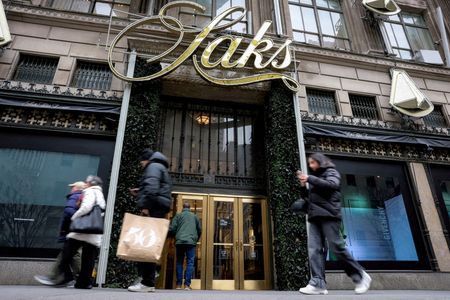
Luxury retailer Saks Global announced Monday it has obtained access to an additional $300 million portion of its $1.75 billion bankruptcy financing arrangement, while also receiving endorsement from a bondholder group for its five-year recovery strategy.
The high-end retailer entered Chapter 11 bankruptcy proceedings in January, stating it required the financial resources to rebuild relationships with suppliers and gain additional time to restructure its outstanding obligations.
According to the company’s Monday announcement, this latest funding installment finalizes its “pre‑emergence financing package,” providing adequate cash flow to maintain day-to-day operations.
Major components of the bondholder-endorsed recovery strategy, which anticipates expansion and profit growth supported by strong cash reserves, will be incorporated into Saks Global’s reorganization proposal expected to be submitted to the U.S. Bankruptcy Court for the Southern District of Texas in the coming weeks.
During its bankruptcy proceedings, Saks Global has utilized the opportunity to close the majority of its budget-oriented retail locations. The company has shuttered 20 out of 33 Saks Fifth Avenue stores since entering Chapter 11 with $3.4 billion in outstanding debt.
The retailer reported improvements in its supply chain management, with nearly 600 brands resuming shipments and generating $1.4 billion in retail revenue.
“We have made significant progress over the past two months as we work to position Saks Global for the future, quickly stabilizing our business, improving inventory flow and investing in our transformation,” stated Geoffroy van Raemdonck, CEO of Saks Global.
Wall Street’s biggest banks are pulling back on lending as turbulence in the private credit market creates widespread concern among investors and financial institutions.
The upheaval stems from worries about how these investments are valued and questions about transparency, made worse by high-profile bankruptcies including auto-parts company First Brands and car dealer Tricolor, where private credit lenders had significant exposure.
According to Moody’s data, U.S. banks have nearly $300 billion in outstanding loans to private credit providers as of June 2025, plus another $285 billion loaned to private-equity firms and $340 billion in unused credit lines available to these borrowers.
Stock prices for alternative investment managers have dropped this year as concerns mount about the value of software companies in their portfolios, with artificial intelligence advances potentially disrupting established business models.
Billions of dollars have flowed out of major private credit funds during the first quarter, with more outflows potentially ahead.
Investment firms including Ares Management, Apollo Global, Oaktree and Goldman Sachs have not yet disclosed results from their first-quarter withdrawal programs at their private credit funds.
JPMorgan Chase Actions
The nation’s largest bank has lowered the assessed value of certain loans made to private credit funds following a review of market disruption affecting software companies, Reuters reported last week, according to two sources with knowledge of the situation.
JPMorgan conducted a comprehensive review of its financing portfolio, examining individual names and entire sectors, then applied different valuations to loans with underlying software exposure, one source explained.
While such revaluations don’t occur frequently, this isn’t JPMorgan’s first time adjusting loan values, the first source noted, calling the action “important to do when markets warrant it rather than waiting for a crisis to come along.”
JPMorgan’s lending agreements for private credit allow the bank to adjust valuations based on fund collateral during market disruptions, the source said, though the adjustments are not substantial.
The decision to reduce certain loan values will result in decreased lending to these funds, Reuters reported, citing a knowledgeable source.
Morgan Stanley Limits
The investment bank restricted withdrawals from one of its private credit funds after investors requested to pull out nearly 11% of outstanding shares, according to regulatory documents.
Morgan Stanley’s North Haven Private Income Fund, which held investments in 312 borrowers across 44 industries as of January 31, returned approximately $169 million, representing about 45.8% of what investors requested for the quarter.
In correspondence to investors, Morgan Stanley Private Credit cited multiple challenges facing the direct-lending sector, including uncertainty about merger and acquisition recovery, declining asset yields, and concerns about credit quality deterioration.
“By maintaining appropriate limits on the quarterly repurchase offer, the company seeks to avoid asset sales during periods of market dislocation,” the bank’s investment management division stated in the letter.
BlackRock Restrictions
The world’s largest asset management company announced March 6 that it limited withdrawals from its primary HPS Corporate Lending Fund following increased withdrawal requests.
The fund received $1.2 billion in withdrawal requests during the first quarter, equivalent to approximately 9.3% of its net asset value. Fund managers informed investors they would distribute $620 million through their quarterly withdrawal program, hitting the 5% threshold where managers can restrict additional withdrawals.
The fund explained the 5% restriction prevents “a structural mismatch between investor capital and the expected duration of the private credit loans in which HLEND invests.”
New investments in the fund totaled $840 million in the first quarter, falling short of the $1.2 billion investors initially sought to withdraw. Company records show 19% of the fund’s portfolio involves software investments.
Blackstone Increases Cap
Alternative investment firm Blackstone reported March 2 that its primary private credit fund, BCRED, experienced a dramatic increase in withdrawal requests during the first quarter.
The company allowed clients to withdraw a larger-than-normal $3.7 billion from the $82 billion fund. With $2 billion in new commitments, net withdrawals reached $1.7 billion.
The spike in requests prompted the fund to increase its typical 5% quarterly withdrawal limit to 7%, while Blackstone and its staff contributed $400 million to fulfill all withdrawal requests, the firm announced.
JPMorgan analysts noted this marked the first quarter of outflows for BCRED, the largest fund of its type that doesn’t trade publicly.
Blue Owl Asset Sales
Private capital company Blue Owl Capital announced February 19 it would sell $1.4 billion in assets from three credit funds to return money to investors and reduce debt, while permanently stopping withdrawals from one fund.
The debt being sold spans 128 different portfolio companies across 27 industries, with the largest concentration of 13% in the struggling software and services sector, the company reported.
The loans come from three credit funds: $600 million from Blue Owl Capital Corp II, $400 million from Blue Owl Technology Income Corp, and $400 million from Blue Owl Capital Corp.
“We’re not halting redemptions, we are simply changing the method by which we’re providing redemptions,” Blue Owl co-President Craig Packer explained.
Cliffwater Caps Withdrawals
Investors in Cliffwater LLC’s main private credit fund sought to withdraw approximately 14% of shares in the first quarter, leading the company to limit repurchases at 7%, Bloomberg News reported.
As an interval fund, it must repurchase shares quarterly. The company set that rate at 5%, with authority to repurchase up to 7%, the report stated.
A consortium of banks spearheaded by JPMorgan started pitching a massive $5.75 billion loan package to investors on Monday to support the leveraged acquisition of video game company Electronic Arts, based on documentation obtained by Reuters.
The financing package features a seven-year term loan B structure split between $4 billion in U.S. dollars and 1.531 billion euros (equivalent to $1.75 billion), as detailed in the term sheet. This loan will support EA’s enormous $55 billion privatization transaction led by an investment group that includes Saudi Arabia’s Public Investment Fund, Silver Lake, and Affinity Partners.
Additional financing components include a $3.25 billion term loan A facility plus $9 billion in various dollar and euro-based secured and unsecured debt instruments, the documentation shows.
The privatization transaction is scheduled to finalize in June, based on the companies’ September announcement.
Financial institutions are offering both the $4 billion U.S. dollar segment and the 1.531 billion euro component of the term loan B at a reduced price of 98.5 cents per dollar, with variable interest rates ranging from 350 to 375 basis points above the Secured Overnight Financing Rate (SOFR) and Euro Interbank Offered Rate (Euribor) respectively, according to the term sheet.
Investors have until market close on March 23 to participate in the loan offering, the documentation indicates.
Electronic Arts has not yet provided a response to requests for comment regarding the financing.
Bank of America has reached an agreement to resolve a civil lawsuit filed by women who claimed the financial giant enabled Jeffrey Epstein’s sexual abuse operations, according to court documents made public Monday.
During a March 12 phone conference with Manhattan federal Judge Jed Rakoff, attorneys representing both the bank and the accusers announced they had achieved a “settlement in principle,” court filings reveal.
Judge Rakoff must give his approval before the agreement becomes final. He has set an April 2 court session to review and potentially approve the settlement terms.
Details about the financial terms remain undisclosed. Bank of America representatives refused to provide comment, while attorneys for the women have not responded to media inquiries.
The class-action complaint was initiated in October by a woman identified as Jane Doe, who alleged that America’s second-largest bank turned a blind eye to questionable financial activity connected to Epstein despite having extensive knowledge of his criminal behavior because profits took priority over victim protection.
Bank of America previously defended itself by stating that Doe simply claimed the institution provided standard banking services to individuals who had no apparent connections to Epstein at that time, calling any suggestions of deeper involvement “threadbare and meritless.”
In January, Judge Rakoff determined that Bank of America would have to defend against Doe’s allegations that it deliberately profited from Epstein’s human trafficking activities and interfered with federal anti-trafficking law enforcement. The suspicious transactions identified by Doe included money transfers to Epstein from Leon Black, the billionaire who co-founded Apollo Global Management.
Black resigned from his position as Apollo’s chief executive in 2021 following an independent legal review that revealed he had paid Epstein $158 million for tax and estate planning services.
Black has maintained his innocence and stated he had no knowledge of Epstein’s illegal activities.
Black was supposed to give sworn testimony on March 26 for questioning by both Doe’s legal team and Bank of America’s attorneys.
This deposition will likely be canceled due to the settlement agreement. A trial that was set for May 11 will also be scrapped if Judge Rakoff gives his approval.
Doe’s legal representatives have pursued other individuals and entities they claim helped facilitate Epstein’s trafficking network, securing $290 million from JPMorgan Chase and $75 million from Deutsche Bank in 2023 settlements on behalf of his victims.
Epstein was found dead in his Manhattan jail cell in August 2019 while facing sex trafficking charges. New York City’s medical examiner determined his death was suicide.
WASHINGTON – A monthly survey released Monday shows homebuilder confidence experienced a modest boost in March, though concerns about rising construction expenses and labor shortages continue to weigh on the industry.
The National Association of Home Builders/Wells Fargo Housing Market index climbed one point to reach 38 this month, staying beneath the 50 threshold that indicates market health for the 23rd consecutive month.
Reuters-surveyed economists had predicted the index would hold steady at 37. The minor uptick in confidence appears connected to reduced mortgage rates earlier this year following President Donald Trump’s directive for government-sponsored mortgage companies Fannie Mae and Freddie Mac to increase their mortgage-backed securities purchases.
However, mortgage rates have shifted direction recently, climbing as the U.S.-Israeli conflict with Iran pushed oil prices higher and sparked inflation concerns, causing U.S. Treasury yields to rise. Mortgage rates typically follow the movement of the 10-year U.S. Treasury yield.
“Many buyers remain on the fence waiting for lower interest rates and due to economic uncertainty,” said NAHB Chairman Bill Owens. “Builders are facing elevated land, labor and construction costs and nearly two-thirds continue to offer sales incentives in a bid to firm up the market.”
Trump’s extensive tariff policies, implemented through emergency powers legislation, have increased costs for building supplies and appliances, while his immigration enforcement efforts, including workplace raids at construction sites, have reduced available workers. After the U.S. Supreme Court overturned the tariffs, Trump responded by establishing a 10% worldwide tariff, with plans to increase it to 15%.
Last week, the Trump administration initiated two trade investigations examining excess industrial capacity among 16 major trading partners and forced labor practices as part of efforts to restore tariff pressure on international partners.
The percentage of builders reporting price cuts rose slightly to 37% from February’s 36%. Average price reductions stayed at 6%. Sales incentive usage dropped to 64% from 65% the previous month, though this marks the 13th straight month above 60%. Builders are working to reduce surplus new home inventory.
The survey’s current sales conditions measurement increased to 42 from 41, while future sales expectations gained two points to reach 49. Prospective buyer traffic improved by three points to 25.
Trump signed executive orders last week aimed at removing regulatory obstacles to housing construction and easing mortgage-related regulations. Housing affordability has emerged as a significant political concern approaching November’s mid-term elections.
“Down-payment hurdles and uncertainty from the conflict with Iran and the price of oil will be headwinds going forward,” said NAHB Chief Economist Robert Dietz. “The administration’s executive orders issued last week to reduce regulatory burdens associated with home building are a positive step toward increasing attainable housing supply.”
A massive merger in the storage industry could create a new $57 billion corporation with enough combined square footage to match the size of small cities like Cupertino, California or Chapel Hill, North Carolina.
Public Storage announced Monday its plans to acquire National Storage Affiliates through an all-stock transaction valued at approximately $10.5 billion. The combined entity would control 327 million square feet of storage space across nearly 4,600 facilities throughout the United States.
According to Public Storage, the acquisition aims to strengthen its foothold in rapidly growing regions, particularly the Sun Belt and other areas experiencing population increases.
Should regulators approve the transaction, it would merge the nation’s largest self-storage operator with the fourth-largest by market value. Extra Space Storage and CubeSmart currently rank as the second and third largest companies in the sector.
Public Storage, previously headquartered in Glendale, California, announced earlier this year its intention to move operations to Frisco, Texas, in the Dallas area. National Storage operates from Greenwood Village, Colorado, located in the Denver suburbs.
Under the agreement terms, National Storage shareholders and operating partnership unit holders will receive 0.14 shares of Public Storage stock or partnership units for each National Storage share or unit they currently own. This exchange rate equals $41.68 per share.
Market reaction was immediate, with National Storage shares surging nearly 30% when trading opened, while Public Storage stock declined by less than one percent.
Prior to finalizing the deal, Public Storage and National Storage’s limited partners will establish a joint venture encompassing 313 properties from National Storage’s portfolio. This venture includes 19.6 million rentable square feet spread across 28 states and Puerto Rico, with an estimated worth of roughly $3.3 billion.
Operating partnership unit holders are projected to control approximately 80% of the joint venture initially, while Public Storage will maintain the remaining ownership stake. Public Storage will have exclusive management rights over the joint venture properties and will receive standard fees for property management, asset oversight, and tenant insurance services.
Both companies’ boards have approved the transaction, which is anticipated to conclude during the third quarter. The deal still requires endorsement from National Storage shareholders and regulatory authorities.
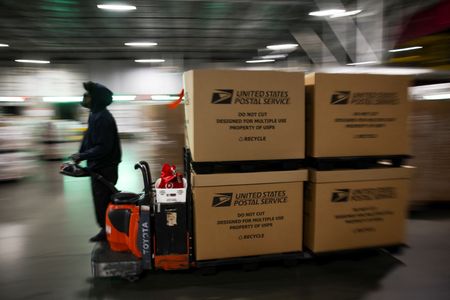
WASHINGTON – The United States Postal Service plans to deliver an urgent message to lawmakers Tuesday: without dramatic changes, the agency could exhaust its cash reserves in under 12 months.
During testimony before a House Oversight subcommittee, Postmaster General David Steiner will outline the agency’s dire financial situation and request permission to implement sweeping changes to keep operations afloat.
Among the cost-cutting measures Steiner will propose: eliminating Saturday mail delivery, shuttering postal facilities, and dramatically increasing the price of first-class stamps from the current 78 cents to potentially more than one dollar.
According to written testimony obtained by Reuters, Steiner will emphasize the critical nature of expanding the postal service’s borrowing authority.
“In order to ensure our survival beyond next year, we need to increase our borrowing capacity so that we don’t run out of cash,” Steiner’s prepared remarks state. “The failure to do this could lead to the end of the Postal Service as we know it now.”
The postal service’s financial troubles highlight ongoing challenges facing the government agency as it struggles to adapt to changing mail delivery demands and rising operational costs.
The Ocean City Museum Society has unveiled plans to offer their beautifully renovated facility for private bookings, transforming the historic building into a rental venue for community events.
Located at 217 South Baltimore Avenue in the heart of downtown Ocean City, Maryland, the Museum of Ocean City now welcomes inquiries for private functions following its recent restoration work.
The organization announced that the distinctive historic location provides an ideal backdrop for a variety of occasions, including business meetings, celebratory events, and other special occasions requiring a memorable venue.
The museum’s transformation into an event space represents a new chapter for the cultural institution, allowing the community to experience the restored building in an intimate setting while supporting the museum’s mission.
LONDON, March 16 – A leading international banking organization is advising the world’s central banks to exercise restraint following dramatic energy price increases linked to the Iran crisis, describing the situation as a classic example of when monetary policymakers should avoid hasty reactions.
Energy markets have experienced significant turbulence this month, with oil prices jumping 40% and wholesale gas costs climbing nearly 60%. These sharp increases have drawn parallels to 2022’s inflationary period, when Russia’s military action in Ukraine combined with post-pandemic economic recovery to drive prices dramatically higher.
Major monetary authorities, including America’s Federal Reserve and the European Central Bank, responded to that earlier crisis by implementing their most aggressive interest rate increases in decades. However, they faced criticism for delayed action after initially misjudging the situation as short-lived.
Financial markets have rapidly adjusted their forecasts this time around, with investors anticipating that central banks will want to avoid repeating previous errors. Despite this market sentiment, the Bank for International Settlements has issued guidance recommending a measured approach.
“If it’s a supply shock, and certainly if it’s a temporary one, these are the textbook examples where you should look through and not react with monetary policy,” stated Hyun Song Shin, the organization’s chief economic advisor.
The guidance arrives during a pivotal week for global markets, as the Federal Reserve, European Central Bank, Bank of England, and Bank of Japan are all scheduled to conduct their first policy meetings since the Middle East crisis began on February 28.
Shin noted that the swift changes in market interest rate expectations might reflect current conditions, given the recent memories of 2022’s challenges.
Market expectations have already shifted dramatically, with traders now anticipating only one Federal Reserve rate reduction this year instead of two, while fully expecting a European Central Bank increase by July and assigning an 85% probability to a second hike before year’s end.
“It’s a kind of a knee-jerk reaction,” Shin observed, pointing out that primary inflation indicators haven’t shown similar movement yet, creating “a very confusing picture” overall.
The BIS quarterly report also examined how central banks have modified their public communication strategies following recent global disruptions. The analysis revealed that more institutions are now employing scenario-based illustrations to demonstrate potential risk impacts, supplementing traditional methods like fan charts and qualitative risk assessments.
Many central banks have also moved away from traditional forward guidance about future rate directions, instead publishing their own rate forecasts within the framework of alternative scenarios.
The organization’s current market risk assessment also addressed other volatility episodes from this year, including significant declines in artificial intelligence-related stocks and challenges within private credit markets.
“We have to watch this,” said Frank Smets, deputy head of the BIS monetary and economic department. “But we don’t see any major disruptions at this point.”
Federal consumer protection officials are sounding the alarm about a dramatic surge in tax season fraud targeting Americans, including Delaware residents. The Federal Trade Commission’s consumer protection division reports that fraudulent robocalls, text messages, and phishing emails have increased significantly compared to previous tax seasons, with artificial intelligence technology making these schemes more convincing and widespread.
Consumer advocates and federal officials are urging taxpayers to exercise extreme caution when receiving unexpected communications and to remember that the Internal Revenue Service never initiates contact through text messages or phone calls.
The IRS annually publishes its “Dirty Dozen” list of the most prevalent tax scams targeting Americans. Leading this year’s list is fraudsters pretending to be IRS agents through various communication channels. During the current fiscal year 2025, the tax agency has identified more than 600 fake social media accounts impersonating the IRS, warning taxpayers to avoid “clicking links or opening attachments from unexpected messages.”
The IRS emphasizes that the agency “does not leave urgent, threatening prerecorded messages, call to demand immediate payment, or threaten arrest.”
According to the IRS, criminals frequently employ threatening language and QR codes to direct victims to fraudulent websites designed to trick taxpayers into “verifying” their accounts or providing sensitive personal information. These malicious links can also install harmful software, including ransomware that can lock users out of their files and private data. The agency notes that “AI-enabled IRS impersonation by phone (robocalls, voice mimicry, and spoofed caller ID)” is becoming increasingly common. Advanced phone scams now utilize artificial intelligence to create realistic computer-generated voices and fake caller identification systems that appear legitimate.
Rosario Mendez, an attorney with the FTC’s consumer protection bureau, identifies identity theft as among the most widespread forms of tax season fraud. Mendez describes this crime as the unauthorized use of someone’s Social Security number or other personal details, typically to claim their tax refund illegally.
“People usually discover this when they go to file their tax returns and discover someone else has already filed,” she said. “For the records of the IRS, that is, it’s already happened. But it’s not the person — it’s an identity thief.”
Eva Velasquez, who leads the Identity Theft Resource Center as CEO, confirms her organization has documented rising numbers of scam attempts and identity theft cases in recent years, likely enhanced by AI-generated communications.
“We’re seeing an uptick in phishing emails, fake texts, and even phone calls,” Velasquez said. “Scammers are trying to get you to engage in any manner – talk to them, click the link, share your personal data, or share access to your devices or accounts.”
Velasquez believes the “sheer volume and level of sophistication” indicates artificial intelligence is being utilized by criminals.
“‘Deluge’ is the best word I can think of, because it’s relentless,” she said.
Velasquez recommends a “Type, don’t tap” approach when dealing with suspicious messages. Instead of clicking any links in questionable communications, she advises manually entering the official IRS website address (IRS.gov) or the legitimate website of whatever agency allegedly sent the message.
“Go to the source. Don’t click any of those links,” she said. “If you didn’t initiate the contact, don’t engage.”
Kathy Stokes, who directs fraud prevention programs for AARP, notes an interesting pattern in scam reporting: younger Americans more often report being targeted by scammers, while older victims typically lose larger amounts of money.
“That’s because they have more money to lose,” she said.
When suspicious messages arrive, Stokes stresses the value of pausing and consulting with others. She explains that when people receive notifications that seem unusual, frightening, or urgent, taking time to discuss it with trusted friends or family members usually helps identify scam attempts.
“That’s also going to inoculate the people you share it with from falling for the scam,” she said.
For taxpayers who discover someone has fraudulently used their Social Security number to file a return ahead of them, immediate action is crucial. Victims should notify the IRS and visit IdentityTheft.gov to file an official report. This process generates a personalized recovery plan from the government.
“If a scammer has used your social security number to file a tax return, it’s possible the same thief could use it to open bank accounts, credit cards, or file for unemployment,” she said. “Another worthwhile step is to monitor your credit report and freeze credit accounts so they can’t be misused.”
Alan Butler, executive director of the Electronic Privacy Information Center, supports these recommendations and encourages scam victims to consider identity monitoring services moving forward. However, he cautions against expensive services that may themselves be questionable, advising thorough research before purchasing protection.
“People can be victimized not only once with the theft of their identity, but a second time, because the monitoring services are trying to up-sell them,” he said.
Stokes also recommends that financial fraud victims consider filing reports with local police departments.
“Even if you get pushback from local law enforcement, you should insist on the report,” she said. “There may be a means of restitution for fraud victims down the road, and they would want that as a point of proof of what happened.”
Shares of Meta Platforms climbed 3% on Monday after reports emerged that the company is considering eliminating at least 20% of its workforce to help balance massive investments in artificial intelligence technology.
Should Meta proceed with cutting one-fifth of its staff, it would represent the company’s largest workforce reduction since its major restructuring in late 2022 and early 2023, which the company called its “year of efficiency” and resulted in approximately 21,000 job eliminations.
The social media company has been investing heavily to compete in the artificial intelligence sector after initially falling behind competitors, constructing data centers and competing aggressively for top talent. Meta anticipates spending as much as $135 billion by 2026, nearly twice what it invested last year.
These expenditures aim to secure the computing power necessary for training and operating AI systems, with Meta agreeing Monday to spend up to $27 billion on cloud services from Nebius.
Although the increased spending has enhanced Meta’s advertising tools and driven revenue growth, the company has not yet launched an AI system capable of competing with industry frontrunners OpenAI, Anthropic, and Google.
The company has been developing a new AI system called Avocado, though this model’s capabilities have not met internal expectations.
Rosenblatt Securities analyst Barton Crockett estimated that eliminating 20% of staff could save approximately $6 billion, potentially increasing adjusted core earnings by 5%.
“This doesn’t have to stop at 20%. There could be more down the road if AI is truly this impactful on staff productivity,” Crockett noted.
Meta employed 79,000 workers as of December’s end and responded to inquiries Friday by stating, “this is speculative reporting about theoretical approaches.”
The company’s shares were trading at $631.50 in premarket activity. The stock has dropped 7% year-to-date following a nearly 13% gain in 2025.
Artificial intelligence-related job cuts have been increasing worldwide, with companies announcing more than 61,000 AI-linked layoffs since November, including cuts at Amazon and Australia’s Wisetech.
Discussion about AI displacing human workers intensified after Block CEO Jack Dorsey announced plans last month to eliminate nearly half his company’s workforce, claiming the technology has transformed “what it means to build and run a company.”
Some industry observers suggest the layoffs also reflect excessive hiring during previous periods. OpenAI CEO Sam Altman commented last month that certain companies were using AI as justification for job cuts they would have implemented regardless.
“Is AI a convenient scapegoat for cuts that might have happened anyway? Perhaps. But we believe the market will quickly see through companies using AI as camouflage,” Bernstein analyst Mark Shmulik wrote in a research note.
Shmulik added that Meta was “probably the best placed incumbent to pivot to an AI-enabled organization,” citing the success of its post-pandemic organizational changes.
The cruise industry is navigating turbulent financial waters as escalating oil prices drive up operational costs, with industry experts pointing to Carnival Corporation as potentially facing the steepest financial impact through 2026.
Unlike its major competitors, Carnival stands alone among U.S. cruise operators in not using fuel hedging strategies to shield against volatile energy prices.
Energy costs have skyrocketed more than 35% since Middle Eastern conflicts began, driven by strikes on petroleum infrastructure and shipping disruptions affecting the Strait of Hormuz. These developments have sparked widespread concerns about worldwide oil availability.
Brent crude futures reached $100 per barrel on Friday, a significant jump from the pre-conflict price of $72.48. Iranian officials have suggested oil could potentially reach $200 per barrel.
Most cruise companies protect themselves against fuel price volatility by using hedging strategies – financial agreements that lock in fuel costs. Carnival Corporation breaks from this industry standard.
Company financial documents reveal that a 10% shift in fuel costs per metric ton would decrease Carnival’s 2026 earnings by $145 million, while competitor Royal Caribbean would see only a $57 million reduction.
Norwegian Cruise Line indicated it hasn’t modified its fuel hedging position since early March earnings reports. A 10% fuel cost increase would reduce their annual earnings per share by 7 cents, translating to approximately $90 million in lost income, based on Morningstar Research calculations.
CFRA analyst Alex Fasciano noted, “During 2022’s oil spike, Carnival’s fuel costs rose more rapidly than its peers.”
The 2022 Ukraine conflict provided a preview of current challenges. During that period, Carnival’s fuel expenses represented 17.7% of total revenue, compared to Royal Caribbean’s 12.1% and Norwegian’s 14.2%.
“Carnival also owns a larger fleet, meaning the level of consumption is also higher than their counterparts,” Fasciano explained.
Carnival defended its approach in a statement to Reuters, saying, “Our best hedge against fuel costs is to use less, so we focus on using less fuel in the first place.”
The company highlighted efficiency improvements, stating, “We’ve cut our fuel use by 18% since 2011 despite increasing capacity by roughly 38% during that time.” Carnival added that it doesn’t anticipate long-term advantages from hedging strategies.
Carnival is scheduled to release first-quarter financial results on Friday. Royal Caribbean did not provide comment to Reuters.
The timing presents additional challenges as the industry operates during “wave season” from January through March – the sector’s peak booking period when companies offer promotional deals and discounts for upcoming voyages.
While major cruise operators serve global destinations, Caribbean and transatlantic routes represent substantial portions of their capacity and customer demand. No major cruise lines had vessels operating in Middle Eastern waters when conflicts began, minimizing immediate regional operational risks.
Barclays analyst Brandt Montour observed, “Despite zero direct exposure to the Middle East, shocks like this one have the potential to step up consumer hesitation in the booking process, especially for Americans thinking of traveling abroad.”
Goldman Sachs analyst Lizzie Dove suggested the situation could particularly affect American travelers’ European bookings, especially transatlantic voyages, which typically command premium pricing.
These European cruises generally operate during the third quarter and generate disproportionately significant revenue for cruise companies, she noted.
BUENOS AIRES – While models strut down runways displaying the latest designs from Argentina’s fashion elite, the country’s textile industry faces an unprecedented collapse that threatens to destroy decades of manufacturing tradition.
The glamorous spectacle of Buenos Aires Fashion Week masks a harsh reality: Argentina’s clothing and textile sector is experiencing its most severe downturn in generations, overwhelmed by an avalanche of ultra-low-cost imports primarily from Chinese fast-fashion giants.
The crisis has intensified under President Javier Milei’s free-market reforms designed to increase competition and reduce consumer costs. His administration slashed import duties on clothing and shoes from 35% to 20% last year while easing restrictions on international online shopping by raising the tax-free limit for courier deliveries to $400 in 2024.
While Milei’s economic policies have successfully curbed inflation and boosted certain sectors like agriculture, they’ve delivered a crushing blow to domestic textile manufacturers struggling to survive against foreign competition.
“The atmosphere feels different now. Everyone seems more depressed and anxious. Making ends meet has become increasingly difficult,” explained wedding dress designer Valentina Schuchner while preparing her fourth collection for BAFWEEK this month.
Despite her personal success at the fashion showcase, the 29-year-old designer expressed concern about the disappearing landscape of local brands around her.
“Revenue has plummeted, and consumer spending has collapsed. People simply lack disposable income for clothing or non-essential purchases,” Schuchner observed.
Officials from Milei’s trade ministry refused to provide comment on the industry’s struggles.
CHINESE PLATFORMS DOMINATE MARKET
According to Argentina’s clothing industry association, direct-to-consumer shipments from overseas suppliers nearly quadrupled during the previous year. China has emerged as the primary winner, with its portion of textile and apparel imports jumping from approximately 55% in 2022 to 70% in 2025, largely due to platforms like Shein and Temu, according to Priscila Makari from industry organization Fundacion Pro Tejer.
This development occurs as the United States pressures regional allies to reduce Chinese economic influence, creating diplomatic challenges for pro-American leaders like Milei and Chile’s new president Jose Kast.
Many Argentine consumers welcome the expanded options and lower prices. Sarah Alcaje, 24, represents countless shoppers who previously struggled with limited selection and expensive local merchandise, particularly outside major metropolitan areas.
Alcaje recalls traveling across the border to Chile from Mendoza to find reasonably priced clothing. Today, she completes her shopping with simple smartphone clicks.
“These digital marketplaces make purchasing footwear, apparel and other items incredibly convenient. The costs are extremely reasonable, and the rapid delivery is fantastic,” Alcaje said.
MASSIVE JOB LOSSES HIT WORKERS
Local manufacturers find themselves unable to match foreign competitors’ pricing. Argentina’s textile sector eliminated 16% of its workforce between 2023 and late last year, dropping from approximately 121,000 to 102,000 employees, based on industry statistics released in February.
David Kim, who runs the family-owned Amesud textile facility in San Martin’s industrial district outside Buenos Aires, reports his factory operates at merely 30% capacity.
After spending $10 million on imported equipment over ten years to serve major clients including Nike, Puma and domestic children’s brand Mimo & Co., most machinery now remains unused.
“This represents the most devastating crisis we’ve ever experienced,” Kim stated from his factory floor, where numerous machines sat silent during a weekday afternoon.
“We’re prepared to compete fairly, but we can’t survive being overwhelmed by taxation, employment expenses, and union obligations that don’t burden manufacturers in other nations,” he continued.
As contracts disappeared, Kim reduced his workforce from roughly 420 employees to about 240 and cut production from five days weekly to four.
“We fear reaching a point where we cannot meet basic operational expenses,” Kim warned. “We worry that numerous businesses in our industry will cease to exist.
“Hopefully, we won’t be among them.”
Fundacion Pro Tejer argues that Milei’s policy adjustments have created additional disadvantages for domestic textile manufacturers already weakened by dramatically reduced consumer spending.
“Every participant, from individual entrepreneurs to established fashion houses, faces extremely challenging circumstances,” Pro Tejer’s Makari explained.
“Argentina possesses tremendous capability, extensive heritage, exceptionally talented designers and workers, plus strong family business traditions. Watching employment disappear and enterprises shut down is truly devastating.”
Discount chain Dollar Tree issued a weak sales outlook for the coming year on Monday, citing reduced consumer spending as families deal with financial pressures.
The retailer’s stock price fell 3% during pre-market trading following the announcement.
American consumers are grappling with higher living expenses and signs that job market conditions are worsening.
February’s unemployment rate climbed to 4.4%, up from 4.3% the previous month. Consumer prices are also expected to have risen in February, driven by tariff impacts and higher fuel costs linked to Middle East conflicts.
Competitor Dollar General issued a similar weak sales projection last week, indicating reduced demand as price-conscious customers become more choosy about purchases.
Dollar Tree projects fiscal 2026 revenue between $20.5 billion and $20.7 billion, falling short of the $20.69 billion that Wall Street analysts had anticipated, according to LSEG data.
The company anticipates adjusted earnings per share for fiscal 2026 to range from $6.50 to $6.90, which aligns closely with analyst expectations of $6.69.
A Colorado-based senior housing company announced Monday its plans to go public, seeking to generate up to $740 million through its stock market debut.
Janus Living, headquartered in Denver, revealed it will offer 37 million shares with pricing set between $18 and $20 per share. The real estate investment trust specializes in senior housing properties and is being spun off from healthcare-focused REIT Healthpeak Properties.
The timing comes as new stock offerings have significantly decreased in recent weeks, with ongoing Middle East tensions creating market uncertainty that has made investors cautious and discouraged companies from moving forward with public offerings.
Bank of America Securities and J.P. Morgan will serve as the primary underwriters managing the stock offering. Once complete, Janus Living plans to begin trading on the New York Stock Exchange using the ticker symbol ‘JAN’.
Financial markets are bracing for a pivotal week as major central banks prepare to meet while oil prices surge past $100 per barrel due to the escalating Iran conflict entering its third week.
The weekend saw U.S. forces strike Kharg Island, Iran’s primary oil export facility, while President Trump worked to build international support for ensuring safe passage through the strategically vital Strait of Hormuz, which remains blocked.
This week brings a packed schedule of central bank policy meetings, including the Federal Reserve, European Central Bank, Reserve Bank of Australia, and Bank of England, all facing the challenge of responding to rapidly changing economic conditions.
The situation at the Strait of Hormuz remains fluid, with India successfully securing safe passage for two oil tankers over the weekend. However, Trump’s efforts to rally NATO partners and China for naval assistance have met mixed results, as several nations indicated Monday they have no immediate plans to deploy vessels to the region, despite reports that the administration may soon announce a coalition agreement.
Asian markets showed mixed performance Monday, with Japan’s Nikkei declining 0.3% while South Korea’s KOSPI gained more than 1% following last week’s losses. European markets opened lower, though U.S. futures pointed to gains before the opening bell.
The dollar, which surged over 1% against major currencies last week, retreated slightly Monday while gold prices remained stable.
The Federal Reserve faces particular scrutiny when it meets Wednesday, with no rate changes anticipated but investors closely watching for commentary on inflation threats from sustained oil price increases and labor market concerns.
Recent economic data highlights the central bank’s dilemma: core inflation climbed to 3.1% in February based on personal consumption expenditures figures released Friday, while fourth-quarter GDP growth was revised downward to just 0.7%. Though these numbers predate the Iran crisis, they illustrate the dual risks of higher inflation and slower growth from an oil shock.
Market expectations have shifted dramatically, with a second Fed rate cut this year now eliminated from futures pricing, and the remaining anticipated cut pushed back to December.
Among this week’s central bank meetings, Australia may be the only one to adjust rates, potentially implementing its second increase this year, while others are expected to maintain a cautious stance.
China released stronger-than-expected retail and industrial data for January-February Monday, consistent with robust trade figures for those months, though these numbers also precede the recent oil price spike.
U.S.-China trade discussions in Paris entered their final day Monday, led by Treasury Secretary Scott Bessent. These talks precede a planned U.S. state visit to China later this month, though Trump suggested the visit could be postponed if China doesn’t assist with resolving the Hormuz blockade.
In corporate news, Meta is reportedly considering layoffs affecting up to 20% of its workforce, according to three sources familiar with the situation.
The global transportation sector continues facing severe disruption after Dubai’s international airport was struck by another drone Monday, forcing flight suspensions despite authorities quickly controlling the resulting fire. Air travel remains heavily impacted by the Iran conflict, which has forced closure of major Middle Eastern hubs including Dubai, Doha, and Abu Dhabi, leaving tens of thousands of passengers stranded.
Key economic releases Monday include U.S. February industrial production data and Canada’s February consumer price index figures.
WASHINGTON – Federal Reserve policymakers will gather this week to navigate the economic turbulence caused by the Iran conflict, which has disrupted roughly 20% of the world’s oil supply and created uncertainty about the path forward for interest rates.
The central bank faces a challenging balancing act as they determine whether the Middle East crisis will primarily harm economic expansion, fuel more stubborn price increases, or create a troublesome combination of slower growth alongside rising inflation.
Given how supply chain disruptions during the pandemic led the Fed to miss its 2% inflation goal for five consecutive years, central bankers are expected to adopt a more cautious or aggressive stance this week. Current inflation remains about one percentage point above their target and could climb further, especially if crude oil prices that surged nearly 50% over two weeks stay at elevated levels.
“A question that was almost unthinkable two weeks ago is now being more heavily debated: Could the Fed raise rates in 2026?” Matthew Luzzetti, chief U.S. economist for Deutsche Bank Securities, wrote last week. While some Fed officials were prepared to consider this possibility even at their previous meeting, Luzzetti determined rate hikes remain improbable without a clear spike in inflation expectations.
Central bankers must also evaluate whether the emerging economic disruption – expected to manifest through higher costs, stricter financial conditions, declining asset values and increased uncertainty – will finally break the economy’s remarkable durability.
“Just when it seemed the worst of the policy chaos was over, there is the Iran war to deal with,” Dario Perkins, chief economist for global macro at TS Lombard, wrote last week. He outlined the repeated challenges the economy has weathered from the pandemic through inflation and aggressive Fed rate increases, followed by tariff and immigration policy changes since President Donald Trump returned to office. “Our baseline assumption is that the conflict will be short-lived and ‘this too shall pass.’ But..could the energy crisis be one shock too many?”
Vulnerable areas include February’s job loss of 92,000 positions, middle and lower-income households already strained by expensive goods, and worries about tighter lending conditions, particularly if asset values continue dropping.
By Sunday, average U.S. gasoline prices had risen almost 25% to their highest point since October 2023 during the two weeks following U.S. and Israeli strikes on Iran, according to AAA data. This prompted American officials to predict the hostilities would conclude relatively quickly.
“I think that this conflict will certainly come to the end in the next few weeks – could be sooner than that. But the conflict will come to the end in the next few weeks, and we’ll see a rebound in supplies and a pushing down in prices after that,” U.S. Energy Secretary Chris Wright told ABC’s “This Week” program on Sunday.
The Fed is anticipated to maintain current interest rates during its Tuesday and Wednesday policy meeting. Information gathered since their last session revealed minimal changes to the fundamental economic picture, and the central bank is transitioning to new leadership under Kevin Warsh, Trump’s nominee who is expected to gain Senate approval to replace current Chair Jerome Powell after mid-May.
However, the latest economic data appears outdated following two weeks of intensive American and Israeli air campaigns and Iranian retaliation that have effectively blocked the crucial Strait of Hormuz. Trump has not established clear goals or a timeline for concluding the conflict.
Fed officials will nevertheless provide updated economic forecasts, making their best assessment of whether upcoming developments will demand a firm anti-inflation stance with continued restrictive monetary policy or rate reductions to counter economic weakness.
During the first Fed meeting after Russia’s Ukraine invasion in 2022, Powell outlined the considerations at hand.
The impact is “highly uncertain,” Powell said at the time. “In addition to the direct effects from higher global oil and commodity prices, the invasion and related events may restrain economic activity abroad and further disrupt supply chains—which would create spillovers to the U.S. economy through trade and other channels. The volatility in financial markets, particularly if sustained, could also act to tighten credit conditions and affect the real economy.”
The current situation presents even greater complexity, with the United States directly involved in combat and significant portions of global oil production and other goods unable to move through normal channels.
Some questions being raised are impossibly broad yet consequential, including whether rising Treasury yields indicate diminished U.S. standing in international markets, expectations of higher inflation, or other factors. Analysts are discussing various scenarios rather than making concrete predictions, with the “base case” typically assuming a brief conflict and eventually declining oil prices, while more harmful outcomes involve prolonged tensions between the U.S. and Iran.
Fed officials were caught off guard last year by how effectively the economy handled increased tariffs, labor market disruptions and an unpredictable environment under Trump. Throughout these challenges, U.S. economic output continued expanding even as job creation decelerated and inflation stayed above target levels.
Given present uncertainties, the simplest strategy may involve staying close to December’s projections, which showed a median prediction of just one rate reduction this year.
However, the range of individual forecasts may reveal important insights: Released after the Fed lowered rates by a quarter percentage point at the December meeting, six of 19 officials suggested rates should have remained higher. This hawkish sentiment intensified in January when meeting minutes showed several policymakers were prepared to consider rate increases this year, “reflecting the possibility that upward adjustments to the target range for the federal funds rate could be appropriate if inflation remains at above-target levels.”
Inflation worries have only grown since then, while concerns about economic growth and potential breaking points may also escalate – creating the most challenging scenario for central bankers to forecast or communicate effectively.
“The economic outlook has turned murkier as the conflict drags on and oil prices remain high and volatile,” Subadra Rajappa, head of research at Societe Generale, wrote last week. “While our base case continues to assume a timely resolution and no sustained economic fallout from this conflict…higher inflation and deteriorating labor market conditions make it difficult for the Fed to balance its dual mandate.”
An Indian financial technology company with ties to retail giant Walmart has decided to postpone its stock market debut due to worldwide economic uncertainty and international conflicts.
PhonePe announced Monday that it has temporarily shelved plans for its initial public offering, pointing to ongoing geopolitical conflicts and unpredictable conditions in international financial markets as the driving factors behind the decision.
The fintech company, which operates in India’s digital payments sector and receives backing from Walmart, made the announcement as global markets continue to experience turbulence from various international tensions and economic pressures.
Italy’s UniCredit bank announced Monday it is making a strategic move to increase its ownership stake in Germany’s Commerzbank beyond 30 percent, a threshold that triggers mandatory takeover provisions under German financial regulations.
The Italian financial institution currently holds a 26 percent equity position in Commerzbank, plus an additional 4 percent through total return swap agreements. Despite crossing the 30 percent mark, UniCredit emphasized it has no intention of pursuing complete control of its German counterpart.
“It is expected that UniCredit will achieve a stake in Commerzbank in excess of 30% without reaching control,” the Italian bank stated in its official announcement.
The company further explained its strategy, saying “The offer is designed to overcome the 30% cliff-edge that exists under German takeover law and foster constructive engagement with Commerzbank and its stakeholders in the coming weeks.”
According to UniCredit, German market regulators will establish the final offer price. The bank anticipates the exchange rate will be set at 0.485 UniCredit shares for each Commerzbank share, which translates to approximately 30.8 euros per Commerzbank share. This represents a 4 percent increase over Commerzbank’s March 13 closing stock price.
NAIROBI, Kenya — Financial powerhouses from Gulf nations are expected to maintain their substantial investments in Africa’s clean energy sector, even as regional conflicts with Iran create market uncertainty, according to industry experts who cite compelling long-term strategic motivations behind the funding.
Oil and gas-rich nations in the Middle East have been channeling increasing amounts of capital into African renewable energy ventures, drawn by the continent’s surging power needs, expanding urban centers, and its emerging importance in global supply networks for essential minerals and production.
Data from the Clean Air Task Force’s recent study revealed that Gulf states had invested more than $101.9 billion in African renewable energy initiatives through the end of 2024. Leading contributors include the United Arab Emirates, Saudi Arabia, Qatar, Kuwait and Bahrain, with most investments targeting North Africa, Southern Africa and select East African regions, while West Africa has received comparatively fewer funds.
“Africa remains one of the few regions where demand growth is unequivocal,” said Matthew Tilleard, chief executive of CrossBoundary Energy, a Nairobi-based firm that develops and operates renewable energy projects. “Short-term shocks may delay individual transactions, but the biggest infrastructure opportunities require a long-term view of risk and value.”
The continent confronts one of the planet’s most severe electricity shortages, with approximately 600 million residents still without power access and countless others experiencing inconsistent service. African governments have increasingly relied on private sector financing for solar, wind and combination energy developments to boost generation capabilities while avoiding strain on government budgets.
This energy deficit has opened doors for Gulf investors seeking to expand beyond traditional petroleum sectors.
“Ultimately, Gulf investments in Africa tend to be driven by pragmatic national interests and strategic returns,” said Louw Nelson, a political analyst at Oxford Economics. “There is currently a significant amount of energy investment underway across Africa, which are long-term projects that have been years in the making, so we don’t anticipate major disruptions.”
International renewable energy investments represent components of wider economic diversification plans among Middle Eastern nations adapting to worldwide movement toward sustainable energy sources.
Energy and development analyst Joel Okanda suggested that supply chain disruptions from the Iranian conflict might actually reinforce arguments for renewable energy investment by highlighting the fragility of traditional fuel transportation routes.
“These companies, many of them state-owned, hold significant capital but also understand that the world is gradually transitioning away from fossil fuels,” Okanda said. “Investing in renewable energy allows them to diversify their portfolios and position themselves for the energy systems of the future.”
Africa’s energy landscape occupies a central position amid multiple global economic transformations, including the shift toward clean energy and rising demand for materials like cobalt and gold essential for advanced technology manufacturing.
“For investors, renewable power projects can provide strategic access to industries beyond electricity generation,” Tilleard said. “Power plants built to supply mines, or large industrial operations can position Arab investors close to supply chains for minerals used in batteries and other technologies.”
Okanda noted that investment location decisions continue to be influenced by perceived challenges including currency instability and regulatory unpredictability, particularly in West African markets.
“Generating power is only one part of the equation,” Okanda said. “You also need transmission systems and a functioning electricity market where the electricity can actually be sold and paid for.”
Oil markets experienced significant volatility Monday as ongoing conflict in the Gulf region pushed Brent crude prices close to $105 per barrel, with Iran launching additional attacks as the confrontation enters its third week.
International benchmark Brent crude climbed 1.6% to reach $104.73 per barrel, though it retreated from earlier highs above $106. Since hostilities began, this oil standard has surged more than 40%.
The U.S. oil benchmark also posted gains, rising 1% to $99.68 per barrel. This domestic standard has jumped nearly 50% since the conflict started.
Global stock markets showed mixed results during Monday’s trading session. Japan’s Nikkei 225 dropped 0.4% to close at 53,609.49, while South Korea’s Kospi index advanced 0.6% to 5,521.17.
Hong Kong’s Hang Seng index posted a 1.1% gain to 25,755.53, contrasting with mainland China’s Shanghai Composite, which declined 0.7% to 4,066.40.
Australia’s S&P/ASX 200 fell 0.4% to 8,583.50. Taiwan’s Taiex managed a modest 0.1% increase, while India’s Sensex slipped 0.1%.
American market futures pointed to a positive opening, with S&P 500 contracts rising 0.5% and Dow Jones Industrial Average futures gaining 0.4%.
Last Friday saw Wall Street extend its losing streak as the conflict once again drove oil costs above the $100 threshold, intensifying concerns about global inflation.
The S&P 500 dropped 0.6% to 6,632.19, bringing its year-to-date decline to 3.1%. The Dow Jones Industrial Average fell 0.3% to 46,558.47, while the Nasdaq composite lost 0.9% to finish at 22,105.36. All three major indices recorded their third consecutive weekly decline.
Iran’s response to strikes by Israel and the United States has essentially blocked commercial shipping through the critical Strait of Hormuz, a narrow waterway that typically handles one-fifth of global oil transport. This blockade has forced oil companies to halt production as their crude cannot reach markets.
Independent research firm Rystad Energy reports that over 12 million barrels of oil equivalent per day have been removed from global supply in just over a week since the strait’s closure.
Despite the blockade, some tanker vessels have reportedly managed to navigate through the strait, creating additional market uncertainty.
“The truth is that at this point, much of the market is operating in the fog,” Stephen Innes of SPI Asset Management said in a commentary. “For context, the strait normally handles roughly 25 oil and LNG tankers every single day.”
Continued disruption to Persian Gulf oil production and shipping could trigger a harmful spike in global inflation rates.
International Energy Agency member nations are releasing a record 400 million barrels from emergency oil stockpiles, though this measure has failed to calm market concerns.
Rising inflation expectations are complicating Federal Reserve plans to reduce interest rates and support economic growth. The central bank is not anticipated to lower rates during this week’s policy meeting.
Recent consumer spending data released Friday revealed inflation increased in January, even before the Iran conflict caused energy prices to soar.
The Commerce Department’s Friday report showed consumer prices climbed 2.8% in January compared to the previous year. However, core prices excluding volatile food and energy costs rose 3.1%, marking the steepest increase in nearly two years.
Despite rising prices, consumers maintained solid spending with a 0.4% increase in January, while incomes grew at the same rate, the report indicated.
The University of Michigan’s latest consumer sentiment survey released Friday showed confidence dropped slightly to the year’s lowest level as gasoline prices have risen since the Iranian conflict began.
Wall Street also received updated information on fourth-quarter economic performance. The economy, hampered by last fall’s 43-day government shutdown, expanded at a weak 0.7% annual rate, below the initial estimate from last month.
In Monday’s early currency trading, the U.S. dollar weakened to 159.47 Japanese yen from 159.55 yen. The euro strengthened to $1.1442 from $1.1425.
Transportation company inDrive announced strong financial performance for the past year, with CEO and founder Arsen Tomsky reporting net revenue climbed nearly one-third as the company improved its profit margins per trip following years of aggressive growth.
The privately-owned company, based in the United States, is now pursuing expansion into delivery services across developing nations through strategic purchases, having already acquired online grocery delivery platforms in Pakistan and Kazakhstan over the past two years, Tomsky explained during a Friday interview.
“Gradually, through these purchases, we are entering this new sphere,” he said.
The platform distinguishes itself from competitors like Uber and Grab by enabling passengers and drivers to bargain over trip prices, attracting budget-minded customers in emerging economies.
Annual revenue climbed 31% to reach $601.6 million in 2025 versus the previous year, according to Tomsky.
“Our primary region is Latin America. Slightly more than half of our entire business is located there,” he said.
“We are a better fit for people who want to keep everything under control. People for whom it is very important to save money, who value every cent. And for this reason, we started in developing countries.”
The company operates one of its major employee centers in Kazakhstan, where Tomsky – a Russia-born executive who gave up his Russian citizenship in 2024 – has obtained Kazakh citizenship.
Since launching in 2013, inDrive reports its transportation app has been downloaded over 400 million times globally.
Daily cross-border commerce worth more than $4 billion flows between the United States and its North American neighbors — from auto components traveling to Mexican manufacturing plants to Canadian aluminum processed into soup cans and Mexican avocados shipped to California grocery stores.
This extensive duty-free trade operates under the US-Mexico-Canada Agreement (USMCA), a deal President Donald Trump secured with neighboring countries during his initial presidency.
However, uncertainty surrounds the USMCA’s future, which became effective on July 1, 2020, as the three nations embark on what may prove to be challenging renewal discussions this year. American officials are seeking modifications to the agreement, with the chief U.S. trade representative telling Politico in December that Trump would consider withdrawing from the arrangement if his demands aren’t met. Trump also floated the possibility last autumn of pursuing individual agreements with Canada and Mexico, potentially dismantling the North American trading partnership that earlier administrations viewed as essential for economic competition against China and the European Union.
Discussions commence Monday between American and Mexican trade representatives.
The North American partners could choose to extend the USMCA unchanged for an additional 16 years — though this outcome seems doubtful. Alternatively, they could continue working toward improvements; the complex renewal framework gives them until 2036 to reach consensus or face expiration.
Meanwhile, any participating nation may exit the agreement with six months’ advance notification — an option that Canada and Mexico, both heavily reliant on American trade, worry the unpredictable Trump might ultimately select.
The negotiations involve $1.6 trillion in yearly merchandise trade between America and its USMCA allies. Mexico and Canada significantly outpace China in both shipments to and purchases from the United States. American agricultural producers particularly want the agreement renewed: they exported almost $31 billion in farm products to Mexico and $28 billion to Canada last year.
Canadian and Mexican imports largely avoided Trump’s 2025 tariff increases; numerous USMCA-compliant products continued entering America without duties. However, certain items didn’t receive protection from U.S. levies, including medium and heavy trucks facing 25% tariffs. A 50% tariff on steel, aluminum and copper stays active, along with a 17% levy on Mexican tomatoes.
The USMCA superseded the 1994 North American Free Trade Agreement that President George H.W. Bush negotiated and President Bill Clinton enacted.
Trump and other opponents had denounced NAFTA as destructive to American employment because it incentivized U.S. businesses to move operations south of the border for cheaper Mexican wages while shipping products back to America tariff-free.
The USMCA, approved by Congress with unusual bipartisan backing, closely resembled NAFTA. However, it included measures intended to promote higher regional wages and ensure greater North American content in manufactured goods.
The updated agreement modernized North American commerce regulations for the internet era. The USMCA prohibits the United States, Mexico and Canada from imposing import duties on electronically distributed music, software, games and similar products.
Trump proudly called the USMCA “the fairest, most balanced and beneficial trade agreement we have ever signed.”
Yet the president’s support appears diminished. In January, he showed minimal interest in the approaching renewal discussions. The process, he stated, offered “no real advantage to us. It’s irrelevant to me.”
The USMCA failed to address one of Trump’s primary concerns: America’s goods trade deficit with Mexico, which reached a record $197 billion last year as the United States decreased Chinese import dependence. The U.S. also maintained a merchandise trade deficit with Canada of $46.4 billion last year, down from 2024.
“Improvements are required for it to deliver the high-wage U.S. manufacturing powerhouse and balanced trade (Trump) promised and we need,” said Lori Wallach, director of the Rethink Trade program at the American Economic Liberties Project.
America plans to advocate for several modifications, including enhanced provisions to prevent Chinese goods from entering the United States through USMCA channels; to promote increased domestic production; and to secure greater access to Canada’s restricted dairy market for U.S. farmers.
Mexico’s primary objectives include preventing major agreement revisions and creating more flexible origin requirements — permitting component imports from beyond North America when regional sources are unavailable. Mexican negotiators also seek guarantees that any agreements will remain stable, protecting against Trump’s volatility and his preference for tariffs.
Mexico aims to reduce tariffs wherever possible. Mexican Economy Secretary Marcelo Ebrard said Mexico wants to strengthen the existing treaty dispute resolution mechanism. While this wouldn’t eliminate tariff possibilities, it would establish clear, rapid channels for addressing problems when they emerge, he explained.
Mexican President Claudia Sheinbaum’s government must simultaneously handle current security challenges, which continue following the late February killing of the Jalisco New Generation Cartel’s leader, and these issues could affect economic discussions.
Mexico expects Canada to participate in talks eventually, but its immediate focus involves reaching agreements and preserving duty-free trade with the United States, its primary commercial ally.
Mexico promotes the concept that the treaty benefits America as well. “The integration of our countries is an absolute prerequisite for the United States to remain competitive,” Ebrard said recently. “We must move forward together; otherwise, we will not succeed.”
Rising fuel costs continue to strain household budgets across the nation, making every trip to the gas station more expensive. However, automotive specialists say drivers can combat higher prices by adopting smarter driving techniques that maximize fuel efficiency.
“It’s a hard one to swallow, right? You gotta put gas in to go about your day and get to work and pick the kids up from school,” explained Michael Crossen, who manages auto testing at Consumer Reports.
Industry professionals have compiled seven practical strategies to help motorists get more miles from each tank:
**Maintain Optimal Highway Speeds**
Cars perform most efficiently at moderate highway velocities, according to Sean Tucker, who serves as managing editor for vehicle categories at Kelley Blue Book.
“Stick to 65 (mph, 105 kph) on the highway,” Tucker advised. “Today’s cars are geared to be most efficient at that speed, and you lose quite a bit of fuel efficiency the faster you go.”
Research indicates that reducing speed can boost gas mileage by as much as 14 percent.
“If you have a hard time doing that, cruise control is your friend,” Tucker noted. This technology maintains consistent vehicle velocity, reducing the need for gas pedal adjustments and preventing wasteful acceleration patterns or sudden braking.
Specialists also suggest gliding toward traffic signals, whether approaching a red light or a green signal likely to change.
**Utilize Start-Stop Technology**
Automotive professionals recommend taking advantage of automatic start-stop systems that turn off engines during idle periods and restart when the accelerator is engaged.
“If you’re stuck in traffic and you see it bumper to bumper for a while and you have start-stop, don’t turn that off,” stated David Bennett, senior automotive manager at AAA. “Allow the engine to turn on and off as it’s needed.”
This approach proves particularly effective when air conditioning isn’t essential during extended waiting periods.
**Remove External Accessories**
Roof carriers and rear-mounted bike racks create aerodynamic resistance that significantly impacts fuel consumption, potentially costing several miles per gallon.
“If you’re not actually using those devices, it’s like dragging a parachute behind your car,” Crossen observed. “Any other type of accessories that basically cause drag, you want to lose those.”
Additionally, removing unnecessary heavy items from passenger areas, trunks, or truck beds can improve efficiency.
**Monitor Tire Pressure**
Proper tire inflation, based on manufacturer specifications, plays a crucial role in fuel economy. Experts suggest checking tire pressure every second fill-up.
“Lower-inflated tires will increase the resistance on the road, so properly inflated, the vehicle is going to drive a little bit smoother and be able to accelerate properly,” Bennett explained. Incorrect tire pressure can impact gas mileage by up to 10 percent.
**Schedule Vehicle Maintenance**
Auto service centers can implement basic adjustments to enhance fuel performance.
“If you’re finding that you are not getting close to what you’re supposed to, then you need to go to the mechanic,” Tucker recommended.
Technicians might replace air filters or oxygen sensors that regulate fuel mixture ratios.
**Plan Efficient Routes**
Organizing carpools effectively divides transportation costs among participants.
Strategic trip planning can also minimize overall driving requirements.
“Don’t make unnecessary stops. Don’t drive all the way across town just to save a dollar on eggs,” Crossen advised. “Plan your trips. Don’t drive if you don’t have to.”
**Choose Appropriate Fuel Grade**
While some vehicles require premium gasoline, many drivers purchase higher-octane fuel unnecessarily when regular grade would perform adequately, experts say.
Regardless of octane selection, motorists should consider stations offering “Top Tier gas” – fuel containing additives designed to remove carbon buildup from engines. Though not essential during price spikes, this choice benefits long-term vehicle health.
Mobile applications like GasBuddy help compare local fuel prices and costs along travel routes.
Professionals advise refueling around the half-tank mark, providing flexibility to monitor for better prices.
**Consider Vehicle Upgrades**
With average vehicle age reaching approximately 12 years, newer models offer superior fuel efficiency compared to older alternatives. While new car purchases aren’t feasible for everyone, shoppers might consider hybrid options as a stepping stone before fully electric vehicles.
For those ready to eliminate gasoline dependence entirely, electric vehicles – including numerous used models – are increasingly available.
GREELEY, Colo. — Nearly 4,000 employees at a major beef processing facility in Colorado launched a strike Monday morning, marking what union leaders describe as the first work stoppage at an American beef slaughterhouse in nearly four decades.
Workers at the Swift Beef Co. facility in Greeley began their walkout at 5:30 a.m. Mountain Time, according to Kim Cordova, who leads United Food and Commercial Workers Local 7 representing the employees.
The work stoppage stems from union allegations that plant owner JBS USA engaged in retaliation against employees and violated labor laws during contract talks. The previous labor agreement expired at midnight Sunday.
This labor dispute unfolds as America’s cattle herds have shrunk to their smallest size in 75 years, with inventory reaching just 86.2 million head as of January 1 — a 1% decline from the previous year. Rising beef costs have contributed to consumer concerns about food prices, prompting the Trump administration to pursue trade agreements with Argentina aimed at reducing meat costs.
The situation follows January’s shutdown of a meat processing plant in Lexington, Nebraska, which sent economic shockwaves through that community.
Union officials allege the company attempted to pressure employees into abandoning union membership through individual meetings, according to union general counsel Matt Shechter.
Workers overwhelmingly supported the strike action, with Cordova reporting that 99% voted to authorize the walkout. Weekend negotiations never materialized after the company declined the union’s Saturday bargaining request, Shechter stated.
JBS USA responded in a written statement, indicating that employees choosing not to participate in the strike would continue working and receiving pay. The company plans to run two production shifts Monday and will shift operations to other JBS locations as necessary.
The company emphasized its adherence to all federal and state employment regulations.
“Our goal is to minimize impact to our customers, our partners, and the broader marketplace while we work toward a fair resolution in Greeley,” the company stated.
This represents the first strike at an American slaughterhouse since employees walked off the job at a Hormel facility in Minnesota in 1985, Cordova noted. That work stoppage extended beyond a year and featured violent clashes between law enforcement and demonstrators, according to Minnesota Historical Society records.
Warner Bros dominated Sunday night’s Academy Awards ceremony, claiming 11 Oscars in what proved to be a celebration tinged with uncertainty due to an impending $110 billion acquisition by Paramount Skydance that will transform Hollywood’s studio system.
The entertainment giant’s success was anchored by “One Battle After Another,” a story depicting violent uprising in a dystopian American setting, which captured six awards including best picture, director and supporting actor. Meanwhile, “Sinners,” Warner Bros’ boundary-pushing fantasy drama taking place during the Jim Crow era, earned four Oscars including lead actor.
Michael B. Jordan, who claimed the best actor award for his dual role as twin brothers in “Sinners,” expressed gratitude during his acceptance speech. “I want to thank Warner Bros,” Jordan stated, praising the studio for “betting on original ideas and artistry.”
The studio found itself at the center of an extended acquisition battle between Paramount Skydance and Netflix, both vying to purchase Warner Bros Discovery, the studio’s parent company. Paramount CEO David Ellison ultimately secured the deal with a superior offer, supported financially by his father Larry Ellison, the billionaire co-founder of Oracle.
This transaction will combine two legendary Hollywood institutions, reducing the number of major film studios during a period marked by rapid consolidation and increasing challenges from streaming competitors, workforce disputes and rising production expenses.
Veteran Hollywood marketing executive Terry Press reflected on the industry implications. “It will be impossible to ignore that we will be celebrating the achievements of filmmaking with one less studio on the horizon,” Press commented. “It’s gut-wrenching.”
The entertainment industry continues to grapple with the aftermath of prolonged labor strikes and concerns about artificial intelligence displacing workers. The possibility of further studio mergers has created anxiety throughout Hollywood, particularly as Paramount targets $6 billion in cost reductions through this acquisition.
Ellison has committed to producing 30 films annually, distributed equally between Paramount and Warner Bros, which achieved significant box office success last year with hits like “Superman” and “A Minecraft Movie.”
Streaming platform Netflix earned seven Academy Awards total, with Guillermo del Toro’s interpretation of Mary Shelley’s classic “Frankenstein” leading the way. The film secured three Oscars for hair and makeup, production design and costume design. Netflix also claimed the animated feature film award for “KPop Demon Hunters” and best song from the same production.
NBCUniversal garnered 13 total Oscar nominations spanning three Focus Features films, plus one nomination for Universal Pictures’ “Jurassic World Rebirth.” The Focus Features division won the lead actress award for Jessie Buckley’s performance as Agnes in “Hamnet.”
Independent film studio A24’s ping-pong themed “Marty Supreme” received nine nominations including best picture, director and lead actor, but failed to convert any into wins.
Walt Disney’s 20th Century Studios earned one visual effects Oscar for “Avatar: Fire and Ash” from five total nominations. Technology company Apple, which set a record with 15 Primetime Emmy Awards last fall, received an Academy Award for best sound.
TAIPEI, Taiwan – Memory chip manufacturer Micron Technology announced Monday its intention to construct a second production facility in Taiwan at a Tongluo location the company recently purchased from Powerchip Semiconductor Manufacturing Corp.
The additional facility will enable the company to increase production of advanced DRAM products and high-bandwidth memory (HBM) to meet the rapidly growing demand from artificial intelligence applications, according to Micron’s announcement.
The U.S.-based company confirmed it has finalized the purchase of PSMC’s Tongluo P5 location and stated the planned second facility will match the size and scale of its current manufacturing plant in Miaoli County.
Company officials indicated construction activities are expected to commence before the conclusion of fiscal year 2026.
Markets across Asia displayed cautious trading Monday as continuing conflicts in the Gulf region maintained pressure on oil prices, creating complications for central banks preparing for key policy decisions this week.
A potential development emerged when the Wall Street Journal reported that the Trump administration may announce within days that several nations have committed to forming a coalition for escorting vessels through the Strait of Hormuz.
Speaking to the Financial Times, President Donald Trump warned that NATO’s future would be severely impacted if allied nations failed to provide assistance.
European Union foreign ministers are scheduled to meet Monday to consider strengthening their limited naval presence in the Middle East, though any operations in the Strait would carry significant dangers.
Energy markets remained unsettled with Brent crude climbing 0.1% to reach $103.27 per barrel, while U.S. crude dropped 0.7% to $97.99.
Central bank officials from the United States, United Kingdom, Europe, Japan, Australia, Canada, Switzerland and Sweden are convening their first comprehensive meetings since hostilities began, with energy costs casting a shadow over all discussions.
JPMorgan’s chief economist Bruce Kasman explained the situation: “Central bank forecasts will immediately bias towards higher inflation and lower growth. Consistent with this view, we have pushed back or removed action for most central banks that were expected to move in March and April.”
Kasman added: “Developments on the ground highlight the potential for further price increases and the likelihood that the risk premium will remain elevated.”
Japan’s Nikkei index declined 0.1%, while South Korean markets gained 0.9% following losses in the previous week. MSCI’s comprehensive Asia-Pacific index excluding Japan rose marginally by 0.1%.
Within the region, attention will center on Chinese economic statistics released Monday, with retail sales expected to improve in February following a weak beginning to the year, while industrial output growth is projected to maintain approximately 5%.
Senior officials from the United States and China are also convening in Paris to explore potential agreements covering agriculture, essential minerals and managed trade arrangements for Presidents Trump and Xi Jinping to review during meetings in Beijing.
S&P 500 and Nasdaq futures rebounded 0.4% during volatile trading sessions. Although earnings season has concluded, artificial intelligence concerns will dominate attention as Nvidia presents its GTC conference in Silicon Valley this week, where the company plans to unveil cutting-edge chip and AI infrastructure developments.
The anticipated energy crisis, coupled with budget pressures from increased defense expenditures, caused global bond yields to experience double-digit jumps last week.
Ten-year Treasury yields reached 4.26%, climbing 32 basis points since the conflict started, while futures markets have dramatically reduced expectations for upcoming rate reductions.
The Federal Reserve is virtually certain to maintain current rates Wednesday, with the probability of easing by June falling to just 26%, down from 69% one month ago.
Market participants will focus on the statement’s language and press conference, monitoring whether the median “dot plot” forecasts from policymakers eliminate any additional easing for the remainder of this year.
A cautiously stable result is anticipated from all other central bank meetings, except the Reserve Bank of Australia, which is likely to raise its cash rate by a quarter point to 4.1% as it confronts renewed domestic inflation.
The increased market volatility has generally favored the U.S. dollar as a liquidity refuge. The United States also maintains net energy exporter status, providing advantages over Europe and much of Asia, which depend on energy imports.
The dollar traded slightly lower early Monday, responding partly to reports about potential escort services through the Strait of Hormuz.
The dollar weakened to 159.47 yen, just below a 20-month peak of 159.75, with investors remaining cautious as a break above 160.00 could prompt additional intervention warnings from Japan.
The euro remained near a seven-month low at $1.1440, approaching a potential break of significant chart support at $1.1392 that could trigger a decline toward $1.1065.
In commodity trading, gold held steady at $5,022 per ounce, receiving limited support despite its traditional roles as a safe haven and inflation hedge.
Chinese online retail powerhouse JD.com made its European debut Monday by introducing its Joybuy digital marketplace to six nations including the United Kingdom, Germany, France, the Netherlands, Belgium and Luxembourg, marking a direct challenge to Amazon’s dominance in the region.
The expansion represents part of JD.com’s broader strategy to grow beyond China’s borders. The company previously invested 2.2 billion euros ($2.52 billion) last year to acquire German electronics chain Ceconomy, which operates the well-known MediaMarkt and Saturn retail brands.
This European launch reflects a growing trend among Chinese companies seeking opportunities outside their domestic market, where intense competition and sluggish consumer spending have created challenging business conditions.
The new Joybuy platform will offer merchandise spanning multiple categories including electronics, home appliances, cosmetics, household items, and food products.
Major brand partnerships have already been established, with dedicated online storefronts for L’Oreal, Braun, DeLonghi, BRITA, and Bodum appearing on the marketplace.
According to JD.com, customers can expect “competitive” pricing across all product categories.
Speed of delivery will serve as a primary competitive advantage, explained Matthew Nobbs, who leads Joybuy’s UK operations. Customers placing orders before 11 a.m. will receive their purchases the same day, while those ordering before 11 p.m. can expect next-day delivery.
From the initial launch, same-day delivery coverage will reach more than 15 million European and UK households. Free shipping applies to purchases exceeding 29 euros ($33.21) or 29 pounds ($38.52). The company is also introducing “JoyPlus,” a subscription service offering unlimited free delivery for an introductory monthly fee of 3.99 euros or 3.99 pounds, positioning it as a direct competitor to Amazon Prime.
Nobbs refused to disclose the total investment amount for this European venture, which encompasses 60 distribution centers and warehouses throughout the region, plus JD.com’s proprietary final-mile delivery network.
JD.com has previously attempted other European acquisitions, including exploring a potential purchase of UK electronics retailer Currys in 2024, though the company ultimately withdrew from those negotiations. Similar discussions regarding the acquisition of Argos from supermarket chain Sainsbury’s also concluded without a deal last year.
Crude oil prices continued their steep climb Monday as an escalating conflict involving the United States, Israel and Iran enters its third week, creating the largest disruption to global oil supplies on record.
Brent crude futures rose $2.01, reaching $105.15 per barrel by late Monday, representing a 1.95% increase from Friday’s close, which had already gained $2.68.
West Texas Intermediate crude also climbed $1.61 to $100.32 per barrel, a 1.63% jump following nearly $3 in gains during the previous trading session.
Both oil benchmarks have skyrocketed more than 40% throughout March, hitting their highest prices since 2022. The dramatic surge follows Iranian authorities blocking all shipping traffic through the Strait of Hormuz after coordinated U.S.-Israeli military strikes on Iranian targets.
President Donald Trump has warned of additional attacks targeting Iran’s Kharg Island oil export facility after weekend strikes on military installations, prompting Tehran to promise further retaliation. The Kharg Island terminal processes approximately 90% of Iran’s oil exports.
Iranian drone attacks subsequently struck an important oil terminal in Fujairah within the United Arab Emirates following the Kharg Island strikes. While oil loading has reportedly restarted at Fujairah according to four industry sources, it remains uncertain whether operations have returned to full capacity.
The Fujairah terminal, located outside the Strait of Hormuz, serves as the export point for roughly 1 million barrels daily of the UAE’s primary Murban crude oil grade, equivalent to about 1% of global demand.
“The U.S. is weighing high-risk ground options including raiding nuclear sites for Iran’s enriched uranium, seizing the Kharg Island oil hub, and occupying southern Iran to protect the Strait of Hormuz,” SEB analyst Erik Meyersson said in a note.
“All of these imply significant escalation and require a tolerance for substantially higher risk.”
Trump has called on international partners to send naval vessels to help secure the critical waterway. According to a Wall Street Journal report Sunday, he plans to announce a coalition for escorting ships through the Strait of Hormuz within days.
In response to soaring prices, the International Energy Agency announced Sunday that more than 400 million barrels from strategic oil reserves will enter the market soon, marking a record release designed to counter price increases from the Middle Eastern conflict.
Asian and Oceania reserves will become available immediately, while European and American stockpiles will be released by the end of March, the agency stated.
Despite diplomatic efforts by Middle Eastern allies to initiate peace talks, the Trump administration has rejected these attempts according to three sources with knowledge of the situation. Iran has also dismissed any possibility of a ceasefire until U.S. and Israeli attacks cease, reducing prospects for a rapid resolution.
“As the conflict enters its third week, the lack of a clear denouement has left global markets increasingly worried about an uncontrollable escalatory spiral,” SEB’s Meyersson said.
However, U.S. Energy Secretary Chris Wright expressed optimism Sunday, stating he anticipates the conflict with Iran will conclude within “the next few weeks,” followed by recovering oil supplies and decreasing energy costs.
Electric vehicle manufacturer Tesla and Australian mining company Syrah Resources announced Monday they have reached their fourth agreement to postpone a resolution deadline for a disputed graphite supply contract until June 1st.
According to Syrah Resources, Tesla had issued a formal complaint claiming the mining company did not fulfill its contractual duty to supply proper natural graphite active anode material samples from Syrah’s Louisiana-based Vidalia processing plant.
Tesla’s formal complaint set March 16 as the deadline for Syrah to fix the claimed breach, with the electric car company holding the right to cancel their supply agreement for Syrah’s 11.25 kilotons-per-year facility in Vidalia if the issue remained unresolved.
Both companies have now modified their agreement to push the resolution deadline to June 1st, pending authorization from the U.S. Department of Energy.
The original 2021 supply deal between the two companies calls for Tesla to purchase 8,000 tons of graphite annually over four years, forming the foundation of Syrah’s Vidalia operations and the company’s larger goal to establish itself as a leading American source of graphite not sourced from China.
The Texas-based automaker first raised concerns in July 2025, claiming Syrah had not delivered acceptable active anode material samples from the Vidalia plant for use in electric vehicle battery production.
In Monday’s announcement, Syrah stated it disputes Tesla’s default claims but confirmed both parties have mutually agreed to extend the resolution timeframe to June 1st while they collaborate on addressing the concerns.
Following the announcement, Syrah’s stock price climbed 2.9% to A$0.175 as of 2302 GMT.
Leading executives from America’s largest petroleum companies have alerted President Donald Trump’s administration that the current energy crisis stemming from conflict involving Iran is expected to intensify, according to a Wall Street Journal report published Sunday.
Top officials from Exxon, Chevron, and ConocoPhillips delivered these warnings during White House meetings held last Wednesday, as well as in recent discussions with Energy Secretary Chris Wright and Interior Secretary Doug Burgum, the newspaper reported, citing sources with knowledge of the conversations.
The oil industry leaders expressed concerns that ongoing interference with energy transportation through the strategically important Strait of Hormuz shipping channel will persist in causing instability across worldwide energy markets, according to the report.
Reuters has not been able to independently confirm these details at this time.
The U.S. military has secured a major supply agreement for critical materials used in modern technology, signing a four-year contract worth approximately $96 million with Australian mining company Lynas Rare Earths.
The Pentagon announced Monday that Lynas USA LLC has committed to providing both light and heavy rare earth oxide materials under a binding agreement that establishes a minimum price of $110 per kilogram for NdPr oxide products.
According to the company, this four-year supply arrangement is designed to strengthen American national security and improve supply chain stability for essential materials.
The agreement replaces an earlier arrangement between the two parties, which was modified due to questions surrounding a proposed heavy rare earth processing plant in Seadrift, Texas.
“Through this agreement, the U.S. Defense Industrial Base will continue to have access to Light and Heavy Rare Earth oxides that are essential for modern manufacturing,” stated Lynas CEO Amanda Lacaze.
These specialized materials and the magnets created from them play crucial roles in countless devices, from consumer electronics like iPhones and home appliances to advanced military equipment including F-35 fighter jets and electric vehicle systems.
The contract comes as the United States works to secure reliable sources of critical minerals while decreasing dependence on China, which currently controls approximately 90% of global rare earth magnet production.
Lynas operates as the world’s leading rare earth producer outside of Chinese control.
Australian financial services company Perpetual Limited announced Monday it has reached an agreement to divest its wealth management division to private equity giant Bain Capital in a deal worth A$500 million ($350 million) in immediate cash.
The transaction structure includes possible additional upfront compensation based on how well the advisory business performs before the deal closes, plus potential earn-out payments of up to A$50 million tied to post-completion performance of the accounting and wealth operations.
This sale comes after Perpetual Limited had previously announced a massive A$2.18 billion agreement with KKR in 2024 to offload both its wealth management and corporate trust divisions. However, the company later ended those negotiations with KKR and decided to pursue selling the wealth management business separately.
Company Chief Executive Bernard Reilly stated Monday that this deal represents a crucial milestone in the firm’s strategy to simplify its organizational structure and concentrate on its two primary business areas.
The company anticipates finalizing this transaction by late 2026, according to Perpetual’s announcement.
New Zealand’s largest dairy cooperative announced Monday that its top executive is stepping down after nearly a decade at the helm of the company.
Miles Hurrell has decided to leave his position as Chief Executive Officer of Fonterra Co-operative Group following eight years of leadership and a quarter-century with the dairy giant, according to company officials.
The executive, who took over the CEO position in 2018, will continue working for the next six months to ensure a smooth transition as company leaders search for his replacement, Fonterra announced.
Company directors have already started looking for Hurrell’s successor and anticipate making an appointment within the next few months, the cooperative stated.
During his tenure, Hurrell spearheaded a major strategic overhaul that redirected the dairy cooperative toward its core competencies in New Zealand’s grass-fed milk production systems, environmental sustainability initiatives, and premium dairy ingredient manufacturing.
Before becoming CEO, Hurrell served in multiple executive positions throughout the cooperative’s international operations, including leadership roles as chief operating officer for Farm Source and regional general manager overseeing Middle East, Africa, Russia and Eastern Europe markets.
LOS ANGELES (AP) — Disney’s Pixar animation “Hoppers” maintained its dominance at movie theaters nationwide, securing $28.5 million during its second weekend in theaters, based on studio projections released Sunday. Meanwhile, the latest Colleen Hoover book-to-film adaptation “Reminders of Him” exceeded industry predictions.
Following its opening weekend earnings of $45.3 million, “Hoppers” from The Walt Disney Co. experienced a relatively small 37% decline in its sophomore frame, indicating positive momentum for the animated feature as it heads into March. The Pixar creation tells the story of a young woman who magically becomes a beaver while fighting to protect a pond from developers, and continues drawing viewers thanks to exceptional critical reception (94% on Rotten Tomatoes) and positive audience feedback (earning an “A” CinemaScore rating).
Although Pixar’s franchise installments typically achieve immediate blockbuster status — such as 2024’s “Inside Out 2” which earned $1.7 billion globally — the studio’s new intellectual properties often require more time to build momentum. Last year’s “Elemental” started with a lackluster $29.6 million opening but ultimately accumulated $496.4 million in worldwide revenue.
“Hoppers” has generated $164.7 million in international box office receipts so far and has significant ground to cover to reach similar heights, though early indicators appear favorable. The film encountered minimal fresh competition during this weekend period. However, the forthcoming Amazon MGM science fiction epic “Project Hail Mary” will soon occupy IMAX theaters and target the same family demographic.
Universal Pictures’ “Reminders of Him” claimed the runner-up position with a stronger-than-anticipated $18.3 million opening. The drama features Maika Monroe portraying a woman working to reconstruct her existence following incarceration, marking the third big-screen adaptation of Hoover’s novels after 2024’s “It Ends With Us” (which brought in $351 million globally for Sony) and 2025’s “Regretting You” ($91 million for Paramount).
“Reminders of Him,” produced on approximately $25 million, received lukewarm critical response (56% on Rotten Tomatoes) and earned a mediocre “B” CinemaScore from viewers. Nevertheless, the movie — featuring the first screenplay co-authored by Hoover herself — demonstrates the bestselling novelist’s continued appeal among cinema audiences.
“Undertone,” an ultra-low-budget thriller from A24, launched with $9.3 million in ticket sales. Ian Tuason wrote and helmed the production, which industry observers are calling A24’s finest horror offering since Ari Aster’s “Hereditary” from 2018, a film that helped establish the independent studio’s reputation. Created for merely $500,000, “Undertone” emphasizes audio elements in its single-location narrative about a supernatural podcast host (Nina Kiri) tending to her terminally ill mother.
Following its weak initial performance, Warner Bros.’ “The Bride!” crashed during its second frame, falling 70% to earn only $2.1 million. Maggie Gyllenhaal’s reimagining of “The Bride of Frankenstein” required roughly $80-90 million to create but has collected merely $11.3 million in domestic theaters.
Academy Awards weekend traditionally sees reduced theater attendance, as Hollywood focuses primarily on Sunday’s Oscar ceremony. However, the trio of moderately successful releases — “Hoppers,” “Reminders of Him,” and “Undertone” — boosted moviegoing activity before the entertainment industry’s premier event.
Interior Secretary Doug Burgum announced Sunday that Asia-Pacific nations have committed to $57 billion worth of agreements with American companies following a weekend energy conference in Tokyo.
Speaking during an appearance on Fox News Channel’s “Sunday Morning Futures,” Burgum revealed that 22 separate agreements were reached during the Indo-Pacific Energy Security Forum. The secretary also mentioned that Japan has expressed interest in purchasing additional U.S. oil.
The investment figure was adjusted upward from an initial $56 billion after one more agreement was completed after the conference concluded, according to Burgum.
The forum highlighted the importance of providing energy resources to allied nations to prevent them from becoming dependent on hostile countries, Burgum explained.
He praised Japan’s role in leading a group of countries working to increase global oil supplies.
“From a Japan standpoint, when they’re dependent on oil coming out of the Strait, that’s a great indication of their partnership with the United States and a great indication of their leadership on the world stage to jump in and say they’re going to release a significant portion of their reserves,” Burgum said.
Entertainment industry billionaire Tilman Fertitta is reportedly pursuing an acquisition of casino operator Caesars Entertainment through his company Fertitta Entertainment, according to a Saturday report from CNBC.
Sources familiar with the discussions told the network that negotiations are underway for a deal valued at $6.5 billion in equity, with Caesars shares priced at $32 each in the proposed transaction.
The March 14 report has not been independently confirmed by other news organizations at this time.
Fertitta, known for his ownership of the Houston Rockets NBA team and Golden Nugget casinos, would be adding one of the gaming industry’s major players to his entertainment portfolio if the deal moves forward.
Tesla’s Chief Executive Officer Elon Musk announced on Saturday that the company’s Terafab initiative is scheduled to begin operations in one week.
The announcement follows comments Musk made in the previous year indicating that Tesla would likely need to construct what he described as “a gigantic chip fab” for manufacturing artificial intelligence semiconductors.
Airlines across the globe are implementing aggressive strategies to protect themselves from skyrocketing fuel expenses as oil markets react to ongoing conflicts in the Middle East.
Brent crude oil climbed past $80 per barrel this Tuesday amid concerns about potential supply disruptions, directly impacting jet fuel costs that represent a major expense for airline operations.
To combat these price fluctuations, carriers employ financial contracts including futures and options to secure predetermined fuel costs. Many also protect against U.S. dollar fluctuations since jet fuel pricing is denominated in American currency.
Here’s how major international airlines are protecting their operations:
AIR FRANCE-KLM:
The European airline group announced in February that it modified its fuel protection strategy, boosting total coverage for annual consumption from 68% to 87%. The company expanded its planning timeline from six quarters to eight while raising protection percentages.
AIR NEW ZEALAND:
The country’s national carrier reported in February that it secured 83% of fuel costs for its fiscal year’s second half and 46% for the first half extending to 2027. Most protection contracts use Brent Crude pricing, with additional Singapore Jet swaps planned for later this year.
CATHAY PACIFIC:
Hong Kong’s primary airline disclosed last year it established fuel protection extending into 2027’s second quarter, securing approximately 30% of expenses through the second quarter of 2026.
CHINA EASTERN AIRLINES:
The government-owned carrier stated it conducted thorough market evaluations and avoided any jet fuel protection transactions during 2025’s first half. By June 30, 2025, the airline maintained no active fuel hedging agreements.
EASYJET:
The British low-cost carrier announced in January it locked in 84% of fuel requirements for 2026’s first half, 62% for the second half, and 43% for 2027’s first half, at average costs of $715, $688, and $671 per metric ton respectively. Currency protection includes 80% of expected dollar needs for the year’s first half at $1.30 per pound, 62% for the second half at $1.24 per pound, and 40% for 2027’s first half at $1.32 per pound.
FINNAIR:
The Finnish airline revised its risk management approach in December, extending protection periods from 18 to 24 months. The carrier secured 219 tons of fuel for the first quarter at $718 per tonne average and 834 tons through 2027’s second quarter at $697 per tonne average. Target protection ranges from 70% to 95% for initial three-month periods, decreasing for subsequent quarters.
IAG:
The British Airways and Iberia parent company reported in February that fuel and currency protection decreased approximately 9% in 2025 compared to the previous year. Company policy involves three-year rolling protection, covering up to 75% of expected short-term needs and up to 80% for budget subsidiaries.
ICELANDAIR:
The Nordic carrier outlined plans in February to protect 20% to 50% of estimated consumption six months forward, 0% to 40% for 7-12 months ahead, and 0-20% for 13-18 months forward. The airline calculated that a 10% fuel price increase would impact equity by $11.6 million.
LUFTHANSA:
The German airline reported last year that fuel protection extends up to 24 months ahead. End-of-2024 coverage included approximately 76% of projected 2025 fuel needs and about 28% of 2026 requirements.
NORWEGIAN AIR:
The Scandinavian carrier announced in February it protected roughly 45% of estimated jet fuel consumption for 2026 and about 25% for 2027.
QANTAS:
The Australian airline disclosed in February that 81% of fuel costs were protected for the second half of its financial year ending June 30, 2026.
RYANAIR:
Irish carrier CEO Michael O’Leary stated in January the company secured 84% protection at $77 per barrel for the current quarter and locked in 80% of jet fuel needs at approximately $67 per barrel.
SAS:
Scandinavia’s largest airline reported last year it temporarily modified fuel protection policies due to market uncertainty, maintaining 0% coverage for the following 12 months. Standard policy targets 40% to 80% of anticipated volumes for upcoming 12 months, allowing up to 50% protection for the subsequent six months.
SINGAPORE AIRLINES:
The carrier announced in November it protects fuel costs up to five years ahead, with 49% coverage through December, 47% through March, declining to 24% in 2027’s second half and 7% in following years. Costs range between $66-$69 per barrel for Brent protection and $79-$87 per barrel for MOPS.
VIRGIN AUSTRALIA:
The Australian airline reported in February it secured 85% of fuel costs and 94% of foreign exchange for its financial year’s second half.
WIZZ AIR:
The Hungarian budget carrier stated in January it protected 83% of jet-fuel needs through March 2026 at prices between $681-$749 per metric tonne. Coverage includes 55% for the full year to 2027 and 7% for 2028, at prices of $650-$716 and $628-$694 per metric tonne respectively.
WASHINGTON – Federal banking regulators and Treasury Department officials are preparing a major overhaul of rules governing how much cash banks must keep on hand, claiming the current system restricts lending and fails to protect financial institutions during crises.
During a regulatory discussion on Tuesday, top officials from the Treasury and Federal Reserve outlined potential changes they believe would allow banks to better use emergency funding tools while reducing the cash reserves they’re required to maintain. The proposal represents the latest effort by the Trump administration to reshape banking regulations.
Jonathan McKernan, who serves as Treasury’s under secretary for domestic finance, told the regulatory roundtable that existing liquidity requirements “has excessively and unnecessarily limited banks’ ability to do what they are supposed to do—lend.”
McKernan proposed allowing banks to count collateral they place with the Federal Reserve’s discount window toward their liquidity requirements. The discount window serves as an emergency lending facility for banks, but financial institutions rarely use it due to concerns about appearing financially troubled. By recognizing this collateral as available borrowing capacity, officials hope to reduce that stigma while ensuring banks maintain adequate reserves to handle deposit withdrawals.
The Treasury official also suggested these recognition limits could be modified during periods of financial stress.
The 2023 failure of Silicon Valley Bank, which experienced massive deposit outflows within days, has intensified regulatory attention on liquidity rules designed to ensure banks can access funds quickly during emergencies. Previous attempts at reform under the Biden administration never came to fruition.
Earlier on Tuesday, Federal Reserve Vice Chair for Supervision Michelle Bowman called for “fundamental reform” of the discount window system, pointing out inconsistencies in how the nation’s 12 Federal Reserve banks implement their own procedures and requirements for accessing emergency funds.
Federal authorities are conducting an auction today for oil and gas drilling rights covering more than 1 million acres in Alaska’s Cook Inlet waters, marking a significant test of energy companies’ willingness to invest in the challenging Arctic region.
Today’s auction represents the initial sale in a series of six Alaska offshore drilling lease offerings required to take place through 2032 under President Donald Trump’s One Big Beautiful Bill Act, legislation he enacted last year.
The U.S. Bureau of Ocean Energy Management will announce winning bids through a live webcast starting at 10 a.m. Alaska time on their official website.
Successful bidders will receive drilling rights lasting a decade, with lease holders required to pay the government a 12.5% royalty on any fuel extracted from their sites, based on auction documentation.
The president has made expanding America’s domestic energy production a priority, particularly in Alaska where oil output has steadily decreased over recent decades. However, Arctic drilling operations require enormous financial commitments and decades-long development timelines, making them extremely risky ventures.
Industry interest in the region appears limited, as evidenced by the previous Cook Inlet federal lease sale in 2022, which drew only a single bidder.
Currently, Houston-based energy company Hilcorp holds all eight existing federal drilling permits in Cook Inlet waters, though none of these sites are actively extracting oil or natural gas.
A major cryptocurrency platform’s banking arm has secured approval to connect with the Federal Reserve’s payment infrastructure, according to a Wednesday report from the Wall Street Journal.
Kraken Financial’s newly granted access will enable the company to process transactions with greater speed and efficiency for its large-scale clients and institutional trading customers, the company indicated in the report.
This development highlights how digital currency businesses are establishing stronger connections within traditional financial systems, as cryptocurrency assets become more integrated into conventional markets and draw increased attention from institutional investment firms.
The approval grants Kraken the ability to transfer funds using the same network infrastructure that thousands of banking institutions and credit unions rely on daily, the report indicated.
Neither the Federal Reserve nor Kraken provided immediate responses when contacted for additional comment by Reuters.
A British artificial intelligence company backed by tech giant Nvidia announced Monday it has achieved a $14.6 billion valuation following a successful $2 billion fundraising effort.
Nscale secured the substantial investment through its Series C funding round, which was spearheaded by Norway’s Aker and 8090 Industries. The round also attracted participation from major players including Nvidia, Citadel, Dell, and Jane Street, according to the company’s announcement.
The AI firm is bringing notable leadership talent to its board, adding former Meta executives Nick Clegg and Sheryl Sandberg, along with former Yahoo President Susan Decker.
This significant funding comes as Nscale prepares for a potential stock market debut. Sources previously informed Reuters that the company has engaged Goldman Sachs and JPMorgan to serve as underwriters for a planned initial public offering, though no specific timeline has been established for the potential listing.
Established in 2024, Nscale operates its own data centers, graphics processing units, and software infrastructure to provide large-scale AI computing services powered by GPUs.
The fresh capital injection will enable the company to expand its data center capabilities to address the growing demand for AI computing services from major clients, including Microsoft and OpenAI.
Stock prices for Swiss pharmaceutical company Roche tumbled more than 5% on Monday following disappointing clinical trial results for an experimental breast cancer treatment.
The company’s shares hit their lowest point in approximately one month, trading down 5.1% at 0846 GMT after announcing that their drug candidate giredestrant had failed to meet expectations in a crucial study.
According to Roche’s official statement, the Phase III clinical trial could not demonstrate convincing proof that giredestrant, when combined with Pfizer’s medication Ibrance, effectively delays cancer progression in newly diagnosed patients compared to conventional hormone therapy paired with Ibrance.
This disappointing outcome represents a significant setback for the oral medication, which had previously shown promise in different applications. Last year, the same drug demonstrated success in reducing tumor recurrence rates among breast cancer patients who had completed standard initial treatments during late-stage testing, which had previously boosted investor confidence in Roche.
Giredestrant is classified as an oral selective estrogen receptor degrader (SERD), designed to combat tumors that develop in response to estrogen exposure. This type of cancer represents as much as 80% of all breast cancer diagnoses.
The substantial market potential in this treatment area has also drawn interest from competitor AstraZeneca, which is currently developing its own similar compound called camizestrant.
As families nationwide struggle with rising grocery bills, dairy products continue to offer nutritional value without breaking the bank, according to recent consumer pricing analysis.
Data examining price trends from 2023 forward reveals that milk and other dairy items have maintained remarkable price stability while other food categories have seen significant increases. Since the summer of 2023, dairy price increases have remained below 2% year-over-year, with some periods showing actual price decreases.
This pricing consistency comes despite fluctuations in wholesale milk costs. Grocery retailers have managed to keep dairy affordable at checkout, understanding that competitive pricing on these nutritional staples draws customers to their stores while ensuring families can access essential nutrients.
The strategy makes business sense given dairy’s nutritional profile. Milk contains 13 vital nutrients and maintains strong consumer trust for quality, making these products valuable for shoppers of all ages. This positive pricing trend offers welcome relief for budget-conscious families navigating today’s challenging economic environment.
The sustained affordability of dairy products may also influence long-term consumer loyalty, as shoppers are likely to remember which food categories helped them stretch their dollars during difficult financial times.
Ride-sharing company Uber rolled out a nationwide service on Monday that connects female passengers with women drivers, despite facing legal challenges over the policy in California courts.
The expanded program addresses safety concerns on the platform by giving women riders and drivers the option to match with each other during trips. This comes even as a class action lawsuit filed by male Uber drivers in California claims the feature discriminates against men. Competitor Lyft faces similar legal action over its comparable service launched in 2024.
Through the company’s blog announcement, Uber detailed how the “Women Drivers” feature operates within its app. Female passengers can specifically request women drivers, with options to choose different rides if wait times become excessive or to book future trips with female drivers in advance. A third setting lets women users establish a general preference for female drivers, boosting their likelihood of such matches without guaranteeing them. The company has extended this option to teenage account holders as well.
Female drivers using Uber’s platform can adjust their settings to prioritize rides with women passengers and modify this preference whenever they choose.
The San Francisco-headquartered company reports that approximately 20% of its U.S. drivers are women, though this percentage fluctuates across different metropolitan areas.
Legal action emerged in November when two California Uber drivers initiated a class-action case, claiming the Women Preferences feature breaks California’s Unruh Act, which bans gender-based discrimination by businesses. Their complaint states that while female drivers maintain access to all passengers, male drivers must compete for a reduced passenger pool. The lawsuit further contends that Uber’s approach “reinforces the gender stereotype that men are more dangerous than women.”
Uber responded by filing for mandatory arbitration, referencing agreements drivers accepted when joining the platform. The company rejected claims of Unruh Act violations, stating the feature “serves a strong and recognized public policy interest in enhancing safety.”
“This feature is a common sense solution to a long-standing request from both women Drivers and Riders who told Uber they would feel more comfortable and safer if they could choose to ride with another woman,” Uber stated in court documents.
Lyft confronts comparable litigation regarding its “Women+Connect” service, which matches women and nonbinary passengers with drivers sharing similar identifications.
Uber initially tested its “Women Preferences” program in San Francisco, Los Angeles and Detroit during summer months before extending it to 26 American cities in November. The company originally introduced a version of this service in Saudi Arabia in 2019 after that nation passed legislation allowing women to drive. Similar programs now operate in 40 additional countries, including Canada and Mexico.
Both Uber and Lyft have endured ongoing scrutiny regarding safety protocols, with thousands of sexual assault reports involving passengers and drivers. A federal jury determined in February that Uber bore legal responsibility for a 2023 sexual assault incident, ordering the company to pay $8.5 million to an Arizona woman who reported being raped by her driver.
While Uber maintains it cannot be held liable for contractor misconduct since drivers are not employees, the company has implemented various safety improvements. These include partnering with Lyft in 2021 to establish a shared database tracking drivers removed from ride-hailing services due to sexual assault complaints and other criminal activities.
Uber reports declining sexual assault incidents over time. Company data shows 5,981 sexual assault cases reported during U.S. rides from 2017 to 2018, compared to 2,717 cases between 2021 and 2022 (the most recent available statistics), representing 0.0001% of total nationwide trips according to the platform.
Celebrity entrepreneur Paris Hilton announced Monday the creation of a nationwide program designed to help female small business owners recover from natural disasters, expanding her charitable work that began following the devastating 2025 Los Angeles wildfires.
The media personality and businesswoman is contributing $350,000 to establish the Back in Business Recovery Fund, with plans to collect at least $1 million by March’s end.
“Women-owned businesses are really the heart of so many of these communities,” Hilton shared with The Associated Press. “I want to be able to lift up and support them, shine a light on them and really make a difference in their lives.”
The program represents a collaboration between Hilton’s charitable organization 11:11 Media Impact and GoFundMe.org, the nonprofit division of the crowdfunding platform. GoFundMe.org will provide $100,000 toward the fund’s initial launch.
Following the LA wildfires, Hilton and her partner organizations distributed more than $1 million in direct financial assistance to 50 female-owned small businesses. The fires also claimed Hilton’s Malibu residence.
The destruction of her family home, where she was caring for her young children, proved “very emotional,” Hilton explained, leading her to consider other mothers who had lost both their homes and their means of supporting their families.
Individual grants reaching $25,000 supported owners of various enterprises including childcare facilities, bakeries, bookstores, dance studios and beauty salons damaged by the Eaton fire, which ravaged Altadena. Recipients used the funding for rent payments, employee wages, equipment replacement and reconstruction efforts.
According to the Pasadena Women’s Business Center, which also received funding to offer technical support and mentoring to affected businesses, 90% of grant recipients remain operational one year later.
Among those who benefited was Renata Ortega, who operated her floral design business Orla Floral Studio from a converted garage beside her Altadena residence, which she shared with her husband and three pets.
Ortega faced uncertainty about continuing her business after flames consumed both her home and workspace, destroying all her floral supplies and event equipment.
“Nothing prepares you for that amount of loss,” she shared with The Associated Press. “I didn’t think I was going to be able to get back on my feet because it took me years to be able to come up with the inventory I had.”
She also expressed concern for her employees and the flower market suppliers who relied on her business.
The financial assistance enabled Ortega to secure a deposit for new studio space and acquire an essential floral refrigeration unit. Orla Floral is now “booked and busy,” she reported. She retained her existing workforce and plans to add another team member shortly.
Ortega attributes much of her recent success to the grant funding. “It directly went into getting us back into business, but actually back and better than ever,” she explained.
Beyond financial support, the assistance provided Ortega with emotional encouragement as she simultaneously rebuilt both her home and business.
“You have to keep going and you have keep pushing and fighting forward,” Ortega reminded herself, “because if somebody like Paris Hilton notices your story and thinks you’re important, then you have to believe in yourself and also think that you’re important.”
Hilton also supported recipients as a patron, wearing clothing from apparel retailer Crop It Like It’s Hot at the Coachella festival and hiring food vendors including Carmela Ice Cream and Hot Shrimp Mami for her personal events.
These connections motivated her to “think bigger” about a national program, Hilton said. Her experiences as a woman, mother and business owner also influenced her decision.
“For so much of my career, I’ve been underestimated,” stated Hilton, who is the great-granddaughter of hotel empire founder Conrad N. Hilton. “I’ve worked very hard to show people that there’s much more to me.”
Despite women owning 14.5 million businesses in the United States—representing 39% of all enterprises according to Wells Fargo—female entrepreneurs, particularly minority women, receive significantly less investment funding compared to men through venture capital and traditional lending.
“They are the most undercapitalized and underresourced, and particularly if primary caregiving responsibilities are falling on them too, sometimes that leads to increased recovery burden,” explained Rebecca Grone, director of 11:11 Media Impact.
Similar to the Los Angeles initiative, the Back in Business Recovery Fund will provide unrestricted financial grants, working alongside approximately 150 local women’s business centers throughout the nation.
Partnership with these centers will enable quick identification of affected women and provide access to both funding and a network of business owners facing comparable challenges, according to Amanda Brown Lierman, executive director of GoFundMe.org. “It’s really key to the success.”
Decisions about activating the fund will also involve consulting with women’s business centers to evaluate disaster impacts, Brown Lierman noted.
While funding goes directly to business owners, the broader goal targets entire communities, Grone said. Preserving businesses protects employment and tax income while maintaining community character that draws displaced residents home.
“You don’t want to come back if the community isn’t thriving, so as folks are rebuilding their homes, the things that are familiar and make a community feel like home are equally as crucial,” she observed.
A YouTube documentary series titled “Back in Business” also debuted Monday, featuring several Los Angeles business owners. “I hope it really inspires others to want to donate and give back,” Hilton commented.
Multiple LA grant recipients, including Ortega, will accompany Hilton Monday afternoon to ring the closing bell at the New York Stock Exchange, commemorating International Women’s Day, which occurred March 8.
This will represent one of her most meaningful moments, Hilton said, “showing the power of women when they come together.”
WASHINGTON — Federal officials have reached a settlement agreement with Ticketmaster and its parent corporation, Live Nation Entertainment, resolving an antitrust case that accused the companies of operating an unlawful monopoly in the live entertainment sector.
An anonymous source with knowledge of the agreement confirmed the settlement to news outlets Monday, though specific terms remain undisclosed. Neither the Justice Department nor Live Nation immediately provided responses when asked for additional details about the arrangement.
The resolution comes ahead of scheduled court proceedings in New York, where federal prosecutors were seeking to break up what they characterized as a monopolistic enterprise that stifled market competition and inflated ticket costs for consumers.
Federal prosecutors filed the lawsuit in 2024 during the Biden administration, claiming Live Nation employed intimidation, retaliation and other aggressive strategies to “suffocate the competition” through its control of nearly every segment of the entertainment business, spanning concert promotion and ticket sales operations.
According to government allegations, Live Nation maintained its dominant market position through various anti-competitive methods. Prosecutors claimed the company locked venues into extended contracts preventing them from working with competing ticket services, restricted venues from partnering with multiple sellers, and issued warnings that facilities could face financial losses and reduced attendance if they chose alternatives to Ticketmaster.
Company representatives have consistently argued that performers and their management teams determine pricing structures and sales methods for tickets.
The Beverly Hills, California-based corporations have faced ongoing disputes with prominent performers and their supporters, including conflicts involving Taylor Swift and Bruce Springsteen.
Founded in 1976, Ticketmaster joined forces with Live Nation through a 2010 merger, creating what became the globe’s dominant ticket distribution platform for live music performances, sporting events, theatrical productions and other entertainment offerings.
The culinary world is grappling with a major scandal as one of its biggest stars faces serious allegations of workplace abuse. Danish chef Rene Redzepi, founder of the world-renowned Copenhagen restaurant Noma, stepped down from his position Thursday following explosive reports of mistreatment spanning nearly a decade.
The controversy erupted when The New York Times published accounts from dozens of former Noma employees detailing alleged abuse and assault incidents between 2009 and 2017. These revelations have cast a harsh spotlight on the aggressive culture that has long dominated elite restaurant kitchens.
Redzepi, who holds the title of Danish knight and pioneered the “New Nordic” cooking movement, built Noma into a culinary empire. The restaurant earned three Michelin stars and claimed the top spot on the World’s 50 Best Restaurants List five times. However, whispers about staff mistreatment and the use of unpaid interns had followed him for years.
The timing couldn’t have been worse for the celebrity chef. The abuse allegations surfaced just as Noma launched a $1,500-per-person pop-up location in Los Angeles. Sponsors quickly withdrew their support, and the Wednesday opening drew a small group of protesters. Hours later, Redzepi posted an emotional video on Instagram announcing his departure. “An apology is not enough,” he stated. “I take responsibility for my own actions.”
Former staff members described a pattern of behavior that allegedly included physical violence, threats of career sabotage, and intimidation tactics. According to their accounts, Redzepi would punch team members, poke them with kitchen utensils, and threaten to have them banned from the industry or even have their families removed from the country.
Jason Ignacio White, who previously led Noma’s fermentation laboratory, gathered anonymous testimonials from alleged victims and shared them on social media. These posts have garnered millions of views, amplifying the voices of those who say they suffered in silence.
“Noma destroyed my passion for the industry,” read one account. “I struggled with intense anxiety, bad enough to give me panic attacks in the middle of the night. The trauma, abuse and idea that nothing would ever change all led me to walk away from the career.”
This scandal has reignited debate about the “brigade de cuisine” system that governs most professional kitchens. This hierarchical structure, created by French chef Georges Auguste Escoffier in the early 1900s, was modeled after military organization. It assigns specific roles to each kitchen worker, from head chef down to sauce specialists, grill operators, and fish preparers.
While designed to promote efficiency and coordination through clear commands like “Hand!” and “Yes, chef!”, this system has historically enabled harsh treatment and verbal abuse. Even Escoffier noted that his mentor believed kitchen management was impossible “without a shower of slaps.”
Author George Orwell, who worked as a dishwasher in Paris, captured the brutal reality of kitchen hierarchy in his 1933 book “Down and Out in Paris and London.” He described a chain of yelling and intimidation where each level took out frustrations on those below them. “A plongeur is one of the slaves of the modem world,” Orwell wrote. “He is no freer than if he were bought and sold.”
Modern restaurant kitchens remain notoriously demanding workplaces, combining extended shifts, cramped conditions, rigid hierarchies, physically demanding tasks, and constant pressure. The emergence of celebrity chefs as artistic visionaries in the 1970s, along with the pursuit of Michelin-star recognition, has only intensified these pressures.
London chef Marco Pierre White, who mentored Gordon Ramsay, famously called his kitchen at Harveys restaurant “my theatre of cruelty” in his memoir “The Devil in the Kitchen.” He bragged about subjecting his staff to intense verbal attacks. Anthony Bourdain’s bestselling book “Kitchen Confidential” further romanticized this aggressive environment, describing workplaces filled with “heated argument, hypermacho posturing and drunken ranting.”
However, academic research reveals the serious psychological toll of such environments. A 2021 Cardiff University study involving 47 elite chefs found that isolated kitchen environments can create what researchers called a “geography of deviance.” This leads to “feelings of invisibility, alienation and detachment” among junior staff members.
The study also determined that abusive chef behavior can transform a kitchen into “an instrument of social withdrawal and a symbol of deviance around which the community pivots.”
Former employees told The Times that Redzepi would continue his alleged intimidation tactics even in Noma’s open kitchen design. When customers were present in the dining area, he would reportedly crouch beneath counters to jab staff members in the legs with his fingers or kitchen tools.
Many young chefs endure such treatment because they fear losing the chance to learn from industry leaders or damage their future career prospects. This dynamic was portrayed in the hit television series “The Bear,” where the main character Carmy Berzatto tolerates severe abuse to train under a world-class chef.
Noma, whose name combines the Danish words “Nordisk” and “Mad” (meaning Nordic and food), opened in 2003 with a mission to “rediscover wild local ingredients by foraging and to follow the seasons.” The restaurant became so influential that it featured in “The Bear” as the training location for two main characters, with Redzepi himself making a guest appearance.
This wasn’t Redzepi’s first time facing public scrutiny over his behavior. The 2008 documentary “Noma at Boiling Point” showed him shouting at kitchen staff, and he has issued multiple public apologies over the years. In a 2015 essay, he admitted to being “a bully for a large part of my career” and acknowledged that he had “yelled and pushed people” and been “a terrible boss at times.”
Even then, Redzepi seemed to understand that such behavior was driving away talented young workers and threatening the future of fine dining. “The only way we will be able to reap the promise of the present is by confronting the unpleasant legacies of our past,” he said, “and collectively forging a new path forward.”
Robin Burrow, an organization studies professor at the University of York, points to systemic issues within the restaurant industry that make change difficult. “The resources aren’t there for self-policing,” Burrow explained. “The general feeling, though, is that things are so tough even for very good chefs that this kind of culture ends up being inevitable.”
The Redzepi scandal represents a watershed moment for an industry already struggling with thin profit margins and lacking traditional human resources infrastructure. As the culinary world watches this situation unfold, many are questioning whether the era of kitchen intimidation and abuse is finally coming to an end.
NEW YORK (AP) — Major publishing house Simon & Schuster has appointed a former Amazon.com executive as its new chief executive officer, the company announced Monday. Greg Greeley, 62, takes the helm effective immediately.
Greeley replaces Jonathan Karp, who revealed last year his plans to step away from the top role to launch his own publishing imprint called Simon Six within the company. The publishing powerhouse, which marked its 100th anniversary in 2024, represents literary giants including Stephen King, Colleen Hoover, and Bob Woodward, along with numerous other award-winning and bestselling writers.
Unlike Karp, who built his career as an editor and publisher, Greeley brings extensive business and investment experience to the role. His Amazon tenure spanned almost two decades, during which he held various leadership roles including vice president of Amazon Prime. After departing Amazon in 2018, he took on the role of president for Airbnb’s Homes division. His recent positions included serving as president and chief operating officer at biotechnology startup Opentrons and leading consumer goods company Thrasio as CEO.
“Greg Greeley is a talented and strategic leader with wide-ranging experience managing enterprises across physical and digital markets,” Richard Sarnoff, chair of the publisher’s board of directors, said in a statement. “His depth of expertise and avid love of books give us the confidence that he is the right CEO to take Simon & Schuster forward as it begins its next 100 years.”
The leadership transition comes during a period of significant transformation within the publishing world, as industry professionals grapple with questions about artificial intelligence’s impact on the future of literature and book publishing.
“Simon & Schuster has played an enduring role in sharing and shaping human culture through books, and I’m honored to steward that mission for the next generation of authors and readers,” Greeley said in a statement.
Danish pharmaceutical giant Novo Nordisk has dropped its patent violation case against telehealth provider Hims & Hers after both companies struck a partnership agreement that will bring authentic weight loss medications to the Hims online platform.
The legal dispute began last month when Hims & Hers announced plans to introduce a lower-cost generic alternative to the popular weight loss drug Wegovy, coming just weeks after Novo Nordisk released its much-awaited updated version of the bestselling medication. Novo Nordisk immediately threatened legal action, describing the proposed product as “an unapproved, inauthentic, and untested knockoff” of semaglutide, Wegovy’s active ingredient.
However, Hims abandoned its generic drug plans within 48 hours. The reversal occurred one day after federal regulators at the Food and Drug Administration warned they would limit access to the raw materials companies use to create imitation weight loss treatments.
Federal regulations allow specialized pharmacies and similar businesses to produce copied versions of brand-name medications during supply shortages. The explosive popularity of GLP-1 medications in recent years led companies including Hims to enter the multi-billion dollar drug market, with numerous patients paying out-of-pocket for treatments.
In 2024, the FDA declared that GLP-1 medications were no longer experiencing shortages, a decision anticipated to halt the copying practice. However, businesses like Hims continued operating under a regulatory loophole that permits the practice when prescriptions are tailored to individual patients.
Under the partnership agreement announced Monday, Hims will begin offering both pill and injection forms of Wegovy and Ozempic through its website later this month. The company has also committed to ending all advertising of copied GLP-1 medications across its platform and marketing campaigns.
Novo Nordisk indicated in a public statement that it maintains the option to restart legal proceedings at a future date.
Stock prices for Hims & Hers Health Inc. surged over 36% during Monday morning market activity. Even with this increase, shares remain significantly below their yearly peak of approximately $70. American-traded Novo Nordisk shares climbed 1.8%.
Financial markets worldwide are grappling with fears that the current Middle East conflict could spark an economic scenario reminiscent of the 1970s, when energy supply disruptions caused inflation to soar while economic growth stagnated.
“The risk of a 1970s scenario is rising,” said Kaspar Hense, portfolio manager at RBC BlueBay Asset Management. “If there is another extended war, with oil prices going up significantly further, then the safe-haven status of government bonds are at risk, and with that, all assets.”
Energy costs remain at the heart of these concerns. Brent crude oil jumped past $100 per barrel on Monday, marking its largest single-day increase since the 2020 COVID crisis. The commodity has climbed 70% since January began, while European natural gas wholesale prices have reached their highest point in more than three years.
These price increases spell trouble for inflation rates. According to Capital Economics, “A useful rule of thumb is that a 5% rise in oil prices adds around 0.1 percentage points to developed market inflation.”
Rising energy costs also threaten to slow economic expansion. The International Monetary Fund calculates that each sustained 10% increase in oil prices typically leads to a 0.1-0.2 percent decline in global economic output. Historical data shows that oil price spikes contributed to U.S. economic downturns in 1973, 1980, 1990 and 2008.
This situation creates a challenging predicament for central banks, as raising interest rates to combat inflation could further damage economic growth. Chicago Fed President Austan Goolsbee warned the Wall Street Journal on Friday that a “stagflationary environment that’s as uncomfortable as any” could be approaching.
Market expectations for monetary policy have shifted dramatically. Traders now anticipate at least one European Central Bank rate increase this year, compared to a 40% probability of a rate cut before the conflict began. Similarly, markets now see potential for a Bank of England rate hike this year, having previously expected at least two rate reductions.
“It seems only retreating oil prices could reverse rate hike fears, even with dovish minds at the ECB also stressing downside growth risks,” said Commerzbank rates strategist Rainer Guntermann.
Global bond markets have suffered as investors abandon fixed-income securities, where inflation diminishes future returns. Short-term bonds face the greatest pressure. British two-year government bond yields have surged nearly 50 basis points over the past week, representing their worst performance since the 2022 budget crisis, amid the UK’s persistent inflation and stagnant growth.
German and Australian two-year yields have increased more than 30 basis points during the same period, while U.S. two-year yields rose a relatively modest 13 basis points.
These conditions have driven investor interest toward inflation-protected securities, where both principal and interest payments adjust with inflation rates. British five-year breakeven inflation rates have climbed 28 basis points since February ended, reaching nearly 3.5% on Monday – their highest level since last April.
Market observers questioning whether economic pressures might influence U.S. President Donald Trump’s policies should note that America may experience less severe stagflationary effects than Europe or Asia.
“The U.S., with the Americas, is self-sufficient in many (of the) commodities being choked off directly or indirectly via (Strait of) Hormuz,” explained Rabobank senior global strategist Michael Every. Beyond oil, he highlighted fertilizer and helium, which plays a crucial role in semiconductor production.
American markets have demonstrated relative resilience. The S&P 500 declined 2% last week, compared to a 5.5% drop in Europe and a 6.3% fall for MSCI’s Asia Pacific ex-Japan index. U.S. bonds also performed better than German securities last week.
However, America remains vulnerable to stagflationary pressures and showed some weakness even before energy prices spiked. The economy unexpectedly lost jobs in February, and upcoming data releases are expected to reveal higher U.S. inflation.
Stagflation presents challenges for investors because it damages both stocks and traditional bonds while potentially affecting even gold, given its lack of yield. The precious metal fell 2% last week and continued declining Monday, though analysts attributed some selling to investors covering losses in other areas.
The dollar has emerged as the primary safe haven since the conflict began, gaining strength against nearly all other developed market currencies.
“The U.S. is a major oil producer and can withstand an oil shock – though there will be political fallout,” said Kit Juckes, head of FX strategy at Societe Generale. “The same simply isn’t true of Europe, and the UK in particular.”
Aviation fuel costs are climbing dramatically as Middle East conflicts disrupt worldwide oil distribution, creating financial strain for airlines just as the peak summer travel period draws near.
Industry specialists indicate the question isn’t whether ticket prices will increase, but rather the timing, duration, and magnitude of these hikes. Long-distance international flights may experience the most significant impact since they consume considerably more fuel compared to domestic routes.
Several international carriers have already implemented price hikes or additional fuel fees to combat rising expenses. United Airlines CEO Scott Kirby recently cautioned that fare increases will “probably start quick” as elevated fuel expenses ripple throughout the aviation sector.
The ongoing conflict is limiting oil shipments and causing major producers including Kuwait, Saudi Arabia and Iraq to reduce production as transportation routes face increasing challenges.
Iran has launched attacks on commercial vessels throughout the Persian Gulf and targeted energy facilities in Gulf Arab countries following strikes by the U.S. and Israel. These assaults have essentially stopped movement through the Strait of Hormuz, a critical waterway that handles approximately 20% of global oil transportation.
The unstable crude oil market that has caused retail gas prices to spike dramatically has similarly affected aviation fuel costs. U.S. average prices hit $3.99 per gallon on Friday, climbing from $2.50 the day before hostilities began two weeks earlier, based on the Argus U.S. Jet Fuel Index. This index monitors average costs airlines pay for fuel at major American airports.
Data from the U.S. Department of Transportation’s Bureau of Transportation Statistics indicates American airlines paid approximately $2.36 per gallon for fuel in January, the latest available information.
Certain airlines maintain partial protection against sudden cost spikes through fuel hedging, a practice allowing them to secure fuel prices months or years ahead. However, not every carrier uses hedging, and those that do typically protect only part of their fuel requirements, meaning extended price increases could force more airlines to boost fares.
“No one hedges anymore, and even if you do, hedging the crack spread is really hard to do,” Kirby stated at a Harvard event last week. The crack spread represents the price difference between crude oil and refined products like gasoline.
Airlines face an additional challenge as airspace restrictions have forced flight rerouting around Middle Eastern regions, resulting in longer routes, increased fuel consumption and elevated operational expenses.
Passengers may experience the effects in multiple ways.
Airlines can implement or raise fuel surcharges, an additional fee commonly used by international carriers that’s added to the base ticket cost.
Major American airlines, however, don’t impose separate fuel surcharges. Instead, they incorporate fuel expenses into overall ticket pricing, meaning increases will likely appear as higher base fares for travelers, according to Tyler Hosford, security director at global risk management company International SOS.
Airlines may also modify pricing for premium services such as seat upgrades, extra legroom, checked baggage or priority boarding as another method to counter higher operational costs. For consumers, this means even if base fares don’t rise immediately, total trip expenses could still climb when additional fees and upgrades are included.
If elevated fuel prices continue, airlines might also modify schedules or eliminate certain routes, said Christopher Anderson, a Cornell University business school professor whose research covers operations and information management in hospitality and airline sectors.
Predicting exact ticket price increases resulting from costlier oil and fuel remains challenging. Industry experts say higher jet fuel costs impact varies depending on the route, airline and travel demand.
Fuel generally represents 20% to 25% of airline operating expenses, making it the second-largest cost after labor, according to Rob Britton, a Georgetown University adjunct marketing professor and former American Airlines executive. Sharp fuel price increases can therefore significantly affect airline budgets.
Currently, most fare increases and fuel surcharges originate from Asia-Pacific region airlines, but experts anticipate more carriers will follow suit if high jet fuel prices continue, particularly those without fuel hedging protection.
Hong Kong’s national carrier, Cathay Pacific, announced it would raise fuel surcharges beginning Wednesday.
“The price of jet fuel has approximately doubled since March amid the latest developments in the Middle East,” the airline stated Thursday.
Additional airlines implementing price increases or new surcharges include:
— Air France-KLM announced roundtrip economy fares on long-distance flights could increase by roughly 50 euros (approximately $57).
— Air India implemented fuel surcharges Thursday on select routes. After March 18, the carrier indicates the surcharge will rise by up to $50 for all tickets to Europe, North America and Australia.
— Hong Kong Airlines raised fuel surcharges across multiple routes starting Thursday.
— FlySafair in South Africa declared a temporary fuel surcharge.
Experts advise travelers planning summer vacations may minimize rising airfare impact by booking earlier instead of waiting for last-minute offers.
Securing ticket prices sooner, particularly with flexible booking policies allowing changes, can help obtain lower rates before airlines implement further adjustments.
Hosford, the International SOS security director, recommends travelers remain flexible with travel dates, compare fares at nearby airports and establish alerts for price reductions. He also suggests using frequent flyer miles or credit card points for flight bookings rather than waiting for a “perfect deal.”
“If you were going to spend cash on the flight but now you’re not, then that’s a good redemption deal,” he said.
Chicago-based derivatives and securities exchange operator Cboe announced Monday its intention to introduce prediction market contracts featuring flexible payout structures that reward traders based on the precision of their forecasts, departing from conventional winner-take-all formats.
This approach resembles functionality found in popular betting applications, where participants can withdraw their wagers early while events unfold, and draws inspiration from traditional vertical spread concepts within options trading.
“Real-world opinions aren’t always binary, and investors shouldn’t be confined to a yes-or-no framework,” stated JJ Kinahan, Head of retail expansion and alternative investment products at Cboe.
The company intends to introduce this new framework using a Mini S&P 500 Index prediction market contract, building upon Cboe’s previous work developing a regulated product utilizing options structures for complete win-or-lose payouts.
Leading U.S. exchange operators are progressively pursuing opportunities within the event prediction markets sector, which has gained significant popularity following the 2024 U.S. presidential election cycle.
Nasdaq is currently awaiting SEC approval for prediction market-style options connected to major stock indexes, while Intercontinental Exchange has committed up to $2 billion in investments to Polymarket.
U.S. financial markets defied global trends Monday, recovering from opening declines to close higher despite ongoing turmoil from the Iran conflict that has pushed oil prices beyond $100 per barrel.
While Asian and European stock exchanges suffered significant losses as the Middle East war entered its second week, American markets reversed course after President Donald Trump suggested the conflict might conclude soon. Oil prices initially spiked as much as 30% before retreating later in the session.
The market analyst examining today’s trading noted Wall Street’s unusual strength compared to international exchanges. “As selling snowballs across other equity markets, why has the global avalanche not yet engulfed U.S. stocks? Are there reasonable explanations, or is complacency setting in?” the analyst questioned.
Trump reportedly told CBS News the war against Iran is “very complete,” helping calm investor fears about prolonged conflict.
Monday’s market performance showed stark regional differences. Asian markets were severely impacted and European indices tumbled, but major U.S. stock measures finished between 0.5% and 1.4% higher after overcoming early losses.
Within the S&P 500, nine sectors posted gains with technology leading at 1.6% higher, while energy dropped 1%. Notable individual stock movements included Caterpillar rising 3.5%, Nvidia gaining 2.7%, and Amgen up 2%. Declining stocks included Cisco falling 3%, Boeing down 2.6%, and IBM losing 2%.
Currency markets saw the dollar strengthen initially before reversing direction late in U.S. trading. Emerging market currencies bounced back with Brazilian real and South African rand each gaining 1.5%, while bitcoin jumped 3%.
Oil markets experienced extreme volatility, settling 4-7% higher after the dramatic 30% spike, then plummeting 7% in after-hours trading. Gold declined while other precious metals rose 2-3%.
The energy price surge following the February 28 joint U.S.-Israeli attack on Iran has created a challenging situation for central banks worldwide. Policymakers face difficult decisions between raising interest rates to combat inflation or maintaining accommodative policies to support economic growth amid rising unemployment risks.
Economic data released Monday revealed inflation pressures were building even before the Middle East crisis began. China’s consumer inflation reached a three-year high in February, Mexico’s inflation exceeded central bank targets, and Japan saw real wages increase for the first time in over a year.
With oil prices substantially higher than last year’s levels, inflation indicators continue pointing upward. U.S. consumer price data expected later this week is anticipated to show further increases above 3%.
Government officials worldwide are exploring options to mitigate economic impacts from $100 oil. While G7 nations discussed releasing strategic petroleum reserves Monday, they determined no immediate supply shortage exists. Alternative measures include China’s fuel price caps, South Korea considering similar controls for the first time in three decades, and Japan preparing possible crude releases and emergency spending.
Key factors that could influence Tuesday’s trading include Middle East developments, energy market movements, and economic data releases from Australia, Japan, Germany, and the United Kingdom. The U.S. Treasury will auction $58 billion in three-year notes, and existing home sales figures for February are scheduled for release.
Facebook’s parent company Meta is reportedly considering major workforce reductions that could eliminate jobs for 20% or more of its employees, according to three sources with knowledge of the discussions.
The potential cuts stem from the company’s massive spending on artificial intelligence infrastructure and its belief that AI tools will make workers more productive, requiring fewer staff members overall.
Company executives have not established a timeline for the job eliminations, and the final scope remains undetermined, sources revealed. Senior leadership has begun briefing other executives about the plans and instructed them to start developing reduction strategies.
Meta spokesperson Andy Stone dismissed the reports, stating: “This is speculative reporting about theoretical approaches.”
Should Meta proceed with eliminating 20% of positions, it would mark the company’s largest workforce reduction since its major restructuring during late 2022 and early 2023, which executives called their “year of efficiency.” The social media giant employed approximately 79,000 workers at the end of December.
The company previously eliminated 11,000 positions in November 2022, representing roughly 13% of its staff at that time. Four months afterward, Meta announced an additional 10,000 job cuts.
Chief Executive Mark Zuckerberg has been driving Meta to compete more aggressively in the generative artificial intelligence space over the past year. The company has offered compensation packages worth hundreds of millions of dollars across four-year periods to attract leading AI researchers to join a new superintelligence division.
Meta has committed to investing $600 billion in data center construction through 2028. This week, the company purchased Moltbook, a social networking platform designed for AI agents. Meta is also spending at least $2 billion to acquire Chinese AI startup Manus, according to previous reports.
Zuckerberg has referenced productivity improvements from these investments, noting in January that he was beginning to observe “projects that used to require big teams now be accomplished by a single very talented person.”
Meta’s workforce reduction plans mirror similar moves by other major American corporations, especially technology companies, throughout this year. Corporate leaders have cited recent advances in AI capabilities as justification for these changes.
Amazon confirmed in January that it would eliminate approximately 16,000 positions, representing nearly 10% of its workforce. Last month, financial technology company Block reduced its staff by nearly half, with CEO Jack Dorsey specifically citing AI tools and their increasing ability to help organizations operate with smaller teams.
Meta’s planned AI investments follow several challenges with its Llama 4 models last year, including criticism that early versions produced misleading benchmark results. The company canceled the release of the largest version of that model, dubbed Behemoth, which had been scheduled for summer release.
The superintelligence team has been working to restore the company’s reputation this year by developing a new model called Avocado, though that system’s performance has also fallen short of expectations.
Spirit Aviation Holdings announced Friday its plans for a dramatic downsizing, revealing the budget airline will operate roughly one-third the number of aircraft it had before entering bankruptcy proceedings, according to new court documents.
The discount carrier has been actively marketing planes and seeking potential purchasers as it continues an extensive financial overhaul designed to reduce expenses and restore stability following two bankruptcy filings within 12 months.
When Spirit first sought Chapter 11 bankruptcy protection last August, the airline operated 214 planes. By October, the company had already eliminated approximately 100 aircraft through lease cancellations and aircraft retirements.
This week, a federal bankruptcy judge granted Spirit permission to begin auction proceedings for roughly 20 more planes from its current operating fleet of 114 aircraft. Friday’s announcement represents the next phase in the airline’s fleet reduction strategy.
“We are pleased to achieve another milestone that reflects the confidence our lenders and noteholders have in our future, with our plan better positioning Spirit to continue delivering value to American consumers,” Spirit’s President and CEO Dave Davis stated.
According to Friday’s court filing, Spirit intends to further decrease its fleet to between 76 and 80 aircraft by the third quarter of 2026, with the remaining planes primarily being Airbus A320 and A321ceo aircraft.
The restructuring plan calls for Spirit’s debt and lease commitments to drop to approximately $2 billion, down from $7.4 billion prior to the bankruptcy filing.
During a Wednesday court hearing, the airline cautioned that unpredictable fuel costs related to the Iran conflict have made negotiations for exiting Chapter 11 more challenging.
Spirit submitted both a restructuring support agreement and a proposed reorganization plan to the U.S. Bankruptcy Court for the Southern District of New York.
On Wednesday, U.S. Bankruptcy Judge Sean Lane authorized Spirit to proceed with bidding procedures featuring CSDS Asset Management as the initial “stalking-horse” bidder, establishing a baseline price of approximately $530 million while permitting other interested parties to submit higher bids through April 20.
During the hearing, Spirit’s attorney Marshall Huebner from Davis Polk & Wardwell explained that negotiations have extended beyond initial expectations partly due to fuel expenses becoming more difficult to predict amid geopolitical tensions surrounding the Iran war. This uncertainty has prompted creditors to question Spirit’s projected cash flow and liquidity estimates.
Judge Lane acknowledged these concerns as reasonable, observing that airlines face particular vulnerability to fuel price fluctuations caused by international events.
“Global uncertainty regarding fuel is just a fact of life for any airline,” Lane commented.
Huebner indicated Spirit is working toward confirming its Chapter 11 bankruptcy plan by late May or potentially June.
Moving forward, the airline plans to concentrate on its most successful routes and markets, which include Fort Lauderdale, Orlando, Detroit, and the New York City region.
Spirit also indicated it anticipates adding aircraft between 2027 and 2030 when profitable expansion opportunities arise, while planning to enhance its Spirit First and Premium Economy offerings by continuing the deployment of premium economy seating throughout its fleet.
An HVAC company preparing to enter the stock market has revealed impressive financial growth in newly released public documents filed Monday.
Madison Air Solutions reported net sales climbing to $3.34 billion for the year ending December 31, representing a substantial increase from the previous year’s $2.62 billion. The company also posted net income of $124.3 million in 2025.
The announcement comes as Madison Air moves forward with plans for its initial public offering, though recent market turbulence has dampened earlier predictions of a banner year for new stock listings. Geopolitical concerns and technology stock declines have created uncertainty, making investors more cautious about new opportunities.
Despite these headwinds, financial experts indicate the market remains receptive to quality IPO candidates, though companies face heightened scrutiny from potential investors.
Madison Air operates well-known brands including Nortek Air Solutions and Nortek Data Center Cooling, specializing in air quality and temperature control systems for business, industrial, and data center customers.
The heating and cooling industry has experienced a boost from the expansion of data centers, as artificial intelligence and cloud computing growth creates greater need for sophisticated cooling technology to handle heat generated by high-powered servers.
Commercial operations generated 66% of Madison Air’s total sales in the most recent year, while residential customers contributed the remaining portion.
While the company hasn’t revealed specific details about the size or pricing of its stock offering, a January report from Bloomberg News suggested Madison Air might attempt to raise at least $2 billion through the public listing.
The company, which initially filed confidential IPO paperwork in December, intends to trade on the New York Stock Exchange using the symbol “MAIR.”
Madison Air was created through multiple acquisitions starting in 2017, according to company information. Goldman Sachs, Barclays, Jefferies, and Wells Fargo Securities are serving as primary underwriters for the stock market listing.
NEW YORK — A significant antitrust case against Live Nation and Ticketmaster will move forward Monday as more than 30 states rejected a federal settlement and chose to continue their legal battle against the entertainment conglomerate.
During a Friday court session in New York, attorneys informed the presiding judge that just seven states with Republican attorneys general — Arkansas, Iowa, Mississippi, Nebraska, Oklahoma, South Carolina and South Dakota — agreed to accept the Justice Department’s negotiated settlement with the concert industry powerhouse.
The remaining 32 states intend to press their case before a jury, alleging that Live Nation Entertainment and its ticketing division Ticketmaster use intimidation, retaliatory measures and other anti-competitive strategies to dominate nearly every facet of the live entertainment business, including concert promotion and ticket sales, ultimately inflating costs for consumers.
Live Nation maintains its innocence, arguing the company does not hold a monopoly position and that performers, athletic organizations and entertainment venues are responsible for setting ticket prices and determining sales methods.
The trial had already begun with witness testimony when the U.S. Justice Department, which initiated the lawsuit against Live Nation, announced it had negotiated an agreement with the company. The federal deal would allegedly benefit consumers by allowing Live Nation’s competitors access to certain ticket markets where they are currently shut out.
Numerous states expressed dissatisfaction with the federal agreement, claiming government negotiators failed to secure adequate concessions from the entertainment giant.
Court proceedings were suspended for one week to allow additional settlement discussions, but Judge Arun Subramanian announced Friday that the trial would proceed after no significant progress was achieved.
The judge also rejected Live Nation’s attempt to exclude certain trial evidence, including internal communications where a company worker described VIP pricing at a Tampa, Florida amphitheater as “outrageous,” called customers paying the fees “so stupid” and wrote “I almost feel bad taking advantage of them” followed by “BAHAHAHAHAHA.”
Live Nation’s legal team opposed including these materials, arguing the employees were making “passing references to non-ticket ancillary products — such as VIP club access, premier parking, or lawn chair rentals — sold to concertgoers at two amphitheaters” in Florida and Virginia.
Judge Subramanian determined that the complete fan experience relates to the connection between performers and their audiences, noting that some artists might refuse to perform if fans face excessive charges for lawn chairs or other amenities.
The judge drew a comparison to potential damage to the movie industry if theaters began charging $50 for concession items like beverages, candy and popcorn.
During Tuesday’s court hearing, Live Nation attorney Dan Wall informed the judge that the likelihood of all states resolving their claims during the week was “about zero.”
The digital content aggregation platform Digg announced Friday it will reduce its workforce following what company leadership describes as overwhelming challenges from AI-powered automated accounts that have compromised the site’s core functionality.
In a Friday blog post, Chief Executive Officer Justin Mezzell explained the company will shrink to a minimal core team after struggling to compete effectively with major social media giants and establish a sustainable market position.
The platform has been battling what Mezzell characterized as an “unprecedented” wave of advanced artificial intelligence bots and fake accounts that have corrupted the site’s voting mechanisms and user interaction features.
“When you can’t trust that the votes, the comments, and the engagement you’re seeing are real, you’ve lost the foundation a community platform is built on,” Mezzell stated.
Company founder Kevin Rose had partnered with former competitor Alexis Ohanian to acquire Digg, banking on an artificial intelligence-enhanced revival of the service that previously attracted approximately 40 million users monthly.
According to Mezzell, Rose will resume full-time leadership responsibilities at Digg beginning in April to spearhead platform reconstruction efforts. “We’re not giving up. Digg isn’t going away,” he emphasized.
The company has not disclosed the specific number of employees affected by the downsizing when contacted for additional details.
Originally created in 2004 by Rose, who was 27 at the time, Digg earned recognition as the “homepage of the internet” and competed directly with Reddit, which Ohanian co-established.
New York technology incubator Betaworks purchased the platform in 2012, after Microsoft’s LinkedIn had already acquired its most valuable intellectual property and patent portfolio.
Investment conglomerate Berkshire Hathaway announced Friday that its board members have unanimously recommended shareholders vote against a proposal calling for detailed workforce management reporting across all company operations.
The recommendation came in a proxy filing ahead of Berkshire’s annual shareholder meeting scheduled for May 2 in Omaha, Nebraska. The proposed measure would have required the company to create comprehensive reports detailing how it oversees employee and human resources management throughout its various business units.
The same filing revealed that legendary investor Warren Buffett, who turned 95 and stepped away from his CEO role at year’s end, earned total compensation of $389,488 during 2025. This figure includes his standard annual salary of $100,000 along with additional costs for personal security services and home protection.
Federal authorities announced Friday that software company Adobe Inc. will pay $150 million and accept court oversight to settle claims that its subscription business practices broke federal consumer protection rules.
The Justice Department revealed that Adobe has reached the settlement agreement to resolve accusations that the company violated the Restore Online Shoppers’ Confidence Act through its subscription service operations.
Along with the substantial financial penalty, Adobe must also comply with an injunction as part of the resolution with federal regulators.
WASHINGTON – The American economy experienced a more pronounced deceleration during the final three months of last year than federal officials initially calculated, according to updated data released Friday by the Commerce Department.
The Bureau of Economic Analysis announced that the nation’s gross domestic product expanded at just a 0.7% annualized rate during the fourth quarter, a substantial reduction from the 1.4% growth rate that was first reported. Financial experts surveyed by Reuters had anticipated the growth figure would remain unchanged at the original 1.4% estimate.
This represents a significant decline from the robust 4.4% expansion recorded during the third quarter of the year.
The downward adjustment stems from reduced estimates in several key economic sectors, including consumer expenditures and corporate capital investments. Additional factors contributing to the revision include lower government expenditures, particularly at the state and municipal level for infrastructure projects, along with decreased export activity. The unprecedented 43-day federal government closure that occurred last year also contributed to the dampened economic performance.
A critical indicator monitored by economic policymakers – final sales to private domestic purchases, which strips out government activity, international trade, and inventory changes – registered growth of 1.9%. This domestic demand measurement had originally been calculated at 2.4%, compared to the 2.9% rate achieved in the July through September period.
While analysts anticipate improved economic performance in the current quarter, the ongoing U.S.-Israeli conflict with Iran has elevated oil costs and created uncertainty about future economic conditions.
HOUSTON – The ongoing conflict in Iran is driving California’s already steep fuel costs to extreme heights, with energy analysts warning that gas prices in the Golden State could reach an unprecedented $10 per gallon.
California’s unique fuel requirements and geographic isolation from other U.S. markets have made the state particularly vulnerable to supply disruptions. The closure of the Strait of Hormuz has blocked crucial energy shipments from Asia that California depends on heavily.
Energy economist Philip Verleger issued a stark warning about the situation. “The U.S. West Coast will become the poster child for the consequences of the attacks on Iran,” Verleger stated in his analysis, predicting that California motorists should prepare for both fuel shortages and prices that could exceed $10 per gallon.
The numbers paint a troubling picture for California drivers. Regular unleaded gasoline has jumped over 18% in the past month alone, reaching $5.42 per gallon on Friday – significantly above the national average of $3.63, according to AAA data. Aviation fuel costs at Los Angeles airports have climbed even more dramatically, surging 47% to approximately $3.85 per gallon since Middle Eastern hostilities began.
Verleger’s analysis suggests that West Coast states may need to slash gasoline and diesel consumption by 20% if fuel-exporting nations decide to restrict shipments to protect their domestic supplies.
California’s vulnerability stems from its transformation over recent years. Once among America’s leading oil-producing states, California has become increasingly dependent on imported crude oil and refined fuels as local refineries have either closed or switched to renewable fuel production.
The supply crisis has rippled across Asia, where refineries in China, Korea, and India have reduced operations due to Middle Eastern crude shortages. Some facilities have invoked force majeure clauses, legally allowing them to suspend deliveries during emergencies. Both China and Thailand have halted fuel exports entirely.
Import data reveals California’s heavy reliance on foreign fuel supplies. The West Coast brought in a record 128,000 barrels daily of motor gasoline and additives in the previous year, primarily from South Korea and India. Additionally, California imported roughly 54,000 barrels per day of jet fuel, with nearly one-third originating from South Korea.
Randy Hurburun from Energy Aspects explained the challenging outlook: Korean fuel imports are expected to cease temporarily, while neighboring Washington state lacks sufficient spare refining capacity to help fill the gap.
The crude oil supply situation is equally concerning. West Coast refineries typically import about 230,000 barrels daily from Middle Eastern sources, representing half of all Middle Eastern crude coming into the United States.
Kpler analyst Matt Smith outlined the predicament facing regional refineries. “All the crude that West Coast refiners import from the Middle East is at risk,” Smith explained, noting that facilities will be forced to purchase more expensive oil from Canadian or Latin American sources.
Major California refineries owned by Chevron in Richmond and El Segundo, along with Marathon Petroleum’s Los Angeles operation, have been the state’s primary crude importers. Marathon representatives confirmed they are fulfilling contractual commitments but declined to discuss sourcing strategies. Chevron similarly avoided operational details while stating their refineries continue serving regional customers.
Alternative crude sources remain limited due to strong Asian demand. Smith noted that Canadian oil availability is constrained to roughly 500,000 barrels by Trans Mountain Pipeline limitations and competition from Chinese buyers. Asian refineries are also competing for Latin American crude from Ecuador and Guyana.
“There is not a great deal of incremental supply available to U.S. West Coast refiners,” Smith emphasized.
Industry experts suggest West Coast refiners will maximize Alaskan North Slope crude usage, redistribute Canadian supplies, and potentially purchase Venezuelan oil despite shipping complications.
President Donald Trump is reportedly considering a temporary waiver of the Jones Act, which mandates that domestic crude shipments use U.S.-flagged vessels. This requirement increases costs for California refineries seeking Gulf Coast oil, and suspending it could provide some price relief.
S&P Global Energy’s Debnil Chowdhury summarized the global competition for available supplies: “All other regions are also needing barrels at this point due to a widespread panic of availability. There’s competition now for the barrels.”
A troubled Chinese real estate company announced Friday its comprehensive strategy to reorganize $4.66 billion in international debt obligations, proposing to address creditor claims through fresh stock issuances, convertible securities, and long-term secured bonds.
Fantasia, the Shenzhen-headquartered property firm, detailed its restructuring approach involving new equity shares, mandatory convertible bonds, and approximately $1.44 billion in newly secured notes to resolve outstanding creditor demands.
The company joined numerous other developers who failed to meet debt obligations in 2021 during China’s widespread real estate industry turmoil. An increasing number of these firms have successfully negotiated restructuring deals with their lenders.
According to company disclosures, Fantasia carried roughly 66,972 million Chinese yuan (equivalent to $9.71 billion) in total debt as of June 30, 2025.
The restructuring framework calls for distributing 5.14 billion new shares to participating creditors, priced at HK$1.52 per share.
Additionally, Fantasia plans to distribute zero-interest mandatory convertible bonds valued at $501.2 million, which will transform into 2.57 billion shares at the identical HK$1.52 pricing.
The company will also distribute secured notes totaling $1.44 billion, structured as $632.5 million in bonds maturing in 2031 and $809.6 million due in 2034, both offering 3% annual interest rates.
The restructuring includes converting a complete HK$1.31 billion ($167.36 million) shareholder loan by distributing 4.38 billion fresh shares to its primary shareholder at HK$0.30 each, with all accumulated interest permanently eliminated once the reorganization takes effect.
In a related move, controlling shareholder Baby Zeng will provide $6 million as a shareholder loan carrying 8% annual interest. These resources will cover costs and expenses associated with the proposed restructuring process.
The aerospace giant Boeing is conducting repair work on up to 25 undelivered 737 MAX aircraft after discovering wiring problems, according to two sources with knowledge of the situation who spoke to Reuters.
The aircraft manufacturer confirmed earlier this week that repair crews are addressing electrical wires that sustained minor scratches. According to one source, Boeing was responsible for causing the damage to the wiring systems.
Both individuals requested anonymity since they lack authorization to discuss the matter publicly.
A Boeing representative confirmed on Tuesday that certain March aircraft deliveries would experience delays. However, it remains uncertain whether April deliveries will also be affected by these repairs.
When contacted on Friday, the company chose not to provide additional details about the situation.
Elon Musk has initiated another round of departures at his artificial intelligence company xAI, removing additional co-founders due to his concerns about poor performance in the startup’s coding operations, according to a Financial Times report released Friday.
Last month, Musk restructured xAI’s leadership team in preparation for a potential public stock offering that could become one of the largest in history, following the company’s integration with his space exploration business SpaceX.
The tech billionaire brought in troubleshooters from SpaceX and Tesla to evaluate xAI’s operations, resulting in the termination of multiple workers whose performance was considered insufficient, the Financial Times reported.
Guodong Zhang, a co-founder who led xAI’s Imagine division, informed his coworkers of his departure after Musk held him responsible for problems with the coding software and stripped him of his main responsibilities, according to two sources familiar with the situation cited in the report.
Zhang announced his exit through a post on X Thursday.
Another co-founder, Zihang Dai, also departed from xAI earlier this week, the report indicated. These departures mean the artificial intelligence company, established three years ago, now retains just two of the 12 original co-founders who assisted Musk in launching xAI in March 2023.
SpaceX, which acquired xAI to form a company valued at $1.25 trillion, has not yet provided a response to Reuters’ request for comment.
Employees at xAI have expressed concerns that the organizational turmoil is hurting workplace morale and preventing the company from achieving its maximum capabilities, the Financial Times report stated.
Research staff members continue departing due to exhaustion from Musk’s demanding work culture described as “extremely hardcore” or after accepting superior employment opportunities with competing companies.
Hiring managers have been reaching out to previously rejected job candidates to extend new employment offers, frequently with enhanced compensation packages, the report noted.
“Many talented people over the past few years were declined an offer or even an interview at xAI. My apologies,” Musk wrote in a Friday post on X, stating he would reconnect with qualified candidates.
On Thursday, xAI recruited Andrew Milich and Jason Ginsberg from Cursor, a startup specializing in code generation technology.
Workers at BP’s Indiana refinery have delivered a resounding rejection of the energy company’s contract proposal, with nearly all union members voting against what BP had described as its final offer.
United Steelworkers union officials announced Thursday that 94% of eligible members participated in the vote, and a decisive 98.3% chose to turn down BP’s contract terms.
The energy giant had given the union one week to consider what it termed its “last, best, and final” proposal, setting a 10-day deadline for acceptance.
According to the USW, BP’s contract terms included significant changes that would harm workers, such as restrictions on the union’s strike capabilities, removal of collective bargaining rights, pay reductions for various job categories, elimination of 100 union positions through outsourcing, and removal of seniority-based layoff protections.
The dispute involves United Steelworkers Local 7-1, representing approximately 800 employees at what stands as the Midwest’s largest petroleum refinery. Union representatives have informed BP of the vote outcome and indicated they remain open to reviewing a more acceptable proposal from the company.
BP acknowledged the vote results Thursday evening, confirming that workers had declined to approve the company’s contract terms.
“BP will continue to bargain in the best interests of our employees, our company, and the community,” the company stated.
USW Local 7-1 President Eric Schultz described recent company tactics aimed at undermining union solidarity, including management distributing pastries to workers during their shifts while simultaneously warning of potential health insurance losses and workplace lockouts.
Workers have continued their duties under temporary 24-hour contract extensions since their previous agreement ended on January 31, following two months of unsuccessful negotiations.
Consumer staples stocks, which experienced a remarkable surge earlier this year, are now losing their appeal among investors who are growing concerned about elevated stock prices paired with weakening profit expectations, according to financial analysts.
These household name companies, typically viewed as secure investments during market uncertainty, attracted significant investor interest at the start of 2024 as money flowed away from expensive technology stocks. Concerns about massive artificial intelligence spending and potential business disruption drove this shift in investment strategy.
This dramatic movement pushed the forward price-to-earnings ratio for the S&P 500 consumer staples index to levels not seen since June 1999, according to LSEG data.
But warning signs emerged after the index reached an all-time peak in mid-February.
The sector has dropped 5.6% during March alone, as technology and energy stocks regained investor interest following the outbreak of Middle East tensions on February 28. Typically, investors seek shelter in defensive sectors during times of geopolitical turmoil, looking for consistent profits regardless of broader economic conditions.
“Rising inflation expectations tied to potential escalation with Iran could begin to undermine the defensive appeal of staples, particularly given how strongly the sector has already performed this year,” said Neil Wilson, investor strategist at Saxo.
Market experts worry that widespread inflation pressures, driven by the Iran conflict, might reduce consumer spending and damage sector earnings growth. Food manufacturers, which represent a significant portion of the staples index, already face challenges from shifting dietary preferences due to growing weight-loss drug usage.
Expected earnings growth for S&P 500 consumer staples companies in the first quarter has fallen to 1.9%, down from the 6.6% growth projected at year’s beginning, according to Tajinder Dhillon, head of earnings and equity research at LSEG.
By comparison, the broader S&P 500 index anticipates 12.8% earnings growth for the current quarter.
Even before U.S. and Israeli military action against Iran began, General Mills, maker of Cheerios cereal, reduced its annual core sales and profit projections, triggering widespread selling among food company stocks last month. More recently, Campbell’s Company lowered its outlook and halted share repurchase programs, pointing to sluggish demand for its snack products.
These companies rank among the poorest performing staples stocks this year, with Campbell’s shares hitting their lowest point since March 2003.
“We want to be selective in this environment, focused on earnings growth, as further multiple expansion (is) unlikely,” said Jake Johnston, deputy CIO of Advisors Asset Management.
However, the earlier shift toward defensive investments and strong quarterly performance from major retailers Costco Wholesale and Walmart have driven their stock prices to double-digit increases this year.
“A consequence of the rally is that the two largest stocks in the index are overvalued,” said Mark Preskett, senior portfolio manager at Morningstar Wealth.
Both Costco and Walmart shares trade at more than 40 times their projected earnings, representing the sector’s highest valuations.
“Walmart’s latest results were excellent. However, it is still overvalued in our eyes, and investors are clearly paying a lot for the perceived resilience of earnings,” Preskett said.
Despite recent losses, the sector maintains a 10% gain year-to-date, and some analysts don’t expect continued decline, particularly if AI concerns resurface.
“In this period now where we are living through so much AI-related uncertainty, including around its potential impact on which companies survive and broader employment, staples have a benefit in investors’ minds because they are not in AI’s path of destruction,” said Erika Maschmeyer, portfolio manager at Columbia Threadneedle.
Amazon Web Services announced Friday a new partnership with artificial intelligence chip manufacturer Cerebras Systems to enhance AI-powered applications including chatbots and programming assistance tools.
The collaboration brings together the $23.1 billion chip company with Amazon’s cloud computing division. Cerebras has positioned itself as a competitor to Nvidia by developing AI processors that operate without the costly high-bandwidth memory required by Nvidia’s leading chips. The startup recently secured a massive $10 billion contract to provide processors to OpenAI, the company behind ChatGPT.
The new arrangement will place Cerebras processors within Amazon Web Services data centers, where they’ll work alongside Amazon’s proprietary Trainium3 AI chips through specialized networking infrastructure.
“Every customer large or small is on AWS, from individual developers to the largest banks in the world,” Cerebras CEO Andrew Feldman explained to Reuters, adding that the partnership will “make it easy as a click to get on Cerebras.”
Neither company revealed the financial value of their agreement.
The partnership focuses on improving “inference” operations, where trained AI systems process user requests and generate responses. Amazon and Cerebras plan to divide this process into two distinct phases: “prefill,” which converts human language into computer tokens, and “decode,” where the AI generates the final answer.
Amazon’s Trainium3 processors will manage the prefill phase, while Cerebras chips will handle decoding operations in what Feldman described as a “divide and conquer strategy.”
This approach mirrors expectations for Nvidia’s upcoming announcement next week, where the company is anticipated to reveal how it will integrate its graphics processing units with chips from Groq, a startup Nvidia acquired for $17 billion in December.
Amazon expressed confidence that its service will provide superior value compared to Nvidia’s forthcoming offering, though detailed comparisons aren’t yet possible.
“The timeline for that (Nvidia-Groq) pairing remains unclear while our Trainium3 program is just months away from running production workloads,” Amazon stated. “What we can say is that we believe (Trainium3)—and future (Trainium4)—will continue to lead in price-performance versus merchant GPUs.”
The Amazon-Cerebras service is expected to launch during the second half of this year.
WASHINGTON — Available positions throughout the United States climbed to nearly 7 million during January, surpassing economist predictions at a time when employment growth has appeared sluggish.
The Labor Department announced Friday that job postings reached 6.95 million in January, marking an increase from December’s 6.55 million openings. This figure exceeded what economic analysts had predicted.
Workforce reductions decreased slightly while the count of Americans leaving their positions voluntarily — an indicator of worker optimism about future opportunities — dropped modestly.
During the employment surge that came after coronavirus pandemic restrictions, available positions reached an all-time high of 12.3 million in March 2022.
The nation’s employment sector is struggling. During the previous month, companies eliminated 92,000 positions. Throughout 2025, monthly job additions remained below 10,000, representing the weakest employment growth outside of recession periods since 2002.
The country’s economy has shown resilience despite President Donald Trump’s tariff policies and deportation efforts. However, the Commerce Department announced Friday that economic expansion decelerated dramatically during 2025’s final quarter — dropping to 0.7%, which represents half of the initial fourth-quarter growth projection and a decline from the robust 4.4% increase recorded in the third quarter.
The conflict in Iran has additionally generated significant uncertainty regarding future economic conditions.
Organizers of a prominent cryptocurrency conference set to take place in Dubai have announced they are delaying the event until 2027 due to mounting security concerns in the Middle East.
The TOKEN2049 conference, originally planned for late April, will now be rescheduled to April 2027, according to a Friday announcement posted on the event’s official website. Attendees who already purchased tickets will have them transferred to the rescheduled date.
While the organizers did not directly reference the ongoing conflict involving the United States, Israel, and Iran, they explained their decision stemmed from “ongoing uncertainty in the region and its impact on safety, international travel, and logistics.”
The regional instability has disrupted Dubai’s reputation as a secure destination for business and tourism. This week, two unmanned aircraft crashed near Dubai’s primary airport, and falling debris from a defensive intercept caused slight damage to a building facade in downtown Dubai, according to the emirate’s media office.
TOKEN2049 typically draws approximately 15,000 participants and has featured high-profile speakers in previous years, including Eric Trump and former Binance CEO Changpeng Zhao. This year’s lineup was expected to include executives from major cryptocurrency firms Binance, Tether, and Telegram.
Despite the postponement, organizers expressed continued faith in Dubai’s role in the digital currency sector. “Dubai remains one of the most important hubs for the digital asset ecosystem. We remain confident in the city and its continued leadership as a global center for innovation and digital assets,” the statement read.
The United Arab Emirates has established itself as a significant player in the cryptocurrency industry, with major exchanges like Binance expanding their operations in the country over the past year.
The conference cancellation adds to a growing list of sporting and business events across the region that have been impacted by the current security situation.
Federal economic data released Friday showed consumer price increases matching analyst forecasts for January, providing another indication that inflation pressures remained relatively controlled before recent geopolitical tensions escalated.
The Commerce Department’s Personal Consumption Expenditures Price Index climbed 0.3% compared to December, matching economist predictions and down from the previous month’s 0.4% increase. When excluding volatile food and energy costs, the core measure advanced 0.4% monthly, also meeting expectations.
Over the full 12-month period ending in January, consumer price inflation reached 2.8%, slightly below the anticipated 2.9% increase. The core inflation measure hit 3.1% annually, matching forecasts and up from December’s revised 3% rate. Federal Reserve officials use these price indicators to guide policy toward their 2% inflation goal.
Separately, the Commerce Department’s updated estimate revealed gross domestic product expanded just 0.7% during the fourth quarter, falling well short of the 1.4% growth economists had projected.
MARKET RESPONSE:
Wall Street stocks climbed following the data release, with the Dow Jones Industrial Average gaining 0.6%, the S&P 500 advancing 0.8%, and the Nasdaq Composite rising 0.9%.
Government bond yields declined, with the benchmark 10-year Treasury note dropping 3 basis points to 4.24%. The two-year yield, closely tied to Federal Reserve policy expectations, fell 6 basis points to 3.70%.
The dollar index strengthened 0.2% to reach 99.95.
EXPERT ANALYSIS:
Gary Schlossberg, global strategist at Wells Fargo Investment Institute in San Francisco, noted: “The January report on personal income, spending and inflation showed inflation-adjusted consumer spending barely keeping pace with the rise in prices, partly due to harsh winter weather, despite solid growth in after-tax incomes.”
He continued: “The sluggish January pace of inflation-adjusted spending, slippage in the report’s headline inflation measure and news that the first-quarter GDP growth estimate was cut in half (to 0.7%) initially sent stock and bond prices higher on increased hopes for an early rate cut by the Federal Reserve.”
Schlossberg added: “Inflation as measured by the PCE deflator, the report’s price gauge favored by the Federal Reserve, slowed a notch, to 2.8%, but maintained its distance above more benign CPI inflation. Moreover, core inflation climbed to a March 2024 high in accelerating a second straight month, to 3.1%. Unexpectedly strong income growth, supported by cost-of-living adjustments at the start of the year, kept pace with a solid gain in consumer spending not adjusted for inflation in lifting the personal saving rate to a six-month high of 4.5%.”
James St. Aubin, chief investment officer at Ocean Park Asset Management in Santa Monica, California, observed: “The Fed’s preferred inflation measure is still running hot thanks to services. It certainly doesn’t help the dovish case, but the reality is it’s old news. The effects of skyrocketing energy prices are just starting. If you’re looking for a silver lining it’s that goods prices remain somewhat contained.”
Matt Bush, U.S. economist at Guggenheim Investments in New York, commented: “The big news is the core PCE inflation number coming in not quite as bad as feared. We’ve had relatively good news on the CPI inflation front in recent months, but core PCE inflation has been quite a bit hotter than the CPI data. And while that was still true with January’s numbers, the January core PCE wasn’t quite as bad as feared. And so I think that’s causing some reaction in rates markets and pricing for the path of Fed policy.”
Peter Cardillo, chief market economist at Spartan Capital Securities in New York, stated: “We have a mixed bag of macro news here. Of course, the downward revision of GDP was much more than expected and that’s not good news, along with the fact that consumer spending was revised downward. The good news is that the inflation data measured by the PCE basically in line with expectations. … Inflation remains elevated, sticky and with the possibility of energy prices eventually moving into the pipeline, the Fed is likely to stay on hold for a longer period of time.”
Tim Ghriskey, senior portfolio strategist at Ingalls & Snyder in New York, noted: “Most of today’s economic numbers were generally in line with expectations with the exception of durable goods orders, which was weak and the GDP estimate which was also weak. There’s some concern about the economy from these numbers. These are numbers worth looking at and they question the strength of the U.S. economy. War issues in the Middle East are the most important determinant of financial markets at the moment.”
Ulta Beauty shares tumbled as much as 9.6% during Friday morning trading after escalating operational expenses dampened the impact of robust consumer demand, though Wall Street analysts remain hopeful about the company’s digital strategy targeting younger customers through TikTok under new leadership.
The cosmetics retailer delivered impressive holiday quarter sales figures and projected positive annual revenue growth, buoyed by strong consumer interest in popular product lines including celebrity-backed brands like Rihanna’s Fenty Beauty collection. However, mounting operational expenses created concerns for investors.
New Chief Executive Kecia Steelman, who assumed leadership in January 2025, also warned about potential effects from “global conflicts” on business operations.
J.P. Morgan analysts noted that despite the quarter demonstrating a “lack of flow-through” from robust sales to actual earnings, Ulta is adopting a measured approach to future projections – a view shared by multiple other investment firms.
The company’s selling, general and administrative expenses jumped 23% to reach $1 billion during the December quarter, primarily due to increased incentive compensation payments and ongoing investments in marketing efforts and Space NK, the British retail chain acquired in the previous year.
In efforts to appeal to younger and more affluent customers, the retailer has emphasized celebrity-owned and luxury brands such as Beyonce’s Cecred hair care products. The company also executed holiday marketing campaigns featuring Khloe Kardashian and Paris Hilton.
Oppenheimer Research analysts observed that Ulta traditionally provides cautious guidance and the stock had been “priced close to perfection,” making the investor retreat predictable.
The beauty retailer plans to introduce an exclusive product collection on TikTok Shop, aiming to capture Gen Z and Gen Alpha consumers while capitalizing on digital beauty sales as traditional retail competition from Target and Walmart intensifies.
“To Ulta’s credit, it is capturing share in what we believe is a larger beauty category migration online,” William Blair analysts stated, showing confidence about potential upside to annual sales projections.
Ulta anticipates double-digit growth in selling, general and administrative costs during the first half of fiscal 2026 as Space NK-related expenses and investments persist, before moderating in the latter half as integration costs become annualized.
Following these results, at least seven investment firms reduced their price targets for the stock.
The company’s forward price-to-earnings ratio currently stands at 21.62, compared to Estee Lauder’s 29.53 and Elf Beauty’s 19.84.
March 9 – Leaders at artificial intelligence company Anthropic warn that potential Pentagon blacklisting could slash the firm’s revenue by billions of dollars in 2026 while inflicting lasting damage to its business reputation.
The AI company initiated legal action Monday seeking to prevent the Department of Defense from adding it to a national security exclusion list, intensifying a major dispute with military officials over technology use limitations.
In federal court documents, company executives detailed the financial impact they expect from the government’s actions.
Chief Financial Officer Krishna Rao stated that “Across Anthropic’s entire business, and adjusting for how likely any given customer is to take a maximal reading, the government’s actions could reduce Anthropic’s 2026 revenue by multiple billions of dollars.”
Rao warned that if federal officials proceed with their plans, the damage to Anthropic would be “almost impossible to reverse.” The company estimates that hundreds of millions in 2026 earnings tied specifically to Defense Department work face elimination.
The CFO also noted that the situation threatens investor confidence and will drive up costs for securing necessary operating capital. Defense contractors and related entities could reduce their business with Anthropic by 50% to 100%.
Public Sector Division Head Thiyagu Ramasamy emphasized the immediate consequences, explaining that “The government’s actions immediately and irreparably harm Anthropic. The designation also impugns Anthropic’s integrity and reputation as a trusted partner, having a real but incalculable effect on sales to non-governmental customers.”
Ramasamy projects an instant loss exceeding $150 million in yearly recurring income from current and anticipated Pentagon agreements. Between December 2025 and January 2026, the company experienced a four-fold jump in annual recurring revenue from government clients, with five-year projections reaching multiple billions.
Should defense industry partners sever relationships, Anthropic’s anticipated government sector annual recurring revenue of over half a billion dollars in 2026 could “shrink substantially or disappear altogether,” according to Ramasamy.
Chief Commercial Officer Paul Smith documented specific business losses already occurring. One partner holding a multi-million-dollar yearly agreement abandoned Claude AI software in favor of a competing system for Food and Drug Administration applications, eliminating an expected revenue stream worth more than $100 million.
Smith reported that discussions with financial institutions valued at approximately $180 million combined have been disrupted. A $15 million agreement was suspended, and one financial technology client reduced their contract from $10 million to $5 million, citing the Pentagon “situation” as reason for limiting Claude spending.
More than 100 corporate customers have contacted Anthropic expressing “deep fear, confusion and doubt” regarding potential consequences of maintaining business relationships with the company, Smith revealed.