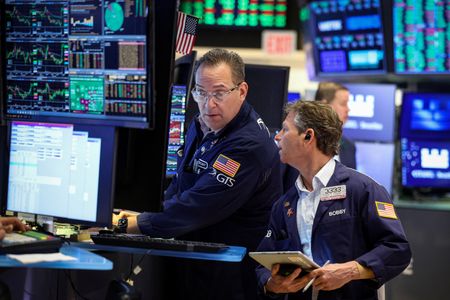

Financial markets are showing signs of nervousness as bond investors retreat to safer positions amid escalating Middle East tensions, particularly focusing on short-term U.S. Treasury securities before the Federal Reserve announces its latest policy decision.
Market analysts anticipate the Federal Open Market Committee will maintain its current benchmark interest rate between 3.50% and 3.75% when its two-day meeting concludes Wednesday. Fed officials are carefully weighing how the Iran conflict might affect their core objectives of maintaining stable prices and full employment.
Despite growing caution, many market participants expect the Middle East situation to remain limited in scope and duration, potentially restricting oil price impacts on inflation. This scenario could provide the Federal Reserve flexibility to reduce rates later this year, potentially boosting Treasury bonds and broader debt markets, according to some investors.
However, the current mix of international tensions, persistent inflation, and employment market softening has created uncertainty about the Fed’s future policy path, leading portfolio managers to exercise increased caution. This ambiguity has driven some investors away from long-term bonds until greater clarity emerges regarding both the conflict’s progression and central bank responses.
Danny Zaid, a portfolio manager at TwentyFour Asset Management, explained the current market sentiment: “Investors are more cautiously positioned and have avoided riskier parts of the bond market.”
“Volatility in rates is going to continue to be high. We continue to be neutral in duration at least until we get more clarity on the conflict,” Zaid added.
Duration represents bond risk by measuring how security values respond to interest rate changes. Maintaining neutral duration involves matching portfolio composition to benchmark standards – essentially a cautious approach that avoids extended-term commitments currently.
Recent data from J.P. Morgan’s Treasury Client Survey reveals that active clients now maintain their highest short positions since early February, demonstrating efforts to minimize interest-rate exposure.
This month has seen two-year Treasury yields surge 31 basis points, heading toward their largest monthly jump since October 2024. This reflects concerns that central banks may be unable to cut rates due to oil price-driven inflation pressures. Current U.S. two-year yields stand at 3.69%.
Many investors believe two-year yields have room to decline, arguing that short-term Treasuries have absorbed most selling pressure since the war started, pushing yields to seven-month highs.
U.S. crude oil futures have surged 46% this month, tracking toward their biggest monthly increase since May 2020.
Brad Conger, chief investment officer at Philadelphia-based Hirtle Callaghan, which manages assets for endowments and charitable organizations, outlined a critical economic threshold: “There’s a tipping point where the increase from energy-driven inflation becomes demand destruction that starts to reduce consumer spending.”
“Treasuries are a hedge against a slowdown in the economy whether the war ends quickly or whether it drags on,” Conger noted.
Interest rate futures markets have essentially eliminated expectations for Fed cuts this year. Current pricing reflects just 24 basis points of potential easing, down from 55 basis points before the war began, according to LSEG data.
Seth Meyer, global head of client portfolio management at Janus Henderson Investors, sees opportunity in the current environment: “Rates to me are becoming an opportunity, particularly on the front end of the curve. You’re eliminating most cuts in the near term.”
Wednesday’s Fed meeting will provide sharper focus on rate direction when officials release their economic projections summary, including rate forecasts called the “dot plot.”
December’s “dots,” from the Fed’s last rate cut to the current 3.50%-3.75% range, indicated only one additional 25-basis-point reduction this year. The median policymaker’s neutral rate estimate – neither restraining nor stimulating economic growth – remained at 3%.
Investors generally don’t anticipate significant guidance changes from the Fed at the upcoming meeting, given the ongoing Iran conflict.
Olumide Owolabi, head of the U.S. rates team at Neuberger Berman, expressed the prevailing uncertainty: “Determining the next step is anybody’s guess at this point. I don’t see the Fed changing its long-term outlook…just because the level of uncertainty is super elevated.”