
Oil markets experienced significant volatility Monday as ongoing conflict in the Gulf region pushed Brent crude prices close to $105 per barrel, with Iran launching additional attacks as the confrontation enters its third week.
International benchmark Brent crude climbed 1.6% to reach $104.73 per barrel, though it retreated from earlier highs above $106. Since hostilities began, this oil standard has surged more than 40%.
The U.S. oil benchmark also posted gains, rising 1% to $99.68 per barrel. This domestic standard has jumped nearly 50% since the conflict started.
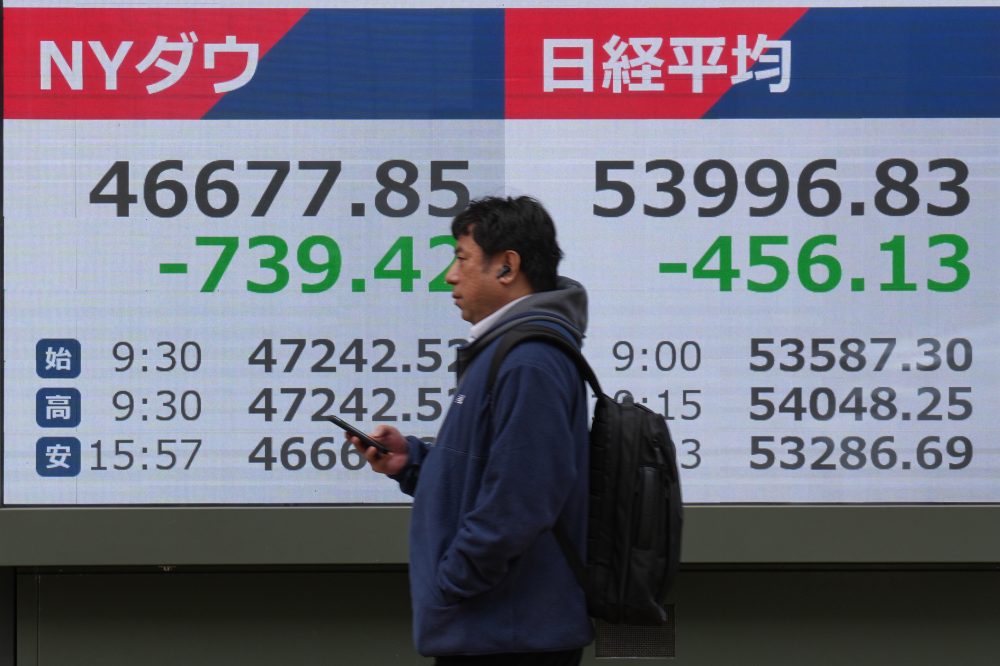
Global stock markets showed mixed results during Monday’s trading session. Japan’s Nikkei 225 dropped 0.4% to close at 53,609.49, while South Korea’s Kospi index advanced 0.6% to 5,521.17.
Hong Kong’s Hang Seng index posted a 1.1% gain to 25,755.53, contrasting with mainland China’s Shanghai Composite, which declined 0.7% to 4,066.40.
Australia’s S&P/ASX 200 fell 0.4% to 8,583.50. Taiwan’s Taiex managed a modest 0.1% increase, while India’s Sensex slipped 0.1%.
American market futures pointed to a positive opening, with S&P 500 contracts rising 0.5% and Dow Jones Industrial Average futures gaining 0.4%.
Last Friday saw Wall Street extend its losing streak as the conflict once again drove oil costs above the $100 threshold, intensifying concerns about global inflation.
The S&P 500 dropped 0.6% to 6,632.19, bringing its year-to-date decline to 3.1%. The Dow Jones Industrial Average fell 0.3% to 46,558.47, while the Nasdaq composite lost 0.9% to finish at 22,105.36. All three major indices recorded their third consecutive weekly decline.
Iran’s response to strikes by Israel and the United States has essentially blocked commercial shipping through the critical Strait of Hormuz, a narrow waterway that typically handles one-fifth of global oil transport. This blockade has forced oil companies to halt production as their crude cannot reach markets.
Independent research firm Rystad Energy reports that over 12 million barrels of oil equivalent per day have been removed from global supply in just over a week since the strait’s closure.
Despite the blockade, some tanker vessels have reportedly managed to navigate through the strait, creating additional market uncertainty.
“The truth is that at this point, much of the market is operating in the fog,” Stephen Innes of SPI Asset Management said in a commentary. “For context, the strait normally handles roughly 25 oil and LNG tankers every single day.”
Continued disruption to Persian Gulf oil production and shipping could trigger a harmful spike in global inflation rates.
International Energy Agency member nations are releasing a record 400 million barrels from emergency oil stockpiles, though this measure has failed to calm market concerns.
Rising inflation expectations are complicating Federal Reserve plans to reduce interest rates and support economic growth. The central bank is not anticipated to lower rates during this week’s policy meeting.
Recent consumer spending data released Friday revealed inflation increased in January, even before the Iran conflict caused energy prices to soar.
The Commerce Department’s Friday report showed consumer prices climbed 2.8% in January compared to the previous year. However, core prices excluding volatile food and energy costs rose 3.1%, marking the steepest increase in nearly two years.
Despite rising prices, consumers maintained solid spending with a 0.4% increase in January, while incomes grew at the same rate, the report indicated.
The University of Michigan’s latest consumer sentiment survey released Friday showed confidence dropped slightly to the year’s lowest level as gasoline prices have risen since the Iranian conflict began.
Wall Street also received updated information on fourth-quarter economic performance. The economy, hampered by last fall’s 43-day government shutdown, expanded at a weak 0.7% annual rate, below the initial estimate from last month.
In Monday’s early currency trading, the U.S. dollar weakened to 159.47 Japanese yen from 159.55 yen. The euro strengthened to $1.1442 from $1.1425.