Software company Adobe announced Friday it has reached a $150 million settlement with federal authorities over allegations the company misled customers about expensive cancellation charges and made it challenging for users to end their subscriptions.
The maker of popular software including Photoshop and Acrobat will pay $75 million directly to the U.S. government to settle the federal lawsuit. Additionally, Adobe has committed to providing another $75 million worth of complimentary services to eligible customers affected by the disputed practices.
The legal action centered on claims that Adobe failed to properly disclose significant early termination penalties associated with its widely-used subscription services, while simultaneously creating barriers that made it difficult for consumers to cancel their accounts.
The airline industry is experiencing a fundamental shift in how carriers generate revenue and reward customer loyalty, with credit card partnerships now playing a central role in their business models.
Major U.S. carriers are overhauling their frequent flyer programs to emphasize credit card usage rather than traditional flight-based rewards. This transformation reflects how banking partnerships have become a crucial income stream, sometimes rivaling what airlines earn from their core operations.
United Airlines announced significant changes taking effect April 2, 2026, where standard members without the airline’s credit card will receive just 3 miles per dollar on qualifying flights, compared to at least 6 miles for cardholders. Additionally, passengers flying basic economy fares must have a United-branded card to earn any miles at all.
Similar adjustments are happening across the industry. American Airlines has eliminated both AAdvantage miles and Loyalty Points for basic economy passengers, while Delta Air Lines allows customers to count spending on its American Express partnership cards toward elite status qualification.
Financial filings from 2021 through 2025 reveal the substantial monetary impact of these banking relationships on airline bottom lines. Banks contribute billions annually to carriers through mile purchases and loyalty program payments, creating a revenue stream less vulnerable to traditional aviation challenges like fluctuating fuel costs and passenger demand.
This financial model gains particular importance as Middle East conflicts drive jet fuel prices higher, pressuring airline profit margins. However, it also creates new dependencies on banking strategies, credit market conditions, and potential regulatory changes affecting rewards program funding.
Industry analysts note that airlines are deliberately making rewards more difficult to obtain on their lowest-priced tickets while pushing credit card adoption.
“The value provided to frequent-flyer members has decreased over time,” stated Jay Sorensen, who leads consultancy IdeaWorks. His organization’s 2025 U.S. Domestic Reward Report discovered that reward “payback” – comparing cash ticket prices to award redemption costs – has dropped approximately 50% since 2019 as multiple airlines reduced or eliminated mile-earning opportunities on budget fares.
David Robertson from the Nilson Report cautioned that if mile redemption becomes too challenging, consumers might abandon airline credit cards entirely, potentially creating pressure from banks that purchase miles in large quantities.
Airlines dispute suggestions that credit cards are replacing flight activity as the primary route to earning rewards. Alaska Airlines loyalty executive Kevin Scott emphasized that non-cardholders “continue to earn meaningful value through flying.” He described co-branded cards as program enhancements rather than replacements for traditional earning methods.
The financial scale of these banking partnerships varies across carriers but represents substantial sums industry-wide.
Delta collected $8.2 billion from American Express in 2025, representing approximately 14% of adjusted operating revenue and roughly 1.4 times their adjusted operating income. A Delta representative explained that portions of this money become immediate revenue while other amounts are held until customers redeem their miles.
American Airlines reported $6.2 billion in 2025 payments from co-brand and additional partners, about four times their adjusted operating income. The carrier anticipates its new Citi credit card agreement will help close profitability gaps with competitors Delta and United.
At Alaska Airlines, loyalty-related revenue comprises roughly 16% of total revenue, with CFO Shane Tackett noting that co-brand partnerships help maintain stable financial results despite demand fluctuations.
These arrangements also create stronger ties between airlines and their banking partners, along with exposure to credit market cycles. Delta acknowledges that nearly all marketing agreement revenue comes from American Express, while Southwest Airlines indicates most of its sold points go to JPMorgan Chase.
Payments analyst Brian Riley explained that during economic downturns, banks typically reduce lending and cut co-branded card marketing efforts, slowing new account acquisition and impacting airline earnings within two to three quarters.
The credit card-focused loyalty approach faces challenges from merchants and legislators seeking to reform the fee structure supporting rewards programs. A bipartisan congressional measure called the Durbin-Marshall proposal would mandate increased competition in payment network routing, which supporters claim would reduce merchant expenses.
Airlines for America, an industry trade organization, warned this legislation could threaten airline credit card rewards, pointing to reduced debit card rewards following similar regulatory changes. The group maintains that consumers highly value airline loyalty programs.
Merchant and consumer advocacy groups disagree with this assessment. Dylan Jeon from the National Retail Federation noted that premium rewards cards carry the highest interchange fees, with merchants frequently passing these costs to consumers, meaning non-users effectively subsidize cardholders.
Industry experts indicate that elevated U.S. interchange fees help support generous rewards programs, with research demonstrating that fee caps in Europe and Australia reduced rewards, increased annual fees, and eliminated some card products entirely.
Additionally, President Donald Trump has suggested implementing a one-year 10% cap on credit card interest rates, which banking institutions and airline organizations claim could damage rewards programs.
Airline rewards programs have attracted regulatory attention as well. A U.S. Department of Transportation representative confirmed the department requested information about rewards programs and policies from American, Delta, Southwest, and United in 2024. All four airlines provided responses currently under departmental review.
John Breyault, public policy vice president at the National Consumers League, argued for enhanced disclosure requirements since airlines can modify earning and redemption values without providing customers clear advance warning.
“The modern airline is a gigantic rewards program that just happens to fly airplanes,” Breyault observed.
A German technology startup is moving forward with ambitious plans to construct a major artificial intelligence data center that would significantly boost the country’s domestic computing capabilities.
Polarise announced its intention to develop a 30-megawatt AI data center in Amberg, Bavaria, with operations expected to begin by mid-2027. The project represents a substantial expansion that would double Germany’s current domestically-operated computing capacity.
The facility could potentially grow to 120 megawatts in future phases, according to company officials. This development comes as European nations increasingly prioritize gaining greater sovereignty over essential technology infrastructure amid rising global tensions and varying international regulations regarding online content.
At the end of last year, Germany’s AI data centers had a combined capacity of 530 megawatts, based on data from Bitkom, a German technology industry association. However, foreign providers operated much of that capacity.
The proposed facility would rank among Germany’s largest data centers, though it would still be smaller than typical installations operated by major technology corporations like Google and Amazon Web Services, which usually run centers of 100 megawatts or higher.
Polarise currently manages 13 data centers across Germany and internationally. Company officials declined to specify the exact investment amount required for the new project.
“The final investment volume depends heavily on how many customers install their own servers or rent computing power,” explained Marc Gazivoda, who serves as Polarise’s marketing director. He noted that the company operates without state subsidies and that investment levels could fluctuate.
An individual familiar with the project indicated that the initial development phase would require investment “in the triple-digit million euro range.” This figure covers primary infrastructure but excludes the computer chips themselves, with final costs varying based on the quantity and types of processors needed.
Last month, Polarise opened a 12-megawatt data center in Munich with an estimated cost of 1 billion euros ($1.16 billion), according to Deutsche Telekom’s assessment. That facility had already doubled Germany’s existing locally-operated capacity before the new Amberg project was announced.
Energy costs for power-intensive data centers have become an increasing concern as oil prices have risen above $100 per barrel.
To address power needs, Polarise indicated that its partner WV Energie will establish wind and solar power generation facilities for the center, along with battery systems for temporary electricity storage.
SAN FRANCISCO, March 13 – Nvidia CEO Jensen Huang will take center stage at a packed Silicon Valley hockey arena Monday to launch his company’s annual developer conference, where he’s expected to unveil new products and partnerships designed to maintain the AI chipmaker’s dominance against rising competition.
The Nvidia GTC conference, spanning four days in the heart of Silicon Valley, has evolved into Huang’s signature platform for demonstrating the company’s latest artificial intelligence innovations across chips, data centers, programming software CUDA, digital AI assistants, and robotics technology.
This year’s gathering carries heightened importance as investors look for confirmation that Nvidia’s strategy of reinvesting profits back into AI development is delivering results.
“I expect Nvidia to present a full-stack roadmap update from Rubin to Feynman while emphasizing inference, agentic AI, networking, and AI factory infrastructure,” eMarketer analyst Jacob Bourne explained, referencing Nvidia’s current and upcoming chip generations.
While Nvidia’s processors power hundreds of billions in global data center investments by governments and corporations worldwide, the company now confronts challenges from competing chipmakers and even some customers creating their own processing units.
Industry experts speaking with Reuters anticipate continued growth in the overall AI chip sector, though they predict Nvidia’s market dominance may decline as the industry rapidly evolves toward AI agents that move between computer programs to complete human tasks. This represents a departure from training applications, where AI laboratories connect multiple Nvidia chips to process massive datasets for model development.
These digital agents are projected to become so widespread that humans will require additional AI management systems – what experts term an “orchestration” layer – to coordinate between users and their agent networks.
Analysts note this development benefits Nvidia by demonstrating AI’s growing practical value.
However, these operations, known as “inference” in the AI field, can operate on alternative chip types, including processors that major Nvidia clients like OpenAI and Meta are developing independently. Meta recently announced plans to release new AI chips biannually.
“Nvidia is definitely going to see more competition compared to a year ago,” stated KinNgai Chan, managing director at Summit Insights Group. “Nvidia still has close to over 90% market share in both training and inference markets today.”
“We think Nvidia will begin to see share loss starting in 2027, once in-house ASIC programs gain some scale especially in the inference market,” Chan added, referring to specialized circuits designed for specific functions that offer greater efficiency than standard graphics processors.
Nvidia has been strengthening its competitive position, spending $17 billion in December to acquire Groq, a startup specializing in rapid, cost-effective inference computing. During last month’s earnings call, Huang indicated the company would demonstrate at GTC how Nvidia plans to integrate Groq’s high-speed AI capabilities into their established CUDA platform.
Third Bridge analyst William McGonigle said his organization expects Nvidia to introduce new server systems combining Groq’s processors with Nvidia’s networking solutions to deliver fast, economical products.
Central processing units, or CPUs – the chip category long dominated by Intel and Advanced Micro Devices – present another growing competitive challenge to Nvidia.
Though these processors were overshadowed by Nvidia’s graphics units in recent years, McGonigle said they are “back in focus” and anticipates Nvidia will demonstrate servers using exclusively its CPUs, which Huang promoted during a recent earnings presentation.
“With the rise of agentic AI, the bottleneck is now at the agent orchestration level, which is carried out by the CPUs,” McGonigle explained.
Industry watchers also expect Nvidia to detail its $2 billion investments in both Lumentum and Coherent, companies that manufacture lasers for transmitting data between chips using light beams. Implementing these lasers in co-packaged optics could accelerate connections between Nvidia’s processors within large data centers, though current production volumes don’t match Nvidia’s annual chip sales.
“Nvidia will likely frame co-packaged optics as key to connecting massive AI clusters more efficiently, but the challenge is making it affordable enough to deploy at scale,” eMarketer’s Bourne observed.
Financial markets are bracing for crucial Federal Reserve decisions this week as the ongoing Middle East conflict creates uncertainty around anticipated interest rate reductions.
The Federal Reserve will convene for its first policy meeting since U.S. and Israeli forces launched airstrikes against Iran approximately two weeks ago, triggering significant oil price increases that have impacted financial markets worldwide.
During their two-day session, Fed officials must consider how the energy price shock affects both inflation rates and economic expansion. The central bank plans to publish updated economic forecasts on Wednesday. Financial markets have scaled back expectations for rate reductions following the conflict, despite earlier optimism from investors counting on such cuts to boost stock performance this year.
“The Fed is going to be front and center, especially given the fact that we have seen the market push back… these rate cut expectations,” explained Angelo Kourkafas, senior global investment strategist at Edward Jones.
American stock markets have declined and volatility has increased since the Iran conflict started. Market participants are closely monitoring dramatic oil price movements, with U.S. crude reaching nearly $120 per barrel early in the week before settling near the significant $100 threshold. Iranian officials warned the global community should prepare for $200 oil as their military forces targeted commercial vessels.
The S&P 500 benchmark index had dropped more than 4% from its January record high as of Thursday, heading toward its third consecutive weekly loss.
“We’re seeing wild swings in the market as traders are latching on to any hint of developments, positive or negative, on the Iran conflict,” noted Sid Vaidya, chief investment strategist at TD Wealth.
Market analysts widely anticipate the Fed will maintain current interest rates unchanged for the second meeting in a row when announcing its policy decision Wednesday. The central bank reduced rates last year to support a weakening job market but halted further cuts in January after noting decreased risks to employment and inflation.
Investors had been counting on additional rate reductions this year, which typically boost stock and asset values. However, these expectations have diminished due to concerns that rising energy costs will drive inflation higher.
“We believe this will just keep the Fed in a holding pattern for longer,” Vaidya stated.
Meanwhile, February’s unexpectedly poor employment report might encourage the Fed to maintain its accommodative stance.
Federal funds futures markets on Thursday reflected expectations for approximately one quarter-point rate cut by December, down from two such reductions projected in late February before the war commenced, based on LSEG data.
The Fed will publish updated projections from policymakers regarding future rate expectations, along with inflation and employment forecasts. Federal Reserve Chair Jerome Powell’s Wednesday press conference following the policy announcement could provide insights into how officials view the conflict’s economic impact.
“I think it’s going to set the table for the year and how to look at inflation being induced by oil prices,” said Paul Nolte, senior wealth adviser and market strategist at Murphy & Sylvest Wealth Management.
This represents Powell’s second-to-last meeting before his chairmanship concludes in May. The next rate adjustment may not occur until President Donald Trump’s Fed chair nominee, former Fed Governor Kevin Warsh, assumes leadership of the central bank.
Next week will also feature Nvidia’s annual developer conference, which could renew attention on artificial intelligence investments that created technology sector volatility earlier this year.
However, investors expect Iran-related developments will continue dominating market sentiment.
“Headlines continue to drive market movements as investors wait for greater clarity on the timing of a U.S. exit strategy,” Adam Turnquist, chief technical strategist for LPL Financial, wrote in Thursday commentary.
Target’s newly appointed CEO Michael Fiddelke has announced his first major initiative since assuming leadership last month: reducing prices on over 3,000 items across the retailer’s stores.
The price reductions, ranging from 5% to 20% on clothing, household items, and everyday necessities, echo the approach used by his predecessor Brian Cornell throughout his decade-long leadership of the company. However, Cornell’s similar pricing strategies delivered only temporary improvements in sales performance.
This latest pricing initiative comes as Fiddelke faces mounting pressure from investors to demonstrate that his increased spending plans for the year will generate better financial results and that his comprehensive strategy outlined during his inaugural investor presentation on March 3 can halt three consecutive years of sales declines.
“The price cuts are a step in the right direction, but they alone are not enough to win back customers. The winning playbook is broader than simply lowering prices,” said CFRA analyst Arun Sundaram.
Target has implemented multiple price reduction campaigns from 2017 through 2024, responding to fierce competition from Walmart, Aldi, Amazon, and other retailers that sparked industry-wide pricing battles, often timed around holiday seasons or major strategic adjustments.
Following Target’s decision to lower prices on 5,000 products in 2024, the company briefly experienced positive same-store sales growth. However, this improvement proved temporary as Target’s heavy dependence on customers’ discretionary purchases during a period when consumers focused primarily on essential items led to renewed sales pressure.
The retailer has experienced declining revenues for five consecutive quarters, with operating profits falling for the last three quarters, though the rate of year-over-year decline has begun to moderate.
Target shareholders have witnessed total returns decrease by more than 20% over the past five years, a stark contrast to competitors Walmart and Costco, which have achieved gains exceeding 200% during the same timeframe. The priority for Target now centers on rapidly attracting customers back to stores amid intense competition and widespread consumer bargain-seeking behavior.
Target representatives did not respond to requests for comment.
“Target’s new chapter is all about fueling growth, and we’ll do so by playing our own game and making big changes to delight our guests,” Fiddelke stated last week.
Industry observers have highlighted his urgent approach to implementing changes. Following his presentation, investors drove Target’s stock price up 6% that day.
Fiddelke has increased the company’s annual budget to $6 billion, promising more fashionable clothing inventory, accelerated delivery services, and artificial intelligence integration across Target’s approximately 2,000 store locations.
His transformation strategy encompasses $5 billion in capital investments, representing a one-third increase from the previous year. The plan allocates $1 billion toward faster product restocking, new store openings, and renovations of current locations. The grocery segment will receive more than $1 billion in investment, with stores expanding space dedicated to fresh food offerings.
The retailer will also restructure some locations as fulfillment-focused distribution centers while others concentrate on serving in-store shoppers, departing from the previous approach of utilizing nearly all stores as mini-fulfillment facilities. Fiddelke has also committed an additional $1 billion toward operational expenses.
“Fiddelke’s pace is aggressive but realistic if store execution and supply chain stay disciplined,” said Michael Ashley Schulman, a partner at wealth management advisory firm Cerity Partners. “The challenge is to do this consistently across 2,000 stores. Retail turnarounds rarely get a second shot, and this is a big bet on consistency.”
Cornell’s tenure at Target involved a decade-long effort to transform the company, producing varying degrees of success. Target withdrew from unprofitable Canadian operations in 2015, resulting in substantial financial write-downs during Cornell’s leadership. In a move comparable to Fiddelke’s current investment strategy, Cornell allocated $7 billion in 2017 for store renovations, which ultimately compressed profit margins.
Fiddelke, who previously held both chief operating officer and chief financial officer positions at Target, has projected sales growth for every quarter this year. He has also forecasted an adjusted operating income margin of 4.8% for 2026, representing a 20 basis point improvement over last year’s performance.
Walmart, renowned for generating substantial sales volumes through thin profit margins, anticipates an operating margin reaching 4.4% for the same timeframe, along with comparable revenue growth.
Target currently carries higher debt levels than Walmart, providing less financial flexibility as it increases spending. Capturing market share may prove challenging for Target, given that Walmart has established dominant positioning in the crucial grocery sector.
Jay Woods, chief market strategist at Freedom Capital Markets, noted that benefits from a return-to-fundamentals retail approach will emerge gradually.
“The question is not only can (Fiddelke) do it, but will investors have the patience to wait.”
French automotive manufacturer Renault has announced an ambitious five-year expansion plan that targets a 23% increase in vehicle sales by 2030, with international markets playing a central role in the company’s growth strategy.
The automaker revealed on March 10 that it intends to sell 50% of its Renault-branded vehicles in overseas markets by the end of the decade, a significant jump from the current 38%. This international push comes as the company faces mounting pressure from budget-friendly Chinese competitors such as BYD and Chery, along with established European rivals like Stellantis.
Renault’s expansion blueprint includes launching 36 new vehicle models over the next five years, with 14 specifically designed for markets beyond Europe. This represents a dramatic increase from the eight international models introduced in the previous five-year period.
The company projects annual sales of more than 2 million Renault-branded vehicles by 2030, representing a 23% increase from the 1.63 million units sold in 2025. CEO Francois Provost, who assumed leadership last year, emphasized the company’s commitment to global competitiveness.
“We will show that we are here for the long term and we will become the benchmark for the European automotive industry on the global stage,” Provost stated.
The French manufacturer plans to leverage partnerships with companies like China’s Geely to strengthen its presence in South America and South Korea, while relying primarily on internal technology development for European products.
Renault’s current position marks a significant improvement from five years ago, when substantial financial losses forced the company to withdraw from multiple international markets and eliminate thousands of positions.
The automaker will continue investing in electric vehicle technology despite reduced U.S. government support for EVs under the current administration. Renault plans to introduce 16 fully electric models by 2030, representing 44% of its total planned lineup.
A new electric vehicle platform scheduled for 2028 will feature a range-extender option with a backup gasoline engine, providing up to 870 miles of driving range. The company will also utilize its Horse Powertrain partnership with Geely to create smaller engines for hybrid vehicles.
Two new models will be unveiled at the company’s research facility near Paris: the Bridger, a compact SUV designed for the Indian market, and the Dacia Striker, a crossover wagon intended to compete with Volkswagen Group’s Skoda Octavia.
While President Trump champions apprenticeship programs as a cornerstone of his vision for American worker prosperity, a manufacturing facility in Conway, Arkansas is putting these training initiatives to the test.
At Virco Manufacturing, apprentice Caleb Moss operates sophisticated precision equipment as part of a workforce development program that reflects the administration’s broader push to strengthen job training opportunities across the country.
The Arkansas company’s experience with apprenticeship training comes as questions emerge about whether the Trump administration’s financial commitments to such programs will prove adequate to achieve the president’s ambitious goals for American workers.
Trump has positioned these hands-on training programs as essential to delivering what he calls a “golden era” for the nation’s workforce, particularly in manufacturing sectors that have faced significant challenges in recent decades.
Telecommunications company Veon announced Friday that its core profits jumped approximately 19% for the full year, powered by increased demand for digital services as the company prepares to bring its Starlink satellite partnership to Bangladesh.
The digital services operator reported earnings before interest, taxes, depreciation, and amortization (EBITDA) of $2 billion. Digital services revenue surged 62.5% over the year, now accounting for 17.3% of the company’s total income.
CEO Kaan Terzioglu explained to Reuters that operations in Ukraine demonstrated the limitations of ground-based networks, citing challenges from landmines blocking technician access to power outages shutting down cell towers, making satellite integration necessary.
Following Bangladesh, the technology will roll out to Uzbekistan and Pakistan, Terzioglu disclosed.
According to Terzioglu, Veon has become “the largest partner when it comes to the number of customers utilizing direct-to-cell technology of Starlink,” serving nearly 5 million users in Ukraine over four months with 7 million messages transmitted through the network.
In Pakistan, Veon’s Jazz division obtained 190 MHz during this week’s spectrum auction – the biggest single allocation – setting the stage for 5G network rollout.
Terzioglu commended Pakistan’s strategy to triple available spectrum while cutting costs, describing it as “a best practice the world needs to hear.”
While acknowledging he’s watching potential conflict between Pakistan and Afghanistan, he noted that lessons from Ukraine and the COVID-19 pandemic proved “when things get difficult, our services become more essential.”
The company’s total digital monthly active users climbed to 135.5 million, representing an 11.4% year-over-year increase.
Regarding future growth, Terzioglu said he’s “continuously monitoring” markets with populations exceeding 100 million that lack sufficient banking infrastructure, identifying them as natural expansion targets given Veon’s expertise in providing digital services through telecommunications networks.
Looking ahead to 2026, Veon projects revenue growth between 9%-12% and EBITDA growth of 7%-10%.
A major milestone has been reached in the automotive technology sector as Geely, the Chinese car manufacturer, secured European Union approval for its intelligent driving assistance technology on Friday.
The company’s G-ASD smart driving system has become the first Chinese-developed driver assistance technology to gain certification under European Union regulations for advanced automated driving features, according to a statement from Geely Holding.
This regulatory approval means that automobiles featuring Geely’s G-ASD technology can now be marketed and sold across select European Union member nations without requiring any additional certification processes from those individual countries.
The certification represents a significant breakthrough for Chinese automotive technology in the competitive European market, where safety and technology standards are particularly stringent.
Leading financial institutions have updated their oil price projections for 2026 as the Iranian conflict reached nearly two weeks on Friday, with Goldman Sachs and Bank of America among the major firms adjusting their forecasts.
Energy market specialists predict oil costs will stay high in the immediate future while they evaluate potential supply chain interruptions through the Strait of Hormuz, a critical waterway handling more than one-fifth of worldwide oil transportation. Most analysts predict market stabilization in the latter part of the year.
Both Brent and U.S. West Texas Intermediate crude futures climbed to their peak levels since June 2022 during this week’s trading, with Brent posting gains exceeding 10% and WTI rising more than 7% for the week.
Iran’s newly appointed Supreme Leader, Mojtaba Khamenei, declared on Thursday his intention to maintain the closure of the Strait of Hormuz as a bargaining tool against the United States and Israel, while the ongoing Middle Eastern crisis continues affecting millions of people and creating instability in global energy and financial sectors.
Goldman Sachs has set Brent crude targets at $77 per barrel for 2026 and $71 for 2027, with WTI projections at $72 and $67 respectively. The firm anticipates Brent will average $75 per barrel over the next three months and $71 per barrel over the coming year.
BMI Research forecasts Brent at $70 per barrel for both 2026 and 2027, with WTI estimates at $68 for each year. They project Brent will average $67 per barrel in the third quarter of 2026 and $69 per barrel in the fourth quarter.
Citigroup has established Brent targets at $71 for 2026 and $64 for 2027, with WTI projections at $68 and $61. The bank sees Brent averaging $75 per barrel in the first quarter of 2026, $78 in the second quarter, and $68 in the third quarter.
Bank of America projects Brent at $78 per barrel for 2026 and $65 for 2027, with WTI estimates at $73 and $61. The bank expects Brent to average $80 per barrel in the second quarter of 2026, but anticipates a return to $65 per barrel averages in 2027 as pre-conflict supply surpluses return.
HSBC has set higher targets with Brent at $80 for 2026 and $70 for 2027, projecting WTI at $76 and $67 respectively.
Macquarie Bank warns that crude prices could potentially surge to $150 per barrel or higher if the Strait of Hormuz blockade continues for multiple weeks.
UBS forecasts Brent at $72 for 2026 and $70 for 2027, with WTI at $68 and $66. The bank anticipates prices could climb above $100 per barrel and reach severe demand destruction levels of $120 or more if Hormuz shipping lanes remain blocked.
Families throughout New England are experiencing financial strain as energy costs surge across the region. The harsh winter weather combined with escalating home heating oil expenses tied to Middle Eastern conflicts is creating budget challenges for many households.
The dual impact of severe cold temperatures and elevated fuel costs is making it increasingly difficult for residents to manage their monthly expenses, putting additional pressure on family finances during an already challenging season.
American companies that produce liquefied natural gas are experiencing a surge in business as international buyers seek energy alternatives during the Iranian conflict.
The war has created heightened demand for U.S. energy exports as nations look to secure reliable fuel sources outside the volatile Middle East region. Energy producers across the country are capitalizing on this increased international appetite for American-made liquefied natural gas.
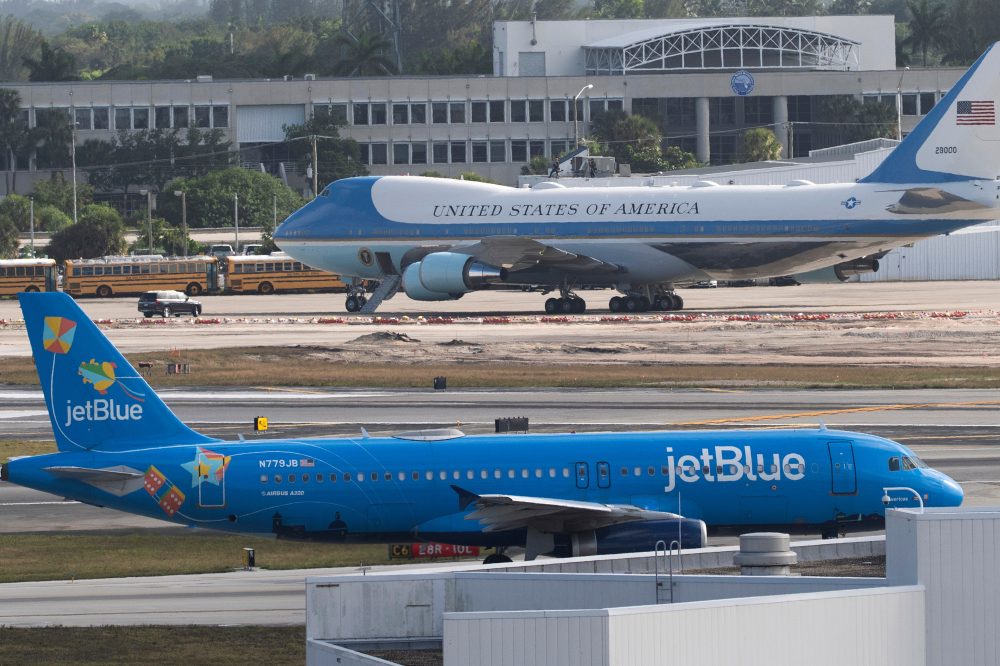
Federal aviation officials suspended all JetBlue Airways operations nationwide on Tuesday after the airline itself asked for the halt, according to the Federal Aviation Administration.
The flight suspension affects JetBlue aircraft traveling to every destination in the carrier’s network, based on the official notice.
Neither JetBlue nor federal aviation authorities have explained the reason behind the airline’s request for the operational halt or provided details about when normal flight operations might resume.
Both the airline and the Federal Aviation Administration have not yet responded to requests for additional information from news organizations.
JetBlue Airways, which began operations more than two and a half decades ago, operates from its main headquarters in New York City and maintains its primary hub at John F. Kennedy International Airport in that city.
Australia’s flagship airline Qantas Airways announced Tuesday that it will raise ticket prices on international flights this week as jet fuel expenses climb due to ongoing Middle East conflicts.
In a company statement, the Australian carrier revealed it is also evaluating the possibility of expanding service capacity on current European flight paths over the next several months.
The ongoing U.S.-Israeli conflict with Iran has driven oil prices higher, disrupting international travel patterns and raising concerns about potential widespread flight cancellations and a significant downturn in the travel industry.
Ticket costs for flights between Asia and Europe have already jumped sharply as airlines face restricted airspace access and reduced flight availability.
Earlier the same day, Air New Zealand, which competes with Qantas, revealed similar widespread price increases, marking one of the first major airlines to implement such changes since the conflict began.
In an email response to Reuters, Qantas reported that its European flight schedule remains unchanged and planes are operating at more than 90% capacity during March, representing approximately 15 percentage points higher than normal occupancy rates for this period.
“More customers have also been choosing to travel to Europe via the United States, other Asian cities, and Johannesburg, connecting through Qantas’ partner airline network,” Qantas said.
“We are exploring options to redeploy capacity into Europe on existing routes in the coming months.”
A heated legal dispute between two electric aircraft manufacturers has escalated, with Archer Aviation filing serious allegations against competitor Joby Aviation regarding undisclosed Chinese government connections.
In a countersuit submitted to federal court on Monday, Archer claims that Joby engaged in fraudulent activities by concealing its relationship with China while securing U.S. government funding and advantages. The lawsuit alleges that Joby misrepresented aircraft materials from China as consumer products to avoid tariffs and regulatory scrutiny.
The legal battle began when Joby took Archer to court in November, claiming trade secret theft. Joby alleged that Archer recruited one of its employees who brought sensitive company information including business plans, partnership details, and aircraft designs to the competing firm. The case was later transferred to federal court in December.
Joby’s legal representative Alex Spiro dismissed the countersuit claims. “Archer’s constant legal issues and flailing business operations have left it no choice but to resort to invented nonsensical theories,” Spiro stated. “We will see them in court.”
The countersuit further alleges that Joby received financial support and grants from Chinese authorities while maintaining what Archer describes as “a profound, undisclosed foreign dependency.” Archer contends that Joby has been “wrapping itself in the American flag” instead of being transparent about its Beijing connections, which allegedly provided unfair market advantages.
The timing of the countersuit coincides with a U.S. Department of Transportation announcement regarding eight new grant programs designed to accelerate air taxi and drone technology development. Both Archer and Joby are listed as participants in three of these programs.
These grant initiatives were originally announced by former President Trump as part of efforts to compete with China’s advancing drone and air mobility technologies.
Both companies are part of the rapidly growing electric vertical takeoff and landing aircraft industry, working to obtain certification and launch their flying vehicles to meet growing demand for faster, environmentally friendly urban transportation solutions.
Swiss engineering giant ABB is launching an aggressive acquisition campaign and has the financial firepower to complete several major deals worth billions of dollars, according to Chairman Peter Voser in an exclusive interview with Reuters.
Speaking from ABB’s headquarters in Zurich, Voser revealed that the company, which carries a market valuation of $159 billion, is currently assessing potential purchases ranging up to hundreds of millions of dollars while remaining ready to pursue much larger opportunities.
“If you look at our balance sheet and the cash flow we produce every year, and the $5 billion coming in from the robotics divestment, we could also do more than one larger deal,” Voser explained during the March 13 interview.
This marks a significant strategic shift for ABB, which has spent recent years divesting assets, including last year’s robotics division sale to SoftBank, rather than making major acquisitions.
When asked about speculation that ABB had explored a potential bid for French electrical equipment manufacturer Legrand, valued at approximately $43 billion, Voser remained tight-lipped about specific targets.
“ABB has never done such a large deal but generally speaking I wouldn’t completely rule out a deal of that size in the future,” he stated, though he noted that transactions similar to the company’s record $4.2 billion Baldor motor manufacturer acquisition were more probable.
The engineering firm, which competes directly with industry leaders Siemens and Schneider Electric, has recently concentrated on improving profit margins while divesting operations outside its core focus areas of electrification products for data centers and automation systems.
Voser indicated that upcoming acquisitions would target the electrification, motion, and automation sectors, noting the company remains “constantly in negotiations” regarding smaller transactions while larger deals continue to be discussed at the highest corporate levels.
“We want to grow organically by 5-7% on average per year, but we have aspirations to grow more, and that will come through M&A,” he said, referencing sales targets.
Addressing geopolitical concerns, Voser, a former Shell CEO, warned that the ongoing Middle East conflict could potentially disrupt global energy markets and economic demand if it continues.
“The longer it lasts, the more the global economy will suffer — you will get energy shortages, prices will go up, and that should have a direct impact on demand,” he cautioned.
The chairman emphasized that even a quick resolution wouldn’t immediately restore normal operations, explaining that complex energy infrastructure requires significant time to restart.
“To restart a refinery is not a one-day show; it will take one or two months before the whole global energy supply system would be fully working again,” Voser noted.
Despite these concerns, the IBM board member expressed continued optimism about demand related to electrifying data centers supporting artificial intelligence operations, which has emerged as a key growth driver for the company.
However, he issued a warning about potential instability in the AI sector, suggesting that debt-financed AI companies lacking revenue streams may face challenges, particularly creating credit pressures in the United States.
The 67-year-old executive, who has served as ABB’s chairman since 2015, also hinted at upcoming board changes beginning next year, potentially paving the way for his own departure by 2028 when he reaches age 70.
“We’re planning to make some changes to the board and then obviously at some stage my time comes as well,” he concluded.
A major European semiconductor company has announced an innovative approach to modernizing its manufacturing operations by introducing humanoid robots while simultaneously retraining its workforce, rather than shutting down older facilities.
STMicroelectronics revealed its strategy during a semiconductor industry conference held Thursday in Sopot, Poland, organized by the trade group SEMI. Thomas Morgenstern, who oversees manufacturing operations for STMicro, demonstrated the company’s vision by showing footage of a robotic worker handling silicon wafer carriers.
“This is the first one we have,” Morgenstern explained. “In the next couple of years, we are talking about numbers beyond one hundred humanoids doing jobs in our facilities.”
The initiative comes as European semiconductor manufacturers like STMicro and competitor NXP confront intensifying competition from global rivals, especially Chinese companies operating state-of-the-art automated production facilities that deliver superior efficiency.
Legacy chip manufacturing facilities, commonly called “fabs” in the industry, need substantial capital investment to remain competitive, yet many cannot accommodate newer equipment. Demolishing and reconstructing these plants presents complex challenges including steep costs, regulatory obstacles, and labor union negotiations across Europe.
Current EU Chips Act subsidies typically support only cutting-edge “first-of-a-kind” initiatives, leaving older manufacturing sites without funding eligibility. However, industry organizations like SEMI are advocating for expanded investment in existing supply chains and established industrial capabilities through a potential Chips Act 2.0.
STMicroelectronics launched a major restructuring effort in October 2024 involving the planned reduction of 5,000 positions. While the company has made headway with this initiative in France, similar efforts have encountered obstacles in Italy, underscoring the operational challenges facing the semiconductor manufacturer.
According to Morgenstern, the humanoid robots will handle routine and physically intensive work, enabling human employees to transition into more specialized positions where the company faces staffing shortages. The organization has initiated comprehensive training programs to prepare workers for these evolving job requirements.
“If you have a three or four-shift system, one humanoid can replace three out of four shifts,” Morgenstern told Reuters. “We don’t want to close any facility in Europe … the goal is to increase efficiency.”
German automotive giant Volkswagen announced Friday that it has commenced manufacturing of its inaugural electric vehicle created through a collaboration with Chinese electric car manufacturer Xpeng, marking a significant step in the company’s ambitious plan to regain its footing in the Chinese market through the introduction of more than 20 new models throughout this year.
The electric SUV, called the ID. UNYX 08, represents Volkswagen’s most extensive electric vehicle initiative ever undertaken in China, a crucial market where the German manufacturer is working to match the competition from domestic brands like BYD and Geely.
This new vehicle, scheduled for retail availability during the first six months of this year, symbolizes Volkswagen’s refreshed approach in the globe’s largest automotive marketplace, emphasizing domestic development and accelerated production timelines.
The German automaker has stated that its China-focused platform enables 30% faster vehicle development cycles. The company reported completing the ID. UNYX 08 from concept to production within a 24-month timeframe.
“Our ‘in China, for China’ strategy is delivering results,” said Ralf Brandstätter, Volkswagen Group board member for China.
“With the ID. UNYX 08, we are launching the Group’s largest electric vehicle offensive in China.”
The continent’s biggest automaker confronts another challenging year, characterized by trade tariffs and its struggle to reclaim China, its most important individual market, where it has surrendered territory to domestic competitors who have moved more rapidly to introduce technology-rich, affordable electric vehicles.
Chinese manufacturer Geely Auto surpassed Volkswagen in Chinese sales during the previous year, pushing the German company to third position after ending its ten-year market leadership, which BYD claimed in 2024.
Counting the more than 20 battery-electric and plug-in hybrid models planned for release by 2026, Volkswagen intends to introduce a combined total of 50 new electric vehicles in China before 2030.
The ID. UNYX 08 stems from a 2023 technological alliance with Xpeng, which supplies Volkswagen with self-driving technology and Turing AI processors incorporated into the new model.
A second collaboratively designed electric vehicle with Xpeng is planned for introduction later this year.
Production of both models will occur at Volkswagen’s Hefei manufacturing facility, located west of Shanghai, which maintains yearly production capability of 350,000 vehicles and currently manufactures the Cupra Tavascan SUV for European export markets.
Financial markets worldwide are grappling with mounting concerns over a prolonged Middle East conflict that could push oil prices to nearly $100 per barrel, triggering widespread selling in both bond and stock markets as investors worry about stagflation.
With leaders from Iran, Israel, and the United States maintaining firm stances as the conflict nears its two-week anniversary this Friday, market participants are preparing for continued instability by adopting defensive positions and purchasing U.S. dollars.
The diminishing possibility of a swift conflict resolution has dramatically altered expectations for global interest rates. Market participants have abandoned expectations for Federal Reserve rate cuts this year, a stark contrast to February when two reductions were anticipated.
Regarding the European Central Bank, financial markets now fully expect a rate increase by July, with a 70% probability of another hike by December. This represents a complete reversal from February, when traders saw approximately a 40% likelihood of rate cuts before year’s end.
Given these changing rate projections, several central bank meetings scheduled for next week will draw significant market attention as officials have opportunities to share their perspectives on inflation, interest rates, and economic growth.
European benchmark Bund yields reached their highest point in nearly two and a half years Thursday, while rate-sensitive two-year U.S. Treasury yields climbed to a six-month peak.
Among safe-haven assets, only the U.S. dollar has maintained strength since hostilities began, rising more than 2% against six major currencies.
Asian markets received some positive news as the United States granted a 30-day exemption allowing countries to purchase sanctioned Russian oil and petroleum products currently stuck at sea. This announcement helped ease oil prices and reduced some stock market losses.
Treasury Secretary Scott Bessent described the decision as a measure to bring stability to global energy markets, though the subdued market response highlighted persistent inflation concerns and pessimistic investor attitudes worldwide.
Both U.S. and European stock futures indicate a modestly positive opening, though maintaining that upward trend remains uncertain.
Important economic data releases scheduled for Friday include UK GDP figures, France’s consumer price index, and eurozone industrial and manufacturing statistics.
The tech giant Apple announced Thursday it will reduce commission charges for developers operating through its App Store in mainland China, marking a significant victory for Chinese app creators following regulatory pressure in what represents Apple’s second-biggest market globally.
Beginning Sunday, the California-based company will decrease fees for in-app purchases and paid transactions from the current 30% down to 25%, according to a company statement posted online. Developers participating in Apple’s small business and mini apps partner programs will see even steeper cuts, with their fees dropping from 15% to 12%.
The term “mini apps” describes smaller software programs that function inside larger applications, such as those found within Tencent’s popular WeChat platform.
This development represents a major breakthrough for Chinese app developers and companies operating “super apps,” including tech giants Tencent and ByteDance, the parent company of TikTok. These platforms serve as hosts for numerous smaller applications developed by third-party creators.
According to a Thursday report from the state-run Economic Daily, the fee reduction could save Chinese developers more than 6 billion yuan ($873 million) in operational expenses each year. The publication presented this change as beneficial for Chinese digital consumers.
“This adjustment will … improve consumption choices and information transparency,” the Economic Daily reported.
“The premium for digital goods and services on the iOS side will be gradually eliminated, and the prices of membership subscriptions, game recharges, live broadcast tips, mini programs and other scenarios are expected to decrease, which is expected to save consumers up to nearly 1 billion yuan per year.”
The controversial 30% commission, often called the “Apple Tax,” continues to face antitrust examination from regulators around the world. European Union legislation implemented in 2024 compelled Apple to reduce commission rates to between 10% and 17% for developers. Meanwhile, in the United States, Apple now permits users to make in-app payments through alternative payment systems.
“In China’s case, (Apple) have been talking with the IT ministry and other departments, and have been requested or pressured to reduce their fees,” explained Rich Bishop, who founded AppInChina, a consulting firm that helps international software developers launch their applications in China.
The timing of this announcement is notable, as it takes effect on World Consumer Rights Day this Sunday, when Chinese state media traditionally spotlights companies accused of violating consumer rights. Apple faced similar scrutiny in 2013 when state broadcaster CCTV criticized the company’s customer service practices, resulting in a public apology from Apple.
Bishop suggested that Chinese authorities might eventually require Apple to process App Store revenue domestically rather than overseas, while also increasing regulatory supervision of foreign applications distributed in China.
Apple has previously complied with Chinese internet regulators’ requests to remove certain applications, including virtual private networks (VPNs), from its China App Store.
VPNs work by masking users’ actual locations through reassigned device codes, allowing Chinese users and foreign businesses operating in China to circumvent the country’s strict internet censorship of international websites.
Bloomberg News reported last year that China’s antitrust authority was considering an investigation into Apple’s policies and App Store fees, while Chinese consumers filed an antitrust complaint regarding the company’s fee structure last October. Google recently reduced Android developer fees globally.
The fee reduction extends to international developers whose applications are available through the China App Store.
“Duolingo, the top-grossing education app in China, makes about $50 million a year from the Chinese market and this will be saving them a decent amount of money,” Bishop noted.
Elon Musk’s space exploration company SpaceX is reportedly favoring the Nasdaq stock exchange for its highly anticipated initial public offering, which industry experts believe could set records as the largest IPO ever conducted, according to four individuals with knowledge of the company’s internal discussions.
The rocket and satellite manufacturing giant has made early admission to the prestigious Nasdaq 100 index a key requirement for any potential stock market debut on the technology-focused exchange, two sources revealed. However, these plans remain fluid and subject to change, noted the individuals who requested anonymity due to the sensitive nature of the ongoing deliberations.
Previous reporting has indicated SpaceX is targeting an IPO timeline as soon as this June.
The New York Stock Exchange remains in contention for the high-profile listing, with neither exchange having received final word on SpaceX’s decision, according to multiple sources close to the situation.
The Nasdaq 100 index, managed by Nasdaq Inc, represents a premier collection of blue-chip stocks closely monitored by major institutional investors and serves as a key indicator of market health for the world’s largest publicly traded companies, including technology giants such as Nvidia, Apple, and Amazon. The index posted approximately 21% gains in the previous year and has shown modest declines year-to-date.
Last month, Nasdaq introduced a proposed regulation that could expedite the process for adding newly public megacap companies to its flagship index.
This potential rule change, still awaiting final approval and implementation over the coming months, aims to attract highly valued private enterprises including SpaceX, Anthropic, and OpenAI to choose the exchange for their public debuts.
The proposed “Fast Entry” provision would allow qualifying newly listed companies to join the index in approximately one month, provided their market capitalization places them among the index’s current top 40 constituents. SpaceX is reportedly pursuing a valuation near $1.75 trillion for its public offering, which would position it as the sixth-most valuable U.S. company based on current market prices.
Current regulations require newly public companies to wait as long as one year before becoming eligible for inclusion in major indices like the S&P 500 or Nasdaq 100, allowing time to prove their stability and capacity to manage substantial institutional investment flows.
Membership in elite indices such as the Nasdaq 100 or S&P 500 provides companies enhanced access to well-funded institutional investors who typically purchase substantial stakes for their index-tracking funds, expanding the shareholder base and enhancing trading liquidity over time. While the NYSE maintains a comparable index of its 100 largest U.S. stocks, it receives less attention from the investment community, making Nasdaq 100 inclusion particularly valuable for major IPOs.
For company leadership and early investors, improved liquidity could minimize market disruption from large stock sales following the expiration of lockup periods, which typically last 90 to 180 days post-IPO, though significant insider selling could still pressure share prices.
SpaceX has not responded to requests for comment regarding these reports.
Earlier reporting in February revealed that SpaceX advisers had contacted major index providers, including Nasdaq, to explore accelerated inclusion in key market indices.
The SpaceX public offering is anticipated to headline what appears to be one of the most active IPO periods in recent years, with numerous prominent venture-backed companies and startups, including OpenAI and Anthropic, preparing for their own market debuts.
The head of mining giant Glencore remains optimistic about rekindling merger discussions with Rio Tinto, banking on rising coal prices to strengthen his company’s negotiating position, according to three investors who met with executives from both firms in Australia this week.
Gary Nagle, Glencore’s chief executive, believes recent market shifts could pave the way for renewed talks aimed at forming what would become the world’s largest mining operation, the investors revealed in private discussions.
The two mining powerhouses had been negotiating earlier this year to create a massive $240 billion enterprise that would combine Glencore’s marketing operations and copper holdings with Rio Tinto’s mining expertise to meet surging demand for copper.
Those negotiations collapsed in February when the companies couldn’t agree on valuation terms. British regulations now prevent Rio Tinto from restarting discussions with Glencore for six months.
Despite the setback, Nagle expressed confidence about future opportunities to strike a deal, according to the three investors who requested anonymity due to the sensitive nature of the conversations.
“This is definitely not going away, unfortunately,” commented one investor who opposes the potential merger.
Both Glencore and Rio Tinto refused to provide comment when contacted.
Rio Tinto CEO Simon Trott had explained the breakdown during a February media briefing, stating: “Ultimately we formed the view that we couldn’t stand up a value case, and that’s where it stands.”
Market performance has shifted in Glencore’s favor since the talks ended. The Switzerland-based commodity trading and mining company’s stock has outpaced Rio Tinto’s this year, potentially giving Glencore grounds to demand a larger portion of any merged entity.
According to the sources, Glencore took issue with Rio Tinto’s valuation method, which relied on commodity spot prices from January 7 – the day before merger talks became public knowledge.
Nagle argued for incorporating future price projections rather than relying solely on that snapshot, the investors reported.
Market movements since January 7 have favored Glencore significantly. Coal prices and Glencore shares have surged 26%, while Rio Tinto’s stock has gained only 9% as declining iron ore prices limited its growth.
These shifts have increased Glencore’s share of the combined market value to approximately 35% from the previous 31.5%, moving closer to the 40% stake Glencore had sought in the rejected proposal.
Glencore expects Rio Tinto’s core iron ore business to face challenges as the market moves toward oversupply, sources indicated. Nagle believes this trend will continue shifting the companies’ relative values, making a future deal more feasible.
Some Australian investors questioned the logic of Rio Tinto reacquiring coal assets after previously selling them to enhance its environmental profile. Nagle reportedly told investors that Australia lagged behind Europe, where environmental concerns about coal were “no longer an issue,” according to one source.
While valuation remained the primary obstacle, five Australian investment funds sent a joint letter to Rio Tinto’s board on January 20 raising additional concerns about governance, particularly citing ongoing corruption investigations into Glencore’s business practices.
Glencore dismissed the Australian opposition as representing roughly 4% of total shareholders – a small but vocal minority.
However, sources emphasized that more than half of Rio Tinto’s profits originate from Australian operations, meaning any merger could significantly impact the country and would require government approval. Additionally, the deal would need support from 50% of Australian stock exchange shareholders present and voting, plus 75% of all votes cast.
One investor noted that Glencore had underestimated Australian resistance, though the company’s investor outreach efforts were showing results. This investor viewed Glencore as a viable investment if it listed on the Australian exchange but saw no meaningful operational benefits from the proposed merger.
Another investor suggested that short-term stock gains wouldn’t be enough to change Rio Tinto’s position. During January discussions, the companies disagreed on valuing Glencore’s undeveloped copper projects in Argentina.
“I don’t see how Rio can change their mind in six months just because coal has gone up and iron ore has gone down,” the investor concluded.
ByteDance, the Chinese corporation behind TikTok, is securing access to advanced artificial intelligence technology by partnering with a Southeast Asian cloud computing company, according to a Wall Street Journal report released Thursday.
The social media giant is collaborating with Malaysia-based Aolani Cloud to install approximately 500 Nvidia Blackwell computing systems, which would include around 36,000 B200 processors, sources with knowledge of the arrangement told the Wall Street Journal.
According to the report, Aolani obtains these server systems from Aivres, a company that builds servers incorporating Nvidia’s chip technology. If the partnership moves forward as planned, the computing equipment could carry a price tag exceeding $2.5 billion.
A spokesperson for Aolani informed the Wall Street Journal that the company currently operates with approximately $100 million worth of hardware equipment.
The computing infrastructure will support ByteDance’s artificial intelligence research initiatives outside China while helping the company respond to increasing worldwide customer demand for AI services, the report indicated.
Reuters was unable to independently confirm these details. Representatives from Nvidia, ByteDance, and Aolani Cloud did not provide immediate responses to Reuters’ requests for comment.
In February, Reuters reported that United States officials were prepared to permit ByteDance to purchase Nvidia’s H200 processors, though the semiconductor manufacturer had not accepted the proposed terms for their usage, according to a source familiar with the negotiations.
Medical technology giant Medtronic announced Tuesday its plans to acquire Scientia Vascular for $550 million, a strategic move designed to strengthen the company’s stroke treatment capabilities.
The Salt Lake City-based target company employs approximately 310 workers and specializes in manufacturing specialized guidewires and catheters designed for navigating blood vessels within the brain during medical procedures.
According to Medtronic, these specialized medical instruments will complement their current neurovascular product offerings without requiring significant integration challenges.
“The deal positions Medtronic with a full suite of products and supports procedures across both hemorrhagic and acute ischemic stroke,” stated Linnea Burman, who serves as senior vice president and president of Medtronic’s Neurovascular business division.
The medical device manufacturer anticipates completing the transaction during the first six months of fiscal year 2027.
Financial projections suggest the acquisition will have minimal impact on Medtronic’s adjusted earnings for 2027, with positive contributions expected in subsequent years.
While Medtronic confirmed that additional earn-out payments and milestone-based compensation could follow the initial purchase, company officials declined to provide specific details about these potential future payments.
HONG KONG (AP) — Stock markets across Asia declined Friday, mirroring overnight losses on Wall Street, as crude oil prices stayed close to $100 per barrel amid continuing concerns about Iran’s ongoing conflict and potential disruptions to global energy supplies.
Japan’s Nikkei 225 dropped 1.1% to close at 53,867.74, with technology stocks experiencing some of the steepest declines. SoftBank Group shares tumbled 4.5% during trading.
South Korea’s Kospi index decreased 1.3% to finish at 5,511.83.
Hong Kong’s Hang Seng declined 0.1% to 25,680.65, while mainland China’s Shanghai Composite managed a slight 0.1% gain to 4,131.44.
Australia’s S&P/ASX 200 posted a modest 0.1% increase to 8,639.60, while Taiwan’s Taiex dropped 0.7%.
U.S. futures showed a 0.4% advance.
Energy prices remained elevated, with Brent crude, the global benchmark, rising 0.6% to $97.22 per barrel. The international standard crossed above $100 on Thursday, after spiking near $120 earlier this week. U.S. benchmark crude slipped 0.2% to $95.22 per barrel.
Iran’s newly appointed Supreme Leader Ayatollah Mojtaba Khamenei made his inaugural public remarks Thursday, declaring that Iran would persist in its military campaign and continue utilizing the Strait of Hormuz as a strategic weapon against the United States and Israel. The vital shipping channel for oil and gas has been effectively blocked, causing major disruptions to maritime commerce.
Approximately 20% of global oil supplies pass through this strategic waterway, and attacks on vessels in and near the strait have already intensified fears “over the scale of supply disruption and persistent shipping bottlenecks,” according to commentary from Mizuho Bank analysts.
The Iranian leader’s statements followed President Donald Trump’s assessment that the conflict was “very complete,” raising questions about the duration of the current tensions.
Energy markets have experienced significant volatility since the Iran conflict started, with Brent crude climbing near $120 this week to reach its highest point since 2022. Despite the International Energy Agency’s Wednesday announcement that member nations would release a record 400 million barrels from emergency stockpiles, some economists doubt this measure will calm market fears.
Worldwide inflation is expected to intensify as energy costs surge, with higher fuel expenses already beginning to impact consumers across the globe. Increased energy prices could also drive up costs for artificial intelligence and semiconductor development and manufacturing, according to some analysts.
U.S. markets posted losses Thursday after experiencing significant fluctuations throughout the month. The S&P 500 fell 1.5% to 6,672.62, while the Dow Jones Industrial Average dropped 1.6% to 46,677.85, and the Nasdaq composite declined 1.8% to 22,311.98.
Companies with high fuel dependency experienced larger declines. Carnival, the cruise line operator, dropped 7.9%, while United Airlines fell 4.6%.
In Friday’s early currency trading, the U.S. dollar strengthened to 159.35 Japanese yen from 159.34 yen. The euro remained virtually flat at $1.1511.
Fish farming and marine cultivation operations are creating substantial economic benefits for coastal communities throughout the United States, according to recent industry analysis.
The aquaculture sector is demonstrating its value to regional economies through multiple pathways that extend far beyond traditional fishing operations. These water-based farming enterprises are establishing new revenue streams while supporting existing coastal businesses.
Marine farming operations require specialized equipment, boats, and infrastructure, creating demand for local suppliers and service providers. This ripple effect supports everything from boat repair shops to equipment manufacturers in coastal areas.
The industry is also generating direct employment opportunities, from entry-level positions to specialized technical roles. Workers are needed for daily operations, harvesting, processing, and management of aquaculture facilities.
Additionally, these operations are producing premium seafood products that command higher prices than traditional wild-caught alternatives, keeping more revenue within local communities rather than flowing to distant fishing fleets.
Research facilities and educational programs associated with aquaculture development are bringing additional investment and expertise to coastal regions, further strengthening the economic foundation.
Environmental benefits also translate to economic advantages, as sustainable aquaculture practices can help preserve marine ecosystems that support tourism and recreational fishing industries.
The photograph accompanying this report shows Julia Grenn harvesting sea lettuce at Big Island Aquaculture in Hayes, Virginia, on July 30, 2024. Sea lettuce represents one example of the diverse products being cultivated, offering high protein content along with calcium, iron, magnesium, and beneficial compounds with antioxidant properties.
Financial markets across Asia tumbled Friday as the continuing Middle East conflict involving Iran pushed oil prices toward the critical $100 per barrel threshold, triggering concerns about inflation and economic stability worldwide.
The ongoing war between the United States and Israel against Iran has dramatically reduced investor optimism about a quick resolution, keeping energy costs elevated and casting uncertainty over global economic prospects. Asian markets are heading toward their second consecutive week of losses.
Investors have flocked to the U.S. dollar as their preferred safe investment during this period of instability, weakening other currencies in the process. The dollar has strengthened for two straight weeks and has climbed 2% since the conflict began in late February.
Energy prices stayed near the significant $100 benchmark on Friday, though they dropped slightly in morning trading after the United States granted a 30-day permit allowing nations to purchase Russian oil and petroleum products currently stuck at sea. Brent crude was trading at $99.85 per barrel, while West Texas Intermediate reached $95.05 per barrel.
Throughout Asia, the MSCI Asia-Pacific stock index declined 0.5%, positioning for a 1.5% weekly drop. Japan’s Nikkei index fell 1.3%, South Korean technology stocks plummeted nearly 2%, and Taiwan’s market decreased 1%.
Iran’s new Supreme Leader Mojtaba Khamenei has intensified military operations throughout the Middle East region and pledged to maintain the closure of the Strait of Hormuz shipping corridor, leading investors to prepare for an extended conflict and sustained high energy costs.
Rising inflation concerns have forced markets to quickly adjust their expectations for central bank policies this year. Traders now predict only 20 basis points of interest rate reductions from the Federal Reserve, down from the 50 basis points anticipated last month.
“Markets were positioned for Fed cuts this year but the runway to justify Fed cuts is no longer there with the U.S. excursion into Iran,” said Prashant Newnaha, senior rates strategist at TD Securities. “The markets are recalibrating for a higher terminal rate.”
The decline in global stocks and bonds shows no indication of stopping. U.S. markets dropped significantly overnight, and two-year Treasury yields, which typically follow Federal Reserve rate expectations, reached a six-month peak Thursday.
“With the possibility of higher oil prices still elevated, investors should be prepared for continued volatility and potentially further downside in the near term,” said Vasu Menon, managing director of investment strategy at OCBC in Singapore.
Jose Torres, senior economist at Interactive Brokers, explained that rising oil prices are negatively affecting corporate profit margins, inflation expectations, rate reduction possibilities, and bond yields, creating market instability with limited options for investors.
“Indeed, sinking optimism about Fed rate reductions amid strengthening cost pressures is weighing on traditional safe havens such as silver, gold, and government debt.”
The two-year Treasury note yield decreased 3 basis points to 3.730% after reaching its highest point since August 22 on Thursday. This yield has increased 35 basis points during the two weeks since the war commenced. The 30-year bond yield has risen 24 basis points this month.
Market attention will turn to multiple central bank policy meetings next week, with the Federal Reserve, Bank of Japan, European Central Bank, and Bank of England all scheduled to convene. Most are expected to maintain current interest rates unchanged, while the Reserve Bank of Australia is widely anticipated to raise rates.
In currency markets, the euro traded at $1.1527, showing slight daily gains but still heading for nearly a 1% weekly decline. The dollar index reached 99.599, positioned for a 0.8% weekly increase.
The Japanese yen strengthened slightly to 159.13 per dollar, remaining near the 160 level, though discussions about possible government intervention have been relatively quiet. Analysts noted that Tokyo’s threshold for intervention is higher due to the oil price crisis.
“What was once a ‘line in the sand’ at 160 has evolved into more of a moving goalpost,” said Tony Sycamore, market analyst at IG.
“Against such a hostile macro backdrop, it makes little sense for authorities to waste precious intervention ammunition—whether verbal or physical, trying to defend the 160ish level this time around.”
Gold prices increased 0.7% to $5,114 per ounce Friday but remained on track for a 1% weekly decline.
WASHINGTON – Federal trade officials announced Thursday evening they have begun investigating 60 nations worldwide for alleged failures to address forced labor practices within their borders.
The investigations, launched under Section 301 trade law provisions, will examine whether foreign governments have adequately blocked imports of products manufactured using forced labor, according to the U.S. Trade Representative’s office.
“These investigations will determine whether foreign governments have taken sufficient steps to prohibit the importation of goods produced with forced labor and how the failure to eradicate these abhorrent practices impacts U.S. workers and businesses,” stated U.S. Trade Representative Jamieson Greer.
The wide-ranging probe represents a significant escalation in American efforts to combat what officials describe as unacceptable labor practices that harm both international workers and domestic economic interests.
Crude oil prices declined Friday morning following the United States’ decision to grant a temporary 30-day permit allowing nations to purchase Russian petroleum and oil products currently stuck on vessels at sea, providing some relief to global supply worries.
Brent crude fell 71 cents, representing a 0.71% decrease to $99.75 per barrel by 0123 GMT, while U.S. West Texas Intermediate crude dropped 88 cents, or 0.92%, reaching $94.85.
Treasury Secretary Scott Bessent described the permit as a measure designed to bring stability to worldwide energy markets that have been disrupted by the Iranian conflict.
“Issuing the license has eased market concerns, but it won’t resolve the most fundamental issue. The most important thing is the restoration of navigation in the Strait of Hormuz,” stated Yang An, an analyst with Haitong Futures.
This Russian oil announcement followed Thursday’s news from the U.S. Energy Department about releasing 172 million barrels from the Strategic Petroleum Reserve to combat soaring oil costs resulting from the Iranian war.
The Strategic Petroleum Reserve release was coordinated with the International Energy Agency, which committed to releasing an unprecedented 400 million barrels from strategic reserves worldwide, including America’s contribution.
According to IG analyst Tony Sycamore, the temporary market relief from the IEA announcement was quickly overshadowed by renewed escalation of Middle Eastern tensions.
Both major oil benchmarks jumped over 9% Thursday, reaching their peak levels since August 2022.
Iran’s new supreme leader Mojtaba Khamenei declared that Iran would continue fighting and maintain the Strait of Hormuz closure as bargaining power against the United States and Israel.
Iraqi security officials reported Thursday that two fuel tankers in Iraqi waters were hit by Iranian boats carrying explosives. An Iraqi official informed state media that the nation’s oil ports have ceased all operations.
According to a Bloomberg News report Thursday, Oman moved all ships away from its primary oil export facility at Mina Al Fahal, located outside the Strait of Hormuz, as a safety precaution.
However, additional steps are being implemented to address the growing threats.
Treasury Secretary Scott Bessent informed Sky News during an interview that the U.S. Navy, potentially working with an international alliance, would provide escort protection for ships traveling through the Strait of Hormuz when militarily feasible.
Reports indicate Saudi Arabia is paying extra costs to redirect tankers toward the Red Sea, utilizing its East-West pipeline system to deliver oil to international markets.
According to IG’s Sycamore, Iran is permitting one to two tankers daily to pass through, primarily bound for China, maintaining Chinese support while ensuring continued revenue flow.
WASHINGTON – Escalating fuel costs and unstable financial markets tied to the ongoing U.S.-Israeli conflict with Iran are creating mounting economic pressure for American families across all income brackets, threatening the consumer spending that economists had expected to fuel growth in 2024.
At the start of this year, financial experts believed both ends of America’s divided economy would maintain strong spending patterns. Wealthy households were expected to increase purchases based on rising investment portfolios, while working-class families would benefit from enhanced tax refunds due to new exemptions on overtime and tip earnings.
However, both groups now face distinct financial challenges. National fuel costs reached $3.50 per gallon by Tuesday morning, according to American Automobile Association figures – a 17% increase from approximately $3.00 before the conflict began. Every state except Kansas, where prices averaged $2.96, now sees gas above $3.00 per gallon. Market experts warn that continued shipping disruptions through the Strait of Hormuz could push prices to $4.00 if hostilities continue.
Financial markets have retreated from recent peaks, with uncertainty affecting household spending decisions based on portfolio values. This volatility was evident when President Donald Trump suggested Monday that the conflict might end quickly, boosting stock prices, only to moderate his comments overnight and leave open the possibility of prolonged fighting with its associated risks to global supply networks, commodity markets, and corporate profits.
Major American stock indexes showed little movement when Tuesday trading began.
For families with limited incomes, increased gasoline expenses could reduce spending in other areas, creating ripple effects across businesses that might then scale back hiring and investment plans amid growing uncertainty.
“The higher the price and the longer it goes the more you shift from higher prices benefitting some companies who boost oil production and get more revenue…to really pinching consumers and being a drag on the economy. There is some point of prices being at a certain level for a certain amount of time that it flips from being a plus to GDP to a drag on GDP and increasing the likelihood of a downturn,” explained Luke Tilley, chief economist at Wilmington Trust. He noted that oil prices in the $85 to $100 per barrel range sustained over several months would likely “materially increase the risk of recession because the labor market is already in such a challenging state.”
Benchmark Brent crude exceeded $116 per barrel Monday before dropping below $90, then climbing again Tuesday morning. Rather than de-escalation, U.S. Defense Secretary Pete Hegseth announced Tuesday would bring the most intensive strikes against Iran yet, while military leaders discussed targeting Iran’s mine-laying capabilities in the Strait of Hormuz – potentially clearing the way to restore oil shipments through the critical waterway where Middle Eastern petroleum transport has virtually ceased.
This rapid change in economic risks presents challenges for central bank officials, particularly in the United States, where policymakers had viewed the economy as fundamentally sound with balanced risks between inflation running about one percentage point above their 2% goal but expected to decline, and unemployment holding steady around 4.3% with no clear indication of imminent increases.
That assessment now faces pressure from multiple directions: with the economy unexpectedly losing jobs in February, there’s additional concern that conflict-related uncertainty could make businesses more cautious about hiring, while inflation could broaden if higher oil prices increase costs for shipping, home heating, and other sectors.
Although elevated fuel prices might only temporarily affect inflation, or could potentially reduce broader price pressures if consumers cut spending elsewhere and overall growth slows, the current situation presents additional risks.
Research conducted by Kansas City Federal Reserve economists following oil price spikes in 2022 after Russia’s Ukraine invasion found that increases in highly visible consumer prices like gasoline can disproportionately impact household inflation expectations when those expectations are already elevated by previous price shocks – a concern Fed policymakers continue monitoring and cite as justification for maintaining restrictive monetary policy to control expectations.
Investors still anticipate Fed interest rate cuts this year, but the timing has been pushed back following the start of U.S. military action, potentially creating tension among policymakers between inflation and growth concerns.
The Federal Reserve meets next week and is expected to maintain its current policy rate in the 3.5% to 3.75% range.
Vincent Reinhart, chief economist at BNY Investments and former senior Fed official, said it’s premature for the central bank to draw conclusions about likely economic consequences from the conflict. Even growth concerns must be balanced against the fact that America’s position as a net energy producer means while higher global prices increase pump costs for U.S. consumers, they also generate higher income and potentially more jobs and investment for domestic energy companies.
However, prolonged elevated prices increase risks, with per-barrel costs in the upper $90 range lasting a month or more representing the type of significant shock that could begin undermining consumption and growth.
“You have to have prices meaningfully higher than what people are used to,” for an oil shock to alter the U.S. economy’s trajectory, Reinhart said. “It’s got to be big enough. We’re not at the big enough stage.”
The United States has authorized a temporary 30-day permit allowing nations worldwide to purchase Russian crude oil and petroleum products currently trapped aboard vessels at sea, according to an announcement from Treasury Secretary Scott Bessent aimed at stabilizing global energy markets disrupted by the Iran conflict.
This development follows the U.S. Energy Department’s announcement one day earlier that America would tap its strategic petroleum reserve for 172 million barrels of oil to help control soaring energy prices triggered by the Middle East war.
The strategic reserve release represents part of a larger coordinated effort by the 32-member International Energy Agency to inject 400 million barrels into global markets. Agency officials declared Thursday that the Middle Eastern conflict has created the most severe oil supply shortage in recorded history.
Speaking on social media platform X after benchmark crude prices surged past $100 per barrel, Bessent characterized the authorization as “narrowly tailored” and “short-term” while emphasizing it would not deliver substantial financial gains to Russia’s government.
“The temporary increase in oil prices is a short-term and temporary disruption that will result in a massive benefit to our nation and economy in the long-term,” Bessent stated, reflecting President Donald Trump’s position on the matter.
The authorization, which covers Russian crude oil and petroleum products loaded onto ships by March 12, will expire at midnight Washington time on April 11, based on documentation published on the Treasury Department’s official website.
Previously, the Treasury Department had granted India a specific 30-day exemption on March 5, permitting New Delhi to acquire Russian oil stranded at sea.
Additional measures to address energy costs include Trump’s directive for the U.S. International Development Finance Corporation to offer political risk insurance and financial backing for maritime commerce in the Gulf region, while also considering U.S. Navy escort services for regional shipping.
The Trump administration is also evaluating a temporary suspension of the Jones Act shipping regulation to facilitate unrestricted movement of energy and agricultural commodities between American ports, according to White House officials. Suspending this rule would permit foreign vessels to transport fuel between U.S. ports, potentially reducing costs and accelerating deliveries.
“The president is taking every action he can to lower prices … unsanctioned oil that’s at sea to get that into the market, continuing to push our own producers to drill and expand production as fast and as far as they can, providing regulatory relief, and you’re going to see more and more in the days to come,” White House Deputy Chief of Staff Stephen Miller explained during an appearance on Fox News’ “Primetime” program Thursday evening.
Approximately 124 million barrels of Russian-origin crude oil remained aboard vessels at 30 different locations worldwide as of Thursday, according to Fox News reporting, with the U.S. authorization potentially providing five to six days of additional supply considering daily losses from the Strait disruptions.
Earlier Thursday, Trump suggested the United States could profit significantly from elevated oil prices caused by the conflict, drawing criticism from some congressional members who accused him of prioritizing wealthy interests.
Military actions by the United States and Israel against Iran, followed by Tehran’s retaliation, have escalated regional tensions and halted shipping through the Strait of Hormuz, disrupting critical Middle Eastern oil and natural gas transportation routes while driving energy costs upward.
Iran’s Islamic Revolutionary Guard Corps has threatened to block all Gulf oil shipments unless American and Israeli military operations end, raising concerns for the global economy.
A major Dutch semiconductor equipment company has become the target of acquisition efforts from several American firms, driven by increasing demand for specialized chip packaging technology essential to artificial intelligence applications.
BE Semiconductor Industries, traded on Amsterdam’s stock exchange with a valuation of 14 billion euros ($16.20 billion), has received multiple buyout proposals and enlisted Morgan Stanley’s investment banking services to assess these offers, according to three individuals with knowledge of the situation who requested anonymity due to the confidential nature of the negotiations.
Among the companies pursuing the Dutch firm is U.S. semiconductor equipment manufacturer Lam Research, which has engaged in acquisition discussions, one source revealed. Applied Materials, another American equipment producer that purchased a 9% ownership stake in BESI last April to become its top shareholder, also represents a potential buyer, according to multiple sources.
The acquisition conversations began in mid-2025 but experienced a temporary halt earlier this year amid escalating diplomatic tensions between the United States and European Union regarding President Donald Trump’s efforts to gain control over Greenland, one person explained. Any purchase of the Dutch company would require national security clearance due to its strategic technology. Despite this pause, interested parties including Lam Research have maintained their pursuit and recently resumed talks, the source added.
When contacted for comment, BESI, Morgan Stanley, and Applied Materials all declined to respond, while Lam Research did not provide an immediate reply. In 2024, BESI stated its dedication to continuing operations as an independent entity, referencing media coverage about potential strategic transactions involving the company.
The acquisition interest underscores BESI’s valuable position in advanced packaging technology, which plays a crucial role in developing next-generation semiconductors for artificial intelligence and high-performance computing applications.
This advanced packaging currently represents a significant production constraint for the semiconductor industry. BESI and Applied Materials have maintained an extended partnership focused on hybrid bonding technology, which creates direct chip connections through copper-to-copper links, enabling enhanced data transmission speeds and reduced power usage in sophisticated semiconductors.
Degroof Petercam analyst Michael Roeg noted in April that BESI investors “will assume that Applied Materials will eventually want to buy the entire company.”
Financial institutions across China are redirecting their lending focus toward technology companies and innovative businesses, banking officials report, following the government’s announcement of an aggressive artificial intelligence expansion strategy designed to establish dominance in emerging industries.
This shift in credit distribution toward the tech sector is already in motion and expected to gain momentum following government plans announced recently to fully commit to technologies spanning AI, semiconductors, and advanced manufacturing, according to banking sources.
During the annual National People’s Congress gathering, China’s leadership committed to providing substantial funding and policy backing for technology and innovation initiatives over the coming five years.
A representative from a prominent state-controlled bank informed Reuters that technology financing has become a top priority for new loan distribution this year, with the institution increasing funding to areas such as advanced manufacturing, artificial intelligence, and biotechnology.
The financial institution is examining the possibility of introducing new lending products featuring reduced interest rates, specifically created for small and micro-scale technology startups, according to the official, who requested anonymity due to lack of authorization to discuss the matter publicly.
A business lending executive at a joint-stock bank located in Jiangsu province reported that the institution has established a goal of 30% growth in new loans to high-technology and innovation companies in 2026, an increase from approximately 20% in the previous year.
Although this development provides banks with a new avenue for lending expansion as they recover from a property sector debt crisis and economic slowdown, analysts caution that the emerging nature of these target companies and insufficient collateral in certain situations could create asset-quality concerns.
Loans outstanding to small and medium-sized technology companies totaled 3.63 trillion yuan ($528 billion) by the end of 2025, representing a 19.8% increase from the previous year and exceeding overall loan growth by 13.6 percentage points, based on central bank statistics.
In contrast, outstanding real estate loan values decreased 1.6% during the same timeframe to 51.95 trillion yuan by year’s end, highlighting a significant capital reallocation away from the sector that previously dominated bank portfolios.
“This shift is essentially the result of the real estate adjustment combined with policy mandates,” stated Xiaoxi Zhang, China finance analyst at Gavekal Dragonomics, noting that the property sector situation was “too severe” to do much lending.
“At the same time, regulators are vigorously promoting technology finance with various assessment targets, so banks are indeed working hard to develop loan products suitable for high-tech companies,” Zhang explained.
The National Financial Regulatory Administration, China’s banking oversight body, did not provide a response to Reuters’ request for comment.
China’s technology emphasis reflects its necessity to address an aging population and approaching demographic challenges, intense competition with the United States for technological leadership, and significant advancement by Chinese AI model developers.
Considering the reluctance among international financial companies to provide loans to advanced Chinese technology firms due to U.S.-China tensions, analysts indicate that domestic startups must depend on local funding sources, which are primarily dominated by bank lenders.
In Monday statements, major state-owned institutions China Construction Bank and Bank of China declared they would fulfill their obligations by supporting national strategic technology programs.
A lending officer at a medium-sized Shanghai-based bank reported to Reuters that the institution has established a specialized expedited approval process for advanced technology companies, though the official declined to elaborate further.
“This has become a political mandate – if you don’t perform well in this area, it affects the performance assessments of the bank president and the branches below,” the loan officer said, also requesting anonymity.
Technology loans represent a minor portion of bank lending – credit to high-technology and innovation companies plus small and medium-sized tech firms reached approximately 8% last year, compared with roughly 19% for real estate, according to central bank information.
Despite the limited percentage of technology lending, some loans may become problematic, particularly in industries experiencing overcapacity, noted Ming Tan, a director at S&P Global Ratings.
“Compared with traditional sectors, many tech startups are in the early stages with negative operating cash flows, higher failure rates and collateral that is often intellectual property,” said Gary Ng, a senior economist at Natixis.
“These make it hard for banks to assess their prospects of business models and evaluate potential recovery rates.”
Damaging workplace communications where a Live Nation worker called concert-goers “so stupid” and boasted about “robbing them blind, baby” are now part of the public record in a federal antitrust case targeting the entertainment company and its Ticketmaster division.
These inflammatory messages, sent between late 2021 and early 2023 through the workplace platform Slack, were spotlighted Wednesday in court documents filed by prosecutors in Manhattan federal court. Government attorneys want these communications admitted as evidence in their week-old lawsuit against Live Nation and Ticketmaster.
Federal prosecutors alongside 39 states and Washington D.C. claim the companies have eliminated competition and inflated ticket costs for music fans through intimidation, retaliation and other methods designed to “suffocate the competition” by dominating nearly every sector of the entertainment business, from concert promotion to ticket sales. Live Nation and Ticketmaster counter that performers, sports organizations and venues determine pricing and sales methods.
According to government attorneys, the communications should be allowed in court because they represent “candid, internal messages” where Ben Baker “calls fans ‘so stupid,’ explains that he ‘gouge(s)’ them, and brags that Live Nation is ‘robbing them blind, baby.’”
Court filings to Judge Arun Subramanian reveal that Baker held the position of regional ticketing director overseeing a major Florida amphitheater when he made these statements, but has since received a promotion to lead ticketing operations for Venue Nation, managing all Live Nation properties.
According to prosecutors, the workers were debating Live Nation’s pricing for VIP section access at a concert at the MidFlorida Credit Union Amphitheatre in Tampa when Baker described the costs as “outrageous,” called “these people are so stupid” and wrote “I almost feel bad taking advantage of them” followed by “BAHAHAHAHAHA.”
Live Nation is fighting to exclude these materials from the trial, arguing the messages represent “off-the-cuff banter, not policy” between two personal friends who don’t work in the same department.
Defense attorneys argue the communications don’t connect to the antitrust allegations. They claim the employees were making “passing references to non-ticket ancillary products — such as VIP club access, premier parking, or lawn chair rentals — sold to concertgoers at two amphitheaters” in Florida and Virginia.
However, attorneys representing the plaintiff states and federal government maintain that “excessive prices for ancillary services are directly relevant” to their case and that “ancillaries are a significant way that Live Nation monetizes its monopoly position in the amphitheater market.”
In a Thursday statement, the company declared the Slack conversation “from one junior staffer to a friend absolutely doesn’t reflect our values or how we operate.”
The company continued: “Because this was a private Slack message, leadership learned of this when the public did, and will be looking into the matter promptly.”
These exhibit disputes emerged after Bloomberg News, The New York Times, MLex (a legal and regulatory publication), and Inner City Press petitioned for their public release.
The trial’s future remains uncertain following this week’s announcement that the federal government reached a settlement agreement with Live Nation that would provide Live Nation’s competitors some access to ticket sales they’re currently blocked from.
More than two dozen state attorneys have requested the current trial be dismissed and a fresh jury selected in coming weeks. The jury that started hearing testimony last week was instructed to remain home this week with expectations the proceedings would restart Monday.
Judge Subramanian has urged attorneys for the states and Live Nation to engage in negotiations this week before informing him by late Friday whether they’ve achieved an agreement.
While the parties haven’t disclosed details about negotiation progress publicly, a Live Nation attorney suggested during Tuesday’s court session that reaching a quick settlement with all states was unrealistic.
In correspondence to the judge Thursday, a states’ attorney indicated the trial would likely continue, noting the judge must decide on the Slack message evidence because his ruling will significantly impact which witnesses the states plan to call as they “prepare to resume trial next week.”
A major homebuilding company reported disappointing delivery numbers for the first quarter on Thursday, falling short of financial analysts’ expectations as America’s housing affordability crisis continues to hurt sales.
Lennar, headquartered in Miami, Florida, saw its stock price drop 1.2% in after-hours trading following the announcement.
“Our first quarter of fiscal year 2026 was defined by the same persistent headwinds that have challenged the housing market for over three years — high mortgage rates, constrained affordability, cautious consumer sentiment, and geopolitical uncertainty, especially now including the recent conflict in Iran,” stated Stuart Miller, who serves as Co-CEO of Lennar.
The homebuilder completed construction and delivered 16,863 homes during the three-month period, falling short of the 17,677 homes that Wall Street had projected, based on LSEG data.
Companies that build single-family homes, including Lennar, have faced declining sales for multiple quarters as housing shortages from years of insufficient construction, combined with ongoing inflation, have driven up home prices significantly.
To maintain profit margins, the company has implemented cost-cutting measures and offered strategic incentives such as mortgage rate reductions to attract buyers.
Despite these efforts, confidence among U.S. homebuilders dropped for the second consecutive month in February, according to industry surveys, as high land costs, expensive construction materials, and home prices that remain out of reach for many buyers continue to weigh on the market.
The National Association of Home Builders/Wells Fargo Housing Market index declined by one point to reach 36 in February, staying below the neutral 50-point threshold for 22 months in a row.
Looking ahead, Lennar projects it will complete between 20,000 and 21,000 home deliveries in the upcoming second quarter, slightly below analysts’ forecast of 20,232 units.
For comparison, the company delivered 20,131 homes during the same quarter in 2025.
The homebuilder anticipates its second-quarter gross profit margin on home sales will fall to between 15.5% and 16%, down from the previous 17.8%.
When excluding one-time items, the company earned 88 cents per share in the first quarter, missing Wall Street’s expectation of 96 cents per share.
Total revenue for the quarter ending February 28, 2026, reached $6.62 billion, below the anticipated $6.88 billion that analysts had predicted.
Medical equipment manufacturer Stryker announced Thursday that a cyberattack targeting its computer networks has severely impacted business operations across the company, disrupting everything from order processing to manufacturing and shipping capabilities.
A hacking organization with ties to Iran, known as Handala, has taken credit for the cyber breach, stating the attack was carried out as payback for a military strike on a girls’ educational facility in Minab, located in Iran’s southern region.
The educational facility was struck during the initial day of coordinated U.S.-Israeli military operations against Iran, resulting in approximately 150 student fatalities, as reported by Iran’s U.N. representative in Geneva, Ali Bahreini. Reuters has been unable to confirm this casualty count independently.
The company initially revealed the security incident on March 11, describing it as a global disruption affecting its Microsoft technology infrastructure.
Despite the widespread operational impact, Stryker emphasized that patient care services and its internet-connected medical devices have remained uncompromised, though officials acknowledge the complete scope and monetary consequences remain unclear.
The medical device manufacturer, which employs 56,000 people worldwide and maintains facilities across 61 nations, continues to investigate the security breach.
NEW YORK — A tentative agreement between Live Nation and federal prosecutors this week promises to give music venues and artists additional options for ticket sales, though skeptics question whether the deal will deliver real benefits to concert fans.
Concert ticket purchases have long been a source of frustration and expense for music lovers. Live Nation, which has owned Ticketmaster since 2010, has faced significant criticism from fans, performers, and government officials alike.
The Justice Department announced Monday, during an ongoing trial, that it had reached a preliminary settlement over allegations that Live Nation operates an illegal monopoly that stifles competition and inflates live music costs. Federal officials praised the agreement for creating new opportunities for promoters and venues while ending what they called unlawful market control. Live Nation, while continuing to deny wrongdoing, stated the settlement would provide artists with greater ticketing flexibility while maintaining reasonable costs for fans.
However, the agreement stops short of breaking up Ticketmaster and Live Nation, which was an initial objective in the DOJ’s 2024 lawsuit.
Opponents characterized the deal, which awaits court approval, as favoring the corporation over consumers. More than two dozen states announced their intention to continue pursuing the case.
Industry analysts emphasize that addressing concert fans’ primary concerns will require action beyond this legal settlement.
Ticketmaster holds the position as the globe’s biggest ticket distributor for live entertainment. Company records show it processed 646 million tickets through its systems in 2025. Live Nation maintained ownership, operational control, exclusive booking arrangements, or financial stakes in 460 venues worldwide, including 78 amphitheaters.
The legal action focuses on major concert facilities using Ticketmaster for sales, typically venues accommodating 8,000 or more attendees. Settlement documents indicate Live Nation agreed to allow these locations to establish new contracts for selling portions of their tickets through companies other than Ticketmaster. However, venues could still maintain completely exclusive Ticketmaster arrangements for up to four years.
For amphitheaters under Live Nation’s ownership or management, the company committed to limiting service charges to 15%. Additionally, promoters at these amphitheaters may independently decide how to distribute up to half of available tickets.
While expanded selling alternatives could theoretically provide consumers with more options, the agreement only makes this possibility available rather than mandatory for venues considering competitors like SeatGeek or AXS.
Regarding technology, Ticketmaster also committed to creating backend systems for listing and delivering tickets through “any third-party primary marketplaces,” though only for participating venues that choose this option.
Bill Werde, who directs Syracuse University’s Bandier music business program, noted that Live Nation would “continue to benefit from the synergy of selling both the shows and the tickets.” Even if competitors utilize Ticketmaster’s technology, he explained, “I have to imagine they will always have a competitive advantage as the company that owns it.”
Werde remains doubtful about consumer advantages, describing the agreement as addressing just “one small part” of concert fans’ main complaints: fees. The proposed 15% limit applies only to amphitheaters, not all Live Nation-owned or operated venues.
Others note uncertainty about how this compares to existing charges overall, since service fees are divided between venues and ticketing platforms.
Shubha Ghosh, who leads intellectual property law at Syracuse, anticipates seeing minimal impact on ticket costs at most. He questions whether major artists will reduce their prices or whether aggressive resellers will decrease activity soon — factors he and Werde identified as primary drivers of extremely high prices American consumers encounter today, though these issues fall outside this case’s scope.
Live Nation emphasized it made substantial compromises to the government. Dan Wall, the company’s executive vice president of corporate and regulatory affairs, described the agreement as a “very good outcome for artists and venues” and said the conditions exceeded what the government achieved in previous competition cases.
“People who are trying to dismiss this as inadequate are not being realistic,” Wall said.
Monday’s preliminary agreement establishes a $280 million settlement fund for state damage claims.
Critics dismissed this amount as insignificant compared to Live Nation’s $25.2 billion revenue last year.
The $280 million payment, either fully or partially, depends on states accepting the deal. Attorneys general from over two dozen states — including New York and California — committed to continuing their fight, potentially leading to additional compensation or what they consider superior consumer and artist benefits compared to the Justice Department agreement.
Kenneth Dintzer, a Crowell & Moring partner and former DOJ Antitrust Division senior trial counsel, explained there’s “an opportunity for the states, if they want to keep litigating, to continue to try to break (Live Nation) up.” He added, “So this creates a floor, not a ceiling necessarily.”
The preliminary settlement requires court approval. Dintzer, who spent over 30 years at the DOJ, described the current terms as “bare bones” — emphasizing that important details must be completed before a final order.
Future litigation remains closely watched. States rejecting the DOJ agreement plan to proceed, though they’ve requested the judge dismiss the current trial and begin with a new jury within one to two months.
“We will keep fighting this case without the federal government so that we can secure justice for all those harmed by Live Nation’s monopoly,” New York Attorney General Letitia James said following Monday’s announcement.
A DOJ representative confirmed states could pursue their claims while noting the federal government “sought meaningful relief for consumers now” rather than prolonged litigation. The official stated the settlement would “open up” the ticketing market and “enable competition which will lower prices.” Monday’s agreement comes during broader DOJ changes under the Trump administration, which removed the agency’s antitrust division leader last month.
Industry experts stress additional measures are needed to assist concert fans beyond this case’s scope. Werde highlighted the largely unregulated American resale market — where a “typical fan can’t even buy a ticket” due to overwhelming demand during mass sales and bot attacks that quickly purchase tickets for resale at higher prices.
Werde advocated for stronger anti-scalping legislation, including prohibiting ticket resales above original listing prices, along with broader fee limitations. Beyond federal action, several states have begun addressing these issues.
“We’ve seen this work in other countries. It’s not that complicated,” Werde said. “The ideal scenario would be one where every fan and everyone in business knows that artists set the prices — and that once artists set those prices, that’s basically what fans are going to pay.”
A major media data company has taken legal action against the creators of ChatGPT, claiming its copyrighted material was stolen to help train the popular artificial intelligence system.
Gracenote, owned by Nielsen, filed the federal lawsuit in Manhattan court on Tuesday. The company specializes in creating detailed information about movies, television shows, and other entertainment content.
According to the legal filing, OpenAI improperly took Gracenote’s protected material to teach ChatGPT how to generate similar content descriptions and identification tags without obtaining proper authorization.
An OpenAI representative defended the company’s practices, stating their artificial intelligence systems “empower innovation, and are trained on publicly available data and grounded in fair use.”
Gracenote’s chief executive Jared Grusd criticized OpenAI’s actions in a public statement, saying the company “chose to use decades of our proprietary work without permission to build and sell its models.”
The lawsuit seeks unspecified financial compensation and a judicial order preventing OpenAI from continuing to utilize Gracenote’s information.
Gracenote highlighted that it maintains a workforce of over 1,000 editors who “painstakingly source, ingest, aggregate, research, edit, write, curate, and link content” to build comprehensive databases about entertainment programming.
The legal complaint demonstrates that researchers were able to get ChatGPT to generate exact copies of Gracenote’s descriptions and tags for hit television series such as “Breaking Bad,” “Game of Thrones,” “The Office” and “Saturday Night Live,” suggesting OpenAI incorporated this material during the training process.
Gracenote typically earns revenue by licensing its entertainment metadata to media distribution companies. The lawsuit notes that the company also provides authorized licensing agreements to other artificial intelligence developers for training purposes. The complaint argues that OpenAI’s unauthorized usage could damage both of these business segments.
Federal banking regulators working under President Trump are set to release revised capital requirements this month that will reshape how major financial institutions calculate risk and determine reserve funds for potential losses.
The updated “Basel Endgame” regulations have generated significant debate since their initial introduction in 2023 during the Biden administration, prompting fierce resistance from major Wall Street institutions who argued the rules would damage lending practices and economic growth.
However, opponents of the banking industry contend that financial institutions currently hold substantial cash reserves and that modifications to these regulations would undermine important protections established following the 2007-09 financial crisis, particularly as geopolitical tensions from Iran-related conflicts and declining private credit markets create market instability.
Federal Reserve Vice Chair for Supervision Michelle Bowman announced Thursday that the revised proposal, when paired with adjustments to additional capital regulations, will moderately decrease capital requirements for numerous lending institutions.
Understanding the Basel Framework
The Basel Committee on Banking Supervision operates under the Bank for International Settlements in Basel, Switzerland, working to establish consistent global minimum capital standards that enable banks to withstand loan defaults during economic downturns.
Following the 2007-09 worldwide financial crisis, the committee developed the “Basel III” framework, incorporating multiple capital, leverage and liquidity mandates for banking institutions. International regulators have spent years implementing these standards, with the “endgame” version, finalized in 2017, representing the concluding phase.
The Federal Reserve spearheads this initiative in America, collaborating with the Federal Deposit Insurance Corporation and Office of the Comptroller of the Currency.
Reasons for the New Proposal
The initial 2023 Basel proposal, developed under Bowman’s Democratic predecessor Michael Barr, suggested increasing capital by 16%. Major banks warned this could elevate their requirements by up to 20%. This surprised the financial sector, which anticipated the regulation would redistribute capital while maintaining relatively stable overall amounts.
Banking institutions responded with an extraordinary lobbying campaign and public relations effort, including attack advertisements during football broadcasts, claiming the regulations were unwarranted since banks already maintained adequate capital levels and would harm lending, small businesses and economic growth. Financial institutions also threatened legal action.
Barr committed to revising the regulation, but the three regulatory agencies failed to reach consensus on implementation, allowing the matter to transition to the Trump administration, which has typically supported industry positions.
Proposal Objectives and Expected Effects
The American proposal would restructure how large banks assess risk and subsequently determine appropriate capital reserves against potential losses. Primary focus areas include credit risk, market risk and operational risk.
Bowman stated Thursday that the new proposal would “right-size” requirements to better address risks while reducing redundancies. The modifications would also provide banks relief for activities regulators consider less risky and wish to encourage, including mortgage lending.
For smaller banking institutions, the plan would establish new standardized risk measurements that would “moderately reduce” their requirements and promote lending activities.
Overall, Basel regulations are still anticipated to slightly increase capital for the largest, highest-risk banks. However, when combined with changes to surcharges imposed on risky global or “GSIB” American banks, capital at major Wall Street institutions would decrease by “a small amount,” according to Bowman.
The GSIB Surcharge Explained
The GSIB surcharge mandates that eight major American banks considered globally risky maintain additional capital reserves. These large institutions have long advocated for updates to the surcharge calculation methodology.
Bowman announced Thursday that the Fed intends to update certain calculation components, which remained fixed since 2015, to account for economic growth and more accurately represent bank size relative to the global economy. The Fed had previously considered this modification, but efforts stalled during the broader Basel controversy.
The Fed also plans to adjust requirements for reserves related to short-term funding risks, as Bowman argued these had become more expensive than originally anticipated.
Opposition Perspectives
While regulatory specialists acknowledge the reasonableness of questioning capital allocation methods, many argue that current system-wide amounts are appropriate and that reducing capital and liquidity mechanisms will ultimately weaken financial system protections. Thursday, Democratic Senator Elizabeth Warren, who helped develop regulations implemented after the 2007-09 crisis, stated the changes endanger the economy.
Research conducted by Stephen Cecchetti, a Brandeis International Business School professor who analyzed comprehensive Fed loan data spanning more than ten years, discovered no clear evidence that higher bank capital requirements resulted in reduced lending by American banks, Reuters reported in 2024. Cecchetti also contributed to post-crisis Basel rule development.
Future Steps
Bowman indicated the Fed will vote on the proposals shortly and public feedback will be accepted. Regulators have expressed intentions to proceed quickly, but the proposals are extensive and complex, potentially requiring many months to finalize drafts.
Crude oil experienced its steepest single-day decline since 2022 on Tuesday, dropping more than 10% as investors grew optimistic about potential de-escalation of Middle East conflicts. While stock markets in Asia and Europe posted significant gains, American markets moved in the opposite direction with U.S. equities closing slightly lower.
Market analysts are drawing comparisons between current stresses in private credit markets and the subprime mortgage crisis of 2007. Though this doesn’t necessarily signal an impending global financial crash, experts warn investors should remain vigilant about underlying market risks.
The trading day showcased unusual market dynamics, with timing proving especially critical for oil traders who faced record-breaking intraday price swings. Crude oil fluctuated within a $36 range on Monday, creating conditions where leveraged positions could generate or destroy significant wealth within minutes.
Market sensitivity to news headlines became apparent when oil prices extended their decline after U.S. Energy Secretary Chris Wright posted on social media about navy escorts through the Strait of Hormuz, suggesting supply constraints might be easing. However, the post was removed shortly after, causing oil to rebound approximately $10, with additional support from CBS reports indicating U.S. intelligence detected potential Iranian plans to deploy mines in the strategic waterway.
Key market movements included solid Asian gains, particularly South Korea’s 6% surge, and European benchmark indices rising as much as 3%. Conversely, the S&P 500 declined 0.2% while the Nasdaq and Dow ended flat. In U.S. sectors, only communications services and technology posted gains, while energy dropped 1.3%. Top Dow performers included 3M, Cisco, and Caterpillar, while Boeing, Salesforce, and Chevron led declines. Oracle jumped 8% in after-hours trading.
Currency markets saw the dollar weaken as safety demand diminished, with the Australian dollar leading G10 performers and Chile’s peso topping global gains at 2%. Bond markets experienced yield reversals, ending slightly higher at the long end with curve steepening of up to 4 basis points, though the three-year auction showed weakness.
Commodity markets reflected the day’s volatility, with oil tumbling 11% in choppy trading while gold declined 2%.
Meanwhile, China’s export engine accelerated dramatically, with shipments surging 22% in the first two months of 2024, more than tripling December’s growth rate and exceeding Reuters forecasts. The January-February trade surplus reached $213 billion. As tariffs reduce U.S.-bound shipments, Chinese trade with other regions is flourishing, potentially breaking last year’s record $1.2 trillion trade surplus. This contrasts sharply with German export data showing January’s fastest decline since May 2024.
Looking ahead, market watchers will monitor Middle East developments, energy market movements, Japanese wholesale inflation data, German CPI figures, European Central Bank officials’ speeches, U.S. Treasury’s $39 billion 10-year note auction, U.S. CPI inflation data, and Federal Reserve Vice Chair Michelle Bowman’s remarks on supervision and regulation.
Database software giant Oracle Corporation experienced a significant stock price boost Tuesday evening, with shares climbing 8% in after-hours trading following the company’s optimistic projections about artificial intelligence revenue lasting through 2027.
The technology firm announced that surging demand for AI data center services will drive revenues well past what Wall Street analysts had predicted, helping to ease investor worries about whether Oracle’s expensive multi-billion dollar investment in AI infrastructure would deliver returns fast enough.
A crucial metric called remaining performance obligations, which indicates future contracted revenue, skyrocketed 325% compared to the previous year, reaching $553 billion and surpassing the $540.37 billion projection from four Visible Alpha analysts.
According to a company statement, the majority of this quarter’s RPO growth stems from major AI contracts where Oracle “does not expect to have to raise any incremental funds.”
Oracle also boosted its revenue projection for fiscal 2027 to $90 billion, exceeding analyst predictions of $86.6 billion based on LSEG data.
eMarketer analyst Jacob Bourne commented on the results, saying “Oracle’s quarter is a beat and a stress test result for the AI trade.” He added, “As the most debt-exposed major player in AI infrastructure, Oracle is the canary in the coal mine and this report suggests there’s underlying health in AI spending beyond the hype.”
The company, traditionally recognized for database software and business applications for financial services, has been transforming itself into a cloud computing infrastructure rival in recent years by hiring top executives from competing firms.
Oracle’s aggressive data center expansion strategy has allowed it to secure a portion of the rapidly growing artificial intelligence market. The firm has been investing heavily to expand its cloud infrastructure capabilities for generative AI applications, challenging major competitors like Amazon Web Services and Microsoft Azure.
The company also revealed it has been reorganizing its product development divisions, as emerging AI code generation tools allow it to create more software products faster with smaller teams.
Oracle posted total quarterly revenue of $17.19 billion, beating analysts’ average projection of $16.91 billion according to LSEG data.
Looking ahead to its current fiscal fourth quarter, Oracle forecasts adjusted earnings between $1.96 and $2.00 per share, above analysts’ expectations of $1.94 per share.
The company anticipates fourth-quarter revenue growth of 19% to 21%, matching analysts’ estimates of 20.2% growth to $19.12 billion. Oracle also projected cloud revenue growth of 46% to 50%, aligning with estimates of 48% growth to $9.98 billion, according to LSEG information.
WASHINGTON – The Atlanta Federal Reserve will cast a wide net in its search for a new president, according to board Chair Gregory Haile, who confirmed the selection process will consider candidates from across the country rather than focusing solely on the southeastern region.
Haile emphasized the importance of finding qualified applicants during a recent interview, stating the search committee’s priority is expanding their candidate pool. “We want the pool to be wide. We want to make sure that we embrace candidates who fit the mold to support the 6th District,” Haile explained as the selection process moves forward, with application reviews continuing and candidate interviews scheduled to start within approximately one month.
The Federal Reserve’s 6th District encompasses a diverse economic landscape, stretching from affluent Florida coastal communities to Atlanta’s corporate headquarters and Alabama’s agricultural areas.
According to Haile, previous connections to the district aren’t mandatory for potential candidates. “What we did want to make sure we created room for was ‘what’s it look like to have someone who we can be assured will engage in understanding the district?’ … that means not hesitating to go whether it’s Miami, whether it’s Red Bay, Alabama, whether it’s somewhere in Tennessee, to have a willingness to engage face to face,” he said.
Former President Raphael Bostic, originally from New Jersey and working as an academic in California before joining the Atlanta Fed, made extensive regional visits during his leadership and frequently addressed rural development and community concerns.
Treasury Secretary Scott Bessent announced in early December his intention to support requiring future regional bank presidents to have resided in their respective districts for three years, warning “we’re going to veto them” if they haven’t met this criterion. The December 15 announcement regarding Bostic’s successor search mentioned hopes to “identify a large pool of candidates who have meaningful ties to the Sixth Federal Reserve District.”
However, Haile indicated no such restrictions have been imposed on their current search efforts. While regional bank boards select presidents, the Washington-based Federal Reserve Board of Governors must approve these appointments.
“We haven’t had any engagement along those lines,” Haile noted. “That has actually not needed to be a consideration for us … the search has been going incredibly well. I haven’t felt the sense of any negative intrusion at all.”
This selection process occurs during a particularly complex period for the Federal Reserve system.
Bostic made history as both the first Black president and first openly gay leader among the Fed’s 12 regional banks, frequently advocating for addressing economic inequality while recognizing monetary policy’s limitations in directly tackling such issues.
The new appointment will take place amid criticism of diversity initiatives under the Trump administration and concerns about Federal Reserve independence, with Kevin Warsh expected to be confirmed as the new Fed chair this spring and President Trump pursuing greater influence over the central bank through additional appointments.
“I don’t think there’s a scenario where we don’t view this as one of the most important jobs in America,” Haile emphasized. “So there is a focus on getting the best candidate to service this district … and that is unwavering.”
A major Brazilian pharmaceutical company is setting its sights on global expansion after completing a massive acquisition deal worth more than half a billion dollars.
EMS, owned by Grupo NC holding, completed the purchase of Medley, Sanofi’s Brazilian generic drug manufacturing division, for over $500 million last week. The transaction solidifies EMS’s position as a leading generic medication producer in Latin America’s biggest economy.
As the company works to integrate its new Medley acquisition, leadership is already considering additional purchases throughout its current operational territories including Brazil, Mexico, and Eastern Europe, according to Thiago Tavares, who serves as CEO of parent company Grupo NC holding. Tavares shared these plans during a Tuesday interview.
“We should also look beyond Brazil to expand our operations and truly become a more global company,” Tavares explained, noting that EMS used its own funds to finance the Medley purchase.
The executive expressed optimism about future acquisition opportunities, particularly in international markets. “I see us with major possibilities for acquisitions, especially abroad,” Tavares stated, outlining intentions to grow the company’s presence in the United States, where it currently maintains a preoperational facility, sometime after 2030.
If Brazilian antitrust authority CADE approves the Medley transaction, EMS could control approximately 30% of Brazil’s generic drug market, Tavares projected. He anticipates regulatory approval will proceed smoothly given the presence of strong market competitors including Cimed and Eurofarma.
Beyond the Medley acquisition, EMS has additional growth strategies in development. The company is preparing to introduce its own semaglutide-based injection devices pending approval from Brazilian health regulator Anvisa, Tavares revealed.
Brazil’s patent protection for semaglutide, the key component in Novo Nordisk’s popular diabetes and weight management medication Ozempic, is nearing expiration. This will allow Brazilian manufacturers to develop their own generic alternatives.
Competitor Hypera previously announced plans to release its semaglutide generic version during the current year.
While Tavares expects to finalize decisions regarding the semaglutide product launch soon, he couldn’t provide a specific timeline. “I think the product has already been more than sufficiently tested, so once the approval comes through, we’ll launch it,” he said. “It’s very feasible to launch it this year.”
Italian regulators have imposed a hefty 17.6 million euro penalty on the country’s largest financial institution, Intesa Sanpaolo, following violations involving unauthorized use of customer information affecting approximately 2.4 million account holders.
The banking giant transferred customers to its digital banking platform Isybank without obtaining proper authorization, according to Italy’s data protection regulatory body announced Thursday.
Officials determined that the financial institution created customer profiles based on specific criteria including age (those younger than 65), how often clients used online banking services, and details about their investment portfolios and assets.
These profiling practices resulted in significant impacts on customers, including potential account transfers to different data management systems and one-sided modifications to their banking agreements.
Regulators criticized the bank’s customer communication strategy during the transition process, noting that notifications were frequently distributed during summer months and buried in the mobile application’s archive area without sending alerts to users.
When determining the penalty amount, officials considered both the substantial number of affected customers and the bank’s unintentional violations, while also factoring in the institution’s willingness to assist throughout the regulatory review.
Intesa Sanpaolo has not yet provided a response to the fine.
The Walt Disney Company announced Thursday that it has promoted Paul Roeder, a quarter-century company employee, to the position of senior executive vice president and chief communications officer, with the role beginning March 19.
This leadership adjustment represents another shift in Disney’s executive structure following last month’s appointment of Josh D’Amaro as the entertainment company’s new chief executive officer, replacing long-serving CEO Bob Iger.
Prior to his promotion, Roeder held the position of executive vice president of communications overseeing Disney Entertainment Studios, Direct-to-Consumer, and International divisions.
In his new capacity, Roeder will answer directly to incoming CEO D’Amaro while managing global communications operations and functioning as the company’s primary public spokesperson.
“He has a passion for Disney and a deep understanding of what it stands for, and I know he’ll do an outstanding job leading our exceptional Communications teams worldwide,” D’Amaro said.
Roeder began his Disney career in 2001 with the company’s ABC communications division and has overseen studio communications since 2010, guiding messaging through major corporate purchases including Lucasfilm and 21st Century Fox.
Applied Materials announced Tuesday that it has formed a strategic alliance with SK Hynix to fast-track the creation of sophisticated memory technologies needed for artificial intelligence and powerful computing systems.
The collaboration will focus on advancing DRAM technology and high-bandwidth memory solutions that are essential components for AI applications and high-performance computing environments. The partnership aims to accelerate innovation in these critical memory technologies as demand continues to grow in the rapidly expanding AI sector.
A federal judge in Manhattan pressed more than two dozen states on Tuesday to resolve their antitrust lawsuit against Ticketmaster and Live Nation Entertainment by week’s end, following the Justice Department’s separate settlement that removed federal prosecutors from the ongoing trial.
During a court hearing, Dan Wall, an attorney representing Live Nation Entertainment, informed Judge Arun Subramanian that the likelihood of all remaining states agreeing to settle their claims by Friday was essentially nonexistent.
Wall explained his pessimistic outlook stemmed from recent negotiations between the entertainment conglomerate and state officials over the previous week. He noted that different states are seeking varying forms of relief in their cases.
“There are too many parties,” Wall explained to the court. “We want to stick the landing here. Get it down. And we won’t stick the landing by Friday.”
Wall later emphasized his position, stating: “There is zero chance we get this done by Friday.”
Judge Subramanian responded with humor, remarking: “Not with that attitude.”
Despite the pessimistic forecast, the judge convinced attorneys from both sides to conduct negotiations within the Manhattan federal courthouse throughout the week. He wants to assess their progress before determining whether to approve the states’ mistrial motion and schedule a new trial, or continue with proceedings that began last week.
“Right now you should be focused on can we make a deal,” the judge instructed, offering conference rooms throughout the building for their discussions. He even volunteered his personal robing room as workspace, adding: “I want to see if we can get a deal done here.”
Live Nation’s president and CEO Michael Rapino was present for Tuesday’s courthouse discussions.
The Justice Department announced Monday that it had resolved its antitrust case against Ticketmaster, characterizing the agreement as a consumer victory that would dismantle an unlawful monopoly controlling live entertainment across America.
During the trial proceedings, government attorneys and representatives from 39 states plus the District of Columbia argued that Live Nation and Ticketmaster were eliminating competition and inflating ticket prices for consumers. They alleged the companies used intimidation, retaliation and other aggressive strategies to “suffocate the competition” by dominating nearly every sector of the entertainment industry, from concert promotion to ticket sales. The defendants maintained that performers, sports organizations and venues determine pricing and sales methods.
State officials immediately criticized the Justice Department’s settlement announcement. North Carolina Attorney General Jeff Jackson characterized it as “a terrible deal.”
Senator Amy Klobuchar, a Minnesota Democrat who serves on the Senate Judiciary Subcommittee on Privacy, Technology and the Law, said Monday the new agreement resembled previous Justice Department deals that failed to stop Live Nation’s monopolistic behavior.
Klobuchar commended states for rejecting the deal and expressed concern that it was revealed one month after the Justice Department’s antitrust division leader was removed from office.
Court filings show Live Nation committed to allowing up to half of all tickets at amphitheaters under its ownership, operation or control to be distributed through alternative ticketing platforms.
The company also agreed to limit service charges at those venues to 15% and sell its ownership or relinquish control of 13 amphitheaters, including facilities in Milwaukee, Cincinnati, Syracuse, New York, and Austin, Texas. Live Nation will establish a $280 million settlement fund to resolve claims or cover civil penalties for participating states.
However, no funds will be distributed unless states agree to settle. A Justice Department spokesperson said Monday that at least 10 states had committed to joining the federal settlement.
State attorneys indicate that more than two dozen states remain opposed to the proposed agreement.
The operator of Canada’s primary stock exchange is working with national regulators to establish new regulations that would permit all publicly traded companies to issue earnings reports twice annually rather than every three months, following a comparable initiative taking place in the United States.
TMX Group, which runs the Toronto Stock Exchange, is pursuing this change as Canada works to revitalize its initial public offering market and halt the ongoing decline in publicly traded companies caused by delistings and corporate acquisitions.
Late last year, the Canadian Securities Administrators, the nation’s primary securities regulatory body, released a proposal allowing smaller companies with annual revenues under $10 million to substitute quarterly earnings reports with semi-annual filings.
According to CEO John McKenzie, who spoke during an interview at the Futures Industry Association’s annual conference in Florida, TMX believes these proposed regulations should extend to larger publicly traded companies as well.
Former U.S. President Donald Trump advocated last year for eliminating quarterly reporting requirements and transitioning to semi-annual earnings schedules. The Securities and Exchange Commission indicated it would prioritize Trump’s recommendation.
Companies across Europe, Asia, and Australia have been issuing earnings reports every six months for multiple years.
“We have recommended that (CSA) should actually take it all the way, and we should actually consider making it optional for all public companies,” McKenzie stated. “Then the companies will decide with their shareholders. If the shareholders need more information, they will tell them or they won’t provide capital.”
To attract more companies to list on stock exchanges, Canada has recently lowered tax obligations for smaller businesses while reducing burdensome financial disclosure requirements for companies seeking public market access.
“Last year, at one point, Trump said (getting rid of quarterly reporting) was a good idea. If it gets traction in the U.S., we’ve already had engagement with the Canadian regulators who said we have to follow it immediately, like there could be zero lag time,” McKenzie explained.
TMX anticipates significant growth in IPO activity this year, fueled by mining industry recovery that has helped counterbalance market instability from conflicts in Iran and recent technology sector declines.
Multiple companies, including AGT Food and Ingredients and pharmaceutical company Apotex, plan to enter public markets this year.
McKenzie said the Toronto Stock Exchange is positioned to reclaim its position as the global leader in mining listings, following recent sector revival driven by increasing worldwide demand for essential minerals over the past year.
Approximately 1,100 mining companies currently trade on Canadian stock exchanges.
“With what the U.S. administration is actually doing in terms of kind of onshoring or creating mineral relationships to counter the Chinese market, which is actually also trying to do the same thing, you’re creating more and more opportunities for prospectors and developers to build out these mines. So it’s a very pro-mining economy,” McKenzie noted.
Homebuyers face higher borrowing costs this week as mortgage rates climbed due to bond market uncertainty surrounding the Iran conflict.
Freddie Mac reported Thursday that 30-year fixed mortgage rates increased to 6.11% from the previous week’s 6%, marking a return to levels seen five weeks earlier. This represents a decrease from last year’s 6.65% average.
The current rate matches where it stood over a month ago, after hitting a three-and-a-half-year low just two weeks prior. Rates have remained near the 6% mark throughout this year, providing a relatively stable environment for qualified buyers entering the spring housing market.
Fifteen-year fixed mortgages, commonly chosen by homeowners seeking to refinance, also saw increases this week. These rates climbed to 5.5% from 5.43% the week before, though they remain below last year’s 5.8% level, according to Freddie Mac data.
Multiple elements drive mortgage rate fluctuations, including Federal Reserve policy choices and investor sentiment regarding economic growth and inflation expectations. Home loan pricing typically mirrors the 10-year Treasury yield movement, which serves as a benchmark for lenders.
Thursday’s midday trading showed the 10-year Treasury yield at 4.25%, rising from approximately 4.13% seven days earlier.
Recent Treasury yield increases reflect inflation concerns triggered by climbing oil prices. These worries have overshadowed last month’s disappointing employment data and relatively steady consumer inflation figures recorded before the Iran conflict began.
“Under normal circumstances, these soft economic readings would put downward pressure on mortgage rates, however, the news out of the Middle East is overriding those signals,” Hannah Jones, senior economist research analyst at Realtor.com said in an email.
Rising oil costs can fuel inflation, potentially preventing Federal Reserve interest rate reductions.
While the Federal Reserve doesn’t directly control mortgage rates, its short-term rate adjustments significantly influence bond investor behavior and ultimately impact 10-year Treasury yields that guide home loan pricing.
America’s housing sector continues struggling through a downturn that began in 2022 when mortgage rates started climbing from pandemic-era record lows.
Existing home sales have maintained roughly a 4-million annual pace since 2023, falling well below the historically normal 5.2-million yearly rate. Sales dropped to a three-decade low last year and remain sluggish in 2024, trailing previous year levels in January and February despite lower rates compared to twelve months ago.
WASHINGTON – Major financial institutions will see a modest reduction in their capital requirements following revisions to comprehensive banking regulations, Federal Reserve Vice Chair for Supervision Michelle Bowman announced Thursday. The announcement marks a significant win for large banks that had successfully opposed more stringent capital increases proposed in previous versions.
During remarks delivered at the Cato Institute in Washington, Bowman detailed modifications to what are known as Basel rules and the “GSIB surcharge” – regulations that dictate the amount of money financial institutions must reserve to cover potential losses. She described the changes as creating an overall decrease in capital requirements for major banks through what she termed a “sensible recalibration” of current regulations.
Bowman, who received her appointment to the position last year under Republican President Donald Trump, explained that the revisions would remove duplicate standards and adjust requirements to better reflect the actual risk levels faced by banks. She criticized the ongoing trend of requiring banks to maintain increasingly higher reserves against possible losses.
“When capital requirements become excessive, they impair the banking system’s fundamental function of providing credit to the real economy,” she stated in her prepared speech.
A growing movement toward downsized dining is sweeping through America’s restaurant industry.
Eateries across the country are introducing specialized menus featuring reduced portions at lower prices, spanning from national chains such as Olive Garden and The Cheesecake Factory to upscale local establishments and farm-fresh dining venues.
Restaurant owners believe these downsized offerings beyond traditional children’s menus will satisfy diverse customer demands. Many diners seek more affordable dining experiences, while others pursue healthier choices or weight management goals. Today’s younger consumers frequently prefer grazing throughout the day rather than consuming large meals, according to Maeve Webster, president of Menu Matters, a culinary consulting company.
“These are really driven by, I think, changes in the way people are thinking about their relationship with food, the way they spend money on food, what is a good value and what’s not,” Webster said.
At Daniel Girls Farmhouse Restaurant in Connersville, Indiana, co-owner Beth Tipton launched an eight-option Mini Meals selection this past autumn following customer requests for reduced servings. The offerings, featuring daily selections such as half a meatloaf portion accompanied by green beans, mashed potatoes and gravy for $8, now represent approximately 20% of total restaurant sales, according to Tipton.
Senior diners comprise roughly half the establishment’s customer base, Tipton noted, with some patrons expressing that standard menu pricing strained their finances. Having undergone weight-loss surgery herself, she understood firsthand that many establishments prohibit adults from ordering children’s menu items.
“We wanted it to be available to all without the word ‘kids meals’ attached,” Tipton said. “With the rising costs all around us we wanted to help in any way we can, and this is a great option.”
Certain establishments are developing specialized menus targeting customers using GLP-1 weight-loss and diabetes medications such as Zepbound, Wegovy, Ozempic and Mounjaro.
This past fall, restaurateur Barry Gutin encountered two separate acquaintances who shared their experiences taking GLP-1 medications and facing challenges finding suitable restaurant options for their reduced appetites and dietary requirements. Individuals using GLP-1 drugs typically consume smaller quantities, requiring nutrient-rich foods that are low-fat while containing high protein and fiber levels.
Gutin, who co-owns Cuba Libre Restaurant and Rum Bar locations in Philadelphia, Washington, Atlantic City, New Jersey, and Orlando, Florida, consulted with a weight-loss specialist physician and the chain’s culinary director, Angel Roque. Within a month, they created the restaurant’s GLP-Wonderful menu, offered during dinner service.
The selection features five traditional Cuban dishes. Roque explained that Cuba Libre’s standard pollo asado contains nearly 1,000 calories, while the GLP-1 version reduces this to 400 calories while maintaining high protein and fiber content. He emphasized the importance of keeping these specialized meals both flavorful and visually appealing to stimulate appetite.
“Many times when people are on those kind of regimes, they feel that they can’t do the same as everybody else. So we wanted to show them, yes, at Cuba Libre, you can,” Roque said.
Gutin reports the menu has boosted business, estimating that 10 to 20 dining parties at each location weekly include at least one person ordering from the GLP-Wonderful selection.
“People say, ‘Thank you for serving us’,” Gutin said.
Olive Garden launched its seven-item “Lighter Portions” menu nationally in January, with GLP-1 users among the target demographics. The Italian-style chain also aimed to attract customers seeking healthier options or more economical meals, explained Rick Cardenas, president and CEO of parent company Darden Restaurants.
“There is a consumer group out there that believes in abundance, but abundance is different for everybody,” Cardenas said in September during a conference call with investors. “So consumers can choose. We’re not changing our entire menu to make it a smaller portion.”
Asian fusion restaurant P.F. Chang’s introduced medium-sized portions last autumn. The Cheesecake Factory incorporated smaller, budget-friendly Bites and Bowls options last summer, while TGI Fridays recently began testing an “Eat Like A Kid” menu featuring reduced portions.
Reduced serving sizes aren’t entirely novel. Two decades ago, small-plate tapas establishments experienced tremendous popularity, for example.
However, Webster, the menu consultant, views current scaled-down offerings as representing a more permanent transformation. The trend transcends specific cuisine types, she notes. Webster believes modern consumers are increasingly conscious of food waste, and smaller portions help address these environmental concerns.
“I think it is a core need that consumers have, and a demand that has been lingering under the surface for a long time because restaurant meals, particularly at chains, have become so large,” she said. “Sure, it sounds great to take leftovers home, but they never taste as good.”
During a recent trip to Shelburne, Vermont, from his North Carolina residence, Jack Pless was pleased to discover the Teeny Tuesday menu at Barkeaters Restaurant, which focuses on locally sourced ingredients. Pless, in his 60s and a former restaurant owner, explained he cannot consume as much food during meals as previously.
“So many times you go out to restaurants, especially me or my wife, and we’ll take home a box and it’ll sit in the refrigerator for two, three days and start to grow a beard,” he said.
Julie Finestone, Barkeaters co-owner, introduced the Teeny Tuesday menu last month to increase weekday winter traffic. Despite initial concerns about offering lower-priced options like $12 reuben sliders, the program has generated more business than anticipated.
Finestone expressed confidence that Teeny Tuesday will become a permanent year-round feature.
“Some people, it’s dietary. Some have smaller appetites. Some people don’t like to overindulge in the middle of the week,” Finestone said. “I think that it just spoke to people.”
NEW YORK — With financial markets experiencing dramatic fluctuations lately, many investors feel compelled to take action to safeguard their retirement funds. However, historical data suggests maintaining composure typically yields better results.
America’s stock exchanges have consistently bounced back from every significant decline they’ve experienced. From global economic crises to trade disputes and military conflicts, the S&P 500 has repeatedly recovered its losses and reached new heights. While this process can span several years, those who shifted their retirement account investments away from equities often missed subsequent recoveries and additional profits.
Could this pattern repeat itself? Nobody can guarantee it, and certain factors differ this time. However, numerous investment professionals and market analysts continue offering their standard guidance: provided it’s capital you won’t need immediately — which shouldn’t be invested in stocks anyway — attempt to remain patient and weather the market’s turbulence, despite the difficulty.
This same advice was given following President Donald Trump’s announcement of global tariffs on “Liberation Day” last year, when inflation surged in 2021, and when COVID devastated the worldwide economy in 2020. Enduring these types of disruptions represents the cost of accessing the larger returns stocks can provide over extended periods.
“Although volatility may feel uncomfortable, could rise from here, and possibly cause a near-term drawdown in stocks, volatility in itself tends to be brief when it reaches more extreme levels,” stated Anthony Saglimbene, chief market strategist at Ameriprise. “And, more often than not, the extreme volatility provides investors with a solid long-term entry point to buy stocks rather than sell.”
The conflict in Iran has disrupted global oil distribution and triggered severe market fluctuations.
The hostilities have stopped most shipping through the Strait of Hormuz, a narrow passage along Iran’s coastline where approximately 20% of worldwide oil typically travels daily. This has caused regional crude storage facilities to reach capacity with nowhere to send the oil. Consequently, oil companies are announcing production cuts.
Crude prices briefly jumped to nearly $120 per barrel on Monday, reaching levels not seen since summer 2022, amid concerns the supply issues could persist. Some market watchers predict prices might quickly hit $150 if the strait stays blocked.
Extended periods of elevated oil costs could create a worst-case economic situation known as “stagflation.” This term describes when economic growth stalls while inflation stays elevated. It’s a devastating combination that the Federal Reserve and global central banks lack effective tools to address.
As of Thursday morning, the S&P 500 sits just 4% beneath its record high established in January. The situation feels worse due to the sharp price movements occurring recently, sometimes changing hour by hour as well as daily.
Multiple times since the Iran conflict began, the Dow Jones Industrial Average has dropped approximately 900 points during morning trading only to eliminate those losses later the same day or come very close.
While U.S. equity markets don’t frequently behave exactly this way, they have a consistent pattern of experiencing steep declines before climbing again.
The S&P 500 typically sees drops of at least 10% annually. These declines occur frequently enough that investment professionals have labeled them “corrections.” Experts often view these as eliminations of excessive optimism that might otherwise push stock values too high.
Moving your equities or shifting retirement investments from stocks to bonds might reduce the likelihood of experiencing massive losses. However, exiting the market would also require determining the proper moment to re-enter, unless you’re prepared to forfeit any future recovery and gains.
Correctly timing market movements remains consistently challenging. Some of the strongest trading days in U.S. market history have occurred during downturns.
Just last Monday, anyone who sold when the S&P 500 fell 1.5% during morning hours would have missed the afternoon rally. The index finished with a 0.8% increase.
While some recoveries require more time than others, professionals typically advise against investing money in stocks that you cannot afford to lose for several years, potentially up to a decade. Emergency reserves for expenses like home maintenance or medical costs should never be placed in equities.
Mobile applications have made trading more accessible and affordable than ever before. This has attracted a new wave of investors who may lack experience with such extreme market movements.
Fortunately, younger investors often possess the advantage of time. With decades remaining until retirement, they can weather the fluctuations and allow their equity portfolios to hopefully recover while benefiting from compounding and eventual growth. For them, price drops might represent stocks going on sale.
Older investors have less time for their investments to rebound.
Those already retired might consider reducing spending and withdrawals following sharp market declines, since larger withdrawals eliminate future compounding potential. Even in retirement, some individuals need their investments to last three decades or longer.
You don’t need to monitor any of this closely if you have defined-benefit pensions, which few American workers still receive, as you’re guaranteed specific payments regardless of stock market performance.
When equities decline, Treasury bond and gold prices often increase as investors seek safer options. This explains why many advisors recommend maintaining diversified portfolios to help cushion shocks.
This time, however, Treasury prices have suffered due to concerns about high oil costs and inflation. Gold prices have also occasionally struggled when Treasury bond yields have risen. This occurs because gold, which provides no income to investors, appears less appealing when Treasuries offer higher interest payments.
Nobody has the answer, and don’t believe anyone who claims otherwise.
Prosecutors in Milan are moving forward with criminal charges against Amazon’s European operations and four company executives in connection with alleged tax evasion totaling approximately $1.4 billion, according to sources familiar with the matter.
The decision to pursue criminal proceedings represents a rare departure from standard practice in Italy, particularly given that Amazon reached a settlement agreement with the country’s tax authorities in December, paying $527 million including interest to resolve the dispute.
Historically, when international corporations have settled tax matters and made required payments, Italian prosecutors have typically concluded their criminal investigations through plea agreements or case dismissals. However, Milan prosecutors chose not to follow the tax agency’s lead and continued their investigation, ultimately requesting that the defendants face trial.
Amazon has not responded to requests for comment regarding the latest development. Following the December tax settlement, the technology company stated it would “forcefully defend its position on the potential ungrounded criminal case.”
The company also expressed concerns about Italy’s business climate, stating: “Unpredictable regulatory environments, disproportionate penalties, and protracted legal proceedings are increasingly affecting Italy’s attractiveness as an investment destination.”
A judge will schedule a preliminary hearing to determine whether the defendants should be formally indicted or if the case should be dismissed.
The investigation centers on what prosecutors describe as a “VAT-avoidance algorithm” involving Amazon EU Sarl, based in Luxembourg, and four company managers. Authorities allege the scheme involved VAT evasion on online sales conducted in Italy from 2019 through 2021.
According to charging documents, Amazon’s software systems and business operations facilitated sales of products in Italy by tens of thousands of sellers from outside the European Union – primarily from China – while concealing the sellers’ identities and helping them avoid value-added tax obligations.
Italian regulations hold intermediary platforms jointly liable for unpaid VAT when non-EU sellers use their services to conduct business in the country. Prosecutors have identified Italy’s Economy Ministry as the harmed party in their trial request.
Legal experts suggest that if the allegations are proven in court, they could threaten Amazon’s operational framework throughout Europe, since VAT regulations are standardized across EU member nations.
This case represents just one of multiple legal challenges Amazon faces in Italy. The European Public Prosecutor’s Office is conducting a separate investigation into similar alleged violations covering the period from 2021 to 2024.
Milan prosecutors are also pursuing two additional investigations: one examining alleged customs and tax fraud related to Chinese imports, and another questioning whether Amazon maintained an undeclared permanent business presence in Italy between 2019 and 2024, which would have required additional tax payments.
In a separate matter, Italy’s privacy regulator issued an order on February 24 requiring a local Amazon subsidiary to cease using personal information from more than 1,800 workers at a distribution facility located northeast of Rome.
NEW YORK, March 12 – French biotechnology firm Abivax has firmly rejected reports from a French publication claiming the company had provided British pharmaceutical giant AstraZeneca with exclusive access to sensitive company data for a possible acquisition.
The reports from “La Lettre,” a French media outlet, alleged that Abivax had given AstraZeneca special access to confidential company information through March 23, potentially paving the way for AstraZeneca to make a formal buyout proposal.
However, an Abivax representative strongly pushed back against these claims on Tuesday.
“We deny the information, these are unfounded rumors,” the company spokesperson stated.
The denial comes as speculation swirls around potential consolidation in the biotechnology sector, though Abivax maintains no such discussions are taking place with the British pharmaceutical company.
NEW YORK, March 10 – Rising costs for diesel fuel connected to ongoing Middle East warfare are creating concerns about potential worldwide economic slowdown, as conflicts disrupt both fuel supplies and the crude oil needed for production, according to industry experts and market analysts.
The industrial fuel has faced supply constraints for several years following Ukrainian strikes on Russian refining facilities and Western economic penalties against Moscow’s exports. Current Israel-U.S. conflicts with Iran have intensified supply concerns as Tehran continues interfering with maritime traffic through the Strait of Hormuz, a waterway carrying 10% to 20% of worldwide seaborne diesel shipments.
“Diesel is the most exposed product to this conflict structurally,” stated Shohruh Zukhritdinov, founder of Dubai-based Nitrol Trading. “Diesel underpins freight, agriculture, mining and industrial activity, making it the most macro-sensitive barrel in the system.”
Energy economist Philip Verleger calculated that supply disruptions from Strait of Hormuz interference amount to approximately 3 to 4 million barrels daily, representing roughly 5% to 12% of worldwide consumption. He noted that an additional 500,000 barrels per day will be unavailable due to blocked Middle Eastern refinery exports.
“By shutting the Strait (of Hormuz) Iran has cut the exports of distillate-rich Middle Eastern crude, jet fuel, and diesel. There is a term for this in chess: CHECK,” Verleger explained.
Consequently, diesel costs have climbed much more rapidly since Middle East hostilities began compared to oil and gasoline, and retail prices could approximately double if the Strait of Hormuz remains blocked for extended periods, Verleger indicated.
U.S. diesel futures increased more than $28 per barrel between February 27 and March 10, while U.S. crude oil futures rose over $16 per barrel during the same timeframe.
Comparable increases occurred in Singapore’s Asian trading center and Europe’s Amsterdam-Rotterdam-Antwerp hub, creating elevated diesel profit margins worldwide.
The diesel price surge will likely impact global economic activity. Extended diesel and jet fuel cost increases will reduce demand and slow economic growth, according to Sparta Commodities analyst James Noel-Beswick.
“Transport costs for almost everything are up, which will inevitably show up in food and consumer prices soon enough. If diesel prices stay elevated, the biggest risk is a second wave of cost-push inflation,” explained Dean Lyulkin, chief executive officer of U.S.-based small business lender Cardiff.
Increased diesel costs could immediately affect food prices by forcing American farmers to reduce plantings just as growing season begins.
“A sustained diesel-led fuel shock can be inherently stagflationary because it raises the cost of moving goods and producing food and commodities while squeezing consumers,” said Shaia Hosseinzadeh, founder of OnyxPoint Global Management.
Throughout Asia, among primary Middle Eastern fuel importers, profit margins for 10ppm sulfur diesel reached approximately $33 per barrel, about $12 higher than pre-war levels, after hitting a three-and-half-year peak of $48 per barrel on March 4.
In Europe, another major Middle Eastern refined product importer, ultra-low sulfur diesel barge spot prices at the Amsterdam-Rotterdam-Antwerp trading hub jumped nearly 55% since February 27 to around $1,165 per metric ton, according to Quantum Commodities Intelligence data.
Europe, among the largest diesel pricing drivers as a top importer, has become particularly dependent on Middle Eastern imports while reducing Russian supply dependence, noted Alex Hodes, director of market strategy at StoneX.
“Historically, (diesel) sells for perhaps $20-$25/bbl above crude, but these days we’ve seen margins of $30-$65/bbl and even higher,” said Tom Kloza, senior adviser to fuel supplier Gulf Oil.
“The stellar margins for this fuel can essentially pay all of the bills for U.S. and foreign refiners.”
Software company BlackLine has authorized its strategic committee to begin exploring a potential sale or merger following pressure from an activist investor, according to regulatory documents filed Tuesday evening.
The strategic committee now has authority to “explore, evaluate, consider, review, negotiate and, as appropriate, recommend to the board for approval a potential business combination transaction or other similar strategic transaction involving the Company,” the filing states.
This development comes after BlackLine reached a settlement with hedge fund Engaged Capital, which had threatened two months earlier to install new board members focused on pursuing strategic alternatives, including a possible company sale.
As part of the agreement, BlackLine appointed two new directors: Storm Duncan, a technology investment banker recommended by Engaged Capital, and Megan Prichard, an Uber executive with expertise in disruptive technologies and high-growth sectors.
Duncan will join the four-member strategic committee alongside Scott Davidson, Gregory Hughes, and David Henshall, who serves as BlackLine’s lead independent director and chairs the committee. “Storm’s skillset will be additive to the strategic committee, which has been, and continues to be, empowered to evaluate strategic transactions involving the company,” Henshall stated.
The company currently holds a market capitalization of $2.15 billion, though its shares have dropped 33% since January, closing Tuesday at $36.16. Software stocks broadly declined in recent weeks due to concerns about artificial intelligence disrupting the industry.
Previously, Reuters revealed that European software giant SAP, which maintains a strategic partnership with BlackLine, made an unsuccessful bid worth nearly $4.5 billion to acquire the company last year.
Engaged Capital, led by Glenn Welling, has operated for over ten years and has successfully pressured multiple companies to consider sales, including Envestnet and New Relic, both of which ultimately went to market.
Crude oil prices experienced a significant rebound Wednesday morning, with West Texas Intermediate climbing $2.90 per barrel to reach $86.33 during early trading sessions.
The 3.5% increase comes as Middle Eastern conflicts continue to disrupt oil supply routes from the Gulf region, where the United States and Israel have intensified military operations against Iran.
Wednesday’s price recovery follows a dramatic market downturn on Tuesday, when both major oil contracts dropped more than 11% – marking the sharpest decline since 2022. The previous day’s plunge occurred after President Donald Trump expressed optimism about a swift resolution to the regional conflict.
Military operations intensified Tuesday as U.S. and Israeli forces conducted what Pentagon officials and Iranian sources described as the war’s most devastating aerial bombardment campaign to date.
The U.S. Central Command reported destroying 16 Iranian vessels designed for laying naval mines in waters near the Strait of Hormuz on Tuesday. President Trump has demanded Iran immediately clear any mines from the strategic shipping lane.
While Trump has stated America’s readiness to provide military protection for oil tankers navigating the Strait of Hormuz, industry sources reveal the U.S. Navy has declined shipping companies’ requests for armed escorts, citing excessive security risks under current conditions.
Market analyst Tony Sycamore from IG in Sydney anticipates continued price instability ahead. “We continue to expect crude oil to remain highly volatile, driven by headlines while trading within a wide range between $75ish and $105ish in the sessions ahead,” Sycamore stated.
Oil markets reached session peaks above $119 per barrel on Monday – the highest levels recorded since June 2022. The dramatic price movement prompted G7 officials to convene emergency discussions about potentially releasing strategic petroleum reserves to stabilize markets.
French President Emmanuel Macron has scheduled a virtual meeting with fellow G7 leaders for Wednesday to address how the Middle Eastern crisis affects global energy markets and explore potential response measures.
Research firm Wood Mackenzie estimates the Iranian conflict has eliminated roughly 15 million barrels per day from Gulf oil and petroleum product supplies, with projections suggesting crude prices could reach $150 per barrel if disruptions continue.
Domestic inventory data released by the American Petroleum Institute on Tuesday showed declining U.S. stockpiles of crude oil, gasoline, and distillate products last week, indicating increased demand pressures on the market.
WASHINGTON – America’s trade deficit decreased significantly in January, falling by 25.3% to $54.5 billion as the nation’s exports climbed to unprecedented levels while imports declined, according to new federal data released Thursday.
The Commerce Department’s Bureau of Economic Analysis and Census Bureau reported that exports surged 5.5% to reach an all-time record of $302.1 billion during the month. This marked the strongest export growth since October 2021. Meanwhile, imports dropped 0.7% to $356.6 billion.
The January trade gap came in well below economists’ predictions of $66.6 billion. December’s deficit was also revised upward from the initial estimate of $70.3 billion to $72.9 billion.
The data release was postponed due to last year’s federal government shutdown. Trade figures have experienced significant fluctuations amid ongoing tariff policies implemented by President Donald Trump, who has pursued import duties under emergency powers legislation that was later overturned by the Supreme Court.
Following the court’s decision, Trump implemented a 10% worldwide tariff that he indicated would increase to 15%. His administration announced Wednesday that it was initiating two separate trade probes – one examining industrial overcapacity among 16 key trading partners and another investigating forced labor practices.
Trump has justified these tariff measures as essential for correcting trade imbalances and safeguarding American industries. However, the anticipated manufacturing revival has yet to occur, with 100,000 factory positions eliminated since January 2025.
Goods exports experienced remarkable growth of 8.1% to reach $195.5 billion in January. This increase was primarily driven by a $9.4 billion jump in industrial supplies and materials exports, particularly nonmonetary gold and other precious metals.
Capital goods exports also performed strongly, rising $5.4 billion to establish a new record, supported by increased shipments of computers, civilian aircraft, and computer accessories. Other goods exports climbed $2.9 billion to another all-time high. However, consumer goods exports fell $2.8 billion to their lowest point since October 2022, largely due to a $2.1 billion drop in pharmaceutical preparations.
On the import side, goods imports declined 1.0% to $277.3 billion. Consumer goods imports decreased by $3.3 billion, with pharmaceutical preparations again leading the decline. Automotive imports, including vehicles, parts, and engines, fell $2.8 billion due to reduced imports of trucks, buses, special-purpose vehicles, and passenger cars.
Industrial supplies and materials imports dropped $1.4 billion, with nonmonetary gold falling $1.1 billion. Conversely, capital goods imports increased $3.4 billion to a record high, driven by computers and telecommunications equipment, likely connected to artificial intelligence development and data center construction.
The merchandise trade deficit contracted 17.6% to $81.8 billion in January. Services exports grew $1.2 billion to a record $106.7 billion, reflecting increases in business services, financial services, and intellectual property charges. Travel services exports declined $0.3 billion, possibly indicating reduced tourism activity.
Services imports rose $0.2 billion to an all-time high of $79.3 billion, supported by gains in business services and insurance services.
Trade activity had minimal impact on the economy’s 1.4% annualized growth rate during the fourth quarter of last year.
WASHINGTON – Construction of new single-family homes declined in January as brutal winter conditions disrupted building activity across the nation, according to new federal data that suggests recovery may be slow.
The Commerce Department’s Census Bureau reported Thursday that single-family home construction starts – which represent most residential building activity – decreased 2.8% to a seasonally adjusted annual pace of 935,000 units during January. December figures were also revised downward, showing construction activity at 962,000 units rather than the previously reported 981,000-unit pace.
The data release was postponed due to last year’s federal government shutdown. Construction activity plummeted dramatically in the Northeast, falling 33.3%, while the South – the nation’s most populated region – saw a 4.6% decline. The Midwest and Western regions posted increases. Severe snowstorms and freezing temperatures battered much of the country throughout January.
Compared to the same month last year, single-family construction starts fell 6.5%. The homebuilding sector continues struggling with multiple challenges including tariffs on imported materials like lumber and bathroom fixtures, workforce shortages linked to immigration restrictions, and elevated borrowing costs.
While mortgage interest rates have dropped this year, encouraging home buyers, the ongoing U.S.-Israeli conflict with Iran is driving up oil costs and increasing U.S. Treasury bond yields. Mortgage rates typically follow the 10-year Treasury benchmark.
Builder confidence remains low, indicating that single-family home construction is unlikely to see substantial improvement soon.
Multi-family housing projects with five or more units – a highly unpredictable market segment – jumped 29.1% to an annual rate of 524,000 units in January. Total housing construction increased 7.2% to 1.487 million units annually, representing a 9.5% year-over-year gain.
Building permits for future single-family construction dropped 0.9% to 873,000 units in January, down 11.6% from the previous year.
Permits for multi-family projects with five or more units plunged 13.4% to 453,000 units annually. Overall construction permits fell 5.4% to 1.376 million units, declining 5.8% compared to January of last year.
Housing investment, which encompasses all homebuilding activity, has now declined for four consecutive quarters.
WASHINGTON – Fewer Americans applied for unemployment benefits last week, providing a glimmer of hope following concerns about job market weakness after February’s surprising employment drop.
New filings for state unemployment assistance decreased by 1,000 to a seasonally adjusted 213,000 during the week ending March 7, according to Thursday’s Labor Department report. Economic forecasters had predicted 215,000 new claims for that period.
Throughout this year, jobless claims have stayed within a 199,000 to 232,000 range due to minimal layoff activity. These figures indicate a labor market that remains steady. Last week’s government data revealed that nonfarm employment fell by 92,000 positions in February, marking the sixth monthly drop since January 2025 and representing the second-largest decline.
Officials attributed February’s job losses to severe winter conditions, a healthcare worker strike, adjustments following January’s unusually strong hiring numbers, and employer reluctance to expand their workforce due to uncertainty surrounding import duties and artificial intelligence integration in various job functions.
After the U.S. Supreme Court overturned President Donald Trump’s broad tariff measures, which were implemented using emergency authority legislation, Trump responded by establishing a 10% worldwide tariff that he indicated would increase to 15%.
On Wednesday, the Trump administration announced it was initiating two trade examinations focusing on excessive industrial production capacity among 16 key trading nations and investigating forced labor practices.
Economic experts warn that the ongoing U.S.-Israeli conflict with Iran, which has driven up oil and gas costs, creates additional risks for employment. Rising fuel expenses and stock market instability could reduce consumer purchases and diminish worker demand.
Slow recruitment has resulted in extended unemployment periods for many job seekers, including recent university graduates. The number of individuals collecting unemployment assistance beyond their first week, which indicates hiring activity, fell by 21,000 to a seasonally adjusted 1.850 million for the week ending February 28, the report indicated.
Recent college graduates from last year don’t appear in the claims statistics because their minimal or nonexistent employment history makes them ineligible for unemployment compensation.
February’s unemployment rate rose to 4.4% from January’s 4.3%.
WASHINGTON — Weekly unemployment benefit filings decreased slightly last week, dropping to 213,000 as job cuts continue at historically manageable levels despite ongoing concerns about labor market weakness.
New jobless claims for the week that concluded March 7 declined by 1,000 from the prior week’s total, according to Thursday’s Labor Department data. Economic experts polled by FactSet had predicted 215,000 fresh applications.
Weekly unemployment filings serve as an immediate gauge of workforce layoffs and provide near real-time insight into employment market conditions.
Although weekly terminations have generally stayed within the historically modest range of 200,000 to 250,000 over recent years, several prominent corporations have recently declared workforce reductions, with Morgan Stanley, Block, UPS, and Amazon among those cutting positions in recent weeks.
The Labor Department revealed last week that employers surprisingly eliminated 92,000 positions in February, indicating continued labor market pressure. Economic forecasters had anticipated 60,000 job additions for February.
Employment data revisions also removed 69,000 positions from December and January totals, pushing the jobless rate to 4.4%.
Recent Labor Department findings showed job vacancies dropped in December to their lowest point in over five years, with January’s report expected next week.
Currently, the employment landscape appears trapped in what analysts describe as a “low-hire, low-fire” condition that maintains historically minimal unemployment rates while making job searches difficult for those seeking work.
Information from the past year has consistently shown an employment market where recruitment has clearly decelerated, hampered by uncertainty from President Donald Trump’s trade policies and continuing impacts from elevated interest rates the Federal Reserve implemented in 2022 and 2023 to control pandemic-related inflation surges.
The conflict in Iran adds further uncertainty, driving oil costs 25% higher within two weeks.
This development occurs while inflation remains elevated domestically. Wednesday’s data revealed consumers faced living costs including food, fuel, and other necessities that were 2.4% higher in February compared to the previous year.
February’s inflation matched the prior month’s rate and performed better than economists’ 2.5% projection, though it exceeds the Federal Reserve’s 2% economic target. These figures don’t reflect recent gasoline price increases due to the war.
The Federal Reserve’s preferred inflation measurement, personal consumption expenditures or PCE, releases Friday, preceding the Fed’s upcoming interest rate decision meeting.
Thursday’s Labor Department data indicated the four-week rolling average of unemployment claims, which smooths weekly fluctuations, decreased by 4,000 to 212,000.
Total Americans receiving unemployment benefits for the week ending February 28 fell by 21,000 to 1.85 million, government statistics showed.
The Pentagon’s Chief Technology Officer Emil Michael declared Thursday that his agency will not pursue future discussions with artificial intelligence company Anthropic, following the military’s decision to classify the tech firm as a supply-chain threat.
During a CNBC interview on March 12, Michael firmly stated his position on potential future talks with the AI company. “There’s no chance. The (Anthropic) leadership has proven, through the leaking and through sort of bad faith negotiation that they don’t want to reach an agreement,” Michael explained.
When contacted by Reuters for a response, Anthropic representatives did not provide immediate comment.
The Defense Department made the decision last week to classify Anthropic as a supply-chain threat, a designation that prohibits military personnel from using the company’s artificial intelligence systems and prevents defense contractors from incorporating the technology into military projects.
In response to the government’s action, Anthropic filed a lawsuit against the Trump administration this Monday, arguing the Pentagon’s decision violates the law and threatens to eliminate hundreds of millions of dollars in potential business revenue.
The conflict stands out particularly because Anthropic had actively pursued partnerships with U.S. national security agencies ahead of many competing artificial intelligence firms.
Anthropic’s Chief Executive Dario Amodei has previously stated he does not fundamentally oppose the development of AI-powered weapons systems, though he maintains that today’s artificial intelligence capabilities lack the precision necessary for such applications.
According to Reuters reporting, Anthropic’s financial backers have been working urgently to minimize the business impact from the Pentagon dispute. Several parties, including rival company OpenAI and various investors, have voiced concerns about the government’s decision.
Market volatility stemming from Middle Eastern conflicts is expected to push SoftBank’s mobile payment subsidiary PayPay toward a more conservative pricing strategy for its upcoming stock market debut, according to insider sources.
Two individuals with knowledge of the situation indicated that the Japanese digital payment company will likely set its initial public offering price closer to the bottom of its previously announced range due to current market conditions.
Despite the challenging market environment, investor appetite for the offering remains robust, with one source revealing that demand has exceeded the available shares by more than five times. The order collection period has concluded, and final pricing decisions will be made following the close of U.S. trading markets on Wednesday.
According to regulatory documents filed earlier this month, PayPay had planned to sell 55 million American depositary shares at a price point ranging from $17 to $20 per share, which could have resulted in a company valuation reaching as high as $13.4 billion.
The sources requested anonymity since the pricing information has not been made available to the public. PayPay representatives were not immediately available to provide comment on the matter.
The International Energy Agency is weighing an unprecedented release from strategic oil stockpiles to combat surging crude prices driven by escalating conflict between the U.S.-Israel alliance and Iran, according to a Wall Street Journal report published Tuesday.
Sources familiar with the discussions indicate this potential release would surpass the previous record of 182 million barrels that member nations deployed to markets through two separate actions in 2022 following Russia’s comprehensive assault on Ukraine.
An emergency session of IEA member nations took place Tuesday, with a final decision on the reserve release expected Wednesday, the Journal reported. The plan would move forward unless any member country raises objections, though even a single nation’s opposition could stall the initiative.
Oil futures markets reacted immediately to news of the potential release, with both U.S. crude and Brent prices declining following the report.
Neither the International Energy Agency nor White House officials provided immediate responses when contacted for comment.
Global oil prices climbed to nearly four-year peaks Monday before retreating Tuesday after President Donald Trump expressed optimism that Middle Eastern hostilities might conclude in the near future.
Energy ministers from G7 nations fell short of approving strategic reserve releases during Tuesday discussions, instead directing the IEA to evaluate current market conditions before taking action.
TOKYO, March 11 – Global crude oil markets experienced a decline Wednesday following reports that the International Energy Agency is considering an unprecedented release from strategic oil reserves, according to the Wall Street Journal.
The proposed reserve release would mark the largest in the agency’s history and is designed to counter escalating crude prices that have surged due to ongoing conflicts involving the United States, Israel, and Iran in the Middle East.
Market data showed Brent crude futures declining by 23 cents to $87.57 per barrel, representing a 0.26% decrease as of 0023 GMT. Meanwhile, U.S. West Texas Intermediate crude dropped 37 cents to $83.08 per barrel, marking a 0.44% decline for the trading session.
ATLANTA (AP) — Digital imaging technician Chris Ratledge once earned up to $9,500 weekly working on movie sets in Atlanta. Today, the 48-year-old relies on food stamps to survive.
Ratledge relocated from Indiana to Georgia in 2017 when film studios, attracted by substantial tax incentives, transformed Atlanta into what became known as the “Hollywood of the South.” The city served as the filming location for major productions including “The Hunger Games,” “Stranger Things,” and numerous Marvel superhero films.
The work demanded long hours — typically 70-hour weeks — but Ratledge said the $72 hourly wage was life-changing. “I paid off three years of back taxes in one year, just from the money I made,” says Ratledge, who contributed to Netflix’s “Red Notice” and television series like TBS’ “Miracle Workers” and Starz’s “P-Valley.”
That prosperity has vanished: Since May 2024, Ratledge has managed only four days of film work.
He now works part-time at a tennis facility’s front desk and repairs tennis rackets for additional income, struggling to support his family of four on $15 hourly without health benefits. His wife, a cancer survivor, has begun house cleaning work several days weekly, and the family has moved to a smaller rental home. Their combined $2,000 monthly earnings barely cover rent, creating debt and leaving Ratledge severely discouraged.
“All I want for Christmas is for my film career back,” Ratledge posted on Instagram in December.
Following a record $4.4 billion in production spending during 2022, Georgia’s film and television industry has experienced a sharp decline, falling to only $2.3 billion in the most recent fiscal year. Total productions decreased from 412 in 2022 to 245 last year. The downturn worsened following the 2023 writers and actors strikes that suspended productions for months, further damaging an industry still recovering from COVID-19 shutdowns.
“We saw a lot of productions start looking overseas, knowing that they wouldn’t have another work stoppage,” said Lee Thomas, the deputy commissioner of the Georgia Film Office. “We knew that it would be like a reset to the industry … but it certainly was a bigger, harder fall than we anticipated — and longer.”
Marvel Studios has departed Georgia’s market — with 2025’s “Thunderbolts” being its final local production — relocating its large-scale projects to the United Kingdom where labor and production expenses are lower. Streaming services like Netflix are also increasingly filming internationally while reducing overall show production. Meanwhile, competing states including California and Texas have enhanced their incentive packages to challenge Georgia’s tax credits, which can cover up to 30% of production expenses.
Atlanta costume supervisor Monique Younger noted that local industry Facebook groups are flooded with work shortage complaints, with some members frustrated that experienced veterans are securing the limited available positions. Younger reports her workload has dropped to less than half its previous level, making her “feel a little bit useless.”
Location scout Jen Farris, an Atlanta native with extensive industry experience, previously turned down offers due to excessive work demands. Currently, she faces two- to three-month periods between projects, requiring her to “watch her pennies.”
“You just pray that you have nested away enough to float a little bit,” she said.
Despite challenging conditions, Shadowbox Studios, among metro Atlanta’s largest soundstage facilities, remains optimistic about the region’s prospects and encourages local filmmakers and industry professionals to explore new opportunities.
Shadowbox has marketed its extensive facilities to various clients, from independent filmmakers to content creators and esports organizations. The company also prioritizes maintaining the city’s skilled workforce.
Atlanta has historically functioned as the nation’s “antidote” to Hollywood productions moving abroad, according to Shadowbox COO Mike Mosallam, who highlights the city’s skilled crews, relatively affordable production costs, abundant soundstage facilities, and varied filming locations. Preserving this talent pool is essential to preventing additional productions from relocating, he explained.
In November, Shadowbox welcomed approximately 25 Black college students for Backlot Academy, a program established in 2022 to increase diversity in professions where personal networks often determine hiring decisions.
Experienced crew members instructed participants on reading call sheets, using walkie-talkie communication, and enduring 12-hour workdays. Participants received free enrollment in a multi-week digital production course and mentorship support for securing their first industry position.
Trainee Julian Williams, who grew up watching Atlanta transform into a Hollywood destination, witnessed one of the “Alvin and the Chipmunks” films being shot on his street. The 24-year-old digital media student at Georgia Piedmont Technical College aims to enter the industry as a production assistant, hoping to eventually become an assistant director.
While prepared to pursue his filmmaking aspirations wherever they may lead, Williams currently believes in Atlanta and its supportive film community.
“People are genuinely helpful and willing to share what they know,” Williams said.
Among those mentoring Williams and fellow trainees was Joseph Jones, a Backlot graduate who attributes his successful production assistant career to Shadowbox’s program. “It changed my life,” said Jones, 53, who previously worked in hospitality but always aspired to work in film production.
However, Shadowbox executives acknowledge current realities: The industry is experiencing significant decline, particularly in Atlanta. During the training day, only one of Shadowbox’s nine soundstages was occupied by an active production, noted sales director Jeremiah Cullen.
Cullen explained that Shadowbox has adapted by negotiating flexible pricing to accommodate filmmakers’ budgets while regularly contacting former clients to identify potential opportunities.
“Hey, we miss you on the lot,” he tells them. “You got anything cooking?”
Ratledge also developed his love for cinema early, particularly after seeing his small Indiana town of Milan featured in 1986’s “Hoosiers” when he was nine years old. Despite continuing to contact his professional network, he’s prepared to transition to other work.
Ratledge isn’t seeking extraordinary opportunities — simply one consistent television project that would provide financial stability and planning time. A five- or six-month series, he explained, would restore his health insurance, enable bankruptcy filing, and allow him to “hit the reset button.”
“I don’t think I’m any different than the people who worked in Detroit when the auto industry collapsed in the ’70s and everything went overseas,” he said.
This concern has attracted attention from President Donald Trump, who proposed tariffs last year to retain film production domestically — a plan experts have criticized as unclear and impractical.
Georgia Film Office’s Thomas reported that business has improved considerably compared to the previous fiscal year. She partially attributes the recovery to new state legislation extending Georgia’s tax incentives to additional production types, including short-form vertical videos and free ad-supported streaming platforms like Tubi.
Some Atlanta industry veterans remain hopeful about future prospects, including location scout Farris. She believes too many skilled, creative professionals have established themselves in Atlanta for the industry to simply disappear.
“People moved their families here. They’re raising children here. This wasn’t just about film,” she said. “It changed our landscape — it brought in brilliant new minds. Artists. Creators. And I really believe Georgia will find a way to foster an entirely new wave of artistic possibility.”
LONDON – Lloyds Banking Group issued an apology Thursday following a technical malfunction that temporarily exposed customers’ private banking information to other users through the bank’s mobile application.
The British financial institution confirmed it is examining what led to the system failure that permitted app users to access transaction details belonging to other account holders during Thursday morning hours.
“We’re sorry that some customers experienced an issue viewing transactions in the app for a short time this morning,” a bank representative stated after news outlets reported the privacy breach affecting the institution’s digital banking platform.
Bank officials confirmed the technical problem has been fixed and stated they are conducting a thorough review to determine the root cause of the malfunction.
This incident adds to mounting concerns about digital banking reliability in the United Kingdom. According to Britain’s cross-party Treasury Committee of lawmakers, nine major UK banks and building societies experienced a combined total of at least 803 hours of unexpected technology failures and system breakdowns from January 2023 through February 2025, preventing millions of customers from accessing their funds.
Defense technology company Anduril Industries announced Wednesday it has reached a final agreement to purchase ExoAnalytic Solutions, a national security firm that specializes in tracking objects in space and missile defense systems.
The acquisition is part of Anduril’s strategy to secure a larger role in President Donald Trump’s Golden Dome missile defense initiative, a program designed to create a space-based protective system that can stop ballistic, cruise and hypersonic missiles.
Numerous companies are competing for contracts in the Golden Dome project. Anduril was among the firms that secured smaller space-based interceptor contracts distributed in late November.
ExoAnalytic began with missile defense computer algorithms and expanded to create a worldwide telescope network that monitors thousands of objects orbiting Earth.
The firm operates and maintains over 400 telescope systems positioned around the globe, providing what Anduril called continuous, detailed monitoring of deep space on an international level.
ExoAnalytic also leads in computer modeling and simulation for secret national security space operations and supplies software and technical knowledge for missile warning and defense systems.
Gokul Subramanian, Anduril’s senior vice president of engineering, described the purchase as a major boost for the company’s goals.
“We expect this acquisition to enable us to tap into those capabilities more and more,” he told reporters, noting that the merged company would enhance Anduril’s work in space detection, tracking, battle management and fire control systems.
This marks Anduril’s first purchase within its space division and its 11th acquisition overall, combining ExoAnalytic’s worldwide sensor network and data analysis with Anduril’s expertise in automated systems and command operations.
Financial details of the transaction were not revealed.
The purchase still requires government regulatory approval.
WASHINGTON, March 11 – Economic forecasters anticipate that consumer prices rose in February as gasoline expenses climbed amid expectations of intensifying Middle East warfare, with the regional conflict pushing oil costs higher and potentially driving inflation even further upward in March.
The expected Consumer Price Index rise last month would also mirror the ongoing, gradual effects from President Donald Trump’s extensive tariff policies, which he implemented using emergency powers legislation that was later overturned by the Supreme Court.
Wednesday’s inflation data from the Labor Department is predicted to demonstrate that fundamental price pressures grew at a measured pace last month, aided by relatively lower costs for pre-owned vehicles and air travel. The report is not anticipated to influence immediate Federal Reserve policy decisions, as the central bank is expected to maintain current interest rates at next week’s meeting.
“The February CPI is likely to show that progress on lowering inflation is stalling out again,” said Sarah House, a senior economist at Wells Fargo.
“Although the conflict in the Middle East started at the end of February, oil and gasoline prices were already rising last month in anticipation of an escalation,” House said.
Economic projections suggest the CPI rose 0.3% last month following January’s 0.2% gain, according to a Reuters economist survey. Forecasts varied from 0.1% to 0.3% growth. Over the twelve-month period ending in February, the CPI was projected to increase 2.4%, matching January’s rate as last year’s elevated figures fall out of yearly comparisons.
The Federal Reserve monitors Personal Consumption Expenditures price measurements to track progress toward its 2% inflation goal.
Analysts estimated gasoline prices increased approximately 0.8% in the CPI data after two consecutive months of decreases.
Fuel costs have surged more than 18% to $3.54 per gallon since the U.S.-Israeli conflict with Iran began in late February, according to AAA data. Crude oil prices jumped above $100 per barrel before retreating Tuesday following Trump’s comments that the war might conclude soon.
“The recent 15% move alone suggests a 0.15-0.30 percentage point lift to headline inflation depending on how the conflict evolves,” said Andy Schneider, a senior U.S. economist at BNP Paribas Securities.
Food costs likely continued rising at a steady rate, though Schneider noted “a sustained oil price shock would raise fertilizer and transportation costs that could push food inflation higher later in the year.”
Removing volatile food and energy sectors, the CPI was projected to gain 0.2% after January’s 0.3% increase. This core CPI inflation was likely restrained by falling used car prices and smaller increases in housing costs and airline tickets.
However, merchandise prices for clothing and home goods likely rose significantly as companies transferred tariff costs to consumers. January’s Producer Price Index showed expanding profit margins, particularly in clothing, footwear and accessories retail.
While companies have absorbed substantial import duties, economists indicated they were unlikely to continue this practice, pointing to persistently elevated input costs in Institute for Supply Management surveys.
Trump responded to the Supreme Court decision by establishing a 10% worldwide tariff, which he indicated would increase to 15%.
“The trouble is that there is evidence that input costs continue to escalate, even as the level of tariffs has mostly stabilized,” said Stephen Stanley, chief U.S. economist at Santander U.S. Capital Markets. “The pass-through dynamic could persist for a while.”
Over the year through February, core CPI inflation was forecast to rise 2.5%, matching January’s pace and benefiting from favorable year-over-year comparisons.
Economists cautioned that moderate core CPI figures were unlikely to produce similarly restrained core PCE inflation increases in February. Friday’s delayed January PCE price data is expected to reveal substantial core inflation growth.
“Weighting differences and unexpected strength in PPI service prices are likely to produce a significantly larger increase in the broader consumption index,” said Lou Crandall, chief economist at Wrightson ICAP. “Similar effects are likely to give the core PCE price index an upward bias in the February data due out on April 9.”
Technology industry leaders are mounting a strong defense against growing concerns that artificial intelligence could eliminate the need for traditional software companies, with Oracle’s top executive becoming the latest to reject such predictions.
During a Tuesday analyst conference call, Oracle’s Mike Sicilia firmly dismissed speculation about AI’s threat to his sector. “You’ve all heard … that new companies coding quickly using AI will spell the death of SaaS (software as a service),” Sicilia stated. “I don’t agree with that at all. I do think that AI tools and their coding capabilities would be a threat if we weren’t adopting them, but we are, and very rapidly.”
These defensive statements come after Wall Street expressed significant anxiety about AI’s potential to handle functions traditionally managed by software companies, including customer data organization and business process guidance.
The concerns triggered a massive sell-off last month, wiping nearly $1 trillion from software company valuations after AI startup Anthropic launched Claude Cowork plugins – digital assistants capable of automating various business tasks. Software executives have since used earnings calls to counter these fears.
Sicilia positioned Oracle as superior to competitor Salesforce, claiming his company leverages AI for creating entirely new products and automating complete business workflows, rather than simply adding AI features to existing offerings.
Salesforce CEO Marc Benioff has taken a different approach to addressing what some call the “SaaS-pocalypse” – referring to last month’s stock market rout affecting software-as-a-service companies. Benioff assured analysts his company would survive any industry upheaval.
During presentations, Benioff featured Salesforce clients who described the company’s evolution into an enterprise platform that creates, implements, and manages AI agents using vast amounts of exclusive customer and sales data.
Even Nvidia CEO Jensen Huang, a prominent AI industry figure, recently called concerns about AI replacing software tools “illogical.”
Oracle’s optimistic AI revenue projections for upcoming quarters sent its stock price up 10% Wednesday. The company maintains extensive enterprise databases covering finance, supply chain, and human resources – information that’s difficult for AI systems to duplicate.
Technology research firm Valoir CEO Rebecca Wettemann highlighted Oracle’s competitive advantages, noting the company provides cost-effective cloud systems and databases compatible with major cloud platforms. “That flexibility gives customers choice – and that’s a powerful position to be in as the AI ecosystem evolves,” Wettemann explained.
Nearly a dozen technology analysts and investors contacted by Reuters agreed that companies possessing years of exclusive financial, legal, design, or technical information have the strongest protection against AI disruption.
“Proprietary data is the deepest moat by far,” said James St. Aubin, chief investment officer at Ocean Park Asset Management.
Despite startup companies challenging Salesforce’s customer-relationship software market leadership, the company’s systems remain deeply integrated into corporate infrastructures. Its real-time data platform handles over 50 trillion records, and the company is repositioning itself as an AI-agent provider through its Agentforce service, though this remains a small revenue stream.
Industry analysts note that Salesforce benefits from businesses having built their daily operations around the company’s products, making switching costs prohibitively expensive.
However, AI advancement is beginning to lower these barriers by simplifying code generation and application development with reduced human involvement and costs.
Salesforce AI executive vice president Madhav Thattai emphasized that while businesses test individual AI tools, his company has developed a comprehensive system that provides competitive differentiation, supported by decades of enterprise expertise.
Oracle declined to provide additional comments for this report.
Despite executive optimism, analyst concerns about traditional software companies persist, with experts noting that data quality varies significantly across companies.
Workday, which specializes in employee data and payroll services, possesses substantial information but faces unique challenges. Analysts point out that HR and payroll data typically follow standardized industry formats, making it easier for AI companies to study or replicate similar tools.
Workday recently reinstated founder Aneel Bhusri as CEO to navigate “the rapidly evolving AI era.” However, the company’s shares have dropped more than one-third this year, reaching five-year lows following disappointing sales forecasts. Bhusri maintains that Workday systems incorporate twenty years of business processes that AI cannot duplicate.
“AI, for all of its incredible capabilities, is probabilistic by nature,” Bhusri told analysts during an earnings call. “It reasons, predicts and recommends based on patterns and likelihoods. Maybe it will eventually become a state machine – a system that follows the same steps and gets the same result, every time – but it is not there today.”
A Workday representative directed inquiries to Bhusri’s previous public statements.
Some analysts believe the enterprise software sector will demonstrate greater resilience than current market valuations suggest, arguing that AI-driven productivity improvements could stimulate hiring and business growth.
“I would not write the obituary for some of these companies just yet because there is an opportunity for them to reinvent themselves with AI,” Ocean Park’s St. Aubin concluded.
LONDON, March 12 – The tech giant Google has revealed the official name for its massive new London headquarters, calling it ‘Platform 37’ as a tribute to both the adjacent King’s Cross railway terminal and a historic artificial intelligence milestone from nearly ten years ago.
The name references ‘Move 37,’ a crucial decision made by Google’s DeepMind AI system called AlphaGo during its famous competition against Go world champion Lee Sae Dol, according to company officials.
Google and Google DeepMind staff will start relocating to Platform 37 during the summer months, the company announced.
Demis Hassabis, who co-founded and leads Google DeepMind, explained in a Thursday blog post that Move 37 was so unusual that human Go experts initially believed the AI had made an error. ‘Move 37,’ played by AlphaGo almost 10 years ago to the day, was so unconventional human experts initially thought it was a mistake,’ Hassabis wrote.
However, the strategic move ultimately proved brilliant as AlphaGo secured victory in the match.
‘AlphaGo’s victory heralded the beginning of what is now recognised as the modern era in AI,’ Hassabis stated.
The innovative structure, created by architects Thomas Heatherwick and Bjarke Ingels, extends 330 meters alongside the railway lines connecting to King’s Cross station. The horizontal design, nicknamed a ‘landscraper,’ actually exceeds the height of London’s famous Shard tower, which stands at 310 meters.
This marks Google’s first completely owned and designed facility outside American borders, though the project has experienced a lengthy development process since its initial announcement in 2013, including construction and interior finishing setbacks.
The company plans to launch ‘The AI Exchange’ within the building before year’s end, creating a public space where visitors can explore and understand artificial intelligence technology.
Financial institutions across Wall Street are turning to former military officials and national security experts to help navigate the risks posed by escalating Middle East tensions, according to industry sources.
Before U.S.-Israeli forces conducted airstrikes that resulted in the death of Iran’s Supreme Leader on February 28, several major financial firms had already been alerted to the possibility of military action through specialized consulting services.
WestExec Advisors, a geopolitical risk consulting company, informed their banking clients on Friday evening that there was a 65% chance of weekend military operations, according to managing partner Nitin Chadda.
“It was clear to us that there was an intention to take some meaningful Iran military action,” Chadda explained, noting that his firm had seen increased inquiries from financial clients seeking help with conflict scenario planning.
Chadda, who previously served as a senior Pentagon advisor, established WestExec in 2017 alongside colleagues including current Secretary of State Antony Blinken. The firm’s client roster has included investment bank Lazard, private equity firm Blackstone, and Japan’s Softbank, based on 2021 Senate disclosure documents.
The appetite for geopolitical intelligence has grown significantly since tensions between the U.S. and China intensified during Trump’s initial presidency, followed by pandemic-related supply chain disruptions and the ongoing Ukraine conflict.
The current Middle East crisis, which has created turbulence in equity and bond markets while triggering an oil market emergency, has highlighted the value of such advisory services, particularly given Trump’s unpredictable foreign policy approach.
Financial sector professionals have been actively seeking briefings from former military and national security specialists as investors and corporations seek understanding on topics ranging from Iran’s naval mine capabilities to how the conflict might affect semiconductor production, according to multiple consultants, banking insiders, and investment professionals.
“What you’re really seeing from the financial industry is how national security and economic security have been merging over the last few years, and that is accelerating,” explained Amy Mitchell, founding partner at Kilo Alpha Strategies and former Pentagon senior advisor.
The military strikes came after three weeks of U.S.-Iran diplomatic efforts focused on limiting the Islamic Republic’s nuclear program, during which Trump issued force threats and the U.S. significantly expanded its Gulf military deployment.
Those negotiations concluded on Thursday without apparent progress, though Omani intermediaries indicated some advancement and suggested talks would continue shortly.
However, some observers remained skeptical. WestExec executives, despite lacking access to official military plans, detected increasing frustration among individuals connected to the negotiations, while additional indicators suggested an imminent attack, Chadda reported.
He cited what he described as a “last ditch” Washington visit by Oman’s foreign minister that Friday as one such signal.
Chad Sweet, former CIA officer and CEO of The Chertoff Group advisory firm, identified the USS Gerald R. Ford aircraft carrier’s arrival in Israel early Friday as another significant indicator.
Additional observers noted reports of U.S. embassy personnel being permitted to depart the region.
“That was one of the final major trip wires,” stated Jay Truesdale, CEO of TDI global geopolitical strategy advisors.
TDI had already briefed clients, including hedge funds, traders, shipping companies, and industrial firms, to watch for government action indicators reflecting military planning, Truesdale said, emphasizing that such intelligence comes from publicly available sources.
“We knew that once the trip wires were triggered that the likelihood of military action within 24-72 hours dramatically increased.”
Unusual U.S. Treasury market activity that Friday suggested some investors were responding to these warning signs.
Despite inflation data that would typically cause investors to sell long-term Treasuries, trading moved in the opposite direction, pushing 10-year Treasury yields below 4%. Such significant movement toward safe-haven assets typically occurs when adverse economic events happen or are strongly anticipated.
Tom di Galoma, managing director of global rates trading at boutique broker-dealer Mischler Financial, said market discussions suggested the movements might have resulted from briefings by former military officials.
White House press secretary Karoline Leavitt stated in an email that Iran represented an immediate threat and the strike demonstrated courageous leadership.
Responding to increasing investor interest, major financial institutions including JPMorgan, Bank of America, Lazard, Goldman Sachs, and Deutsche Bank have established their own geopolitical advisory divisions in recent years, while others have invested in military and national security expertise.
Deutsche Bank announced in November 2022 that it had hired late former Secretary of State Henry Kissinger. Santander brought on former British Army head General Sir Patrick Sanders last year to support its defense lending initiatives.
Representatives from Deutsche Bank, JPMorgan, and Santander declined comment, while Goldman Sachs did not respond to inquiries. A Bank of America spokesperson confirmed their geopolitical department employs experienced national security and intelligence analysts.
As the conflict expands, investors are requesting regular updates, shipping route intelligence, oil price forecasts, and analysis of crisis impacts on energy-dependent industries, according to industry sources.
“It’s been 24/7, fielding very specific questions from clients across the spectrum, including investors and energy folks,” said Teddy Bunzel, who leads Lazard’s geopolitical advisory division launched in 2022, which employs several former military advisors including retired four-star Admiral William McRaven.
Spanish pharmaceutical company Almirall is actively pursuing licensing agreements with numerous Chinese companies as it seeks to expand its medicine portfolio, according to CEO Carlos Gallardo.
Speaking from Shanghai on Thursday, Gallardo revealed that his company is currently engaged in discussions with multiple Chinese firms to secure rights for various medical treatments that could be marketed in other regions.
“I’m sure my team is talking to dozens of companies at this point in time,” Gallardo stated during the interview.
The pharmaceutical executive explained that Almirall is concentrating its efforts on medical dermatology products within the Chinese market. The company’s particular areas of interest encompass treatments for rare diseases, non-melanoma skin cancer, atopic dermatitis, and psoriasis.
According to Gallardo, dermatology and immunodermatology treatments often have broader therapeutic applications, making them particularly attractive to pharmaceutical companies seeking versatile assets.
While the CEO described the framework for potential agreements with Chinese companies as “very standard,” he noted that increased competition among Western firms is driving up initial payment requirements.
“More and more Western companies are looking into collaborations in China,” Gallardo explained. “And therefore, the more companies looking for collaboration, then that increases demand, and that is inflationary to deal terms. So yes, we’ve seen an increase in the amount of the upfronts, in particular, in licensing deals.”
This trend is reflected in recent market data. In 2022, Almirall entered into an agreement with China’s Simcere Pharmaceutical Group, paying $15 million upfront to obtain development and commercialization rights for an experimental autoimmune disease treatment outside the Greater China region, which encompasses Hong Kong, Macau, and Taiwan.
Industry data from Pharmcube shows that average upfront payments for licensing experimental medicines from Greater China companies have surged to $77.7 million this year, representing a doubling from last year’s $38.8 million and approximately triple the 2021 levels.
These upfront payments typically represent just one component of licensing agreements, which also include milestone payments and ongoing royalties based on product performance.
When asked about projections for future licensing deals with Chinese companies over the next one to two years, Gallardo remained cautious about making specific predictions.
“With deal-making, it’s very difficult to predict whether you’re going to sign one deal in one year or you’re going to sign three,” he acknowledged.
A major U.S. private equity firm has completed the sale of a significant Colombian oil production company to a Philippine infrastructure investment group, according to an announcement made Wednesday.
Carlyle Group has finalized a deal to transfer ownership of SierraCol to Prime Infrastructure Capital, which is controlled by prominent Filipino business leader Enrique K. Razon Jr. The financial terms of the transaction were not revealed.
SierraCol was established by Carlyle in 2020 following the acquisition of petroleum assets from Occidental Petroleum. Industry sources previously indicated that Carlyle had been seeking approximately $1.5 billion for the Colombian operation in 2025.
The sale comes as Carlyle continues expanding its energy portfolio through other major deals. In January, the company reached a preliminary agreement to acquire most international holdings from Russian energy giant Lukoil, which faces sanctions, while also planning to combine its European refining operation Moeve with the downstream operations of Portugal’s Galp energy company.
“This is where our track record is strong and I expect to continue that. We have a clear playbook for executing complex carve-outs and strengthening these businesses,” said Bob Maguire, co-head of Carlyle International Energy Partners (CIEP).
Maguire noted that CIEP maintains flexibility regarding investment allocation between downstream and upstream energy acquisitions.
CIEP managing director Parminder Singh explained to Reuters that acquiring assets from major energy companies has become increasingly challenging in today’s market conditions, as large corporations focus on expanding their own oil and gas holdings while scaling back low-carbon initiatives.
Since establishing SierraCol in 2020, Carlyle has poured approximately $1 billion into the operation, primarily upgrading existing facilities to maintain steady net production at roughly 45,000 barrels of oil equivalent daily while cutting operational emissions.
The Colombian company’s total daily output reaches 77,000 barrels of oil equivalent, representing approximately 10% of Colombia’s national oil production capacity.
Financial data from SierraCol’s website shows the company generated $205 million in free cash flow over the 12 months ending in October 2025, while carrying net debt of $618 million.
Prime Infrastructure Capital operates various energy, waste management, and water infrastructure projects throughout its portfolio.
Vehicle purchases in China experienced a dramatic downturn last month, with domestic passenger car sales plummeting 34.2% compared to the same period last year, industry data revealed Wednesday.
The China Association of Automobile Manufacturers reported that just 950,000 passenger vehicles were purchased domestically in February, a sharp drop from the nearly 1.4 million units sold during January.
When including international shipments, total passenger vehicle sales still declined 15.4% year-over-year, despite overseas deliveries surging 58% to reach 586,000 units. This data underscores the difficulties Chinese auto manufacturers face as they attempt to compensate for sluggish home market performance through international expansion.
The automotive industry confronts mounting pressure from diminished consumer interest as Beijing continues eliminating trade-in incentive programs designed to boost electric vehicle adoption. Additionally, Chinese buyers have become increasingly cautious about major expenditures amid economic uncertainty and an ongoing real estate market downturn.
February’s sales figures were also likely impacted by the timing of Lunar New Year celebrations, China’s most significant holiday period, which traditionally affects commercial activity during the month.
Electric vehicle giant Tesla has received the green light to enter Britain’s residential electricity market after securing regulatory approval on Thursday, introducing fresh competition during a period when UK consumers are increasingly anxious about escalating energy costs.
Britain’s energy oversight body Ofgem announced that Tesla Energy Ventures, a division of the electric car manufacturer, has been authorized to serve as an electricity provider following an approval process that commenced in July of last year.
This regulatory clearance allows the Texas-headquartered company, controlled by wealthy entrepreneur Elon Musk, to broaden its operations across Britain. The firm plans to leverage its solar power technology and energy storage systems to challenge established residential energy providers including Octopus Energy, British Gas, and EDF.
Tesla already holds an electricity generation permit in the UK through another subsidiary, Tesla Motors Limited. Current Tesla vehicle owners frequently utilize Powerwall battery systems in their homes, which harness solar power to charge their cars and can feed surplus energy back to the electrical grid.
Energy costs have skyrocketed following the conflict in Iran, creating widespread anxiety among British consumers about their utility expenses.
Government-regulated pricing protects most UK households from immediate impacts of increased natural gas costs through July, but officials may face pressure to extend assistance if the international crisis continues beyond that timeframe.
Tesla’s vehicle sales in Britain have experienced a downward trend recently, dropping 8.9% compared to the previous year in 2025, as the company faces challenges from more affordable Chinese competitors and public criticism of Musk’s political positions.
The automotive giant behind Jeep, Ram, and Chrysler vehicles has completed a massive $5.8 billion bond sale to shore up its finances after taking significant losses from a major electric vehicle strategy overhaul.
Stellantis announced Wednesday that it successfully priced the multi-part bond offering, which comes just weeks after the company revealed it was absorbing 22.2 billion euros in financial charges. The substantial losses stem from the automaker’s decision to scale back its electric vehicle ambitions after CEO Antonio Filosa acknowledged the company had overestimated consumer appetite for electric cars.
The bond sale, which was completed Tuesday, was structured in three separate portions: 2.2 billion euros in perpetual notes with a 5.25-year period before potential redemption and 6.25% interest rate; 1.8 billion euros in perpetual bonds with an 8-year protection period and 6.875% rate; and 865 million British pounds in perpetual notes with a 6.5-year term initially offering 8.25% returns.
“This issuance will further strengthen Stellantis’ capital structure and liquidity position,” the company stated in announcing the bond completion.
The financial instruments are scheduled to be finalized on March 16.
The manufacturer, which also owns Peugeot, Fiat, and Citroen brands, is now pivoting toward greater focus on hybrid vehicles and traditional gasoline engines, moving away from former CEO Carlos Tavares’ electric-focused approach. Company leadership argues that consumer demand for fully electric vehicles has fallen short of earlier forecasts, especially in American markets.
Stellantis plans to unveil its revised long-term strategic plan on May 21.
Despite experiencing a decline in natural disaster costs during 2025, American homeowners may not see relief in their insurance premiums anytime soon.
While the financial impact from catastrophic weather events decreased last year, the United States still recorded more than $100 billion in weather-related losses for the fourth occurrence within a five-year span.
Insurance industry analysts indicate that this persistent pattern of massive financial damage will keep insurers cautious about lowering their rates, even during years with reduced disaster activity.
The ongoing trend of extreme weather events causing enormous economic losses continues to influence how insurance companies assess risk and set pricing for homeowners across the country.
States that experienced significant hail damage and tornado destruction from severe thunderstorms are particularly likely to see continued increases in home insurance costs this year, according to industry forecasts.
While numerous Western companies retreat from the Chinese market due to disappointing sales, British consumer health company Haleon is taking the opposite approach by significantly expanding its presence in the world’s second-largest economy.
The maker of popular dental care products is investing 65 million pounds ($87 million) in a new oral health manufacturing facility in Shanghai, bucking the trend that has affected major brands from BMW to Nike, all of which reported declining Chinese sales in recent years.
Haleon’s confidence stems from strong performance of its Sensodyne toothpaste line, which has experienced mid-teens growth rates in China. The company’s CEO Brian McNamara plans to bring the Parodontax gum health brand to more than 30 Chinese cities by 2027’s end.
“For us, China’s an incredible market,” McNamara explained to Reuters, pointing to the substantial 860 million-pound gum health sector in the country.
The executive emphasized the market opportunity, stating: “Over 70% of consumers in China suffer from gum health issues. We have a product to address it. There’s a clear consumer need.”
China represents approximately 10% of Haleon’s 11-billion-pound global business and nearly 13% of the worldwide oral health market valued at $59 billion, which analysts project will reach $80 billion by 2031.
The company recently relaunched its Parodontax brand in China during late 2024, marking a second attempt after an unsuccessful launch five years earlier, according to Jayant Singh, Haleon’s global oral health division leader.
This time, the company has customized the product specifically for Chinese preferences, creating a sweeter and more aromatic flavor profile, enhanced foaming action during brushing, and more attractive packaging design. The reformulated product is now available in 10,000 retail locations across 19 cities.
“It’s these minor nuances that you need to put into your mix to really drive acceptance,” Singh explained.
Despite this progress, Haleon’s flagship Sensodyne brand reaches only about 11% of Chinese households, significantly trailing the domestic market leader Yunnan Baiyao, which Haleon estimates captures 29.8% market share.
The expansion contrasts sharply with other Western companies’ recent China strategies. Starbucks sold majority control of its Chinese operations to Boyu Capital in November following weak performance, while Nike is restructuring its China approach after multiple quarters of declining sales.
Demonstrating its commitment to the market, Haleon purchased the Chinese government’s stake in their local joint venture for approximately 700 million pounds last year.
McNamara accompanied British Prime Minister Keir Starmer on his January diplomatic visit to China, where he held productive discussions with senior regulatory officials.
“We’ve found the Chinese government very supportive of what we’re trying to do,” the CEO noted.
Kevin Ketels purchased his electric 2026 Chevrolet Blazer with future technology in mind, not fuel savings. The Detroit resident wanted to embrace what he saw as the next generation of transportation. However, with current international conflicts pushing gasoline prices higher, the 55-year-old is relieved he’s no longer dependent on his previous gas-burning SUV from over a decade ago.
“Electricity can go up, but it won’t go up nearly as much as gas will and it won’t go up nearly as fast, either,” said Ketels, who teaches global supply chain management at Wayne State University.
Industry analysts believe sustained elevated fuel costs could boost electric vehicle interest and purchases, particularly among consumers who expect their power bills to remain relatively unaffected by international turmoil.
However, numerous variables impact both consumer EV decisions and utility rates.
Owners of traditional gasoline vehicles face greater exposure to price swings caused by international tensions compared to those who plug in their cars. AAA reports the nationwide average for regular gasoline reached $3.57 this week, climbing from $2.94 just one month earlier.
In contrast, “residential electricity prices are regulated and are much less volatile than gasoline prices,” explained Erich Muehlegger, an economics professor at University of California, Davis. “As a result, EV owners are largely unaffected by oil price shocks.”
Still, analysts note that power costs have been climbing across the country due to multiple factors, including increased electricity demand from expanding data centers.
“This is an inflationary event,” stated Holt Edwards, principal in Bracewell’s Policy Resolution Group, referring to the current conflict. “Is this the driver in electricity prices? I think probably not. But it’s certainly a contributing factor.”
The degree to which oil and gas disruptions might impact the electricity sector remains unclear.
For EV owners, the cost of charging largely depends on what energy sources comprise their local power grid, according to specialists.
Since regulators establish residential electricity rates on an annual basis, most households avoid month-to-month fluctuations in natural gas costs. While higher natural gas prices can affect electricity generation expenses, natural gas hasn’t experienced the same rapid price increases as oil recently.
Natural gas represents just one of numerous energy sources—along with coal, nuclear power, and renewable energy—that supply the electrical grid.
“The energy component varies depending on the energy you’re using and the price of the energy that you’re using to generate electricity,” explained Pierpaolo Cazzola, an energy specialist at Columbia University’s Center on Global Energy Policy. “What happens is that in the U.S., the variation of the price of the energy component is smaller than it is elsewhere.”
Researchers indicated that prolonged warfare could impact future electricity bills, providing additional justification for nations to embrace clean energy transitions.
“Clean power and electrification combined is what provides the most security,” noted Euan Graham, an analyst at energy think tank Ember.
Michael B. Klein, a 56-year-old software developer from Evanston, Illinois, has operated EVs for eight years to reduce fuel expenses and address environmental concerns.
Whenever electrical grid performance advances—particularly through renewable energy additions—”I get that benefit no matter what,” said Klein, who operates a Chevy Bolt. “They can improve the efficiency of gas engines, but you have to get a new car in order to reap the benefit of that.”
Multiple researchers identify elevated gasoline costs as a significant factor in EV sales, especially when high prices continue long-term. Motorists also explore more fuel-efficient hybrid options during such periods.
Automotive shopping platform Edmunds examined consumer research patterns for the week beginning March 2, following the start of the Iran conflict. Their data showed that interest in hybrids, plug-in hybrids, and battery EVs represented 22.4% of all vehicle research on their platform that week, increasing from 20.7% the previous week. When analysts reviewed the major nationwide fuel price spikes in 2022, they observed similar sharp increases in electrified vehicle consideration.
Whether this translates to actual EV purchases depends on buyers’ expectations for long-term savings, not just immediate benefits, researchers explain.
Adding complexity: A sudden surge in EV demand could increase vehicle prices, Graham observed.
“I think the real step change would be in whether this causes governments to shift tax, tariff policies around EVs,” Graham stated. Such changes would help decrease fossil fuel reliance, he added.
EV purchasers enjoy “really substantial” gasoline savings throughout their vehicles’ lifespans even without government tax incentives, according to Peter Zalzal, an attorney with Environmental Defense Fund.
“We’re talking about thousands and thousands of dollars” in savings, Zalzal noted. “And as gas prices increase, those savings are only greater. Fuel costs are a big piece of overall vehicle costs, and increases in fuel prices have significant impacts on people.”
Nevertheless, new EV purchase prices still exceed those of gasoline-powered vehicles; new EVs averaged $55,300 last month, while new vehicles overall averaged $49,353, according to Kelley Blue Book. Some specialists also raised national security concerns regarding EVs due to China’s dominance in significant portions of the EV supply chain.
Ketels, the EV owner and professor, believes EVs and renewable energy should become strategic priorities for both individuals and the United States because they could be manufactured domestically “and we don’t have those fluctuations and those worries.”
However, with the federal government reducing many incentives for both sectors, “it puts us at a disadvantage globally,” Ketels stated. “I think it’s been a terrible mistake to withdraw these incentives and to attack the sustainable energy industry,” and the current conflict “is just making it that much more obvious.”
Swiss banking giant UBS has struck a preliminary settlement deal with Trevor Murray, a former employee who claimed the financial institution wrongfully terminated him for blowing the whistle on questionable business practices, according to Wednesday court documents.
Murray, who previously worked as a bond strategist for the bank, alleged that UBS dismissed him in 2012 as punishment for his refusal to create and distribute deceptive research materials to clients.
Both sides anticipate finalizing their settlement agreement within the next month, based on a joint filing submitted by UBS and Murray’s legal teams, bringing closure to litigation that has spanned more than a decade.
The resolution comes after a complex legal journey that saw Murray initially win a $2.6 million jury verdict, which the Supreme Court later upheld before a New York appellate court ultimately overturned the award last year. The high court’s earlier decision in 2024 had established more favorable legal standards for employees pursuing whistleblower claims against their former employers.
Stock market futures took a significant hit Thursday morning as crude oil prices climbed back above the $100 per barrel mark, raising fresh concerns about inflation and prompting investors to scale back their expectations for Federal Reserve rate reductions.
Oil prices surged after reports emerged of two oil tankers catching fire in Iraqi waters following what appeared to be Iranian attacks, marking part of a wider pattern of strikes targeting oil infrastructure and transportation networks throughout the Middle East region. Iranian officials have warned that crude prices could potentially reach as high as $200 per barrel.
Investment bank Goldman Sachs has revised its prediction for the Federal Reserve’s next interest rate reduction, moving the expected timing from June to September. Market futures now indicate traders are anticipating just one quarter-point decrease by year’s end, a reduction from the two cuts previously expected before the current conflict began.
International financial markets have experienced significant volatility this month as the ongoing conflict between the United States and Israel against Iran has disrupted petroleum supply chains and driven crude prices substantially higher, creating complications for central banks worldwide as they consider loosening monetary policies.
In separate developments, Washington announced the initiation of two new trade investigations examining excessive industrial capacity among 16 major trading partners and investigating forced labor practices. This long-anticipated action aims to restore tariff pressure following the Supreme Court’s dismantling of much of former President Donald Trump’s tariff framework last month.
As of 3:35 a.m., S&P 500 E-mini contracts had declined 47.5 points or 0.7%, while Dow E-mini futures dropped 387 points or 0.82%, and Nasdaq 100 E-mini contracts fell 171.25 points or 0.69%.
After a series of credit problems have emerged in recent months, market participants are closely examining the approximately $2 trillion private credit sector, with growing worries about loan quality and borrowers’ capacity to handle higher interest rates.
According to a Financial Times report, Glendon Capital Management has accused private credit companies like Blue Owl of concealing portfolio weaknesses.
Morgan Stanley restricted withdrawals from one of its private credit investment vehicles on Wednesday, while JPMorgan Chase wrote down the value of certain loans to private credit funds.
Bumble stock is expected to attract attention Thursday following the dating platform’s announcement of fourth-quarter revenue that exceeded analyst projections. The company’s shares gained approximately 20% in extended trading Wednesday evening.
Later today, market participants will review unemployment claims data and listen to remarks from Federal Reserve Vice Chair for Supervision Michelle Bowman.
Four ex-employees of Deutsche Bank have launched legal action against Germany’s biggest bank, demanding more than 600 million pounds (equivalent to $800 million) in compensation related to a matter involving Italy’s Monte dei Paschi bank, according to Deutsche Bank’s annual report released Thursday.
Deutsche Bank characterized the legal challenges brought in English courts as “without merit.”
While these legal battles were previously known, the massive financial demands being sought had not been publicly revealed until now.
This enormous sum adds to another 152 million euro ($175.58 million) lawsuit filed by a separate former banker in a Frankfurt court during 2024, which is scheduled for a hearing this year.
The former employees bringing these cases claim Deutsche Bank damaged their professional careers.
In response, Deutsche Bank stated it “will defend itself against them robustly, including disputing the inflated, unrealistic alleged losses claimed.”
These legal challenges emerged during what became Deutsche Bank’s most successful financial year since 2007, which led to increased compensation for CEO Christian Sewing.
Sewing’s total pay package reached approximately 10.5 million euros ($12.12 million) for 2025, representing an increase from the previous year’s 9.75 million euros, as revealed in the bank’s annual filing.
A Connecticut-based healthcare investment fund achieved impressive 28% returns in the past year by concentrating on artificial intelligence-powered medical companies, and now plans to expand those investments further.
Braidwell, headquartered in Stamford, Connecticut, was established by Alex Karnal, a former Deerfield Management executive, and Brian Kreiter, who previously served as chief operating officer at Bridgewater Associates. The fund has positioned artificial intelligence technology as the core of its investment approach.
The investment firm raised $3.5 billion when it launched in early 2022, making it one of the largest hedge fund debuts following the coronavirus pandemic. According to a recent investor letter obtained by Reuters, Braidwell has invested over $1 billion across various biotechnology, pharmaceutical, and medical device companies.
Major success stories from last year included cancer testing company Guardant Health, medical device manufacturer Alphatec, and molecular diagnostics firm Caris Life Sciences, according to Karnal and Kreiter’s investor communication. The Braidwell Partners Fund concluded the December quarter managing approximately $3.1 billion in assets.
The investment company operates through three distinct divisions. The primary Braidwell Partners Fund focuses on publicly traded stocks and bonds, while Braidwell Credit offers direct lending services to healthcare businesses. Additionally, the firm runs Braidwell Labs, which supports early-stage healthcare startups.
“We expect 2026 to show some incredible opportunities at the intersection of AI and Bio,” said Kreiter. “You will likely see us build or back both AI-enabled medicine companies as well as companies that are developing platforms and tools that will be used by medicine makers.”
Braidwell documented a 49.5% increase in overall gross performance from 2023 to 2025. The flagship fund generated 28% gross returns and 21% net returns last year, performing similarly to broader life sciences market indicators, which averaged gains of 27% to 35%. The fund’s strong performance was primarily driven by investments in non-therapeutic businesses.
Karnal currently holds the position of chief investment officer at Braidwell after spending approximately 16 years with Deerfield, a healthcare-focused investment company. He has also established a nonprofit organization called the Institute for Life Changing Medicines alongside gene-therapy pioneer James Wilson.
Before joining Braidwell, Kreiter worked as an assistant to Chicago’s mayor and later spent nearly 13 years at the prominent hedge fund Bridgewater.
The two founders have been developing their investment platform since 2022, seeking to combine conventional Wall Street investment strategies with medical research and artificial intelligence technologies.
Braidwell employs approximately 40 professionals, including molecular biologists, biostatisticians, commercial analysts, artificial intelligence engineers, and portfolio managers. Karnal and Kreiter, who had maintained a professional relationship for years, seriously began planning Braidwell’s launch during the COVID-19 pandemic.
While still employed at Bridgewater, Kreiter began developing an early natural-language artificial intelligence system, assembling a team of engineers who had previously contributed to IBM’s Watson computer platform. The co-founders began exploring potential healthcare solutions that could serve the broader population recovering from the pandemic.
One of their initial software applications was utilized by the NFL to help manage that year’s Super Bowl, though the NFL did not respond to requests for comment.
“We decided to build a company from scratch in our labs to support emerging venture-stage companies – and then we also wanted to buy the stock of public companies, and give loans to big, established companies because our view is that in most areas of investing that type of activity is very siloed,” Karnal said in an interview.
An artificial intelligence company is taking the Pentagon to court over a decision that could cost billions in revenue, and legal scholars believe the firm has solid grounds for its challenge.
Anthropic filed a federal lawsuit Monday contesting the Defense Department’s move to blacklist the company from military contracts by labeling it a supply chain security threat. The AI lab argues this action violated its constitutional rights to free speech and due process, claiming it was retaliation for the company’s stance on AI safety in military applications.
Company leadership revealed Tuesday that this blacklisting could slash Anthropic’s projected 2026 earnings by several billion dollars while damaging its reputation in the marketplace.
The Pentagon relied on an uncommon statute that permits blocking companies from specific contracts when they might expose military computer systems to hostile infiltration. According to a Reuters examination of legal records, this law has never faced court scrutiny or been applied against an American corporation.
While courts typically show deference to executive branch decisions on national security matters, five legal experts specializing in national security law told Reuters the Pentagon may have exceeded its authority.
“It’s not at all clear that the statute can even apply to an American company where there’s no foreign entanglement,” stated Alan Rozenshtein, a professor at University of Minnesota Law School.
The Defense Department declined to provide comments regarding ongoing litigation.
Anthropic, which operates as a U.S.-incorporated company with American headquarters, maintains it doesn’t qualify as an “adversary” under Trump administration definitions that include China, Russia, Iran, North Korea, Cuba and Venezuela, according to court documents.
The company highlighted that Defense Secretary Pete Hegseth offered no rationale for how Anthropic’s Claude AI system posed supply chain dangers, despite ongoing military use of the technology. The lawsuit references Hegseth’s February 24 meeting where he described Claude as “exquisite” technology the Defense Department would “love” to partner with.
Military forces utilized Claude as recently as last month during operations targeting Iran, based on Reuters reporting.
Hegseth classified Anthropic as a national security supply chain threat on March 3 following the company’s refusal to remove Claude’s built-in restrictions preventing military use for autonomous weapons or domestic surveillance operations.
In a February 27 social media statement announcing the designation, Hegseth criticized Anthropic for hiding behind the “sanctimonious rhetoric of ‘effective altruism’” to “strong-arm the United States military into submission.”
Anthropic maintains that AI technology lacks sufficient reliability for autonomous weapons systems and opposes domestic surveillance on ethical grounds. Pentagon officials counter that Anthropic’s limitations could jeopardize American military personnel.
Federal law defines supply chain risks as threats where adversaries might sabotage, infiltrate or disrupt government information technology infrastructure.
The statute invoked by the Pentagon, Section 3252, permits the defense secretary to exclude companies from certain contracts to prevent “adversaries” from sabotaging, introducing malicious functions, or otherwise compromising military information systems to “surveil, deny, disrupt, or otherwise degrade” their operations.
The Pentagon also designated Anthropic under separate legislation that could expand contract exclusions across civilian government agencies. Anthropic submitted an additional legal challenge to that designation Monday.
Section 3252 permits company exclusions only as final measures, and other defense contractors aren’t mandated to completely cease collaborating with designated firms.
Reuters couldn’t locate other companies publicly designated as supply chain risks under Section 3252, though this specialized procurement statute doesn’t mandate public disclosure of such designations.
Amos Toh, a national security law specialist at the Brennan Center for Justice, said Claude’s usage policies don’t appear to create foreign sabotage or subversion threats.
“These are basically safety protocols. You can debate whether these protocols are acceptable or not, but they run directly counter to the risk that the law is designed to regulate,” Toh explained.
Anthropic’s legal filing argues the supply chain risk designation punishes the company for its AI safety positions in violation of First Amendment constitutional protections for free speech and expression.
Legal scholars suggested Trump and Hegseth’s public criticism of Anthropic, including Trump’s social media post calling it a “RADICAL LEFT WOKE COMPANY,” could strengthen this constitutional argument.
“A lot of things Hegseth has said and the Pentagon has done undermine their case and suggest there was personal animus and bad blood between the parties, and that the Pentagon had it out for Anthropic,” said Joel Dodge, a legal expert at Vanderbilt University.
Anthropic also contends Hegseth’s supply chain risk order violated Fifth Amendment due process protections by imposing “draconian punishments” without “meaningful process,” factual determinations, or opportunities for the company to contest the decision.
Courts generally hesitate to challenge federal agency determinations but show particular deference to executive branch national security judgments.
This deference would likely form the core of the government’s legal strategy, according to legal experts who said Justice Department attorneys could reference numerous cases where courts determined judges shouldn’t second-guess presidential and military defense decisions.
The government might argue that the president and cabinet secretaries possess broad supplier selection authority and that the military cannot depend on vendors whose usage policies restrict military operations.
The Justice Department could also invoke legal precedent establishing that contract decisions don’t constitute First Amendment violations when supported by legitimate policy or operational justifications.
Eric Crusius, an attorney and government contract specialist not involved in the case, said the government is attempting to impose the “death penalty” on Anthropic and must demonstrate “there was no alternative and that they meticulously considered other options prior to pulling the trigger.”
Anthropic’s lawsuit claims Hegseth’s decision violated the Administrative Procedure Act, legislation allowing courts to overturn actions deemed “arbitrary, capricious, an abuse of discretion, or otherwise not in accordance with law.”
Legal experts identified apparent contradictions in the government’s position as strong evidence that Hegseth’s decision was arbitrary.
“The government was simultaneously threatening to use the (Defense Production Act) to force Anthropic to sell its services, using its services in active military operations, and saying it’s too dangerous to use them in government contracts,” said University of Minnesota Law School professor Alan Rozenshtein.
“Not all of these things can be true,” he concluded.
The British capital has claimed the crown as the world’s premier financial technology center, surpassing traditional powerhouses New York and San Francisco, new research reveals.
For the first time in history, European financial technology investment has reached the same level as the United States, with each region attracting 40 billion euros in funding, according to fresh analysis from hedge fund Finch Capital released Thursday.
The shift represents a dramatic change in the global landscape, with European FinTech investment climbing 37% from 2022 to 2025, while funding for America’s leading tech centers dropped 13% during the same period.
Despite this milestone, challenges remain for European companies seeking major funding rounds. According to the research, every European investment deal exceeding one billion euros required leadership from American investors.
Finch Capital partner Aman Ghei characterized a nine billion euro funding gap as “a policy gap, not a market verdict,” pointing to structural differences between the regions.
The data reveals stark contrasts in pension fund allocation strategies. European pension funds dedicate merely 0.02% of their assets to venture capital investments, far below the 1.9% rate seen in the United States. Closing this disparity could generate an additional 37.5 billion euros in annual funding, the firm estimates.
However, Europe demonstrates particular strength in highly regulated business sectors. Companies focused on chief financial officer services and regulatory compliance software deliver 2.54 times their investment value, significantly outperforming the 1.31 times return seen in American markets.
Ghei also noted that European corporations are missing investment opportunities that their American counterparts pursue more aggressively, citing technology giant ASML’s investment in artificial intelligence company Mistral as a prime example.
The hedge fund partner emphasized that European capital markets possess sufficient resources, making dependence on American investors unnecessary for future growth.
Japanese automaker Honda Motor announced Thursday it anticipates significant financial losses ranging from $2.6 billion to $4.3 billion for the current fiscal year ending this month, following a major reassessment of its electric vehicle plans.
The company has decided to halt development and cancel market introductions of several electric vehicle models planned for U.S. production, citing what it called a “slowdown of the EV market in North America.” This strategic pivot is expected to generate expenses and losses totaling up to 2.5 trillion yen across several fiscal years.
The dramatic financial revision represents a sharp turnaround from Honda’s earlier projections, which had anticipated a profit of 300 billion yen for the fiscal year. Company officials scheduled a press conference for Thursday morning to discuss the changes in strategy.
The announcement reflects broader challenges facing automakers as they navigate shifting consumer demand and market conditions in the electric vehicle sector across North America.
Energy markets experienced significant turbulence Thursday morning as Brent crude oil prices momentarily climbed above $100 per barrel, marking another dramatic swing following recent spikes that approached $120.
The surge came as Iranian forces intensified attacks on commercial vessels navigating the critical Strait of Hormuz, raising fresh concerns about global oil supplies. This escalation occurs while U.S. military strikes against Iran continue into their second week.
Energy prices initially jumped more than 9% higher during early trading. U.S. benchmark crude increased 6.5% to approximately $93 per barrel, while Brent crude, used as the international pricing standard, rose 6.6% to around $98 per barrel.
Tehran has intensified its strategy of targeting commercial shipping and energy infrastructure to create economic pressure that would force the United States and Israel to halt the ongoing conflict. However, there are no indications that hostilities are diminishing.
Iranian forces have struck oil production facilities and refineries across Gulf Arab states while essentially halting cargo movement through the strategic Strait of Hormuz, a waterway that handles one-fifth of global oil trade.
To address the market disruption, the International Energy Agency announced Wednesday its largest emergency oil release in history, committing 400 million barrels to stabilize energy markets affected by the conflict. The United States plans to contribute 172 million barrels from its Strategic Petroleum Reserve next week to help combat rising prices.
This coordinated response followed a meeting Tuesday in Paris where energy ministers from the Group of Seven nations – Canada, the United States, France, Italy, Japan, Germany and Britain – discussed strategies to reduce energy costs.
Despite these measures, ongoing conflict and market uncertainty continue to fuel predictions that prices could climb even higher.
Asian financial markets declined in response, with Tokyo’s Nikkei 225 dropping 1% to 54,452.96. South Korea’s Kospi fell 0.5% to 5,583.25, while Hong Kong’s Hang Seng decreased 0.9% to 25,678.92.
China’s Shanghai Composite index declined 0.1% to 4,129.10, and Australia’s S&P/ASX 200 fell 1.3% to 8,529.00.
U.S. market futures also showed declines.
Currency markets saw the dollar weaken to 158.84 Japanese yen from 158.95 yen, while the euro dropped to $1.1553 from $1.1566.
Wednesday’s U.S. stock trading showed minimal movement as the S&P 500 edged down 0.1% for a second consecutive day of modest changes following volatile trading triggered by the Iran conflict. The Dow Jones Industrial Average fell 0.6% to its lowest point this year, while the Nasdaq composite gained 0.1%.
Throughout the conflict, dramatic oil price movements have created worldwide market volatility, sometimes changing by the hour. Energy prices reached their highest levels since 2022 this week due to concerns about prolonged Middle Eastern production disruptions, raising fears of damaging global inflation.
Oxford Economics noted in their analysis that “the swings in Brent crude oil prices over the past several days are eye-catching and odds are volatility will remain because of the absence of a timeline for when the conflict will de-escalate and when the Strait of Hormuz, which is effectively closed, will see traffic begin to recover.”
The firm suggested that depending on conflict developments, oil prices could potentially reach $140 per barrel.
Wednesday’s economic data revealed U.S. consumer prices increased 2.4% in February compared to the previous year for groceries, gasoline and other living expenses.
This figure matched the previous month and was lower than economists’ 2.5% projection, though it remains above the Federal Reserve’s 2% target and doesn’t account for this month’s gasoline price increases due to the war.
The combination of elevated inflation and economic stagnation could create a challenging “stagflation” scenario that Federal Reserve policy tools cannot easily address. These concerns stem not only from higher energy costs but also from weakening U.S. employment trends.
Rising oil prices have caused traders to delay expectations for when the Federal Reserve might resume interest rate cuts. President Donald Trump has publicly demanded such reductions, which would stimulate the economy and job market but could potentially worsen inflation.
German luxury automaker BMW announced Thursday that it anticipates a moderate drop in company profits this year, with vehicle deliveries expected to remain unchanged as international trade barriers create challenges for the business.
The Munich-based manufacturer projects that increased tariff pressures will reduce profit margins in their automotive division by approximately 1.25 percentage points by 2026. The company forecasts margins between 4% and 6%, down from 5.3% recorded in 2025.
BMW’s pre-tax profits dropped 6.7% in the previous year to 10.2 billion euros (equivalent to $11.78 billion), with projections showing an additional decline of 5% to 9.9% for 2026.
Vehicle sales are expected to match 2025 levels, following a significant drop in the crucial Chinese market during that period.
While BMW’s manufacturing operations in the United States have helped reduce the impact of American import duties – with the company’s largest facility located in Spartanburg, South Carolina – the automaker still contends with European Union tariffs on its electric Mini vehicles produced in China.
Global truck manufacturing giant Daimler announced Thursday its projection for maintaining steady profit margins in its industrial operations through 2026, with company officials anticipating stronger performance during the latter half of the year.
The major commercial vehicle producer forecasts its adjusted return on sales for industrial business will range from 6% to 8% in 2026, slightly below the 7.9% achieved in 2025.
Vehicle production is expected to increase, with Daimler Truck projecting unit sales between 330,000 and 360,000 vehicles in 2026, representing growth from the 315,000 units sold from ongoing operations during 2025.
Company officials cautioned that these projections depend heavily on broader economic conditions and international political developments, especially potential U.S. trade tariffs, while noting that supply chain interruptions or Middle Eastern conflicts could affect outcomes.
“For 2026, we are positioned for operational improvement on higher volumes and efficiency gains compensating materially higher tariff effects,” Chief Financial Officer Eva Scherer stated.
The truck manufacturing sector across Europe, including competitors Traton and Volvo, has faced challenges from declining North American demand as reduced freight activity and tariff-related uncertainty have impacted new orders.
Daimler Truck reported achieving cost reductions exceeding 100 million euros ($115.49 million) during 2025 through its European efficiency program and targets generating an additional 250 million euros in recurring savings throughout 2026.
A major legal battle has erupted in the fragrance industry as cosmetics powerhouse Estee Lauder takes British perfumer Jo Malone to court over naming rights, according to Thursday reports from the Financial Times.
The dispute stems from Estee Lauder’s 1999 acquisition of Malone’s original perfume company, a deal that included purchasing the commercial rights to use the entrepreneur’s name. After departing from Estee Lauder in 2006, Malone established a fresh fragrance venture called “Jo Loves” five years later in 2011.
According to the Financial Times, Wednesday’s lawsuit targets the appearance of “Jo Malone” on Jo Loves product packaging being sold through Zara’s United Kingdom operations.
The legal action accuses Malone of violating her original contract, infringing on trademark protections, and engaging in “passing off” – a legal concept that involves deceiving customers into believing products come from a different company than their actual source, the report indicated.
Representatives from Estee Lauder, Inditex (Zara UK’s parent company), and Jo Loves have not yet provided responses to media inquiries. Attempts to contact Malone directly were unsuccessful.
ROME – Italy’s government-backed defense contractor Leonardo announced Thursday that the company anticipates substantial expansion ahead, forecasting increases in contracts, revenue, and core earnings throughout the coming year.
The defense manufacturer projects new orders will climb to approximately 25 billion euros ($28.85 billion), up from the 23.8 billion euros recorded in 2025. Revenue is expected to grow to 21 billion euros, compared to 19.5 billion euros in the previous year.
The company also anticipates its earnings before interest, taxes, and amortization (EBITA) will reach 2.03 billion euros by year’s end.
In a company statement, the Rome-headquartered firm declared: “The Group is positioned on a path of strong growth, supported by a strengthening of profitability and cash generation.”
Based on the previous year’s financial performance, Leonardo announced plans to distribute a dividend of 0.63 euros per share to shareholders.
While SUVs continue to dominate showroom floors, automotive specialists are highlighting the overlooked advantages of hatchback vehicles for 2026. These cars provide superior cargo flexibility compared to traditional sedans, featuring roomier and more accessible storage areas. Many models also deliver engaging driving dynamics with responsive handling and energetic powertrains.
Automotive research firm Edmunds has identified their top picks for affordable four-door hatchbacks currently available. This selection encompasses vehicles offering excellent fuel economy, spirited performance capabilities, and practical daily-use functionality. Listed prices reflect destination fees.
Toyota Corolla
The Corolla remains a go-to choice for buyers seeking dependable transportation without breaking the bank, providing comfortable operation and extensive standard equipment. The four-door hatchback variant offers 17.8 cubic feet of cargo capacity versus just 13.1 cubic feet in the standard sedan configuration. Power comes from a 169-horsepower four-cylinder engine as standard. For enthusiasts, Toyota offers the GR Corolla hatchback featuring a 300-horsepower turbocharged three-cylinder with all-wheel-drive capability. While a fuel-efficient hybrid variant exists, it’s only offered in sedan form.
Starting price: $25,575
Kia K4
Making its debut for 2026, the K4 hatchback showcases athletic, streamlined styling that commands attention on the road. This model complements the existing K4 sedan as one of Kia’s most accessible offerings. Cargo capacity significantly exceeds the sedan variant at 22.2 cubic feet behind the rear seating area. Three trim levels are available: EX, GT-Line and GT-Line Turbo. Base EX and GT-Line models utilize a 147-horsepower four-cylinder, while the GT-Line Turbo features a turbocharged 190-horsepower unit. The K4 also stands out with its comprehensive five-year bumper-to-bumper warranty protection.
Starting price: $26,235
Mazda 3
While Mazda offers both sedan and hatchback versions of the 3, the hatchback variant truly shines with its sophisticated European-inspired design and premium interior appointments. Edmunds noted the model’s practical nature with 20.1 cubic feet of storage capacity. Engine options include a standard 186-horsepower four-cylinder or an optional turbocharged unit producing 250 horsepower. The more powerful engine provides enhanced acceleration and comes with standard all-wheel drive, though AWD is available with the base engine as well. The Mazda 3’s rear seating area is more compact than other hatchbacks in this comparison.
Starting price: $26,785
Subaru Impreza
Edmunds notes that while the 2026 Impreza may not excite driving enthusiasts, it serves buyers seeking affordable, practical transportation. Performance lags behind many competitors, even with the upgraded 180-horsepower four-cylinder found in the top RS trim level. However, every Impreza includes standard all-wheel drive as a valuable feature. The model impresses with its spacious interior and excellent outward vision. Storage capacity reaches 20.4 cubic feet in the rear cargo area. For those requiring a sensible all-weather hatchback, the Impreza delivers solid satisfaction.
Starting price: $27,790
Honda Civic
The Civic maintains its excellent reputation for delivering outstanding value to car buyers. While available as both sedan and hatchback, the hatchback version excels in cargo room and overall performance. The rear storage area provides an impressive 24.8 cubic feet of space. The standard four-cylinder engine delivers reliable performance, while an optional hybrid system achieves up to 48 mpg combined according to EPA estimates. Performance enthusiasts can opt for the high-performance Type R variant with its 315-horsepower engine. However, Civic pricing typically runs higher than competitive models.
Starting price: $29,090
VW Golf GTI
The current Golf GTI generation launched for 2022, with recent updates bringing refreshed exterior appearance, enhanced infotainment technology with larger touchscreen display, and additional standard features. Edmunds praises the model’s combination of sporty dynamics and practical utility. Volkswagen no longer markets the standard Golf in America, leaving only the performance-oriented GTI with its 241-horsepower turbocharged four-cylinder engine. Edmunds testing highlighted the GTI’s quick acceleration, upscale cabin materials, and 19.9 cubic feet of cargo capacity.
Starting price: $36,320
According to Edmunds, “SUVs get all the glory — and more sales — but these handy hatchbacks should not be discounted in any savvy new car search.”
This information was provided by automotive website Edmunds, with Nick Kurczewski contributing to the report.
Mexico-based cement manufacturer Cemex announced Wednesday its intention to divest Colombian operations through transactions expected to generate approximately $555 million, continuing the company’s strategy of consolidating assets beyond its primary markets.
According to a company statement, Swiss competitor Holcim will acquire a cement production facility, grinding mill, and additional plant portfolio for $485 million, with the transaction anticipated to finalize before year’s end.
The Mexican cement producer indicated ongoing negotiations with unnamed buyers for additional Colombian assets valued at roughly $70 million.
Reports suggest Cemex has been pursuing an exit from Colombia following recent asset sales in Central America and the Philippines over the past two years.
The company will maintain ownership of two Colombian cement facilities with total annual production capacity of 1.6 million metric tons, along with a grinding operation, ready-mix concrete plants, and aggregate mining sites.
“We are pleased with the continued progress we are making in further streamlining our portfolio, while we focus on investing and strengthening our position in key geographies and businesses in the U.S., Europe and Mexico,” Chief Executive Jaime Muguiro said.
Holcim’s chief executive previously indicated to Reuters that significant acquisitions could occur in coming months, following the company’s 1.85 billion euro ($2.14 billion) purchase of German construction systems manufacturer Xella.
An investment firm is raising red flags about potential problems lurking within the private credit industry, specifically targeting Blue Owl and similar companies for allegedly hiding portfolio weaknesses, according to a Financial Times report published Thursday.
Glendon Capital Management claims that Blue Owl and numerous competitors have “misrepresented” the actual loss rates within their investment portfolios and are concealing “larger losses than reported,” the Financial Times stated, referencing a company presentation.
The allegations surface as market participants prepare for potentially troubling developments following several recent credit problems that have intensified examination of the approximately $2 trillion private credit sector.
Reuters was unable to independently confirm the Financial Times report. Blue Owl has not yet provided a response to requests for comment made after standard business hours, and a Glendon representative has not replied to LinkedIn inquiries.
Blue Owl, headquartered in New York, oversaw more than $300 billion in assets at the end of December.
According to the Financial Times, Glendon specifically challenged Blue Owl’s loan valuations within Blue Owl Capital Corporation, one of its most significant funds.
The newspaper reported that Blue Owl’s elevated loan valuations at the close of 2025, when compared to current public market prices for debt from identical companies, raised Glendon’s “concerns about the true valuation” of the portfolio.
These worries have intensified due to Blue Owl’s recent difficulties, which became apparent late last year when the company restricted fund withdrawals. Additional investor anxiety emerged last month when the firm sold stakes in other alternative asset management companies.
The broader industry faced additional pressure Wednesday when Morgan Stanley imposed redemption limits on one of its private credit funds, while JPMorgan Chase wrote down the value of certain loans to private credit funds.
Investment banking giant Goldman Sachs has revised its timeline for anticipated Federal Reserve interest rate reductions, moving its predictions from summer to fall due to escalating concerns about inflation tied to Middle East tensions.
The financial institution now anticipates the Federal Reserve will implement quarter-point interest rate decreases in September and December, according to a Wednesday announcement. This represents a significant shift from Goldman’s previous projection, which called for the first rate reduction to occur in June, with an additional cut following in September.
In their Wednesday analysis, Goldman Sachs stated that “A June start now looks too early under our higher revised inflation forecast.” The bank noted that while their new timeline reflects current economic conditions, earlier rate cuts could still materialize if employment markets deteriorate more rapidly and significantly than currently anticipated.
An artificial intelligence company is taking legal action to challenge the Pentagon’s classification of the firm as a potential security threat to government supply chains.
Anthropic submitted documents to the U.S. Court of Appeals for the D.C. Circuit on Wednesday, requesting an immediate halt to the Defense Department’s risk designation while the matter undergoes court review.
According to court filings, Anthropic argues that the Pentagon’s classification would result in “irreparable harm” to the company’s operations.
The AI firm has simultaneously launched a separate legal challenge in California federal court, aiming to prevent the Pentagon from adding the company to a national security restricted list.
Aviation companies across the globe are confronting a financial crisis as jet fuel costs skyrocket at rates far exceeding crude oil price increases, leaving even well-prepared carriers scrambling to adjust their operations.
Since the beginning of the U.S.-Israeli conflict with Iran, jet fuel expenses have doubled while crude oil prices have climbed by only one-third, creating an unprecedented challenge for the aviation industry. This dramatic disparity has forced airlines to rapidly implement ticket price increases, additional fuel charges, and route reductions.
The situation has exposed a critical weakness in airline financial planning: most hedging contracts protect against crude oil fluctuations rather than jet fuel price variations. Cathay Pacific Airways Chief Financial Officer Rebecca Sharpe explained this vulnerability during earnings announcements in Hong Kong on Wednesday.
“It’s a dramatic increase,” Sharpe stated. “Our hedging is on crude oil rather than jet fuel. And therefore, while we do have some protection from that hedging, obviously, it’s not protecting against the jet fuel price in totality.”
The crisis has created distinct winners and losers across the industry. Large U.S. and Chinese carriers find themselves completely vulnerable, having no hedging agreements in place to buffer against fuel cost spikes. Aviation specialist Hans Joergen Elnaes notes that historically, elevated fuel prices during Middle Eastern conflicts tend to persist for months.
Budget airlines face particularly severe challenges, according to Nathan Gee, Bank of America’s head of Asia Pacific transportation research.
“Traditionally, the history is low-cost carriers that carry the most price-sensitive customers. They’re the ones that get squeezed the most in this environment,” Gee explained.
Hedging strategies present their own complications for airlines. While derivative contracts can provide protection against sudden fuel cost increases, they also create potential losses when prices decline, potentially locking carriers into above-market rates through swap agreements that have previously caused financial damage to some companies.
European carriers, where hedging practices are widespread, face significant profit impacts from sustained fuel price increases. J.P. Morgan analysis suggests that a continued 10% rise in jet fuel costs could reduce budget carrier Wizz Air’s operating profits by up to 31% this year, while other major European airlines including Air France KLM, Lufthansa, IAG (British Airways’ parent company), and Ryanair could see profit reductions between 3% and 10%.
Wizz Air, which reported a 50 million euro ($57.74 million) financial impact from the Middle Eastern crisis, has secured hedging coverage for 83% of its jet fuel requirements through March, but protection drops to only 55% for the period ending March 2027. CEO Jozsef Varadi told Reuters last week that the company maintains strong protection and is “not naked” in terms of fuel price exposure.
Asian markets have experienced particularly dramatic changes in fuel pricing structures. Before the conflict began, jet fuel typically cost about $21 per barrel more than crude oil. However, refining margins expanded dramatically to $144 on March 4 and remained elevated at $65 as of Wednesday.
“That’s what blew out last week and that’s where everyone is less protected,” BofA’s Gee observed.
Even airlines with no Middle Eastern routes have been forced to respond to the crisis. Air New Zealand and Australia’s Qantas Airways, despite maintaining more than 80% hedging coverage against crude oil for the six-month period ending in June, have already implemented fare increases to safeguard their profit margins.
Bank of America projects that Asian airlines could experience average net profit decreases of 6% for each $10 per barrel increase in refining margins sustained over 90 days, assuming carriers cannot implement offsetting price adjustments.
Most Asian carriers either lack hedging protection entirely or have only secured coverage against Brent oil price benchmarks. Industry analysts identify Singapore Airlines and Virgin Australia as exceptions, having established stronger defenses against jet fuel price increases.
Cathay’s Sharpe explained that jet fuel hedging remains uncommon due to market limitations and cost considerations compared to oil hedging options.
“The market is very thin and it makes it very expensive,” she noted. “Fuel prices can be highly volatile and we don’t have a crystal ball as to what the future will bring.”
Japan’s largest brokerage firm, Nomura Holdings, is expanding its currency exchange and emerging markets trading operations throughout Asia as company executives predict ongoing market turbulence will boost client activity.
The financial services giant also anticipates that the positive market environment which pushed global stock markets to record levels will return once geopolitical conflicts subside and elevated oil prices decline.
“Our macro businesses tend to perform well in periods of volatility. So that has been a big theme for us and probably is going to continue being one of our main focus areas,” Rig Karkhanis, Nomura’s head of global markets, told Reuters during an interview this week.
The macro division includes interest rate, currency, and emerging market trading services that help clients diversify and adjust their investment portfolios.
While Karkhanis anticipates extended market volatility, he believes the generally positive stock market environment will continue for another two years, fueled by massive artificial intelligence infrastructure investments that will enhance productivity and economic growth.
“My base case is we’ll see a normalisation of geopolitical risk. Oil price volatility is likely a short-term phenomenon and we should go back to where we were two or three months ago,” he explained.
This latest hiring initiative continues Nomura’s market division recovery efforts as the company works to establish itself as a global competitor while maintaining profitability across various market conditions.
Karkhanis revealed that Nomura is also recruiting for its U.S. interest rates division under Moritz Westhoff, who became the new head of U.S. rates in August. However, he refused to disclose the exact number of positions being filled.
The company previously strengthened its spread products division—mainly credit trading—approximately two and a half years ago when global interest rate cuts began, and enhanced its equity trading operations about a year ago, betting on rising stock markets.
Market volatility over the past year has significantly benefited Nomura’s trading income, which reached 716 billion yen ($4.5 billion) during the first nine months of the fiscal year ending in March.
“Next year I think it’ll be another very strong year,” Karkhanis predicted.
Regarding Japanese government bonds, Karkhanis expects reduced geopolitical tensions to lower yields on long-term Japanese debt securities.
International asset managers are increasingly investing in these bonds, especially longer-term securities with yields comparable to similar European bonds, according to Karkhanis. Additional purchases by domestic asset managers could drive long-term Japanese government bond yields even lower.
The industry faces difficulty finding traders experienced with Japanese government bond yields at levels not witnessed since Japan’s economic bubble period of the 1980s and early 1990s.
“We would love to hire more JGB traders,” Karkhanis stated. “Japan rates traders are probably the most in demand globally, so it’s highly competitive.”