Investment giant Blackstone saw its primary private credit fund experience its first monthly decline in over three years during February, according to data published on the fund’s website Friday. This development comes as investors express mounting concerns about liquidity challenges within the private credit industry.
The fund, known as BCRED, recorded a 0.4% decline in February, marking its first loss since September 2022 when it dropped 1.3%. For comparison, the Morningstar LSTA index tracking publicly traded leveraged loans has fallen 0.37% during the past three months.
The private credit sector has drawn increased scrutiny recently due to deteriorating credit quality stemming from heavy investments in vulnerable industries like software, combined with limited transparency in operations.
Blackstone’s massive $82 billion fund permits investors to withdraw portions of their investments each quarter. During the first quarter of this year, the fund experienced unusually high withdrawal requests totaling $3.7 billion, significantly above normal levels.
The world’s largest alternative asset management company has seen its stock price tumble more than 28% year-to-date.
According to earlier Financial Times reporting, BCRED reduced valuations on a “select” group of loans during February, with customer service software company Medallia identified as one of the affected firms in a letter sent to financial advisers.
“BCRED continues to deliver strong performance for its investors, with a 9.5% annualized total return since inception for Class I shares, a 360 bps premium to leveraged loans,” Blackstone stated, emphasizing that the fund has exceeded leveraged loan market performance by 100 basis points this year.
Anxiety about private credit fund stability has impacted Wall Street operations, with several major banks restricting lending to the sector while funds simultaneously limit investor withdrawals.
JPMorgan Chase reduced valuations on specific loans to private credit entities earlier this month, a decision that will curtail future lending to these funds.
Financial services leaders Morgan Stanley and asset management firm BlackRock joined other companies in restricting withdrawals from their funds following increased redemption demands.
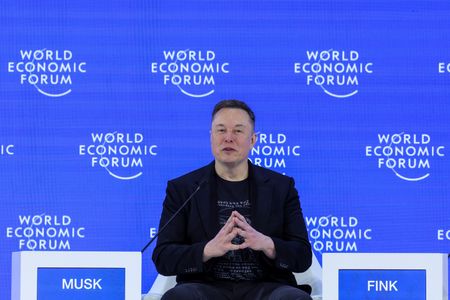
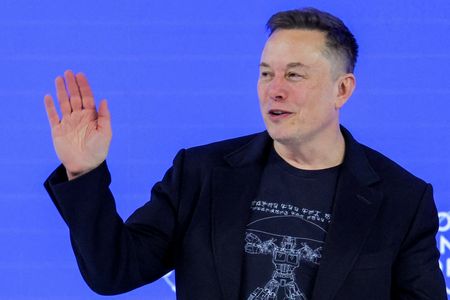
SAN FRANCISCO, March 20 – A federal jury has determined that Elon Musk committed fraud against Twitter shareholders by attempting to manipulate the social media platform’s stock value during his 2022 acquisition efforts, according to Bloomberg News reporting on Friday.
The jury concluded that Musk tried to artificially lower Twitter’s share price so he could either renegotiate the terms of his $44 billion purchase agreement or withdraw from the deal entirely. The amount of financial damages will be decided at a later date.
Neither Musk’s legal team nor attorneys representing the shareholders responded immediately to requests for comment following the verdict.
The San Francisco federal court decision follows a highly publicized trial where Musk, currently the world’s wealthiest individual, faced accusations of making misleading statements about Twitter’s bot problem. Shareholders alleged he falsely claimed the platform had significantly underreported the number of fake and spam accounts operating on the service.
Despite the legal challenges, Musk proceeded with the Twitter acquisition in October 2022, subsequently rebranding the platform as X. He later integrated the company into SpaceX, his aerospace and rocket manufacturing business.
The civil proceedings started on March 2, with jury deliberations commencing this past Tuesday.
Musk has consistently chosen to fight shareholder lawsuits in court instead of reaching settlements. His legal battles have included a 2023 San Francisco trial regarding alleged fraud against Tesla investors, who claimed financial harm after his 2018 tweet falsely stating he had “funding secured” to take Tesla private. He also faced Delaware litigation concerning his $139 billion Tesla compensation package. Musk prevailed in both previous cases.
In this most recent lawsuit, Twitter shareholders took issue with Musk’s public questioning of the company’s bot disclosure on three separate occasions after signing the April 2022 purchase agreement. He suggested the platform might have 20% or more bot accounts, far exceeding Twitter’s reported 5% figure.
Shareholders pointed to several instances, including a May 17, 2022 tweet where Musk declared his acquisition “cannot go forward” until Twitter’s CEO could verify that bot accounts represented less than 5% of users.
“He trashed the company. Trashed the executives. And tanked the stock,” stated Mark Molumphy, the shareholders’ attorney, during Tuesday’s closing arguments.
Musk’s lawyer, Michael Lifrak, argued that his client’s bot concerns were legitimate and that publicly addressing these issues did not constitute fraudulent intent or behavior.
The legal action represents investors who say they sold Twitter stock at artificially reduced prices between May 13 and October 4, 2022, due to Musk’s statements.
Additionally, Musk is currently negotiating a potential settlement with the Securities and Exchange Commission regarding allegations that he delayed disclosing his initial Twitter stock purchases in 2022, allowing him to continue buying shares at lower prices before the market became aware of his investment strategy.
In February, SpaceX acquired Musk’s artificial intelligence venture xAI, which had incorporated X, creating what was then valued as the world’s most valuable private company at approximately $1.25 trillion.
A federal jury has determined that Elon Musk deliberately deceived Twitter shareholders during his controversial acquisition of the social media company in 2022, according to a Bloomberg News report released Friday.
The San Francisco federal court jury reached its verdict on Friday, determining that Musk purposefully provided false information to Twitter investors by claiming the platform had excessive fake user accounts while attempting to withdraw from his original $44 billion purchase agreement, the report stated.
The jury’s decision centers on Musk’s public statements criticizing Twitter before ultimately completing his acquisition of the company, which he subsequently rebranded as X.
A San Francisco jury has determined that Elon Musk bears responsibility for intentionally deceiving investors by manipulating Twitter’s share price during the chaotic period before he completed his $44 billion takeover of the social media platform in 2022.
While the jury held Musk accountable for deliberately depressing the company’s stock value in the months preceding the acquisition, they cleared him of certain fraud-related accusations.
The verdict comes after legal proceedings that examined Musk’s actions during the volatile acquisition process that ultimately transformed Twitter into what is now known as X.
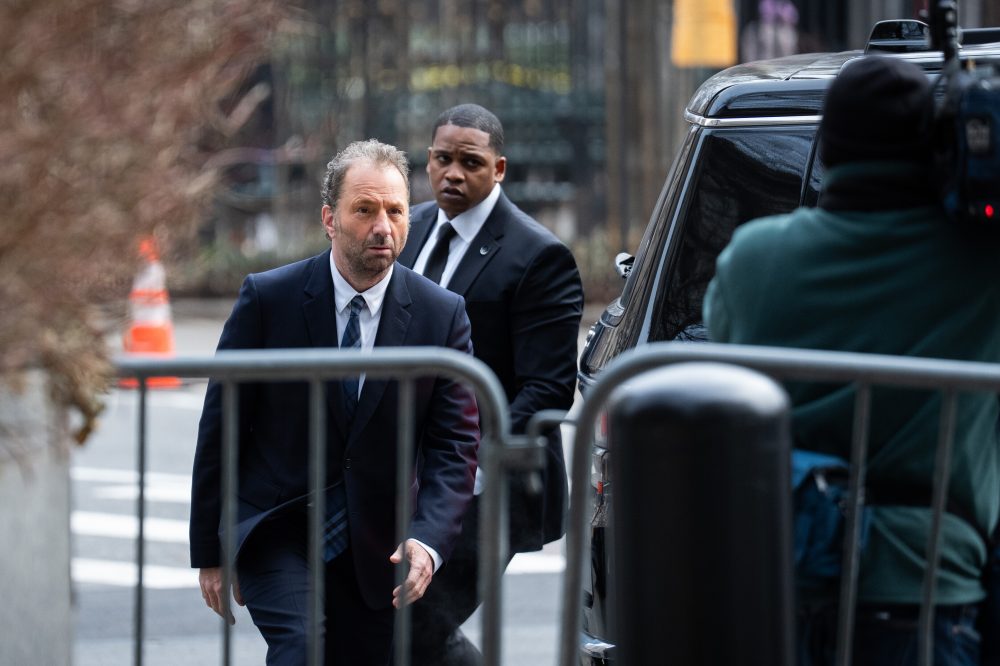
Members of Musk’s legal defense team, including attorney Michael Lifrak, were seen leaving the Phillip Burton Federal Building in San Francisco following the jury’s decision.
SAN FRANCISCO — Elon Musk has been held responsible by a jury for intentionally deceiving Twitter investors through statements that caused the company’s stock value to drop during the chaotic period before his $44 billion takeover in 2022. However, the panel cleared him of deliberately orchestrating a scheme to defraud shareholders.
The San Francisco civil case stemmed from a class-action lawsuit filed shortly before Musk completed his acquisition of Twitter, the platform he subsequently rebranded as X. The jury was tasked with determining whether specific social media posts and podcast remarks made by Musk in May 2022 constituted deliberate fraud against Twitter stockholders who made selling decisions based on his public statements.
Following three days of jury deliberations, the nine-member panel delivered their decision nearly three weeks after proceedings commenced on March 2. The verdict established Musk’s liability for deceiving investors through two social media posts, including one stating the Twitter acquisition was “temporarily on hold,” while clearing him of fraud related to podcast comments and rejecting claims of an intentional deception “scheme.”
The financial impact for Musk remains uncertain since this is a class-action matter involving thousands of shareholders, including major institutional investors, though damages could reach billions of dollars. The jury determined compensation should range from approximately $3 to $8 per share for each affected day.
With an estimated net worth of roughly $814 billion, primarily from Tesla stock holdings, Musk has substantial resources to cover potential damages.
Trial proceedings heavily examined Musk’s assertions regarding automated accounts on Twitter’s platform. During testimony, Musk maintained that Twitter harbored significantly more fake and spam profiles than the 5% figure reported in official regulatory documents. He pointed to what he characterized as Twitter’s false reporting of bogus accounts as justification for attempting to withdraw from the acquisition.
When Musk sought to abandon the deal, Twitter pursued legal action in Delaware courts to compel completion of the original agreement. Just as that litigation was set to begin, Musk changed direction once more and fulfilled his initial financial commitment.
Payment technology company Sezzle announced Monday it has terminated Baker Tilly as its independent auditing firm and selected PricewaterhouseCoopers to handle its financial audits starting in 2026, according to regulatory documents filed by the buy now, pay later service provider.
In the same filing, Sezzle revealed significant internal control deficiencies regarding how it categorized cash flows connected to notes receivable during the 2024 and 2025 fiscal years.
While Baker Tilly provided unqualified audit opinions for both years without issuing adverse findings or disclaimers, the auditing firm determined that Sezzle’s internal financial reporting controls were inadequate as of December 31, 2025, citing the material weakness.
According to the filing, Sezzle maintained it experienced no disputes or disagreements with Baker Tilly throughout the past two fiscal years or during any subsequent interim periods.
The company’s audit committee gave approval for Baker Tilly’s dismissal, while the appointment of PricewaterhouseCoopers remains contingent on completing routine client acceptance procedures.
Nuclear reactor company X-energy announced Friday that it has submitted paperwork for a public stock offering, seeking to benefit from increased investor interest in nuclear energy solutions.
The firm intends to trade its Class A shares on the Nasdaq stock exchange using the trading symbol “XE.”
Company officials have not yet revealed how many shares will be made available to investors or what price range they expect for the offering.
A federal appeals court has overturned a government ban that would have prevented tax software company Intuit from marketing its TurboTax service as “free” when many customers end up paying fees.
On Friday, the 5th U.S. Circuit Court of Appeals reversed the Federal Trade Commission’s directive that prohibited what regulators called misleading advertisements for basic tax filing services.
The appellate judges determined that allowing an administrative law judge to rule on the deceptive advertising case crossed constitutional boundaries regarding the separation of powers between government branches.
A founding member of Super Micro Computer has stepped down from the company’s board of directors with immediate effect following federal criminal charges tied to an alleged artificial intelligence chip smuggling operation targeting China.
The company announced Friday that Yih-Shyan Liaw submitted his resignation after being formally charged by federal prosecutors with participating in an illegal scheme to export billions of dollars worth of AI technology overseas.
Following news of the resignation, Super Micro’s stock price climbed 2% during after-hours trading sessions.
Federal prosecutors filed charges Thursday against Liaw alongside two other individuals – sales executive Ruei-Tsang Chang and independent contractor Ting-Wei Sun. The trio allegedly operated a complex routing system that funneled American-manufactured servers through Taiwan before ultimately delivering them to Southeast Asian destinations.
In a separate announcement, Super Micro revealed it has named DeAnna Luna to serve as interim chief compliance officer, a role she assumes immediately. Luna previously joined the artificial intelligence server company in 2024, where she held the position of vice president overseeing global trade regulations and sanctions compliance.
Financial markets worldwide experienced severe turbulence on Friday as mounting concerns about inflation driven by the Iran conflict sent government bond yields soaring across the United States and Europe, with analysts warning the pressure may persist.
Market participants are quickly reassessing central banks’ capacity to loosen monetary policies as the conflict continues. Rising oil costs have increased the likelihood that the Federal Reserve might need to raise interest rates instead of cutting them.
“Expectations for a rate cut are fading fast,” said Robert Pavlik, senior portfolio manager at Dakota Wealth Management. “You need to get the Strait of Hormuz opened up and you need to get oil flowing, and that would relieve the pressure on oil prices.”
Ten-year Treasury yields in America climbed to levels not seen since last summer. Market participants, who had been anticipating additional rate reductions this year, began factoring in a modest probability that the Fed will be compelled to raise rates before year-end. Bond yields serve as crucial benchmarks that influence corporate lending rates and mortgage costs.
Dramatic increases in these rates can negatively impact both economic expansion and asset values. American equities plummeted Friday, pushing the S&P 500 into its fourth consecutive weekly drop for the first time in twelve months, while the Nasdaq fell 2% daily, approaching correction territory with a 10% decline from recent highs.
British ten-year government debt costs also skyrocketed, reaching their peak since the global financial crisis. The benchmark gilt yield exceeded 5%, a threshold widely considered problematic given Britain’s susceptibility to energy price increases.
German ten-year bond yields reached their highest point since the eurozone crisis in 2011. This key European borrowing benchmark hit 3.025%. Bond yields move inversely to prices.
European Central Bank officials cautioned about escalating inflation dangers Friday but refrained from advocating stricter policies, despite numerous financial firms beginning to forecast rate increases starting as early as April.
Major central banks including the Federal Reserve and Bank of England conducted policy sessions this week, expressing similar wariness regarding inflation threats.
Friday brought news from three American officials who informed Reuters that thousands of additional Marines and sailors are being sent to the Middle East, departing approximately three weeks earlier than originally planned.
Subsequently, Iraq announced force majeure on foreign-operated oil facilities due to Strait of Hormuz disruptions, a legal declaration typically used when circumstances beyond one’s control prevent fulfilling contractual obligations.
“Nothing positive has happened so far with respect to the war and we’re heading into the fourth week, and we’re probably going to have a further build-up of these pressures,” said Padhraic Garvey, head of global rates and debt strategy at ING in New York.
Fed Governor Christopher Waller revealed Friday that he had intended to advocate for a rate reduction at this week’s central bank meeting due to unexpected February job losses, but the energy crisis and threat of sustained inflation persuaded him that caution was necessary until the Iran conflict’s impact becomes clearer.
“This is looking like it’s going to be a much more protracted conflict, and oil prices are going to stay high for a longer time,” Waller said on CNBC’s Squawk Box.
American rate futures Friday began incorporating the possibility of interest rate increases later this year, with markets assigning a 32% probability of tightening by November according to LSEG data, up from nearly zero Thursday evening.
Short-term bonds globally have suffered most from inflation anxieties. British short-term gilt yields rose over 30 basis points Thursday as prices collapsed. German two-year yields finished up 12 basis points at 2.566%, reaching nine-month peaks, then gained another 3 basis points Friday to 2.6%.
Before the conflict began, markets indicated roughly 40% odds of another ECB rate cut this year. This has reversed to nearly fully pricing one increase for June and 60% probability for April.
Some investors focused on potential government responses to economic damage. Spain’s administration Friday proposed 5 billion euro ($5.8 billion) measures to address the Middle East conflict’s impact on domestic energy costs.
“A lot of attention today has been on fiscal policy,” said George Moran, European macro strategist at RBC Capital Markets in London.
Italian ten-year yields rose 6 basis points to 3.846%, after Thursday’s 12 basis point spike. Italy’s greater reliance on energy imports compared to neighbors has made its bonds more vulnerable since the late February war outbreak.
Italy’s benchmark yields have climbed nearly 60 basis points since then, exceeding the 45 basis point increases in French and Spanish yields and the 34 basis point rise in German bonds, widening the risk premium to nearly 80 basis points, the largest since October.
“The sad fact is there are significant upside risks to inflation and therefore the selloff makes sense,” said Chris Scicluna, head of research at Daiwa Securities in London. “The repricing of the path of interest rates, at least in Europe, looks reasonable in light of the shock to energy prices.”
A district court judge in Nevada has issued a temporary restraining order Friday that stops prediction market company Kalshi from conducting business in the state without obtaining proper gaming licenses.
Carson City District Court Judge Jason Woodbury granted the Nevada Gaming Control Board’s request to halt Kalshi’s operations, which allow state residents to place financial wagers on sporting events, political elections, and entertainment outcomes through event contracts.
The court action caps off several months of legal disputes as Kalshi fought to avoid becoming the second state where courts have banned its operations, highlighting a growing nationwide conflict over state gaming authorities’ power to regulate prediction market companies.
“Prediction markets, to the extent they facilitate unlicensed gambling, are illegal in Nevada, and we have a statutory duty to protect the public,” Nevada Gaming Control Board Chair Mike Dreitzer said in a statement.
Kalshi declined to comment.
Companies like Kalshi operate prediction markets where users can place financial wagers on various event outcomes including sports and elections through trading what they call “events contracts.”
The Nevada Gaming Control Board filed suit against Kalshi last month, claiming the company engaged in wagering activities under state law by providing sports and other event contracts to users on its platform, requiring proper licensing.
Kalshi contended these contracts fall under the exclusive authority of the Commodity Futures Trading Commission. The federal agency has supported prediction markets during the Trump administration in their legal battles against state claims that they operate as unlicensed gambling businesses.
However, Judge Woodbury dismissed this defense and ruled the board maintains authority to pursue legal action against the company. The judge determined that by providing event contracts for college basketball, professional football games, and elections, Kalshi operated a “sports pool” according to Nevada gaming regulations.
Woodbury has set an April 3 hearing to determine whether to grant a longer-term preliminary injunction.
This decision follows a Massachusetts judge’s ruling last month that banned Kalshi from offering sports event contracts in that state, though the ruling is currently suspended pending Kalshi’s appeal.
Arizona became the first state Tuesday to file criminal charges against Kalshi for operating an illegal gambling operation, while the company has filed lawsuits to prevent other states from taking enforcement measures.
Gaming platform Roblox announced Friday that it will begin collecting a percentage of revenue from brand partnerships within games beginning next year, part of sweeping changes to its advertising policies aimed at attracting more corporate sponsors and boosting payments to content creators.
The platform has been working to expand beyond traditional gaming into a comprehensive destination for online shopping, social interaction, and brand marketing. Last year, the company unveiled new advertising options and formed a partnership with Google to develop its growing advertising business.
Beginning in January 2027, the new revenue-sharing model is designed to address what Roblox described as a “race to the bottom” in pricing that stems from inconsistent measurement standards and unclear pricing structures, the company explained in a Friday post on its developer community forum.
“A revenue share that scales like media will help brands report, measure and value advertising integrations in a similar way to other scaled media formats on other platforms. Today, the flat fee deal structures leave creators earning less, not more,” the company stated.
Roblox indicated it is continuing to work out specific details with content creators and plans to provide additional information during the second quarter.
Additionally, the company announced that starting May 4, age-appropriate advertising content will be allowed on the platform.
“Content will now be classified as an ad if it involves compensation from a brand to feature within a creator’s experience, or if it promotes off-platform products,” the company explained.
The new system will require creators to register all brand partnerships with Roblox prior to launching campaigns and submit materials for review. The platform will also roll out new advertising identification tags built into its Studio development tool, giving users the ability to flag unwanted promotional content.
The company specified that reward-based advertising and certain business categories, including food, beauty products, pharmaceuticals and financial services, will be off-limits for users younger than 13.
A senior executive responsible for overseeing risk management operations at Canadian energy giant Suncor Energy is departing the company after nearly six years, according to industry sources who spoke Friday.
Ray Sick, who has served as the company’s worldwide leader for market and trade risk management since February of last year, is expected to transition to a new position with utility company NextEra Energy, sources revealed.
According to his professional profile, Sick has been with Suncor for almost six years total. In his most recent position, he managed risk operations across multiple sectors including crude oil, refined petroleum products, chemicals, electricity, natural gas, and environmental credits from the company’s Houston office.
Before taking on his current responsibilities, Sick previously served as the director overseeing global crude oil and petroleum products risk for the Canadian oil producer.
Sources indicate that Sick will assume a leadership position within NextEra Energy’s risk management division, though specific details about his new role were not disclosed.
Neither Suncor Energy nor NextEra Energy provided immediate responses when contacted for comment about the executive transition. Sick also did not respond to requests for comment through professional networking channels.
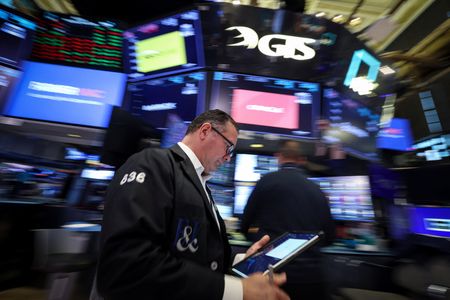
NEW YORK – Wall Street remains fixated on escalating Middle Eastern tensions as the ongoing conflict between Iran and U.S.-Israeli forces continues to rattle financial markets, with investors closely monitoring energy price spikes and their economic implications.
The three-week military engagement has triggered oil prices to climb more than 40%, sparking fresh concerns about rising inflation and potential economic slowdown across the United States.
These inflation fears have led markets to virtually eliminate expectations for stock-friendly interest rate reductions this year that traders had previously anticipated. During Wednesday’s Federal Reserve meeting, Chair Jerome Powell acknowledged significant uncertainty about how the crisis might impact the broader economy, complicating the central bank’s ability to predict future conditions.
The S&P 500 index appears headed for its fourth consecutive week of losses following this week’s intensification of Middle Eastern hostilities, which saw Iran target regional energy infrastructure after Israel struck Iranian gas facilities.
“This is a situation that’s so fluid,” commented Chris Fasciano, chief market strategist at Commonwealth Financial Network. “We could have a resolution in the next week or it could go on for some time. And the longer it goes on, you start to think about the impacts it could have on the U.S. economy.”
CRUDE PRICES DRIVE MARKET VOLATILITY
Oil price fluctuations have created waves across multiple investment sectors. U.S. crude hit $100 per barrel Thursday, while Brent crude hovered around $110. Beyond direct attacks on energy infrastructure, shipping traffic has ground to a halt in the Strait of Hormuz, a critical waterway that typically handles about one-fifth of global crude oil and liquefied natural gas transport.
Data from LSEG shows the 20-day correlation between the S&P 500 and U.S. crude oil reached -0.926 as of Thursday morning, demonstrating a powerful inverse relationship where the two typically move in opposite directions.
“If you’re a trader, you watch oil prices because I do think that that’s generally giving the leading indicator as to how the financial markets are viewing the outlook for the conflict,” explained Eric Kuby, chief investment officer at North Star Investment Management Corp.
While the S&P 500’s energy sector has benefited from the crude price surge that began in late February, this sector represents less than 4% of the overall benchmark index’s weighting.
Current market declines have pushed the S&P 500 down slightly more than 5% from its record closing high achieved in late January. However, this pullback has maintained a more controlled character compared to the chaotic equity drop last April that followed President Donald Trump’s “Liberation Day” tariff announcement, which triggered widespread economic anxiety, Fasciano noted.
“This has been fairly orderly, which I think is an encouraging sign,” Fasciano observed. “And I think it’s because the underlying fundamentals for corporate America are still fairly robust and are offering some support.”
RISING TREASURY YIELDS POSE ADDITIONAL RISK
Rapidly climbing Treasury yields, pushed higher by energy price increases and cautious global central bank policies, present another potential threat to equity markets. The benchmark 10-year Treasury yield reached 4.328% Thursday, marking its highest point since August, before retreating slightly.
Keith Lerner, chief investment officer at Truist Advisory Services, indicated he’s monitoring whether the 10-year Treasury yield can sustain levels above 4.3%, which could intensify pressure on stock prices.
“Rates going higher means borrowing costs are somewhat higher. And then that could actually slow the economy,” Lerner explained. “At some point if they keep going higher, then the relative attractiveness of (bond) yields becomes more attractive relative to equities.”
Stocks have also approached significant technical thresholds. The S&P 500 closed Thursday at 6,606.49, falling below its 200-day moving average – a widely monitored long-term trend indicator – for the first time since May.
A breakdown below this trend line “especially if followed by a breach of the November lows at 6,522, would raise more serious questions about the staying power of this bull market,” Adam Turnquist, chief technical strategist for LPL Financial, wrote in Thursday’s analysis.
The coming week features relatively sparse U.S. economic data, with reports covering manufacturing, services activity, and consumer sentiment scheduled. A major energy conference in Houston featuring prominent global industry leaders could capture Wall Street’s attention.
Iranian developments will likely remain the primary focus. Thursday morning analysts at UBS Global Wealth Management noted that recent events were “pushing markets to price in a higher risk of prolonged conflict, deeper infrastructure damage and higher-for-longer crude prices.”
“While a less damaging outcome in the Strait of Hormuz remains possible, recent events have narrowed that path and heightened the risk of continued volatility,” the UBS analysts concluded.
Small-cap stocks are teetering on the edge of correction territory as geopolitical tensions in the Middle East fuel concerns about persistent inflation and delay hopes for Federal Reserve interest rate cuts.
The Russell 2000, which tracks smaller companies, has declined 10% from its peak closing price reached in January, positioning it to enter correction status on Friday. The index fell 2% to 2,442.75 points during Thursday’s trading session, down significantly from its record closing high of 2,718 points achieved on January 22.
A correction is officially confirmed when an index drops 10% or more from its recent peak. Should this occur, the Russell 2000 would become the first major Wall Street benchmark to enter correction territory in the current year.
Federal Reserve officials, alongside other central bank leaders, adopted a more cautious stance this week, forecasting elevated inflation levels and indicating just one interest rate reduction planned for 2026.
Market participants have significantly reduced their expectations for Fed rate cuts, with most now anticipating reductions won’t come until next year, based on data from CME Group’s FedWatch Tool. Before the escalation of conflict between the U.S., Israel, and Iran, investors had been counting on two rate cuts.
The ongoing warfare has severely impacted global financial markets throughout March, with military strikes targeting Iranian territory and attacks on Gulf region energy facilities disrupting oil production and shipping routes through the vital Strait of Hormuz.
Brent crude oil prices have surged over 50% since the conflict began, reinforcing expectations that borrowing costs will stay elevated longer to address inflationary pressures.
Additional economic indicators from earlier in March revealed significant weakening in the U.S. job market, creating a challenging environment for central bank policymakers and adding uncertainty to future interest rate decisions.
Smaller companies face particular vulnerability when interest rates remain high, as these businesses typically depend more heavily on borrowed funds to finance their expansion compared to larger corporations.
The Russell 2000 had reached its record peak in January following a robust beginning to 2026, supported by investors seeking alternatives to expensive technology stock valuations.
“We viewed the rally with a huge degree of skepticism and now that they’re falling, it makes a lot more sense to us because they’re hit by growth concerns, credit concerns and by concerns around the Fed not easing this year,” said Sameer Samana, head of global equities and real assets at Wells Fargo Investment Institute.
The small-cap index previously entered correction territory on January 10, 2025, when a strong economic performance led traders to reduce their expectations for rate cuts.
Financial markets have undergone a dramatic reversal in expectations for Federal Reserve policy, with traders now placing approximately 75% odds on an interest rate increase by September, and greater than 50% probability of a hike occurring as early as July.
This represents a stunning turnaround from just five days earlier, when market participants showed no anticipation of rate increases whatsoever for this year and instead anticipated the central bank would lower borrowing costs. As recently as last month, Wall Street was pricing in expectations for two rate reductions before year’s end.
During the initial weeks following the Iran conflict’s start on February 28, financial markets maintained expectations that the Fed would loosen monetary policy, dismissing the impact of rising oil prices. Federal Reserve officials generally shared this perspective at the time.
The dramatic shift in sentiment began this week as tensions with Iran intensified and Fed Chair Jerome Powell signaled he didn’t view employment market risks as more significant than inflation concerns. The momentum accelerated Thursday and Friday, especially after Fed Governor Christopher Waller, known as an influential dovish member of the central bank, stated that the potential for lasting inflation stemming from the Iranian conflict was compelling enough for him to support maintaining current interest rates this week, rather than reducing them as he had previously intended.
Stock markets have declined while the two-year Treasury note yield – which typically mirrors Federal Reserve policy direction – has surged higher.
A British investment company announced Friday it has decided against pursuing an acquisition of a major UK private hospital chain.
Triton Investments stated it will not be submitting a purchase proposal for Spire Healthcare, ending speculation about a potential deal between the two companies.
The private hospital operator had been weighing its strategic alternatives since January, engaging in discussions with multiple acquisition firms including both Bridgepoint and Triton regarding possible buyout scenarios.
The withdrawal leaves questions about Spire Healthcare’s future direction as it continues exploring other potential partnerships or sale opportunities in the competitive private healthcare market.
The spice company McCormick has established itself as a strategic buyer over the last ten years, successfully transforming acquired brands such as Frank’s RedHot and French’s mustard into major revenue generators that now represent a significant portion of the company’s $6.8 billion yearly revenue, according to industry experts.
Now, McCormick is pursuing what could be its most ambitious acquisition to date.
Sources indicate the company is engaged in discussions with Unilever regarding a possible acquisition of the British corporation’s food division, which Barclays analysts estimate is worth over $30 billion.
The Unilever food portfolio features major brands like Hellmann’s mayonnaise and Knorr bouillon – both multi-billion-dollar products that could dramatically broaden McCormick’s international footprint in the condiments and cooking ingredients sectors.
In 2017, McCormick acquired Frank’s and French’s through a $4.2 billion purchase of Reckitt’s North American food operations.
The company later added Cholula hot sauce to its portfolio in 2020 through an $800 million deal with private equity firm L Catterton. McCormick now dominates market segments including spices, seasonings, hot sauces, and mustards.
FINANCING AND EXECUTION CHALLENGES
McCormick faces the challenge of financing this massive deal, given that its $14.5 billion market value is considerably smaller than Unilever’s food business valuation. Neither company has revealed details about potential deal structure, only acknowledging ongoing negotiations without disclosing financial specifics.
However, purchasing established brands to expand its product lineup has proven effective for McCormick, and combining with Unilever’s food operations – which includes traditional British brands like Colman’s and Marmite – would be strategically sound, according to industry observers.
BNP Paribas analyst Max Gumport noted that McCormick “has demonstrated an interest in expanding its emerging market exposure and extending its category perimeter. Indeed, it has often used M&A to accomplish these priorities.”
Consumer staples analyst Chris Beckett from Quilter Cheviot pointed to French’s mustard and Frank’s RedHot Sauce as proof of McCormick’s acquisition expertise, stating “they’ve done well with the brands that they’ve acquired.”
The critical question remains whether McCormick can replicate its previous successes with brands that have global reach.
Natalia Glushchenko, director of revenue growth management at Vibrant Ingredients, which collaborates with consumer goods companies including McCormick, expressed cautious optimism: “I think it’s possible, but not as easy as before. The market is tougher now: costs are more volatile, consumers are more price-sensitive, and retailers are pushing harder on margins. Execution will matter a lot more.”
NEW YORK — After nearly a century on the airwaves, CBS announced Friday it will permanently close its radio news division as part of company-wide job cuts, citing evolving station programming approaches and economic difficulties.
The radio service first launched in September 1927, serving as the foundation for what would become the entire CBS network and launching young William S. Paley’s media career. The division gained prominence through legendary journalist Edward R. Murrow’s wartime broadcasts from London during World War II.
Currently, CBS Radio News delivers content to approximately 700 stations nationwide, primarily recognized for its hourly news updates. Operations will cease on May 22, according to Friday’s announcement.
“While this was a necessary decision, it was not an easy one,” CBS News editor-in-chief Bari Weiss and president Tom Cibrowski wrote in a staff memo Friday.
Radio, alongside newspapers, dominated American news consumption from the 1920s through 1940s, with citizens tuning in for President Franklin Delano Roosevelt’s “Fireside Chats” during the Great Depression. Television overtook radio’s prominence in the 1950s, and today’s audiences increasingly turn to digital platforms and podcasts rather than traditional radio programming.
The network’s website homepage did not immediately feature coverage of the closure announcement.
Weiss has demonstrated familiarity with CBS’s historical significance. Speaking to staff in January, just three months after assuming leadership, she referenced iconic anchor Walter Cronkite as representing outdated approaches and warned that maintaining current strategies would leave the network as “toast.”
During that address, Weiss revealed plans to bring on 18 new contributors and emphasized CBS News must pursue stories that will “surprise and provoke — including inside our own newsroom.”
Since joining CBS from her Free Press website without prior broadcast journalism experience, Weiss has generated significant attention and divided opinion within the industry. She delayed a “60 Minutes” segment examining President Donald Trump’s deportation policies for one month, prompting observers to question whether she’s steering the network toward more Trump-favorable coverage.
French pharmaceutical giant Sanofi has established a new innovation and operations facility in Chengdu, a major city in southwestern China, according to a company announcement made Friday through its Chinese social media channels.
The newly opened center, which began operations Thursday, is designed to enhance Sanofi’s research and development capabilities while also supporting clinical trial operations and strengthening manufacturing and supply chain services throughout the region.
The facility represents Sanofi’s continued expansion into Asian markets as the company seeks to bolster its global pharmaceutical operations and research initiatives.
As warmer weather returns following a challenging winter season, many families are planning spring vacations and looking for ways to stretch their travel budgets. Virginia Farm Bureau members have access to exclusive hotel discount programs that could make that getaway more affordable.
Through a partnership with Choice Hotels International, VFB members can secure discounts of up to 20% off standard rates at over 7,000 hotel properties across the country. The savings apply to the lowest available room rates at participating locations.
Another option for members comes through Drury Hotels, where travelers can obtain 15% reductions on room rates at more than 150 properties spread across 26 states. The discount applies to the best rates available at the time of booking.
VFB members also have access to savings through Wyndham Hotels & Resorts, with potential discounts reaching 20% off standard pricing at over 8,000 participating properties around the globe. Like the other programs, the savings are calculated from the best available rates.
The chief executive of Pinterest has issued a public appeal to global leaders, advocating for a worldwide prohibition on social media access for teenagers below the age of 16.
Bill Ready, who heads the popular image-sharing platform, published his stance in a LinkedIn essay on Friday, outlining his vision for stricter digital age restrictions.
“We need a clear standard: no social media for teens under 16, backed by real enforcement, and accountability for mobile phone operating systems and the apps that run on them,” Ready stated in his online post.
The Pinterest executive’s call comes amid growing concerns about the impact of social media platforms on young users’ mental health and development.
Water management giant Ecolab announced Friday it will purchase CoolIT Systems from private equity firm KKR in a $4.75 billion cash transaction, positioning itself to benefit from the explosive growth in artificial intelligence data center infrastructure.
The company’s stock dropped 1% during pre-market trading following the announcement.
As tech giants pour billions into AI capabilities, they’re moving away from conventional air cooling methods toward advanced liquid-based cooling solutions that can manage the intense heat generated by high-performance computing chips and dense server configurations.
CoolIT, currently owned by KKR investment funds, specializes in creating and producing liquid cooling technologies for large-scale data center operators and colocation facilities. The company counts major semiconductor manufacturers like Nvidia and Advanced Micro Devices among its client base.
According to Ecolab, combining CoolIT’s hardware expertise and thermal engineering capabilities with its own water treatment, chemical solutions, and digital monitoring technologies will create a comprehensive cooling and fluid management service provider.
Ecolab projects that CoolIT will bring in approximately $550 million in revenue over the coming 12-month period.
The acquisition is scheduled to finalize during the third quarter of 2026 and is expected to boost Ecolab’s adjusted diluted earnings per share by 2028.
In related financial news, Ecolab released its first-quarter earnings forecast, projecting adjusted earnings per share between $1.69 and $1.71, representing an increase from the previous year’s $1.50.
Looking ahead to the full 2026 fiscal year, Ecolab maintains its earnings projection of $8.43 to $8.63 per adjusted diluted share, not accounting for the impact of this acquisition.
Investment firm Trian Fund Management raised serious red flags Friday regarding Victory Capital’s enhanced takeover proposal for Janus Henderson, which directly competes with Trian’s own privatization agreement with the asset management company.
The asset manager had initially turned down Victory’s $8.6 billion cash-and-stock proposal, determining the offer presented completion risks and failed to surpass the current $7.4 billion all-cash agreement already in place with Trian and venture capital partner General Catalyst.
However, Victory modified its proposal earlier this week by increasing the cash portion of the deal.
When contacted for comment, Janus Henderson chose not to respond, while Victory Capital has not yet replied to requests for a statement.
Trian currently holds the position as Janus Henderson’s biggest shareholder, controlling a 20.7% ownership stake in the company.
BEIJING – A senior Chinese trade official welcomed continued investment from Danish pharmaceutical giant Novo Nordisk during a Friday meeting in Beijing, according to government statements.
Vice Commerce Minister Ling Ji met with an executive vice president from the diabetes and obesity medication manufacturer, expressing the government’s desire for the company to maintain its business operations in the country.
“Continue to cultivate the Chinese market and contribute to building a healthy China,” Ling Ji told the Novo Nordisk representative during their discussion, the commerce ministry reported.
The meeting reflects ongoing diplomatic and commercial ties between China and international pharmaceutical companies as the country seeks to strengthen its healthcare infrastructure.
The Chinese technology giant behind TikTok announced Friday that it has finalized a deal to transfer ownership of Shanghai Moonton Technology to a gaming company backed by Saudi Arabia’s sovereign wealth fund.
ByteDance completed the sale of the gaming studio, which developed the widely-played mobile title Mobile Legends: Bang Bang, to Savvy Games Group, a Riyadh-based company owned by Saudi Arabia’s Public Investment Fund.
While ByteDance did not reveal the purchase price, a source familiar with the deal indicated that Moonton’s valuation exceeded $6 billion in the transaction.
Earlier reports from February indicated that ByteDance was engaged in serious negotiations to transfer the gaming business to Savvy Games Group, with the deal estimated to be worth between $6 billion and $7 billion.
According to its official website, Savvy Games Group operates as an international gaming and esports enterprise under the ownership of Saudi Arabia’s Public Investment Fund, focusing on expansion through acquisitions, strategic investments, and business partnerships.
The agreement was initially disclosed by Japan’s Nikkei newspaper on Friday.
Shares of shipping giant FedEx jumped roughly 10% in pre-market trading Friday following the company’s decision to increase its annual earnings outlook and report consistent package delivery volumes despite international conflicts and climbing fuel expenses.
The Memphis-based company, widely viewed as an indicator of worldwide commerce health, indicated that shipping activity during March’s first two weeks met projections for maintaining third-quarter performance levels, even as the U.S.-Israeli conflict with Iran has driven up air cargo prices and required flight path changes.
Although climbing oil costs and Middle Eastern instability may impact shipping expenses in upcoming weeks, FedEx noted its fuel adjustment pricing systems continue handling most effects. However, company leadership cautioned that additional price increases could reduce customer demand.
Chief Executive Raj Subramaniam stated the company is “monitoring this extremely carefully,” emphasizing that Middle East operations represent just a minor portion of FedEx’s overall business.
Investment analysts from J.P.Morgan highlighted FedEx’s Express division as particularly strong, citing improved profit margins, steadier domestic U.S. shipping volumes, and ongoing expense reductions that boosted adjusted operating earnings while compensating for weaker freight performance.
Competitor stocks also gained, with European rival Deutsche Post DHL Group climbing 2.2% and domestic competitor UPS advancing 1.4%.
The company’s scheduled June 1 separation of its Freight division represents a significant upcoming event as FedEx concentrates on more profitable delivery operations.
Raymond James analysts noted: “We believe that the recently announced spin-out of FedEx Freight into a standalone company should serve as a value-unlocking event and will put more scrutiny on the operations of the Freight segment.”
FedEx continues coordinating with aviation regulators to restore its inactive MD-11 aircraft fleet by late May, following approximately $120 million in associated expenses during the third quarter, with an additional $55 million expected this quarter.
The shipping company currently trades at 16.58 times anticipated forward earnings compared to UPS at 13.23 times.
For its fiscal year concluding May 31, FedEx projects adjusted earnings between $19.30 and $20.10 per share, while anticipating total revenue growth of 6.0% to 6.5%.
Stock market futures fell during volatile Friday trading as the Iranian conflict neared its fourth week, creating turbulence in energy markets and causing investors to significantly adjust their expectations for Federal Reserve interest rate reductions.
Reports indicate the Trump administration is weighing options to occupy or impose a blockade on Iran’s Kharg Island as a strategy to force Iran into reopening the Strait of Hormuz.
Oil prices climbed higher, erasing previous declines that occurred after major European countries, Japan, and the United States suggested measures to increase energy supply. Brent crude prices jumped 1.7% to exceed $110 per barrel.
The CBOE volatility index, commonly known as Wall Street’s fear gauge, increased by 1.72 points to reach 25.78. Futures for the rate-sensitive Russell 2000 index dropped 1%.
Market participants found some reassurance in FedEx’s positive earnings report and outlook despite ongoing geopolitical tensions and rising fuel expenses, pushing the company’s shares up 10% in pre-market activity. Competitor United Parcel Service gained 1%.
FedEx, frequently viewed as an indicator of overall business conditions, reported that worldwide demand remained stable in early March despite the Iranian war, noting that fuel surcharges were protecting profits from escalating fuel expenses.
The week featured policy decisions from major international central banks that, alongside the Federal Reserve, recognized how the conflict has made monetary policy decisions more challenging. Although U.S. officials continue to plan for at least one quarter-point rate reduction this year, market participants remain skeptical.
Market traders have delayed their expectations for rate cuts to 2027, moving from December 2026 projections made earlier this month, based on LSEG data.
As of 6:06 a.m. ET, Dow E-minis declined 242 points or 0.52%, S&P 500 E-minis fell 39 points or 0.59%, and Nasdaq 100 E-minis dropped 200.5 points or 0.82%.
The benchmark S&P 500 and blue-chip Dow were heading toward their fourth consecutive weekly decline, though a moderate recovery in artificial intelligence stocks like Advanced Micro Devices and Micron helped limit losses on the Nasdaq.
All three major indices also fell beneath their 200-day moving averages, a technical measure showing long-term trends, while the small-cap Russell 2000 index temporarily recorded a 10% decline from record highs earlier in the week.
Super Micro Computer plummeted 23% following charges against three individuals connected to the AI server company for allegedly helping smuggle at least $2.5 billion worth of U.S. artificial intelligence technology to China, violating export regulations.
Energy sector stocks have shown strong performance, with the S&P 500 energy index positioned for its thirteenth consecutive week of increases as geopolitical developments in Venezuela and the Middle East dominated the first quarter.
Energy companies including Halliburton and Cheniere Energy rose 1% and 3% respectively.
Tegna surged 9.4% after the Federal Communications Commission announced approval of the $3.54 billion acquisition of the local television station operator by Nexstar.
Escalating tensions in the Iran conflict have prompted investors nationwide to abandon riskier investments and pour money into ultra-safe money market funds, pushing total assets to an unprecedented $8 trillion milestone.
Financial data from organizations including the Investment Company Institute, JPMorgan Chase, and Crane Data shows these short-term Treasury funds have reached historic levels as oil prices surge and inflation worries mount. Though calculation methods differ, with estimates ranging between $7.8 trillion and $8.1 trillion, all sources confirm record-breaking asset levels during the ongoing conflict.
Malcolm Polley, who serves as director of strategic market analysis at Stratos Investment Management, explained the investor mindset driving this trend. “When you have times of dislocation and times of fear, cash is the only thing that makes sense to a lot of people, because there’s the belief that you ‘can’t lose’ by holding it,” Polley stated. He mentioned reassuring clients that “the world is not coming to an end just yet.”
Sweta Singh, founding partner at City Different Investments, characterized the phenomenon as cautious positioning. “This is the ‘wait-and-see’ money coming from investors who are wary about what’s happening right now,” Singh observed.
Soaring crude oil costs have become the primary driver behind this massive shift toward cash holdings. Brent crude futures climbed 1.2% Thursday, reaching $108.65 per barrel after experiencing intraday gains as high as 10%.
Steven Wieting, co-founder of CIO Group, noted how oil prices are influencing traditional safe havens. “Gold, silver and currencies are increasingly being driven by oil” prices, Wieting said. “As all risk assets take on this uncertain path, dependent on oil, it is natural for cash to build on the sidelines.”
Market experts warn that sustained elevated oil prices will negatively impact consumer spending and corporate profits across the economy.
BlackRock Investment Institute analysts highlighted the limited options available to investors in a Monday client note, writing: “There are few places to hide from this near-term supply shock. Government bonds and gold are not providing ballast as equities fall.” Even Treasury securities offer little protection given potential inflation increases and mounting government debt from war expenditures.
Jacob Taurel, managing partner at Activest Wealth Management, identified a key economic concern. “The elephant in the room is stagflation,” Taurel said, describing this combination of rising prices and economic stagnation as “a real risk.”
These conditions make money market funds attractive to some investors, particularly since current yields exceed 3% and approach 4% at certain financial institutions. Deborah Cunningham, chief investment officer of global liquidity markets at Federated Hermes, noted in early March analysis that the “collective negative vibe often sends investors to safer harbors,” including money market funds. Cunningham estimates the total cash held in money markets at $8.3 trillion.
However, financial advisors are warning clients against excessive risk avoidance and over-allocation to money market funds.
Polley cautioned about the challenges of market timing. “The problem with going to cash is that you have to make two separate decisions correctly: when to get into cash and when to move back into other assets,” he explained. “When people are scared, they can be irrational.”
More than a decade has passed since Amazon’s Fire Phone became one of the company’s most embarrassing failures, but the tech giant is quietly working on another attempt to break into the smartphone market.
Four sources with knowledge of the project reveal that Amazon is developing a new mobile device internally called “Transformer” within its devices and services division. The smartphone concept centers around creating a highly personalized experience that would seamlessly connect with Amazon’s Alexa voice assistant and provide constant access to the company’s services throughout users’ daily routines.
This latest smartphone venture represents another step toward fulfilling founder Jeff Bezos’ longtime dream of creating an omnipresent voice-controlled computing system similar to the computer featured in the “Star Trek” science fiction franchise.
Bezos originally imagined a mobile device built around shopping functionality that could compete with Apple by offering Prime membership benefits like fast shipping and exclusive discounts. Such a device would also provide Amazon with valuable user data that smartphones uniquely capture, combined with customers’ purchasing patterns and entertainment preferences.
Reuters has exclusively reported on Amazon’s smartphone development efforts. However, key details remain unknown, including projected costs, expected revenue targets, and the total investment Amazon plans to make in the initiative.
The project’s timeline remains uncertain, and sources warn that Amazon could abandon the effort if strategic priorities change or financial concerns arise.
Amazon representatives refused to provide comment on the matter.
According to the sources, who requested anonymity due to lack of authorization to discuss internal projects, the new device’s customization capabilities would streamline access to Amazon.com shopping, Prime Video streaming, Prime Music listening, and food ordering through partners like Grubhub.
Artificial intelligence integration has become a central element of the Transformer initiative, sources indicate. This AI focus could potentially eliminate traditional app stores by removing the need to download and register applications before use.
While Alexa would play a significant role in the phone’s functionality, it wouldn’t necessarily serve as the device’s main operating system, according to the sources.
The brief history of AI-powered hardware devices includes numerous failures, such as the Humane AI pin and Rabbit R1 assistant, both designed to provide generative AI access without requiring computer or smartphone logins. Poor reviews led to both products being discontinued.
Despite these setbacks, other major companies continue pursuing AI-integrated devices that move beyond traditional smartphone app interfaces. OpenAI is collaborating with former Apple design executive Jony Ive on multiple hardware prototypes, while Apple, Google, and Meta are creating new AI-enhanced glasses, watches, and headphones.
Although Amazon’s AWS dominates global cloud computing infrastructure, the company has struggled to shed its reputation for being slow to develop AI applications while competitors have advanced rapidly.
Alexa, which completed a comprehensive AI-driven redesign before relaunching in 2025, is considered internally crucial to Amazon’s future consumer service offerings. Sources describe the smartphone project as another Amazon strategy to increase customer AI adoption either directly on the device or through Alexa integration.
Amazon’s original 2014 smartphone launch featured innovations like camera-based shopping technology that could identify products, locate them on Amazon.com, and add them to customers’ online shopping carts.
However, the Fire Phone’s custom Fire OS operating system lacked popular applications available through Android and iOS app stores. Additionally, its complex multi-camera system for 3D image display consumed excessive battery power, causing frequent overheating problems.
Despite bundling a complimentary year of Amazon Prime membership, the Fire Phone sold poorly. Amazon slashed pricing from $649 unlocked to $159 before ultimately discontinuing the device after 14 months, resulting in a $170 million loss from unsold inventory.
R.W. Baird financial analyst Colin Sebastian noted that Amazon’s previous smartphone failure doesn’t necessarily prevent future success, but acknowledged significant challenges ahead. “Amazon will have to give consumers a compelling reason to switch phones and people are pretty attached to the existing app stores,” Sebastian stated.
Just as it faced over ten years ago, Amazon confronts the challenging task of competing against market leaders Apple and Samsung, which together controlled approximately 40% of global sales last year according to Counterpoint Research, a technology market research company.
Furthermore, smartphone shipments are projected to experience their largest decline ever in 2026, with an expected 13% drop according to International Data Corporation, as rising memory chip costs increase device prices.
The smartphone project is being managed by ZeroOne, a year-old group within Amazon’s devices unit tasked with creating “breakthrough” products, sources revealed. J Allard, a former Microsoft executive who worked on devices including the Zune music player and Xbox gaming console, leads ZeroOne.
Panos Panay, who heads Amazon’s devices and services division, has been working to address years of financial losses in the department. This includes developing an upcoming tablet that will operate on Android instead of Fire OS for the first time and could retail for approximately $400, as Reuters first reported.
Three individuals involved with the Transformer project confirmed the phone remains in development. Amazon has investigated both conventional smartphone designs and simplified “dumbphone” options with limited features that could help address screen addiction concerns. The company has not yet approached wireless carrier partners about the device, these sources indicated.
Two sources mentioned that the Light Phone has served as inspiration for the new device – a $700 minimalist smartphone featuring a camera, map, calendar, and few other functions, excluding an app store or web browser.
A simplified phone design could help Amazon position the device as a secondary handset to complement customers’ existing iPhones and Samsung Galaxy devices, sources suggested. Such basic phones, including the Light Phone and flip phones, represented 15% of global handset sales in 2025 according to Counterpoint Research.
Independent wireless analyst Chetan Sharma noted that limited data exists regarding multi-phone usage patterns. Currently, he explained, the practice is most prevalent among business professionals seeking a second device away from employer oversight or parents wanting to provide teenagers with social media-restricted phones.
Major financial institutions across the United States are celebrating a federal regulatory proposal that would significantly reduce the cash reserves they’re required to maintain, though some banks appear positioned to benefit more than others from the changes.
The new framework, unveiled Thursday, would decrease capital requirements at the nation’s largest banks by 4.8%. This reduction would unlock billions of dollars that institutions could use for customer loans, shareholder dividends, and stock repurchases – marking a substantial victory for the banking sector.
The industry had previously faced the prospect of much steeper capital increases under a 2023 proposal that would have required double-digit hikes in their reserve requirements. That earlier plan was ultimately scrapped.
Financial experts indicate that institutions heavily involved in trading activities, particularly Goldman Sachs and Morgan Stanley, may emerge as the primary beneficiaries of the revised regulations. This outcome is somewhat ironic, given that trading operations were initially the main focus of the “Basel III” rules that formed the foundation of Thursday’s regulatory overhaul.
Banking institutions will have a 90-day window to submit feedback on the comprehensive and technical proposal. Industry observers expect firms to advocate for additional reductions in capital requirements, which could translate to billions more in potential savings.
The current administration supports loosening capital restrictions, arguing such moves could stimulate lending activity and boost overall economic growth.
However, opponents argue these modifications will compromise financial system protections at a time when geopolitical tensions and private credit risks are escalating. Some major banks are already restricting lending while certain funds have limited customer withdrawals.
The proposed changes could create divisions within the banking industry, which had previously presented a united front against stricter regulations.
“Some will think they got worse treatment than others,” explained Ian Katz, managing director of Capital Alpha Partners. “They may feel like this other cohort or size of banks just got a better deal and have to stick up for themselves.”
Representatives from individual banks either declined to comment or were unavailable for immediate response. A Federal Reserve spokesperson, whose agency is spearheading the capital reform effort, also declined to provide comment.
The Federal Reserve’s latest draft represents a complete reversal from the 2023 proposal, which would have increased bank capital requirements by as much as 20%.
While the Basel regulations would raise large bank capital by 1.4%, this increase would be neutralized by modifications to the GSIB surcharge – an additional capital layer imposed on eight systemically important global U.S. banks.
One significant adjustment would lessen the impact of banks’ dependence on short-term wholesale funding when calculating the surcharge. Federal officials acknowledged this factor carried more weight in the 2023 calculations than originally planned.
This modification could particularly advantage Goldman Sachs and Morgan Stanley, as they rely much more heavily on short-term wholesale funding compared to their GSIB competitors, who maintain substantial deposit bases, according to analysts and banking industry sources.
“The purest winners are the trading-heavy institutions,” noted Michael Ashley Schulman, partner at Cerity Partners. “Cracks in the coalition may appear as the specific rule details get negotiated as different banks push hardest for most favorable treatment.”
Wall Street banking advocacy organizations, which have spearheaded opposition efforts, issued a measured response Thursday, describing the draft regulations as an “important step forward” while stating the industry “will carefully review the proposals and expect to provide feedback.”
Despite potential internal conflicts, analysts believe the overall changes will benefit the entire industry by freeing up funds for lending, particularly among large regional banks.
Capital requirements at major regional institutions such as PNC and Truist would decrease by 5.2%, while banks with assets below $100 billion would see their capital obligations drop by 7.8% under the proposed framework.
Morgan Stanley analysts noted earlier this month that large U.S. banks currently maintain approximately $175 billion in excess capital due to years of regulatory uncertainty. They could begin deploying these funds through increased lending, capital markets activities, and stock buybacks.
“I think that there’s been universal belief that this is a good thing for the industry,” said Christopher Marinac, director of research at Brean Capital.
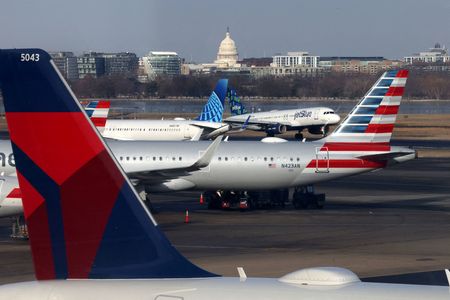
CHICAGO, March 20 – American airline executives are expressing optimism about ticket prices and passenger demand even as the Middle East conflict drives up fuel costs and creates challenges for international carriers worldwide.
The major US airlines, which don’t protect themselves against oil price fluctuations, are seeing the war’s impact primarily through their fuel expenses. Jet fuel costs have nearly doubled since fighting began in late February.
International airlines in Europe and Asia face additional complications beyond higher fuel bills, including disrupted flight schedules, operational challenges, and uncertain business forecasts as they implement surcharges and raise ticket prices.
At this week’s industry conference, leading US carriers highlighted steady passenger demand. United Airlines CEO Scott Kirby described the revenue climate as “really strong.”
“We have a goal this year to fully offset the increase in fuel prices,” Kirby stated on Tuesday. He noted that fare bookings over the previous week had jumped 15% to 20%, and airlines could currently recover “100%” of fuel price increases.
United has also eliminated less profitable routes, including certain midweek, Saturday, and overnight flights. Kirby explained the airline prefers leaving some passenger demand unserved rather than operating money-losing routes if fuel remains expensive.
Delta Air Lines similarly indicated it could reduce flight capacity if fuel prices remain high.
Both American Airlines and Delta upgraded their quarterly revenue projections this week, even though each company expects roughly $400 million in first-quarter losses from increased fuel costs. Southwest Airlines predicted significant margin growth for the year.
However, the robust US demand appears stronger partly because of unusually weak comparison numbers from last year, when travel demand suddenly collapsed and reservations dropped after President Donald Trump announced extensive tariffs, causing most airlines to withdraw their financial guidance.
The confidence also stems from how constrained the US market was before fuel prices spiked. Budget carriers had already been cutting routes, parking planes, and reducing expansion plans following an extended period of poor profitability.
US airlines intend to increase seating capacity by 2.8% in the second quarter of 2026, but this figure includes a 10% capacity reduction by ultra-low-cost carriers, according to TD Cowen. This removes some of the market’s cheapest seats and allows major airlines more flexibility to increase prices without sparking widespread fare competition.
International carriers are taking a more cautious approach across Europe and Asia.
Germany’s Lufthansa stated its 2026 projections were uncertain due to geopolitical tensions. Hungary’s Wizz Air cautioned that the Middle East conflict would reduce net profits in fiscal 2026. Air New Zealand paused its annual earnings forecast and announced it would eliminate approximately 5% of flights through early May.
For these international carriers, the conflict creates operational challenges beyond fuel costs. Their flight networks operate closer to the war zone, making them more vulnerable to airspace restrictions, route changes, and demand fluctuations, though Asia-Europe fares have temporarily increased due to reduced Gulf region capacity.
Air France-KLM has warned of increased expenses and complications from route changes. British Airways has extended its temporary Middle East flight reductions. Scandinavian airline SAS announced it would cancel 1,000 flights in April.
Industry analysts generally support the more optimistic US perspective. Melius Research reported that carriers had already implemented two fare increases of approximately $10 per direction and that market conditions could sustain an additional 5% to 7% increase.
TD Cowen raised its 2026 profit estimates for the six largest US carriers on Wednesday, citing strong demand and better-than-expected success in raising fares to cover higher fuel expenses.
While some passengers rushed to book flights earlier than usual to avoid higher prices, US airline executives said reservation patterns remained mostly typical during the March quarter.
Delta executives characterized the demand strength as normalization and recovery rather than panic-driven purchasing. This confidence could face challenges if the conflict continues and rising energy costs begin affecting household budgets and business expenditures.
Currently, demand has remained stronger at large US carriers partly because they depend more heavily on premium passengers, corporate clients, and loyalty program members, who typically reduce travel more slowly when fares increase.
Delta CEO Ed Bastian said the US economy has stayed healthy among high-income consumers, whom he identified as Delta’s primary customer base, helping maintain demand despite uncertainty.
Delta reported only a slight decrease in Europe-origin bookings since the war started, while US demand for European travel remained solid. “When you got a war in your backyard, people tend to stay home,” Bastian explained.
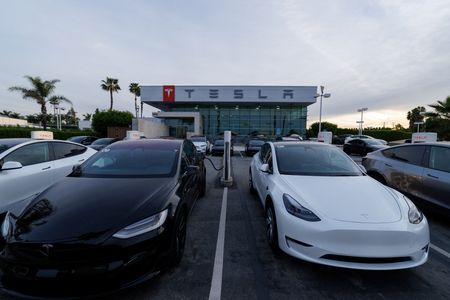
Federal transportation safety officials have concluded their investigation into potential defects affecting more than 2.26 million Tesla vehicles, determining there are no safety concerns related to the complaint.
The National Highway Traffic Safety Administration announced Friday it was dismissing a complaint filed in March 2023 that raised concerns about Tesla’s driving controls potentially causing drivers to accidentally press the wrong pedal, which could result in unexpected acceleration. The complaint specifically pointed to features like one-pedal driving as potentially confusing to drivers.
According to NHTSA officials, their investigation turned up minimal relevant incidents and confirmed that the vehicles operated as designed, showing no indication of safety defects or risks to drivers.
Tesla representatives have not yet provided a statement regarding the agency’s decision to close the investigation.
A senior executive at London-based insurance company Hiscox is confronting criminal perjury charges in Greece, accused of submitting false testimony during extradition proceedings involving a former company official, according to court documents reviewed by Reuters.
Greek prosecutors claim the executive, whose identity remains protected under Greek legal statutes, provided misleading evidence between 2019 and 2020 to support Bermuda’s request to extradite Yuval Abraham, who previously served as chief financial officer of Hiscox Services Ltd (HSL), a Bermuda-based division of the company.
This Greek legal proceeding, not previously disclosed publicly, emerges from a complex international legal saga spanning eight years across multiple countries including Bermuda, Britain, the United States, South Africa and Greece. The case involves accusations that Abraham misappropriated approximately $1.8 million to purchase high-end Swiss timepieces, alongside claims of whistleblower retaliation.
During a March 4 court session in Athens, the Hiscox executive’s legal representative argued for dismissal, claiming the court summons was improperly served in Greek instead of English. Defense attorney Ioannis Androulakis maintained his client’s innocence, stating to the judge: “The entirety of what (my client) has testified as part of the extradition process … corresponds to the truth.”
The executive faces misdemeanor charges for false testimony, which could result in monetary penalties and imprisonment up to three years.
Hiscox, headquartered in Bermuda and among Lloyd’s of London’s major commercial insurance market participants, has refused to provide statements regarding the ongoing legal matter.
Abraham’s legal counsel, Zoe Konstantopoulou, who also leads a political party, addressed Greece’s parliament in May 2025, describing her client as a “victim of a very serious corruption case.” During the March 4 hearing, Konstantopoulou characterized Abraham as a “very promising, senior executive” who was targeted after declining to overlook workplace tax violations.
The case, initiated by Abraham’s 2021 lawsuit against the Hiscox manager, will continue with the next court session scheduled for April 21.
Abraham claims he discovered fraudulent activities in 2017 that generated “astronomical profits” through unpaid taxes to unnamed jurisdictions, though he has not presented supporting evidence. Following this alleged discovery, Abraham refused to approve the 2017 financial statements of a Hiscox subsidiary, according to legal documents.
Reuters was unable to independently confirm Abraham’s allegations, and Hiscox has declined commentary on the tax fraud claims.
Three Hiscox subsidiaries, including HSL, have accused Abraham of creating fraudulent invoices for fictitious consulting work to redirect company funds for luxury watch purchases between June 2017 and February 2018, based on court records from Bermuda and London proceedings.
Abraham, a 45-year-old holding citizenship in Israel, South Africa and Poland, was terminated in 2018 but has denied all wrongdoing. In his 2021 legal counterclaim, he alleges the charges against him were fabricated to silence his internal whistleblowing efforts.
Greek prosecutors, in referring the case to trial, determined that Abraham had not committed fraud, did not oversee the disputed invoices and payments, and lacked sole authorization for such financial transactions, court records indicate.
HSL, Hiscox Agency and Hiscox Insurance Company (Bermuda) obtained a civil summary judgment through Bermuda’s Supreme Court against Abraham in October 2018, ordering payment of approximately $1.5 million and 334,000 Swiss francs ($427,600), plus accumulated interest.
Courts across Bermuda, New York and London implemented asset-freezing measures against Abraham during 2018 and 2019, according to public legal records.
Bermuda authorities reported in July 2019 that Abraham had fled before arrest on charges including fraudulent money transfers, accounting falsification, money laundering and additional offenses.
Abraham was detained at Athens airport in August 2019 following an Interpol Red Notice alert, court documentation shows. He remained in a maximum-security facility for nearly one year, during which he applied for Greek asylum, before Greece’s justice ministry ruled in 2021 that Bermuda lacked authority to request his extradition.
Financial markets witnessed significant buying activity this week as traders seized opportunities created by falling asset prices, despite ongoing Middle East conflicts creating market uncertainty, Bank of America Global Research reported Friday.
According to data from EPFR cited by the bank, market participants directed $62.2 billion toward equities, allocated $23.5 billion to cash positions, committed $10.2 billion to bond investments, and placed $1.0 billion in cryptocurrency. Meanwhile, investors withdrew $4.5 billion from gold holdings.
Gold investment vehicles experienced their most significant weekly exodus since October, while energy sector funds continued their remarkable streak with a 17th consecutive week of capital inflows, adding another $1.1 billion as oil and natural gas prices climbed higher.
American stock funds attracted $47.1 billion, marking the largest single-week influx since December. However, high-yield bond funds faced substantial withdrawals of $5.2 billion, representing the biggest outflow since April 2025.
Emerging market investments struggled across both categories, with debt funds losing $3.3 billion and equity funds seeing $4.8 billion in withdrawals during the same period.
Consumer products giant Unilever announced Friday that it’s engaged in discussions with McCormick & Company, the American spice manufacturer, regarding the potential sale of its food division in what could be a major industry reshuffling.
The British-Dutch company disclosed it has received an unsolicited proposal for its food operations, which account for roughly 25% of Unilever’s overall revenue and brought in more than 12.9 billion euros ($14.91 billion) during the previous year.
Such a transaction would merge Unilever’s well-known food brands, including Hellmann’s mayonnaise and Knorr seasonings, with McCormick’s popular Cholula hot sauce and other spice products under one corporate umbrella.
The discussions represent a possible quickening of Chief Executive Fernando Fernandez’s plan to refocus Unilever on more profitable beauty and personal care segments, following the company’s decision to spin off its ice cream division in the previous year.
Both corporations emphasized in their individual announcements that no agreement is guaranteed, and neither provided specific financial terms for the proposed transaction.
The companies made their statements after the Wall Street Journal revealed Thursday evening that Unilever was exploring options to separate its food operations, which also encompass brands like Colman mustard and Marmite spread, potentially combining them with McCormick through an all-stock arrangement that could finalize within weeks.
Earlier reports from the Financial Times indicated that Unilever had previously considered but ultimately abandoned plans to merge its food assets with Kraft Heinz’s condiment operations.
The Food Safety and Inspection Service has announced plans to extend its current data collection system that governs how companies must report new technologies and submit waiver applications to the federal agency.
Following requirements under the Paperwork Reduction Act of 1995 and federal Office of Management and Budget guidelines, FSIS officials said they will seek to continue the existing notification procedures without any modifications.
The current authorization for these information gathering requirements is set to end on July 31, 2026, prompting the renewal request.
The procedures establish how food industry companies must inform the federal agency when implementing new technologies in their operations and outline the process for requesting exemptions from certain regulations.
Star Entertainment, the Australian casino company that has been dealing with significant operational challenges, announced Friday that it has selected H.C. Charles (Charlie) Diao to serve as the organization’s new chief financial officer.
The appointment comes as the gaming company continues to navigate through a difficult period in its corporate history.
Global financial markets are experiencing a significant shift as the U.S. dollar’s impressive climb has finally stalled, according to market analyst Rae Wee’s assessment of European and international trading conditions.
The American currency had been performing strongly despite the continuing conflict between the U.S.-Israel coalition and Iran, but recent developments in worldwide interest rate policies have changed the landscape entirely.
Energy price increases have dramatically altered what investors expect from central banks around the globe, positioning the Federal Reserve as the sole major banking institution among developed nations that isn’t anticipated to implement rate increases during the current year.
Following an intense period of policy discussions among Group of Seven countries and other major economies, market participants are focusing primarily on the likelihood of more stringent monetary approaches ahead.
Central bank officials, having faced scrutiny for responding slowly to inflation spikes that emerged after COVID-19 and worsened with Russia’s 2022 Ukraine invasion, are now committed to controlling prices while protecting fragile economic recovery. Their primary concern is preventing a “stagflation” scenario that combines economic downturn with rising costs.
Market analysts currently estimate a 40% probability that Britain’s central bank will implement a rate increase next month, while insider sources indicate the European Central Bank might begin rate hike discussions in April, potentially implementing policy changes by June.
This shift toward stricter monetary policy has triggered widespread selling in international bond markets. British government bonds experienced one of their most severe trading days since record-keeping began, while two-year U.S. Treasury yields jumped over 20 basis points during peak trading.
Asian markets saw limited U.S. Treasury trading Friday due to a Japanese holiday, though futures markets suggested reduced selling activity. German and French government bond futures showed modest gains.
Financial markets found some stability Friday as oil prices retreated following announcements from major European countries and Japan pledging to help secure shipping routes through the Strait of Hormuz, while the United States outlined supply increase measures.
Despite these efforts, Brent crude remains well above $100 per barrel after climbing 47% this month, while U.S. crude has risen 40% during the same timeframe.
As Middle Eastern conflicts continue without resolution, investors increasingly recognize the potential for sustained high energy costs.
Recent attacks on energy infrastructure since the war began have realized the energy sector’s greatest concerns – that regional conflict could cause lasting damage and supply shortages in global energy markets.
Friday’s key market influences include Germany’s February producer price data.
Federal regulators have given their blessing to a major consolidation in the television industry, allowing Nexstar Media Group to move forward with its acquisition of competitor Tegna.
The Federal Communications Commission announced its approval on Thursday, clearing the way for the combination of these two major local television station operators.
However, the merger faces immediate legal challenges, with two separate lawsuits filed on the same day the FCC granted its approval. Both legal actions aim to prevent the deal from proceeding.
The merger would significantly reshape the landscape of local television ownership across the country, bringing together two of the industry’s largest station groups under one corporate umbrella.
HONG KONG — Global markets showed mixed results Friday as energy prices pulled back from recent highs, with crude oil dropping to approximately $107 per barrel amid ongoing concerns about Middle Eastern supply disruptions.
Energy markets experienced significant volatility Thursday when Brent crude, the global benchmark, temporarily spiked to roughly $119 per barrel as Iranian strikes on regional oil and gas infrastructure intensified following Israel’s assault on Iran’s major natural gas facility.
By Friday morning trading, Brent crude had declined 1.6% to $106.90 per barrel after Israeli Prime Minister Benjamin Netanyahu announced he would pause additional strikes on Iranian gas facilities at the urging of U.S. President Donald Trump. U.S. benchmark crude dropped 2% to $93.63 per barrel.
The three-week-old Iranian conflict has driven energy costs higher and sparked concerns about worldwide inflation. Anxiety continues mounting over petroleum and gas availability as the Strait of Hormuz, a vital shipping channel for energy exports situated between Iran and Oman, remains mostly blocked. U.S. Treasury Secretary Scott Bessent suggested Thursday the possibility of removing sanctions on Iranian maritime oil shipments as one strategy to reduce crude prices.
The decline in energy costs helped steady financial markets. Among Asian exchanges, South Korea’s Kospi climbed 0.6% to 5,798.23. Japan’s Nikkei 225 remained closed Friday for a holiday.
Hong Kong’s Hang Seng dropped 0.6% to 25,340.43, while Shanghai’s Composite index advanced 0.2% to 4,013.16.
Thursday brought moderate declines to Wall Street. The S&P 500 slipped 0.3% to 6,606.49. The Dow Jones Industrial Average decreased 0.4% to 46,021.43, while the Nasdaq composite dropped 0.3% to 22,090.69.
Memory chip manufacturer Micron Technology saw shares fall 3.8% despite posting quarterly earnings that exceeded analyst expectations. The stock has still surged approximately 330% over the past year due to global memory supply shortages.
In early Friday trading, precious metals posted gains. Gold had fallen below $4,700 earlier, partially due to inflation concerns. Friday saw gold prices rise 2.6% to $4,727.20 per ounce. Silver jumped 4.2% to $74.22 an ounce, also recovering from previous losses.
The U.S. dollar strengthened to 158.38 Japanese yen from 157.76 yen. The euro traded at $1.1558, down from $1.1589.
A major Wall Street investment firm has dramatically revised its predictions for when the United Kingdom will lower interest rates, pushing back expectations by several years due to ongoing global conflicts and inflation concerns.
Goldman Sachs announced Thursday it now expects the Bank of England to delay rate cuts until 2027, a significant shift from its previous forecast that anticipated quarterly reductions beginning in July of this year.
The revised timeline follows the Bank of England’s decision Thursday to maintain its current rate at 3.75% while warning that inflation could rise to approximately 3.5% in the coming six months. Central bank officials emphasized their continued concern about rising price expectations taking hold in the broader economy.
Goldman Sachs now projects a more gradual approach to rate reductions starting next year, with cuts eventually bringing rates down to a final target of 3%.
The investment firm also highlighted the possibility of rate increases in the near future, warning that the Bank of England could potentially raise rates as soon as its April meeting if global energy costs continue their upward trajectory.
Ongoing warfare in the Middle East and the practical shutdown of the Strait of Hormuz shipping route have driven oil prices higher, creating new inflationary pressures throughout Europe. This development has prompted other major financial institutions, including J.P. Morgan and Morgan Stanley, to similarly postpone their predictions for when monetary policy will become more accommodating.
SANTA FE, N.M. — Jurors in New Mexico are reviewing extensive testimony and evidence in a landmark case examining what social media giant Meta understood about how its platforms affect young users.
New Mexico prosecutors claim Meta failed to adequately warn about dangers its platforms create for children, including mental health issues and sexual predation. Defense lawyers for Meta argue the company has implemented safety measures for teens and removes harmful material, though they admit some dangerous content slips through their screening systems.
The case has now reached its seventh week, with jurors not yet beginning deliberations. Should the jury determine that Meta — parent company of Instagram, Facebook and WhatsApp — broke New Mexico’s consumer protection statutes, prosecutors indicate penalties could reach billions of dollars. Meta disputes this calculation and seeks a different penalty structure.
Beginning February 9, this trial represents one of the earliest cases in a wave of litigation targeting Meta, occurring as school systems and lawmakers push for greater smartphone restrictions in educational settings.
A planned second trial phase, potentially scheduled for May with only a judge deciding, would examine whether Meta’s social media platforms constitute a public nuisance requiring the company to fund corrective public programs.
Meta faces three charges of breaking New Mexico’s Unfair Trade Practices Act, which shields consumers from misleading or exploitative business conduct.
Following final arguments, jurors must determine if Meta deliberately misrepresented platform dangers through omission or active hiding of information.
This lawsuit might bypass or contest immunity protections that shield technology companies from responsibility for user-posted content under Section 230, a three-decade-old component of the U.S. Communications Decency Act, plus First Amendment defenses.
In California, another jury is already deliberating whether social media corporations bear responsibility for harm to children using their services, in one of three key cases that may influence thousands of similar lawsuits.
New Mexico’s lawsuit rests on different evidence — including a state undercover operation where investigators established fake social media profiles pretending to be minors to document sexual approaches and Meta’s responses.
The 2023 lawsuit from New Mexico Attorney General Raúl Torrez also contends that social media addiction risks haven’t been properly disclosed or addressed by Meta. While Meta doesn’t acknowledge social media addiction as real, company leaders recognize “problematic use” and claim they want users to have positive experiences on Meta’s platforms.
Among thousands of document pages, the New Mexico proceedings examine numerous internal Meta records and communications. Jurors have heard from Meta leadership, platform developers, former employees turned whistleblowers, mental health professionals and technology safety experts.
The jury may also consider testimony from local educators who have dealt with social media-related disruptions, including sharing of violent and sexually graphic content, plus online extortion targeting New Mexico children.
Two additional consumer protection violation charges claim Meta engaged in “unconscionable” business practices that were extremely unfair.
During opening statements, prosecutor Donald Migliori stressed allegations that Meta unconscionably targeted children for social media engagement as a long-term revenue source while aware of sexual exploitation risks on social platforms. Meta challenges this by pointing to platform safety tools and content filtering for teenagers, whom Meta views as influencers with limited buying power for advertisers.
Jurors would determine if the behavior was “willful” and deserves civil fines up to $5,000 per violation, and may help count total violations.
Torrez suggests these fines could accumulate significantly given New Mexico’s Meta platform user numbers. However, Meta requests limiting sanctions to one penalty per misleading statement or trade violation — not per social media view or user.
State District Judge Bryan Biedscheid oversees both trial phases. He would rule on nuisance claims as the case proceeds — and whether the company must pay financial damages.
Prosecutors accuse Meta of recklessly establishing a marketplace and “breeding ground” for predators targeting children for sexual abuse. They claim Meta’s platforms also damage teenage mental health through various means — including sleep loss, depression and self-injury.
Meta’s legal team accuses prosecutors of selective evidence use and poor investigative methods that may have worsened problems.
During testimony, Meta executives outlined comprehensive systems for identifying child sexual abuse content on platforms and alerting authorities — while noting the company warns users that enforcement isn’t perfect.
“We believe it’s important to disclose the risks, but to do so in a consistent and rigorous way,” Instagram head Adam Mosseri testified, describing an approach that includes blog posts, user agreements and other communications.
In recorded testimony shown at trial, Meta CEO Mark Zuckerberg stated that “safety is extremely important for the service and having it be something that people trust and want to use over time.” He noted Meta stopped tying business performance metrics directly to user time spent on platforms in 2017.
Torrez plans to seek court-mandated changes to Meta’s business operations and remedies for social media harm to children.
“We’re going to have meaningful investments in targeted strategic programming around how you use the internet and how you use social media in ways that are responsible and healthy,” he stated on the trial’s first day.
The U.S. dollar retreated from recent multi-month peaks this week as escalating energy costs disrupted global monetary policy expectations, leaving America’s central bank as the sole major institution not anticipated to raise interest rates in 2024.
Market expectations have shifted dramatically since the U.S.-Israeli conflict with Iran commenced in late February. Previously, traders had anticipated two Federal Reserve rate reductions this year, but now view even a single cut as highly unlikely.
Multiple currencies posted weekly advances against the dollar, including the euro, yen, British pound, Swiss franc, and Australian dollar, as monetary authorities worldwide prepared for potential rate increases responding to Middle Eastern warfare that has severely disrupted oil and gas distribution networks.
In Asian trading Friday, the euro held near $1.1569 after climbing 1.4% for the week. The yen stabilized around 157.88 following a 1.2% weekly rise, while sterling traded at $1.3422, up more than 1.5% over five days.
Brent crude oil prices have surged approximately 50% since the U.S.-Israeli military action against Iran began last month, effectively shutting down crucial shipping routes for Middle Eastern energy exports.
The European Central Bank maintained current rates Thursday but issued warnings about energy-driven inflation. Reuters sources indicated policymakers will likely begin discussing rate increases next month, marking a clear departure from the Fed’s cautious stance.
Market participants quickly abandoned expectations that European rates would remain at 2% for an extended period, instead pricing in a rate increase by June.
“While the Fed is willing to display patience in the face of a shock generating two-sided risks to its mandate, the ECB seems unusually sensitive,” analysts at J.P. Morgan said.
“There appears to be a genuine tilt towards a rate hike this year, even if it remains uncertain how quickly it will translate into action.”
Britain’s central bank also held rates steady but triggered one of the most severe sell-offs in short-term government bonds by indicating readiness for action. Markets that previously expected declining rates now anticipate 80 basis points of increases before year-end.
The Bank of Japan surprised investors Thursday by suggesting a possible rate hike as early as April, catching off-guard those betting on continued yen weakness and helping boost the currency.
Australia’s dollar traded just below 71 cents Friday, gaining 1.5% for the week after the Reserve Bank of Australia implemented its second rate increase in two months, with investors expecting additional hikes ahead.
Oil prices declined slightly Friday after President Donald Trump advised Israel against targeting Iranian energy facilities following recent retaliatory strikes that damaged a Qatari gas facility.
The Federal Reserve kept rates unchanged as expected earlier this week, with Chairman Jerome Powell stating it was premature to assess the war’s economic impact duration and severity.
The dollar index held steady at 99.359 but remained on course for a 1.1% weekly drop, its steepest decline since late January. However, many market experts doubt a sustained downturn is likely.
“The longer the war drags on, the higher the U.S. dollar will go, because it will benefit from safe-haven demand arising from higher uncertainty (and) also from the U.S. being an energy exporter,” said Carol Kong, currency strategist at Commonwealth Bank of Australia.
The streaming service Netflix is eyeing expanded opportunities for live programming in South Korea, company executives announced Friday during preparations for broadcasting a major BTS reunion performance in Seoul.
Brandon Riegg, who serves as Netflix’s vice president of nonfiction series and sports, told reporters at a media briefing that the platform plans to increase its Korean investments. He expressed hopes that Saturday’s BTS performance would deliver “a spectacle unlike anything we’ve seen before.”
“I would imagine that with our commitment to partnering with our producers in Korea, there will be many other opportunities for other live events,” Riegg stated.
“We have some things perhaps in the works I can’t speak to right now,” he added.
The K-pop supergroup will perform for one hour at Seoul’s iconic Gwanghwamun Square, celebrating their first album release in over three years and launching their April global tour.
Netflix will broadcast the performance live to viewers in 190 countries worldwide, representing the platform’s inaugural global livestream of a musical concert.
According to Riegg, Netflix is expanding its technical infrastructure within South Korea to support additional live programming capabilities.
“Korean culture, Korean entertainment which is so beloved, clearly just makes it an obvious choice to continue deepening that partnership,” he explained.
Earlier this week, Reuters sources indicated Netflix is developing a “KPop Demon Hunters” international tour as part of efforts to maximize revenue from its hit content.
Electric vehicle giant Tesla is negotiating to purchase nearly $3 billion in solar manufacturing equipment from Chinese companies as part of CEO Elon Musk’s ambitious plan to establish massive solar production capacity in America, according to sources familiar with the discussions.
The deal involves purchasing equipment valued at approximately $2.9 billion from several Chinese suppliers, with Suzhou Maxwell Technologies – the global leader in screen-printing equipment for solar cell production – emerging as a primary candidate to provide machinery for the project. Sources say the company is currently seeking export clearance from China’s commerce ministry.
Additional potential suppliers in the negotiations include Shenzhen S.C New Energy Technology and Laplace Renewable Energy Technology, according to people close to the matter who requested anonymity since the discussions are confidential.
Musk announced earlier this year his goal to establish 100 gigawatts of solar manufacturing capacity using American raw materials by the end of 2028. In January, he stated that solar energy has the potential to satisfy all electricity requirements across the United States, including the growing power demands from expanding data center operations.
The Chinese manufacturers have been instructed to deliver the equipment, including screen-printing production lines, before this fall, with sources indicating the machinery will be shipped to Texas. Some of the equipment worth an estimated 20 billion yuan requires export authorization from Chinese authorities, though the timeline for approval remains unclear.
Musk intends to use the solar capacity primarily for Tesla operations, though some will also power SpaceX satellite systems, according to the sources.
This potential purchase underscores a key challenge facing the United States as it attempts to decrease reliance on China – rebuilding domestic manufacturing capabilities still requires some level of trade with the world’s second-largest economy.
The order would provide significant relief to Chinese solar equipment manufacturers who have faced declining demand due to domestic overproduction. Meanwhile, the U.S. solar industry operates under heavy tariff protection designed to limit imports of lower-cost panels and cells from China and Southeast Asia.
Solar manufacturing equipment was exempted from tariffs by the Biden administration in 2024 following requests from American solar panel manufacturers who argued they had no alternative sources for necessary factory machinery. The Trump administration has maintained this exemption as the U.S. works to develop its own solar supply chain.
Musk has previously criticized tariff policies, arguing they make solar deployment in America “artificially high” in cost at a time when the nation faces critical power shortages driven by artificial intelligence data centers and manufacturing growth.
His solar initiatives present a sharp contrast to the energy agenda of President Trump, who advocates for maximizing fossil fuel production and has reduced federal support for solar and wind projects, which he characterizes as expensive and unreliable.
According to the Energy Information Administration, U.S. electricity consumption reached its second consecutive record high in 2025 and is projected to continue rising through 2027.
Establishing 100 gigawatts of solar manufacturing within a few years would represent an extraordinary accomplishment, though Musk has a history of announcing ambitious goals with aggressive timelines that sometimes face delays.
Current U.S. electricity generation capacity totaled 1,300 gigawatts as of 2024, with solar power accounting for only 135 gigawatts or 10% of the total, according to the American Public Power Association.
While Tesla has been working to increase local sourcing in various regions, the company still relies on approximately 400 China-based suppliers to maintain competitive costs. Sixty of these suppliers serve Tesla’s global operations, including U.S. electric vehicle facilities.
Tesla’s Cybertruck and Semi production preparations in the United States experienced delays last year when component shipments from China were halted following substantial tariff increases on Chinese goods implemented by the Trump administration.
Tesla, China’s commerce ministry, and the Chinese companies mentioned did not respond to requests for comment.
Crude oil prices dropped Friday following announcements from major world powers about coordinated efforts to protect shipping lanes and increase global oil supplies.
Brent crude futures declined $1.24, falling 1.1% to $107.41 per barrel by early Friday trading, while U.S. West Texas Intermediate crude dropped $1.24, or 1.3%, to $94.90.
The price decline came after Britain, France, Germany, Italy, the Netherlands and Japan issued a joint statement Thursday pledging their support for securing safe navigation through the Strait of Hormuz. The critical waterway handles approximately 20% of global oil and liquefied natural gas shipments.
“Our readiness to contribute to appropriate efforts to ensure safe passage through the Strait,” the nations declared in their collaborative statement, marking a shift from their earlier reluctance to get involved.
U.S. Treasury Secretary Scott Bessent announced potential measures to combat rising oil costs, including the possibility of lifting sanctions on Iranian oil currently held on tankers. He also indicated that additional releases from America’s Strategic Petroleum Reserve could occur.
Despite Friday’s decline, Brent crude remained positioned for a weekly gain exceeding 4%, following Iranian strikes on Gulf state energy facilities that forced production shutdowns. In contrast, WTI crude was heading toward nearly a 4% weekly loss, its first decline in five weeks, with the price gap between WTI and Brent reaching its widest point in 11 years.
President Donald Trump revealed Thursday that he had instructed Israeli Prime Minister Benjamin Netanyahu to avoid targeting Iranian energy infrastructure in future operations.
“I told him, ‘Don’t do that’, and he won’t do that,” Trump stated during an Oval Office meeting with reporters.
Meanwhile, North Dakota officials announced expected increases in the state’s crude production for the coming months. The third-largest oil-producing state anticipates operators will reactivate dormant wells and benefit from the lifting of winter drilling restrictions.
However, the North Dakota Department of Mineral Resources cautioned that activity levels will depend on sustained high oil prices, noting that major oil companies have already finalized their spending plans for the year.
JAKARTA – Michael Bambang Hartono, one of Indonesia’s most prominent business leaders who built a massive corporate empire alongside his brother, passed away Thursday at 86 years old.
The Djarum company confirmed his death through a social media announcement, stating: “It is with deep sorrow, Djarum family announces the passing of one of our company’s leaders, Michael Bambang Hartono. We express our gratitude for his dedication and service.”
Officials have not disclosed what led to his death.
Together with his sibling Robert Budi Hartono, Michael controlled wealth valued at approximately $43.8 billion as of 2025, making them Indonesia’s richest individuals according to Forbes rankings.
The Chinese-Indonesian brothers maintained extremely private lifestyles, rarely speaking publicly about their personal affairs or extensive business operations.
Following their father’s passing in 1963, the Hartono brothers assumed control of Djarum, which became a leading producer of clove cigarettes in Indonesia, the world’s second-largest tobacco market.
Over the decades, they diversified their holdings across numerous industries including consumer electronics, food production, beverage manufacturing, palm oil cultivation, telecommunications infrastructure, and technology ventures, with younger family members now managing many operations.
The conglomerate also acquired ownership of Italy’s Como soccer team in 2019.
A significant portion of their fortune stems from controlling 54.9% of Bank Central Asia, Indonesia’s largest financial institution valued at over $50 billion.
The brothers made strategic investments in the bank and various other assets during the 1998 Asian economic crisis and political upheaval following former President Suharto’s removal from power.
In 2018, Michael Bambang competed as one of the eldest athletes at the Asian Games held in Jakarta, earning a bronze medal in bridge competition.
The businessman, who began playing bridge at six years old, previously told Reuters that managing a card game required similar skills to running companies.
“The decision making process is the same in bridge and business. You gather information and data, make a conclusion, and plan a strategy,” he explained.
Consumer products giant Unilever is reportedly negotiating to spin off its food division and merge it with spice company McCormick through a stock-only transaction that could be announced within weeks, according to a Thursday report from the Wall Street Journal citing unnamed sources.
Reuters was unable to independently confirm the reporting, and both companies have not yet responded to requests for comment.
The company behind Dove soap is considering a broader divestiture of its food operations, as reported by Bloomberg News earlier this week, while consumer goods manufacturers face declining demand for packaged food products during ongoing economic uncertainty.
According to the Financial Times on Wednesday, Unilever and Kraft Heinz had recently engaged in discussions about potentially merging portions of their food operations, though those negotiations have since concluded.
The Federal Communications Commission gave its blessing Thursday to Nexstar’s purchase of select television stations from Tegna, moving forward with a deal that faces mounting legal opposition.
FCC Chairman Brendan Carr defended the decision, stating: “By approving this transaction, which allows Nexstar to own less than 15% of television stations, the FCC acts mindful of the media marketplace that exits today — not the one from decades past.”
The regulatory approval arrived just one day after eight states launched legal action in Sacramento federal court, attempting to halt the merger that would create the nation’s largest broadcast television station operator.
Television and streaming service DirecTV also jumped into the legal fray Wednesday evening, filing its own lawsuit to stop the transaction from proceeding.
Nexstar Chief Executive Perry Sook defended the deal’s importance, saying: “This transaction is essential to sustaining strong local journalism in the communities we serve.”
Federal regulators have given the green light to a massive broadcasting merger, with the U.S. Department of Justice providing unconditional approval for Nexstar’s $3.5 billion acquisition of competitor Tegna, according to a Thursday report from Bloomberg News citing sources with knowledge of the decision.
The federal approval arrives just one day after eight states launched legal action in Sacramento’s U.S. District Court, attempting to halt the merger that would create the nation’s largest broadcast television station operator.
Television service provider DirecTV has also entered the legal battle, filing its own lawsuit Wednesday evening to stop the transaction from moving forward.
According to Bloomberg’s reporting, the Justice Department provided what’s called early termination to both companies, signaling the conclusion of its regulatory review process.
The Tegna purchase would significantly broaden Nexstar’s reach, allowing the combined company to serve 80% of American television households across major markets. However, the deal still requires the Federal Communications Commission to raise current limits on broadcast station ownership.
Representatives from Nexstar, Tegna, and the Justice Department have not yet provided responses to requests for comment.
In February, FCC Chairman Brendan Carr expressed his support for the transaction and indicated plans to move toward approval following President Donald Trump’s public endorsement of the merger.
The Justice Department launched a comprehensive investigation into the proposed acquisition during the previous year.
A defense technology startup will launch production of advanced combat drones within days at its newly constructed Ohio manufacturing facility, as military demand for unmanned aircraft continues to rise following their proven effectiveness in overseas conflicts.
Anduril Industries announced that its $1 billion Arsenal-1 manufacturing campus, located in rural farmland approximately 20 miles south of Columbus, will begin producing the company’s FURY combat drone system. Company officials revealed Thursday that the facility is projected to create jobs for more than 4,000 workers over the coming decade, with approximately 250 positions expected to be filled by year’s end.
The company represents part of an emerging wave of smaller defense contractors seeking to secure valuable Pentagon contracts for advanced military systems. The current administration anticipates these newer companies will revolutionize weapons development by providing state-of-the-art technology faster and more cost-effectively than traditional methods.
According to Matt Grimm, who serves as Anduril’s co-founder and chief operating officer, the company’s manufacturing philosophy represents a significant departure from conventional defense industry practices.
The firm prioritizes production feasibility from the initial design phase rather than addressing manufacturing concerns after product development. This strategy includes selecting standard materials like aluminum instead of titanium, implementing manufacturing techniques adapted from recreational boat construction, and choosing a commercial aircraft engine for the FURY system specifically due to its established supply network and service infrastructure.
The FURY autonomous aircraft represents Anduril’s submission for the Collaborative Combat Aircraft initiative, which forms part of the Air Force’s strategy to develop next-generation military systems. This program aims to pair crewed fighter aircraft with unmanned platforms that can operate alongside human pilots.
“From the very first prototype, we’ve been working with our engineers on every single build, thinking, how do we design it for production?” Grimm stated.
The company indicated that production of its Roadrunner interceptor system, Barracuda missile series, and an undisclosed classified project are all scheduled to begin at the new facility before the end of this year.
Anduril currently operates manufacturing locations across multiple states including Mississippi, Rhode Island, Colorado, Georgia, North Carolina, and California, as well as an international facility in Australia.
The Securities and Exchange Commission is establishing a specialized enforcement division focused on accounting violations while simultaneously reducing personnel at an external oversight organization created following major corporate scandals two decades ago, based on employment listings and insider information.
These developments indicate the SEC may be consolidating responsibilities typically handled by the Public Company Accounting Oversight Board, an entity that has lost favor among Republican leadership in Washington.
Online job postings reveal the SEC is recruiting for a specialized unit designed to monitor violations of the Sarbanes-Oxley Act of 2002, legislation enacted after widespread accounting fraud and audit failures that resulted in the collapse of major corporations like Enron and WorldCom.
This new “SOX” division will “investigate and litigate matters involving potential violations of auditing and related professional standards and provisions of the Sarbanes-Oxley Act and other relevant federal securities laws,” according to the SEC’s job posting.
While the SEC currently handles similar responsibilities alongside the PCAOB, a nonprofit entity established under the same 2002 legislation, uncertainty surrounds the board’s future under Republican control, which has consistently criticized the watchdog organization.
Under Chairman Paul Atkins’ leadership, the SEC has significantly reduced the PCAOB’s funding. Although acknowledging the necessity of its primary responsibilities, Atkins has characterized the organization as an expensive obstacle to free market operations and has openly considered transferring the PCAOB’s duties to the SEC.
Last year, Republican legislators explored potential legislation that would have essentially dissolved the PCAOB, though the organization gained renewed importance as U.S. officials demanded stricter oversight of Chinese corporations accused of violating accounting regulations.
On Thursday, an SEC representative emphasized that auditors serve as “critical gatekeepers” for maintaining financial market integrity and preventing fraudulent activity.
“Additional hires in the enforcement division will continue the commission’s longstanding efforts to crack down on bad actors in the profession,” the spokesperson stated.
Sources indicate the PCAOB has extended voluntary departure packages to certain employees.
PCAOB representatives chose not to provide comments on the matter.
The SEC has undergone significant staff reductions under Atkins’ leadership, implementing notable modifications to enforcement practices and organizational structure while abandoning several high-profile cases. His enforcement director unexpectedly stepped down this past Monday.
Financial markets across the globe experienced dramatic swings Thursday as investors grappled with the possibility of widespread interest rate increases designed to combat inflation stemming from the Middle East energy crisis.
The volatile session saw massive fluctuations in stock prices, bond yields, and oil markets as traders adjusted their expectations for monetary policy responses to rising energy costs and supply disruptions.
Market analysts are increasingly predicting that incoming Federal Reserve Chair Kevin Warsh may begin his tenure with a rate increase rather than the reduction many had anticipated.
The day’s market performance painted a grim picture across multiple regions. Asian and European markets suffered significant declines, with Japan, India, and South Korea dropping 3% or more. British and German markets, along with broader European indices, fell by at least 2%. While U.S. markets recovered from earlier losses, the three major indices still closed down between 0.3% and 0.4%.
Within specific sectors, eight of the S&P 500’s categories declined, led by materials which dropped 1.6%. Consumer staples and discretionary sectors each fell 0.8%. Energy stocks bucked the trend, gaining 1.5%, with Baker Hughes surging 5.6% and Chevron rising 1.4%. However, Newmont Mining tumbled 7% and Micron Technology declined 4%.
Currency markets saw the dollar retreat 1% in its largest single-day decline since April of last year, as central banks outside the Federal Reserve adopted more aggressive stances. The euro, yen, and British pound all posted substantial gains following their respective policy meetings.
Bond markets reflected growing uncertainty, with U.S. yields climbing as much as 12 basis points. The spread between two-year and ten-year Treasury notes compressed to just 40 basis points, marking the flattest curve since August. Two-year British government bond yields jumped 30 basis points.
Oil prices settled 1% higher despite retreating from earlier peaks that saw Brent crude approach $120 per barrel. Gold, traditionally a safe haven during geopolitical turmoil, paradoxically fell 4%.
The ongoing Middle East conflict continues to raise fundamental questions about U.S. strategy and international coordination. Demonstrating the pressure from $100 oil and market instability, Treasury Secretary Scott Bessent indicated Thursday that sanctions on Iranian oil might be lifted, following similar easing of restrictions on Russian oil the previous week.
Central banks face a challenging balancing act between addressing immediate inflationary pressures through rate hikes while managing potential long-term economic damage from reduced consumer spending and energy supply disruptions.
The dramatic flattening of yield curves illustrates these competing pressures. Two-year U.S. yields have climbed to 3.90%, the highest level since August, narrowing the gap with ten-year yields to create what analysts describe as a policymaker’s nightmare scenario.
Gold’s decline represents a particularly striking development given the current environment of war, geopolitical instability, energy shocks, and rising inflation. The precious metal has dropped 8% this week, potentially marking its worst weekly performance since March 2020. Monthly losses of 13% would represent the worst showing since 2008 and the second-worst in over four decades.
Market observers attribute gold’s weakness to investors liquidating speculative positions built during the rally that pushed prices above $5,500 per ounce in January, as market participants seek cash and liquidity amid the current uncertainty.
Looking ahead, market movements will likely depend on developments in the Middle East, energy market fluctuations, and various economic data releases from New Zealand, Taiwan, China, the United Kingdom, Germany, the eurozone, and Canada.
The shipping giant FedEx announced Thursday it’s boosting its annual profit projections after delivering stronger-than-anticipated third-quarter financial results, powered by robust holiday season package volumes.
The Memphis-headquartered company, which specializes in overnight air delivery services, watched its stock price surge 8% in extended trading hours. Earlier this month, FedEx achieved a milestone by surpassing UPS in total market capitalization for the first time, reaching a valuation of approximately $82.23 billion by Wednesday’s market close.
The delivery company now projects its adjusted earnings for the fiscal year concluding May 31 will fall between $19.30 and $20.10 per share. This represents a significant increase from December’s guidance of $17.80 to $19.00 per share. Wall Street analysts had been expecting annual profits of $18.69 per share, according to LSEG data.
However, FedEx cautioned that its optimistic projections assume no further geopolitical disruptions. The company noted that ongoing conflicts involving the U.S.-Israeli war on Iran have elevated air freight costs and forced flight rerouting, potentially impacting fourth-quarter results. Stifel analysts pointed out that roughly 8% of FedEx’s international export shipments move through regional hubs in affected areas.
The company’s Express division showed marked improvement during the third quarter, benefiting from enhanced pricing on both domestic and international packages, increased U.S. shipping volumes, and continued expense reduction efforts.
Evercore ISI analyst Jonathan Chappell noted the quarterly “results were lifted by much higher yields, but this time much stronger U.S. ground volume also helped the top line.”
“The cost savings from the network reorganization also continue to help expand margins, and all 3 added up to a very surprising beat,” Chappell added.
Despite these gains, FedEx acknowledged that some benefits were diminished by increased employee wages and bonus payments, elevated transportation expenses, global trade policy impacts, and the grounding of its MD-11 aircraft fleet.
For the critical winter holiday period, adjusted earnings reached $5.25 per share, significantly exceeding analyst projections of $4.14 per share. This performance came despite absorbing millions in unexpected replacement costs for trucks and aircraft to compensate for the grounded MD-11 fleet following a fatal UPS crash in November 2025.
The Federal Aviation Administration ordered the grounding of FedEx’s 28 Boeing MD-11 cargo aircraft after the crash that claimed 14 lives, including three pilots. Company leadership previously indicated they anticipate the MD-11 fleet’s return to service by late May.
FedEx also revised its full-year revenue expectations upward, now anticipating growth of 6.0% to 6.5% year-over-year, compared to previous estimates of 5% to 6% growth.
The company continues implementing a comprehensive multi-year transformation plan involving billions in cost reductions, merging its separate Ground and Express delivery services, increasing operational automation, and preparing to spin off its Freight trucking division on June 1.
Quarterly revenue for the period ending February 28 totaled $24 billion, surpassing analyst expectations of $23.43 billion.
NEW YORK — The head of Live Nation Entertainment became the central figure in a New York courtroom Thursday, taking the witness stand to defend his company’s market dominance while attorneys representing 33 states painted the concert industry leader as a monopolistic force that harms consumers.
Michael Rapino, who has served as CEO since the company’s inception two decades ago, appeared in court as part of an antitrust lawsuit initially filed by the U.S. Justice Department against Live Nation and its Ticketmaster division two years ago.
“I’m very proud,” Rapino declared when discussing how his organization transformed what he described as a scattered industry 20 years ago, creating a more organized system to serve performers and fans that competitors now attempt to copy. The company acquired Ticketmaster through a merger in 2010.
While federal authorities reached a settlement agreement last week that includes measures designed to boost competition and potentially reduce concert ticket costs, with six states joining that resolution, 33 states plus the District of Columbia have chosen to pursue their legal challenge.
State attorney Jeffrey Kessler spent the day questioning Rapino, attempting to demonstrate that the company eliminates rivals and inflates prices for music fans.
During one particularly tense exchange, Kessler referenced 2022 internal communications where a Live Nation ticketing executive called customers “so stupid” and bragged about “robbing them blind, baby” in messages to a colleague.
Rapino condemned the language as “disgusting” and “not the way we operate,” stating he only discovered these communications the previous week and intended “to deal with it this week.”
When Kessler pressed about potential disciplinary action, Rapino responded that his company typically chooses to “give employees a break” and noted that “I heard he’s apologized.”
Live Nation representatives have stated the company first became aware of these private messages when they surfaced in court documents last week. Company lawyers characterized the exchange as “off-the-cuff banter, not policy” between two employees who maintain a personal friendship.
Benjamin Baker, the employee who sent the messages and currently serves as head of ticketing for Venue Nation, which oversees the company’s amphitheater operations, called his communications “very immature and unacceptable” during his earlier testimony this week.
Rapino maintained his composure throughout Thursday’s proceedings, calmly addressing what he characterized as misleading or inaccurate claims from Kessler.
When confronted about a Ticketmaster executive’s explanation during the notorious 2022 Taylor Swift ticket sale disaster that blamed outdated systems for the problems, Rapino offered a different account.
“We thought demand overloaded the system,” Rapino testified. “It turned out not to be true.”
He explained that a cyberattack was actually responsible for the technical failures.
Addressing Kessler’s suggestion that Live Nation prohibits personal lawn chairs at its 40 nationwide amphitheaters to force customers to rent company chairs, Rapino disagreed with the characterization.
“It was a safety issue, for sure,” Rapino explained, describing how concertgoers became frustrated with each other when fans brought different-sized chairs that sometimes blocked sightlines.
Kessler also raised a 2024 incident involving complaints from Adele fans regarding Ticketmaster’s presale ticket procedures.
Rapino clarified that the situation involved competing ticketing companies posing as fan organizations to “get tickets for free we had to acquire.”
When asked whether Live Nation declined Adele’s offer to cover ticketing fees for her supporters, Rapino was emphatic.
“We would never say no to Adele,” Rapino stated. “We said no to the ticketing company.”
Stock prices for American liquefied natural gas companies skyrocketed Thursday after Qatar reported that Iranian military strikes could eliminate approximately one-fifth of its LNG production for as long as five years.
Cheniere Energy reached a record-breaking peak during trading and closed the afternoon session up roughly 7% at $285 per share. Venture Global initially jumped as much as 13% before giving back most of those gains later in the day, though the company’s stock has climbed about 50% over the past month.
The market surge came after QatarEnergy’s chief executive Saad al-Kaabi informed Reuters that Iranian bombardments had eliminated 17% of the Gulf state’s LNG shipping capabilities.
According to al-Kaabi, the attacks damaged two of Qatar’s 14 LNG production trains along with one of its two gas-to-liquids facilities. The repairs will remove 12.8 million metric tons annually of LNG production from global markets for three to five years. Qatar leads the world in LNG exports, with the United States ranking second.
Cheniere operates facilities capable of exporting over 51 million metric tons of LNG annually, while Venture Global can handle shipments exceeding 37 million tons, based on recent company earnings reports.
The military conflict that erupted late last month has created chaos in worldwide energy markets after the Strait of Hormuz was essentially closed, cutting off roughly 20% of global oil transportation and forcing QatarEnergy to halt LNG deliveries. Market experts initially predicted temporary price swings but now caution that continued attacks on energy facilities could create permanent changes in LNG and natural gas pricing.
Cheniere operates under long-term contracts for 94% of its production, while Venture Global reserves approximately 30% for immediate market sales.
Following the start of U.S. and Israeli military operations against Iran on February 28, American gas prices have risen about 12% compared to dramatic increases of 91% in Europe and 88% in Asia. Natural gas is currently trading at 37-month peaks near $21 per million British thermal units at Europe’s Dutch Title Transfer Facility benchmark and close to $20 at Asia’s Japan-Korea Marker.
Prior to the recent attacks, consulting firm Wood Mackenzie had projected that Qatari LNG production could resume full operations within four to six weeks after a temporary shutdown. That forecast will now be pushed back based on the extent of the infrastructure damage, the company stated Thursday.
“The damage to the two LNG trains at Ras Laffan will inevitably mean that suppliers elsewhere around the world will have more business for the coming few years. But the higher European and Asian gas prices we have seen in recent weeks are now likely to remain elevated for longer, which undoubtedly will result in fuel-switching in both the power and industrial sectors,” said Wood Mackenzie Europe Gas & LNG director Tom Marzec-Manser.
Columbia University’s Center on Global Energy Policy fellow Ira Joseph noted that some of Qatar’s lost production could be replaced by new American facilities expected to begin operations, including the Golden Pass LNG plant owned by Exxon Mobil and QatarEnergy in Texas, plus three additional facilities under development by Sempra, NextDecade and Venture Global.
Joseph emphasized that the critical issue going forward involves whether Qatar’s massive North Field expansion project will also face disruption.
“If it is impacted, then structurally we have to adjust our LNG prices higher,” he said. “But if we do that, we also have to weaken our demand growth outlook.”
Jefferies analysts cautioned that extended outages could result in persistently higher prices, though some demand reduction and switching from coal to gas may occur. They noted that buyers are increasingly focusing on supply diversification and geopolitical stability rather than simply seeking the cheapest LNG available.
Drivers nationwide are feeling the pinch at gas stations as fuel costs have skyrocketed more than 30% throughout March, approaching the $4 per gallon mark despite President Donald Trump’s efforts to address supply chain disruptions linked to ongoing Middle East conflicts.
The nationwide average for regular gasoline has risen approximately 90 cents per gallon since late February when the United States and Israel launched military operations against Iran, according to American Automobile Association data. Thursday’s average price hit $3.88 per gallon.
Energy market experts anticipate further increases as crude oil costs continue their upward trajectory. West Texas Intermediate crude futures have surged nearly $30 per barrel, representing a 43% jump from $67.02 to $96.14 during the same timeframe.
GasBuddy analyst Patrick De Haan posted on X that “It now looks like gasoline will hit $4/gal next week and could head toward $4.10/gal and beyond.”
Reaching the $4 per gallon threshold, last seen in August 2022, will add financial stress to Americans already dealing with broader inflationary pressures. Rising fuel costs present a significant political challenge for Trump and Republican lawmakers facing upcoming November midterm elections where they’re defending narrow congressional majorities.
The president had promised to reduce energy costs and boost domestic oil and gas output. However, his second term has been characterized by market instability, policy changes including tariffs, and international tensions.
Military actions by the U.S. and Israel against Iran have restricted oil supplies from a crucial global production region, with Iranian attacks on vessels in the Strait of Hormuz hampering Middle Eastern export operations.
Gasoline prices at retail locations have climbed alongside crude oil costs due to higher raw material expenses.
The Trump administration this week approved a temporary 60-day suspension of Jones Act shipping regulations, permitting foreign vessels to transport fuel, fertilizer and other commodities between American ports. Industry experts believe this measure will provide minimal relief from price increases.
An unnamed fuel trading professional explained that “Oil prices are set independently of transportation costs. The waiver will only allow additional ships to carry supplies.” The source added, “I don’t think it will dramatically lower prices.”
De Haan cautioned that “Motorists hoping for a plummet at the pump from the Jones Act waiver are probably going to be disappointed.”
Officials are also expected to announce temporary suspension of summer gasoline standards, which would remove federal environmental requirements for summer-grade fuel blends.
According to De Haan, this regulatory waiver could reduce retail gasoline prices by 10 to 20 cents per gallon, with the greatest savings likely in metropolitan areas like Chicago, New York and Washington, D.C., where reformulated gasoline is mandated.
Federal automotive safety officials are intensifying their examination of Tesla’s autonomous driving technology following multiple accidents involving vehicles operating in self-driving mode, creating new challenges for CEO Elon Musk as he prepares to introduce a revolutionary vehicle without traditional controls.
The National Highway Traffic Safety Administration announced in a recent document that investigators are reviewing nine collisions where Tesla’s automated driving system failed to promptly warn drivers to resume manual control during challenging weather conditions such as fog, with the vehicle’s camera systems unable to detect roadway dangers. This NHTSA announcement indicates that a regulatory review launched in 2024 focusing on low-visibility accidents may now progress toward enforcement measures, potentially resulting in a recall affecting 3.2 million Tesla automobiles.
Tesla shares dropped 3.1% to $380.75 during Thursday’s early afternoon market activity.
This heightened government oversight arrives as Tesla works to persuade shareholders that the company’s future depends more on widespread adoption of its autonomous driving technology rather than traditional vehicle sales, which have been declining. Musk has announced plans to transform millions of existing Tesla vehicles into rental taxis that owners could lease out during periods of non-use.
Supporting this strategic shift, Musk revealed Tesla will launch its driverless robotaxi program in multiple American cities this year, with nobody operating the vehicle. The company also plans to begin manufacturing its Cybercab model, featuring no steering wheel or pedals, for consumer purchase next month.
Tesla has not yet provided a response to requests for comment.
Tesla vehicles differ from other self-driving cars by depending exclusively on camera technology to identify road hazards. Competing systems combine cameras with light radar or lidar technology, a costlier approach that Musk has characterized as redundant.
The NHTSA investigation examining accidents during conditions involving sun glare, dust, or heavy fog will now advance to an “engineering analysis,” representing a more intensive level of regulatory review.
Tesla previously marketed its driver assistance technology as Full Self-Driving, or FSD, a designation that automotive specialists and government officials criticized as deceptive since operators must maintain constant road awareness and readiness to intervene immediately. The company subsequently modified the name to Full Self-Driving (Supervised).
Among the nine accidents being investigated, Tesla has informed regulators that three incidents could have been prevented with newer wireless FSD software updates.
Tesla currently faces multiple additional regulatory investigations, including one examining FSD-equipped vehicles that run red lights and another concerning door handles that allegedly malfunctioned during crashes, preventing passenger escape.
A new report shows that funding for Israeli retail technology companies experienced a dramatic surge in 2025, climbing to $463 million compared to just $197 million in the previous year, according to research published by Re: Tech Innovation Hub in partnership with StartUp Nation Central (SNC), Moonshot, and Metrico.
This significant increase signals a restoration of investor trust following two consecutive years of declining investment, with a notable preference for businesses that have demonstrated commercial success through artificial intelligence-powered solutions. The financial backing has also shifted toward larger transactions, with typical deal values rising to $15 million in 2025, up from $9.5 million in 2024 and substantially higher than 2023 levels.
According to the research, Israel currently hosts 502 active businesses in the Retail & Commerce sector, accounting for 7.05% of the nation’s total 7,125 startup companies. This sector has established itself as one of Israel’s top five innovation categories, surpassing FinTech and AgTech while trailing only behind Cyber security.
The largest subsector is Ecommerce Enablement, housing 230 businesses, with Marketing, Digital & Media following closely at 204 companies. Additional categories encompass Retail Digitalization & Store Operations with 157 businesses, Supply Chain & Logistics at 124, Security & Infrastructure with 75, Checkout, POS & Payments at 70, Marketplaces & DTC with 69, and Industrial Innovation containing 32 companies. Several businesses operate across multiple categories.
The report also unveiled the 2025 Top 100 Israeli Retail Tech Companies, chosen by an international committee of retailers, investors, and sector specialists, focusing on businesses that have shown proven commercial success and scaling potential.
“2025 was the year Israeli retail tech moved from recovery back to growth,” said Yael Kochman, CEO of Re:Tech Innovation Hub. “With funding more than doubling and a clear focus on scale-ready AI solutions, this is a testament to the resilience of the Israeli ecosystem. Through our Top 100 list, we’re proud to showcase the companies that are currently solving the most complex operational challenges for the world’s biggest brands.”
Major funding rounds demonstrated this upward trend, with Tastewise securing $50 million, Bria obtaining $40 million, and Chargeflow closing a $35 million investment round. Additionally, merger and acquisition activity included ReturnGo’s purchase by Global-e.
“The market contraction of 2023-2024 served as a rigorous filter for asset quality, leaving a battle-tested cohort of over 500 companies,” said Yariv Lotan, VP of Product & Data at StartUp Nation Central. “In 2025, we saw a definitive pivot from speculative experiments to the critical backbone of global commerce. With record-high median deal size of $15M, Israeli retail tech has matured into an essential infrastructure layer for the world’s leading retailers.”
Legal challenges have emerged against a massive television industry consolidation as eight state attorneys general and satellite provider DirecTV move to prevent Nexstar Media Group from completing its acquisition of competitor Tegna.
The $6.2 billion transaction, which Nexstar revealed last August, would establish a media empire controlling 265 television stations across 40 states plus Washington D.C. Most of these outlets serve as local network affiliates for major broadcasters including ABC, CBS, Fox and NBC.
DirecTV joined the legal fight Thursday with its own court filing, claiming the consolidation aims to inflate programming costs. “Nexstar’s purpose in acquiring Tegna is to drive up the price it can extract from DirecTV and other distributors, which will force them to raise prices to their subscribers,” the company stated.
While Nexstar maintains the acquisition would strengthen its ability to compete against well-funded traditional media corporations and technology giants, Democratic legal officials from California, Colorado, Connecticut, Illinois, New York, North Carolina, Oregon and Virginia disagree. Their joint lawsuit, submitted to federal court in Sacramento, California, warns of negative consequences for consumers.
“If this merger moves forward, cable prices will spike for consumers in New York and across the country,” declared New York Attorney General Letitia James Thursday.
Nexstar representatives did not immediately provide comments regarding the legal action.
The state prosecutors contend the consolidation would violate federal antitrust regulations designed to prevent monopolistic practices. Approval would also necessitate modifications to federal ownership limits on television stations, though Federal Communications Commission Chairman Brendan Carr supports relaxing such restrictions.
President Donald Trump endorsed the merger in February through social media, stating “we need more competition against THE ENEMY, the Fake News National TV Networks.”
Nexstar demonstrated its influence last fall by directing its ABC affiliates to remove late-night host Jimmy Kimmel after controversial remarks about assassinated Republican activist Charlie Kirk, resulting in Kimmel’s temporary suspension. However, ABC restored Kimmel following public backlash, forcing Nexstar to retreat.
Both legal challenges express concerns about potential damage to struggling local news operations, citing Nexstar’s history of combining newsrooms in markets where it operates multiple stations. The companies currently compete in 31 markets nationwide where each owns at least one station.
“We all benefit when local newsrooms compete to get stories,” James emphasized.
The attorneys general indicated willingness to welcome support from additional states, including those with Republican legal leadership.
The International Monetary Fund issued a warning Thursday about the potential economic consequences of ongoing conflicts disrupting global energy markets, stating that sustained higher energy costs could drive inflation upward while slowing economic growth worldwide.
IMF spokesperson Julie Kozack explained to media that the organization is keeping close tabs on conflicts affecting energy production and the resulting market disruptions. The fighting has already caused major interruptions to ocean-based oil and natural gas transport, pushing crude oil costs up more than 50% to above $100 per barrel.
While no member nations have formally requested emergency financial assistance yet, the global financial institution remains prepared to provide support where needed, according to Kozack. She noted that IMF representatives are actively communicating with finance officials and central bank leaders from member nations, along with regional organizations.
The spokesperson emphasized that the war’s overall economic effects will hinge on how long it lasts, its severity, and how far it spreads. The IMF plans to incorporate the conflict’s impact into its revised global economic forecast, scheduled for release in mid-April during the spring meetings of the IMF and World Bank.
Kozack referenced an IMF calculation showing that each 10% rise in energy costs, when maintained for roughly one year, typically leads to a 40-basis point jump in worldwide inflation and reduces economic output by 0.1% to 0.2%.
Should oil prices stay above $100 for an entire year, the consequences for both inflation rates and global economic production would be substantial.
The IMF official advised that central banks must stay alert as energy prices climb, carefully watching whether inflation spreads beyond energy sectors and monitoring if inflation expectations remain stable.
According to the IMF’s initial evaluation, the conflict will likely weaken economic growth in Gulf Cooperation Council nations, though specific details weren’t provided. The actual impact will largely depend on these countries’ capacity to restart their oil and gas export operations, she explained.
Before her household comes alive and her teenage children request breakfast or rides to school, Jen Meegan checks her work emails and reviews concepts she developed the previous evening.
She puts in about an hour of work, then following the morning school drop-off, she handles errands like grocery shopping or filling up her gas tank before returning to concentrate on her role as head writer and cofounder of Sheer Havoc, a creative services company.
This pattern defines her daily routine: completing work tasks in focused segments lasting several hours, pausing for an hour or two to address family and personal matters, then repeating this cycle until she wraps up her professional duties late in the evening.
Meegan represents a growing number of workers practicing ‘microshifting,’ a flexible work approach that involves completing job tasks in brief, concentrated periods rather than during one continuous eight-hour workday. This paid work integrates with and flows around personal responsibilities and priorities. Success gets measured mainly by results produced, with reduced focus on total hours spent at a computer.
‘Sometimes the break’s when most of the work will get done in your head, because you’re not sitting in front of a laptop just staring at a screen going, ‘I can’t come up with anything,” Meegan said.
This work method is becoming more widespread among employees and receiving acceptance within certain organizations as a strategy to enhance work-life integration. The remote and hybrid work setups that emerged during the coronavirus pandemic left many people craving time for caregiving or self-care when office return requirements were implemented.
‘As more managers and more organizations get better adept at giving a little bit of autonomy, this is becoming not only a little more popular, but it also gives employees the motivation and almost the license to ask for this,’ Kevin Rockmann, a professor of management at George Mason University’s Costello College of Business.
Here’s what various workers, supervisors and specialists share regarding the advantages and disadvantages of microshifting.
Although some freelance contractors report they’ve practiced microshifting for years, the concept is gaining traction among individuals in positions that typically demand fixed, continuous work hours. Certain companies provide this type of flexibility or recognize they have staff members operating this way even when the approach isn’t officially endorsed.
Advocates maintain that working in intervals enhances productivity by providing mental rest periods. Taking walks or participating in a child’s school event can refresh people who become exhausted from desk work or extended computer use, supporters explain.
‘From a creativity standpoint, it’s good to take breaks,’ Rockmann said. ‘When you stop thinking about a task is when your best ideas come to you.’
During Shellie Garrett’s time leading an eight-person team as director of investigations and appeals at Oklahoma Community Cares Partners, an organization established to verify rental assistance claims during the pandemic, she permitted her team members to establish their own work schedules, except for weekly team meetings.
‘Everybody needed to maintain availability for emergency questions or issues. But I let people determine what worked best for them productivity-wise,’ Garrett said. ‘If productivity was lapsing, we had to figure out different solutions. But overall, I feel like giving that autonomy led to better production and happier employees.’
During their work periods, her team members maintained spreadsheets, compared documents or conducted investigative tasks. During their personal time, one staff member was breastfeeding an infant and teaching a preschooler at home, while another held a second position as a real estate agent.
Amanda Elyse, who serves as a full-time professor of legal writing at Seattle University School of Law and a part-time policy and programs lead at the Northwest Animal Rights Network, explained that microshifting enables her to share meals with her partner, who works evening shifts, and to spend time with her dogs during daytime hours.
‘There’s just so many little things in the day that, when you’re in control of your schedule, you can take that time to do,’ Elyse said.
Although microshifting frequently benefits personal relationships, it can harm professional connections, Rockmann noted.
Successful teams depend on collaborative commitment, but ‘the whole idea of microshifting is taking care of yourself,’ he said. ‘It’s not that taking care of yourself is bad. It places the emphasis on the individual, not the relationships.’
Pranav Dalal, the founder and CEO of California-based remote staffing firm Office Beacon, oversees employees in India, the Philippines, Mexico and South Africa. They provide services to American companies in areas including customer service, finance and logistics. Dalal recognizes that some employees practice microshifting to address personal matters.
‘It’s happening without a policy and without me saying it, and those are in positions where they’re more managerial positions,’ he said. ‘I don’t really question it because I know that people are getting their work done at those levels.’
As a single parent, Dalal expresses understanding. However, situations arise when people push boundaries too far. When one team member consistently arrived late to in-person work events due to handling personal matters, it created difficulties, leading Dalal to terminate that employee.
‘If someone really abuses that, it becomes destructive to the team because then resentment builds,’ Dalal added. ‘As an employer, it definitely is a big shift for companies. And the shift is, essentially, can you deliver the same quality service, reliably, when there’s microshifting happening?’
Isabelle ‘Izzy’ Young’s position as a political organizer in Texas demands extensive time commitment, but she can generally choose her work hours as long as she completes her responsibilities.
The flexibility to create her own schedule helps Young manage her autism and a chronic condition called postural orthostatic tachycardia syndrome, which can trigger rapid heartbeat or dizziness when standing. If she requires additional sleep, she might schedule meetings for later hours. If she needs to calm her nervous system, she can take one or two midday hours to contact a friend or read before working into the evening.
‘I am very lucky to have a principal that is a compassionate person,’ Young said. ‘He’s acutely aware that life happens, and you can be incredibly productive and chronically ill.’
One drawback is her feeling of constantly working. ‘The job never ends, so you’re never really off the clock.’
Garrett, the Oklahoma team supervisor, operated in two-hour segments, which helped her handle the fluctuations of chronic conditions including an autoimmune disease and premenstrual dysphoric disorder, she explained. She could experience a creative surge and then rest or visit the gym.
‘Microshifting was honestly a godsend,’ Garrett said. ‘I don’t know if I could have done this job without being able to do that.’
When requesting workplace flexibility to control your schedule, explain how employers will gain advantages, Garrett recommended.
‘You have to go into the interview and sell it,’ she said. ‘You have go in and say, ‘I’m willing to do whatever schedule and put my best foot forward, but if you want me to be most productive or most creative, this is how I work best, if this is something you’re willing to work with.”
Homebuyers across the nation face another hurdle this spring as mortgage rates reached their highest point in over three months, creating additional challenges for those looking to purchase homes during the traditional buying season.
Freddie Mac reported Thursday that 30-year fixed mortgage rates increased to 6.22%, up from the previous week’s 6.11%. This represents a significant shift from one year ago when rates averaged 6.67%.
Just three weeks prior, rates had fallen below the 6% mark for the first time since late 2022, but they have steadily increased each week following the outbreak of conflict with Iran, which has disrupted financial markets and raised concerns about inflation driven by energy price spikes.
Homeowners considering refinancing also face higher costs, as 15-year fixed-rate mortgages increased to 5.54% from 5.5% the previous week. These rates stood at 5.83% one year ago, according to Freddie Mac data.
Multiple elements drive mortgage rate fluctuations, including Federal Reserve policy decisions and bond market investor sentiment regarding economic conditions and inflation expectations. Home loan pricing typically mirrors the movement of 10-year Treasury yields, which serve as a benchmark for lenders.
The 10-year Treasury yield reached 4.27% by midday Thursday, climbing from approximately 4.13% one week earlier.
Rising oil costs have pushed Treasury yields higher by amplifying inflation expectations. When long-term bond yields increase, mortgage rates follow suit.
Elevated inflation may also prevent the Federal Reserve from reducing interest rates. While the central bank doesn’t directly control mortgage rates, its decisions regarding short-term rate adjustments are closely monitored by bond investors and can ultimately impact 10-year Treasury yields that influence home loan costs.
Despite recent increases, current 30-year mortgage rates remain lower than last year’s levels, providing some advantage for buyers who can afford to purchase at today’s rates.
The nation’s housing market continues struggling through a downturn that began in 2022 when mortgage rates started climbing from pandemic-era record lows.
Existing home sales have maintained a pace near 4 million annually since 2023, falling well short of the historically normal 5.2-million annual rate. Sales dropped to a 30-year low last year and have remained weak through early 2024, with January and February figures trailing the previous year’s numbers despite lower rates compared to 12 months ago.
A European cloud industry association is pushing back against tech giant Broadcom, requesting that European Union competition authorities step in to block the company’s plans to shut down its VMware partner program across the continent.
The Cloud Infrastructure Services Providers in Europe, known as CISPE, made the formal request Thursday to EU antitrust officials. The organization represents nearly 50 companies throughout Europe, including tech giants Microsoft and Amazon as associate members.
This latest action stems from Broadcom’s overhaul of its VMware cloud service provider network late last year. CISPE previously challenged the European Commission in court for giving approval to Broadcom’s VMware purchase in 2023, arguing regulators didn’t thoroughly review the acquisition’s potential impacts.
According to CISPE’s statement, Broadcom announced in January 2026 that it would end its VMware Cloud Service Provider program in Europe. The organization says this decision eliminates partnerships with all but a select few companies, effectively blocking most European cloud service providers from offering VMware solutions to their customers.
“Both cloud providers and their customers — are being irreparably damaged by Broadcom’s unfair actions,” stated Francisco Mingorance, who serves as CISPE’s Secretary General.
The industry group is requesting that EU officials implement emergency measures that would immediately halt Broadcom’s program termination, restore access for excluded partners, and establish safeguards to prevent the company from retaliating against participants.
Neither the European Commission nor Broadcom representatives provided immediate responses to requests for comment on the matter.
Chinese technology conglomerate Alibaba Group announced Thursday its ambitious plan to generate more than $100 billion in revenue from artificial intelligence and cloud computing operations within the next five years, banking on surging demand for AI technologies.
The bold revenue target was revealed as the Hangzhou-based company reported quarterly earnings showing a dramatic 67% plunge in profits, despite continued strong performance in its cloud division.
During the three months ending in December, Alibaba posted total revenue of 284.8 billion yuan ($41.4 billion), representing a modest 2% increase compared to the previous year but falling short of Wall Street projections. The company has increasingly pivoted toward cloud computing and artificial intelligence technologies in recent years.
Cloud computing revenue surged 36% during the quarter, reaching 43.3 billion yuan ($6.2 billion) compared to the same period last year.
During Thursday’s earnings conference call, Chief Executive Officer Eddie Wu emphasized that Alibaba is positioned to capitalize on what he described as “exponential growth in AI demand.” The company continues to enhance its primary Qwen AI application and consumer chatbot while offering cloud infrastructure and storage solutions to business clients.
“(There is) enormous and sustained growth momentum of the AI market,” Wu stated.
Quarterly profits totaled 16.3 billion yuan ($2.4 billion), a significant decrease from 48.9 billion yuan during the corresponding quarter in 2023, attributed partly to increased marketing and sales expenditures.
The e-commerce pioneer has faced additional profitability challenges from an ongoing price competition in the food delivery sector over recent months.
To boost profits amid rising operational costs and increasing demand, Alibaba announced Wednesday it would raise prices for certain AI services by up to 34%. The company also introduced its new agentic AI platform called Wukong this week, expanding its commercial customer offerings.
Alibaba’s artificial intelligence strategy faced a setback this month with the departure of Lin Junyang, who led the company’s AI model division Qwen. In 2023, the company committed to investing a minimum of 380 billion yuan ($53 billion) over three years to develop its cloud computing and AI infrastructure.
Chinese technology firms have intensified efforts to compete with American competitors and expand their market presence, particularly following the industry disruption caused by AI startup DeepSeek last year.
WASHINGTON – New federal data reveals that wholesale inventory levels across the United States experienced a significant decline during January, raising concerns about potential impacts on economic growth during the first quarter.
According to Thursday’s report from the Commerce Department’s Census Bureau, wholesale stock levels fell by 0.5% in January, following a smaller 0.1% decrease in December. When compared to the same period last year, inventories still showed a 1.0% increase.
The Census Bureau noted that data releases continue to be affected by delays stemming from last year’s federal government shutdown, as agencies work to catch up on reporting schedules.
The January decline affected multiple product categories, with reductions seen in automotive inventory, lumber supplies, metals and hardware, as well as medical products, chemicals, agricultural goods, petroleum, and alcoholic beverages. However, some sectors bucked the trend, with furniture, professional equipment, electrical goods, and clothing inventories showing increases.
Despite three consecutive quarters of inventory declines, business stock levels contributed positively to the fourth quarter’s 0.7% annualized GDP growth rate. This contrasts with the stronger 4.4% economic growth pace recorded during the July through September period.
Wholesale sales activity painted a different picture, climbing 0.5% in January after a robust 1.3% jump in December. Based on current sales trends, wholesalers would need 1.25 months to clear their existing inventory, slightly improved from December’s 1.26-month timeframe. For comparison, the inventory-to-sales ratio stood at 1.33 months during January of the previous year.
WASHINGTON – The housing market took a significant hit in January as new home purchases plummeted to their weakest point in nearly three and a half years, according to federal data released Thursday.
The Commerce Department’s Census Bureau reported that new single-family home purchases declined by 17.6% to a seasonally adjusted annual rate of 587,000 units – marking the lowest figure since October 2022.
The January numbers fell well short of economist predictions, which had forecast sales would drop to 720,000 units. December’s figures were also revised downward, showing sales at 712,000 units rather than the initially reported 745,000 unit pace. Every region of the country experienced declining sales.
Severe winter conditions that brought heavy snowfall and freezing temperatures to much of the nation in January likely prevented many potential homebuyers from visiting properties, contributing to the steep decline.
The Census Bureau continues working to catch up on delayed data releases stemming from last year’s government shutdown.
New home purchases represent only a small portion of overall U.S. housing sales and typically show significant month-to-month fluctuations. These sales are recorded when contracts are signed. Compared to January of the previous year, new home sales plunged 11.3%.
The downturn occurred even though mortgage rates had decreased at the beginning of the year following President Donald Trump’s directive for government-backed mortgage companies Fannie Mae and Freddie Mac to increase their purchases of mortgage-backed securities.
However, mortgage rates have climbed in recent weeks as the U.S.-Israeli conflict with Iran pushed oil prices up more than 40% since fighting began in late February, causing U.S. Treasury yields to rise. Mortgage rates typically follow the benchmark 10-year Treasury yield.
This upward trend in rates could prevent any recovery in new home sales while keeping housing inventory high. Elevated construction costs due to import tariffs, labor shortages from immigration restrictions, and limited availability of building lots are all hampering single-family home construction.
Available new housing inventory increased slightly to 476,000 units in January from December’s 474,000 units.
Based on January’s sales rate, clearing the current supply of new homes would require 9.7 months, compared to 8.0 months in December. The median price for new homes fell 6.8% to $400,500 in January compared to the same month last year. The majority of homes sold in January were priced below $499,999.
WASHINGTON — Weekly unemployment benefit claims decreased nationwide last week, continuing a pattern of relatively stable numbers despite ongoing challenges in the employment sector.
New jobless benefit applications for the week that concluded March 14 dropped by 8,000 compared to the prior week, reaching 205,000 total claims, according to Thursday’s Labor Department data. This figure came in lower than the 215,000 applications that economists polled by FactSet had predicted.
These weekly unemployment claim numbers serve as an immediate gauge for job market conditions and provide insight into the frequency of layoffs across the country.
Although weekly dismissals have generally stayed within a stable range of 200,000 to 250,000 over recent years, several major corporations have recently announced workforce reductions, including Morgan Stanley, Block, UPS, and Amazon.
The Labor Department revealed earlier this month that American businesses surprisingly eliminated 92,000 positions in February, indicating continued pressure on employment conditions. Additional adjustments removed another 69,000 jobs from December and January records, pushing the jobless rate to 4.4%.
February’s unexpectedly poor employment data contributes to broader economic concerns stemming from the conflict with Iran, which has driven oil prices up more than 40% and increased expenses for both businesses and consumers.
This situation unfolds while inflation rates were already elevated across the United States.
The Commerce Department announced last week that the Federal Reserve’s primary inflation measurement, personal consumption expenditures or PCE, increased 2.8% in January year-over-year. This exceeds the Fed’s 2% goal and demonstrates that costs remained stubbornly high even before the Iran conflict triggered additional energy price increases.
The combination of ongoing inflation and Middle East conflict uncertainties prompted the Federal Reserve to maintain its key interest rate unchanged on Wednesday.
“The thing I really want to emphasize is, nobody knows,” Powell said, referring to the impact of the Iran war. “The economic effects could be bigger, they could be smaller, they could be much smaller, they could be much bigger. We just don’t know.”
Powell explained that the central bank requires additional evidence of declining goods prices as tariff impacts diminish before implementing further rate reductions. Decreased interest rates typically contribute to inflationary pressures.
Currently, America’s employment landscape appears trapped in what economic experts describe as a “low-hire, low-fire” situation that maintains historically low unemployment rates while making job searches difficult for those seeking work.
Information from the past year has consistently shown an employment market where hiring has significantly slowed, hampered by uncertainty from President Donald Trump’s tariffs and ongoing effects from elevated interest rates the Federal Reserve implemented in 2022 and 2023 to control pandemic-related inflation increases.
Thursday’s Labor Department data indicated that the four-week rolling average of unemployment claims, which reduces week-to-week fluctuations, decreased by 750 to 210,750.
The overall count of Americans seeking unemployment benefits for the week ending March 7 increased by 10,000 to 1.86 million, government officials reported.
Ride-sharing company Uber announced Thursday it plans to invest as much as $1.25 billion in electric vehicle manufacturer Rivian Automotive as part of an ambitious plan to deploy tens of thousands of self-driving cars.
The partnership calls for Uber and its fleet operators to purchase 10,000 autonomous Rivian R2 vehicles, with an option to acquire an additional 40,000 units by 2030.
According to the companies, the first wave of these driverless vehicles will hit the streets in San Francisco and Miami starting in 2028. The program will then grow to include 25 metropolitan areas spanning the United States, Canada, and Europe by 2031.
“We’re big believers in Rivian’s approach—designing the vehicle, compute platform, and software stack together, while maintaining end-to-end control of scaled manufacturing and supply in the U.S.,” Uber CEO Dara Khosrowshahi said in a statement. “That vertical integration, combined with data from their growing consumer vehicle base and experience managing the complexities of commercial fleets, gives us conviction to set these ambitious but achievable targets.”
The financial commitment from Uber will be distributed over several years through 2031, with payments tied to Rivian meeting specific self-driving technology benchmarks by designated deadlines. An initial $300 million will be provided once the agreement is finalized and receives regulatory clearance.
Based in Irvine, California, Rivian currently produces the premium R1T pickup truck and R1S SUV models, along with commercial delivery vehicles for Amazon and other companies. The company plans to start manufacturing its smaller R2 model this year. Rivian broke ground on a $5 billion manufacturing plant in Georgia last year after significant delays.
Following the announcement, Rivian’s stock price jumped 10% in early trading, while Uber shares saw a modest increase of less than 1%.
JAKARTA, Indonesia — The wealthiest person in Indonesia, Michael Bambang Hartono, passed away Thursday at age 86 in a Singapore medical facility, according to his company’s announcement.
Hartono transformed his family’s cigarette business into Indonesia’s largest corporate empire alongside his brother Robert Budi Hartono, while also becoming the majority owner of the nation’s largest private bank, Bank Central Asia.
The Djarum Group released a statement confirming his death Thursday afternoon, expressing “With deep sorrow, the extended family of PT Djarum announces the passing of one of our company’s leaders, Michael Bambang Hartono. We extend our gratitude for his dedication and service.”
No official cause of death was disclosed by the family, though Hartono had previously battled chronic obstructive pulmonary disease and experienced a heart attack.
The Hartono siblings expanded their inherited tobacco operation into a diverse business empire headquartered in Central Java’s Kudus regency, with ventures spanning financial services, palm oil production, real estate development, consumer electronics, telecommunications, and online commerce.
PT Djarum, their primary enterprise, manufactures numerous cigarette brands both domestically and internationally, focusing mainly on kretek (clove cigarettes) such as Djarum Black, Djarum Super, and L.A. Lights. The brothers control Bank Central Asia, Indonesia’s top financial institution, which generated 57.5 trillion rupiah ($3.43 billion) in revenue during the previous year.
Combined, the Hartono brothers possessed assets exceeding $43.8 billion, establishing them as Indonesia’s wealthiest individuals. Michael Hartono’s personal fortune reached approximately $25.1 billion in December 2024, ranking him 76th globally among the world’s richest people, Forbes reported.
In 2004, the brothers secured development rights for Hotel Indonesia, an iconic Jakarta landmark, converting it into the Grand Indonesia complex featuring retail spaces, offices, upscale accommodations, and residential units.
Operating under parent company PT Dwimuria Investama Andalan, commonly called the Djarum Group, the organization has expanded beyond tobacco into banking, technology, and food industries.
The company also operates PB Djarum, among Indonesia’s premier badminton organizations whose athletes have secured multiple world titles for the country, and owns Italian soccer team Como. From 2005 through 2011, Djarum served as a primary sponsor of Indonesia’s premier football league.
Beyond business, Hartono excelled as a competitive bridge player and led the South East Asia Bridge Federation. The World Bridge Federation honored him in 2017 for his contributions to establishing bridge as an Asian Games competition category.
At the 2018 Asian Games, Hartono competed for Indonesia in bridge, earning a bronze medal with his teammates and becoming the nation’s oldest Asian Games medalist.
During the presidential palace ceremony recognizing Indonesia’s athletic achievements that year, Hartono received approximately $16,700 in prize money, which he contributed entirely to bridge development programs.
Born October 2, 1939, Hartono observed his father combining tobacco with indigenous clove seasonings to create the cigarettes Indonesians call “kretek” due to the distinctive crackling sound produced by the burning aromatic spices. Following their father’s 1963 death, the brothers assumed control of the operation, developed innovative tobacco mixtures, and launched international sales in 1972 to multiple countries including the United States.
Their inaugural machine-manufactured kretek, the Djarum Filter, debuted in 1976, followed by the mechanically-produced Djarum Super in 1981.
Djarum Super remains among Indonesia’s most favored cigarette brands in the world’s fourth-largest country by population, where over 64 million adults consume tobacco products daily.
Following the Family Smoking Prevention and Tobacco Act’s prohibition of most flavored cigarettes in America, Djarum’s clove products are now sold as “filtered cigars” wrapped in tobacco leaves rather than traditional black paper.
Currently, approximately 60,000 factory employees hand-roll Djarum cigarettes, which primarily target lower-income consumers.
A French cloud computing firm is taking on American technology powerhouses by launching new operations in Italy, marking another step in Europe’s push to develop homegrown alternatives to US-dominated services.
Scaleway, which operates under France’s Iliad telecommunications company, announced Thursday its decision to establish a cloud computing region in Milan. The company currently runs similar operations in France, Poland, and the Netherlands.
The expansion comes as European leaders express growing concern about the continent’s heavy reliance on American technology companies. Research from the European Parliament shows that Amazon Web Services, Microsoft Azure, and Google Cloud maintain control over approximately 70% of the European Union’s cloud computing market.
According to CEO Damien Lucas, the situation demands action. “Europe cannot rely entirely on foreign hyperscalers to power its digital economy,” Lucas stated.
The company targets businesses looking for European-based cloud services that meet local regulatory requirements. Scaleway has additional plans to establish operations in Sweden and Germany, though specific locations remain undetermined.
Milan’s selection reflects the city’s strong technological infrastructure and its position as a major business center, making it attractive for data centers that support artificial intelligence applications requiring substantial computing power.
Despite offering services comparable to larger competitors, Scaleway operates at a much smaller scale. Bridging this gap will require significant financial investment, with parent company Iliad announcing last year its commitment to spend 3 billion euros ($3.45 billion) on artificial intelligence infrastructure development.
The European cloud computing landscape currently lacks major domestic companies capable of competing with American hyperscalers, a situation that has intensified calls for technological independence amid various international tensions and regulatory challenges.
BEIJING – Chinese smartphone manufacturer Xiaomi revealed Thursday that it plans to dedicate a minimum of 60 billion yuan, equivalent to $8.7 billion, toward artificial intelligence development during the next three-year period, according to company Chief Executive Officer Lei Jun.
The substantial financial commitment was disclosed as Xiaomi simultaneously unveiled its newest artificial intelligence technology, which the company has named MiMo-V2-Pro.
The investment represents one of the largest AI spending commitments announced by a major technology company as the industry continues its rapid expansion into artificial intelligence capabilities.
The ride-sharing company Uber announced Thursday it will commit up to $1.25 billion to electric vehicle manufacturer Rivian through a partnership that aims to put 10,000 self-driving R2 SUVs on the road as robotaxis starting in 2028.
The San Francisco-based ride-hailing company plans to provide $300 million upfront, with the remainder of the funding distributed through 2031 based on whether Rivian successfully reaches specific autonomous vehicle development targets, according to both companies.
The autonomous taxi industry has gained significant momentum recently following years of unfulfilled expectations, as advances in artificial intelligence and strategic technology partnerships offer new possibilities for navigating complicated traffic situations more efficiently while reducing operational expenses.
Although Rivian has yet to launch any robotaxi services and is primarily recognized for its premium R1S SUVs and R1T pickup trucks, the company revealed its first proprietary computer chip designed for autonomous driving capabilities in December. The automaker is also preparing to introduce its smaller, budget-friendly R2 SUV models this quarter.
In comparison, Alphabet’s Waymo currently operates approximately 2,500 autonomous taxis across multiple American cities and has been expanding its services rapidly, while Tesla has begun limited robotaxi operations in Austin, Texas, with CEO Elon Musk pledging aggressive growth throughout this year.
The Rivian R2 robotaxis will operate solely through Uber’s platform, beginning in San Francisco and Miami, with the companies noting that Uber holds an option to purchase an additional 40,000 vehicles starting in 2030.
“Should all milestones be achieved, the companies will have deployed thousands of unsupervised Rivian R2 robotaxis across 25 cities in the U.S., Canada, and Europe by the end of 2031,” they said.
Uber has established itself as a platform connecting various robotaxi providers and has formed partnerships throughout the autonomous vehicle sector, including collaborations with Waymo, Baidu and Lucid.
The company is also collaborating with Nvidia on self-driving technology, utilizing the chip manufacturer’s artificial intelligence and simulation systems to assist in developing and expanding robotaxi operations.
The head of UBS expressed concern Thursday that Switzerland has damaged the trust it built while handling the Credit Suisse collapse by allowing fear to dominate banking regulatory discussions.
Sergio Ermotti, who leads UBS after the bank acquired its struggling competitor through a government-orchestrated emergency deal in March 2023, completed transferring all former Credit Suisse customers to UBS systems this week.
Writing in the Swiss publication Aargauer Zeitung, Ermotti stated: “Durable stability requires sound judgment, consistency, and international coordination – not measures that may provide short-term reassurance but ultimately undermine resilience and prosperity.”
He added: “What is needed now is a sense of proportion and self-reflection, not fearmongering.”
Ermotti’s comments arrive as Switzerland prepares for major decisions about capital requirements for its largest remaining bank. Swiss officials are expected to release their banking regulation proposals by April’s end.
The UBS leader particularly championed loss-absorbing financial tools like Additional Tier 1 capital, which will likely feature prominently in upcoming parliamentary discussions about banking rules.
According to Ermotti, these financial instruments continue to receive international recognition as valid regulatory capital and were crucial in stabilizing and restructuring Credit Suisse during its crisis.
He noted that other nations are examining their own regulatory systems to ensure rules remain focused, reasonable, and economically sound.
This week, Reuters revealed that European Union officials plan to reduce the impact of global banking reforms on banks’ capital requirements. These reforms were developed following the worldwide financial crisis.
Britain’s competition watchdog announced Thursday it has opened an investigation into software giant Adobe over concerns the company may have deceived customers about costly cancellation fees.
The Competition and Markets Authority will examine whether Adobe properly informed subscribers about early termination charges that could significantly impact purchasing decisions. Officials want to determine if customers received adequate advance notice about these fees when signing up for services.
Adobe creates popular creative software including Photoshop, Illustrator and Adobe Premiere that millions of people worldwide use for photo editing, graphic design and video production.
“From students to content creators, millions of people rely on digital design tools — and they should feel confident that businesses selling these services play by the rules,” stated Emma Cochrane, the CMA’s Executive Director for Consumer Protection.
This British inquiry comes just days after Adobe agreed to pay $150 million to settle a U.S. federal lawsuit that accused the company of harming consumers by hiding substantial termination fees and creating barriers to subscription cancellations.
Following that settlement announcement last Friday, Adobe stated it has recently improved and simplified both its enrollment and cancellation procedures while increasing transparency for customers.
Adobe has not yet responded to requests for comment regarding the new British regulatory investigation.
The British authority emphasized it has not reached any determinations about potential legal violations at this preliminary stage. This marks the ninth company the CMA is examining under expanded enforcement authority that allows direct action against businesses rather than requiring court proceedings.
These enhanced powers enable the competition authority to independently determine consumer law violations and impose remedies including financial penalties and customer compensation when warranted.
Manufacturing giant 3M announced Thursday it will partner with investment firm Bain Capital to acquire Madison Fire & Rescue from Madison Industries in a deal valued at $1.95 billion.
The acquisition will establish a new joint venture focused on fire and safety equipment, with 3M holding a majority 50.1% stake while Bain Capital will control the remaining 49.9% ownership.
As part of the agreement, 3M plans to merge its Scott Safety division into the newly formed venture and will receive $700 million in cash when the transaction finalizes.
Company officials expect the acquisition to reach completion during the latter half of 2026.
LONDON (AP) — The Bank of England was widely expected to reduce interest rates again this Thursday, but the Iran conflict that erupted less than three weeks ago has dramatically shifted those expectations. Financial analysts now believe the central bank will maintain its benchmark rate at 3.75%.
The conflict beginning February 28 between the United States, Israel, and Iran has triggered a series of economic disruptions that have altered worldwide financial predictions, particularly regarding pricing trends. The ongoing war and resulting blockade of the Strait of Hormuz pose increasing economic risks, given that one-fifth of global crude oil passes through this critical waterway.
Energy markets have experienced the most immediate consequences, with oil and natural gas costs surging significantly since hostilities began. Consumers are already seeing higher fuel costs, and sustained increases could result in elevated household energy expenses.
These emerging inflationary forces are compelling central bank officials worldwide to revise their 2026 economic outlooks for both price growth and economic expansion. The U.S. Federal Reserve maintained its primary interest rate Wednesday evening, meeting expectations.
The Bank of England now faces the likelihood that inflation will take longer to reach its 2% goal, with higher prices expected throughout the remainder of the year — creating an unfavorable environment for additional rate decreases in the near term.
“The bank would be wise to wait and see whether a rise in energy prices triggers a reacceleration of underlying price pressures before acting,” said Andrew Wishart, U.K. economist at Berenberg Bank.
Wishart indicated the central bank’s nine-member Monetary Policy Committee might reduce rates from 3.75% as early as June — assuming the Strait of Hormuz closure proves temporary.
“If energy prices stay high for six months, the bank would probably delay the reduction until 2027,” he added.
Following last month’s policy meeting, markets anticipated at least two to three quarter-point rate decreases this year. Economic forecasts released with the decision to maintain rates showed inflation reaching target levels by spring. However, Bank Governor Andrew Bailey stated that “all going well,” additional cuts should be possible this year.
Energy markets are experiencing significant turbulence as oil prices climbed beyond $115 per barrel following escalating tensions in the Middle East. The crisis began when Israeli forces struck Iran’s South Pars natural gas facility, which ranks as the world’s largest such installation, prompting Tehran to launch counter-strikes against energy infrastructure across the region, including Qatar’s Ras Laffan facility.
The Federal Reserve’s Wednesday policy announcement added to market concerns, with officials maintaining current interest rates while projecting a more restrictive monetary policy ahead. Fed Chair Jerome Powell noted that the ongoing conflict has created substantial economic uncertainty, leading the central bank to raise its annual inflation projections. Financial markets have now eliminated expectations for interest rate reductions through 2026.
European natural gas costs have skyrocketed approximately 25% amid the regional conflict, while U.S. West Texas Intermediate crude trades around $97 per barrel, maintaining a significant gap below international Brent prices partly due to strategic petroleum reserve releases.
Global stock markets suffered broad declines Wednesday as investors processed both the energy price surge and central bank policy signals. Major U.S. indices each dropped more than 1% following the Fed’s decision to hold rates steady while projecting only one rate reduction for the entire year.
Both the Bank of Canada and Bank of Japan maintained their current policy positions, with officials from both institutions indicating readiness to implement rate increases should elevated energy costs drive inflation higher. This energy shock arrives as U.S. inflation data already shows concerning trends, with February producer prices climbing 3.4% – the steepest increase in seven months and well above analyst predictions.
Currency markets reflected the hawkish central bank stance, with the dollar strengthening while the Japanese yen weakened toward two-year lows. Gold prices declined on dollar strength, reaching their lowest point since early February.
Asian equity markets continued the downward trend Thursday morning, with Japan’s Nikkei index falling more than 3% and South Korea’s KOSPI dropping 2.8%. European markets also opened lower, though U.S. futures showed modest gains ahead of the opening bell.
Additional monetary policy decisions are expected today from the European Central Bank and Bank of England, with both institutions facing similar challenges in assessing the conflict’s economic implications. As Powell stated Wednesday, the ultimate scope and duration of these impacts remain unknown.
The situation’s uncertainty is compounded by reports that the Trump administration is considering military deployment to the Middle East region, according to exclusive Reuters reporting.
In corporate news, Micron Technology reported strong second-quarter revenue growth driven by artificial intelligence memory chip demand, with third-quarter projections exceeding expectations. However, shares fell 5% in after-hours trading following the company’s announcement of a $5 billion capital expenditure increase planned for 2026.
European natural gas prices have surged 107% since late February as the Middle East energy facility attacks continue to escalate tensions.
Today’s key economic events include interest rate announcements from the European Central Bank at 9:15 AM and Bank of England at 8:00 AM, along with U.S. weekly unemployment claims and Philadelphia Federal Reserve business surveys at 8:30 AM. Corporate earnings reports are expected from Accenture and FedEx, while Japanese Prime Minister Sanae Takaichi is scheduled to meet with President Trump.
Global technology consulting firm Accenture announced Thursday that its upcoming quarterly revenue projections fall short of Wall Street expectations, citing corporate clients’ hesitancy to invest in major information technology overhaul projects during uncertain economic times.
Following the announcement, stock prices for the Dublin-based consulting giant dropped 3% during pre-market trading sessions.
Economic headwinds have created obstacles for Accenture, as business customers postpone extensive digital modernization initiatives while prioritizing budget management and shorter-term projects instead of comprehensive system upgrades.
For its fiscal third quarter, Accenture anticipates revenue ranging from $18.35 billion to $19.00 billion. The middle point of this projection sits below the $18.72 billion average prediction from Wall Street analysts, based on LSEG data compilation.
During the second quarter, the company’s revenue climbed 8% to reach $18.04 billion, surpassing analyst predictions of $17.84 billion.
The technology firm posted earnings of $2.93 per share, an increase from the $2.82 per share recorded during the corresponding quarter in the previous year.
Contract bookings, which indicate potential future revenue streams, increased 6% to $22.1 billion throughout the second quarter period.
Federal highway safety officials have expanded their investigation into Tesla’s autopilot technology following a series of crashes that resulted in one fatality, according to a March 19 announcement from the National Highway Traffic Safety Administration.
The expanded investigation now encompasses approximately 3.2 million Tesla vehicles across various models, representing virtually every Tesla sold in America.
This escalation represents a major development that could potentially result in a vehicle recall or other regulatory enforcement measures should officials discover safety defects.
The investigation centers on Tesla’s system designed to detect when road visibility becomes compromised and alert drivers to resume manual control of their vehicles.
According to NHTSA officials, available information suggests Tesla’s visibility detection technology has consistently failed to recognize poor driving conditions or provide adequate driver warnings when faced with sun glare and other visual obstructions, both before and after software improvements.
Tesla has not provided an immediate response to requests for comment regarding the investigation.
Safety officials report they have documented nine crashes connected to this technology malfunction, with two incidents resulting in driver or passenger injuries.
According to regulators, Tesla’s internal crash analysis suggested that updated software for the visibility detection system might have prevented three of the nine documented incidents.
In the crashes examined by federal investigators, the autopilot system failed to recognize conditions that blocked camera vision or delayed safety alerts until moments before collision.
Officials also discovered additional crashes in comparable conditions where the technology either missed reduced visibility entirely or failed to give drivers adequate response time.
Tesla’s future plans for fully autonomous vehicles and self-driving taxi services depend heavily on proving the safety and dependability of its Full Self-Driving technology, which continues to face ongoing regulatory review.
WASHINGTON – Federal banking regulators under President Donald Trump’s administration are preparing to announce revised capital requirements Thursday that will be significantly less strict than earlier proposals, marking a major win for large financial institutions.
The new draft rules, part of what’s known as the “Basel” framework, are anticipated to slightly decrease the cash reserves that major banks must maintain as a buffer against potential losses, according to Federal Reserve regulatory leader Michelle Bowman’s comments last week. This represents a dramatic shift from the original 2023 proposal that would have imposed substantial increases on banking institutions.
Three key regulatory agencies – the Federal Reserve, Federal Deposit Insurance Corporation, and Office of the Comptroller of the Currency – will vote to approve the Basel proposal Thursday morning before opening a public comment period. This action will likely trigger intense lobbying efforts as banks work to understand how the new requirements will affect their competitive positions.
The regulatory changes come after years of sustained pressure from Wall Street institutions seeking to roll back restrictions implemented following the 2008 financial meltdown, which they argue are hampering economic growth. While Bowman stated the modifications will better align requirements with actual risk levels, opponents contend the changes will weaken financial system protections during a time of increasing geopolitical and private credit threats.
“The initial proposals were pretty punitive and to their credit the regulators have taken their time to try to get it right. Who knows if it will be perfect but certainly they are listening,” said KBW analyst Chris McGratty.
For years, regulators have worked to implement the “Basel Endgame,” representing the final component of international capital standards developed after the financial crisis. These standards focus on how financial institutions evaluate and distribute funds to address credit, market and operational risks.
Michelle Bowman’s Democratic predecessor, Michael Barr, had pushed forward a plan that would have increased capital requirements for certain banks by up to 20%. However, financial institutions mounted an extraordinary opposition campaign that successfully influenced numerous legislators and created disagreement among regulators. This resistance delayed the project until the Trump administration took office, which has aligned with industry positions.
The Federal Reserve also intends to propose adjustments Thursday to the “GSIB surcharge” imposed on the eight highest-risk global U.S. banks by updating economic calculations and modifying how short-term funding risk is assessed. Together, these modifications should result in major bank capital requirements either decreasing slightly or remaining unchanged.
Morgan Stanley analysts estimated this month that large banks currently maintain approximately $175 billion in surplus capital, and regulatory clarity could enable them to begin utilizing those funds for lending activities and stock repurchases.
McGratty noted that the relaxed capital requirements would be far less burdensome for banks compared to the previous proposal, “but the devil will be in the details.”
Samsung Electronics has agreed to deliver advanced memory technology to ChatGPT maker OpenAI for the company’s debut custom artificial intelligence processor, according to a report from the Korean Economic Daily published Thursday.
The South Korean technology giant will provide its cutting-edge high-bandwidth memory chips, known as HBM4, to power OpenAI’s first internally developed AI processing unit. This arrangement builds on a previous agreement from last year when Samsung committed to supplying memory components for OpenAI’s data centers as part of the Stargate initiative.
Industry insiders revealed several key details about the partnership to the Korean publication. Samsung expects to deliver as much as 800 million gigabits of 12-layer HBM4 memory chips during the latter half of 2024. These sophisticated memory components will work alongside OpenAI’s inaugural AI processor, which the company designed in partnership with Broadcom.
Taiwan Semiconductor Manufacturing Company will handle production of the custom processor beginning in the third quarter, with OpenAI targeting a year-end release for the new chip. This collaboration with Broadcom represents OpenAI’s latest effort to secure adequate computing resources as demand for ChatGPT and related services continues to surge.
Samsung also expanded its AI chip partnerships this week, signing a strategic agreement with Advanced Micro Devices on Wednesday. Under this memorandum of understanding, Samsung will serve as a primary supplier of HBM4 chips for AMD’s next-generation AI graphics processing units.
When contacted for verification, Samsung Electronics chose not to provide comments on the reported deal. OpenAI representatives were unavailable for immediate response outside standard business hours.
Wall Street futures declined Thursday morning as crude oil prices jumped amid escalating Middle East conflicts, raising fresh concerns about inflation that have led the Federal Reserve to adopt a more cautious approach toward lowering interest rates in 2024.
Even positive earnings guidance from memory chip maker Micron Technology couldn’t boost market sentiment, with the company’s stock falling 4.5% in pre-market trading as investors worried about the firm’s increased capital expenditure plans given higher borrowing costs.
The semiconductor sector saw broad declines, with other memory chip companies that had performed well earlier this year taking hits. SanDisk dropped 4.5%, Western Digital declined 2.3%, and artificial intelligence giant Nvidia fell 0.4%.
Brent crude oil reached $115 per barrel following Iran’s attacks on energy infrastructure throughout the Middle East, launched in response to Israel’s strike on Iran’s South Pars gas facility. Meanwhile, U.S. oil benchmark traded at its largest discount to Brent in over a decade due to strategic petroleum reserve releases and increased shipping costs.
Federal Reserve officials kept interest rates steady Wednesday, with Chairman Jerome Powell warning of potential inflation increases ahead. Powell indicated it was premature to assess the economic impact of the ongoing conflict and maintained the central bank’s projection of just one quarter-point rate reduction this year.
Major investment banks including Morgan Stanley have now joined Goldman Sachs and Barclays in delaying their rate cut predictions from June to September. Market traders had already eliminated expectations for any rate reductions this year before the Fed’s announcement, with data suggesting the next dovish move may not occur until mid-2027.
“The big takeaway from the Fed decision is that the Fed will not be riding to the economy’s rescue, even if gas and diesel prices keep rising,” said Bill Adams, chief economist for Comerica Bank.
“Monetary policy can slow growth and inflation, or it can speed up growth and inflation. But it can’t offset an energy supply shock, which weakens growth at the same time that it raises inflation.”
As of 5:27 a.m. Eastern Time, Dow futures had fallen 135 points or 0.29%, S&P 500 futures dropped 22.25 points or 0.34%, and Nasdaq 100 futures declined 118.25 points or 0.48%.
Markets experienced selling pressure in both stocks and bonds following the Fed’s decision, pushing the Dow and Nasdaq below their 200-day moving averages while the S&P 500 reached a four-month low, approaching its own long-term technical support level. The 200-day moving average serves as a key indicator of long-term market momentum.
Market participants will closely monitor any additional comments from Fed policymakers throughout the day, along with the weekly unemployment claims report.
Attention will also focus on a U.S.-Japan summit where President Donald Trump may seek Japanese assistance regarding the Iranian conflict, following his previous unsuccessful appeals to allies for help securing the critical Strait of Hormuz shipping route.
Airlines sensitive to fuel costs, including Delta Air Lines and United Airlines, traded slightly lower in pre-market activity, while cruise operators like Norwegian and Carnival showed little movement.
Expectations for higher interest rates and a strengthening dollar pressured precious metals prices, causing mining companies such as Gold Fields and Endeavour Silver to fall approximately 9% each.
The world’s economy has consistently performed better than predicted for 14 consecutive months, even as conflict in Iran raises new worries about energy costs and international stability, according to a widely-watched financial measurement.
Citigroup’s economic surprise indicator, which compares recent economic performance against expert predictions over three-month periods, has remained positive since January 2025. This suggests financial analysts overestimated the negative effects of international tensions and increased U.S. import duties.
This Thursday marks a milestone as the streak surpasses the post-pandemic recovery period, becoming the second-longest positive run on record. Only the 2009-2011 period lasted longer.
However, the measurement doesn’t yet account for the Middle Eastern warfare, which has driven up petroleum costs and reignited concerns about economic expansion. These effects will take time to appear in official data.
“There is no reason for it to be consistently positive, surprises are normally pretty random, and expectations should adjust to past surprises,” explained Kristjan Kasikov, global head of Citi FX Quant Investor Solutions.
“The fact that this has not happened over the past year, means economists have been too stubborn in not adjusting their expectations for better than expected growth,” Kasikov said. He developed the measurement tool two decades ago.
“They expected the fallout from trade uncertainty and geopolitics to weigh on growth, and that did not happen,” he added.
Kasikov noted that export numbers and manufacturing output have been key drivers of the stronger-than-expected performance.
President Donald Trump implemented various import taxes on goods entering the United States in early 2025. Though these have been scaled back from their peak levels that startled financial markets in April, they continue to remain substantially elevated.
Significant spending on artificial intelligence technology and government stimulus policies have supported economic expansion.
Nevertheless, experts anticipate that climbing oil costs will create headwinds in coming months, particularly if increased expenses trigger widespread price increases and compel banking authorities to increase borrowing rates.
According to Kasikov, throughout most of 2025, information indicated worldwide economic expansion was slowing, though not as severely as forecasters had predicted. This pattern reversed in the final quarter when growth measures began accelerating beyond expectations.
He suggested this trend might help explain why international stock markets performed strongly in 2025.
The MSCI all country world index gained 20.6% during the previous year.
Memory chip manufacturer Micron Technology experienced a stock decline of more than 4% in pre-market trading Thursday, despite delivering impressive quarterly results powered by artificial intelligence demand. The drop occurred as investors expressed concern over the company’s announcement of significantly increased capital expenditure plans.
The semiconductor company, which has seen its stock value climb over 61% this year following a remarkable 240% surge in 2025, revealed it will increase its 2026 capital spending by $5 billion to address rising demand. This brings the company’s total investment for the current fiscal year to over $25 billion.
The company also indicated that expenditures will continue rising in 2027, with manufacturing expansion expected to push construction-related expenses more than $10 billion above 2026 levels.
Micron exceeded Wall Street projections for the second quarter and provided third-quarter revenue guidance of $33.5 billion, with a margin of plus or minus $750 million. This forecast significantly surpassed analysts’ average projection of $24.29 billion, according to LSEG data.
“Investors wager that these are peak earnings and will be unsustainable,” explained Mike O’Rourke, chief market strategist at JonesTrading.
“Micron also increased its capex forecast to continue to add production capacity. That reinforces the belief that the memory shortage is a temporary phenomenon and business will return to its commodity nature in coming years as capacity comes online,” O’Rourke added.
The company stands as one of just three worldwide providers of high-bandwidth memory utilized in artificial intelligence systems, alongside South Korean companies Samsung and SK Hynix.
Samsung and SK Hynix stocks both declined Thursday, closing down 3.84% and 4.07% respectively.
Other American memory manufacturers including Western Digital, Seagate Technology and SanDisk experienced pre-market drops ranging from 2% to 4%.
Major U.S. technology companies are investing billions in extensive AI data-center development projects, creating a surge in computing capacity needs that has dramatically increased demand for advanced memory chips.
This supply scramble has created market constraints and pushed prices upward, conditions that enabled Micron to achieve record profit margins during the quarter that concluded in February.
Samsung Life Insurance revealed in regulatory documents Thursday that the company plans to sell off 1.3 trillion won in Samsung Electronics stock, valued at approximately $867.07 million.
The insurance company stated the stock sale represents an effort to address compliance concerns related to South Korean regulations governing financial company operations.
The announcement was made through an official corporate filing in Seoul on Thursday.
Three major energy companies are making history this month by delivering unprecedented quantities of fuel from American shores to Australia, according to industry shipping records and trading sources.
ExxonMobil, BP, and Vitol have organized the largest single-month fuel shipment from the United States to Australia in over thirty years, with at least 200,000 metric tons of gasoline, diesel, and jet fuel being transported by the end of March from Gulf Coast and West Coast facilities.
The massive logistical operation stems from Australia’s sudden inability to secure its usual fuel supplies from Asian markets. China and Thailand have prohibited fuel exports to protect their domestic reserves, while refineries throughout Asia have reduced production following Iran’s blockade of the Strait of Hormuz, which has severely limited Middle Eastern crude oil exports.
Shipping records reveal ExxonMobil has reserved three vessels capable of transporting up to 120,000 tons of all three fuel types. BP has secured a tanker for 40,000 tons of diesel, while Vitol is moving 40,000 tons of gasoline across the Pacific.
When contacted for comment, Vitol and ExxonMobil representatives declined to provide statements, and BP has not yet responded to inquiries.
The financial scale of this operation is substantial, with shipping industry sources indicating that chartering a medium-range tanker to transport approximately 40,000 tons of fuel from America to Australia costs a minimum of $6 million, equivalent to $150 per ton. These transpacific journeys require 30 to 40 days to complete, significantly longer than the typical 10 to 20-day delivery timeframe from Asian suppliers.
All three companies maintain retail fuel station networks throughout Australia, making them key players in the country’s energy infrastructure.
Australia’s dependence on imported petroleum products has made the nation particularly susceptible to Middle Eastern supply disruptions. Government data indicates the country maintains fuel reserves well below international standards and imported 84% of its petroleum requirements last year.
According to Kpler shiptracking information, Australia brought in approximately 35 million tons of refined fuels in 2025, with over 90% originating from Asian sources.
Neil Crosby, vice president of oil analytics at Sparta Commodities, expects this trend to continue. “There will definitely be more need for these types of (arbitrage) flows,” Crosby stated, noting that Houston has become the most cost-effective source for Australian gasoline imports, followed by the Amsterdam-Rotterdam-Antwerp hub in northern Europe.
Crosby predicts additional arbitrage and trade arrangements will develop “the longer this crisis goes on” and “the clearer it gets how ‘short fuels’ Asia is suddenly becoming.”
Market data from Sparta Commodities on March 18 showed Houston gasoline for May delivery to Australia priced approximately $17 per barrel below Singapore alternatives.
Meanwhile, Australia’s competition regulator announced Thursday it has initiated an investigation into potential anti-competitive practices by major fuel suppliers, including Ampol, BP’s Australian division, Mobil Oil Australia, and Viva Energy, in which Vitol holds a significant ownership stake.
This regulatory action follows the government’s Friday announcement that it would tap domestic fuel reserves to address supply-chain disruptions affecting rural communities.
Tesla’s CEO Elon Musk announced Thursday that the electric vehicle company could complete the design phase of its advanced AI6 computer chips by December, marking a significant milestone in the automaker’s artificial intelligence development.
The chip design completion, known in the industry as “tape out,” represents the final stage before sending specifications to manufacturing facilities for production. These sophisticated processors are destined for use in Tesla’s autonomous driving systems and humanoid robot projects at the company’s Taylor, Texas facility.
“With some luck and acceleration using AI, we might be able to tape out AI6 in December,” Musk posted on his X social media platform when responding to questions about the chip’s development timeline.
Samsung Electronics secured a massive $16.5 billion contract last year to produce these artificial intelligence chips for Tesla. The South Korean technology giant plans to manufacture the processors using its cutting-edge 2-nanometer production technology, with a Samsung executive indicating production will begin during the latter half of 2027.
Samsung Electronics announced Thursday its intention to allocate more than 110 trillion won, equivalent to $73.24 billion, toward semiconductor development as the South Korean technology giant pursues dominance in the artificial intelligence chip market.
The electronics manufacturer disclosed in regulatory documents that it is simultaneously exploring significant acquisition opportunities across multiple sectors, including robotics, medical device technology, automotive electronics, and air conditioning systems.
This massive financial commitment represents Samsung’s strategic push to capture market leadership in the rapidly expanding AI semiconductor space, as demand for specialized chips continues to surge across industries worldwide.
An extended conflict involving Iran and its adversaries could drive global energy buyers toward North American suppliers like the United States and Canada, according to a senior official at Japan’s largest electricity producer JERA, as warfare spreads to critical energy facilities throughout the Middle East.
“With 90 million metric tons from the Middle East absent from the global LNG market, the longer this persists, the greater the impact,” Senior Managing Executive Officer Ryosuke Tsugaru stated during a Wednesday interview.
On the same day, Qatar – which ranks as the world’s second-biggest liquefied natural gas exporter – reported that Iranian missiles struck Ras Laffan, home to its primary LNG processing facilities, resulting in “extensive damage.”
JERA chose not to provide comments about the attack when contacted Thursday.
Tsugaru explained during Wednesday’s interview that continued fighting will likely drive spot prices sharply higher while increasing market volatility, and the crisis highlights regional dangers that may encourage sourcing or investment in alternative locations.
Japan’s top LNG purchaser manages approximately 35 million tons of the super-cooled fuel each year, with roughly 27 million tons consumed within Japan’s borders.
Around 5% of JERA’s Japanese deliveries travel through the Strait of Hormuz, where the three-week conflict has created shipping disruptions. This waterway borders Iran and handles approximately 20% of worldwide fossil fuel transportation.
Earlier this month, Qatar suspended operations at its 77 million ton-per-year LNG facility and announced force majeure on deliveries. The installation is located across the Persian Gulf from Iran, which has been attacking American interests and energy infrastructure.
In February, JERA finalized a 27-year agreement with QatarEnergy for 3 million tons annually from the North Field South project, part of a major expansion program’s second phase. Should warfare continue and expansion work face delays, JERA’s deliveries might be pushed back beyond their planned 2028 timeline, Tsugaru noted.
“Our exposure to the Middle East is not significant … but we are considering additional spot purchases to address certain cargo shortfalls,” Tsugaru explained, mentioning that JERA has received no emergency supply requests from domestic utility companies.
During an extended crisis, JERA would monitor demand patterns and purchase spot cargo when necessary to maintain reliable supply, he said. Nevertheless, JERA – a partnership between Tokyo Electric Power and Chubu Electric Power – has no intentions of modifying its QatarEnergy contract.
Last year, JERA committed to purchasing 5.5 million tons annually of American LNG from four facilities beginning around 2030, along with acquiring U.S. natural gas assets worth $1.5 billion. The company has obtained necessary LNG supplies for the early 2030s and can protect roughly 60% of anticipated U.S. volumes – expected to reach 10 million tons within the next decade – against price fluctuations, Tsugaru said.
JERA does not seek to become a U.S. gas producer and is not currently pursuing additional upstream purchases, he stated.
The company also obtains supplies from LNG Canada, a Shell-operated project, and might explore additional sourcing from an LNG Canada expansion initiative, Tsugaru added.
The Italian luxury sports car manufacturer Lamborghini announced Thursday that its 2025 profits decreased even as the company achieved record-breaking sales figures, with U.S. trade tariffs, currency fluctuations, and expenses from abandoning its planned electric vehicle program impacting financial results.
The Volkswagen subsidiary saw revenue climb 3.3% to reach 3.2 billion euros ($3.7 billion) while delivering a record 10,747 vehicles. However, operating profits dropped to 768 million euros compared to 835 million euros the previous year.
Trade tariffs imposed by the United States affected both sales volumes and profit margins in what represents Lamborghini’s largest market. While the company increased vehicle prices last year, CEO Stephan Winkelmann explained to journalists that the adjustments weren’t sufficient to counteract the tariff impact.
The luxury carmaker has decided against additional price hikes this year because Winkelmann believes “as we do not think this is something helping the market at this time.”
Operating profit margins decreased from 27% in 2024 to 24% in 2025.
The company managed to offset some external challenges by controlling expenses and boosting sales of higher-priced models, particularly benefiting from its 515,000 euro Revuelto sports car and increased customer demand for high-profit customization options.
According to the company, virtually every vehicle delivered in 2025 included at least one personalized feature.
Winkelmann stated it was premature to offer 2026 projections given various uncertainties, including the continuing Middle East conflict, which is affecting oil supplies and shipping routes while potentially dampening the high-end luxury vehicle market.
Earlier this year, Lamborghini scrapped its plans to introduce an electric sports car by 2030, pointing to insufficient consumer interest and concerns about investment returns.
“Resistance to EVs has increased significantly worldwide in our segment,” Winkelmann explained. “Many customers have tried EVs, but let’s say their experience didn’t quite live up to their expectations.”
He noted that Lamborghini continues developing internal electric vehicle technology in case market preferences change over the coming decade.
“But I can’t see the trend today, and I don’t see it for tomorrow either.”
Competitor Ferrari plans to reveal its first electric vehicle in May, with fully electric models expected to comprise 20% of its vehicle range by 2030.
Rather than pursuing a fully electric model, Lamborghini will introduce a plug-in hybrid vehicle in 2030, expanding its current three-model hybrid collection. The new model, named Lanzador, will feature “2+2” seating in a Grand Tourer configuration, according to Winkelmann.
Japan’s central bank maintained its benchmark interest rate at current levels Thursday, though officials expressed growing concern that escalating oil prices tied to Middle East tensions could drive inflation higher across the country.
During their two-day policy meeting that concluded Thursday, Bank of Japan officials voted to keep the short-term policy rate unchanged at 0.75%. Board member Hajime Takata, known for his more aggressive stance on rate increases, once again proposed raising rates to 1.0% – a suggestion that failed to gain support, similar to his January proposal.
In his post-meeting press conference conducted in Japanese, BOJ Governor Kazuo Ueda addressed questions about the central bank’s future direction and economic outlook.
Regarding potential interest rate increases ahead, Ueda explained: “As for the likelihood and timing of future rate hikes, we will make a decision looking at the economy, price developments at the time, as well as the likelihood of durably achieving our price target.”
The governor also highlighted growing challenges in measuring inflation accurately, noting government intervention and volatile energy costs are complicating economic analysis.
“It will likely become increasingly difficult to gauge underlying inflation partly due to the government’s steps to cushion the blow from inflation, and rising oil prices,” Ueda stated. “As such, we will release more thorough information on core consumer inflation. We will also re-calculate Japan’s estimated natural rate of interest and release our findings once necessary preparations are completed.”
A coalition of eight states launched legal action Wednesday evening in federal court in California, seeking to halt Nexstar’s massive $3.54 billion deal to purchase competitor Tegna, a transaction that would create America’s biggest broadcast television station owner.
California’s Attorney General Rob Bonta declared the proposed combination illegal, warning it would drive up cable and satellite TV costs while eliminating employment opportunities in the industry.
“When broadcast media is owned by a handful of companies, we get fewer voices, less competition, and communities lose the critical check on power that local journalism delivers,” Bonta said.
The legal challenge comes after Federal Communications Commission Chairman Brendan Carr announced his backing for the transaction last month, stating he would proceed with approval following President Donald Trump’s public endorsement of the merger.
Financial leaders across the globe are raising red flags about potential inflation spikes as ongoing warfare between the United States, Israel and Iran continues to disrupt energy markets and drive up commodity prices.
The Bank of Japan has aligned with both the Federal Reserve and Bank of Canada by maintaining current interest rate levels while expressing concern about rising price pressures that could result from the extended conflict disrupting global financial systems this month.
Market analysts anticipate the European Central Bank and Bank of England will similarly maintain their current rates during today’s scheduled meetings, with attention focused on official statements likely to emphasize strong anti-inflation positions.
Financial authorities face a challenging balancing act as they attempt to control persistent price increases while avoiding economic slowdown, mirroring the difficult situation they navigated in 2022 when Russia’s Ukrainian invasion triggered commodity-driven inflation surges.
This economic uncertainty has dampened investor confidence as financial markets grapple with another international crisis showing little indication of resolution.
Consequently, market participants have adopted cautious strategies, selling equity positions, delaying expectations for U.S. interest rate reductions, and purchasing U.S. currency. Crude oil prices have climbed solidly past $100 per barrel while natural gas costs have jumped more than 6%.
These developments have pushed the Japanese yen close to 160 against the dollar, a level market observers believe could prompt government intervention, particularly following strong statements from Japan’s finance minister on Thursday.
Currency specialists may experience familiar concerns as potential intervention discussions resurface periodically every few months.
Market attention remains concentrated on the Bank of Japan governor as investors evaluate how officials will balance supporting an economy under stress while avoiding delayed responses to inflation threats. This approach may determine the yen’s future direction.
Following these developments, focus shifts to the European Central Bank and Bank of England decisions.
Important market-moving events scheduled for Thursday include ECB policy meetings, Bank of England policy meetings, and UK employment data releases.
A Swedish entertainment company specializing in digital avatar technology has purchased the rights to Tina Turner’s name, image, and the majority of her music catalog from BMG, the company revealed Thursday.
Pophouse Entertainment, which was co-founded by ABBA member Björn Ulvaeus, has built a reputation for creating immersive digital experiences and avatar performances.
While Pophouse CEO Jessica Koravos declined to reveal the purchase price or specific future plans, she explained to The Associated Press their interest in the legendary performer. “One of the reasons that we were so interested in Tina is because she has such an incredible visual presence and such an incredible stage energy. And so, we’re very much looking at projects that can portray that and try to recreate that to some degree,” Koravos stated.
“What we want to do is really help to consolidate her legacy,” she continued. “I think that Tina Turner is up there, or is going to be up there, with the Elvises and the Marilyn Monroes of the world.”
Though Koravos wouldn’t confirm whether a digital avatar of Turner is in development, she promised the company would reveal their plans within the next six months.
The “Queen of Rock ‘n’ Roll” passed away in 2023 at age 83, leaving behind an extraordinary musical legacy. Turner achieved massive success with iconic songs including “What’s Love Got to Do With It,” “The Best” and “Proud Mary.” Throughout her decades-long career, she earned 12 Grammy Awards, including a Lifetime Achievement Award, received Kennedy Center Honors in 2005, and was inducted into the Rock & Roll Hall of Fame twice – in 1991 and 2021. Her record sales exceeded 150 million copies globally.
According to Koravos, discussions about the acquisition started following Turner’s death. She noted that BMG retains a portion of the catalog, and while Turner’s estate wasn’t directly involved in negotiations, they were “certainly involved and in the sense of informed and participating in the conversations.”
BMG’s Alistair Norbury, who serves as president for U.K., Continental Europe and APAC regions, released a statement emphasizing their commitment to Turner’s artistic vision. “Tina Turner’s voice and spirit shaped modern music and popular culture,” Norbury wrote. “Our responsibility, alongside Pophouse and the Estate, is to ensure her work continues to resonate with audiences around the world, while remaining true to the strength, independence and originality that defined her career.”
This acquisition represents part of Pophouse’s recent expansion beyond Sweden. Earlier in 2024, the company completed a deal worth more than $300 million to acquire hard rock band Kiss’s catalog, brand name, and intellectual property. Kiss had previously collaborated with Pophouse to create digital versions of themselves, which were unveiled during their final farewell concert in 2023.
The advanced avatar technology was developed through a partnership between George Lucas’ Industrial Light & Magic and Pophouse. These same companies created the “ABBA Voyage” concert experience in London, where audiences can watch a complete performance by digital versions of the Swedish supergroup from their prime years.
Pophouse also struck a deal with Cyndi Lauper in 2024, acquiring the majority of her music rights as part of a broader partnership.
Speaking from Pophouse’s Stockholm offices, Lauper praised the company’s creative approach. “Most suits, when you tell them an idea, their eyes glaze over, they just want your greatest hits,” Lauper told the AP. “But these guys are a multimedia company, they’re not looking to just buy my catalog, they want to make something new.”
Koravos explained that their unique approach appeals to artists and estates alike. “I think what interests artists, and the estates of artists in some cases, is that there aren’t very many people who are talking to them about what they want to achieve, creatively, around their body of work,” she said. “So I think that is interesting to people, it’s interesting to artists, who have got creative projects in their heads that they would like some support realizing. And those are the people we’re interested in talking to.”
Rather than pursuing volume-based acquisitions, Koravos emphasized their selective strategy. “We’re not trying to be a major (label),” she explained. “It’s not a volume game for us. We want to acquire 10 or 12 really unique properties that have even more unique projects attached to them.”
Global financial markets experienced significant turbulence Thursday as escalating tensions in the Middle East conflict sent investors fleeing to safer assets, driving up oil prices and weakening international currencies.
The Bank of Japan maintained its short-term interest rate at 0.75% as expected, mirroring the cautious approach taken by the Federal Reserve and Bank of Canada regarding the inflationary impact of rising energy costs from the ongoing conflict.
Japan’s currency weakened to 159.61 against the dollar, approaching a critical threshold that could trigger government intervention. Finance Minister Satsuki Katayama indicated earlier that officials stand ready to “take necessary action at any time against market volatility.”
Kyle Rodda, a senior financial analyst at Capital.com, explained the strategic timing of these statements: “The comments this morning before the BOJ were made to warm up the market for intervention if markets sell the yen in reaction to the central bank’s decision.”
Rodda added that “160 looks like a critical threshold here. Barring any huge development in the war and energy markets, especially after last night’s Fed decision, the USDJPY looks poised to test it.”
The Japanese currency has weakened more than 2% against the dollar since hostilities began in late February, as investors seek refuge in U.S. assets amid concerns about the conflict’s economic implications.
The situation deteriorated Wednesday when Iran claimed Israel attacked facilities at the massive South Pars gas field. Tehran responded by threatening strikes against oil and gas infrastructure across the Gulf region, launching missiles toward Qatar and Saudi Arabia.
These attacks on energy facilities pushed U.S. crude futures up approximately 1% to $97.07 per barrel, while natural gas prices jumped over 6%. Brent crude climbed 4.5% to reach $112.19 per barrel.
Stock markets across Asia reflected investor anxiety, with Japan’s Nikkei declining 2.5% and South Korean markets falling 1.5%. The MSCI Asia-Pacific index excluding Japan dropped more than 1.5%, while European futures indicated opening losses exceeding 1%.
Charu Chanana, chief investment strategist at Saxo in Singapore, characterized the current escalation as a pivotal moment: “This latest escalation feels like a turning point for markets because the conflict is no longer just about military headlines or Strait of Hormuz closure.”
“It is now hitting the plumbing of the global energy system. What is unsettling markets now is the growing stagflation risk… It means this is no longer just a geopolitical story but a macro one,” Chanana continued.
The dollar gained strength broadly, supported by Federal Reserve projections of only one additional rate cut this year after keeping rates steady Wednesday. Market participants have largely eliminated expectations for any monetary easing in 2026.
The dollar index, tracking the U.S. currency against six major counterparts, has risen 2.5% this month and stood at 100.06, slightly down from Wednesday’s 0.7% gain.
With central bank meetings scheduled throughout the week, investors are closely monitoring official statements regarding the conflict’s economic impact. The European Central Bank and Bank of England are expected to announce rate decisions later Thursday.
Both institutions are anticipated to maintain current interest rates, but market attention will focus on policymakers’ assessments of how the conflict affects inflation and economic growth projections.
Laura Cooper, global investment strategist at Nuveen, highlighted the key challenge facing central bankers: determining whether elevated energy costs risk destabilizing inflation expectations or represent a temporary shock.
“Rate hikes cannot increase oil supply, they can only suppress the demand response to higher prices, compounding the growth drag. Much of the adjustment to the energy shock therefore occurs organically,” Cooper noted.
BANGKOK (AP) — Stock markets across Asia declined Thursday following a significant drop on Wall Street as crude oil prices climbed beyond $110 per barrel.
American equities also fell after new data indicated inflation pressures were mounting even before the conflict with Iran drove energy costs higher. These developments, combined with statements from Federal Reserve leadership, have reduced investor expectations for the interest rate reductions markets typically favor.
Japan’s Nikkei 225 dropped 2.5% to close at 53,875.94, while South Korea’s Kospi declined 1.3% to 5,845.62.
Hong Kong’s Hang Seng index dipped 0.2% to 25,725.77, and the Shanghai Composite fell 0.9% to 4,027.73.
The S&P/ASX 200 in Australia decreased to 8,504.20, and Taiwan’s Taiex declined 1.2%.
International benchmark Brent crude reached $111.24 per barrel, climbing 3.6% from the previous trading session. Domestic U.S. crude oil prices increased 0.8% to $96.80 per barrel.
Wednesday’s trading saw the S&P 500 decline 1.4%, erasing gains for the week. The Dow Jones Industrial Average plummeted 768 points or 1.6%, while the Nasdaq composite dropped 1.5%.
Market declines accelerated after Federal Reserve officials chose to maintain current interest rates rather than continuing reductions designed to support employment and economic growth.
“We just don’t know,” Federal Reserve Chairman Jerome Powell stated regarding future oil price movements and the timeline for President Donald Trump’s tariff policies to fully impact the economy.
Energy prices have risen sharply due to warfare disrupting Persian Gulf production facilities. Iranian state media announced Wednesday that the country would target oil and natural gas infrastructure in Qatar, Saudi Arabia, and the United Arab Emirates following strikes on its South Pars offshore gas field operations.
Extended disruptions keeping energy costs elevated could trigger widespread inflationary pressures throughout the world economy.
Economic data released Wednesday morning revealed inflation concerns were already emerging before military actions began. The report showed U.S. wholesale-level inflation unexpectedly increased to 3.4% last month.
Apple has defied market expectations with a remarkable performance in China during early 2026, achieving a 23% boost in smartphone sales during the first nine weeks of the year while the overall market struggled.
Research firm Counterpoint released data Thursday showing China’s smartphone market declined 4% compared to the same period last year, spanning January through early March. Government subsidies introduced at the beginning of 2026 failed to stimulate weak consumer purchasing patterns.
The iPhone maker’s strong performance resulted from online retail discounts and qualification for government subsidies on the standard iPhone 17 model. Apple’s superior supply chain management positions the company to better handle rising memory chip expenses compared to competitors.
According to Counterpoint’s analysis, Apple will likely maintain current pricing while rivals increase costs. “Apple is unlikely to follow suit, instead absorbing part of the margin pressure and using the situation to potentially expand its market share,” the research firm stated.
Rising memory chip expenses have prompted Chinese Android manufacturers OPPO and vivo to announce price hikes on select current models, effective this month. Counterpoint suggests these increases serve as market testing before launching new products and setting prices for upcoming device generations.
Huawei may gain an advantage through its partnerships with domestic suppliers, who typically offer lower prices than international memory chip companies. This cost protection against rising memory expenses could help Huawei capture additional market share in budget and mid-range segments, according to Counterpoint.
The research firm predicts continued market pressure from March through May, with potential recovery in early June during China’s annual “618” shopping event, which traditionally features widespread promotional campaigns.
Memory cost challenges are expected to continue throughout 2026, creating difficult decisions for smartphone manufacturers balancing expense management, profit protection, and sales volume goals.
Federal cybersecurity officials issued a warning Wednesday urging businesses nationwide to bolster their Microsoft security systems following a devastating cyberattack on medical device manufacturer Stryker Corp.
The cyberattack struck Stryker’s computer networks on March 11, severely disrupting the company’s operations and hampering its ability to fulfill orders, manufacture products, and deliver goods to customers. Company officials described the incident as a global disruption affecting their entire Microsoft computing environment.
A hacking group with ties to Iran, known as Handala, took credit for the digital assault, stating the attack was carried out as revenge for a strike on a girls’ school in Minab, located in southern Iran.
The Cybersecurity and Infrastructure Security Agency (CISA) announced it has identified malicious cyber activities targeting endpoint management systems at U.S. organizations, drawing from evidence gathered during the Stryker incident. The agency is now calling on companies to strengthen their endpoint management system settings and adopt Microsoft’s recommended security practices for Microsoft Intune, a platform used to control user permissions, devices, and applications throughout organizations.
CISA officials said they are working alongside federal partners, including the Federal Bureau of Investigation, to discover additional security threats and develop protective measures.
According to Bloomberg News reporting Wednesday, the cyberattack on Stryker has resulted in postponed surgeries for some patients.
Stryker announced Tuesday that it had successfully contained the attack and confirmed that no patient-related services or connected medical devices were compromised. However, the company has not disclosed details regarding the financial losses from the incident.