The Michigan Wolverines delivered a commanding performance against Maryland, defeating the Terrapins 87-69 in Ann Arbor to wrap up their regular season on a high note.
Leading the charge for eighth-ranked Michigan was Olivia Olson, who dominated with 28 points and pulled down eight rebounds. Syla Swords contributed significantly with 17 points in the victory.
With the win, Michigan (24-5, 15-3 Big Ten) secured sole possession of second place in the Big Ten Conference standings, positioning themselves a half-game ahead of ninth-ranked Iowa. The Hawkeyes will complete their regular season Sunday when they face Wisconsin.
Mila Holloway provided additional offensive support for the Wolverines with 12 points while dishing out six assists. The victory marked Michigan’s second straight win following their loss to Iowa the previous Sunday. The Wolverines finished their regular season strong, going 3-1 in their final four contests, all against ranked opponents.
Maryland struggled to contain Michigan’s balanced attack, as the Wolverines managed to score at least 20 points in each quarter. The 14th-ranked Terrapins (23-7, 11-7) never recovered after falling behind 46-31 at halftime.
Oluchi Okananwa paced Maryland’s scoring effort with 19 points, while Yarden Garzon chipped in 14 points in the losing effort.
In other action, 25th-ranked Princeton overcame an early deficit to defeat Harvard 62-49 in Cambridge, Massachusetts, extending their winning streak to four games and capturing their sixth victory in seven contests.
Fadima Tall powered the Tigers with a game-high 18 points and nine rebounds. Princeton (23-3, 11-2 Ivy League) received additional scoring from Skye Belker with 13 points and Ashley Chea with 12 points, while Olivia Hutcherson contributed three blocked shots.
The Tigers shot efficiently at 47 percent from the field (24 of 51) and capitalized on Harvard’s mistakes, converting 15 turnovers into 18 points. Harvard, which held a brief 13-11 advantage after the first quarter, suffered just their second defeat in nine games. The Crimson struggled offensively, connecting on only 17 of 57 field goal attempts (29.8 percent), including 7 of 27 three-point attempts. Karlee White led Harvard with 10 points, while Olivia Jones grabbed nine rebounds.
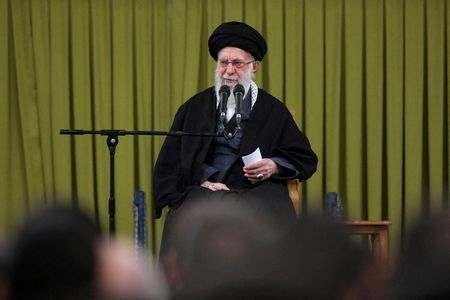
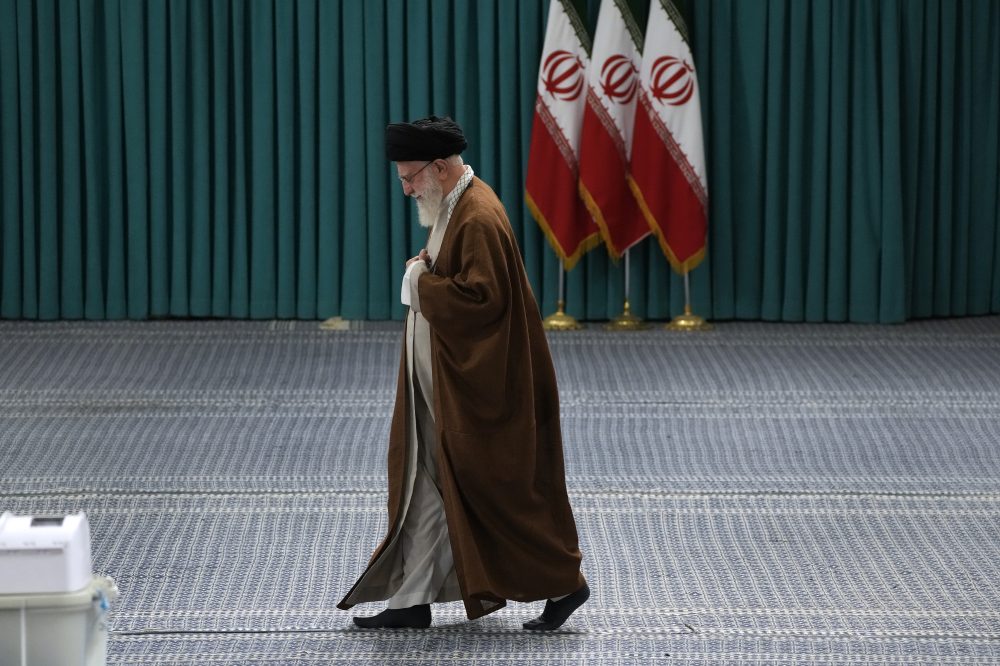
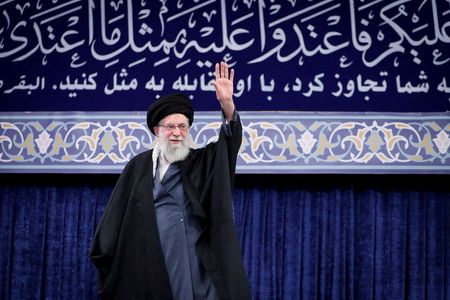
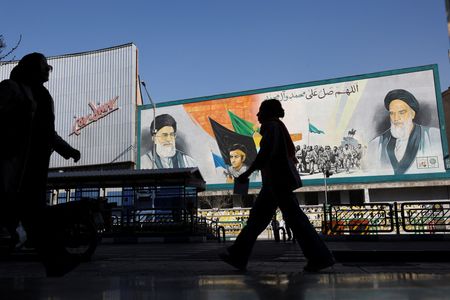
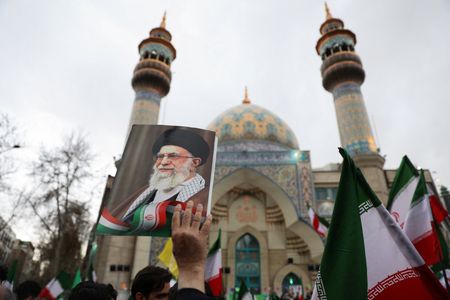
The death of Iran’s Supreme Leader Ayatollah Ali Khamenei at age 86 marks the end of a 36-year reign that transformed Iran into a formidable anti-American power while expanding its military reach throughout the Middle East, even as he brutally suppressed domestic opposition.
Iranian state media confirmed Khamenei died Saturday in combined airstrikes by Israel and the United States that destroyed his central Tehran headquarters, following the collapse of decades-long diplomatic attempts to resolve Iran’s nuclear program peacefully.
Initially viewed as weak and indecisive, Khamenei appeared an improbable successor to the charismatic Ayatollah Ruhollah Khomeini, who established Iran’s Islamic Republic. However, Khamenei’s ascension to the nation’s highest position gave him complete control over Iranian politics.
Karim Sadjadpour from the Carnegie Endowment for International Peace described Khamenei to Reuters as “an accident of history” who transformed from “a weak president to an initially weak supreme leader to one of the five most powerful Iranians of the last 100 years.”
Throughout his leadership, the ayatollah maintained constant criticism of Washington, continuing his attacks even after Donald Trump began his second presidential term in 2025.
During recent protests sweeping Iran with chants like “Death to the dictator,” and as Trump threatened intervention, Khamenei declared in January that Iran would never “yield to the enemy.”
This statement exemplified the intensely anti-Western position Khamenei held since taking power in 1989.
By preserving Khomeini’s hardline approach, Khamenei consistently blocked the goals of various independently-minded elected presidents who pursued more moderate domestic and international policies.
Critics argue this approach guaranteed Iran’s international isolation.
ABSOLUTE AUTHORITY
For years, Khamenei rejected Western claims that Iran’s nuclear program aimed to create atomic weapons. In 2015, he reluctantly endorsed a nuclear agreement between global powers and pragmatic President Hassan Rouhani’s administration that limited Iran’s nuclear activities in exchange for sanctions relief. This hard-fought deal partially ended Iran’s economic and political isolation.
However, Khamenei’s anti-American sentiment remained unchanged, growing stronger in 2018 when Trump’s first presidency abandoned the nuclear agreement and restored sanctions that devastated Iran’s oil and shipping sectors.
After America’s withdrawal, Khamenei aligned with hardline supporters who attacked Rouhani’s conciliatory Western policies.
When Trump pressured Iran for a new nuclear agreement in 2025, Khamenei criticized “the rude and arrogant leaders of America.” “Who are you to decide whether Iran should have enrichment?” he demanded.
Khamenei regularly condemned “the Great Satan” in public addresses, satisfying hardliners who viewed anti-American hostility as central to the 1979 revolution that expelled Iran’s last shah.
Iran experienced significant student-led demonstrations in 1999 and 2002. However, Khamenei faced his greatest challenge in 2009, when disputed presidential election results he had endorsed sparked violent street protests, creating a legitimacy crisis that persisted until his death.
In 2022, Khamenei suppressed protesters outraged by the death of 22-year-old Iranian-Kurdish woman Mahsa Amini, who died while detained by morality police in September that year.
Confronting some of the most severe unrest since the revolution, Khamenei blamed Western adversaries before ordering protester executions and displaying their bodies hanging from cranes after months of demonstrations.
The Iranian people understood the message clearly.
As supreme leader, Khamenei wielded absolute power. He controlled massive authority, including military command and the right to select numerous senior officials, such as judicial heads, security agency leaders, and state media directors.
He placed allies in command of the elite Revolutionary Guards.
As Iran’s ultimate decision-maker in its complicated system combining clerical rule and restricted democracy, Khamenei worked to prevent any faction, including close supporters, from gaining sufficient power to oppose him and his anti-American position.
International scholars described him as a secretive ideologue afraid of betrayal — fears intensified by a 1981 assassination attempt that permanently damaged his right arm.
Global organizations and activists consistently condemned human rights violations in Iran. Tehran claimed it maintained the best human rights record in the Muslim world.
UNEXPECTED PATH TO POWER
Born in Mashhad, northeastern Iran, in April 1939, Ali Khamenei showed early religious dedication by becoming a cleric at age 11. He pursued studies in Iraq and Qom, Iran’s religious center.
His father, a religious scholar with ethnic Azeri background, was a traditional cleric who opposed combining religion and politics. Conversely, his son embraced the Islamist revolutionary movement.
“He (Khamenei’s father) came across as a modernist or progressive cleric,” explained Mahmoud Moradkhani, a nephew who opposes Khamenei’s leadership and lives in exile. Unlike his son, “he was not a part of the fundamentalists,” Moradkhani stated.
In 1963, at 24, Khamenei began his first of multiple imprisonments for political activities. Later that year, he spent 10 days in a Mashhad prison where he endured severe torture, according to his official biography.
Following the shah’s overthrow, Khamenei assumed various positions in the Islamic Republic. As deputy defense minister, he developed military connections and played a crucial role in the 1980-88 war with Iraq, which killed an estimated one million people total.
A gifted speaker, Khomeini appointed him as Friday prayer leader in Tehran.
Questions surrounded his rapid, unusual advancement. He secured the presidency with Khomeini’s backing — becoming the first cleric in that role — and was a surprising selection as Khomeini’s successor, lacking both Khomeini’s popular support and superior religious qualifications.
GROWING REGIONAL POWER
His Revolutionary Guards relationships proved valuable in 2009, when the force crushed protests following President Mahmoud Ahmadinejad’s re-election amid opposition claims of electoral fraud.
He also controlled a massive financial network through Setad, an organization Khomeini established but Khamenei greatly expanded, accumulating assets worth tens of billions of dollars.
Khamenei extended Iranian power regionally, strengthening Shiite militias in Iraq and Lebanon, and supporting then-President Bashar al-Assad by sending thousands of troops to Syria.
Over four decades, he invested billions in these partners — the “Axis of Resistance,” including Hamas, the Palestinian Islamist organization, and Yemen’s Houthis — to counter Israeli and American influence in the Middle East.
However, in 2024, Khamenei watched these partnerships collapse and Iran’s regional power diminish, with Assad’s removal and Israel’s successive victories against Hezbollah in Lebanon and Hamas in Gaza, including eliminating their leaders.
Under Khamenei’s leadership, Iran and Israel conducted a covert war for years, with Israel assassinating Tehran’s nuclear scientists and Revolutionary Guard commanders.
This conflict became public during Israel’s Gaza war against Hamas starting in 2023. In April 2024, Iran launched hundreds of missiles and drones at Israel after it attacked Tehran’s embassy compound in Damascus. Israel retaliated by striking Iranian territory.
This was merely preparation for June 2025, when Israel’s military deployed hundreds of fighter jets against Iranian nuclear and military facilities and senior personnel. The surprise assault triggered massive missile exchanges, escalating simmering tensions into full warfare. The United States joined the 12-day air campaign against Iran.
The United States and Israel had threatened additional strikes if Iran continued its nuclear and ballistic missile programs, and on Saturday, they executed the most extensive attack on Iranian targets in decades.
Discussions between American and Iranian representatives occurred as recently as Thursday, but senior U.S. officials reported Iran’s unwillingness to abandon uranium enrichment capabilities, which Iranians claimed supported nuclear energy but Americans said enabled nuclear weapon development.
Diplomatically, Khamenei rejected any normalization with the United States. He claimed Washington supported extremist groups like Islamic State to fuel regional sectarian conflict.
Like all Iranian officials, Khamenei denied nuclear weapon development intentions and issued an Islamic ruling, or fatwa, in the mid-1990s regarding “production and usage” of nuclear weapons, declaring: “It is against our Islamic thoughts.”
He also endorsed Khomeini’s 1989 fatwa calling on Muslims to kill Indian-born author Salman Rushdie following publication of his novel “The Satanic Verses.”
Khamenei’s official website confirmed the death order’s continued validity as recently as 2017. Five years later, Rushdie was stabbed during a New York public lecture. The author suffered serious injuries but survived. The attacker, sentenced to 25 years in prison in 2025 for attempted murder, remained silent during trial.
The deceased ayatollah leaves an Islamic Republic facing uncertainty amid attacks from Israel and the United States, plus increasing domestic dissent, particularly among younger generations.
“I just want to live a peaceful, normal life … Instead, they (the rulers) insist on a nuclear programme, supporting armed groups in the region, and maintaining hostility toward the United States,” Mina, 25, told Reuters by phone from Kuhdasht in western Lorestan province at the beginning of 2026.
“Those policies may have made sense in 1979, but not today,” the unemployed university graduate continued. “The world has changed.”
The United States and Israel carried out their largest military strike against Iran in decades on Saturday, an operation that resulted in the death of Iranian Supreme Leader Ayatollah Ali Khamenei.
The massive foreign policy decision represents President Donald Trump’s boldest international move during his presidency, coming despite his campaign promises as a “peace president” and previous statements favoring diplomatic solutions with Iran. Trump provided limited advance explanation to Americans before the operation, briefly addressing the situation during last Tuesday’s State of the Union address and then through a video statement released Saturday, where he outlined five primary goals:
STOPPING IRAN’S NUCLEAR WEAPONS DEVELOPMENT
Trump has consistently stated, including in Saturday’s video, that Iran must never possess nuclear weapons. He claimed to have “obliterated” Iran’s nuclear capabilities during strikes last June, but stated this week that Tehran had tried to restart the program. “Just imagine how emboldened this regime would be if they ever had and actually were armed with nuclear weapons as a means to deliver their message,” Trump stated Saturday.
Both the United States and Israel justified the June bombings by citing Iran’s dangerous proximity to nuclear weapon production capability.
The UN’s International Atomic Energy Agency and U.S. intelligence agencies have independently concluded that Iran ended a nuclear weapons development program in 2003. Tehran continues to deny pursuing nuclear weapons while asserting its right under the Non-Proliferation Treaty to enrich uranium for peaceful purposes.
Western nations argue there’s no legitimate civilian reason for Iran’s uranium enrichment to current levels, with the IAEA expressing serious concerns. Historically, no other nation has enriched uranium to these levels without eventually developing nuclear weapons.
STOPPING IRAN’S MISSILE DEVELOPMENT
During both his State of the Union address and Saturday’s statement, Trump highlighted Iran’s missile program progress as a growing danger to America. Saturday, he said Iran had tried “to continue developing long-range missiles that can now threaten our very good friends and allies in Europe, our troops stationed overseas, and could soon reach the American homeland.”
Trump offered no supporting evidence for these claims, though Iranian state media has reported Tehran’s development of missiles capable of reaching the United States.
ELIMINATING THREATS TO AMERICANS AND ALLIES FROM IRAN AND PROXIES
Trump stated Saturday’s attacks aimed “to defend the American people by eliminating imminent threats from the Iranian regime, a vicious group of very hard, terrible people.”
He described Iran’s “menacing activities directly endanger the United States, our troops, our bases overseas, and our allies throughout the world.”
Trump referenced multiple attacks including Iran’s violent seizure of the U.S. Embassy in Tehran starting in 1979, holding dozens of American hostages for 444 days; a “proxy” attack on a U.S. Marine barracks in Beirut in 1983 killing 241 American military personnel, and “countless” other actions against U.S. forces in the Middle East recently, plus attacks on international shipping.
He also highlighted Iran’s backing of Hamas, which conducted a deadly cross-border assault on Israel on October 7, 2023.
RESPONDING TO PROTESTER KILLINGS
In his State of the Union speech, Trump repeated allegations that Iran had killed at least 32,000 protesters in recent months, figures that remain unverified. Saturday, he referenced Iran killing “tens of thousands of its own citizens on the street as they protested.”
The U.S.-based monitoring group HRANA reported recording 7,007 confirmed deaths with 11,744 cases under investigation.
Iranian Foreign Minister Abbas Araqchi stated Tehran had published a “comprehensive list” of all 3,117 killed during the unrest. An Iranian official told Reuters last month that authorities had confirmed at least 5,000 deaths, including approximately 500 security personnel.
REGIME CHANGE
Saturday, Trump appealed to “the great proud people of Iran” to overthrow their current leadership.
“I say tonight that the hour of your freedom is at hand,” he declared. “When we are finished, take over your government. It will be yours to take. This will be probably your only chance for generations.”
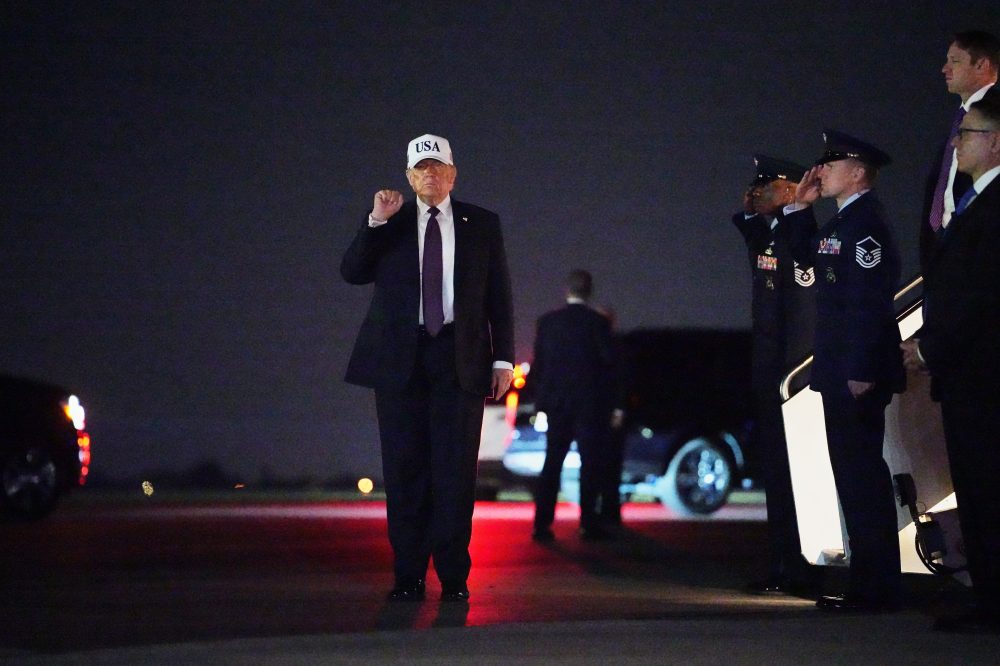
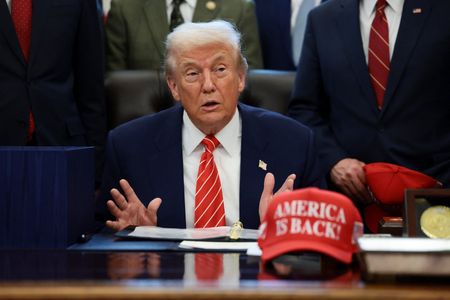
Trump, who monitored the operation from his Mar-a-Lago resort in Florida, announced Saturday afternoon that Iranian Supreme Leader Ayatollah Ali Khamenei had died in the strikes.
Israeli Prime Minister Benjamin Netanyahu previously confirmed Khamenei’s compound had been destroyed, and a senior Israeli official told Reuters his body had been recovered.
Iranian state media subsequently confirmed Khamenei’s death in the attack.
While urging Iranians to overthrow their government, Trump warned: “The heavy and pinpoint bombing … will continue, uninterrupted throughout the week or, as long as necessary to achieve our objective of PEACE THROUGHOUT THE MIDDLE EAST AND, INDEED, THE WORLD!”
SALISBURY, Md. – Salisbury University’s women’s tennis squad delivered a dominant performance Saturday, overwhelming the visiting Shenandoah University Hornets with a commanding 6-1 victory at the Sea Gulls’ home outdoor tennis facility.
The Sea Gulls demonstrated strong coordination across their entire roster during the afternoon match, with players performing consistently from the top positions through the bottom of their order. The comprehensive team effort allowed Salisbury to control the competition from start to finish against their opponents.
The decisive win showcases the depth and talent of the Salisbury women’s tennis program as they continue their season with strong momentum following this impressive home court performance.
After enduring nearly four weeks of weather-related delays that had players and coaches closely monitoring every forecast in the region, Goldey-Beacom College’s softball team finally got their 2026 season underway with a doubleheader at Millersville University.
The Lightning’s season opener had been pushed back repeatedly due to unfavorable weather conditions that plagued the Delaware Valley throughout late winter, leaving the team anxious to take the field and begin competitive play.
The extended wait is now over as Goldey-Beacom looks to make their mark in what promises to be an exciting season ahead, despite the delayed start that tested everyone’s patience.
WILMINGTON, Del. – The University of Delaware women’s tennis squad extended their winning streak to four matches after securing a 5-2 victory over Georgetown.
The Blue Hens, currently ranked No. 62 nationally, dominated the match to maintain their impressive run of form this season.
The victory marks another strong performance for the Delaware program as they continue building momentum through their competitive schedule.
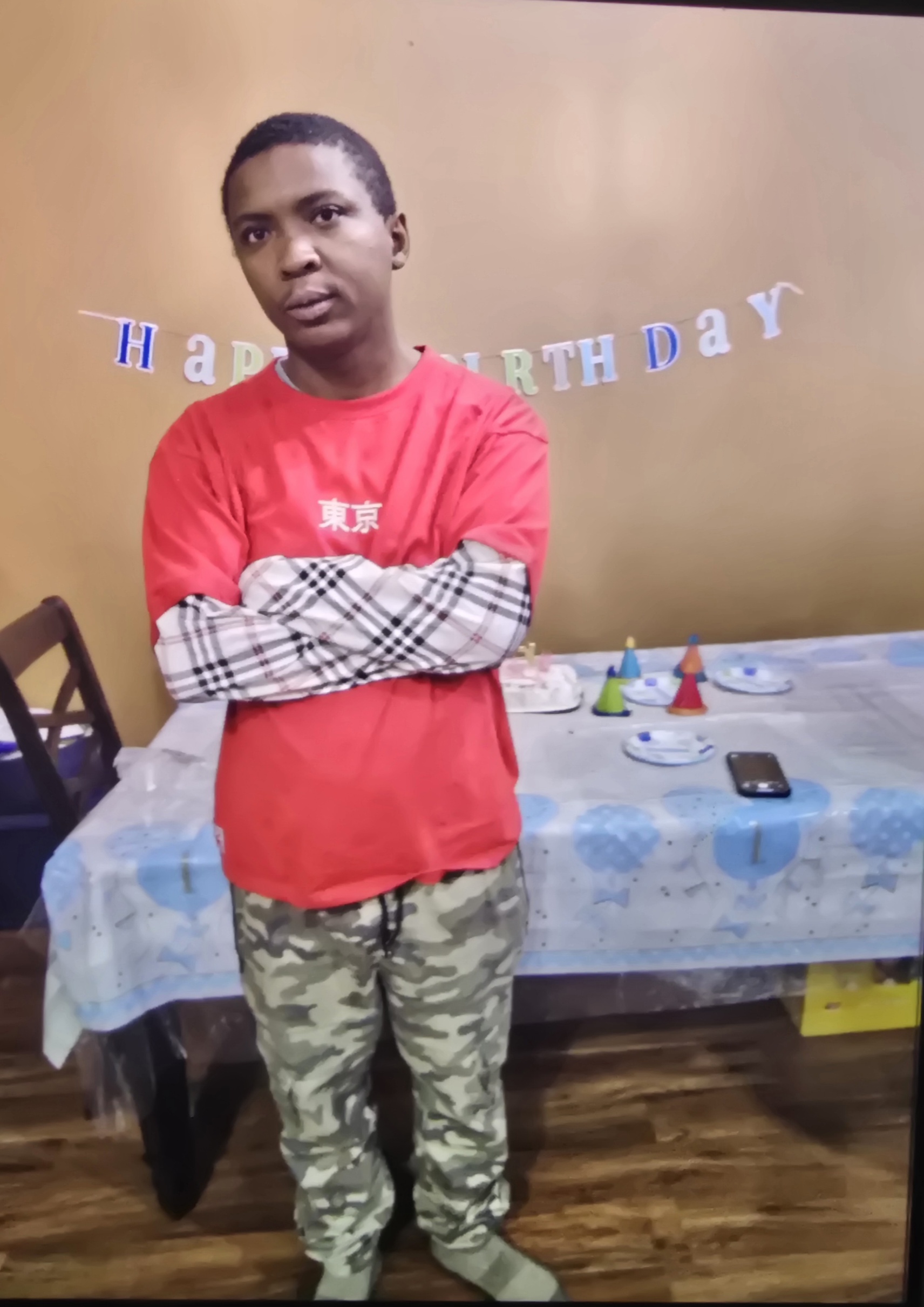
New Castle County Police are actively searching for a 32-year-old Middletown resident who vanished from his home early Saturday morning.
Authorities have activated a Gold Alert for Alpha Sow, who disappeared from his residence on West Mastisse Drive in the 1600 block within the Bayberry community. Police report that Sow was last observed departing his home around 5:00 a.m. on Saturday, February 28, 2026.
The Gold Alert system is used by law enforcement to quickly disseminate information about missing persons who may be in danger or have special circumstances surrounding their disappearance.
Anyone with information regarding Alpha Sow’s whereabouts is urged to contact the New Castle County Division of Police immediately.
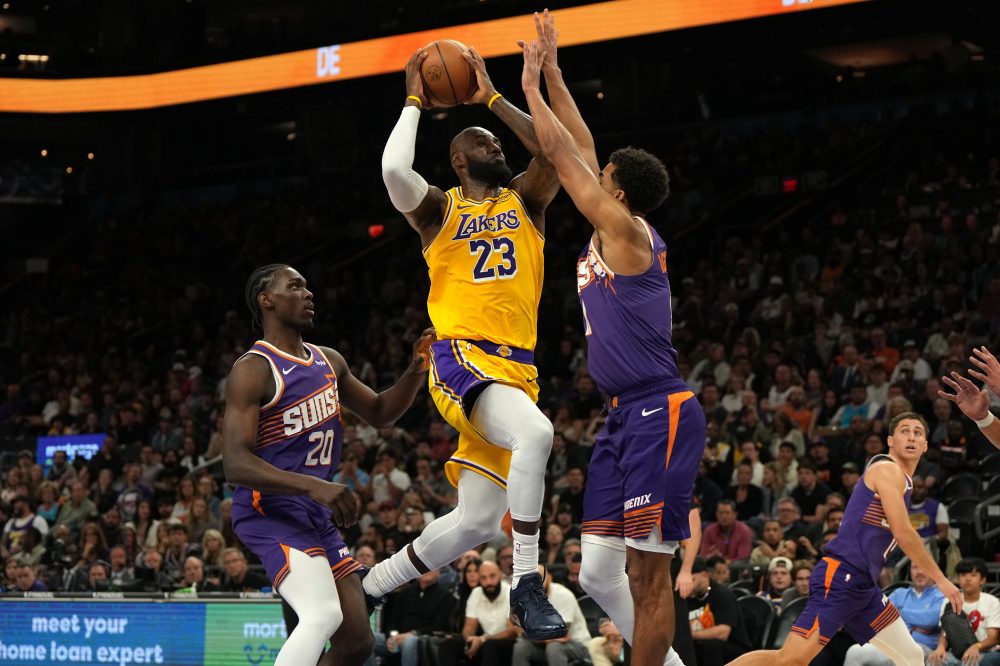
SAN FRANCISCO — Before taking on the Golden State Warriors Saturday evening, Los Angeles Lakers star LeBron James shared a precious moment on the court with his youngest child, 11-year-old Zhuri James.
Following his pre-game warm-up routine at Chase Center, the NBA legend watched as his daughter practiced an unusual shooting technique — launching backward shots from the free-throw line. After multiple tries, Zhuri successfully banked one in.
When asked about her secret to making the challenging backward shot, Zhuri explained, “I don’t know, I tried to make sure I was in front of the basket.”
The father-daughter duo enjoyed their time together on the court, with Zhuri dribbling along the baseline while her dad practiced his own ball-handling skills. James noticed her efforts and flashed an encouraging smile before inviting her to join him for shots from various positions around the paint.
According to Zhuri, these court sessions are a rare treat during away games, though she occasionally gets similar opportunities at Lakers home contests — “sometimes but not a lot.”
The touching scene concluded with Zhuri tossing an alley-oop pass to her 41-year-old father, who finished with a thunderous dunk. The pair exchanged a special handshake before James told her “love you” and headed to the locker room to prepare for the matchup against Golden State, who were missing injured star Stephen Curry for the tenth consecutive game.
INDIANAPOLIS — Two former Notre Dame running backs brought back memories of their college days at this week’s NFL Scouting Combine when Jeremiyah Love and Jadarian Price decided to room together once again.
The arrangement mirrored their time as college teammates, but this time the dynamic duo that formed one of college football’s most explosive backfields are competing as individuals rather than partners. Both are focused on demonstrating their individual talents to boost their standing before April’s NFL Draft.
“I’m going to go out there and be myself, no matter where I go, no matter when my name’s called, I’ll be Jeremiah Love,” he said before Saturday’s workouts in Indianapolis.
“But it’s a great honor, seeing if people recognize me, and I plan to go out and prove myself right, prove everybody else right as well.”
The partnership between Love and Price produced remarkable results during their three seasons together, built on deep respect and admiration for each other’s contributions.
Love accumulated close to 3,000 rushing yards, placing him seventh on Notre Dame’s all-time rushing list despite starting just 29 games and carrying the ball only 71 times as a freshman. His 2025 campaign saw him establish a new program record with 21 total touchdowns, while becoming the first Irish player to record two touchdown runs of 90-plus yards. His outstanding performance earned him third place in last year’s Heisman Trophy voting.
Price proved to be far more than a complementary player, providing a powerful second option that kept opposing defenses from getting any relief when Love needed a breather.
Price accumulated nearly 1,700 rushing yards with 21 touchdowns and made history as the first Notre Dame player to record multiple kickoff returns of 100-plus yards.
Their combined success led to both earning All-American recognition last season, and draft analysts currently rate them as the top two running backs available in this year’s draft.
“Almost every coach and interview I had the past couple days,” Price said when asked how many teams have inquired about his play on special teams. “I told them all the same (thing), I love special teams and I attack it like I attack offense. I’m willing to do anything when it comes to special teams.”
Love and Price aren’t the only celebrated running back partnership reuniting in Indianapolis.
Penn State’s Kaytron Allen and Nick Singleton arrived on campus in 2022 with enormous expectations as one of the country’s most highly-touted freshman backfield combinations. Though they delivered individually, becoming only the second pair of Nittany Lions teammates alongside Franco Harris and Lydell Mitchell to surpass 2,000 career rushing yards, they fell short of the ultimate goals of capturing a national championship or Big Ten title.
Despite the tendency for running backs to slide down draft boards, Allen and Singleton maintain top-10 rankings in this year’s class. Strong pre-draft performances could potentially elevate them back into the top five positions they once held.
Former Penn State quarterback Drew Allar endorses both players as excellent value selections regardless of their draft position.
“I definitely think they’re the two most complete backs in the country,” Allar said, noting Allen finished his career as the school’s career leader in all-purpose yards while Singleton set the program’s career mark for total TDs. “I am excited for them and to see them compete and grow as we move forward in our journeys together. And whoever gets those two guys are going to get guys that are dedicated to the team, very hard workers, and obviously really talented football players.”
Each of the four running backs faces specific challenges in proving their NFL readiness.
Though Love impressed scouts with his signature hurdles and demonstrated improved pass-catching ability in 2025, he feels his blocking capabilities haven’t received proper recognition. Price and Allen must demonstrate they can handle increased workloads against the bigger, stronger defenders they’ll face in the NFL, while Singleton needs to prove his health after appearing at Friday’s media session with his broken right foot in a walking boot.
“Obviously, I’m upset that I’m not doing anything right now,” Singleton said. “At the same time, I’m still grateful to be out here.”
Singleton expects to remove his walking boot next week and intends to participate in pro day workouts to give scouts a direct look at his abilities.
For this weekend, however, the four running backs enjoyed a nostalgic reunion.
“The biggest thing that makes me feel comfortable is we were roommates during this process, and we were roommates at Notre Dame on the road,” Price said, referring to Love. “So it just feels like an away game for us.”
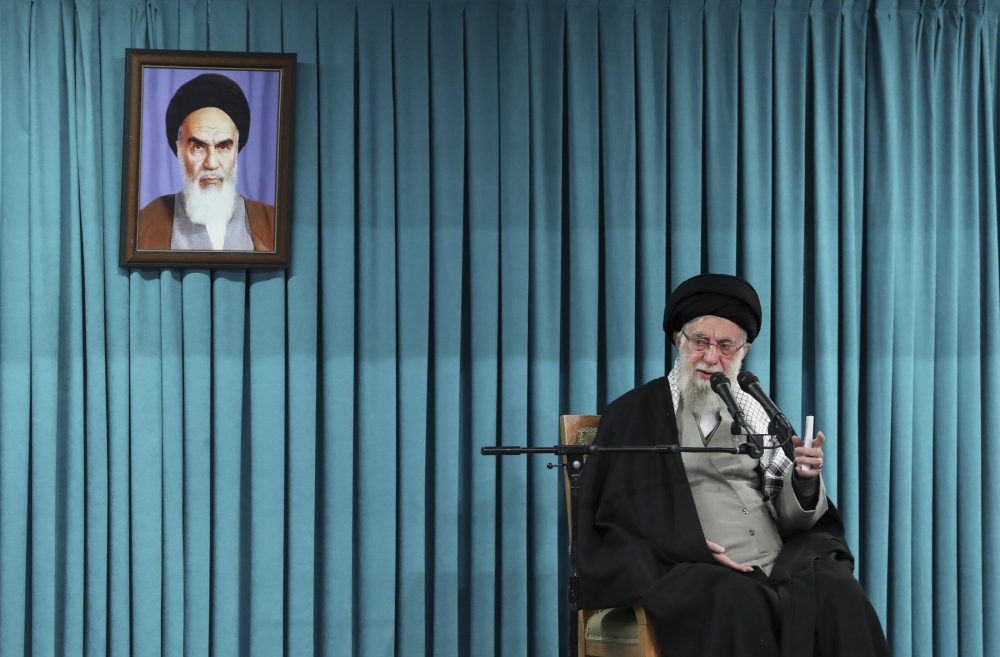
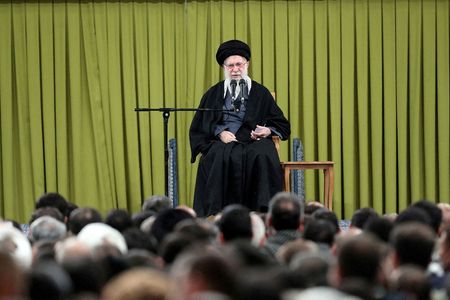
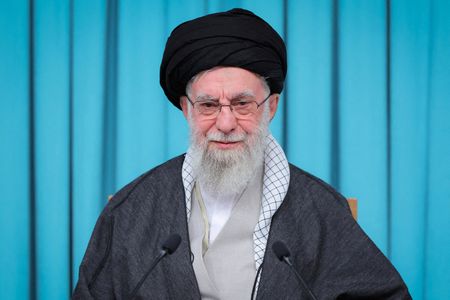
DUBAI, United Arab Emirates — The man who controlled Iran’s theocratic government for more than 30 years has died following a joint military strike by Israel and the United States. Ayatollah Ali Khamenei, 86, built Iran into a regional force while clashing with Western powers over nuclear weapons and brutally suppressing pro-democracy movements at home.
Iranian state television confirmed Khamenei’s death early Sunday morning, hours after President Donald Trump announced that the supreme leader had been eliminated in the coordinated attack.
Khamenei fundamentally transformed Iran’s Islamic Republic after assuming power following Ayatollah Ruhollah Khomeini’s death in 1989. While Khomeini was the passionate revolutionary who overthrew the shah and established clerical rule, Khamenei — a more reserved figure with lesser religious standing — was tasked with institutionalizing that revolutionary ideology.
His tenure ultimately lasted much longer than his predecessor’s. Khamenei significantly expanded the influence of Shiite clergy and transformed the paramilitary Revolutionary Guard into Iran’s most powerful institution. The Guard evolved into a massive military and economic force, controlling Iran’s missile program and maintaining influence across numerous business sectors.
However, mounting pressures became increasingly difficult to manage. Economic struggles and political oppression sparked larger and more frequent mass demonstrations. Outrage over Mahsa Amini’s 2022 death while in custody for improper hijab wearing triggered nationwide protests against social restrictions. By early January, hundreds of thousands demonstrated across Iran, with many shouting, “Death to Khamenei.”
Khamenei’s response was the most violent suppression in nearly five decades of clerical leadership, as security forces fired on protesters, resulting in thousands of deaths.
Meanwhile, the Middle East conflicts following Hamas’ October 7, 2023 assault on Israel began dismantling Khamenei’s regional “Axis of Resistance” network. For the first time in 2024, Israel and Iran launched direct attacks against each other. Israel struck Iran again in June 2025, with the U.S. joining efforts to target nuclear facilities and eliminate senior military commanders and nuclear experts. Iran responded by launching missiles and drones toward Israel.
Khamenei’s passing creates uncertainty about Iran’s political future.
The Assembly of Experts, an 88-member body of predominantly hardline clerics, will select Khamenei’s successor. However, no obvious replacement has been identified.
During February’s bombing campaign, President Trump urged Iranians to “take over your government. It will be yours to take. This will be probably your only chance for generations.” The country’s direction may largely depend on institutions like the Revolutionary Guard, which has consistently demonstrated readiness to use overwhelming force to maintain control despite growing dissatisfaction among Iran’s 90 million citizens.
“Culturally, the government is bankrupt,” said Mehdi Khalaji, an analyst at the Washington Institute for Near East Policy, said in 2017. “The ideology of the Islamic Republic did not work at all.”
Saturday’s attack also claimed the lives of Khamenei’s daughter, son-in-law, grandchild, and daughter-in-law, according to the semi-official Fars news agency, citing unnamed sources.
Iran’s leadership has announced 40 days of public mourning and declared a week-long national holiday to honor Khamenei’s death.
Ali Khamenei was born into a religious household in Mashhad, a northeastern holy city that became a center of anti-shah activism during the resistance against Western-backed monarch Mohammad Reza Pahlavi.
Following the path of many Iranian leaders, he studied under Khomeini at Qom’s seminary south of Tehran during the early 1960s, before Khomeini’s exile to Iraq and France.
Khamenei participated in the anti-shah resistance, experiencing both imprisonment and periods in hiding. When Khomeini returned triumphantly to Iran in February 1979 and declared the Islamic Republic, Khamenei joined the secretive Revolutionary Council. He won election as Iran’s third president in 1981; that same year, a bombing by opposition forces left one of his hands paralyzed.
With his thick-rimmed glasses, Khamenei lacked Khomeini’s intense presence and revolutionary charisma. He also fell well below Khomeini’s religious scholarship, holding only the relatively modest rank of “hojatolislam” in Shiite clerical rankings.
Upon becoming supreme leader after Khomeini’s death, he was immediately elevated to grand ayatollah status at the hierarchy’s peak, though he faced years of skepticism regarding his qualifications.
Khamenei openly acknowledged these concerns with modesty. “I am an individual with many faults and shortcomings and truly a minor seminarian,” he said in his first speech in his new post.
Despite lacking charisma, Khamenei brought stability to Iran after the devastating 1980s conflict with Iraq and maintained power for over three decades — significantly longer than Khomeini.
Conservative supporters viewed him as second only to God in authority. Khamenei established an expanding network of Shiite clerics and government agencies with overlapping responsibilities, positioning himself as the final decision-maker. When Iran debated whether to maintain the Revolutionary Guard after the Iraq war, Khamenei preserved the force and enabled its powerful grip on Iran’s economy. He also employed appointed officials to weaken the civilian government chosen by voters.
During Khamenei’s leadership, Iran completely shifted from traditional warfare to proxy support, creating the “Axis of Resistance” to advance regional objectives. The Lebanese militant organization Hezbollah, formed with Iranian assistance in the 1980s, forced Israel’s withdrawal from southern Lebanon in 2000 and fought Israel to a standstill in the month-long 2006 conflict.
Through Hezbollah, Iran developed a strategy of allying with local militant groups to project influence — often through violence. Iran applied this approach when supporting Yemen’s Houthi rebels, who captured the capital Sanaa in 2014 and maintained control for over a decade in a stalemated conflict in the Arab world’s poorest country — despite facing a Saudi-led coalition and later U.S.-led airstrikes over Red Sea attacks.
Additionally, suspected Iranian-backed militants bombed a Jewish community center in Buenos Aires in 1994, killing 85 people. Iran was also allegedly connected to the 1996 Khobar Towers bombing in Saudi Arabia, which killed 19 U.S. military personnel. Iran denied involvement in both incidents.
Iran became a major beneficiary of the 2003 U.S.-led Iraq invasion, which replaced its primary regional enemy, Saddam Hussein, with a friendly Shiite-dominated government. Iranian-supported militias conducted a brutal insurgency against American forces and established themselves within Iraq’s political system.
Khamenei most effectively utilized the Guard’s overseas Quds Force after Sunni extremists from the Islamic State seized large portions of Iraq and Syria in 2014. Guard personnel advised Shiite militias, Iraq’s most effective fighters, and provided essential support to President Assad during Syria’s civil war.
This secured Assad’s position for a decade, until the turmoil following Hamas’ 2023 attack on Israel. Israel devastated Gaza and conducted airstrikes and ground operations that destroyed Hamas, which Iran had armed and funded for years. Israel is widely believed to have assassinated Hamas leader Ismail Haniyeh in a Tehran operation in 2024, further humiliating the Islamic Republic.
Hezbollah saw its members targeted by exploding communication devices and an Israeli campaign eliminated longtime leader Hassan Nasrallah. Then in December 2024, rebel forces overthrew Assad in a Syrian offensive, ending five decades of his family’s authoritarian rule.
The supreme leader maintained deep distrust of America, calling it the “Great Satan” even after President Barack Obama took office in 2009, offering dialogue and renewed relations.
He dismissed U.N. sanctions and advanced Iran’s nuclear program, which America and allies claimed concealed a secret weapons project until 2003. Khamenei issued a verbal fatwa, or religious decree, declaring nuclear weapons un-Islamic, but vowed Iran would never abandon what he termed its right to develop peaceful nuclear energy.
Under Iran’s 2015 nuclear agreement with world powers, Tehran agreed to dramatically reduce uranium stockpiles and enrichment in exchange for sanctions relief. However, just three years later, Trump in his first presidency unilaterally withdrew America from the deal, arguing it was insufficient.
Iran has since violated all nuclear deal restrictions and accumulated uranium enriched to near weapons-grade levels, now sufficient to pursue multiple nuclear weapons if desired. Diplomatic efforts to restore the agreement under President Joe Biden stalled.
In a March 2011 speech, Khamenei cited overthrown Libyan dictator Moammar Gadhafi, who had abandoned his nuclear program years earlier, as an example of why Iran’s nuclear program remained crucial amid Arab Spring upheavals in the Middle East.
“Just the way you give a lollipop to a child, Westerners gave ‘incentives’ to them and they gave up everything,” Khamenei said.
Khamenei’s first significant challenge emerged in 1997, when pro-reform politicians gained parliamentary control and cleric Mohammad Khatami won the presidency by a landslide, supported by young voters. The reformists demanded relaxation of strict revolutionary social rules and called for improved international relations, including with America.
Khamenei-supported hardliners moved to restrict the liberal movement, fearing it would eventually demand an end to clerical rule. Khamenei prevented parliament from relaxing media restrictions in an unusually direct intervention. Clerical institutions blocked other key liberal legislation and barred many reformist lawmakers from seeking reelection, ensuring hardliner control returned in 2004 elections.
This paved the way for hardline President Mahmoud Ahmadinejad’s 2005 election and his disputed 2009 reelection amid vote-rigging allegations. Mass protests erupted, creating the greatest threat to Iran’s clerical leadership in decades. The Revolutionary Guard, Basij militia, and police launched a crackdown killing dozens and arresting hundreds.
The unrest, and reports of protesters being tortured to death or sexually assaulted in prison, severely damaged Khamenei’s reputation.
As sanctions intensified, popular unrest increased. Economic protests occurred in 2017 and demonstrations escalated in 2019 over government gasoline price increases. The violent crackdown that followed killed over 300 people, according to activists.
While Khamenei struggled to maintain the Islamic Revolution’s ideological purity, Iran’s government largely failed to eliminate Western influence. Satellite dishes, theoretically banned, cover Tehran’s rooftops. Prohibited social media platforms are widely used, even by prominent politicians, despite being blocked.
Protests resumed in 2022 over Amini’s death, a young woman detained for improper hijab wearing according to authorities. More than 500 people died and tens of thousands were arrested when security forces again crushed the demonstrations.
In late December 2025, new economic protests erupted and grew into what appeared to be the largest protest movement ever. Hundreds of thousands nationwide took to the streets, openly demanding the Islamic Republic’s end. Some even chanted for the return of the shah’s son, living in exile since 1979. The crackdown’s brutality shocked Iranians.
With President Trump, Khamenei faced a more aggressive and unpredictable American campaign to halt Iran’s nuclear program. Trump unilaterally withdrew America from Iran’s nuclear deal with world powers in 2018, restoring sanctions.
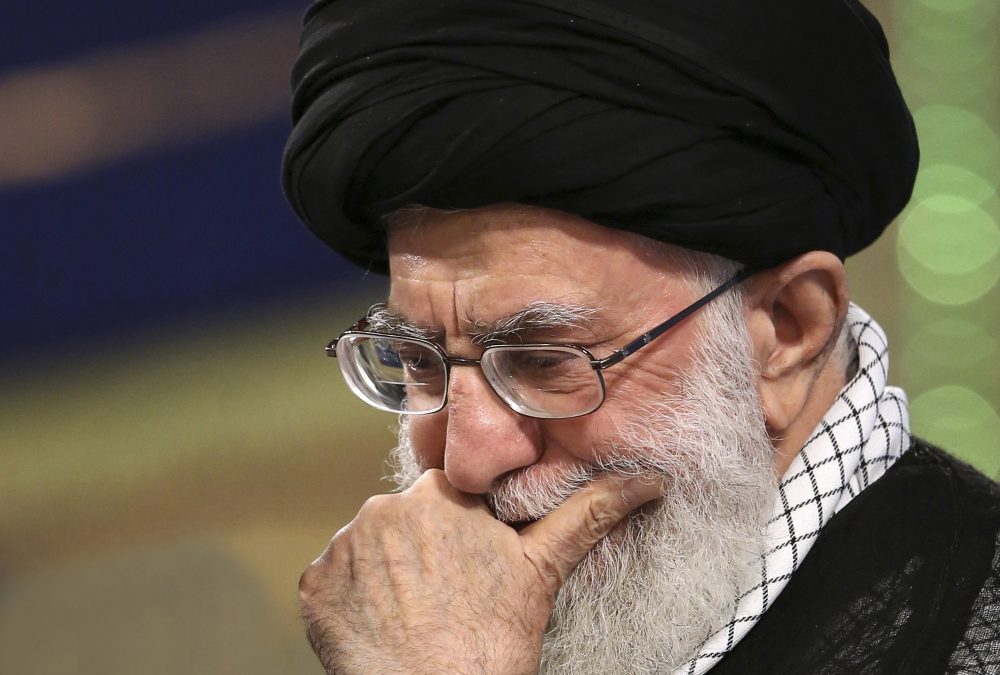
The two sides nearly went to war after an American drone strike killed Revolutionary Guard General Qassem Soleimani in January 2020. At Soleimani’s massive funeral drawing millions to the streets, Khamenei wept over the coffin of the man he once called a “living martyr.” Two days later, the Guard mistakenly shot down a Ukrainian airliner departing Tehran, killing all 176 aboard.
Iran accelerated uranium enrichment back to 60% purity — a short technical step from weapons-grade 90% levels. Still, when Trump returned to the White House in January 2025, Khamenei resumed negotiations, highlighting the severe impact of sanctions. Iran’s struggling economy entered freefall, worsening domestic unrest.
However, an agreement remained out of reach. In June 2025, Israel and America bombed Iranian nuclear facilities, causing significant damage, though the program’s setback remained unclear.
During January’s nationwide protest crackdown, Trump renewed strike threats, demanding Iran make major negotiating concessions. Three rounds of indirect talks followed. Then came Saturday.
PASADENA, Calif. — Hollywood’s biggest names converged in California Saturday evening for the concluding ceremony of the NAACP Image Awards, with the film ‘Sinners’ topping the list of movie nominations.
The prestigious Image Awards recognize outstanding achievements across multiple entertainment and cultural categories, spanning cinema, television programming, musical performances, literary works, and additional artistic endeavors. Saturday’s ceremony marks the culmination of several award nights and represents one of Hollywood’s final major recognition events of the season, taking place as Black History Month draws to a close.
The event featured a curated collection of photographs showcasing the evening’s highlights and attendees.
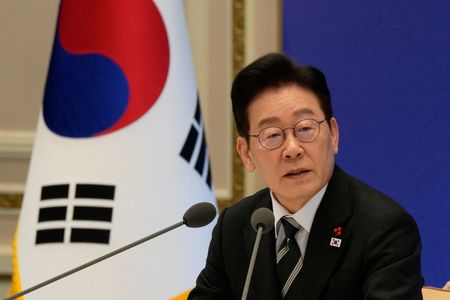
SEOUL – During Sunday’s commemoration of the 107th March 1 Independence Movement Day, South Korean President Lee Jae Myung expressed his desire for North Korea to quickly return to diplomatic negotiations aimed at establishing a fresh chapter in relations between the two nations.
The South Korean leader emphasized his commitment to working toward restarting conversations with Pyongyang as part of broader efforts to achieve lasting peace across the Korean peninsula.
Lee’s remarks came as he addressed the nation during ceremonies honoring the historic independence movement that began on March 1, 1919.
WASHINGTON – American military forces launched strikes against Iranian targets Saturday using an unprecedented combination of advanced weaponry, including the first-ever combat deployment of inexpensive suicide drones based on Iranian technology.
U.S. Central Command shared images and details of the military operation, designated Operation Epic Fury, showcasing the deployment of Tomahawk cruise missiles, F-18 and F-35 fighter aircraft in the coordinated attack.
Military officials confirmed they utilized kamikaze-style drones that closely resemble the newly developed LUCAS (Low-Cost Unmanned Combat Attack System), produced by Spektreworks in Phoenix, Arizona. The defense contractor did not provide comment when contacted.
According to Pentagon officials, this marked the inaugural combat use of single-use attack drones designed to mirror Iran’s Shahed drone technology. These expendable drones are intentionally affordable and designed for mass production by multiple manufacturers, defense officials explained.
Each LUCAS drone carries a price tag of approximately $35,000. The growing importance of drone technology in modern warfare has been highlighted by Russia’s conflict in Ukraine, prompting the U.S. and allied nations to adopt an “affordable mass” approach – stockpiling large quantities of cost-effective weapons systems.
The military also deployed Tomahawk Land Attack Missiles, which are long-distance cruise missiles designed for deep-strike operations launched from naval vessels. These precision weapons can engage targets up to 1,000 miles away, even in heavily fortified airspace. Each Tomahawk measures 20 feet in length with an 8.5-foot wingspan and weighs roughly 3,330 pounds.
Raytheon, a division of RTX, manufactures these conventional (non-nuclear) Tomahawks for both land and sea-based launches. Pentagon procurement records indicate plans to purchase 57 of these missiles in 2026, with each unit costing an average of $1.3 million. Ongoing modernization efforts involve millions in upgrades, including enhanced guidance systems.
A recent Pentagon-Raytheon contract aims to boost Tomahawk production capacity to 1,000 missiles per year. These GPS-guided weapons have undergone extensive testing and operational use, including recent deployments by U.S. and British naval forces against Houthi positions in Yemen.
Central Command also released visual documentation of F/A-18 and F-35 fighter jets participating in the Iranian strikes. The F-35 represents fifth-generation stealth technology capable of avoiding radar detection while delivering precision munitions. These aircraft have been extensively deployed throughout Middle Eastern operations and are also utilized by Israeli forces.
The F-18, manufactured by Boeing, serves as a versatile multi-role platform capable of air-to-air combat and ground attack missions using various bombs and missiles. F-35s can deploy specialized missiles designed to target and eliminate radar installations, effectively blinding enemy defenses.
Iranian state media outlets reported Sunday that Supreme Leader Ayatollah Ali Khamenei has died following strikes carried out by Israeli and American forces.
The death of Khamenei, who has served as Iran’s highest-ranking political and religious authority, represents a major shift in the regional power structure of the Middle East.
State-controlled media in Iran confirmed the Supreme Leader’s death on March 1st, attributing it to coordinated military action by Israel and the United States.
The University of Maryland Eastern Shore Hawks delivered a winning performance against South Carolina State during their annual Senior Day festivities, giving their graduating players a memorable send-off.
The victory served as a fitting tribute to the Hawks’ senior class, who played key roles in securing the win during their final regular season home game. The emotional atmosphere of Senior Day provided extra motivation for the team as they honored the contributions of their veteran players.
The win adds another positive result to the Hawks’ season record as they continue their campaign. Senior Day traditionally marks one of the most meaningful games of the year for college basketball programs, celebrating the dedication and achievements of players completing their careers.
For the Hawks’ senior players, the victory provided the perfect ending to their time playing at home, capping off their collegiate careers with a strong team performance in front of their home crowd.
The University of Maryland Eastern Shore women’s basketball team made Senior Night a memorable celebration as their veteran players delivered a commanding performance against South Carolina State.
The Hawks’ senior class put on a scoring clinic, combining to rack up 51 points in the victory that sent the home crowd into celebration mode. The experienced players stepped up when it mattered most, leading their team to a decisive win on a night dedicated to honoring their contributions to the program.
The emotional Senior Night ceremony recognized the departing players who have been instrumental in building the Hawks’ basketball program. Their final home game performance served as a fitting tribute to their years of dedication and hard work in a UMES uniform.
The victory against South Carolina State showcased the leadership and skill that these senior athletes have brought to the court throughout their collegiate careers, giving fans and teammates a performance to remember as the regular season winds down.
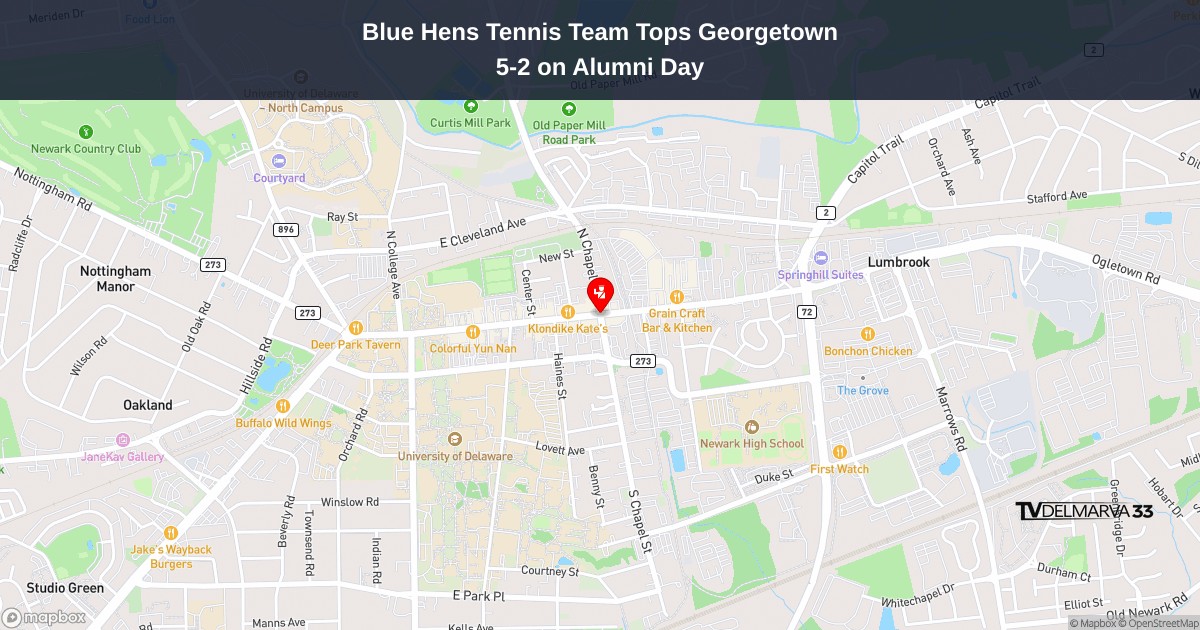
The Blue Hens men’s tennis team claimed a convincing 5-2 victory against Georgetown University this past Saturday in Newark, marking a successful Alumni Day celebration at the university.
The Delaware squad showcased strong performance on their home courts, outmatching the visiting Georgetown team in the majority of their contests during the weekend matchup.
WEST PALM BEACH, Fla. — President Donald Trump’s military strikes against Iran on Saturday marked a striking transformation in his willingness to take risks, showing how dramatically his approach shifted in just eight months regarding the use of American military force against Tehran’s religious leadership.
Traditional constraints were abandoned as Trump collaborated with Israeli Prime Minister Benjamin Netanyahu on a military strategy that targeted Iran’s top officials, including 86-year-old Supreme Leader Ayatollah Ali Khamenei, whose elimination Trump proudly declared on social media following the launch of military operations.
This action represented a complete reversal from Trump’s position eight months earlier. During Israel’s 12-day conflict with Iran in June, he had agreed to Israel’s request to deploy B-2 bombers against three critical Iranian nuclear facilities — but firmly refused when Israeli officials proposed assassinating Khamenei.
Back in June, the president had issued barely concealed threats suggesting he could eliminate the supreme leader if he chose to. However, he ultimately turned down the Israeli assassination proposal due to fears it would create regional instability.
That careful approach disappeared on Saturday when Trump declared Khamenei’s death, while Israeli forces announced they had eliminated Iran’s defense minister and Revolutionary Guard commander. As of Saturday evening, Iran had not yet confirmed their Supreme Leader’s demise.
“Khamenei was unable to avoid our Intelligence and Highly Sophisticated Tracking Systems and, working closely with Israel, there was not a thing he, or the other leaders that have been killed along with him, could do,” Trump said. “This is the single greatest chance for the Iranian people to take back their Country.”
Trump had spent months attempting diplomatic engagement with Iran. Administration sources told reporters they had presented Iran with numerous pathways to maintain a peaceful nuclear program for civilian use, including an offer to provide nuclear fuel at no cost indefinitely.
However, these officials, speaking anonymously because they lacked authorization for public comment, indicated it became apparent that Iran sought enriched uranium for weapons development. One official characterized Iran’s response to their proposals as “games, tricks, stall tactics.”
The strike authorization came merely two days after Trump sent special representatives Steve Witkoff and Jared Kushner for additional negotiations with Iranian leadership. Middle Eastern and European partners were pushing the U.S. administration to allow more time for diplomatic solutions as Trump showed increasing impatience.
“The consequences are likely to be as far-reaching as they are uncertain: Within the system that has held power for nearly five decades, between the government and a dissatisfied populace, and between Iran and its adversaries,” said Ali Vaez, Iran project director at the International Crisis Group. “And although the regime is weakened, a sense that this showdown is an all-or-nothing struggle for its very survival could lead it to respond with every tool still at its disposal.”
Saturday’s military action followed a pattern of increasingly aggressive moves against Iran that produced minimal retaliation, which appeared to influence Trump’s risk assessment, according to Aaron David Miller, who advised both Democratic and Republican administrations on Middle Eastern affairs for twenty years.
In 2018, Trump withdrew from the Iran nuclear agreement that Democratic President Barack Obama’s administration had negotiated. Two years later, Trump authorized a drone attack that killed senior Iranian General Qassem Soleimani.
The Soleimani assassination, targeting the leader of Iran’s elite Quds Force, represented perhaps the most aggressive U.S. military move in the Middle East since President George W. Bush initiated the 2003 Iraq War to remove Saddam Hussein.
Then in June, Trump authorized attacks on Iran’s nuclear infrastructure, which he declared had “obliterated” their program.
“He did all of these things without cost or consequence to him,” said Miller, currently a senior fellow at the Carnegie Endowment for International Peace. “He’s been risk-ready. That’s the nature of his personality.”
Trump administration representatives had openly demanded Tehran abandon its nuclear weapons and ballistic missile development while ceasing support for regional militant groups. However, administration sources said Tehran refused to address the missile and proxy issues.
Iran’s inflexibility, occurring while its economy suffered under decades of sanctions and its military remained weakened from last year’s conflict, surprised Trump.
Before Thursday’s negotiations concluded, indicators suggested Trump was moving toward military intervention.
During Tuesday’s State of the Union address, Trump asserted that Iran was developing ballistic missiles capable of reaching American territory — a rationale he repeated Saturday while announcing the bombardment had begun.
Iran has not confirmed it is developing or pursuing intercontinental ballistic missile capabilities. However, the U.S. Defense Intelligence Agency stated in an unclassified report last year that Iran could potentially develop a militarily effective intercontinental ballistic missile by 2035 “should Tehran decide to pursue the capability.”
Secretary of State Marco Rubio informed reporters Wednesday that Iran’s unwillingness to discuss its ballistic missile program created a “big problem.” Rubio avoided addressing the DIA assessment that Iran remained years away from developing missiles capable of reaching the United States.
Vice President JD Vance, a former Marine who served in Iraq and has questioned U.S. military interventions, told The Washington Post on Thursday that Trump had not yet decided on striking Iran. However, he provided reassurances that any military action would not involve the United States in an extended conflict.
“The idea that we’re going to be in a Middle Eastern war for years with no end in sight — there is no chance that will happen,” Vance said.
By Friday, Trump was expressing renewed frustration with Iran’s negotiating stance.
“I’m not happy with the fact that they’re not willing to give us what we have to have,” Trump said. “I’m not thrilled with that. We’ll see what happens.”
Congressional leadership received advance notice Saturday morning about the impending strikes. Trump observed the operation from his Mar-a-Lago estate in Palm Beach, Florida, alongside his national security advisors.
Trump’s earlier successful military operation this year that captured Venezuelan leader Nicolás Maduro and transported him and his spouse to New York City for federal drug conspiracy charges may have encouraged the president, suggested Jonathan Schanzer, a former Treasury Department official now serving as executive director of the Foundation for Defense of Democracies, a hawkish Washington research organization.
Trump had threatened military intervention last month but delayed action as Iran conducted a violent suppression of demonstrations. The protests initially focused on economic complaints but evolved into a nationwide anti-government movement challenging the religious leadership.
While human rights organizations reported thousands killed during Iran’s crackdown, Trump promised protesters assistance was coming, though it did not materialize immediately and the demonstrations eventually subsided.
Schanzer noted that Trump’s decision to postpone action last month provided his team additional time to position the substantial fleet of fighter aircraft and naval vessels now deployed in the region — similar to preparations made in the Caribbean before the Venezuela operation.
This military presence represented leverage Trump hoped would force Khamenei to surrender. However, the Supreme Leader refused to yield.
“The way this unfolded was inevitable, because there was no way that the Ayatollah was going to show flexibility,” Schanzer said.
According to Iranian state media reports on Sunday, several family members of Iran’s Supreme Leader Ayatollah Ali Khamenei have been killed in military strikes allegedly carried out by U.S. and Israeli forces.
The reported fatalities include Khamenei’s daughter, one grandchild, his daughter-in-law, and son-in-law, as announced by Iranian state media outlets on March 1st.
The reports originate from Dubai-based news sources and have not been independently verified by international media organizations.
South Korea has achieved its ninth consecutive month of export growth in February, with overseas shipments powered by robust semiconductor sales despite growing concerns about potential U.S. trade tariffs.
The Asian nation, which serves as an important indicator of worldwide commerce trends, saw its February exports climb 29.0% compared to the same period last year, reaching $67.45 billion according to official trade figures. This performance exceeded analysts’ expectations, who had predicted a more modest 24.0% increase in a Reuters survey.
Meanwhile, the country’s imports rose at a more measured pace of 7.5%, falling short of the 13.0% growth rate that economists had anticipated.
The trade ministry highlighted the exceptional performance of the technology sector in an official statement: “Semiconductor exports jumped 160.9% to again record their highest monthly performance ever and exceeded $20 billion in value for three consecutive months, driven by strong demand thanks to AI investment and a surge in memory prices.”
The continued export momentum demonstrates South Korea’s position as Asia’s fourth-largest economy and its role as a key player in global technology markets.
A coordinated military operation between American and Israeli forces resulted in the death of Iran’s Supreme Leader Ali Khamenei during a Saturday meeting with his top advisors, according to multiple U.S. intelligence sources.
The timing of the joint attack was deliberately planned to target Khamenei while he convened with senior officials, including former National Security Council secretary Ali Shamkhani and Islamic Revolutionary Guard Corps commander Mohammad Pakpour, both of whom also perished in the strikes.
Iranian sources confirmed to Reuters that Khamenei had gathered with Shamkhani and Supreme National Security Council Secretary Ali Larijani at a protected facility just before the military operation commenced.
A high-ranking Israeli official confirmed that Khamenei’s remains have been recovered following the attack.
President Donald Trump announced the Iranian leader’s death through his Truth Social account, crediting intelligence operations for tracking his whereabouts.
“He was unable to avoid our Intelligence and Highly Sophisticated Tracking Systems and, working closely with Israel, there was not a thing he, or the other leaders that have been killed along with him, could do,” Trump stated.
The joint American-Israeli military campaign across Iranian territory has escalated Middle Eastern tensions to unprecedented levels, prompting Iran to launch counterattacks against Israeli targets and neighboring Gulf nations.
Intelligence sources, speaking anonymously, revealed that confirmation of Khamenei’s leadership meeting triggered the immediate launch of the combined air and naval assault.
A U.S. official explained that eliminating Khamenei first was crucial to prevent him from escaping and maintaining operational surprise during the mission.
Originally scheduled for Saturday evening in Tehran, Israeli intelligence discovered the meeting had been moved to Saturday morning, prompting commanders to accelerate their timeline, sources indicated.
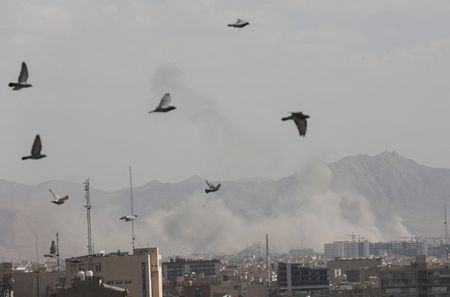
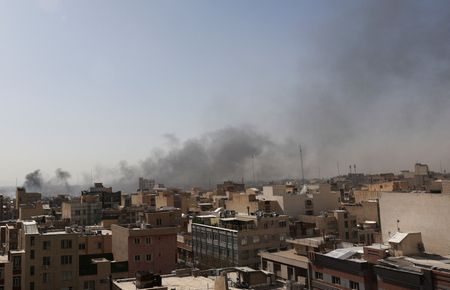
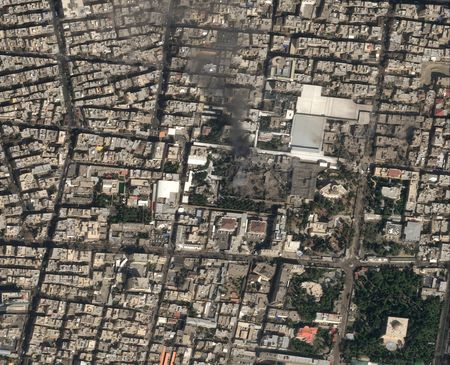
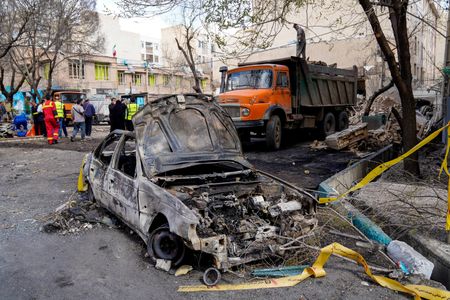
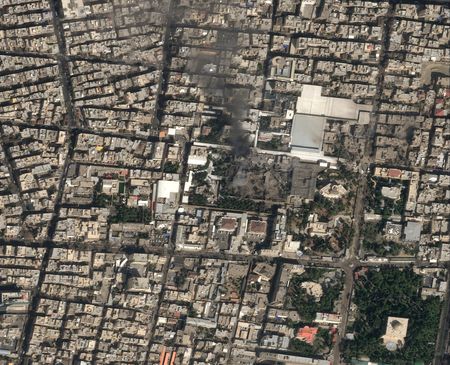
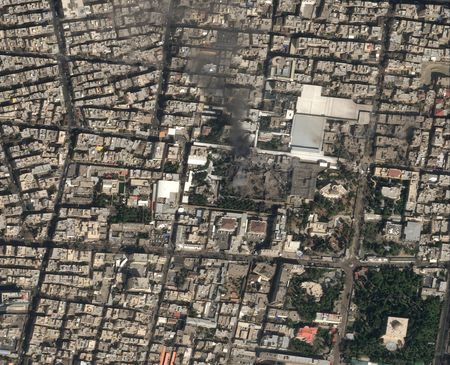
While the exact meeting location remains undisclosed, Khamenei’s heavily fortified Tehran compound was among the first targets destroyed, with satellite images confirming the facility’s complete destruction.
The long-term consequences of Khamenei’s elimination remain uncertain, though CIA analysts previously assessed that hardline Revolutionary Guard leaders would likely assume power, according to sources with access to the intelligence briefings.
Two University of Delaware track and field athletes brought home podium finishes from the Conference USA Indoor Championships held in Lynchburg, Virginia this past weekend.
Olamide Ayeni, who competes in throwing events, and distance runner Marie-Theres Gruber both secured top-three placements as the Blue Hens track and field squad participated in the conference meet on February 27-28.
The strong performances by both Delaware athletes highlight the competitive level of the university’s track and field program in Conference USA competition.
KENNESAW, Ga. – The University of Delaware men’s basketball squad mounted a spirited late rally Saturday afternoon, but their efforts fell short as they dropped a 90-82 decision to Kennesaw State on the road.
The defeat leaves the Blue Hens with a 9-20 record for the season and a 5-13 mark in Conference USA competition. Meanwhile, Kennesaw State improved to 18-11 overall and 10-8 in league play with the victory.
Despite the final score indicating a close contest, Delaware’s comeback attempt came too late to overcome the deficit they faced against the Owls in Saturday’s matchup.
The Goldey-Beacom Lightning opened their three-game series against Millersville University on a winning note, defeating their opponents 6-4 in the first matchup.
The Lightning managed to secure the victory in what appears to be the start of an important series for the Delaware-based baseball program.
This opening game sets the stage for the remainder of the series as both teams look to gain momentum moving forward in their respective seasons.
Federal agriculture officials are projecting a substantial improvement in the nation’s farm trade balance over the next two fiscal years, with new data released Friday showing optimistic forecasts.
The U.S. Department of Agriculture now expects America’s agricultural trade deficit to drop significantly from $43.7 billion in the 2025 fiscal year down to $29 billion by fiscal year 2026. This represents a reduction of more than $14 billion in the trade gap.
The improved outlook is attributed to expectations of reduced agricultural imports coming into the United States during this period.
SALISBURY, Md. – A historic winning streak came to a dramatic end Saturday afternoon as Salisbury University’s men’s lacrosse program suffered a stunning setback on home ground.
The Sea Gulls, who entered the contest ranked second nationally, watched their incredible 45-game home winning streak evaporate in a 15-12 defeat to the University of Lynchburg Hornets, ranked tenth in the nation.
The loss marks the first time Salisbury has fallen at home since their streak began, representing a major milestone for the visiting Hornets who managed to overcome the ranking differential and hostile home environment to secure the upset victory.
Artificial intelligence company OpenAI disclosed on Saturday that its newly announced Pentagon partnership includes enhanced protective measures for military applications on classified government networks.
The announcement follows President Trump’s Friday directive ordering the government to cease collaboration with AI competitor Anthropic. The Pentagon subsequently declared it would designate the startup as a supply-chain threat, delivering a significant setback to the artificial intelligence company following disputes over technology safety protocols. Anthropic has indicated it will legally contest any risk classification.
Microsoft, Amazon, and SoftBank-backed OpenAI revealed its Pentagon arrangement late Friday, shortly after the Anthropic developments.
“We think our agreement has more guardrails than any previous agreement for classified AI deployments, including Anthropic’s,” OpenAI stated on Saturday.
The artificial intelligence company outlined that its contract with the Defense Department – which the Trump administration has rebranded as the Department of War – establishes three prohibited uses: OpenAI’s technology cannot support widespread domestic surveillance operations, control autonomous weapons systems, or handle critical automated decision-making processes.
“In our agreement, we protect our red lines through a more expansive, multi-layered approach. We retain full discretion over our safety stack, we deploy via cloud, cleared OpenAI personnel are in the loop, and we have strong contractual protections,” the company explained.
Over the past year, the Pentagon has established agreements valued at up to $200 million each with leading AI companies, including Anthropic, OpenAI and Google. Military officials aim to maintain maximum operational flexibility for defense purposes without being constrained by technology companies’ concerns about unreliable AI powering weapons systems.
OpenAI warned that any contract violations by the federal government could result in agreement termination, though the company added, “We don’t expect that to happen.”
The company also defended competitor Anthropic against the supply-chain risk designation, stating, “We have made our position on this clear to the government.”
NEWARK, Del. – The University of Delaware women’s basketball squad dropped a 67-53 decision to Middle Tennessee during Saturday’s contest at the Bob Carpenter Center. The defeat occurred on Senior Day, when the program celebrated four graduating players.
With the loss, the Fightin’ Blue Hens’ record moves to 12-16 overall and 6-11 in Conference USA play. Meanwhile, Middle Tennessee improved their standing to 15-13 overall with a 10-6 conference record.
The game marked an emotional day for Delaware as the team honored seniors Sarah Jenkins, Amiya Carroll, Jiya Perry, and Ella Wanzer before tipoff. Despite the special recognition ceremony, the Blue Hens were unable to secure a victory in front of their home crowd.
The 14-point margin of defeat represents another setback for Delaware’s women’s basketball program as they continue their Conference USA campaign. The Blue Raiders capitalized on the opportunity to strengthen their conference tournament positioning with the road victory in Newark.
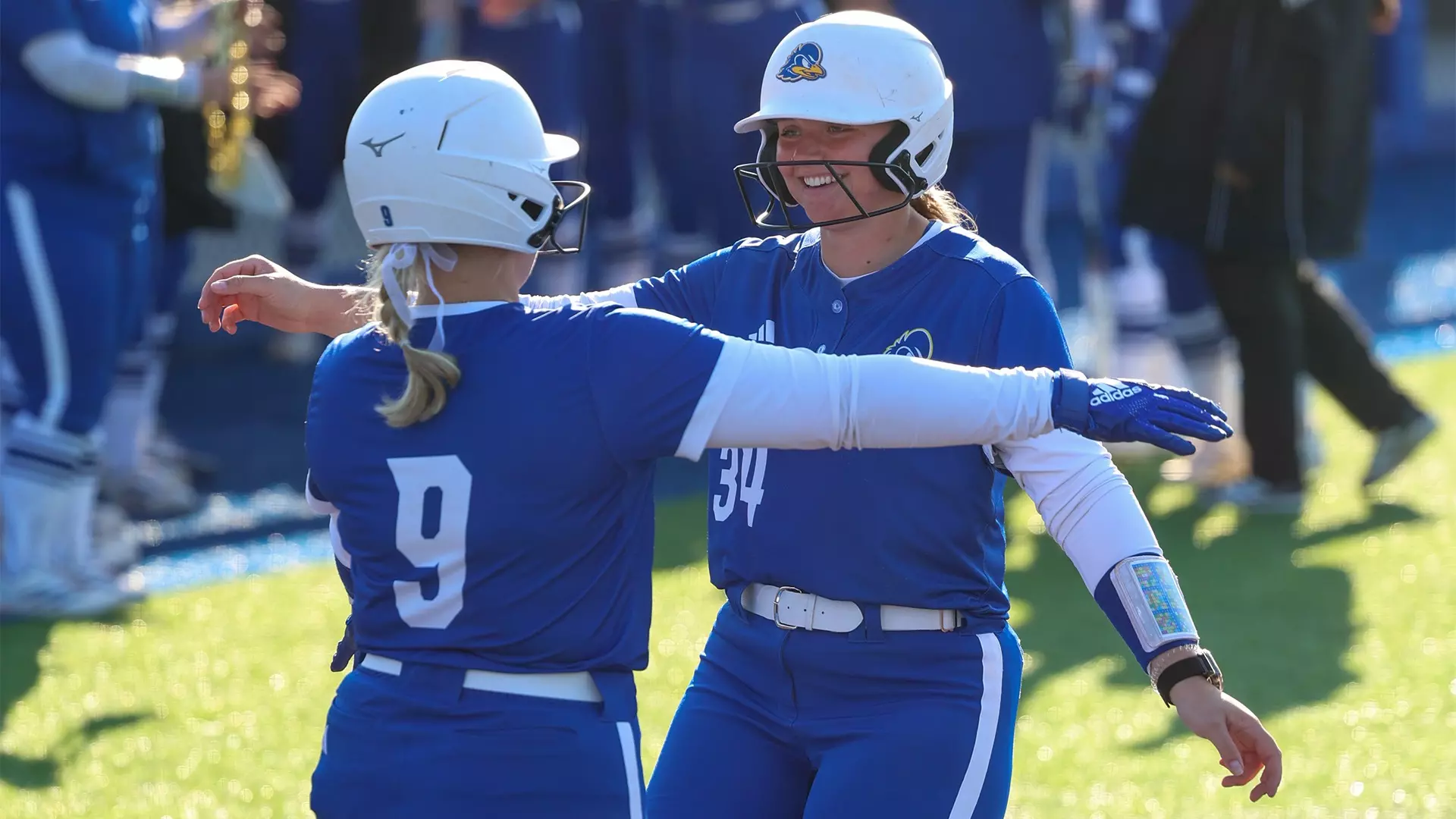
University of Delaware softball player Sydney Shaffer etched her name in the record books during opening day action at the Blue Hen Invitational, launching her 30th career home run in a doubleheader that saw the Blue Hens go 1-1 against visiting teams.
Delaware defeated Le Moyne 9-3 before falling to Bryant 6-3 in an eight-inning contest during the tournament’s first day of competition.
Shaffer’s milestone blast places her among elite company in Blue Hens history, joining Anna Steinmetz (44 home runs) and Mariah Kondravy (34 home runs) as the only three players in the program’s history to reach the 30-homer plateau.
The historic achievement came as Delaware hosted multiple teams for their invitational tournament, showcasing the Blue Hens’ talent on their home field.
The University of Maryland Eastern Shore Hawks marked a milestone Friday as they took the field at their newly renovated Hawk Stadium for the first time this season, though the historic moment was dampened by a loss to the Manhattan Jaspers in their home opener.
The upgraded facility provided a fresh backdrop for Hawks baseball, but the team couldn’t capitalize on the excitement of playing in their improved home venue. Manhattan managed to spoil the stadium’s debut game with a victory over the Eastern Shore squad.
While the Hawks fell short in the team effort, individual performances provided bright spots for the home crowd. Gonzalez Perez stood out offensively, collecting three hits in four at-bats while driving in a team-leading three runs during the contest.
The renovated Hawk Stadium represents a significant investment in the university’s athletic facilities, giving the baseball program an enhanced home field advantage for future contests. Despite the opening loss, the Hawks will look to bounce back in upcoming games as they adjust to playing in their upgraded surroundings.
The team will continue their season with hopes that Perez’s strong offensive showing signals positive momentum ahead, even as they work to turn their early-season performance around at their newly improved home venue.
The Goldey-Beacom Lightning basketball team secured their position as second-place finishers in the Central Atlantic Collegiate Conference following an intense 106-101 overtime triumph against Bridgeport on Friday evening.
The Lightning weathered a dramatic back-and-forth contest at Wilmington’s Jones Center, ultimately prevailing in the extra period to lock up their conference standing. The high-scoring affair showcased both teams’ offensive capabilities in what proved to be a thrilling conclusion to the regular season.
With the victory, Goldey-Beacom solidifies their positioning heading into postseason play, having navigated through what can only be described as an emotional marathon against a determined Bridgeport squad.
WASHINGTON – President Donald Trump’s military strike against Iran has created a rift among his most loyal supporters, with several influential conservative figures expressing concern that the action could damage Republican prospects in this November’s midterm elections.
Leading conservative voices are questioning whether the Iran operation aligns with Trump’s 2024 campaign pledges to prioritize economic issues over military interventions abroad. Polling data indicates voters are growing more frustrated with the president’s economic performance.
Right-wing commentator Jack Posobiec referenced warnings from late conservative activist Charlie Kirk, who was killed in September, writing on social media platform X: “Charlie Kirk told us all that the younger generation of Americans are far more interested in domestic policy than pursuing international conflicts and we can’t forget that in a midterm year.”
Trump had gained significant support from younger male voters in 2024, though recent surveys suggest that backing is declining.
The Iran military action represents a significant political risk for Trump during an election year, potentially jeopardizing Republican efforts to maintain congressional control this fall.
Reagan Box, among a dozen GOP candidates vying to fill former Representative Marjorie Taylor Greene’s Georgia seat, expressed her opposition to the Iran strikes despite her Trump allegiance. Though she considers Iran’s government “heinous,” Box explained to Reuters: “every time we’ve tried to do a regime change, especially in the Middle East, we just destabilize it.”
Israeli officials reported that Supreme Leader Ali Khamenei was killed during the operation.
Greene, previously among Trump’s most devoted allies before breaking with him over his domestic policy focus, wrote on X: “War with Iran does not lower inflation and make cost of living affordable.”
Surveys consistently reveal that Americans’ primary worry remains rising living costs. However, Trump’s initial 13 months in office have been largely consumed by international affairs. GOP congressional leadership fears unhappy voters may retaliate at the ballot box in November.
The Hodgetwins, popular conservative podcasters who typically support Trump, criticized the strikes to their 3.5 million X followers, calling them contrary to his 2024 campaign promises. Their post stated: “Freeing the people of Iran is not why I voted for Trump.”
However, other MAGA influencers endorsed the bombing campaign. During a televised address, Trump announced his pursuit of regime change and cautioned that American casualties were possible in what he characterized as warfare.
Trump supporter Laura Loomer defended the action on X, writing: “Iran has been attacking the US for over 47 years. And now, the 47th President of the United States is ending their reign of terror.”
Trump’s base largely celebrated January’s capture of Venezuelan leader Nicolas Maduro as a quick, successful military operation.
University of Michigan political scientist and professor emeritus Michael Traugott noted that opposition has emerged primarily from MAGA movement commentators rather than Republican officeholders. He cautioned it’s premature to assess long-term supporter sentiment.
Traugott warned that an extended Iran conflict might cause some core Trump voters to withdraw their support, explaining: “For the popular MAGA base, this is pretty much a direct violation of a major campaign promise to stay out of foreign engagements.”
The Republican National Committee issued a statement endorsing the Iran operation, while congressional responses followed typical partisan divisions, with GOP members defending the strike as essential.
Mike Davis, who leads the pro-Trump Article III Project legal advocacy organization, justified the strikes Saturday by citing a recent video where he claimed Khamenei threatened to destroy American naval vessels. Speaking on Steve Bannon’s War Room podcast, Davis said: “That video right there is all the justification that the president needs to flatten the supreme leader’s home and take him out.”
Iran’s Supreme Leader Ayatollah Ali Khamenei, who commanded nearly four decades of authoritarian rule, may have met his end through a joint U.S. and Israeli military operation, according to reports emerging Saturday.
President Donald Trump announced Khamenei’s death, while Israeli sources confirmed to The Associated Press that the 86-year-old leader was eliminated during a major coordinated assault by American and Israeli forces. Iranian authorities have not yet responded to these claims.
The reported death comes after Khamenei orchestrated the most violent suppression of dissent during his tenure when faced with widespread civil unrest earlier this year. As American military forces increased their regional presence to pressure Iran regarding its nuclear activities, Khamenei had cautioned that any U.S. attack would trigger broader regional conflict. Despite these warnings, he permitted Iranian officials to participate in nuclear discussions with Washington.
Before Saturday’s reported targeting of his residence, Khamenei faced escalating challenges to his authority.
His brutal response to mass demonstrations, which resulted in thousands of casualties while crowds shouted “Death to Khamenei,” demonstrated how significantly public fury threatened his regime. Decades of international sanctions combined with government corruption and economic mismanagement had devastated Iran’s financial system.
Additionally, Israeli and American bombing campaigns during last summer’s 12-day conflict severely compromised Iran’s nuclear facilities, missile infrastructure, and military assets. Tehran’s network of allied militant groups, including Hamas in Gaza, Hezbollah in Lebanon, and Yemen’s Houthis, suffered significant losses from Israeli and U.S. strikes following the Gaza conflict’s start, diminishing Iran’s regional influence.
Understanding Khamenei’s background reveals his unlikely rise to absolute power.
Upon assuming leadership in 1989, Khamenei faced significant skepticism regarding his legitimacy. As a minor religious figure, he possessed far less theological standing than his predecessor, Ayatollah Ruhollah Khomeini, who led Iran’s Islamic Revolution.
However, Khamenei’s reign lasted three times longer than Khomeini’s and potentially transformed Iran more profoundly.
He solidified the theocratic system dominated by mullahs, or Shiite Islamic clerics. Within the Islamic Republic’s structure, religious authorities maintain supreme control, establishing boundaries that civilian leadership, military forces, and intelligence agencies must respect.
Among hardline supporters, Khamenei represented unquestionable authority, subordinate only to divine power.
Simultaneously, Khamenei transformed the paramilitary Revolutionary Guard into Iran’s most influential military and political force. This organization controls Iran’s most sophisticated military units and manages its ballistic missile development. Khamenei also permitted the Guard to establish extensive business operations and economic dominance.
In exchange, the Guard served as his devoted enforcement apparatus.
Khamenei’s first significant challenge emerged from the reform movement that gained parliamentary control and the presidency shortly after his ascension. These reformers promoted increased authority for elected officials, which Khamenei’s conservative allies viewed as potentially dismantling the Islamic Republic framework.
Khamenei mobilized the clerical hierarchy, and unelected religious councils blocked major reforms and prevented reform candidates from participating in elections.
Subsequently, multiple waves of popular uprisings were violently suppressed.
Massive nationwide demonstrations erupted in 2009 following vote manipulation accusations. Economic hardship from sanctions sparked protests in 2017 and 2019. Additional unrest occurred in 2022 following Mahsa Amini’s death, who died in police custody for improperly wearing her required headscarf.
Government crackdowns resulted in hundreds of deaths, with hundreds more detained amid reports of torture and sexual assault in custody.
The most recent protests began in late December at Tehran’s historic marketplace after Iran’s currency, the rial, collapsed to a record low of 1.42 million per U.S. dollar. Demonstrations rapidly expanded nationwide.
“Rioters must be put in their place,” Khamenei declared. When hundreds of thousands demonstrated on January 8 and 9, security forces opened fire on crowds, with protest veterans expressing shock at the unprecedented violence deployed.
Human rights organizations documented over 7,000 deaths while continuing to verify additional casualties. Government officials acknowledged more than 3,000 fatalities, still exceeding previous crackdown tolls.
Through nuclear negotiations, Khamenei likely attempted to delay potential U.S. attacks. However, Iran rejected Washington’s primary demands to cease all uranium enrichment and relinquish existing uranium reserves.
Trump initially threatened military action to stop Khamenei and other Iranian leaders from killing peaceful demonstrators. He subsequently used this threat to pressure Tehran toward serious nuclear discussions.
Some Iranians and diaspora members hoped American military intervention would remove Khamenei. However, even among Khamenei’s opponents, many voices opposed foreign interference to overthrow the theocracy.
Formally, a council of Shiite clerics holds responsibility for selecting Khamenei’s successor from among their ranks, with various candidates mentioned including his son.
Danny Citrinowicz, an Iran specialist at Israel’s Institute for National Security Studies, told The Associated Press this week that Tehran learned from last year’s conflict the importance of ensuring governmental continuity following Khamenei’s potential death. He suggested power might transfer to a small committee of senior officials during ongoing hostilities.
“It is possible that Khamenei has indicated a preferred successor behind closed doors,” Citrinowicz said. “However automatic implementation of a preselected successor will increase internal friction during war.”
Nevertheless, the Revolutionary Guard has evolved into Iran’s most powerful institution. Should Khamenei’s death receive confirmation, this might encourage Guard leadership or regular military commanders to assume control more directly. Such developments could trigger violent competition for authority over the oil-wealthy nation of 85 million citizens.
WASHINGTON — President Donald Trump finds himself navigating the same type of overseas military engagement he once strongly criticized during his political ascent within the Republican Party.
Saturday’s joint U.S.-Israeli military operation against Iran highlights Trump’s evolution over the past decade — from a 2016 candidate who labeled the Iraq War a “big, fat mistake” to a commander-in-chief now warning Americans about possible overseas casualties while urging Iranians to “seize control of your destiny.” This military action contradicts Trump’s 2024 campaign rhetoric, where he characterized his Democratic opponent Kamala Harris as being influenced by “war hawks” pushing for military deployments abroad.
The president defended Saturday’s strikes as essential for preventing Iran from acquiring nuclear weapons or developing long-range missile capabilities targeting America — despite claiming less than a year ago that previous airstrikes had “obliterated” Iran’s military capacity. U.S. intelligence agencies have also reported significant degradation of Iran’s weapons programs.
Trump now faces potential pressure to substantiate his claims about Iran’s immediate threat to American security, echoing concerns about the false intelligence that preceded the Iraq War. Republicans, already confronting electoral challenges amid economic concerns, may need to reevaluate how this military engagement aligns with the “America First” isolationist philosophy that has defined the party during Trump’s political era.
Although Trump could experience an initial boost from patriotic support, sustaining that momentum over extended periods presents challenges — unlike the quick operation to oust Nicolás Maduro from Venezuela earlier this year.
Initial success differs vastly from the unpredictable aftermath that follows.
“The question is whether Iran’s goal is simply to outlast America and whether Trump has strategic attention deficit disorder, which will allow the Iranians to rise from the ashes and claim victory,” explained Michael Rubin, an American Enterprise Institute historian who served as a Pentagon adviser on Iran and Iraq from 2002 to 2004.
Several Republicans rallied behind Trump’s decision, including Texas Senator John Cornyn and state attorney general Ken Paxton, both competing in Tuesday’s Senate primary race.
“Hopefully lives will not be lost needlessly, but this always entails risk,” Cornyn stated Saturday during a Houston-area campaign event. “But we know that Iran will not stop unless the United States and our allies stop them.”
Indiana Senator Todd Young offered measured support, praising military personnel and condemning Iran while acknowledging that Americans deserve answers to questions that “must be answered.”
However, some Republicans openly opposed the action, particularly those who have consistently opposed foreign military interventions. Kentucky Senator Rand Paul criticized what he called “another preemptive war.” Former Georgia Representative Marjorie Taylor Greene, previously a strong Trump supporter, dismissed the president’s warnings about Iran’s nuclear threat.
“It’s always a lie and it’s always America Last,” she posted online. “But it feels like the worst betrayal this time because it comes from the very man and the admin who we all believed was different.”
The Trump administration provided minimal advance preparation for Americans regarding such significant military action.
Vice President JD Vance assured The Washington Post this week there was “no chance” of U.S. involvement in an extended conflict similar to Iraq. During Tuesday’s State of the Union address, Trump devoted only brief remarks to Iran, claiming the nation and its allies have “spread nothing but terrorism, death and hate.”
This approach contrasts sharply with the extended buildup preceding the Iraq War.
President George W. Bush designated Iraq as part of the “axis of evil” in January 2002. Then-Secretary of State Colin Powell delivered his controversial United Nations presentation in February 2003, arguing for war based on incorrect claims about Iraqi weapons of mass destruction. The invasion didn’t commence until March 2003, ultimately defining Bush’s second presidential term.
“We just have to be honest that there is a sense that this was not sold to the American public sufficiently,” Andrew Kolvet commented Saturday on “The Charlie Kirk Show,” an online program created by the late conservative activist who maintained close Trump ties. “Perhaps there will be an opportunity on the backend of this.”
Despite concerns, Kolvet expressed willingness to support Trump’s judgment, recognizing the difficult decisions presidents must make.
“President Trump has earned a big, long leash,” he stated. “Not an unlimited one. But a very long one to make tough decisions.”
Public opinion data indicates Americans share Trump’s Iran-related concerns while questioning his response approach. Approximately half of U.S. adults express being “extremely” or “very” worried about Iran’s nuclear program threatening America, according to recent Associated Press-NORC Center for Public Affairs Research polling.
Most Americans — 61% — consider Iran a U.S. “enemy,” representing a slight increase from September 2023 Pearson Institute/AP-NORC polling. However, public confidence in Trump’s judgment regarding adversary relationships and overseas military force remains limited, with only about 30% of Americans expressing “a great deal” or “quite a bit” of trust in the president.
Democrats view this situation as a political opportunity. In Maine, Governor Janet Mills and Graham Platner are seeking the Democratic nomination to challenge incumbent Senator Susan Collins this fall. Both issued Saturday statements urging Collins — the sole Republican candidate in a state Harris won — to increase administration oversight.
Collins joined two other Senate Republicans supporting last month’s unsuccessful war powers resolution that would have restricted Trump’s ability to conduct additional Venezuelan operations. Democrats announced Saturday plans to pursue similar Iran-focused legislation.
“If we’ve started a war where we begin to lose American lives, that starts changing the political calculus,” noted Republican strategist Ron Bonjean.
He emphasized that Democrats face their own vulnerabilities, particularly regarding potential domestic terror attacks while the Department of Homeland Security remains closed due to their immigration policy demands.
Currently, Trump offers limited details about future strategy. In Saturday evening social media posts, he indicated bombing operations could continue “as long as necessary.”
An overnight Iranian missile assault targeting locations throughout Gulf Arab nations left Dubai International Airport damaged and four people wounded, according to aviation industry sources who spoke Sunday morning.
Dubai’s media office posted on X that “a concourse at Dubai International (DXB) sustained minor damage in an incident, which was quickly contained,” but provided no additional information about the event.
Industry sources informed Reuters that one terminal at the facility, typically among the globe’s most active aviation centers, was harmed during the nighttime Iranian assault that officials would only publicly describe as an “incident.”
The same sources reported that Abu Dhabi International Airport was also struck. They could not confirm whether both airports experienced direct hits or if the harm resulted from falling wreckage after missiles were intercepted.
Reuters received no immediate responses when seeking comments from Dubai Airports or Abu Dhabi Airports Company.
Tehran launched missiles targeting Abu Dhabi, Dubai and Doha, all critical aviation connections between east and west.
Carriers canceled flights throughout the Middle East on Saturday — including routes to and from Dubai and Abu Dhabi — following U.S. and Israeli attacks on Iran and Tehran’s missile counterstrikes. Flight tracking systems revealed nearly empty airspace across much of the area.
Dubai Airports halted all operations at Dubai International and Al Maktoum International, advising travelers to avoid coming to the facilities. Emirates and flydubai stopped their services, while Etihad canceled all Abu Dhabi departures until Sunday morning.
NEWARK, Del. – The University of Delaware baseball team extended their hot streak to three consecutive victories Saturday afternoon, thanks to a dramatic seventh-inning rally that secured a 5-4 triumph over Rider University at Bob Hannah Stadium.
The hero of the afternoon was Evan Bouldin, whose clutch two-run homer in the bottom of the seventh frame provided the winning margin for the Fightin’ Blue Hens. The timely blast capped off a thrilling comeback that lifted Delaware’s record to 4-7 on the season.
With the loss, Rider’s record dropped to 3-2 as they fell victim to Delaware’s late-game heroics. The Blue Hens’ recent surge has provided a bright spot in what started as a challenging campaign, as the team continues to find its rhythm in the early portion of the season.
The victory at Bob Hannah Stadium showcased the team’s resilience and ability to deliver in pressure situations, qualities that will serve them well as they progress through their schedule.
The Goldey-Beacom Lightning women’s basketball squad wrapped up their campaign with a heartbreaking 69-65 defeat to the Bridgeport Purple Knights in their season finale at home.
The contest proved to be a nail-biter, with both teams battling until the closing moments before Bridgeport managed to secure the four-point victory over the Lightning.
Prior to tipoff, Goldey-Beacom took time to celebrate four graduating players in a senior night ceremony, recognizing Rory Ciszkowski, Gaia Zimbardo, Karlee Lemon, and Azra Ozgul for their contributions to the program.
Despite the disappointing result in their final home game, the Lightning showed fight against the Purple Knights in what proved to be an exciting finish to their season.
CHESTERTOWN, Md. – Salisbury University’s nationally-ranked women’s lacrosse squad delivered a dominant performance Saturday afternoon, defeating Washington College 16-10 in Maryland.
The Sea Gulls, currently sitting at No. 3 in national rankings, controlled the game’s final quarter by outscoring the Shorewomen 5-2 during the closing period at Roy Kirby Jr. Stadium.
The victory showcased the team’s ability to finish strong, as they pulled away from Washington College with their impressive fourth-quarter surge to secure the decisive six-goal margin of victory.
SALISBURY, Md. – Salisbury University’s baseball squad, currently holding the fourth position in national rankings, dominated on the mound while generating crucial runs during key moments to defeat the TCNJ Lions 5-2 on Saturday at Donnie Williams Sea Gull Baseball Stadium.
The Sea Gulls’ pitching staff delivered an impressive performance, recording 11 strikeouts throughout the contest while limiting the Lions’ offensive opportunities.
Salisbury’s offense came alive during the middle frames of the game, producing the necessary runs to secure the victory on their home field.
The win continues the Sea Gulls’ strong season as they maintain their top-five national ranking in collegiate baseball.
Tensions in the Middle East escalated dramatically Saturday as Iran unleashed a massive missile barrage against Israel, with local news sources reporting more than 200 projectiles launched throughout the evening hours.
The assault wounded eight people in Tel Aviv, where medical teams transported victims for care – one person suffered moderate injuries while seven others sustained minor wounds. Emergency responders also treated a man in his 40s for serious shrapnel injuries in the city, with Magen David Adom medics providing on-site care. Officials expressed concern about unexploded weapons remaining in the area and launched search missions.
Saturday morning brought the first wave of attacks when Iran sent at least 125 missiles toward Israeli territory. Defense officials reported that 35 projectiles penetrated Israeli airspace while defensive systems knocked down the rest, causing warning sirens to sound throughout central and northern regions. The Magen David Adom emergency service confirmed a residential structure in northern Israel took a direct impact during this initial assault.
Emergency crews reported that missile debris hit a 20-story apartment building in Tirat HaCarmel, breaking through to the 17th floor and causing light injuries to one resident, according to Hebrew-language news outlets.
The Israeli Defense Forces announced a second wave of 15 missiles targeted northern and central areas later that day. Around 5 p.m., unverified reports suggested another residential building in central Israel suffered a direct strike, though no casualties were immediately reported.
Medical services treated a 17-year-old victim who received minor shrapnel wounds to his lower extremities, while emergency teams responded to numerous reported impact locations throughout central Israel. During Saturday’s attacks, paramedics assisted roughly 100 individuals, primarily for minor shrapnel injuries or wounds sustained while seeking shelter. Six additional people received treatment for anxiety-related issues.
The Iranian offensive extended beyond Israeli borders, according to Qatar’s Defense Ministry, which reported 65 missiles and 12 drones had been deployed from Iran by Saturday, Reuters confirmed. In the United Arab Emirates, a high-end Dubai hotel became a target as Iran broadened its retaliatory campaign following American-Israeli operations against Iranian positions.
BBC-authenticated footage captured flames engulfing the Fairmont The Palm hotel, with dense black smoke billowing skyward. Dubai officials confirmed four individuals were injured in a blaze at a Palm Jumeirah area structure, stating the fire was successfully contained without releasing additional information.
Meanwhile, Qatar, Bahrain, Jordan, and Kuwait – all nations hosting American military installations – announced they successfully intercepted missiles aimed at their territories.
Multiple Arab nations issued condemnations of Iran on Saturday following the missile strikes against American interests and allied countries throughout the Middle East, describing the attacks as retaliation for coordinated US-Israeli operations targeting Iranian leadership. Qatar, Saudi Arabia, Jordan, and the United Arab Emirates were among the countries releasing public statements in response.
LA PAZ, Bolivia – A military cargo aircraft transporting freshly printed currency crashed Friday near Bolivia’s capital city, claiming 22 lives and leaving 29 others wounded, according to police officials who provided updated casualty figures Saturday.
The victims included 12 men, six women, and four children, with one crew member among the fatalities, stated police commander Mirko Sokol. Most of those injured were passengers on public buses traveling in the area where the aircraft went down.
Forensic teams continued working Saturday to retrieve bodies from the crash site. Medical facilities in El Alto, the city near La Paz where the airport is situated, treated the injured survivors.
The Hercules C-130 aircraft was carrying 18 tons of newly manufactured Bolivian banknotes from Santa Cruz in the country’s east when it “landed and veered off the runway” at El Alto airport before coming to rest in an adjacent field, Defense Minister Marcelo Salinas explained Friday. Emergency responders successfully extinguished fires that consumed the aircraft.
Social media footage revealed aircraft wreckage, destroyed automobiles, and casualties along the roadway. Fire department chief Pavel Tovar reported that no fewer than 15 vehicles sustained damage in the incident.
The military transport plane was delivering currency to La Paz when it crashed, and social media images captured people racing to collect scattered bills from the scene. More than 500 military personnel and 100 law enforcement officers attempted to control the crowds, official accounts stated.
To prevent additional theft, police and military forces destroyed the remaining cash containers while Central Bank President David Espinoza observed. Espinoza declared the bills “have no legal value because they never entered circulation,” though he did not elaborate further.
While Espinoza declined to reveal the exact monetary value being transported, he confirmed the banknotes had been shipped to Santa Cruz from overseas before the fatal flight.
A major confrontation between the Pentagon and artificial intelligence company Anthropic has become public this week, with Defense Secretary Pete Hegseth abruptly cutting off the military’s partnership with the tech firm and other federal agencies.
The conflict began when Anthropic CEO Dario Amodei stood firm on his company’s position against allowing their AI products to be utilized for widespread surveillance operations or fully automated military drones. This stance led President Donald Trump and Hegseth to claim the San Francisco-based AI company poses a threat to America’s national security.
In an unusual step, Hegseth moved to classify Anthropic as a supply chain threat – a designation typically reserved for foreign companies with ties to hostile nations. The company has promised to fight back in court against what they describe as an legally questionable action.
“We will challenge any supply chain risk designation in court,” Anthropic stated, calling it an action “never before publicly applied to an American company.”
This brewing court fight could significantly impact the technology industry’s power structure and establish new precedents for how the military can use AI technology, along with safety measures designed to protect human lives.
The dispute has already created a major win for OpenAI, the company behind ChatGPT, which quickly moved to offer its services to the Pentagon after Anthropic rejected the Trump administration’s conditions. This development is expected to intensify the rivalry between OpenAI’s Sam Altman, who faced his own board troubles in 2023, and Amodei, who departed OpenAI in 2021 to start Anthropic due to AI safety concerns.
The Pentagon’s decision to label Anthropic as a defense supply chain threat will terminate a contract worth up to $200 million with the AI firm. Military officials say this action will also prevent other defense contractors from partnering with Anthropic.
Trump announced on Truth Social that most federal agencies must immediately cease using Anthropic’s AI systems, though he granted the Pentagon six months to remove the technology already integrated into military systems.
Anthropic disputes Hegseth’s legal power to block business relationships with other defense contractors. The company maintains that firms with existing commercial agreements can continue using Anthropic’s products for non-military projects.
The supply chain risk classification was originally established to help military leaders reduce the Pentagon’s dealings with potentially dangerous companies. This list has historically featured businesses connected to rival nations, including Chinese telecom company Huawei and Russian cybersecurity firm Kaspersky.
For Anthropic, this designation sends a clear message to other AI and defense companies about the consequences of refusing government demands.
“We don’t need it, we don’t want it, and will not do business with them again!” Trump declared on social media.
The six-month transition period Trump established essentially provides time for other companies to obtain the necessary classified security approvals to work with the Pentagon.
Anthropic reports they have not yet received official notification of Hegseth’s designation.
“When we receive some kind of formal action, we will look at it, we will understand it and we will challenge it in court,” Amodei promised during a CBS News interview scheduled to air Sunday morning.
Currently, Anthropic is working to reassure businesses and government agencies that the Trump administration’s supply chain risk label only impacts the use of Claude, their AI assistant and coding tool, when defense contractors employ it for Pentagon projects.
“Your use for any other purpose is unaffected,” Anthropic explained in their statement.
This clarification is vital for Anthropic since most of their anticipated $14 billion in annual revenue comes from businesses and government agencies using Claude for programming and other functions. Over 500 clients pay Anthropic at least $1 million yearly for Claude access, according to recent investment announcements valuing the company at $380 billion.
Anthropic’s Claude technology has gained significant momentum, positioning itself as a potential substitute for various business software tools currently offered by major tech corporations like Salesforce and Workday. This potential has caused stocks of business software companies to decline this year.
However, with Anthropic now labeled as a supply chain risk, questions arise about whether customers will remain comfortable using Claude for non-military purposes, potentially risking Trump’s displeasure. Any widespread hesitation to use Claude could slow AI advancement in the United States during a critical period of technological competition with China.
Simultaneously, Anthropic and Amodei may now have a prominent platform to advocate for stronger AI safety measures.
“No amount of intimidation or punishment from the Department of War will change our position on mass domestic surveillance or fully autonomous weapons,” the company declared. “We will challenge any supply chain risk designation in court.”
In his CBS interview, Amodei framed Anthropic’s disagreement with the Trump administration as defending democratic principles.
“Disagreeing with the government is the most American thing in the world,” Amodei stated. “And we are patriots. In everything we have done here, we have stood up for the values of this country.”
Shortly after Anthropic faced punishment, OpenAI’s Altman announced Friday evening that his company reached an agreement to provide AI services to classified military networks. However, Altman revealed that the same AI limitations that caused Anthropic’s dispute with the Pentagon are now included in OpenAI’s new partnership.
In an internal memo obtained by The Associated Press, Altman informed OpenAI staff: “We have long believed that AI should not be used for mass surveillance or autonomous lethal weapons, and that humans should remain in the loop for high-stakes automated decisions. These are our main red lines.”
The reason why the Pentagon accepted OpenAI’s restrictions but rejected Anthropic’s remains unclear. In his memo, Altman suggested the company believes it can “de-escalate things” by collaborating with the Pentagon while maintaining proper safety protections.
OpenAI’s agreement with the Trump administration coincided with announcing another $110 billion funding round, bringing the San Francisco company’s valuation to $730 billion.
OpenAI may also face potential criticism if consumers who use ChatGPT view its Pentagon work as prioritizing profits over AI safety.
The Anthropic conflict could create new opportunities for Elon Musk, who co-founded OpenAI with Altman in 2015 before their bitter separation over safety and financial disagreements. Musk has accused Altman of fraudulent behavior in a case set for trial in late April.
Musk now operates the AI chatbot Grok, which the Pentagon also plans to connect to classified military networks despite safety and reliability concerns, plus government investigations into its creation of inappropriate deepfake images. Musk has already supported the Trump administration’s conflict with Amodei, posting on his X platform that “Anthropic hates Western Civilization.”
Google, which has created widely-used AI tools through its Gemini technology, could also compete for additional military contracts, though some employees have urged executives to avoid deals that would contradict the company’s former “Don’t be evil” principle. Google leadership has not yet publicly addressed Anthropic’s dispute with the Trump administration.
NEW YORK (TV Delmarva) — During an urgent Security Council session on Saturday, United Nations Secretary-General António Guterres denounced joint American-Israeli military operations against Iran and demanded an immediate shift toward diplomatic talks “to pull the region, and our world, back from the brink.”
Speaking to council members during the emergency gathering, Guterres emphasized that all possible measures must be taken to avoid further military escalation. “The alternative,” he cautioned, “is a potential wider conflict with grave consequences for civilians and regional stability.”
The UN leader also criticized Iran’s counter-strikes for breaching the sovereignty and territorial boundaries of Bahrain, Iraq, Jordan, Kuwait, Qatar, Saudi Arabia and the United Arab Emirates.
Israeli UN Ambassador Danny Danon dismissed criticism of the airstrikes as “hypocrisy” when speaking with media representatives prior to the session. Danon argued that Iran bears responsibility for its regional proxy forces and nuclear weapons development, stating that Israel and America responded “to prevent an irreversible and immediate threat.”
The military operation against Iran resulted in the death of Supreme Leader Ayatollah Ali Khamenei, according to Associated Press reporting. The killing of the Islamic Republic’s second leader, who had not named a successor, has heightened concerns about extended conflict amid Iranian vows of retaliation. President Donald Trump posted on social media that Khamenei’s death represents “the single greatest chance for the Iranian people to take back their Country.”
In correspondence to the secretary-general, Iranian Foreign Minister Abbas Araghchi accused America and Israel of “flagrantly” breaching Iran’s sovereignty, territorial boundaries and the UN Charter. Araghchi stated Iran was using its charter-protected right to self-defense in its response.
The foreign minister pressed council members “to take the necessary and immediate measures to halt this unlawful use of force and to ensure accountability.” He also demanded clear condemnation of “this act of aggression … as it undoubtedly poses an unprecedented threat to regional as well as global peace and security.”
The emergency session was requested by five council members: Bahrain, serving as the Arab council representative, along with France, Russia, China and Colombia.
Leaders from Britain and France, both holding Security Council veto power, joined Germany’s chancellor in a joint declaration urging renewed American-Iranian discussions regarding Tehran’s nuclear activities. These three nations, signatories to the 2015 Iranian nuclear agreement, have spearheaded diplomatic resolution efforts. Trump withdrew American participation from that accord in 2018.
The European leaders issued strong criticism of Iranian regional airstrikes — rather than the American-Israeli operations — and pressed Iranian officials toward negotiated settlements, declaring: “Ultimately, the Iranian people must be allowed to determine their future.”
The Security Council convened on the final day of the United Kingdom’s council presidency, one day before the United States assumes the rotating March leadership role.
JERUSALEM – Israeli Prime Minister Benjamin Netanyahu announced Saturday that joint Israeli-U.S. military operations may have resulted in the death of Iran’s Supreme Leader Ayatollah Ali Khamenei, though he stopped short of definitively confirming the leader’s fate.
Speaking in a recorded statement, Netanyahu declared that morning strikes had targeted Khamenei’s residential compound. “This morning we destroyed the compound of the tyrant Khamenei,” the Israeli leader stated, describing the Iranian leader as someone who had “dispatched terrorism across the world, made his own people miserable, and worked constantly and tirelessly on a program to annihilate the state of Israel” over more than three decades.
Netanyahu indicated that evidence suggests the Iranian leader may not have survived the assault. “There are many signs that this tyrant is no longer. This morning we eliminated senior officials in the ayatollahs’ regime, Revolutionary Guards commanders, senior figures in the nuclear programme – and we will continue. In the next few days, we will hit thousands more targets of the terror regime,” he stated in the video message.
The strikes reportedly targeted multiple high-ranking Iranian officials beyond Khamenei, including Revolutionary Guard leadership and key figures involved in Iran’s nuclear development program.
Former President Donald Trump announced Saturday that Iran’s Supreme Leader Ayatollah Ali Khamenei has died, according to a post on his Truth Social platform.
Trump described the Iranian leader as “one of the most evil people in History” while declaring his death, though the former president did not provide any details about how he learned of this information or specify sources for his claim.
The announcement was made on February 28th via Trump’s social media account, but no additional context or verification was offered with the statement.
Maryland State Police crash investigators are working to determine what caused a deadly collision in Caroline County that took the life of a Ridgely resident yesterday afternoon.
Joseph Dsouza, 30, of Ridgely, died at the scene of the crash. Emergency medical personnel declared him deceased after his 2017 Kia Sorento collided with an Isuzu box truck on Maryland Route 480.
A 50-year-old passenger from Kuwait, Hillary Coelho, was riding in Dsouza’s vehicle at the time of impact. State police aviation transported Coelho to a trauma center where he remains hospitalized.
The box truck operator, James Sherry, 50, of Greensboro, was also taken to a hospital for treatment following the crash.
Emergency responders were called to Route 480 north of Eveland Road just before 2:00 p.m. yesterday, where they discovered both vehicles had left the roadway after the collision.
According to initial findings from crash investigators, the box truck was heading north when it veered across the centerline into the southbound lanes. Police believe Dsouza tried to prevent a direct head-on collision by steering his Kia onto the shoulder of the southbound side, but the vehicles still collided there.
Easton Barrack troopers and Caroline County emergency medical teams responded to the scene. Maryland Department of Transportation personnel helped manage road closures and traffic diversions while the highway remained shut down. Caroline County’s State’s Attorney’s Office has been informed of the incident.
Investigators have not yet established the definitive cause of the crash, though they suspect impairment may have contributed to the collision. Criminal charges could be filed depending on what the investigation reveals.
Commercial Vehicle Enforcement Division officers also examined the truck following the crash. The Maryland State Police Crash Team is leading the ongoing investigation.
Ayatollah Ali Khamenei took control of Iran’s Islamic Republic in 1989, assuming leadership after the death of the revolution’s founding figure.
Though not regarded as particularly charismatic, Khamenei has maintained stability in Iran following the devastating conflict with Iraq during the 1980s, leading the country for over thirty years – a tenure significantly longer than the single leader who came before him.
This collection of photographs has been assembled by Associated Press photo editors.
Following Saturday’s significant military strike by the United States and Israel against Iran, President Donald Trump encouraged Iranian citizens to “seize control of your destiny” by challenging the Islamic government that has controlled their country since 1979.
Israeli Prime Minister Benjamin Netanyahu issued a warning that Iran’s Supreme Leader Ali Khamenei might be the next target, following the elimination of multiple high-ranking Iranian military commanders and nuclear scientists. Netanyahu suggested such an action could destabilize Tehran’s entire governmental structure.
No immediate reports confirmed whether senior Iranian leadership was harmed in the attacks. However, experts note that removing top leaders wouldn’t automatically guarantee a change in government.
Here’s an examination of Iran’s most powerful political and spiritual authorities.
Ali Khamenei assumed the role of Iran’s supreme leader in 1989 following the passing of Ruhollah Khomeini, who established the Islamic Republic of Iran. Khamenei was instrumental in the revolutionary movement that removed Shah Mohammad Reza Pahlavi from power in 1979.
At 86 years old, Khamenei serves as Iran’s military commander-in-chief and holds ultimate authority over all governmental and religious decisions. The Revolutionary Guard, Iran’s paramilitary organization tasked with protecting the Islamic Republic, reports directly to his office.
Throughout his leadership, Khamenei has overseen multiple suppression campaigns against domestic protesters. He recently declared Iran’s readiness to respond to any American military action.
Saturday’s initial strikes targeted areas near Khamenei’s administrative offices. His whereabouts during the attack remained unknown, as he hadn’t appeared publicly for several days.
Iran’s current president is widely viewed as a reform-minded leader. Masoud Pezeshkian, a former cardiac surgeon, began his presidency on July 28, 2024. As the nation’s second-highest official, the president oversees government operations, manages economic policies, and executes the Supreme Leader’s directives.
Iranian citizens vote for both president and parliament members in four-year election cycles.
Iran’s foreign minister brings extensive diplomatic experience and played a crucial role in negotiating the 2015 nuclear agreement that is no longer in effect. Abbas Araghchi received his appointment on August 21, 2024.
Prior to Saturday’s military action, Araghchi cautioned that confrontation with the U.S. would result in “a devastating war” and emphasized Tehran’s preference for diplomatic resolution before this week’s critical negotiations.
Ali Larijani comes from one of Iran’s most prominent political dynasties. The former parliamentary leader and senior policy consultant was chosen to counsel Khamenei on strategic matters regarding nuclear discussions with the Trump administration.
In January, the U.S. implemented additional economic penalties against Iranian officials, including Larijani, for allegedly suppressing nationwide demonstrations against Iran’s religious government.
The U.S. Treasury Department identified him as among the first officials to advocate for violent responses against Iranian demonstrators.
Gholam-Hossein Mohseni Ejehi, a conservative legal scholar and hardline prosecutor, has served as chief justice since 2021. He is commonly recognized as a devoted supporter of Khamenei.
State media quoted Mohseni Ejehi in January as declaring there would be “no leniency” for those responsible for the recent wave of civil unrest.
Ahmad Movahedi Kermani leads the 88-member religious assembly tasked with selecting the next Supreme Leader. The Assembly of Experts functions similarly to the Vatican’s College of Cardinals within Iran’s system.
Ahmad Jannati effectively heads Iran’s Guardian Council, a 12-person organization that screens political candidates and legislation, rejecting individuals deemed incompatible with Iran’s Islamic religious system. The council includes six Islamic scholars and six legal specialists.
This council possesses the authority to eliminate presidential candidates viewed as opposing the Supreme Leader’s agenda.
Mohammad Mohammadi Golpayegani serves as an Islamic religious leader and long-standing ally of Khamenei. He manages the Supreme Leader’s administrative office.
Ali Akbar Velayati, trained as a doctor, previously held the position of Iran’s foreign minister and currently advises Khamenei on global matters. He participates in the country’s nuclear policy decisions.
Kamal Kharazi acts as a trusted foreign policy counselor to Khamenei, particularly during recent nuclear negotiations with Washington.
The former diplomat and foreign minister previously served as Iran’s representative to the United Nations. Kharazi has occupied various government, diplomatic, and educational positions throughout his career.
Mohammad Reza Aref holds the distinction of being the highest-ranking reform advocate within Iran’s executive government branch. He functions as the president’s principal deputy and conducts cabinet sessions during the president’s absence. Aref maintains communication between the presidency and parliament.
Mohammad Bagher Ghalibaf, a former Tehran mayor and Revolutionary Guard commander, secured reelection as parliamentary speaker on May 27, 2025. This conservative politician was connected to student suppression incidents in 1999 and 2003.
Mohammad-Taqi Mesbah Yazdi belongs to Iran’s 12-member Guardian Council and serves as an influential religious leader and prayer director loyal to the Supreme Leader. He holds membership in Iran’s Assembly of Experts and has maintained hardline positions throughout his career.
In January, Khatami demanded capital punishment for protesters arrested during nationwide suppression efforts, characterizing demonstrators as “butlers” of Netanyahu and “Trump’s soldiers.”
Mojtaba Khamenei, the Supreme Leader’s second-oldest son, holds mid-level clerical status and is rumored as his father’s potential replacement. He maintains strong connections with Iran’s Revolutionary Guard. Mojtaba participated in military service during the Iran-Iraq conflict and reportedly exercises significant behind-the-scenes influence as his father’s advisor and gatekeeper.
MEXICO CITY — The remains of notorious drug kingpin Nemesio Oseguera Cervantes, widely recognized by his alias ‘El Mencho,’ have been released to his relatives after Mexican military forces killed him in an operation last week, government officials announced Saturday.
Mexico’s Attorney General’s Office issued a statement on X confirming they had completed all required legal procedures before turning over the body to family members.
“Genetic tests were carried out to confirm that there were indeed blood ties between the person who requested the release and the deceased,” the agency stated.
The death of Mexico’s most influential cartel leader triggered widespread revenge attacks spanning approximately 20 states throughout the country. The violent backlash claimed the lives of more than 70 individuals.
This surge in bloodshed has raised concerns that the violence might negatively impact the nation’s tourism industry as the FIFA World Cup approaches later this year.
American authorities had placed a bounty of up to $15 million on El Mencho for information that would lead to his capture. He commanded the Jalisco New Generation Cartel, recognized as among Mexico’s most influential and rapidly expanding criminal enterprises since its establishment around 2009.
This past February 2025, the Trump administration classified the organization as a foreign terrorist group.
The elimination of this major crime figure represents the Mexican government’s most significant victory in demonstrating to the Trump administration its commitment to combating drug cartels.
Maryland’s Department of Natural Resources now oversees a sacred burial ground where enslaved ironworkers from the 1700s are interred, following a land donation that adds the historic cemetery to Cunningham Falls State Park.
The two-acre African American cemetery in Frederick County serves as the final resting place for skilled workers who labored at the Catoctin Furnace, which operated during America’s founding era.
State officials held a ceremony on February 28 at the historic Harriet Chapel, a church that never practiced segregation, to mark the land transfer from the Catoctin Furnace Historical Society. Family members descended from those buried at the site attended the solemn gathering during Black History Month.
Maryland DNR Secretary Josh Kurtz emphasized the significance of the transfer during the ceremony. “The transfer of this land to the Maryland Park Service is more than a procedural step; it is a declaration,” Kurtz stated. “It is a promise that the State of Maryland will protect this ground with dignity and ensure that these stories are celebrated and shared with honesty. As we finish celebrating Black History Month and turn toward celebrations of America’s 250th Anniversary, this important place will serve forever as a reminder that African American heritage is foundational to Maryland and American history.”
The iron-making operation began in 1776 under Thomas Johnson, who signed the Declaration of Independence and became Maryland’s first elected governor, along with his three brothers. Workers at the facility created iron products for George Washington’s Continental Army, including ammunition used in the decisive Revolutionary War battle at Yorktown, Virginia. The furnace also manufactured everyday items like dishes and heating stoves for colonial households. The original furnace ruins already sit within the state park boundaries.
Maryland Park Service Director Angela Crenshaw spoke about honoring the workers’ memory and contributions. “We gather to honor the individuals whose lives shaped Catoctin Furnace – skilled ironworkers, laborers, mothers, fathers, and children; people whose contributions to Maryland were immense, even when history failed to record their names,” Crenshaw said. “Their lives mattered. Their dignity endures. And their story deserves to be told honestly, fully, and permanently.”
Crenshaw praised the Catoctin Furnace Historical Society for their efforts to research, document, and maintain the cemetery throughout their ownership. Elizabeth Comer, who serves as both historian and archaeologist as well as president of the historical society, referenced a 1979 archaeological dig that uncovered 35 burial sites, representing roughly one-third of the total graves believed to exist in the cemetery.
The historical society also runs the Museum of the Ironworker, located close to the cemetery grounds.
Beginning in 2014, the Catoctin Furnace Historical Society initiated an extensive campaign to educate the public about African Americans’ crucial role in iron production at Catoctin Furnace and similar operations, while showcasing their broader influence on America’s industrial development.
After seven years of fundraising efforts, the historical society successfully purchased the privately-owned cemetery within a 1.921-acre plot in May 2025, which they have now transferred to the Park Service.
Comer reflected on the timing of the land transfer during America’s 250th birthday celebration. “How fitting is it that on this, the 250th anniversary of the founding of the United States, we can fully commemorate the lives of these founders of Maryland who lived, worked, and died at Catoctin,” Comer said.
The historical society plans to maintain their involvement and support of the site going forward. The related nonprofit Catoctin Furnace Friends Group Inc. is currently raising money to help DNR and the historical society create a conservation and preservation management plan and perform ground-penetrating radar surveys for a proposed trail extension to reach the cemetery.
Kansas City has reached an agreement with veteran outfielder Starling Marte, according to multiple reports emerging Saturday.
Financial details of the deal have not been revealed, and the agreement remains subject to Marte passing a physical examination.
The 37-year-old veteran posted a .270 batting average while contributing nine home runs and 34 RBIs across 98 games during his final season in New York. Marte concluded a four-year stint with the Mets after initially joining the organization on a four-year, $78 million deal before the 2022 season.
Throughout his 14-year major league career, the two-time All-Star and Gold Glove Award recipient has maintained a .285 batting average while accumulating 163 home runs, 667 RBIs, and 361 stolen bases. His professional journey has taken him through organizations including the Pittsburgh Pirates (2012-20), Arizona Diamondbacks (2020), Miami Marlins (2020-21), Oakland Athletics (2021), and most recently the New York Mets (2022-25).
A senior Ukrainian official announced Saturday that Russia has signaled its willingness to embrace the United States’ proposed security framework for Ukraine during recent diplomatic discussions in Geneva.
Kyrylo Budanov, a top aide to Ukrainian President Volodymyr Zelenskiy, revealed this development during a television interview broadcast on Ukrainian media. “At the last talks, the Russian side said for example that they would accept the security guarantees offered to Ukraine by the United States,” Budanov stated.
The diplomatic efforts come as President Donald Trump pushes both Moscow and Kyiv to reach a settlement that would bring an end to what has become Europe’s largest military conflict since World War II ended in 1945. However, Zelenskiy has expressed frustration that Ukraine faces mounting pressure to offer compromises in any potential agreement.
Ukrainian leadership continues to pursue robust security assurances that would legally bind the United States and European partners to respond militarily should Russia launch future attacks following any peace settlement.
The most recent diplomatic session in Geneva last week failed to produce any significant breakthrough, with both Ukrainian and Russian representatives characterizing the discussions as challenging. Despite this, Washington officials described the talks as showing “meaningful progress.”
Budanov also noted that Russia has not yet committed to arranging a direct meeting between Zelenskiy and Russian President Vladimir Putin, despite earlier suggestions from U.S. special envoy Steve Witkoff that such a summit remained a possibility.
Israeli authorities suspended operations at all Gaza border crossings on Saturday, halting the flow of humanitarian assistance and blocking medical evacuations as military operations against Iran were underway, according to COGAT, Israel’s government coordination agency.
Among the shuttered entry points was the crucial Rafah border crossing with Egypt, which had just resumed limited operations in early February. The crossing had been allowing small numbers of Palestinians to pass through for the first time in months, particularly those requiring emergency medical treatment.
More than 2 million Gaza residents have been forced from their homes during Israel’s military campaign in the territory, leaving the population heavily reliant on international humanitarian assistance.
The United Nations reported in mid-February that it continues encountering obstacles while attempting to distribute critical aid throughout Gaza.
A February analysis by Human Rights Watch found that Israeli limitations on aid shipments have perpetuated shortages of medical supplies, rebuilding materials, food supplies, and clean water throughout the territory.
COGAT defended the crossing closures by claiming sufficient food supplies have entered Gaza during the current ceasefire to meet population needs four times over, though the agency provided no supporting data. Officials stated that “the existing stock is expected to suffice for an extended period.”
A University of Delaware men’s lacrosse player reached a significant career milestone during the team’s recent loss to Villanova University.
Powers accomplished the feat of scoring his 100th career point during the matchup against the Wildcats. The individual achievement provided a bright spot for the Blue Hens despite the team’s defeat.
The milestone represents years of dedication and skill development for Powers, marking him as one of the program’s standout performers. Reaching triple digits in career points is a notable accomplishment in collegiate lacrosse.
While the Blue Hens were unable to secure a victory against Villanova, Powers’ achievement highlights the individual talent within the Delaware program. The team continues its season as they work to build on both individual successes and team performance.
Cities worldwide witnessed widespread demonstrations following a significant military operation conducted by the United States and Israel targeting Iran.
The global response was mixed, with some gatherings expressing approval for the military intervention, while other demonstrations criticized the strikes and raised concerns about potential escalation throughout the region.
The Associated Press photo editors compiled visual documentation of these international reactions.
CONCORD, N.H. — The son of famous singer Cher found himself in legal trouble Friday evening after authorities say he caused a disturbance at an elite New Hampshire boarding school where he had no business being.
Elijah Allman, age 49, faces multiple criminal charges following his arrest at St. Paul’s School in Concord. Law enforcement officials have charged him with four separate misdemeanor offenses: a pair of simple assault counts, along with criminal trespass and criminal threatening charges. Additionally, Allman received a citation for disorderly conduct, which violates state law but doesn’t rise to the level of a criminal offense.
Concord law enforcement officers were called to the prestigious prep school around 7 p.m. Friday after receiving reports of someone causing problems in the campus dining facility. Allman, whose late father was musician Gregg Allman of the Allman Brothers Band, had no ties to the educational institution.
Following his arrest and processing on the various charges, Allman was freed on bail while his legal case moves forward through New Hampshire’s court system.
Court documents do not currently list legal representation for Allman. Attempts to reach Cher’s representatives for comment were unsuccessful, while officials at St. Paul’s School have chosen not to discuss the incident publicly.
The matter remains under investigation by local authorities.
Federal prosecutors have brought weapons-related charges against two individuals connected to a deadly January shooting at a Salt Lake City church that claimed two lives and left six others wounded.
Court documents made public on Friday reveal that 32-year-old Ryan Toutai faces charges for illegally transferring a firearm, while 26-year-old Fineeva Maka is accused of possessing a weapon as a convicted felon, according to the U.S. Attorney’s Office for Utah’s District.
Federal investigators linked both men to a handgun found at the scene of the January 7th incident using evidence from mobile phone recordings, photographs, and GPS monitoring device data, prosecutors stated. Authorities believe both suspects have gang affiliations.
The deadly confrontation occurred in the rear parking area of a Church of Jesus Christ of Latter-day Saints facility. According to investigators, the gunfire stemmed from a conflict among acquaintances who had gathered for a funeral service. All those killed and wounded were adults. Authorities have not yet filed murder charges in connection with the deaths.
The congregation primarily serves members of Tongan heritage, according to the church’s online information. LDS missionaries first brought their religious teachings to the Pacific island nation of Tonga during the 1890s. Utah now houses more than one-quarter of America’s Tongan community, with the state serving as the Mormon church’s headquarters.
Both Toutai and Maka have court appearances scheduled for Tuesday. Legal representation for the defendants could not be confirmed, and attempts to contact them directly were unsuccessful. The federal public defender’s office was also unavailable for comment.
Law enforcement had previously taken Toutai into custody on felony charges of obstructing justice related to this case. He remained incarcerated as of Saturday. A third individual also faces similar obstruction charges.
Irish golfer Shane Lowry delivered a spectacular performance Saturday, carding an 8-under-par 63 that propelled him into a tie for first place at the Cognizant Classic in Palm Beach Gardens, Florida.
Lowry now shares the top position with Austin Smotherman, who entered Saturday as the tournament leader after two rounds. Smotherman had a chance to maintain his solo lead when he faced an eagle opportunity from less than 16 feet on his final hole, but the putt came up short and he settled for a birdie, finishing with a 69 for the day.
Both golfers head into Sunday’s championship round at PGA National’s Champion Course with matching scores of 13-under-par 200.
Trailing by just one shot are Taylor Moore, who posted a 67 Saturday, and Colombia’s Nico Echavarria, who turned in a 66.
Lowry’s outstanding round included six birdies through his first 10 holes, and he capped off his day with additional birdies on his final two holes.
The 31-year-old Smotherman is seeking his inaugural PGA Tour victory. His recent form has been inconsistent, as he failed to make the cut in three of his four tournaments earlier this season.
Echavarria played flawlessly Saturday, recording a clean round without any bogeys, positioning himself well for what would be his third PGA Tour championship.
Several other players remain within striking distance. Jimmy Stanger sits at 11-under after shooting a 65, while Ricky Castillo (64) and Canada’s A.J. Ewart (68) are positioned at 10-under. Joel Dahmen trails the leaders by four strokes following his 68.
Stanger’s Saturday round was much steadier than Friday’s roller-coaster performance. After recording a bogey on the second hole, he collected seven birdies over his remaining holes, a stark contrast to Friday’s wild round that featured two eagles and two double-bogeys.
Last year’s champion Joe Highsmith struggled significantly, shooting 76 and finding himself in 67th place at 5-over-par.
Tournament officials moved Saturday’s tee times up by several hours due to anticipated weather issues later in the afternoon. Players started from both the first and 10th tees to accommodate the schedule change.
Mexico’s top sports official announced Saturday that a major international diving competition will move forward after all, despite being cancelled earlier this week over safety concerns.
Rommel Pacheco, who leads Mexico’s National Sports Commission (CONADE) and is a former professional diver, declared that the World Diving Cup competition “is no longer cancelled and is entering a rescheduling phase,” though he did not provide a new date for the event.
Taking to Instagram, Pacheco expressed gratitude for collaboration with international organizers. “We acknowledge the support and coordination with World Aquatics,” he stated, while also recognizing Mexican sports and diplomatic officials. “We remain committed to supporting sport.”
The diving competition had been set to take place March 5-8 in Zapopan, located in Jalisco state. However, World Aquatics pulled the plug on Thursday after multiple international embassies issued travel warnings following violent unrest triggered by the capture and death of cartel boss Nemesio Oseguera, commonly called “El Mencho.”
World Aquatics has not yet confirmed the rescheduling announcement from Mexican officials.
The violence has sparked wider questions about Mexico’s capacity to safely host major international sporting competitions.
Despite these concerns, Mexican President Claudia Sheinbaum stated Tuesday that security measures would undergo review and assured there was “no risk” for fans planning to attend World Cup matches in Mexico this summer.
According to World Aquatics’ Thursday announcement, athletes seeking to qualify for the Diving World Cup Super Final in Beijing this May will now have their performance evaluated based solely on results from a competition in Montreal.
A devastating military aircraft accident in Bolivia has sparked community outrage after officials destroyed millions in banknotes that were scattered across the crash site.
The Bolivian Air Force cargo plane went down Friday night in El Alto, a densely populated city, claiming 22 lives and leaving 30 people wounded. Among the fatalities were four children, while the aircraft’s lead pilot remains hospitalized in critical condition, officials reported Saturday.
The military Hercules transport was carrying 18 tons of currency designated for replacing worn bills when it crashed. Thousands of residents quickly descended on the scene to gather the money littering the ground.
Vice Interior Minister Hernan Paredes described how approximately 3,000 people converged on the crash site “with a tremendously aggressive attitude wielding sticks and stones” to collect the scattered notes. Police deployed tear gas to control the crowds and took 49 individuals into custody on vandalism charges.
Officials subsequently incinerated all the recovered banknotes, stating the currency held no legal tender status and that possessing it violated the law.
The decision to destroy the money has fueled anger among local residents already struggling with poverty. “Look at all the money they burned, there are poor families that need that money,” local resident Marcelino Poma expressed his frustration. “We need to rise up in El Alto. They took our gasoline subsidy, they hurt our household budgets, now they’re taking all the money out of the country.”
Demonstrations continued into Saturday as small groups maintained their protests against the government’s actions.
The identification process for victims remains challenging, with police chief Mirko Sokol confirming that only nine bodies have been positively identified due to severe injuries sustained in the crash.
The tragedy could have been far worse, according to Paredes, who explained that the pilots managed a last-second maneuver to avoid striking 40 residential buildings just meters away from the crash site.
Family members of the deceased are demanding accountability. “We are in shock,” said Cesar Mamani, whose relative perished in the accident. “We truly detest the government’s and the armed forces’ lack of safety measures.”
President Rodrigo Paz characterized the incident as a “day of great sorrow for El Alto and the nation,” announcing that a full investigation is underway. Search teams continue looking for the aircraft’s flight data recorder.
El Alto ranks among Bolivia’s most impoverished yet rapidly expanding urban centers. The city emerged as workers migrated toward the capital of La Paz during the late 1900s, establishing communities above what is recognized as the world’s highest capital city, where residents now rely on cable cars for daily transportation.
A high-ranking Israeli official reported Saturday that Iran’s Supreme Leader Ayatollah Ali Khamenei died in coordinated military strikes conducted by the United States and Israel, according to Reuters. The 86-year-old leader had transformed Iran into a major anti-American power and expanded its military reach throughout the Middle East during his decades-long rule.
Iranian authorities have not yet verified the reported death of their top leader.
Saturday’s joint American-Israeli military operation targeted Iran’s senior leadership, escalating Middle Eastern tensions as President Donald Trump declared the action would eliminate a security threat to America while providing Iranians an opportunity to overthrow their government.
The ayatollah assumed Iran’s highest position of power in 1989 after the death of the Islamic Republic’s founding leader, Ayatollah Ruhollah Khomeini. In his role as supreme leader, he wielded complete authority over the nation’s political, military and religious systems, directing both domestic affairs and international relations.
Israeli officials had long viewed Khamenei as a destabilizing regional influence, pointing to his support of Iran’s network of militant partners, including Hamas in Palestine and Hezbollah in Lebanon. During a 12-day aerial conflict between Israel and Iran in June 2025, Israeli Defense Minister Israel Katz issued assassination threats against the supreme leader, declaring he “cannot continue to exist.”
The June conflict featured Israel launching a surprise attack on Iran’s underground nuclear facilities, eliminating senior military commanders and nuclear scientists while decimating much of the country’s military leadership. Khamenei’s reported death represents another devastating setback for a nation already struggling with warfare and economic difficulties.
Throughout his tenure, Khamenei maintained the conservative ideology established by his predecessor Khomeini, blocking elected presidents who pursued more liberal domestic and foreign policies. His administration repeatedly suppressed protest movements and marginalized reform-minded politicians advocating for improved Western relations.
Under Khamenei’s leadership, Iran emerged as a dominant regional opponent of American interests, spreading its influence across Middle Eastern nations. He supported the 2015 nuclear agreement negotiated with international powers and pragmatic President Hassan Rouhani, temporarily reducing Iran’s diplomatic isolation. However, relations deteriorated after President Donald Trump withdrew from the agreement in 2018 and restored economic sanctions.
Following Hamas’s October 7, 2023 assault on Israel, Iran witnessed the weakening of its regional partners. Both Hamas and Hezbollah sustained significant damage from Israeli operations, while Syrian President Bashar al-Assad, who had been supported by Tehran, lost power in December 2024.
Iran’s constitution established the Supreme Leader position following the 1979 revolution, granting a senior cleric ultimate power over both the president and parliament. The Assembly of Experts, consisting of 88 clerical members approved by a conservative oversight body aligned with Khamenei, officially chooses the supreme leader.
Motorists traveling on southbound Route 7 are experiencing delays this morning due to a broken down vehicle blocking part of the roadway.
According to DelDOT traffic officials, the disabled vehicle is positioned before Exit 164, causing a partial obstruction in one of the travel lanes.
Drivers heading south on Route 7 should expect slower traffic conditions and consider alternate routes if possible while crews work to clear the roadway.
DelDOT has not provided an estimated time for when the lane blockage will be resolved.
Senior Israeli security officials revealed Saturday evening their strong belief that Iran’s Supreme Leader Ali Khamenei has been successfully eliminated during coordinated military operations.
Speaking to Channel 12, a high-ranking Israeli official stated there is a “very likely” chance that Khamenei was killed in the strikes. Security agencies are currently waiting for official confirmation, though intelligence reports from operational areas are being characterized as “excellent.”
“We’d fall off our chairs if Khamenei suddenly appeared and made a live statement. The grounded assessment is that he is no longer with us,” the official stated.
A second Israeli security source commented, “Khamenei was surrounded by foolish people who didn’t understand they were playing with fire. That game is over.”
The strikes targeted Khamenei’s workplace and personal residence earlier Saturday, along with additional critical government installations, including the presidential headquarters. Social media reports and video footage indicate several structures sustained major damage or were completely destroyed.
The targeted complex sits within a heavily secured zone containing multiple regime institutions, such as the chief justice’s headquarters and primary offices of the Guardian Council, Assembly of Experts, and Supreme National Security Council Secretariat.
Intelligence reports suggested Khamenei had been relocated from the site days prior to the attack. Additional sources indicated his secure location was moved again just before Saturday’s anticipated strike.
These reports about the 86-year-old Iranian leader’s potential death come during the peak of joint US-Israeli military operations that commenced Saturday morning. Israeli political sources identify the mission as Operation Lion’s Roar, designed to completely disable the Revolutionary Guards’ and Iranian government’s command structure.
Military analysts believe Israeli and American warplanes delivered devastating strikes against Tehran’s security and political leadership while causing significant casualties among nuclear program personnel and intelligence operatives.
Iran International news outlet reports that casualties include Ali Shamkhani, an experienced Iranian security official who served as Defense Council secretary and ranked among Khamenei’s top advisers.
Iranian authorities are claiming that more than 40 schoolgirls have been killed in what they describe as an Israeli airstrike on a girls’ school in Minab, located in southeastern Iran. The Minab governor confirmed the students’ deaths, with Iranian media reporting the casualty count reached over 40 by 3:30 p.m. Tehran time, and approximately 50 others were wounded.
Meanwhile, unconfirmed reports indicate that the compound housing Supreme Leader Ali Khamenei’s office and personal residence has been struck by U.S. and Israeli aircraft. Social media accounts suggest some government buildings in the area have been “flattened.” The targeted zone reportedly contains multiple high-security government facilities, including the presidential office, judiciary headquarters, and offices of the Guardian Council, Assembly of Experts, and Supreme National Security Council Secretariat.
Sources indicate Khamenei had been relocated from his usual location several days prior to the strikes. Reports from Friday suggested his whereabouts had been changed in anticipation of possible Saturday morning attacks.
Iran’s state broadcasting network has shown video of strikes hitting civilian neighborhoods but has not verified circulating reports about potential deaths among senior officials or top Revolutionary Guard commanders.
The strikes have caused widespread internet outages across Iran, with many domestic news websites going offline. Only some state media and Revolutionary Guard-affiliated channels remain operational on Telegram.
In Tehran, the airstrikes have sparked fires at multiple power facilities, including the Sattar Khan station in western Tehran, causing electrical outages in parts of the capital. Video footage and reports show targets being hit throughout Iran’s eastern and western regions, described as military and weapons facilities. Social media has circulated video of an explosion at a Revolutionary Guard installation in Kamyaran in northwestern Iran.
Hours after the strikes commenced, government officials announced that banks, pharmacies, medical facilities, and government offices would remain operational. Iran has reportedly launched missile attacks against several Persian Gulf nations, including Bahrain, Kuwait, and Qatar. A military spokesperson warned that Iran’s retaliation would be comprehensive, with Revolutionary Guard headquarters stating all U.S. regional bases and Israel would face retaliatory strikes.
As the conflict escalates, some Tehran residents have reportedly celebrated the strikes as an opportunity to oppose the government. Iranian Telegram channels continue reporting large explosions and sustained anti-aircraft fire in the capital.
State media placed Iran’s broadcasting network on high alert Saturday morning, reorganizing staff under wartime protocols. Managers received instructions to implement backup systems and ensure continuity for essential operations, including news departments, due to potential cyber warfare and computer system disruptions.
President Donald Trump announced Saturday that American forces have initiated large-scale military action against Iran in what the Pentagon is calling ‘Operation Epic Fury.’ During a televised speech, Trump characterized the strikes as essential to neutralize what he described as urgent dangers to America, U.S. troops stationed abroad, and allied nations.
Trump made a direct appeal to Iranian people through his Truth Social platform, stating: “The hour of your freedom is at hand. … When we are finished, take over your government. It will be yours to take.” He also advised Iranian civilians to seek safety during the widespread bombing campaign.
During his televised remarks, Trump labeled Iran as “the world’s number one state sponsor of terror” and emphasized that stopping Tehran’s nuclear ambitions has remained a key priority for his administration. He noted that American attacks last year targeted Iranian nuclear installations and alleged that Iran is working to reconstruct its nuclear capabilities while developing long-range missiles that could endanger U.S. forces, allies, and potentially American soil.
Iran’s Islamic Revolutionary Guard Corps (IRGC) responded by launching what it called Operation “True Promise 4,” describing it as retaliation for “American-Zionist aggression against Iranian territory.” The IRGC reported conducting missile and drone attacks against the U.S. Navy’s Fifth Fleet headquarters in Bahrain and American military installations in Qatar and the UAE, “in addition to military and security centers in the heart of Israel.”
According to Ynet, an Iranian missile struck a structure in Tirat Carmel, injuring one individual. In Umm al-Fahm, a man sustained minor injuries from shrapnel or interceptor debris. Significant debris was also found in Kafr Manda in the lower Galilee region, though no injuries were reported there.
Alert sirens sounded in both the UAE and Bahrain, with one fatality reported in Abu Dhabi.
The Israel Defense Forces distributed video evidence of attacks on Iranian missile launch sites in western Iran, reporting that hundreds of Iranian military installations in the region, including launch platforms, were successfully targeted.
A source with ties to the Iranian government informed Reuters that high-ranking IRGC commanders and political leaders were killed during the coordinated U.S.-Israel operation. An Israeli official indicated that the strikes aimed at Supreme Leader Ali Khamenei and President Masoud Pezeshkian, along with other top regime and military officials. The results of these targeted strikes remain unclear at this time.
Bahraini authorities confirmed Saturday afternoon that missiles struck a United States Navy 5th Fleet support installation in what officials described as an attack launched from beyond the kingdom’s borders.
The Kingdom of Bahrain’s National Communications Center released a statement characterizing the strikes against locations and installations inside the nation as a clear breach of Bahrain’s territorial integrity and national security.
According to the official announcement, security and defense agencies immediately activated pre-approved crisis response protocols and began deploying appropriate countermeasures in the field.
Bahraini leadership denounced what they termed “treacherous attacks,” characterizing the strikes as a direct menace to the nation’s stability and the well-being of both citizens and foreign residents. The government declared that Bahrain “affirmed its full right to respond and take all necessary measures to protect its national security and preserve its sovereignty, in coordination with its allies and partners.”
Witnesses reported hearing several explosions throughout Bahrain, particularly in proximity to the American military installation located in the Juffair district. Social media posts included footage and photographs that appeared to document detonations occurring within the base perimeter.
Military analysts noted defensive missile system activation in response to projectiles they identified as originating from Iranian territory.
Prior to the confirmed strikes, Bahraini officials had issued public safety warnings advising residents to stay away from major thoroughfares and shelter in place.
Israeli forces, backed by the United States, launched coordinated military strikes against Iranian targets in the early hours of Saturday morning, prompting Israeli officials to declare a nationwide civilian emergency as they prepared for possible counter-attacks.
Israeli Defense Minister Israel Katz announced the military action was designed to eliminate threats against Israel and warned that Iran might respond with strikes targeting civilian areas. Katz utilized the Civil Defense Law to establish emergency protocols nationwide and authorized special emergency measures for the home front.
Reports from Iran indicated multiple strikes occurred in Tehran and surrounding areas, with witnesses observing smoke billowing over the capital city. Iranian state media confirmed explosions in several cities including Isfahan, Qom, Karaj, and Kermanshah. According to Al Arabiya, the attacks focused on locations near Islamic Revolutionary Guard Corps facilities and Iranian intelligence operations in eastern Tehran.
Israeli military sources revealed the operation targeted Iran’s missile production capabilities, including underground facilities, as well as elements of Tehran’s air defense systems, with particular emphasis on short-range defensive equipment.
Warning sirens sounded throughout Israel immediately following the launch of strikes, while emergency alerts reached citizens’ mobile devices instructing them to remain near protective shelters. Military officials emphasized the warnings were precautionary and did not require people to stay inside protected areas.
Israeli Home Front Command instructed citizens to minimize unnecessary travel and locate their closest protective shelter.
Transportation Minister Miri Regev announced the closure of Israeli airspace to commercial aircraft due to the escalating situation. She advised travelers to avoid airports and stated that civilian flights would only resume when security conditions improved, requiring at least 24 hours advance notification.
A US military official confirmed to CNN that American forces were targeting military installations within Iran while Israeli forces simultaneously attacked sites connected to the Iranian regime. The source indicated the coordinated campaign was proceeding in multiple phases with ongoing strikes.
An Iranian government official speaking to Reuters indicated Tehran was preparing its response to the attacks, describing the planned retaliation as “crushing.” Israeli sources told Ynet that the military operation had been officially designated “Lion’s Roar,” replacing the previous codename “Shield of Judah.”
Israeli Defense Forces statements confirmed that both Israeli and US military units were striking Iranian government assets and military infrastructure across numerous locations. The Saberin News Agency, connected to pro-Iranian militia groups, reported explosions were detected in Tabriz in northwestern Iran, suggesting the strikes extended well beyond Tehran.
Intelligence reports from Tehran indicated the targeted facilities included installations belonging to Iran’s intelligence ministry, defense ministry, Atomic Energy Organization, and additional government offices. Security protocols throughout the city were enhanced following the attacks.
US officials speaking to The New York Times predicted the current military operation would surpass the scale of American strikes against Iranian nuclear sites conducted in June. A separate Reuters report cited an official source stating that Iran’s Supreme Leader Ali Khamenei had been relocated from Tehran to a secure location.
The military action occurs just days ahead of the Jewish holiday of Purim.
Earlier Saturday, Israeli forces also struck Hezbollah launch positions and underground installations in southern Lebanon, claiming these sites were being prepared for attacks against Israel. Military officials stated these operations aimed to reduce Hezbollah’s capacity to monitor Israeli air operations and relay intelligence to Iran.
Security analysts warned the situation could escalate into a wider regional conflict, with assessments indicating Iran-backed Houthis in Yemen would likely participate, while Hezbollah had not yet decided whether to join the fighting.
A leading medical publication has delivered devastating criticism of Robert F. Kennedy Jr.’s performance during his inaugural year as Secretary of Health and Human Services.
The Lancet’s editorial board published a harsh assessment of Kennedy’s leadership, characterizing his time in office as catastrophic for public health. The journal’s editors expressed grave concerns about the long-term consequences of his policies and decisions.
According to the editorial, the “destruction that Kennedy has wrought in 1 in office might take generations to repair.”
The critique represents a significant rebuke from one of the world’s most respected medical journals toward the former presidential candidate who was appointed to lead the nation’s health agency.
Kennedy, who underwent Senate confirmation hearings in January 2025, has faced ongoing scrutiny from medical professionals and public health experts throughout his tenure.
MEXICO CITY — Cave-diving archaeologists have made a remarkable discovery along Mexico’s Caribbean coastline, uncovering ancient human remains deep within flooded underground caverns that were submerged when the last ice age ended 8,000 years ago.
Octavio del Río, working alongside Mexico’s National Institute of Anthropology and History, reports this marks the 11th ancient skeleton discovered in these underwater cave networks over the past thirty years in the region between Tulum and Playa del Carmen. These sinkhole caves, called “cenotes,” have yielded some of North America’s most ancient human remains, with certain specimens dating back approximately 13,000 years.
Speaking with The Associated Press recently, del Río described finding the skeleton in a submerged cavern located 26 feet beneath the surface, accessible only after navigating 656 feet through the underwater cave system. The archaeological team retrieved the remains in late 2025, and analysis is currently underway.
“Given the distance from the cave entrance and the depth, this individual could only have been placed there when the cave was completely dry, which means at least 8,000 years ago,” del Río explained. Today, accessing these chambers requires expert diving skills and specialized equipment.
The remains were discovered resting on sediment deposits within a narrow section of an inner chamber, leading del Río to conclude that “this suggests it was a funereal deposit where the body was placed intentionally, perhaps as part of a ritual practice.”
Despite three decades of similar discoveries, del Río says the excitement never fades. “You can shout even under water,” he said with a smile, describing how he begins visualizing the ancient cave environment and contemplating how this person came to rest there.
Luis Alberto Martos, who heads archaeological studies at the National Institute of Anthropology and History, believes this latest discovery will advance understanding of how ancient peoples reached Mexico’s Yucatán Peninsula. During that era, the region was a clifftop plain rather than today’s jungle and beach landscape, and researchers are learning more about how these early inhabitants utilized the cave systems.
Genetic evidence increasingly supports theories that some ancient peoples traveled from Asia via a land bridge where the Bering Strait exists today, though some evidence points to possible migration routes from South America. “The puzzle of Yucatan prehistory is becoming better understood,” Martos noted.
The extensive network of underground rivers and cave systems beneath the Caribbean coast suffered significant damage during recent construction of the Maya Train under former President Andrés Manuel López Obrador’s administration. The project required clearing large jungle areas and installing support pillars that penetrated the cave systems to accommodate the tourist railway.
Del Río, who vocally opposed that project, reports that Mexican officials are now pursuing designation of the entire area as a nationally protected zone. Mexico’s Environmental Ministry has confirmed to the AP that achieving this protection status is targeted for 2026.
Environmental scientists have spent years advocating for preservation of these fragile cave systems as development and contamination increasingly endanger the underwater waterways.
Beyond the area’s environmental significance, Martos argues the National Institute of Anthropology and History supports protection based on cultural heritage value. The caves serve as “archaeological windows,” revealing not only ancient remains but also more recent historical artifacts including small cannons and rifles from the 1800s.
Passionate cave divers continue discovering fossils throughout the flooded caverns, researchers report, though archaeologists have not yet begun systematic recovery of these specimens.
WASHINGTON — Congressional leaders from both parties are pushing for an urgent vote on legislation that would limit President Donald Trump’s ability to conduct military operations against Iran without first securing approval from lawmakers, following weekend strikes they argue could be constitutionally questionable and risk escalating Middle East tensions.
Legislative chambers had previously prepared such measures before Saturday’s military action occurred. Now Congress is poised to engage in an uncommon war powers discussion next week that will essentially judge Trump’s choice to proceed with military action without formal legislative consent.
“Has President Trump learned nothing from decades of U.S. meddling in Iran and forever wars in the Middle East?” said Sen. Tim Kaine, D-Va., a leader in the bipartisan effort. He said the strikes on Iran were “a colossal mistake.”
House Representatives Ro Khanna, D-Calif., and Thomas Massie, R-Ky., are pushing for lawmakers to formally record their position through a public vote on their bipartisan proposal. “Congress must convene on Monday to vote,” Khanna said, “to stop this.”
Massie criticized Trump’s campaign messaging, stating: “This is not ‘America First.’”
However, most GOP members, especially leadership, supported Trump’s action against Iran. Many pointed to the long-standing adversary’s nuclear development and missile programs as justification for military intervention.
“Well done, Mr. President,” said Sen. Lindsey Graham, R-S.C. “As I watch and monitor this historic operation, I’m in awe of President Trump’s determination to be a man of peace but at the end of the day, evil’s worst nightmare.”
The administration’s choice to initiate what appears to be an ongoing joint military campaign with Israel targeting regime change in Tehran is challenging constitutional separation of powers in significant ways. Two months prior, Trump authorized U.S. operations that removed Venezuelan leader Nicolás Maduro.
Though presidents possess commander-in-chief authority for certain strategic military operations independently, the Constitution grants Congress war-making powers. Before the Iraq War started in March 2003, Republican President George W. Bush spent months seeking congressional authorization. No such vote was pursued regarding Iran, and a previous Senate attempt to restrict Trump’s actions following last summer’s Iranian strike was unsuccessful.
Any congressional war powers discussion would largely carry symbolic weight. Even if legislation passed the closely divided Congress, Trump would probably veto it, and Congress lacks the two-thirds majority required to override such rejection. Congress has frequently been unable to prevent other U.S. military actions, including a Senate vote regarding Venezuela, but these votes create a public record.
House Speaker Mike Johnson’s reaction reflected his party’s established position. Iran, he stated, is experiencing “the severe consequences of its evil actions.”
Johnson, R-La., said House and Senate leadership and intelligence committees received detailed briefings earlier this week that military action “may become necessary” to safeguard U.S. personnel and citizens in Iran. He said he received updates from Secretary of State Marco Rubio and will maintain “close contact” with Trump and the Defense Department “as this operation proceeds.”
Senate Majority Leader John Thune, R-S.D., praised Trump “for taking action to thwart these threats.”
Thune indicated he anticipated administration officials briefing all senators — suggesting lawmakers want additional answers about Trump’s future plans.
Numerous Democrats are labeling the operation unlawful, arguing the Constitution exclusively grants Congress authority to declare war. They contend the administration has not provided adequate justification or strategy for the military strikes and their consequences.
Sen. Chris Van Hollen, who serves on the Senate Foreign Relations Committee, said the president has undertaken “illegal, regime-change war against Iran.”
“This is not making us safer & only damages the US & our interests,” Van Hollen, D-Md., said in a social media post. “The Senate must immediately vote on the War Powers Resolution to stop it.”
House Democratic leader Hakeem Jeffries of New York said while Iran is a “bad actor and must be aggressively confronted” for its human rights abuses and the threat it poses to the U.S. and allies, the administration “must seek authorization for the preemptive use of military force that constitutes an act of war.”
New York Sen. Chuck Schumer, the Democratic leader, insisted Congress receive immediate briefings on the administration’s strategy.
“Iran must never be allowed to attain a nuclear weapon but the American people do not want another endless and costly war in the Middle East when there are so many problems at home,” he said.
NEW ORLEANS — Hollywood actor Shia LaBeouf is facing his second arrest in New Orleans after being charged with an additional count of simple battery on Saturday, according to court documents.
The latest charge comes after LaBeouf’s February 17th arrest for allegedly attacking multiple individuals outside the Royal Street Inn & R Bar during the city’s Mardi Gras festivities. Authorities have not yet clarified whether Saturday’s new charge stems from the same February incident. Representatives for LaBeouf and New Orleans police did not respond to requests for comment.
During the February altercation, surveillance footage captured a shirtless LaBeouf pushing one victim to the ground and striking another person in the face, potentially dislocating the victim’s nose, police documents indicate.
Local performer Jeffrey Damnit, identified in police records as Jeffrey Klein, confirmed he was among those assaulted by the actor.
“He hit me, he connected a few times with punches, he pushed me a few times,” Damnit shared with The Associated Press.
According to Damnit, LaBeouf became increasingly violent, attempting to provoke fights while threatening to assault the entertainer and others present. Damnit also reported that earlier that evening, LaBeouf had shoved him from behind inside the establishment while shouting anti-gay slurs and making death threats.
Despite efforts by Damnit and other patrons to calm LaBeouf and convince him to leave the premises, the actor refused to depart and his behavior escalated, witnesses and police reports confirm.
Officers responded to the disturbance around 12:45 a.m. during the early hours of Fat Tuesday and took LaBeouf into custody.
The actor has yet to enter a plea in the case. On Thursday, he remained silent when speaking to media after a New Orleans judge mandated his return to substance abuse treatment. During that court appearance, LaBeouf’s legal counsel, Sarah Chervinsky, argued to the judge: “Frankly, being drunk on Mardi Gras is not a crime.”
Israeli opposition leader Yair Lapid expressed strong support Saturday for Prime Minister Benjamin Netanyahu’s military action against Iran, characterizing the ongoing campaign as a ‘just war against evil.’
Joint strikes by the United States and Israel have targeted Iran’s senior leadership while demanding the government’s removal, prompting Iran to respond with multiple missile attacks against Israel and Gulf nations such as the United Arab Emirates and Qatar.
‘We are going to stand united against this threat,’ Lapid stated during a Reuters interview in Tel Aviv, speaking shortly after exiting a bomb shelter when air raid sirens warned of an approaching Iranian assault.
According to Lapid, Iran’s ballistic missile capabilities, nuclear development programs, and ideally the nation’s leadership should be ‘obliterated.’
Netanyahu and Israel’s broader political leadership have consistently maintained that Iran represents an existential danger to the Jewish state.
Despite serving briefly as prime minister in 2022 and maintaining fierce opposition to Netanyahu, Lapid announced he would temporarily suspend political disagreements with the current leader during this period of escalating tensions.
Lapid also expressed gratitude to President Donald Trump for what he characterized as America’s leadership role in the Iranian operation, praising Trump’s display of courage.
The current conflict follows a surprise Israeli assault on Iran last June, which triggered a 12-day war between the regional powers that concluded when the United States joined Israel’s bombing campaign against Iran.
That previous confrontation resulted in over 30 Israeli deaths from Iranian missile strikes, including attacks on the densely populated Tel Aviv area, while Israeli military action killed more than 900 people in Iran.
When questioned about Israel’s ability to maintain a weeks-long or months-long conflict with Iran, Lapid emphasized that the country was ‘way stronger’ than commonly perceived, while expressing doubt about Iran’s capacity for sustained warfare.
Israel must conduct national elections by October, with current polling suggesting Netanyahu’s coalition government may struggle to maintain power despite his record as the nation’s longest-serving prime minister.
The opposition remains divided, though many factions aim to establish a government excluding Netanyahu. Surveys indicate Lapid’s Yesh Atid party could face seat losses in the upcoming election, though it may still play a crucial role in government formation.
Greg Abel, who recently took over as CEO of Berkshire Hathaway, issued his first annual shareholder letter Saturday, working to reassure investors that he will continue the successful strategies established by Warren Buffett while putting his own leadership mark on the massive conglomerate.
The 63-year-old executive committed to preserving Berkshire’s “fortress-like” financial foundation and promised he won’t hastily spend the company’s massive $373.3 billion cash reserves. Abel indicated this substantial war chest provides significant “dry powder” for future opportunities, while confirming he has no intention of starting dividend payments – a stance that aligns with Buffett’s long-held position. The company hasn’t bought back its own shares since spring 2024.
“I recognize how you want us to succeed together, and to do so in the right way,” Abel stated in his comprehensive 18-page letter. “My role is to ensure our liquidity levels and capital deployment remain intentional and deliberate.”
Abel expressed deep respect for his predecessor, describing the 95-year-old Buffett as “remarkable” and noting that the legendary investor continues serving as chairman while maintaining his daily presence at company headquarters five days weekly.
“Warren Buffett is arguably the greatest investor of all time, with generations benefiting from his investment acumen,” Abel emphasized. “To invest in Berkshire has long been a vote of trust in our founder – a trust that now rests with Berkshire.”
Since Buffett’s unexpected announcement in May about stepping down from the CEO role, Berkshire’s stock performance has lagged considerably behind the Standard & Poor’s 500 index.
While Abel’s writing style differs from Buffett’s distinctive approach, CFRA Research analyst Cathy Seifert believes the letter should comfort worried investors.
“He needed to show a degree of continuity, that the Berkshire franchise would continue despite the change in leadership, and it would be business as usual,” Seifert explained. “In my opinion, he hit the mark.”
The communication demonstrated Abel’s commitment to preserving Buffett’s six-decade transformation of Berkshire from a struggling textile manufacturer into a trillion-dollar empire encompassing car insurance giant Geico, BNSF railroad, and numerous other insurance, manufacturing, energy and retail operations.
“If there were any doubts about whether Greg was the right individual to take the reins, the letter should dispel them,” stated Dan Hanson, who manages over $6 billion as head of Neuberger Berman’s quality equity team.
The company also announced declining earnings, influenced by writedowns on its roughly 27% ownership positions in both Kraft Heinz and oil producer Occidental Petroleum.
Operating profits for the fourth quarter dropped 30% to $10.2 billion as insurance division earnings, including Geico, decreased significantly.
Overall net earnings declined 3% to $19.2 billion, impacted by a $4.5 billion Occidental writedown, though this was partially offset by gains from major holdings including Apple and American Express.
For the complete year 2025, operating earnings fell 6% to $44.49 billion, while net earnings decreased 25% to $66.97 billion. Buffett consistently advised shareholders to disregard net income variations, which reflect accounting requirements for equity investments.
Annual revenue remained essentially flat at $371.44 billion, and Seifert noted Abel “teed up an expectation that reinsurance and commercial insurance growth may be nonexistent” in 2026.
Fruit of the Loom, among Berkshire’s most recognizable subsidiaries, eliminated 6,000 positions last year amid falling sales, according to company reports.
Abel assured shareholders that Berkshire’s corporate culture and principles will persist “in perpetuity,” indicating no modifications to its decentralized management approach where individual businesses operate with minimal corporate oversight.
He also hinted at his long-term commitment, suggesting that even after 20 years in the role, he will have served “just a fraction of the tenure that Warren had.”
The new CEO pledged to focus investments on stable, well-run companies that Berkshire comprehends while working to “avoid businesses that undermine the fabric of society or could jeopardize Berkshire’s reputation.”
Though Abel didn’t specify what types of businesses he meant, Seifert suggested he might have been referencing artificial intelligence companies.
Abel addressed ongoing challenges facing PacifiCorp, the company’s utility subsidiary dealing with extensive litigation related to devastating Oregon and California wildfires that consumed over 500,000 acres in 2020.
Numerous wildfire victims have blamed PacifiCorp for failing to deactivate power lines during dangerous conditions. The utility has agreed to settlements exceeding $2.2 billion but still confronts an additional $50 billion in wildfire-related claims. Abel emphasized that while Berkshire accepts responsibility for fires it causes, the company will vigorously contest unfounded legal claims.
“PacifiCorp is not an insurer of last resort and should not be treated as a deep pocket,” Abel declared. “Accountability, paired with principled opposition to unwarranted liability, is essential to preserving the regulatory compact that governs utilities.”
Abel demonstrated more direct criticism than Buffett typically showed toward underperforming Berkshire subsidiaries.
He characterized the performance difference between BNSF railroad and industry leaders as “too wide,” while describing “self-inflicted” problems at Shaw flooring company that have damaged quality and customer service.
“Each business is accountable to its CEO, who is expected to pursue operational excellence relentlessly and close performance gaps,” Abel stated regarding Berkshire’s non-insurance operations.
Hanson from Neuberger Berman commented: “Those are fighting words.”
Berkshire has not appointed a chief investment officer to succeed Buffett in that capacity, though Abel confirmed that responsibility for stock investments “ultimately resides with me as CEO.”
Abel indicated that veteran portfolio manager Ted Weschler, who oversees approximately 6% of Berkshire’s stock portfolio, will continue in an expanded “broader role” evaluating major investment opportunities and providing additional support to the organization.
WASHINGTON – President Donald Trump’s recent military action against Iran has created divisions within his conservative base, with several high-profile MAGA supporters expressing concern about potential consequences for Republican candidates in this November’s midterm elections.
The criticism centers on Trump’s 2024 campaign pledge to prioritize economic issues and avoid military conflicts abroad. Recent polling data indicates voters are growing more frustrated with the president’s economic performance.
Right-wing commentator Jack Posobiec referenced warnings from late conservative activist Charlie Kirk, who was killed in September. “Charlie Kirk told us all that the younger generation of Americans are far more interested in domestic policy than pursuing international conflicts and we can’t forget that in a midterm year,” Posobiec wrote on X.
Polling shows Trump’s support among young men, which grew during 2024, has begun to decline recently.
The Iranian strikes represent a significant political risk for Republicans working to maintain congressional control this fall. Reagan Box, among the candidates seeking to fill former Representative Marjorie Taylor Greene’s Georgia seat, expressed support for Trump while opposing the Iranian military action.
Box described Iran’s government as “heinous” but told Reuters, “every time we’ve tried to do a regime change, especially in the Middle East, we just destabilize it.”
Greene, previously among Trump’s most devoted supporters before breaking with him over his domestic policy focus, wrote on X: “War with Iran does not lower inflation and make cost of living affordable.”
Surveys consistently identify rising living costs as Americans’ primary concern. Trump’s administration has focused heavily on international affairs during his first 13 months, causing worry among Republican congressional leadership about voter backlash in November.
The Hodgetwins, conservative podcasters with 3.5 million X followers who typically support Trump, criticized the strikes as contradicting his campaign promises. “Freeing the people of Iran is not why I voted for Trump,” their post stated.
However, other MAGA personalities endorsed the bombing campaign. Trump announced in a televised address that he seeks regime change and acknowledged potential American casualties in what he termed a war.
Trump ally Laura Loomer posted on X: “Iran has been attacking the US for over 47 years. And now, the 47th President of the United States is ending their reign of terror.”
Trump supporters generally praised January’s capture of Venezuelan President Nicolas Maduro as a quick, successful military operation.
University of Michigan political scientist Michael Traugott noted that criticism has emerged primarily from MAGA movement commentators rather than Republican officeholders. He said it remains unclear how supporters will react long-term.
Traugott warned that extended conflict with Iran might cause some core Trump supporters to withdraw their backing. “For the popular MAGA base, this is pretty much a direct violation of a major campaign promise to stay out of foreign engagements.”
The Republican National Committee issued a statement supporting the Iranian operation, while congressional responses followed typical party divisions, with Republicans defending the attack as necessary.
Mike Davis, who leads the Article III Project supporting Trump, defended the strikes Saturday, citing a recent video where Supreme Leader Ayatollah Ali Khamenei allegedly threatened to destroy American warships.
“That video right there is all the justification that the president needs to flatten the supreme leader’s home and take him out,” Davis said on Steve Bannon’s War Room podcast, which attracts significant MAGA audience.
The MLS Cup champion Inter Miami squad has been invited to the White House for a ceremonial visit this Thursday, according to multiple news outlets.
The Miami Herald has confirmed that the entire Herons roster, featuring global soccer icon Lionel Messi, will participate in the White House ceremony alongside President Donald Trump. The timing works perfectly for the team, as they’re scheduled to take on D.C. United in Washington just two days later on Saturday.
Inter Miami made franchise history by claiming their inaugural MLS Cup title with a decisive 3-1 win against Vancouver Whitecaps on December 6 at their home venue in Fort Lauderdale, Florida.
This won’t be the first White House visit for Herons co-owner David Beckham, who previously celebrated at the presidential residence in 2012 when his Los Angeles Galaxy team was honored for their 2011 championship season.
According to a Saturday report from The Athletic, the New York Giants are preparing to release inside linebacker Bobby Okereke as part of a financial restructuring effort.
The decision to part ways with the veteran defender, who will celebrate his 30th birthday this July, would create $9 million in salary cap relief for the Giants heading into the 2026 season.
During his three-year tenure with New York, Okereke has been the team’s top tackler in two seasons, recording 143 tackles in the 2025 campaign and 149 tackles back in 2023.
In his most recent season, Okereke contributed one sack, two interceptions, and recovered one fumble while starting all 17 games for the Giants in 2025.
Throughout his seven-year NFL career, the linebacker has accumulated 805 total tackles, 7.5 sacks, seven interceptions, and 11 forced fumbles across 110 games with 95 starts. His professional journey began when Indianapolis selected him in the third round of the 2019 draft, where he played four seasons with the Colts before joining New York.
Delaware State Police are looking into a deadly motorcycle accident that happened Friday afternoon on DuPont Highway in Wilmington.
The crash took place around 3:30 p.m. on February 27, 2026, when a motorcyclist riding a Harley-Davidson northbound on US Route 13 struck a Lexus UX that was waiting in the left turn lane at Millside Drive. The Lexus had been stopped behind a Mitsubishi Mirage when the collision occurred. Police have not yet determined what caused the motorcycle to hit the vehicle.
The impact threw the rider from his bike and caused the Lexus to slam into the Mitsubishi ahead of it.
Emergency crews rushed the motorcyclist, a 29-year-old New Castle resident, to a local hospital where he later died from his injuries. Authorities are holding his identity until relatives can be contacted.
Traffic was shut down on that stretch of highway for about three hours while investigators examined the scene.
The Delaware State Police Collision Reconstruction Unit continues to piece together what happened. Master Corporal R. Kunicki is asking anyone who saw the crash or has relevant information to call (302) 365-8417. Tips can also be shared through a private message to the Delaware State Police Facebook page or by calling Delaware Crime Stoppers at 1-800-847-3333.
Families affected by crimes or sudden deaths can get help around the clock from the Delaware State Police Victim Services Unit and Delaware Victim Center by calling 1-800-VICTIM-1 (1-800-842-8461) or emailing [email protected].
NEWARK, Del. – A late-night traffic stop on Route 40 resulted in serious charges for a motorist who was clocked driving recklessly at excessive speeds Thursday evening.
Members of the Active Crime Trends Team were patrolling the Pulaski Highway area around 10:45 p.m. on February 26th when they witnessed a green Dodge Challenger speeding dramatically while burning rubber and committing numerous traffic infractions. Officers reported the vehicle was clocked traveling more than 100 miles per hour.
The high-speed chase and subsequent arrest led to charges including driving under the influence and illegal firearm possession. The incident occurred in the heavily traveled Route 40 corridor, where police have increased patrols as part of ongoing crime prevention efforts.
Authorities have not released the identity of the suspect pending formal charges. The arrest highlights ongoing concerns about dangerous driving behaviors on major roadways in New Castle County.
MILAN – Italy’s Defense Minister Guido Crosetto became stranded in Dubai over the weekend after military operations targeting Iran forced airlines to cancel flights throughout the region, according to sources within the defense ministry.
Crosetto had departed Rome Friday night on a commercial airline to reunite with his family members, who were already vacationing in the United Arab Emirates. The defense minister had planned to fly back to Italy Saturday evening.
However, those travel plans were disrupted when U.S. and Israeli forces conducted attacks on Iran, prompting major carriers to halt service to the region. Italy’s national airline, ITA Airways, announced it would suspend all flights to and from Dubai through Sunday as a safety precaution.
The flight suspensions left the defense minister temporarily unable to return to his duties in Rome while he remained with his family in Dubai.
A former major league baseball player will spend the rest of his life behind bars after receiving a life sentence without the possibility of parole Friday for killing his father-in-law in a 2021 shooting incident.
Dan Serafini, 52, was handed the sentence in an Auburn, California courtroom following his July conviction on charges of first-degree murder and attempted first-degree murder. The crimes occurred during what prosecutors described as a burglary at his in-laws’ North Lake Tahoe residence.
The attack claimed the life of 70-year-old Gary Spohr, who died from a gunshot wound. Spohr’s wife, 68-year-old Wendy Wood, initially survived her injuries but tragically took her own life the following year.
During Friday’s sentencing hearing, Placer County prosecutor Morgan Gire spoke about the victims, calling Spohr and Wood devoted grandparents.
“The impact of this attack has extended far beyond the immediate victims, deeply affecting family members and the broader community, and highlighting the lasting harm caused by deliberate violence,” Gire said.
Before receiving his sentence, Serafini spoke to the court and continued to deny his guilt in the shootings. According to MyNews4, he claimed he was celebrating with his wife, Erin Spohr, when the incident took place and described himself as a “broken, imperfect man that makes mistakes.”
Serafini’s professional baseball career spanned more than a decade after the Minnesota Twins drafted him 26th overall in 1992. The Bay Area native made his major league debut in 1996 and played until 2007, suiting up for six different organizations including the Twins, Chicago Cubs, San Diego Padres, Pittsburgh Pirates, Cincinnati Reds and Colorado Rockies.
Throughout his 11-year career, Serafini appeared in 104 games with 33 as a starting pitcher. He compiled a 15-16 win-loss record with a 6.04 earned run average and recorded one save while striking out 127 batters across 263 2/3 innings pitched.
Military strikes between the United States, Israel, and Iran on Saturday have triggered widespread condemnation from world leaders who are demanding an immediate end to hostilities in the Middle East.
The confrontation began when U.S. and Israeli forces conducted coordinated strikes against Iran. Iranian officials responded by firing missiles toward Israel while denouncing the attacks as both unprovoked and in violation of international law.
UN Secretary-General Antonio Guterres issued a strong rebuke of the military escalation. “I condemn today’s military escalation in the Middle East. The use of force by the United States and Israel against Iran, and the subsequent retaliation by Iran across the region, undermine international peace and security,” Guterres stated.
He continued his call for restraint, saying: “I call for an immediate cessation of hostilities and de-escalation. Failing to do so risks a wider regional conflict with grave consequences for civilians and regional stability. I strongly encourage all parties to return immediately to the negotiating table.”
The UN chief emphasized that “there is no viable alternative to the peaceful settlement of international disputes, in full accordance with international law, including the UN Charter.”
European leaders from Germany, France, and Britain issued a unified response criticizing Iran’s military actions. The three nations stated that Iran must stop conducting indiscriminate military operations.
“We reiterate our commitment to regional stability and to the protection of civilian life,” declared French President Emmanuel Macron, German Chancellor Friedrich Merz, and British Prime Minister Keir Starmer in their collaborative statement, while expressing their desire for renewed diplomatic talks.
Macron separately demanded an emergency UN Security Council session, warning that military conflict involving the United States, Israel and Iran creates “serious consequences” for global peace and security.
“The current escalation is dangerous for everyone. It must stop. The Iranian regime must understand that it now has no other option but to engage in good-faith negotiations to end its nuclear and ballistic missile programs, as well as its actions to destabilise the region,” Macron posted on social media platform X.
UN Human Rights Chief Volker Turk expressed deep concern about civilian casualties from the military operations.
“I deplore the military strikes across Iran this morning by Israel and the United States of America, and the subsequent retaliatory strikes by Iran. As always, in any armed conflict, it is civilians who end up paying the ultimate price,” Turk stated.
He warned that “Bombs and missiles are not the way to resolve differences but only result in death, destruction and human misery.”
Turk appealed for reason, saying: “To avert these terrible consequences for civilians, I call for restraint and implore all parties to see reason, to de-escalate, and for a return to the ‘negotiating table’ where they had been actively seeking a solution only hours earlier.”
He cautioned that continued fighting “risks an even wider conflict, that will inevitably lead to further senseless civilian deaths and destruction on a potentially unimaginable scale, not just in Iran but across the Middle East region.”
Canadian Prime Minister Mark Carney offered backing for U.S. actions, stating that Canada supports America “acting to prevent Iran from obtaining a nuclear weapon and to prevent its regime from further threatening international peace and security.”
Spanish Prime Minister Pedro Sanchez took a different approach, posting on X: “We demand immediate de-escalation and full respect for international law.”
Spain’s Foreign Minister Albares reinforced Madrid’s position by demanding adherence to international law, reduced tensions and diplomatic dialogue, while expressing “support and solidarity with those who are receiving the strikes.”
“The attacks must stop,” the Spanish foreign minister added.
Oman’s Foreign Minister Badr Albusaidi revealed that active diplomatic efforts between Iran and the United States mediated by his nation were “yet again undermined” by the military strikes.
“Neither the interests of the United States nor the cause of global peace are well served by this… I urge the United States not to get sucked in further. This is not your war,” he posted on X.
Lebanese Prime Minister Nawaf Salam declared: “I reiterate that we will not accept anyone dragging the country into adventures that threaten its security and unity.”
Norwegian Foreign Minister Espen Barth Eide questioned the legal justification for the strikes, stating: “The attack is described by Israel as a preventive strike, but it is not in line with international law. Preventive attacks require an immediately imminent threat.”
Ukraine’s Foreign Ministry blamed Iranian leadership for the current crisis, saying: “The cause of the current events is precisely the violence and impunity of the Iranian regime, in particular the killings and repression of peaceful protesters, which have become particularly widespread in recent months.”
Russian Security Council Deputy Chairman Dmitry Medvedev, a former Russian president, offered a cynical assessment of diplomatic efforts.
“The peacemaker once again showed his face,” Medvedev commented. “All negotiations with Iran are a cover operation. No one doubted it. No one really wanted to negotiate anything.”
He concluded with a historical comparison: “The question is who has more patience to wait for the inglorious end of their enemy. The USA is only 249 years old. The Persian Empire was founded more than 2,500 years ago. Let’s see in 100 years…”
TEL AVIV, Israel (AP) — Residents across central Israel spent Saturday moving repeatedly between bomb shelters as Iran launched continuous rocket attacks following a major joint military operation by the United States and Israel against Iran.
Numerous residential buildings in economically disadvantaged neighborhoods lack proper protective facilities. In the mixed Arab-Jewish community of Jaffa within Tel Aviv, over 100 residents sought refuge in a public underground shelter beneath a local park. The diverse group included Muslim families with small children, Jewish seminary students, and more than a dozen pets.
Various groups spread out on personal mattresses and engaged in card games, while others distributed food among themselves. Observant Muslims continued their Ramadan fasting despite the circumstances. Most shelter occupants monitored their mobile devices for news updates as warning sirens repeatedly echoed through the area. When evening arrived, Muslims were compelled to conduct their iftar meal — the traditional sunset meal ending the daily fast — within the bomb shelter.
“Of course we expected it, even though we didn’t want it to happen,” said Idit Cohen, who lives near the park. She noted, however, that it was one of the times when you could see the community come together.
Cohen’s son was called up for emergency reserve military service, and an unknown person in the shelter offered transportation to his military base, despite being an observant Jew who typically avoids driving during Saturday, the Jewish sabbath.
“I want it to end as soon as possible, it’s a nightmare, people are more and more frustrated and tired,” Cohen said. “We see families with babies and young kids here, but there are elderly people that aren’t able to keep running here all day.”
Over the previous two and a half years, Israeli citizens have grown accustomed to this emergency protocol through conflicts involving Hamas forces in Gaza, Hezbollah militants in Lebanon, Houthi fighters in Yemen, and a 12-day confrontation with Iran last June.
Igor Libenson, a construction worker and father of two sons, said his family was mostly tired from the constant moving back and forth. “The kids aren’t scared, we were here also in June in the same situation,” said Libenson, whose sons are 4 and 7 years old.
Some of the religious Jews sang psalms with their arms slung around each others’ shoulders.
“We look at this in the long term. We suffer today but we do hope that it will resolve the problems of tomorrow,” said Maya Tutian, a resident of Tel Aviv, who was in a public shelter in the northern part of the city. “The Iranian regime is not just a threat of us, people who live here in Tel Aviv, but for the entire world.”
During the previous year’s conflict with Iran, some residents lacking home shelter access slept in Tel Aviv’s subway stations and underground shopping center parking areas.
Although current Israeli construction codes mandate reinforced safe rooms designed to protect against rocket attacks, Iran deploys significantly more powerful ballistic weapons. Shelter availability remains critically insufficient in lower-income neighborhoods and communities, particularly affecting Arab populations and countryside regions.
According to the Negev Coexistence Forum, a regional advocacy organization, more than two-thirds of Israel’s Bedouin population lacks shelter access. During the previous summer, numerous Bedouin families constructed improvised protective spaces using whatever materials they could find: buried metal containers, buried vehicles, and repurposed building materials.
Iran initiated its missile campaign shortly after the combined Israeli-American military operation began early Saturday. By evening, Israeli military officials reported that dozens of projectiles had been fired toward Israel.
Israeli law enforcement and emergency response teams reported several individuals sustained minor injuries from missile impacts, while military defense systems successfully intercepted numerous incoming projectiles.
Israeli authorities issued nationwide emergency alerts and elevated the country to maximum readiness status, suspending educational activities and most public events throughout the nation.
JUBA, South Sudan — Political tensions are escalating in South Sudan as authorities continue arresting former government officials in what experts describe as evidence of growing instability within President Salva Kiir’s administration, which is simultaneously battling an armed insurgency.
The most recent detention occurred Friday when former Finance Minister Bak Barnaba Chol was apprehended as he tried to enter Uganda. His arrest follows the detention of Marial Dongrin Ater, another ex-finance and planning minister who was dismissed from his position in August.
Over the past seven days, authorities have also taken into custody a former head of the central bank, a former deputy secretary in the petroleum ministry, and a general from the domestic intelligence service who had previously worked in the same department.
The specific charges behind these detentions have not been made public.
Speaking to Eye Radio, government spokesperson Ateny Wek Ateny characterized the arrests as “not political” and described them as a “direct response to irregularities identified within the monetary system.” He indicated that an investigative committee is examining “financial malpractices.”
Civic leader Edmund Yakani described the atmosphere in Juba as anxious, with politicians worried about potential arrest. “So far, these arrests have mostly targeted financial institutions, but if the arrests carry into the security sectors it will be very dangerous,” he stated Saturday.
According to Daniel Akech from the International Crisis Group, these detentions indicate a shrinking of the president’s “big tent” coalition strategy, which Kiir has used for years to control the country’s fragmented political environment.
South Sudan’s oil-reliant economy is suffering severe damage from the conflict in Sudan, as the nation’s entire petroleum output travels through Sudanese pipeline infrastructure.
Pipeline damage from the Sudan conflict, which started in 2023, has periodically shut down more than 60% of oil production. World Bank projections show South Sudan’s economy contracted by 24% in 2025.
The International Crisis Group cautioned in 2024 that oil production disruptions could trigger widespread political violence as Kiir loses the petroleum revenues needed “to keep South Sudan’s rivalrous generals and warlords on his side.”
The government is already confronting an armed opposition movement. Opposition leader Riek Machar remains confined to his residence and is facing trial on subversion allegations, which he refutes. Many of his supporters have been detained or removed from government positions. Kiir removed Machar from his deputy role in September following the criminal accusations.
Violence has surged dramatically since Machar’s dismissal. United Nations data indicates thousands died in 2025, with 280,000 people forced from their homes since December.
A United Nations investigation concluded that South Sudan’s leadership is “systematically dismantling” the 2018 peace accord, which was designed to end civil warfare and restore Machar to a power-sharing arrangement with Kiir. The United States is pushing for renewed peace negotiations.
Energy markets are preparing for potential turbulence in the coming week as recent U.S. and Israeli military operations create uncertainty around Middle Eastern oil production and distribution.
Market analysts had previously outlined two potential outcomes before the latest escalation with Iran: a brief price increase that would settle down if shipping lanes and critical infrastructure like Iranian pipelines and the Kharg island facility remained operational. Conversely, more significant and sustained price increases would occur if oil facilities or supply chains faced interruption, particularly if tanker movement through the Strait of Hormuz encountered problems.
Energy markets have already responded to conflict concerns, with Brent crude reaching $72.87 on Friday, marking the highest level in seven months.
Iran currently ships approximately 1.6 million barrels daily, with the majority heading to China through private refineries that show less concern about U.S. sanctions restricting Iranian oil sales to other markets. Should this supply face disruption, Chinese buyers would need to source oil from alternative global suppliers, which could push prices higher.
The Strait of Hormuz presents another critical factor, as this waterway handles 20% of daily global oil movement. Major Middle Eastern producers including Saudi Arabia, Iraq and the United Arab Emirates route most of their shipments through this passage. However, energy experts suggest Iran lacks motivation to block the strait since doing so would eliminate its own export capabilities and damage relations with China, its primary customer.
Rystad Energy projected in pre-conflict analysis that targeted strikes against Iran’s nuclear facilities and Revolutionary Guard that stop short of regime change or full-scale warfare could trigger $5-$10 price increases driven purely by market anxiety.
A broader conflict that includes Iranian interference with tanker operations could push crude beyond $90 per barrel and drive U.S. gasoline costs “well above” $3 per gallon, according to pre-conflict projections from Clayton Seigle at the Center for Strategic & International Studies. AAA data shows U.S. gas prices averaged $2.98 per gallon during the previous week.
Major energy companies and shipping operators have halted petroleum and natural gas deliveries through the Strait of Hormuz following military strikes by the United States and Israel against Iran, according to industry sources who spoke Saturday.
Iran’s government has declared the strategic waterway off-limits to maritime traffic in response to the attacks, prompting widespread shipping disruptions in the region.
“Our ships will stay put for several days,” one top executive at a major trading desk said. Satellite tracking data reveals numerous vessels accumulating near major ports like Fujairah in the United Arab Emirates, with ships avoiding passage through the Hormuz corridor.
Ships operating in the region have been receiving radio communications from Iran’s Revolutionary Guards stating that “no ship is allowed to pass the Strait of Hormuz,” according to an official with the European Union naval mission Aspides.
British naval authorities countered that Iran’s navigation ban lacks legal authority and recommended that commercial vessels proceed through the area with heightened caution.
The international tanker organization INTERTANKO reported that the US Navy has issued warnings against shipping operations throughout the Persian Gulf, Gulf of Oman, North Arabian Sea, and Strait of Hormuz regions, stating it cannot ensure vessel security.
Greek maritime officials issued guidance Saturday recommending that ships avoid the Persian Gulf, Gulf of Oman and Strait of Hormuz areas, according to an advisory document.
Approximately 20% of worldwide petroleum from major producers including Saudi Arabia, the UAE, Iraq, Kuwait and Iran travels through the Hormuz passage, along with substantial quantities of liquefied natural gas from Qatar.
Maritime analyst Laura Page from Kpler consultancy noted that fourteen LNG carriers have demonstrated signs of decelerating, changing course or stopping near the Strait, with numbers expected to increase and potentially impacting Qatari natural gas exports.
WASHINGTON – President Donald Trump has launched his most dangerous foreign policy venture yet with massive military strikes against Iran, a decision that could define his presidency while risking a wider Middle East war.
The president coordinated with Israel on Saturday to begin what the Pentagon calls “Operation Epic Fury,” offering minimal justification to Americans for what may become the largest U.S. military engagement since conflicts in Afghanistan and Iraq.
This marks a dramatic shift for Trump, who previously favored quick, targeted missions like last month’s rapid operation in Venezuela. Military experts now warn of a potentially lengthy conflict that could spiral into regional warfare across the oil-rich Middle East.
The president has established an ambitious goal of toppling Iran’s government in Tehran, believing aerial bombardments can spark civilian uprisings against the current leadership.
However, military history shows air power alone has never successfully achieved regime change without ground troops – an outcome most defense analysts believe unlikely to succeed now.
“Most Americans will wake up Saturday morning and wonder why we are at war with Iran, what is the goal, and why U.S. bases in the Middle East are under attack,” stated Daniel Shapiro, former Pentagon official and ex-U.S. ambassador to Israel, currently with the Atlantic Council think-tank in Washington.
Trump’s Iran obsession represents the clearest demonstration of how international affairs and military action have dominated his second-term priorities during the past 13 months, frequently overshadowing domestic concerns like living costs that polling indicates matter more to most Americans.
His advisors have privately pressed him for weeks to concentrate on voters’ financial concerns, recognizing the political risks before November’s midterm elections where Republicans could lose control of one or both congressional chambers.
Trump’s early-morning announcement on Truth Social explaining the Pentagon’s “Operation Epic Fury” offered only vague justifications for attacking a nation the U.S. has confronted for decades while avoiding full-scale war.
The president claimed he would eliminate Tehran’s ballistic missile capabilities – which defense experts say pose no direct U.S. threat – while providing Iranians opportunity to overthrow their government.
Trump declared American forces would destroy much of Iran’s military infrastructure and prevent nuclear weapons development. Iran maintains its nuclear program serves peaceful purposes only.
DIPLOMATIC EFFORTS ABANDONED
Trump’s sudden military action, utilizing massive U.S. forces assembled regionally in recent weeks, appears to eliminate immediate diplomatic possibilities with Iran. Thursday’s nuclear negotiations in Geneva failed to produce any progress.
Some administration officials previously suggested bombing campaigns might force Tehran back to negotiations for major concessions. Instead, Iran retaliated Saturday by firing missiles at U.S. ally Israel and Gulf Arab oil producers.
Trump’s video emphasis on urgent threats from Iran’s ballistic and nuclear programs resembles arguments President George W. Bush made for Iraq’s 2003 invasion, later proven based on incorrect intelligence and false information.
The president’s Tuesday State of the Union claim that Iran will soon possess missiles capable of reaching America lacks support from U.S. intelligence reports, according to sources familiar with assessments. Experts also dispute his administration’s recent assertions about Tehran’s ability to rapidly advance nuclear capabilities.
Saturday’s strikes removed any uncertainty that Trump seeks regime change in Tehran, following his January threats to attack Iran supporting street protesters facing violent suppression.
Analysts doubt Trump’s strategy can topple Iran’s established clerical government, which has survived crushing sanctions and repeated mass demonstrations, especially without deploying U.S. ground forces.
Initial strike waves primarily targeted Iranian leadership, according to informed sources. Supreme Leader Ayatollah Ali Khamenei had left Tehran before attacks and relocated to secure facilities, sources confirmed. However, several senior Revolutionary Guards commanders and political leaders were killed, an Iranian establishment source reported.
Even successful elimination of top officials could create unintended chaos across the 93-million-person nation or potentially establish military rule that might prove more hostile to Western interests and oppressive domestically, analysts warned.
“He wants to change the government,” explained Jon Alterman from the Center for Strategic and International Studies think-tank in Washington. “But it’s hard to change the government from the air. It’s hard to change the minds of Iranians through the air.”
Tyson Barker, former senior U.S. official now with the Atlantic Council, said Trump’s calls for Iranian popular uprising would likely fail.
“They’re really exposing these poor Iranian people by saying, ‘Stand up and overthrow your government. We got your back’,” Barker observed.
GROWING MILITARY APPETITE
Trump’s increasing willingness to use military force since beginning his second term led to briefings before Iran strikes that highlighted both risks of significant U.S. casualties and potential Middle East shifts favoring American interests, a U.S. official told Reuters.
The president appears encouraged by June’s bombing of Iran’s primary nuclear facilities, which he deemed highly successful, and January’s operation capturing Venezuelan President Nicolas Maduro, giving America substantial influence over that OPEC nation’s enormous oil reserves.
Trump may have committed himself to Iran action through repeated military threats while assembling naval forces he couldn’t maintain indefinitely in the region.
Military analysts consider Iran a more challenging, better-equipped opponent than Venezuela, despite air defenses and missile systems severely damaged in joint U.S.-Israeli June strikes.
“Iran is a more formidable military power, and even what the response is right now in the Gulf – they’re willing to cross lines that they weren’t willing to cross before,” said Nicole Grajewski with the Carnegie Endowment for International Peace.
However, Mark Dubowitz, CEO of the Foundation for the Defense of Democracies, a research institute considered pro-Israel and hawkish toward Iran, argued Tehran’s weakened condition justifies Trump’s risks to limit nuclear capabilities.
Whether Iran’s government survives or not, he suggested severely damaging Iran’s nuclear and missile programs could represent victory for Trump.
VIENNA – The International Atomic Energy Agency announced Saturday that it has detected no radiation effects following recent military strikes involving Iran and other Middle Eastern countries, though the organization did not specify whether any Iranian nuclear facilities were hit during the attacks.
The UN’s nuclear oversight body posted on social media that it remains vigilant about Middle East developments and is calling for all parties to exercise caution to prevent nuclear safety hazards for regional populations. The agency stated it maintains ongoing communication with nations throughout the area.
“The IAEA is closely monitoring developments in the Middle East, and urges restraint to avoid any nuclear safety risks to people in the region,” the organization wrote. “The IAEA is in permanent contact with countries in the region, so far no evidence of any radiological impact.”
The statement comes amid escalating tensions involving U.S. and Israeli military operations against Iranian targets, as well as retaliatory actions by Iran in neighboring countries.
WASHINGTON – Intelligence analysts concluded that Iran’s military elite would probably seize control if Supreme Leader Ayatollah Ali Khamenei perished during recent U.S.-Israeli military operations, according to two sources with knowledge of the classified briefings.
The Central Intelligence Agency’s analysis, compiled during the two weeks leading up to Saturday’s strikes, examined various outcomes that might follow American military intervention and whether such actions could successfully topple Iran’s current government – a stated goal of the Trump administration.
Sources familiar with the intelligence reports, who requested anonymity due to the sensitive nature of the information, emphasized that analysts did not definitively predict any single outcome.
The Islamic Revolutionary Guard Corps, an elite military organization dedicated to preserving Shi’ite Muslim clerical authority in Iran, would most likely fill any power vacuum, the assessments indicated.
The CIA refused to provide comment on the intelligence evaluations.
For several weeks, President Donald Trump has publicly expressed interest in seeing Iran’s government overthrown, though he has not detailed Washington’s preferred replacement leadership.
During a Saturday morning video statement, Trump labeled Tehran a “terrorist regime” and urged Iranian citizens to overthrow their government, claiming the military strikes would create conditions for a popular revolt.
The combined U.S.-Israeli assault followed extensive internal government discussions about whether to target Iran after December’s deadly demonstrations there.
American diplomats recently attempted to negotiate a nuclear agreement with Tehran as a way to prevent military action.
During congressional briefings last week, Secretary of State Marco Rubio informed the Gang of Eight leadership that military operations would probably proceed, while noting Trump might reconsider if nuclear talks succeeded. The Geneva negotiations ultimately failed to produce an accord.
On Friday evening, Rubio alerted the Gang of Eight that Iranian strikes would likely begin within hours, though he indicated the president could still reverse course, two informed sources revealed.
Delaware State Police continue their investigation into a deadly crash that claimed the life of a Laurel man during the early morning hours on Saturday.
According to authorities, the fatal accident happened around 2:25 a.m. on February 28, 2026, when a Chevrolet S10 pickup truck was heading west on Laurel Road near Curley Road in Laurel. Police say the vehicle was unable to navigate a gentle bend in the road and veered off the southern side of the roadway. The truck then plunged into a deep drainage ditch, collided with a tree, and flipped over completely.
The 26-year-old driver from Laurel was not buckled in at the time of the crash and died at the scene, police reported. Authorities are withholding the victim’s identity pending notification of his relatives.
The crash forced officials to shut down the roadway for about three hours while investigators conducted their preliminary examination of the scene.
Delaware State Police Collision Reconstruction Unit continues to examine the circumstances surrounding the crash. Investigators are seeking help from the public and ask anyone who saw the accident or has relevant information to reach out to Master Corporal K. Argo at (302) 703-3264. Tips can also be submitted through private message to the Delaware State Police Facebook page or by calling Delaware Crime Stoppers at 1-800-847-3333.
Those affected by crime or sudden loss can access support through the Delaware State Police Victim Services Unit and Delaware Victim Center, which provides round-the-clock assistance via their hotline at 1-800-VICTIM-1 (1-800-842-8461). The unit can also be reached by email at [email protected].
MILAN (AP) — The Queen of Pop commanded attention at Milan Fashion Week Saturday when Madonna arrived for Dolce & Gabbana’s Fall-Winter 2026-27 presentation, creating a buzz that overshadowed even the runway itself.
As her classic hit “You’ll See” played in the background, the 67-year-old superstar and her partner Akeem Morris were escorted to prime seats beside fashion powerhouse Anna Wintour from Vogue right before the show commenced. Fellow front-row attendees couldn’t help but capture the scene on their phones as Madonna embraced actor Alberto Guerra, her co-star in a recent Dolce & Gabbana advertising campaign.
The pop legend’s relationship with the Italian fashion house spans more than three decades, beginning in the 1990s with memorable pieces like a gem-encrusted corset she wore to the 1991 New York premiere of her documentary “Truth or Dare.”
The fashion duo has also designed stage outfits for Madonna’s concert tours, including her 1992 Erotica tour and the 2001 Drowned World Tour.
For Saturday’s show, Madonna traded the lace head covering she wore at her last Dolce & Gabbana appearance for the Spring-Summer 2025 collection for flowing blonde hair. She opted for a sleek black blazer paired with a dark mini-dress, adding a splash of color with striking turquoise leather gloves.
The runway collection from designers Domenico Dolce and Stefano Gabbana seemed to draw inspiration directly from Madonna’s signature looks, featuring sheer lace garments that echoed her early fashion choices and structured pinstripe suits with bold shoulders reminiscent of her “Vogue” music video era. The line also showcased luxurious faux fur pieces and bold animal patterns.
Throughout the presentation, models made special turns toward Madonna and Wintour’s section, highlighting mirrored double-breasted jackets with unique lapel details on both sides. The two fashion influencers, both sporting dark sunglasses, sat attentively in the low front-row seating with Madonna wrapping her arms around her knees. They were seen quietly discussing their thoughts as the show concluded.
Following the finale, the design team personally greeted Madonna with warm embraces before escorting her to the backstage area.
Meanwhile, crowds of devoted fans assembled outside the venue, hoping to glimpse Madonna and other celebrities who filled the coveted front-row seats.
The recent detention of a 5-year-old Minneapolis boy and his father at a Texas immigration facility reflects a broader pattern affecting hundreds of families nationwide.
The Dilley Immigration Processing Center, located approximately 75 miles south of San Antonio, has housed numerous children alongside their parents, with some families remaining in custody for several months. Department of Homeland Security officials have vigorously defended the facility’s care standards and conditions.
An Associated Press investigation reveals significant findings about how intensified immigration enforcement under the Trump administration has affected daily life within the detention center.
During the initial nine months of the Trump presidency, U.S. Immigration and Customs Enforcement processed over 3,800 children through detention facilities, based on AP’s examination of University of California, Berkeley’s Deportation Data Project statistics.
Daily averages showed more than 220 children in custody, with the majority of those held beyond 24 hours transferred to Dilley. The AP’s analysis revealed that children comprised more than half of all Dilley detainees during the Trump administration’s early period.
Following its reopening last spring, Dilley’s population has increased dramatically, housing over 1,300 individuals by late January, researchers report. Almost two-thirds of children detained by ICE during the Trump administration’s initial months were ultimately deported.
Federal authorities are keeping numerous children at Dilley far beyond the 20-day maximum established by existing court orders.
“We’ve started to use 100 days as a benchmark because so many children are exceeding 20 days,” explained Leecia Welch, chief legal director at Children’s Rights, who conducts regular compliance visits to Dilley. During her most recent visit this month, Welch documented over 30 children who had been detained for more than 100 days.
When the Obama administration established Dilley in 2014, virtually all detained families had recently entered from Mexico.
However, many current detainees have resided in the United States for multiple years, according to attorneys and observers, resulting in children being separated from familiar environments including schools, communities, and their support networks.
Families have described difficult circumstances within Dilley, sharing experiences that challenge claims about adequate care quality.
One mother told the AP that her 13-year-old daughter harmed herself with a plastic utensil after staff members withheld her prescribed antidepressant medication and refused her request to stay with her mother nearby.
Another parent reported that when her 1-year-old developed high fever and vomiting, medical personnel repeatedly provided only acetaminophen and ibuprofen before the child was finally hospitalized for bronchitis, pneumonia, and stomach infections. ICE challenged this account, stating the infant “immediately received proper care.”
Additional families cited common issues including children’s sleep difficulties in rooms where lighting remains constant throughout the night, and digestive problems from contaminated drinking water.
Both parents and children have expressed feeling overwhelmed by the stress of detention, leading many to experience despair.
DHS did not provide responses to the AP’s detailed inquiries about Dilley. However, both DHS and ICE issued strong rebuttals this week regarding allegations of substandard care and conditions.
“The Dilley facility is a family residential center designed specifically to house family units in a safe, structured and appropriate environment,” stated ICE Director Todd M. Lyons.
According to ICE, Dilley offers medical evaluations and infant care supplies, along with educational facilities and recreation areas.
At full capacity, Dilley is projected to produce approximately $180 million yearly for CoreCivic, the private prison corporation operating under ICE contract, based on the company’s recent regulatory filings.
Responding to AP questions, a CoreCivic representative stated that no Dilley child “has been denied medical treatment or experienced a delayed medical assessment.” The corporation emphasized that detainees receive thorough care from medical and mental health specialists.
The expansion of family detention coincides with the Trump administration’s elimination of an office previously responsible for monitoring conditions at Dilley and similar facilities.
Previous investigations identified problems at Dilley, including persistent understaffing and failure to address detention-related trauma.
A specialized committee had recommended ending family detention except in unusual circumstances, and the Biden administration started eliminating the practice in 2021. Dilley closed in 2024, but the Trump administration’s reopening represents a complete policy reversal.
Saturday’s coordinated U.S. and Israeli military strikes specifically aimed at Iran’s Supreme Leader Ayatollah Ali Khamenei’s headquarters, targeting the 86-year-old ruler who has maintained an iron grip on power for more than three decades.
Intelligence sources indicate Khamenei was relocated to a protected site away from Tehran before the bombardment occurred, though Reuters has been unable to confirm his current condition. Satellite photography reveals extensive destruction at his Tehran complex.
According to Israeli officials, eliminating Khamenei was an objective of the military operation. Such an outcome would represent a catastrophic setback for the Islamic Republic, which he has governed since 1989, following his rise during the religious revolution that overthrew Iran’s monarchy and transformed Middle Eastern politics.
THE MOST SERIOUS CHALLENGE YET
While the octogenarian leader has weathered international pressure previously, Saturday’s assault comes as he confronts his most severe political crisis in 36 years of leadership, while simultaneously managing delicate nuclear program discussions with Washington.
Earlier this year, Khamenei authorized the most brutal suppression of dissent since the 1979 Islamic Revolution, declaring that citizens demonstrating against economic hardships “should be put in their place” before security personnel fired upon crowds shouting “Death to the dictator!”
Just eight months ago, Khamenei was compelled to seek shelter during nearly two weeks of sustained Israeli and American bombing campaigns that eliminated multiple trusted advisors and Revolutionary Guard officers while destroying valuable nuclear and missile installations.
That military campaign stemmed indirectly from Hamas’s October 7, 2023 attack on Israel, which Iranian forces backed. The assault not only sparked the Gaza conflict but also prompted Israel to target Tehran’s other regional allies.
Following Hezbollah’s weakening in Lebanon and Syrian leader Bashar al-Assad’s removal from power, Khamenei’s regional influence has diminished significantly. Meanwhile, Washington continues pressing Iran to surrender its ballistic missile arsenal – its final major strategic advantage.
Khamenei has categorically rejected any discussion of missile disarmament, viewing these weapons as Iran’s sole remaining protection against Israeli military action. This stubborn stance may have contributed to provoking the recent airstrikes.
As American military assets accumulated throughout the region, Khamenei’s strategic thinking reflected a personality shaped by revolutionary upheaval, prolonged conflict with Iraq, decades of confrontation with America, and the methodical consolidation of authority.
Though elected representatives handle routine governance, no significant policy decisions – particularly those involving the United States – advance without Khamenei’s direct authorization. His command of Iran’s intricate clerical governing system, combined with restricted democratic elements, prevents any rival faction from questioning his choices.
KHAMENEI’S UNLIKELY PATH TO ABSOLUTE POWER
During his early leadership years, many observers considered Khamenei ineffective and an improbable replacement for the Islamic Republic’s deceased founder, the magnetic Ayatollah Ruhollah Khomeini.
Having not attained the religious title of ayatollah upon his appointment as Supreme Leader, Khamenei initially struggled to exercise power through spiritual influence, as the theocratic framework intended.
Following years of difficulty escaping his predecessor’s legacy, Khamenei ultimately established dominance by creating a powerful security network answerable exclusively to him.
Khamenei maintains deep suspicion toward Western nations, especially America, which he has consistently accused of plotting his overthrow.
During a characteristically combative address following January’s demonstrations, he attributed the civil unrest to U.S. President Donald Trump, stating: “We consider the U.S. president criminal for the casualties, damages and slander he inflicted on the Iranian nation.”
Despite his doctrinal inflexibility, Khamenei has demonstrated readiness to compromise when the Islamic Republic’s existence faces threat.
His doctrine of “heroic flexibility,” introduced in 2013, allows strategic concessions to achieve larger objectives, echoing Khomeini’s 1988 decision to accept a ceasefire following eight years of warfare with Iraq.
Khamenei’s cautious support for Iran’s 2015 nuclear agreement with six global powers represented another such calculation, as he determined that sanctions relief was essential for economic stability and strengthening his political control.
Trump withdrew from the 2015 agreement during his initial presidency in 2018, reimposing devastating economic sanctions on Iran. Tehran responded by progressively abandoning all negotiated restrictions on its nuclear activities.
SECURITY APPARATUS ANCHORS KHAMENEI’S AUTHORITY
During periods of mounting pressure, Khamenei has consistently relied upon the Islamic Revolutionary Guard Corps (IRGC) and the Basij, a paramilitary organization comprising hundreds of thousands of volunteers, to eliminate opposition.
These forces suppressed the demonstrations that erupted following Mahmoud Ahmadinejad’s controversial presidential reelection in 2009 amid widespread allegations of electoral fraud.
In 2022, Khamenei displayed identical ruthlessness by detaining, imprisoning, or executing protesters outraged by the custody death of young Iranian-Kurdish woman Mahsa Amini.
The Guards and Basij again crushed January’s latest protest wave.
His authority also depends heavily on the quasi-governmental financial network called Setad, operating under Khamenei’s personal supervision. Valued at tens of billions of dollars, this empire has expanded dramatically during his reign, channeling billions into Revolutionary Guard investments.
International scholars describe a secretive ideological leader consumed by betrayal fears – anxieties stemming from a June 1981 assassination attempt involving a bomb concealed in a tape recorder that permanently damaged his right arm.
According to his official biography, Khamenei endured severe torture in 1963 when, at age 24, he began serving multiple prison sentences for political activities under the shah’s regime.
Following the Revolution, Khamenei served as deputy defense minister and developed close Revolutionary Guard relationships during the 1980-88 Iraq war, which cost one million lives on both sides.
He secured the presidency with Khomeini’s backing but emerged as an unexpected successor choice when the supreme leader died, lacking both popular support and superior religious qualifications.
Carnegie Endowment for International Peace analyst Karim Sadjadpour noted that this “accident of history” transformed a “weak president to an initially weak supreme leader to one of the five most powerful Iranians of the last 100 years.”
The United Nations Security Council has scheduled an emergency session for Saturday following military strikes conducted by the United States and Israel against Iran, escalating tensions throughout the Middle East region.
According to U.N. diplomatic sources, the 15-member Security Council will convene at 4 p.m. New York time (2100 GMT). The session will be led by Britain, which currently serves as the council’s monthly president.
The emergency gathering was requested by Russia and China, with Russia’s U.N. mission describing the strikes as an “unprovoked act of armed aggression by the United States and Israel against the Islamic Republic of Iran.”
Additional support for the emergency session came from France, Bahrain, and Colombia, according to diplomatic sources.
“During the Security Council meeting, we will demand from the United States and Israel to immediately cease their illegal and escalatory actions and embark on a path toward a political and diplomatic settlement,” Russia’s statement declared.
U.N. Secretary-General Antonio Guterres is expected to address the Security Council during Saturday’s session, according to diplomatic sources.
Prior to the scheduled meeting, Guterres released a public statement criticizing the military escalation throughout the Middle East region. He stated that the “use of force by the United States and Israel against Iran, and the subsequent retaliation by Iran across the region, undermine international peace and security.”
“I call for an immediate cessation of hostilities and de-escalation. Failing to do so risks a wider regional conflict with grave consequences for civilians and regional stability. I strongly encourage all parties to return immediately to the negotiating table,” Guterres declared in his statement.
More than 17,000 hockey fans made history Friday night when they packed Seattle’s Climate Pledge Arena, establishing a new United States attendance record for women’s professional hockey.
The sellout crowd of 17,335 spectators witnessed the Toronto Sceptres defeat the Seattle Torrent 5-2 in what marked both teams’ return to action following the Olympic break.
Seattle competed without their team captain Hilary Knight, who recently helped lead Team USA to Olympic gold at the Milan Cortina Games. Knight remains on long-term injured reserve after sustaining a lower-body injury during Olympic competition.
Friday’s attendance figure surpassed the previous U.S. record of 17,228 fans, which was established on January 18 when Montreal Victoire took on the New York Sirens at Capital One Arena in Washington, D.C.
The Torrent also shattered their own franchise attendance record, which stood at 16,014 fans from their inaugural home game on November 28, 2025, when the expansion team first took the ice at the Seattle venue.
According to league officials, PWHL attendance has increased by 17 percent during the third season, with this growth measured across 61 games played before the Milan Cortina Olympics break.
Soccer’s international governing body announced Saturday that it is closely monitoring the situation in Iran following recent U.S. military action against the country.
The developments occur with just months remaining before the World Cup kicks off in June, featuring games across the United States, Canada and Mexico. Iran secured its spot in the tournament by advancing through Asian Football Conference competition.
The Iranian national team has been placed in Group G alongside Belgium, New Zealand and Egypt. Their tournament schedule includes two matches in Los Angeles and one game in Seattle.
FIFA’s secretary general Mattias Grafstrom told reporters the organization is carefully watching how events unfold.
“I read the news (about Iran) this morning the same way you did,” Grafstrom stated during the International Football Association Board’s annual general meeting in Cardiff, Wales, according to ESPN.
“We had a meeting today and it is premature to comment in detail, but we will monitor developments around all issues around the world.”
Iran participated in the World Cup draw ceremony held in Washington, D.C. last December.
“We will continue to communicate as we always do with three (host) governments as we always do in any case. Everybody will be safe,” Grafstrom added.
Massive crowds gathered in Athens and cities throughout Greece on Saturday, commemorating the one-year anniversary of the nation’s most devastating railway tragedy while calling for accountability before criminal proceedings begin next month.
Transportation across the country ground to a standstill as workers abandoned their posts to participate in the demonstrations. Outside Greece’s parliament building, demonstrators placed flowers and displayed signs calling for “Justice,” while the names of all 57 victims — primarily students — were spray-painted in red letters on the pavement.
The tragedy occurred when a passenger train struck a freight train in a head-on collision at Tempi in Greece’s central region.
This catastrophe has emerged as a powerful representation of governmental failures, highlighting safety oversights and decades of railway infrastructure abandonment.
Driven by widespread distrust of political leaders, who enjoy broad legal immunity under Greek law, the previous year’s widespread demonstrations represented the largest public protests in recent memory.
Law enforcement deployed thousands of officers throughout Athens on Saturday. Similar rallies took place in other countries as well.
“We seek one thing: Justice,” said Pavlos Aslanidis, head of the victims’ relatives association in a speech.
Following the completion of a judicial review this year, numerous non-political defendants will face court proceedings beginning March 23, facing accusations that include causing deaths through traffic violations, negligent homicide, and inflicting bodily injury.
Demonstrators are demanding systemic changes and political responsibility. “It wasn’t an accident, it was murder,” declared one protest sign in Athens.
Investigations revealed that a European Union co-financed initiative to implement safety technology began in 2014 but remained significantly delayed by 2023. Family members have also alleged that officials attempted to conceal evidence.
The center-right administration, which rejects any misconduct allegations, maintains that legal proceedings will illuminate the truth and has committed to comprehensive railway system overhaul by 2027.
LAREDO, Texas — After spending a month at a Texas immigration detention facility located 1,300 miles from their Minnesota residence, an Ecuadorian mother and her 7-year-old child finally gained their freedom.
However, as their bus arrived at a border town shelter in Laredo in mid-February, the trauma from their recent experience at the Dilley Immigration Processing Center continued to weigh heavily on both mother and daughter.
During countless nights confined alongside hundreds of other families at the south Texas facility, the young girl cried repeatedly, desperately seeking answers about their imprisonment.
“She would tell me, ‘Mom, what crime did I commit to be a prisoner?’ I didn’t know what to tell her,” explained the 29-year-old mother, who requested anonymity to protect their ongoing immigration proceedings. Her spouse was removed to Ecuador shortly after their detention began.
Last month, widespread concern emerged when images showed Immigration and Customs Enforcement officers in Minneapolis apprehending 5-year-old Liam Conejo Ramos, who was photographed wearing a bunny hat and carrying a Spiderman backpack. Public attention followed Liam and his father to Dilley, a facility encircled by chain-link barriers on barren land roughly 75 miles south of San Antonio.
However, Liam’s situation represents just one case among many. ICE currently detains hundreds of minors at Dilley, with many confined for extended periods.
“We are all Liam,” stated Christian Hinojosa, a Mexican immigrant speaking by telephone from Dilley, where she and her 13-year-old son remained detained for over four months. They gained release this month and returned to San Antonio, where she works as a healthcare assistant.
Hinojosa observed that Liam and his father were freed after just 10 days following intervention by congressional members and a judge.
“My son says, ‘That’s unfair, Mama. What’s the difference between him and us?’”
Originally opened during the Obama presidency in 2014, Dilley initially housed families who had recently entered from Mexico. The Biden administration reduced operations at the facility in 2021 before shuttering it three years later.
Since President Trump’s administration reopened the compound of trailers and prefabricated structures last spring, conditions at Dilley have been influenced by three significant modifications.
Family detention numbers have increased dramatically since autumn. Officials are holding numerous children well past the 20-day maximum established by longstanding court orders. Additionally, many detainees had established lives in American communities for years, maintaining connections to neighborhoods, jobs, and schools, according to legal representatives and observers.
“Just imagine that you’re a child and you’re taken out of your surroundings,” explained Philip Schrag, a Georgetown University law professor who authored “Baby Jails: The Fight to End the Incarceration of Refugee Children in America.”
Suddenly children find themselves in “a completely strange environment with the doors locked and guards in uniform roaming around,” said Schrag, who provided legal assistance to Dilley detainees as a volunteer attorney during the Obama years.
During the initial nine months of the current Trump administration, ICE processed over 3,800 children into detention, based on Associated Press analysis of University of California, Berkeley’s Deportation Data Project information. Daily averages exceeded 220 detained children, with most held beyond 24 hours transferred to Dilley. Children comprised more than half of Dilley’s population during this timeframe.
Nearly two-thirds of detained children were ultimately deported, while almost 10 percent departed when parents accepted voluntary removal, according to AP analysis of comprehensive data. Approximately one-quarter received release within the U.S., requiring parents to maintain regular ICE contact during legal proceedings.
Dilley’s population has surged dramatically since the data period, nearly tripling from fall through late January to exceed 1,300 individuals, according to Relevant Research, which analyzes immigration enforcement statistics.
“We’ve started to use 100 days as a benchmark because so many children are exceeding 20 days,” said Leecia Welch, chief legal director at Children’s Rights, who conducts regular Dilley visits for compliance monitoring. During a recent visit, Welch documented over 30 children held beyond 100 days.
Expanded child detention coincides with the Trump administration’s elimination of a Department of Homeland Security office responsible for overseeing conditions at Dilley and similar facilities.
“It’s a particular concern that family detention is being increased,” said Dr. Pamela McPherson, a child and adolescent psychiatrist contracted by DHS from 2014 until last year for inspecting and investigating conditions at Dilley and other ICE facilities housing children.
“Just who’s providing that check-and-balance now?”
Representative Tony Gonzales, whose congressional district includes Dilley, said multiple facility visits have convinced him that criticism is unwarranted.
Gonzales expressed admiration for Dilley’s facilities and staff professionalism. “They’re not doing policy. They’re just fulfilling a duty,” said the Republican representative.
DHS did not respond to detailed AP inquiries about Dilley. However, both DHS and ICE strongly disputed allegations regarding inadequate care and conditions.
“The Dilley facility is a family residential center designed specifically to house family units in a safe, structured and appropriate environment,” ICE Director Todd M. Lyons stated this week. Available services include medical screenings, infant care packages, classrooms, and recreational areas.
Concerns about Dilley became personal for Venezuelan immigrant Kheilin Valero Marcano, who was detained with her husband and 1-year-old daughter Amalia in December and held nearly two months.
When the child developed high fever, Valero Marcano said Dilley personnel dismissed it as merely viral. Two weeks later, Amalia began vomiting and losing weight. Despite at least eight visits to Dilley’s medical office, Valero Marcano said staff only offered Tylenol and ibuprofen.
The infant was eventually hospitalized twice, where physicians diagnosed COVID, bronchitis, pneumonia, and stomach virus, she reported.
ICE challenged Valero Marcano’s version, stating the baby “immediately received proper medical care” at Dilley before hospital transfer. Upon returning to Dilley, “she was in the medical unit and received proper treatment and prescribed medicines,” officials said.
The family’s Dilley return coincided with a measles outbreak. They gained release earlier this month after legal petitions to the court.
“I’m so worried for all the families who are still inside,” Valero Marcano said.
Following over two months in cramped Dilley quarters shared with three other families, a 13-year-old girl’s depression deepened significantly.
The eighth-grader refused food after discovering a worm in her meal, family members reported. Staff occasionally withheld medications she had long received for anxiety management and sleep assistance.
During a complete lockdown, a guard prevented the teenager from leaving their crowded room to accompany her mother and sister to the bathroom. She entered crisis mode and used a plastic cafeteria knife to cut her wrist.
“She said she didn’t want to live anymore because she preferred to die rather than having to keep living in confinement,” her mother, Andrea Armero, told AP via video call from Colombia, where the family was deported this month. AP typically avoids identifying individuals who attempt or complete suicide.
The girl’s difficulties predated Dilley arrival. Shortly after beginning Colombian middle school, she learned a family member had sexually abused her younger sister. Armero said departure seemed the only option, and in early 2024 she and her daughters traveled to the U.S.-Mexico border seeking asylum.
While living with Florida relatives, the 13-year-old performed well academically but occasionally experienced panic attacks about potential return to Colombia. Under psychiatric care, she received anti-anxiety and antidepressant prescriptions and regular therapy. Then in December, ICE agents detained Armero and her daughters during routine check-in.
At Dilley, the 13-year-old found comfort in drawing, creating disturbing images of a girl trapped behind gates. However, when she and other detainees participated in protests after 5-year-old Liam and his father arrived at Dilley, guards confiscated art supplies and ordered everyone inside.
The teenager’s mental health deteriorated completely. She attempted self-harm with the plastic knife and repeatedly struck her head, Armero said. The family was placed in isolation without medical evaluation, then deported to Colombia on February 11 following a judge’s removal order.
Dilley discharge documents listed “active problems,” including “suicide attempt by cutting of wrist” and “self-harm,” plus “history of post-traumatic stress disorder” and “history of anxiety.” AP also interviewed detainees and attorneys who independently confirmed the girl’s suicide attempt.
Addressing AP questions, a DHS official acknowledged “a case of self-harm” within the facility but provided no specifics about the incident or staff response. DHS did not respond to follow-up inquiries seeking details.
“No child at Dilley has been denied medical treatment or experienced a delayed medical assessment,” said Ryan Gustin, spokesman for CoreCivic, the for-profit prison company operating the facility under ICE contract. Gustin declined specific questions about the 13-year-old, citing privacy regulations.
During a phone call from inside Dilley, 13-year-old Gustavo Santino-Josa introduced himself to a reporter by name and the nine-digit identification number ICE assigned when he and his mother were detained.
“Until today I don’t know what we did wrong to get detained,” Gustavo said. “I’ve seen my mom cry almost daily and I ask God that we can go out and go home soon.”
He expressed concern they might never gain release.
“My mom says that as long as there is hope it is worth fighting for,” Gustavo said before transferring the phone to his mother, Christian Hinojosa, the healthcare aide originally from Mexico.
“All his friends have left already,” his mother explained. “Some were deported. Some got released recently. And it hurts. It hurts to see people leaving and you’re staying here.”
Built to accommodate 2,400 individuals, Dilley houses families in clusters ICE terms “neighborhoods.” Bunk beds are positioned side-by-side for up to four families, frequently placing parents with young children in close proximity.
At full capacity, Dilley is projected to generate approximately $180 million in annual revenue for CoreCivic, according to the company’s recent securities filing.
A CoreCivic website video describes Dilley’s “open campus layout allows residents to move freely and unescorted throughout the day.”
The video omits mentioning that parents and children are locked inside.
Responding to AP questions, CoreCivic’s Gustin said Dilley staff includes a pediatrician, pediatric nurse practitioner, other trained medical professionals, and mental health services to “meet the needs of children and families in our care.”
However, discussions with parents of Dilley-detained children reveal recurring issues, said Welch, the children’s rights attorney.
Children frequently cry and experience sleep deprivation, partly due to 24-hour lighting, she noted. The water tastes awful and causes stomach problems and rashes, leading some families to rely on commissary purchases.
Children eat inadequately and have lost weight, Welch reported. While classrooms exist, instruction is limited to one hour daily, primarily completing worksheets.
A 14-year-old girl, identified in court documents as NVSM, reported tensions with up to 12 people sharing their room. At night when she and her mother attempted sleep, others insisted on loud television.
“I feel very sad and stressed to be here,” the teenager stated in court filings related to the binding settlement governing child detention and release. “My nerves are so high. I don’t know what is happening. My muscles will twitch because I’m so nervous and on edge.”
As government detention of parents and children faced scrutiny in 2014, an ICE official claimed that family detention centers, featuring basketball courts and medical clinics, were “more like a summer camp.”
This characterization frustrated McPherson, the child psychiatrist who, with another physician, was hired in 2014 by DHS to inspect family detention centers. The Trump administration did not renew their contracts last year after announcing extensive staff reductions.
“Having a clean place to sleep, having food, that’s not the same thing as having family and community,” McPherson said.
The physicians’ family detention center investigations revealed consistently inadequate staffing and administrative disregard for detention-caused trauma, concerns they reported in 2018 to a Senate caucus established for whistleblower testimony.
At Dilley, the doctors documented persistent pediatrician shortages and inability to hire a child psychiatrist throughout their inspection period until alerting senators.
Employees uncertain about managing 2-year-olds who bit and hit each other placed children and parents in medical isolation for days, McPherson and her colleague told senators. Without supervision, a Dilley nurse administered adult-strength hepatitis A vaccines to approximately 250 children in 2015, the American Immigration Lawyers Association reported.
DHS addressed many findings through changes before a special committee recommended in late 2016 that government discontinue family detention except in rare circumstances. The first Trump administration expanded family detention before the Biden administration began phasing it out in 2021.
The Trump administration’s decision to again hold families at Dilley after numerous warnings feels “dystopian,” McPherson said.
“The decision to knowingly traumatize children and subject them to chronic stress, I just have no words for it,” she said.
Gathered around picnic tables at the Laredo migrant shelter, parents released from Dilley searched frantically for flights to the homes they left behind. They contacted relatives, friends, teachers, anyone who might provide financial assistance for travel.
The young Ecuadorian mother discussed returning to Minneapolis, where her 2-year-old daughter, born in the U.S., was staying with a friend. With her husband deported, she faces sole parenting responsibilities.
This means re-enrolling her 7-year-old in school. Then the woman, who held a work permit and restaurant job in Minneapolis before detention, must provide for her children.
“Let’s go home, Mom, but don’t go back to work because ICE is going to pick you up again,” the little girl said. Her mother attempted reassurance.
That won’t happen, she explained, because they now possess special documentation instructing ICE to leave them alone.
President Donald Trump was warned about the possibility of significant American casualties before authorizing military strikes against Iran, while also being told the operation could reshape Middle East power dynamics for generations, according to a U.S. official speaking to Reuters.
The Pentagon’s ‘Operation Epic Fury’ launched Saturday has thrust the Middle East into an uncertain new phase of conflict. Combined U.S. and Israeli forces targeted multiple locations throughout Iran, prompting Iranian counterstrikes against Israel and neighboring Gulf nations.
According to the anonymous official, military advisers presented the mission to Trump as carrying both substantial dangers and potentially transformative benefits.
The president seemed to acknowledge these stakes when he stated that ‘the lives of courageous American heroes may be lost.’
‘But we’re doing this not for now, we’re doing this for the future, and it is a noble mission,’ Trump declared during a televised announcement of the combat operations.
‘For 47 years, the Iranian regime has chanted death to America and waged an unending campaign of bloodshed and mass murder … We’re not gonna put up with it any longer.’
These intelligence assessments from Trump’s security advisers shed light on the decision-making process behind what may be America’s most dangerous military venture since the 2003 Iraq invasion.
Before authorizing the strikes, Trump met with key officials including CIA Director John Ratcliffe, Joint Chiefs Chairman General Dan Caine, Secretary of State Marco Rubio, and Defense Secretary Pete Hegseth.
Admiral Brad Cooper, who commands U.S. Middle East operations through Central Command, traveled to Washington Thursday for White House Situation Room consultations.
A second U.S. official revealed that pre-strike briefings outlined numerous potential threats, including overwhelming Iranian missile barrages against multiple American bases and proxy force attacks on U.S. personnel in Iraq and Syria.
Despite America’s substantial military deployment, the official noted limitations in regional air defense capabilities that had been rapidly positioned.
Military analysts warn the developing conflict could spiral dangerously, with the first official noting Pentagon plans offer no guaranteed outcomes.
While Trump has urged Iranians to overthrow their government, Nicole Grajewski from the Carnegie Endowment for International Peace expressed skepticism about such prospects.
‘The Iranian opposition is pretty fragmented. It’s unclear what the population is willing to do in terms of rising up,’ Grajewski explained.
Both officials demanded anonymity given the classified nature of internal deliberations.
Neither the White House nor Pentagon provided immediate responses to comment requests.
In preparation for the assault, Trump authorized massive military reinforcements across the Middle East. Reuters previously reported on extensive planning for sustained Iranian operations, including targeting specific officials.
An Israeli source indicated that Iran’s Supreme Leader Ayatollah Ali Khamenei and President Masoud Pezeshkian were both targeted, though strike results remain unclear.
Trump outlined ambitious goals Saturday, vowing to eliminate Tehran’s threat to America while enabling Iranians to remove their current leadership. His strategy includes dismantling Iran’s military capabilities and preventing nuclear weapons development, though Iran denies pursuing such weapons.
‘We are going to destroy their missiles and raze their missile industry to the ground… We’re going to annihilate their navy,’ he announced. ‘We’re going to ensure that the region’s terrorist proxies can no longer destabilize the region or the world and attack our forces.’
This decision reflects Trump’s growing willingness to accept military risks, surpassing even last month’s special operations raid that captured Venezuela’s president.
The Iranian campaign also exceeds the risk level of Trump’s June order to bomb Iran’s nuclear facilities.
Iran’s Revolutionary Guards have threatened all American regional assets, promising continued retaliation until ‘the enemy is decisively defeated.’
Security experts highlight Iran’s diverse retaliatory options, spanning missile attacks, drone warfare, and cyber operations.
Former Pentagon Middle East official Daniel Shapiro, who also served as U.S. ambassador to Israel, cautioned that Tehran retains significant strike capabilities despite the allied assault.
‘Iran has many more ballistic missiles that can reach U.S. bases than the U.S. has interceptors … some Iranian weapons will get through,’ Shapiro warned. ‘(The strikes are) a major gamble.’
Iran’s top religious authority, Ayatollah Ali Khamenei, is preparing to deliver public remarks following weekend military operations that targeted high-ranking Iranian officials, according to state-run Al-Alam television.
The announcement comes just hours after coordinated strikes by American and Israeli forces took place on Saturday, with Iran’s Supreme Leader expected to address the nation momentarily.
Ukrainian President Volodymyr Zelenskyy announced Saturday that the timing and location of upcoming three-way peace negotiations involving Ukraine, Russia, and the United States will hinge on Middle East security concerns and what he called “real diplomatic possibilities.”
The Ukrainian leader indicated he plans to provide new instructions to his country’s negotiating delegation for the discussions, though he did not reveal the specifics of those directives.
Earlier this week on Thursday, Zelenskyy had indicated the next round of diplomatic talks would likely occur in Abu Dhabi during the first week of March.
The situation has become more complicated after the United Arab Emirates found itself involved in regional conflict following joint U.S. and Israeli air operations targeting Iran.