
DEARBORN, Mich. — A historic residence where Rev. Martin Luther King Jr. and civil rights leaders developed strategies during the 1960s movement has been reconstructed at a Michigan museum following its careful disassembly and transport from Alabama.
On Friday, the daughter of the home’s original owners participated in the opening ceremony for the Jackson House at The Henry Ford Museum in Dearborn, near Detroit. The residence joins more than 80 additional historic buildings within the museum’s Greenfield Village.
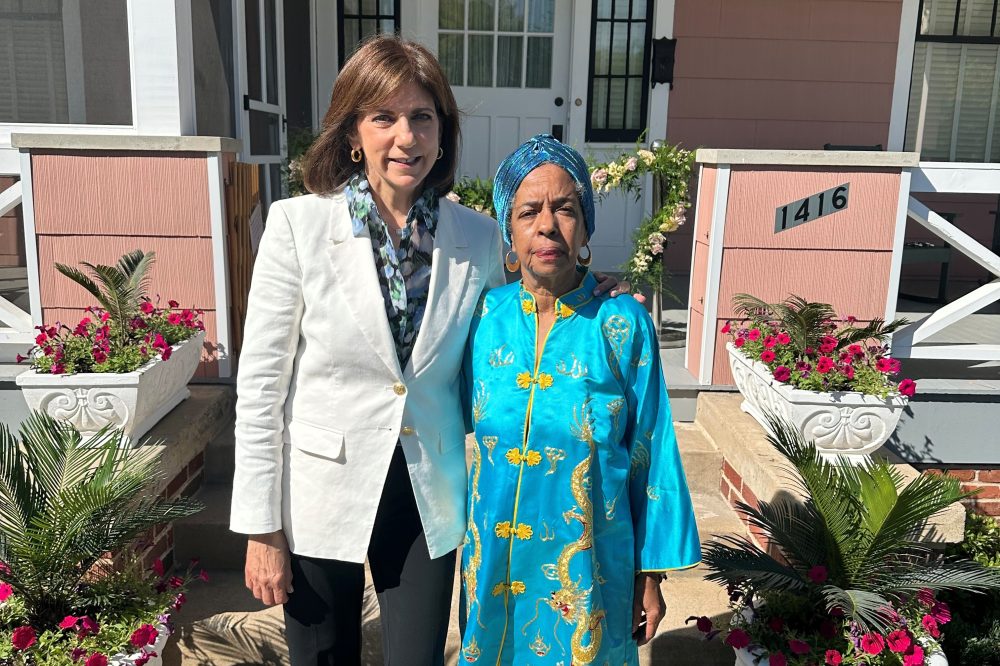
Hundreds of attendees gathered for the ceremonial ribbon cutting, applauding as Jawana Jackson and museum President and Chief Executive Patricia Mooradian entered through the front entrance of the 3,000-square-foot bungalow.
Jackson noted that Henry Ford, the automotive pioneer and industrialist, created Greenfield Village to chronicle America’s story. “This, the Jackson family home, is part of that story,” she stated.
The residence belonged to dentist Sullivan Jackson and his spouse, Richie Jean, and served as the location in Selma, Alabama, where King and fellow activists in 1965 planned three Selma-to-Montgomery demonstrations protesting Jim Crow legislation that blocked Black Americans from voting.
King was present in the residence when President Lyndon Johnson revealed legislation that would later become the Voting Rights Act of 1965.
The Jackson House’s contribution proved essential to the Civil Rights Movement. Jawana Jackson reached out to the museum in 2022 requesting they assume responsibility for the home’s conservation and historical legacy. The institution purchased the property in 2023 for an amount not disclosed publicly.
Mooradian described the residence as representing support for everyone and the “pursuit of justice and dignity and equality during one of the most defining chapters in our nation’s history.”
“We’re opening a doorway to history,” Mooradian stated. “A place where an ordinary family chose to risk their lives to do something extraordinary. A place where conviction was tested. A movement was sheltered and nourished in this home, and where parents led with courage for the sake of their little girl.”
During 2023, construction teams started dismantling the structure section by section. It was transported over 800 miles north to Dearborn, where workers meticulously rebuilt the house. Historical items, including the seat King occupied while viewing Johnson’s broadcast announcement, were also relocated north.
Additional period-appropriate items from 1960s households have been incorporated to enhance the display.
Constructed in 1912, the building previously hosted prominent Black intellectuals W.E.B. Du Bois and Booker T. Washington, who conducted “fireside chats” discussing education, faith, arts, community development and economic stability, as documented by the Alabama African American Civil Rights Heritage Sites Consortium.
Jawana Jackson, who was 4 years old in 1965 and calls King “Uncle Martin,” drew parallels between the home’s role in 1960s voting rights struggles and contemporary challenges to those same rights.
This past April, the U.S. Supreme Court eliminated a crucial component of legislation that had safeguarded against racial voting discrimination. Three years earlier, justices ruled 5-4 to remove the government’s strongest mechanism for preventing voting bias — the Voting Rights Act provision requiring 15 states with historical voting discrimination records, primarily in the South, to obtain federal permission before modifying their election procedures.
“We are still trying to protect democracy,” Jackson remarked Friday. “What Uncle Martin did in this house all those many years ago continues today.”