
Cuba’s President Miguel Díaz-Canel revealed Friday his administration’s plans for economic restructuring designed to draw foreign investment, increase involvement of Cuban expatriates in the nation’s economy, and redistribute certain governmental functions.
While speaking to state media, the president offered no specific details regarding the measures or when they would take effect, but emphasized it is now “time to change” and that the country “simply cannot continue on its current course.”
“Every opportunity in the midst of a crisis must be seized as a moment for takeoff, as a moment for growth,” Díaz-Canel said, according to a statement from the presidency that was republished by state-run media. “We have established a group of priorities to confront this situation,” he added without offering specifics.
The declaration follows ongoing difficulties for Cuban citizens dealing with fuel shortages resulting from the U.S. oil blockade and food scarcity. In January, the United States strengthened restrictions on Cuba’s oil supplies in an effort to pressure the island’s government to change its political and economic model, worsening challenges that have continued for approximately five years.
Díaz-Canel indicated officials are reviewing measures concerning foreign trade, exports, supply chains and logistics. Without providing details, he indicated the government might remove required state intermediaries in import and export activities and provide tariff advantages to those who import raw materials into the country for manufacturing.
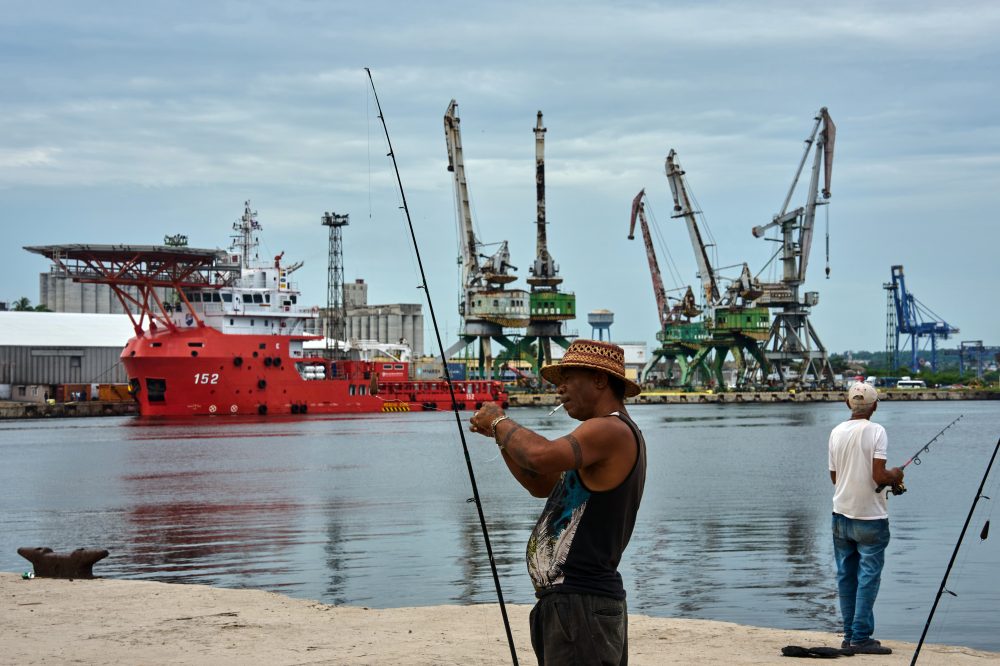
Earlier Friday, a vessel transporting almost 100 tons of food and essential supplies reached Cuba from Colombia as part of the humanitarian assistance that multiple countries have delivered to Cuba in recent months as a U.S. energy embargo continues.
The vessel, which left Cartagena in early June, entered the Havana Bay channel early in the morning displaying the Colombian flag and accompanied by a small Cuban auxiliary vessel, The Associated Press confirmed.
The Colombian Presidential Agency for International Cooperation reported that, on orders of President Gustavo Petro, the shipment contained nonperishable food, medicine, hospital supplies, electrical materials, solar panels and other items.
The vessel also transported seven tons of goods gathered by solidarity groups.
Last weekend, another ship transporting 1,700 tons of essential goods from Mexico and Belize reached Havana.
In late January, U.S. President Donald Trump threatened tariffs on any country that sells or provides oil to Cuba. The action has intensified a preexisting crisis caused by U.S. sanctions. Washington is urging the Cuban government to release political prisoners and advance toward political and economic liberalization in exchange for a lifting of sanctions.
Cuba generates only 40% of its oil, leaving the island semiparalyzed and subjected to severe power outages.