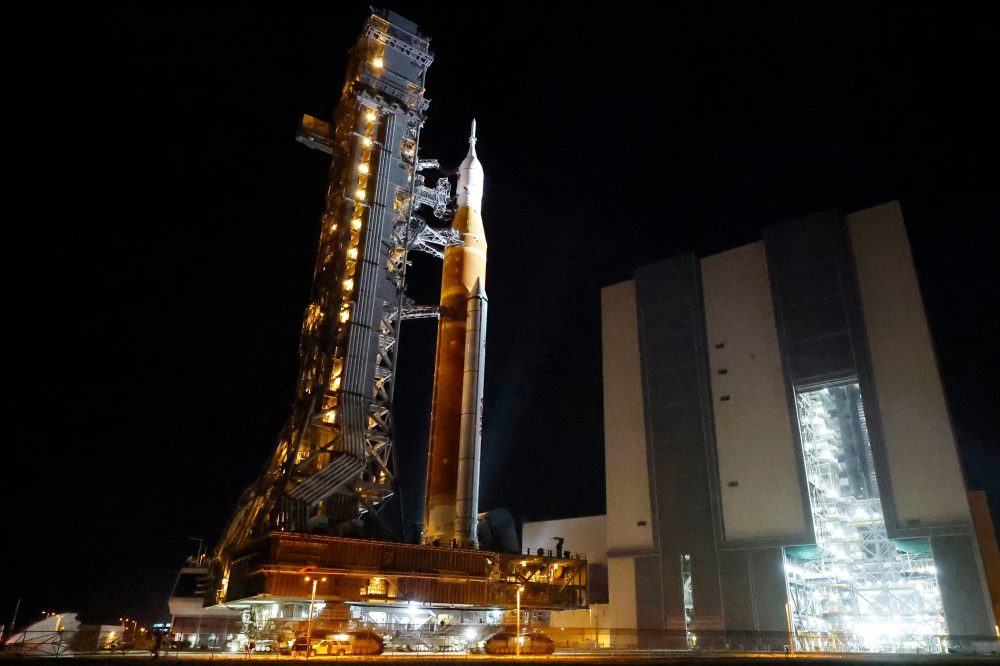

CAPE CANAVERAL, Fla. — NASA has once again transported its massive lunar rocket from its repair facility to the launch pad at Kennedy Space Center, marking the second such move this year as the agency prepares to send four astronauts on a journey around the moon next month.
The space agency is targeting April 1 as the earliest possible launch date for the Space Launch System rocket, provided recent repairs hold up and no additional problems arise. The four-person Artemis II crew entered quarantine protocols this week at their Houston training facility.
The towering 322-foot rocket started its careful 4-mile journey to the launch pad during overnight hours Friday, riding on the same massive crawler vehicle that has been in service since the Apollo missions of the 1960s. Officials anticipated the transport would require approximately 12 hours to complete, though strong winds caused several hours of additional delays.
The international crew, consisting of three American astronauts and one Canadian, will travel around the moon in their spacecraft before returning directly to Earth without landing. This mission was originally scheduled to occur months ago, but problems with hydrogen fuel systems and blocked helium lines resulted in a two-month postponement.
Repair crews were able to address the fuel leaks while the rocket remained at the launch pad, but the helium system problems required the specialized equipment available only in the Vehicle Assembly Building, necessitating the rocket’s return to the hangar in late February.
NASA has not launched astronauts to lunar orbit since the Apollo 17 mission concluded in 1972. The current Artemis program has set a goal of returning astronauts to the moon’s surface by 2028, with plans for a two-person landing mission.