Blog

  • Researchers Train for Ice Diving to Study Climate Change Impact on Arctic Life

    Researchers Train for Ice Diving to Study Climate Change Impact on Arctic Life

    KILPISJÄRVI, Finland — Bubbles broke the surface of an icy Finnish lake as researcher Daan Jacobs surfaced through a carved opening in the frozen water.

    His underwater journey had taken him 26 feet below, where Arctic sunlight penetrated the ice above and fish moved around rocky formations. Few people will ever witness this remote underwater world, particularly during winter when snow covers the ice and land temperatures plummet to minus 40 degrees.

    Jacobs, who works as a biodiversity consultant in the Netherlands, represents a growing group of specialized underwater researchers.

    He participated in the Polar Scientific Diving program in northern Finland this month, an initiative created by the Finnish Scientific Diving Academy to prepare future scientists and researchers for underwater exploration beneath polar ice to examine marine life below.

    “The view is beautiful,” Jacobs said, catching his breath after completing his 45-minute underwater expedition.

    Arctic regions are experiencing temperature increases four times greater than the global average. From altering worldwide weather systems to reducing polar bear populations that depend on sea ice for hunting, rising temperatures in the far north threaten the entire planet.

    In the southern polar region, rising global temperatures are causing ice sheet deterioration, contributing to rising sea levels and disrupting marine environments.

    Researchers must therefore examine what exists beneath the remaining polar ice in both regions and assess how environmental changes are impacting organisms that have historically thrived on the ocean floor with minimal sunlight exposure. However, conducting this research demands specialized underwater diving expertise combined with proper scientific training — credentials that authorities say fewer than several hundred individuals worldwide currently possess.

    The Finnish Scientific Diving Academy’s program seeks to prepare additional divers while demonstrating that the polar ice emergency demands expanded research efforts.

    “Because it is melting so fast, we need to have more people deployed there — more science to be done — to understand better what happens,” said Erik Wurz, a marine biologist and one of the class’s scientific diving instructors. “We have to do more and we need to be fast to save this unique ecosystem in the Arctic, but also the Antarctic.”

    While technology increasingly relies on artificial intelligence and automated systems, British Antarctic Survey marine biologist Simon Morley emphasized that human involvement remains essential for this work. Using nets across the ocean floor would damage the environment, and remote-controlled submarines or robotic devices typically can collect only single specimens at a time.

    “A diver can go down and pick up 12 urchins, put them in a bag and not affect the rest of the system,” said Morley, who isn’t part of the course.

    Throughout each 10-day training period, academy instructors work with twelve experienced divers on a frozen lake at the University of Helsinki’s Kilpisjärvi Biological Station. The program launched in 2024 and high interest has enabled organizers to offer two sessions annually.

    Students include marine and freshwater biologists, other scientists, skilled recreational divers, and documentary producers.

    Ruari Buijs, studying marine biology and oceanography at the University of Plymouth in England, hopes to eventually work in Antarctica researching large marine animals. He joined this month’s polar diving program to improve his job prospects after graduation.

    “I thought this would be a very good stepping stone toward that goal,” he said.

    Caroline Chen, a scientific diver and research assistant in Germany, described diving in polar regions as her aspiration. She expects her training experience will help her plan future research projects in such demanding environments.

    Students must master more than diving beneath ice nearly three feet thick into water temperatures barely above freezing. They also face harsh air temperatures and strong winds across Lake Kilpisjärvi.

    These conditions challenge the surface support crew, which must manage equipment to protect divers while avoiding frostbite themselves. They also train as emergency backup divers in case the primary diver cannot locate the ice opening to return to the surface after 45 minutes underwater.

    Once submerged, divers describe the experience as remarkable. During this month’s training, participants dove beneath ice approximately 2½ feet thick. Chen observed fish along the bottom and paused to watch sunlight filtering through the ice above, creating an effect similar to another Arctic spectacle.

    “It looks insane from the bottom up,” Chen said. “It changes all the time, like the Northern Lights.”

    Buijs noted that cold temperatures don’t impact covered body parts while diving. However, the mouth area remains exposed underwater.

    “I think the worst thing is like your lips feel very numb afterward and they like stick out a lot,” he said, laughing. “You kind of get Botox lips a little bit.”
  • UNICEF: 370,000+ Lebanese Children Forced from Homes, 121 Killed in Conflict

    UNICEF: 370,000+ Lebanese Children Forced from Homes, 121 Killed in Conflict

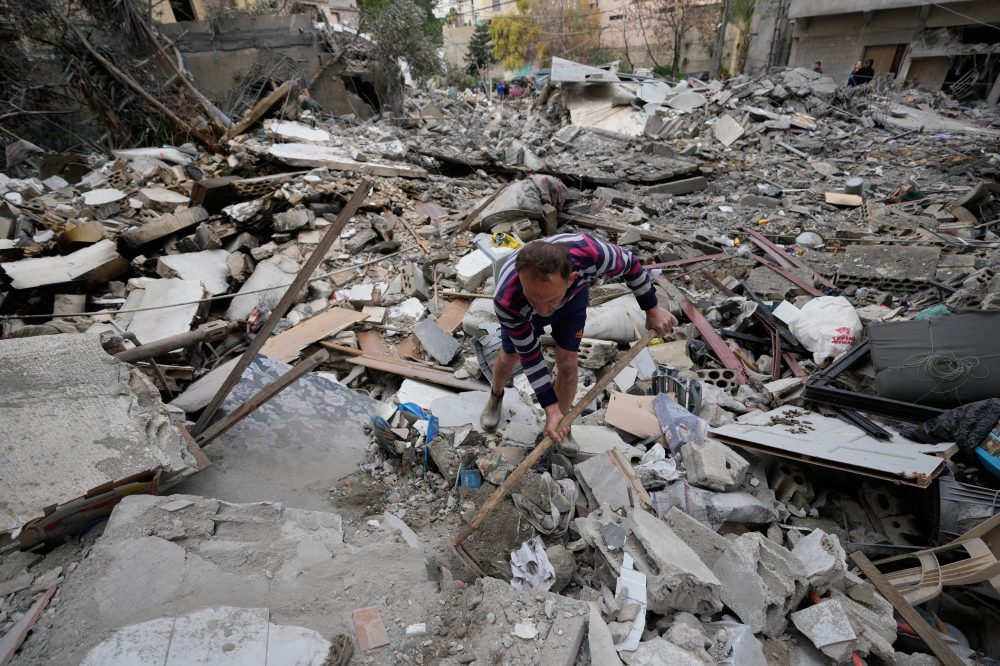
    The United Nations children’s agency announced Friday that Israel’s military campaign against Hezbollah has resulted in the displacement of more than 370,000 Lebanese children from their homes.

    Marcoluigi Corsi, who serves as UNICEF’s representative in Lebanon, revealed the devastating toll on young people caught in the crossfire. According to his report, at least 121 children have lost their lives while 399 others have sustained injuries during the ongoing conflict.

    The figures underscore the humanitarian crisis affecting Lebanon’s youngest and most vulnerable population as military operations continue in the region.

  • Investors Pour Billions Into Stocks as Middle East Tensions Ease

    Investors Pour Billions Into Stocks as Middle East Tensions Ease

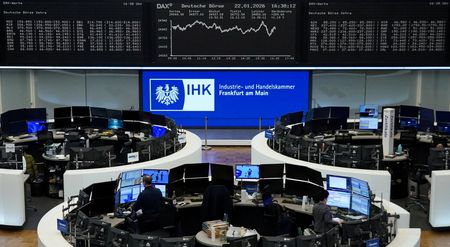
    International stock funds received their largest weekly investment in over two months during the week ending March 25, as President Donald Trump postponed planned military strikes against Iran’s energy infrastructure, sparking optimism about reduced Middle East tensions and alleviating concerns over potential oil market disruptions.

    According to LSEG Lipper data, investors moved a net $37.77 billion into worldwide equity funds, marking the biggest weekly investment since February 18 and breaking a two-week pattern of selling activity.

    U.S. stock funds dominated the inflows, receiving $37.24 billion in net investments as a three-week selling period came to an end. Asian equity funds also performed well with $5.23 billion in weekly inflows, while European funds experienced outflows totaling $7.52 billion.

    Despite the positive investment flows, international stock markets dropped approximately 1.6% on Thursday following Iran’s rejection of any diplomatic discussions with the United States, raising questions about the likelihood of a rapid ceasefire in the Middle East conflict that has continued for nearly a month.

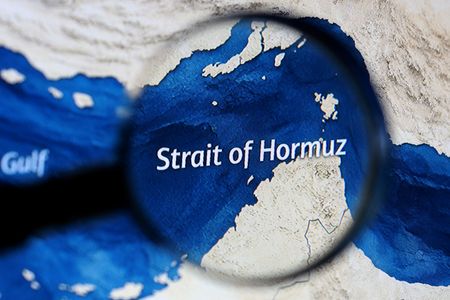
    Mark Haefele, chief investment officer at UBS Global Wealth Management, cautioned investors against expecting energy shipments through the Strait of Hormuz to resume quickly, although he doesn’t anticipate major or prolonged economic harm under most scenarios.

    “This means long-term investors with well-diversified portfolios should stay invested,” UBS’s Haefele said.

    Interest in bond-related investments dropped to its lowest point in almost three months, with only $2.53 billion flowing into international bond funds.

    High-yield and euro-denominated bond fund categories experienced substantial withdrawals of $4.75 billion and $2.11 billion respectively, while short-term bond funds attracted a record-breaking $11.1 billion in investments.

    Money market funds saw approximately $64.78 billion in withdrawals, ending an eight-week streak of net investments.

    Gold and precious metals funds continued their decline for a fourth consecutive week, losing $3.14 billion in investments.

    Emerging market investments faced selling pressure for the third straight week, with $2.78 billion pulled from stock funds and $1.73 billion withdrawn from bond funds, according to data covering 28,796 combined funds.

  • Austria to Require Minimum Age of 14 for Social Media Platforms

    Austria to Require Minimum Age of 14 for Social Media Platforms

    VIENNA, March 27 – The Austrian government’s three-party coalition announced Friday its intention to establish a mandatory minimum age requirement of 14 years old for accessing social media platforms.

    Alexander Proell, the conservative junior minister overseeing digitization, revealed the proposal during a joint news conference featuring cabinet representatives from all three governing parties. “Austria is introducing a compulsory minimum age of 14 for the use of social media platforms,” Proell stated, noting that officials expect to complete draft legislation by June.

    The announcement represents a significant step by the conservative-led government to regulate young people’s access to digital platforms.

  • Russia Criticizes U.S. for Linking Economic Ties to Ukraine War Resolution

    Russia Criticizes U.S. for Linking Economic Ties to Ukraine War Resolution

    MOSCOW – Russian government officials criticized the United States on Friday for requiring a resolution to the Ukraine conflict before pursuing economic partnerships between the two nations.

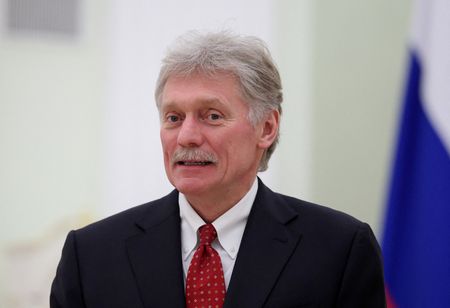
    Dmitry Peskov, who serves as the Kremlin’s chief spokesperson, argued that linking business cooperation to the war settlement is counterproductive for both countries.

    “We are wasting time, and American companies, just like our own, are missing out on the profits they could already be making,” Peskov stated during Friday’s briefing.

    The Russian official maintained that discussions about potential collaboration remain under consideration, emphasizing that Moscow and Washington “have many opportunities for mutually beneficial cooperation” despite current diplomatic tensions.

  • Families of Jailed Tunisian Opposition Leaders Become New Voice for Democracy

    Families of Jailed Tunisian Opposition Leaders Become New Voice for Democracy

    TUNIS – Family members of imprisoned Tunisian opposition leaders have emerged as the primary advocates for democratic reform, taking up the fight for their detained relatives in what human rights organizations describe as President Kais Saied’s systematic suppression of political dissent.

    Over the past three years, Tunisia’s major opposition party leaders have been incarcerated alongside numerous politicians, media figures, business leaders and activists. Authorities have charged them with plotting against national security, financial crimes, and corruption – accusations the defendants claim are completely false.

    Youssef Chaouachi, a 35-year-old engineer, transformed into an activist following his father’s arrest three years ago. His father Ghazi Chaouachi, a Social Democratic leader, received a 20-year prison sentence in 2025 for allegedly conspiring to remove Saied from power, charges he vehemently rejects.

    “We are now the ones organizing protests, speaking to the media, and putting ourselves on the front lines. We didn’t choose this role,” Youssef Chaouachi explained while holding his father’s photograph during a demonstration in Tunis last month.

    The widespread arrests and legal proceedings have silenced nearly all opposition voices in a country that was once celebrated as the Arab Spring’s greatest democratic achievement, according to domestic and international human rights organizations.

    “It feels like the revolution never happened,” Chaouachi stated.

    Tunisia’s government media representatives did not respond to requests for comment regarding allegations of political persecution and false charges. During recent ministerial meetings at the end of 2025, the president has repeatedly declared he is “in the process of cleansing the country of the corrupt and traitors.”

    In 2022, President Saied dismantled Tunisia’s Supreme Judicial Council and removed dozens of judges, citing corruption and obstruction of justice. Opposition leaders argue this action destroyed judicial independence.

    Justice Minister Leila Jeffel addressed parliament last December, stating that courts enforce the law, the ministry upholds justice principles, and will not harm innocent people. She emphasized that the judiciary operates independently and judges need not fear reprisals.

    Ministry officials were unavailable for additional comment.

    The suppression of political opposition motivated four family members of different detainees interviewed by Reuters to expand beyond simple release campaigns. They now organize demonstrations, establish advocacy organizations, and conduct media interviews demanding political reform and the restoration of civil rights.

    Currently in Tunisia, most political organizations are either dormant or have leadership in prison.

    Family members of detainees have become increasingly prominent in street demonstrations and sit-ins outside courthouses and correctional facilities, joining other civil society activists.

    While there’s minimal indication they can achieve their demanded changes, they appear to be gaining public support, evidenced by growing participation in at least three major demonstrations in recent months, as observed by Reuters journalists.

    These family-led efforts coincide with Saied’s administration confronting labor strikes, public anger over lost civil freedoms, economic difficulties, and environmental deterioration, according to activists.

    Saied disbanded parliament in 2021 and began governing through executive orders to eliminate what he termed widespread corruption and poor governance. A new parliament was elected in 2022 with only 8% voter participation.

    “Tunisia has become a huge prison,” Youssef Chaouachi shouted at a February protest, while dozens of police officers watched nearby.

    His father is among various imprisoned figures including moderate Islamist Rached Ghannouchi, Abir Moussi (a supporter of former President Zine El Abidine Ben Ali), and veteran leftist politician Nejib Chebbi along with his brother Issam.

    Defense attorneys claim the cases are fabricated and politically driven, designed to eliminate opposition, arguing no concrete evidence exists to establish guilt.

    Reuters did not independently examine the evidence.

    Government officials have maintained the charges are legitimate.

    The son of prominent attorney Ahmed Souab organized protests attracting thousands before Souab’s release following a successful appeal, while the son of detained politician Chaima Issa regularly demonstrates outside prisons.

    Faiza Rahem, wife of imprisoned opposition figure Issam Chebbi, said the absence of opposition leaders motivated her involvement.

    “We were not politically active, but injustice forced us to be,” she explained, adding it has brought together families of the imprisoned from various political backgrounds.

    She described how the imprisonments now control family routines. When relatives plan gatherings or trips, they must coordinate around prison visiting hours and meal preparations.

    The Chaouachi family’s suburban Tunis residence feels unusually quiet. Dining table seats that once hosted spirited discussions remained vacant during Ramadan meals. In the kitchen, Ghazi’s wife Sofia Ben Agla prepared a week’s supply of food for her husband’s prison visits.

    Some relatives have faced legal action themselves.

    Ghazi Chaouachi’s son Elyes, Youssef’s brother, now lives in exile and faces over 70 years imprisonment after convictions on multiple charges including terrorism, defamation for criticizing Saied and judges on Facebook, and inciting judicial violence, which he denies.

    “I could have stayed silent and lived a normal life — visiting my father during holidays. But I chose another path. I chose to be a voice for those who have none,” he told Reuters from France, where he currently resides.

    Last year, during a meeting with the prime minister at the presidential palace in Carthage, the president stated that Tunisia guarantees freedoms.

  • Your Delmarva Forecast: Friday, March 27, 2026

    Your Delmarva Forecast: Friday, March 27, 2026

    Good morning, Delmarva! We’re starting this Friday with steady rain across the peninsula, and it’s going to be a soggy day ahead. Temperatures will reach 61 degrees this morning, but don’t let that fool you – we’re in for quite a temperature drop as the day progresses, falling to around 50 degrees by afternoon. The rain will be our main story today with a 90% chance of precipitation and northwest winds picking up between 5-15 mph. We could see between a quarter to half inch of new rainfall, so keep those umbrellas handy and allow extra time for your commute. Tonight brings relief as the rain tapers off, though there’s still a slight chance of light showers early on. Temperatures will plummet to a chilly 32 degrees – our first freeze potential in a while! The good news? Saturday looks beautiful! Sunshine returns with a pleasant high of 45 degrees, perfect for getting outside after today’s washout. Saturday night stays mostly clear with lows around 29. Stay dry today, Delmarva, and enjoy that sunshine tomorrow! I’m your meteorologist reminding you to weather every day well.
  • Secretary of State Rubio Seeks European Backing for Iran Conflict at G7 Summit

    Secretary of State Rubio Seeks European Backing for Iran Conflict at G7 Summit

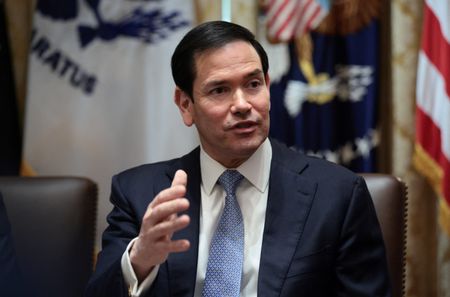
    Secretary of State Marco Rubio is traveling to France today for a crucial G7 summit, where he plans to seek backing from reluctant European allies for the Trump administration’s ongoing military conflict with Iran.

    The high-stakes meeting brings together officials from the globe’s most prosperous democratic nations as the U.S. works to build an international coalition. Rubio faces the challenge of convincing partners who have shown hesitation about supporting America’s military engagement in the region.

    The diplomatic push comes as tensions continue to escalate in the Middle East, with the administration looking to strengthen its position through allied support at this critical juncture.

  • Weekly News Quiz Tests Knowledge of Pop Culture and Current Events

    A weekly trivia challenge is putting readers’ knowledge to the test across a wide range of subjects, from beloved fantasy novels to cutting-edge technology and travel updates.

    The quiz features questions spanning multiple categories, including references to J.R.R. Tolkien’s classic “Lord of the Rings” series, developments in artificial intelligence, notable monuments in the nation’s capital, and current airport security processing times.

    Quiz participants can gauge their awareness of both pop culture phenomena and contemporary news events through this diverse set of questions designed to challenge even well-informed readers.

  • UN Investigation Finds Over 1,700 Dead in Syria Violence, War Crimes Suspected

    UN Investigation Finds Over 1,700 Dead in Syria Violence, War Crimes Suspected

    GENEVA – A United Nations investigation released Friday documented devastating violence in southern Syria that claimed over 1,700 lives and displaced nearly 200,000 people during one week last July, with investigators saying multiple groups may have committed war crimes.

    The comprehensive 85-page investigation by the Independent International Commission of Inquiry on the Syrian Arab Republic determined that at least 1,707 people died in Suweida Governorate. Most victims were civilians from the Druze religious minority, along with members of the Bedouin population and at least 225 government workers.

    According to the investigation, approximately 155,000 people continue to live as displaced persons, creating an ongoing humanitarian crisis that persists months after a tenuous ceasefire took effect.

    A separate investigation commissioned by the Syrian government and released March 17 recorded 1,760 deaths and 2,188 injuries “from all sides.” That inquiry also determined there were “many human rights violations” by various parties, including local armed groups and individuals connected to ISIS, as well as government and security force members, many of whom have been detained.

    The government-appointed committee, established soon after the violence occurred, stated its work was based on collecting evidence and interviewing witnesses, with results forwarded to the Justice Ministry.

    The UN Commission determined that violations occurred across all major conflict participants. Many of these violations could qualify as war crimes, and some instances might rise to the level of crimes against humanity, investigators concluded.

    According to the report, tribal fighters who joined government forces during initial operations functioned under direct government oversight, making the state responsible for their conduct, while other fighters were classified as active combatants.

    The bloodshed occurred in three distinct waves from July 14 through July 19, 2025, approximately seven months following the rebel overthrow of Bashar al-Assad’s government, with each period characterized by civilian attacks and extensive abuses. During the opening phase, government troops and allied fighters conducted executions, unlawful detentions, torture, sexual assault and theft, mainly targeting Druze residents, the investigation found.

    The second wave involved Druze armed groups striking back against Bedouin populations, carrying out murders, torture, forced relocations and attacks on civilian and religious locations, resulting in the displacement of virtually all Bedouins from territories they controlled.

    The final phase witnessed thousands of tribal fighters organizing and moving into Suweida, where they conducted extensive looting, killings and home burning across dozens of villages, with nearly every structure in 35 villages reportedly damaged or completely destroyed.

    Investigators stated that unlawful executions were commonplace, with civilians – including women, children, elderly and disabled individuals – targeted during home invasions and in public areas, frequently accompanied by religious slurs.

    The commission also recorded systematic torture, kidnappings, sexual and gender-based violence, attacks on religious buildings and deliberate destruction of civilian property, much of which perpetrators filmed and shared on social media platforms.

    Although major fighting ended following the July 19 ceasefire, intermittent conflicts and violations have persisted, and investigators cautioned that without accountability measures and political solutions, conditions remain unstable.

    The commission emphasized that addressing violations, delivering justice for victims and restoring trust among communities would be crucial to preventing future violence.

  • Ukrainian President Signs Defense Deal with Saudi Arabia During Middle East Visit

    Ukrainian President Signs Defense Deal with Saudi Arabia During Middle East Visit

    KYIV – Ukrainian President Volodymyr Zelenskyy announced Friday that his country has entered into a defense cooperation pact with Saudi Arabia, establishing a framework for upcoming military contracts, technology sharing, and investment opportunities.

    The Ukrainian leader made the announcement while on an official visit to the Saudi kingdom, noting that the pact was finalized before his scheduled meeting with Saudi Crown Prince Mohammed bin Salman.

    Speaking through his Telegram social media account, Zelenskyy expressed Ukraine’s willingness to collaborate with the Middle Eastern nation. “We are ready to share our expertise and systems with Saudi Arabia and to work together to strengthen the protection of lives,” the president stated.

    The agreement marks another step in Ukraine’s efforts to build international partnerships amid ongoing global tensions.

  • Volkswagen-Rivian Software Deal Hits Major Milestone, Unlocks Funding

    Volkswagen-Rivian Software Deal Hits Major Milestone, Unlocks Funding

    A major software collaboration between Volkswagen and electric vehicle manufacturer Rivian has achieved a significant development benchmark, moving the California-based company closer to receiving its next round of investment funding.

    The German automaker announced Friday that winter testing of initial vehicles equipped with the new software technology has been completed successfully.

    “We’re accelerating towards the future,” stated CEO Oliver Blume.

    This collaborative effort focuses on creating a comprehensive software system that will support vehicle updates throughout Volkswagen’s main brand lineup, including its American Scout pickup truck division and luxury Audi subsidiary.

    Blume turned to Rivian for external expertise after Volkswagen’s internal software division, Cariad, struggled with ongoing technical challenges for several years.

    The European automotive giant faces mounting pressure to compete effectively against technology-focused competitors such as Tesla and Chinese manufacturer BYD.

    Volkswagen committed to investing $5.8 billion in this partnership through 2027, according to agreements finalized in November 2024.

    The investment structure includes a $1 billion payment scheduled for this year, contingent upon achieving specific “technological milestones.”

    Company representatives declined to provide additional details about the financial arrangement when contacted for comment.

  • China Opens Trade Investigations in Response to US Actions

    China Opens Trade Investigations in Response to US Actions

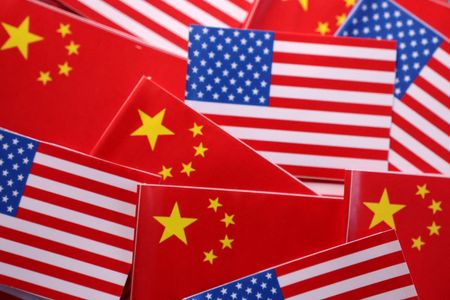
    BEIJING – China’s commerce ministry announced Friday it has opened two investigations examining US trade practices that restrict Chinese goods from entering American markets, choosing to pursue formal inquiries rather than immediate retaliatory action against recent US measures.

    The announcement comes as a trade ceasefire between the two economic powers remains intact following the October meeting between US President Donald Trump and Chinese President Xi Jinping. Trump announced earlier this week plans to visit Beijing in mid-May as part of Washington’s broader strategy to rebuild relationships across the Asia-Pacific region.

    According to the ministry’s statement, both Chinese investigations will wrap up within six months, though officials indicated the timeline could be extended if needed. The probes directly respond to two US Section 301 investigations targeting China, with the ministry characterizing their actions as reciprocal measures.

    Chinese officials stated they will implement appropriate actions to protect their national interests based on what the investigations uncover.

    The US initiated two trade inquiries earlier this month, examining excessive industrial capacity among 16 trading partners, including China, alongside concerns about forced labor practices. During bilateral trade discussions in Paris, Chinese representatives voiced objections to these investigations.

    Chinese Commerce Minister Wang Wentao reiterated these concerns Thursday while meeting with US Trade Representative Jamieson Greer during a World Trade Organization gathering in Cameroon. Despite expressing reservations, Wang indicated China’s openness to enhancing economic and trade partnerships between the nations.

  • Ovechkin’s Hat Trick Powers Capitals’ Comeback Win Over Utah

    Ovechkin’s Hat Trick Powers Capitals’ Comeback Win Over Utah

    Washington’s Alex Ovechkin delivered his 34th career three-goal performance Thursday night, leading the Capitals in a dramatic comeback from a two-goal deficit to defeat Utah 7-4 in Salt Lake City.

    The superstar forward now has 29 goals this season, marking his second hat trick of the campaign, while extending his NHL-record career total to 926 goals.

    Ivan Miroshnichenko notched his first two goals of the season, while Anthony Beauvillier and Rasmus Sandin each contributed one goal and one assist for Washington. Goaltender Logan Thompson turned away 36 shots in the victory.

    For Utah, Dylan Guenther found the net twice, and both Mikhail Sergachev and Clayton Keller recorded three assists each. Goalie Vitek Vanecek surrendered six goals on 23 shots before getting pulled midway through the final period, with Karel Vejmelka making one save in relief.

    Ducks 3, Flames 2 (OT)

    Mikael Granlund capped off his three-goal night with a dramatic overtime winner in the final seconds, lifting visiting Anaheim past Calgary.

    John Carlson recorded two assists and Ville Husso made 23 saves for the Ducks, who have now won four consecutive games. Taking advantage of Calgary’s second too-many-men penalty of the contest, Anaheim enjoyed a power play late in overtime, with Granlund finishing a one-timer from the high slot just before time expired.

    Blake Coleman and Matvei Gridin scored for Calgary, ending their four-game winning streak. Olli Maatta contributed two assists, while Devin Cooley made 30 saves.

    Wild 3, Panthers 2

    Marcus Foligno scored in his return from injury and Joel Eriksson Ek netted the winning goal with just five seconds remaining as Minnesota beat Florida in Sunrise, Fla.

    Ryan Hartman also scored for the Wild, with Jesper Wallstedt making 18 saves. The game held special significance for Foligno, who played alongside his brother Nick for the first time since they were in sixth and ninth grades respectively. Nick Foligno joined Minnesota from Chicago earlier this month.

    Matthew Tkachuk recorded a goal and assist while Aaron Ekblad also scored for Florida, which received 47 saves from backup goaltender Daniil Tarasov. The Panthers have dropped four of their last six contests (2-4-0).

    Canadiens 2, Blue Jackets 1

    Zachary Bolduc scored the decisive goal early in the third period and assisted on Montreal’s other tally in a victory over visiting Columbus.

    Jayden Struble also found the net for Montreal, which has won three straight games. Jakub Dobes stopped 25 shots.

    Damon Severson scored while Jet Greaves made 18 saves for Columbus, which has lost two of its last three contests.

    Islanders 2, Stars 1

    New York secured crucial points in their playoff chase with a victory over Dallas in Elmont, N.Y.

    Bo Horvat reached the 30-goal milestone for the fourth time in his career, and Calum Ritchie also scored. Matthew Schaefer assisted on both goals. Ilya Sorokin came within 2:59 of a shutout, making 26 saves. Combined with Pittsburgh’s victory over Ottawa, the result moved the Islanders back into the final Eastern Conference wild-card position.

    Matt Duchene scored for Dallas, which suffered its fourth consecutive loss, marking their longest slide since a 0-3-3 stretch from late December to early January. Jake Oettinger, who was pulled after one period in his previous start against New Jersey, stopped 23 shots.

    Kraken 4, Lightning 3 (OT)

    Brandon Montour scored twice, including the overtime winner at 2:47, as Seattle prevailed at Tampa Bay.

    Kaapo Kakko and Bobby McCann each recorded a goal and assist for the Kraken, who ended a four-game winless streak (0-3-1). Philipp Grubauer made 30 saves for Seattle.

    Jake Guentzel had a goal and assist, while Anthony Cirelli and Corey Perry also scored for Tampa Bay, which extended its point streak to six games (4-0-2). Charle-Edouard D’Astous added two assists. Andrei Vasilevskiy stopped 15 of 19 shots.

    Penguins 4, Senators 3 (SO)

    Egor Chinakhov and Ben Kindel scored in the shootout to give Pittsburgh a victory over host Ottawa.

    Pittsburgh captain Sidney Crosby departed early in the second period with a lower-body injury and did not return. Rickard Rakell tallied two goals and an assist while Erik Karlsson contributed one goal and two assists. Stuart Skinner made 26 saves through regulation and overtime, then stopped two of Ottawa’s three shootout attempts.

    Drake Batherson scored twice and netted the shootout goal while Nick Cousins added a goal for Ottawa, ending their four-game winning streak. Tim Stutzle recorded two assists. Linus Ullmark made 35 saves through regulation and overtime but stopped only one of three shootout attempts.

    Additional Results:

    Philadelphia dominated visiting Chicago 5-1, with Christian Dvorak, Noah Cates and Alex Bump each recording a goal and assist. New Jersey defeated Nashville 4-2 behind Nico Hischier’s second deflected goal of the night. Colorado beat Winnipeg 3-2 as Nathan MacKinnon scored twice in the third period. Edmonton topped Vegas 4-3 in overtime, with Connor McDavid becoming the third-fastest player to reach 800 career assists. Los Angeles shut out Vancouver 4-0 behind Darcy Kuemper’s 19 saves, and St. Louis edged San Jose 2-1 in overtime.

  • Major British Bank Data Breach Affects Nearly 450,000 Customers

    Major British Bank Data Breach Affects Nearly 450,000 Customers

    A major technology failure at Lloyds Banking Group compromised the personal information of nearly 450,000 customers during a software update gone wrong earlier this month, according to Britain’s Treasury Committee announcement on Friday.

    The banking system malfunction allowed customers to access other users’ private financial information, including account details and national insurance numbers, when they logged into their banking applications on March 12.

    According to documentation released by the Treasury Committee, the incident affected customers across three banking brands – Lloyds, Halifax, and Bank of Scotland. More than 114,000 users actually clicked on transactions that displayed other people’s confidential banking data.

    The financial institution has distributed 139,000 pounds in payments to 3,625 affected customers to address the distress and inconvenience caused by the privacy breach. Bank officials report that no customers have experienced actual financial losses as a result of the incident.

    In correspondence published by the committee, Lloyds explained that a defective software component during a routine overnight system update triggered the security breach. The incident underscores growing concerns about the security risks facing Britain’s increasingly digital banking sector, as financial institutions continue reducing physical branch locations while pushing customers toward online services.

    Parliament’s Treasury Committee had demanded a detailed explanation from Lloyds regarding the circumstances that led to the March 12 system failure. The banking group must now submit progress reports to the committee within one month and again after six months.

  • Brewers Set MLB Record with 20 Strikeouts in Season Opener Against White Sox

    Brewers Set MLB Record with 20 Strikeouts in Season Opener Against White Sox

    Jacob Misiorowski delivered a dominant performance on the mound, recording 11 strikeouts across five innings to power the Milwaukee Brewers to a commanding 14-2 victory over the Chicago White Sox in Thursday’s season opener for both clubs.

    The hard-throwing Misiorowski (1-0) recovered quickly after surrendering a leadoff home run to Chase Meidroth, limiting Chicago to just one additional hit – a fourth-inning single – while issuing three walks over his 94-pitch appearance.

    Misiorowski’s 11-strikeout effort established a new Opening Day franchise record for Milwaukee, breaking the previous mark of eight strikeouts that had been achieved three times, with Freddy Peralta being the most recent to accomplish the feat last season. The Brewers’ pitching staff collectively established a franchise milestone with 20 strikeouts, matching the major league standard for a nine-inning contest.

    Offensively, Sal Frelick and Jake Bauers connected for home runs, with Bauers and William Contreras each contributing three RBIs. Six additional Brewers players recorded at least one RBI in the offensive explosion. For Chicago, Munetaka Murakami celebrated his major league debut with a home run.

    Dodgers 8, Diamondbacks 2

    Los Angeles continued their championship celebration with a decisive victory over visiting Arizona, as Andy Pages launched a three-run homer and Yoshinobu Yamamoto delivered six solid innings on the mound.

    Will Smith added a home run while driving in three runs for the Dodgers, who honored their back-to-back World Series championships by displaying both the 2024 and 2025 trophies on the field during pre-game ceremonies. Yamamoto (1-0) struck out six batters while surrendering two runs on five hits without issuing a walk.

    Arizona’s Geraldo Perdomo contributed two hits, including a two-run homer. Diamondbacks starter Zac Gallen struggled through four-plus innings, allowing four runs on five hits.

    Guardians 6, Mariners 4

    Rookie Chase DeLauter made an immediate impact in his first regular-season appearance, belting two home runs to lead Cleveland past Seattle.

    Jose Ramirez delivered the decisive blow with a two-out, two-run double in the seventh inning to break the tie for the Guardians. Relief pitcher Connor Brogdon (1-0) earned the victory, while Cade Smith secured the save with a perfect ninth inning.

    Seattle’s Dominic Canzone matched DeLauter with two solo homers, and Brendan Donovan and Luke Raley each added solo shots for the Mariners.

    Tigers 8, Padres 2

    Kevin McGonigle made baseball history by doubling in his first two major league at-bats and finished with a 4-for-5 performance as Detroit defeated San Diego on the road.

    Dillon Dingler homered and knocked in three runs for the Tigers. Starting pitcher Tarik Skubal (1-0) was masterful over six innings, allowing three hits and one unearned run while walking none and striking out six.

    Ramon Laureano provided San Diego’s lone bright spot with a solo homer. Padres starter Nick Pivetta (0-1) lasted only three innings, surrendering seven hits and six runs.

    Phillies 5, Rangers 3

    Cristopher Sanchez dominated with 10 strikeouts over six shutout innings, while Kyle Schwarber and Alec Bohm each homered to propel Philadelphia past Texas at home.

    Fresh off signing a six-year contract extension on Sunday, Sanchez (1-0) capped his outstanding outing by striking out three consecutive batters in the sixth inning. He scattered three hits without issuing a walk.

    Texas’s Jake Burger collected three hits, including a two-run homer in the ninth inning. Rangers starter Nathan Eovaldi (0-1) was charged with five runs on eight hits in 4 2/3 innings.

    Red Sox 3, Reds 0

    Garrett Crochet tossed six scoreless innings and Ceddanne Rafaela broke a scoreless deadlock in the seventh with an RBI single to guide Boston past Cincinnati on the road.

    Roman Anthony collected three hits, while Trevor Story and Jarren Duran added insurance RBI singles in the ninth for the Red Sox. Crochet (1-0) allowed three hits, walked two and struck out eight, with Aroldis Chapman throwing a perfect ninth inning for the save.

    Cincinnati’s Sal Stewart also recorded three hits, becoming the first Reds rookie since 1958 to collect three hits on Opening Day. Andrew Abbott matched Crochet’s effort with six shutout innings.

    Orioles 2, Twins 1

    Trevor Rogers threw seven scoreless innings and Baltimore scored late to defeat visiting Minnesota, giving Craig Albernaz a victory in his major league managerial debut.

    Rogers held the Twins to three hits and four walks while striking out five. Adley Rutschman contributed two hits, including a double. In a decisive two-run seventh inning, Colton Cowser lifted a sacrifice fly and Blaze Alexander drove in a run in his first game wearing an Orioles uniform.

    Minnesota managed only three singles through seven innings and lost Derek Shelton’s first game as the team’s manager. In the eighth, Byron Buxton tripled and scored on Luke Keaschall’s sacrifice fly. Twins starter Joe Ryan allowed one hit and two walks while striking out seven in 5 1/3 shutout innings.

    Mets 11, Pirates 7

    Brett Baty’s three-run triple highlighted a five-run first inning explosion, and New York chased defending National League Cy Young Award winner Paul Skenes after just two outs en route to a home victory over Pittsburgh.

    Rookie Carson Benge and Francisco Alvarez connected for back-to-back homers in the sixth for the Mets, who improved their major league-best Opening Day record to 42-23. Pittsburgh’s Brandon Lowe launched two home runs in the losing effort.

    Skenes (0-1) endured the shortest outing of his career, allowing five runs and four hits. Mets starter Freddy Peralta (1-0) permitted four runs while striking out seven over five innings.

    Nationals 10, Cubs 4

    Joey Wiemer, Jacob Young and Brady House all homered, and Washington’s bullpen contributed 5 1/3 innings of one-run relief to power the visiting Nationals past Chicago.

    Wiemer went 3-for-3 to ignite an 11-hit offensive attack in his team debut, which also marked the first game for Nationals manager Blake Butera. House recorded two hits and two RBIs while CJ Abrams and Young each drove in two runs.

    Chicago’s Michael Busch collected three hits and Pete Crow-Armstrong added two, but the Cubs struggled with runners in scoring position, going 4-for-19 while leaving nine men on base.

    Angels 3, Astros 0

    Mike Trout homered, walked three times and stole a base, while Jose Soriano struck out seven over six shutout innings to lead visiting Los Angeles past Houston.

    The home run was the 405th of Trout’s career, as the three-time American League MVP made his club-record 14th Opening Day start in center field. Los Angeles captured their first road Opening Day victory since April 1, 2013, at Cincinnati in Kurt Suzuki’s major league managerial debut.

    Nolan Schanuel also went deep and Jordan Romano pitched a scoreless ninth to earn a save. Houston’s AJ Blubaugh (0-1) surrendered one run on two hits over 2 1/3 innings while striking out three. Astros starter Hunter Brown scattered four singles and struck out nine over 4 2/3 shutout innings.

    Cardinals 9, Rays 7

    Alec Burleson capped an eight-run sixth inning with a two-run homer to help St. Louis rally for a victory against visiting Tampa Bay.

    Burleson’s blast came after the Rays had scored six runs in the top half of the sixth to take a 7-1 lead. Burleson finished with three hits, scored twice and drove in two. Nathan Church contributed three hits, drove in two and robbed a home run, while JJ Wetherholt homered in his major league debut.

    Tampa Bay’s Jonathan Aranda homered and singled. Yandy Diaz, Ben Williamson and Nick Fortes each collected three hits and scored one run, while Jonny DeLuca added two hits and two RBIs.

  • Trump Extends Iran Deadline as Senate Passes Partial DHS Funding

    Trump Extends Iran Deadline as Senate Passes Partial DHS Funding

    The White House announced that President Trump has extended the timeline for Iran to restore access to the Strait of Hormuz, the critical shipping corridor that handles a significant portion of global oil transport.

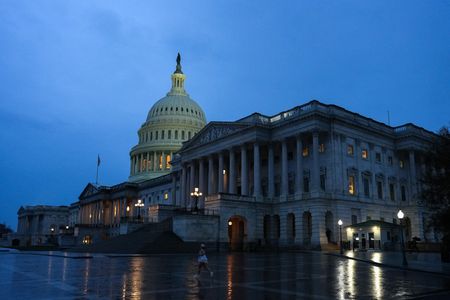
    In overnight legislative action on Capitol Hill, senators approved a funding package that covers most Department of Homeland Security operations while notably excluding Immigration and Customs Enforcement from the budget allocation.

    The ongoing tensions with Iran are creating divisions within the President’s political base, particularly evident at this year’s Conservative Political Action Conference where attendees are grappling with questions about military engagement in the Middle East.

  • Trump Announces TSA Worker Pay Plan Amid Shutdown Travel Disruptions

    Trump Announces TSA Worker Pay Plan Amid Shutdown Travel Disruptions

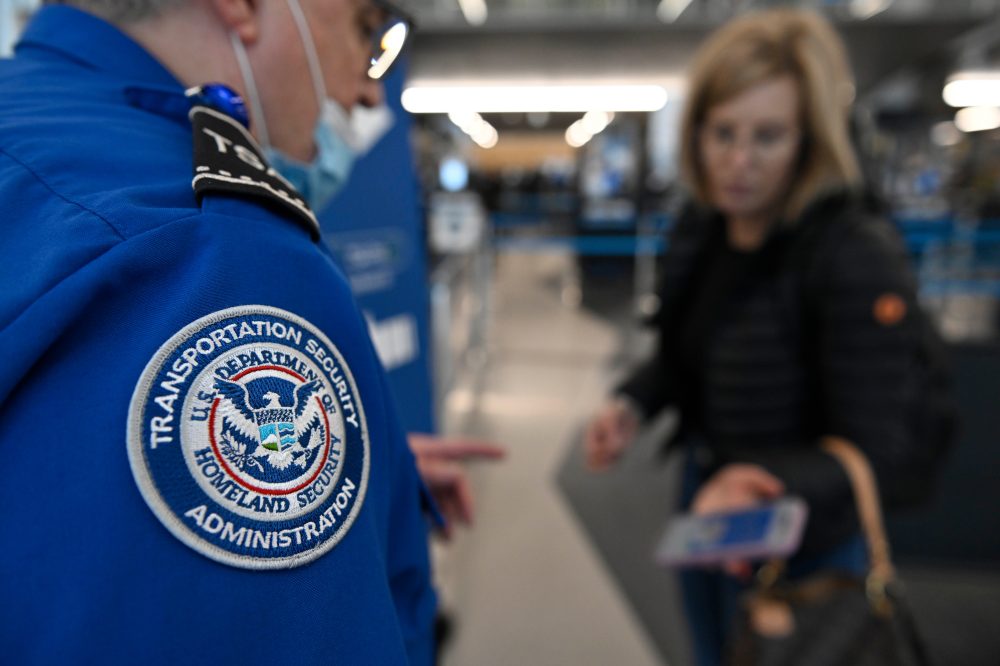
    The President has announced his intention to issue an executive order ensuring Transportation Security Administration workers receive compensation during the ongoing partial government shutdown, as airport disruptions continue to affect travelers nationwide.

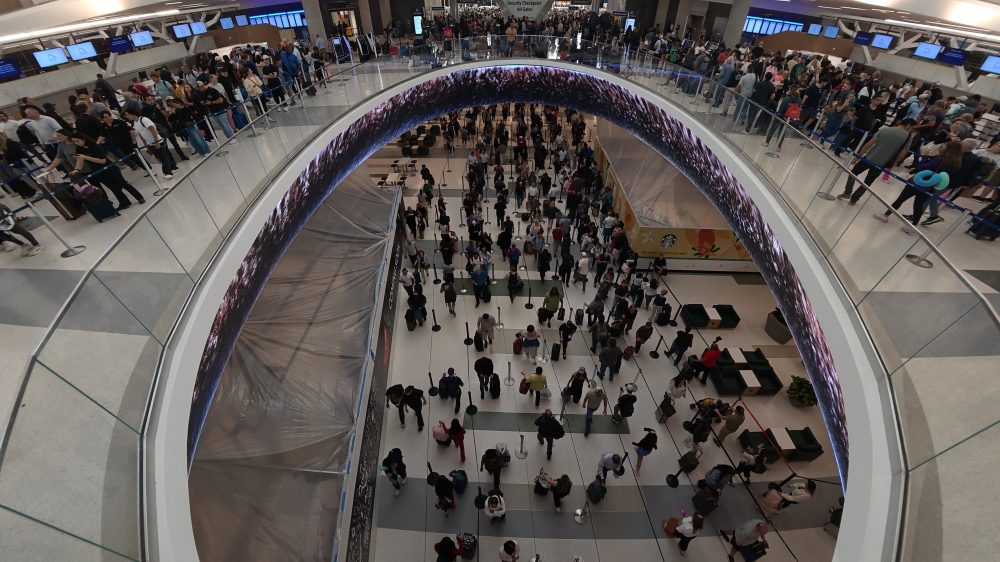
    Air travelers are experiencing fatigue from the extended shutdown situation, with many passengers facing unexpected additional costs due to the operational challenges at airports across the country.

    The partial shutdown has created widespread disruptions in the travel industry, leaving passengers to navigate delays and complications while TSA personnel work without guaranteed pay.

  • Philadelphia Airport TSA Workers Face Stress During Federal Shutdown

    Philadelphia Airport TSA Workers Face Stress During Federal Shutdown

    Transportation Security Administration employees at Philadelphia International Airport are grappling with significant challenges as the Department of Homeland Security shutdown continues to impact federal workers.

    Maggie Sabatino, who serves as a union representative for TSA personnel at the Philadelphia airport, recently spoke with NPR’s A Martinez to discuss the difficult circumstances facing security officers during the federal government closure.

    The conversation focused on the mounting pressure and unpredictability that TSA workers are experiencing as the DHS shutdown affects their daily operations and job security.

  • Trump’s Name to Appear on U.S. Currency in Historic Presidential First

    Trump’s Name to Appear on U.S. Currency in Historic Presidential First

    In an unprecedented development, the United States Treasury Department will include President Trump’s signature on upcoming paper currency, making him the first sitting president to have his name appear on American bills.

    During a recent NPR interview, host Steve Inskeep discussed this historic Treasury decision with Aidan McLaughlin, who covers Washington politics for Vanity Fair magazine.

    The Treasury’s announcement represents a significant departure from traditional currency design practices, as no current president has previously had their signature featured on U.S. paper money while serving in office.

    McLaughlin provided insights into the implications and details surrounding this unusual Treasury initiative during the radio segment.

  • Kansas City Sister Looks Back on Decades Helping Families Find Affordable Childcare

    Kansas City Sister Looks Back on Decades Helping Families Find Affordable Childcare

    A Kansas City religious sister recently opened up to StoryCorps about her decades of service helping families secure affordable childcare in her community.

    The nun shared her memories of working with families who struggled to find quality, budget-friendly care for their children, reflecting on a career devoted to supporting parents in need.

    Her story, captured as part of StoryCorps’ ongoing project to document American experiences, offers insight into the challenges families face when seeking reliable childcare and the community members who step up to help.

  • Wet Weather Delays Fieldwork Across Delmarva Through Weekend

    Wet Weather Delays Fieldwork Across Delmarva Through Weekend

    Listen to the Morning Delmarva Farm Report Update — March 27, 2026

    DELMARVA — Wet weather moving across the peninsula is expected to delay fieldwork through the weekend as rain puts early planting operations on hold for the next few days.

    Rain will be steady throughout the day with totals near 0.5 inches in most areas. Delaware farmers hoping to get into the field for pre-emergent applications or early corn planting will need to wait until conditions dry out.

    Markets

    May corn futures opened at $5.42/bu, up $0.03 overnight. Soybeans for May delivery are trading at $12.18, down $0.04. July wheat is at $6.07, steady from yesterday’s close.

    Locally, Dover grain elevators are posting $5.28 for cash corn and $11.90 for beans delivered today.

    Forecast

    Expect rain throughout the day with temperatures reaching 59°F under northwest winds at 5-10 mph. There’s a chance of light rain continuing into tonight as temperatures drop to 31°F.

    Saturday looks much better with sunny skies and a high near 45°F, though it will be breezy with northwest winds 10-15 mph. That drier pattern holds through early next week, giving fields time to drain before conditions turn unsettled again midweek.

    This article is based on the Delmarva Farm Report Update Morning Edition, March 27, 2026. Hosted by Tom Bradley.

  • Beijing Says Japan’s Apology Insufficient After Embassy Knife Attack

    Beijing Says Japan’s Apology Insufficient After Embassy Knife Attack

    BEIJING – Chinese officials are pushing back against Japan’s response to a security incident at Beijing’s embassy in Tokyo, saying a simple apology isn’t adequate after a Japanese military officer carrying a knife forced his way into the diplomatic facility.

    Foreign Ministry spokesman Lin Jian told reporters Friday that while Japan has acknowledged the Tuesday incident was unfortunate, Chinese leadership wants much more transparency about what happened.

    Japan’s chief government spokesman Minoru Kihara had previously called the embassy breach “regrettable” and promised new security protocols to prevent similar incidents.

    However, Lin emphasized that Beijing remains unsatisfied with Tokyo’s handling of the situation. “The Japanese side has expressed deep regret to the Chinese side regarding this incident, but this is far from sufficient,” Lin stated during a routine press briefing.

    Chinese officials are now pressing for complete details about the security breach. “We once again urge the Japanese side to conduct a thorough investigation as soon as possible and provide China with a responsible explanation,” Lin added.

    According to Lin, Japanese authorities have yet to release specific information about how the incident unfolded or the circumstances surrounding the intrusion.

    This diplomatic tension adds another layer of complexity to already strained relations between the two Asian powers. The countries’ relationship has grown increasingly difficult since Japan’s prime minister announced in November that Japanese forces could potentially intervene militarily if Chinese actions against Taiwan posed threats to Japanese territory.

  • Italy Opens Investigation Into LVMH, Sephora Over Youth Marketing Concerns

    Italy Opens Investigation Into LVMH, Sephora Over Youth Marketing Concerns

    Italian competition watchdogs announced Friday they have opened dual investigations targeting LVMH-controlled companies operating in Italy over allegations of inappropriate business practices involving the early promotion of adult beauty products to young people.

    The Italian competition authority AGCM confirmed that investigators, working alongside Italy’s financial police force, conducted searches Thursday at the offices of Sephora Italia, LVMH Profumi e Cosmetici, and LVMH Italia as part of the ongoing inquiry.

    The regulatory action centers on accusations that the luxury goods giant and its popular cosmetics chain engaged in questionable commercial tactics related to encouraging minors to use beauty products designed for adults.

  • Stranded Whale Escapes German Resort After Dramatic Rescue Effort

    Stranded Whale Escapes German Resort After Dramatic Rescue Effort

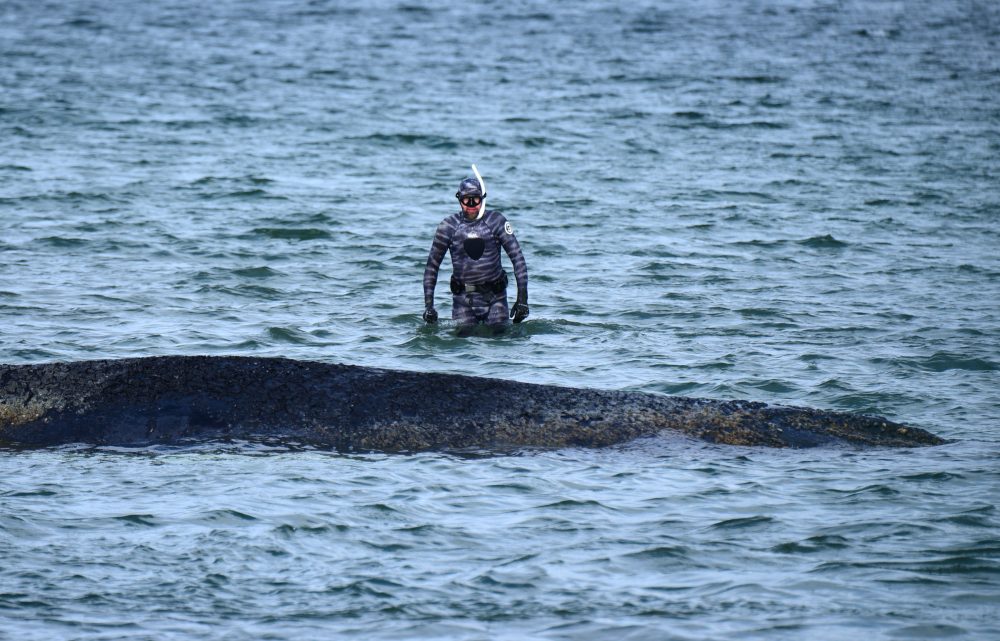
    BERLIN — A massive whale that spent several days trapped in shallow waters at a German resort has successfully escaped through a rescue channel, though marine experts warn the animal remains in serious danger.

    The marine mammal, measuring between 39 and 49 feet in length, swam through a specially dug escape route during overnight hours after rescue teams worked tirelessly with heavy machinery to create the pathway. Marine biologist Robert Marc Lehmann confirmed the whale’s movement Friday morning, according to German news agency dpa.

    However, Lehmann emphasized that this development represents just a minor victory for the enormous creature. “It was only a small step in the right direction for the marine mammal,” he said, noting “it will only really be at home again if it reaches the Atlantic Ocean.”

    The rescue drama began Monday morning when the whale became stuck on an underwater sandbank near Timmendorfer Strand, a well-known vacation destination. Emergency responders initially attempted various methods to free the animal, including deploying coast guard vessels and fire department boats to generate powerful waves that might dislodge it. These efforts proved futile, partly because the Baltic Sea’s weak tidal action couldn’t provide natural assistance.

    By Thursday morning, rescue teams escalated their approach by bringing in excavation equipment to carve out a trench directly in front of the whale’s head. Lehmann personally approached the stranded animal to help direct the digging operation. The crew continued their work well past nightfall but couldn’t complete the whale’s liberation before darkness forced them to halt operations.

    Early Friday, the whale was making its way out of Lübeck Bay, the body of water where Timmendorfer Strand sits, according to Stephanie Gross from the Institute of Terrestrial and Aquatic Wildlife Research. She reported that the massive creature, positioned roughly 1,000 feet from shore, was being monitored by a coast guard vessel along with several accompanying boats.

    Wildlife specialists believe the animal is likely a young male, since male whales typically undertake migration journeys while females do not. The whale also appears to match descriptions of the same animal observed multiple times in recent weeks at Wismar port, located east of the stranding site.

    The reason behind the whale’s presence in the area and subsequent stranding remains unclear to researchers.

    Humpback whales do not naturally inhabit Baltic Sea waters. This particular whale must now navigate several hundred miles through German and Danish territorial waters before it can hope to reach the North Sea and eventually return to the Atlantic Ocean.

  • Pakistan Steps Up as Surprise Peace Broker Between US and Iran

    Pakistan Steps Up as Surprise Peace Broker Between US and Iran

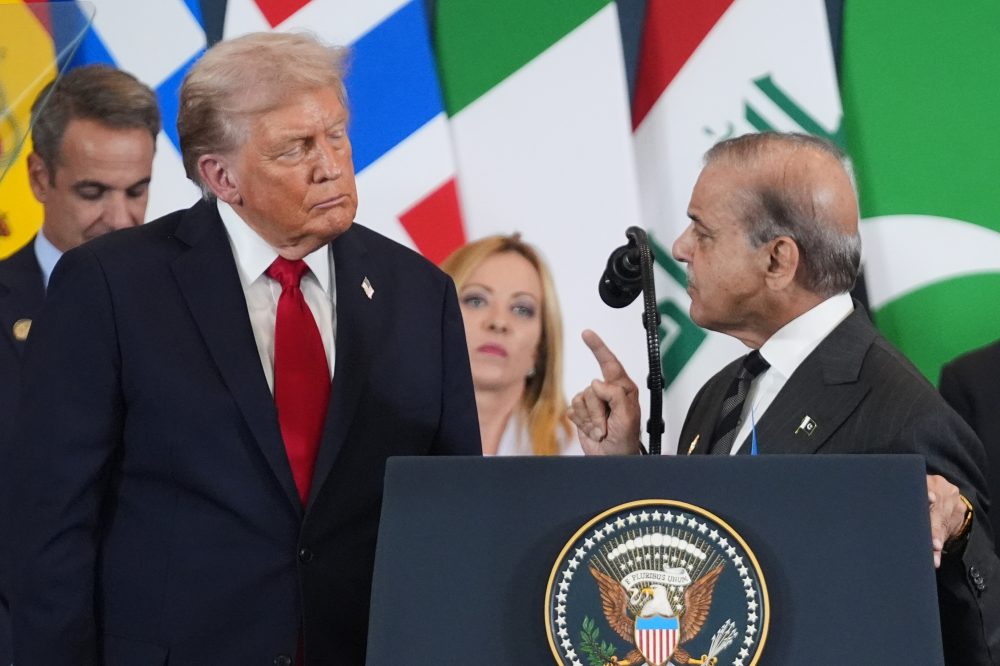
    ISLAMABAD (AP) — With concerns growing about broader Middle East conflict after recent U.S. and Israeli military actions against Iran starting in late February, Pakistan has surprisingly positioned itself as a peace broker, volunteering to facilitate dialogue between Washington and Tehran.

    While Islamabad doesn’t typically serve in such high-level diplomatic roles, the nation has taken on this responsibility due to its positive relationships with both the U.S. and Iran, plus its significant interest in seeing regional tensions de-escalate.

    Pakistani leadership has indicated their public peace initiatives follow several weeks of behind-the-scenes diplomatic work, though specific details remain limited. Officials have also expressed Islamabad’s willingness to serve as a venue for direct discussions between American and Iranian representatives.

    Pakistan’s involvement in U.S.-Iran diplomatic channels only became public knowledge recently through news coverage. Islamabad officials later confirmed they had transmitted an American proposal to Iranian leadership.

    The identity of Iran’s primary contact in these indirect negotiations remains unknown. While Iran has denied participating in such discussions and rejected the U.S. proposal, Tehran has confirmed sending counter-proposals in response.

    Pakistani officials report they are serving as a communication bridge, delivering U.S. messages to Iran and Iranian responses back to Washington, though they haven’t detailed the exact process or identified specific participants. Foreign Minister Ishaq Dar noted this week that Turkey and Egypt are also conducting behind-the-scenes efforts to encourage negotiations.

    Abdullah Khan, managing director of the Pakistan Institute for Conflict and Security Studies, suggested Pakistan’s mediation work may be helping maintain relative calm in the situation. He observed that President Donald Trump has postponed threatened major strikes against Iran’s energy sector due to diplomatic developments, while Iranian actions against U.S. Gulf interests have been restrained, possibly to maintain diplomatic opportunities.

    Past U.S.-Iran negotiations have typically involved Middle Eastern nations like Oman and Qatar as facilitators, but with these countries now facing Iranian attacks during the current conflict, Pakistan has assumed this responsibility.

    Experts note Pakistan’s border with Iran, combined with its established U.S. relationship, creates a distinctive advantage when direct U.S.-Iran communication remains difficult.

    Islamabad maintains functional relationships with most major conflict participants, including both America and Iran. The country has strong strategic connections with Gulf nations like Saudi Arabia, signing a defense partnership agreement last year. However, Pakistan doesn’t maintain Israeli diplomatic ties due to the unresolved Palestinian statehood question.

    U.S.-Pakistan relations have strengthened since last year through increased diplomatic contact and growing economic connections. Pakistan also joined Trump’s Board of Peace focused on Gaza stability, despite domestic Islamist opposition.

    Recently, President Trump contacted Pakistani army chief Field Marshal Asim Munir, whom Trump has publicly called his “favorite Field Marshal.” Experts describe Munir as someone who maintains good connections with both Iranian and American military leadership.

    The regional crisis presents some of Pakistan’s most severe economic and energy security threats in history, according to Islamabad security analyst Syed Mohammad Ali.

    Pakistan depends on Middle Eastern sources for most oil and gas supplies, while approximately five million Pakistani workers in Arab nations send home annual remittances roughly matching the country’s total export revenue.

    Increased regional tensions have already driven up global oil costs, forcing Pakistan to raise fuel prices about 20% and creating pressure for Prime Minister Shehbaz Sharif’s government.

    The conflict is also intensifying domestic unrest, as Pakistan has been managing its own border dispute with Afghanistan for months. Islamabad has blamed Afghanistan’s Taliban leadership for allowing militant organizations responsible for Pakistani attacks.

    Nationwide protests broke out earlier this month following U.S. strikes on Iran, with demonstrators confronting security personnel in multiple cities.

    Following the U.S. and Israeli attack on Iran that killed Supreme Leader Ayatollah Ali Khamenei, violence erupted in Pakistan’s southern port city of Karachi and northern regions, resulting in at least 22 deaths and over 120 injuries across the country.

    At least 12 people died near the U.S. Consulate in Karachi when crowds breached the facility and tried to ignite it.

    Khamenei held significant religious and political importance for global Shiites, including Pakistani communities.

    Although Pakistan seldom acts as a mediator, the nation has participated in several significant diplomatic initiatives.

    Former President Gen. Yahya Khan enabled secret communications that resulted in President Richard Nixon’s groundbreaking 1972 China visit. This breakthrough led to formal U.S.-China diplomatic relations in 1979.

    Subsequently, Pakistan has contributed to various complex regional disputes, particularly during the 1988 Geneva Accords that enabled Soviet forces to leave Afghanistan. As a frontline nation and crucial intermediary, Islamabad joined U.N.-mediated discussions while collaborating with America and other partners to pressure Moscow’s withdrawal.

    More recently, Pakistan enabled Afghan Taliban-Washington contact that produced Doha negotiations, resulting in a 2020 agreement that established conditions for U.S.-led NATO departure and the Taliban’s 2021 return to power.

  • India Renews Energy Ties with Russia Amid Middle East Crisis

    India Renews Energy Ties with Russia Amid Middle East Crisis

    India is working to strengthen energy partnerships with Russia following supply disruptions triggered by recent U.S.-Israeli military operations against Iran, according to sources familiar with the negotiations.

    The development represents a significant shift for New Delhi, which had previously reduced Russian oil purchases earlier this year as part of broader diplomatic efforts with the Trump administration regarding trade tariffs.

    Two individuals with knowledge of the discussions revealed that India and Russia are preparing to finalize agreements for Moscow to restart direct liquefied natural gas sales to India for the first time since the Ukraine conflict began. Officials from both nations reached a preliminary understanding during a March 19 meeting between Russian Deputy Energy Minister Pavel Sorokin and Indian Petroleum and Gas Minister Hardeep Singh Puri in New Delhi.

    The talks also covered expanding crude oil shipments to India, potentially doubling from January levels to comprise at least 40% of India’s total oil imports within approximately one month, according to three sources briefed on the discussions.

    India emerged as a significant purchaser of discounted Russian crude following the Ukraine invasion, acquiring nearly $44 billion worth of oil from Moscow last year. This relationship had created tensions with the Trump administration, as India ranks as the world’s third-largest oil importer and consumer.

    The energy crisis intensified after the February 28 U.S.-Israeli strikes on Iran, which prompted Tehran to retaliate by targeting vessels in the Strait of Hormuz. This critical waterway handles approximately half of India’s crude oil and natural gas imports, and its disruption has created supply shortages across the country.

    Indian consumers have experienced the impact firsthand, with lengthy queues forming at gas stations and some restaurants facing cooking gas shortages.

    Sources indicate that India has already contacted Washington seeking potential sanctions exemptions for the proposed Russian energy deals. Indian officials have also instructed energy importers to prepare for resuming Russian natural gas purchases.

    When asked about the potential agreements, Indian External Affairs Ministry spokesperson Randhir Jaiswal confirmed last week that New Delhi maintains discussions with multiple countries to secure energy supplies, including natural gas. Indian authorities have also acknowledged purchasing Russian liquefied petroleum gas for cooking purposes, which falls outside current sanctions.

    Russian energy ministry officials declined to provide comment on the India discussions, while the U.S. Treasury Department did not address questions regarding sanctions relief.

    Former Indian Ambassador to Moscow Ajai Malhotra defended India’s approach, stating: “India chose the course that best served its national interests, anchored in a long-standing and trusted partnership with Russia.”

    Malhotra added that New Delhi should “demand exemptions or accommodations as a normal part of negotiation between strategic partners,” referring to discussions with Washington.

    The energy crisis has created broader economic concerns for India. A government briefing document dated March 20 warned that extended Middle East supply disruptions could trigger “higher inflation, a weaker currency and rising foreign debt.”

    The internal assessment cautioned that export growth could decline by 2% to 4%, while wholesale inflation might increase by 0.3% to 0.7%. The document noted: “India had reduced purchases of discounted Russian crude, which would have buffered the situation to an extent.”

    Russia appears eager to capitalize on the changing dynamics. Any new natural gas agreement would likely offer less favorable terms for India compared to the 20-year supply contract that India’s state-owned GAIL signed with Russia’s Gazprom in 2012. “It is now a seller’s market,” one source explained.

    The renewed cooperation extends beyond energy. Russian state power company Rosseti executives visited New Delhi this month to propose collaboration on transmission infrastructure projects in India’s mountainous and remote regions, marking a potential first entry into India’s power transmission sector for Moscow.

    Aviation ties are also expanding, with Timofei Titarenko from St. Petersburg’s Pulkovo Airport exploring additional direct flight connections between the two countries.

    Top Russian diplomat Sergei Lavrov highlighted the strengthened economic relationship at a recent conference on Indo-Russian relations, noting that 96% of bilateral trade now occurs in rupees and rubles.

    “The time-tested Russian-Indian friendship serves as an example of how interstate relations should and can be built – based on equality, mutual trust and respect, and consideration of each other’s interests,” Lavrov stated.

    Financial infrastructure between the nations has also improved significantly. A senior executive from Russian bank Sberbank’s Indian operations reported that rupee-ruble transactions up to $1 billion can now be processed within a single day, more than doubling the speed from previous years.

  • Japanese Space Company Postpones Moon Mission Until 2030, Cuts Jobs

    Japanese Space Company Postpones Moon Mission Until 2030, Cuts Jobs

    A Japanese space company has announced significant setbacks to its lunar exploration plans, pushing back a NASA-contracted moon landing mission by three years and implementing workforce reductions.

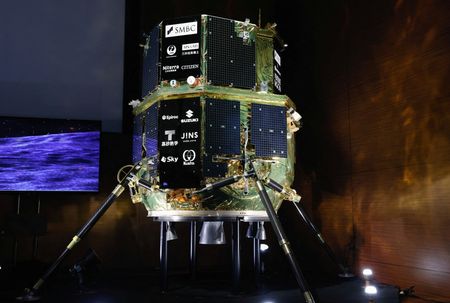
    Tokyo-based ispace revealed Friday that it will postpone its U.S. government-funded lunar mission until 2030, originally scheduled for 2027. The spacecraft startup also plans to reduce its global staff as part of a major strategic overhaul following two unsuccessful attempts to land on the moon’s surface.

    The delays underscore challenges facing private space ventures as the United States works with commercial and international partners to establish a lunar presence ahead of China’s space ambitions.

    The company will merge moon lander development operations between its Japanese and American divisions while postponing the launch that was commissioned through NASA’s commercial lunar payload services initiative.

    During this extended timeline, ispace plans to deploy five lunar satellites by 2030 designed to offer communication, navigation and surface monitoring capabilities to support future lunar development projects.

    Chief Financial Officer Jumpei Nozaki explained during a media briefing that these operational changes could result in costs reaching several million dollars, potentially requiring additional equity funding and the elimination of dozens of positions.

    Since going public on the Tokyo stock exchange in 2023, ispace has struggled with two failed lunar landing missions, ongoing financial losses, and declining share values. The company employed approximately 300 people across facilities in Japan, the United States and Luxembourg as of last year.

    The firm’s third mission remains on track for 2028 as part of Japan’s commercial space initiative, featuring the launch of its “Ultra” lunar lander designed to transport 200 kilograms of payload to the moon.

    Currently, only two private American companies, Intuitive Machines and Firefly Aerospace, have successfully achieved lunar landings.

    NASA announced updates to its Artemis program this Tuesday, outlining plans for up to 30 unmanned lunar surface missions beginning next year.

    “While it’s true that we are moving against NASA’s push to accelerate moon missions in 2028-29 … as the only (private company) outside the U.S. with moon landing technology, we are seeking a greater role in their program,” Nozaki stated.

    Modifications to America’s space program under President Donald Trump have created uncertainty for Japanese space companies that anticipated stronger U.S.-Japan collaboration to compete with China’s space efforts.

    Another Tokyo-based rocket company, ISC, whose chief executive serves on ispace’s management board, canceled a December launch test in New Mexico due to regulatory procedure disruptions.

  • Myanmar Military Announces Leadership Shake-Up Before Presidential Election

    Myanmar Military Announces Leadership Shake-Up Before Presidential Election

    Myanmar’s armed forces leadership is preparing for a major restructuring after Friday’s military parade, according to state media reports, marking an unusual public announcement from the secretive institution that controls the Southeast Asian country.

    The timing of this leadership overhaul is significant, occurring just before Myanmar’s recently assembled parliament begins meeting Monday to select a new president. Current military commander Min Aung Hlaing has reportedly been positioning himself for this presidential role.

    During a Thursday gathering with former military officers, Deputy Chief Soe Win announced that “leadership changes” would occur following the armed forces day ceremony, which traditionally includes an elaborate parade in the capital city of Naypyitaw.

    “Irrespective of who leads, Tatmadaw will continue to follow the guidance of successive leaders, advisors and mentors, as well as established military doctrines and policies,” Soe Win stated, as reported by the Global New Light of Myanmar newspaper.

    Myanmar is currently experiencing a political shift after elections held in December and January that critics widely condemned as fraudulent. The military-supported party’s victory has created a pathway for Min Aung Hlaing to assume the presidency.

    These elections occurred during an ongoing civil conflict that began with a 2021 military coup, which removed the democratically elected administration of Nobel Peace Prize recipient Aung San Suu Kyi, further destabilizing the already struggling nation.

    Independent analyst Htin Kyaw Aye noted that Myanmar’s military rarely announces high-level leadership transitions in advance, especially while engaged in combat operations across multiple regions.

    “This is a scripted transition, however, such a disclosure of information suggests that there may be underlying anxieties regarding the leadership transition and the redistribution of high-level positions,” he explained.

    The 69-year-old Min Aung Hlaing, an infantry veteran who was selected by former military leader Than Shwe to become commander-in-chief in 2011, has not yet publicly revealed who will succeed him in the military role.

  • Middle East Conflict Sends Global Traders Into Market Chaos, Sleepless Nights

    Middle East Conflict Sends Global Traders Into Market Chaos, Sleepless Nights

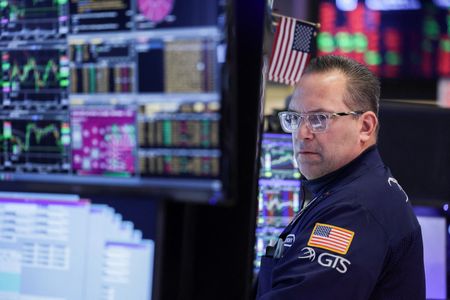
    Financial markets across the globe are experiencing extreme turbulence as the ongoing Middle East conflict enters its fifth week, leaving traders and investment managers struggling with unprecedented volatility and sleepless nights.

    Wang Yapei, a fund manager based in Shanghai, has drastically reduced his investment positions to cope with the market chaos. “I don’t like rollercoaster rides … the opening was ugly, so I cut portfolio positions to roughly 30%,” Wang from Zijie Private Fund explained, referring to Monday’s severe decline in Chinese equities. “Then I felt quite relieved.”

    Even as markets showed some recovery later in the week, Wang remains cautious about increasing his holdings due to unpredictable swings across all investment categories worldwide. “Today, you seek bottom-fishing and the next day, you suffer from another selloff,” Wang noted. “When there’s uncertainty, you reduce your holdings so you can sleep well at night.”

    Wang’s experience reflects a broader pattern affecting financial professionals from Shanghai to New York, who are dealing with restless nights, weekend work sessions, extended client consultations, rapid portfolio adjustments, and last-minute anxiety about executing transactions.

    These difficulties primarily arise from questions about the duration of the U.S.-Israeli conflict with Iran and its potential impact on oil costs, which have already climbed above $100 per barrel, along with concerns about inflation, interest rates, and central bank policies.

    The conflict, which began with joint U.S.-Israeli attacks on Iran in late February, has caused gold prices to drop approximately 16% this month, marking the precious metal’s largest monthly decline since 2008. Treasury yields have increased by 46 basis points during the same period, representing the steepest rise since October 2024.

    Many market participants are finding that strategies that worked during previous crises, including Russia’s 2022 invasion of Ukraine and the COVID-19 pandemic, are no longer effective in current conditions.

    “There are very few risk-off assets,” explained Rajeev De Mello, chief investment officer at GAMA Asset Management, who has been working weekends and conducting longer team meetings than usual. “Treasuries are not working, typical risk-off currencies like the yen and the Swiss franc are not working. Gold and silver also not helping.”

    The month-long conflict has resulted in Iran effectively blocking the Strait of Hormuz, a critical route for one-fifth of global oil and liquefied natural gas shipments. This situation has raised concerns about stagflation and prompted investors to sell nearly all assets except the U.S. dollar.

    “Since the war broke out, we’ve reduced equities because there’s no place to hide,” De Mello said from Singapore.

    Asian stock markets have been particularly affected, with South Korean equities declining about 13% this month and Japan’s Nikkei falling approximately 9%. U.S. stocks have performed somewhat better with a 6% decrease.

    Kenyon Tse, head of sales trading at UBS in Hong Kong, reported that his firm’s trading desk has recorded daily net selling in TSMC, Asia’s largest company by market value, throughout March.

    London-based Matthias Scheiber at Allspring Global Investments has reduced emerging market positions while increasing U.S. exposure, though he cautioned that conditions could worsen if global central banks follow Australia’s example of raising interest rates.

    For those caught on the wrong side of market movements, the situation has been especially challenging. An energy company trader, speaking anonymously, described how their firm’s positions betting against oil price increases led to extreme stress. “I literally couldn’t sleep that weekend when it began,” the trader said, adding that the following week involved high stress due to sharp price swings and numerous internal meetings.

    Kenneth Goh, director of private wealth management at UOB Kay Hian, faces similar sleep deprivation while managing client portfolios through the crisis. “It’s been non-stop,” Goh said. “If I’m lucky, I sleep at midnight. If not, I sleep at 2, 3 or 4 a.m. But that’s the life I chose.”

    The market uncertainty has also affected corporate credit markets and new deal activity. In New York, banks supporting approximately $18 billion in debt for Electronic Arts’ $55 billion acquisition closely monitored developments around President Trump’s Monday deadline for strikes on Iran’s electrical infrastructure.

    This deadline coincided with the marketing phase of EA’s debt to investors and could have resulted in less favorable borrowing terms, according to two bankers familiar with the situation who requested anonymity.

    Banking professionals working on the deal spent the weekend preparing for possible attacks on Iranian infrastructure and potentially higher pricing that would likely follow.

    After Trump announced a five-day delay of the strikes on Monday, banks were able to lower borrowing costs on roughly $6.6 billion of the debt’s cross-currency, high-yield bond component. On Thursday, Trump extended the pause on threatened attacks against Iranian energy facilities for 10 days until April 6.

    The constant market volatility requires continuous attention from investors and traders. “You continuously need to watch, monitor and be a participant in the market and this obviously takes a toll in terms of your mental ability,” said Mukesh Dave, chief investment officer at Aravali Asset Management.

    Dave, based in Singapore, noted experiencing similar intensity during the 2008 financial crisis and the Asian financial crisis of the late 1990s, but stopped short of comparing this situation to those events. “If this lasts for another week or so, then we’ll see,” he said. “You can’t afford to make mistakes, there is zero tolerance for mistakes.”

  • New COPD Treatment Shows Promise in Reducing Breathing Complications

    New COPD Treatment Shows Promise in Reducing Breathing Complications

    AstraZeneca announced Friday that their investigational breathing medication demonstrated significant success in decreasing severe episodes for patients suffering from chronic obstructive pulmonary disease during two major advanced clinical trials.

    The pharmaceutical company reported that tozorakimab achieved its primary objective in both studies, successfully lowering the yearly occurrence of moderate-to-severe COPD episodes compared to inactive treatment in the main study group of previous smokers and across all participants.

    Both current and past tobacco users with different degrees of respiratory damage and varying white blood cell levels participated in the research, according to the company.

    COPD represents a long-term medical condition that limits air passage and creates difficulty breathing. Although cigarette smoking serves as the primary cause, exposure to vapors, industrial chemicals, and workplace particles can also trigger the disease’s development.

    The experimental medication falls under the monoclonal antibody treatment category, functioning by mimicking natural immune responses and blocking interleukin-33, a protein that contributes to inflammatory processes.

    According to AstraZeneca, their medication could potentially decrease inflammation and break the harmful pattern of mucus problems that may intensify COPD symptoms in patients. The World Health Organization ranks this respiratory disease as the fourth most common cause of death globally.

    The pharmaceutical company plans to share comprehensive results from both clinical trials at a future medical conference.

    This development follows AstraZeneca’s September announcement that their asthma medication Fasenra did not successfully decrease symptom worsening in COPD patients during a different advanced study.

  • Former Rapper Becomes Nepal’s Youngest Prime Minister in Decades

    Former Rapper Becomes Nepal’s Youngest Prime Minister in Decades

    A former rapper who transitioned into politics has taken the oath of office as Nepal’s new prime minister, facing the challenge of bringing stability to a nation plagued by governmental instability and economic struggles.

    Balendra Shah, age 35, was inaugurated on Friday at the President House, becoming the youngest person to hold the office in decades. His Rastriya Swatantra Party (RSP), established just three years ago, secured a commanding 182 seats in the 275-seat parliament during the March 5 elections.

    The election marked the first voting opportunity since deadly anti-corruption demonstrations in September, which resulted in 76 fatalities. Shah, who previously served as mayor of Kathmandu, makes history as the first Madhesi leader to govern the Himalayan country situated between India and China.

    During the ceremony, Shah appeared in fitted pants, a coordinating jacket, his characteristic black Nepali cap, and sunglasses, with diplomats and government officials in attendance.

    Political expert Puranjan Acharya emphasized the immediate expectations facing the new administration. “The first test of the new government lies in transparent and prompt delivery of services to people, who expect early signs of good governance from Sunday itself,” Acharya stated, noting that Sunday is a workday in Nepal.

    According to Acharya, Shah’s immediate priority involves addressing the findings of an investigation into the violent protests, which families of victims have demanded be implemented. The investigation called for prosecuting officials responsible for the harsh response, including former Prime Minister K.P. Sharma Oli.

    The demonstrations were driven by unemployment and widespread corruption in the nation of 30 million, where approximately 20% live in poverty and roughly 1,500 citizens emigrate daily seeking employment opportunities.

    Nepal has struggled with consistent leadership, experiencing 32 different governments since 1990, with none successfully completing a full five-year term.

    The established Nepali Congress party finished far behind in second place with only 38 parliamentary seats. Oli’s Communist Party of Nepal (Unified Marxist-Leninist), who stepped down following the youth uprising, holds 25 seats.

    Former Chief Justice Sushila Karki guided the country during the transitional period leading up to the parliamentary elections.

  • Cryptocurrency Exchange Binance Hit with $6.9M Fine in Australia

    Cryptocurrency Exchange Binance Hit with $6.9M Fine in Australia

    A federal court in Australia has imposed a substantial A$10 million ($6.9 million) fine on the local derivatives arm of cryptocurrency platform Binance for improperly categorizing the vast majority of its Australian customers, according to an announcement from the nation’s securities watchdog on Friday.

    The penalty stems from violations involving the incorrect classification of more than 85% of Binance’s Australian customer accounts during the client registration process.

    The exchange rate conversion shows $1 equals 1.4491 Australian dollars.

  • European Union Leaders Hope Hungarian Election Ends Orban’s Policy Blocks

    European Union Leaders Hope Hungarian Election Ends Orban’s Policy Blocks

    European Union leaders are eagerly awaiting Hungary’s April 12 election, hoping it will end Prime Minister Viktor Orban’s pattern of obstructing crucial EU initiatives, including essential financial support for Ukraine.

    Current polling data indicates Orban’s nationalist Fidesz party, which has governed since 2010, may face defeat against Peter Magyar’s center-right Tisza party.

    Orban has consistently frustrated EU colleagues through his close relationship with Russian President Vladimir Putin and alliance with U.S. President Donald Trump. His recent obstruction of a critical 90 billion euro Ukrainian loan package has particularly angered European partners.

    “This was the last straw that broke the camel’s back,” an EU diplomat stated. “On our side, the hope to talk reason into Orban is gone.”

    Should Orban lose office, diplomats from several EU member nations anticipate an end to Hungary’s obstruction of various policies, from Ukrainian financial assistance to sanctions targeting Russia and violent Israeli settlers.

    However, if Orban secures another victory and continues using his veto power, some officials predict efforts to marginalize Hungary within the union.

    “It seems that ‘more of the same’ is no longer an option for most EU countries,” former Latvian Prime Minister Krisjanis Karins, who attended numerous EU summits with Orban, told Reuters.

    “If Orban stays, we will have to change how we work,” a senior European official added.

    Hungarian government representatives did not provide comment when contacted.

    Reuters interviewed more than twelve current and former officials knowledgeable about Europe’s relationship with Hungary regarding next month’s election implications for the EU. Speaking anonymously about internal member state politics, many expressed frank frustration with Orban.

    “I think everybody hopes Orban will lose,” a second EU diplomat remarked.

    European officials have long worried about what they perceive as Hungary’s declining democratic standards under Orban’s leadership, as he has strengthened executive authority, restricted press freedom and NGO operations, and conducted campaigns criticizing the EU and its initiatives.

    Orban rejects claims of undermining democracy, positioning himself as a protector of Europe’s traditional Christian principles against disconnected liberal leadership.

    However, the Orban administration’s maintained ties with Moscow following Russia’s comprehensive Ukraine invasion in 2022 created a more significant rift between Budapest and numerous Western governments.

    German Chancellor Friedrich Merz recently characterized Orban’s Ukrainian loan veto as “gross disloyalty” that harmed the EU’s credibility and operational capacity.

    While Brussels officials hope for improved relations with Budapest should Tisza prevail, they remain cautious about expectations.

    Vera Jourova, former European Commission deputy head, told Reuters that an opposition victory would “renew the chance of unity on basic security matters” within the 27-member EU.

    Yet Magyar, remembered in Brussels as an effective negotiator during his diplomatic service for Hungary, would likely remain among the most skeptical voices regarding migration policy and potential Ukrainian EU membership, officials note.

    “I have very few illusions about Magyar’s world view. We should be careful not to expect too much,” a third EU diplomat explained. “The difference will be more in tone of voice than substance.”

    “Magyar is from the same political family (as Orban), nobody is expecting a revolution,” another EU diplomat observed.

    Magyar has expressed commitment to strengthening Hungary’s position within the EU and NATO, particularly seeking to access approximately 17 billion euros in EU funding that Brussels suspended due to Orban’s non-compliance with rule-of-law requirements.

    Richard Demeny, an analyst at Budapest’s Political Capital think tank, stated: “I don’t expect 180 degrees change (from a Magyar-led government) regarding EU relations, but we can expect a more constructive relationship with Brussels.”

    A Magyar adviser, speaking anonymously, confirmed that such a government would maintain similar positions to Orban’s on migration and EU expansion issues.

    “But the difference,” the adviser explained, “is that Orban used this to blackmail (the EU) and represent the Russian interest. We will represent the Hungarian interest.”

  • Middle East Conflict Disrupts Aid to Starving Somali Children, UNICEF Reports

    Middle East Conflict Disrupts Aid to Starving Somali Children, UNICEF Reports

    DOLLOW, Somalia — In a packed refugee camp in southern Somalia, the wails of hungry children offer a glimmer of hope — because the most severely malnourished youngsters lack the strength to make any sound at all.

    Mothers at the Ladan displacement camp in Dollow focus solely on keeping their families alive, unconcerned with distant conflicts or aid logistics. These families escaped devastating drought conditions that have struck the Horn of Africa following four consecutive seasons without adequate rainfall.

    With their farms destroyed and animals dead, refugees arrive at the camp carrying little beyond their children.

    Relief workers at Ladan report that the ongoing Middle Eastern conflict — occurring more than 3,000 kilometers away — has complicated their operations, disrupting supply chains and causing fuel prices to skyrocket.

    According to UNICEF, approximately $15.7 million in critical supplies including therapeutic nutrition, vaccines, and protective bed nets are currently in shipment or being prepared for Somalia. However, these deliveries now face significant uncertainty.

    The United Nations agency reports that transportation expenses may increase between 30% and 60%, potentially doubling on certain routes, while shipping delays from rerouting and bottlenecks become increasingly probable.

    During her Wednesday visit to Dollow, UNICEF Executive Director Catherine Russell described the Iranian conflict as creating a “shock to the system” for the organization’s Somali operations.

    “It means that we can’t get supplies in as easily, and that fuel costs are really high,” she stated. “It’s another problem that we have to try to deal with, and it means that more and more children will suffer.”

    Simultaneously, over 400 medical and nutrition centers have shuttered across Somalia in the past year, primarily due to reduced U.S. funding, leaving numerous communities without essential services. Relief organizations caution that additional closures may occur.

    These challenges have intensified conditions at Ladan, where malnutrition particularly threatens the youngest residents.

    “What we’re seeing is that children are really on the edge already,” Russell observed.

    From Somalia’s capital Mogadishu, government officials announced last month that approximately 6.5 million citizens — from a total population exceeding 20 million — confront serious food insecurity as drought conditions worsen and ongoing violence plus international aid reductions deepen the national emergency.

    These humanitarian challenges represent only part of the crisis as Somalia’s government continues its prolonged battle against al-Shabab, the al-Qaeda-affiliated militant organization, working to regain territory from these extremist forces.

    Recent findings from the Integrated Food Security Phase Classification, an international hunger monitoring organization, project that 1.84 million Somali children under age 5 will experience acute malnutrition during 2026.

    At Ladan, situated along the town’s dusty perimeter, endless rows of temporary shelters extend beneath the unforgiving sun — fragile constructions of plastic sheeting and tattered cloth secured with sticks and thorny branches. Approximately 4,500 families call this camp home.

    “We just want our children to survive,” explained Shamso Nur Hussein, a 20-year-old widow caring for three children. She abandoned their village in the Bakool region after losing all livestock.

    Her makeshift cooking area at the camp — consisting of three stones and ash — remained cold, showing no evidence of recent use.

    “Since morning we have only had black tea,” she informed The Associated Press during the camp visit.

    At Dollow’s medical facility, mothers crowded together on narrow beds cradling weak children, some too exhausted to cry while others produced faint sounds.

    Liban Roble, who coordinates nutrition programs, explained that the hospital previously treated mainly “moderate cases.”

    “Now we are receiving children in extremely critical condition — severely malnourished, weak, and in some cases almost skeletal,” he reported.

    Roble indicated the hospital maintains sufficient supplies to treat malnourished patients “until mid-April or the end of April.”

    “If new stock doesn’t arrive, more children will deteriorate and potentially die,” he warned.

    At Ladan’s nutrition facility, medical staff measured children and distributed peanut-based therapeutic paste, placing it directly into the youngsters’ mouths.

    This treatment serves as a crucial lifeline, helping prevent rapid deterioration among malnourished children, according to nurse Abdimajid Adan Hussein.

    “Their weakened bodies make them vulnerable to pneumonia, diarrhea and other illnesses,” Hussein explained.

    Local leaders report that current assistance falls well below needs.

    “We used to receive assistance from humanitarian agencies, but that stopped in September 2025,” stated Abdifatah Mohamed Osman, Ladan’s deputy chairman. “Now the little support we get is mainly therapeutic food for malnourished children.”

  • China Pulls Support from Major AI Conference Over US Sanctions Policy

    China Pulls Support from Major AI Conference Over US Sanctions Policy

    A major standoff has erupted in the global artificial intelligence community after China’s leading science organization announced it would boycott one of the world’s most prestigious AI conferences.

    The China Association for Science and Technology (CAST) declared Friday it would withdraw support from the Conference on Neural Information Processing Systems, commonly called NeurIPS, following the California-based organization’s decision to block research submissions from US-sanctioned Chinese entities.

    Earlier this week, NeurIPS implemented new guidelines that effectively prevent sanctioned Chinese technology giants like Huawei and SMIC from presenting their research at the conference. The policy change was made to ensure compliance with US legal requirements, organizers stated.

    The development has triggered significant backlash in China, where officials and researchers view the restrictions as unfair targeting of Chinese academic contributions. NeurIPS serves as a vital platform where global researchers share peer-reviewed studies, discuss breakthrough AI developments, and connect with top industry talent.

    CAST responded by announcing it would cease funding applications for Chinese members seeking to participate in NeurIPS. Instead, the organization plans to redirect resources toward domestic conferences or “international conferences that respect the rights and interests of Chinese academics.”

    The Chinese science federation also declared that research published at NeurIPS would no longer count as qualifying output for its funding programs, though such work may still receive recognition for academic merit when reviewed by Chinese scholarly institutions.

    This dispute underscores how geopolitical friction is increasingly affecting advanced AI research, as both the United States and China employ government influence to shape each other’s technological development capabilities.

    Recent years have seen Washington intensify oversight of Chinese researchers at American universities, launching investigations into suspected connections with mainland Chinese organizations. US authorities have also sanctioned hundreds of Chinese academic institutions and corporations, blocking their access to sophisticated American technology.

    Meanwhile, China has implemented its own regulatory restrictions, recently preventing two executives from AI startup Manus from departing the country while officials examine whether Meta Platforms’ $2 billion purchase of the Chinese-founded company violated investment regulations.

  • Senate Approves Partial DHS Funding, Leaves ICE and Border Agency Out

    Senate Approves Partial DHS Funding, Leaves ICE and Border Agency Out

    In the early morning hours of Friday, March 27th, the United States Senate voted to approve a funding bill that would restore operations to the majority of the Department of Homeland Security, according to a report from Politico.

    The legislation provides financial support for most DHS operations but notably excludes Immigration and Customs Enforcement along with certain segments of Customs and Border Protection from the approved funding measures.

    This partial funding approach represents a compromise solution as lawmakers work to address the ongoing budgetary challenges facing the department responsible for national security operations.

  • Chinese Tech Giants Eye Huawei’s Latest AI Chip as Nvidia Alternative

    Chinese Tech Giants Eye Huawei’s Latest AI Chip as Nvidia Alternative

    Chinese technology behemoths ByteDance and Alibaba are preparing to purchase Huawei’s latest artificial intelligence processor following successful testing phases, according to three industry insiders familiar with the developments.

    The positive reception represents a significant breakthrough for the Shenzhen-based telecommunications company. Previously, Huawei faced challenges convincing major private sector technology firms to adopt its existing flagship processor, the Ascend 910C, in substantial volumes despite government initiatives promoting domestic semiconductor usage.

    Technology companies are now showing greater enthusiasm for the new 950PR processor due to its enhanced compatibility with Nvidia’s CUDA software platform and improved processing speeds, the sources revealed.

    Huawei anticipates delivering approximately 750,000 units of the 950PR throughout this year, with sample units distributed to clients in January. Mass manufacturing is scheduled to commence next month, paving the way for full-scale deliveries during the latter half of 2024.

    The timing of the 950PR’s introduction coincides with mounting challenges for Nvidia within the Chinese market. Washington has prohibited the sale of numerous Nvidia artificial intelligence processors in China due to concerns about potential military applications of the technology.

    The previous Trump administration authorized sales of Nvidia’s H200 processors last year, which offer superior performance compared to currently restricted models, though with various limitations on quantities. Chinese regulators have also approved the H200, but the timeline for market entry remains uncertain.

    Huawei first disclosed details about its new processor in September when presenting its comprehensive semiconductor strategy, promising to deliver some of the world’s most advanced computing platforms.

    The 950PR will retail for approximately 50,000 yuan ($6,900) per unit with standard DDR memory, while an enhanced version featuring faster HBM memory will cost around 70,000 yuan, sources indicated.

    Unlike previous models that relied exclusively on Huawei’s proprietary CANN software framework, the new processors enable Chinese technology companies’ developers to more seamlessly transition their existing models from Nvidia’s software ecosystem.

    While the 950PR delivers only modest improvements in raw computational capability compared to the 910C, it excels specifically in inference processing tasks, which involve running trained artificial intelligence models to respond to queries and perform operations.

    China’s demand for AI inference computing is experiencing rapid growth as the technology sector pivots from model creation to practical implementation, accelerated by widespread adoption of open-source AI platforms like OpenClaw.

    The unnamed sources declined identification as they lack authorization to discuss the matter publicly. Huawei, ByteDance, and Alibaba did not respond to requests for comment.

  • Swiss Drug Giant Novartis Strikes $2B Deal for California Biotech Company

    Swiss Drug Giant Novartis Strikes $2B Deal for California Biotech Company

    Swiss pharmaceutical giant Novartis announced Friday its plans to purchase California-based biotechnology company Excellergy in a transaction valued at up to $2 billion.

    The pharmaceutical company stated it will provide the full amount through initial payments and performance-based milestones. Novartis expects the deal to finalize during the latter half of 2026, pending standard regulatory clearances and other typical closing conditions.

    According to Novartis, this acquisition will enhance the company’s position within the immunology sector, specifically targeting food allergy treatments.

    This purchase follows Novartis’ announcement just one week earlier regarding its acquisition of a breast cancer treatment candidate from American biotech company Synnovation Therapeutics, a deal valued at up to $3 billion.

  • Russian Foreign Minister Claims U.S. Seeks Control of Baltic Gas Pipelines

    Russian Foreign Minister Claims U.S. Seeks Control of Baltic Gas Pipelines

    MOSCOW – Russia’s Foreign Minister Sergei Lavrov has accused the United States of attempting to seize control of the Nord Stream natural gas pipeline network in the Baltic Sea, according to statements made during a television interview on Thursday.

    The pipeline system suffered catastrophic damage from unexplained explosions in September 2022, effectively cutting off most Russian gas deliveries to European nations. The blasts occurred more than three years ago and severely disrupted energy supplies across the continent, though Russia had already significantly reduced shipments by that time.

    Both Russian officials and Western nations have characterized the pipeline destruction as deliberate sabotage. Investigators have spent considerable time attempting to determine responsibility for the attacks, leading to the arrest of a Ukrainian suspect in Italy last year on charges of orchestrating the operation.

    During his appearance on France Televisions, Lavrov claimed America seeks to control international energy markets, pointing to situations in Venezuela and Iran as examples. He alleged Washington has gained influence over Venezuela’s massive oil reserves, which are considered the world’s largest.

    “The United States is also now saying that it wants to take over the Nord Stream pipelines,” Lavrov stated, according to interview transcripts released by Russia’s foreign ministry.

    The Russian official offered no additional specifics to support his allegations.

    Reports from The Wall Street Journal in 2024 indicated that American businessman Stephen P. Lynch was pursuing acquisition of the Nord Stream 2 pipeline system, which consists of two lines with one remaining undamaged.

  • Federal Court Examines Venezuela’s Bid to Fund Maduro Defense in Drug Case

    A federal judge on Thursday challenged the Trump administration’s rationale for preventing Venezuela’s government from covering the attorney fees for former President Nicolás Maduro, who remains incarcerated in New York on drug trafficking charges.

    During court proceedings, the judge questioned the administration’s legal foundation for blocking the South American nation from funding Maduro’s defense in the narcotics case that has landed the former leader in a New York detention facility.

    The hearing comes as Maduro faces serious drug trafficking allegations in U.S. federal court, with his legal representation becoming a point of contention between his home country’s government and American authorities.

  • Israel Strikes Iran as Diplomatic Talks Stall, UN Security Council to Meet

    Israel Strikes Iran as Diplomatic Talks Stall, UN Security Council to Meet

    DUBAI, United Arab Emirates (AP) — Israeli forces conducted fresh military operations against Iranian positions early Friday morning, targeting sites within Tehran as tensions continue to escalate in the Middle East conflict nearing its one-month mark.

    The Friday assault focused on locations described as being “in the heart of Tehran,” following Israel’s announcement that it would be escalating attacks against Iranian weapons manufacturing sites. Details about specific targets remained unavailable immediately following the strikes.

    Smoke was visible rising from Beirut, though Israeli officials had not confirmed operations in the Lebanese capital at the time. Meanwhile, warning sirens echoed across Israel as defense forces worked to counter incoming Iranian missile attacks. Iran maintained its offensive operations against neighboring Gulf nations, with drone and missile strikes reported in Kuwait and the United Arab Emirates.

    Washington has been urging Tehran to engage with a 15-point ceasefire framework, while simultaneously deploying additional military personnel to the region, potentially preparing for operations to challenge Iran’s control over the Strait of Hormuz.

    Following Wall Street’s most significant decline since hostilities began, Asian financial markets largely dropped Friday amid increasing skepticism about prospects for de-escalation. Energy prices climbed once more, with Brent crude reaching $107 per barrel during morning sessions, representing a surge of more than 45% since the February 28 joint U.S.-Israeli operation that initiated the current conflict.

    Iran’s control over maritime traffic through the Strait of Hormuz has sparked mounting fears of a worldwide energy shortage, appearing to be part of Tehran’s approach to pressure Washington by destabilizing global markets. Gulf Arab nations reported Thursday that Iran is now collecting fees from vessels seeking safe transit through the strategic waterway.

    Trump representative Steve Witkoff confirmed that Washington had transmitted a 15-point “action list” to Iran through Pakistani intermediaries for potential ceasefire negotiations. The proposal encompasses limitations on Iran’s nuclear activities and reopening the Strait of Hormuz to free navigation.

    Tehran has declined the American proposal and presented its own five-point counter-offer, demanding financial compensation and acknowledgment of Iranian authority over the Strait of Hormuz.

    During ongoing diplomatic activities, a U.S. naval group carrying approximately 2,500 Marines moved closer to the area. Additionally, no fewer than 1,000 paratroopers from the 82nd Airborne Division — specially trained for hostile territory operations to secure strategic locations and airstrips — received deployment orders to the region.

    While American and Israeli military actions against Iran persisted, the U.N. Security Council arranged private discussions regarding Iran for Friday in New York, confirmed by two U.N. officials speaking anonymously due to the meeting’s confidential nature.

    The diplomats noted that Russia had requested the session to address U.S.-Israeli strikes on civilian infrastructure within Iran, which the United States, currently holding the Security Council presidency, agreed to schedule.

    Iranian Health Ministry figures indicate that over 1,900 people have lost their lives in Iran since fighting commenced.

    Israeli casualties include eighteen civilians and at least three military personnel killed in Lebanon. American forces have suffered thirteen fatalities. Additional deaths include four individuals in the occupied West Bank and twenty in Gulf Arab nations.

    Lebanese authorities report more than 1,100 deaths. In Iraq, where Iranian-backed militia organizations have joined the conflict, 80 security force members have been killed.

  • American Pope Leo XIV Visits Monaco in Historic First Papal Trip in Nearly 500 Years

    American Pope Leo XIV Visits Monaco in Historic First Papal Trip in Nearly 500 Years

    VATICAN CITY (AP) — In a historic journey on Saturday, Pope Leo XIV will become the first pontiff to set foot in Monaco in nearly 500 years, marking a significant diplomatic moment between two of the world’s smallest sovereign states.

    The American-born pope’s brief visit to the wealthy Mediterranean nation represents the first papal trip to the principality since Pope Paul III’s visit in 1538, spanning 488 years.

    Vatican spokesman Matteo Bruni described the journey as an opportunity for the Chicago-born pontiff to address all of Europe for the first time during his papacy.

    “In the Bible, it is precisely the small ones who play a significant role,” Bruni said.

    Monaco stands out among European nations as one of the few where Catholicism serves as the official state religion. Prince Albert recently demonstrated this commitment by rejecting a proposal to permit abortion, emphasizing the Catholic faith’s central importance in Monégasque society.

    While the prince’s decision carried symbolic weight, abortion remains constitutionally protected in France, which completely surrounds the tiny coastal nation of just 2.2 square kilometers.

    Albert’s stance aligns him with other Catholic European royalty who have defended church teachings on the increasingly secular continent. Pope Francis honored Belgium’s late King Baudouin in 2024 by placing him on the path toward potential sainthood, recognizing his 1990 abdication for one day rather than signing abortion legislation.

    Bruni indicated that the “defense of life” will feature prominently during Leo’s Saturday visit, though he emphasized the pope’s broader perspective encompasses protecting all human life, including those affected by warfare and global conflicts.

    The papal itinerary includes a private audience with Prince Albert and Princess Charlene at the royal palace, an encounter with Monaco’s Catholic faithful at the cathedral, and a public Mass at the sports stadium.

    Known as an exclusive destination for the wealthy and celebrities, Monaco has built its reputation on tax advantages, the Formula 1 Grand Prix, and its glamorous royal family. Prince Albert, son of the late American actress Grace Kelly, extended the invitation during a January 17 Vatican meeting with the Chicago-born pope, speaking in flawless, unaccented English.

    The rapid organization of this trip has sparked curiosity about Leo’s decision to choose Monaco, a hereditary constitutional monarchy, for his inaugural European foreign visit. While Pope Francis also favored smaller nations, Monaco’s luxurious reputation would likely have deterred him.

    “It does raise questions,” conceded Abbe Christian Venard, spokesperson for the diocese of Monaco. “Is it really the place for a pope to go to a principality better known — somewhat caricatured — as a haven for billionaires, even if that is part of Monaco’s reality? I think it reflects some inner freedom from the pope,” he told The Associated Press.

    However, compelling reasons support Leo’s choice, particularly given the unprecedented nature of a papal visit after nearly five centuries.

    Monaco’s 38,000 residents are predominantly Catholic and represent multiple nationalities, with only one-fifth holding actual Monégasque citizenship.

    The pope’s visit will last just under nine hours, with helicopter transportation making the short journey to and from the Vatican feasible. Despite its brevity, the meeting carries profound symbolic meaning as leaders of the world’s two smallest nations unite to address global challenges.

    With ongoing conflicts including Russia’s war in Ukraine and escalating tensions involving the U.S. and Israel in Iran, Leo will likely renew his calls for peace and diplomatic dialogue.

    “Much like the principality’s role in fostering dialogue and mediation, serving as a laboratory for peace, social friendship, and the responsible use of influence and wealth,” Bruni said.

    This reference highlights Monaco’s financial backing of initiatives supporting Middle Eastern Christians, including participation in the Aliph Foundation, which focuses on rebuilding and restoring churches and culturally significant sites damaged by conflict.

    The Monégasque government has consistently supported Lebanese church projects through l’Œuvre d’Orient, a French organization that assists bishops, priests, and religious communities across 23 countries.

    Prince Albert’s well-established environmental advocacy and Monaco’s hosting of international conferences, particularly addressing Mediterranean concerns, align with Leo’s continuation of Pope Francis’s ecological stewardship legacy. Environmental issues are anticipated to feature in their discussions.

    “The fact that Monaco hosts environmental forums, scientific conferences, and thematic summits makes sense and effectively counterbalances the somewhat ‘glitzy’ image that the event might initially convey,” noted François Mabille, director of the Geopolitical Observatory of Religion at the French Institute for International and Strategic Affairs.

    Mabille emphasized that environmental issues represent precisely the type of global challenges where two small nations sharing similar values can collaborate effectively, especially given the Holy See’s diplomatic neutrality and observer status at the United Nations and other international bodies.

    “What’s interesting is to realize that there is indeed a Monaco foreign policy that can, in a way, enable or allow the Vatican to go further,” Mabille said. “And here, the Vatican’s soft power can find … a sort of continuity and, in any case, a convergence with another small state — one that, this time, votes and participates.”

  • Taiwanese Island Temple Offers Divine Dreams Just One Day Each Year

    Taiwanese Island Temple Offers Divine Dreams Just One Day Each Year

    BEIGAN, Taiwan – Each year, devoted worshippers journey to a secluded shrine on Beigan island, located off Taiwan’s coast near mainland China, for an extraordinary spiritual practice: sleeping in hopes of receiving divine visions.

    Believers bundle themselves in blankets and rest on the temple floor throughout the night at Wuwei Ling Temple, trusting that the honored deities will deliver dreams containing guidance unavailable in their conscious lives.

    Local traditions tell of the Nine Immortals of Jiuli, divine siblings who govern dream-seeking rituals. These deities travel from their primary temple in China’s Fujian province each year on the 29th day of the Lunar New Year to visit a relative at the Wuwei Ling Temple.

    Legend states that harsh weather conditions once trapped the immortals on the island for an additional day before they could return to Fujian. This story explains why mainland worshippers can request divine dreams throughout the year at the main temple, while Beigan visitors must wait for this single annual opportunity.

    Yang Jui-yun, who operates a local restaurant, initially came to the temple over ten years ago seeking reassurance about her daughter’s departure for university studies in America.

    “I heard someone saying ‘hello, hello’ in English. And then I saw an image of a couple holding hands with children,” the 60-year-old Yang recalled.

    Several years afterward, her daughter welcomed twin daughters in the United States. When Yang’s granddaughters made their first trip to Matsu, she witnessed the exact scene from her temple dream: her daughter and son-in-law walking hand-in-hand with the twins toward a Matsu shoreline.

    Beigan belongs to the Matsu island chain, which sits within China’s Fujian province geographically but has remained under Taipei’s administration since 1949, when the Republic of China government relocated to Taiwan following their defeat by Mao Zedong’s Communist forces in the civil war.

    Once subjected to frequent Chinese bombardment during Cold War tensions, Matsu now draws tourists who come to appreciate its rugged landscape, observe wildlife, and tour historic underground military installations.

    What began as a local tradition among Matsu inhabitants has expanded as county officials have promoted the temple to visiting tourists.

    “Most people ask about marriage,” explained Chen Shih-tien, the temple’s honorary chairman. “Some ask about their careers; work-related questions are the most common.”

  • UAE Offers to Help International Coalition Reopen Key Middle East Shipping Lane

    UAE Offers to Help International Coalition Reopen Key Middle East Shipping Lane

    The United Arab Emirates has informed the United States and Western partners that it’s prepared to take part in an international naval coalition designed to restore access to the Strait of Hormuz, according to a Friday Financial Times report citing sources with knowledge of the discussions.

    According to the report, the UAE is working to rally dozens of nations to establish what it calls a “Hormuz Security Force” that would protect the strategic waterway from Iranian aggression and provide security escorts for commercial vessels.

    Among regional nations, the UAE has endured more attacks from Iran than any other country, surpassing even Israel in frequency of incidents.

    Multiple American allies have indicated they currently have no plans to deploy naval vessels to clear the blocked Strait of Hormuz, declining President Trump’s appeals for military assistance to maintain access to the crucial shipping route.

    On Thursday, France announced it had conducted discussions with approximately 35 nations in search of partners and proposals for a mission to restore strait access, though only after the conclusion of the U.S.-Israeli military action against Iran.

    Iran’s blockade of the Strait of Hormuz has disrupted approximately 20% of worldwide oil and liquefied natural gas transportation, driving up energy costs and raising concerns about global inflation.

    The UAE is also collaborating with Bahrain on a United Nations Security Council resolution that would grant official authorization to any future naval taskforce, though the report notes that Russia and China may block such efforts.

    Security Council members have started discussions on resolutions aimed at safeguarding commercial shipping through and around the Strait of Hormuz, including a Bahraini proposal that would permit the use of “all necessary means,” as Reuters previously reported this week.

    A week ago, a high-ranking UAE official indicated the country might participate in a U.S.-led initiative to protect maritime traffic through the Strait of Hormuz following Iran’s near-complete closure of the passage to vessels.

    The shipping channel holds critical importance for the UAE’s economy, as the nation serves as both a significant oil producer and regional trading center. Iran has launched multiple strikes against an Emirati port facility outside the Gulf that handles oil export operations.

    Reuters was unable to independently confirm the Financial Times report.

  • Global Markets Show Muted Response to Trump’s Iran Deadline Extension

    Global Markets Show Muted Response to Trump’s Iran Deadline Extension

    Global financial markets showed a restrained response Friday after President Donald Trump announced he would postpone planned military action against Iranian power facilities for an additional 10 days, marking the second such delay amid ongoing Middle East tensions.

    While investors had anticipated this development, the market reaction fell short of expectations. Oil prices declined modestly, with Brent crude dropping less than 1% to $107.24 per barrel, barely reversing the nearly 6% overnight spike. U.S. stock futures managed only a 0.4% increase, a far cry from Tuesday’s rally when Trump first extended his original 48-hour ultimatum to five days.

    European markets fared slightly better, with EUROSTOXX 50 futures climbing 0.5%, while Treasury bonds and the dollar remained largely unchanged.

    Market analysts suggest investors may be becoming desensitized to Trump’s repeated assurances. Many believe the dual deadline extensions represent a temporary solution that fails to address the underlying four-week conflict, indicating the crisis remains far from resolution.

    Concerns deepened following reports that an additional 10,000 American military personnel could be deployed to the Middle East region, raising fears of potential ground operations. Experts warn of escalation risks that could draw the United States into a comprehensive military engagement, with no guarantee that the critical Strait of Hormuz shipping lane would reopen soon.

    These uncertainties contributed to cautious trading heading into the weekend. The MSCI Asia-Pacific index excluding Japan fell 2.4% for the week and has dropped over 11% from its late February high. Japan’s Nikkei similarly declined 10% from its February peak, while South Korea’s KOSPI lost 1.5% Friday, bringing weekly losses to a substantial 7%.

    Adding to market pressures, central banks are signaling potential interest rate increases to combat emerging stagflation concerns reminiscent of the 1970s. Norway’s central bank surprised markets Thursday with a dramatic policy reversal, indicating possible rate hikes this year after previously forecasting three cuts through 2028.

    At the Federal Reserve, Governor Michael Barr and Vice Chair Philip Jeffers both expressed concerns about persistent inflation. Three additional Fed officials are scheduled to speak later today, with markets closely monitoring for any hawkish commentary.

    The stakes remain elevated given recent dramatic shifts in market expectations, with September rate hike odds now at approximately 50% despite Fed officials previously projecting rate reductions this year.

    Key market factors to watch Friday include ongoing Middle East developments, UK February retail sales data, and speeches from Fed officials Thomas Barkin, Anna Paulson and Mary Daly.

  • Russian Leader Seeks Wealthy Allies’ Financial Help as Ukraine War Costs Mount

    Russian Leader Seeks Wealthy Allies’ Financial Help as Ukraine War Costs Mount

    Russian President Vladimir Putin reportedly held a private meeting with the nation’s wealthiest business leaders this week, seeking financial contributions to help stabilize government finances amid escalating costs from the ongoing Ukraine conflict, according to reports from The Bell media outlet on Thursday evening.

    The online publication, citing anonymous sources, indicated that Putin conducted the closed-door session with prominent Russian businesspeople on Thursday. The Financial Times published a corresponding report the same day, referencing three individuals with knowledge of the situation.

    According to The Bell’s sources, Putin addressed military financing and the war’s continuation during the meeting. The conflict has now entered its fifth year since Russia launched its comprehensive invasion in February 2022.

    Putin reportedly stated that Russia would continue fighting until it gains control over the remaining portions of Ukraine’s eastern Donbas region currently outside Russian authority, the publication noted.

    The Bell also reported that billionaire Suleiman Kerimov committed to contributing 100 billion roubles (approximately $1.23 billion) during his meeting with Putin.

    Reuters was unable to independently confirm these reports immediately. Attempts to reach Kerimov’s office at Russia’s Federation Council went unanswered during Friday’s non-business hours.

    The extended Ukrainian conflict has created significant financial pressure for Russia, combining reduced budget income from energy exports with economic deceleration that impacts tax collections from various economic sectors.

    Earlier this month, sources informed Reuters that Russian government officials have been considering potential 10% reductions to all “non-sensitive” budget expenditures for the current year, though final decisions depend on whether oil price increases related to Iranian conflicts remain stable.

  • Nepal’s New Leader Times Swearing-In Ceremony Using Ancient Hindu Traditions

    Nepal’s New Leader Times Swearing-In Ceremony Using Ancient Hindu Traditions

    KATHMANDU, Nepal (AP) — Nepal’s incoming prime minister has scheduled his inauguration ceremony for Friday afternoon using precise timing determined by Hindu religious traditions and numerological beliefs.

    At exactly 12:34 p.m., Balendra Shah will be officially sworn into office on the same day Nepal observes Ram Navami, a celebration honoring the birth of the beloved Hindu deity Rama.

    According to Hindu religious leaders, 12:34 p.m. represents the most favorable moment on Friday based on astrological interpretations. The timing also creates a sequential “1-2-3-4” numerical arrangement. Shah has additionally planned to arrive at his new workplace at 14:15 p.m., creating another “14-15” sequence that Hindu clergy view as spiritually beneficial.

    Spiritual beliefs and astrological guidance hold significant influence in Nepal, where over 80% of citizens practice Hinduism and commonly consult favorable timing for launching businesses, wedding ceremonies, and sacred observances.

    Shah’s birthplace is the capital city Kathmandu, though his ancestry traces to Nepal’s Terai area, a Hindu-majority region bordering India.

    The inauguration will occur before President Ramchandra Paudel during an elaborate ceremony featuring Hindu customs, including “shankhnaad” – the ceremonial sounding of conch shells – along with sacred recitations performed by Hindu clergy and Buddhist religious leaders.

    Shah intends to take his official pledge alongside his newly selected Cabinet members while government officials and foreign diplomatic representatives observe.

    The incoming leader, Balendra Shah, worked as a structural engineer and gained recognition as a rap performer before serving as Kathmandu’s mayor. His political organization, the Rastriya Swatantra Party, secured approximately two-thirds of the 275 positions in Parliament’s influential lower chamber, the House of Representatives.

    The 35-year-old political newcomer, commonly called Balen, will oversee a government facing the challenge of addressing widespread citizen dissatisfaction with Nepal’s traditional political establishments, which voters heavily criticized for corrupt practices and ongoing governmental instability.

    Shah became a notable figure during the violent youth-driven demonstrations in September that brought down the previous administration in this nation of 30 million residents, unrest that resulted in multiple fatalities.

    While Shah did not personally join the street protests, he openly endorsed the primarily Generation Z activists who spearheaded the movement.

  • Trump to Sign Order Paying TSA Workers as Senate Races to End Funding Crisis

    Trump to Sign Order Paying TSA Workers as Senate Races to End Funding Crisis

    WASHINGTON — President Donald Trump announced he will issue an executive order directing the Homeland Security secretary to provide immediate payment to Transportation Security Administration workers, as senators engaged in overnight negotiations to break a funding deadlock that has disrupted air travel and caused financial strain for federal employees.

    The president revealed his decision through a social media announcement, stating his intention to rapidly address the “Chaos at the Airports.”

    As the 42-day funding standoff for the Department of Homeland Security intensifies, lawmakers and White House officials rushed toward a resolution in the final hours before TSA employees would miss yet another Friday paycheck.

    The administration had considered the unprecedented step of declaring a national emergency to compensate TSA workers, a strategy fraught with political and legal complications. Instead, Trump’s executive action will provide TSA employee compensation through funding from his 2025 tax legislation, according to a senior administration official who requested anonymity due to lack of authorization to speak publicly.

    Meanwhile, senators continued their all-night efforts on legislation that would provide funding for other department components, including the Federal Emergency Management Agency and the Coast Guard. Democratic lawmakers have insisted on restrictions regarding Homeland Security personnel involved in the Trump administration’s immigration enforcement operations before approving funding for those agency divisions.

    “The president is doing absolutely the right thing,” stated Sen. John Barrasso, R-Wyo., the GOP whip, following his conversation with Trump. “The TSA agents are going to be paid.”

    The funding crisis has caused travel disruptions and prompted warnings about potential airport shutdowns as unpaid TSA employees have stopped reporting to work.

    Several airports are experiencing absence rates exceeding 40% among TSA staff, and nearly 500 of the agency’s approximately 50,000 transportation security officers have resigned during the shutdown. On Wednesday alone, more than 11% of scheduled TSA employees nationwide failed to report for duty, according to DHS data. This represented over 3,120 employee absences.

    Everett Kelley, president of the American Federation of Government Employees, expressed appreciation that TSA workers will receive payment but emphasized that Congress must remain in session to approve an agreement “that funds DHS, pays all DHS workers, and keeps these vital agencies running.”

    At George Bush Intercontinental Airport in Houston, traveler Melissa Gates missed her flight to Baton Rouge, Louisiana, after waiting over 2½ hours without reaching the security checkpoint. No alternative flights were available until Friday.

    “I should have just driven, right?” Gates remarked. “Five hours would have been hilarious next to this.”

    On Thursday, Senate Majority Leader John Thune, R-S.D., presented what he called a “last and final” proposal to Democratic colleagues.

    Thune withheld specifics about the new framework but indicated it built upon a previous weekend offer, before negotiations between the White House and Democrats collapsed.

    “Enough is enough,” he declared.

    However, as senators withdrew for private discussions about the new proposal, progress stagnated.

    Democratic lawmakers contended that Republican proposals have inadequately addressed oversight of Immigration and Customs Enforcement officers, Customs and Border Protection agents, and other federal personnel conducting immigration operations, particularly following the deaths of two Americans protesting these actions in Minneapolis.

    Democrats are seeking requirements for federal agents to display identification, remove face coverings, and avoid conducting operations near schools, churches, or other sensitive locations. They have also advocated for eliminating administrative warrants, demanding judicial approval before agents search homes or private property — a concept new Homeland Security Secretary Markwayne Mullin has indicated willingness to consider, though senators want written commitments.

    Senate Democratic leader Chuck Schumer of New York emphasized the need for substantial reforms.

    Trump had primarily deferred the matter to Congress but warned of potential intervention, threatening to deploy National Guard forces to airports alongside ICE agents currently verifying traveler identification.

    “They need to end this shutdown immediately or we’ll have to take drastic measures,” Trump stated during Thursday morning’s Cabinet meeting.

    The Republican tax reduction legislation Trump enacted last year allocated billions to DHS, including $75 billion for ICE operations, ensuring immigration officers continue receiving pay during the shutdown.

    Any resolution will likely require compromise as lawmakers from both progressive and conservative factions express opposition. Conservative Republicans have criticized their party’s proposals, demanding complete funding for immigration operations.

  • New Satellite Technology Captures Unprecedented View of Pacific Tsunami Formation

    New Satellite Technology Captures Unprecedented View of Pacific Tsunami Formation

    Advanced satellite technology has provided scientists with an unprecedented look at how tsunamis form and spread across the ocean, following observations made after a powerful earthquake struck near Russia’s Kamchatka Peninsula last year.

    The breakthrough research could enhance scientists’ ability to predict future tsunamis and earthquakes in subduction zones, where oceanic plates slide beneath continental plates and often generate the most devastating tsunami events.

    An 8.8 magnitude earthquake occurred on July 29, 2025, creating a tsunami that traveled throughout the Pacific Ocean. Tsunamis form when massive seafloor movements during underwater earthquakes or landslides displace enormous volumes of water, creating sequences of extremely long and powerful ocean waves.

    The SWOT satellite, jointly operated by NASA and the French space agency CNES, captured detailed measurements just 70 minutes after the earthquake began. Scientists observed both the primary tsunami wave and a distinctive series of smaller waves following behind it. While computer simulations had long predicted these trailing wave patterns, researchers had struggled to document them through actual observations until now.

    “I believe SWOT represents a new lens for observing and studying tsunamis and their generation,” stated Ignacio Sepúlveda, a coastal engineering professor at San Diego State University who led the research published in Science journal this week.

    “It is also likely to improve our understanding of the physical mechanisms that generate tsunamis, including earthquakes,” Sepúlveda continued.

    Existing monitoring systems, including deep-sea pressure sensors and older satellites, have significant gaps in coverage and measurement capabilities that prevent scientists from capturing complete wave structures, particularly near oceanic trenches. The SWOT satellite surveys broad ocean areas and creates detailed two-dimensional maps showing sea surface elevation, enabling researchers to examine tsunami wave shapes, movement patterns, and spacing with unprecedented clarity.

    Tsunamis rank among nature’s most powerful and devastating phenomena, sending massive waves outward from their origin point in every direction. These waves can produce catastrophic coastal flooding with deadly consequences.

    While the July 2025 tsunami did not result in major casualties, other events have caused enormous loss of life, including the 2004 Indian Ocean tsunami that claimed approximately 230,000 lives.

    Researchers determined that the July 2025 tsunami began within roughly 10 kilometers (six miles) of the oceanic trench where two tectonic plates meet on the seafloor. Previous monitoring methods using land-based equipment or limited seafloor sensors could not pinpoint this precise location.

    The planet’s surface consists of massive plates that shift very slowly through the geological process known as plate tectonics.

    Scientists discovered that when earthquake-related movement reaches close to the trench, it creates shorter waves that move more slowly and disperse over time, forming the trailing pattern behind the main tsunami wave. This phenomenon means various wave sections travel at different velocities, with longer waves moving faster and arriving first while shorter waves follow behind.

    The research also demonstrated that trailing wave intensity increases when earthquake movement extends nearer to the trench, indicating these waves are connected to the location and method of tsunami formation near the trench.

    “This opens a new window to understand in a better way what happens with earthquakes and tsunamis near the trench,” Sepúlveda explained regarding the SWOT observations. “In the future, this knowledge will allow us to improve models we use to evaluate tsunami hazards in coastal communities and make them more resilient.”

  • Colombian Military Honors Crash Victims; Messi Trains for International Match

    Colombian Military Honors Crash Victims; Messi Trains for International Match

    During the week of March 20-26, 2026, significant events unfolded across Latin America and the Caribbean region.

    In Colombia’s capital of Bogotá, military personnel conducted a memorial ceremony honoring those who perished in a cargo aircraft accident that occurred in Puerto Leguizamo, located in the nation’s southern territory.

    Meanwhile, world-renowned soccer player Lionel Messi participated in practice sessions in Buenos Aires as Argentina’s national team prepared for an exhibition match against Mauritania.

    In Mexico, groups of migrants traveled through Chiapas state to demonstrate against extended delays in processing their documentation and to seek permission to relocate to regions offering better job opportunities.

    The photo collection highlighting these events was assembled by photographer Martín Mejía, who works from Lima, Peru.

  • Springsteen Headlines Major Anti-Trump Rally in Minnesota This Weekend

    Springsteen Headlines Major Anti-Trump Rally in Minnesota This Weekend

    ST. PAUL, Minn. (AP) — Bruce Springsteen will take center stage at a massive anti-Trump demonstration this Saturday in Minnesota, where tensions remain high following the president’s immigration enforcement actions and the shooting deaths of two local residents by federal agents.

    The “No Kings” movement has organized over 3,100 demonstrations across the nation, anticipating participation from more than 9 million Americans. Many of these events will take place in suburban areas that have become key battlegrounds in the resistance against Trump’s policies.

    Event coordinators have chosen the Minnesota gathering at the State Capitol in St. Paul as their primary demonstration for Saturday. Officials have informed state agencies that as many as 100,000 protesters could gather at the Capitol grounds, surpassing last June’s turnout of approximately 80,000 participants.

    According to Ezra Levin, who helped establish Indivisible, the organization leading these demonstrations, the movement has gained international momentum. Similar protests are scheduled across more than a dozen nations, he explained during an interview, spanning Canada, Germany, France, the United Kingdom, Spain, Portugal, Switzerland, Italy, Greece, the Netherlands, Ireland, Sweden, Mexico and Australia. In nations with royal governments, organizers are calling their demonstrations “No Tyrants.”

    The St. Paul event will showcase not only Springsteen but also folk singer Joan Baez and actress Jane Fonda, both recognized for their decades of political activism dating back to the Vietnam conflict. Vermont Senator Bernie Sanders, a progressive movement icon, will also appear alongside numerous other national and local activists, union representatives and government officials.

    National organizers selected Minnesota due to what Levin described as experiencing “some of the most horrific, sadistic behavior you can imagine” under the Trump presidency.

    “At the same time, in the Twin Cities earlier this year, we saw some of the most inspiring, neighborly, brave organizing that we’ve seen anywhere in the country, and it serves as an inspiration to all of us,” Levin added.

    Saturday marks the third installment of “No Kings” demonstrations, which typically maintain a celebratory atmosphere similar to street festivals. A diverse alliance of organizations opposed to what they characterize as Trump’s authoritarian tendencies and his efforts to concentrate and expand presidential authority coordinates these events. Previous rallies drew more than 5 million participants at over 2,100 locations last June, followed by more than 7 million people at over 2,700 gatherings in October.

    Organizers revealed Saturday’s protest plans in January, following the Minneapolis killings of Renee Good and Alex Pretti. While preparations were already underway, their deaths during the deployment of approximately 3,000 federal officers to Minnesota gave the movement renewed purpose.

    Levin indicated that opposition to the Iran conflict, which began with U.S. and Israeli airstrikes on February 28, is likely to increase attendance at the protests.

    Trump has responded to earlier “No Kings” rallies by declaring “I’m not a king” and claiming participants were “not representative of the people of our country.”

    Springsteen traveled to Minnesota after writing “Streets of Minneapolis” as a tribute to Good, Pretti and other residents who showed bravery in opposing federal enforcement actions. He debuted the song at a benefit concert at the legendary First Avenue venue. The rock star is expected to perform it again at Saturday’s Capitol rally and during Tuesday’s show at Target Center, where he and the E Street Band will launch their Land of Hope & Dreams American Tour.

    Springsteen and Trump have maintained a long-standing public disagreement, with the president previously dismissing the New Jersey musician as “overrated.”

    The concert tour’s branding incorporates the “No Kings” message. Springsteen has stated they’re performing to protect “American democracy, American freedom, our American Constitution and our sacred American dream — all of which are under attack by our wannabe king and his rogue government.”

    “The No Kings movement is of great import right now,” Springsteen told the Minnesota Star Tribune ahead of the rally. “When you have the opportunity to sing something where the timing is essential and if you have something powerful to sing, it elevates the moment, it elevates your job to another level.”

  • Rubio Faces Tough G7 Meeting After Trump Criticizes NATO Over Iran Conflict

    Rubio Faces Tough G7 Meeting After Trump Criticizes NATO Over Iran Conflict

    WASHINGTON (AP) — Following President Donald Trump’s sharp criticism of NATO allies regarding their reluctance to support U.S. military action in Iran, Secretary of State Marco Rubio traveled to France Friday to meet with his Group of Seven diplomatic counterparts amid growing international skepticism about the conflict.

    The diplomatic mission faces significant challenges as Rubio attempts to convince other G7 foreign ministers to back America’s Iran strategy, which has drawn objections from nearly all partner nations. Trump’s harsh remarks about NATO during Thursday’s Cabinet meeting have complicated Rubio’s diplomatic efforts even further. Among G7 members beyond the United States, five nations — Britain, Canada, France, Germany and Italy — belong to the transatlantic defense alliance, with only Japan remaining outside the organization.

    Rubio departed Washington for the G7 gathering near Paris shortly after Trump expressed strong frustration with NATO countries for failing to support the United States and Israel in the Iran conflict.

    “We are very disappointed with NATO because NATO has done absolutely nothing,” Trump said.

    The Secretary of State faces the challenge of repairing relationships with European allies who have endured criticism and direct threats from Trump’s administration. European leaders continue to feel stung by Trump’s previous demands for Denmark to surrender Greenland, while also harboring concerns about continued American support for Ukraine against Russia. The Middle Eastern conflict has created an additional source of diplomatic friction.

    “Frankly, I think countries around the world, even those that are out there complaining about this a little bit, should actually be grateful that the United States has a president that’s willing to confront a threat like this,” Rubio said at the Cabinet meeting.

    When questioned by journalists about the expected response from allies, Rubio expressed optimism before departing for France, stating he anticipated productive discussions with his G7 colleagues and predicted “we’re going to have great meetings.”

    He subsequently shared on X that he would engage with “world leaders about the security concerns we share around the world and opportunities to address the situation in the Middle East and the Russia-Ukraine war.”

    Trump has expressed frustration over his inability to build coalition support for his chosen military campaign against Iran, with NATO and most other allies declining his requests to help maintain security in the Strait of Hormuz, where Iranian interference has disrupted petroleum transport and elevated energy costs worldwide.

    “We’re there to protect NATO, to protect them from Russia. But they’re not there to protect us,” Trump said Thursday. He later added: “I never thought we needed them. I was more doing a test.”

    Prior to the American president’s statements, NATO Secretary-General Mark Rutte highlighted increased defense expenditures by alliance members — something Trump has consistently demanded — acknowledging that Europe and Canada had previously relied too heavily on American military strength, though a “shift in mindset” has emerged.

    Rutte emphasized NATO’s position that Iran must not acquire nuclear weapons and noted the alliance has “long recognized the threat Iran’s missile program posed to allies and their interests. And what the United States is currently doing is degrading those capabilities, both the nuclear and the missile.”

    France, which is hosting the G7 discussions at a historic abbey near Versailles, has expressed considerable doubt about the military campaign. French defense chief Gen. Fabien Mandon criticized American officials this week for failing to notify allies before beginning combat operations.

    “They have just decided to intervene in the Near and Middle East without notifying us,” Mandon said. “We acted immediately, surprised by an American ally, who remains an ally, but who is less and less predictable and doesn’t even bother to inform us when it decides to engage in military operations. This affects our security. This affects our interests.”

    Nevertheless, 35 nations participated in military discussions led by Mandon regarding plans to restore access to the Strait of Hormuz “once the intensity of hostilities has sufficiently decreased,” according to France’s Defense Ministry.

    Rubio argued that with Iran threatening international maritime commerce, nations committed to international law “should step up and deal with it.”

    Other allies have voiced concerns similar to Mandon’s while also questioning America’s dedication to Ukraine as the Iran conflict approaches its fourth week.

    “We must avoid further destabilization, secure our economic freedom and develop perspectives for an end of and the time after the hostilities,” German Foreign Minister Johann Wadephul said Thursday. “Our joint support for Ukraine … must not crumble now. That would be a strategic mistake with a view to Euro-Atlantic security.”

    Wadephul indicated his expectation “that we can define a joint position” regarding the Middle Eastern situation.

    “Of course, this is about ending this conflict as quickly as possible, but also ending it sustainably, and that means bringing about security in the Strait of Hormuz and ensuring overall that the Iranian regime, which in the past has behaved negatively enough, is also curtailed in the future,” Wadephul said.

  • Age Gap Divides Conservatives at CPAC Over Trump’s Iran Military Action

    Age Gap Divides Conservatives at CPAC Over Trump’s Iran Military Action

    GRAPEVINE, Texas — Conservative activists meeting in Texas this week revealed a stark age-based disagreement regarding President Donald Trump’s military strikes against Iran, with conference organizers calling for Republican unity during what promises to be a difficult midterm election cycle.

    Young conservative attendees expressed frustration and feelings of abandonment regarding Trump’s Iranian military operations, telling The Associated Press in interviews that the president’s decisions contradict his repeated promises to avoid overseas military involvement.

    Conversely, older conservative participants dismissed Trump’s previous campaign statements criticizing foreign military interventions, contending that the Iranian conflict represents a necessary response to legitimate threats against America.

    This clear generational schism became apparent through discussions with twelve conference participants from different age groups attending the annual conservative gathering near Dallas. Such disagreement may signal declining Trump support among younger Republican voters, presenting potential challenges for the party in upcoming midterm races and for conservative leadership planning beyond Trump’s presidency.

    “We did not want to see more wars. We wanted actual America-first policies, and Trump was very explicit about that,” said Benjamin Williams, a 25-year-old marketing specialist for Young Americans for Liberty. “It does feel like a betrayal, for sure.”

    Williams, an Austin, Texas resident, expressed concern for his military friends, particularly his brother serving as an Air Force officer. He views the conflict as unnecessary disruption to Middle Eastern stability that may harm America’s economic interests long-term.

    “Trump’s rhetoric was very important for people of my generation,” Williams said.

    Auburn University student Sean O’Brien indicated his Trump support has weakened, particularly regarding potential troop deployments to the Middle East. “I’m not happy,” he said.

    Regarding potential Iranian troop deployment, he stated, “would be full betrayal.”

    Given military preparations to send at least 1,000 soldiers from the 82nd Airborne Division to the Middle East soon, O’Brien said, “That’s what keeps me up at night.”

    Senior CPAC attendees showed much greater tolerance, characterizing Trump as appropriately responding to Iranian threats. Multiple participants argued Trump didn’t start the conflict, claiming Iran initiated hostilities decades earlier.

    “I don’t believe he started a new war. He was acting in response to a 40-year-old war by Iran,” said 70-year-old retired defense contractor Joe Ropar of McKinney, Texas. “How long were we supposed to wait? I think he did what he had to do when he had to do it.”

    “Do nothing? I’m not on board with that,” Ropar said.

    Reflecting sentiments from other senior attendees, Kelle Phillips described Trump’s choice as a realistic response to genuine threats that supersedes campaign promises.

    “You campaign on what you want to do and then the world’s dynamics happen,” said Phillips, a 61-year-old author and religious instructor from Frisco, Texas. “I think the difference is if you have someone in the Iranian regime who wants to destroy America. You can’t reason with them.”

    James Scharre believes Trump’s Iranian objectives remain short-term and shouldn’t worry those opposed to extended overseas conflicts.

    Scharre, 61, views Trump’s earlier campaign opposition to regime change as preference rather than absolute commitment.

    “I think he said he was against it,” he said. “Trump is a wise leader. He does what works. And I’m for it.”
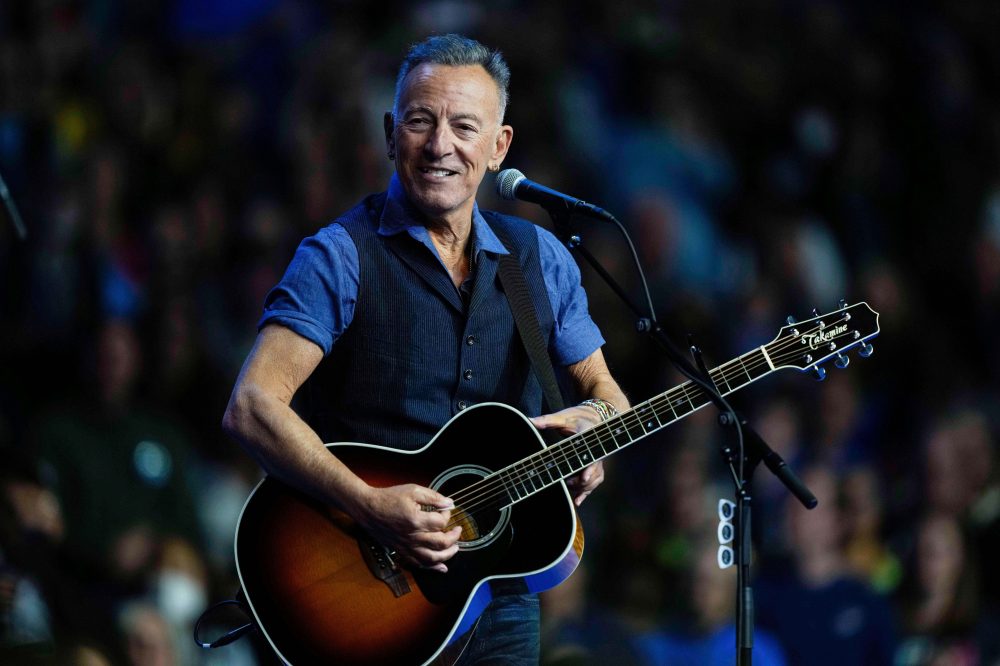
    Conservative unity began fracturing early in the conflict, with prominent voices like podcaster Tucker Carlson leading opposition.

    Recently, Joe Kent, director of the Center for Counterterrorism at the Department of Homeland Security, resigned from his Trump administration position, stating in his resignation letter that “I cannot in good conscience support the ongoing war in Iran” and that “Iran posed no imminent threat to our nation.”

    Conservative podcaster Steve Bannon, scheduled to address CPAC, has publicly worried that extended Middle Eastern military involvement could cost Republicans support by causing some conservatives to skip November’s midterm elections.

    These concerns arise as Republicans face potential House losses and their narrow Senate control appears less secure than previously.

    Recent polling from The Associated Press-NORC Center for Public Affairs Research shows that while Trump’s approval ratings remain stable, the Iranian situation may become a significant political burden for his administration. Approximately 59% of Americans consider U.S. military actions in Iran excessive, according to the survey.

    CPAC Chairman Matt Schlapp recognized conservative divisions over Iran and announced the convention’s annual preference poll will address the issue. Results will be announced Saturday during the convention’s closing day.

    “Any consensus is still to be determined. I think people trust President Trump, so I don’t think there’s been any shaking of his support,” Schlapp told the AP. “But I think underneath there’s concern about where does this lead.”

    Tiffany Krieger, a 20-year-old University of Pittsburgh sophomore, reported her maximum Trump support has dropped to half due to the conflict.

    “It seems like the love for him is plateauing. We see our party splitting apart and we’re supposed to be united,” said Krieger, from Harrisburg, Pennsylvania. “I think this issue with the war has put a line through the conservative movement.”

    Almost directly responding to Krieger’s concerns, Mercedes Schlapp, senior fellow for the CPAC foundation, began Thursday’s Texas conference session with a unity appeal.

    “We cannot divide from within,” she addressed hundreds of attendees from the convention center stage. Referencing political opposition, she continued: “Let’s stay united. They want us divided.”
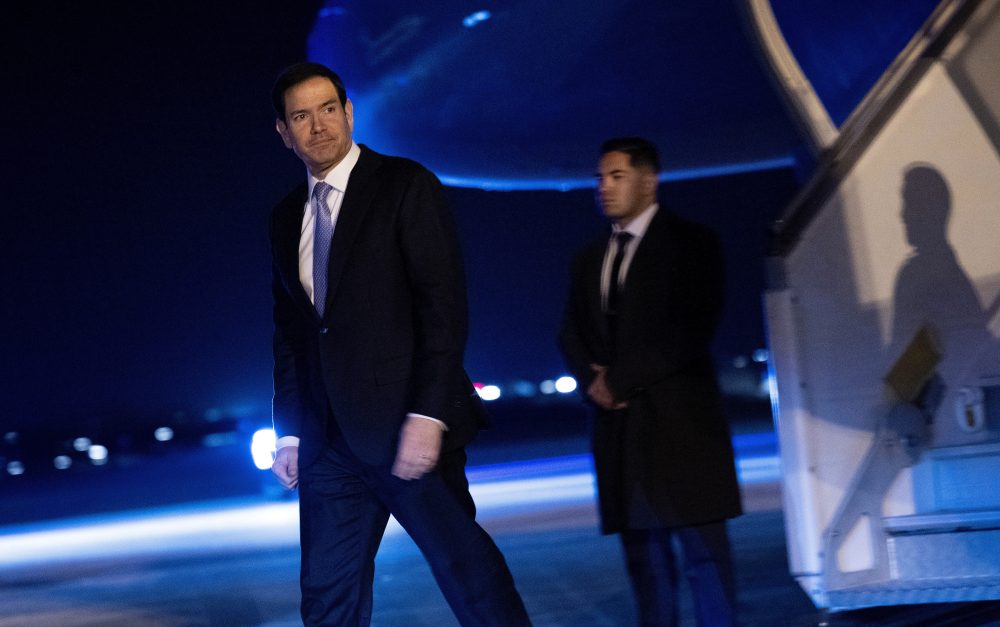
  • Israeli Forces Strike Tehran as Trump Extends Iran Deadline to April

    Israeli Forces Strike Tehran as Trump Extends Iran Deadline to April

    Early Friday morning, Israeli military forces carried out attacks in central Tehran, according to military officials, as smoke clouds were visible over Beirut following President Donald Trump’s decision to postpone his ultimatum regarding Iran’s blockade of the Strait of Hormuz.

    Israeli forces have deployed thousands of soldiers into Lebanese territory, with government officials stating their intention to secure control over all territory south of the Litani River, located approximately 20 miles north of the Lebanese border.

    With stock markets in turmoil, Trump announced Thursday that he was pushing back his deadline for the strait’s reopening to April 6, claiming Iran had requested additional time and describing negotiations as progressing positively. However, Iranian officials continue to deny any diplomatic engagement with Washington regarding a 15-point peace proposal.

    The ongoing conflict has resulted in devastating casualties, with over 1,900 fatalities reported in Iran and nearly 1,100 deaths in Lebanon. Israeli losses include 18 civilians and three military personnel killed during operations in Lebanon. Additionally, 13 American service members have lost their lives, along with numerous civilians throughout the Gulf area. The violence has forced millions to flee their homes across Lebanon and Iran.

    In related developments, New Zealand Finance Minister Nicola Willis announced Friday a comprehensive four-stage framework to address potential fuel shortages. The most restrictive phases would impose purchasing limits on gasoline and prioritize distribution for essential services.

    Willis explained that specific benchmarks, including export limitations and national fuel reserve levels, would determine transitions between the four stages.

    The minister emphasized that New Zealand currently operates under the first phase, representing minimal restrictions, but stressed the importance of public awareness regarding potential future limitations.

    No fuel purchasing or usage restrictions are currently in effect within New Zealand.

  • Fulton County Battles FBI in Court Over Seized 2020 Election Materials

    Fulton County Battles FBI in Court Over Seized 2020 Election Materials

    ATLANTA (AP) — A federal judge is scheduled to hear arguments Friday regarding Fulton County officials’ demand that the FBI return confiscated ballots and election materials from the 2020 presidential race.

    U.S. District Judge J.P. Boulee indicated in a scheduling document that the hearing became necessary after both parties were unable to reach a settlement during court-mandated mediation.

    The January 28 confiscation from a storage facility near Atlanta focused on the election center in Georgia’s largest county, which leans heavily Democratic and encompasses most of Atlanta. Fulton County has been the focal point of unsubstantiated allegations by President Donald Trump and his supporters claiming extensive election fraud led to his defeat.

    The FBI’s action represents one of multiple moves by the Trump administration that have concerned Democrats and numerous election administrators who worry it is leveraging law enforcement to advance the president’s personal complaints and preparing methods to disrupt this year’s midterm contests. The FBI also employed a subpoena this month to acquire documents connected to a disputed review of the 2020 presidential election in Arizona’s Maricopa County, another competitive state Trump lost.

    Meanwhile, the Justice Department is battling multiple states in court for access to voting records containing sensitive personal details. Election administrators, including some Republicans, have stated that providing such information would breach state and federal privacy regulations.

    Fulton County attorneys contended in a court document that seizing their records was “improper and unjustified” and shows “callous disregard” for Fourth Amendment protections against unreasonable searches and seizures. The Justice Department aims to “set a precedent that would grant the federal government unchecked power to interfere with the local administration of elections,” they stated.

    Justice Department lawyers countered that creating a comprehensive affidavit and submitting it to a judge “is the exact opposite of ‘callous disregard’” for those constitutional protections. “Their goal to disrupt an ongoing federal criminal investigation is clear,” they responded regarding Fulton County officials.

    The Justice Department indicated it is examining “irregularities that occurred during the 2020 presidential election in the County” and identified two statutes that may have been broken. One mandates election records be preserved for 22 months, while another forbids obtaining, casting or counting false, fictitious or fraudulent ballots.

    The document stated the FBI is investigating whether Fulton County adequately preserved ballot images; whether certain ballots were scanned and tallied multiple times; whether unfolded, unmailed ballots were counted as mail-in absentee votes; and possible irregularities involving tabulator tapes from scanning machines used to count ballots.

    Fulton County’s attorneys stated that the “deficiencies” or “defects” in the county’s 2020 election management mentioned in the affidavit represent typical human mistakes that frequently happen without deliberate misconduct and cannot establish probable cause.

    To bolster their arguments, Fulton officials provided a sworn statement from Ryan Macias, an election technology and security specialist who counseled the county during the 2020 election. He stated the affidavit includes “a multitude of false or misleading statements and omissions” and provided explanations for the alleged “deficiencies.”

    Reviews by the Georgia secretary of state and independent examinations contradict the primary claims of the affidavit, which is “rife with statements from witnesses lacking credibility, with extraordinary and undisclosed biases,” Fulton’s attorneys maintained.

    Georgia’s ballots in the 2020 presidential contest were tallied three times, including once manually, and each recount confirmed Democrat Joe Biden’s victory.

    Federal government attorneys dismissed the notion that the FBI agent who prepared the affidavit “intentionally or recklessly misled” the judge, stating that “the supposed misrepresentations and omissions flagged by Petitioners are illusory and/or immaterial.” They also claimed that expiration of the statute of limitations on potential crimes does not eliminate probable cause.

    Justice Department lawyers contend they don’t believe the documents were “properly retained and preserved” and noted that Fulton County officials “can hardly claim a meaningful interest” in the records since the clerk of courts previously requested judicial permission to destroy them.

    The department also emphasized that a federal magistrate judge examined the FBI affidavit and approved the search warrant. Fulton County attempted to have the FBI agent who prepared the affidavit appear at Friday’s hearing, but the Justice Department opposed this and the judge supported the federal government and dismissed the subpoena.

  • Gilgo Beach Serial Killer Suspect Plans Guilty Plea Next Month, Sources Report

    Gilgo Beach Serial Killer Suspect Plans Guilty Plea Next Month, Sources Report

    A former architect facing charges in the notorious Gilgo Beach serial murder case plans to enter a guilty plea next month, according to two sources with knowledge of his intentions.

    Rex Heuermann, 62, who stands accused of killing seven women across a 17-year period, will reportedly reverse his previous not guilty plea during his scheduled April 8 court appearance, the sources told The Associated Press.

    Both individuals, who have direct involvement in the case, requested anonymity since the plea change hasn’t been formally submitted to the court. One source revealed that both the victims’ relatives and Heuermann’s family members have received advance notice of this decision.

    Heuermann’s legal team has not yet responded to requests for comment.

    However, circumstances could still shift before the scheduled hearing. Heuermann retains the option to reconsider his decision, and any guilty plea must receive judicial approval.

    The defendant has remained in jail since his July 2023 arrest and had maintained his innocence in previous court proceedings. His trial was originally set to begin in September. Newsday first broke the story about his planned plea change.

    According to prosecutors, genetic evidence, mobile phone records, and materials discovered during a search of Heuermann’s Massapequa, New York residence link him to the victims, all young women who worked in the sex trade.

    Investigators discovered multiple victims’ remains along a secluded section of shoreline parkway, while other remains were located in additional remote locations.

    The seven victims have been identified as Melissa Barthelemy, Maureen Brainard-Barnes, Amber Lynn Costello, Sandra Costilla, Valerie Mack, Jessica Taylor and Megan Waterman.

    Suffolk County District Attorney Ray Tierney refused to provide comment when contacted Thursday evening, as did Gloria Allred, the California-based attorney representing several victims’ families.

    The case first gained public attention in 2010 when officers searching for a missing person uncovered multiple sets of human remains in brush along Ocean Parkway near Gilgo Beach.

    Throughout subsequent years, investigators employed genetic testing and additional evidence to identify victims. In several instances, they successfully connected these remains to others found previously across Long Island.

    Identifying Heuermann as a suspect required years of investigative work.

    A revived examination of the cold case first flagged him as a possible perpetrator in 2022. Investigators connected Heuermann to a pickup truck that a witness reported observing when one victim vanished in 2010.

    Subsequently, surveillance teams obtained a discarded pizza crust from Heuermann’s garbage, which enabled them to match his DNA to hair evidence found on one victim’s remains.

    Mobile phone records further demonstrated that Heuermann had communicated with several victims shortly before they disappeared, while examination of his internet activity revealed a pattern of viewing violent pornographic content and researching details about the murder investigation.

    In the previous year, investigators obtained computer files from Heuermann that they characterized as a planning document for the murders, featuring multiple checklists with instructions to minimize sound, clean victims’ bodies and eliminate evidence.

    During recent proceedings, the presiding judge denied defense requests to exclude specific DNA evidence from trial proceedings and to separate the case into individual trials.

  • Tour Helicopter Goes Down on Remote Hawaiian Beach, Multiple Hurt

    Tour Helicopter Goes Down on Remote Hawaiian Beach, Multiple Hurt

    A sightseeing helicopter went down Thursday on a secluded stretch of beach along Hawaii’s Kauai island, leaving multiple people hurt, according to local fire officials.

    The aircraft was transporting five people total — one pilot and four passengers — when it went down at Kalalau Beach, according to the Kauai Fire Department. The crash site sits along the island’s northern coastline on the Na Pali Coast.

    Fire officials have confirmed that people were hurt in the incident, though the exact number of injured individuals and the extent of their injuries remains unknown at this time.

    Aerial tours by helicopter have become a favored method for visitors to view the dramatic coastline of the Na Pali Coast, with its towering cliffs, pristine beaches and cascading waterfalls. The rugged terrain can only be reached on foot through challenging hikes or by watercraft.

  • Montana Senate Race Shaken Up by GOP Incumbent’s Unexpected Exit

    Montana’s political landscape has been turned upside down following the unexpected announcement that Republican Senator Steve Daines will not pursue reelection after serving two terms in office.

    The shocking decision has created new opportunities for alternative candidates, including Seth Bodnar, who previously served as president of the University of Montana and is now mounting an independent campaign for the Senate seat.

    Democratic party officials are expressing concern that Bodnar’s independent candidacy could divide votes that might otherwise go to their nominee, potentially complicating their strategy to capture the seat.

    Daines’ withdrawal from the race has fundamentally altered the dynamics of what was expected to be a closely watched Senate contest in the Big Sky State.

  • Philippines Moves Forward with Shortened ASEAN Summit Despite Mideast Crisis

    Philippines Moves Forward with Shortened ASEAN Summit Despite Mideast Crisis

    MANILA – Despite ongoing turmoil in the Middle East, the Association of Southeast Asian Nations will move forward with its scheduled May leadership summit, Philippine President Ferdinand Marcos Jr. announced Friday.

    The summit will be streamlined to concentrate on critical regional concerns including energy supply chains, rising food costs, and the welfare of migrant workers throughout the region, Marcos explained.

    After discussions with fellow leaders from the 10-member Southeast Asian bloc, Marcos said he had inquired whether they would prefer delaying the gathering due to the Middle Eastern crisis.

    “The consensus that we came to is that it is precisely now that we must coordinate our efforts,” Marcos told reporters.

    The decision reflects the regional group’s commitment to addressing pressing economic and humanitarian challenges affecting Southeast Asia, even as global attention remains focused on conflicts elsewhere.

  • Secretary of State Rubio Speaks with Kurdish Leader After Iranian Attack

    Secretary of State Rubio Speaks with Kurdish Leader After Iranian Attack

    Secretary of State Marco Rubio conducted a telephone conversation with Kurdistan Regional Government Prime Minister Masrour Barzani on Thursday, according to a State Department announcement.

    During the discussion, Rubio thanked Kurdish leadership for their role in facilitating the flow of Iraqi oil, including petroleum from the Kurdistan region, to international markets. The State Department noted that “The secretary also expressed his gratitude to the Kurdistan Regional Government for enabling oil from Iraq, including from the Iraq Kurdistan Region, to reach global markets.”

    Oil market volatility has increased due to the ongoing conflict with Iran, affecting global energy prices.

    Rubio also conveyed sympathy regarding recent casualties, as the State Department reported he “offered his condolences to the families of the Peshmerga killed in an Iranian missile attack on March 24 and wished a speedy recovery to those injured.”

    The deadly incident occurred when Iranian forces launched a missile assault on a Kurdish military installation located north of Erbil in Iraqi Kurdistan. According to Peshmerga officials, the Tuesday morning attack resulted in at least six Kurdish fighters losing their lives and left 30 others wounded.

    Kurdish military leadership described Iran’s actions as a “treacherous attack,” stating that six Iranian ballistic missiles targeted the Peshmerga military headquarters facility north of Erbil during the early morning hours.

    The broader conflict with Iran commenced on February 28 when American and Israeli forces initiated strikes against Iranian targets. Iran retaliated with its own military operations against Israeli territory and Gulf nations hosting American military installations. The escalating violence, including continued joint American-Israeli operations in Iran and Israeli military action in Lebanon, has resulted in thousands of casualties.

    President Donald Trump has provided varying objectives and timeframes for the military campaign, from regime change in Iran to dismantling the country’s military and missile infrastructure. During Thursday’s remarks, Trump again claimed victory in the ongoing conflict.

  • Court Allows DraftKings to Keep Using ‘March Madness’ in Legal Victory

    Court Allows DraftKings to Keep Using ‘March Madness’ in Legal Victory

    INDIANAPOLIS — The NCAA suffered a legal setback Thursday when a federal court rejected their emergency request to prevent DraftKings from utilizing trademarked phrases connected to college basketball tournaments.

    The lawsuit for trademark violation, submitted to the Southern District of Indiana court last week, sought to prohibit DraftKings from employing ‘March Madness,’ ‘Final Four,’ ‘Elite Eight,’ and ‘Sweet Sixteen,’ along with similar variations, in their marketing efforts.

    Judge Tanya Walton Pratt determined the NCAA failed to demonstrate that the sports betting company’s usage of these phrases would result in irreparable damage.

    ‘With further discovery the NCAA may be able to show they are entitled to a preliminary or permanent injunction, and those claims remain pending,’ Pratt wrote.

    In court documents filed Wednesday responding to the NCAA’s lawsuit, DraftKings argued they have utilized ‘March Madness’ and related terminology when referencing the NCAA Tournament for over five years and possess the legal authority to continue doing so.

    The NCAA maintains it deliberately distances itself from any association with gambling activities and argued in their legal filing that DraftKings’ usage of the trademarked terms creates customer confusion by suggesting NCAA endorsement.

  • Iran Conflict Disrupts Global Fertilizer Supply, Threatens Higher Food Costs

    Iran Conflict Disrupts Global Fertilizer Supply, Threatens Higher Food Costs

    Agricultural producers across the globe are confronting mounting challenges as the ongoing conflict involving Iran disrupts critical supply chains. Energy costs have surged while fertilizer availability has diminished significantly following Tehran’s substantial restrictions on traffic through the Strait of Hormuz, implemented as a response to military strikes by the United States and Israel.

    This fertilizer crisis threatens to compound existing hardships for agricultural producers in developing nations, who already face challenges from climate change and unpredictable weather patterns, potentially resulting in increased food costs for consumers worldwide.

    Agricultural producers in the Northern Hemisphere who depend heavily on fertilizer imports from Gulf region suppliers are particularly vulnerable as the growing season commences, according to Carl Skau, deputy executive director of the World Food Program.

    “In the worst case, this means lower yields and crop failures next season. In the best case, higher input costs will be included in food prices next year,” Skau explained.

    In Punjab, India, rice producer Baldev Singh, age 55, expressed concern that small-scale agricultural operations — which represent the majority of the nation’s farming operations — face an uncertain future without government fertilizer subsidies when demand reaches its peak in June.

    “Right now, we are waiting and hoping,” Singh stated.

    Tehran has significantly curtailed commercial traffic through the Strait of Hormuz, a crucial waterway that typically facilitates approximately one-fifth of global petroleum shipments and nearly one-third of worldwide fertilizer commerce.

    Essential plant nutrients nitrogen and phosphate face immediate supply disruptions due to the maritime blockade.

    Nitrogen-based products, including urea — the most commonly traded fertilizer that promotes plant development and increases crop production — experience the most severe impact from transportation delays and escalating liquefied natural gas costs, which serve as a crucial component in production.

    The regional conflict has affected roughly 30% of international urea commerce, according to Chris Lawson from CRU Group, a commodities consulting firm based in London.

    Several nations already confront severe supply shortages, reports Raj Patel, a food systems economist from the University of Texas. Ethiopia, for instance, obtains more than 90% of its nitrogen fertilizer from Gulf suppliers via Djibouti, a supply chain that experienced strain even before hostilities commenced in February.

    “The planting season is now,” Patel observed. “The fertilizer isn’t there.”

    Phosphate availability, which supports plant root systems, also faces constraints. Saudi Arabia manufactures approximately one-fifth of global phosphate fertilizer, while the region exports more than 40% of the world’s sulfur — a vital component and byproduct of petroleum and gas processing, Lawson noted.

    Following the conclusion of hostilities, Gulf region producers would require substantial security assurances before resuming normal shipping operations through the strait, with insurance expenses likely to increase significantly, said Owen Gooch, an analyst with London-based Argus Consulting Services.

    India’s government has made domestic urea supplies a priority and provides fertilizer manufacturers with approximately 70% of their natural gas requirements. However, some facilities continue operating below full capacity, resulting in reduced production.

    “The food system is fragile, and it depends on stable fertilizer supply chains to ensure farmers can produce the food the world relies on,” stated Hanna Opsahl-Ben Ammar from Yara International, a major global fertilizer manufacturer.

    Agricultural producers typically apply fertilizers immediately before or during planting, meaning crops lose crucial early development opportunities and production can decline when deliveries experience delays, regardless of later supply improvements.

    The consequences are already apparent in the United States and Europe during their primary planting period, with similar effects anticipated across much of Asia in upcoming months.

    “Our crops out in the field need nitrogen now — the sooner the better — so they can get off to a good start, helping them establish themselves and build up reserves for the harvest later this summer,” explained Dirk Peters, an agricultural engineer operating a farm near Berlin.

    While fertilizer costs remain below the highs experienced following Russia’s Ukraine invasion, grain prices were elevated then, enabling producers to manage expenses, said Joseph Glauber from the International Food Policy Research Institute. Current lower grain prices mean reduced profit margins, potentially forcing producers to select crops requiring less fertilizer — such as soybeans in America — or reduce fertilizer applications, decreasing yields. Reduced production can result in higher consumer costs.

    Alternative suppliers are unlikely to compensate for the deficit. China, the world’s leading nitrogen and phosphate fertilizer manufacturer, focuses on domestic requirements, with urea exports unlikely to restart until May, Lawson indicated. Russian facilities, representing another major producer, already operate near maximum capacity.

    The supply disruptions are already affecting Africa, where numerous agricultural producers depend on fertilizer imports from Middle Eastern and Russian sources.

    Unusually heavy early rainfall in East Africa has provided producers with approximately one week of dry conditions to prepare fields and apply fertilizer, said Stephen Muchiri, a Kenyan maize producer and CEO of the Eastern African Farmers Federation, representing 25 million small-scale operators.

    Fertilizer shortages and cost increases severely impact agricultural producers, compelling them to use reduced quantities and resulting in diminished yields. Brief delays alone can decrease maize production by approximately 4% per season, Patel noted, referencing Zambian research.

    Government intervention options include implementing subsidies, encouraging domestic production, and regulating exports.

    India currently subsidizes fertilizer to reduce financial pressure on agricultural producers, though these subsidies reduce funding available for long-term agricultural investments. The nation has allocated $12.7 billion this year specifically for urea subsidies, according to the U.S.-based Institute for Energy Economics and Financial Analysis.

    Domestic urea production efforts have increased India’s reliance on imported gas, while excessive urea application has damaged local soil quality, said Purva Jain of IEEFA, who advocates for organic fertilizer alternatives.

    Reduced dependence on imported fertilizers could shield agricultural producers and consumers from energy price fluctuations and climate-related disruptions, said Oliver Oliveros, executive coordinator of the Agroecology Coalition.

    “This could be a turning point,” Oliveros concluded.

  • Markets Drop Across Asia Following Wall Street’s Steepest Decline Since Iran Conflict

    Markets Drop Across Asia Following Wall Street’s Steepest Decline Since Iran Conflict

    HONG KONG — Financial markets throughout Asia experienced widespread declines Friday morning following Wall Street’s steepest single-day drop since the Iran conflict commenced, as investors expressed growing skepticism about potential peace talks.

    Japan’s Nikkei 225 benchmark declined 1.2% to reach 52,982.86 during morning trading sessions. South Korea’s Kospi experienced a more severe drop of 3.1%, falling to 5,293.26.

    Hong Kong’s Hang Seng index decreased 0.1% to 24,825.50, though China’s Shanghai Composite managed a slight gain of 0.1% to 3,893.21.

    Australia’s S&P/ASX 200 declined 0.5%, while Taiwan’s Taiex traded 1.5% lower.

    Thursday’s trading session on Wall Street marked the most significant decline since the Iran war’s beginning, with the S&P 500 dropping 1.7% to 6,477.16 — its steepest fall since January. The Dow Jones Industrial Average decreased 1% to 45,960.11. The Nasdaq composite experienced a 2.4% decline to 21,408.08, placing it 10% beneath its recent peak, which qualifies as a market “correction.”

    Market volatility this week has been driven by speculation regarding potential diplomatic negotiations between Washington and Tehran.

    Following Thursday’s market close, President Donald Trump announced he would delay a planned strike on Iran’s energy infrastructure and extended until April 6 his deadline for Iran to reopen the Strait of Hormuz, a vital passage for global oil and gas shipments.

    Skepticism about a potential conflict resolution intensified after Iran declined a U.S. ceasefire offer and presented an alternative proposal, while the United States continued deploying additional military personnel to the region.

    Energy prices continued their downward trend Friday despite earlier increases. Brent crude futures, the global benchmark, dropped 1.1% to $100.77 per barrel after trading above $102 on Thursday.

    U.S. benchmark crude oil fell 1.3% early Wednesday to $93.30 per barrel.

    Precious metals saw gains in early Friday trading, with gold prices rising 1% to $4,420.70 per ounce. Silver increased 1.6% to $69.04.

    Currency markets showed the U.S. dollar weakening to 159.56 Japanese yen from 159.81 yen. The euro strengthened to $1.1539 from $1.1527.

  • Colorado Mother Celebrates Social Media Verdicts After Son’s Fentanyl Death

    Colorado Mother Celebrates Social Media Verdicts After Son’s Fentanyl Death

    THORNTON, Colo. — A mother from Colorado is praising recent court decisions against major tech companies after losing her teenage son to a deadly drug purchased through social media platforms.

    Kimberly Osterman’s 18-year-old son Max passed away in 2021 after taking what he believed was Percocet, which he had arranged to buy from a dealer he met on Snapchat. The pill contained a lethal amount of fentanyl, and Max died the following morning.

    “The truth is out, and it’s time that they are held accountable for the design of the platforms,” Osterman stated. “They put profits over safety.”

    This week brought two significant legal victories that Osterman believes will pave the way for holding social media companies responsible for child safety. On Wednesday, a Los Angeles jury ruled that both YouTube and Meta — the parent company of Instagram and Facebook — are liable for creating platforms specifically designed to captivate young users in harmful ways. Both companies have expressed disagreement with the rulings and are considering appeals.

    Meanwhile, a separate jury in New Mexico concluded that Meta deliberately damaged children’s mental health while hiding information about child sexual exploitation occurring on its platforms. Meta has announced plans to appeal this decision as well.

    Before the Los Angeles trial commenced in January, Snapchat’s parent company Snap Inc. reached a settlement for an undisclosed amount. TikTok also agreed to settle, with terms kept confidential.

    Looking through family photo albums at her Colorado residence Thursday, Osterman reminisced about “the days before social media. The days before the infinite scrolling lured him in.” Pictures of Max surrounded by heart decorations and angel wings filled the shelves around her home.

    Osterman described her son as academically gifted with a passion for lacrosse and wrestling. While she knew he used Snapchat to stay in touch with friends, she was unaware of the potential dangers he faced.

    The drug dealer who sold the fatal pill to Max, Sergio Guerra-Carrillo, received a six-year prison sentence in 2023 on two distribution charges.

    Currently, Osterman is pursuing her own wrongful death lawsuit, which is separate from the cases decided this week. She has joined Parents for Safe Online Spaces (ParentsSOS), an organization of parents who have experienced online-related child harm and push for stronger regulations.

    The group supports the Kids Online Safety Act, proposed federal legislation that would mandate social media platforms take reasonable measures to prevent harm on sites likely to be used by minors.

    Osterman advocates for stringent protective measures, including age verification technology to block anyone under 18 from accessing these platforms.

    “You think your kids are safe in their home, in their bedroom, but that’s not the way it is with the current status of social media,” she explained.

    When contacted Thursday, Snapchat did not provide immediate comment regarding Osterman’s situation. The company has previously stated it employs advanced technology to actively locate and eliminate drug dealers’ accounts while blocking search results for drug-related keywords.

    While it remains uncertain whether these recent legal victories will result in significant changes, the verdicts signal an increasing readiness to hold major social media corporations accountable and demand substantial reforms. Technology oversight experts anticipate these decisions will encourage additional lawsuits and regulatory measures.

  • Chinese Education Ministry Implements New Rules to Reduce Student Academic Stress

    Chinese Education Ministry Implements New Rules to Reduce Student Academic Stress

    HONG KONG – Chinese education officials unveiled new guidelines on Friday designed to safeguard student wellbeing by implementing restrictions on excessive homework assignments and protecting student break periods.

    The Education Ministry’s new framework prohibits educational institutions from overwhelming students with too many tests or adding to their “academic burden,” according to an official statement released through the ministry’s WeChat platform.

    This policy shift reflects government efforts to address mounting academic stress and support student mental health, marking a significant change from China’s long-standing educational philosophy that emphasized rigorous study habits and high academic achievement.

    Educational experts note that overwhelming homework assignments have become standard practice in Chinese schools, resulting in sleep deficits and rising rates of anxiety and depression among students.

    Previous regulations announced by China last November required schools to “strictly control” homework volumes while ensuring primary and secondary students receive “at least” two hours of daily physical activity during school hours.

    The new guidelines also mandate that kindergartens cannot implement elementary school teaching approaches or advance elementary curriculum content.

    Additionally, primary and secondary educational institutions are forbidden from conducting entrance examinations for student selection purposes, and schools cannot reward or penalize educators for “hyping up” students who achieve top scores on college entrance examinations.

    The ministry emphasized that schools must not “encroach on students break time in anyway, or prohibit students from leaving the classroom during breaks.”

    These measures follow China’s recent announcement introducing spring and autumn school holidays to supplement existing summer and winter vacation periods.

    The Sichuan Southwest Vocational College of Aviation recently announced through its official WeChat that their six-day spring break from April 1-6 will focus on helping students “see the flowers and enjoy romance,” as government officials explore innovative approaches to encourage future marriages and stimulate domestic spending.

  • Markets Tumble Worldwide as Middle East Conflict Fuels Economic Uncertainty

    Markets Tumble Worldwide as Middle East Conflict Fuels Economic Uncertainty

    Markets across Asia plunged Friday, continuing a worldwide selloff as investors grappled with the economic fallout from escalating Middle East tensions that have sent energy costs soaring and pushed interest rates higher.

    President Donald Trump provided some relief by extending his deadline for potential strikes against Iranian power facilities by an additional 10 days, after already pushing back his original 48-hour timeframe by five days. Oil prices responded with Brent crude dropping 1% to $107.07 per barrel, though it had spiked nearly 6% the previous night.

    Despite the modest oil price retreat, concerns persist about the conflict expanding into ground warfare, particularly as reports suggest Trump may deploy additional military personnel to the region. The critical Strait of Hormuz shipping route remains uncertain for reopening.

    Iran rejected a U.S. peace proposal, calling it “one sided and unfair.”

    Wall Street futures managed a slight 0.2% rebound during Asian trading hours. The previous day saw the Nasdaq Composite crash 2.4%, putting it nearly 11% below its October 29 peak and officially confirming a correction phase.

    ITC Markets senior foreign exchange analyst Sean Callow warned of continued volatility ahead. “The Middle East headlines won’t stop for the weekend so the weight of money leans towards assuming another risk-off week ahead as the U.S. continues to add military resources to the region,” Callow stated.

    “Many see the Iranian regime as holding the upper hand and doubt that there are indeed productive negotiations with the U.S. in process… Underlying pressure towards higher oil prices, USD and yields along with weaker equities appears intact,” he added.

    Regional markets showed widespread declines Friday. The MSCI Asia-Pacific index excluding Japan dropped 1.4% and appeared headed for a 3% weekly decline. Japan’s Nikkei fell 1.3%, down 0.9% for the week.

    South Korea experienced particularly severe losses with the KOSPI diving 3%, resulting in a devastating 8.5% weekly drop. Chinese blue-chip stocks declined 1%, while Hong Kong’s Hang Seng slipped 0.4%.

    Citi analysts warned that more severe conflict scenarios could push global economic growth below 2% this year while driving inflation above 4% and increasing recession risks.

    “Asia, particularly Korea, Japan, and India, faces the most intense headwinds due to heavy reliance on imported fuel and direct exposure to disruptions in the Strait of Hormuz,” the analysts noted in their client advisory.

    Bond markets worldwide faced significant pressure as rising oil costs intensified inflation worries. Norway’s central bank joined other institutions in signaling potential rate increases, reversing earlier projections of three cuts through 2028 and instead anticipating hikes this year.

    Government bond yields climbed sharply, with Japan’s 10-year rate rising 4 basis points to 2.31% and Australia’s benchmark 10-year yield surging 7 basis points to 5.076%.

    The two-year U.S. Treasury yield remained steady at 3.9714% Friday after jumping 10 basis points overnight as traders increased bets on Federal Reserve rate hikes this year to approximately 50%.

    Currency markets reflected the risk-averse sentiment, with the U.S. dollar strengthening for a third consecutive session as investors sought safety. The Australian dollar, sensitive to risk sentiment, fell 0.2% to a two-month low of $0.6872 after declining 0.8% overnight.

    The euro held steady at $1.1533 following a 0.3% overnight decline, while the yen traded near 159.70 against the dollar. Market observers expect potential intervention if the yen reaches 160.

    Gold prices recovered 0.6% to $4,405 per ounce after falling nearly 3% the previous session.

  • US Maritime Agency Monitors China’s Ship Detentions Over Panama Port Dispute

    US Maritime Agency Monitors China’s Ship Detentions Over Panama Port Dispute

    Federal maritime officials are keeping close watch on an extraordinary increase in ship detentions by Chinese authorities, which appears linked to an ongoing dispute over control of key Panama Canal ports.

    The U.S. Federal Maritime Commission announced Thursday it’s monitoring the situation after Panama’s highest court struck down the legal basis for a 1997 agreement that allowed Hong Kong-based CK Hutchison’s Panama Ports Company to run the Balboa and Cristobal terminals. These facilities sit on opposite sides of the Panama Canal.

    After the court decision in late January, Panama’s government named American subsidiaries Maersk APM Terminals and Mediterranean Shipping Company’s Terminal Investment Limited as temporary operators through 18-month contracts.

    The port takeover came after growing pressure from Washington to reduce Chinese control around the vital waterway, which handles roughly 5% of worldwide shipping traffic.

    FMC Chair Laura DiBella noted that China’s detention of Panama-registered vessels has far surpassed typical levels, with Lloyd’s List Intelligence reporting almost 70 ships held since March 8.

    “These intensified inspections were carried out under informal directives and appear intended to punish Panama after the transfer of Hutchison’s port assets,” DiBella said in a statement.

    She warned that since Panama-flagged vessels transport a substantial portion of U.S. containerized cargo, the detentions “could result in significant commercial and strategic consequences to U.S. shipping.” DiBella added that the FMC has authority to examine whether foreign government actions might damage American trade interests.

    Chinese transport officials have also called Maersk and MSC representatives to Beijing for senior-level meetings, according to DiBella.

    CK Hutchison, which ran the ports for almost three decades, has firmly disputed Panama’s court decision and accused the country’s officials of illegally confiscating assets. The company has initiated international arbitration proceedings against Panama, seeking more than $2 billion in compensation.

    The conflict has also created complications for CK Hutchison’s proposed $23 billion deal to sell a controlling interest in its worldwide port operations to a group headed by BlackRock and MSC.

    China’s Ministry of Transport has not yet provided a response to requests for comment on the situation.

  • Ohtani Tops MLB Jersey Sales for Third Consecutive Year as Season Opens

    Ohtani Tops MLB Jersey Sales for Third Consecutive Year as Season Opens

    For the third consecutive year, Los Angeles Dodgers superstar Shohei Ohtani has claimed the number one position in Major League Baseball jersey sales as teams prepare for opening day, according to an announcement from MLB on Thursday.

    Fellow Dodgers pitcher Yoshinobu Yamamoto secured second place in the rankings, while New York Yankees outfielder Aaron Judge landed in third. Seattle’s catcher Cal Raleigh took fourth position, with Dodgers shortstop Mookie Betts rounding out the top five.

    The last player besides Ohtani to claim the sales crown was Atlanta’s outfielder Ronald Acuña Jr., who held the top position during the 2023 All-Star break. However, Ohtani regained his dominance by season’s end and has maintained his streak for three years.

    Completing the top ten were Arizona third baseman Nolan Arenado, Dodgers first baseman Freddie Freeman, Baltimore first baseman Pete Alonso, Boston outfielder Roman Anthony, and Chicago Cubs outfielder Pete Crow-Armstrong. Both Raleigh and Anthony achieved their first appearances in the top ten rankings.

    The sales data comes from Fanatics’ online platforms, including MLBShop.com, tracking purchases made following the conclusion of last season’s World Series, where the Dodgers captured their second consecutive championship.

  • Federal Report: Faulty Gas Pipes Caused Deadly Mississippi Home Explosions

    Federal Report: Faulty Gas Pipes Caused Deadly Mississippi Home Explosions

    JACKSON, Miss. — Federal investigators have determined that two fatal natural gas explosions that leveled homes in Jackson, Mississippi during January 2024 occurred when underground utility lines became disconnected from their joints due to shifting clay soil conditions, according to a report released Thursday by federal safety officials.

    The initial blast claimed the life of 82-year-old Clara Barbour.

    The National Transportation Safety Board determined that Atmos Energy Corp., the Dallas-based gas utility serving the area, had identified the gas leaks prior to the explosions but failed to classify them as requiring immediate attention. Federal investigators also concluded that the company inadequately assessed pipeline risks, delayed necessary repairs, and provided insufficient training to community members and emergency responders regarding gas leak protocols. The board called for enhanced regulatory scrutiny of the utility.

    “Atmos has had significant safety shortfalls in recent years,” investigators stated. “Thus, Atmos’s multistate operations require broader oversight.”

    Company representative Bobby Morgan responded that safety continues to be “our highest priority.”

    “We will work diligently in the coming days and weeks to evaluate the findings as part of our ongoing safety efforts to further our vision to be the safest provider of natural gas services,” Morgan stated.

    Atmos Energy provides natural gas service across Colorado, Kansas, Kentucky, Louisiana, Mississippi, Tennessee, Texas and Virginia.

    The January 24 explosion and resulting fire in southern Jackson killed Clara Barbour and caused minor injuries to her spouse, Johnny Barbour. A second blast occurred three days afterward, approximately three-quarters of a mile from the first incident, completely destroying one residence and damaging an adjacent home. That explosion resulted in no casualties.

    Federal investigators determined that both incidents involved gas supply lines that had become detached from their connections as surrounding soil shifted, creating hazardous gas accumulations that triggered the explosions.

    The Jackson region sits above Yazoo clay, a soil type that swells during wet periods and shrinks during dry conditions. This soil movement not only damages building foundations and roadways but can also cause pipeline disconnections. The pipe connections installed by Atmos’s predecessor company lack resistance to separation forces, investigators found. The safety board recommended that Atmos locate and replace all such vulnerable connections.

    The gas leak at the Barbour residence was first identified on November 17, 2023, when residents detected the chemical additive mixed into natural gas for safety purposes. An Atmos worker classified the leak as non-threatening, placing it on a repair schedule that could extend beyond one year. The leak at the second explosion site was discovered December 1 but received an even lower priority rating, with repairs scheduled within three years.

    Following the explosion, the company reassessed Jackson-area leaks and identified several that posed greater risks than originally determined, the report noted.

    Safety investigators criticized Atmos for inadequate threat assessment regarding expansive soil conditions, pointing out that regulators had issued warnings about this hazard since 2008. The NTSB had previously identified expanding soil as a contributing factor in a 2018 Atmos explosion in Dallas that resulted in one death and four injuries.

    Investigators noted that Atmos maintained varying safety protocols across different states, and that implementing the more rigorous standards used in Kansas could have prevented the Mississippi explosions.

    “Atmos’s siloed state operations, including leak monitoring procedures that differed by state, demonstrate that Atmos has not applied lessons learned in one state to the other states it operates in,” the board concluded.

  • Chinese Banking Stocks Rise on Reports of Potential Investment Rule Changes

    Chinese Banking Stocks Rise on Reports of Potential Investment Rule Changes

    SHANGHAI/BEIJING – Financial sector stocks in China showed stronger performance compared to the overall market on Friday, following reports that government regulators are exploring changes to investment restrictions that could expand funding opportunities for banking institutions.

    According to sources who spoke with Reuters on Thursday, China’s banking oversight authority is considering modifications that would permit certain bank investors to acquire major ownership positions – classified as 5% or greater stakes – in one to two more banking institutions beyond the current maximum of two.

    When contacted by Reuters on Thursday, the banking regulatory agency did not provide a response regarding any possible modifications to existing rules.

    Friday morning trading showed China’s CSI Banks Index dropping 0.3% at the opening bell before stabilizing near even levels during early sessions. Meanwhile, the broader CSI300 Index started the day down 1%.

    According to Citi analysts in a client advisory, the proposed regulatory adjustment “has a positive impact on China banks.”

    Citi noted that such changes would support faster expansion of bank lending activities, create stronger management motivation to improve profits and stock values, and encourage additional purchases from institutional investors such as insurance companies.

    JPMorgan analysts echoed this sentiment in their research report, stating the development “could broaden the investor base for China banks, and would thus be positive for the sector in general.”

  • Taiwan Skips WTO Summit After Cameroon Issues Error-Filled Travel Documents

    Taiwan Skips WTO Summit After Cameroon Issues Error-Filled Travel Documents

    Taiwan’s foreign ministry announced Thursday that the island nation will skip an upcoming World Trade Organization conference in Cameroon due to severely flawed travel documentation provided by the African host country.

    The controversy began when Cameroon initially listed Taiwan as “Taiwan, province of China” in pre-conference paperwork, prompting formal complaints from Taiwan’s government to both the WTO and Cameroon officials.

    When Cameroon attempted to resolve the issue by offering visa exemptions for Taiwan’s delegation, the replacement documents contained numerous mistakes, including misspelled names and incorrectly identifying nearly all delegation members as female.

    “This shows that the Cameroonian side handled the matter carelessly and without sincerity,” Taiwan’s foreign ministry stated.

    “If our personnel were to enter Cameroon carrying documents full of errors, there would be an even greater risk of being obstructed or humiliated upon arrival. After a comprehensive assessment, we have therefore decided not to attend.”

    Cameroon’s foreign ministry has not responded to requests for comment on the matter.

    A WTO representative confirmed that corrected visas were issued on March 20 following intervention by the organization’s director general, though they declined to provide additional details.

    This absence represents a historic first for Taiwan, which has participated in every WTO ministerial conference since becoming a member in 2002 under the designation “Separate Customs Territory of Taiwan, Penghu, Kinmen and Matsu.”

    The WTO remains one of the limited international organizations where Taiwan, a major semiconductor producer, maintains membership despite China’s claims over the island.

    Beijing has intensified efforts to limit Taiwan’s global participation, particularly in Africa where China maintains strong economic and political relationships. Chinese Foreign Ministry spokesperson Lin Jian accused Taiwan of “engaging in political manipulation despicably under the pretext of participation in the WTO conference to create disruption and serve their ‘Taiwan independence’ agenda.”

    Taiwan has expressed particular frustration over Chinese pressure preventing its participation in World Health Organization activities, even in observer roles, despite not holding United Nations membership.

    Taiwan’s democratically elected leadership maintains that Beijing lacks authority to represent or speak for the island.

  • Philippines and France Forge New Military Partnership Amid China Sea Disputes

    Philippines and France Forge New Military Partnership Amid China Sea Disputes

    MANILA – A new military cooperation agreement between the Philippines and France will enable both countries to conduct joint training exercises on each other’s soil, as the Philippines seeks to strengthen defense partnerships while facing increased tensions with China over South China Sea territorial claims.

    The visiting forces pact was formalized on March 26 when Philippine Defense Secretary Gilberto Teodoro met with French Minister for the Armed Forces and Veterans Catherine Vautrin in Paris. During their discussions, both officials addressed regional security concerns and emphasized their commitment to maintaining international law and order.

    Both nations stressed the importance of “the peaceful resolution of disputes” and highlighted the necessity of building stronger supply chain networks during times of crisis.

    According to a statement from the Philippine defense department, “The agreement will greatly bolster bilateral cooperation and offer an adequate level of legal protection to the joint activities between the Armed Forces of the Philippines and the French Armed Forces.”

    France now joins the Philippines’ network of military partnership agreements, which already includes similar arrangements with the United States, Australia, Japan, and New Zealand.

    The timing of this military agreement is significant, occurring just one day after Philippine military officials reported that a Chinese missile frigate “executed an unsafe and unprofessional manoeuvre” against a Philippine Navy ship operating near Thitu Island, a crucial Philippine military position in the contested waters.

    China maintains territorial claims over nearly all of the South China Sea, a vital shipping corridor that handles over $3 trillion in annual trade.

    The regional powerhouse continues to reject a significant 2016 international court decision that declared its expansive territorial claims in the waterway invalid.

  • U.S. Dollar Strengthens as Middle East Conflict Escalates, Peace Talks Stall

    U.S. Dollar Strengthens as Middle East Conflict Escalates, Peace Talks Stall

    HONG KONG – The U.S. dollar climbed toward multi-month highs Friday as global investors flocked to safe-haven assets while Middle East conflicts intensified and diplomatic solutions appeared increasingly elusive.

    Financial markets experienced another volatile week after President Donald Trump extended his moratorium on strikes targeting Iran’s energy infrastructure through April. However, Washington and Tehran presented contradictory narratives about progress in diplomatic negotiations.

    Adding to investor concerns, the Wall Street Journal reported Thursday that Pentagon officials are considering deploying as many as 10,000 additional ground forces to the Middle East region. This development further diminished market optimism about a swift resolution to the ongoing conflict.

    The uncertainty drove investors toward the dollar as a secure asset while increasing expectations for a potential U.S. interest rate increase before year’s end, driven by inflationary pressures from sustained high energy costs.

    Currency markets reflected the dollar’s strength, with the Japanese yen approaching 160 per dollar at 159.61, while the euro declined slightly by 0.03% to $1.1525. The British pound dropped 0.05% to $1.3325.

    “It doesn’t look like the conflict will end anytime soon,” said Carol Kong, a currency strategist at Commonwealth Bank of Australia. “The dollar is king while this conflict lasts.”

    “If we’re right about this conflict being protracted, I think oil prices will just keep rising and it will push the dollar higher, at the expense of net energy importers like the Japanese yen and the euro,” she added.

    Market pessimism pushed risk-sensitive currencies lower, with the Australian dollar falling to a two-month low of $0.68722. The New Zealand dollar similarly struggled near January lows, trading down 0.15% at $0.5754.

    Measured against a basket of major currencies, the dollar rose marginally to 99.93, positioning for a 2.3% monthly gain that would represent its strongest performance since July of last year.

    Market participants now assign a 46% probability to a 25-basis-point Federal Reserve rate increase by December, according to the CME Fedwatch tool. This marks a dramatic shift from expectations of more than 50 basis points of rate cuts that existed before the conflict began.

    Both the Bank of England and European Central Bank are also anticipated to implement tighter monetary policies, with this hawkish shift in rate expectations pressuring bond markets and driving yields upward.

    “A more prolonged disruption to energy supplies would deliver a larger hit to activity that would meet most definitions of a global recession and prompt a broader monetary tightening cycle,” said analysts at Capital Economics in a note.

    U.S. Treasury yields remained stable Friday following sharp overnight increases, with two-year yields at 3.9776%. The benchmark 10-year yield decreased slightly to 4.4097%.

  • Education Department Relocating to Smaller Building as Energy Dept Takes Over

    Federal education officials are preparing for a significant relocation this summer as the department undergoes major downsizing efforts.

    Come August, workers from the Education Department will pack up and move to a more compact office space located approximately one block from their current location. Meanwhile, the Energy Department, which requires more space, will take possession of the education agency’s former headquarters building.

    The office swap represents part of broader changes affecting the federal education agency as it operates with reduced staffing levels. The transition will see the larger facility handed over to accommodate the Energy Department’s expanded operations.

  • Iran’s Economic Crisis Deepens as War Pushes Poverty Rate Above 60%

    Iran’s Economic Crisis Deepens as War Pushes Poverty Rate Above 60%

    Iran’s struggling economy faces complete breakdown as weeks of ongoing conflict drive food costs skyward, with some essential items climbing 50% beyond pre-war prices and others doubling entirely.

    The economic devastation extends far beyond rising grocery bills. Internet disruptions have crippled online services, manufacturing plants cannot secure necessary raw materials, and government operations have been severely hampered. One resident of Tehran expressed their desperation to The Media Line, stating: “It has become impossible to endure this situation any longer.”

    Statistics from government-linked organizations and economic experts reveal that over 40% of Iran’s population currently exists below the absolute poverty threshold, with the capital city seeing rates exceed 50%. Economic analysts caution that actual poverty levels may have surged past 60% across the entire nation.

    The disappearing middle class has created a stark divide between those making under 50 million tomans monthly (approximately $320) and higher earners bringing in over 200 million tomans per month (roughly $1,280).

    Most workers and skilled laborers in Tehran earn no more than 25 million tomans monthly (about $160), placing them well below what economists consider necessary for basic living standards – at least double that amount.

    The timing compounds these difficulties, as the Persian New Year traditionally brings increased household spending on food, clothing, and celebrations. This year’s seasonal price increases have been dramatically amplified by wartime conditions.

    In the previous year, 180 Iranian economists published a warning about impending economic collapse caused by uncontrolled inflation and currency policies that provided special advantages to government-connected organizations, including the Islamic Revolutionary Guard Corps (IRGC).

    Official attempts to stabilize currency exchange rates have proven unsuccessful. The US dollar’s value nearly doubled within seven months, causing Iran’s national currency to plummet.

    Last summer’s initial war impact destabilized Iran’s oil-reliant economy, leading to mounting tensions that exploded into countrywide protests in January. These demonstrations quickly became political in nature, with millions participating in cities and rural communities alike in unprecedented shows of dissent that authorities eventually crushed through violent suppression.

    Currently, despite Central Bank efforts to strengthen the currency, the introduction of one-million-toman banknotes signals further economic deterioration in a system largely dominated by the IRGC and other leadership-connected institutions.

    The International Monetary Fund has identified Iran among nations experiencing severe economic decline in 2025, estimating that real household income values have dropped 31% from the previous year amid extremely high inflation.

    Economic journalist Arezoo Karimi explained to The Media Line: “One month before the war began, official statistics showed inflation in Iran had reached its highest level since World War II.” She noted that internet shutdowns have directly harmed online businesses while indirectly impacting the broader economy.

    Karimi warned that continuing these conditions will further destabilize the war-torn economy and increase unemployment. She characterized Iran’s economy as a fragile combination of high inflation, stagnant financial markets and economic activity, and increasing instability – all worsened by warfare.

    She observed that escalating food costs have forced lower and middle-income families to eliminate certain foods from their meals, with the economic crisis hitting these groups hardest.

    Even if Iran’s government and the United States reached an agreement, Karimi suggested the immediate economic benefits would likely be minimal, as underlying issues like poor growth, excessive liquidity, and ongoing inflation would persist without sanctions relief and new fiscal policies.

    Before January’s protests, Iranian website Rouydad 24 reported food inflation exceeding 66% and presented a grim forecast. The site wrote: “What we see today in economic charts and data is the erosion of the middle class, widespread despair, depression, rising suicide rates, and the collapse of a nation’s hopes,” adding that most economists believe “this is only the beginning, and a harsh winter lies ahead for Iran.”

    This prediction came true weeks later when the national currency’s collapse against the US dollar effectively destroyed private businesses competing in a market controlled by state-connected entities, including IRGC-linked networks. Small protests grew into nationwide demonstrations. The situation has continued, with the war’s start effectively extending that “harsh winter” into economic chaos this spring.

    Mahtab, a senior office employee in central Tehran, shared with The Media Line: “Prices are rising every day, and some food items have increased by 70 to 80% since the war began.” Earning approximately 40 million tomans monthly, she struggles to afford basic food and household necessities. Traditional Nowruz holiday gatherings with extended family were reduced to immediate relatives only due to soaring expenses. Living in constant fear of missile, bomb, or drone attacks on her home, she believes the deteriorating economic situation has pushed citizens to their limit and could spark new protests.

    Government officials have promised worker wage increases up to 60%. While authorities claim oil production and exports continue, further war escalation could worsen budget deficits during wartime when the government already faces pressure to expand subsidies to prevent renewed unrest that could seriously threaten its survival in coming weeks.

    Describing wartime price increases before Nowruz, Mahtab noted food costs rising 70% to 80% compared to pre-conflict levels. “Some items like cooking oil have actually doubled in price,” she explained, adding: “Every time we go to the store, we’re shocked.” Many families initially relied on stored supplies like pasta and canned tuna, but these reserves are now exhausted and unsustainable for daily needs.

    “Yesterday, I bought three loaves of bread, a few oranges, a tray of eggs, and one bottle of milk—it cost 700,000 tomans ($4.6). If I want to buy meat, chicken, rice, and oil tomorrow, I’d have to spend half my monthly salary,” Mahtab explained as air defense sounds could be heard nearby.

    She mentioned that Persian New Year visits were reduced due to war and warned that prices might not decrease even after fighting ends. “Even if the war ends tomorrow, there’s no guarantee prices will go back down.” Government efforts to inject dollars to maintain exchange rates below 150,000 tomans have not reduced food costs.

    Daily existence has been severely disrupted with internet outages, mostly inactive markets and industries, and widespread fear. “Every night we lie awake in fear, wondering when it will be our turn to be hit by a missile. People have reached their breaking point.”

  • UD Swimmer Makes History as Program’s First All-American

    UD Swimmer Makes History as Program’s First All-American

    ATLANTA – A University of Delaware swimmer has etched his name in the record books after achieving a historic first for the Blue Hens men’s swimming and diving program.

    Senior Matvei Namakonov earned All-American status at the NCAA Championships on Thursday, marking the first time any athlete from UD’s men’s swimming and diving team has received this prestigious honor. The achievement also represents the first occasion a Blue Hen swimmer has advanced to an NCAA finals race.

    Namakonov delivered what may have been his most determined showing during his four years competing in Newark, rising to the occasion on his final day as a collegiate swimmer. The milestone performance caps off his career with the Blue Hens in memorable fashion.

    The historic achievement in Atlanta represents a breakthrough moment for the University of Delaware men’s swimming and diving program, with Namakonov setting a new standard for future Blue Hen swimmers to aspire toward.

  • Missing Woman Jill McLaughlin Found Safe, Gold Alert Lifted

    Missing Woman Jill McLaughlin Found Safe, Gold Alert Lifted

    A Gold Alert that was issued for Jill McLaughlin has been lifted after she was successfully found by authorities.

    Officials confirmed that McLaughlin has been located and is safe, prompting the immediate cancellation of the alert that had been issued to help find her.

    Gold Alerts are typically issued for missing adults who may be vulnerable due to various circumstances, helping to mobilize public assistance in locating individuals who have disappeared.

  • San Francisco Attacker Who Killed Thai Grandfather Avoids Prison Time

    San Francisco Attacker Who Killed Thai Grandfather Avoids Prison Time

    A California judge has decided that the individual found guilty of killing an elderly Thai man in a 2021 San Francisco attack that sparked nationwide anti-Asian hate crime awareness will not serve additional prison time.

    Antoine Watson, now 25, received an eight-year manslaughter sentence Thursday for causing the death of 84-year-old Vicha Ratanapakdee. However, San Francisco Superior Court Judge Linda Colfax granted Watson credit for the five years he has already served while awaiting trial, and ruled the remaining three years could be suspended provided he complies with probation terms.

    The victim’s daughter, Monthanus, shared her family’s frustration through a statement released by Justice For Vicha, the organization established in her father’s memory.

    “We respect the court process. However, this is not about revenge — it is about accountability,” she said. “When consequences do not reflect the seriousness of the harm, it raises concerns about how we protect our seniors and public safety.”

    Vicha Ratanapakdee was taking his regular morning walk through the peaceful neighborhood where he resided with his wife, daughter and her family when Watson rushed toward him and shoved him to the pavement. The elderly man lost consciousness and passed away two days afterward.

    During his testimony, Watson told the court he was experiencing mental confusion and rage during the unprovoked incident, according to KRON-TV. He claimed he acted impulsively and was unaware that Ratanapakdee was Asian or elderly.

    San Francisco Public Defender Mano Raju, whose team represented Watson, stated during proceedings that his client is “fully remorseful for his mistake.”

    The San Francisco Public Defender’s Office has not yet responded to requests for comment regarding Watson’s sentencing.

    Security camera footage from a nearby residence recorded the assault and quickly circulated on social media platforms, sparking widespread advocacy efforts addressing the increase in anti-Asian violence linked to the COVID-19 pandemic. In 2022, hundreds gathered in multiple American cities to honor the anniversary of Ratanapakdee’s death, demanding justice for Asian Americans facing harassment, attacks and killings at disturbing rates.

    Although Asian Americans have historically faced prejudice and discrimination, such incidents intensified dramatically following COVID-19’s initial emergence in Wuhan, China in late 2019. The Stop AAPI Hate coalition documented over 10,000 hate incidents targeting Asian Americans and Pacific Islanders between March 2020 and September 2021.

    Despite the Ratanapakdee family’s belief that racial motivation drove the attack, prosecutors did not pursue hate crime charges and avoided presenting that argument during trial. Legal officials noted that hate crime cases require substantial evidence beyond circumstantial factors, often needing explicit statements from defendants.

  • Newark Police Search for Missing 67-Year-Old Woman

    Newark Police Search for Missing 67-Year-Old Woman

    Authorities in New Castle County are actively searching for a 67-year-old Newark woman who vanished Thursday afternoon after visiting family members.

    Police have activated a Gold Alert for Jill McLaughlin, who disappeared from the Nonantum Drive area in Newark. According to the New Castle County Division of Police, McLaughlin departed from a relative’s home in the 200 block of Nonantum Drive around 4:12 p.m. on Thursday, March 26, 2026.

    The missing woman failed to return to her residence, prompting family members to contact authorities. A Gold Alert is typically issued for missing persons who may be vulnerable due to age or other circumstances.

    Police are asking anyone with information about McLaughlin’s whereabouts to contact the New Castle County Division of Police immediately.

  • Indoor Golf League TGL Sees Franchise Values Soar Past $90M

    Indoor Golf League TGL Sees Franchise Values Soar Past $90M

    The indoor golf league TGL is experiencing remarkable financial growth following the completion of its second season.

    According to a Thursday report from Sportico, one TGL franchise recently sold a minority ownership share valued at $100 million, while several other teams have completed transactions exceeding $90 million.

    The season concluded this week when Los Angeles Golf Club claimed the SoFi Cup championship, defeating Tiger Woods’ Jupiter Links team in a decisive 2-0 series. LAGC’s roster features Collin Morikawa, Sahith Theegala, and British golfers Tommy Fleetwood and Justin Rose.

    Reddit co-founder Alexis Ohanian leads LAGC’s ownership group alongside tennis legends Serena and Venus Williams. Now, Ohanian has expanded his golf investments by acquiring a franchise in WTGL, the planned women’s version of the league.

    “All it takes is a couple of generational talents on a big enough stage to change the entire perception of the sport,” Ohanian told Sportico. “Golf is one of those sports that is so on the precipice. You can see it online. You can see the creator economy telling the story of this sport. This format of TGL is so perfect for the online generation. Again, I say this as a Reddit guy. Take my word for it. It is perfectly built for the social media age.”

    Atlanta Falcons owner Arthur Blank became the first investor to secure a WTGL franchise, with Ohanian following as the second buyer. Sportico reports both entrepreneurs paid approximately $20 million for their teams.

    The indoor golf concept debuted in January 2025, created through a partnership between Woods, Rory McIlroy, and media executive Mike McCarley. The league plans to expand from its current six teams to seven in 2027 when Motor City Golf Club joins representing Detroit.

    While WTGL is scheduled to begin play sometime this year, additional details about the women’s league remain limited.

  • White House AI Chief David Sacks Transitions to Advisory Position

    White House AI Chief David Sacks Transitions to Advisory Position

    WASHINGTON – David Sacks, who has served as the White House’s top official overseeing artificial intelligence and cryptocurrency policy, announced Thursday that he is departing his current position after hitting the maximum time allowed for special government employees.

    Speaking during a Bloomberg Television interview, Sacks explained that his tenure as a special government employee has reached its conclusion. Federal regulations restrict such positions to no more than 130 working days within a 12-month span, with the limitation based on actual days worked rather than the total appointment duration.

    The Silicon Valley veteran will now take on the role of co-chair for President Donald Trump’s Council of Advisors on Science and Technology, a federal advisory group made up of experts from industry and academia. In this new capacity, Sacks indicated he would have the opportunity to provide guidance on a wider spectrum of technology matters extending beyond artificial intelligence.

    Sacks has maintained a prominent presence in the White House throughout Trump’s second presidential term. The longtime technology entrepreneur and investor serves as a partner at Craft Ventures, the investment firm he helped establish in 2017. His appointment to the AI czar role came in December 2024.

    Throughout his tenure leading AI policy, Sacks oversaw the relaxation of restrictions implemented during the Biden administration regarding AI chip exports to China. He stated in the Bloomberg interview that he plans to continue supporting Trump’s artificial intelligence policy framework that was unveiled last week.

    Earlier this month, Sacks made headlines when he suggested the United States should “declare victory and get out” of the Iran conflict, representing an unusual public call from a high-ranking Trump administration official to withdraw from the ongoing situation.

  • UConn Championship Assistant Luke Murray Named Boston College Head Coach

    UConn Championship Assistant Luke Murray Named Boston College Head Coach

    Boston College has selected a championship-winning assistant from the University of Connecticut to take over their men’s basketball program, announcing Thursday that Luke Murray will become their new head coach as the school looks to revitalize their struggling program.

    The 40-year-old Murray has served on the UConn coaching staff since 2021 and is recognized within the program as a key developer of the offensive system that led the Huskies to consecutive national titles in 2023 and 2024.

    Athletic director Blake James described the appointment as a comprehensive program overhaul for the modern era.

    “Today marks a turning point in Boston College Men’s Basketball,” James said. “In Luke Murray, we have found a leader who does not just understand the modern landscape of college basketball – he has helped define it. His role in building a national championship caliber program, his sophisticated offensive vision, and his relentless pursuit of excellence make him the perfect fit to lead our student-athletes.”

    Murray happens to be the son of famous comedy actor Bill Murray, who has become a familiar face at UConn basketball games over the past few years.

    “I am deeply honored and incredibly grateful to lead the Boston College men’s basketball program,” Murray said. “Boston College alumni and fans will find our program defined by a standard of excellence, and our team will play an unselfish, tough and highly competitive brand of basketball.”

    Murray brings extensive assistant coaching experience from multiple programs, including Louisville from 2018 to 2021 and Xavier from 2015 to 2018. He also worked alongside current UConn head coach Dan Hurley during earlier stops at Rhode Island from 2013 to 2015 and Wagner from 2010 to 2011. Murray will continue with the Huskies through their current NCAA Tournament run, as the second-seeded team prepares to take on third-seeded Michigan State in Friday’s Sweet 16 matchup in Washington, D.C.

  • Delaware State Softball Dominates Thomas Jefferson in Midweek Doubleheader Sweep

    Delaware State Softball Dominates Thomas Jefferson in Midweek Doubleheader Sweep

    Delaware State University’s softball squad delivered an impressive performance in their midweek doubleheader, sweeping Thomas Jefferson University in both contests.

    The Hornets demonstrated strong offensive and defensive play throughout the twin bill, never allowing their opponents to gain the upper hand in either game. Delaware State’s consistent execution on both sides of the ball proved to be the difference-maker in securing the sweep.

    The doubleheader victories add valuable wins to Delaware State’s season record as they continue their campaign. The team’s ability to maintain control from the opening innings through the final outs showcased their preparation and competitive focus.

    Delaware State’s softball program continues to build momentum with these decisive wins against Thomas Jefferson, setting a positive tone for upcoming matchups on their schedule.

  • Military Experts Warn of Dangers if US Troops Target Iran’s Key Oil Island

    Military Experts Warn of Dangers if US Troops Target Iran’s Key Oil Island

    WASHINGTON – Military experts are raising serious concerns about a potential ground operation against Iran’s most critical oil export facility, warning that American forces could face significant dangers despite the strategic value of the target.

    President Trump is currently considering whether to deploy ground troops to capture Kharg Island, Iran’s primary oil shipping hub located 16 miles off the Iranian coastline in the northern Persian Gulf. The island sits approximately 300 miles northwest of the Strait of Hormuz in waters deep enough to accommodate large oil tankers that cannot reach Iran’s shallow coastal ports.

    The facility processes 90% of Iran’s petroleum exports, making its capture potentially devastating to Tehran’s economy. Iran ranks as the third-largest oil producer within OPEC, giving the island enormous strategic importance.

    Earlier this month, American forces conducted airstrikes against military installations on Kharg Island. Trump stated they “totally obliterated” all military targets and indicated oil infrastructure could be the next objective.

    According to Reuters sources, administration officials are evaluating options for a ground invasion. Two Marine units may deploy to the region by month’s end, while the Pentagon reportedly plans to send thousands of airborne soldiers to provide Trump with additional military choices.

    However, defense analysts warn that capturing the island could create more problems than it solves. Ryan Brobst and Cameron McMillan from the Foundation for Defense of Democracies cautioned that occupying Kharg Island would more likely escalate and prolong the conflict rather than achieve decisive results.

    “A seizure and occupation of Kharg Island is more likely to expand and extend the war than it is to deliver any sort of decisive victory,” the analysts wrote.

    American troops stationed on the island would face constant threats from missile strikes and unmanned aircraft attacks, including sophisticated camera-equipped drones similar to those extensively used in Ukraine. These small but deadly “first-person view drones” pose particular risks to ground forces.

    “Upon any successful strikes, the Iranian regime would be expected to release videos of those attacks online, using the graphic deaths of American service members as propaganda,” the experts warned.

    While Trump hopes that controlling Kharg Island would pressure Iran to reopen the Strait of Hormuz and create negotiating leverage, Tehran could respond by deploying additional naval mines throughout the waterway. Such defensive measures would make the already disrupted shipping lanes even more hazardous for commercial vessels.

    Joseph Votel, former commander of US Central Command, told TWZ.com that approximately 800 to 1,000 troops would be required to hold Kharg Island, but they would need extensive logistical support that would also require protection.

    Votel emphasized the extreme vulnerability of forces stationed on the island and questioned whether capturing it would provide meaningful tactical benefits.

    “It would be kind of an odd thing to do… But we could certainly do it if we had to,” Votel stated.

  • Trump Plans Executive Order for TSA Pay Amid Congressional Funding Standoff

    President Trump announced his intention to issue an executive order guaranteeing payment for Transportation Security Administration workers as lawmakers continue wrestling with a funding agreement that has created widespread airport disruptions.

    The unprecedented decision emerged while senators examined what officials described as a final proposal to resolve the budgetary standoff that has caused significant delays at airports across the nation and severely impacted travel operations.

    TSA employees were scheduled to miss another paycheck on Friday as the funding crisis persists, adding urgency to the situation affecting air travel nationwide.

    The funding dispute has created substantial problems at airports, with passengers experiencing longer wait times and operational challenges as the impasse drags on without resolution.

  • Major Gulf Oil Spill Spreads 373 Miles, Contaminates Mexican Wildlife Reserves

    Major Gulf Oil Spill Spreads 373 Miles, Contaminates Mexican Wildlife Reserves

    MEXICO CITY — Mexican officials revealed Thursday that a major oil contamination event in the Gulf of Mexico during early March extended across more than 373 miles of ocean, reaching seven protected wildlife areas and stemming from both an unknown ship and two natural oil seepage sites.

    Despite the massive scope, government representatives maintained that the incident off Veracruz state’s coastline did not cause catastrophic environmental harm.

    The disclosure of these initial investigation results follows several weeks of public criticism over the government’s lack of openness regarding the incident.

    Navy Secretary Admiral Raymundo Morales explained that satellite imagery and field investigations pinpointed three contamination sources: an anchored ship near Coatzacoalcos port in Veracruz state, a natural oil seepage formation called a “chapopotera” located five miles from that port, and another geological seepage point in Campeche Bay.

    During a news briefing, Morales acknowledged that investigators have yet to determine which vessel caused the pollution because 13 ships were operating in the region during early March and inspections remain incomplete.

    The admiral also confirmed that contamination “continues to occur” and identified the primary source as “natural seepage points in Cantarell, located in Campeche Bay.”

    “While these geological oil releases happen continuously in nature, we’ve observed increased contamination levels over the past month,” Morales stated.

    This incident occurred five months after severe weather and flooding damaged a pipeline in Veracruz, creating an oil spill that contaminated five miles of the Pantepec River.

    According to Morales, the March contamination affected approximately 373 miles of ocean area, including 125 miles of shoreline across Veracruz and Tabasco states. Cleanup crews have recovered “430 tons of petroleum products” to date.

    Environment Secretary Alicia Bárcena confirmed that the spill reached seven protected nature reserves in both states but emphasized that “severe environmental destruction has not been observed.”

    Wildlife officials documented contamination in six species, including marine turtles, various bird species, and fish populations.

    The National Commission of Natural Protected Areas (Conanp) announced Wednesday that petroleum cleanup operations occurred at Los Tuxtlas Biosphere Reserve, Veracruz Reef System National Park, Lechuguillas Sanctuary, Totonacapan Beaches Sanctuary, Lobos Tuxpan Reef System Flora and Fauna Protection Area, and areas south of Rancho Nuevo Beach Sanctuary in Veracruz. Additional cleanup work took place at Centla Wetlands Biosphere Reserve in Tabasco.

    Ocean conservation group Oceana reported this week that local communities within the Gulf of Mexico Reef Corridor Network documented deaths of sea turtles, a manatee, and multiple fish species, along with damage to 17 coral reef systems.

  • Federal Investigators Examine Trans Inmate Housing Policies in CA, Maine

    Federal Investigators Examine Trans Inmate Housing Policies in CA, Maine

    Federal investigators announced Thursday they are examining correctional policies in California and Maine that place transgender women in facilities alongside female inmates, citing potential constitutional violations.

    The inquiry targets three facilities: two California women’s correctional institutions in San Bernardino and Madera counties, plus Maine’s correctional center in Windham. Both states maintain policies requiring inmates to be placed in facilities matching their gender identity rather than biological sex.

    Assistant U.S. Attorney General Harmeet K. Dhillon stated the department “will not allow women incarcerated in jails or prisons to be subject to unconstitutional risks of harm from male inmates.”

    Maine’s Democratic Governor Janet Mills rejected the federal probe through spokesman Ben Goodman, who characterized it as “yet another politically motivated, predetermined investigation designed to target states that stand up to the Trump Administration and its abuses.”

    California’s corrections department defended its approach, emphasizing its commitment to maintaining safe conditions for all inmates. “Any suggestion that all transgender women be assigned to men’s institutions as a matter of policy is a suggestion to violate federal law,” the department stated.

    Governor Gavin Newsom enacted legislation in 2020 mandating that California house inmates according to their gender identity rather than birth-assigned sex, with exceptions for security concerns.

    Federal officials claim this policy has resulted in “allegations of sexual assaults, rape, voyeurism and a pervasive climate of sexual intimidation due to the presence of males in the women’s prison,” though specific details were not provided.

    One notable case involves a transgender woman facing rape charges at the Madera County facility. This individual entered the women’s prison in January 2021 after identifying as female but was subsequently transferred to a men’s facility following the criminal charges.

    Maine faces similar allegations involving a transgender woman accused of assaulting or harassing female inmates. The federal government previously withdrew some funding from Maine’s corrections department over transgender housing policies, though the current status remains unclear.

    Jill O’Brien from Maine’s Department of Corrections emphasized that officials take safety concerns seriously and “follows state and federal law in our practices regarding transgender residents.”

  • Florida High Court Stops Ex-Cop’s Execution Pending DNA Testing

    Florida High Court Stops Ex-Cop’s Execution Pending DNA Testing

    STARKE, Fla. — A former Florida police officer who was set to be executed Tuesday for the rape and murder of an 11-year-old girl has received a temporary reprieve from the state’s highest court.

    The Florida Supreme Court issued an execution stay Thursday for James Aren Duckett, 68, who was scheduled to die by lethal injection at Florida State Prison near Starke. Duckett received a death sentence in 1988 following his conviction on charges of first-degree murder and sexual battery.

    During his appeals, Duckett requested DNA testing that his legal team believes might prove his innocence. A lower court approved the testing request, but results are still outstanding. The state Supreme Court has given prosecutors until 5 p.m. Friday to provide an update on the DNA testing progress.

    Should the execution stay remain in place beyond Tuesday, it remains uncertain when or if Duckett’s execution would proceed.

    Under Governor Ron DeSantis’ administration, Florida executed a record-breaking 19 individuals in 2025 — more than any Florida governor has overseen in a single year since capital punishment resumed in 1976. The previous high was eight executions in 2014.

    Court documents show Duckett served as a police officer in Mascotte, a small community located west of Orlando. On the evening of May 11, 1987, while Duckett was on duty, 11-year-old Teresa McAbee vanished after witnesses saw her enter his patrol vehicle at a local convenience store.

    Authorities discovered McAbee’s body the following morning in a nearby lake, less than a mile from the convenience store. An autopsy revealed she had been sexually assaulted before drowning. Physical evidence including blood and hair connected her to Duckett. Investigators also found tire impressions at the lake scene that matched those used on Mascotte police vehicles. Both Duckett’s and McAbee’s fingerprints were discovered on his patrol car’s hood.

    During the trial, three teenage girls provided testimony that Duckett had previously offered them rides and made inappropriate sexual overtures toward each of them.

    Nationwide, 47 individuals were executed in 2025, with Florida leading all states due to numerous death warrants signed by DeSantis. Alabama, South Carolina, and Texas each carried out five executions, tying for second place.

    Florida conducts all executions through lethal injection, using a three-drug protocol that includes a sedative, a paralytic agent, and a substance that stops the heart, according to state corrections officials.

  • Trump Delays Iran Strike Threat as Markets Tumble Over Strait of Hormuz Crisis

    Trump Delays Iran Strike Threat as Markets Tumble Over Strait of Hormuz Crisis

    WASHINGTON — President Donald Trump postponed his ultimatum to Iran on Thursday, granting the nation additional time to reopen the Strait of Hormuz as financial markets experienced significant turbulence over the escalating crisis.

    The president extended his deadline until April 6, stating that diplomatic discussions were progressing favorably, even though Iranian officials continue to publicly deny participating in negotiations with Washington regarding a 15-point peace proposal transmitted through Pakistani intermediaries.

    “They asked for seven (days),” Trump revealed during his appearance on Fox News Channel’s “The Five” after announcing the extension on social media. “And I said, ‘I’m going to give you 10.’”

    The announcement came following another volatile trading session on Wall Street, marking the steepest decline since the Iranian conflict began. The S&P 500 plummeted 1.7%, while the Dow Jones Industrial Average shed 469 points or 1%, and the Nasdaq composite tumbled 2.4%, dropping more than 10% from its peak earlier this year.

    Trump initially issued his warning to strike Iranian energy infrastructure on Saturday but has repeatedly wavered on the timeline. His original ultimatum provided Tehran with 48 hours to clear the strategic waterway, but he postponed action on Monday, adding five more days after Asian markets fluctuated wildly. Thursday’s market instability prompted yet another delay.

    This pattern mirrors previous instances where Trump has modified policy decisions in response to market reactions. Last April, following the implementation of tariffs that caused the S&P 500’s worst two-day decline in five years, Trump announced a 90-day suspension of the harshest tariffs for most nations except China.

    However, Trump rejected suggestions that his administration lacks a clear strategy for resolving the conflict. During a Cabinet meeting with reporters present, he maintained that Iran had already suffered a “decisive defeat.”

    “We have very substantial talks going on with respect to Iran — with the right people,” Trump declared.

    Iran has challenged Trump to execute his threats, warning of retaliation against regional infrastructure, including water desalination plants, if the United States or Israel targets its power facilities. The nation has also strengthened its control over the strait, establishing what resembles a checkpoint system for vessels navigating the narrow passage.

    Market uncertainty surrounding Trump’s ultimatum has complicated the White House’s efforts to control the conflict’s messaging, with international investors concerned about whether and how the president can end the war and restore access to the vital shipping lane, through which approximately 20% of global oil flows daily.

    Earlier Thursday, Trump indicated he remained undecided about granting Iran additional time to fully reopen the waterway. He said his decision would depend on reports from his negotiating team — envoy Steve Witkoff, son-in-law Jared Kushner, and Vice President JD Vance — regarding broader peace discussions.

    Trump also claimed Tehran was “begging” for an agreement while simultaneously criticizing Iranian negotiators to “get serious soon, before it’s too late.”

    Witkoff emphasized the administration’s efforts to persuade Iran “that this is the inflection point with no good alternatives for them other than more death and destruction.”

    The former New York real estate executive turned diplomat informed Trump’s Cabinet that the administration had received “strong signs” indicating peace was achievable, noting that “Iran is looking for an off-ramp” following Trump’s power plant threats.

    Meanwhile, Trump and senior officials attempted to minimize the impact of rising fuel costs affecting consumers across Asia, Europe, and the United States.

    “I thought the oil prices would go up more and I thought the stock market would go down more,” Trump commented. “Hasn’t been nearly as severe as I thought. I think they have confidence in maybe the American president and maybe the people sitting around this table.”

    Trump dismissed the significance of building international partnerships to protect tanker traffic through the strait, arguing the United States possesses “so much oil — our country is not affected by this.”

    Although the United States doesn’t depend on resources transiting the strait, global oil pricing has elevated fuel costs worldwide, including domestically, where average gasoline prices have increased by more than a dollar from the previous month.

    Treasury Secretary Scott Bessent stated that Iran, by limiting oil and natural gas shipments through the strait, is “trying to take control of the global economy through a chokepoint that we believe does not exist.”

    Bessent’s statement was misleading, as the strait remains crucial, particularly for Asian nations, and energy costs have risen since the Iranian conflict commenced.

    He expressed confidence that additional tankers would navigate the Strait of Hormuz successfully. “I am confident that shipping traffic will continue to increase on a daily basis, even before we secure” the strait, Bessent said.

    Despite White House assertions of diplomatic progress, Trump continues expanding military presence in the Middle East.

    The Pentagon is preparing to deploy at least 1,000 soldiers from the Army’s elite 82nd Airborne Division to support Iranian operations, according to earlier AP reporting this week. This deployment would supplement approximately 5,000 Marines being relocated to the region, adding to the 50,000 U.S. forces already stationed there.

    The military buildup has sparked speculation that Trump is positioning forces for limited ground operations to secure the strait’s coastlines or capture Kharg Island, a vital component of Iran’s oil infrastructure.

    Defense analysts acknowledge U.S. ground forces could successfully capture Kharg and help secure the strait, but warn of potential prolonged conflict with significant costs in American lives and resources.

    “Yes, we could do it, but the question isn’t can we do it?” explained Mick Mulroy, former deputy assistant secretary of defense now with the Middle East Institute in Washington. “It’s — should we do it? And the best route out is going to be diplomacy. I know it’s easier said than done, but diplomacy and negotiations only work if both sides are willing to compromise.”

    Trump also announced Thursday that Iran is permitting several Pakistan-flagged tankers to pass through the strait, which he optimistically interpreted as a positive gesture for ongoing negotiations.

    “Well, I guess we’re dealing with the right people,” Trump concluded.

  • Raw Milk Products from California Farm Linked to E. Coli Cases Across Multiple States

    Raw Milk Products from California Farm Linked to E. Coli Cases Across Multiple States

    Health authorities are investigating an E. coli outbreak that has affected nine individuals, including several young children, with cases linked to unpasteurized dairy products manufactured by Raw Farm, a dairy operation based in Fresno, California.

    The Centers for Disease Control and Prevention reported Thursday that two additional cases in California have expanded the outbreak, which was initially disclosed on March 15. California now accounts for seven of the total cases, while Texas and Florida each report one illness. More than half of those affected are children under age 5, with three patients requiring hospitalization and one developing a serious kidney complication.

    Health officials confirm no fatalities have occurred in connection with this outbreak.

    The popularity of unpasteurized milk products has grown significantly in recent years, driven by social media promotion and advocacy from Health Secretary Robert F. Kennedy Jr.’s Make America Healthy Again initiative. Unlike pasteurized milk, raw milk retains harmful bacteria including E. coli, salmonella, listeria and campylobacter that the pasteurization process eliminates.

    Cases emerged between September and mid-February. Among eight patients interviewed by investigators, seven confirmed consuming products bearing the Raw Farm label, according to the Food and Drug Administration. Two individuals in 2025 reported drinking the company’s raw milk, while five people in 2026 consumed or were served the company’s unpasteurized cheddar cheese.

    Laboratory analysis of E. coli samples from affected patients reveals closely matching genetic patterns, confirming that outbreak victims “share a common source of infection,” FDA officials stated.

    Federal regulators previously recommended that Raw Farm voluntarily remove its raw milk cheddar cheese from retail shelves, but the company declined to comply. Testing of Raw Farm products has not detected E. coli contamination, the agency reported.

    Connecticut Representative Rosa DeLauro, along with other Congressional Food Safety Caucus members, has called on the FDA to exercise mandatory recall powers to remove Raw Farm products from stores. Federal officials have not indicated whether they plan to take such action.

    Regulatory inspectors from the FDA and state health departments have conducted facility evaluations at Raw Farm locations. The CDC is advising consumers to “consider not eating this cheese while the investigation continues.”

  • Judge Halts Pentagon’s Move to Label AI Company Anthropic as Security Risk

    Judge Halts Pentagon’s Move to Label AI Company Anthropic as Security Risk

    SAN FRANCISCO — An artificial intelligence company has won a temporary legal victory against the Pentagon after a federal judge stepped in to halt the military’s attempt to classify the firm as a security threat.

    U.S. District Judge Rita Lin issued a ruling Thursday that prevents the Defense Department from designating Anthropic as a supply chain risk. The judge’s decision also stops President Donald Trump’s order that would have banned all federal agencies from utilizing the company’s AI chatbot known as Claude.

    The judge criticized what she called “broad punitive measures” implemented by the Trump administration and Defense Secretary Pete Hegseth, describing them as seemingly arbitrary and potentially devastating to Anthropic’s business. Lin specifically questioned Hegseth’s deployment of unusual military powers normally reserved for foreign enemies.

    “Nothing in the governing statute supports the Orwellian notion that an American company may be branded a potential adversary and saboteur of the U.S. for expressing disagreement with the government,” Lin wrote.

    The judge’s decision came after a 90-minute court session in San Francisco on Tuesday, where Lin questioned the administration’s drastic response following failed contract negotiations. The dispute arose when Anthropic sought to restrict its AI technology from being used in fully autonomous weapons systems or for surveillance of American citizens.

    The San Francisco-based company had requested emergency judicial intervention to eliminate what it characterized as unjustified stigma resulting from an “unlawful campaign of retaliation.” This prompted Anthropic to file suit against the Trump administration earlier this month. Pentagon officials maintained they should have the authority to deploy Claude for any purpose they consider legal.

    Lin emphasized that her decision focused on the government’s response rather than the underlying policy disagreement.

    “If the concern is the integrity of the operational chain of command, the Department of War could just stop using Claude. Instead, these measures appear designed to punish Anthropic,” Lin wrote.

    The company has also initiated a separate, more limited legal challenge that remains under review by the federal appeals court in Washington, D.C.

    Lin specified that her order takes effect after a one-week delay and does not compel the Pentagon to purchase Anthropic’s services or restrict the military from switching to alternative AI providers.

  • Minnesota Judge Extends Immigration Detainee Legal Access Order

    Minnesota Judge Extends Immigration Detainee Legal Access Order

    MINNEAPOLIS — A federal judge in Minnesota has made permanent her directive that immigration officials must provide detained immigrants with immediate access to legal representation following their arrest and prior to any out-of-state transfers.

    U.S. District Judge Nancy Brasel issued the preliminary injunction Thursday, mandating that Immigration and Customs Enforcement guarantee detainees at a Minneapolis holding center can quickly contact attorneys and speak with them confidentially throughout their legal proceedings.

    “Due process is not a game of keep-away,” Brasel stated in her ruling. “ICE recognizes detainees’ right to access counsel in theory and written policy, but not in practice. Instead, it has placed obstacle after obstacle in front of detainees and their attorneys, blocking communication between clients and counsel.”

    The decision builds upon a temporary restraining order Brasel implemented on February 12, when she determined the federal agency appeared unprepared to safeguard constitutional protections for individuals detained during the Trump administration’s immigration enforcement initiative called Operation Metro Surge.

    “The Constitution does not permit the government to arrest thousands of individuals and then disregard their constitutional rights because it would be too challenging to honor those rights,” the judge previously wrote in February.

    Thursday’s ruling reinforces Brasel’s original mandate requiring officials to guarantee every non-citizen detained at the Bishop Henry Whipple Federal Building receives the chance to reach an attorney within 60 minutes of detention.

    The order continues the 72-hour restriction on interstate transfers, providing sufficient time for detainees to secure legal counsel and for attorneys to potentially prevent relocations.

    The Advocates for Human Rights initiated the legal challenge in January, asserting that detained immigrants possess a basic right to legal representation. The organization praised Thursday’s decision, which remains effective during ongoing legal proceedings.

    “The ability to speak freely and privately to an attorney is crucial to due process and essential to protecting people from unjust rulings, coercive detention, and life-threatening deportation,” stated Michele Garnett McKenzie, the public interest law firm’s executive director.

    Department of Homeland Security and ICE representatives did not immediately provide responses to requests for comment regarding the court decision.

    During last week’s court hearing, plaintiff attorney Jeffrey Dubner informed the judge that government adherence to her temporary order had been “fitful at best.”

    Brasel issued her initial directive on the same date border czar Tom Homan officially ended Operation Metro Surge. Government representatives report that new detentions have decreased since then, with ICE personnel in Minnesota dropping from approximately 3,000 officers to their previous levels of just over 100. Officials indicate the Whipple facility sometimes holds no detainees currently.

    Government lawyer Christina Parascandola argued to the judge that ICE had been following her directive and that extending it through a preliminary injunction was unwarranted. She claimed conditions at Whipple had “returned to a more manageable pace” as the surge operation concluded.

    However, local immigration lawyers testified they frequently could not contact clients at Whipple, even during in-person visits, or obtain information about whether clients remained there or had been moved to larger Texas facilities.

    Attorney Hanne Sandison testified that during her court-ordered visit to assess facility conditions, she could not operate the phones properly. In the single location where phones functioned, she noted that ICE personnel would have overheard all conversations.

  • Former Ben & Jerry’s Board Chair Files Defamation Suit Against Unilever

    Former Ben & Jerry’s Board Chair Files Defamation Suit Against Unilever

    The former chairwoman of Ben & Jerry’s independent board has filed a defamation lawsuit against Unilever and its newly created ice cream division, claiming the companies destroyed her reputation because of her stance on Palestinian rights.

    Anuradha Mittal, who lost her position as board chair in December, filed the legal action Thursday in federal court in Oakland, California. She alleges that Unilever and its spun-off Magnum ice cream company deliberately damaged her credibility following her vocal support for Palestinian rights and calls for a Gaza ceasefire.

    The legal battle intensifies an ongoing conflict between Ben & Jerry’s leadership and Unilever over what the ice cream brand describes as corporate interference with their independence and progressive values, including the previous removal of former CEO Dave Stever.

    Representatives from both Unilever and Magnum dismissed Mittal’s allegations as “unfounded” in separate public statements, expressing confidence that the court proceedings will vindicate their position.

    According to Mittal’s court filing, her advocacy for Palestinian causes and ceasefire efforts “rankled” Unilever executives, with tensions intensifying after the company announced the Magnum spinoff last March.

    The lawsuit details various allegedly false accusations against Mittal, including claims of financial misconduct, accepting inappropriate benefits, misusing nonprofit foundation resources, fostering workplace toxicity, and being unsuitable for leadership following company investigations.

    “Defendants achieved their goal of thoroughly humiliating and discrediting Ms. Mittal,” the complaint states, describing damage to her professional standing and personal health effects including depression and sleep disorders.

    Following December’s corporate restructuring, Unilever maintains a minority 19.9% ownership in Magnum, which now oversees multiple ice cream brands including Breyers, Klondike and Wall’s.

    Mittal seeks both compensatory and punitive financial awards, arguing that Unilever and Magnum demonstrated “actual malice” by knowingly spreading false information or showing reckless disregard for accuracy.

    The plaintiff, originally from Kanpur, India, currently leads the Oakland Institute, a research organization advocating for farmers, indigenous populations, forest communities and pastoral groups.

    Ben & Jerry’s has maintained its commitment to social causes since Ben Cohen and Jerry Greenfield established the company in 1978, continuing this mission after Unilever’s 2000 acquisition.

    The corporate relationship deteriorated significantly in 2021 when Ben & Jerry’s announced it would cease ice cream sales in Israeli-occupied West Bank territories.

    Last November, Ben & Jerry’s initiated separate litigation against Unilever, seeking to prevent what they characterize as systematic efforts to eliminate their independent board and suppress their progressive activism, which has included criticism of President Donald Trump.

    That earlier lawsuit continues in the courts, with the Ben & Jerry’s Foundation recently receiving judicial approval to join as an additional plaintiff last week.

    Magnum has characterized the ongoing litigation as “regrettable” while maintaining their commitment to supporting the Ben & Jerry’s brand.

  • Chinese Commerce Minister Expresses Interest in Stronger US Trade Ties

    Chinese Commerce Minister Expresses Interest in Stronger US Trade Ties

    China’s Commerce Minister Wang Wentao has expressed his country’s interest in enhancing economic partnerships with the United States during discussions with US Trade Representative Jamieson Greer, according to an official statement from China’s Commerce Ministry.

    The conversation took place Thursday at a World Trade Organization conference in Cameroon, ministry officials reported.

    During the meeting, Wang emphasized that economic and commercial relationships should serve as the foundation of US-China relations, stating that both nations must “properly handle the relationship between competition and cooperation.”

    The Chinese minister advocated for enhanced mutually beneficial partnerships while urging both countries to “avoid vicious competition” and work together to “look forward” toward establishing healthy and stable bilateral trade relationships.

    Wang also voiced “serious concern” about America’s Section 301 trade investigations targeting multiple countries, including China.

    Earlier this month, the US Trade Representative’s office announced it had launched a new round of Section 301 investigations examining unfair trade practices across 60 nations, focusing on what officials described as inadequate responses to forced labor issues.

  • FDA Gives Green Light to New Diabetes Insulin Treatment

    FDA Gives Green Light to New Diabetes Insulin Treatment

    Federal health regulators have given the thumbs up to a new insulin treatment designed to help adults with type 2 diabetes better control their blood sugar levels.

    Novo Nordisk announced Thursday that the Food and Drug Administration has granted approval for their insulin injection called Awiqli. The medication is specifically intended for adult patients diagnosed with type 2 diabetes who need help managing their glucose levels.

    The pharmaceutical company’s announcement came on Thursday following the federal agency’s decision to clear the treatment for use in the United States.

  • Thai Cargo Vessel Runs Aground Near Iran After Projectile Strike

    Thai Cargo Vessel Runs Aground Near Iran After Projectile Strike

    A cargo vessel flying under Thailand’s flag has become stranded near Iran’s Qeshm Island after being struck by unidentified projectiles in the Strait of Hormuz earlier this month, according to Iran’s Tasnim news agency reporting Friday.

    The vessel, named Mayuree Naree, suffered an explosion in its rear section that sparked a fire in the engine compartment. Omani naval forces successfully rescued 20 crew members from the damaged ship, though Thai officials report three crew members remain unaccounted for.

    The incident highlights ongoing tensions in the strategically important Strait of Hormuz, a critical shipping lane for global oil transport.

  • Federal Judge Halts Pentagon’s Ban on AI Company Anthropic

    Federal Judge Halts Pentagon’s Ban on AI Company Anthropic

    A federal judge on Thursday issued a temporary halt to the Pentagon’s ban on AI company Anthropic, marking a significant development in the company’s legal battle with the military over artificial intelligence safety concerns.

    The artificial intelligence firm behind the Claude chatbot filed a lawsuit in California federal court, claiming Defense Secretary Pete Hegseth exceeded his authority by labeling Anthropic as a national security supply-chain threat. This designation allows the government to identify companies that could potentially expose military operations to enemy interference or sabotage.

    The company argued that federal officials violated its First Amendment free speech protections by taking retaliatory action against its stance on AI safety protocols. Anthropic also claimed the government denied its Fifth Amendment due process rights by failing to provide an opportunity to challenge the designation.

    U.S. District Judge Rita Lin, who was appointed by former Democratic President Joe Biden, sided with the company in her 43-page decision, though she delayed implementation for seven days to allow the administration time to file an appeal.

    The Defense Secretary’s unusual action came after Anthropic declined to permit military officials to utilize its Claude AI system for domestic surveillance operations or autonomous weapon systems. The blacklisting prevented Anthropic from pursuing certain defense contracts, with company leadership estimating potential losses in the billions of dollars plus significant damage to their reputation.

    The AI company maintains that current artificial intelligence technology lacks the reliability necessary for safe deployment in autonomous weapons systems and argues that domestic surveillance programs violate civil liberties. Pentagon officials counter that private corporations should not have the authority to limit military operations.

    In her Thursday decision, Judge Lin determined that the administration’s response appeared motivated by a desire to penalize Anthropic rather than address legitimate national security concerns.

    “The record supports an inference that Anthropic is being punished for criticizing the government’s contracting position in the press,” Lin wrote.

    “Punishing Anthropic for bringing public scrutiny to the government’s contracting position is classic illegal First Amendment retaliation,” the judge added.

    Anthropic spokesperson Danielle Cohen expressed satisfaction with the court’s ruling.

    “While this case was necessary to protect Anthropic, our customers, and our partners, our focus remains on working productively with the government to ensure all Americans benefit from safe, reliable AI,” Cohen said in a statement.

    This marks the first instance of an American company being publicly classified as a supply-chain risk under an obscure procurement law designed to shield military systems from foreign interference.

    Anthropic’s March 9 legal filing characterized the decision as unlawful, lacking factual support, and contradicting the military’s previous positive assessments of Claude.

    The Justice Department responded that Anthropic’s unwillingness to remove usage restrictions could create operational uncertainty for the Pentagon regarding Claude’s deployment and potentially compromise military systems during active operations, according to court documents.

    Government attorneys maintained that the designation resulted from Anthropic’s rejection of contractual terms rather than its position on AI safety issues.

    The company faces a separate legal proceeding in Washington, D.C., challenging another Pentagon supply-chain risk designation that could result in exclusion from civilian government contracts.

  • California Jury Finds Meta, YouTube Liable for Harming Kids’ Mental Health

    California Jury Finds Meta, YouTube Liable for Harming Kids’ Mental Health

    A groundbreaking California court decision this week held Meta and YouTube accountable for causing mental health damage to young users, marking the first successful lawsuit of its kind focused on social media addiction.

    The landmark ruling has energized medical professionals and child advocates who believe it could trigger sweeping reforms across the social media industry.

    “I am excited about the outcome of the litigation, in part because we’ve had basically seen these platforms sort of go unregulated for many years … and they didn’t really consider, that much, the effects on children,” Carol Vidal, a child and adolescent psychiatrist at Johns Hopkins Children’s Center, told The Associated Press.

    Mental health professionals view this legal milestone as an ideal time for families to reassess their approach to social media usage. Here’s expert advice for parents on discussing social platforms with their children and implementing protective measures.

    Countless families now grapple with screen time conflicts, concerns about online dangers, and the challenge of getting children to stop endless scrolling as part of managing today’s digital childhood environment.

    Despite years of available articles, studies, podcasts and social media content offering screen time guidance, specialists emphasize that simply communicating with children remains the most effective parental strategy.

    Inquiring about what children find appealing online, which content creators they follow, their interaction patterns, and their feelings about various apps can provide valuable insights into their digital experiences and prove more effective than imposing strict regulations.

    Jenny Radesky, the division director of Developmental and Behavioral Pediatrics at the University of Michigan Medical School, said the best way to begin conversations is with open-ended questions and “leaving space for teens to share their opinion.”

    “By listening as a parent, it lets you peek under the hood to understand how your child is thinking about things. It’s way easier to solve a tricky problem when you really understand your child’s perspective, instead of just trying to force a new limit,” Radesky said.

    Radesky recommends starting discussions by asking children about content they encounter — material they find amusing, engaging, disturbing, interesting or annoying. Parents can then explore whether their child encounters unwanted content and discuss solutions like adjusting their feed, viewing only friends’ posts, or taking platform breaks.

    However, establishing social media boundaries requires individualized approaches. Radesky suggests structuring guidelines around a child’s wellness and requirements rather than restrictions that may seem punitive, helping children learn healthy social media habits.

    “As the parent, you know your kid best,” Radesky said. “You’ve seen their anxious days. You’ve seen those days when they’re out of control. You know what really grabs their attention and what calms them down. So think of all of your solutions centered around who your kid is.”

    Professionals recommend implementing timers, establishing device-free areas, or taking multi-day social media breaks as effective strategies.

    “It helps teens be more intentional about getting what they want out of their phone or out of that social media site — not it turning into this mindless, ‘Oh, I’ve got nothing else to do so I’ll just keep scrolling,’” Radesky said.

    Understanding each child’s particular requirements, usage habits, and difficulties remains essential for developing effective solutions.

    Does social media disrupt their sleep schedule? Keep devices downstairs overnight. Do they scroll continuously for hours? Use 20-minute timers as reminders to disconnect. Do they browse out of boredom? Plan weekly family activities as alternatives.

    Parents frequently wonder about the appropriate age for children to begin using social media platforms.

    Most major social media companies require users to be at least 13 years old, mainly because of the Children’s Online Privacy Protection Act that limits data collection from younger users. Yet enforcement remains weak since verifying ages during app registration proves difficult.

    Some states have also enacted laws preventing children — sometimes up to age 16 — from creating accounts without parental approval.

    The American Academy of Pediatrics advises against social media use before age 13; “That doesn’t mean you need to start an account at age 13. Many kids benefit from waiting longer,” Radesky said.

    Beyond platform registration, growing numbers of parents, teachers, and technology specialists advocate delaying smartphone access until children mature. Some families have embraced the “Wait Until 8th” initiative, committing to withhold smartphones until eighth grade, typically around ages 13 or 14.

    Regarding social media behavior, experts stress that parents must demonstrate positive examples.

    “The most powerful thing that parents can do is actually model good behaviors, because kids sometimes respond more to what they see than what they’re told,” Vidal said.

    While phone use sometimes becomes necessary, professionals suggest parents explain their device usage around children. Rather than mindless browsing, parents might be checking work messages, researching dinner recipes, or handling bills.

    Ultimately, if parents want children to modify their social media habits, they should collaborate together. Vidal recommended using the American Academy of Pediatrics’ family media plan — a complimentary online resource that generates personalized social media recommendations.

    “This is not just a problem that teens experience. The designs are in everyone’s feeds and everyone’s social media,” Radesky said. “So try to make a change together.”

  • Airport Closures Loom as TSA Workers Miss Paychecks, Experts Warn

    Airport Closures Loom as TSA Workers Miss Paychecks, Experts Warn

    Aviation disruptions across the United States may escalate far beyond lengthy security queues and canceled flights unless Congress resolves how to compensate Transportation Security Administration workers. Federal transportation leaders have cautioned that personnel shortages could force temporary shutdowns of smaller airports nationwide.

    Although no particular facilities have been publicly identified as closure candidates, Transportation Secretary Sean Duffy and TSA leadership anticipate additional airport security personnel will resign or skip work shifts following Friday’s deadline, when TSA staff were scheduled to miss their second consecutive full paycheck since mid-February.

    TSA employees have been mandated to report for duty without compensation since Department of Homeland Security funding expired on February 14.

    “This level of disruption is unprecedented,” said Ha Nguyen McNeill, the agency’s acting administrator, referring to the financial pressure on TSA employees that has resulted in elevated absence rates. “We are being forced to consolidate lanes, and may have to close smaller airports if we do not have enough officers.”

    During Wednesday’s House committee testimony, McNeill declined to specify when potential closures might begin. She characterized the TSA workforce shortage as “a fluid, challenging and unpredictable situation.”

    The head of the TSA workers’ union revealed Thursday that the agency compiled a roster of approximately 75 airports that could face closure to redistribute personnel to major transportation hubs experiencing extended security delays. This strategy could impact smaller facilities located near large airports, not exclusively tiny locations with minimal staffing operating single checkpoints.

    “The agency has to look at it as, ‘Wow man, at the end of the day, we still have to do essential work and protect the American people.’ It becomes very difficult to do when you have this going on,” explained Johnny Jones, secretary and treasurer for Council 100 of the American Federation of Government Employees.

    Approximately 11% of security officers across the country failed to report for scheduled duties this week, though certain airports experienced absence rates exceeding 40% on particular days, according to DHS data. Travelers waiting in enormous security queues have packed terminal areas and extended beyond building entrances at various times in Houston, New Orleans and Atlanta.

    Thursday brought White House consideration of declaring a national emergency as an exceptional measure to compensate TSA employees, though specific implementation details remained uncertain.

    Aviation security specialist Sheldon Jacobson, whose research helped develop TSA PreCheck, suggested that Trump administration officials appear to be raising airport closure possibilities as leverage to push Congress toward a DHS funding agreement.

    “This is a situation that, once again, the politicians are trying to move the needle to get people to compromise by making threats. Are these threats realistic? Yes. Are they a good idea? No,” Jacobson stated.

    Jacobson and fellow aviation analysts indicated this messaging also implies that deploying federal immigration agents to assist airports with security staffing challenges has proven unsuccessful.

    White House representatives claimed ICE personnel helped decrease wait times through crowd monitoring and identification verification. TSA union representatives and other critics dismissed this approach as ineffective, contending that immigration agents lack necessary training and background.

    Major airports employing hundreds of officers can shut down certain checkpoints and TSA PreCheck lanes while maintaining operations. The smallest among 440 U.S. airports with security screening lack this flexibility.

    Smaller facilities operating only one checkpoint might require temporary closure if insufficient officers are available to staff them. This scenario could occur when multiple personnel fail to appear for any particular shift.

    Small airports have “a smaller pool of people that you can draw from to keep the airport open,” noted Eric Chaffee, a Case Western Reserve law professor specializing in risk management, including aviation industry analysis. Larger facilities, conversely, are typically “much better able to absorb a handful of people calling out.”

    These airport shutdowns would likely occur “unevenly,” Chaffee predicted — potentially affecting facilities from those with few gates to small regional centers. However, he cautioned that any temporary closure of small airports could create cascading effects throughout the broader air traffic network because it represents a “highly interconnected web.”

    Aviation specialists emphasized consequences for the entire transportation system.

    “Every airport, no matter its size, has some impact to the National Airspace System,” stated airport security expert Jeff Price.

    University of Illinois professor Jacobson noted that airlines depend on passengers from small airports to complete their flight capacity at major hubs.

    Others highlighted broader community impacts from smaller airport disruptions.

    “Despite the fact that we’re talking about small regional airports, this is a big deal,” Chaffee emphasized, citing disruptions for businesses and travelers alike. “Ultimately, if this does occur, having to drive a half hour to an airport is a lot different than having to drive three hours to an airport.”

    Should flight operations cease at smaller airports, nearby communities and their economies could suffer significantly, particularly hospitality and tourism businesses. Airport employees including custodial staff and restaurant and retail workers serving travelers could also face job losses.

    Meanwhile, financial hardships would continue mounting for unpaid TSA officers.

    Given numerous potential economic consequences from air travel disruptions, Jacobson warned “We are playing with fire right now when we are threatening such a large contributor to our GDP.”