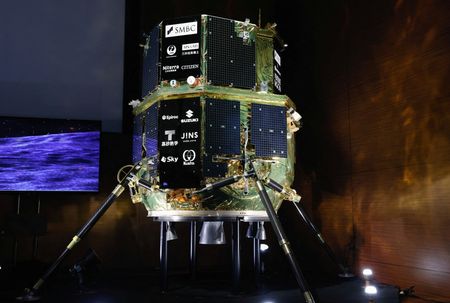

A Japanese space company has announced significant setbacks to its lunar exploration plans, pushing back a NASA-contracted moon landing mission by three years and implementing workforce reductions.
Tokyo-based ispace revealed Friday that it will postpone its U.S. government-funded lunar mission until 2030, originally scheduled for 2027. The spacecraft startup also plans to reduce its global staff as part of a major strategic overhaul following two unsuccessful attempts to land on the moon’s surface.
The delays underscore challenges facing private space ventures as the United States works with commercial and international partners to establish a lunar presence ahead of China’s space ambitions.
The company will merge moon lander development operations between its Japanese and American divisions while postponing the launch that was commissioned through NASA’s commercial lunar payload services initiative.
During this extended timeline, ispace plans to deploy five lunar satellites by 2030 designed to offer communication, navigation and surface monitoring capabilities to support future lunar development projects.
Chief Financial Officer Jumpei Nozaki explained during a media briefing that these operational changes could result in costs reaching several million dollars, potentially requiring additional equity funding and the elimination of dozens of positions.
Since going public on the Tokyo stock exchange in 2023, ispace has struggled with two failed lunar landing missions, ongoing financial losses, and declining share values. The company employed approximately 300 people across facilities in Japan, the United States and Luxembourg as of last year.
The firm’s third mission remains on track for 2028 as part of Japan’s commercial space initiative, featuring the launch of its “Ultra” lunar lander designed to transport 200 kilograms of payload to the moon.
Currently, only two private American companies, Intuitive Machines and Firefly Aerospace, have successfully achieved lunar landings.
NASA announced updates to its Artemis program this Tuesday, outlining plans for up to 30 unmanned lunar surface missions beginning next year.
“While it’s true that we are moving against NASA’s push to accelerate moon missions in 2028-29 … as the only (private company) outside the U.S. with moon landing technology, we are seeking a greater role in their program,” Nozaki stated.
Modifications to America’s space program under President Donald Trump have created uncertainty for Japanese space companies that anticipated stronger U.S.-Japan collaboration to compete with China’s space efforts.
Another Tokyo-based rocket company, ISC, whose chief executive serves on ispace’s management board, canceled a December launch test in New Mexico due to regulatory procedure disruptions.