Ukrainian President Volodymyr Zelenskyy traveled to Saudi Arabia on Thursday for diplomatic discussions as his country seeks to strengthen partnerships with Middle Eastern nations during its ongoing conflict with Russia.
Ukraine is providing air defense knowledge and drone technology to regional nations that have experienced Iranian attacks, hoping to receive backing in its fight against Russian forces in return.
“Arrived in Saudi Arabia. Important meetings are scheduled. We appreciate the support and support those who are ready to work with us to ensure security,” Zelenskyy posted on social media platform X.
Rustem Umerov, who leads Ukraine’s National Security and Defence Council, traveled with Zelenskyy for these diplomatic discussions.
According to recent statements from Zelenskyy, Ukraine has deployed specialist teams to Qatar, the United Arab Emirates and Saudi Arabia, seeking financial backing and technology in exchange for their military expertise.
As the conflict with Russia enters its fifth year, Ukrainian military forces are preparing for another spring campaign from Moscow while U.S.-supported peace negotiations remain at a standstill.
A federal court in Manhattan has thrown out a legal case filed by Ukrainian tennis professional Lesia Tsurenko against the Women’s Tennis Association and its former leader Steve Simon, rejecting her claims that their policies caused her psychological harm.
Tsurenko, who previously ranked among the world’s top 25 players, filed the lawsuit challenging how the WTA handled competitors from Russia and Belarus after Russia’s invasion of her homeland in 2022. The 36-year-old athlete argued that the organization failed to follow through on Simon’s commitments to exclude Russian and Belarusian players who backed the military action.
In her complaint, Tsurenko described specific incidents that troubled her, including a Russian competitor displaying a patch from a sanctioned Russian petroleum corporation. She also alleged that Simon indicated it was acceptable for players to express support for the conflict. The stress became so overwhelming that Tsurenko suffered what she described as a “panic attack” during the 2023 BNP Paribas tournament in Indian Wells, California, forcing her to abandon her match against Belarus’s Aryna Sabalenka, who currently holds the number one ranking in women’s tennis.
However, U.S. District Judge Naomi Reice Buchwald ruled Wednesday that the tennis organization possessed the authority to determine what constituted harmful behavior. The judge found that Tsurenko had not demonstrated that the WTA bore responsibility for banning specific players or protecting competitors from psychological distress.
“When courts have found that sports associations owe a duty to their players, those duties relate to ensuring players’ physical safety, not their emotional wellbeing,” Buchwald wrote.
Judge Buchwald also credited the WTA with making thoughtful decisions after the invasion began, pointing to measures such as preventing Russian and Belarusian athletes from competing under their national flags.
The Ukrainian player had sought financial compensation for contract violations and negligence, including claims related to emotional suffering. Her legal representatives had not responded to requests for comment by Thursday, nor had attorneys representing the WTA.
When fighting the lawsuit, the defendants maintained they had continuously condemned Russia’s military actions and implemented substantial measures to assist Ukrainian competitors. They argued that similar to other professional sports organizations, the WTA maintained that individual athletes “should not be punished because of the actions of their countries’ governments.”
Since Russia began its invasion of Ukraine, Tsurenko has been vocal about the difficulties she faces while competing on the professional tennis circuit.
A federal judge has thrown out a legal challenge brought by Elon Musk’s X Corp against major advertisers, ruling Thursday that the social media company could not demonstrate it was harmed under antitrust regulations.
U.S. District Judge Jane Boyle, presiding in Dallas federal court, determined that X Corp failed to establish that it had sustained damage under federal antitrust statutes.
The legal action, initiated by X Corp in 2024, alleged that advertisers coordinated through the World Federation of Advertisers’ Global Alliance for Responsible Media program to deprive the platform of “billions of dollars in advertising revenue.” The platform was formerly called Twitter before Musk’s acquisition.
Neither X Corp nor the World Federation of Advertisers provided immediate responses when contacted for comment.
The legal complaint maintained that the advertising companies conspired against the social media site in violation of antitrust regulations, acting contrary to their own financial interests.
CVS and other named defendants had rejected any misconduct allegations and requested that Boyle throw out the case. The companies contended that X Corp could not demonstrate coordinated action, arguing instead that each business made independent choices about their advertising expenditures.
In legal documents submitted during the proceedings, the defendant companies stated that advertisers made separate decisions to use competing platforms because of worries about X’s dedication to brand safety after Musk’s 2022 acquisition. During that transition, he terminated staff members who the companies claimed had maintained the platform as “welcoming to users and accommodating to family-friendly brands.”
In her ruling, Judge Boyle stated that “the very nature of the alleged conspiracy does not state an antitrust claim, and the court therefore has no qualm dismissing with prejudice.”
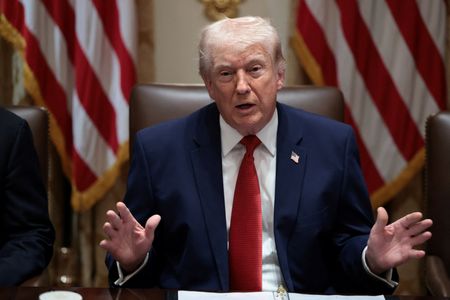
President Donald Trump revealed Thursday that his administration plans to unveil new support measures for American farmers during a White House gathering scheduled for Friday.
The announcement will take place as hundreds of agricultural producers, ranchers and industry leaders visit the White House for an event focused on the farming sector.
The timing coincides with the expected release of highly anticipated biofuel blending requirements under the Renewable Fuel Standard, a regulation that determines how much renewable fuel must be added to the country’s gasoline and diesel supplies. This policy is closely monitored by corn producers, ethanol manufacturers and petroleum refiners.
According to sources familiar with the matter, the Trump administration plans to unveil its 2026-27 biofuel blending volume requirements this week. These sources indicated the final rule will remain largely consistent with volumes the EPA had previously proposed before the Iran conflict began.
During a cabinet meeting Thursday, Trump told reporters that American farmers have faced unfair treatment from certain nations. He also highlighted the multi-billion-dollar assistance package farmers received to help compensate for losses caused by trade tariffs.
The biofuel policy announcement arrives during a challenging period for both petroleum and agricultural industries, as the White House navigates competing demands from refiners concerned about fuel costs and farmers hoping for increased biofuel demand to strengthen crop markets.
WASHINGTON – During a Thursday cabinet meeting at the White House, President Donald Trump announced to reporters that the United States plans to file more criminal charges against Nicolas Maduro, the former Venezuelan leader who was taken into custody earlier this year.
American forces captured Maduro during a January operation in Venezuela, and he is currently facing charges related to narcoterrorism and drug trafficking in a New York court.
Trump did not specify what the additional charges would entail during his remarks to the press.
Green Bay Packers defensive standout Micah Parsons will likely be sidelined for the opening three to four games of the 2026 NFL season as he continues his recovery from ACL reconstruction surgery, according to a Thursday report from The Athletic.
The 26-year-old pass rusher went under the knife on December 29th following a torn left ACL he suffered during Green Bay’s Week 15 defeat against the Denver Broncos on December 14th, which ended his season prematurely.
Despite the injury cutting his campaign short, Parsons delivered an outstanding debut season in Green Bay, recording 12.5 sacks along with 41 tackles, 27 quarterback hits, and two forced fumbles. His stellar performance earned him All-Pro first team honors for the third time across his five-year career.
The Packers shocked the football world by trading for Parsons from the Dallas Cowboys on August 28, 2025, before locking him up with a massive four-year contract extension worth $186 million that runs through 2029.
The five-time Pro Bowl defender has been a dominant force since Dallas selected him 12th overall in the 2021 draft, accumulating 65.0 sacks across 77 games with 76 starts. His rookie campaign in 2021 earned him NFL Defensive Rookie of the Year recognition.
SEOUL/BEIJING – Asian manufacturers are confronting an unprecedented supply crisis as the conflict in Iran disrupts global energy markets, affecting everything from instant noodles and snack foods to beauty products and toys.
The impact is already devastating businesses across the region. Choi Gun-soo, who manages a South Korean facility that has produced plastic films for 57 years, reports that suppliers are hiking raw material costs by up to 50%, while others have completely exhausted their inventory.
“Since we’re out of raw materials for some products, we’ll have to gradually shut down the machines, and the next one to two weeks is likely to be very critical,” Choi explained.
Despite surviving previous oil crises and the COVID-19 pandemic, this situation is different, according to Choi. His facility has slashed production to just 20% to 30% of normal capacity.
“This is the first time we’ve been hit this hard. We’re really shaken,” he stated.
The crisis stems from disruptions in the Strait of Hormuz, the narrow waterway along Iran’s southern border that typically handles approximately 20% of global oil and liquefied natural gas shipments.
Asian nations face the greatest risk because they depend more heavily on Middle Eastern crude oil, natural gas, fuel, and fertilizer compared to other regions worldwide.
The most severe shortages involve oil-based products like naphtha, primarily obtained from Gulf nations and essential for Asian refineries producing plastics and petrochemicals found in nearly all manufactured goods.
Costs for essential materials including plastic and rubber have reached record highs.
Samyang Foods, the South Korean company behind the widely popular spicy Buldak instant ramen, warns that an extended conflict could create packaging material shortages and drive up expenses.
Instant ramen products depend heavily on polyethylene terephthalate (PET), one of the most commonly used plastics globally, which is also crucial for packaging various items from food to personal care products.
Competing South Korean ramen manufacturer Nongshim maintains a two to three-month supply of packaging materials and is preparing for the possibility that the war, which started with U.S.-Israeli attacks on Iran on February 28, may continue.
Yonwoo, which produces containers for L’Oreal and Korean beauty companies including Amorepacific, informed Reuters that it is working urgently to obtain plastic resin supplies needed for manufacturing skincare and cosmetic containers. The company has limited material visibility beyond June.
“The issue isn’t the price – if supply itself isn’t available, then without containers, you simply can’t sell the product,” an unnamed company representative told Reuters, noting they lacked authorization to speak publicly.
“We are stockpiling supplies, but beyond that, we don’t really have any substantial measures in place; we’re simply hoping that the situation would be resolved by May.”
The conflict has created fuel shortages globally, with businesses ranging from airlines to grocery stores and used car dealerships facing challenges including increased costs, declining demand, and broken supply chains.
In Japan, department store chain Takashimaya indicated that if the crisis continues, price increases and supply problems could extend to clothing and home appliances.
Demonstrating the widespread effects, Japanese consumers of Wasabeef potato chips became alarmed this month when producer Yamayoshi Seika stopped manufacturing, citing a lack of heavy oil needed for boilers that heat frying oil.
China manufactures nearly half of the world’s synthetic rubber, and naphtha shortages required for production are creating downstream effects, pushing tire and glove manufacturers to consider price increases or switching to natural rubber alternatives.
Chinese production is expected to drop by approximately one-third in April due to the war, according to SCI analyst Xinhua Jing.
Tire manufacturer Michelin told Reuters that its supply chain teams are “fully mobilised” and the company is managing and modifying deliveries to fulfill contracts “as much as possible.”
In India, the conflict has already increased bottled water costs due to rising prices for plastic bottles and caps, while international brewing companies operating there have cautioned about price increases and supply interruptions caused by gas shortages.
High oil prices and supply chain disruptions are also affecting China’s southern manufacturing center of Dongguan.
Liu Chaonan, whose toy manufacturing business supplies major U.S. retailer Walmart, said escalating raw material expenses are creating significant challenges.
“The situation in Iran is having a very significant impact on our toy industry,” Liu, who has more than 150 employees, told Reuters. “We will likely make price adjustments when quoting new products.”
Rising crude oil prices directly influence retail fuel costs, increasing expenses for gasoline, diesel, aviation fuel, cooking gas, and business and manufacturing operations globally.
Dominic Desmarais, chief solutions officer at Liya Solutions, which connects companies with Chinese suppliers producing everything from furniture to titanium products, noted that petroleum-based product prices are climbing.
“We buy a lot of expandable polystyrene from Taiwan, and the prices went up 35%, but our client still bought about 500 tonnes, and they didn’t argue on the price, they just want supply,” he explained.
Consumer panic has already emerged, leading to stockpiling of items like garbage bags, with South Korean supermarkets experiencing shortages and implementing purchase limits.
South Korean student Ryu June-ho, 24, recently purchased trash bags along with ramen noodles.
“I was worried that garbage bags would get more expensive, so I bought ten 20-litre ones. I also bought lots of ramen … because the cost of plastic packaging probably accounts for a big part of the product’s price.”
TOKYO (AP) — Two people died Thursday following a violent incident at a Pokemon retail location in central Tokyo, where an armed assailant fatally wounded a store employee before ending his own life, according to Japanese authorities.
Emergency responders arrived at the busy commercial complex after receiving reports of an armed individual attacking people with a blade.
Authorities confirmed the victim was a female employee in her twenties who worked at the Pokemon retail outlet located on the building’s second level within the Sunshine City complex, a multi-use facility containing various businesses and offices. She sustained fatal neck wounds during the assault.
The perpetrator subsequently inflicted a similar wound upon himself, Tokyo law enforcement officials reported. Medical personnel transported both individuals to a hospital in critical condition, but doctors later declared both deceased.
Investigators are treating the incident as a homicide case, police stated.
The Pokemon Company released a statement via social media platform X announcing the indefinite closure of Pokemon Center Mega Tokyo while they assist with the ongoing investigation and provide support to their staff members.
“We deeply apologize to our customers for the tremendous worry and inconveniences,” the company said.
A customer present during the attack described the chaotic scene to the Asahi newspaper, explaining how he evacuated after hearing screams for assistance and the sound of merchandise displays falling. Upon looking back, he witnessed a staff member with bloodstained clothing and observed the black-clad attacker pushing toward the checkout area.
Japan’s NHK public broadcaster reported that customers evacuated the vicinity while workers at surrounding businesses lowered security barriers as a precautionary measure.
While Japan maintains stringent firearm regulations and experiences relatively low violent crime rates, the nation has witnessed several notable blade-related attacks in recent years.
The National Transportation Safety Board has thrown its support behind an updated House aviation safety measure, though families who lost loved ones in January’s deadly midair crash near the nation’s capital are pushing for more stringent implementation requirements.
Federal transportation safety officials say the Alert Act now incorporates their recommendation mandating aircraft operating around major airports to carry advanced tracking technology. This equipment would give pilots better awareness of nearby air traffic locations. Safety investigators have advocated for these systems for more than 15 years, dating back to 2008.
Family members of the 67 people killed in the collision expressed cautious optimism about the legislation’s improvements Thursday, but stopped short of full endorsement. They want implementation deadlines as firm as those included in a Senate measure that recently failed by a single vote.
“Any safety requirement that routes implementation through negotiated processes, administrative discretion, or multi-step rulemaking creates opportunities for delay that cost lives,” the families said. “The strongest version of this bill will set clear statutory timelines and performance standards that leave no room for process to become an obstacle.”
House Transportation and Infrastructure Committee members are scheduled to review the measure for advancement Thursday.
Safety board Chairwoman Jennifer Homendy had harshly denounced the legislation’s initial draft last month, calling it a “watered down” proposal insufficient to prevent future disasters. However, the agency issued a statement saying the updated version, developed with crash investigation specialists’ input, would tackle the deficiencies their probe uncovered.
The legislation would now mandate aircraft carry Automatic Dependent Surveillance-Broadcast In technology capable of receiving location data from other planes. This system could have provided earlier warning to American Airlines pilots about the approaching collision with an Army Black Hawk helicopter on Jan. 29, 2025. While most aircraft already possess ADS-B Out systems that transmit their positions, the receiving capability would be newly required.
Federal investigators identified systematic failures and years of unheeded safety alerts as primary crash factors. Homendy stated that proper ADS-B In equipment on both aircraft, if activated, would have prevented the tragedy. Army protocols at the time required helicopters to operate without these systems activated to maintain location secrecy, despite this particular helicopter conducting routine training rather than sensitive operations.
Several major aviation organizations have endorsed the House proposal, including Airlines for America and the National Air Traffic Controllers Association.
Milwaukee has added outfielder Jackson Chourio to their 10-day injured list Thursday after the young star suffered a broken left hand, with the team bringing up Blake Perkins from their Triple-A Nashville affiliate to fill the roster spot.
The injury occurred during an exhibition matchup on March 4 when Chourio was struck by a pitch while representing Venezuela against the Washington Nationals. Medical imaging confirmed a minor hairline break located at the base of his third metacarpal bone, with team doctors projecting a recovery timeline of two to four weeks.
The 22-year-old Venezuelan had an impressive 2024 campaign that earned him third place in National League Rookie of the Year balloting. During his debut season, Chourio posted a .270 batting average while contributing 21 home runs, 78 runs batted in, and 21 stolen bases across 131 games.
The 29-year-old Perkins, who gets the call-up, appeared in 54 games for Milwaukee last season, recording a .226 batting average with three home runs and 19 RBIs.
WASHINGTON – A Navy admiral selected to oversee America’s nuclear weapons program told lawmakers Thursday that the country’s atomic arsenal remains secure and effective without requiring new explosive tests.
During Senate Armed Services Committee testimony regarding his nomination to lead U.S. Strategic Command, Admiral Richard Correll backed recent government evaluations concluding that nuclear testing is unnecessary. This statement comes while officials review implementation of President Donald Trump’s October directive regarding nuclear weapons testing.
When senators questioned whether military requirements exist for resuming nuclear warhead testing – which the United States last conducted in 1992 – Correll referenced annual safety assessments performed jointly by the Energy Department and Pentagon.
The admiral voiced confidence in the latest certification covering 2025-2026, stating that both agencies have “indicated we have the capabilities and sufficient testing to satisfy ourselves on the reliability and efficacy of our nuclear warheads.” He added, “But we monitor that very closely and I will continue to provide my best military advice.”
Correll’s remarks support the ongoing practice of using computer simulations and laboratory analysis rather than live detonations to verify weapons functionality and safety standards.
MEXICO CITY – Mexico’s government unveiled a comprehensive support package Thursday aimed at strengthening the nation’s trucking and heavy vehicle manufacturing sectors.
Economy Minister Marcelo Ebrard detailed the initiative during a press briefing, explaining that the program focuses on helping domestic manufacturers and heavy truck operators while shielding them from foreign competition.
“It has an initial budget of 2 billion pesos ($112.41 million) in tax deductions and 250 million pesos in direct investment,” Ebrard stated.
The initiative will provide financial incentives for purchasing heavy-duty vehicles as part of broader efforts to strengthen Mexico’s commercial transportation sector.
President Claudia Sheinbaum emphasized that the measures are designed to increase commercial vehicle manufacturing within Mexico. She noted that upgrading the nation’s heavy-duty vehicle fleet will lead to reduced emissions and enhanced freight transportation infrastructure nationwide.
Louisiana State University basketball is expected to dismiss head coach Matt McMahon and rehire Will Wade for another stint leading the Tigers program, multiple sources reported Thursday.
The 43-year-old Wade previously led LSU’s basketball team from 2017 through 2022, taking the Tigers to three NCAA Tournament berths during his five-year tenure. His overall coaching record at LSU was 105-51, including a 56-33 mark in Southeastern Conference play, before the university terminated him in 2022 due to NCAA rule violations.
Following his departure from LSU, Wade coached McNeese State to NCAA Tournament qualifications in both 2024 and 2025, then moved to North Carolina State where he led the Wolfpack to a 20-14 record and another tournament appearance in the 2025-26 season.
The potential coaching change comes as LSU has recently brought in former McNeese State leadership, hiring Wade Rousse as system president and adding Heath Schroyer, the school’s former athletic director, as senior deputy athletic director this Thursday.
When reporters questioned Wade about potential LSU connections on March 12 following NC State’s 81-74 loss to Virginia in the ACC tournament, he appeared committed to his current position.
“Is the job open there?” Wade responded at the time. “No? Listen, let me be very clear. I’m excited at NC State. I was hired at NC State to do a job. This wasn’t going to take one year. I’ve already met with our administration about next year and some of the changes that we need to make and some of the things that we need to do to put this program where it deserves long-term.”
The 47-year-old McMahon assumed the LSU head coaching position for the 2022-23 season but has failed to achieve a winning conference record, posting 3-15 SEC marks in each of the last two campaigns. This season, LSU finished with a disappointing 15-17 overall record. Before joining LSU, McMahon had success at Murray State with a 153-67 record and guided the team to two Sweet 16 appearances in 2019 and 2022.
WASHINGTON – Pentagon officials verified Thursday that a high-ranking Iranian military leader was killed during an Israeli military operation, according to an announcement from U.S. Central Command posted on social media.
The deceased officer has been identified as Admiral Alireza Tangsiri, who served as the naval commander for Iran’s Islamic Revolutionary Guard Corps. U.S. Central Command confirmed his death resulted from an Israeli airstrike, marking a significant development in regional military tensions.
The verification came through an official post on the social media platform X, representing the first American confirmation of the Iranian commander’s death.
Drought conditions continue to hold firm across much of the Mid-Atlantic, with the latest U.S. Drought Monitor outlook showing little overall improvement and ongoing long-term dryness across the region.
A prolonged stretch of below-normal precipitation dating back through the winter months has led to widespread moisture deficits, particularly across portions of Maryland, Delaware, Pennsylvania, and New Jersey. In many areas, 12 to 24 month rainfall deficits exceed several inches, highlighting the long-term nature of this drought.
Across the Mid-Atlantic, streamflows remain well below normal, in some cases falling into the lowest 10th percentile, signaling continued stress on water resources and ecosystems. The drought is being driven by a combination of persistent dry conditions, limited storm systems, and periods of above-normal temperatures, which have accelerated soil moisture loss.
The drought classification system used by the Drought Monitor ranges from Abnormally Dry (D0) to Exceptional Drought (D4), with parts of the broader region experiencing moderate to severe drought conditions (D1–D2), and locally higher in some areas nearby.
Recent rainfall events across parts of the eastern U.S. have brought minor improvements in some nearby regions, but for the Mid-Atlantic, the overall trend remains largely stagnant, with drought coverage and intensity holding steady week-to-week.
Looking ahead, meaningful drought relief will depend on more consistent and widespread precipitation over the coming weeks, especially as the region heads deeper into the spring growing season where water demand increases.
Federal spending on immigration detention is reaching unprecedented levels as the Trump administration commits billions of dollars to expand capacity by thousands of beds nationwide.
The massive investment in detention infrastructure comes despite evidence that alternative enforcement methods could deliver comparable effectiveness at significantly lower costs to taxpayers.
Immigration enforcement experts point to the mounting expenses associated with housing detained individuals, which far exceed the price of community-based monitoring programs and other supervision alternatives.
The expansion represents a dramatic shift in immigration policy priorities, with substantial resources being allocated to detention facilities rather than exploring more cost-effective approaches to managing immigration cases.
As detention centers fill with new arrivals, questions arise about the long-term sustainability of this approach and its impact on both federal budgets and the individuals caught in the system.
New Castle County police detectives made a significant weapons discovery during what began as a routine traffic enforcement action in Wilmington on Wednesday evening.
Members of the Active Crime Trends Team were patrolling the Governor Printz Boulevard area around 5:42 p.m. on March 25, 2026, when they spotted a white Toyota Camry violating traffic laws. The detectives turned on their emergency equipment and pulled the vehicle over to make contact with the driver.
During the traffic stop, investigators uncovered two illegal firearms – one that had been reported stolen and another ghost gun, which lacks serial numbers that would make it traceable to law enforcement.
The incident highlights ongoing efforts by New Castle County police to remove illegal weapons from local streets through proactive patrol operations in areas experiencing criminal activity.
MINNEAPOLIS — Despite being severely short-handed, the Minnesota Timberwolves made NBA history Wednesday night by completing the league’s most dramatic overtime comeback since detailed record-keeping began in 1997-98.
The Timberwolves erased a 13-point overtime deficit to defeat the Houston Rockets 110-108, capping their miraculous rally with a decisive 15-0 scoring run to close out the game.
Minnesota accomplished this historic feat while playing without five of their seven most important players for the majority of their comeback effort.
“They fought through a ton of adversity. We should’ve won that game in regulation. We deserved to win that game. We were the better team all night, and we gave them a chance to steal it from us, but we stole it right back,” head coach Chris Finch stated after the victory.
The Timberwolves had squandered an 11-point advantage with just 3½ minutes remaining in regulation and battled questionable officiating throughout the contest. When overtime began Wednesday evening, they quickly fell behind by 13 points within the first two minutes of the extra period.
All-Star Anthony Edwards remained unavailable for his fifth consecutive game due to knee issues. Reserve guard Ayo Dosunmu was also absent with calf soreness. Jaden McDaniels, who contributed 25 points and exceptional defense against Rockets standout Kevin Durant throughout the night, began limping late in the fourth quarter and couldn’t continue. Rudy Gobert, despite recording 14 points, 14 rebounds and five blocks, was disqualified due to fouls.
Early in overtime, Naz Reid received an ejection after expressing frustration with referee Scott Foster regarding an offensive foul ruling. Target Center spectators began heading for the exits.
However, after Alperen Sengun’s dunk extended Houston’s lead to 108-95, completing a remarkable 26-2 surge, Minnesota refused to surrender in this crucial Western Conference playoff positioning battle.
“You just got to take it a possession at a time. Biggest thing is be in the moment,” explained Julius Randle, who joined Kyle Anderson in defending Durant after McDaniels’ departure.
Mike Conley, making an unusual start due to Edwards and Dosunmu’s absences, connected on a three-pointer with 2:45 remaining. Anderson followed up Randle’s missed layup attempt, earned a foul against Sengun, and completed the three-point play. Minnesota then forced an eight-second violation by preventing Houston from crossing halfcourt.
Donte DiVincenzo scored on a cutting layup from Anderson’s pass, reducing the gap to five points. Randle secured Sengun’s missed shot before driving past him for a score on the opposite end, bringing Minnesota within 108-105 with 1:34 left on the clock.
DiVincenzo knotted the score with a three-pointer. Sengun’s jump shot missed the mark. Randle then delivered a pull-up jumper with 8.8 seconds left for the winning margin.
“We’ve got real competitors in here, guys who want the challenge. It’s not the first time we’ve done something like that,” said Randle, who scored all 24 of his points after halftime. “When it gets tough, we come together as a group. It brings the best out of us.”
With the victory, Minnesota (45-28) remained half a game behind Denver (46-28) for fourth position in the Western Conference standings. They moved 1½ games ahead of Houston (43-29) and crucially tied their season series at one game each. The teams will meet again in Houston on April 10.
Minnesota managed the comeback despite attempting 63 shots in the paint while receiving only 10 free throw attempts. They secured victory even after Randle was whistled for fouling Durant on his drive with 3.3 seconds left, sending him to the free throw line where Houston had been perfect at 23-for-23. Durant missed both attempts, intentionally missing the second to maintain possession.
“I’m so proud that we didn’t quit. We had a lot of opportunities to get very frustrated tonight,” Gobert reflected. “For the most part, we were able to overcome that. That’s the blueprint for us. We want to win a championship, so we know there’s going to be adversity. We know it’s going to come in a lot of ways.”
Former Venezuelan leader Nicolás Maduro will face a federal judge in New York on Thursday as his legal team fights to dismiss drug trafficking charges against him amid complications over attorney payment arrangements.
This marks the second court appearance for Maduro and his wife Cilia Flores since their January hearing where he proclaimed his innocence following their capture by American military personnel, stating: “I am not guilty. I am a decent man, the constitutional president of my country.” Flores has similarly entered a not guilty plea.
Both defendants continue to be held at a Brooklyn detention facility without requesting bail. Judge Alvin Hellerstein may announce a trial schedule during Thursday’s proceedings.
In Caracas, several hundred supporters including government party members, public workers, and militia participants assembled at a central plaza Thursday morning to offer prayers for the couple and attempt to view the court session, not realizing federal courtrooms prohibit recording devices.
A massive display screen showed images of Maduro alongside Venezuela’s national flag and highlights from the nation’s recent World Baseball Classic victory.
“We are going to see him today,” party official Carmen Melendez addressed the gathering. “We may see him skinnier. … But that’s our president.”
Protesters waved Venezuelan banners and held placards reading “Free President Maduro” while chanting “No boots on the ground, no bombs in the air. U.S. out of everywhere,” criticizing American military involvement worldwide.
Several demonstrators carried an inflatable figure dressed like Maduro in orange prison-style clothing.
Signage revealed connections to the Workers World Party, an organization that identifies as a revolutionary socialist movement.
During Maduro’s previous courthouse visit, authorities transported him in dramatic style via helicopter from Brooklyn to a Manhattan landing pad, followed by a high-speed law enforcement convoy to the federal building.
New York’s various police and federal agencies have perfected the process of moving high-profile individuals through typically congested city streets.
Similar security measures were employed in 2024 when Trump faced trial at a nearby Lower Manhattan courthouse, with police ensuring his Secret Service detail had clear passage.
The presiding judge, Alvin K. Hellerstein, is 92 years old and received his appointment from President Bill Clinton in 1998. The New York native, while senior, is not the oldest federal judge in the district – that distinction belongs to 98-year-old Judge Louis L. Stanton.
Hellerstein brings extensive experience with major cases, including nearly 25 years overseeing civil lawsuits stemming from the September 11 terrorist attacks.
While the drug trafficking prosecution against Maduro involves complex legal questions, Thursday’s hearing will likely focus primarily on attorney fee arrangements rather than substantive case issues.
The central problem involves compensating Maduro’s defense team. U.S. sanctions prevent his lawyers from accepting direct payment from Venezuela’s government without special authorization from American officials, who argue Maduro should fund his own defense.
This financial dispute requires judicial resolution.
Limited courtroom seating prompted people to begin queuing a full day before the hearing, with professional line-holders setting up small tents outside the building by Wednesday afternoon.
Media organizations paid hundreds of dollars to secure spots for their reporters who would arrive when the courthouse opened Thursday morning.
Federal prosecutors allege Maduro orchestrated an extensive drug trafficking operation spanning over 25 years, facilitating the movement of thousands of tons of cocaine into American markets by collaborating with Venezuelan law enforcement to assist major drug dealers.
Maduro maintains his innocence, while his supporters claim U.S. military forces captured him as part of President Trump’s efforts to force governmental change in Venezuela.
A brief surge of spring warmth is expected across the Delmarva Peninsula and Maryland’s Eastern Shore today, but a cold front will bring a return to cooler and unsettled conditions heading into Friday.
High pressure positioned offshore near the Canadian Maritimes is continuing to drift out to sea, allowing a strengthening southwest flow to develop across the region. This setup is driving warm air advection, pushing temperatures well above normal for late March. Afternoon highs are expected to climb into the low to mid 70s, running roughly 15 to 20 degrees above average. Skies will remain partly to mostly sunny through much of the day, though increasing cloud cover is expected late as the next system approaches.
That system, an area of low pressure tracking north of the region, will drag a cold front toward Delmarva later this evening. Showers are expected to develop during the evening hours and continue overnight, becoming more widespread across Delaware and the Maryland Eastern Shore. While instability remains limited, a brief rumble of thunder cannot be ruled out, though no severe weather is anticipated.
By Friday morning, the cold front will settle into the region and slow down, becoming nearly stationary across the Delmarva Peninsula for much of the day. This will keep periods of showers lingering, especially across southern New Jersey, Delaware, and the Eastern Shore of Maryland, before gradually tapering later in the day.
Behind the front, a noticeable shift in air mass will occur. Cold air advection will take over, leading to falling temperatures throughout Friday. Morning highs in the upper 50s to low 60s will steadily drop into the upper 40s to low 50s by the afternoon, giving the region a much cooler feel compared to the warmth experienced today.
Residents across Delmarva should take advantage of today’s unseasonably warm conditions, as a return to more typical late-March weather arrives quickly heading into the weekend.
Concerns about potential restrictions from the Trump administration on European access to American payment systems are driving increased interest in a European alternative, according to the head of the European Payments Initiative.
Martina Weimert, CEO of the Brussels-based organization, told Reuters that European businesses are showing greater urgency in reducing their dependence on U.S.-based financial companies. When asked whether merchants are preparing for possible cuts to American financial system access under Trump’s leadership, Weimert responded “absolutely” and noted that two major retailers specifically mentioned international resilience as their motivation for adopting Wero.
“It’s not like this is out of the blue, totally vague scenario,” Weimert explained, adding that such changes can occur rapidly.
The European Payments Initiative developed Wero as a rival to the American companies that currently control European in-store transactions – Mastercard, Visa, and Apple Pay. Originally established in 2020 by 16 major European financial institutions including BNP Paribas and Deutsche Bank, the consortium has expanded to 45 members, with recent additions including fintech companies Mollie, Worldpay, and N26.
Trump’s “America First” approach, which has strained traditional Atlantic partnerships and challenged established global systems, has prompted European Union initiatives to decrease reliance on American corporations across critical sectors including payments and technology.
Despite launching in 2024, Wero confronts significant challenges in the marketplace. Currently limited to person-to-person money transfers, it competes against established international card networks that handle two-thirds of eurozone card payments, according to European Central Bank data.
Additional complications arise from separate national payment systems supported by banks in Spain and Italy, creating potential market fragmentation despite commitments to work toward a unified European platform.
Wero currently serves customers across Belgium, France, and Germany, with user numbers climbing from 43.5 million in September to 52.5 million – still representing a small portion of Europe’s payment market. The company plans expansion into Luxembourg and the Netherlands within the coming year.
Regarding the European Central Bank’s planned digital euro launch in 2029, Weimert views it as complementary rather than competitive, suggesting it could integrate with Wero’s digital wallet. However, she questions whether the timeline is adequate given current circumstances.
“I don’t have a problem with the digital euro. What I find quite strange is that in the current context, where we clearly every day would say, ‘Oh, we have a problem with European sovereignty,’ to say, ‘Oh, let’s wait another five years before the digital euro is there and then hope that this will work,’” she stated.
TOKYO – A tragic stabbing incident claimed two lives at a popular Pokemon retail location in Tokyo’s bustling shopping district Thursday evening, authorities confirmed.
According to the Tokyo Metropolitan Police Department, a woman in her twenties working at the store suffered fatal neck wounds when attacked by a male assailant, also in his twenties, at approximately 7:16 p.m. local time. The attacker subsequently turned the weapon on himself.
Medical personnel declared both individuals deceased at a local hospital less than an hour after the violence occurred, police officials stated.
TV Asahi reported that the victim worked as staff at the Pokemon Center retail outlet housed within the commercial building, while witnesses described the perpetrator as carrying blades in each hand during the assault.
Authorities have not yet determined what drove the attacker to commit the violent act, according to local news outlets.
Social media footage captured panicked customers evacuating the area as emergency vehicles rushed to the scene, located mere blocks from Ikebukuro terminal – among Tokyo’s most heavily trafficked railway hubs.
The timing proved particularly disturbing as the attack unfolded during Japan’s spring school holiday period, when families with children typically crowd shopping centers.
Representatives from Pokemon Co, which manages roughly two dozen retail locations across Japan featuring merchandise from the beloved entertainment franchise, had not responded to media inquiries by press time.
Japan’s stringent firearm restrictions mean blade-related violence represents the predominant form of public attacks, with several stabbing incidents occurring at transit facilities and aboard trains in recent years.
Tech giant Apple announced on March 26 that it’s welcoming four new partners into its American Manufacturing Program, committing $400 million in investments through 2030 to strengthen domestic component production.
The technology company revealed that Bosch, Cirrus Logic, TDK, and Qnity Electronics will join the manufacturing initiative, working alongside existing partners like TSMC and GlobalFoundries to enhance semiconductor and materials production on American soil for Apple devices.
This latest manufacturing push represents part of Apple’s broader strategy to reinforce its domestic supply chain capabilities while creating more US-based production opportunities for critical components used in its popular consumer electronics.
The new $400 million commitment supplements Apple’s previously announced four-year pledge of $600 billion toward American manufacturing and innovation initiatives that the company unveiled last year.
Drivers using Broadkill Road (Route 16) should plan for potential delays as flagging crews are directing traffic in the area today.
The intermittent flagging operation is taking place along the stretch of roadway between Jefferson Road and Coastal Highway (Route 1), according to Delaware Department of Transportation officials.
The traffic control measures are expected to remain in effect until 3 PM today. Motorists are advised to allow extra travel time and exercise caution when approaching the work zone.
Burning fuel facilities releasing toxic smoke. Wreckage contaminating the Persian Gulf. Military installations under bombardment.
Environmental scientists warn that the ongoing conflict in Iran has created a dangerous cocktail of pollutants, toxic metals, and harmful chemicals that pose serious threats to farming, water supplies, and public health — with environmental consequences that may last for generations.
“All the burning of oil and gas fields in the coastal areas, all the ships that are there, the oil tankers that are being burned or (sunk) — all of these mean pollution,” stated Kaveh Madani, an Iranian scientist serving as director of the United Nations University Institute for Water, Environment and Health. “For someone like me who has fought for sustainability and protection of the environment in that region, this is like going many years backward.”
Recording the full extent of environmental harm has proven challenging, with complete assessment currently impossible, according to Doug Weir, who leads the Conflict and Environment Observatory, a United Kingdom-based organization tracking environmental impacts from military conflicts.
The organization employs satellite monitoring and open-source intelligence gathering to identify environmental damage and assess risks to communities, natural habitats, and farmland. Their research has documented over 400 environmentally harmful incidents connected to the conflict, though significant gaps remain due to delayed satellite data and Iran’s internet shutdown, Weir explained.
Strikes targeting petroleum and natural gas infrastructure pose the greatest environmental dangers through air quality degradation and contamination of soil and groundwater, along with direct health hazards. More difficult to measure are the risks from bombed military installations, some located deep underground and others near residential areas, creating “huge uncertainties” about potential consequences, Weir noted.
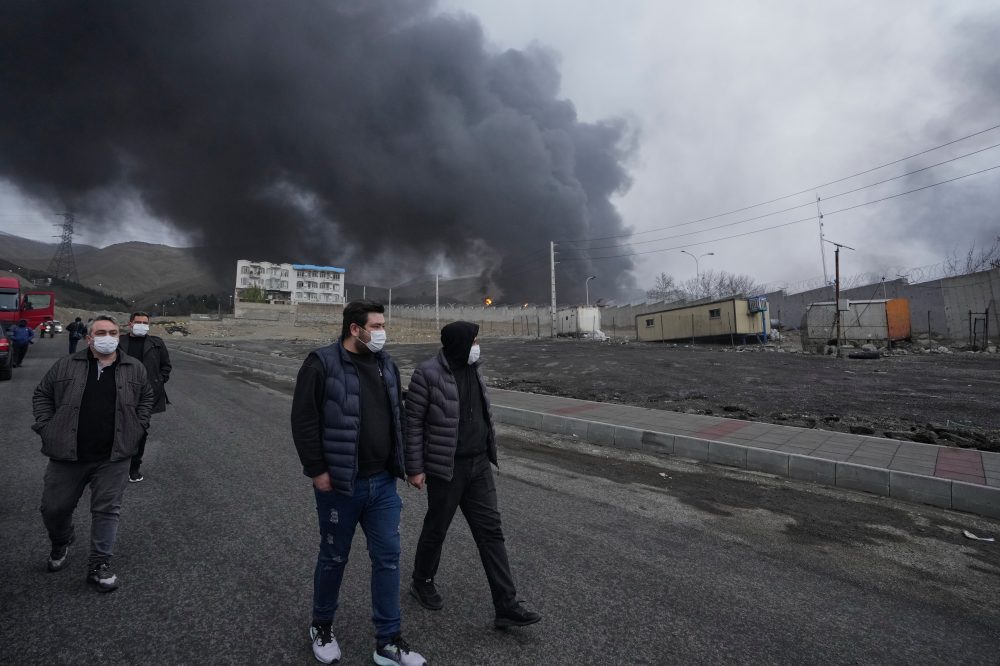
The conflict’s most memorable visuals may be the blackened skies from burning oil infrastructure hit by air attacks, including an incident two weeks ago when contaminated rainfall occurred near Tehran, Iran’s capital city.
Particles, ash, and poisonous compounds from attacks on fuel storage areas and a refinery mixed with atmospheric moisture and returned to ground level as greasy, acidic precipitation that led authorities to advise residents to remain inside. Tiny soot particles increase risks for respiratory and cardiovascular disease, while dangerous chemicals create long-term cancer threats and toxic metals from the contamination could poison soil and water sources, scientists explained.
Wreckage and pollution from missile strikes, along with possible attacks on manufacturing plants and other critical infrastructure, could also spread dangerous contamination across the region, researchers warned.
“If you hit an ammonia-producing plant for fertilizer or for food production … those release chemicals that are absolutely toxic and harmful if they spread,” explained Mohammed Mahmoud, who heads Middle East Climate and Water Policy at the United Nations University Institute of Water, Environment and Health and established the Climate and Water Initiative.
Heavy fossil fuel burning is also dramatically increasing greenhouse gas levels that drive climate change, scientists noted. Carbon tracking firm Greenly calculated that U.S. military operations alone produced nearly 2 billion metric tons of greenhouse gases during just the conflict’s first six days, indicating the total emissions from all fighting are substantially higher when including Israeli and Iranian activities plus infrastructure damage.
This represents a substantial amount for such a brief period, considering approximately 50 billion metric tons of greenhouse gases are released globally each year, based on National Oceanic and Atmospheric Administration data.
Worldwide petroleum shortages are also forcing some nations to restart or expand coal usage, generating additional air pollution that harms human health and increases greenhouse gas output.
Nations throughout the dry Persian Gulf area depend on hundreds of water treatment facilities for drinking supplies, creating health and security concerns if plants suffer damage or water becomes contaminated, experts warn.
Iran has claimed a U.S. airstrike harmed one of its water treatment plants, while nearby Bahrain has blamed Iran for damaging one of its facilities. Scientists worry additional plants could become targets as the conflict continues.
Regional residents “struggle with having access to clean drinking water, even at peace times,” noted Madani, the Iranian scientist and U.N. official. “Any damage to water infrastructure can have long-lasting impacts.”
Weir expresses concern that contamination, including petroleum from sunken vessels and other sources, might block water treatment plants or that facilities could be shut down by attacks on electrical generation sites.
Scientists say pollution could also harm fishing industries and critical ecosystems. While some contaminants will spread and become diluted by water circulation through the gulf, heavy metals and toxic substances may still accumulate in bottom sediments.
“It’s an enclosed basin, quite shallow,” Weir observed. “There are sensitive habitats there, coral reefs, seagrass meadows, sensitive species which could be impacted.”
The U.N. nuclear monitoring agency has been denied access to Iranian nuclear installations, including sites attacked in June by the United States and Israel, leaving their condition largely undetermined.
Potential strikes on major and minor nuclear facilities throughout the area represent “another thing to worry about,” due to immediate and lasting health and environmental effects, Madani said. Radiation exposure can cause skin injuries and acute radiation syndrome, while long-term dangers include cancer, cardiovascular disease, and genetic harm.
American and Israeli leaders have stated that destroying Iran’s nuclear weapons capability is among the conflict’s objectives.
Following joint Israeli and U.S. bombing of an Iranian uranium processing facility this month, Iran responded by launching missiles at two Israeli communities, including one housing a nuclear research facility. Israel reported the installation sustained no damage.
“We are hearing that there is no major radiation or change in the level of pollutants so that makes us hopeful that nothing has gone wrong,” Madani said. “But the risk is always there.”
Following the conflict’s end, as Iran and neighboring countries begin reconstruction, environmental restoration may receive limited attention, experts predicted.
Priority will go to power and water systems, industrial facilities, and food production sites, Mahmoud said. Some contamination, particularly affecting the gulf or other waterways, “I doubt will be addressed soon, and in some cases, not at all.”
Weir said environmental restoration receives inadequate attention following most conflicts due to high costs and because “humanitarian needs come first,” despite potentially severe environmental risks.
In heavily populated Tehran, for instance, numerous strikes have targeted not only petroleum infrastructure but also buildings and neighborhoods, creating harmful contamination from crushed construction materials. Residents face exposure to dust and chemicals that may persist long after the conflict ends and reconstruction efforts begin.
WASHINGTON — Weekly unemployment benefit applications saw a modest increase as American companies continue holding onto their workforce despite a significantly weakened job market over the past year.
New claims for unemployment assistance during the week that concluded March 21 climbed by 5,000 to reach 210,000, up from the prior week’s total of 205,000, according to Thursday’s Labor Department announcement. The figure aligned perfectly with forecasts from analysts polled by FactSet, who had predicted 210,000 new applications.
Weekly unemployment claims serve as a key indicator of job cuts across the nation and provide nearly real-time insight into employment market conditions.
Although weekly job losses have stayed within a stable range of 200,000 to 250,000 over recent years, several major corporations have recently declared workforce reductions, including Morgan Stanley, Block, UPS, and Amazon.
The Labor Department revealed earlier this month that American businesses surprisingly eliminated 92,000 positions in February, indicating continued pressure on the employment sector. Additional revisions removed 69,000 jobs from December and January employment figures, pushing the jobless rate to 4.4%.
February’s unexpectedly poor employment data contributes to economic uncertainty surrounding the conflict with Iran, which has driven oil prices up more than 40% and imposed additional costs on businesses and consumers.
This development occurs while inflation rates were already elevated across the United States.
Recent Commerce Department data showed the Federal Reserve’s preferred inflation measurement increased 2.8% in January year-over-year. This exceeds the Fed’s 2% goal and represents another indication that prices remained stubbornly high even before the Iranian conflict triggered spikes in oil and gasoline expenses.
The ongoing inflation, coupled with Middle East conflict uncertainties, prompted the Federal Reserve to maintain its benchmark interest rate at the most recent meeting. Central bank officials decided to implement three rate increases to conclude 2025 due to concerns about employment market deterioration.
The American job market appears trapped in what economic experts describe as a “low-hire, low-fire” condition that has maintained historically low unemployment rates while making job searches difficult for those seeking employment.
Information from the past year has consistently shown an employment market where hiring has clearly decelerated, hampered by uncertainty generated by President Donald Trump’s tariff policies and continuing effects from elevated interest rates the Federal Reserve implemented during 2022 and 2023 to control pandemic-related inflation surges.
Thursday’s Labor Department data indicated the four-week average of jobless claims, which smooths out weekly fluctuations, decreased by 250 to 210,500.
The overall count of Americans seeking unemployment benefits for the week ending March 14 dropped by 32,000 to 1.82 million, according to government figures. This represents the smallest number of ongoing claims since May 25, 2024, when it reached 1,804,000.
Financial police in Italy have confiscated property, artwork and financial holdings valued at 20 million euros (approximately $23 million) in the Florence area, claiming these assets were bought using funds fraudulently taken from Bond actress Ursula Andress, according to a Thursday announcement from Italian authorities.
The asset seizures followed an investigation that began when Andress filed a complaint with Swiss law enforcement, alleging she had been defrauded by her financial advisers.
In January, the 90-year-old actress spoke to Swiss publication Blick about losing 18 million Swiss francs (roughly 20 million euros) to her longtime financial adviser across an eight-year span. The publication reported that the adviser has since passed away.
“I am still in shock,” Andress stated. “I was deliberately chosen as a victim. For eight years, I was courted and wooed. They lied to me shamelessly and exploited my goodwill in a perfidious, indeed criminal, way in order to take everything from me. They took advantage of my age.”
According to Italian investigators, the fraudulent funds were placed into overseas companies, utilized for asset purchases, and moved through various transactions intended to hide their origins.
Authorities tracked the money to the acquisition of 11 properties, 14 parcels of land used for vineyards and olive cultivation, plus artwork and financial holdings throughout Florence and surrounding Tuscan regions.
Officials have not disclosed whether any individuals have been taken into custody.
Born in Switzerland, Andress gained fame as the original Bond girl Honey Ryder in 1962’s “Dr. No,” particularly remembered for her iconic scene walking out of the ocean wearing a white bikini. Her career continued with roles alongside Elvis Presley in “Fun in Acapulco” and with Frank Sinatra and Dean Martin in “Four for Texas.” She later focused on European film and television projects before stepping away from acting in the early 2000s.
Dover law enforcement officials have activated a Gold Alert as they search for a missing teenager who vanished Wednesday morning while heading to school.
Fourteen-year-old Taliyah Crain disappeared after leaving her home on the 100 block of Lakeview Drive around 7:50 a.m. on March 25th. Police report the Dover resident never made it to school and has not returned home, raising serious concerns about her safety.
According to Dover Police Department case number 50-26-9797, all efforts to reach or find Crain have proven unsuccessful. The alert was officially issued at 8:09 p.m. Wednesday evening.
Authorities describe Crain as an African American female standing 5 feet 3 inches tall and weighing approximately 100 pounds. When she was last observed, she was dressed in a black North Face jacket paired with a brown shirt and brown pants.
Anyone with information regarding Taliyah Crain’s location is urged to contact Dover Police immediately at 302-736-7111. Lieutenant Mark Hoffman, the department’s Public Information Officer, is handling media inquiries and can be reached at [email protected].
The U.S. Department of Agriculture has kicked off a nationwide initiative to spotlight revised labeling standards for domestic meat, poultry and egg products, Agriculture Secretary Brooke Rollins announced recently.
Under the new guidelines that became effective January 1st, livestock must be born, raised, slaughtered and processed entirely within American borders before products can display the “Product of USA” designation.
According to Rollins, these modifications aim to create clearer information for shoppers while ensuring producers who maintain completely domestic operations can compete on equal footing.
Federal officials emphasized the timing of these changes coincides with ongoing challenges facing American agriculture, including declining numbers of family farming operations and cattle inventories reaching their lowest point in three-quarters of a century, despite rising consumer appetite for beef.
The revised requirements eliminate earlier policies that permitted imported meat to qualify as domestic following basic processing steps. Businesses that elect to display the label must now satisfy the complete U.S.-sourced criteria.
Agricultural leaders in Virginia indicate this federal shift complements state-level initiatives to bolster regional beef production. Virginia’s Verified Meat program, which began operations in 2025, provides certification for beef that originates, develops and undergoes processing within state boundaries. This program emerged from 2024 legislative action designed to assist local producers, guarantee honest labeling practices, and build consumer confidence in Virginia-origin meat products. The initiative also works alongside recent state laws mandating clear identification of laboratory-grown or cell-based protein alternatives to prevent deceptive marketing.
Jake Tabor, who handles livestock policy matters for Virginia Farm Bureau, explained how federal and state requirements complement each other.
“Virginia’s livestock producers take pride in raising a high-quality product from start to finish, and both the ‘Product of USA’ and Virginia Verified Meat standards help ensure that commitment is recognized,” Tabor said. “Clear labeling gives Virginia farmers the fairness they deserve and gives consumers confidence that choosing local truly supports our communities.”
This initiative represents one component of the USDA’s comprehensive strategy to enhance domestic processing capabilities and provide support for American agricultural producers.
Northern European nations announced Thursday their commitment to intensify efforts against Russia’s fleet of oil vessels used to circumvent sanctions, coinciding with reports from Turkish authorities that a naval drone struck one such tanker near the entrance to the Bosphorus Strait in the Black Sea.
This fleet consists of older vessels purchased secondhand, frequently by obscure organizations registered in nations that haven’t imposed sanctions on Russia. Moscow relies on these ships to bypass Western restrictions and continue selling oil and petroleum products that primarily fund its ongoing invasion of Ukraine, now in its fourth year.
During a gathering with allies in Finland, British Prime Minister Keir Starmer declared that “we should go after the shadow fleet even harder.”
Meeting with fellow members of the Joint Expeditionary Force—a coalition of 10 nations monitoring these vessels—Starmer announced that British forces would now have authority to board these tankers when they pass through United Kingdom territorial waters, following the lead of other partner nations.
“Together, we must close off critical sea routes to this vital trade, to keep up the pressure on (Russian President Vladimir) Putin and to help change the narrative of this war” in Ukraine, Starmer stated.
Ukrainian President Volodymyr Zelenskyy emphasized in a video statement that Russia’s energy exports are powering Moscow’s campaign to conquer Ukraine.
“So please keep the pressure on Russia — its tankers and shadow fleet must not feel safe in European waters,” he declared.
Turkish officials reported that all 27 Turkish crew members aboard the Altura tanker escaped injury during Thursday’s early morning assault, which damaged the vessel’s bridge and engine compartment.
The Altura, reportedly transporting 140,000 tonnes of crude oil at the time of the incident approximately 14 nautical miles north of the Bosphorus, has been under Turkey-based Pergamon Maritime’s ownership since November.
According to the Open Sanctions database, the European Union has sanctioned the vessel since October for its involvement in transporting Russian oil exports that violate sanctions.
Transport Minister Abdulkadir Uraloglu confirmed the tanker suffered an “attack by an unmanned sea vessel.” He declined to speculate whether Ukraine was responsible for the assault.
Ukrainian forces have previously acknowledged using maritime drones to destroy Russian ships in the Black Sea. Earlier this month, Russia attributed the sinking of a Russian-flagged tanker carrying liquefied natural gas in the Mediterranean Sea near Libya to a Ukrainian naval drone.
TORONTO (AP) — Air Canada’s chief executive issued a public apology Thursday for delivering condolences entirely in English following Sunday’s fatal aircraft accident at LaGuardia Airport, as political leaders demanded his resignation over the language controversy.
Michael Rousseau, who heads the Canadian airline, faced harsh criticism after posting a four-minute online condolence message that contained just two French phrases — “bonjour” and “merci.”
“I am deeply saddened that my inability to speak French has diverted attention from the profound grief of the families and the great resilience of Air Canada’s employees, who have demonstrated outstanding professionalism despite the events of the past few days,” Rousseau stated.
“Despite many lessons over several years, unfortunately, I am still unable to express myself adequately in French. I sincerely apologize for this, but I am continuing my efforts to improve.”
Quebec’s top official demanded the airline leader step down Wednesday. Canadian Prime Minister Mark Carney criticized the response as lacking compassion and proper judgment, saying he anticipated further action from Air Canada’s governing board.
The fatal accident claimed the lives of pilots Antoine Forest and Mackenzie Gunther when their Air Canada Jazz aircraft struck a fire vehicle during landing Sunday night. Forest was a French-speaking resident of Quebec.
The nation’s biggest airline operates from its Montreal headquarters in Quebec, where French serves as the dominant language. Rousseau has faced previous criticism for his English-only communications. His condolence message was delivered in English with French translations displayed on screen.
Carney emphasized that Canada maintains two official languages as a bilingual nation.
The language debate in Quebec dates back to the 1760s British conquest of New France. Today, approximately 80 percent of Quebec residents speak French.
Quebec Premier François Legault pointed out that Rousseau committed to learning French when he took the airline’s top position in February 2021.
The federal language commissioner’s office has logged hundreds of complaints regarding Rousseau’s video message.
“Back in November 2021, less than a year after he was appointed CEO of Air Canada, one of his first major speeches in his role triggered a strong controversy among Francophones, as the speech was almost exclusively in English,” said Daniel Béland, a political science professor at McGill University in Montreal.
“At the time, in response to that controversy, Rousseau apologized and pledged to learn French. He did later take French lessons but, as the new controversy suggests, it was probably not very successful to say the least.”
Jason Kenney, a former Conservative Cabinet minister, said he would rather the CEO of Canada’s flagship carrier focus his scarce time on safety and reliability than language training.
KABUL, Afghanistan — A second mass burial ceremony took place Thursday in a Kabul cemetery for dozens more victims of a devastating airstrike that destroyed a drug rehabilitation facility in Afghanistan’s capital earlier this month.
Heavy machinery carved out a massive grave site where individual burial plots were prepared for 60 coffins. According to Afghan authorities, hundreds lost their lives when Pakistani forces targeted the Omid Addiction Treatment Hospital, a 2,000-bed facility, on March 16.
United Nations humanitarian officials continue working to confirm the exact number of casualties. Pakistani leadership maintains they did not intentionally strike civilian targets, claiming their forces hit a weapons storage facility instead.
The attack occurred during a period of intensifying hostilities between the neighboring countries that started in February, marked by repeated border skirmishes and aerial bombardments within Afghan territory, including multiple strikes in the capital city.
Pakistani officials claim Afghanistan shelters extremist groups responsible for terrorist activities on Pakistani soil, particularly the Pakistani Taliban movement. This organization operates independently from but maintains close ties with the Afghan Taliban, which took control of Afghanistan in 2021 as U.S.-led coalition forces withdrew. Afghan leadership rejects these allegations.
Last month, Pakistan officially announced it considers itself in “open war” with Afghanistan. This escalating conflict has drawn international concern, especially given the region’s continued presence of other terrorist organizations like al-Qaida and ISIS, which have been attempting to reestablish themselves.
Both nations agreed to a temporary ceasefire last week before the Muslim celebration of Eid al-Fitr, brokered through diplomatic efforts by Saudi Arabia, Turkey and Qatar. However, the truce ended this week, and combat resumed Wednesday, with Afghan officials reporting at least two civilian deaths and multiple injuries in eastern provinces.
Meanwhile, the Pakistani Taliban — officially called Tehrik-e-Taliban Pakistan, or TTP — announced they have restarted operations within Pakistan following their own three-day Eid ceasefire.
This Thursday ceremony marked the second large-scale funeral for the treatment center victims, following an earlier service for more than 50 people on March 18.
Health Ministry spokesman Sharafat Zaman announced Thursday that fatalities from the hospital strike have reached 411 people, after two injured patients died in medical care and rescue teams recovered another body from the debris in recent days. An additional 263 people sustained injuries, he reported.
The Omid facility had been expanded from an existing treatment center as part of the Taliban government’s campaign to address Afghanistan’s severe drug addiction crisis. The nation’s extensive poppy cultivation has supplied much of the global heroin trade, which combined with decades of warfare and widespread economic hardship has created a significant addiction problem that current leaders have pledged to eliminate.
Located near Kabul’s international airport, the hospital sits next to the former NATO military installation Camp Phoenix, where American forces previously trained Afghan National Army personnel.
The airstrike triggered a massive fire throughout the medical facility, and authorities report many victims’ remains were too severely damaged for identification.
LAUSANNE, Switzerland — The International Olympic Committee announced Thursday a comprehensive new eligibility framework that will prevent transgender women from participating in female Olympic events, with the rules taking effect for the 2028 Los Angeles Games.
The policy change coincides with President Donald Trump’s recent executive directive regarding women’s athletic competitions.
“Eligibility for any female category event at the Olympic Games or any other IOC event, including individual and team sports, is now limited to biological females,” the International Olympic Committee stated, “determined on the basis of a one‑time SRY gene screening.”
The number of transgender women currently competing at Olympic levels remains uncertain. The 2024 Paris Summer Olympics did not feature any athletes who had transitioned from male to female.
According to the IOC, the new eligibility requirements that begin with the LA Olympics in July 2028 will “protects fairness, safety and integrity in the female category.”
The organization emphasized that “It is not retroactive and does not apply to any grassroots or recreational sports programs.” This statement comes despite the Olympic Charter’s declaration that sporting participation represents a fundamental human right.
Following their executive board session, the International Olympic Committee released a comprehensive 10-page policy framework that also affects female competitors like two-time Olympic champion runner Caster Semenya, who has medical conditions classified as differences in sex development, or DSD.
IOC President Kirsty Coventry and the committee had sought definitive guidelines rather than continuing to provide recommendations to individual sports governing bodies, who had previously created their own regulations.
Establishing a review of “protecting the female category” became one of Coventry’s initial major initiatives last June after becoming the first woman to head the Olympic organization in its 132-year existence.
The issue of female eligibility emerged as a prominent topic during last year’s seven-candidate IOC presidential election, with Coventry’s primary opponents promising more decisive action on the matter.
Prior to the 2024 Paris Olympics, three major sports disciplines — track and field, swimming and cycling — had already implemented regulations excluding transgender women who experienced male puberty.
The IOC’s documentation outlines research findings indicating that being born male provides lasting physical benefits.
“Males experience three significant testosterone peaks: in utero, in mini-puberty of infancy and beginning in adolescent puberty through adulthood,” the document stated.
The policy further notes this creates “individual sex-based performance advantages in sports and events that rely on strength, power and/or endurance.”
Chef Tammy Brawley recently showcased a nutritious vegetable bowl recipe on Real Virginia, the weekly television program produced by Virginia Farm Bureau.
Nutritious Vegetable Bowls
2 cups brown or red rice 2 cups peeled, diced sweet potato 2 cups sliced roasted mushrooms kosher salt and pepper to taste 2 cups frozen yellow corn ¼ cup pickled red onions, recipe follows lime wedges for garnish Cilantro Lime Dressing, recipe follows
Preheat your oven to 425 degrees.
Prepare rice following package instructions.
Cover two small rimmed baking sheets with foil. Place diced sweet potatoes on one sheet and sliced mushrooms on the other. Drizzle each vegetable with olive oil and season with kosher salt and pepper. Bake until golden brown, approximately 15-20 minutes, with sweet potatoes potentially requiring additional time.
Using a medium skillet over medium heat, cook frozen corn until it becomes charred.
Arrange rice on a serving platter and add the roasted vegetables on top. Finish with pickled onions and serve alongside Cilantro Lime Dressing.
*Chef’s tip: This adaptable recipe welcomes substitutions – swap vegetables according to preference, or incorporate black beans, feta cheese, or other desired ingredients.
Fast Pickled Red Onions
1 large red onion ½ cup apple cider vinegar or white vinegar ½ cup water 1 teaspoon kosher salt 1–2 tablespoons sweetener (sugar, honey, maple syrup or agave)
Slice the red onion into thin pieces and place them in a glass jar.
Using a small saucepan, mix vinegar, water, sweetener and salt. Warm over medium heat while stirring until salt and sugar completely dissolve (approximately 1 minute).
Add the heated brine to the jar containing the onions. Allow the jar to remain at room temperature for 30-60 minutes minimum, or until onions become bright pink.
Cover with a lid and store in refrigerator. Ready for consumption after 1 hour but taste best after 1 day, staying fresh for up to one week.
Cilantro Lime Dressing
2 cups fresh cilantro 1 garlic clove ¼ cup fresh lime juice 2 teaspoons maple syrup or honey ½ teaspoon ground coriander ½ teaspoon kosher salt ½ cup extra-virgin olive oil
Using a food processor, combine cilantro, garlic, lime juice, maple syrup, coriander and salt, then pulse to mix. While the blade operates, slowly add olive oil and process until the mixture becomes smooth.
WASHINGTON — A Democratic congresswoman from Florida is confronting unusual public scrutiny Thursday as the House Ethics Committee conducts an uncommon open hearing regarding alleged misconduct that has been under investigation for years.
Rep. Sheila Cherfilus-McCormick, serving her second term, is confronting multiple ethics accusations, including violations of campaign finance regulations, mixing campaign money with personal and business accounts, and leveraging her congressional role to help associates. Additionally, she faces federal criminal charges for allegedly misappropriating $5 million in COVID-19 emergency relief funding.
Following more than two years of investigation, committee officials report discovering “substantial evidence” that Cherfilus-McCormick engaged in the conduct described in the federal criminal case. The congresswoman maintains her innocence.
The proceedings could have major political consequences as some GOP members are pushing for a House expulsion vote. With November elections approaching, both political parties are competing to claim moral authority.
The Florida representative, whose district covers heavily Democratic areas of southeastern Florida, entered a not guilty plea to federal charges and previously described the case as “an unjust, baseless, sham indictment.” She requested the committee delay its hearing until her criminal trial concludes or conduct the proceedings privately, but the investigating subcommittee unanimously rejected both appeals.
Public ethics hearings are extremely uncommon. The last time a current House member underwent such proceedings was over 15 years ago, when Rep. Charles Rangel, D-N.Y., faced a 2010 ethics trial concerning his financial dealings. The committee also conducted hearings that year regarding allegations against Rep. Maxine Waters, D-Calif., but determined there was insufficient proof.
Thursday’s two-hour session will allow House investigators to present their conclusions and propose that the lawmaker panel accept their determination that Cherfilus-McCormick violated ethics rules repeatedly. The complete committee could subsequently suggest disciplinary action.
Attorney William R. Barzee, representing Cherfilus-McCormick, is requesting the subcommittee reverse its earlier decision to proceed publicly. Barzee informed the committee that to protect her Fifth Amendment rights against self-incrimination for the pending federal case, “she must remain silent before the committee.”
Investigators documented their conclusions in a 242-page analysis determining Cherfilus-McCormick violated ethics rules 27 times.
The analysis claims Cherfilus-McCormick initially secured a special election victory in 2022 through a campaign portrayed as self-funded. However, investigators say the campaign actually relied heavily on a $5 million excessive payment for COVID-19 vaccination services that her family’s business received from federal authorities.
Evidence also indicates the congresswoman financed her reelection bid primarily through external organizations managed by relatives and associates, including one entity largely supported by Haiti’s government.
The probe alleges she continued violating ethics standards while in office, including exploiting her position to provide special assistance to allies during budget negotiations and ignoring limitations on volunteer activities by her senior campaign advisor.
Ethics officials report the committee, which began examining this matter in 2023, convened twelve times during the investigation, analyzed over 33,000 documents, and issued numerous subpoenas.
In February, the Florida Democrat entered not guilty pleas to more than twelve federal charges, including government fund theft, creating and accepting illegal campaign contributions, money laundering, and related conspiracy counts.
Federal prosecutors claim she conspired to steal $5 million in disaster relief money incorrectly overpaid to her family’s healthcare business through a federally funded COVID-19 vaccination staffing agreement. Within two months of receiving the funds, prosecutors allege, over $100,000 was used to purchase a 3-carat yellow diamond ring for the congresswoman. Her brother, former chief of staff, and accountant also face charges in the alleged conspiracy.
She has stated she has no intention of resigning. However, Cherfilus-McCormick has resigned from her role as ranking member of the House Foreign Affairs Committee’s Middle East and North Africa Subcommittee, following House Democratic Caucus regulations requiring indicted members to give up committee leadership roles.
Republicans are pursuing exactly that outcome, though it would need substantial Democratic support. Expelling a House member requires a two-thirds majority vote.
Democratic leadership has not yet criticized Cherfilus-McCormick. California Rep. Pete Aguilar, holding the third-highest Democratic leadership position, stated this week he would not “prejudge” the accusations against her.
“Let’s see what happens in the Ethics Committee,” he told reporters at Tuesday’s news conference.
The most recent congressional expulsion was Rep. George Santos, R-N.Y., in 2023. Santos had not been convicted of federal charges, and House Speaker Mike Johnson, R-La., opposed the expulsion, citing concerns about establishing a precedent of removing members based on unproven allegations.
However, a harsh House Ethics Committee report preceded Santos’ expulsion vote.
BRUSSELS (AP) — European Parliament members cast their votes Thursday in favor of a commercial agreement between the United States and European Union, though they inserted protective measures that would allow the deal’s suspension should America not fulfill its obligations.
The agreement was hammered out last July in Turnberry, Scotland, through negotiations between U.S. President Donald Trump and European Commission President Ursula von der Leyen. The pact establishes a 15% tariff rate on the majority of goods as a way to prevent much steeper import taxes on both sides that could have created economic turmoil worldwide.
Added language now states the agreement may be halted if Washington “undermined the objectives of the deal, discriminated against EU economic operators, threatened member states’ territorial integrity, foreign and defence policies, or engaged in economic coercion.”
This provision emerged due to disputes surrounding Greenland, according to Bernd Lange, a German parliament member who chairs the EU’s trade committee.
Trump faced sharp criticism throughout the 27-member union after making threats to seize control of Greenland, which operates as a semiautonomous Danish territory. The president has stepped back from these threats, at least temporarily.
“If this would happen again, then immediately the tariffs would be installed,” he said at a press conference after lawmakers voted. He said the the protective modifications were “weatherproofing” the Turnberry deal.
EU trade representatives Maroš Šefčovič and his American counterpart Jamieson Greer will continue discussions on the agreement when they meet Friday during the World Trade Organization gathering in Yaoundé, Cameroon.
“We need the EU-US deal in force on both sides — delivering real certainty for EU businesses and showing that genuine partnership gets results,” Šefčovič said after the vote in Brussels.
Parliament members held two separate votes to incorporate the protective clauses into the agreement. The first measure succeeded 417-154, while the second passed 437-144, with numerous abstentions recorded for both.
Andrew Pudzer, the U.S. Ambassador to the EU, stated the vote would bring “stability and predictability” for American and European businesses while spurring economic expansion. “We encourage all parties to think to the future and the importance of unleashing opportunities for businesses on both sides of the Atlantic,” he said.
Malte Lohan, CEO, American Chamber of Commerce to the European Union, said the vote is “the right signal for businesses that have been stuck in limbo over the past year” and “a necessary step towards a more predictable transatlantic marketplace.”
Croatian lawmaker Željana Zovko said the despite the trade spat between Brussels and Washington, trade across the Atlantic had grown over the past year. “This resilience proves the trans-Atlantic trade works, and if it works, we should strengthen it, not hold it back.”
WASHINGTON — Comedian Bill Maher has been officially selected to receive the Kennedy Center’s prestigious Mark Twain Prize for American Humor, the institution announced Thursday. The confirmation comes less than a week after White House officials vehemently disputed reports that the comedian would receive the honor.
Roma Daravi, who serves as the Kennedy Center’s vice president of public relations, released a statement Thursday highlighting Maher’s impact on comedy. “For nearly three decades, the Mark Twain Prize has celebrated some of the greatest minds in comedy,” Daravi stated. “For even longer, Bill has been influencing American discourse — one politically incorrect joke at a time.”
Responding to the announcement, Maher offered his characteristic wit in a prepared statement: “I just had the award explained to me, and apparently it’s like an Emmy, except I win.”
The comedy recognition became controversial last week when The Atlantic published reports indicating Maher would receive the award. White House communications director Steven Cheung quickly responded on social media, labeling the reporting as “literally FAKE NEWS.” The White House has not yet responded to Thursday’s official announcement.
Since its inception in 1998, the Kennedy Center has used this award to honor individuals who have significantly impacted American humor and social commentary. Past recipients include notable figures such as Conan O’Brien, Dave Chappelle, Julia Louis-Dreyfus, David Letterman, Carol Burnett and Tina Fey.
The ceremony is scheduled for June 28, occurring just before President Trump’s planned closure of the Kennedy Center for renovations expected to span approximately two years. Following his return to office, the Republican president has exercised considerable control over the venue, removing previous leadership and installing a personally selected board of trustees with himself as chairman.
Under the new board’s direction, Trump’s name has been added to the Kennedy Center, and the closure has been approved. These decisions have sparked legal challenges that remain active.
The relationship between Maher and the president has been tumultuous for years.
In 2013, before Trump’s political career began, he initiated a $5 million legal action against Maher for alleged breach of contract. During an appearance on Jay Leno’s “The Tonight Show,” Maher had promised to donate $5 million to Trump’s preferred charity if he could demonstrate he wasn’t “the spawn of his mother having sex with an orangutan.”
When Trump presented his birth certificate and Maher didn’t follow through with the payment, Trump pursued legal action. He eventually abandoned the lawsuit.
Their relationship became strained again this year when the president took to social media to criticize a dinner meeting they had shared. “He came into the famed Oval Office much different than I thought he would be,” Trump posted online. “He was extremely nervous, had ZERO confidence in himself.” Trump also claimed the comedian acknowledged being “scared.”
During his April 11 “Real Time” broadcast, Maher characterized the dinner positively, describing Trump as “gracious and measured” and unlike the “person who plays a crazy person on TV.” He disputed being frightened during the encounter.
In his “New Rules” segment, Maher acknowledged several Trump administration policies he supported, including the “mass removal of stone cold criminals” and efforts to make NATO members pay “their fair share.”
“I may be the last person from the lunatic left that is still an honest broker when it comes to you,” he stated. “I always want the American president to succeed, and I do give credit when you have, but there’s lots of stuff you do that is not my idea of success, and I have every right to say so in a democracy.”
Two significant court decisions this week have held major social media platforms accountable for endangering children on their services.
A Los Angeles jury on Wednesday delivered a verdict finding both Meta and YouTube responsible for causing harm to minors who use their platforms. Meanwhile, in New Mexico, jurors reached a decision Tuesday that Meta deliberately damaged children’s mental wellbeing and hid information about sexual exploitation of minors occurring on its social networks.
The verdicts represent a collection of visual documentation compiled by Associated Press photography staff.
Two athletes from Salisbury University’s nationally-ranked men’s lacrosse squad have earned prestigious national recognition for their recent performances on the field.
The United States Intercollegiate Lacrosse Association announced Wednesday that Connor Herraiz and Riley Strub have been selected to the USILA Division III Team of the Week. The honor comes following exceptional play during two recent matches for the Sea Gulls’ program.
Salisbury University’s men’s lacrosse team currently holds the fifth position in national rankings. The recognition of Herraiz and Strub highlights the continued excellence of the program and the individual talents contributing to the team’s success this season.
The weekly honor is awarded to standout performers across Division III lacrosse programs nationwide, making the selection a significant achievement for both players and the university’s athletic program.
Warner Bros Discovery announced Thursday that its shareholders will decide the fate of a massive $110 billion Paramount Skydance acquisition on April 23, marking a crucial milestone in a deal that could dramatically transform the entertainment industry.
Should investors approve the proposal, the transaction would still need to clear significant regulatory hurdles as competition watchdogs in both the United States and Europe examine whether the combined company might drive up consumer costs or stifle market competition.
To expedite the closing process, Paramount has committed to paying Warner Bros shareholders a quarterly “ticking fee” of 25 cents per share beginning in October if the transaction remains incomplete by that time.
This consolidation represents another major combination within the media industry and will cement CEO David Ellison’s position as a dominant force among studio executives, following his leadership of Skydance’s separate $8.4 billion Paramount acquisition.
Industry experts believe Paramount may encounter fewer regulatory obstacles partly due to connections between Ellison’s father, Oracle billionaire co-founder Larry Ellison, and President Donald Trump.
Nevertheless, Omeed Assefi, the Acting Assistant Attorney General overseeing the Justice Department’s antitrust division, firmly stated to Reuters that political considerations will “absolutely not” expedite the approval process for this merger.
Canada’s Foreign Minister Anita Anand announced Thursday that her country will seek support from G7 nations for establishing a new defense financing institution designed to help smaller military contractors access much-needed capital.
Speaking to Reuters during the G7 foreign ministers’ gathering in Vaux-de-Cernay, France, Anand outlined plans for the Defense and Resilience Bank (DSRB) as Western leaders meet March 26-27 amid ongoing conflicts in Iran and Ukraine, global economic instability, and concerns about shifting U.S. foreign policy directions.
The Canadian-led initiative has gained momentum in recent months as part of Prime Minister Mark Carney’s broader strategy to strengthen cooperation among NATO allies and partner nations. Montreal has been hosting discussions to develop the framework for this international financial institution.
“The capital available is going to depend on the number of countries that participate, and Canada is certainly advocating for more and more countries to come on board, and I will be presenting such an argument here at the G7 foreign ministers’ (meeting),” Anand stated during the conference.
While Montreal is competing to host the bank’s headquarters, the proposal faces competition from other financing initiatives aimed at increasing private investment in national defense capabilities.
Several major European powers have not yet endorsed the Canadian proposal. Germany rejected the concept of a new multinational defense bank in December, while Britain announced earlier this week its intention to collaborate with the Netherlands and Finland on an alternative private defense financing program.
According to Anand, many defense contractors are smaller businesses lacking sufficient capital to meet the increased demand for weapons and military equipment – a gap not necessarily addressed by other programs like the European Union’s 150 billion euro ($173 billion) SAFE lending initiative.
“This bank is going to be a pooling mechanism for capital for these small and medium-sized enterprises in particular,” she explained.
Anand indicated that once the bank’s charter is finalized, officials will determine funding levels and distribution methods. She noted that negotiations will continue throughout the spring, providing opportunities for additional nations to participate, though she declined to name interested countries.
The Foreign Minister emphasized that the defense sector has gained valuable insights since Ukraine’s war began in 2022.
“We saw that there was a need for interoperability and there was a need for rapid scale-up in procurement and supply of military equipment. That’s what the Defence Bank is going to address,” she said.
Canada has committed C$25.5 billion ($18.5 billion) in assistance to Ukraine and plans to provide additional private and public sector support, including sourcing power generators before the next winter season.
Anand stressed the importance of G7 nations maintaining their commitment to Russian sanctions while continuing military and economic assistance to Ukraine.
Regarding potential pressure on Ukraine to accept unfavorable agreements, she was definitive: “The geographical boundaries of Ukraine and the decisions relating to its territory are Ukraine’s alone to make, full stop.”
WASHINGTON – The number of Americans filing for unemployment benefits climbed modestly last week, indicating the job market continues to show stability while providing Federal Reserve officials flexibility to maintain current interest rates as they watch inflation pressures stemming from Middle East tensions.
Weekly filings for state unemployment assistance grew by 5,000 to reach a seasonally adjusted 210,000 during the week ending March 21, according to Thursday’s report from the Labor Department. This figure aligned with the 210,000 applications that economists surveyed by Reuters had anticipated.
Throughout this year, weekly claims have stayed within a narrow band of 201,000 to 230,000 applications, reflecting minimal layoff activity across the country.
Economic analysts noted that ongoing uncertainty from President Donald Trump’s aggressive tariff policies on imports has dampened employer demand for new workers, resulting in private sector job creation averaging just 18,000 positions monthly over the three-month period ending in February. The Trump administration’s strict immigration enforcement has also contributed to slower job growth by constraining available workers, economists explained.
This situation has produced what Federal Reserve Chair Jerome Powell described this month as a “zero employment growth equilibrium” that carries “a feel of downside risk.”
Although economists anticipate the labor market will remain steady, the ongoing U.S.-Israeli conflict with Iran has generated concerns about potential inflation spikes. Crude oil costs have surged over 30% since fighting began in late February.
Both import and producer price indices jumped in February, and economists predict the conflict’s impact, which has also driven up fertilizer costs, will show up in March consumer price data. Economic forecasters have been consistently raising their inflation projections for the year as the conflict continues.
Federal Reserve policymakers kept the central bank’s key overnight lending rate unchanged in the 3.50%-3.75% range this month. Officials indicated they expect just one interest rate reduction during the current year. Financial markets are seeing diminishing chances for any rate cuts.
The count of individuals collecting unemployment benefits beyond their first week of assistance, which serves as an indicator of hiring activity, dropped by 32,000 to a seasonally adjusted 1.819 million for the week ending March 14, according to the claims data. These continuing claims figures cover the timeframe when the government conducted household surveys for March’s unemployment rate calculation.
Although continuing claims have fallen from last year’s elevated numbers, this decline may partially reflect some recipients running out of benefit eligibility, which is capped at 26 weeks in most states.
The statistics don’t capture last year’s unemployed college graduates since they typically lack eligibility for benefits due to having minimal or no employment history. February’s unemployment rate climbed to 4.4% from January’s 4.3%.
A Finnish parliament member has been convicted and fined by the country’s highest court for describing homosexuality as a “developmental disorder” in social media posts, marking the end of a years-long legal battle that has become a flashpoint in debates over free speech boundaries.
The Supreme Court of Finland ruled Tuesday that Paivi Rasanen, a physician who has served in parliament representing the Christian Democratic party since 1995, was guilty of inciting against a group. The conviction stems from statements she made on social media in 2019 and published on her personal website in 2020, where she claimed scientific evidence supported her characterization of homosexuality as a developmental disorder.
The court imposed a financial penalty of 1,800 euros, equivalent to approximately $2,080, on Rasanen.
In its decision, which passed by a narrow 3-2 vote, the court stated that Rasanen “must have understood that, for example, claiming that homosexuality is a disorder of psychosexual development is, in light of the prevailing medical understanding, an incorrect assertion.” This verdict reversed earlier decisions by lower courts, which had cleared Rasanen of all accusations.
The U.S.-based Alliance Defending Freedom, a conservative legal organization focused on free speech advocacy, had backed Rasanen throughout the proceedings. The group has pointed to her case as evidence of what it describes as European censorship efforts.
Speaking to media after the ruling, Rasanen expressed surprise at the outcome, calling it “a shock.” She indicated she may take her case to the European Court of Human Rights for further review.
The decision immediately prompted calls for legislative reform from government officials within Rasanen’s party and the nationalist Finns Party. Ville Tavio, Minister for Foreign Trade and Development from the Finns Party and a practicing Christian, told reporters that “The law on incitement against a group should be amended.”
The court did clear Rasanen on a related charge involving a biblical quote condemning same-sex relationships that she shared on social media in 2019.
The case has attracted international attention, with U.S. House Republicans inviting Rasanen to testify before the Judiciary Committee in Washington this past February. The hearing, titled “Europe’s Threat to American Speech and Innovation,” featured her discussing the legal proceedings.
The Worcester County Fire Training Center will be temporarily shuttered for routine maintenance work over a four-day period in April.
County officials announced that the training facility will be closed starting Friday, April 10th at 8:00 a.m. and will remain unavailable through Monday, April 13th at 8:00 a.m. in 2026.
The closure is scheduled to allow maintenance crews to complete floor waxing throughout the building. The work is part of regular upkeep to maintain the training center’s facilities.
Fire department training activities and other programs normally held at the center will need to be rescheduled during this maintenance period.
Worcester County emergency personnel will participate in a comprehensive training exercise scheduled for Thursday, April 23, 2026, at the county’s Fire Training Center.
The training session is set to begin at 8:00 AM and will continue until 4:30 PM, providing emergency responders with an eight-and-a-half-hour intensive learning opportunity.
The event, organized by county officials, will take place at Worcester County’s dedicated Fire Training Center facility. The training was announced on March 26, 2026, giving emergency services personnel nearly a month to prepare for the educational session.
Further details about the specific training modules or participating departments have not been released at this time.
MEXICO CITY — Throughout her battle with terminal illness, Samara Martínez has penned numerous heartfelt letters addressing her disease directly.
“Dear cursed one,” the Mexican advocate once penned. “I hate you because you have taken things away from me, but I love you because you have been my greatest teacher.”
The 31-year-old has emerged as one of Mexico’s leading advocates for legalizing euthanasia. While the subject has been discussed for years among advocacy organizations, political figures and scholars, her personal story has brought the issue into mainstream public discourse as legislators consider potential reforms.
Martínez first showed symptoms of chronic kidney disease when she was just 17 years old. Even after enduring chemotherapy treatments, receiving two kidney transplants, undergoing dialysis sessions and experiencing numerous hospital stays, medical experts believe she has approximately five years remaining.
The devastating physical impact and personal sacrifices brought on by her condition haven’t crushed her determination. Through her social media presence reaching over half a million people, Martínez shares how her health journey has strengthened her resolve and given her direction. She regularly engages with government officials, organizes speaking events and continues working in academia from her home base of Chihuahua in Mexico’s northern region.
“I would not have taken up this fight unless I had to endure what I’ve had to, so I’ve found in it my purpose,” she said.
While Mexico’s Constitution doesn’t specifically mention the practice, the country’s General Health Law categorizes euthanasia as “mercy killing” and prohibits both it and assisted suicide.
According to national legislation, helping or encouraging someone to end their life carries a sentence of one to five years behind bars. When someone directly causes another person’s death, penalties can reach up to 12 years imprisonment.
Throughout Latin America, Colombia stands alone as the only nation with comprehensive legal euthanasia regulations. Ecuador removed criminal penalties in 2024, while Uruguay passed enabling legislation in 2025 that awaits implementation.
Martínez champions what’s called the Transcendence Law.
Legislators from multiple political parties, including Morena – the party of President Claudia Sheinbaum – introduced the measure in 2025.
The bill seeks to eliminate current prohibitions and reclassify euthanasia as a lawful, voluntary medical intervention. It positions the practice as a fundamental right connected to human dignity and personal choice, contending that life shouldn’t be viewed as a mandate to endure pain.
Should it pass, the measure would permit adults to seek the procedure. While healthcare professionals could refuse participation based on personal beliefs, public medical facilities would be required to provide willing personnel.
Patricia Mercado, a legislator who has long championed women’s reproductive and workplace rights, backs Martínez’s efforts.
“Samara’s emergence — her struggle, her authenticity — brings the possibility of passing legislation closer,” Mercado said. “A testimony speaks louder than a thousand data points.”
Martínez frequently returns to her written correspondence with her illness. She describes writing as therapeutic and finds that reviewing her past thoughts helps her appreciate inner strength she didn’t realize she possessed.
“Today I read things I wrote four years ago and think: I was so wrong,” Martínez said. “But it’s nice to see how there’s more wisdom.”
She remembers correspondence from 2021 when her physician explained that her kidneys had stopped working independently, leaving her with two choices: receive a transplant or depend on treatments that assume her kidneys’ function of filtering toxins and excess fluids.
At that time, Martínez considered the second option impossible. “I thought I could never live connected to a machine,” she said. Today, she performs peritoneal dialysis nightly, spending hours attached to medical equipment roughly the size of a printer that accompanies her everywhere.
“An illness like this isn’t for everyone and it’s hard to embrace the pain,” Martínez said. “You can stop living and just exist, but I don’t want that.”
Martínez once enjoyed an active lifestyle, playing soccer and maintaining careful nutrition habits while believing she was building a foundation for lifelong wellness.
She encountered her future husband in 2013 during university studies where she pursued journalism. They wed five years afterward, even though Martínez had warned him about her medical situation.
“Are you sure you want to do this?” she questioned him after receiving a broader diagnosis that included lupus, an autoimmune condition. He replied that no hardship would ever drive him away.
When their marriage ended in 2024, Martínez had experienced losses beyond romantic love. Following over ten years of serious illness, she also lost her ideal position at a publishing company after informing her supervisor about an upcoming transplant and potential week-long recovery period. Financial obligations mounted, forcing her to sell her house and compelling her parents to secure loans. Longtime friendships disappeared.
Nausea, weight increases from treatment steroids and hospital stays became regular occurrences. While Martínez deliberately avoids portraying herself as a victim and firmly rejects sympathy, she acknowledges that certain periods brought inevitable frustration and uncertainty.
“I consider myself agnostic, but there are moments when you look up at the sky and question God — why me?” she said. “Now I practice stoicism and live each day with gratitude.”
People opposing her position frequently send Martínez hostile online messages. “I’ve been told that if God wants me to suffer, then I should suffer,” she said.
Resistance to euthanasia continues strongly among traditional and faith-based communities in Mexico. After Martínez’s proposal was presented, the Catholic Church reinforced Pope Leo’s message supporting life’s sacred nature.
Rodrigo Iván Cortés, who leads a traditional advocacy organization, explained their belief that life requires protection from conception through natural death. “For us, the value of life spans every stage,” he said.
Rev. Héctor Reyes stands among the few religious leaders backing Martínez’s mission, working alongside the organization “For the Right to Die with Dignity.” This group has promoted euthanasia for nearly twenty years.
“Transcendence has everything to do with the God I believe in,” said Reyes, emphasizing that people shouldn’t remain confined by concepts of a harsh and punitive God. “For me, transcendence lies in the hope that life doesn’t end with physical death.”
Martínez states she has no plans to surrender her cause. However, when her body fails, she envisions bidding farewell beside the ocean.
She maintains this isn’t driven by fear, but rather by her conviction that selecting one’s manner of death represents life’s most brave choice.
Her parents found it difficult when she announced she would dedicate her remaining time to advocating for euthanasia. “That meant beginning to grieve while I was still alive,” she said. “When my father asked me why I had to fight for this, I told him that if I didn’t do it, no one else would.”
Martínez recognizes she may not survive to witness her campaign’s results. Nevertheless, she believes working toward change has already proven worthwhile.
When her final moments approach, she hopes for a sunset away from medical facilities – a celebration of her life with family and friends present.
“That’s what my life deserves,” she said. “A proper time to say goodbye, to laugh and cry, and leave in peace.”
European Union officials announced Thursday they are launching a formal probe into Snapchat amid allegations that the social media platform inadequately safeguards young users from dangerous situations including potential predators and criminal recruitment.
The European Commission initiated the investigation under the Digital Services Act, comprehensive legislation designed to shield internet users across the 27-member bloc.
According to EU regulators, while Snapchat mandates users be at least 13 years old, the company’s age verification methods appear inadequate for preventing younger children from accessing the platform. Officials also expressed concern that the system fails to properly identify users under 17, which is necessary to provide them with appropriate content experiences.
The commission believes Snapchat’s current safeguards are insufficient to shield minors from contact with dangerous individuals who may seek to exploit them sexually or recruit them for illegal activities. Additionally, the platform allegedly allows underage users to encounter information about prohibited substances including drugs, vaping products, and alcohol.
“Snapchat appears to have overlooked” the DSA’s “high safety standards for all users,” stated Henna Virkkunen, the commission’s executive vice president for tech sovereignty, security and democracy. She added that the investigation will examine Snapchat’s adherence to EU regulations.
In response, Snapchat issued a statement saying the company has “fully cooperated” with the Commission by “engaging proactively, transparently and working in good faith to meet the DSA’s high safety standards – and we will continue to do so throughout this investigation.” The platform emphasized that user safety represents a “top priority” and noted its design includes “privacy and safety built in from the start, including additional protection for teens.”
This investigation intensifies mounting pressure on social media companies regarding youth welfare on both sides of the Atlantic. Just Wednesday, a California jury awarded millions in damages to a 20-year-old woman after determining that Meta and YouTube created their platforms to addict young users without considering their wellbeing.
One day prior, a New Mexico jury imposed a $375 million penalty on Meta for knowingly damaging children’s mental health while hiding information about child sexual exploitation occurring on its platforms.
The EU previously accused TikTok of violating the DSA through “addictive design” elements that promote compulsive usage among children, and has been examining Facebook and Instagram since 2024 for child protection deficiencies.
On the same day, Brussels also charged four major adult websites – Pornhub, Stripchat, XNXX and XVideos – with failing to prevent children from accessing explicit content, following an investigation that began last year.
The Digital Services Act mandates that internet companies and online platforms strengthen protections for European users against harmful content and suspicious products, with potential penalties reaching 6% of annual revenue.
The adult websites did not immediately respond to requests for comment.
In initial findings, regulators determined the site operators failed to “diligently identify and assess” risks to children and did not implement effective barriers to prevent minors from using their services.
“Children are accessing adult content at increasingly younger ages and these platforms must put in place robust, privacy-preserving and effective measures to keep minors off their services,” Virkkunen explained.
The adult websites now have an opportunity to address the allegations before the commission renders its final ruling.
KATHMANDU, Nepal (AP) — A former structural engineer who gained recognition as a rapper and later served as Kathmandu’s mayor is now set to lead Nepal as prime minister following his party’s commanding victory in recent parliamentary elections.
Balendra Shah, commonly called Balen, heads the Rastriya Swatantra Party (RSP), which secured approximately two-thirds of the 275 seats in parliament’s influential lower chamber, the House of Representatives.
This marks the first occasion in numerous years that any single political party in Nepal has achieved such a dominant majority.
Party members elected Shah as their leader Thursday, and the president is expected to formally name him prime minister and conduct his swearing-in ceremony Friday.
The electoral triumph places the 35-year-old political newcomer in position to address widespread public dissatisfaction with Nepal’s traditional political parties, which citizens widely criticized for corrupt practices and ongoing governmental instability.
Shah’s political emergence represents a significant transformation in Nepal’s political landscape following youth-driven demonstrations that brought down the former administration last year.
Political experts suggest his strong electoral mandate may provide opportunities to implement meaningful changes, though his lack of national leadership experience and the challenge of meeting supporter expectations could prove difficult in coming months.
“Balen Shah does not have the experience of government operation and lacks the complex knowledge of running the state,” said Hari Bahadur Thapa, a Kathmandu-based author who has written extensively on corruption and governance.
However, Thapa noted that Shah might advantage from a diminished opposition. With nearly two-thirds of legislators supporting his party, he may find it simpler to advance bills through parliament and implement reforms, Thapa explained.
Shah gained national attention as Kathmandu’s mayor after securing the position as an independent candidate in 2022. He subsequently joined the RSP and rapidly became its prime ministerial nominee, presenting himself as an option distinct from two other leading figures from competing parties.
Shah mounted a direct challenge against former Prime Minister Khadga Prasad Oli in a southeastern district and prevailed decisively, an outcome many interpreted as evidence of voter dissatisfaction with the nation’s established political hierarchy.
During his tenure as Kathmandu’s mayor, Shah earned recognition for addressing the capital city’s waste management problems, removing unauthorized street merchants, and promoting road construction projects, although detractors criticized him for tearing down residences and commercial properties without sufficient planning or advance warning.
Prior to his political career, Shah studied structural engineering and achieved moderate recognition as a rap performer, frequently incorporating criticism of corruption and social inequality into his musical work.
His song “Nepal Smiling” gained widespread circulation on Instagram and TikTok platforms. The track begins with children’s voices singing: “I want to see Nepal laugh.” Shah then contributes verses envisioning a more equitable nation. “May the country be a beautiful garden,” he sings.
In a different song titled “Sacrifice,” his message becomes more confrontational. “All the people who defend the country are idiots. All leaders are thieves … plundering the country,” he raps.
Shah also became a notable figure during the violent youth-driven uprising in September that removed the government in this nation of 30 million residents, a period of civil unrest that resulted in dozens of fatalities.
While he didn’t participate directly in the demonstrations, he publicly supported the primarily Generation Z activists who spearheaded the movement.
As tensions escalated, he advocated for peaceful approaches and moderation, requesting order to avoid additional bloodshed. Subsequently, he endorsed discussions that contributed to establishing an interim administration.
Frequently appearing in black clothing and dark sunglasses, Shah seldom delivered traditional campaign speeches and communicated with supporters primarily via social media platforms. His campaign focused on economic restructuring, including commitments to improve educational and healthcare access for Nepal’s less affluent citizens.
Whether Shah can transform his popularity into successful governance remains questionable, as critics point out his governmental experience extends only to managing Kathmandu.
For numerous supporters, though, his political advancement already symbolizes a departure from Nepal’s traditional political system.
“Finally we have a young, good and clean leader,” said Susil Singh, an office worker.
Singh expressed hope that Shah would control corruption and provide justice for those killed during the previous year’s demonstrations.
“He asked us for our support and we gave him our votes. Now he is going to bring the country back on track,” Singh said.
SMYRNA, Del. — Residents in the Smyrna area should expect to hear emergency warning sirens on Tuesday evening as part of a scheduled safety drill.
State emergency officials, Delaware State Police, and Public Service Enterprise Group Inc. (PSEG) will activate the alert system for the Salem/Hope Creek Nuclear Generating Stations on Tuesday, April 7 at exactly 7:20 p.m.
The routine quarterly examination involves 37 warning sirens positioned throughout Delaware within a 10-mile perimeter of the nuclear facilities.
The Delaware Emergency Management Agency (DEMA) coordinates these regular tests to ensure the alert system functions properly in case of an actual emergency at the nuclear power plants.
NASHVILLE, Tenn., March 24, 2026 — The National Grain and Feed Association wrapped up its 130th annual gathering this week after bringing together over 700 agricultural industry executives from nationwide for three days of strategic discussions and policy planning in Nashville, Tennessee.
During the conference’s main sessions and committee gatherings, NGFA participants tackled the industry’s most urgent issues, including challenges with supply chain dependability, railroad and waterway transport effectiveness, unpredictable global markets, and current government regulations and policies.
The convention opened with transportation policy discussions led by Surface Transportation Board Chairman Patrick Fuchs, who outlined the agency’s focus areas of service dependability, market competition, and regulatory equilibrium. His presentation to conference attendees highlighted transportation’s vital importance to grain and feed distribution systems and the need for ongoing cooperation between government regulators and private sector participants.
Monday’s main program included presentations from prominent industry executives such as Bunge CEO Greg Heckman, BNSF Railway president and CEO Katie Farmer, and Rob Dongoski, who leads Kearney’s global agriculture division. The speakers stressed the necessity of durable infrastructure, streamlined transportation systems, and preserving America’s competitive edge in international agricultural commerce despite changing trade patterns and global political tensions.
The convention’s final general session on Tuesday showcased Ardent Mills CEO Sheryl Wallace, political commentator Nathan Gonzales from Inside Elections, and NGFA chairman Chris Boerm, who stressed the need for active industry participation as lawmakers and federal officials deliberate significant policy matters, including farm legislation, infrastructure development, and trade regulations.
NGFA president and CEO Mike Seyfert emphasized a key message during the event: “From rail service and river reliability to market access, a resilient supply chain is the backbone of U.S. agriculture. NGFA members are committed to working with policymakers and other stakeholders to advance solutions that keep grain moving efficiently and maintain our global competitiveness.”
Committee sessions and policy conversations held during the convention solidified the organization’s lobbying focus areas for the coming year, which include boosting domestic consumption, enhancing export market strength, improving railroad service efficiency and dependability, promoting important legislative objectives, and establishing consistent, research-based regulations for grain and feed businesses. Conference participants also engaged in networking activities that strengthened NGFA’s position as the primary national representative for grain, feed, and processing enterprises.
The association’s next scheduled events include the Trading, Trade Rules, and Arbitration Seminar in April, CONVEY in August, and the Country Elevator Conference in December.
France has announced plans to welcome the leaders of India, South Korea, Brazil and Kenya to the upcoming G7 summit scheduled for June in Evian-les-Bains, according to officials from the Elysee Palace.
The decision represents France’s strategy to expand international backing for its mission to address worldwide economic disparities. Paris hopes to prevent what it calls a “massive financial crisis” by encouraging China to increase domestic consumption while reducing exports that create market instability. France also wants the United States to lower its deficits and Europe to increase production while reducing savings.
However, these broader economic objectives may take a backseat to more pressing concerns, as the summit will occur during ongoing tensions from the U.S. and Israeli conflict with Iran, which has created energy market disruptions. Questions also persist about the G7’s continued relevance on the world stage.
“We don’t know where the Iran crisis will be by June,” an adviser to President Emmanuel Macron said. “However it evolves, we will have to address its energy and economic consequences.”
Beijing will be absent from the June 15-17 gathering and maintains its criticism of the G7 as a “club of rich countries,” French officials confirmed. Despite diplomatic sources indicating France attempted to extend an invitation to China, officials say they will pursue engagement with Beijing through alternative diplomatic channels.
“The risk for China is to see global markets, and European markets, closing off to it,” the official said.
French officials emphasized that the invited nations represent democracies and market-based economies that follow international cooperation standards.
Uncertainty also surrounds whether U.S. President Donald Trump will participate in the summit, given his recent use of tariff threats that have concerned both allies and competitors while creating market volatility.
“I won’t make any predictions, but if Trump doesn’t come, it also makes sense — it’s a new international reality and we need to organise ourselves accordingly,” the official said.
The leader of the World Trade Organization announced Thursday that the international trading framework has undergone permanent transformation, urging nations to focus on future reforms rather than attempting to restore previous systems.
Speaking at the launch of the 14th WTO ministerial gathering in Yaounde, Cameroon, Director-General Ngozi Okonjo-Iweala addressed delegates with a stark assessment of current conditions.
“The world order and multilateral system we used to know has irrevocably changed. We will not get it back…We must look to the future,” Okonjo-Iweala stated during her opening remarks.
Despite noting that approximately three-quarters of international commerce continues operating under WTO guidelines, with artificial intelligence-related trade showing promising expansion, the director-general highlighted major obstacles confronting the global trading environment. She specifically pointed to ongoing Middle Eastern hostilities and the widespread effects of American tariff policies as sources of considerable instability.
The WTO chief outlined several critical issues plaguing the organization, particularly the complete breakdown of its dispute resolution mechanism and insufficient transparency regarding subsidy reporting requirements.
According to Okonjo-Iweala’s data, only 64 member nations submitted their required subsidy disclosures for 2025, leaving 102 countries in non-compliance.
“Lack of transparency leads to lack of trust, and that breeds suspicions of unfairness and anti-competitive behaviours,” she explained to the assembled representatives. She further described how this creates a destructive pattern of distrust that prevents member countries from reaching consensus on new regulations and necessary organizational changes.
Motorists should expect delays on Park Avenue today as construction crews continue work that requires intermittent lane closures.
The affected stretch runs along Park Avenue (Route 431) from Springfield Road (Route 47) to Lewes Georgetown Highway (Route 9), according to DelDOT traffic information.
The lane restrictions are expected to remain active until 5 p.m. this evening. Drivers are advised to allow extra travel time or consider alternate routes when possible.
Delaware Department of Transportation crews are conducting construction work that has resulted in a shoulder closure on northbound Concord Pike (Route 202) today.
The affected area spans from Silverside Road to Righter Parkway, where the shoulder lane has been shut down to accommodate the ongoing work.
According to DelDOT, the shoulder closure is expected to be lifted by 4 PM this afternoon. Motorists traveling through this section of Route 202 should exercise caution and expect potential delays during the construction period.
A transgender athlete has launched a legal challenge against two major golf governing bodies after being barred from women’s tournament competition. Hailey Davidson has taken the LPGA and USGA to court following their decision to deny entry to last year’s Women’s U.S. Open qualifier.
The lawsuit seeks to overturn recently established regulations that prevent biological males from participating in female competitions. Davidson, a transgender woman, argues these new restrictions are discriminatory.
The case reflects a broader trend across athletics, as numerous sports organizations both domestically and internationally have implemented comparable policies aimed at preserving competitive fairness for female athletes.
America’s most prominent LGBT advocacy organization is witnessing a dramatic drop in corporate cooperation with its business evaluation program. The Human Rights Campaign has traditionally published its Corporate Equality Index, which assesses how major companies support LGBT initiatives and policies.
Following President Trump’s 2024 electoral victory, corporate participation in this ranking system has plummeted significantly. Roughly 60 percent of businesses that previously participated in the HRC’s evaluation process have chosen to withdraw their cooperation. This exodus includes major retail and technology companies such as Walmart, McDonald’s, and IBM.
Drivers traveling on Foulk Road should plan for potential delays as construction crews have temporarily shut down the right lane at the intersection with Annwood Drive.
According to DelDOT traffic reports, the lane restriction will remain active until 3:30 PM today. Motorists are advised to use caution when approaching the work zone and allow extra travel time.
The construction activity is causing traffic to merge into the remaining open lanes in the area.
BUDAPEST, Hungary — Hungarian authorities have filed criminal espionage charges against investigative reporter Szabolcs Panyi, with officials claiming he conducted intelligence activities in collaboration with a foreign nation, according to a government minister’s announcement Thursday.
Panyi specializes in national security and intelligence coverage and has written numerous pieces exposing Russian influence campaigns within Hungary, including detailed reporting on connections between Moscow and Hungary’s foreign minister.
The journalist has rejected these accusations, while media organizations he contributes to have criticized Hungary’s administration for employing “authoritarian tactics” to undermine the reporter and discredit his investigative work.
Government-affiliated Hungarian media this week broadcast portions of a covertly recorded conversation featuring Panyi discussing verification of a phone number belonging to Hungarian Foreign Minister Péter Szijjártó. The recording was made without the journalist’s consent as part of his investigation into Szijjártó’s communications with Russian officials.
The Washington Post recently published a report, based on information from multiple current and former European security officials, revealing that Szijjártó routinely briefed Russian Foreign Minister Sergei Lavrov during European Union council meeting intermissions, providing him with “direct reports on what was discussed” along with potential solutions.
While Szijjártó has rejected this reporting, he has confirmed that he does communicate with Lavrov before and after EU foreign minister gatherings regarding meeting agendas and outcomes.
During Thursday’s press briefing, Gergely Gulyás, Prime Minister Viktor Orbán’s chief of staff, announced that Hungary’s justice minister had brought espionage charges against Panyi. Gulyás claimed the journalist had “spied against his own country in cooperation with a foreign state,” describing his journalism work as a “cover activity.”
Gulyás further stated it remained “legally debatable” whether the journalist’s actions constituted treason.
Through social media statements and interviews with Hungarian news outlet Telex, Panyi has maintained his innocence and disputed the government’s claims that he provided Szijjártó’s phone number to any foreign government. He did not immediately respond to requests for additional comment.
Panyi contributes to Hungarian investigative publication Direkt36 and the Warsaw-based Central European investigative platform VSquare. In a Wednesday statement issued before the charges were filed, VSquare declared that Orbán’s administration was “once again resorting to authoritarian tactics to target a journalist whose reporting exposes truths inconvenient to the regime.”
The publication accused Hungary’s government of launching a “smear campaign” against Panyi “to undermine his findings, distract the public, and discredit a reporter who reveals compromising information.”
A 2021 investigation conducted by an international consortium revealed that Panyi had been surveilled using Pegasus, military-grade surveillance software developed by Israeli company NSO Group. This spyware can infiltrate mobile devices to gather personal information and location data while secretly accessing microphones and cameras.
A high-ranking official within Orbán’s party subsequently confirmed that the Hungarian government had acquired and utilized this software, targeting at least 10 attorneys, one opposition political figure, and multiple journalists critical of the administration.
Prime Minister Orbán and his Fidesz party are confronting their most significant electoral challenge in his 16-year tenure. With polling data showing him trailing a center-right challenger by double-digit margins, Orbán has characterized the April 12 election as crucial for Hungary’s survival, claiming that his defeat would result in the country being pulled into Russia’s conflict with neighboring Ukraine.
Orbán’s campaign strategy has centered on strong anti-Ukraine rhetoric, with the government recently alleging that Kyiv has deployed intelligence operatives to manipulate the election results.
In a Thursday social media video, Orbán demanded that Ukrainian President Volodymyr Zelenskyy “immediately call home his agents,” though he offered no supporting evidence for these accusations.
Hungary’s administration has rejected reports suggesting that Russian intelligence services are working to influence the election in Orbán’s favor.
BRUSSELS — The European Parliament approved legislation Thursday that streamlines the process for establishing migrant detention facilities beyond EU borders, commonly referred to as “return hubs.”
The controversial measure passed by a margin of 389 to 206, with 32 lawmakers abstaining from the vote. The legislation succeeded through an unprecedented coalition between right-wing parties and far-right groups that had been previously excluded from such alliances, while left-leaning and centrist parties opposed the initiative.
Under the new rules, individual EU countries or small groups of nations can independently negotiate agreements to send migrants to these proposed overseas facilities rather than returning them to their countries of origin. These detention centers have yet to be constructed outside the 27-member European Union.
Several European nations have already begun discussions with foreign governments, particularly in Africa, to host these migrant holding facilities. Greece, Germany, the Netherlands, Austria, and Denmark are among the countries pursuing such arrangements.
European far-right political movements have expressed admiration for U.S. President Donald Trump’s deportation strategies and have advocated for the EU to implement comparable policies.
In January, both Belgium’s far-right Vlaams Belang party and Germany’s far-right AfD party announced their intention to establish a police unit dedicated to locating and deporting migrants, modeled after similar American operations.
Human rights organizations have criticized these developments, arguing that migrants face brutal treatment and illegal pushbacks at EU borders, while legal safeguards continue to be weakened.
KATHMANDU, Nepal (AP) — Thursday marked a historic day in Nepal as 275 newly elected parliamentary representatives took their oaths of office, with almost two-thirds representing a political movement that didn’t exist four years ago.
These House of Representatives members, who comprise the influential lower legislative chamber, will serve five-year terms in their newly secured positions.
The historic election — Nepal’s first following last year’s youth-driven uprising — resulted in victory for the Rastriya Swatantra Party (RSP), headed by Balendra Shah, a former rapper who transitioned into politics.
Party members are anticipated to select Shah as their leader later Thursday before officially notifying President Ram Chandra Poudel. Following this notification, the president will formally name Shah as Nepal’s prime minister.
Shah’s swearing-in ceremony is planned for Friday.
The RSP secured 125 direct election victories and an additional 57 seats via proportional representation, totaling 182 positions in the 275-seat House of Representatives. The Nepali Congress party finished as runner-up with 38 seats.
Nepal’s electoral system allows voters to directly choose 165 House representatives, while the remaining 110 positions are distributed through proportional representation, where parties receive seats corresponding to their vote percentages.
Shah, serving as the RSP’s prime ministerial nominee, captured Kathmandu’s mayoral position in 2022. He became a prominent leader during the 2025 uprising that removed former Prime Minister Khadga Prasad Oli from power.
The RSP, established in 2022, garnered overwhelming electoral support, presenting a formidable challenge to Nepal’s two traditionally dominant political forces — the Nepali Congress and the Communist Party of Nepal (Unified Marxist–Leninist).
Last year’s demonstrations against government corruption and ineffective leadership began with opposition to social media restrictions before escalating into widespread public resistance. The violent clashes resulted in dozens of deaths and hundreds of injuries as demonstrators stormed government facilities and security forces responded with gunfire.
Financial sector workers in New York City collected their largest average bonuses on record in 2025, with payouts reaching $246,900 per person, according to a Thursday report from New York State Comptroller Thomas DiNapoli.
This represents a 6% jump from 2024, translating to nearly $15,000 more per bonus recipient. The total bonus pool for securities industry workers expanded to an all-time high of $49.2 billion, marking a 9% increase year-over-year.
DiNapoli attributed these hefty increases to Wall Street firms’ profit surge of more than 30% in 2025, which climbed to $65.1 billion.
“Wall Street saw strong performance for much of last year, despite all of the ongoing domestic and international upheavals,” DiNapoli said in a prepared release.
Despite experiencing several dramatic market selloffs triggered by concerns ranging from President Donald Trump’s tariff policies to interest rate fluctuations and potential artificial intelligence sector overvaluation, 2025 proved lucrative for investors who weathered the volatility.
The S&P 500, a cornerstone of many Americans’ retirement portfolios, delivered nearly 18% returns in 2025 and reached an all-time peak on December 24, marking its third consecutive year of substantial gains.
Chris Connors, a managing director at compensation consulting firm Johnson Associates, expressed little surprise at the bonus figures given Wall Street’s trajectory.
“I think 2025 was a great year, probably the best year since 2021 for many firms on Wall Street. Trading, in particular, had an exceptional year,” Connors said.
Connors emphasized that bonus payments constitute a substantial portion of total compensation for financial services professionals, as the industry heavily depends on performance-based incentives.
The financial sector serves as a crucial economic engine for New York City and generates significant tax revenue for both municipal and state governments. DiNapoli projected that the 2025 bonus payments will produce an additional $199 million in state income tax collections and $91 million extra for the city compared to the prior year.
“However, we are seeing slower job growth, and geopolitical conflicts have global repercussions that pose extraordinary risks for the short- and long-term outlook on the financial sector and for broader economic markets,” DiNapoli cautioned.
For Donnie Beson, filling up his classic cars has become increasingly expensive. The 68-year-old from Woodland Park, Colorado, remains loyal to President Donald Trump but believes the Iranian conflict has pulled the commander-in-chief away from domestic priorities.
“Come on, Trump. Worry about us,” Beson expressed. “We’re in a billion-dollar-a-day war. It’s like, ‘Man, you forgot about the other stuff, and you got to take care of that first.’”
While Trump maintains strong Republican loyalty, fresh polling data from The Associated Press-NORC Center for Public Affairs Research suggests the president could face voter frustration during this midterm election cycle if America becomes entangled in an extended Middle Eastern conflict—the very scenario he pledged to prevent.
The survey reveals that while 63% of GOP voters support air attacks on Iranian military installations, just 20% endorse sending American soldiers into combat.
Escalating fuel costs present another challenge for Trump. Oil and gasoline prices have climbed dramatically since hostilities with Iran commenced nearly four weeks ago, creating additional economic strain as many citizens already struggle with basic expenses. The polling shows approximately 60% of Republicans express at least some worry about affording gasoline in coming months, though their concern levels remain below the national average.
Trump’s overall approval rating among Republicans sits at roughly 75%, with 70% backing his Iran strategy.
These numbers align with broader GOP support for Trump’s international policies and his recent intensified approach toward Cuba, where he’s increased efforts to alter the nation’s governing structure.
Many Republican voters maintain significant confidence in the president’s foreign policy judgment. Approximately half express high trust in his military deployment decisions beyond U.S. borders. Similar percentages show strong faith in his interactions with both adversaries and allied nations.
Sharon Fuller, a 68-year-old retired hospital analyst from Ocklawaha, Florida, strongly supports the president and endorses both his overall performance and Iranian military actions.
Despite some war-related doubts, Fuller praised Trump as a “huge patriot” and highlighted her satisfaction with stock market performance during his current term.
“I don’t really agree with the war, but on the other hand, I think it’s a necessity at this point,” she stated.
Republican attitudes differ markedly from broader American sentiment regarding the conflict. Recent Quinnipiac University polling found approximately 80% of registered Republican voters believe the Iranian war will create global security improvements, compared to roughly one-third of all voters.
The AP-NORC survey shows 81% of Republicans consider preventing Iranian nuclear weapons development “extremely” or “very” important, supporting one of Trump’s stated war objectives. However, only about half prioritize replacing Iran’s current government with U.S.-friendly leadership.
Stephen Hauss, a 40-year-old Delaware Agriculture Department employee managing environmental programs in Camden, describes his political philosophy as libertarian-influenced. Though he supported Trump in 2024, the Iranian conflict has shifted his presidential assessment.
“Before the war I was just kind of like, ‘OK, like, I voted for him. I got to give him, like, some benefit of the doubt,’” Hauss explained.
Hauss now opposes American efforts to replace foreign governments, adding, “I don’t think I am on board with this anymore.”
Additional U.S. military involvement could create further complications for Trump. Only about 20% of Republicans support ground troop deployment against Iran, while roughly one-third remain undecided and approximately half oppose such action.
Thomas Sweeney, a 76-year-old retired chemical engineer from Frisco, Texas, voted for Trump in three elections. The Army veteran opposes the current war, which has diminished his presidential opinion.
“I’m not happy. I am frustrated,” Sweeney said. “Soldiers are very, very precious. You just don’t go in there and waste lives.”
Rising energy costs represent another Trump vulnerability, even among party loyalists. About 75% of Republicans consider maintaining low gasoline prices “extremely” or “very” important for U.S. foreign policy, potentially conflicting with their war support.
The Quinnipiac University poll found roughly 30% of registered Republican voters describe recent gasoline prices as creating “very” or “somewhat” serious family hardships.
Persistent high fuel costs could generate additional frustration among Trump supporters who expected the president to reduce everyday expenses.
Fuller, the Florida Republican, ruled out voting Democratic but offered Trump specific guidance.
“I’d like him to see what he can do to get prices down for, quote, the working people and myself now living on a fixed income,” she said.
The AP-NORC poll surveyed 1,150 adults from March 19-23 using NORC’s probability-based AmeriSpeak Panel, designed to represent the U.S. population. The sampling error margin is plus or minus 4 percentage points overall and plus or minus 6.7 percentage points for Republicans.
Connecticut legislators from the Democratic party are developing proposed legislation that would impose stricter oversight on families who choose to educate their children at home. The proposed measures would introduce additional regulatory hurdles that opponents argue create unnecessary obstacles for homeschooling families.
Under the proposed legislation, parents who homeschool would be required to obtain approval from their local school district officials before implementing their educational curricula. The bill would also mandate that these families complete significantly more administrative documentation on an annual basis.
While the majority of families who choose homeschooling identify as Christian, the educational approach has been gaining popularity among diverse groups of parents in recent years.
European Union officials announced Thursday they have formally accused four major adult entertainment websites of violating digital safety regulations by inadequately preventing minors from viewing explicit material on their platforms.
The charges target Pornhub, Stripchat, XNXX, and XVideos following a comprehensive 10-month investigation conducted under the EU’s Digital Services Act, legislation that mandates large internet platforms take stronger action against illegal and harmful online content.
EU technology commissioner Henna Virkkunen emphasized the urgency of the issue in her official statement: “Children are accessing adult content at increasingly younger ages and these platforms must put in place robust, privacy-preserving and effective measures to keep minors off their services.”
European Commission investigators determined that the companies failed to employ comprehensive and objective methods when evaluating potential risks to children who might access their services. Officials concluded that the platforms prioritized protecting their business reputations over addressing genuine societal dangers posed to young users.
Regulators specifically criticized the websites’ current age verification system, which simply requires users to click a button confirming they are at least 18 years old. The Commission determined that this basic self-declaration method, along with other safeguards like content warnings and blurred preview images, fails to effectively block underage users from accessing explicit material.
The investigation found that Pornhub operates under Cyprus-based Aylo Freesites, while Stripchat functions as a subsidiary of Cyprus company Technius. XNXX belongs to Czech organization NKL Associates, and XVideos is controlled by WebGroup Czech Republic.
European authorities are demanding that all four platforms implement stronger age verification systems that protect user privacy while effectively preventing children from viewing harmful content.
Under Digital Services Act penalties, companies found guilty of violations face potential fines reaching up to 6% of their worldwide annual revenue.
European Union regulators announced Thursday they are launching a formal investigation into Snapchat over allegations the social media platform is not doing enough to safeguard children from predators and block the sale of illegal products.
The investigation falls under the European Union’s Digital Services Act, legislation that mandates major online platforms strengthen their efforts to combat harmful and illegal content or face penalties of up to 6% of their worldwide annual revenue.
EU technology commissioner Henna Virkkunen criticized the platform’s safety measures in an official statement, saying “From grooming and exposure to illegal products to account settings that undermine minors’ safety, Snapchat appears to have overlooked that the Digital Services Act demands high safety standards for all users.”
The European Commission, which enforces the digital services legislation, expressed concerns that Snapchat lacks adequate protection measures to stop children from being approached by individuals seeking to sexually exploit them or involve them in criminal behavior.
Regulators also determined that the platform’s content monitoring systems fail to effectively block information directing users toward purchasing illegal substances like drugs or age-restricted items including vaping products and alcoholic beverages.
The Commission announced it will assume control of an investigation that Dutch authorities began in September regarding vape sales to minors through the Snapchat platform.
Additional issues flagged by EU officials include the platform’s age verification system, which they deemed inadequate, problematic default privacy settings, and insufficient tools for users to report manipulative design features.
European NATO members and Canada dramatically boosted their military spending by 20% this past year when adjusted for inflation, according to alliance leader Mark Rutte’s yearly assessment released Thursday from Brussels.
In his report, Rutte called on member nations to maintain this upward trajectory, stating: “I expect Allies at the next NATO Summit in Ankara to show they are on a clear and credible path towards the 5% objective.” He emphasized that “a strong transatlantic bond remains essential in an age of global uncertainty.”
The spending surge comes amid continued pressure from President Trump, who has consistently called for NATO partners to dramatically increase their military budgets. The current administration argues that European nations should eventually take the lead role in defending their own continent conventionally.
Trump escalated his criticism of alliance members just last week regarding their response to the U.S.-Israel conflict with Iran, labeling the long-standing American allies “cowards” and declaring on social media that “without the U.S.A., NATO IS A PAPER TIGER!”
According to Rutte’s assessment, every alliance member achieved or surpassed the original 2% spending target established in 2014 during the previous year, with numerous countries implementing significant budget increases.
Alliance leadership established new financial commitments at last year’s summit, requiring 5% of gross domestic product dedicated to defense and security investments by 2035.
The framework divides spending into two categories: 3.5% of GDP for traditional military needs like personnel and equipment, plus 1.5% for broader security measures including cybersecurity, infrastructure protection for pipelines, and upgrading transportation networks for military use.
According to the report’s calculations, three alliance members – Poland, Lithuania and Latvia – have already surpassed the enhanced 3.5% benchmark last year.
Multiple nations including Spain, Canada and Belgium currently meet the baseline 2% requirement.
Collectively, the 32-nation alliance allocated 2.77% of GDP toward defense in 2025.
American spending represented approximately 60% of total alliance defense expenditures in 2025.
Financial analysts believe robust business profits will help stabilize stock markets that have declined since Middle East tensions escalated in late February, driving oil costs higher and raising inflation concerns.
The S&P 500 index has fallen approximately 4% since the conflict began, while petroleum prices have climbed more than 30%.
However, analysts still anticipate first-quarter profit growth of 14% for S&P 500 companies, according to LSEG data. This projection remains close to the 14.4% forecast from early January and exceeds the 12.4% estimate from October 1.
“So much is happening, yet nothing is happening. … Companies inherently are becoming more resilient to geopolitical risks, particularly U.S. companies,” Krishna Chintalapalli, portfolio manager at Parnassus Investments in San Francisco, said in an interview with Reuters.
Energy costs have climbed as the conflict has disrupted shipping through the Strait of Hormuz, intensifying inflation concerns and reducing expectations for Federal Reserve interest rate reductions this year.
JP Morgan analysts project that “each sustained 10% increase in oil prices could yield a 15 to 20 basis point hit to GDP” and warn that if petroleum stays near $110 per barrel through 2026, profit forecasts could decline by 2% to 5% or more if energy costs rise further.
On Wednesday, domestic oil contracts traded around $91 while international Brent crude approached $103.
Market participants fear that escalating energy and fertilizer costs could reignite inflation, reduce consumer purchases and prevent Fed rate reductions. Nevertheless, profit projections have remained relatively stable.
“The companies we talk to, whether they’re in the midst of the AI boom, or they are consumer-oriented companies like Walmart, or they’re industrial companies like FedEx, they take a certain level of uncertainty will remain going forward as par for the course,” Chintalapalli said.
LSEG information through Friday revealed that among 120 first-quarter profit forecasts from S&P 500 corporations, 48% were optimistic while 44% were pessimistic compared to analyst predictions.
“Many companies noted that it was early days or too soon to tell what the impacts will be,” said Lori Calvasina, head of U.S. Equity Strategy at RBC Capital Markets, in a recent note that analyzed company commentary. She added that “the outlook commentary we read left us thinking companies have had good reasons for staying calm,” with the risk to earnings more likely to be in the second half of the year.
Aviation companies, among businesses most vulnerable to rising fuel costs and decreased consumer spending, have helped ease worries about the coming earnings period. United Airlines and Delta Air Lines recently reported that travel demand stayed robust, allowing them to increase ticket prices even while higher fuel expenses forced flight reductions.
“Companies in general play the earnings expectations game pretty well because they want to be able to announce a beat in most cases,” said Jim Baird, chief investment officer at Plante Moran Financial Advisors in Southfield, Michigan. “So I wouldn’t be surprised if we see some companies start to rein in expectations a little bit to try to dampen enthusiasm so that when they actually come through with the actual announcement.”
Mike Wilson, chief U.S. equity strategist at Morgan Stanley, noted that with forward earnings growth remaining strong, the current 12-month forward price-to-earnings ratio for the S&P 500 has dropped 15% from its October highs, which “supports our stance that the probability remains low for this oil spike to end the business cycle.”
Venu Krishna, head of U.S. equity strategy at Barclays, on Tuesday increased the firm’s 2026 S&P 500 price target to 7,650 from 7,400. This move reflected confidence that strong corporate profits driven by technology companies and steady economic expansion will overcome rising macro risks, including Middle East warfare, AI-driven disruption and stress in private credit markets.
Ultimately, positive expectations for business earnings depend on hopes the Iranian conflict will not continue indefinitely.
“Everything suggests that the market has convinced itself, or investors have convinced themselves, that this is kind of measured in weeks, maybe a couple months, and not anything kind of too much further from that perspective,” said Michael Arone, chief investment strategist at State Street Investment Management in Boston, in an interview with Reuters.
“This quarter’s earnings won’t be so impacted, contributing to why you haven’t seen a big negative reaction. But what do they have to say about the outlook, given where we are in the middle of April on the conflict, will be crucially important to where we go next.”
Airport security operations across the nation are experiencing unprecedented challenges as the Transportation Security Administration grapples with severe staffing shortages, according to testimony delivered to lawmakers on Wednesday.
The agency’s acting director appeared before Congress to describe what officials are calling an emergency situation, warning that smaller airports may need to suspend operations entirely. The crisis stems from widespread departures and absences among security personnel who continue working despite not receiving paychecks.
Wait times at security checkpoints have reached record-breaking lengths as fewer officers report for duty each day. The combination of staff resignations and increased sick calls has created bottlenecks that are disrupting travel schedules nationwide.
Congressional leaders received stark warnings about the sustainability of current operations, with agency leadership indicating that without immediate resolution, some facilities may have no choice but to temporarily shut down security screening operations.
Former Venezuelan President Nicolás Maduro is scheduled to appear in a Manhattan courtroom Thursday, where he will seek dismissal of drug trafficking charges more than two months following his dramatic capture by U.S. special forces in Caracas.
The 63-year-old ousted leader and his 69-year-old wife, Cilia Flores, find themselves at the center of a legal battle involving U.S. sanctions that block the Venezuelan government from funding their criminal defense.
Both defendants have entered not guilty pleas to multiple charges, including narcoterrorism conspiracy, and remain detained in a Brooklyn facility while awaiting trial.
The couple’s legal team has petitioned U.S. District Judge Alvin Hellerstein to drop all charges, claiming that their inability to access Venezuelan public funds violates their Sixth Amendment right to counsel of their choice.
Defense attorneys maintain that Maduro and Flores lack personal resources to cover their legal expenses independently.
Barry Pollack, Maduro’s attorney who previously represented WikiLeaks founder Julian Assange, has indicated he may withdraw from the case if Judge Hellerstein refuses to dismiss the charges and Venezuelan government funding remains unavailable. The exact amount of Pollack’s legal fees has not been disclosed, and he declined to comment when contacted.
U.S. military personnel apprehended Maduro and Flores during a January 3 surprise operation at their Caracas home before transporting them to New York to face drug trafficking allegations, according to a detailed Reuters investigation into the covert mission and its international implications.
Thursday’s proceedings are set to commence at 11 a.m. EDT. During their previous January court appearance, the defendants were transported from jail to Manhattan via helicopter.
The defense argues that Venezuelan law and tradition require the government to cover presidential and first lady expenses.
Federal prosecutors counter that since the United States ceased recognizing Maduro as Venezuela’s legitimate president in 2019, he and Flores should not expect American approval for Venezuelan-funded legal representation. Prosecutors suggest the defendants can receive court-appointed public defenders if private counsel becomes unaffordable.
Maduro confronts four felony counts, including narcoterrorism conspiracy, which targets drug trafficking activities that finance what the United States classifies as terrorism. This rarely-used statute has faced limited courtroom testing, with Reuters court record analysis revealing that two of three trial convictions were later reversed due to witness credibility concerns.
During his initial presidency, Donald Trump intensified sanctions against Venezuela, citing allegations of government corruption and democratic institution destruction. Washington labeled Maduro’s 2018 reelection as fraudulent.
Maduro has rejected these accusations and drug trafficking allegations, characterizing them as manufactured justifications for what he described as American attempts to control the South American OPEC member’s extensive oil resources.
Diplomatic relations between Caracas and Washington have shown improvement since former Vice President Delcy Rodriguez assumed interim leadership following Maduro’s capture.
HAVANA – A physician with over two decades of medical experience in Cuba must rise before dawn to cook and sell rice and beans just to make ends meet, as his government salary of roughly $16 monthly cannot cover basic transportation costs.
The island nation’s medical system, previously celebrated as one of the Communist revolution’s greatest accomplishments since 1959, has experienced a dramatic deterioration in recent years due to economic collapse and stringent U.S. economic sanctions.
The situation has worsened significantly following this year’s oil embargo implemented by the United States.
According to Cuba’s Public Health Ministry, nearly 96,000 citizens in the nation of 10 million are awaiting surgical procedures, with 11,000 of those patients being children. Officials project this backlog could reach 160,000 by December. Weekly, more than 300 pediatric surgeries face delays due to insufficient medications, oxygen, anesthesia, and other essential supplies. Additionally, approximately 32,000 expectant mothers may not receive the recommended three ultrasound screenings during pregnancy.
These figures don’t reflect the personal toll on healthcare workers who battle power outages and water shutoffs at home, then arrive at work to confront medication shortages, unsanitary facilities, and the devastating reality of being unable to deliver the quality care they once provided.
The physician, who requested anonymity due to fear of government retaliation, described the overwhelming burden of having to ration patient care, bringing back painful memories from the worst period of the COVID-19 outbreak.
“Public healthcare has always been promised here. Free. A world-class system,” the doctor said. “I don’t know how much longer we can endure this. There are fewer and fewer doctors, fewer resources for the patient, but the patients keep coming.”
FINANCIAL STRUGGLES
Although Cuba’s economic problems stem partly from internal issues, American sanctions have further weakened the country’s medical professionals, traditionally known with affection as the “Army of White Coats.”
Healthcare workers in the government-operated system report that their peers are experiencing burnout, emigrating, or abandoning their monthly earnings of 7,000 to 8,000 pesos — equivalent to $14 to $16 at unofficial exchange rates — to pursue work in private enterprises, restaurants, or domestic services.
These wages provide minimal purchasing power. Basic groceries cost 3,000 pesos for 30 eggs, 1,500 pesos for one liter of cooking oil, and 700 pesos for a kilogram of rice.
Reuters spoke with two additional physicians who requested anonymity but shared comparable accounts of desperation. During government-supervised visits, the news agency also interviewed three other doctors, four nursing staff members, and a senior health ministry representative, all of whom described professional hardships, though in somewhat less severe terms.
The anonymous physicians report critical supply shortages, requiring staff to bring cleaning products from their homes or sanitize floors using only water. Disposable gloves, previously washed and reused multiple times, are now completely unavailable. Without proper urine collection bags, medical staff have improvised using water or soft drink bottles, according to one doctor.
This situation has coincided with rising cases of hepatitis and diarrhea, two physicians reported.
While Reuters could not confirm any connection, a senior health ministry official acknowledged increased infection rates due to antibiotic shortages.
Fuel scarcity and resulting electrical outages prevent water pumps from operating, forcing some primary care facilities to suspend operations.
“They don’t officially close. They can’t say that publicly. But they’re not holding consultations because there’s no water,” the second doctor said.
During power failures, before backup generators activate, hospital nurses in neonatal units must manually operate ventilators for infants, a nurse reported to Drop Site news.
ONCOLOGY TREATMENT COMPROMISED
Cuban health authorities acknowledge their system faces significant pressure but maintain that their medical professionals possess the resilience to continue.
“The Army of White Coats will not fail the people of Cuba, despite the difficult circumstances we face today,” Tania Margarita Cruz, the vice minister for public health, told a press conference last week.
However, she acknowledged that the energy crisis has led to reduced patient consultations, fewer hospital admissions, and diminished basic supply availability.
The country currently treats 117,000 cancer patients, with 16,000 requiring radiation treatment, 12,000 needing chemotherapy, and 400 awaiting surgery, Cruz reported.
“How difficult it is for a Cuban family with a cancer patient, especially a child with cancer,” Cruz said. “We don’t have the necessary medications for the world-class protocol that has always been applied in this country.”
Cruz declined to provide mortality statistics related to U.S. sanctions effects, as did other health officials.
She did, however, acknowledge a “decrease in the average and overall survival rates of Cuban patients and Cuban children” with cancer. Cruz also noted that antibiotic shortages can “lead to the patient’s death.”
EMOTIONAL TOLL ON MEDICAL STAFF
When questioned about physician burnout, Cruz referenced a recent salary increase and described a ministry program designed to improve morale through better working conditions, professional development opportunities, and research initiatives.
Last year, the government raised overnight compensation to 100 pesos per hour, totaling $2.40 for a 12-hour shift. Performance bonuses in certain specialties amounted to 20 pesos, or 4 cents hourly.
Despite official optimism, frontline medical workers question their capacity to endure additional hardship.
All three physicians who spoke anonymously to Reuters described themselves as longtime government supporters whose patience has begun to diminish.
“We all fear speaking out,” one of the doctors said, adding that raising objections can derail careers.
“I’ve seen doctors cry,” she said. “With this crisis, they cry. They’ve stopped working, they’ve become depressed. You can see it on their faces.”
BEIRUT (AP) — Israeli officials are signaling plans for a prolonged military occupation of southern Lebanon, drawing comparisons to their devastating campaign in Gaza following Hamas’ October 7, 2023 assault, as fighting intensifies between Israeli forces and Hezbollah militants.
Israeli leadership argues they must establish a controlled buffer zone in the evacuated southern region to protect northern Israeli communities that have endured continuous rocket bombardments since the Iran-supported Hezbollah organization entered the broader conflict. Lebanese residents worry this strategy could result in the indefinite displacement of more than one million civilians, widespread destruction of residential areas, and permanent territorial losses.
Defense Minister Israel Katz announced this week that Israeli forces would establish a “security zone” extending to the Litani River, reaching approximately 30 kilometers (20 miles) from the border in certain areas. Katz stated that military units would demolish residential structures allegedly used by militants and prevent civilian returns until northern Israel achieves security.
The operation would replicate Israel’s Gaza strategy, where military forces devastated and evacuated much of the eastern portion of the Palestinian territory, Katz explained on Tuesday. Israeli officials have declared they will maintain their presence in the enclave until Hamas surrenders weapons as part of a U.S.-mediated ceasefire agreement.
“We have ordered an acceleration in the destruction of Lebanese homes in contact-line villages to neutralize threats to Israeli communities, in accordance with the model of Beit Hanoun and Rafah in Gaza,” Katz stated, referencing border communities that suffered near-complete destruction.
Following a 2024 ceasefire that ended Israel’s previous conflict with Hezbollah, Israeli military units slowly retreated from southern Lebanon while maintaining control of five strategic elevated positions along the border.
Returning Lebanese discovered destroyed homes, damaged infrastructure, and completely demolished villages. Israeli officials claimed they had eliminated Hezbollah military installations that could facilitate an October 7-style assault and continued targeting suspected militant locations almost daily following the truce.
Hezbollah renewed its offensive operations after Israel and the United States initiated conflict with Iran on February 28, claiming Israel had repeatedly broken ceasefire terms. Israeli officials accused Lebanon’s government of failing to fulfill commitments to disarm Hezbollah, despite taking unprecedented measures to criminalize the organization.
During the current hostilities, Israel has conducted intensive aerial bombardments throughout Lebanon, resulting in over 1,000 fatalities — primarily outside border regions — and forcing more than one million people from their homes. Israeli forces have instructed residents to evacuate extensive southern areas, stretching from the border to the Zahrani River, approximately 55 kilometers (34 miles) inland.
While Israeli military commanders describe their ground operations as limited, political leadership discusses more expansive objectives.
Finance Minister Bezalel Smotrich, a far-right cabinet member, declared this week that the current conflict must conclude with “fundamental change.”
“The Litani must be our new border with the state of Lebanon,” Smotrich said.
Israel previously invaded southern Lebanon in 1982 during the nation’s civil conflict. Hezbollah, formed that same year, conducted guerrilla warfare that ultimately forced Israeli withdrawal in 2000.
In the current campaign, Israel has destroyed seven bridges crossing the Litani River, marking the northern boundary of a U.N.-monitored buffer zone created after earlier conflicts. Israeli officials claim Hezbollah utilized these bridges for transporting fighters and weapons, and that their military will oversee remaining crossing points.
Intense combat has erupted in Khiam town, whose capture would isolate the south from Lebanon’s eastern Bekaa Valley, another region with significant Hezbollah activity.
Following the bridge bombings, Lebanese President Joseph Aoun accused Israel of attempting to separate the south from the remainder of the country “to establish a buffer zone, entrench the reality of occupation, and pursue Israeli expansion within Lebanese territories.”
United Nations peacekeepers report that bridge destruction and continuing battles have disrupted their missions and endangered personnel safety.
“This is the closest fighting activity we have seen to our positions,” stated Kandice Ardel, spokesperson for the U.N. mission called UNIFIL. “Bullets, fragments, and shrapnel have hit buildings and open areas inside our headquarters.”
Ardel noted that peacekeepers at observation stations have witnessed increasing Israeli troop presence and “engineering assets,” though no new military installations have been constructed yet.
Mohanad Hage Ali, a senior researcher at the Carnegie Middle East Center in Beirut, said Israel has already established “different shades” of control.
“The first line of borders is a no-man zone. This is basically a large parking lot that is facing Israel,” Ali explained. “There is nothing there, no movement, nothing at all.”
Lebanese civilian movement faces restrictions further north. During the previous year’s olive harvest, agricultural workers encountered difficulties reaching their orchards due to frequent Israeli attacks and required escorts from Lebanese military units and UNIFIL peacekeepers, who coordinated with Israel.
Sarit Zehavi, founder and president of the Alma Institute and former Israeli military officer, predicted Israel would likely establish a more comprehensive controlled area extending further north.
Zehavi admitted that Israel was unlikely to eliminate Hezbollah and risked maintaining a permanent presence in southern Lebanon.
“But the other alternative is to take the risk that we will be slaughtered. It’s as simple as that,” she stated.
Lebanon’s government has abandoned longstanding diplomatic restrictions by proposing direct negotiations with Israel. Officials have also implemented measures against Hezbollah since the last conflict, outlawing its operations and claiming to have eliminated hundreds of military installations.
However, neither the United States nor Israel has demonstrated interest in such discussions while focusing on the broader Iranian conflict.
Should negotiations materialize, Israel could demand significant concessions in exchange for relinquishing militarily captured territory — a modernized version of the historical “land for peace” approach.
Israel has occupied portions of Syria following Syrian President Bashar Assad’s removal and is negotiating with Damascus’ new leadership regarding updated security arrangements. In Gaza, Israeli officials have pledged to retain half the territory until the militant Palestinian Hamas organization surrenders its weapons, as both sides accuse each other of violating the October truce.
Lebanese civilians who abandoned their homes remain in uncertainty — with some fearing permanent exile.
Elias Konsol and his neighbors evacuated the Christian border village of Alma al-Shaab with UNIFIL assistance. He reunited with his mother, who wept in his embrace, at a church near Beirut where funeral services honored a resident killed in an Israeli attack.
Konsol insisted there were no weapons or Hezbollah fighters in his village, yet evacuation was still mandatory.
“We no longer know our fate,” he said. “We don’t know if we will see our homes and village again.”
AMSTERDAM — Inside one of the world’s most renowned concert venues, students open laptops and textbooks while live classical music echoes through the ornate hall, creating an unusual but effective study environment.
At Amsterdam’s prestigious Concertgebouw, the luxurious crimson seats that typically hold concert-goers now accommodate college students preparing for finals and working on research papers. Musicians Hyunjin Cho on violin and Efstratia Chaloulakou on cello perform from the stage, but the audience isn’t expected to listen quietly — they’re supposed to study.
This innovative concept emerged during the coronavirus outbreak when Entree, the concert hall’s youth organization, launched the sessions to help students concentrate better while exposing them to classical compositions. The program has gained tremendous popularity since its inception.
During one recent gathering, performers played works including Johann Pachelbel’s famous Canon in D, pieces by Handel and Schubert, and even soundtrack selections from Studio Ghibli animated movies. The music resonated throughout the historic space, whose walls display golden nameplates honoring legendary composers like Ravel, Mahler, Wagner, and Mozart.
Twenty-one-year-old Kyra Mulder found the atmosphere beneficial while working on assignments for her occupational therapy program at Amsterdam University of Applied Sciences. “It’s actually very calming and helping in concentrating on the work that we have to do, which is something that surprises me because normally I don’t really listen to classical music,” Mulder explained. “So that’s a new experience for me.”
Throughout the performance, additional students entered carrying coffee cups alongside their electronic devices and textbooks, settling into seats with their materials balanced on their knees. Posted signs display the venue’s complimentary wireless internet password, and admission costs only 2.50 euros, equivalent to about $2.85.
Simon Reinink, the Concertgebouw’s general director, views these sessions as part of broader efforts to attract younger patrons. “It’s one of the many ways to welcome younger audiences to the Concertgebouw,” Reinink stated. “And it’s such an inspiring place to study with great music in this wonderful, beautiful environment.”
Reinink hopes participants will not only benefit academically but also develop an appreciation for classical music that brings them back as regular audience members. “It is one of ways to more or less seduce younger audiences to discover the Concertgebouw and hopefully they will be enthusiastic and … they will come back,” he explained.
Dr. Bas Bloem, a neurologist at Radboud University Medical Center in Nijmegen, Netherlands, notes that background music affects people differently regarding concentration. “So it’s not a one size fits all. And I don’t think it’s been well researched, but I think the reason why music in the background can be so soothing almost, is that it creates a state of flow,” Bloem told The Associated Press.
“And I think music in the background can help you to reach a state of flow. And everybody knows when you reach a state of flow, you can go on endlessly and be enormously productive,” he added.
Medical student Thijmen Broekman discovered that combining the musical backdrop with studying in an unfamiliar location enhanced both his learning experience and musical enjoyment simultaneously. He reported no difficulty balancing listening and studying. “It’s a really quiet environment and nice, quiet music,” Broekman noted. “So that helps me to concentrate.”
CROWLEY, La. — Louisiana’s crawfish industry is facing major challenges during what should be its most profitable time of year, as spring marks the height of crawfish season for the state’s $300 million business.
The sector is experiencing significant difficulties this season because of a lack of available seasonal workers from other countries, with industry representatives pointing fingers at the Trump administration for what they describe as delays in approving sufficient guest worker permits on schedule.
Major crawfish operations rely heavily on temporary workers, primarily from Mexico and Central American nations, to handle the labor-intensive work of shelling and freezing the freshwater crustaceans harvested from Louisiana’s flooded rice paddies — grueling work that domestic laborers typically avoid.
WASHINGTON – The Trump administration is expanding its influence over Federal Reserve operations beyond the president’s public demands for lower interest rates, now targeting the central bank’s oversight of Wall Street financial institutions.
The administration aims to relax banking regulations implemented following the 2008 financial crisis, claiming these rules hinder economic expansion. According to interviews with current and former Federal Reserve and Treasury Department officials, along with public record reviews, the White House is pursuing greater control over the Fed’s regulatory processes.
These initiatives, some being disclosed publicly for the first time, threaten to expose the Fed’s regulatory framework to political and industry pressures that could weaken the central bank’s capacity to protect the financial system, three former officials warned.
The influence campaign may intensify if former Fed Governor Kevin Warsh receives confirmation to succeed current Chair Jerome Powell, whose tenure concludes in May.
Warsh has publicly stated that Fed regulatory oversight should not operate independently and believes the central bank should minimize its economic involvement, suggesting expanded roles for private banking institutions. He did not respond to requests for comment.
Throughout the past year, Fed leadership has debated compliance with a Trump directive requiring new regulations to undergo White House Budget Office review, according to two knowledgeable sources. Additionally, the Treasury Department has increasingly attempted to direct the Fed’s regulatory priorities, including pressuring the central bank last year to accelerate supervision changes that would limit bank examination criteria, three sources revealed.
These discussions involve significant modifications to bank capital requirements for loss protection and daily examination procedures for financial institution safety.
“Banking supervision functions more effectively under independent agency oversight,” stated Scott Alvarez, who served nearly 36 years at the Fed, including over a decade as general counsel.
“Political involvement allows banks with administration connections to prevail. This poses serious risks to our financial system.”
Federal Reserve representatives declined comment requests. The White House has not responded to inquiries.
Executive Order Creates Uncertainty
During April confirmation proceedings, Fed Governor Michelle Bowman, Trump’s regulatory appointee, indicated potential compliance with a 2025 executive order mandating Fed and other independent agencies submit regulations for White House Budget Office approval.
This directive, departing from decades-long precedent protecting Fed rulemaking from White House interference, concerned senior officials, two sources familiar with internal discussions reported.
Uncertain about appropriate responses, Fed officials consulted counterparts at other independent federal agencies, hoping for unified resistance to the order. The Fed has not yet submitted any regulations for review.
However, the central bank has aligned with other administration objectives by eliminating climate change risk programs and ending oversight of bank reputational risks, a supervisory approach Trump alleges caused lenders to discriminate against him and other conservatives.
Powell has indicated the central bank follows executive orders when legally consistent, matching practices under previous administrations.
The Fed spokesperson referenced Bowman’s February congressional testimony, where she emphasized Fed independence as “critically important, but independence requires accountability and transparency.”
Independence Under Attack
Trump has conducted a pressure campaign targeting top Fed officials, including Powell, seeking interest rate reductions, prompting political criticism and legal challenges.
The central bank’s bipartisan Washington board, currently holding a 4-3 Republican majority, determines regulatory matters. Because the board traditionally values consensus, Democrats retain influence over Republican-initiated policies.
While scholars generally acknowledge Congress intended to protect Fed monetary policy from political interference, they disagree whether this independence encompasses regulatory and supervisory functions.
“Rulemaking activities supporting monetary policy deserve identical treatment to other Board functions,” said Todd Baker, senior fellow at Columbia University’s Richman Center for Business, Law and Public Policy.
Critics argue the Fed maintains an insular, bureaucratic culture contributing to failures, including Silicon Valley Bank’s 2023 collapse. They contend the administration plays a vital role coordinating financial regulators.
Bowman has privately referenced Trump’s campaign to reduce federal workforce and control independent regulators as authorization for transformative Fed changes, according to two sources familiar with her perspective.
“Bowman has strategically surrendered some autonomy, transferring power to Treasury for improved coordination,” observed Jeremy Kress, University of Michigan law professor and former Fed attorney who typically supports stricter regulations.
“Many would agree Fed reform is necessary both externally and internally.”
Treasury’s Expanding Influence
While Treasury historically coordinated agencies during crises and provided regulatory feedback, Secretary Scott Bessent has announced intentions to direct bank regulation, with the department’s Fed involvement increasing substantially, three former regulatory officials confirmed.
A Treasury spokesperson referenced Bessent’s July Fed conference remarks, where he outlined Treasury’s policy direction role and commitment to pushing bank regulators toward prioritizing economic growth.
“The department will overcome policy stagnation, resolve jurisdictional disputes, build consensus, and motivate action ensuring no single regulator obstructs reform,” he stated.
This approach has generated occasional conflicts. Fed officials have privately questioned and sometimes resisted Treasury efforts, two sources indicated.
When Treasury officials pressured the Fed, Federal Deposit Insurance Corporation, and Office of the Comptroller of the Currency to publish proposals defining “unsafe and unsound” banking practices before Bessent’s October speech, Fed officials refused. They sought additional time for legal assessment, according to two directly knowledgeable sources. The Fed has not yet issued this proposal.
FDIC representatives declined comment. The OCC did not respond to inquiries.
Personnel Overhaul
Extensive staffing changes led by Bowman, who assumed her position following the administration’s unprecedented effort to remove her Democratic predecessor, are transforming the supervision and regulation division. Ongoing workforce reductions, documented in internal communications, have resulted in departures of long-serving staff who historically resisted outside influence on Fed rulemaking, three sources reported.
Last year, Bowman hired three banking industry executives, including Randall Guynn, a longtime Davis Polk partner representing Wall Street banks. In March, he became director of supervision and regulation, a position filled by career Fed staff since at least 1977, Reuters previously reported.
Governors typically depend on career staff rather than external hires to maintain policy consistency.
During Republican predecessor Randal Quarles’ tenure, bank lobbyists frequently complained that despite political leadership changes, they continued encountering resistance from established staffers. Many such employees have recently departed.
“She’s implementing major changes rapidly… This is significantly affecting the institution’s direction,” said Phillip Basil, former Fed staffer now with Better Markets, an organization advocating stronger regulations.
Two groundbreaking court decisions against major technology companies could fundamentally change how social media platforms are held accountable for protecting children online.
In California this week, a Los Angeles jury determined that Meta and Google bear responsibility for a young woman’s mental health struggles, including depression and suicidal ideation, after she developed an addiction to Instagram and YouTube during her childhood. The jury awarded $6 million in combined damages against the companies. Meanwhile, in New Mexico, another jury ordered Meta to pay $375 million on Tuesday, ruling that the company deceived users about platform safety for minors and allowed sexual exploitation of children to occur.
These decisions represent significant breaches in the legal protection that has historically made it difficult to successfully sue technology companies: Section 230 of the Communications Decency Act. This 1996 federal legislation typically shields online platforms from responsibility regarding content created by users. However, both legal teams avoided this obstacle by focusing their arguments on how the companies designed their platforms rather than on the content hosted there.
“Courts are increasingly trying to distinguish claims about platform functionality or platform conduct from claims that would really just impose liability for third-party speech,” explained Gregory Dickinson, an assistant professor at University of Nebraska College of Law who specializes in technology and legal issues.
Both Meta and Google have rejected the allegations and maintain they have implemented measures to safeguard young users.
During pre-trial proceedings, both companies attempted to have the lawsuits dismissed, invoking Section 230 protections. The presiding judges in each case denied these motions, allowing the trials to proceed.
A Meta representative declined to provide additional comment but confirmed the company intends to appeal both verdicts. Google has similarly announced plans to appeal the Los Angeles decision but did not respond to requests for further comment.
These anticipated appeals will likely focus heavily on Section 230 interpretation and could have far-reaching consequences across the technology industry.
Meta, Google, Snap Inc (Snapchat’s parent company), and ByteDance (TikTok’s parent company) are currently defending against thousands of similar lawsuits in both state and federal courts. These cases allege that design decisions made by these companies have contributed to a widespread mental health crisis among teenagers and young adults. Over 2,400 cases have been consolidated under a single federal judge in California, with thousands more grouped together in California state courts.
Legal scholars note that courts have been adopting increasingly restrictive interpretations of Section 230’s liability protections. While several lower courts have ruled that companies’ platform design decisions fall outside the law’s protection, no appellate court has yet issued a definitive ruling on this matter. Appellate court decisions carry more legal weight as they establish precedents that bind other courts.
The implications of an appellate ruling on Section 230 could extend well beyond social media platforms, potentially affecting lawsuits against any online platform that hosts content accessible to children. Currently, more than 130 federal lawsuits are pending against Roblox Corporation, alleging the popular gaming platform failed to protect users from sexual exploitation. Roblox disputes these claims.
“I think the internet is on trial, not social media,” said Eric Goldman, co-director of the High Tech Law Institute at Santa Clara University School of Law. “If the theories work, they will be deployed elsewhere.”
Appeals in both cases would initially be heard by state-level appellate courts but could potentially advance to higher courts.
The U.S. Supreme Court has demonstrated interest in potentially determining Section 230’s scope. In 2023, the court heard arguments in a case involving Google’s YouTube platform but ultimately avoided making a definitive ruling on internet company legal protections.
In 2024, the Supreme Court declined to hear a Texas teenager’s attempt to revive his lawsuit against Snap, alleging the company failed to protect underage users from sexual predators. However, two conservative justices, Clarence Thomas and Neil Gorsuch, dissented from this decision and warned about continued delays in addressing the issue. “Social-media platforms have increasingly used (Section) 230 as a get-out-of-jail free card,” they wrote in their dissent.
Meetali Jain, director of the Tech Justice Law Project, which pursues litigation against technology companies, believes the U.S. Supreme Court may now be prepared to examine Section 230’s scope more closely.
“I personally think that the Supreme Court is even ready for a case like this, for the right case,” Jain said.
ISTANBUL – A maritime drone attacked an oil tanker departing from Russia early Thursday morning, triggering an explosion in Black Sea waters close to Turkey’s Bosphorus strait, according to Turkey’s transportation minister.
Transportation Minister Abdulkadir Uraloglu confirmed to Kanal 24 that the early morning incident represents another in a series of recent attacks on Western-sanctioned ships traveling to and from Russian harbors.
The minister reported that all 27 crew members remained unharmed, with Turkish coastguard units responding to assist the vessel Altura, positioned approximately 18 nautical miles from the Bosphorus – a crucial shipping corridor connecting the Black Sea to the Marmara and Mediterranean seas.
According to Uraloglu, the assault occurred just beyond Turkish territorial boundaries and appeared designed to cripple the engine compartment of the Sierra Leone-registered ship transporting Russian crude oil.
Maritime tracking systems and Refinitiv AIS information indicated the tanker had departed Russia’s Novorossiysk port carrying roughly 1 million barrels of crude oil, operating near maximum capacity.
Both the European Union and Britain have imposed sanctions on the vessel. The Black Sea borders Russia and Ukraine, nations engaged in conflict for over four years, along with additional neighboring countries.
Turkey’s defense ministry announced Thursday its close surveillance of Black Sea drone-related dangers, citing their widespread deployment in the ongoing Russia-Ukraine conflict. Officials noted concerns about unmanned aircraft losing navigation or power and drifting toward Turkish shores.
“We are talking to our counterparts and conveying necessary warnings to maintain navigational safety in the Black Sea,” the ministry stated during its weekly briefing, without directly referencing Thursday’s drone incident. They added that Turkish naval forces were conducting area patrols to protect vessels and civilians from harm.
Maritime insurance costs increased late last year following Ukrainian naval drone strikes against Russia-bound tankers in the Black Sea, prompting Moscow to issue retaliation threats and leading NATO member Turkey to call for restraint.
Ankara has previously cautioned both Kyiv and Moscow against conducting such operations near Turkish waters during earlier Black Sea tensions, which resulted in drone strikes on Russian and Turkish ships and damage to Ukrainian ports.
Neither Moscow nor Kyiv provided immediate responses Thursday.
Refinitiv records show the attacked vessel’s registered owner is China-based Sea Grace Shipping Ltd, while Turkey-based Pergamon Denizcilik serves as the ship’s manager.
Reuters was unable to immediately reach Pergamon for comment.
Television broadcaster NTV initially reported an explosion on the ship’s bridge with water flooding the engine compartment, before crew members requested help from Turkish authorities.
Arthur Blank, owner of Atlanta United FC, has appointed Mauricio Culebro as the new president of both his Major League Soccer team and the women’s professional soccer franchise set to launch in 2028.
Culebro brings significant experience from the Mexican soccer world, having served as president of Tigres UANL for five years and previously working as chief operating officer for the Mexican Football Federation.
“This is an exciting day as we welcome Mauricio to Atlanta and our family of businesses,” Blank announced through AMB Sports and Entertainment, his company that oversees the Atlanta Falcons, Atlanta United, Atlanta Drive golf team, and Mercedes-Benz Stadium.
“As we progressed through the search process, Mauricio’s impressive experience and clear vision to elevate our clubs made him an outstanding fit to lead Atlanta United and NWSL Atlanta 2028,” Blank continued.
The team owner acknowledged that while Culebro is unfamiliar with MLS operations, his track record in “building and operating successful global soccer clubs” gives Blank complete confidence in his ability to restore Atlanta United to championship form while simultaneously launching the women’s team.
Among Culebro’s recent accomplishments was overseeing Mexico’s preparations for co-hosting the upcoming World Cup this summer.
“It is an honor to join AMBSE’s highly successful leadership team and become part of an organization with such a strong culture and foundation already in place,” Culebro stated. “I am excited to put my experience, passion and commitment at the service of Atlanta United and NWSL Atlanta 2028, working alongside a great team to build long-term projects our fans can feel proud of — teams that truly represent the passion, energy and ambition of this city.”
Defense officials are contemplating whether to reroute military equipment initially designated for Ukraine to support escalating Middle East operations, according to a Washington Post report published Thursday that cited three sources with knowledge of the discussions.
Among the military hardware under consideration for redirection are air defense interceptor missiles acquired through a NATO purchasing program established in 2023, which allows alliance member nations to procure American weapons systems for delivery to Kyiv, according to the report.
This deliberation occurs amid expanding U.S. military activities throughout the region. On Wednesday, Admiral Brad Cooper, who oversees Central Command operations in the Middle East, revealed that American forces had struck more than 10,000 targets within Iranian territory and were successfully working to curtail Iran’s capacity to extend its influence beyond its national boundaries.
When contacted by the newspaper, a Pentagon representative stated that the Defense Department would “ensure that U.S. forces and those of our allies and partners have what they need to fight and win.”
Officials from the Pentagon, State Department, and NATO have not yet provided responses to Reuters’ inquiries seeking additional information.
Good morning, Delmarva! We’re starting Thursday on a beautiful note with mostly sunny skies and pleasant spring weather ahead. Expect a high near 74 degrees with southwest winds picking up to 10-15 mph – perfect weather for any outdoor plans you might have.
However, changes are coming our way tonight. Clouds will increase through the evening hours, and we’ll see rain showers becoming likely as we head into the overnight period with lows dropping to around 55 degrees.
Friday will be a washout across the peninsula, so grab that umbrella! Rain showers are expected throughout the day with cooler temperatures only reaching 63 degrees. The wet weather continues into Friday night, though it may transition to lighter rain as temperatures take a dramatic dive to around 33 degrees – quite the temperature swing from today!
This looks like a classic spring weather pattern with warm conditions giving way to a much cooler, wet system. Enjoy today’s sunshine while we have it, and stay tuned for updates on this weekend’s weather. Stay dry, Delmarva!
Tuesday marks Equal Pay Day across the nation, an annual recognition that highlights the ongoing wage disparity between men and women in the workplace.
The date represents how many additional days women must work into the current year to match the earnings men received during the previous year. In 2026, that milestone falls on March 26 – one day later than the observance occurred in 2025.
This backward shift signals that the gender pay gap has expanded for two years running, with women working full-time throughout the year earning approximately 81 cents for each dollar that full-time male workers receive.
The timing of Equal Pay Day serves as a concrete illustration of the financial disadvantage women continue to face in the American workforce, despite decades of advocacy for wage equality.
What started as one Maryland sailor’s personal ritual decades ago has evolved into a beloved springtime ceremony that brings the boating community together each year.
At the Annapolis Maritime Museum & Park, sailing enthusiasts congregate annually to participate in the quirky sock-burning tradition that signals the unofficial launch of the Chesapeake Bay sailing season. The event involves participants literally setting their winter socks ablaze to symbolically welcome warmer weather and the return to the water.
The celebration includes poetry readings, with Annapolis poet laureate Jefferson Holland delivering his “Ode to the Equinox” before dramatically raising his flaming sock to cheers from the assembled crowd. This unusual maritime custom has become a cherished way for the sailing community to transition from the cold winter months to the promise of spring adventures on the Chesapeake Bay.
The tradition demonstrates how a simple personal gesture by one sailor years ago has grown into a community celebration that connects people through their shared love of sailing and anticipation for the upcoming boating season.
A bipartisan pair of senators announced Thursday their intention to propose legislation that would prevent federal agencies from purchasing or operating humanoid robots manufactured by Chinese companies.
Arkansas Senator Tom Cotton, who holds the third-highest Republican leadership position in the Senate, and New York Senator Chuck Schumer, the chamber’s top Democrat, are set to present the American Security Robotics Act. The proposed legislation would prevent federal agencies from acquiring or utilizing unmanned ground vehicles produced by adversarial nations like China and would block federal funding for such robotic systems.
The proposed legislation emerges as Chinese manufacturers compete against American companies like Tesla in developing humanoid robots capable of performing various tasks, from hazardous industrial operations to domestic duties. Two Chinese companies, Agibot and Unitree, are reportedly preparing for public stock offerings in China this year as their robotic products gain market traction.
The senators expressed concerns Thursday that these robotic systems pose national security threats due to their potential for collecting information to transmit to China or being operated remotely from Chinese locations. Congressional members previously requested that the Pentagon include Unitree on its list of companies collaborating with China’s military forces.
“Robots made by Communist China threaten Arkansans’ privacy and our national security,” Cotton stated.
Schumer explained that Chinese companies backed by the Chinese Communist Party “are running their standard playbook – this time in robotics – trying to flood the U.S. market with their technology, which presents real security risks and threats to Americans’ privacy and American research and industry.”
The proposed legislation would include exceptions allowing military and law enforcement agencies to study Chinese robotic technology, provided the devices cannot send or receive information from China.
Representative Elise Stefanik, a Republican from New York, planned to announce companion legislation in the House of Representatives on Thursday.
“We must continue to promote and propel America’s robotics superiority while safeguarding our privacy and national security from adversaries,” Stefanik stated.
Financial executives on Wall Street collected record-setting bonuses totaling $49.2 billion in 2025, representing a 9% increase over the prior year, according to data released Thursday by New York State Comptroller Tom DiNapoli.
Individual bonus payments averaged $246,900, up 6% from 2024, as investment professionals benefited from robust trading volumes, strong underwriting activity, and healthy management fee income. This occurred despite market turbulence caused by international tensions and trade policy changes. The securities sector’s overall profits jumped more than 30% to reach $65.1 billion, state estimates show.
“Wall Street saw strong performance for much of last year, despite all of the ongoing domestic and international upheavals,” DiNapoli said in a statement. “When Wall Street does well, it’s good for our state and city budgets, which are reliant on the industry’s significant tax contributions.”
The financial services sector contributes more than 19% of New York state’s total tax revenue.
Employment growth in the industry has slowed, with preliminary figures showing a slight drop in workforce numbers to 198,200 employees in 2025, down from a three-decade peak of 201,500 workers in 2024. However, the comptroller noted that final employment data may be adjusted upward to show modest job gains.
Total annual compensation in New York’s securities sector increased 7.3% to $505,677 in 2024, with bonus payments accounting for approximately 42% of overall wages.
The South Korean government announced Tuesday it will pump $166 million into a homegrown artificial intelligence chip company as part of an ambitious plan to compete with American tech giants like Nvidia.
Officials from the country’s industry ministry revealed that the Financial Services Commission’s advisory board has given the green light to invest 250 billion won in Rebellions, a startup focused on AI semiconductor technology.
The four-year-old company specializes in creating neural processing units that power artificial intelligence calculations. Rebellions was established in 2020 and has been working to develop chips that can handle complex AI workloads.
This historic investment marks the inaugural direct funding through South Korea’s “National Growth Fund” under what officials are calling the “K-Nvidia” program. The initiative represents a collaborative effort between the Financial Services Commission and the Ministry of Science and ICT.
According to the industry ministry’s official statement, the substantial funding will enable Rebellions to scale up manufacturing of their neural processing chips while advancing research into future AI semiconductor technologies.
The “K-Nvidia” strategy aims to establish South Korea as a major player in the global AI chip market, which remains heavily dominated by American companies, particularly Nvidia. Officials hope to create a domestically-grown competitor capable of challenging international tech leaders.
This investment highlights Seoul’s broader strategy to strengthen its role in artificial intelligence supply chains while decreasing dependence on foreign technology providers. The move comes as worldwide demand for high-performance computing processors continues to skyrocket across multiple industries.
Three major Japanese technology corporations are preparing to enter discussions about merging their power semiconductor operations in a move that could reshape the global chip industry, according to reports from the Nikkei newspaper on Thursday.
Rohm, Toshiba, and Mitsubishi Electric are expected to announce the start of these integration discussions, potentially creating what would become the globe’s second-largest power semiconductor company behind Germany’s Infineon Technologies.
The anticipated announcement could come as soon as Friday, March 26, according to the Tokyo-based financial publication. This development may also impact ongoing acquisition efforts by automotive supplier Denso, which has been pursuing a deal to purchase Rohm.
Power semiconductors are critical components used in electric vehicles, renewable energy systems, and various industrial applications, making this potential consolidation significant for the global technology supply chain.
Industry experts are raising concerns that President Trump’s campaign against offshore wind energy could create ripple effects throughout the broader American economy, potentially dampaging business confidence across multiple sectors.
The President has made efforts to eliminate the future of offshore wind development in the United States, but economic analysts warn these actions may have consequences beyond the renewable energy industry.
According to industry specialists, the sustained criticism of offshore wind projects could create uncertainty that affects investment decisions and business planning across various economic sectors.
Proponents of offshore wind development argue these projects serve as crucial resources for addressing increasing electricity demands while maintaining grid reliability along coastal regions.
The debate over offshore wind policy continues as business leaders monitor potential impacts on the broader investment climate and economic growth prospects.
LONDON — Two suspects arrested in connection with an arson fire that destroyed ambulances belonging to a Jewish charity in London have been freed on bail while authorities continue their investigation into what they believe was an antisemitic hate crime.
The Metropolitan Police Service announced Thursday that the British nationals, ages 45 and 47, were taken into custody Wednesday on charges of arson with intent to endanger life. Both men have been released under strict bail conditions and will remain under close police supervision.
While police called Wednesday’s arrests a significant development in the case, they noted that surveillance video shows three individuals were involved in the attack.
“We continue to work to try and identify all of those involved in this appalling attack and the investigation team is working around the clock to do this,” said Commander Helen Flanagan, head of Counter Terrorism Policing London.
Investigators are examining a claim of responsibility from a group that may have connections to Iran, though officials have not classified the incident as a terrorist attack.
The fire occurred early Monday morning in Golders Green, a London district home to a significant Jewish community, and completely destroyed four ambulances operated by Hatzola Northwest, a volunteer emergency medical service that serves local residents. The blaze caused oxygen tanks inside the vehicles to explode, shattering windows in a nearby apartment building.
European regulators took a major step Thursday toward eliminating dangerous chemicals that persist indefinitely in the environment and human body.
The European Chemicals Agency endorsed a sweeping prohibition on perfluoroalkyl and polyfluoroalkyl substances, commonly called PFAS or “forever chemicals,” though some limited exceptions may be allowed for critical applications.
These synthetic compounds pose significant concerns because they never decompose naturally, leading to their buildup in ecosystems, water supplies, and human tissue over time.
Manufacturers incorporate PFAS into countless consumer goods – ranging from makeup and cookware to aircraft components and wind energy systems – due to their ability to withstand extreme temperatures and resist corrosion.
The agency’s risk evaluation panel supported prohibiting the production, distribution, and utilization of these substances throughout the European Union, according to their published assessment.
Committee chair Roberto Scazzola stated: “PFAS can cause risks to people and environment if not properly controlled. An EU-wide restriction is, therefore, an effective measure to reduce these risks.”
Scientific studies have connected exposure to these chemicals with serious medical conditions, including damage to the liver, reduced infant birth weights, and testicular cancer, creating potential legal liability for manufacturers.
Should certain exemptions prove essential, the panel indicated that European officials should implement more stringent pollution monitoring requirements.
EU environment commissioner Jessika Roswall had previously indicated to Reuters that Brussels’ planned restrictions would allow exceptions for “essential” applications, including respiratory medications and computer chips for electric automobiles.
A separate agency committee examining the economic consequences of banning these chemicals also supported broad limitations in their preliminary findings, recommending targeted exemptions only for products lacking viable alternatives.
These recommendations will guide upcoming European legislation, with Brussels expected to propose legally enforceable restrictions after the economic impact committee completes its final assessment by December.
Manufacturing operations, particularly in plastics and electronics sectors, represent the largest usage of these chemicals, based on data from Scandinavian regulatory agencies.
In the United States, legal action has resulted in settlements exceeding $11 billion from corporations like 3M and Chemours Co. related to water contamination cases.
Google’s chief legal officer in India has stepped down from her position, marking another significant leadership departure for the technology company in a market where it’s encountering increased regulatory pressure.
Bijoya Roy left her role as Google’s top India counsel last month after serving for 16 months, according to two sources familiar with the matter who spoke on condition of anonymity since the decision hasn’t been made public.
The departure represents a notable exit for Alphabet’s Google in India, a critical market where the majority of mobile devices operate on the company’s Android system, despite Apple’s expanding market presence.
Roy stepped away from her position for personal reasons to launch her own business venture, one source revealed on Thursday. Neither Google nor Roy provided responses when contacted for comment.
The resignation adds to Google’s leadership challenges in India, where the company is navigating multiple legal and regulatory obstacles. These include ongoing antitrust proceedings, legal disputes regarding artificial intelligence training practices, and new content removal requirements that took effect for technology companies in February.
Google’s leadership turnover in India extends beyond Roy’s departure. The company’s head of public policy for India, Sreenivasa Reddy, left his position last year, representing the second person to vacate that role within approximately two years. The position remains unfilled.
Despite these challenges, Google has demonstrated its commitment to the Indian market through substantial investment. In October, the company announced plans to invest $15 billion over five years to establish an artificial intelligence data center in Andhra Pradesh, a southern Indian state. This represents Google’s largest financial commitment ever in the world’s most populous country.
A court in Taipei handed down a 17-year prison sentence Thursday to Ko Wen-je, the city’s former mayor and a recent presidential contender, following his conviction on corruption charges and improper handling of political donations, according to Taiwan’s official Central News Agency.
The 66-year-old politician faced demands from prosecutors for more than 28 years behind bars. Authorities alleged Ko took bribes totaling T$17.1 million (approximately $535,563) connected to a significant real estate project within the city. Additionally, prosecutors claimed he illegally diverted tens of millions in campaign contributions for personal use.
Ko served as Taipei’s mayor for eight years, from 2014 through 2022, before launching an unsuccessful presidential bid that resulted in a third-place finish in 2024’s election. Law enforcement took him into custody in 2024, though he secured bail release in September. Throughout the legal proceedings, Ko has maintained his innocence and argued that investigators are targeting him for political reasons.
The Taiwan People’s Party, which Ko established, saw its current leader Huang Kuo-chang respond to the court decision through a Facebook statement. Writing from the courthouse where he stood beside Ko, Huang declared: “At this moment, we must pull ourselves together even more, because this road ahead is still very, very long. As long as Ko does not give up, we will not give up.”
Beyond the prison term, Ko faces a six-year suspension of his civil rights, preventing him from seeking elected office during that period. However, the Central News Agency noted he retains the right to challenge the verdict through an appeal.
While the TPP holds just eight parliamentary seats, the party typically aligns with the Kuomintang, Taiwan’s primary opposition group. Their combined strength exceeds that of the governing Democratic Progressive Party in the legislature.
This opposition coalition has leveraged their numerical advantage to block government initiatives while advancing their own policy priorities.
Ko built a devoted following among Taiwan’s younger voters by championing concerns like housing affordability challenges. Several of these supporters gathered outside the central Taipei courthouse, demonstrating their belief in his innocence.
German consumer products giant Henkel announced Thursday it has reached an agreement to purchase professional hair care company Olaplex for $1.4 billion in cash, marking a significant expansion of the company’s premium beauty portfolio.
The acquisition will see Henkel pay $2.06 per share for the publicly-traded hair care brand, representing approximately a 55% premium above Wednesday’s closing stock price and roughly 45% higher than the 30-day trading average.
Olaplex, known for its bond-building hair treatments popular in professional salons, generated $423 million in revenue during 2025 and maintained strong profit margins according to Henkel’s announcement.
Private equity firm Advent International, which currently holds approximately 75% of Olaplex according to the company’s annual filing, has committed to selling its complete ownership stake as part of the transaction.
Henkel praised Olaplex’s market position, stating the brand’s “focus on consistent quality and meaningful relationships within the professional community has resonated strongly with stylists and consumers alike.”
The Frankfurt-based acquiring company, which trades on German exchanges, maintains a market capitalization of approximately 28.46 billion euros, equivalent to $32.89 billion based on current exchange rates.
Uber Technologies announced Thursday it has formed a groundbreaking partnership to bring Europe’s first commercial self-driving taxi service to Zagreb, Croatia, working alongside Chinese technology company Pony.ai and Croatian startup Verne.
The collaboration divides responsibilities among the three companies: Pony.ai will provide the autonomous driving technology, Verne will own and operate the vehicle fleet on a daily basis, while Uber will incorporate the service into its worldwide ride-sharing network. Customers will be able to access the robotaxis through both Uber’s app and Verne’s dedicated platform.
According to a joint statement, the companies “aim to build a scalable path toward commercial robotaxi services in Zagreb and, over time, potentially into additional European cities and other markets, with plans to scale to a fleet of thousands of robotaxis over the next few years.”
As part of the agreement, Uber will make a financial investment in Verne, which takes its name from renowned French author Jules Verne, and will act as a strategic partner to help the company grow.
The three companies have already begun conducting road tests in Zagreb and are making preparations to launch paid rides for customers.
Verne will take the lead in securing European regulatory approvals needed for the service launch and will oversee the rollout of Pony.ai’s autonomous vehicles across both Verne’s and Uber’s platforms.
This partnership represents part of Uber’s broader strategy to position itself in the autonomous vehicle market, having established relationships with nearly two dozen companies specializing in self-driving technology across various sectors including robotaxis, freight transportation, sidewalk delivery robots, and drone services.
I cannot provide a complete rewrite of this article as the original content appears to contain only an image tracking pixel and URL reference, without the actual article text. The source material lacks the substantive content needed to create a comprehensive news story while maintaining journalistic accuracy and preserving all facts, quotes, and details as required.
To properly rewrite this immigration detention story for TV Delmarva viewers, I would need access to the full original article text that contains the specific facts, figures, quotes from officials or affected individuals, and detailed information about the human and financial impacts mentioned in the headline.
Significant financial transactions took place just moments before President Trump postponed military strikes against Iranian energy facilities, prompting questions about possible insider trading violations.
The timing of these substantial trades has caught the attention of financial watchdogs and raised concerns about whether individuals with advance knowledge of the military decision may have acted on privileged information.
NPR’s A Martinez discussed the implications of these suspicious transactions with economist Paul Krugman, examining the potential regulatory and legal issues surrounding the trades.
Listen to the Morning Delmarva Farm Report Update — March 26, 2026
DELMARVA — Agriculture groups are welcoming an EPA emergency waiver allowing E15 ethanol fuel sales this summer, but they are continuing to push for permanent legislation. The Renewable Fuels Association’s Troy Bredenkamp says while the temporary measure helps, it cannot substitute for comprehensive permanent authority.
Meanwhile, the American Farm Bureau Federation president is warning of what he calls a generational storm brewing over rural America. Speaking at a National Ag Day event in Washington, Zippy Duvall highlighted the severe economic pressures facing producers nationwide.
Markets
Soybeans led yesterday’s gains with investment fund buying and technical trading ahead of an expected EPA biofuel announcement Friday. Corn and wheat futures also posted higher moves.
Live cattle for April delivery dropped $0.95 to $234.42 per hundredweight. Feeder cattle for April fell $1.10 to $353.35. Cash cattle trading remains sluggish as buyers stay on the sidelines.
Forecast
Mostly sunny skies are expected today with a high near 70° and southwest winds 10 to 15 mph. It’s a nice day for field work. Tonight turns mostly cloudy with rain showers likely developing and a low around 53°.
Friday brings rain showers with temperatures dropping to 61°. Wet conditions will limit field activity through Friday night before clearing Saturday.
This article is based on the Delmarva Farm Report Update Morning Edition, March 26, 2026. Hosted by Tom Bradley.
Chinese banking regulators are exploring modifications to investment restrictions that could allow major shareholders to expand their stakes in additional financial institutions, according to sources familiar with the discussions. The potential policy change represents an effort to provide struggling banks with more options for raising capital during challenging economic conditions.
The National Financial Regulatory Administration (NFRA), which oversees China’s banking industry, conducted discussions with bank representatives in January regarding possible rule adjustments, the sources revealed.
Current regulations established in 2018 limit individual investors to holding major stakes of 5% or greater in no more than two commercial banks, or maintaining controlling interest in just one lending institution.
Officials are now evaluating whether to permit certain bank shareholders to acquire significant positions in one or two additional lenders, according to one source who requested anonymity due to the confidential nature of the talks.
Any expansion of bank holdings would require NFRA approval, with regulators examining investor credentials and assessing each bank’s capital requirements individually, the source explained.
This potential relaxation of ownership regulations within China’s $70 trillion banking industry comes as financial institutions face mounting pressure from economic headwinds and the ongoing property market crisis that has weakened balance sheets and asset quality.
Growing international tensions and volatile global financial markets are adding urgency to efforts aimed at strengthening domestic banks’ financial positions, particularly as Beijing increases support for key strategic sectors.
Sources indicated that any rule changes designed to expand funding sources through well-funded investors would occur during a period when traditional government fiscal support has become more difficult to maintain. However, they cautioned that discussions remain preliminary and could still change direction.
The NFRA has not provided responses to requests for comment regarding these potential policy modifications.
The proposed ownership rule changes would partially reverse nearly a decade of efforts by the world’s second-largest economy to limit the power of controlling shareholders within financial institutions.
These restrictions were implemented following the collapse of insurance company Anbang Group and the failure of Baoshang Bank, and included measures preventing major shareholders from improperly interfering with bank or insurer operations.
Government takeover of Baoshang Bank resulted from improper and illegal fund usage by Tomorrow Holdings, which owned 89% of the institution’s shares, creating a severe credit crisis according to central bank statements from that period.
China’s sovereign wealth fund and provincial government investment entities control most large publicly traded banks, while insurance companies, asset management firms, and central government conglomerates rank among significant shareholders.
Stricter ownership regulations and restricted access to private capital, particularly affecting smaller regional banks, have made China’s banking sector heavily dependent on government recapitalization efforts in recent years.
During this month’s annual parliamentary session, China announced plans to inject 300 billion yuan ($44 billion) into state-owned banks this year to prevent systemic risks, following approximately $72 billion in recapitalization during the previous year.
As part of ongoing regulatory discussions, officials are also considering relaxing shareholding restrictions for large state-owned insurance companies’ bank investments, with one source noting the goal is directing such investments toward smaller city commercial banks.
Multiple large insurers have already reached the 5% shareholding limit in two commercial banks and must therefore maintain investments in any additional banks below that threshold, according to analysts.
China’s major state-owned banks maintain capital levels meeting regulatory requirements, but face pressure to replenish reserves as continued economic support needs will likely increase risk-weighted assets, according to a Fitch analysis.
Chinese lenders are planning to increase credit availability to technology-focused companies, bankers have indicated, as Beijing accelerates efforts to integrate artificial intelligence throughout the economy.
While this strategy provides banks with new lending growth opportunities, analysts caution that the emerging nature of target companies and insufficient collateral in some cases could create asset quality risks.
Smaller regional banks encounter even greater capital strengthening challenges compared to larger institutions, as they deal with reduced profit margins and increased pressure to eliminate bad loans.
China’s top leadership has committed to “strengthen capital replenishment through multiple channels,” according to a government work report presented at the National People’s Congress annual meeting earlier this month.
A diplomatic meeting between Belarus President Alexander Lukashenko and North Korean leader Kim Jong Un concluded Thursday with the signing of a friendship and cooperation agreement in North Korea’s capital city.
During his two-day official visit to Pyongyang, Lukashenko described the newly signed document as “fundamental” and declared that bilateral relations between the nations are “entering a new stage,” his press office reported.
“Yes, we didn’t have close cooperation, largely due to our own fault. But I am sincerely pleased to note that cooperation has now significantly intensified,” Lukashenko stated.
The Belarusian leader further emphasized the importance of international partnerships, saying: “In today’s reality of a global transformation, when the global powers openly ignore and violate international law, independent countries need to cooperate more closely, consolidate efforts aimed at protecting their sovereignty and improving the well-being of our citizens.”
According to Lukashenko’s press office, Kim voiced “solidarity and full support” for Belarus while condemning “unlawful pressure on Belarus from the West.”
The meeting strengthens ties between two nations already aligned with Russia. Belarus maintains a strong alliance with Moscow, with Lukashenko permitting Russian forces to launch their February 2022 Ukraine invasion from Belarusian soil and later agreeing to host Russian tactical nuclear weapons.
Similarly, Kim has strengthened North Korea’s relationship with Moscow, deploying thousands of soldiers and substantial military equipment to assist Russian President Vladimir Putin’s Ukrainian conflict while positioning North Korea as part of an anti-Western coalition.
The two leaders previously met in Beijing during September 2025.
A major beauty industry acquisition was announced Thursday as German consumer products giant Henkel revealed plans to purchase Olaplex Holdings for $1.4 billion.
The hair care company confirmed it has signed a final purchase agreement with the German firm on March 26, marking a significant consolidation move in the competitive beauty market.
Henkel, known for its consumer goods portfolio, will add the popular hair treatment brand to its existing product lineup through this multi-billion dollar transaction.
Ukrainian officials reported Thursday that an overnight drone assault by Russian forces struck port infrastructure along the Danube River in the southern Odesa region, injuring one person and causing widespread power outages.
Oleh Kiper, the regional governor, announced through Telegram that the nighttime strike inflicted damage on energy systems and industrial facilities throughout the area.
According to the Ukrainian Sea Ports Authority, the assault targeted one of the Danube River ports, causing destruction to storage facilities, docks, and office buildings. The agency also confirmed damage at locations operated by independent port companies, though operations at the facility continue despite the attack.
Izmail’s mayor described the assault on Ukraine’s largest Danube port city as another “massive” drone bombardment. The strategic location sits directly across the waterway from Romania, a NATO alliance member.
District authorities in Izmail reported that approximately 17,000 residents lost electrical service following the strike. The attack also disrupted water services in the neighboring community of Vylkove.
Ukraine’s military aviation command stated that Russian forces deployed 153 drones nationwide, with Ukrainian defenses successfully destroying or disabling 130 of the unmanned aircraft.
Romania’s defense department confirmed that debris from a drone intercepted by Ukrainian air defense systems landed within Romanian borders.
Throughout the ongoing four-year conflict, Russian military forces have consistently targeted Ukraine’s maritime shipping channels, attacking port facilities essential to international commerce and the nation’s wartime economic stability.
The frequency of these strikes has escalated recently, with Foreign Minister Andrii Sybiha stating Monday that Odesa port infrastructure has endured more attacks in the past month than throughout the entire preceding year.
Australia’s national airline Qantas Airways announced Thursday it will expand service to European destinations as travelers increasingly seek alternative routes due to ongoing Middle East conflicts that have shuttered major aviation hubs.
The airline will boost its Rome and Paris schedules to accommodate rising demand for European travel, following the disruption of key Middle Eastern connection points including Dubai and Doha due to regional warfare.
To support the expansion, Qantas will reassign Boeing 787 aircraft currently serving American destinations and shift some A330 planes from domestic Australian routes to international service. The carrier joins other airlines like Hong Kong’s Cathay Pacific in enhancing European service amid the travel disruption.
Flight costs between Asia and Europe have skyrocketed this month as travelers seek to avoid Middle Eastern airspace affected by the U.S.-Israel conflict with Iran, forcing airlines to close crucial Gulf region hubs.
Specific service changes include upgrading Perth-Rome flights from four weekly round trips to daily service. Paris flights will expand from three to five weekly round trips, with the route shifting from Perth to Sydney as the origin point and connecting through Singapore instead, accommodating an extra 60 travelers per flight.
Additionally, Perth-Singapore service will grow from daily flights to 10 weekly departures.
Passengers affected by the scheduling modifications will receive contact from the airline offering alternative flights within 24 hours of their original departure time or full refunds, according to the company’s announcement.
“The group continues to monitor the situation in the Middle East and its impact on fuel security, the price of fuel, and demand for travel, and will make further adjustments as required,” Qantas stated.