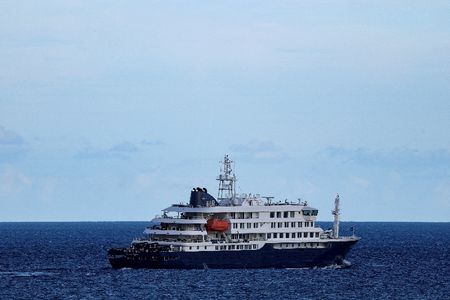

A luxury cruise vessel struck by a deadly hantavirus outbreak reached Rotterdam Monday morning, where Dutch officials had arranged quarantine protocols for the 27 people still aboard the MV Hondius.
Local officials confirmed they established isolation facilities for some international crew members, though uncertainty remains about whether they will complete the full 42-day recommended quarantine period.
The Dutch-registered vessel was transporting approximately 150 passengers and crew from 23 nations when health authorities first notified the World Health Organization about a cluster of serious respiratory cases on May 2.
The outbreak has claimed three lives — a Dutch couple and a German citizen — since it began.
Oceanwide Expeditions operates the ship, which became stranded near Cape Verde this month when local authorities refused to allow passengers ashore because of the health emergency. Following WHO and EU requests, Spain coordinated an evacuation at the Canary Islands, after which the vessel headed to Rotterdam with minimal crew and two additional medical personnel.
The virus spreads mainly through rodents but can occasionally transmit between humans during extended, close contact. The incubation period can extend up to six weeks.
Crew members, passengers who previously departed the vessel, and their contacts have been placed in quarantine across multiple countries worldwide.
This outbreak involves the Andes virus strain, which has been present in Argentina and Chile for many years. The European Centre for Disease Prevention and Control reports that ship samples show no significant virus mutations.
The WHO updated its case total Friday to 10 from 11 after an uncertain U.S. case came back negative. As of May 15, there were 10 WHO-documented cases — eight confirmed and two probable — including the three fatalities.
British Columbia’s government announced Saturday that one Canadian former passenger of the Hondius had tested positive for hantavirus. The WHO stated Sunday it awaits official confirmation but noted this would bring the total to 11 cases.
Health officials indicated earlier this month that additional cases were anticipated but emphasized the situation differs completely from COVID and does not represent a pandemic threat.
Because of the extended incubation period, the search for new cases may persist for months, challenging authorities’ post-COVID communication strategies.
The WHO advises monitoring and quarantining high-risk contacts for 42 days following exposure, while recommending low-risk contacts monitor themselves and seek medical attention if symptoms appear.
Some Rotterdam residents voiced mild concerns about the MV Hondius’s arrival, worrying people might not comply with quarantine requirements, but told reporters they don’t anticipate a new pandemic.
“What is concerning to me is how well will people … stay in quarantine,” said 35-year-old Rotterdam resident Claudia Eduardo. “Because we know during the pandemic a lot of people didn’t abide to the rules.”
Eighteen-year-old Aleks Mladenovic said hearing about the hantavirus outbreak initially frightened him, but research helped calm his fears. “It’s not a new thing. We’ll probably figure something out and get on top of it again,” he said. “I am not worried at all.”