
IRBIL, Iraq (AP) — Iraq finds itself in a precarious position as the sole nation experiencing military strikes from both Iranian-backed forces and U.S. troops, threatening to pull the country into a comprehensive crisis after managing to stay clear of two years of regional instability.
With the conflict approaching its second full week, Iraq’s circumstances are becoming increasingly dire. Maritime shipping disruptions and attacks on petroleum facilities and infrastructure have virtually stopped all exports, putting at risk a nation that depends on oil trade for most of its government income.
Should the export stoppage persist, Baghdad may find itself unable to cover its massive public employee wages within a month, creating the potential for widespread civil disorder, according to two Iraqi Kurdish officials.
The central government has reached out to Kurdish leadership in the north to restart oil shipments through a pipeline to Turkey, but negotiations have stalled over long-standing internal disputes. The officials provided information to The Associated Press under anonymity due to the sensitive nature of the political discussions.
Meanwhile, a secondary battle related to the broader conflict has intensified between Iranian-supported Iraqi militia organizations and American forces. Daily drone attacks have focused on U.S. assets throughout Iraq, prompting American military responses against militia installations to protect personnel.
Beginning February 28 after a significant American and Israeli operation in Iran, the war has brought continuous drone and rocket attacks against U.S. interests in Iraq, including military installations at Baghdad and Irbil airports, plus American diplomatic compounds. Iranian forces and their Iraqi militia partners have also targeted petroleum facilities and energy systems to increase economic damage.
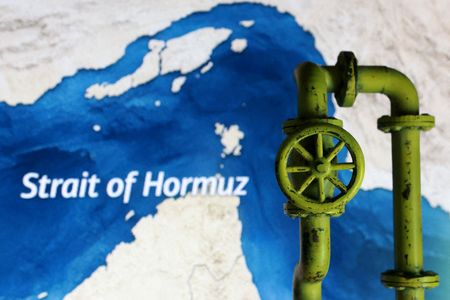
Iraq stands apart from other Middle Eastern nations affected by the conflict because it houses both established pro-Iranian groups and substantial American interests. The nation’s economy relies almost entirely on oil revenue, making any disruption to production or exports through the Strait of Hormuz potentially devastating to government finances during an already challenging political transition in Baghdad.
Extended conflict raises the likelihood that economic disruption, political deadlock, and tensions with Iran-aligned militias could combine to destroy Iraq’s carefully maintained relative peace.
Officials in Baghdad and Irbil continue advocating for restraint and maintaining that combat operations should not occur within their borders, yet the conflict’s direction is increasingly moving beyond their influence. American officials have provided reassurances to Iraqi leadership that the nation will not be pulled into the regional war, the two Kurdish officials told AP.
During the conflict’s initial phase, drone and rocket attacks by Iran and affiliated organizations began focusing on American military bases, diplomatic facilities, and oil installations. In Irbil, the seat of Iraq’s autonomous Kurdish territory, daily drone strikes have targeted not just U.S. military and allied facilities but also business locations and hotels.
Pro-Iranian groups have also attacked Kurdish organizations operating in northern Iraq following reports that Washington intended to provide weapons to some groups for operations against Tehran. Several Iranian Kurdish leaders have indicated readiness to conduct cross-border missions into Iran with American backing.
Iraq currently operates under interim government leadership after the U.S. rejected the nomination of former Prime Minister Nouri al-Maliki. Caretaker leader Mohammed Shia al-Sudani, working with even more restricted authority, cannot effectively control powerful militia organizations.
American forces have responded by attacking militia locations throughout Iraq, including strikes in Jurf al-Sakhr south of Baghdad, northern Iraq, and al-Qaim near the Iraq-Syria border.
Following patterns from previous crises, Iraqi citizens have adapted to daily violence that affects routine activities.
At an Irbil restaurant, customers heard approaching drones followed by a distant explosion before smoke appeared on the horizon where it was intercepted. A server encouraged calm, explaining the attacks targeted the U.S. Consulate or airport and presented no immediate danger to patrons.
The most serious risk to Iraq’s stability comes from interrupted oil production, which could devastate government income. Kurdish officials reported Baghdad’s warning that public employee payments could face disruption within a month.
To reduce pressure, Baghdad has requested exports of at least 250,000 barrels daily of crude from Kirkuk fields through the pipeline to Ceyhan in Turkey crossing Kurdish territory. Negotiations have stopped after Kurdish representatives demanded lifting an existing U.S. dollar restriction and restoring economic benefits from trade.
Iraq’s government reduced production from southern oil fields, which generate most of the nation’s 4.8 million barrels daily, after the war virtually halted Strait of Hormuz shipping and militias attacked facilities. Oil sales provide over 90% of government revenue.
Iraq maintains one of the world’s largest government workforces and pension systems, and previous payment delays have triggered mass demonstrations.
Production has stopped at oil fields affected by strikes. In the Kurdish region, Canada’s ShaMaran Petroleum and U.S. private company HKN have halted operations at the Sarsang and Atrush sites.
“If oil exports are disrupted, the immediate impact would likely be a decline in the value of the Iraqi dinar. This would quickly trigger inflation, and within a short time the prices of basic goods could rise sharply,” said Farhad Soleimanpour, an Iraqi Kurdish political analyst.
“For the Kurdistan region, the situation could be even more difficult because it does not have its own central bank or significant financial reserves. Iraq may be able to withstand the shock for several months, but the Kurdistan Region would likely face immediate financial pressure,” he added.
The conflict has also damaged electrical systems.
The Khor Mor gas facility in the autonomous Kurdish region is shut down, reducing electricity production by almost two-thirds. Previously providing continuous power, households now receive only four to six hours daily, according to Omed Ahmad, spokesperson for the Kurdistan Region’s Ministry of Electricity.
Following the November 2025 election, Iraq has lacked a government after American opposition to al-Maliki’s return as prime minister. The war complicates the difficult transition, forcing an interim administration with severely restricted powers to handle the consequences.
However, the caretaker status also allows Iraqi leaders to avoid responsibility by claiming insufficient authority to act, according to Iraq analyst Tamer Badawi. “No one wants to take this big responsibility at the moment,” he said.
This would require taking control and managing multiple armed organizations, from Iran-backed militias attacking U.S. interests to Kurdish-Iranian opposition groups, whose activities deepen divisions that could trigger civil unrest.
Even with some oil exported through the pipeline, officials have warned there is no guarantee the infrastructure will remain safe from militia attacks.
Iraq has succeeded against expectations in largely avoiding regional turmoil from the Gaza war that started in 2023. Political and religious leaders have maintained commitment to keeping the country out of broader conflict and preserving stability.
“Iraq faces pressure to maintain neutrality while different political groups inside the country have opposing positions regarding the conflict,” Soleimanpour said. “Some factions support closer relations with Iran, while others prefer stronger cooperation with the United States and Western countries. This internal division increases political tension.”