
President Donald Trump issued a stern warning to Iran on Saturday, threatening to target the nation’s crucial oil export infrastructure if Tehran continues interfering with international shipping routes through the strategically vital Strait of Hormuz.
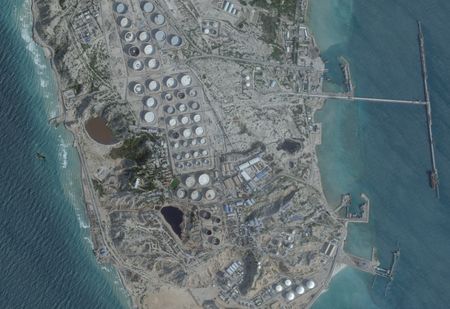
The ultimatum came after American forces conducted military operations against Iran’s Kharg Island, which serves as the departure point for approximately 90% of Iran’s petroleum exports. The island facility sits roughly 300 miles northwest of the contested waterway.
While U.S. operations deliberately avoided damaging oil-related infrastructure, Trump made clear this restraint could end quickly. “Should Iran, or anyone else, do anything to interfere with the Free and Safe Passage of Ships through the Strait of Hormuz, I will immediately reconsider this decision,” the president declared in a social media statement.
Trump also dismissed Iran’s military capabilities, writing that the country “had no ability to defend against U.S. attacks.” He added: “Iran’s Military, and all others involved with this Terrorist Regime, would be wise to lay down their arms, and save what’s left of their country, which isn’t much!”
Iranian military officials responded swiftly on Saturday, warning through state media that any assault on their energy facilities would trigger retaliatory strikes against regional oil companies working with American interests.
According to Iran’s Fars news agency, witnesses reported hearing more than 15 explosions during the American assault on Kharg Island. Sources indicated the bombardment focused on defensive installations, naval facilities, and airfield infrastructure while sparing petroleum operations.
Global energy markets are closely monitoring whether the island’s complex system of pipelines, storage facilities, and export terminals sustained any damage. Even minimal disruptions could worsen an already strained worldwide supply situation.
The regional conflict has expanded beyond Iran, with the Revolutionary Guard announcing additional collaborative strikes against Israel alongside Lebanon’s Hezbollah organization, according to Iran’s Tasnim news outlet.
Israeli military forces reported conducting extensive air operations Friday, hitting over 200 Iranian targets including missile systems, defensive installations, and weapons manufacturing sites across western and central regions of the country.
American military personnel have suffered losses in the escalating conflict. The Pentagon confirmed Friday that six crew members died when their refueling aircraft went down in western Iraq. Additionally, The Wall Street Journal reported that Iranian missiles damaged five U.S. Air Force tanker planes at a Saudi Arabian base, with repairs currently underway.
Energy markets have experienced dramatic price swings based on Trump’s varying statements about the conflict’s expected duration. The fighting erupted February 28 with coordinated American and Israeli bombardments against Iran and has since expanded into a broader regional war affecting global financial and energy markets.
Lebanon has emerged as another major battleground, with Israeli forces and Hezbollah militants exchanging attacks in and around Beirut, further escalating tensions.
Beyond missile and drone assaults on Israel and U.S.-allied Gulf nations, Iran’s Revolutionary Guard has actively worked to disrupt commercial shipping through the Strait of Hormuz, which handles approximately 20% of global fossil fuel transportation.
Trump announced Friday that American naval forces would “soon” begin providing security escorts for tanker vessels navigating the waterway.
Despite previously suggesting the conflict would conclude within weeks, Trump declined Friday to offer any timeline for resolution. “I can’t tell you that,” he told reporters. “I mean, I have my own idea, but what good does it do? It’ll be as long as it’s necessary.”
Iran has maintained crude oil shipments while other Gulf producers suspended operations due to security concerns about potential Iranian attacks.
Satellite monitoring by TankerTrackers.com showed multiple large oil tankers loading cargo at Kharg on Wednesday. Iran’s daily exports have ranged between 1.1 million and 1.5 million barrels from February 28 through Wednesday.
Energy analyst Bob McNally of Rapidan Energy Group said Trump’s Friday remarks “will focus the market’s mind on pathways that this energy disruption, already history’s largest, could expand and last longer.”
Some industry experts questioned the strategic value of avoiding oil infrastructure. “Bombing Kharg Island but not the oil infrastructure is like going to McDonald’s and getting a hamburger with no meat,” said Josh Young of Bison Interests. “What’s the point?”
Iran’s newly appointed supreme leader, Mojtaba Khamenei, made his first public statements Thursday, promising to maintain the Strait of Hormuz closure and warning neighboring nations to shut down American military installations or face potential attacks.
European nations are developing strategies to protect their interests, with France leading discussions among European, Asian, and Gulf Arab partners about potentially deploying warships to escort commercial vessels through the strait.
After nearly two weeks of warfare, casualty figures have reached 2,000 deaths, with the majority occurring in Iran but significant losses also reported in Lebanon and Gulf states now experiencing frontline combat for the first time in decades of Middle Eastern conflicts.
Several million people have fled their homes due to the fighting. As Israeli aircraft continue pounding Beirut’s surrounding areas, Lebanese interior officials report being overwhelmed by hundreds of thousands of displaced residents seeking shelter in the capital city.