
American military forces destroyed key targets on Iran’s Kharg Island Friday, according to President Donald Trump, striking at the heart of the nation’s oil export operations. Iran’s parliamentary leadership had previously cautioned that attacks on such facilities would trigger unprecedented retaliation measures.
The Pentagon is deploying an additional 2,500 Marines along with an amphibious assault vessel to the Middle East region as the conflict with Iran enters its third week, according to a U.S. defense official.
Iranian forces have maintained extensive missile and drone bombardments against Israel and neighboring Gulf nations while successfully blocking the Strait of Hormuz, a critical waterway that carries twenty percent of global oil shipments. American and Israeli aircraft continue intensive bombing campaigns targeting Iranian military installations and strategic sites.
These developments suggest the two-week military confrontation is far from reaching a resolution.
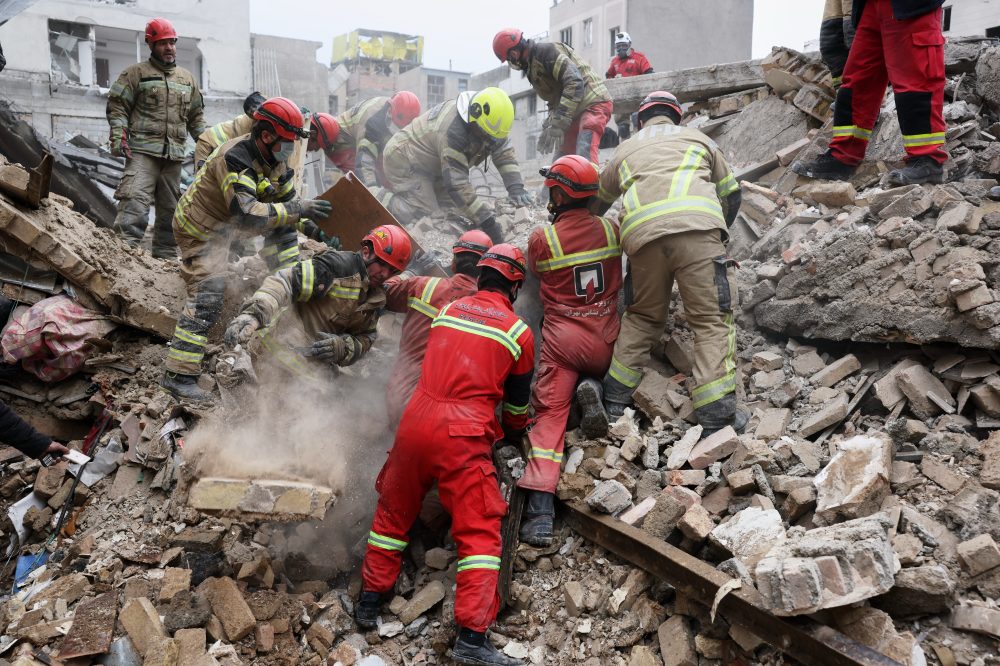
Early Saturday morning, an aerial strike targeted a residential building in Baghdad’s Karrada neighborhood, resulting in one fatality and two injuries, according to security sources and officials connected to Iranian-backed militia organizations who requested anonymity due to authorization restrictions.
Iraqi military leadership issued a statement denouncing the attack as “a blatant violation of all humanitarian values and a disregard for international conventions.”
This incident preceded a separate missile assault on the U.S. Embassy complex in Baghdad.
Iran’s Fars news agency documented at least fifteen explosions accompanied by heavy smoke clouds over Kharg Island following the American military strikes.
The news outlet reported that the bombardment focused on air defense systems, naval installations, airport control facilities, and helicopter storage areas belonging to offshore petroleum companies, while claiming no damage occurred to oil production infrastructure.
Iranian military command renewed warnings about potential attacks on American-connected energy assets throughout the region should their oil facilities face targeting.
Speaking for the Khatam al-Anbiya Central Headquarters, Ebrahim Zolfaghari issued threats early Saturday through state television channels.
“All oil, economic, and energy infrastructures belonging to oil companies across the region that have American shares or cooperate with America” would become targets if Iran’s energy and economic facilities face attack, he warned.
The U.S. Embassy in Baghdad provided no immediate response following the missile strike on its compound.
Embassy officials reissued their highest Level 4 security warning for Iraq on Friday, noting that Iranian forces and affiliated militia groups have historically conducted attacks against American personnel, interests and facilities, with the potential for continued targeting.
The massive embassy facility, ranking among the world’s largest American diplomatic installations, has faced repeated rocket and drone attacks from Iranian-aligned militant groups in previous incidents.
These organizations have recently intensified their assault campaigns against military bases housing American and coalition personnel.
A drone attack in northern Iraq Thursday resulted in the death of a French soldier and injuries to several others serving with the international coalition forces.
Security officials confirmed that a missile impacted a helicopter landing area within the U.S. Embassy grounds in Baghdad.
The projectile struck inside the embassy perimeter after targeting the Green Zone, the heavily secured central Baghdad district containing Iraqi government buildings and international diplomatic missions, according to security personnel who requested anonymity due to speaking restrictions.
Associated Press footage captured smoke rising from within the embassy compound following the attack.