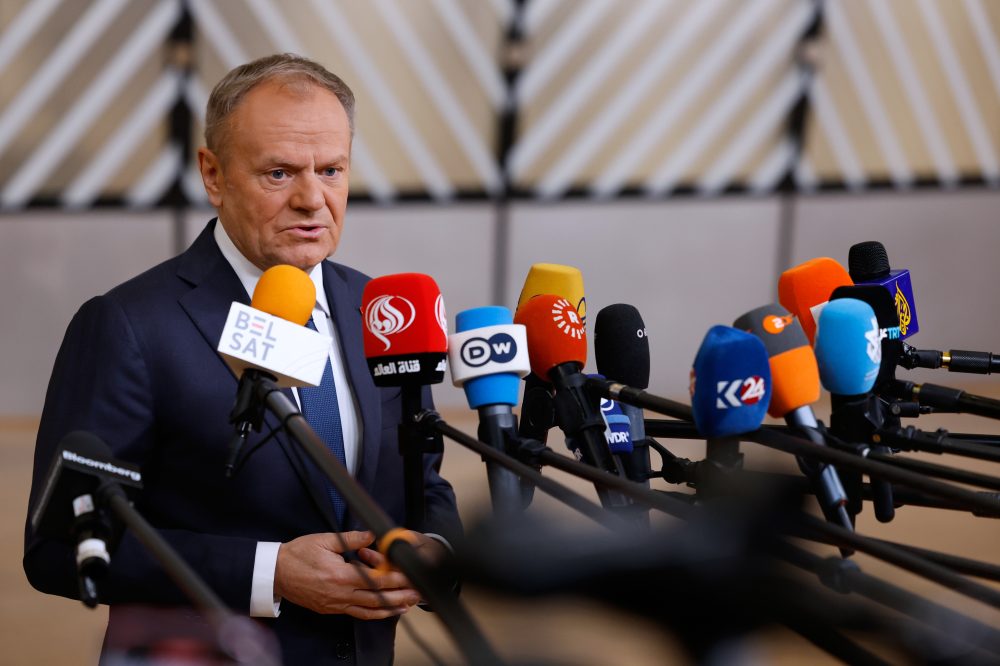

WARSAW, Poland (AP) — Following his president’s rejection of crucial legislation, Polish Prime Minister Donald Tusk declared Friday that he remains committed to securing 44 billion euros in European Union defense financing for his country.
The blocked funding would have made Poland the primary recipient of the EU’s massive 150 billion-euro lending initiative known as SAFE, or Security Action for Europe. This program aims to strengthen European defense capabilities as the United States reduces its security involvement on the continent.
However, President Karol Nawrocki, who has established himself as Tusk’s primary political adversary, announced Thursday his decision to reject the legislation that would have allowed Poland to obtain these EU defense loans.
“Poland is in shock,” Tusk said Friday. “People are wondering if this is betrayal, the work of lobbyists, or lack of common sense.”
Polish administrations have consistently increased military expenditures following Russia’s comprehensive assault on Ukraine in 2022. While Tusk’s liberal administration seeks collaboration with European Union partners, the nationalist president has demonstrated greater skepticism toward Europe and maintained closer ties with the Trump administration.
From the beginning, Nawrocki expressed doubts about Poland joining SAFE, contending that it would burden Polish citizens with debt and strengthen the nation’s reliance on Germany.
Earlier this week, he presented alternative legislation on Tuesday, outlining domestic funding sources that could replace European loans for additional defense investments. Tusk has rejected this proposal as impractical.
Despite the presidential rejection, Tusk stated Friday that his government would still pursue the defense funding, though “it will be more difficult, sometimes slower, and it will take much more effort to convince everyone involved in this project.”
The United States has also publicly opposed SAFE.
“The United States has expressed concerns about how EU defense initiatives like Security Action for Europe (SAFE) and the European Defense Industry Program (EDIP) restrict market access for American companies,” Andrew Puzder, the U.S. ambassador to the EU, and Matthew Whitaker, the U.S. ambassador to NATO, wrote in an opinion piece published in February by POLITICO Europe.
According to the ambassadors, these European initiatives “undermine collective defense” by restricting competition, hindering innovation and preventing U.S. companies from receiving essential contracts.