Travelers heading through the Elderon Drive area should be aware of intermittent lane closures currently in effect due to construction activity at Elderon Drive at the Elderon Drive Loop.
The lane restrictions are expected to continue until 6:00 PM. Drivers are encouraged to use caution when passing through the construction zone and to budget additional time for their commute if their route takes them through that area.
No further details about the nature of the construction work were immediately available. Motorists should remain alert for construction crews and equipment in the roadway.
Southbound travelers on Interstate 95 near Wilmington are being asked to exercise caution this afternoon as a litter cleanup operation is taking place along the right shoulder.
The operation is located at mile marker 15 and is expected to remain active until 4 p.m. Crews will be working along the shoulder, so drivers should be prepared to slow down and move over when approaching the area.
Motorists are reminded to stay alert and reduce speed when passing any roadside work crews to ensure the safety of both workers and drivers.
Westbound travelers along W Newport Pike at W Justis Street are facing a right lane closure due to ongoing construction work in the area.
The closure affects the stretch of roadway between N James Street and Ethan Drive. Drivers using this route should expect possible delays and are encouraged to allow extra travel time or consider an alternate route.
The lane is expected to reopen by 5 PM. Motorists are urged to remain alert and follow any posted traffic control signs in the construction zone.
The coastal community of Surfside, Florida, is pausing to reflect on the five-year anniversary of a devastating condominium collapse that took 98 lives and shocked the nation.
The fall of the beachfront high-rise is considered one of the most significant structural disasters ever recorded in the United States.
As the anniversary arrives, the emotional toll of the tragedy continues to weigh heavily on survivors, families, and first responders who lived through the catastrophe.
WASHINGTON — A Montana veteran has some festive plans in store for America’s 250th birthday celebration.
Duane Mitchell, 78, has restored a 1954 Chevrolet pickup truck decked out in red, white, and blue, and plans to drive it in local Fourth of July parades. To mark the historic occasion, he added a decorative eagle to the back of the truck along with American flags.
“I’ll be driving my pickup,” Mitchell said of his parade role. “Usually we freeze a whole bunch of candy, and I have a couple of kids from down the block who get in the back and throw candy out. Everybody loves it.”
Mitchell is far from alone in his enthusiasm. A new survey from The Associated Press-NORC Center for Public Affairs Research finds that roughly 4 in 10 U.S. adults say “proud” describes how they feel about the country’s 250th anniversary, while about 3 in 10 say they feel “excited.” President Donald Trump has planned several commemorative events for the nation’s capital, including a fair on Washington’s National Mall.
However, the celebrations come with complicated emotions for many Americans. Separate Gallup polling shows that a majority of Americans now believe the signers of the Declaration of Independence would be disappointed with how the country has developed — a significant shift from 25 years ago.
The enthusiasm breaks down sharply along political lines. About 7 in 10 Republicans say they feel proud about the anniversary, compared to roughly 3 in 10 independents and about 2 in 10 Democrats. Around 54% of Republicans also say they feel excited. Older Americans — those 60 and above — lean heavily toward pride as well, with about 6 in 10 saying that word captures their feelings.
Mitchell, a Vietnam War veteran who was drafted into military service, wants the nation to be “celebrating it to the maximum.” He says the anniversary should serve as a reminder of those who gave their lives for American freedoms.
“It was a sacrifice,” Mitchell said of his service. “The most important thing about the celebration is understanding that freedom is not free, and it never will be free, so you need to celebrate that.”
New Gallup polling also finds that most Americans — about 7 in 10 — believe the country has succeeded “a great deal” or “a fair amount” in living up to the ideals it was founded on. That view is shared across party lines, though Republicans are the most likely to say the country has succeeded.
Democrats and younger Americans are more likely to describe their feelings as conflicted or indifferent. About 4 in 10 Democrats and roughly 3 in 10 adults under 30 say “conflicted” describes their emotions extremely or very well, while about 3 in 10 in each group say they feel “indifferent.”
Laura Davis, a 44-year-old progressive liberal from Chicago, said she has struggled this year with what she calls the “American declarations of grandiosity” — pointing to things like White House ballroom construction and the repainting of the Lincoln Memorial Reflecting Pool. She believes that money could be better directed toward Americans in need and international aid, and she worries about the country’s global reputation.
“It doesn’t mean we can’t celebrate the things that do make America a unique and in some ways exceptional place to be,” Davis said. “But I think it’s more nuanced than that, and I hope that doesn’t get lost in the celebration.”
Perhaps most striking is a shift in how Americans view the founders’ expectations. About 8 in 10 U.S. adults now say the signers of the Declaration of Independence would be disappointed in how the country has turned out, with only about 2 in 10 saying they would be pleased. That’s a dramatic change from 1999 — the first time Gallup asked the question — when 55% believed the founders would be disappointed and 44% thought they would be pleased.
Sydney Crispin, a 39-year-old Democrat from Maine, says she believes the country’s “incredible” foundation is worth honoring, but she is troubled by what she sees as a deterioration in respectful public conversation — something she views as central to American identity. She hopes communities will find a way to both celebrate America’s strengths and honestly reflect on its shortcomings this Fourth of July.
As for how people plan to mark the occasion, a recent Gallup-With Honor poll found that just under half of U.S. adults — 44% — plan to spend the anniversary with friends or family. About 3 in 10 say they’ll watch coverage of America 250 events on television or social media. Adults 65 and older are especially likely to celebrate with loved ones or tune in to coverage, while adults under 30 are more likely than other age groups to say they have no plans to celebrate at all.
The same poll found about 2 in 10 adults plan to take part in a neighborhood or community event, while approximately 1 in 10 say they’ll attend an official America 250 event.
Lyle Nelson, a 67-year-old from Idaho, said he plans to stick with his usual tradition of watching the annual Macy’s fireworks show from home. Nelson, who says he agrees with much of what Trump has done in office, offered a thought about the president’s connection to this historic moment.
“I wonder if he’s thankful that he gets to be president during the 250th anniversary,” Nelson said. “I think he’ll be excited for that.”
The AP-NORC poll surveyed 2,596 adults from April 16–20, drawn from NORC’s probability-based AmeriSpeak Panel, with a margin of sampling error of plus or minus 2.6 percentage points. The Gallup-With Honor poll surveyed 3,199 adults from May 12–22, with a margin of error of plus or minus 2.1 percentage points. A separate Gallup poll of 1,001 adults conducted May 1–17 carries a margin of error of plus or minus 4.0 percentage points.
Motown — both the iconic music and the record label behind it — sits at the very heart of what it means to be from Detroit. The sound is inseparable from the city’s history and cultural story.
But as generations change, a key question is being raised: do younger Detroiters share that same deep connection to Motown’s legacy that their parents and grandparents felt?
The relationship between the city and its most famous musical export continues to be explored, as observers look at whether that proud heritage still resonates with the next wave of Detroit residents.
A crash has forced the closure of the right lane on southbound Interstate 95 at Churchmans Marsh, according to Delaware transportation officials.
Motorists traveling southbound through that stretch of highway should anticipate slowdowns and consider alternate routes if possible. Authorities are urging drivers to use caution in the area while crews work to address the situation.
No additional details regarding the crash or an estimated time for the lane to reopen have been provided at this time. TV Delmarva will continue to monitor this developing traffic situation.
Several protesters who were accused of having ties to the antifa movement have been sentenced to decades in prison after being found guilty in connection with a shooting at an immigration detention center in Texas.
The convictions and subsequent sentences mark a significant legal outcome in a case that drew widespread attention across the country, involving allegations of politically motivated violence targeting an immigration facility.
The defendants, who faced serious felony charges stemming from the attack, were handed substantial prison terms following the guilty verdicts.
SAN FRANCISCO (AP) — In China, Xiangqi Chen risks punishment for her LGBTQ+ activism. But thousands of miles away in San Francisco’s Chinatown — the oldest in the United States — she has found both freedom and recognition as the founder of the first Chinese queer art museum in the world.
The contrast between her two worlds is something Chen fully recognizes.
“Here in San Francisco Chinatown, I still continued my journey and met so many like-minded community members and friends,” Chen said through an interpreter in an interview with The Associated Press. “It kind of actually encouraged me and gave me lots of strength to do what I know is my mission, my calling.”
The OUT Museum made its debut with a rainbow-ribbon cutting ceremony at the end of May, timed to fall between Asian American Pacific Islander Heritage Month and Pride Month. Located directly across from the Chinese Historical Society of America Museum, the bilingual institution aims to bring visibility to a group that has historically been overlooked. Its arrival comes at a time when LGBTQ+ rights face growing restrictions at the local, state, and federal levels across the country.
For now, the museum operates only on Saturdays and consists of a single room displaying fewer than a dozen works by artists from China and the broader Chinese diaspora. Still, organizers hope to expand both the number of exhibits and the days the museum is open to visitors.
Chen’s vision for the museum dates back six years, when she was still living in China and launched a Kickstarter campaign for the concept — drawing donations from more than 2,000 people. She always understood, however, that building it in China was unlikely. In 2022, she came to the United States on a J-1 visa as a visiting scholar at Georgetown University. By 2024, her involvement in an exhibition at the Asian Art Museum in San Francisco brought her wider attention, which led to a residency with the Chinese Culture Center of San Francisco.
The organization’s executive director, Jenny Leung, said in an email that the group was “proud to be the incubating space for the OUT Museum prototype.”
The outpouring of community support that followed left Chen genuinely surprised.
“I got so many chances to connect with the local Asian American queer community and even the Chinatown community in general,” she said.
Word spread to longtime collaborators and younger artists who reached out through Instagram. Their work is featured in the museum’s opening exhibition, which includes photography, zines, and an interactive installation that invites visitors to use thread to map their personal journey of self-discovery related to gender and sexuality.
For Dixon Ngai, an artist born in Hong Kong, the museum fills a gap that mainstream media has long left open by largely ignoring the Chinese LGBTQ+ community. His contribution to the exhibition is a hand-painted Chinese porcelain wine pot inspired by the Cantonese opera “Di Nü Hua,” also known as “The Flower Princess.”
Ngai noted that the OUT Museum stands apart from other exhibitions because it speaks directly to the experience of the Chinese queer community, allowing “more people to see our voice.”
Since the museum opened, Chen said she has been “one hundred percent moved” by an unexpected group of visitors: Chinese immigrants — both queer and straight — who have lived in California for decades.
One visitor, a 60-year-old transgender man, shared how he came to the United States in the 1970s specifically to access gender-affirming care. Another visitor was a mother hoping to rebuild her relationship with her gay adult son.
“She later emailed me saying that she’s so grateful for all the events the art museum has organized,” Chen said. “Her son came out to her, and she’s very proud of her son and she wants to express gratitude.”
Author and activist Helen Zia, who serves on the museum’s advisory board, said these responses confirm that the museum is successfully raising the visibility of Chinese, Chinese American, and Asian American LGBTQ+ people. She also pointed out how dramatically public attitudes have shifted, noting that an institution like this would have been nearly impossible to establish even two decades ago.
“There were Asian churches who would have demonstrations week after week with thousands of people just condemning same-sex couples,” Zia said, recalling a moment in 2008 when she distributed pro-gay marriage flyers in Oakland’s Chinatown. “We got people yelling at us, spitting.”
Later that same year, Zia and her wife were among the many couples who married after the California Supreme Court struck down a ban on same-sex marriage. Even now, she believes the museum’s existence carries an important message.
“See our humanity,” Zia said. “Here’s the beautiful art that we create and imagine and contribute to the world.”
Life for LGBTQ+ individuals in China remains largely hidden, shaped by discriminatory policies. Although the Chinese Psychiatric Association removed homosexuality from its list of mental disorders in 2001, same-sex couples still cannot legally marry or adopt, and their ability to publicly advocate for their rights remains severely limited. When Chen was living in Shanghai, she ran a grassroots center for lesbians. One of the factors that pushed her to leave was the government’s crackdown on LGBTQ+ spaces during the pandemic.
She likely would not have been able to mount an art show there, let alone establish a museum.
“From 2013 to 2015, that kind of art exhibition by queer artists (could) exist, but only if you don’t explicitly show or tell the audience that your work or yourself identify as queer or LGBTQ,” Chen said. “But not nowadays.”
Zia first encountered Chen about a decade ago through that very Shanghai center, while conducting research for a book.
“She’s been just incredibly brave in China, creating a center that attracted a lot of state attention,” Zia said.
One key difference Chen has observed between American-born Chinese LGBTQ+ individuals and those living in China is greater access to education about gender and sexual identity, as well as more robust support systems.
Meanwhile, LGBTQ+ rights face mounting pressure under the current federal administration. President Donald Trump’s administration has moved against gender-affirming care and sought to ban transgender individuals from military service. Some lawmakers have also proposed designating a “Nuclear Family Month.”
San Francisco itself recently navigated a cultural flashpoint when players for the Giants baseball team wrote Bible verses on their hats during a Pride Night event.
Despite these tensions, the Chinese artists behind the OUT Museum say the atmosphere in San Francisco feels liberating by comparison.
“Here in San Francisco, in California, we enjoy the air of freedom, there is equal human rights, there is security,” Ngai said. “So, we are very proud to be ourselves.”
This Sunday, Chen plans to march in her first San Francisco Pride Parade, promoting the museum while dressed as a woman warrior from a Cantonese opera.
“I think completing this opening will be a start for me. It’s not the end,” Chen said. “We still have a long way to go.”
WASHINGTON — The Army general who made history as the final American soldier to walk off Afghan soil is now walking away from his current command under unexpected circumstances, the Army confirmed late Tuesday.
Gen. Christopher Donahue, who serves as the commanding general of U.S. Army Europe and Africa and also leads NATO’s Allied Land Command, will step down from his position on July 2, according to an Army statement provided to The Associated Press. He becomes the latest in a string of nearly two dozen senior military leaders who have either retired or left their roles ahead of schedule since Defense Secretary Pete Hegseth took charge, driven by his push to reduce the number of generals in favor of more frontline troops — a philosophy he has summed up as “less generals, more GIs.”
Until a permanent replacement is named, Donahue’s deputy, Maj. Gen. Christopher Norrie, will take over his responsibilities, the Army statement said.
Donahue is a graduate of West Point and spent his career in special operations, commanding Delta Force units in both Iraq and Afghanistan before taking charge of the 82nd Airborne Division from July 2020 through March 2022.
It was during that assignment that he oversaw security operations at Hamid Karzai International Airport amid the turbulent American withdrawal from Afghanistan in 2021. On August 30, 2021, Donahue stepped onto the final C-17 cargo aircraft departing the country, making him the last U.S. service member to leave after nearly two decades of war that began following the September 11, 2001 attacks. A now-iconic photograph captured through night vision equipment documented that historic moment.
Both Hegseth and President Donald Trump had repeatedly criticized the Afghanistan withdrawal — a pullout that originated from a deal the Trump administration itself negotiated with the Taliban during its first term — and made it a recurring political talking point. The Pentagon has since launched yet another review of the withdrawal, ordered by Hegseth last May, despite the fact that multiple prior investigations had already been conducted by the Pentagon, U.S. Central Command, the State Department, and Congress, involving hundreds of interviews and extensive review of photos, videos, and other data. What new information this latest review aims to uncover remains unclear.
Despite the political controversy surrounding the withdrawal, Donahue’s handling of the evacuation earned him praise from both sides of the political aisle. Within Army circles, he was widely regarded as someone with the potential to lead the entire service or even become chairman of the Joint Chiefs of Staff.
An Army official, speaking anonymously to discuss internal deliberations, told The Associated Press that Donahue’s exit is connected to ongoing talks about downgrading U.S. Army Europe and Africa from a four-star command to a three-star command.
That potential restructuring fits within a broader context of tensions between Hegseth and European allies. Just last week, Hegseth informed NATO partners that he would be conducting a six-month Pentagon review of American military forces stationed in Europe, saying it was “designed to ensure that NATO is moving fast and irreversibly toward Europe leading, stepping up to take primary responsibility for the defense of Europe.”
“It’s a review that some countries will fail and others will pass with flying colors,” Hegseth added.
The Pentagon had not issued a response to news of Donahue’s departure as of Tuesday evening. The story was first reported by The Atlantic.
Drivers in the area should be aware that the traffic signal at the intersection of Savannah Road and Wescoats Road is currently operating in flash mode while maintenance work is being performed.
The signal is expected to remain on flash until 5 a.m. Motorists are advised to treat the intersection with caution, as flashing signals typically require drivers to treat the intersection as a stop or yield situation depending on the signal color.
Travelers in the area are encouraged to plan accordingly and remain alert while passing through the intersection until the signal returns to normal operation.
Westbound travelers on Savannah Road are facing a lane restriction overnight, according to Delaware Department of Transportation traffic information.
The right lane on Savannah Road westbound, between Wescoats Road and DE-1, is currently closed. The closure is expected to remain in effect until 5:00 AM.
Drivers in the area are encouraged to use caution, allow extra travel time, or consider using an alternate route until the lane reopens.
Motorists traveling eastbound on US Route 40 are facing a lane restriction overnight. The right lane between Glasgow Drive and Brookmont Drive is currently closed, with the closure expected to remain in place until 6 AM.
Drivers in the area are encouraged to allow extra travel time or consider alternate routes until the lane reopens.
Motorists traveling along Valley Road between Emandan Lane and Fitness Way should be aware of intermittent lane closures currently in effect.
According to traffic officials, the lane restrictions are expected to remain in place until 6 a.m. Drivers in the area are encouraged to use caution and allow extra travel time if passing through the affected stretch of road.
No additional details regarding the cause of the closures were immediately available. Updates will be provided as more information becomes available.
The United States Supreme Court has handed down a ruling that blocks a Louisiana prisoner from suing the prison guards who forcibly shaved off his dreadlocks.
The case raised significant questions about the religious rights of incarcerated individuals. The prisoner, a Rastafarian whose faith holds dreadlocks as sacred, argued that guards violated his religious freedoms when they forcibly removed them.
However, the Court determined that the federal law designed to protect the religious rights of prisoners does not allow the inmate to pursue a lawsuit directly against the guards responsible for the act.
A Manhattan federal judge handed down a sentence of five and a half years in prison Tuesday to a 19-year-old high school senior who admitted to setting a homeless man on fire while the victim slept on a New York City subway car.
Judge Lewis J. Liman sentenced Hiram Carrero to a term exceeding the legally required minimum for arson. Carrero had entered a guilty plea to the arson charge back in March.
The attack took place in the early morning hours of December 1, 2024, and was part of a troubling wave of incidents involving people being set on fire on public transit systems throughout the United States.
Before sentencing, prosecutors asked the court to impose up to eight years behind bars. They described Carrero’s actions as “heinous,” pointing out that the sleeping victim suffered life-threatening injuries and was left with extensive permanent scarring and disfigurement.
When Carrero entered his guilty plea, he acknowledged that he deliberately lit a piece of paper on fire, which caused the man’s injuries.
Court documents filed by prosecutors painted a chilling picture of the attack, stating that Carrero attempted to kill “a sleeping, homeless man by burning him alive and leaving him trapped on a moving subway car.”
Prosecutors noted that the victim survived only because emergency responders reached him quickly during what they called a “mercifully short trip” between Penn Station at 34th Street and Times Square. They described the crime as “separated from murder by mere chance” and rejected Carrero’s claim that he had been drinking and using marijuana that day as a meaningful explanation.
Defense attorney Jennifer Brown argued for a lighter sentence, citing her client’s deeply troubled background. According to court papers, Carrero was born prematurely with drugs in his system and was abandoned by his biological parents at the hospital. Brown noted that he is intellectually challenged and that the COVID-19 pandemic in 2020 worsened his situation by cutting off his access to school.
“Words are inadequate to express the profound shame and remorse that Hiram feels,” Brown wrote in court documents.
Westbound travelers on Old Beach Road at Clapham Road are facing a right lane closure as construction crews work in the area.
A flagging operation is currently active between Sophers Row and Thorn Street, meaning drivers should expect brief stops and possible delays as they pass through the work zone.
The lane restriction is expected to remain in effect until 3 PM. Motorists are encouraged to allow extra travel time or consider an alternate route if possible.
A sweeping celebration of American history and culture has arrived in the nation’s capital, as the Great American State Fair officially opens its doors on the National Mall in Washington, D.C.
The event is part of the broader series of festivities marking the United States’ 250th anniversary. Hundreds of exhibits have been set up along the Mall, giving visitors a chance to explore what different states have to offer.
However, the fair has not been without controversy — not every state has chosen to participate, leaving some notable gaps in the national showcase.
The opening of the fair represents one of the more visible events tied to the country’s semiquincentennial celebrations, drawing attention both for what it includes and for the states that have opted to sit it out.
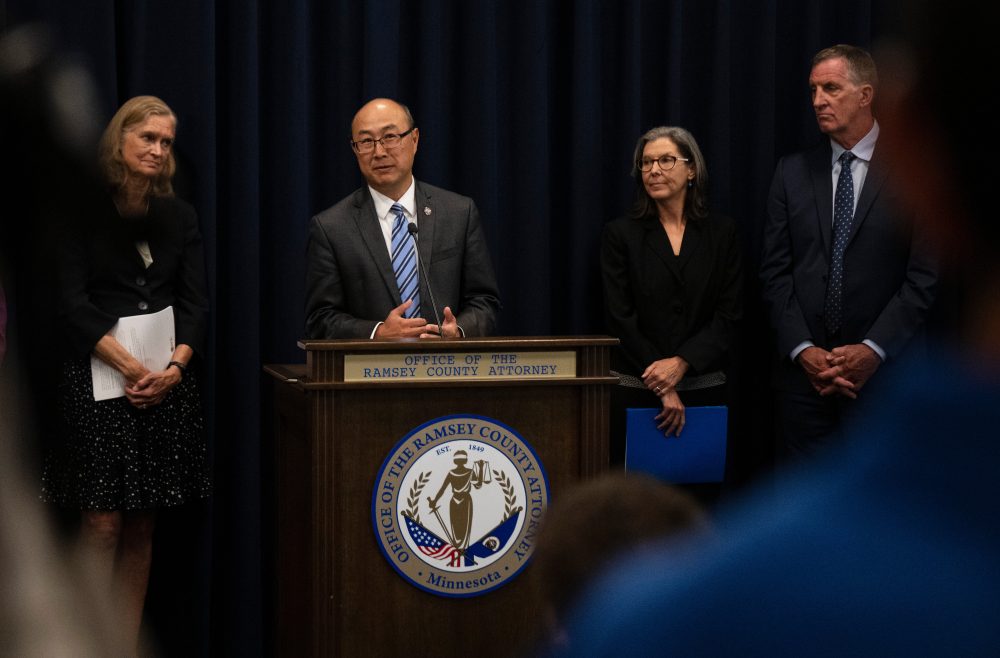
A Minnesota county prosecutor announced Tuesday that six separate murder convictions held up as fair and just, even though they involved a former medical examiner whose professional work came under serious scrutiny after a federal judge called his courtroom testimony “unreliable, misleading and inaccurate.”
The announcement wraps up most of a lengthy review into cases handled by Dr. Michael McGee, who formerly served as a Ramsey County medical examiner. Ramsey County Attorney John Choi said the findings cover seven murder convictions in total. In one of those seven cases — involving a more recent plea agreement — the results are still being shared with the defense team and the legal proceedings are ongoing.
To conduct the review, the county brought in three outside medical experts to examine McGee’s reports and courtroom testimony. Choi said those experts mostly flagged troubling word choices in McGee’s work rather than finding fundamental problems with his actual conclusions.
In a handful of cases, the criticisms of McGee’s work were more significant. Even so, Choi said the review “ultimately determined that while the criticisms were valid, they did not go to the aspects of the case that were key to determining the defendant’s guilt.”
Choi concluded that the convictions in six cases were “fair and just” and that there was no legal basis to overturn or change them. Attempts to reach McGee by phone were not returned.
The Ramsey County Attorney’s Office launched its review of McGee’s work — spanning more than 30 years — after a federal judge overturned a death sentence in connection with the 2003 killing of Dru Sjodin, a college student from North Dakota.
District Judge Ralph Erickson determined that McGee appeared to be “guessing” while on the witness stand during the murder trial of Alfonso Rodriguez Jr., and that McGee offered opinions in court that were never included in his autopsy reports. Rodriguez was later resentenced to life in prison.
The review was carried out with assistance from attorneys at the nonprofit Prosecutors’ Center for Excellence, and the office also consulted with the Great North Innocence Project. The entire process cost Ramsey County $380,000.
The three outside medical experts — who Choi said had no ties to Minnesota or any of the cases — described McGee’s language as sometimes going too far or being misleading. As one example, McGee at times attributed a victim’s injuries to assault, a term the experts said they would not use because it carries a legal meaning rather than a medical one.
Choi said the review pointed to opportunities for his office to better train prosecutors on how medical experts should function in a courtroom. He stressed that medical examiners should help guide a jury’s understanding without steering them toward legal conclusions. “They should not be advocates for one side or the other,” he said.
Eight individuals have received lengthy prison sentences — ranging from 30 to 100 years — following a violent assault on a federal immigration facility in Texas that prosecutors labeled domestic terrorism.
The attack took place on July 4, 2025, when prosecutors say militants dressed in black tactical gear opened fire on law enforcement officers stationed at Immigration and Customs Enforcement’s Prairieland Detention Center in Alvarado, Texas, located roughly 25 miles south of Fort Worth. One police officer was injured in the incident.
Benjamin Song, identified by prosecutors as the mastermind behind the operation, was handed the stiffest penalty — 100 years behind bars — after being convicted of attempted murder, according to court documents.
During proceedings at U.S. District Court in Fort Worth, two judges handed down sentences ranging from 30 to 70 years to seven additional defendants. Most of those individuals had been convicted back in March on charges that included rioting and supporting terrorism.
Prosecutors alleged the attackers were affiliated with antifa, a decentralized anti-fascist movement that President Donald Trump designated as a domestic terrorist organization last year. However, defense attorneys pushed back on that characterization, arguing their clients had intended to hold a peaceful demonstration in support of people being held at the immigration facility.
Song’s attorney, Philip Hayes, indicated his client plans to appeal the verdict. Hayes described those who were convicted not as terrorists, but as “a bunch of kids and young adults who really have a really big heart and really wanted their voice to be heard.”
In addition to Song, the others sentenced were identified as Autumn Hill, Zachary Evetts, Savanna Batten, Meagan Morris, Maricela Rueda, Elizabeth Soto, and Daniel Rolando Sanchez-Estrada. A ninth individual, Ines Soto, is scheduled to be sentenced in July.
Attorneys representing the defendants and the U.S. Justice Department had not responded to requests for comment at the time of this report.
Travelers heading northbound on Route 1 should be aware of a lane closure near Exit 119 following a crash in the area.
According to traffic officials, the left lane on Route 1 northbound at Exit 119 has been shut down as a result of the incident. The closure is currently in effect, and motorists are urged to use caution while passing through the affected zone.
Drivers are encouraged to allow extra travel time and watch for slowed or stopped traffic in the area. Updates on the lane closure will be provided as more information becomes available.
SMYRNA, Del. — Residents in the area should not be alarmed if they hear emergency sirens on the evening of Tuesday, July 7. The Delaware Emergency Management Agency (DEMA), the Delaware State Police, and Public Service Enterprise Group Inc. (PSEG) have announced a scheduled quarterly test of the Salem/Hope Creek Nuclear Generating Stations Alert and Notification system.
The test is set to begin at 7:20 p.m. on July 7, 2026. A total of 37 sirens positioned throughout Delaware — all within a 10-mile radius of the nuclear generating stations — will be activated as part of the routine check.
Officials conduct these tests on a quarterly basis to ensure the alert system is functioning properly and ready in the event of an actual emergency at the nuclear facilities.
Two Delaware state agencies joined forces to spotlight the next generation of women leaders at a special awards ceremony honoring the 2026 She’s on Her Way Award recipients.
The Delaware Department of Human Resources’ Office of Women’s Advancement and Advocacy, along with the Delaware Women’s Commission, hosted the event to recognize young women who are leaving a meaningful mark on communities throughout the First State.
This year’s ceremony carries added significance — the She’s on Her Way Award program is celebrating its 10th anniversary, marking a decade of lifting up and recognizing Delaware’s emerging women leaders.
LEWES, Del. — Drivers heading through Lewes should be aware of upcoming road work that could cause minor delays over the next several weeks.
The Delaware Department of Transportation has announced that Janice Road, between SR 1 and the Lewes Senior Center, will see intermittent lane closures beginning Monday, July 6th and continuing through Friday, July 24th. The closures are tied to paving operations in the area and are subject to weather conditions.
Transportation officials are urging motorists to reduce their speed when traveling through the work zone and to be prepared for brief delays while crews are on site.
For additional details or updates, drivers can visit DelDOT’s official website at www.deldot.gov.
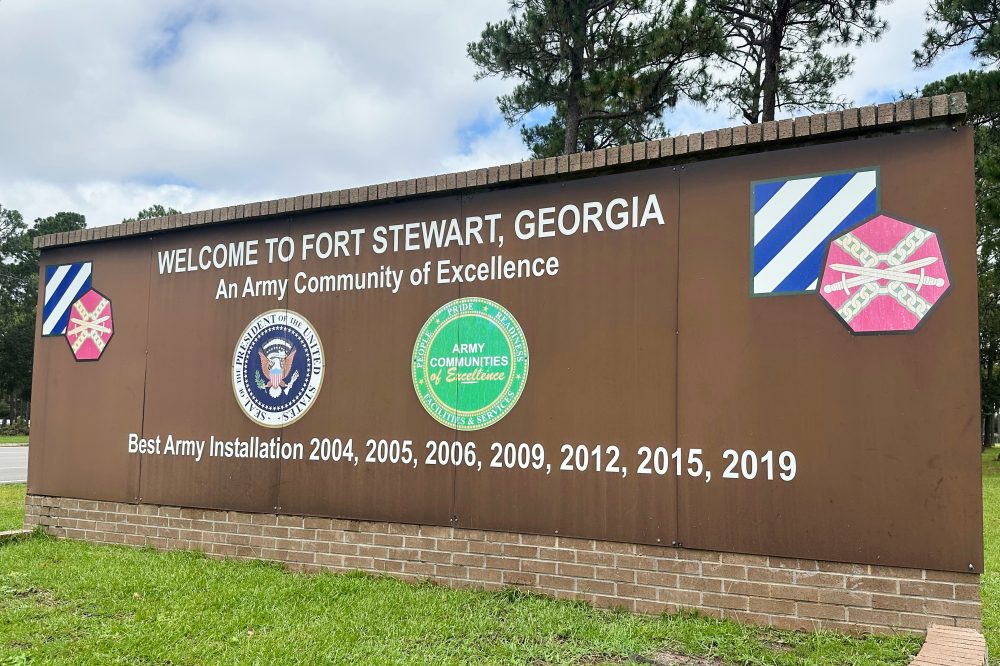
FORT STEWART, Ga. — A military judge has sentenced an Army sergeant to life behind bars for a shooting incident last summer that left five people injured at a Georgia military installation.
Sgt. Quornelius Radford, 29, received a life sentence with the possibility of parole at Fort Stewart on Tuesday, according to local news reports. The sentence came following a court-martial last week in which Radford was found guilty of attempted murder.
Military prosecutors alleged that Radford deliberately targeted leaders within his supply unit when he opened fire using a personal handgun last August. Four of his fellow soldiers were wounded in the attack, along with his then-fiancé, Raekwon Smith. Smith testified that he had followed Radford onto the base out of concern that the soldier might harm himself.
Radford had previously admitted to the shootings in March when he entered guilty pleas to charges of aggravated assault and domestic violence. However, he maintained throughout the proceedings that he never had any intention of killing anyone, even as Army prosecutors pursued the more serious attempted murder charges.
Witnesses at trial described how Radford — a supply sergeant assigned to the 3rd Infantry Division’s 2nd Armored Brigade — moved through two offices and a conference room, shooting four soldiers along the way. Fellow soldiers eventually restrained him and took away his weapon before military police took him into custody.
In addition to the life sentence, Radford was dishonorably discharged from the Army and had his rank reduced to private.
Prosecutors had pushed for a sentence of life without the possibility of parole. Radford’s defense team argued for a more lenient outcome, contending that he was in the midst of a mental health crisis at the time of the shootings and had since taken responsibility for what he did.
One of Radford’s defense attorneys read a statement on his behalf in which he apologized individually to each victim, expressed gratitude that they all survived, and asked for their forgiveness.
A physician from the Army hospital located on Fort Stewart testified during the trial that one soldier was shot in the face and another in the chest, while other victims sustained gunshot wounds to the back and abdomen.
Victims who spoke during the sentencing hearing said they continue to cope with both physical and emotional injuries stemming from the attack. Two of those wounded have since left military service.
Radford chose to have his case decided by a military judge rather than a panel of fellow soldiers.
The U.S. Federal Communications Commission announced Thursday that a recent auction of mid-band wireless spectrum generated more than $3.5 billion in proceeds.
According to the FCC, the majority of those funds — up to $3.3 billion — will be directed toward repaying money that was borrowed to support the agency’s so-called “Rip and Replace” initiative. That program is designed to remove Huawei and other Chinese-made telecommunications equipment from wireless networks across the country.
Newark families, mark your calendars — the New Castle County Division of Police is heading to The Vinings at Christiana for a Pop-Up Play Zone event this afternoon.
The community gathering is designed to bring neighbors together for an afternoon packed with games, activities, snacks, and summertime fun for all ages.
Residents are encouraged to bring the whole family and connect with their neighbors while enjoying a free afternoon of activities hosted by local law enforcement.
The Ocean City Police Department says its work alongside partner law enforcement agencies is paying off, pointing to a recent drug distribution arrest that grew out of an investigation into a social media-promoted ‘takeover’ event as proof that cooperation and online monitoring are essential tools in modern policing.
Authorities in Ocean City, Maryland, announced the arrest on June 23, 2026, framing it as a direct result of proactive information sharing between agencies and close attention to social media activity surrounding so-called ‘takeover’ style gatherings — a trend that has been spreading across the country.
These types of events are typically organized and promoted through social media platforms, often drawing large, unplanned crowds that can create public safety challenges for local law enforcement.
In a statement, the Ocean City Police Department stressed that keeping the public safe in today’s environment requires getting ahead of potential problems before they develop. As the department put it, ‘Public safety increasingly requires a proactive’ approach to monitoring how events are being organized and promoted online.
The case underscores what officials describe as the growing importance of inter-agency collaboration as law enforcement works to adapt to new ways that large gatherings — and criminal activity — can be coordinated through digital platforms.
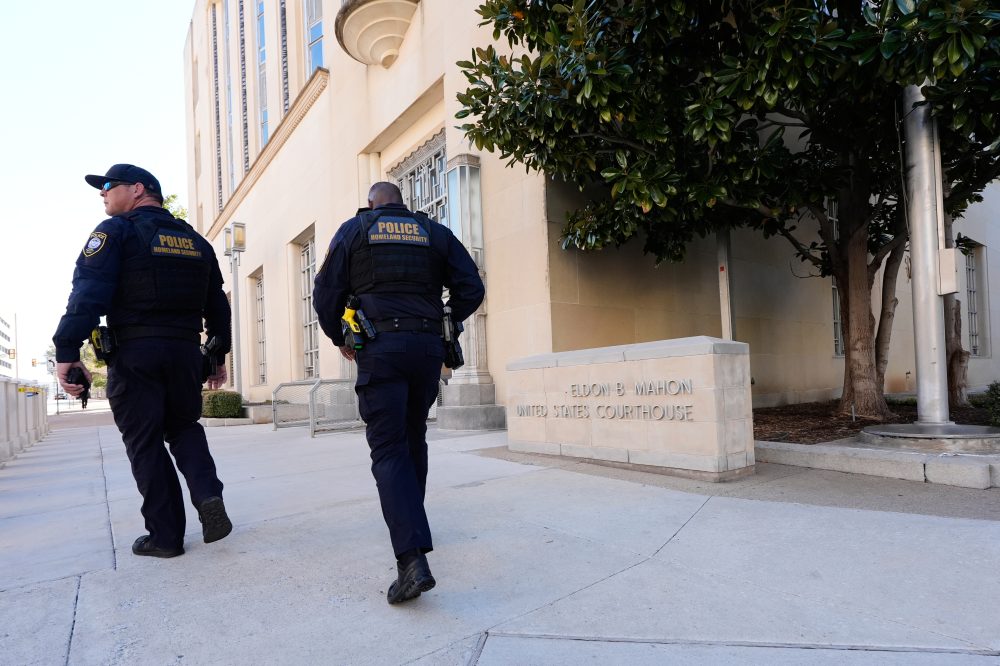
FORT WORTH, Texas — Eight individuals convicted on terrorism-related charges stemming from a shooting outside a Texas immigration detention center last July 4th are scheduled to learn their fates in a Fort Worth federal courtroom Tuesday.
A federal jury returned guilty verdicts in March after a trial lasting nearly three weeks. The convictions included charges of providing material support to terrorists, among others. For most of the defendants, federal sentencing guidelines call for prison terms ranging from ten to sixty years.
Benjamin Song, identified by prosecutors as the demonstrator who fired a weapon and wounded a local police officer outside the Prairieland Detention Center in Alvarado, was convicted of attempted murder. He faces a minimum sentence of 20 years and could receive up to life behind bars.
A second defendant, Daniel Sanchez Estrada, was convicted of corruptly concealing a document and conspiracy to conceal documents. He could face up to 40 years in federal prison.
Several others who chose to plead guilty to providing material support to terrorists rather than go through a full trial are also being sentenced Tuesday. Those individuals face up to 15 years in federal prison.
Federal prosecutors contend that all eight defendants are members of antifa, a loosely organized anti-fascist movement that has become a focus of the Trump administration. The defendants have rejected that characterization, saying they were at the demonstration simply to show solidarity with immigrants held inside the detention facility.
FBI Director Kash Patel has described the Prairieland case as the first in which people the Trump administration believes are affiliated with antifa have been charged with terror-related offenses.
President Donald Trump signed an executive order last fall designating antifa as a domestic terrorist organization. Legal experts note, however, that no domestic equivalent exists to the State Department’s official list of foreign terrorist organizations, which raises questions about the legal standing of such a designation.
Civil liberties advocates have raised alarms that this case could set a broad precedent affecting protest rights across the country, since organizations operating within the United States are generally protected under First Amendment free-speech guarantees.
The term antifa is short for “anti-fascists” and does not refer to a single unified group. Rather, it is an umbrella label applied to various far-left militant factions that confront neo-Nazis and white supremacists at public demonstrations.
The sentencing comes just days after federal prosecutors in Minnesota charged 15 people with obstructing the Trump administration’s immigration enforcement efforts. Prosecutors alleged those individuals were antifa members who conspired to block federal arrests and deportations by erecting barricades around government buildings and hurling chunks of ice at federal vehicles, among other actions.
TUCSON, Ariz. — Fighting back tears on Tuesday, “Today” show host Savannah Guthrie stepped away from her anchor role just long enough to make a heartfelt plea to the public, urging anyone with knowledge of her missing mother’s whereabouts to speak up.
“We are in agony, and we cannot be at peace. … We love our mom. We’ll never stop looking for her,” Guthrie said from the “Today” desk in New York, clutching a tissue in her left hand.
Her mother, Nancy Guthrie, 84, was reported missing on February 1 from her home in the Tucson area, where she had been living alone. More than a week after her disappearance, the FBI released footage from a camera mounted outside her front door that showed an unidentified masked individual approaching the home. Investigators also discovered blood on the porch, but the case has yet to be solved.
Several news outlets had previously acknowledged receiving ransom notes in the days following Nancy Guthrie’s disappearance but had held back on reporting the details while the investigation was still in its early stages. Members of the Guthrie family had been informed about the notes.
Tucson television station KOLD reported Monday that it had received two separate notes — one demanding millions of dollars in Bitcoin in exchange for Nancy Guthrie’s safe return, and another claiming she had died. CNN also reported on the contents of the notes, citing law enforcement sources.
According to CNN, one of the notes indicated that the individuals responsible for her kidnapping did not intend to kill her, but that she passed away shortly after she was taken.
Savannah Guthrie addressed the situation carefully on Tuesday, noting her separation from the news coverage. “I don’t have any comment on this story. I’m not involved in our coverage,” she said, referring to NBC News. “But I can’t pretend I’m not here. And since I am, I want to just take the opportunity to ask people — really to beg people — to come forward. Somebody knows something.”
The Pima County Sheriff’s Department directed questions about the ransom notes to the FBI. A request for comment sent by email was not immediately answered.
In the weeks following Nancy Guthrie’s disappearance, volunteers and search teams combed through the rugged desert landscape near the area — terrain marked by cactuses, bushes, and large boulders. A search was recently conducted near the Arizona-Mexico border, but her body was not located.
Throughout the ordeal, Savannah Guthrie and her siblings have periodically posted videos on social media urging the public to come forward with any tips. She has asked supporters to “raise your prayers with us” and has gently acknowledged the possibility that her mother may now be in heaven, dancing “with our daddy.”
WASHINGTON — The U.S. Supreme Court has turned down an attempt to overhaul the way tax foreclosure auctions work, rejecting arguments that would have required governments to ensure homeowners receive more money when their properties are sold to settle unpaid tax debts.
The court ruled against a broad legal argument put forward by a Michigan family whose home was auctioned off for less than half of what it would have sold for on the open real estate market — all to satisfy a tax debt of just over $2,000. The family contended that their rights were violated because the property could have sold for nearly $200,000 through normal real estate channels.
In a unanimous decision, the justices concluded that property owners have no legal entitlement to receive a “hypothetical fair market value” when their homes are sold at tax auctions. Justice Samuel Alito, writing for the court, explained that tax auctions are intended to be a fast method of recovering unpaid taxes, and that forcing local governments to achieve open-market prices could be so burdensome that they would have to abandon the auction process altogether.
“The traditional rule, under which the taxpayer receives only the difference between the auction sale price and unpaid taxes, is ‘just,’” Alito wrote.
However, the court also made clear that the auction process itself must be carried out fairly. The justices sent the Pung family’s case back to lower courts so that the conduct of Isabella County’s auction process could be reviewed more closely.
Larry Salzman, vice president for litigation at the Pacific Legal Foundation, which represented the family, said the outcome is not a final defeat. “The case isn’t over,” he said. “The Pungs won the right to continue their fight in the lower courts.”
Isabella County had argued that auction prices are inherently lower than open-market sales, partly because buyers at tax auctions are typically required to pay in full with cash rather than financing through a mortgage. The county also warned that requiring foreclosure sales to match open-market prices would effectively eliminate the auction system and make it far more difficult for governments to collect unpaid taxes.
This ruling comes roughly three years after a separate landmark foreclosure decision in which the Supreme Court sided against local governments, finding that counties cannot keep proceeds from tax sales that exceed what the property owner actually owed. That earlier case involved a 94-year-old Minnesota woman whose county kept approximately $40,000 from the sale of her condominium after she failed to pay around $2,300 in property taxes.
More than two centuries after he fell in battle, a Revolutionary War soldier has finally been given back his name — thanks to modern DNA science.
John Pumphrey joined the Continental Army as a teenager in 1777 and went on to fight in several significant engagements during the Revolutionary War. He was ultimately killed in action during fighting against British forces in Camden, South Carolina.
Pumphrey was among a group of unidentified soldiers whose remains were discovered at the site of the Battle of Camden. DNA analysis has now succeeded in identifying him from among those unknown soldiers, and the testing has gone a step further — linking him to living descendants.
The identification marks a remarkable moment for both historians and the families connected to this long-forgotten soldier, bringing a measure of closure to a story that had gone untold for well over 200 years.
A federal judge has ruled that the government does not have the legal authority to prevent recipients of the nation’s largest food assistance program from spending their benefits on candy, soda, and other sugary beverages.
The ruling, issued Monday, effectively kills restrictions that were already active or in the pipeline across 23 states participating in the federally funded, state-administered Supplemental Nutrition Assistance Program, commonly known as SNAP. The Trump administration has not announced whether it plans to take the matter to a higher court.
U.S. District Judge Amy Berman Jackson, based in Washington and appointed to the federal bench by former President Barack Obama, made clear that her decision was not a judgment on whether the restrictions themselves were a good idea.
In her written opinion, she stated: “The federal defendants and the states may have a genuine desire to improve the health of SNAP households by encouraging healthy choices at the store, and they can take lawful steps to meet those goals. But what they cannot do is violate the law and their own regulations along the way.”
Agriculture Secretary Brooke Rollins and Health and Human Services Secretary Robert F. Kennedy Jr. had been pushing states to tighten restrictions on what SNAP benefits could purchase, as part of the “Make America Healthy Again” initiative. Their argument was that sodas and candy contribute to obesity, diabetes, and other chronic health problems, and that removing them from the list of eligible purchases would nudge people toward healthier options.
The Agriculture Department had granted permission to 23 states to move forward with such restrictions, some of which were already in effect while others were scheduled to take effect in the coming months and years.
At least one state reversed course before the ruling came down. Colorado’s human services board voted earlier this year to abandon the ban following a March hearing at which SNAP recipients and advocacy groups raised concerns. They argued that people could face embarrassment if they accidentally tried to purchase restricted items, and that the rules were difficult to understand — for example, drinks containing at least 50% fruit or vegetable juice would have been allowed, while those with lower juice content would not.
The specific rules differed from state to state. Some sought to ban both sugary drinks and candy, while others focused only on beverages. In certain states, items like sports drinks were also included in the proposed restrictions.
The legal challenge was brought by SNAP recipients living in Colorado, Iowa, Nebraska, Tennessee, and West Virginia.
Judge Jackson determined that the core legal problem with the restrictions was that they contradicted how Congress has defined the word “food” under the law. Under current statute, SNAP benefits — formerly called food stamps — may be used for “any food or food product for home consumption except alcoholic beverages, tobacco, hot foods or hot food products ready for immediate consumption.”
While the law does allow for certain requirements to be waived, improving nutrition is not listed as a valid reason to do so. Nevertheless, when states submitted requests to the Agriculture Department to limit purchases, those requests relied on alternate definitions of “food” — a move the judge found legally problematic.
The Agriculture Department has not stated whether it intends to appeal.
This case is one of many legal battles over Trump administration policies that center on whether the executive branch can change programs without first getting approval from Congress.
SNAP is one of the country’s biggest safety net programs, helping nearly 39 million Americans — roughly one in nine — afford groceries. The program has faced unusual scrutiny since President Trump returned to the White House. Under a sweeping tax and policy law signed last year, more SNAP recipients are now subject to work requirements, and states must cover a larger portion of administrative costs. States with high error rates could also be held responsible for benefit costs.
During a government shutdown last year, courts stepped in to block the administration from cutting off benefits entirely. Agriculture Secretary Rollins has also claimed that widespread fraud exists within the program.
NEW YORK (AP) — With supporters cheering and standing at attention, the Rev. Al Sharpton stepped into the newly renovated home of the National Action Network in Harlem recently to make a significant announcement: after more than two decades, his organization has gone from tenant to property owner.
The celebration took place inside a cozy theater at the new headquarters, where NAN board members, local clergy, and close allies had gathered for an invite-only reception.
“I want to make something permanent,” Sharpton told the crowd. “When people see that you’ve bought a building, they say, ‘Wait a minute, they’re not going nowhere.’”
The organization’s new permanent base is located in what was formerly the Faison Firehouse Theater on Hancock Place, near the corner of 124th Street and Manhattan Avenue. The building had been purchased in 1999 by George Faison, a Tony Award-winning choreographer best recognized for his work on the original 1970s Broadway production of “The Wiz,” who converted it into a community theater.
According to Sharpton, when Faison faced the decision of selling the property in the rapidly gentrifying neighborhood, he chose NAN over a large real estate developer.
Speaking with The Associated Press from his new private office, which features large windows with views of central Harlem, Sharpton explained his reasoning for the multimillion dollar purchase.
“I’m 71 years old — if I was just trying to do it as an Al Sharpton personal fan club, I could just keep renting,” he said. “I’m buying it to show I want this to be an institution. I want it to last beyond me.”
The building’s renovation is structurally finished and its rooms are up and running, though Sharpton said he expects his weekly Saturday rallies to return to the new location this summer.
NAN was founded in 1991 and initially held meetings at P.S. 175, a Manhattan elementary school, during the tenure of the late David Dinkins, New York City’s first Black mayor. The organization later rented space at 125th Street and Madison Avenue, then moved in 2006 to a rented location at 145th Street and Malcolm X Boulevard, which served as its home until January.
That former headquarters had been dubbed the “House of Justice” by Sharpton’s late mentor, the Rev. Jesse Jackson Sr.
Working out of Harlem over the years, Sharpton became a prominent voice in direct-action protests on behalf of Black men who were killed, brutalized, or persecuted by New York City police — including Abner Louima, Amadou Diallo, the exonerated men once known as the Central Park Five, and Eric Garner, among others.
“Harlem means home,” Sharpton told the AP.
The newly purchased and renovated five-floor building now carries the name “House of Justice Rev. Jesse Jackson’s Workshop.” Sharpton said he plans to invite artists for salons, poetry readings, and jazz nights — a nod to the cultural and intellectual spirit of the Harlem Renaissance.
Reflecting on both NAN’s history and today’s political climate during the reception, Sharpton struck a serious tone.
“We are in trouble,” he said, pointing to redistricting battles sparked by a recent Supreme Court ruling on the Voting Rights Act and the rollback of diversity, equity, and inclusion programs.
“We don’t have, in my opinion, the luxury of not nailing down and working together,” he added.
Over the years, the NAN headquarters has become a required stop for Democratic candidates running for offices ranging from the presidency to local positions. On Martin Luther King Jr. Day, the House of Justice is typically packed wall to wall with dignitaries. And following the 2006 death of James Brown — Sharpton’s childhood hero — the horse-drawn carriage carrying the Godfather of Soul’s golden casket made a stop outside the 145th Street location.
The organization’s Saturday rallies have also provided a platform for families affected by police violence and for celebrities speaking out about inequities in the entertainment world.
Ashley Sharpton, the younger of the reverend’s two daughters, grew up around the House of Justice. She and her older sister, Dominique Sharpton-Bright, were present the day the late pop icon Michael Jackson visited and addressed the crowd at their father’s invitation.
“The magic was palpable,” Ashley recalled.
Today, as founder and director of NAN’s youth initiatives, Ashley said she feels a deeper personal investment in the organization’s future.
“It’s time for us to step in and take ownership, literally, of what is needed to maintain the legacy, and to continue the fight,” she told the AP.
The U.S. Supreme Court handed ExxonMobil a significant legal victory on Tuesday, ruling that Cuba’s state-owned businesses cannot hide behind a legal shield known as foreign sovereign immunity when facing lawsuits filed under a 1996 federal law.
The 6-3 decision makes it substantially easier for American companies to pursue compensation from Cuba’s government for property that was seized long ago under former Cuban leader Fidel Castro. The court’s six conservative justices sided with Exxon, while the three liberal justices disagreed with the outcome.
The ruling centered on Exxon’s 2019 lawsuit against Corporación CIMEX, a Cuban government-owned conglomerate. Exxon accused CIMEX of continuing to operate a refinery and service stations that originally belonged to Standard Oil, the company that eventually became ExxonMobil. Castro’s government confiscated those assets in 1959, a loss Exxon valued at $70 million at the time. With interest and the possibility of enhanced damages, that claim has grown to more than $1 billion today.
Conservative Justice Brett Kavanaugh authored the majority opinion, writing that the law at the center of the case — the Helms-Burton Act — “abrogates the sovereign immunity of Cuban agencies and instrumentalities.”
Kavanaugh added that the Helms-Burton Act “authorizes private suits against Cuban agencies and instrumentalities — suits that would largely be nonstarters if subjected to the FSIA’s requirements,” referring to the Foreign Sovereign Immunities Act of 1976.
The high court overturned a lower court’s 2024 ruling that had allowed CIMEX to use the sovereign immunity defense. The case now goes back to a lower court to weigh CIMEX’s potential financial liability.
The Helms-Burton Act includes a provision known as Title III, which allows lawsuits in U.S. courts against anyone who “traffics” in property taken by Cuba’s communist government following the 1959 revolution. The Trump administration backed Exxon’s appeal to the Supreme Court.
The ruling arrives during a period of sharp tensions between the United States and Cuba. On May 20, the U.S. filed murder charges against former Cuban President Raúl Castro, Fidel’s younger brother, marking a major escalation in the Trump administration’s pressure on Cuba’s government. The U.S. has also effectively imposed a blockade on Cuba by threatening sanctions against nations that supply it with fuel, contributing to widespread power outages and deepening what is described as Cuba’s worst crisis in decades.
According to Exxon, its confiscated assets were transferred to CIMEX, which Cuba’s government describes as its largest state-owned conglomerate. Exxon says CIMEX continues to hold and profit from that property today.
Exxon’s lawsuit was among roughly 40 cases filed under the Helms-Burton Act in 2019 and 2020, following a shift in U.S. policy toward Cuba during President Trump’s first term. The Title III provision had previously been suspended by three different presidents who wanted to avoid diplomatic friction with allies such as Canada and Spain, whose companies have business interests in Cuba. Trump lifted that suspension in 2019.
Lower courts had previously made it difficult for American companies to win such cases, with most lawsuits thrown out on jurisdictional or procedural grounds.
Tuesday’s ruling was one of two Supreme Court decisions this year involving the Helms-Burton Act. In the other case, decided on May 21, the court dealt a setback to four American cruise companies — Carnival, Norwegian Cruise Line Holdings, Royal Caribbean Cruises, and MSC Cruises — which had been hit with a combined $440 million in judgments. Those judgments were awarded to a company called Havana Docks Corporation, which accused the cruise lines of unlawfully using Cuban docks it had built before they were seized by the Cuban government. The Supreme Court set aside a lower court ruling that had thrown out those judgments and sent the case back for further review.
Motorists traveling southbound on Korean War Veterans Memorial Highway, also known as Route 1, should plan for potential slowdowns this afternoon.
A moving operation is underway in the median between Simms Woods Road and the toll plaza as part of ongoing construction activity. The work is expected to remain in place until 3 PM.
Drivers are advised to use caution in the area and allow extra travel time if passing through that stretch of Route 1.
Travelers using Elderon Drive at the Elderon Drive loop should be aware of intermittent lane closures currently in effect due to construction activity in the area.
The lane restrictions are expected to continue until 6:00 PM. Drivers are encouraged to use caution when passing through the construction zone and to budget additional time for their commute.
No further details regarding the nature of the construction work were provided. Updates may be available through local traffic monitoring resources.
Hundreds of Indigenous survivors have wept, laughed, and spoken openly — many for the very first time — about what they endured as children in Native American boarding schools. For decades, those stories stayed buried. Now, a major oral history effort is giving them a place to finally be heard.
The National Native American Boarding School Healing Coalition is concluding its oral history project this Friday in Tulsa, Oklahoma. The nonprofit’s team of historians has gathered video testimony from more than 360 Indigenous survivors spread across 19 states. Those recordings are destined for permanent preservation in the Library of Congress.
Iona Mad Plume, a 74-year-old Blackfeet woman who grew up on her tribe’s reservation in Montana, said she “can’t emphasize enough” how much the experience helped her heal. She sat before a video camera last month in Billings and shared her story of attending the Pierre Indian School in South Dakota, where she was sent at just 14 years old.
Since giving her testimony, Mad Plume said she has felt more grounded and has found it easier to release memories that long haunted her — a dusty blue Greyhound bus pulling her away from her parents’ red pickup truck, school staff striking her with a wooden dowel as she huddled on a bunk bed, and meals of cornmeal or cereal crawling with weevil bugs.
“I got a lot out of that, pretty much a lot of closure,” she said. “It was after almost a lifetime of carrying around questions and different things in my mind — so I don’t have to carry that around anymore.”
Another survivor, Gene Bozicic, of the Sault Ste. Marie Tribe of Chippewa Indians, shared a similar sense of renewal after contributing her testimony in Michigan in 2024. Bozicic, now 81, attended the Catholic-run Holy Childhood School of Jesus in Harbor Springs, Michigan, starting at age 11.
“As we further went along, I started to feel more confident in what I could do and what I have accomplished, almost like more pride to be Native,” Bozicic said about her video interview. “I hate to see it coming to an end, because they have given me my backbone back.”
The project launched in March 2024 as a partnership between the Minnesota-based coalition and the U.S. Department of the Interior. Its mission is to document and make public the widespread abuse that boarding school survivors endured under the federal government’s forced assimilation policies — a system that began in the 1800s and continued for more than a century.
Two years before the oral history effort began, former Interior Secretary Deb Haaland — a Laguna Pueblo member and herself a descendant of boarding school survivors — led the historic Road to Healing listening tour alongside Assistant Secretary for Indian Affairs Bryan Newland, a citizen of the Bay Mills Indian Community.
Haaland’s Federal Indian Boarding School Initiative also produced detailed reports on the long-term, multigenerational damage caused by these institutions. The federal government found that nearly 1,000 Native children were buried at 65 different school sites. Reports documented atrocities ranging from physical and sexual abuse to deliberate attempts at cultural erasure.
Over the course of more than two years, the process of collecting in-person testimonies evolved significantly, said Lacey Kinnart, the coalition’s oral history program co-director. At first, a “quiet room” where survivors could decompress with a fellow elder after their interview was optional. Staff later made it a standard part of the process and added a second such room. They also began pairing survivors with a licensed clinical therapist specializing in boarding school trauma and a licensed social worker.
“Our elders don’t want to be a burden,” said Kinnart, a citizen of the Sault Ste. Marie Tribe of Chippewa Indians. “But they really do need that extra support.”
Staff also observed that survivors sometimes felt uneasy around the Indigenous photographer, which showed in the portraits taken. In response, an extra half-hour was added to each session so survivors could get comfortable with the person photographing them.
The Smithsonian National Museum of Natural History and the Department of the Interior are still working out how to present the video interviews publicly. Importantly, survivors retain full ownership of their testimonies and have the sole authority to decide whether their stories are shared with the public. The videos will be stored in a permanent oral history collection at the Library of Congress, with the project’s official end date set for June 2027.
The coalition plans to continue oral history work independently. Staff indicated their next project could cost as much as $13 million — roughly double the $6.2 million received from the Interior Department and the Mellon Foundation for this first effort. Though it would take longer, the next project aims to be even more inclusive.
“We’re just scratching the surface with these stories,” said coalition Oral History Program Co-director Charlee Brissette, a citizen of the Sault Ste. Marie of Chippewa Indians. “We want to get a more robust picture of the boarding school experience because it does have that intergenerational effect.”
Indigenous people who were not included in this first round of the project may have another chance to participate in the coming years — a prospect welcomed by both survivors and their descendants.
“I’d be interested in doing that, because the whole story needs to be taught,” said Desiray Emerton, 56, a Seminole woman and a descendant of two generations of boarding school survivors. Her relatives attended Goodland Academy and Chilocco Indian School in Oklahoma.
Emerton said she has witnessed the generational toll firsthand: her mother, shaped by her own boarding school experiences, struggled to show affection toward her as a child. And her grandmother passed away long before this project ever existed.
“I know time’s running out for those who did go through that personally,” Emerton said, “but I always tell my kids I’m walking on the prayers of our ancestors, and I’m running out of time.”
Dover Police have released the latest Megan’s Law sex offender notifications for the City of Dover.
Residents are encouraged to review the notification images to stay aware of registered sex offenders living in their community.
Anyone who has questions or concerns regarding these notifications is asked to contact the Dover Police Sex Offender Enforcement Unit directly at doverpolice.org.
Drivers traveling along Route 1 in the Middletown area should be aware of an ongoing trash removal operation that could affect traffic this afternoon.
According to transportation officials, a rolling trash removal operation is underway along Route 1 between Wrangler Hill Road, also known as Route 72, and Middletown. The operation is expected to wrap up by 4 p.m.
Motorists in the area are advised to use caution and allow extra travel time while crews complete the work.
Travelers heading southbound on Interstate 95 should slow down and stay alert near the Harvey Road overpass, where litter crews are currently working along the shoulder of the highway.
The crews are expected to remain on the shoulder until 4 p.m. Drivers are encouraged to move over when possible and reduce their speed to ensure the safety of the workers in the area.
Drivers traveling along DuPont Parkway, also known as Route 13, are facing a left shoulder closure due to active construction work in the area.
The closure affects the stretch of roadway between Blackbird Forest Road (Road 471) and Summit Bridge Road (Road 71) and is expected to remain in place until 5:30 PM.
Motorists are encouraged to allow extra travel time and remain alert for construction crews and equipment near the roadway. Drivers should follow any posted signage and merge safely as they pass through the affected zone.
Motorists traveling northbound on Dupont Boulevard (Route 113) should be aware of a right shoulder closure currently in effect between West North Street and Bridgeville Road (Route 404).
The closure is the result of construction activity in the area and is expected to be lifted by 5 p.m. Drivers are encouraged to use caution while passing through the work zone.
Travelers heading in that direction may want to consider alternate routes or allow additional time to reach their destinations.
Northbound travelers on Janice Road are facing a right lane closure this afternoon as construction work is underway in the area.
The closure affects the stretch of Janice Road between Nassau Commons Boulevard and Siham Road. The right lane is expected to remain closed until 5 p.m.
Drivers in the area are encouraged to allow extra travel time or consider alternate routes to avoid delays.
Drivers in the area should be aware of a temporary lane restriction on Cherry Road between Ivy Lane and Tyne Drive.
According to traffic officials, an intermittent lane closure is in place along that stretch of roadway as a result of construction activity. The closure is expected to be lifted by 5 p.m.
Motorists are encouraged to allow extra travel time or consider using an alternate route to avoid potential delays in the area.
A 61-year-old bus driver and grandfather named Anthony Bailey may find himself back behind bars — not because of anything he did wrong since his release, but because of a recent Supreme Court ruling that changes the rules around compassionate release.
Bailey’s situation is one of approximately twelve cases that could be directly affected by the high court’s decision, which places new limits on how people who are incarcerated can use the compassionate release program to get out of prison early.
The compassionate release program has long served as a pathway for prisoners to seek early freedom, often due to serious health conditions, age, or other significant personal circumstances. The Supreme Court’s ruling now restricts how that program can be applied, putting people like Bailey — who have already been released and rebuilt their lives — at risk of being returned to custody.
Bailey, who has been photographed holding one of his grandchildren, represents a human face on what could otherwise seem like an abstract legal question. For him and others in similar situations, the court’s decision is not just a matter of legal interpretation — it could mean losing the life they have worked to rebuild on the outside.
A number of workers employed by government agencies and public institutions who lost their jobs after posting online about the shooting death of conservative activist Charlie Kirk have reached settlements — some totaling six figures.
While those involved say the legal outcomes have given them a sense of vindication, many are still working through the personal and professional consequences that followed their terminations.
The cases center on employees who made comments on social media related to Kirk and subsequently faced discipline or termination from their employers. The settlements represent the conclusion of legal battles that touched on First Amendment protections for public workers.
One of those involved is an attorney with the Iowa Office of the State Public Defender, who was fired and later reinstated after making online comments about the shooting death of Kirk. She has since settled with the state.
Despite the financial resolutions, those affected say the experience has left a lasting mark, and the road to getting here was far from easy.
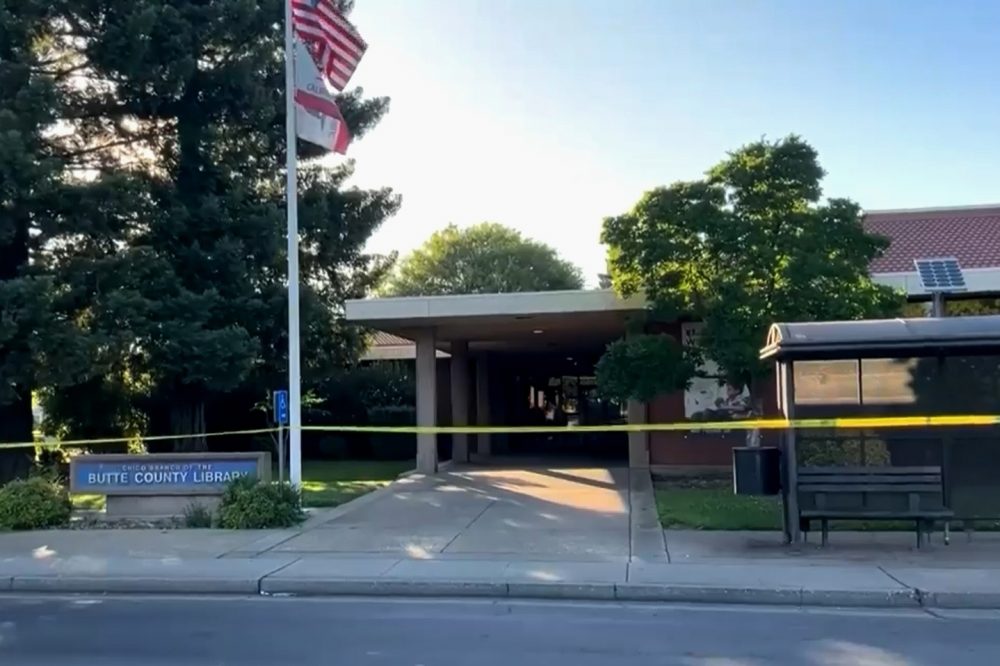
A deadly shooting inside a Northern California library Monday evening left two people dead and a suspect behind bars, according to local police.
Officers rushed to the scene shortly after 5 p.m. following a 911 call in which gunshots and the sounds of screaming could be heard coming from inside the Chico branch of the Butte County Library. The city’s chief of police, Billy Aldridge, shared those details during a news conference following the incident.
When officers entered the building, the suspect slipped out through a back exit, Aldridge said. Law enforcement stationed behind the library was able to apprehend the individual.
“The incident this evening was obviously very sad, traumatic for a lot of people. Very traumatic for our community,” Aldridge said.
Streets surrounding the library were temporarily shut down, and a family reunification center was established for those who had been inside the building at the time of the shooting. A child was also transported to the hospital with a minor injury.
Aldridge stated that there is no ongoing serious threat to the public, and investigators are actively working to determine what led to the shooting. Authorities believe the gunman acted alone.
Police have not released the suspect’s name or a motive for the attack. The identities of the two people killed are also being withheld until their families can be notified.
County officials urged residents to stay away from the area and announced that all Butte County library branches would remain closed on Tuesday.
In a Facebook post, the county extended its “deepest condolences to everyone affected, including the victims, their loved ones, library staff, and all those impacted by this heartbreaking incident.”
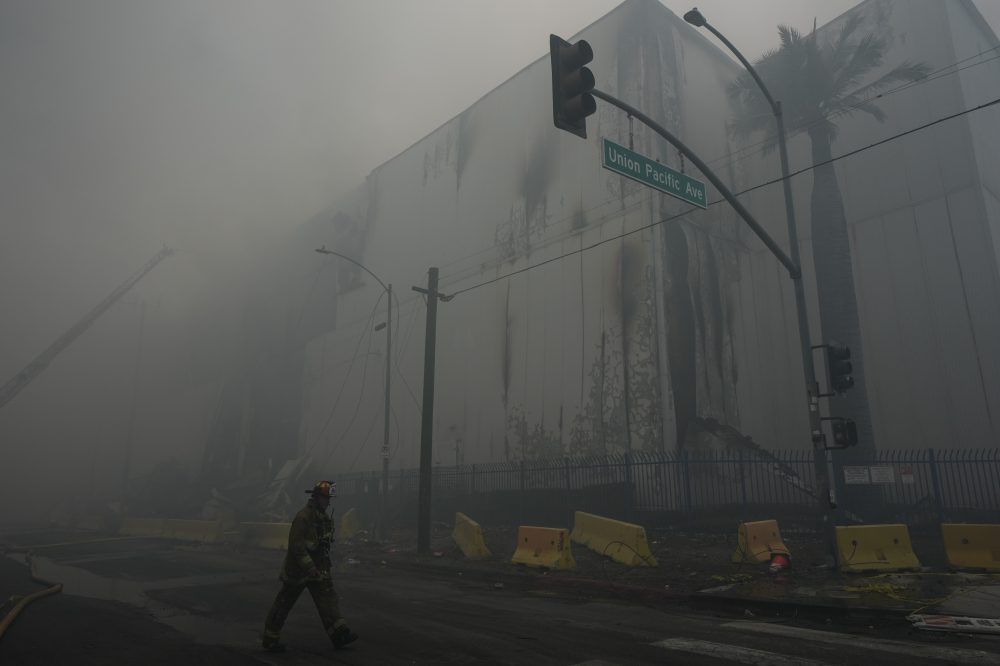
Crews in Los Angeles are still working to extinguish a stubborn fire that broke out at a large frozen-food storage warehouse situated near downtown, with the blaze now entering its sixth day.
Firefighters have been battling the massive cold storage facility fire since it ignited, and as of the latest reports, the effort to fully contain it remains ongoing.
Two more individuals have been arrested in connection with an alleged plot to carry out an attack on a UFC event hosted at the White House, authorities announced.
One suspect was taken into custody in Missouri, while a second was arrested in Washington state, bringing the total number of people detained in the case to at least three.
According to law enforcement officials, investigators first learned of the potential threat on June 10 — four days before the event was held on the South Lawn of the White House on June 14.
The UFC event took place at the White House, where President Donald Trump was in attendance as Justin Gaethje defeated Ilia Toupruia in the lightweight championship bout at UFC Freedom 250.
Clive Davis, a towering figure in the music business who passed away at the age of 94, was renowned for building deep, trusting bonds with the artists he worked with. That mutual respect allowed him to guide their careers — and in return, those artists helped shape who he became as an executive.
Over a career spanning six decades, Davis worked with an extraordinarily diverse roster of talent — from the Grateful Dead to Alicia Keys. Here is a look at some of the most notable partnerships he forged along the way.
Janis Joplin
Davis played a pivotal role in Janis Joplin’s career, though she may have had an even greater influence on him. After becoming president of Columbia Records at just 35 years old, he attended the Monterey Pop festival in California on the hunt for new talent. There, he encountered Big Brother & The Holding Company, with Joplin as its standout performer. In a 2022 speech, he described that moment as his first major test as head of the label: “Should I personally sign an artist just based on my gut?”
“I did make that decision, and my life would never be the same,” he said.
Davis convinced Joplin to release a shorter version of “Piece of My Heart” so it could get radio airplay, and he also encouraged her to step away from Big Brother and pursue a solo career. After her death in 1970, Davis discovered her recording of “Me and Bobby McGee” within the sessions for her album “Pearl,” which was released after her passing to widespread acclaim.
Santana
Davis first brought Santana to Columbia Records in 1968. The guitarist and singer went on to score major hits including “Black Magic Woman” and “Oye Como Va,” along with a legendary appearance at Woodstock in 1969.
Years later, Davis reconnected with Santana at a time when the artist was searching for renewed relevance. Davis proposed an album blending some of Santana’s original material with collaborations featuring contemporary musicians. The outcome was the 1999 release “Supernatural,” which included “Do You Like the Way” with Lauryn Hill, “Maria Maria” with Wyclef Jean, and “Smooth” with Rob Thomas. The album earned eight Grammys, tying the record previously set by Michael Jackson’s “Thriller.”
In a social media tribute, Santana wrote that Davis “believed in Santana from the beginning, and years later he believed in us again.”
Bruce Springsteen
Davis signed a 22-year-old Springsteen to Columbia Records in 1972. He later recalled being convinced that Springsteen was far more than a Bob Dylan imitator — that he had the makings of a “poet warrior” and one of the greatest live performers of all time.
When Springsteen delivered his debut album, Davis sent him back to the drawing board, saying it lacked any singles. Springsteen responded by writing two new songs: “Blinded by the Light,” which later became a hit for Manfred Mann, and “Spirit in the Night.” Davis also offered the young artist early advice about using a large stage fully rather than standing in one spot — advice he shared during an appearance on the “Late Show” with David Letterman.
“He changed my life when he signed me to Columbia Records,” Springsteen wrote in a social media post.
Whitney Houston
No artist was more closely linked to Davis than Whitney Houston. He first encountered her at a New York club called Sweetwater’s, where the 19-year-old was performing alongside her mother, Cissy Houston, a well-known gospel and soul singer. Houston sang “The Greatest Love of All,” a song Davis had originally commissioned for the Muhammad Ali film “The Greatest.”
“As soon as she started singing that song, I was stunned,” Davis recalled in a 2022 CNN interview.
He signed her to Arista in 1983, and the label spent a deliberate two years finding the right songs and producers before releasing her debut album — one of the biggest-selling debut albums ever. Houston went on to become the label’s top-selling artist and one of the most celebrated singers in history. Her relationship with Davis was so close that her team negotiated a “key man” clause allowing her to exit her contract if Davis ever departed from Arista.
Davis also had a hand in shaping the soundtrack to Houston’s 1992 film “The Bodyguard,” pushing for a stripped-down arrangement and her now-iconic a cappella introduction to her unforgettable cover of Dolly Parton’s “I Will Always Love You.”
The Grateful Dead
Davis had long wanted to sign the Grateful Dead — or at least frontman Jerry Garcia — to Columbia Records, dating back to the late 1960s. However, the band was under contract with a competing label. Instead, Davis signed the New Riders of the Purple Sage, a psychedelic country group that included Garcia. When the Dead were seeking a new major label in the late 1970s, Davis brought them to his newly established Arista Records.
Late guitarist Bob Weir once described Davis as “the one suit we weren’t distrustful of.” At concerts, Weir occasionally changed the lyrics to the band’s standard “Jack Straw” from “We used to play for silver, now we play for life” to “We used to play for acid, now we play for Clive.”
Davis took a relaxed approach to the band’s studio recording, telling them to record only when they felt ready, according to author Blair Jackson’s biography of Garcia. The Dead — famously indifferent to commercial success — ultimately delivered their biggest chart hit, 1987’s “Touch of Grey.”
Alicia Keys
Keys was just 15 when she signed with Columbia Records in 1996. Creative tensions arose quickly, with the label pushing to bring in outside professionals to work with her — an approach Keys later said left her feeling disrespected.
Davis, who was parting ways with Arista at the time, helped free her from that Columbia contract and eventually signed her to his new venture, J Records, in 2000. When she performed some of her songs for him at his office, he recognized her exceptional talent and believed she deserved full creative control over her music.
Her debut album, “Songs in A Minor,” was a critical and commercial triumph, winning five Grammys in 2002. Davis recognized, however, that her sound was difficult to categorize and might not receive the radio attention it deserved. In a 2002 interview, he recalled personally calling Oprah Winfrey and asking her to feature Keys on her show. Winfrey agreed, and the single “Fallin’” became a massive hit.
In a social media post, Keys described Davis as “the visionary who transformed dreams into reality, leaving an indelible mark on music and lives worldwide.”
Kenny G
The market for instrumental music was thin in the early 1980s, but Davis spotted soft jazz saxophonist Kenny G performing at a club and saw something special. He signed Kenny G to Arista in 1982, and the musician went on to become the best-selling instrumental artist of all time.
In a CNN interview, Kenny G credited Davis with his success, saying Davis had a gift for knowing when to give an artist freedom and when to step in with guidance. In his case, that meant not dictating how a saxophone solo should sound, but instead finding vocal artists — such as Michael Bolton — to collaborate with him.
“I wouldn’t be standing here if it wasn’t for him taking chances on me,” Kenny G said.
A 23-year-old man has been formally charged with seven felony counts, including First Degree Murder, in connection with a Wilmington shooting that claimed one life and left a second victim in critical condition, according to an announcement made Monday by Attorney General Kathy Jennings.
John Wallace-Bey was handed down the indictment Monday, facing the following charges: Murder in the First Degree, Attempted Murder in the First Degree, Reckless Endangering in the First Degree, Carrying a Concealed Deadly Weapon, and three separate counts of Possession of a Firearm During the Commission of a Felony.
The shooting took place on the evening of June, according to the announcement from the Delaware Department of Justice. Attorney General Jennings confirmed the charges as prosecutors moved forward with the case against Wallace-Bey.
LOS ANGELES — A federal arson trial over the catastrophic Palisades Fire took a dramatic turn Monday when two firefighters took the stand and gave completely opposite accounts of whether fireworks were going off the night the fire began.
Jonathan Rinderknecht, 29, stands accused of setting a brush fire in the coastal Pacific Palisades neighborhood of Los Angeles on January 1, 2025 — a fire that prosecutors say reignited and ultimately became one of the most destructive wildfires in California history.
Throughout the trial, federal prosecutors have portrayed Rinderknecht as a mentally unstable and vengeful individual who was angry at society. Expert witnesses called by the government testified that the fire’s cause was “incendiary,” meaning it was started by an open flame. Defense attorney Steve Haney has consistently pushed a different theory: that fireworks were responsible for igniting the blaze.
That defense argument ran into trouble Monday when Haney called two firefighters to testify, only to receive sharply conflicting stories. Adding to the day’s drama, a juror was dismissed after speaking to one of the firefighter witnesses during a break.
Los Angeles Fire Department firefighter Robert Appleford, who was stationed in the Pacific Palisades, told the court he saw flashes of light and heard fireworks both before and after midnight that evening. Just minutes later, his department received a call reporting the brush fire that Rinderknecht is accused of starting.
However, Appleford’s captain, Dave Sanders, testified that he neither saw nor heard any fireworks that night. When Haney asked whether Sanders remembered telling fire investigator Kyle Brown during an interview that he had heard fireworks, Sanders said he did not recall saying that.
Haney declined to offer any comment on Sanders’ testimony.
The contradictory witness accounts were a setback for the defense, which also brought in two of its own expert witnesses to challenge the government’s investigation and argue that fireworks were the most probable cause of the fire. Prosecutors spent considerable time during cross-examination attacking the credibility of those experts.
Haney also called a Pacific Palisades resident who lost his family home in the fire to the stand. Veterinary student Ari Sallus testified that he was hiking up a nearby hill with his girlfriend on New Year’s Eve when he noticed a flash of light and heard a loud bang from behind him. He continued hiking and, upon reaching the top of the hill minutes later, spotted a small orange glow in the same direction the sound had come from. He said the light was growing and he called 911.
Last Thursday, the defense had also called a neighborhood security guard and another nearby resident to testify. Both said they heard fireworks and witnessed a group of teenagers running down the trail near the area the government identifies as the fire’s point of origin.
Monday also brought a juror dismissal tied to the firefighter testimony. During a recess, Judge Anne Hwang informed attorneys that she overheard a juror say “Thank you for your service” to Appleford as he stepped down from the witness stand.
Haney called the interaction “entirely inappropriate,” saying jurors should not engage with witnesses in any favorable or unfavorable manner.
Judge Hwang agreed, saying the juror’s gesture — despite Appleford’s testimony having nothing to do with his firefighting duties — revealed “strong feelings” on the matter. “It does demonstrate a bias toward the LA Fire Department,” Hwang said, before dismissing the juror and seating an alternate.
Monday’s proceedings also highlighted restrictions placed on the defense. Haney had originally intended to argue that the fire department bore some responsibility for failing to fully extinguish the January 1 fire. He sought to use statements from a firefighter and a state park ranger who indicated the blaze was still visibly smoldering when first responders departed, and that the firefighter had alerted supervisors to so-called hot spots in the burn area. That testimony was gathered through a lawsuit filed against the city by fire victims.
Judge Hwang, however, ruled that any evidence or argument suggesting negligence by the fire department in responding to the January 1 fire was off-limits at trial, saying it was irrelevant and risked confusing the jury.
MIAMI — Federal investigators have concluded that the catastrophic failure of a Florida beachfront condominium did not happen all at once — it was a slow-motion disaster that began unfolding weeks before the building crumbled into rubble in the middle of the night, claiming 98 lives in 2021.
The National Institute of Standards and Technology released its final report Monday, revealing that two connections between garage columns and the pool deck began giving way around early June. The building’s design failed to meet required codes, and changes made to the structure during its 40-year lifespan left other parts of the pool deck too weak to handle the added stress — setting the stage for the gradual collapse that followed.
“When building structures are designed and built to required codes and standards, they have margins against failure, meaning they should be able to support much more load than they are expected to bear,” said Judith Mitrani-Reiser, who co-led the investigation. “In the case of Champlain Towers South, these margins against failure were too narrow from the start.”
The findings add detail to a picture that has been emerging since the collapse — one that reveals weeks of warning signs and long-standing structural problems within the building.
Most of the residents inside were asleep when the Surfside, Florida building — located a few miles north of Miami — came down at 1:22 a.m. on June 24, 2021. A Miami judge later approved a settlement exceeding $1 billion to address personal injury and wrongful death claims tied to the disaster.
Harley Tropin, the attorney who represented victims’ families and survivors in a class-action lawsuit, declined to offer any comment on the newly released report.
Investigators found that the building did not conform to the building codes that were in effect at the time it was constructed, and the actual construction deviated from the original design. Later modifications around the pool area — including the addition of heavy planters, sand, and pavers — “further diminished the margins against failure, as did long-term degradation from corrosion,” according to the report.
Photographs taken by people at the building in the weeks leading up to the collapse captured a lengthy crack in a planter wall on the pool deck, along with additional cracks at the corner where the planter wall and a planter box met, the NIST report states.
One witness told investigators that about three weeks before the collapse, part of a gate near the planter wall had shifted slightly downward, causing it to jam — another early sign of structural distress.
The original firms responsible for designing and constructing the building in the late 1970s are no longer in business.
Following the disaster, Florida state lawmakers passed a law in 2022 requiring condominium associations to maintain adequate financial reserves for major repairs. Many residents were blindsided by large fees needed to cover years of neglected maintenance in order to comply with the new law. A subsequent law was then passed giving condo associations and residents greater flexibility in managing those costs.
TUCSON, Ariz. — A ransom note tied to the disappearance of Nancy Guthrie, the mother of ‘Today’ show host Savannah Guthrie, reportedly indicates that the 84-year-old woman has died, according to CNN and other news organizations citing law enforcement sources.
In the days following Nancy Guthrie’s disappearance in early February from her home just outside Tucson, several media outlets reported receiving ransom notes connected to the case.
On Monday, CNN reported that the contents of one of those notes revealed Nancy Guthrie was no longer alive — and that those responsible for taking her said her death was unintentional, occurring shortly after she was abducted. CNN indicated it had knowledge of one note’s contents, and that a Tucson television station had received two separate notes.
Both CNN and that station chose to withhold the contents of the notes from public disclosure, so that any future communications from the kidnapper or kidnappers could be verified as authentic, CNN reported.
The Pima County Sheriff’s Department declined to speak to the note’s contents. The FBI did not respond when asked for comment. The Guthrie family also made no public statements or social media posts regarding the notes on Monday.
Investigators believe Nancy Guthrie was kidnapped or taken against her will after blood was discovered near the entrance to her home in the foothills outside Tucson. The FBI subsequently released surveillance footage showing a masked individual on the porch of her home on the night she vanished.
In the weeks that followed her disappearance, volunteers and search teams combed the surrounding desert landscape — an area dotted with cacti, shrubs, and large boulders. A volunteer organization recently carried out a search for her remains near the Arizona-Mexico border, but reported no findings.
Federal auto safety officials announced Monday they are launching a special investigation after a Tesla operating on an automated driving feature crashed at high speed into a Texas home, killing a 76-year-old woman who was inside at the time.
The National Highway Traffic Safety Administration, known as NHTSA, said it is investigating the Tesla Model 3 crash, which occurred Friday near Houston. The probe carries significant weight because the vehicle was using technology that Tesla CEO Elon Musk views as central to the company’s future.
Musk has been rolling out robotaxi services powered by automated software in multiple U.S. cities this year, with plans to allow Tesla owners nationwide to add their vehicles to the fleet using the same technology.
According to a police report, the driver told the Harris County Sheriff’s Office that the automated driving feature was active at the time of the crash. However, investigators have not yet determined what role, if any, the technology played in the incident. The report also noted the driver was not under the influence of alcohol and is cooperating with authorities. The victim was identified as Martha Avila.
Video footage obtained by KHOU-TV shows the vehicle racing across the front yard of a brick home in Katy before crashing through the front of the house. A follow-up shot captures the car buried inside the structure, surrounded by collapsed plaster, broken beams, and scattered furniture.
Tesla did not immediately respond to requests for comment on the crash.
NHTSA has a history of scrutinizing Tesla’s automated systems. Late last year, the agency launched an investigation into 58 reported instances where Teslas allegedly broke traffic laws while using self-driving technology, resulting in more than a dozen crashes and fires and nearly two dozen injuries. Months before that, the agency also opened a separate investigation into whether Tesla had been failing to report crashes in a timely manner as required by law.
In total, NHTSA has opened 46 special crash investigations involving Teslas equipped with self-driving or driver-assistance technology over the past ten years. In more than a dozen of those cases, at least one person — whether a driver, passenger, or pedestrian — lost their life.
Tesla’s stock took a steep dive early last year as vehicle sales dropped amid a consumer boycott of Musk following his involvement in politics, including his role leading President Donald Trump’s Department of Government Efficiency initiative and his public support of European extremist political candidates. Since then, Musk has steered the company’s narrative away from car sales and toward artificial intelligence and robotaxis — a shift that appears to have resonated with investors. Tesla’s stock has climbed 16% over the past year.
A lane shift is currently in place on Rogers Road between New Castle Avenue and South Heald Street as a result of construction activity in the area.
The lane configuration change is expected to remain in effect until 4 p.m. Drivers passing through that stretch of road should slow down and be prepared for altered traffic patterns.
Motorists are encouraged to allow extra travel time or consider alternate routes if possible to avoid delays.
Westbound travelers on Harrington Highway, also known as Route 14, in the Milford area are facing a right shoulder closure between Canterbury Road and Church Hill Road.
The closure is the result of construction work in the area and is expected to remain in effect until 5 p.m.
Drivers are encouraged to remain alert and use caution when passing through the affected stretch of roadway.
Motorists in the area should be aware that Navaho Court, between East Seneca Drive and the cul de sac, is experiencing intermittent lane closures due to construction activity.
The lane restrictions are expected to remain in place until 5:00 PM. Drivers are advised to plan accordingly and allow extra travel time or seek alternate routes if possible.
The New Castle County Division of Police has activated a Gold Alert in the search for a missing Wilmington man identified as 22-year-old Joseph Iubatti.
Joseph was last seen on Monday, June 22, 2026, at approximately 3:30 in the afternoon near the unit block of Solitude Way at the Walden Townhouses in Wilmington.
Authorities say that despite significant efforts to find him, officers have so far been unable to locate Joseph or establish any contact with him.
If you have any information about Joseph Iubatti’s whereabouts, please contact the New Castle County Division of Police immediately.
The U.S. Forest Service is asserting that it enters this summer with a complete roster of seasonal firefighting personnel, even as wildfires have begun breaking out across the western United States.
Despite the agency’s assurances about staffing levels, lingering questions remain over whether the federal government has adequate resources and preparation in place should major wildfires grow beyond manageable levels.
WASHINGTON (AP) — Two additional suspects have been taken into custody in connection with an alleged scheme to attack President Donald Trump’s UFC cage-fighting event held at the White House earlier this month, federal authorities announced.
Court documents indicate that law enforcement officials uncovered and shut down the plan several days before the June 14 White House gathering.
William Lee Spartacus Falkner, of Belfair, Washington, was taken into custody on Friday and faces a charge of conspiracy to commit murder, according to court documents filed Monday in the Western District of Washington. Jordan W. Rincker, 28, was arrested Sunday and is also charged with conspiracy to commit murder in the Western District of Missouri. A defense attorney assigned to represent Falkner had not responded to a request for comment, and court records show no attorney on file for Rincker. Neither man has yet entered a plea.
Acting Attorney General Todd Blanche issued a statement saying, “Law enforcement continues to do what it does — move to disrupt and hold accountable those allegedly plotting to do harm on the White House Grounds on June 14.”
Authorities first learned of the potential threat on June 10 — four days before the mixed martial arts event on the White House’s South Lawn. Five individuals from Ohio, Missouri, Nebraska, and California were initially taken into federal custody, the Justice Department said. Officials say the group subscribed to fringe conspiracy theories and believed their attack would destabilize the U.S. government.
The investigation was set in motion after the mother of an Ohio man called police out of concern over her son’s recent gun purchases and online activity, according to an FBI affidavit filed in the case.
That man, 19-year-old Tycen Proper, told investigators he was part of a group seeking to spark a revolution and go after government officials. According to the affidavit, the group planned to fly drones loaded with explosives into the event and then shoot at crowd members as they ran in panic. Proper faces firearms charges as well as counts including attempted murder of a U.S. government officer or employee.
Proper’s attorney, Joe Patituce, commented Monday: “Mr. Proper appreciates the serious nature of the charges currently pending against him and will address them appropriately in court at the right time. For now, we are going to move the case forward one step at a time.”
Investigators seized high-powered weapons from several suspects and reviewed encrypted messages exchanged among roughly 20 participants. Those messages included detailed maps and aerial images of the area, along with discussions about securing a safe house and planning escape routes following the intended attack.
However, court records leave it unclear just how close the group may have come to actually carrying out the plan before it was disrupted.
Several of those questioned by investigators claimed they had no personal intention of committing violence and planned only to watch. One individual said he would have attended the UFC event as a protester but had to turn back when his vehicle broke down. Additionally, while the group discussed using explosive-equipped drones, charging documents indicate they had not yet acquired such equipment when the plot was uncovered.
Prosecutors allege that Rincker distributed cash to fellow conspirators and accepted items including weapons, a 3D printer, a computer, and other goods, agreeing to manufacture drone parts. In an FBI affidavit, Rincker reportedly told an investigator that he never truly intended to build drones with the printer and simply wanted it to make and sell crafts.
According to a separate FBI affidavit, Falkner communicated with other group members about his ability to obtain and operate drones, and discussed tactics and explosives for use in the attack. After news of the disrupted plot became public, Falkner reportedly texted another member saying, “Work trip is canceled. My boss got picked up,” and shared a link to a news article covering the initial arrests.
All westbound lanes on US 40 at Glasgow Avenue are currently closed following a crash, according to traffic officials.
Motorists traveling westbound in the area should anticipate significant delays and are advised to use alternate routes until the roadway is cleared.
No additional information regarding the crash has been made available at this time. Drivers are urged to stay alert and monitor traffic updates as the situation develops.
Motorists heading through the Newport Gap Pike and James Street corridor should plan for some slowdowns this afternoon.
A right lane closure is currently in place along Newport Gap Pike and James Street, between Boxwood Road and Liberty Road, due to ongoing construction activity in the area.
The lane restriction is expected to remain in effect until 3 p.m. Drivers are encouraged to allow extra travel time or consider an alternate route until the closure is lifted.
Los Angeles firefighters are now in their sixth day of battling a stubborn blaze at a massive frozen food warehouse located near downtown, with no quick end in sight.
Thick smoke has been pouring from the roughly 500,000-square-foot facility, which is covered in solar panels and built with heavy insulation to keep its contents frozen. The building is located in the Boyle Heights neighborhood, east of downtown Los Angeles.
The fire broke out on Wednesday at the facility, known as Big Bear, which is operated by Michigan-based company Lineage. The unique construction of the building has made fighting the fire extremely difficult, and crews have not been able to go inside. Instead, they have been working entirely from the outside.
Los Angeles Fire Department Chief Jaime Moore noted that the warehouse holds roughly 85 million pounds — about 38.6 million kilograms — of frozen food, including seafood, pork, beef and poultry. According to Lineage, those products are typically shipped to grocery stores and restaurants along the U.S. West Coast.
While a standard large warehouse fire can usually be extinguished within a day, fire officials say a cold storage facility like this one can take weeks to fully put out. Fire Department spokesperson Jamie Stewart explained that the thick insulation in the walls, ceilings and roof traps the fire and makes it extremely hard to control.
Firefighters have also been unable to ventilate the roof — a standard tactic used to release gas and smoke and improve visibility inside a burning structure — because of that same insulation. Adding to the danger, floor-to-ceiling heavy-duty steel shelving racks inside the building make it unsafe for crews to enter.
Instead, crews have been tearing away exterior walls on certain sides of the structure and blasting it with heavy streams of water.
“It is to the point now, with this visibility and the smoke, you can’t really assess the safety as far as committing personnel,” Stewart said.
Stewart said it will likely take at least a few more days before the fire is fully extinguished.
As for the cause, Lineage said in a statement posted to its website that the origin has not yet been officially determined. However, the company believes the fire started while subcontractors were performing work on the solar panels on the roof. Lineage said it is cooperating with fire officials as the investigation continues.
The fire has also created a serious air quality crisis for the surrounding community. Officials with the South Coast Air Quality Management District said the air around Boyle Heights — a working-class neighborhood — remained very unhealthy as of Monday. The agency extended a poor air quality warning through Tuesday afternoon, noting that smoke is also drifting into the San Gabriel Valley.
The smoke contains microscopic particles called PM2.5, which are small enough to penetrate deep into the lungs. Light winds are expected to spread the smoke in multiple directions, potentially affecting other parts of the greater Los Angeles area.
Health officials urged residents in the most heavily impacted areas to avoid strenuous outdoor activity and to keep windows, doors and vents closed. They also advised turning off air conditioning and bringing both people and pets indoors. Anyone who must go outside is encouraged to wear an N95 or P100 mask.
Newly unsealed court documents show the U.S. government is opposing a proposal to put more than 100 artifacts recovered from the Titanic wreck up for auction — items that include personal belongings, currency, kitchen goods, and decorative pieces.
RMS Titanic Inc., a Georgia-based company that holds exclusive rights to salvage the famous North Atlantic wreck, is seeking to sell the items for the first time. This would mark a significant departure from prior agreements that limited the artifacts to museum displays and traveling exhibitions.
The company has proposed auctioning the pieces while also featuring them on a world tour across four cities, though those locations have not been made public. Court filings reference specific items slated for potential sale, including a bronze cherub, a necklace made of gold nuggets, and a heart-shaped pendant.
The National Oceanic and Atmospheric Administration, which oversees U.S. interests at the wreck site, argues that going through with the auction would put RMS Titanic in violation of its legal obligations. A judge ordered the relevant court documents unsealed earlier this month.
In its legal argument against the auction, the government stated that the company “does not seek the Court’s approval, does not believe that approval is required, and asserts that it is not restricted in its ability to sell” the artifacts.
RMS Titanic’s representatives did not respond to requests for comment. However, the company’s attorneys had previously stated in federal court filings that the proposed auction would not run afoul of existing court orders or agreements governing the artifacts.
Salvage operations at the Titanic wreck site have been ongoing since 1987, bringing up thousands of items and even sections of the ship’s hull. RMS Titanic has built its revenue model around exhibiting those recovered pieces.
Over the years, the company has made multiple attempts to sell artifacts — often citing the need to fund future exploration efforts or address financial difficulties. Each time, those efforts were blocked by U.S. courts, preservation organizations, and families of those who perished. Some of the recovered items once belonged to passengers on the doomed vessel.
There is an important distinction, however: items rescued by survivors or pulled from the water by rescue crews can legally be sold, and they regularly command enormous prices. A life jacket worn by a passenger sold for just over $900,000 in April, and a gold pocket watch that was given to the captain who rescued survivors fetched nearly $2 million in 2024.
Auction experts point to the enduring public fascination with the Titanic — which went down in 1912 after striking an iceberg during its maiden voyage from Europe to New York, claiming more than 1,500 lives — as a driver of intense demand and sky-high prices for related items.
RMS Titanic is specifically seeking to sell some of the earliest artifacts pulled from the wreck. Those items were initially taken to France, where a French authority granted ownership to the salvager. French oceanographic institute IFREMER had partnered with Woods Hole Oceanographic Institution on the original discovery of the wreck.
Artifacts recovered during later expeditions were the subject of a salvage claim filed in a U.S. District Court in Norfolk, Virginia.
NOAA’s position is that all roughly 5,000 recovered items — whether originally claimed in France or the United States — must be kept together as a single collection, as required by the U.S. court. NOAA also notes on its website that French court conditions similarly prohibited the individual sale of artifacts and required the collection remain intact.
RMS Titanic has countered, in part, that the U.S. court has no jurisdiction over the items originally claimed in France. Representatives for the French government did not respond to requests for comment.
Some ocean exploration professionals have voiced opposition to the idea of selling off Titanic artifacts, arguing they belong in the public sphere.
“I don’t have a problem with people recovering artifacts from the Titanic as long as it’s done careful, with proper archaeological techniques,” said Greg Stone, a veteran ocean explorer and ocean scientist. “I’d feel better if it was a nonprofit enterprise.”
Richard Daynard, a law professor at Northeastern University School of Law in Boston who focuses on public interest advocacy, said the rules governing Titanic artifacts exist to ensure the wreck benefits the public — not so the items can be “picked up by billionaires for further display of their wealth and power.”
“If it’s something where someone can walk through their house and say ‘Yes, I bought this for $5 million and it’s original from the Titanic,’ that’s not a good thing,” he said.
A crash on northbound Interstate 495 has forced the closure of two left lanes near the New Castle Avenue overpass, according to Delaware Department of Transportation officials.
Motorists traveling through that corridor should anticipate slowdowns and consider using an alternate route until the lanes are reopened. No additional details about the crash have been released at this time.
TV Delmarva will provide updates as more information becomes available.
Westbound Concord Road, also known as Route 20, is currently closed to traffic between Josephs Road and Fleetwood Pond Road as a result of ongoing construction work.
The closure is expected to remain in place until 7:00 PM. Motorists traveling in the area are advised to allow extra time and seek alternate routes to avoid delays.
No additional details regarding the nature of the construction have been provided at this time. Drivers are encouraged to stay alert for signage in the area and follow any instructions from crews on the ground.
All four crew members aboard a U.S. Coast Guard helicopter were injured Monday when the aircraft went down during a training mission in Alaska.
The MH-60 Jayhawk helicopter came down at Harbor Mountain near Sitka. While all four personnel were taken to a hospital, the extent of their injuries was not immediately known. No fatalities were reported.
The Coast Guard addressed the incident on X, stating: “First responders and search and rescue assets are currently responding. The safety, well-being, and rescue of our crew members is our absolute, immediate priority.”
Petty Officer Ashly Murphy confirmed the helicopter had been on a routine training flight at the time of the crash. The Coast Guard has launched an investigation, though the cause of the crash has not yet been determined.
The incident adds to a troubling stretch of aviation accidents this month. A business jet crashed on a highway in Laredo, Texas, on Tuesday night, claiming one life. On June 15, a B-52 went down during a test flight at Edwards Air Force Base in California, killing all eight people on board. And on June 14, twelve people lost their lives when a plane carrying skydivers crashed in Missouri.
The U.S. government is pushing back against a proposal to sell dozens of artifacts pulled from the sunken Titanic, adding yet another chapter to one of history’s most captivating maritime stories.
More than 100 years after the ship went down, the Titanic continues to capture the world’s imagination. Below is a look at the major milestones in the vessel’s history — from its first and only voyage to the ongoing legal battles over what remains on the ocean floor:
April 10, 1912 — After more than two years of being built, the Titanic sets sail from Southampton, England. The ship makes stops in France and Ireland before heading toward New York City with approximately 2,200 people aboard.
April 14, 1912 — Even after receiving multiple warnings about ice in the northern Atlantic Ocean, the Titanic collides with an iceberg just before midnight near the coast of Newfoundland, Canada.
April 15, 1912 — Within hours of striking the iceberg, the Titanic slips beneath the surface, claiming the lives of roughly 1,500 passengers and crew members.
September 1, 1985 — A joint team of French and American researchers locates the Titanic’s wreck site approximately 2.3 miles — or 3.7 kilometers — below the ocean’s surface. The team confirms the ship broke into two pieces when it sank.
July 1986 — For the first time since the disaster, researchers descend to the Titanic in a submarine, becoming the first humans to lay eyes on the wreck in 74 years. During 11 dives, they photograph and film the debris field. No items are taken from the site.
October 1986 — The United States passes legislation intended to regulate expeditions to the Titanic wreck and safeguard its artifacts. However, the law does little to prevent visits to the site or the removal of items.
July 1987 — An American company called Titanic Ventures teams up with a French research organization to pull the first objects from the wreck, including passenger dishware. Over the following months, the partnership recovers 1,800 artifacts in total. The group committed to keeping the collection together and not selling any of the items.
May 1993 — Titanic Ventures, which led the 1987 recovery effort, transfers its salvage rights to RMS Titanic Inc. Just one month later, RMS Titanic retrieves 800 more artifacts from the wreck. The recovered items include personal belongings such as a watch and suitcases, along with ship items like dishes — and some unexpected finds, including a set of bagpipes and sheet music.
June 1994 — A U.S. federal court grants RMS Titanic exclusive salvage rights to the wreck, though the ruling stops short of declaring the company the outright owner of the artifacts.
March 1999 — A U.S. appeals court determines that RMS Titanic does not have the authority to prevent other companies from visiting or taking photographs at the Titanic site.
February 2000 — The largest public exhibition of Titanic artifacts in the world opens in Chicago. Some museums refuse to participate, arguing that removing objects from archaeological sites amounts to looting.
August 2011 — A U.S. federal court awards RMS Titanic legal title to thousands of artifacts the company recovered between 1993 and 2004. As part of the agreement, the company must keep the collection whole and is prohibited from selling individual items.
May 2017 — The United States puts an international treaty into effect requiring anyone operating under U.S. jurisdiction to receive approval from the National Oceanic and Atmospheric Administration before conducting any research or salvage work that disturbs the wreck.
June 18, 2023 — A small experimental submersible called the Titan implodes while traveling to the Titanic, killing all five people on board. Among the victims was French underwater explorer Paul-Henri Nargeolet, who served as director of underwater research for RMS Titanic.
August 2023 — The U.S. government moves to block RMS Titanic from carrying out a planned expedition to retrieve historically significant items from the wreck, pointing to federal law and an international agreement.
July 2024 — RMS Titanic conducts its first visit to the wreck since 2010, traveling to the site to study the condition of the ship and the artifacts that remain.
January 2025 — The U.S. government drops its lawsuit against RMS Titanic, stating that the company no longer has any active dive plans that would violate federal law.
March 2026 — In documents filed with the court, RMS Titanic discloses a plan to auction off 100 lots of artifacts that were brought up from the wreck in 1987. Most specifics about the sale remain under seal, but the company indicates it intends to take the items on a worldwide tour before the auction.
June 2026 — A judge orders the unsealing of court documents revealing that both the U.S. government and the National Oceanic and Atmospheric Administration are formally opposing the proposed sale of the Titanic artifacts.
A right lane closure is in effect for southbound Pennsylvania Avenue between Alders Lane and Green Hill Avenue, according to traffic officials.
The lane restriction is expected to remain in place until 5 p.m. Drivers in the area are encouraged to allow extra travel time or consider alternate routes to avoid potential delays.
No additional details regarding the cause of the closure were provided. Motorists should remain alert and follow any posted signs or traffic control instructions in the work zone.
The United States Supreme Court has turned down a request to review the case of a Texas man on death row, a move that clears the way for his execution even though experts on both sides of the case agreed he should not be put to death.
Victor Saldaño had sought the court’s intervention, arguing that he should be protected from execution under laws that prohibit putting individuals with intellectual disabilities to death. However, the justices declined to hear his appeal.
What makes the case particularly striking is that both the defense team and state-appointed experts reached the same conclusion — that Saldaño’s intellectual disability made him ineligible for execution under existing law. Despite that rare agreement between opposing sides, the Supreme Court chose not to step in.
With the high court’s refusal to act, Saldaño now faces the likelihood of being executed, even as legal advocates continue to raise concerns about whether his execution would be lawful given the findings of both sets of experts in the case.
Drivers heading westbound on Commerce Street should be aware of a right lane closure currently in effect between Brown Street and Elizabeth Avenue.
The lane restriction is the result of construction activity in the area and is scheduled to remain in place until 5 PM.
Motorists traveling through the affected stretch are advised to use caution and allow extra travel time. Alternate routes may help avoid potential delays in the construction zone.
Drivers heading eastbound on Commerce Street should be aware of an active lane restriction currently in place due to construction activity in the area.
The right lane on Commerce Street eastbound, between Brown Street and Elizabeth Avenue, is closed. The closure is expected to last until 6 PM.
Motorists are encouraged to allow extra travel time or consider alternate routes to avoid potential delays in the affected stretch of road.
Federal safety officials announced Monday they are launching a new special crash investigation into a deadly June 19 incident involving a Tesla Model 3 that drove into a residential home in Katy, Texas, killing a 76-year-old woman. Investigators believe the vehicle’s advanced driver assistance system may have been engaged at the time of the crash.
The National Highway Traffic Safety Administration has been scrutinizing Tesla’s driver assistance technology for years. Since 2016, the agency has opened more than three dozen special crash investigations involving Tesla vehicles where systems like Autopilot were suspected of being in use. Across those cases, 20 deaths have been reported.
A crash at the intersection of US-40 and Delaware Route 72 has forced the closure of eastbound lanes on US-40 and northbound lanes on DE-72, according to Delaware Department of Transportation officials.
Motorists traveling through the area should anticipate significant delays and are encouraged to find alternate routes until the roadway is cleared and lanes are reopened.
No additional details regarding the cause of the crash or any injuries have been released at this time. TV Delmarva will provide updates as more information becomes available.
A construction project is causing an intermittent lane closure on Frederica Street between Market Street and East David Street.
The lane restriction is expected to remain in place until 4 PM. Drivers in the area should anticipate possible delays and consider using alternate routes to avoid the construction zone.
No additional details about the nature of the construction work were provided. Motorists are encouraged to use caution when traveling through the affected stretch of roadway.
Delaware State Police have released the names of two teenagers killed in a deadly hit-and-run crash in Townsend early Saturday morning. The victims have been identified as 17-year-olds Nathan Sinex and Cara Feeley, both residents of Townsend, Delaware.
A man from New Jersey has been arrested in connection with the fatal collision, according to state police. The Delaware State Police Collision Reconstruction Unit is continuing its investigation into the circumstances surrounding the crash.
Investigators are asking anyone who may have witnessed the crash or who has video footage of the incident to reach out to Corporal K. Oakes at (302) 365-8483. Tips can also be submitted by sending a private Facebook message to the Delaware State Police or by contacting Delaware Crime Stoppers at 1-800-847-3333.
Anyone affected by this tragedy who needs support can contact the Delaware State Police Victim Services Unit and Delaware Victim Center, which operates around the clock via a toll-free hotline at 1-800-VICTIM-1 (1-800-842-8461). The unit can also be reached by email at [email protected].
Clive Davis, a former corporate attorney who transformed himself into one of the most powerful forces in American music — helping launch and shape the careers of Bob Dylan, Whitney Houston, Bruce Springsteen, and dozens of other iconic artists — has passed away at 94, according to a statement from his family released Monday.
Davis, widely known throughout the industry as “the man with the golden ear” for his remarkable ability to spot a hit song, died at his home in Manhattan. The New York Times reported he had recently been hospitalized due to respiratory problems.
His family shared a heartfelt tribute on Facebook. “To the world, our father was the iconic music legend whose vision, instincts, and relentless pursuit of excellence shaped the soundtrack of countless lives,” the statement read. “To his family, Clive was Dad and Granddaddy, the steady presence at the center of our lives, the source of wisdom, strength, encouragement, and unconditional love.”
Throughout his career, Davis proved himself uniquely capable of crossing musical genres and generational boundaries well into his 80s. He discovered Janis Joplin during the 1960s rock era, mentored Sean “P. Diddy” Combs in the hip-hop world of the 1990s, and guided Kelly Clarkson through the pop landscape of the 2000s.
Davis earned four Grammy Awards for producing recordings by Clarkson, Carlos Santana, and Jennifer Hudson, along with a fifth Grammy recognizing his overall contributions to music. His work with Santana produced an album that swept the 2000 Grammy Awards with nine wins. He also helped revive the careers of Rod Stewart, Aretha Franklin, and Dionne Warwick.
Davis was born in the Brooklyn borough of New York City on April 4, 1932. As a child, he listened to the radio but felt no particular passion for music and didn’t even collect records the way his friends did.
After earning degrees from New York University and Harvard Law School, Davis worked at private law practices before joining the legal department at Columbia Records — a division of CBS — in the early 1960s. He made an immediate impact by successfully arguing to keep Dylan under contract when the singer’s management attempted to void the deal.
In 1966, Davis was elevated to head of the record label, which had largely been overlooking the growing rock music market, with only a handful of acts like Dylan, Simon and Garfunkel, and the Byrds catering to younger audiences.
His career took a decisive turn when record producer Lou Adler brought him to the Monterey Pop Festival in California in 1967. Davis later described the experience as “the creative turning point in my life.” Captivated by Janis Joplin’s performance, he immediately signed her and her band, Big Brother and the Holding Company.
In the years that followed, Davis built Columbia’s roster into a powerhouse by signing Chicago, Aerosmith, Pink Floyd, Blood Sweat and Tears, Springsteen, Santana, Billy Joel, Sly and the Family Stone, and Boz Scaggs — all of whom went on to become major stars.
Davis was deeply involved in every aspect of his artists’ work, from studio production to marketing strategy and song selection. When he suggested that Springsteen’s debut album “Greetings From Asbury Park, N.J.” needed a radio-friendly track, Springsteen responded by writing “Spirit in the Night” and “Blinded by the Light,” both of which became signatures of his live performances.
“Talent comes to me because they believe I’ve established a creative haven in which they can flourish,” Davis told Newsweek in an interview. “And talent attracts talent.”
Davis embraced the spotlight that came with his success, and even acknowledged it fed his ego. A well-known joke in music circles held that Davis believed the “CD” format was named after his own initials.
By 1973, however, trouble was brewing at CBS’s record division. According to the book “Hit Men: Power Brokers and Fast Money Inside the Music Business,” reports surfaced of inappropriate conduct at company gatherings, payments to secure radio airplay, and a Davis subordinate linked to fraud involving a heroin trafficker. Davis himself faced scrutiny over the use of company funds to pay for his son’s bar mitzvah. CBS fired him that year and pursued a $94,000 expense-account lawsuit, which was eventually settled out of court. Davis later pleaded guilty to failing to pay taxes on work-related expenses and was ordered to pay a $10,000 fine.
The setback did little to slow him down. By 1974, he had secured funding to launch his own label, which he called Arista. Barry Manilow was among the first artists signed, delivering a run of hit records for the new venture.
At Arista, Davis built a specialty in reviving the careers of artists like Franklin, Warwick, Lou Reed, and the Kinks, who had seen their commercial momentum stall. New talent and comeback acts alike generated strong revenues, Grammy Awards, and gold records for the label.
Not every decision was driven by commercial potential. He signed Patti Smith — widely regarded as the godmother of punk rock — despite her limited mainstream appeal. Smith, who inducted Davis into the Rock and Roll Hall of Fame in 2000, later told the Associated Press: “I really felt Clive, whatever his mainstream reputation … does love artists.”
Perhaps his most celebrated move at Arista came in 1983, when he discovered a teenage Whitney Houston and guided her to record-shattering success with a series of No. 1 hits. Davis played a hands-on producer role in Houston’s recording of “I Will Always Love You” — featured in her film “The Bodyguard” with Kevin Costner — which spent 14 weeks at No. 1 and became one of the best-selling singles in history.
Davis and Houston developed a deep personal bond, and she considered him family. Her descent into drug addiction and her fatal overdose in 2012 left him devastated.
“It rips your heart out, is what it does,” Davis said in a 2013 interview with CNN. “We knew there was no one like her and it is very, very painful that this tragic, tragic talent so prematurely came to an early demise, really.”
Davis also signed saxophonist Kenny G at Arista, helping him become one of the top-selling instrumental artists in music history. He expanded the label’s reach by launching a Nashville division that became home to country music stars Alan Jackson, Brooks and Dunn, and Brad Paisley.
Additionally, Davis helped proteges L.A. Reid and Kenneth “Babyface” Edmonds establish a label that produced R&B stars including Usher, TLC, and Outkast, and he brought future music mogul Combs in as a partner on a rap label.
Despite all of that success, Arista’s parent company, BMG Entertainment, pushed Davis out in 2000. Undaunted, he founded J Records, where he achieved major success with Alicia Keys, Luther Vandross, and an “American Songbook” series of classic 1930s and 1940s pop standards that helped reignite Rod Stewart’s career.
J Records was eventually absorbed through a series of corporate mergers, and in 2008 Davis was appointed chief creative officer of Sony Music Entertainment.
In his 2013 memoir, “The Soundtrack of My Life,” Davis — who had been married and divorced twice and had four children — publicly revealed that he was bisexual. He disclosed that he had maintained a 13-year relationship with a male doctor and was, at the time of writing, in another long-term relationship with a man.
Drivers traveling along Cherry Road between Ivy Lane and Airport Road should be aware of intermittent lane closures currently in effect.
According to traffic officials, the lane restrictions are expected to remain in place until 5:30 PM. The cause of the closures was not specified in the notice.
Motorists in the area are encouraged to allow extra travel time or consider using alternate routes until the closures are lifted.
A 32-year-old Wilmington man is now in custody after Smyrna police wrapped up an armed robbery investigation tied to a local smoke shop.
The Smyrna Police Department arrested Isaiah Council, of Wilmington, Delaware, in connection with a robbery that took place on Friday, May 22, 2026, at around 3:05 in the afternoon.
Officers were called to Smokiez Smoke Shop, located at 239 N. Dupont Highway, after receiving a report that an armed robbery had just occurred at the business.
According to investigators, Council entered the store wearing a disguise and walked up to an employee to request cigars. The investigation continued from that point, ultimately leading authorities to identify and arrest Council as the suspect responsible for the incident.
Milford police are investigating a fatal single-vehicle crash that took place in the early morning hours of Saturday, June 20, 2026.
According to authorities, at approximately 2:14 a.m., a 2010 Toyota Tacoma was traveling eastbound on Shawn when the crash occurred. The incident proved fatal, and investigators are working to determine the full circumstances of what happened.
The Milford Police Department has not released additional details at this time. The investigation remains ongoing.
The family of a 1-year-old boy who was killed when police opened fire on a moving vehicle in a Mississippi Walmart parking lot is calling on authorities to make all video footage of the incident public. They want the recordings to show whether officers were actually at risk of being struck before one of them pulled the trigger.
Kohen Wiley was in the car with his mother and another woman on June 14 when Senatobia police arrived to respond to a shoplifting call. The family contends they were simply driving away from the scene, while officers claim the vehicle was moving directly toward them.
“I watched my baby take his first breath, and I watched my baby take his last breath,” Kohen’s mother, Vellesiya Wiley, said at a news conference Monday.
The shooting has ignited anger throughout the small city of Senatobia, where residents say it reflects a troubling pattern of encounters between police and Black community members. The Mississippi Bureau of Investigation has taken over the inquiry into the child’s death.
Civil rights attorney Ben Crump appeared alongside Kohen’s parents and grandparents at a local church Monday, telling reporters that releasing body camera footage, dash camera recordings, and Walmart security video is the only way to establish the truth about whether officers faced any real danger.
“If that is the truth, then show us that,” Crump said. “The longer you delay releasing the video, the more distrustful we become.”
The Mississippi Bureau of Investigation declined to say what video evidence investigators have obtained or whether any of it would be made public. Agency spokesperson Bailey Martin said Monday in an emailed statement: “This case has been made a top priority, and we currently have multiple agents working tirelessly to ensure every aspect of the investigation is thoroughly examined.”
Senatobia Police Chief Harold Vanderford did not respond to a phone message left seeking comment Monday.
State investigators released an initial account of the shooting last week, saying officers arrived at the Walmart to find two women and a child getting into a car and leaving. According to the bureau’s statement, “Officers attempted to stop the vehicle, but the driver drove in the direction of the officers, almost striking one. An officer then discharged their weapon and the vehicle fled the scene.”
Kohen’s mother has said the shoplifting call stemmed from a box of diapers that her friend had been carrying — and that she believes her friend had actually paid for them. State investigators declined to address those details.
Crump challenged why officers did not simply let the car leave and record the license plate number instead of escalating the situation.
“They were called over a box of diapers and a family now has to bury their baby,” Crump said. “You cannot put those two things next to each other and call it reasonable policing.”
Crump also announced that the family intends to have an independent autopsy conducted. He noted that while it is not disputed that Kohen was struck by a police bullet, details about the trajectory of the shot could help determine whether the officer fired from directly in front of the vehicle or from the side — which would be key in assessing whether that officer was genuinely in harm’s way.
Policing expert Ian Adams, who teaches criminal justice at the University of South Carolina, told the Associated Press last week that officers need to understand that “shooting into a moving vehicle is a very bad idea and one to be avoided at almost all costs,” pointing to the serious risk posed to passengers and bystanders.
Delaware State Police have released the identity of the woman who lost her life in a fatal e-bike crash that occurred late Saturday morning in Rehoboth Beach. The victim has been identified as 66-year-old Stephanie Lewis, a resident of Potomac, Maryland.
The Delaware State Police Collision Reconstruction Unit is actively working to piece together the circumstances surrounding the crash. Authorities are urging anyone who may have witnessed the incident to reach out to Sergeant A. Mitchell at (302) 703-3269. Tips can also be submitted by sending a private message to the Delaware State Police on Facebook, or by calling Delaware Crime Stoppers at 1-800-847-3333.
Anyone who has been impacted by a crime, witnessed a crime, or has suffered the sudden loss of a loved one and is in need of support can contact the Delaware State Police Victim Services Unit and the Delaware Victim Center. Help is available around the clock through a toll-free hotline at 1-800-VICTIM-1 (1-800-842-8461). You may also reach the Victim Services Unit by email at [email protected].
Wilmington police made an arrest in connection with a burglary in the Woodcrest neighborhood after members of the public stepped forward with information that helped crack the case.
Officers were called to the 600 block of Boxwood Road at around 8:40 p.m. on Sunday, June 7, 2026, following a report of a burglary that had just taken place.
Investigators determined that the victim had recently finished riding an electric bicycle, commonly known as an e-bike, and had placed it inside an open garage when the theft occurred.
The arrest was ultimately made possible through tips and assistance provided by members of the community, who played a direct role in moving the investigation forward.
Active-duty military service members and their families have the opportunity to visit participating museums throughout the United States free of charge this summer through a program called Blue Star Museums.
The program is scheduled to run from May 16 through September 9, 2026, giving military families several months to take advantage of the benefit.
Blue Star Museums is an initiative organized jointly by the National Endowment for the Arts and Blue Star Families, working in collaboration with additional partners to make the program possible.
Military families interested in participating can look for museums that are part of the program to enjoy free admission during the designated summer period.
SALISBURY, Md. — Cyclists traveling eastbound on West College Avenue in Salisbury will need to find an alternate route next week. The bike lane along that stretch will be closed on Wednesday, June 24, 2026, from 9 a.m. to 4 p.m., affecting the section between Smith Street and Lorecrop Drive while scheduled work takes place in the area.
Riders who normally travel through that corridor will be redirected during the closure. Officials say detour signs will be placed along the route, and cyclists are encouraged to follow those posted directions carefully and remain alert while passing through the work zone.
The bike lane is expected to reopen once the work has been completed and conditions are deemed safe for cyclists to return.
Anyone with questions or who needs more information is encouraged to reach out directly to the City of Salisbury.
NEW YORK (AP) — Clive Davis, the attorney-turned-record executive who became one of the most influential forces in the music business, has passed away at age 94. His family confirmed the news to the New York Times. Davis was known for discovering or reigniting the careers of legendary artists including Janis Joplin, Whitney Houston, Carlos Santana, and Alicia Keys.
Davis had been hospitalized earlier this year after experiencing an upper respiratory illness, though he was discharged within a few days. He passed away at his apartment in Manhattan, the Times reported. Attempts to reach representatives for Davis on Monday were not immediately successful.
While many record industry heavyweights saw their power diminish with age, Davis seemed to only grow more influential as the decades passed. His career stretched across more than 50 years, crossing multiple musical genres and record labels. Well into his 80s, he was still steering the careers of artists ranging from Barry Manilow to “American Idol” champions Carrie Underwood and Kelly Clarkson.
Among his greatest accomplishments — and most heartbreaking stories — was his relationship with Whitney Houston. Davis signed her to his Arista Records label when she was still a teenager, transforming her into one of America’s most celebrated pop stars. She accumulated numerous No. 1 hits and became one of the best-selling recording artists in history, before substance abuse issues derailed her career. Houston died in a Los Angeles hotel room in 2012, just hours before she was scheduled to appear at Davis’s annual pre-Grammy Awards party. Davis had believed she was getting her life back on track.
“Maybe I should have been more skeptical,” Davis wrote in his 2013 memoir, “The Soundtrack of My Life,” “but I’ve always been optimistic, and I felt hopeful. It felt like old times.”
Davis also helped launch the career of multiplatinum, Grammy-winning artist Alicia Keys, and took pride in having signed other legendary names including Joplin, Billy Joel, Blood Sweat & Tears, and others he frequently called “all-timers.”
“I signed Patti Smith, the great Renaissance woman … I signed Lou Reed … I signed the Grateful Dead,” he said proudly during a 1999 interview with The Associated Press.
Davis had a gift not only for spotting fresh talent but also for keeping established artists relevant long after their peak years. Aretha Franklin, who built her legend at Atlantic Records, found continued success later in her career at Arista Records. Similarly, Luther Vandross recorded his final albums for another Davis-run label, J Records.
Davis was also the creative force behind the 1999 album “Supernatural,” which brought guitar legend Santana together with some of that era’s most popular artists. The album tied a record by winning eight Grammy Awards and gave Santana a level of commercial success that surpassed anything he had achieved in his long career.
He also convinced veteran rock star Rod Stewart to step away from his classic rock catalog and record standards from “The Great American Songbook.” That album, released in 2003, sold millions of copies and was so well received that it led to four volumes in total.
Davis was not without missteps. He passed on the opportunity to sign Meatloaf, a decision he later acknowledged. He also clashed with producer David Foster over the musical arrangement for Houston’s iconic cover of Dolly Parton’s “I Will Always Love You,” which went on to become one of the best-selling singles of all time. Manilow, meanwhile, strongly resisted recording “I Write the Songs” — a track written by Bruce Johnston, not Manilow himself — before it became one of his signature hits. Manilow went on to enjoy similar late-career success drawing from music of the 1950s, ’60s, and ’70s.
“He’s just brilliant at picking ideas he thinks the public will connect,” Manilow said of Davis, having worked with him since his early days as a singer at Columbia Records.
Davis’s career was not without controversy. He joined Columbia Records in 1960 as a lawyer and rose to become its president in 1967. But by 1973, he was fired following accusations of financial mismanagement. Although Davis maintained he was later cleared, his troubles continued — he was later indicted on tax evasion charges, pleaded guilty to one count, and paid a $10,000 fine.
Davis ultimately claimed a measure of vindication: he said Columbia provided him with the funding to launch Arista Records as part of a settlement, and the new label became a major success with artists including country stars Brooks & Dunn, R&B group TLC, Babyface, Houston, Franklin, and many others.
Arista scored an immediate hit with its debut act, Milli Vanilli — but the duo became one of the music industry’s biggest scandals when it was revealed, after they had already won a Grammy, that they had not actually performed the vocals on their recordings. Davis attributed the situation to the label’s European division, which he said was responsible for signing them. The group was ultimately stripped of their best new artist Grammy.
In 1999, as Arista marked its 25th anniversary, Davis faced a new challenge: the label’s parent company at the time, BMG Entertainment — a division of the German media giant Bertelsmann — wanted him to retire, as most of its executives were pushed out around age 60, and Davis was in his mid-60s.
In 2000, despite vocal support from his high-profile roster of artists, the company removed Davis and replaced him with producer and songwriter Antonio “L.A.” Reid, who later became chairman of Island/Def Jam.
Rather than cutting ties entirely, BMG helped Davis establish J Records in what the company described as the largest record label startup ever undertaken. Vandross was among his first signings, along with other acts including the boy band O-Town.
J Records quickly proved successful, and its standing grew considerably with the signing of a young artist named Alicia Keys — a singer, songwriter, and pianist whose powerful voice and compelling R&B material drove her albums to multi-million sales figures and multiple Grammy wins.
Davis’s reach expanded further when he was chosen to lead BMG’s U.S. division. He became a major force behind the careers of “American Idol” winners, guiding many of their albums to platinum status through a partnership between Sony BMG and 19 Recordings Unlimited, the label run by “Idol” creator Simon Fuller.
In 2007, Davis clashed with Clarkson over the direction of her album “My December,” and she publicly voiced her frustration with him. The album underperformed commercially, and Clarkson later apologized.
In 2008, Sony BMG transitioned Davis out of his role as chairman and chief executive officer of the BMG label group, giving him the title of chief creative officer instead.
Davis was born on April 4, 1932, and is survived by four children. In his memoir, he confirmed longstanding speculation that he was bisexual and had been in a relationship with a man in his later years.
“Do I feel I could have been similarly attracted to a woman?” Davis wrote. “The answer is yes.”
The United States Supreme Court moved Monday to reinstate the 2017 murder conviction of Pedro Hernandez, the man found guilty of kidnapping and killing 6-year-old Etan Patz, whose 1979 disappearance in New York City became one of the most haunting missing-child cases in American history.
By a 6-3 vote, the court’s conservative majority sided with Manhattan District Attorney Alvin Bragg, reversing a lower appellate court’s decision that had thrown out the jury’s guilty verdict against Hernandez, a former worker at a local delicatessen in New York’s Soho neighborhood.
The ruling was unsigned and spanned 10 pages. The three liberal justices on the court voted against the decision.
District Attorney Bragg released a statement following the ruling: “Today the Supreme Court agreed with the findings of multiple lower courts and upheld the trial conviction of Pedro Hernandez for the horrific murder of Etan Patz, which changed a generation of New Yorkers. This office has remained steadfast in its pursuit of justice for Etan and the Patz family, and will continue to stand by this important conviction.”
Young Etan vanished in 1979 while walking alone for the very first time to a school bus stop in Manhattan’s Soho neighborhood. He was never found. His case gained national attention and helped give rise to the now-iconic practice of printing missing children’s photographs on the sides of milk cartons in an effort to generate public tips.
Hernandez was not arrested until 2012, when investigators received information that he had confessed to the crime years earlier during a church group gathering. After his arrest, Hernandez admitted to police that he lured Patz into the basement of the Soho deli where he was employed, strangled him, and disposed of his body in a nearby alley.
His defense attorneys have maintained that Hernandez suffers from mental illness and that his confession was obtained through police coercion. The defense also attempted to shift blame onto Jose Ramos, a man who had been romantically involved with a babysitter for the Patz family and was long considered the primary suspect in the case. Ramos, who passed away in March of this year, had previously served a lengthy prison sentence after being convicted of sexually abusing boys.
Hernandez, now in his mid-60s, faced his first trial in 2015, which ended without a verdict after a single juror refused to convict due to doubts about his guilt. At a second trial two years later, in 2017, a jury found him guilty of both kidnapping and murder. He was sentenced to 25 years to life in prison.
That conviction was later overturned in 2025 by the Manhattan-based 2nd U.S. Circuit Court of Appeals, which determined that the trial judge had given the jury improper instructions that unfairly influenced the outcome against Hernandez.
The Supreme Court ruled Monday that the 2nd Circuit’s decision violated a 1996 federal law that restricts the ability of federal courts to provide relief to individuals convicted in state courts.
The legal dispute centered on how the jury was instructed regarding Hernandez’s confessions. He initially admitted to the crime before being read his Miranda rights — the legal protections that inform suspects of their right to remain silent and to have an attorney present. After being informed of those rights and agreeing to waive them, Hernandez was recorded on video making two additional confessions.
During deliberations at the 2017 trial, jurors sent a note to Justice Maxwell Wiley, the presiding judge, asking whether they were required to disregard the two videotaped confessions if they found the original, un-Mirandized admission to be involuntary. The judge responded simply: “The answer is, no” — a response the 2nd Circuit later called improper and “manifestly prejudicial.”
The anniversary of Etan Patz’s disappearance, May 25, continues to be observed nationally as National Missing Children’s Day.
Motorists traveling northbound on B Street should be aware of a left shoulder closure currently in effect between Newcastle Avenue, also known as Route 9, and Townsend Street.
The closure is the result of ongoing construction activity in the area. Drivers are advised to use caution as they pass through the affected stretch of roadway.
The left shoulder is expected to remain closed until 3:00 PM. No further details about the nature of the construction were provided.
Delaware Route 24 westbound is currently closed at Mulberry Knoll Road following a crash, according to state transportation officials.
Motorists traveling in the area are advised to avoid the roadway and plan for alternate routes until the road is reopened. No further details regarding the crash have been made available at this time.
Drivers should use caution in the surrounding area and allow for extra travel time. Updates are expected as more information becomes available.
WASHINGTON — The United States Supreme Court has restored the murder conviction of the man found guilty in connection with the 1979 disappearance of 6-year-old Etan Patz, the New York City boy whose case helped launch the nationwide missing children’s awareness movement.
In a 6-3 decision handed down Monday, the justices sided with New York prosecutors who had asked the high court to reverse a federal appeals ruling that had thrown out the conviction. The court’s three liberal justices voted in dissent.
The defendant, Pedro Hernandez, had already been tried twice. His first trial in 2015 ended without a verdict after jurors deadlocked. A second jury convicted him in 2017. That conviction was later overturned by a unanimous panel of the U.S. Court of Appeals for the Second Circuit, which found fault with how the trial judge responded to a question from deliberating jurors. Prosecutors had been gearing up for a third trial before Monday’s ruling.
During the 2017 deliberations, jurors posed a complex question to the judge: if they determined that Hernandez had not confessed voluntarily before being read his rights, were they required to throw out his other confessions as well? The judge’s response was brief — simply, “the answer is no” — and the jury proceeded to convict. The appeals court later ruled that jurors deserved a more thorough explanation, one that included the option of disregarding all of the confessions.
The Supreme Court disagreed with that reasoning. In an unsigned opinion, the justices said federal courts should not override state court decisions under a 1996 federal law specifically designed to limit federal oversight of state criminal proceedings. “The Second Circuit exceeded its authority in holding that Hernandez is entitled to relief,” the court wrote.
Manhattan’s top prosecutor had previously criticized the basis for overturning the conviction as “a slender reed” that effectively dismissed a five-month trial involving 66 witnesses.
Hernandez admitted to the crime during police questioning, though his attorneys have long argued the confession was false, the product of a mental illness that at times caused him to experience hallucinations. Defense lawyers also pointed out that officers questioned him for roughly seven hours before advising him of his rights and recording the interview. Hernandez then repeated his confession on tape at least two more times.
Etan disappeared on May 25, 1979, while making his way to a downtown Manhattan school bus stop. Hernandez, who lived in Maple Shade, New Jersey, was working at a nearby convenience store at the time but did not come under suspicion until 2012.
Etan Patz was among the very first missing children to have his face printed on milk cartons, and the date of his disappearance has since been recognized as National Missing Children’s Day.
Hernandez, now 64 years old, remains in prison serving a sentence of 25 years to life.
Drivers heading southbound on Route 13 should be aware of a right shoulder closure currently in effect between Carter Road and Brenford Road.
The closure is expected to remain in place until 3:00 PM. Travelers passing through this stretch of roadway are encouraged to remain alert and allow extra space while navigating the area.
No additional details regarding the cause of the closure were provided. TV Delmarva will continue to monitor the situation and provide updates as they become available.
Motorists in the area are being advised of a road closure on Churchtown Road that is expected to last well into next year.
According to transportation officials, Churchtown Road is currently closed to through traffic between Summit Bridge Road (Route 71) and Dickerson Lane due to ongoing construction work.
The closure is expected to remain in effect until June 26, 2026. Drivers are encouraged to seek alternate routes and plan extra travel time accordingly.