Drivers traveling along Cherry Road should be prepared for intermittent lane closures between Ivy Lane and Ridge Drive due to construction activity.
The lane restrictions are expected to remain in place until 5 PM, according to traffic officials. Motorists in the area are encouraged to allow extra travel time or consider using an alternate route to avoid potential delays.
Drivers in the area of Elderon Drive at the Elderon Drive loop should be prepared for intermittent lane closures due to ongoing construction activity.
The lane restrictions are expected to remain in place until 6 p.m., according to traffic officials. Motorists traveling through the area may experience delays during that time.
Drivers are encouraged to allow extra travel time or consider using alternate routes to avoid the construction zone.
A westbound lane on Janice Road at Nassau Commons Boulevard is temporarily closed as construction work is underway in the area.
Motorists traveling westbound through that intersection should be prepared for lane restrictions and potential slowdowns. The closure is scheduled to lift by 4:00 PM.
Drivers are encouraged to allow extra travel time or consider using alternate routes until the lane reopens.
Drivers traveling along Doc Frame Road should be prepared for potential delays due to an ongoing construction operation.
A mobile flagging crew is currently working on the roadway between Gravel Hill Road and Mt Joy Road. The flagging operation, which directs traffic through the work zone one direction at a time, is expected to remain in place until 5 PM.
Motorists in the area are encouraged to allow extra travel time or consider using an alternate route to avoid delays.
Motorists traveling eastbound on Rogers Road should plan for a lane restriction currently in effect due to construction activity.
The right lane is closed along the stretch between Oakmont Drive and Newcastle Avenue, also known as Route 9. Drivers in the area are advised to use caution and allow for extra travel time.
The lane closure is expected to remain in place until 5:00 PM. No detour information was provided, but travelers may want to consider alternate routes to avoid potential delays.
A crash on Delaware Route 1 near Wrangle Hill Road has caused significant traffic disruptions in both directions.
The southbound side of DE 1 is fully closed at the Wrangle Hill Road intersection, also known as DE 72. Meanwhile, northbound traffic on DE 1 is down to a single lane due to a left lane closure at the same location.
Motorists traveling through the area are urged to allow extra time or find an alternate route until the roadway is cleared.
WASHINGTON — The U.S. Supreme Court has handed down two new rulings that further broaden the Second Amendment’s constitutional protection of the right “to keep and bear arms,” even as the justices weigh taking on more gun rights cases in their upcoming term.
In a 6-3 decision Thursday, the court’s conservative majority struck down a Hawaii law that required gun owners to obtain a property owner’s permission before bringing a handgun onto private property that is open to the general public, such as most businesses.
Just last week, the court ruled unanimously to narrow the reach of a long-standing federal law that prohibits certain drug users from possessing firearms. That ruling limited a law that had put the gun rights of millions of marijuana users at risk.
Together, the two decisions highlight the court’s consistent stance of broadly protecting Second Amendment rights — even as the country remains sharply divided over how to respond to ongoing gun violence and repeated mass shootings.
Legal scholars say the rulings have made an already demanding legal standard even harder for gun control laws to meet. That standard stems from the Second Amendment, ratified in 1791, which reads: “A well regulated militia, being necessary to the security of a free state, the right of the people to keep and bear arms, shall not be infringed.”
Jacob Charles, a law professor at Pepperdine University Caruso School of Law, said the decisions reflect a deep distrust of gun regulations at the highest court. “The two cases confirm the court’s extreme skepticism about all manner of gun regulations, especially new ones,” Charles said.
“It has created and elaborated a test that makes it exceedingly difficult for legislatures to create gun laws to protect their citizens,” he added.
The rulings came near the close of the court’s current term, which started last October. Gun rights advocates, buoyed by the wins, are now hoping the justices will agree to hear more Second Amendment cases when the new term opens in October.
During their private weekly conference Thursday, the justices reviewed a number of appeals, including legal challenges to state bans on assault-style rifles like AR-15s and restrictions on large-capacity ammunition magazines. Those cases could be accepted for review as early as Monday.
Stephen Stamboulieh, an attorney with the pro-Second Amendment organization Gun Owners of America, said “it’s past time for the court to enforce” its earlier rulings when it comes to those types of weapons restrictions.
“It is critical that the Supreme Court take an AR-15 and magazine case and end the lower courts’ rebellion against the court’s precedents,” Stamboulieh said.
The court last year declined to hear similar appeals, though three conservative justices dissented from that decision. A fourth conservative justice, Brett Kavanaugh, expressed agreement with challengers who argued that AR-15s are commonly used by “law-abiding citizens and therefore are protected by the Second Amendment.” Kavanaugh said the court “presumably will address the AR-15 issue soon.”
The justices are also considering a challenge to a federal rule barring licensed gun dealers from selling handguns to adults younger than 21, along with comparable state-level restrictions.
Both of the new rulings applied what is known as the “Bruen test,” a legal standard that came out of a landmark 2022 Supreme Court decision written by conservative Justice Clarence Thomas in the case New York State Rifle & Pistol Association v. Bruen. Under that test, gun regulations must be “consistent with this nation’s historical tradition of firearm regulation” — not just serve an important government interest — to hold up under the Second Amendment.
That same test was applied in the 2024 case U.S. v. Rahimi, where the court ruled 8-1 to uphold a federal law making it illegal for people under domestic violence restraining orders to possess firearms. That remains the only law to survive the Bruen test intact at the Supreme Court level.
David Kopel, a Second Amendment expert at the libertarian Independence Institute think tank, said the danger posed by domestic abusers is what distinguished the Rahimi ruling from the two recent decisions.
“Peaceable people who use marijuana, and persons with concealed-carry permits, are not dangerous,” Kopel said, referring to the individuals at the center of the recent gun rights cases. “The broad historic traditions invoked by Bruen point towards a dangerousness standard as the rule for when some Americans can be disarmed,” he added.
Hawaii officials had argued their law struck a reasonable balance between gun rights and the rights of property owners to keep firearms off their premises. But the court disagreed.
Liberal Justice Ketanji Brown Jackson, writing in dissent, accused the conservative majority of having “manipulated” the Bruen test “into a free-for-all that lets the judiciary thwart the will of legislatures by privileging access to firearms above all else.”
Pepperdine’s Charles pushed back on the idea, floated by some conservative justices, that gun rights are being treated as a lesser right. “The court’s doctrine has elevated the Second Amendment right far above a first-class right,” he said.
How closely have you been paying attention to the week’s biggest headlines? A new edition of the Reflecting Pool news quiz is here to find out.
This week’s quiz covers a range of topics, including the latest troubles facing the famous body of water, which has been dealing with a fresh set of problems. But that’s just the beginning.
Contestants will also be quizzed on developments in the world of soccer, the latest news surrounding gambling, and recent happenings in United Kingdom politics — all wrapped into one challenging trivia experience.
Whether you consider yourself a news junkie or just a casual headline-skimmer, the quiz is designed to put your current events knowledge to the test across a wide variety of subjects.
Think you know what’s been going on in the world this week? There’s only one way to find out.
As the nation gears up to mark 250 years of American history, a group of former national park rangers is pushing back against the removal of Black history from federal lands — by teaching it themselves.
The rangers have been organizing what they call teach-ins, bringing the public together to learn about history that the Trump administration has worked to eliminate from national park programming and exhibits.
One of those events took place on June 19 at Harpers Ferry National Historic Park, where former ranger Melissa Dalley, 49, addressed attendees as part of what organizers called the America 433+ teach-in.
The effort comes at a notable moment — with the country preparing to celebrate its 250th birthday, these former rangers say certain chapters of American history deserve to be told, even if the current federal government has chosen to remove them from public lands.
The United States Supreme Court has given President Trump the green light to end legal protections for thousands of Haitian and Syrian refugees currently living in the country.
The ruling affects individuals who have been living in the U.S. under what is known as Temporary Protected Status, a program that shields people from deportation when their home countries are considered too dangerous or unstable for return.
In Springfield, Ohio, a pastor is raising concerns about what this decision means for the Haitian community in his city. He spoke with journalist Michel Martin about the real-world impact the ruling could have on families and individuals who have built their lives there.
LITTLE BIGHORN BATTLEFIELD NATIONAL MONUMENT, Mont. — Native American tribes came together to commemorate the 150th anniversary of the Battle of Greasy Grass, a historic clash more commonly recognized as the Battle of Little Bighorn.
The battle holds deep significance as an enduring symbol of resistance and resilience for Indigenous peoples across the country.
The Associated Press assembled a photo gallery documenting the commemorative events, curated by AP photo editors.
Hyundai Motor has announced a recall of approximately 96,300 vehicles across the United States after federal safety officials identified a software problem that could cause the dashboard display to stop working properly.
The U.S. National Highway Traffic Safety Administration announced the recall on Friday, warning that a failed instrument panel display could prevent drivers from seeing critical safety information — including the speedometer and warning lights — potentially increasing the likelihood of a crash.
The recall applies to select 2025 and 2026 model year Tucson, Tucson Hybrid, and Tucson Plug-In Hybrid Electric vehicles.
According to the auto safety regulator, the software issue will be corrected either through an over-the-air update or by visiting a dealership. Either way, the repair will be performed at no cost to the vehicle owner.
A crash on Interstate 95 southbound has resulted in the closure of two left lanes near the Churchmans Marsh area, according to Delaware transportation officials.
The lane closures are causing disruptions for drivers traveling southbound through that stretch of highway. Motorists in the area are advised to slow down, proceed with caution, and allow extra travel time.
Drivers are encouraged to check for updates on road conditions before heading out and to consider alternate routes if possible to avoid delays in the affected area.
A top official with the National Park Service has confirmed that the liner running along the bottom of the Lincoln Memorial Reflecting Pool was deliberately cut with a sharp knife or razor blade this month.
The damage struck the foam sealant that had been installed as part of an ongoing $16 million rehabilitation effort at the historic Washington landmark.
The cutting of the liner raises serious concerns about intentional vandalism at one of the nation’s most visited and recognizable monuments.
NASHVILLE, Tenn. — For a brief but memorable stretch around the turn of the century, Nashville was home to one of the most unusual carousels ever built.
Artist Red Grooms, who called his creation a “sculpto-pictorama,” designed 36 imaginative figures tied to Tennessee’s culture and history. Legendary country guitarist Chet Atkins appeared riding the neck of a guitar. Frontier hero Davy Crockett was shown wrestling a bear. Riders could even climb aboard a chigger — the tiny summer mite infamous for latching onto ankles and causing a maddening itch.
The Tennessee Fox Trot Carousel was a one-of-a-kind attraction, but it struggled to find its footing financially. Positioned along the Nashville riverfront at the edge of downtown during a time when the area hadn’t yet become the tourist destination it is today, the carousel eventually could not sustain itself. It was taken apart and handed over to the Tennessee State Museum, which has kept it in a storage facility ever since.
Now, more than two decades later, there are growing efforts to bring the carousel back to life.
Tennessee State Museum Executive Director Ashley Howell says the single most common question she receives from the public is: “What about the Red Grooms carousel?”
When the museum took possession of the ride, it was in the process of planning a major new building. However, funding limitations meant no space was designated for the carousel. The new museum opened in downtown Nashville in 2018 and even featured a retrospective of Grooms’ work — but the carousel was not part of it.
In November, the museum reached out to gauge interest from private parties willing to partner with the institution on “the restoration, placement, and operation of the Red Grooms Fox Trot Carousel.”
Howell, who took over as the museum’s top executive in 2017, said she had intended to focus on the carousel earlier, but back-to-back crises in 2020 derailed those plans. A tornado struck the new museum and destroyed a storage building — and then, just days later, the COVID-19 pandemic brought everything to a halt.
Still, the ongoing public interest in the carousel’s return reflects “how beloved this work of art is to the community,” she said.
“It was only on the riverfront for a short time, but it has sort of lived in memory much longer than it was in operation,” Howell said. “We’re excited to think about next steps.”
Grooms was born in Nashville in 1937, but left after high school and built most of his career in New York. His art is known for its bold colors and playful spirit, and he frequently creates large-scale installations that visitors can actually walk through and touch.
Among his most celebrated works is Ruckus Manhattan, created in 1976. The New York Times once described it as “a walk-in carnival reconstruction of Manhattan landmarks and the sometimes bizarre fauna that inhabit them,” complete with a subway car that served as “a form of participation theater.”
Marina Pacini, who organized a Grooms exhibition for the Memphis Brooks Museum of Art in 2016, described him as fundamentally a storyteller whose work is packed with “absolutely riveting” details.
“They operate on multiple levels, but you do not have to be an art expert in order to enjoy unpacking what’s going on in them,” she said. “People adore his work.”
While selecting pieces for that exhibition, Pacini visited the carousel in storage and said it was difficult to choose favorites among the figures.
“The generosity of him making something like a carousel — that he put that much thought and effort into the individual characters and into how he defined them — and then to create them into something that you can actually climb on! I mean, most people go to museums and you’re not allowed to touch anything,” she said. “Here you are, you’re actually getting to climb onto a work of art. How much more fun could it possibly be?”
Grooms, now 89 years old, did not respond to requests for comment about the carousel.
Some of his most devoted fans and collectors are based in Nashville, and when his Manhattan gallery closed a few years ago, he moved his representation to David Lusk, who runs galleries in both Nashville and Memphis.
An exhibition held last year featuring drawings and behind-the-scenes materials from the making of the Fox Trot Carousel reignited public interest in the ride, Lusk said.
He noted that a key question still hangs over the project — “whether it’s an artwork or whether it’s meant for people to be straddling and riding it.” If it requires the painstaking restoration of a fine art masterpiece, the costs could be prohibitive. But if the goal is simply to get it spinning again for the public, museum-quality perfection may not be necessary.
“He’s pretty assured that it is in good shape and ready to go again. So it’s just frustrating that it’s not out there for people to enjoy,” Lusk said. “Red wants it used — looked at, used, loved.”
A ramp closure is currently in effect for drivers traveling from Edgemoor Road to Interstate 495 southbound, according to Delaware transportation officials.
The closure is the result of ongoing construction in the area and is expected to remain in place until 12:30 a.m.
Drivers are encouraged to plan ahead and use alternate routes to avoid delays during the closure period.
A multi-lane closure is in effect on northbound Interstate 95 in Pennsylvania near Exit 5 following a crash, according to traffic officials.
Motorists traveling through the affected stretch should anticipate delays and are encouraged to allow extra travel time or seek an alternate route until the roadway is cleared.
No further details about the crash, including the number of vehicles involved or any injuries, were immediately available. Drivers are urged to stay alert and follow any instructions from emergency personnel on scene.
Drivers traveling along West Lebanon Road, also known as Delaware Route 10, should be aware of intermittent lane closures currently in effect in the area.
The closures are located between the roundabout and US 13 and are the result of active construction work in the corridor. Lanes may open and close periodically throughout the overnight hours.
The lane restrictions are scheduled to remain in place until 3:00 AM. Motorists in the area are encouraged to use caution, slow down in the construction zone, and allow for additional travel time if passing through.
LOS ANGELES — Legal teams on both sides are considering their options after a jury announced Thursday that it was unable to reach a unanimous decision in the federal trial of the man accused of starting the deadly 2025 Palisades Fire in Los Angeles.
The announcement came as a shock — less than 30 minutes after the jury had signaled it had reached a verdict. After just two days of deliberation, jurors in the case against 29-year-old Jonathan Rinderknecht said they were hopelessly divided on all three federal charges against him. Judge Anne Hwang ordered them to return to court Friday morning.
A note from the jury, read aloud by Judge Hwang, described the impasse in stark terms: “We have people on both sides that are dead set, unwavering and unwilling to change their opinion. We are at a standstill. We are unsure how to proceed.”
Rinderknecht has pleaded not guilty to charges of arson, malicious destruction by means of fire, and timber set aflame — crimes connected to what grew into one of the most catastrophic wildfires in California’s history.
According to prosecutors, Rinderknecht started a fire on January 1, 2025, which smoldered undetected in root systems underground before reigniting a week later. The Palisades Fire officially broke out on January 7 and tore through the hillside communities of Pacific Palisades and Malibu, claiming 12 lives.
The trial began June 8 and included extensive testimony from investigators, expert witnesses, and residents from the surrounding areas. While prosecutors lacked direct evidence tying Rinderknecht to the initial fire, they placed him at the scene and presented evidence showing he was behaving in an angry and erratic manner that evening. They suggested his alleged motive stemmed from resentment toward wealthy and powerful individuals. The defense countered that fireworks were the more probable cause of the blaze.
Judge Hwang sent a note to jurors asking whether additional court instructions or a re-reading of testimony might help move deliberations forward. The jury declined. When asked whether the deadlock applied to all three charges, jurors confirmed it did.
Prosecutors proposed that the judge offer further argument to help jurors continue deliberating, but Rinderknecht’s legal team objected. Prosecutors also raised the possibility of an Allen charge — a stronger form of jury instruction designed to encourage a deadlocked jury to keep trying to reach agreement. Courts typically exhaust multiple options before declaring a mistrial.
Both legal teams requested that the jury be brought back Friday to allow more time to prepare their respective strategies.
Throughout the proceedings, Rinderknecht’s father sat in the courtroom and put his head in his hands when the deadlock was announced. His brother and sister were also present in court.
His attorney, Steve Haney, described his client’s emotional state during the tense proceedings. “You can imagine his life’s on the line. … It’s been a long run for him,” Haney said. “He’s been locked up for 10 months.” Haney said Rinderknecht was experiencing “a lot of anxiety” as he listened to the events unfold.
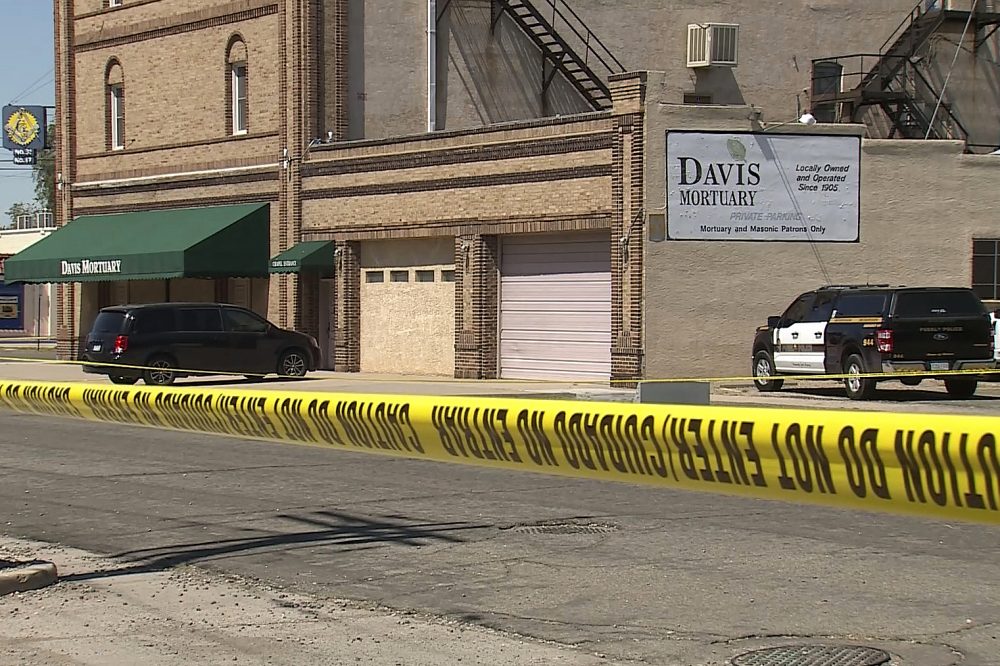
Authorities in Colorado arrested two brothers Thursday on charges connected to the alleged mishandling of at least two dozen decomposing bodies and other human remains discovered behind a concealed door inside a funeral home.
Former Pueblo County Coroner Brian Lee Cotter, 65, and his brother Christopher Aaron Cotter, 60, now face a combined 125 counts of abuse of a corpse, according to a statement from the Colorado Bureau of Investigation.
Both men were taken into custody in Pueblo and are being held on $1 million bond each. Court documents indicate the brothers were scheduled to make their first appearance in state court Friday afternoon in Pueblo.
The grim discovery was made last summer when state inspectors visited Davis Mortuary in Pueblo — located roughly 110 miles south of Denver — and detected a powerful odor of decomposition. Upon further investigation, they found the remains hidden behind a secret door at the business the two brothers owned.
Neither man had an attorney listed in court documents. The Associated Press attempted to reach Brian Cotter and family members of both brothers by phone on Thursday without success.
At the time of the initial inspection, Brian Cotter reportedly told investigators he may have given fake ashes to families of loved ones who had requested cremations. He stepped down from his role as county coroner in September.
Of the 24 bodies recovered, investigators have been able to identify 19. The remains of two additional individuals were found in containers at the mortuary site. Investigators say the bodies and numerous skeletal remains were stored in conditions that fell far short of professional and ethical standards.
Containers labeled as cremated remains and holding human skeletal material were found in a state of disarray, with many missing proper identification labels, according to investigators.
CBI Director Armando Saldate released a statement condemning the situation: “The evidence uncovered during this investigation reveals a complete disregard for the dignity of the deceased and the trust placed in Davis Mortuary by families in our community. We are committed to ensuring that those responsible for these actions are held accountable.”
The inspection of Davis Mortuary was the first conducted under new regulations Colorado put in place in 2024, rules that came about in response to earlier criminal cases involving the state’s funeral industry.
For years, Colorado was considered to have some of the loosest funeral home oversight in the country, with no requirements for routine inspections and no set qualifications for those seeking to operate a funeral home.
That lack of oversight had already led to serious problems, including a separate case in which nearly 200 decomposing bodies were found stored at room temperature in a building in Penrose, Colorado, approximately 30 miles from Pueblo.
A stretch of Valley Road is experiencing intermittent lane closures as construction crews work in the area between Hunter Way and Fitness Way.
The lane restriction is expected to remain in place until 6:00 AM, according to traffic officials. Drivers traveling through that corridor may experience brief delays during that time.
Motorists are encouraged to allow extra travel time or consider using an alternate route until the construction activity wraps up and the road returns to normal operation.
Drivers traveling eastbound on Kirkwood Highway should be aware of an ongoing lane restriction in the area.
According to DelDOT, the eastbound right lane on Kirkwood Highway between Meadow Wood Road and Millcreek Road is currently closed due to construction activity. The closure is expected to remain in effect until 6 a.m.
Motorists in the area are encouraged to use caution, allow for additional travel time, or consider alternate routes until the lane reopens.
The Delaware State Fire Marshal’s Office has launched an investigation into a building fire that broke out Wednesday in Newark.
Firefighters from the Christiana Fire Company were called to the scene at 56 South Old Baltimore Pike — the location of the Four Points by Sheraton Hotel — at approximately 1:28 p.m.
When crews arrived, they discovered smoke coming from the building. The investigation into the cause of the fire is ongoing.
Motorists traveling along Kirkwood Highway should plan for intermittent lane closures in both the eastbound and westbound directions due to ongoing construction activity.
The closures are in effect between Cleveland Avenue and Dillwyn Road and are scheduled to continue until 6:00 AM.
Drivers in the area are advised to use caution, allow extra travel time, and follow the direction of any traffic control personnel or signage on site.
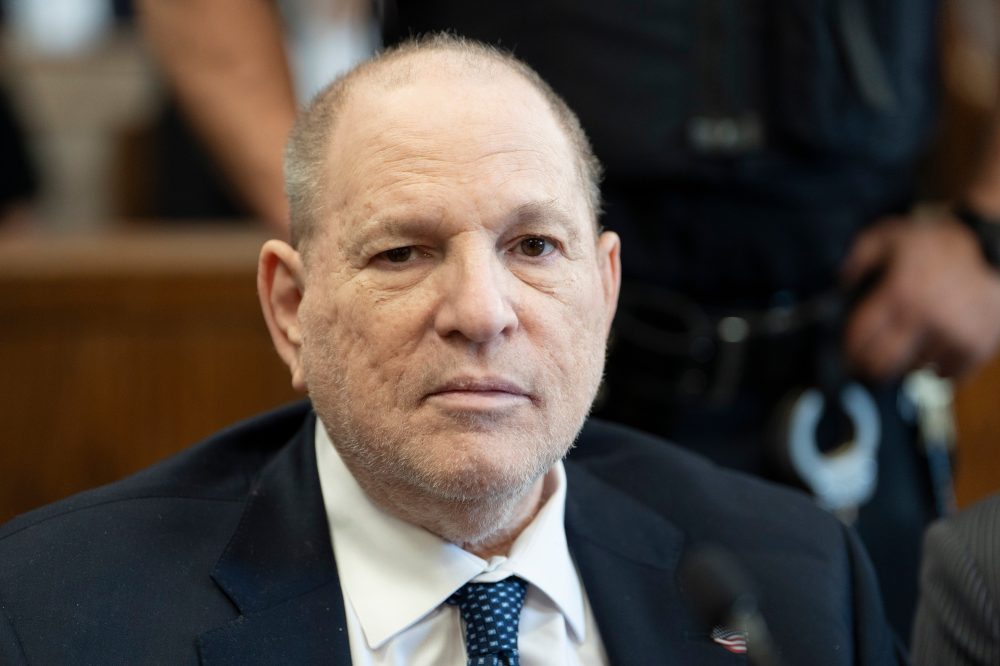
NEW YORK (AP) — New York prosecutors have chosen to drop a rape charge against Harvey Weinstein rather than take the case to trial for a fourth time. The accuser at the center of the charge supported Thursday’s decision, bringing one significant piece of a landmark #MeToo-era prosecution to a close.
The move does not erase Weinstein’s criminal record. The 74-year-old has been found guilty of sex crimes in two separate states and remains in custody while he appeals those verdicts.
Here is a breakdown of where things stand:
Jessica Mann, a hairstylist and actor who accused Weinstein of raping her in a New York hotel room in 2013, submitted a letter to the court stating she “could no longer endure going through this.”
Mann, 40, had already provided extensive and emotional testimony across three separate trials. One of those trials resulted in a conviction that was later overturned for reasons unrelated to her testimony. The two retrials that followed both ended with juries unable to reach a verdict.
In her letter, Mann wrote that she “gave my all” to the case, but that it “put me through more harm than good,” and that she was ready to move on from this chapter of her life.
Prosecutors stated they believed Mann and felt confident in the strength of their case, but agreed to drop the charge out of respect for her wishes and in light of Weinstein’s convictions on other counts.
Weinstein’s legal team argued the charge should never have been filed to begin with. Weinstein denies the allegation, and his attorneys have maintained the encounter was part of a consensual relationship that lasted several years. Mann, however, testified that early in that relationship, Weinstein forced himself on her after backing her into a corner in a Manhattan hotel room, grabbing her arms and disregarding her repeated requests to stop.
Mann’s allegation was among several criminal charges that grew out of a wave of sexual misconduct accusations that surfaced against Weinstein in 2017. Weinstein is an Oscar-winning producer who held enormous influence in Hollywood. Those accusations helped fuel the broader #MeToo movement against sexual assault and harassment.
Weinstein faced trial on multiple charges in both New York and California, resulting in some convictions and some acquittals. The dismissal tied to Mann’s allegation has no bearing on his other convictions, which involve different women.
Weinstein, who has stated he “never assaulted anyone,” is contesting those convictions. He was found guilty of raping and sexually assaulting an Italian actor-model in Los Angeles, and of sexually assaulting Miriam Haley — a production assistant and producer — in New York.
The Associated Press does not name individuals who report being sexually assaulted unless they have chosen to make their identities public, as both Mann and Haley have done.
Weinstein is scheduled to be sentenced in September on the conviction connected to Haley — a verdict that came out of a 2025 retrial after an appeals court threw out an earlier conviction. Haley testified that Weinstein forcibly performed oral sex on her after inviting her to stop by his Manhattan apartment before a flight in July 2006.
Prosecutors are asking for a 20-year prison sentence on that conviction. Weinstein’s attorneys say they have not yet determined what sentence they will request on his behalf.
Following whatever sentence Weinstein receives in New York, he is also facing a 16-year sentence in California.
An emergency full road closure is currently in place on Woodland Road between Lonesome Road and Woodland Ferry Road.
Authorities have shut down the stretch of roadway completely, and motorists are advised to avoid the area and plan for alternate routes while the closure remains in effect.
No further information regarding the cause or expected duration of the closure has been released at this time. Drivers are encouraged to stay alert for updates as the situation develops.
Motorists traveling along Old Beach Road should be aware of a southbound shoulder closure currently in place between Buffalo Road and Bowers Beach Road.
The closure is the result of ongoing construction activity in the area. Drivers are advised to use caution when passing through the affected stretch of road.
The shoulder closure is expected to remain in effect until 6 p.m.
WASHINGTON — A towering Ferris wheel stretching 110 feet into the sky, a rodeo demonstration, and an abundance of indulgent fair food greeted visitors Thursday as “The Great American State Fair” opened along Washington’s National Mall, launching a 16-day series of events marking the nation’s 250th birthday.
The 1.5-mile stretch of the National Mall connecting the U.S. Capitol to the Washington Monument was largely fenced off to accommodate the festivities. President Donald Trump launched the celebration Wednesday evening with a campaign-style rally, held after a number of originally scheduled performers withdrew from the event, expressing concern that it was taking on a partisan character.
For many attendees, the day was simply about enjoying America’s milestone. “We are here to just celebrate America, a long journey that she has had,” said Ashley, a visitor from Ohio who chose not to share her last name. “My kids have been wanting that aerial view from the Ferris wheel. They are excited.”
The fair pays tribute to the beloved summer state fairs held across the country each year — events known for handmade quilts, butter sculptures, and enormous pumpkins. It is part of a broader nationwide series of events leading up to July 4th, which marks the American colonists’ Declaration of Independence from Britain in 1776.
The structures lining the Mall, situated between the museums of the Smithsonian Institution, are temporary installations. That stands in contrast to more lasting changes President Trump is pursuing in Washington, including demolishing the East Wing of the White House to build a large ballroom, a rushed renovation of the National Reflecting Pool near the Lincoln Memorial, and a proposed 250-foot arch to be constructed near Arlington National Cemetery.
Despite the festive atmosphere, the anniversary celebrations have not been without controversy. Attendees included visible supporters of Trump’s Make America Great Again movement, and a Reuters/Ipsos poll taken this month revealed that a majority of Americans — including three-quarters of Democrats and half of Republicans — believe the 250th anniversary events have become overly political.
Seven states, each led by a Democratic governor, chose not to send official delegations to the fair. The event’s organizers, Freedom 250, maintained that all 50 states would still be represented. Freedom 250 is a public-private partnership established by the White House to coordinate the nation’s 250th anniversary celebrations alongside federal agencies.
Oregon was among the boycotting states. A spokesman for Democratic Governor Tina Kotek explained the decision, stating: “The State of Oregon will not be participating in the Great American State Fair due to both the cost of participating in the Fair and growing concerns that the event in Washington, D.C., is shaping up to be a more partisan affair than originally presented.”
Critics have also taken aim at the historical narrative presented at the event. Civil rights advocates have accused Trump of pushing a revisionist version of American history that minimizes significant chapters including slavery, the mistreatment of Native Americans, and the consequences of U.S. foreign policy. Those topics were largely absent from the fair’s exhibits. Trump has previously stated that prior to his presidency, there was too much emphasis placed on those subjects.
Even so, many of those who showed up on opening day said politics was not on their minds. “It’s a good family time on a nice summer day is how I see it,” said Sarah Parker, who made the trip from neighboring Virginia with her husband. “It’s a good way to get a feel of the country.”
A Wilmington man will spend the next 59 years behind bars after a jury found him responsible for a deadly collision that claimed two lives and sent four more people to the hospital.
DeJuan Robinson, 28, was handed the lengthy prison sentence on June 24. The punishment follows a verdict reached by a Superior Court jury, which found Robinson guilty on two counts of Murder in the Second Degree, as well as two additional counts connected to the fatal crash.
The case was prosecuted by the Department of Justice, which secured the conviction and the multi-decade sentence against Robinson for his role in the collision.
Motorists traveling southbound on Nassau Road between New Road and Coastal Highway (Route 1) should be aware of an active lane closure due to ongoing construction work.
The closure is expected to remain in place until 5:00 PM. Drivers are encouraged to allow extra travel time or consider using an alternate route to avoid potential delays in the area.
A troubling new investigation is raising serious questions about the tactics used by federal drug enforcement agents in their fight against fentanyl.
An Associated Press reporter uncovered evidence that agents with the federal drug enforcement agency allowed large amounts of fentanyl to be distributed onto the streets of New Mexico, all in an effort to build more significant criminal cases against drug networks.
The findings were discussed in an interview between the AP reporter and a national news outlet, shining a light on a controversial strategy that put potentially dangerous quantities of a deadly drug into communities in order to pursue bigger arrests and prosecutions.
Fentanyl remains one of the most deadly substances driving the ongoing drug crisis across the United States, and the revelation that law enforcement may have knowingly allowed it to circulate has drawn significant attention.
Delaware State Police have arrested a 27-year-old Philadelphia man on felony weapons charges and driving under the influence after his vehicle caught fire along Interstate 495 late Wednesday night.
Shortly before 11 p.m. on June 24, 2026, troopers were dispatched to the northbound lanes of I-495 near East Holly Oak Road after reports came in of a burning vehicle. When they arrived, officers discovered a Subaru Outback completely consumed by flames. They also spotted the driver walking away from the scene and quickly stopped him. That driver was identified as Isaiah Church. A local fire company was called to the scene and put out the blaze.
As troopers investigated the incident, they searched Church and found a loaded 9mm handgun along with two large-capacity magazines on his person. He was taken into custody without any resistance.
Officers noted multiple indicators of impairment and determined that Church had been drinking alcohol. He was transported to Troop 1, where the DUI investigation continued. Church continued to display signs of impairment throughout the process.
Church was arraigned through the Justice of the Peace Court and released on a $6,300 unsecured bond. He faces the following charges:
Possession of a Large Capacity Magazine (Felony) – 2 counts
DANVILLE, Va. — A Virginia man who allegedly attacked a city council member in a jealous rage — pouring gasoline on him and setting him on fire — has been handed a 40-year prison sentence.
Shotsie Buck-Hayes entered a guilty plea in April on one count of attempted first-degree murder and one count of aggravated malicious wounding for the July 30, 2025, attack on council member Lee Vogler. According to witnesses, Buck-Hayes walked into Vogler’s Danville office carrying a bucket of gasoline, soaked him with it, chased him out of the building, and then ignited him.
Lee Vogler’s wife, Blair Vogler, took the stand and testified that her husband suffered burns across 60% of his body as a result of the attack.
Commonwealth’s Attorney Michael Newman said Vogler and his family were present at Thursday’s hearing in Danville Circuit Court. The visibly scarred council member delivered an emotional statement describing how the attack had changed his life. Buck-Hayes also addressed the court, offering what Newman described as “what he claimed to be an apology,” while again claiming his actions were driven by an alleged affair between Vogler and Buck-Hayes’ wife.
Circuit Judge James Reynolds handed down a 10-year sentence on the attempted murder charge, suspending five of those years. On the malicious wounding count, the judge imposed a life sentence but suspended all but 35 years, bringing the total active prison time to 40 years.
Newman pointed out that the sentence on the wounding charge was three times what citizen sentencing guidelines recommended.
“I’m glad the court agreed that it’s an aggravating case and went above the guidelines and sentenced in such a way to hopefully hold this defendant accountable for this horrific act,” Newman said.
A breaking and entering charge against Buck-Hayes was dismissed as part of his April 1 guilty plea agreement.
The federal Drug Enforcement Administration made a formal request Thursday for the U.S. Justice Department’s internal watchdog to investigate allegations that its own agents stood by and allowed hundreds of thousands of fentanyl pills to reach communities in New Mexico.
The move came just days after an Associated Press investigation revealed that DEA agents repeatedly watched — but chose not to intercept — large shipments of the deadly synthetic opioid between 2023 and 2025, hoping the tactic would help them build larger criminal cases.
In a letter addressed to the Justice Department’s Inspector General, DEA Administrator Terry Cole stated that an internal review was needed because “the allegations have generated significant public attention and have raised questions regarding DEA’s operational decisions, supervisory oversight, and response to concerns.”
Cole also issued a public statement clarifying that his call for an investigation “should not be interpreted as reflecting any lack of confidence in the professionalism or integrity of DEA personnel or in the investigative decisions made during this matter.”
He went on to say, “If improvements are identified, DEA will implement them. Strong institutions are sustained — not diminished — by objective oversight and a willingness to continuously assess and improve.”
Both current and former DEA agents told the AP that this approach — commonly referred to as letting the counterfeit painkillers “walk” — was a dangerous gamble with public safety in a state already devastated by the fentanyl crisis. They also suggested it may have broken Justice Department rules designed to protect communities from a drug the White House designated last year as a “weapon of mass destruction.”
The AP’s reporting drew on accounts from three current and former agents as well as government records, including an internal report documenting a 2023 incident in which the DEA watched 74,000 pills change hands at a mobile home park in Albuquerque. One of those agents, David Howell, first raised alarms about the tactic in a 2023 whistleblower complaint. He later spoke extensively with the AP, describing the strategy as one that “poisoned our community to make cases.”
A DEA spokesperson previously told the AP that “public descriptions suggesting that DEA knowingly permitted fentanyl to reach communities are false and fundamentally mischaracterize the facts.”
The DEA’s watchdog request followed by just one day a move by New Mexico Gov. Michelle Lujan Grisham, who asked the state’s attorney general to determine whether the agency’s conduct violated New Mexico law — an unusual step that underscores the tension between state and federal authorities at a time when fentanyl continues to be one of the nation’s most deadly public health crises.
“There are no words to describe how reckless and dangerous these decisions were,” Lujan Grisham said in a statement. “Make no mistake: the DEA knew people would die if these pills made it into New Mexico communities, and the agency let it happen anyway.”
A young homeschool student from Northampton County, Virginia, has made a meaningful contribution to the preservation of local history by donating a 3D-printed replica of the historic Arlington plantation.
Caleb Dail presented the detailed replica to Northampton County as a way of honoring the area’s rich historical heritage. The model was crafted using 3D printing technology to recreate the appearance of the Arlington plantation.
The donation represents a creative intersection of modern technology and historical preservation, with a young student using contemporary tools to bring attention to a significant piece of Northampton County’s past.
Delaware’s Indigenous and Cuban cultural communities are set to benefit from a major national funding initiative aimed at preserving and celebrating folklife traditions in communities of color.
The US Regional Arts Organizations (USRAO) has revealed the recipients of its Walking Together: Investing in Folklife in Communities of Color grant program. In total, $3.34 million will be distributed among 96 selected grantees across the country.
As part of the award structure, 56 organizations will each receive $50,000 grants to support their cultural and folklife programming efforts.
The initiative reflects a broader national commitment to investing in the living cultural traditions maintained by Indigenous, Cuban, and other communities of color throughout the United States, including right here in Delaware.
NEW YORK (AP) — When Monique Di Liberto decided to re-enter the workforce after stepping away from her career for 17 years to raise her children full-time, she was consumed by self-doubt.
“Who do you think you are trying this after 17 years?” Di Liberto recalled thinking to herself. “You have no business doing this.”
That sense of fear and uncertainty is something many job seekers can relate to — whether they were caught up in mass layoffs, stepped away to care for a sick family member, or took time off for personal reasons. One thing applicants can count on: questions about gaps in their work history will come up during the hiring process.
“You have to address it honestly and directly,” said Andy Decker, CEO of Goodwin Recruiting, a firm specializing in candidate recruitment and placement. “Make sure that you’ve included anything you did during that time. Did you get certifications? Did you volunteer?”
Decker noted that lengthy stretches between jobs have become far more common and carry less of a stigma than they once did — particularly since the COVID-19 pandemic, when many people worked remotely or left their jobs to care for children or family members. He said some job seekers now label these periods on their resumes as a “career break” or “family responsibility.”
Here are some strategies from a recruiter and people who have navigated career gaps themselves.
Decker said employers today tend to focus more on skills and results than on a flawless work history. Volunteering with a nonprofit, for example, can be a good way to keep professional skills sharp during a gap.
Di Liberto, 57, had been a classically trained opera singer before getting married and becoming a mother. While her husband built a chiropractic practice, she put her music career on hold to raise their children.
When she decided to return to work, Di Liberto didn’t have traditional 9-to-5 experience to put on a resume. So instead, she looked at activities outside of family life that demonstrated transferable skills.
Her time as PTA president at her children’s school, for instance, involved managing budgets and presenting project proposals to the school board. She had also assisted with budgeting, software rollouts, and hiring at her husband’s practice.
Even so, she repeatedly heard that she wasn’t qualified as she applied for administrative support positions. But one interviewer was intrigued, telling her: “This resume was so different than anything I had ever seen. I needed to see the person who created this.”
Rather than leave without an offer, Di Liberto proposed a 30-day trial period as an administrative assistant. Her pitch: “I recognize that you probably are getting resumes of people who are far more qualified than me, but I would challenge that they are not as tenacious and driven as me. If you give me 30 days, I’ll prove to you that I can learn this job and I can do this job.”
The company brought her on board. Over the following decade, she earned promotions, was recruited by other employers, and eventually rose to head of client services at an artificial intelligence company. Di Liberto said she was asked about her career gap every time she interviewed for a new role.
“I was fortunate enough to stay home for 17 years and raise amazing humans,” she tells prospective employers. “And I worked from the ground up to be where I am today.”
Laura Sandvik, who left a marketing position to care for her mother and later her children, took a different approach — highlighting in her LinkedIn profile the personal strengths she developed during that time.
“I have no regrets about those choices. They strengthened my patience, perspective, and sense of responsibility. In returning to formal roles, I have done so intentionally,” she wrote.
If a job loss was the result of company restructuring or layoffs, Decker said there’s no need to spell that out on a resume — but if an interviewer asks, honesty is the best policy.
“I would simply say, ‘I was one of 270 people caught up in this reduction of force,’ or if you made it through a few rounds of layoffs, say, ‘Over two years we had five rounds of reductions in force, I made it through four, I was caught up in the fifth,’” Decker suggested.
He also advised practicing answers before the interview and steering clear of negativity or blaming a former employer. “Own it, acknowledge it and move on,” Decker said.
Baura Zia, 35, was laid off in 2022 shortly after returning from maternity leave. While initially upset, she now says losing that job “was honestly a blessing in disguise” because it gave her three years at home with her two children.
On her resume, Zia refers to that stretch as a “parenting gap” and mentions that she also relocated across the country during that time. When she began searching for part-time work after her son’s first birthday, she was upfront in interviews that her previous employer had let her go not because of her performance, but because the contract she was working on was lost.
“Having grace with yourself is really important,” Zia said. “It’s not a flaw to have a career gap. If anything, you’ve grown so much from that.”
During her job search, Zia reached out online to people who worked at companies she had applied to, asking about their experiences. Most didn’t respond, but some did. She also reconnected with contacts from a women’s public relations networking group she had joined years earlier.
“When I was ready to go back to the workplace, it wasn’t as hard as I thought it would be, only because I had my network to tap into,” Zia said.
For those whose gaps stem from more significant barriers — such as a period of incarceration — addressing the issue can be especially challenging.
Ryan Cuellar, 29, was charged with felony possession of stolen property at age 18 and sent to jail just a month before he was expected to graduate high school. He said he takes pride in what he has overcome.
“Don’t reflect on your mistake but take pride in what you learn from it and what you are doing about it,” Cuellar said.
After serving a few months, Cuellar returned to high school to complete his senior year. He then took a series of jobs that didn’t require background checks — including acting work and operating machinery — while also attending college classes.
After earning a paralegal certification, Cuellar used that training to petition to have his criminal record sealed, which meant he was no longer required to disclose his legal history on job applications or worry about it coming up in background checks.
Despite that, Cuellar chose to tell potential employers about his past anyway, even knowing it sometimes cost him job opportunities. He also volunteered at the jail, helping people there develop skills to use after their release. He recently landed his first full-time position, selling online tutoring services for a company.
“It’s part of my story,” Cuellar said of his incarceration. “At the end of the day, I think that you need to know that about me as a person to understand my side and where I come from and my perspective.”
Delaware authorities have reached the end of a lengthy criminal case after the final defendant tied to a four-year gang crime spree received his sentence, bringing a major law enforcement effort to a close.
The criminal activity stretched from January 2020 through December 2024, and its conclusion marks the end of an extensive collaboration among the Delaware Department of Justice, the Wilmington Police Department, the New Castle County Police Department, and the Delaware State Police.
On June 15, Javour Tabron, 30, of Wilmington entered a guilty plea to charges including Illegal Gang Participation, Attempted Murder in the First Degree, and Possession of a Firearm During the commission of a felony.
With Tabron’s sentencing, all defendants connected to the Exit 4 criminal organization have now been held accountable, marking the conclusion of what prosecutors described as a years-long investigation and prosecution effort spanning multiple Delaware law enforcement agencies.
Electric scooters are showing up more and more across Delaware, but riders should be aware that not every e-scooter falls under the same category when it comes to state law.
Authorities are reminding the public that knowing where you are allowed to ride, following the rules of the road, and making responsible choices while on a scooter are all essential steps to protecting yourself and those around you.
Whether you are a seasoned rider or hopping on an e-scooter for the first time, officials say the message is simple: learn the law before you ride, and always ride with safety in mind.
For the most up-to-date information on local police news and public safety guidance, residents are encouraged to stay connected with local law enforcement resources.
They have perished from artillery blasts, plane crashes, bullets, illness, and even execution — in war zones and dangerous locations across the globe.
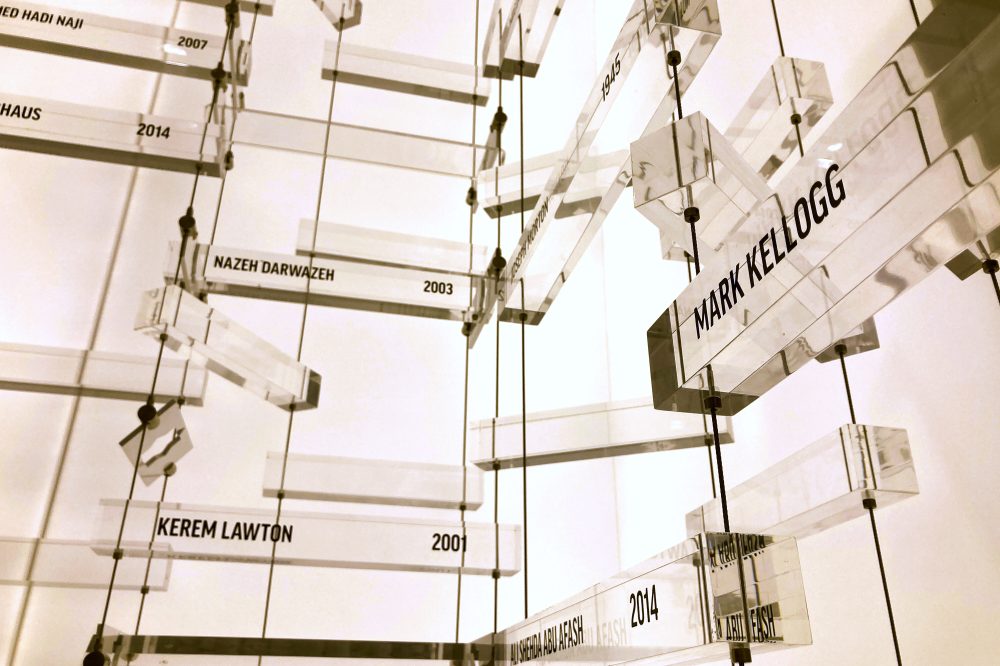
In the 180 years since The Associated Press was founded, 38 of its journalists have lost their lives while doing their jobs for the independent, not-for-profit news organization.
This Thursday marks a sobering milestone: 150 years since the very first of those deaths. Mark Kellogg, age 43, was one of five civilians who died alongside Lt. Col. George Armstrong Custer and his soldiers at the Battle of Little Bighorn.
Kellogg was embedded with Custer’s troops at the time, filing reports for The Bismarck Tribune and the New York Herald. The AP distributed his stories to readers across the nation. He was on the scene when Custer badly misjudged the size of a Sioux village before launching an attack against it.
Custer and his badly outnumbered soldiers made their final stand on a hilltop, where Native American defenders overwhelmed and destroyed them. Kellogg’s scalped body was discovered nearby.
His final published dispatch included this line: “I go with Custer and will be at the death.”
The words were meant as a poetic flourish rather than a forecast of his own end. Nevertheless, that final dispatch — and the story of how Kellogg died — spread widely through his employers and the AP wire. It brought lasting recognition to an otherwise obscure part-time journalist, a widower who had taken on various jobs to provide for his two daughters.
According to noted historian Sandy Barnard, Kellogg had developed a personal connection with Custer and spent time mingling with and interviewing soldiers at their camps.
“While his record as a journalist might be very small compared to modern reporters who go into combat, he certainly was doing exactly what they are doing,” Barnard said.
Kellogg’s diary and a collection of personal items — including his eyeglasses, tobacco, clothing, and a mosquito head net — are preserved by the State Historical Society of North Dakota. Deputy State Archivist Lindsay Meidinger noted that the fragile diary, now available digitally online, captures everyday details such as weather conditions, distances traveled, the order of riders in the column, and antelope sightings. The diary’s entries stop before the battle began.
“It’s a primary source of the historical event that not many other primary sources remain from that time period related to the Seventh Cavalry and Custer,” Meidinger said.
In some important ways, however, Kellogg bore little resemblance to journalists working today. Barnard — who authored a biography of Kellogg as well as other books about the Battle of Little Bighorn — noted that Kellogg carried a rifle into the field.
“During the last stages of the campaign, Kellogg was probably more of a soldier than he was a newspaper man,” Barnard said.
Kellogg also made no effort to conceal bias or racist attitudes toward Native Americans, whom he referred to as “red devils” in his writing.
Other AP journalists who have died while covering conflict include Mariam Dagga, a freelance visual journalist killed in an Israeli strike on a hospital in the Gaza Strip last August; Anja Niedringhaus, a photographer shot by a police officer while sitting in her car in Afghanistan in 2014; Myles Tierney, a videojournalist who died when a convoy he was traveling in came under fire in Freetown, Sierra Leone, in 1999; and Joseph Morton, a war correspondent who became the only known American reporter executed by the Nazis after being captured alongside Slovakian partisans in 1944.
Thursday marks 150 years since the Battle of Greasy Grass — a momentous clash that most Americans know as the Battle of Little Bighorn. For Native American tribes across the country, the anniversary is an occasion to honor one of the most historically significant and emotionally powerful events in the story of this nation.
On a sweltering day in June 1876, allied tribes united along the banks of the Little Bighorn River in what is now Montana and handed the U.S. Army a stunning defeat. They were fighting to protect their way of life against the relentless push of westward expansion. Lt. Col. George Armstrong Custer and more than 200 of his soldiers lost their lives in the engagement.
This week, the normally quiet, wind-swept prairie of rolling hills and grassy ridges is buzzing with activity as the battle is being reenacted. Horse riders from the Cheyenne River Reservation in South Dakota and other locations have traveled hundreds of miles to the Crow Agency area in Montana for the occasion. A sunrise pipe ceremony was held Thursday morning, and families are being encouraged to pass along their oral histories. Over at the Standing Rock Sioux Reservation in North Dakota, horse races and traditional songs and dances are also taking place.
Coming together at the battlefield means “we’re still here,” said William Good Bird, a traditional singer from the Spirit Lake Dakota Nation in North Dakota, who greeted a camp of hundreds of people gathered from many different tribes with a song and drumming at sunrise.
“Today I am celebrating the victory of our people, celebrating my life as a human being and my spot on this earth,” he said.
According to historian Dakota Goodhouse, the discovery of gold in the Black Hills — located in what is now South Dakota — by a Custer-led expedition just a few years earlier set off a military campaign aimed at forcing Great Plains tribes onto reservations, then called agencies.
Goodhouse noted that while there were larger and longer battles, and other Native victories, between March 1876 and June 1877, only the Battle of Greasy Grass — a name given by Native Americans referring to the slippery grass along the riverbank — achieved widespread national recognition, largely because the commanding officer died in the fight.
At the time, the Lakota were among the largest and most powerful tribal nations, led by figures such as Sitting Bull and warriors including Crazy Horse. U.S. forces were stretched out over miles of hilly terrain, and Native warriors overwhelmed them rapidly.
Word of Custer’s defeat came as a shock to Americans who were in the middle of celebrating their country’s 100th birthday.
In the aftermath, the federal government intensified its efforts to crush Native resistance, ushering in years of suffering and displacement. Crazy Horse was killed in 1877, and starvation forced others to surrender in 1881.
The story of Sitting Bull’s surrender is more complicated than history books suggest, according to Jon Eagle Sr., a former Standing Rock tribal historic preservation officer from the Hunkpapa band of the Oceti Sakowin.
“Our people say that he looked at his son Crow Foot and said, ‘My boy, if you live, you can never be a man in this world because you can never own a gun or a pony,’” Eagle recalled. “I think that he understood that things were going to change for his children, his grandchildren and those not yet born.”
Sitting Bull was ultimately killed along with roughly a dozen others when Indian agency police moved to arrest him in 1890.
Biographer T.J. Stiles described Custer as one of the Army’s most distinguished combat officers coming out of the Civil War. However, Stiles said the so-called “Boy General” — known for his long hair and eye-catching battlefield attire — frequently clashed with the chain of command and struggled with the administrative demands of leadership.
“Custer was someone who whenever he got into the frying pan, he immediately started looking for the fire,” Stiles said.
In 1873, Custer was given command of the Seventh Cavalry at Fort Abraham Lincoln, near what is now Bismarck, North Dakota. He led several military expeditions from that post, including the one that confirmed the presence of gold in the Black Hills, a place sacred to the Lakota people.
While Custer has long been viewed in American culture as a tragic hero and celebrated for his military record, historian Goodhouse pointed out that he could also be considered surprisingly open-minded for his era, even as the government worked to displace Native peoples and erase Native languages through boarding schools. Custer learned to speak Arikara and Lakota and became fluent in Plains Indian sign language.
Even so, as many Americans celebrate the 250th anniversary of the signing of the Declaration of Independence, the milestone carries a very different meaning for many Native Americans.
“It’s just a mark to me of 250 years of injustice to the Native people,” said Jim Real Bird, a Crow tribal member and reenactment coordinator.
Eagle shared that sentiment: “That’s one of the things that we always tell our people when we come together, is they failed at their attempts to rub us out. We’re still here as ancient people deeply connected to our environment.”
For more than three decades, reenactments involving hundreds of warriors have taken place near the battlefield each year to mark the anniversary. The performances are rooted in Northern Cheyenne oral history and place a strong emphasis on horsemanship and keeping the Native language alive.
“All the other things that are Native American don’t mean nothing if you don’t know your language,” Real Bird said.
Thousands of visitors are expected to camp at the site over several days, taking part in prayer gatherings, relay races, horse rides, and parades. The National Park Service is also hosting anniversary events at the battlefield national monument.
At Standing Rock, Eagle said races are being held to pay tribute to the horses that carried their ancestors to victory 150 years ago. The commemoration also features oskáte — a traditional celebration involving oral histories, victory songs, and tribal dancing.
“It’s just an opportunity for us to share with the generations coming behind us that they’re descendants of a very powerful nation and ancient people that are still here despite everything that was done to us,” said Eagle, whose great-great-grandfather Sunka fought in the battle, as did his great-great-great-grandfather Charging Thunder.
Goodhouse shared stories passed down from his grandfather about their ancestors who were in the Hunkpapa camp when the troops attacked. His grandfather’s great-grandfather, Striped Face, was shot during the battle but climbed onto his horse and kept fighting.
“There’s this kind of energy there that still lives on because we have this direct narrative that was handed down,” Goodhouse said.
Delaware State Police are conducting a fatal crash investigation following a deadly pedestrian incident that took place Wednesday morning in Wilmington.
According to authorities, the crash happened around 10:00 a.m. on June 24, 2026, at the intersection of northbound Brookside Drive and North Maryland Avenue. A Peterbilt dump truck was sitting at a red light on northbound Brookside Drive when a pedestrian began walking westbound along the sidewalk on the eastbound side of North Maryland Avenue, heading toward the intersection.
When the traffic light changed to green, the Peterbilt driver began executing a left turn onto westbound North Maryland Avenue. During that turn, the pedestrian crossed into the truck’s path and was struck by the front end of the vehicle.
The pedestrian, a 57-year-old man from Wilmington, was pronounced dead at the scene. Authorities are withholding his identity until his next of kin have been notified. The truck’s driver, a 47-year-old man from Smyrna, Delaware, was not hurt in the incident.
The road was shut down for roughly two and a half hours as investigators worked to document and clear the scene. The Delaware State Police Collision Reconstruction Unit is continuing its investigation into the crash.
Anyone who witnessed the collision or has video of the incident is urged to reach out to Trooper First Class T. Carnevale at (302) 464-3329. Tips can also be submitted through a private Facebook message to the Delaware State Police or by contacting Delaware Crime Stoppers at 1-800-847-3333.
If you or someone you know has been affected by a violent crime or sudden loss and needs support, the Delaware State Police Victim Services Unit and Delaware Victim Center offer assistance around the clock through a toll-free hotline at 1-800-VICTIM-1 (1-800-842-8461). You may also reach the Victim Services Unit by email at [email protected].
Delaware students made their mark on the national stage earlier this month, taking home six championship titles from the 2026 SkillsUSA National Leadership & Skills Conference held in Atlanta.
In addition to the six national championships, the delegation earned 44 industry-recognized Skill Point Certificates — a credential that reflects hands-on technical ability in high-demand fields.
This year’s Delaware contingent was the largest in state history, with a record 119 students and advisors traveling to Atlanta to compete. The group showcased a combination of technical knowledge, professional skills, and real-world problem-solving abilities.
Officials noted that the results reflect students putting their classroom learning into action and demonstrating the kind of readiness that employers in high-demand careers are looking for.
Delaware and Wilmington are being celebrated for their thriving arts communities after earning high marks in a prestigious national ranking.
SMU DataArts, the National Center for Arts Research, unveiled its 10th annual Arts Vibrancy Index on June 25, 2026. The index placed Delaware 11th out of all 50 states when it comes to arts vibrancy, while Wilmington landed at 57th among 100 communities evaluated across the country.
The recognition highlights the cultural vitality found throughout the state, from its largest city to communities statewide.
New York prosecutors announced Thursday that they are walking away from a rape charge against Harvey Weinstein rather than putting the former Hollywood power broker on trial for a fourth time in the landmark #MeToo case.
Despite the dropped charge, Weinstein is not a free man. He remains incarcerated and convicted of a separate sexual felony in New York, along with additional convictions in California. The rape charge in question had lingered unresolved after an appeals court threw out an earlier conviction and two subsequent retrials ended without a verdict. On Thursday, the judge formally dismissed the charge.
Weinstein showed no visible emotion as court officers wheeled him out of the courtroom. He has consistently denied all accusations against him.
The dropped charge stemmed from an allegation that Weinstein raped hairstylist and actor Jessica Mann inside a Manhattan hotel room in 2013. Mann testified that she also had a consensual, on-and-off relationship with Weinstein during that period, while he was married. However, she told jurors that she repeatedly tried to leave and refused any sexual contact as he cornered her in the room — that he demanded she undress, grabbed her arms, and continued until she felt too afraid to keep resisting.
Mann submitted a letter that a prosecutor read aloud in court. “After a lot of thought and reflection, I have chosen not to proceed with a fourth trial against Harvey Weinstein,” the letter stated. “It was clear to me at this last trial I could no longer endure going through this any longer.”
The trials took a significant toll on Mann, who is 40 years old. During the most recent proceeding, she spent five days on the witness stand and was questioned for the first time about a personal, diary-like note she wrote just two days after the alleged assault — a note that made no mention of the rape. At one point, she told the court she was having difficulty concentrating, causing proceedings to end early for the day.
Prosecutor Nicole Blumberg said Thursday that the prosecution team stands firmly behind Mann and praised her “bravery, strength, courage and inspiration” to other survivors. Given Mann’s expressed wishes about not continuing, Blumberg said “dismissal is appropriate.”
Weinstein, who is 74, also experienced health issues during the latest trial, reporting chest pains during jury deliberations, which led to another early adjournment.
Defense lawyer Jacob Kaplan argued after the dismissal that “the interests of justice would have never been to bring this case at all.”
Weinstein was once among the most influential figures in the film industry, producing celebrated and award-winning movies including “Shakespeare in Love,” “Pulp Fiction,” and “Chocolat.” That reputation collapsed in 2017 when a wave of sexual misconduct allegations became public, helping ignite the broader #MeToo movement and ultimately resulting in criminal charges.
He was first convicted of raping Mann in 2020, but an appeals court later overturned that verdict on grounds unrelated to her testimony. A 2025 retrial ended in a hung jury, and a second retrial this spring also resulted in deadlock.
The rape charge that was dismissed Thursday was a lower-level felony carrying a maximum sentence of four years — less time than Weinstein has already served. His other convictions in New York and California carry significantly longer sentences, including one related to the rape of an Italian actress in Los Angeles.
Weinstein did not take the stand at any of the trials, though he publicly complained following the 2025 New York retrial that the proceedings were unfair — a claim the judge rejected. His legal team has consistently argued that all of his accusers engaged in consensual relationships with him, motivated by career ambitions in the entertainment industry. Weinstein himself has stated he “acted wrongly, but I never assaulted anyone.”
The Associated Press has a policy of not identifying individuals who report sexual assault unless they choose to be identified publicly, as Mann has done.
The U.S. Supreme Court has handed Monsanto a major legal victory in a closely watched case involving the company’s widely used Roundup weed killer product.
At the heart of the dispute was a lawsuit brought by Missouri resident James Durnell. The central legal question before the justices was straightforward but consequential: who has the authority to determine what information must appear on a pesticide or insecticide label — and does federal law take precedence over claims made under state law?
The high court’s decision backs Monsanto’s position that federal regulations governing pesticide labeling should shield the company from state-level liability claims.
Motorists traveling along Ponds Lane should plan for potential slowdowns this afternoon as a flagging operation is active in the area.
The work zone is located between Montchanin Road, also known as Route 100, and the cul de sac at the end of Ponds Lane. Traffic control personnel are directing vehicles through the area.
The flagging operation is expected to remain in place until 5:30 PM. Drivers are encouraged to use caution and follow the directions of flaggers on site.
Construction work is causing intermittent lane closures on Vance Neck Road between Peachtree Lane and Marathon Drive, according to Delaware transportation officials.
The lane restrictions are expected to remain in effect until 6 p.m. Drivers traveling through that stretch of road should anticipate possible delays and consider using alternate routes if available.
No further details about the nature of the construction were immediately provided. Motorists are encouraged to stay alert and follow any posted traffic control signs in the area.
SALISBURY, Md. — Crews with the City of Salisbury’s Department of Waterworks Utilities Division are scheduled to swap out a fire hydrant in the 800 block of Eastern Shore Drive this Thursday, June 25, as part of the city’s continuing push to upgrade and maintain its water distribution infrastructure.
During the project, drivers heading westbound on Eastern Shore Drive between West Lincoln Avenue and Fulton Street should expect a temporary single-lane traffic pattern. Work is set to kick off at 9 a.m. and wrap up by around 3:30 p.m., assuming favorable weather and site conditions.
Both utility locators and Central Alarm have been informed about the upcoming work. Drivers passing through the area are asked to slow down and plan for possible minor delays while the project is underway.
The city is asking for the public’s patience as workers carry out this needed infrastructure improvement. Anyone looking for additional information can reach the Utilities Division by phone at 410-548-3103.
Drivers traveling through the Townsend area of New Castle County will need to find an alternate route starting this summer. The Delaware Department of Transportation (DelDOT) is warning motorists that Walker School Road will be closed for an extended period beginning Wednesday, July 1st.
The closure will remain in place until Saturday, October 24th, affecting the stretch of Walker School Road between Gum Bush Road and Saw Mill Branch Road. During that time, crews will be working to replace Bridge 1-453 in the area.
Drivers are encouraged to plan accordingly and allow extra travel time when heading through that part of New Castle County.
Country music fans and beachgoers are getting a shot at attending one of the East Coast’s most popular beachfront music festivals — completely free of charge.
Ocean City, Maryland announced a sweepstakes tied to its Beach & Boots Country Calling Festival, scheduled for October 2026. The contest will award four winners, each of whom may bring along one guest, giving eight people total the chance to attend the festival without spending a dime.
Organizers describe the event as one of the premier beachfront country music festivals on the entire East Coast. The announcement was made on June 24, 2026.
Whether you’re a die-hard country music fan or simply love spending time at the beach, this sweepstakes offers a rare opportunity to take in a major live music event in a stunning oceanfront setting.
To learn more about Ocean City and enter the sweepstakes, visit www.ococean.com
Drivers heading southbound on Route 1 between Smyrna and Dover should slow down and stay alert — a trash removal crew is currently working in the median of the highway.
The operation is scheduled to remain active until 4 p.m. Motorists passing through the area are advised to exercise caution and watch for workers and equipment near the roadway.
Eastbound travelers on Walt Messick/Vernon Road are facing a right lane closure between Farmington Road and Whiteleysburg Avenue due to ongoing construction work.
The lane restriction is expected to remain in place until 5 PM. Drivers in the area should anticipate potential delays and consider allowing additional time when traveling through this stretch of road.
Motorists traveling on Christiana Road, also known as Route 273, over Interstate 95 should plan for intermittent lane closures due to an ongoing painting operation in the area.
The lane restrictions are expected to remain in place until 5 p.m. Drivers are advised to allow extra travel time or consider alternate routes if possible.
Drivers traveling along Cherry Road should be aware of intermittent lane closures currently in effect between Ivy Lane and Ridge Drive.
According to traffic officials, the lane restrictions are expected to remain in place until 5:30 PM. Motorists in the area are encouraged to use caution, allow for additional travel time, or seek an alternate route if possible.
No further details regarding the cause of the closure were immediately available. Drivers should remain alert to traffic control personnel and signage in the affected area.
Travelers on the road between Navaho Court and East Seneca Court should be aware of intermittent lane closures currently in effect.
The lane restrictions are scheduled to remain in place until 5:00 PM. Drivers are encouraged to allow extra travel time or consider using alternate routes to avoid potential delays.
No additional details regarding the cause of the closures were provided. Motorists should stay alert and follow any posted signage in the affected area.
Travelers heading through the Elderon Drive area should be aware of intermittent lane closures currently in effect at the Elderon Drive loop, also known as The Loop.
The closures are the result of active construction work in the area and are expected to continue until 6 p.m.
Drivers are encouraged to use caution when passing through the construction zone and to consider alternate routes if possible to avoid potential delays.
The word “camp” brings to mind roasting marshmallows, canoe trips, and summer adventures in the woods — but its roots are far more military than recreational.
In this week’s installment of NPR’s Word of the Week series, language historians trace the journey of the word “camp” from its origins as a term for Roman military lodgings in the 1500s to the outdoor youth programs that emerged in the 1880s.
Those early wilderness retreats were not simply about fun in the great outdoors. They were intentionally designed to shape young boys into what organizers described as “manly men,” reflecting the cultural values and anxieties of the era.
It is a fascinating linguistic evolution — a word born on the battlefield that eventually found its way into the cherished childhood memories of generations of Americans.
Motorists traveling along West Newport Pike should plan for delays as construction crews have closed the right lane between Harbeson Place and Polliver Drive.
The lane restriction is expected to remain in place until 5 p.m. Drivers are encouraged to allow extra travel time or consider alternate routes to avoid the work zone.
A Florida man who was convicted of fatally stabbing his wife more than 30 years ago is scheduled to be put to death Thursday evening at Florida State Prison near Starke.
Dusty Ray Spencer, 74, is set to receive a lethal three-drug injection beginning at 6 p.m. for the January 1992 killing of his wife, Karen Spencer.
If the execution proceeds as planned, it will mark Florida’s ninth execution so far this year. That comes on the heels of a record-setting 2025, during which Republican Gov. Ron DeSantis oversaw 19 executions — more than any Florida governor since the state reinstated the death penalty in 1976. The previous single-year record stood at eight executions, set back in 2014.
According to court records, Spencer’s violent history with his wife began before the killing. He was arrested in December 1991 after choking Karen Spencer and threatening to take her life. While he was behind bars, Spencer reportedly called his wife and warned her that he would finish what he had started once he was released.
The violence escalated in early 1992. On January 18 of that year, Spencer beat Karen’s teenage son with a clothes iron when the boy attempted to intervene and protect his mother, officials said. Roughly a week later, the same teenager heard a disturbance outside the family’s home and discovered Spencer striking his mother in the head with a brick.
Court records indicate the teen attempted to shoot Spencer with a rifle, but the weapon misfired. Spencer then turned a knife on the boy, who fled to find help. When law enforcement arrived on the scene, they found Karen Spencer dead from multiple stab wounds to the chest.
Spencer was first convicted of first-degree murder, attempted first-degree murder, aggravated assault, and aggravated battery, receiving a death sentence in 1992. Two years later, the Florida Supreme Court ordered a new sentencing hearing after determining the trial court had improperly weighed aggravating and mitigating factors in the case. Spencer was again sentenced to death in 1995, and his subsequent appeals have been unsuccessful.
Just last week, the state Supreme Court turned down Spencer’s latest round of appeals. His legal team had argued that his health conditions — including liver disease — put him at greater risk of experiencing pain and suffering during execution, and that putting a man of his age to death would amount to cruel and unusual punishment.
A final appeal was still pending before the U.S. Supreme Court at the time of the scheduled execution.
Florida led the nation in executions in 2025, with a total of 47 people put to death across the entire country that year. Alabama, South Carolina, and Texas each carried out five executions, tying for second place behind Florida.
Another execution is already on the calendar in Florida for July 14. Dennis Sochor, also 74, was convicted of killing a woman in the early hours of 1982 after the two met at a New Year’s Eve party.
All executions in Florida are performed using a three-drug lethal injection protocol consisting of a sedative, a paralytic agent, and a drug that stops the heart, according to the state Department of Corrections.
WASHINGTON — Four sketches created by celebrated American illustrator Norman Rockwell, which hung on the walls of the White House West Wing for over four decades, are finally being made available for the public to see.
The drawings, created in the 1940s, spent more than 40 years displayed inside the West Wing, where every president from Jimmy Carter through Donald Trump would have passed them. Now, after a nonprofit shelled out more than $7 million to purchase them at auction, everyday Americans will get their first chance to view them in person.
The series of four sketches is titled “So You Want to See the President!” and captures a vivid cross-section of people gathered in the West Wing reception area during World War II, all waiting for an audience with President Franklin D. Roosevelt. The scenes include U.S. senators, military personnel, members of the press corps, and even a Miss America contestant, all biding their time before being escorted to the Oval Office.
The White House Historical Association made the purchase to ensure the works wouldn’t disappear into a private collection and be “lost forever,” according to its president, Stuart McLaurin. He told The Associated Press the sketches will be on view through June 2027 at the association’s “The People’s House” education center located near the White House.
“And since they had been seen by the eyes of so many presidents and first ladies and senior White House staff and important visitors from around the world, we wanted the American people to see them. So we acquired them,” McLaurin said.
Rockwell, best known for his depictions of everyday American life that regularly appeared on covers of the Saturday Evening Post, originally spent hours sitting in the West Wing lobby observing the people around him, McLaurin explained. After a fire destroyed his Vermont art studio — taking his original sketches with it — Rockwell returned to the White House a second time to gather additional material.
“So it’s really a combination of his memories from that first visit, the memories of the second visit,” McLaurin said. “And it is an array of these people representing the military and White House staff and members of Congress and the press corps and all kinds of people that literally, to this day, go through that space in the West Wing.”
The first sketch opens at the entrance gate, showing photographers waiting outside on West Executive Avenue and Stephen Early — a former AP journalist who became the third White House press secretary under Roosevelt — meeting with a group of reporters. Rockwell himself appears in the scene, seated in a red leather chair with a pipe in his mouth and his legs stretched out.
The second sketch features Miss America, identified as 1941 titleholder Rosemary LaPlanche, dressed in a yellow gown and her sash, seated on a red sofa next to her publicist. A Scottish officer in a kilt sits nearby while a Secret Service agent stands watch.
In the third sketch, U.S. Sens. Tom Connally, D-Texas, and Warren Austin, R-Vt., are shown in conversation on a red couch while a U.S. Navy “WAVES” officer looks on. Generals Joseph W. “Vinegar Joe” Stillwell and Edwin M. “Pa” Watson are shown shaking hands for a photographer, and Roosevelt’s dog Fala is seen chasing an aide pushing the president’s lunch cart.
The fourth and final sketch shows more uniformed military figures in discussion, and ends with an aide opening the door to the Oval Office, offering a brief glimpse of the president inside.
“It’s such a little aquarium of these people and we’re like a fly on the wall as to what it was like at that particular period of time,” McLaurin said.
Rockwell originally created the sketches for Early, and after they were published in the Saturday Evening Post in November 1943, he gave them to the press secretary as a gift. Early, who passed away in 1951, had displayed them in his West Wing office. In 1978, a family member transferred the sketches to the White House, where they remained on display for more than four decades.
The legal battle over ownership began in 2017, when Thomas Early, one of the press secretary’s sons, spotted the sketches hanging on a White House wall during a televised interview with President Donald Trump, court records show. William Elam III, a grandson of Stephen Early, countered that his mother had received the drawings as a gift from her father before his death, and that ownership had since passed to him.
The sketches had been loaned to the White House in 1978 under an agreement requiring their return to Elam upon request. The White House returned the drawings in 2022. A federal appeals court resolved the dispute in May 2025, upholding a lower-court decision in favor of Elam, after which he put the sketches up for auction.
Association historians have researched the individuals depicted in the drawings, and the exhibit will feature a digital component using modern technology to animate the characters in the sketches.
McLaurin said the $7.25 million paid for the works is the highest amount the association has ever spent on a single piece of art. The privately funded organization, founded in 1961 by first lady Jacqueline Kennedy, receives no taxpayer funding.
“In our view, these are priceless works,” McLaurin said.
The association has not yet determined what will happen to the sketches after the exhibit closes in June 2027. They may travel to other venues and could eventually return to the White House, McLaurin said.
A high-ranking military general is expected to announce his retirement in the near future, becoming the latest in a string of notable departures from the Pentagon.
The anticipated exit is part of a broader pattern of leadership shake-ups and sudden departures that have been occurring at the nation’s military headquarters.
The New Castle County Division of Police has issued a Gold Alert for a missing Newark woman identified as 39-year-old Pamela Barlow.
Pamela was last seen in the 600 block of Postfield Road at approximately 11:48 p.m. on Wednesday, June 24, 2026. The zip code associated with the area is 19713.
Despite extensive search efforts, officers have been unable to locate Pamela or make contact with her. Authorities have expressed concern for her well-being.
Anyone who has information about Pamela Barlow’s whereabouts is encouraged to contact the New Castle County Division of Police immediately.
Tata Motors-owned Jaguar Land Rover is pulling more than 250,857 SUVs off the road in the United States after federal safety officials identified a defect that could prevent air bags from working correctly during a collision.
The U.S. National Highway Traffic Safety Administration announced the recall on Thursday, noting that it affects select models of the Land Rover Defender, Discovery, and Range Rover SUVs.
According to the agency, the problem lies with a connector in the driver’s air bag clockspring. That connector can corrode over time, which may stop the air bag from deploying the way it should — potentially increasing the risk of injury in an accident.
To fix the issue, authorized dealerships will apply a protective lubricant gel to the affected connector terminals. The repair will be performed at no charge to vehicle owners.
WASHINGTON — A pair of newly released national surveys paint a troubling picture of just how often Americans are targeted by scammers — and how rarely those victims seek help from authorities afterward.
An AP-NORC poll conducted in February found that more than half of U.S. adults — 58% — receive suspected scam attempts through texts, phone calls, emails, online messages, or online ads every single day. Meanwhile, a separate survey conducted by Gallup and the Stop Scams Alliance found that roughly 4 in 10 Americans experienced attempted scams on a daily basis last year.
About 3 in 10 U.S. adults told AP-NORC they have personally been tricked into handing over money or personal information, while about half said they personally know someone — a friend or family member — who has lost money to a scam.
The Gallup survey found that about 1 in 10 U.S. adults said they or someone in their household was successfully deceived by a scammer in 2025 alone, with nearly half of those victims losing more than $500. About half of scam-affected households reported losses ranging from $125 to $2,000.
Adam Pratter, 42, said staying safe requires constant vigilance. He encountered trouble on dating apps and once sent money to someone who claimed to be deployed overseas with the military and needed funds for food. He only realized it was a scam when the requests kept coming. “You’ve got to be pretty sophisticated these days,” he said.
Pratter believes both private companies and the federal government share responsibility for helping victims. “If federal regulation wanted to step in and make deals with these companies to get these people their money back, they could,” he said.
Porschel Smith, 22, said she gets multiple scam calls every day along with even more fraudulent emails. While some are obvious — “They mention different types of programs that I know are nonexistent,” she said — others are more convincing. “Some of them hack your account and pretend as if they’re someone that you know,” she said. “But then I get to asking questions and realize they’re scams.”
The AP-NORC poll found that older Americans are more frequently targeted. About 7 in 10 adults aged 60 and older said they receive suspected scam contacts at least once a day, compared to about 4 in 10 Americans under age 30.
Among those who have been contacted by scammers, the AP-NORC poll found that package shipment and banking-related schemes were among the most common. About 4 in 10 people who received scam attempts said at least one came through Facebook or Facebook Messenger, while about 2 in 10 reported receiving them on WhatsApp and a similar share said Instagram was used.
Towonna Harris, 50, said scammers are skilled at what they do. “It’s not easy. They know what they’re doing,” she said. Her son was once promised tuition money by scammers who asked him to authorize a small credit card charge — which quickly ballooned into a much larger series of charges. Harris has also fallen victim to a fraudulent online seller. “I ordered some stuff. I never got it,” she said. “I thought it was a legitimate company. And then I saw all these reviews saying it was a scam.”
Despite how widespread the problem is, most victims never contact law enforcement or federal agencies. The Gallup survey found that among people scammed in 2025, 55% reported the incident to a bank, credit union, or other financial institution — but only 18% contacted state or local law enforcement, and just 13% reached out to federal law enforcement or the Federal Trade Commission.
The main reason victims stay silent: they don’t believe reporting will get their money back. Among those scammed in 2025, 75% said they didn’t report because they felt it wouldn’t make a difference, while 58% said they simply didn’t know where to go.
That uncertainty is widespread. The AP-NORC poll found that while 55% of Americans feel confident they’d know how to report a scam to a bank or credit card company, only about one-quarter feel equally confident about reporting to federal or state law enforcement. The Gallup survey found that only about one-third of U.S. adults said they’d know where to report if they lost $5,000 in a scam today.
Almost all Americans — virtually 100% — view scams as at least a minor threat to individuals across the country, and about 8 in 10 believe the government is doing too little to address the problem. That view was shared by large majorities of both Republicans and Democrats, according to Gallup.
Max Anderson, 23, said his parents, who are small business owners, fell victim to a sophisticated scam in which a fraudster impersonated one of their employees and redirected their direct deposit payments. “This went on for about 3 months. It went to $15,000,” he said. His father eventually received assistance from the FBI.
“I do like that the government stepped in with my parents, and I feel like that’s the way it should be,” Anderson said. “It’s a big enough problem at this point that it falls to the government and companies to do something about it.”
The AP-NORC poll surveyed 1,133 adults from February 19-23 using a probability-based panel designed to represent the U.S. population, with a margin of sampling error of plus or minus 4.0 percentage points. The Stop Scams Alliance-Gallup poll surveyed 5,173 adults from January 8 through February 18, with a margin of sampling error of plus or minus 1.4 percentage points.
New Mexico Gov. Michelle Lujan Grisham made an extraordinary move Wednesday, calling on her state’s attorney general to launch a criminal investigation into the Drug Enforcement Administration following a bombshell Associated Press report revealing that federal agents allowed hundreds of thousands of fentanyl pills to flow into communities over a two-year span.
The governor asked the attorney general to determine whether the DEA’s conduct violated New Mexico state law — a remarkable challenge to a federal law enforcement agency at a time when fentanyl continues to be one of the most lethal public health threats facing the country.
The AP’s investigation found that DEA agents repeatedly chose not to intercept major fentanyl shipments moving through New Mexico between 2023 and 2025, instead allowing the drugs to continue moving in hopes of building cases against higher-level traffickers. That revelation has transformed a debate over law enforcement tactics into a question of whether federal agents themselves broke the law in pursuit of bigger targets.
Current and former DEA agents told the AP that the tactic was a dangerous gamble in a state already devastated by the fentanyl crisis, and that it may have violated U.S. Justice Department rules designed to protect the public from a drug the White House designated last year as a “weapon of mass destruction.”
“There are no words to describe how reckless and dangerous these decisions were,” Lujan Grisham said in a written statement. “Make no mistake: the DEA knew people would die if these pills made it into New Mexico communities, and the agency let it happen anyway.”
The DEA did not immediately respond to requests for comment on the governor’s statement. The agency has previously maintained that it would not be realistic to seize every drug shipment, and in an earlier statement to the AP said “the investigative decisions at issue were lawful, reasonable under the circumstances and consistent with Department guidance.”
DEA spokesperson Amanda Wozniak pushed back in an email, writing: “Public descriptions suggesting that DEA knowingly permitted fentanyl to reach communities are false and fundamentally mischaracterize the facts.”
Alex Uballez, who served as U.S. attorney in New Mexico from May 2022 until February 2025, told the AP that drugs were sometimes not seized due to limited resources and his view that targeting larger trafficking organizations has more impact than stopping every individual drug transaction.
It remains unclear whether any specific fatal overdoses in New Mexico can be directly tied to the DEA’s approach. While overdose deaths across the country dropped 14% last year, government data show New Mexico experienced a 21% increase during the same period.
“New Mexican lives are not the federal government’s cost of doing business,” the governor wrote. “I plan to hold the federal government accountable for this disaster and will explore every possible avenue of action against the federal government to right these wrongs.”
The AP’s investigation relied on three current and former agents along with government records, including an internal report documenting a 2023 delivery of 74,000 pills that DEA agents monitored but chose not to seize at a mobile home park in Albuquerque.
DEA whistleblower David Howell, whose complaint first brought the unseized fentanyl to light, met with congressional staffers Wednesday. Empower Oversight, a whistleblower advocacy group representing Howell, has formally requested that both the Senate Judiciary Committee and the Justice Department’s Office of Inspector General look into his allegations.
Sen. Bernie Moreno, an Ohio Republican, described Howell’s disclosures as “a scandal of the highest order” and said in a post on X that he intends to determine how many American lives were lost as a result of the DEA’s inaction.
Victims’ groups also weighed in, saying the DEA’s approach in New Mexico directly contradicts the agency’s own “One Pill Can Kill” public awareness campaign, which warns that even a few milligrams of fentanyl can be fatal.
“Knowing the Justice Department had guidelines to seize the opioids whenever practical — and the fact these were ignored — is truly heartbreaking,” said Michael Glownia, who lost his daughter to fentanyl in 2023 and went on to found a nonprofit supporting families who have suffered similar losses.
All northbound lanes on Interstate 495 north of Edgemoor have been shut down following a car fire, according to traffic officials.
The lane closure is currently in effect, and motorists traveling in that area are urged to find alternate routes to avoid delays.
No further details regarding injuries or the origin of the fire have been made available at this time. Drivers should check for updates before heading out and allow extra travel time if the area cannot be avoided.
Southbound travelers on Interstate 95 should be aware of a significant lane restriction currently in place overnight.
Two right lanes on I-95 southbound are closed between Route 72 and the exit ramp to Route 896. The closure is expected to remain in effect until 3 a.m.
Drivers are encouraged to allow extra travel time or consider alternate routes to avoid potential delays in the affected stretch.
Travelers passing through the intersection of US-13 and West Lebanon Road (Route 10) should be prepared for intermittent lane closures as construction work continues in the area.
The lane restrictions are expected to remain in effect until 5:00 AM. Drivers are encouraged to allow extra travel time or consider alternate routes where possible.
WASHINGTON — President Donald Trump officially kicked off America’s 250th birthday celebrations with a rally held on Washington’s National Mall, marking the beginning of what organizers are calling the Great American State Fair.
The event launched a 16-day stretch of festivities commemorating the nation’s founding in 1776. Planned activities across those two-plus weeks will feature days with specific themes, including tributes to the military, health-focused initiatives, patriotism, and a culminating celebration on Independence Day.
The milestone marks the start of the country’s semiquincentennial — a once-in-a-generation commemoration of 250 years since the birth of the United States.
The family of a girl who was sexually assaulted at age 12 by an adult stranger she encountered on Snapchat has taken legal action against the app’s parent company, Snap, and the man responsible for the attack, filing suit in Missouri state court.
The lawsuit, submitted Wednesday, accuses the social media giant of refusing to disable harmful features within its platform and failing to alert parents about the dangers those features may pose to children.
Court documents say the girl started using Snapchat in 2021 at age 11, without her parents knowing. Although the app requires users to be at least 13 years old to create an account, the lawsuit notes that the girl does not recall what birthday she entered, and that children were widely aware they could easily get around the age restriction.
Roughly a year into her using the app, Snapchat’s algorithm allegedly recommended the girl — along with other teenage girls from nearby high schools — as potential friends to defendant Gabriel Joel Valentin-Rios, a grown adult who had no real-world connection to any of them. The app provided no warning to the children that accepting friend requests from strangers could put them at risk.
Once the two were connected, Valentin-Rios began sending the girl unsolicited explicit photographs, according to the lawsuit. The girl “did not want these photographs and, at first, did not reciprocate but Snapchat’s product design made it impossible for (her) to avoid such explicit content,” the filing states.
The lawsuit also alleges that through Snapchat’s Snap Maps feature, the app shared the girl’s home address with Valentin-Rios without her awareness. He then proceeded to groom her, convincing her he was a 17-year-old boy from a nearby high school rather than a 25-year-old man. He eventually persuaded her to meet him in person, where he raped her.
Valentin-Rios has since pleaded guilty to statutory rape and is currently behind bars in Missouri, serving an 18-year sentence.
The lawsuit further claims that Snapchat was aware Valentin-Rios maintained multiple accounts on the platform — a violation of its own policies — including one he specifically used to target teenage girls.
Snap had not responded to a request for comment as of Wednesday afternoon.
The girl has since been diagnosed with PTSD, anxiety, and depression, according to the court filing.
The family is seeking unspecified financial damages and is asking the court to order Snap to stop engaging in practices that endanger children.
Matthew Bergman, founder of the Social Media Victims Law Center, which is representing the family, spoke about the case. “This assault did not happen in a vacuum — it happened because Snapchat’s product design made it easy for a predator to reach and manipulate an unsuspecting child,” he said. “Snap executives have long known that their features create a perfect environment for predators to exploit children, yet they have repeatedly failed to make the platform safe.”
This lawsuit is not the first of its kind against Snap. In 2024, the state of New Mexico filed suit against the company, alleging that the platform’s design encourages sextortion, sexual abuse, and inappropriate contact between adults and minors. That lawsuit claims Snap was fully aware that “sextortion was a rampant, ‘massive,’ and ‘incredibly concerning issue’ on Snapchat” but did nothing to warn parents, young users, or the general public. A judge rejected Snap’s attempt to have that case dismissed last year.
Additional individual lawsuits are also pending against the company, including one filed in Vermont on behalf of two 12-year-old girls who were sexually assaulted by an adult they met through Snapchat.
Dozens of states across the country — including Delaware — could soon be on the hook for millions of dollars in food assistance costs if they fail to bring down payment error rates in the Supplemental Nutrition Assistance Program, commonly known as SNAP or food stamps.
New data released Wednesday by the U.S. Department of Agriculture offers the first detailed look at which states stand to benefit and which could face serious financial consequences under a major tax-and-spending law signed by President Donald Trump.
Nine states have already secured an exemption from the new cost-sharing requirement, thanks to error rates low enough to qualify them for a complete waiver. Meanwhile, many others — including Delaware — are scrambling to understand what the changes could mean for their budgets and residents.
The error rate measures the percentage of SNAP benefits that were paid either too high or too low compared to what recipients should have received, largely due to administrative or recipient mistakes. States with error rates of 6% or higher could be required to start covering a share of SNAP benefit costs beginning in October 2027.
“There are billions of dollars that are at stake that states will have to find the money to be able to pay if they want to continue to operate a SNAP program,” said Chloe Green, assistant director for policy at the American Public Human Services Association.
More than 37 million people nationwide received SNAP benefits in March, according to preliminary USDA figures — a drop of nearly 5 million people, or more than 11%, compared to the same time last year. A law Trump signed last July expanded work, volunteer, and job training requirements for many adult SNAP recipients. The new rules are designed to increase accountability and generate federal savings to help offset recent tax cuts.
“These payment error rates are further proof that state accountability is severely lacking in SNAP,” said Agriculture Secretary Brooke Rollins.
Currently, the federal government and states split SNAP administrative costs evenly, 50-50. But starting this October, states will be required to cover 75% of those administrative costs under the new law. Then, beginning in October 2027, states with error rates at or above 6% could also have to pay a portion of the actual benefits distributed to residents.
The error rate data released Wednesday covers fiscal year 2025 and is the first set of numbers that will matter under the new law. States can choose to use either their 2025 or 2026 error rates when calculating how much they owe starting in October 2027.
South Dakota posted the lowest error rate in the country at roughly 2.5%. Nebraska came in just under the threshold at 5.9%. The other eight states with error rates below 6% — and therefore exempt from paying benefit costs — are Idaho, Iowa, Kentucky, Vermont, Utah, Wisconsin, and Wyoming.
Federal law lays out a sliding scale for how much states must contribute toward SNAP benefits based on their error rates. States with error rates between 6% and 8% will owe 5% of benefit costs. Those between 8% and 10% will owe 10%. And states with error rates above 10% will be responsible for 15% of benefit costs.
Missouri serves as a telling example. With an error rate of 8.7%, the state could be required to cover 10% of its SNAP benefit costs starting in October 2027. Missouri residents received roughly $1.5 billion in SNAP benefits in 2024. If that level of spending continues, the state could face a bill of $150 million — more than the total budget for several of its state prisons.
However, an exception in the law gives states with the highest error rates additional time to make improvements. States with error rates of at least 13.34% in fiscal year 2025 will have their cost-sharing requirements delayed until at least the 2029 fiscal year.
Delaware is among the states receiving that delay. Alaska had the highest error rate in the nation at over 23%. Other jurisdictions also receiving the one-year delay include Georgia, Illinois, New Mexico, Oregon, and the District of Columbia.
There is still an opportunity for more states to earn an extension. Any state with an error rate exceeding 13.34% in 2026 could have its cost-sharing requirements pushed back to the 2030 fiscal year.
A recent survey of state agencies that administer SNAP found that most are already working to identify the root causes of their payment mistakes. Errors appear to be split fairly evenly between program recipients and administrators. Many states said they plan to hire additional staff focused on reducing those errors.
Still, states are also preparing for potential cuts. More than a quarter of survey respondents said they might consider tightening eligibility rules, and four states indicated they could consider leaving the SNAP program altogether. The survey did not identify which states said they might withdraw.
Some advocates for low-income families are calling on Congress to delay the cost-sharing requirements for all states, which would require a change in federal law.
The error-rate data “really underscore the urgent need for Congress to delay this massive cost shift to state budgets,” said Katie Bergh, senior policy analyst at the Center on Budget and Policy Priorities.
Bergh added that many people are already dealing with high grocery prices, and “this is coming at a time when millions of people have already lost food assistance.”
A well-known all-girls Christian summer camp in Texas has turned to the courts for financial relief, filing for bankruptcy reorganization on Wednesday — nearly one year after deadly floodwaters tore through the property and killed 28 people.
Camp Mystic, which has long operated as a faith-based summer destination for girls, submitted the bankruptcy filing as it continues to deal with the aftermath of one of the most devastating flood disasters to strike the camp in its history.
The catastrophic flooding, which resulted in 28 deaths at the camp, has had lasting consequences for the organization. The bankruptcy reorganization filing signals that Camp Mystic is seeking a structured path forward to address its financial obligations while attempting to continue operations.
One year ago, the most destructive wildfire in the entire country tore through Grand Canyon National Park, leaving a lasting mark on one of America’s most beloved natural landmarks.
Now, the scorched area has officially reopened, signaling the start of a long road to recovery. That recovery stretches beyond the land itself — it’s also an emotional journey for the countless visitors, park workers, and nature lovers who felt a deep personal connection to the areas that burned.
Motorists traveling southbound on Pennsylvania Avenue, also known as Kennett Pike or Route 52, are facing a lane restriction this afternoon due to construction activity in the area.
According to traffic officials, the right lane between Alders Lane and Greenhill Avenue is currently closed. Drivers should plan for potential delays and allow extra travel time while crews work in the area.
The lane closure is expected to remain in effect until 5 p.m. Travelers are encouraged to use caution when passing through the construction zone or consider alternate routes if possible.
Drivers traveling along Strawberry Lane should expect intermittent lane closures between Levels Road (Route 15) and Main Street, which is Route 282 on the Maryland side, until 3:00 PM.
The lane restrictions may cause delays in the area, and motorists are encouraged to allow extra travel time or consider using alternate routes until the closures are lifted.
No additional details regarding the cause of the closures were provided at this time.
A crash on Interstate 95 southbound near the Newport Industrial Park has resulted in the closure of three right lanes, along with the shutdown of Exit 5A.
Delaware Department of Transportation officials are reporting the incident, which is causing significant lane restrictions for southbound travelers in the area.
Motorists traveling through that stretch of I-95 are urged to allow extra travel time and consider using alternate routes until the lanes are reopened. No additional details regarding injuries or the number of vehicles involved have been released at this time.
TV Delmarva will continue to monitor this developing traffic situation and provide updates as they become available.
Drivers traveling along Elderon Drive at the Elderon Drive Loop should be prepared for intermittent lane closures as construction work continues in the area.
The lane restrictions are expected to remain in effect until 6 p.m. Motorists are encouraged to use caution when passing through the construction zone and to budget extra time for their commute.
No additional details regarding the nature of the construction were provided. Drivers should stay alert for flaggers or signage in the area directing traffic.
Sussex County government offices will be closed on Friday, July 3, 2026, as the county observes the Independence Day holiday. Normal operations are set to resume when all county offices reopen on Monday, July 6, 2026.
The closure coincides with a landmark moment in American history — the semiquincentennial, marking 250 years since the birth of the United States. Sussex County is encouraging all residents to take time during this historic occasion to celebrate the country and reflect on the values of freedom and liberty that have defined the nation for two and a half centuries.
Drivers traveling through the Ogletown area of New Castle County will need to find an alternate route starting next week. The Delaware Department of Transportation (DelDOT) is alerting motorists that the westbound Route 273 off-ramp leading onto Route 4 will be shut down beginning Monday, July 6th.
The closure is expected to remain in effect for approximately three weeks. During that time, westbound Route 273 travelers will be directed off at Cedarwood Road, which comes before the closed ramp, as part of the official detour route.
Drivers are encouraged to plan their trips accordingly and allow for extra travel time while the work is underway.
A woman linked to the cultlike organization known as the Zizians has been formally charged with murder in connection with the shooting deaths of her mother and father at their Pennsylvania home — a crime that took place on her 30th birthday — and prosecutors say they believe others were involved.
Michelle Zajko, who has been held in a Maryland jail since February 2025 on separate charges, now faces murder, burglary, and conspiracy counts in the deaths of Rita and Richard Zajko, according to Delaware County District Attorney Tanner Rouse, who made the announcement at a Wednesday news conference.
Rouse stated that Zajko was involved in her parents’ deaths to a significant degree, saying that “to the extent that if she wasn’t the one who actually pulled the trigger, she was certainly aligned with those who did.”
As of Wednesday, online court records did not show whether Zajko had legal representation in the Pennsylvania case. Her attorney in the Maryland case did not respond to a request for comment, and the Delaware County Public Defender’s office also declined to speak on the matter.
The couple was shot and killed inside their home on New Year’s Eve. Police say a neighbor’s doorbell camera recorded footage of a vehicle arriving at the Chester Heights property, followed by a voice calling out “Mom!” and another voice crying, “Oh my God! Oh, God, God!”
Zajko has maintained her innocence, and in court documents suggested her father may have shot her mother before taking his own life. In an April 2025 document she called an “Open Letter to the World,” she wrote plainly: “I didn’t murder my parents.”
Despite her denials, authorities had long considered Zajko a person of interest in what they describe as a double homicide connected to a broader pattern of violence. The Zajko killings are among six deaths tied to a group of young, highly educated computer scientists who reportedly share extreme views on veganism, animal rights, gender identity, and artificial intelligence.
Going back to 2022, group members have been connected to the death of one of their own during an assault on a California landlord, the subsequent killing of that landlord, the deaths of the Zajkos in Pennsylvania, and a highway shooting in Vermont that left a U.S. border agent and another Zizian member dead.
Zajko is also accused of supplying the firearm used to kill U.S. Border Patrol Agent David Maland in January 2025. She was arrested in Maryland weeks after that incident, along with Daniel Blank and Jack “Ziz” LaSota, who authorities identify as the group’s leader. Officers responding to a landowner’s report of suspicious individuals living in box trucks on his land noted that the group had “ties with the Zizians Cult” and said they would be investigated for crimes across the country.
All three face state charges of trespassing and illegal possession of firearms and drugs. LaSota additionally faces a federal charge of illegal gun possession as a fugitive. A judge recently approved a defense motion for a competency evaluation in that federal case.
In court filings, LaSota’s legal team stated that their client rejects the label “Zizian” and denies that she and her associates constitute a cult. Zajko, for her part, has claimed that the Maryland arrests were carried out to stop the group from helping clear Teresa Youngblut, who has entered a not guilty plea in Vermont to murder charges and could potentially face the death penalty if found guilty.
At the time of her parents’ deaths, Zajko was living in Vermont and was interviewed by police there shortly afterward. Weeks later, she was briefly detained at a Pennsylvania hotel but released without being charged. LaSota, who was also staying at that hotel, was charged with obstructing the homicide investigation and disorderly conduct.
The prosecutor revealed that Zajko had been estranged from her family in the year before the killings. On the night of the murders, her mother sent her a text message in an effort to mend their relationship. “Her mother reached out and explained that she was sorry for the rift that had grown between them,” Rouse said. “That text went unanswered.”
Within hours of that unanswered message, at least two individuals entered the home. As Rouse described it: “The lights go on in the home, and Richard and Rita Zajko are executed.”
A rural section of Northern California shook Wednesday morning when a preliminary magnitude 5.6 earthquake struck — the most powerful to hit the area in nearly nine decades — yet authorities reported no damage or injuries in the immediate aftermath.
According to the U.S. Geological Survey, the quake’s epicenter was located approximately 7 miles (12 kilometers) northwest of Willits, an agricultural town in Mendocino County. The tremor struck at 8:10 a.m. Pacific Time and was centered about 50 miles (80 kilometers) inland from the coastal city of Fort Bragg, at a depth of roughly 5 miles (8 kilometers). Shaking was felt across a wide area, including Fort Bragg itself.
Mendocino County, which is dotted with small farming communities, sits about 140 miles (225 kilometers) northeast of San Francisco.
At Club Calpella Restaurant in Calpella — a town roughly 10 miles (16 kilometers) south of the epicenter — employee Brie Leon had just unlocked the doors for the day when the building began to shake, sending plates and liquor bottles rattling.
“I had just turned the open sign on and went back into the kitchen, and that’s when it happened,” Leon said. “It almost felt like something hit the building.”
Leon said the quake knocked picture frames from the walls and sent bottles tumbling off shelves both inside the restaurant and in the adjacent stockroom. She and her coworkers quickly cleaned up the mess before opening for the breakfast crowd.
“It wasn’t a big, big quake, but things went everywhere,” she said.
At Cafe One in Fort Bragg, employee Andrea Medina also felt the tremor. “Things were shaking,” she said. “But it’s done, not too strong.”
Fawnell Dale, a dispatch supervisor with the Mendocino County Sheriff’s Office in Ukiah, described the shaking as mild and confirmed that no reports of damage or injuries had come in.
Veteran California seismologist Lucy Jones noted that this was the largest earthquake to strike the region in close to 90 years, pointing out that the area does not sit on a major fault line.
“The area is not without earthquakes, but they’re usually smaller than this,” Jones said. She added that while aftershocks are expected, they will “probably stay on the low side.”
Within an hour of the main quake, three additional tremors — each below a magnitude of 2.7 — were recorded near the same epicenter.
The California Governor’s Office of Emergency Services reported that nearly 657,000 earthquake early warning alerts were pushed out through the MyShake App to users across Northern California. The office said it had not received any damage or injury reports but was working with local authorities to assess the full impact of the quake.
The family of a 76-year-old Texas woman is taking Tesla to court after a driver using the company’s automated driving assistance feature crashed a Model 3 into her suburban Houston home, killing her, according to attorneys representing the family.
A complaint filed Tuesday names Tesla as liable for the wrongful death of Martha Avila, alleging the company showed gross negligence and failed to adequately warn consumers that its Autopilot and Full Self-Driving systems were defective.
Avila’s daughter, Jennifer Barbour, and her husband, Justin Barbour, stated that the Model 3’s driver, Michael Butler, told law enforcement he had turned on Autopilot before the vehicle crashed through the front wall of Avila’s home in Katy, Texas, on June 19, trapping her inside. She later died at a nearby hospital. Justin Barbour also reported sustaining injuries in the crash.
The lawsuit, filed in Harris County state court in Texas, is seeking more than $1 million in damages along with punitive damages, citing what it describes as Tesla’s “reckless disregard for a substantial risk of severe bodily injury.”
Tesla and its CEO did not respond to requests for comment. However, the CEO posted on X Monday evening stating, “FSD drives slowly through neighborhood streets and this was a high speed crash!”
Tesla’s vice president of AI software posted separately on X, claiming “the driver manually overrode self-driving by pressing the accelerator all the way to 100% of the accel pedal in this residential area.”
The National Highway Traffic Safety Administration is currently investigating the crash. Since 2016, the agency has launched nearly 50 special investigations into Tesla crashes believed to involve advanced driver assistance systems, with approximately two dozen deaths reported across those cases.
This past March, the NHTSA expanded its probe to cover 3.2 million Tesla vehicles equipped with Full Self-Driving, citing concerns the system may not properly detect hazards or warn drivers in low-visibility conditions. In 2023, Tesla also recalled roughly 2 million vehicles — nearly its entire U.S. fleet — to strengthen measures ensuring drivers remain attentive while using Autopilot.
Tesla has described Autopilot as a system that handles steering, acceleration, and braking within a lane, while Full Self-Driving is designed to respond to traffic signals and perform lane changes. The company has maintained that both systems require drivers to remain fully alert with their hands on the wheel at all times.
Michael Butler is also named as a defendant in the lawsuit. It is unclear whether he has legal representation, and efforts to contact him were unsuccessful. The Barbour family’s attorneys did not provide additional comment when contacted.
Delaware State Police have arrested a 32-year-old Wilmington woman after she attacked two workers at a local tire shop and nearly struck one of them with her vehicle.
The incident took place on June 19, 2026, around 12:15 p.m. at Jose’s Tire Shop, located at 3700 North Market Street in Wilmington. Troopers were initially called to the scene for a reported hit-and-run collision.
According to investigators, Amadi Muhammad arrived at the business looking to have her vehicle repaired. When workers told her they were unable to perform the service she needed, the situation escalated into a verbal confrontation, and Muhammad refused to leave the property.
The dispute then turned physical. Muhammad grabbed one employee by the shirt and punched another. She then got into her vehicle and drove it toward one of the workers, coming close to hitting them before stopping. As she drove off the property, she struck an unoccupied parked vehicle belonging to an unrelated party.
Fortunately, neither employee suffered any injuries during the altercation. The owner of the damaged parked vehicle chose not to pursue criminal charges over the collision.
Investigators identified Muhammad as the suspect and secured an arrest warrant. On June 23, 2026, troopers located her in Wilmington and took her into custody without any issues. She was transported to Troop 1, where she was formally charged, arraigned through the Justice of the Peace Court, and remanded to the Delaware Department of Correction on a $5,000 secured bond.
Electric bicycles are showing up on Delaware roads and trails more than ever before, and with that growing popularity comes the need for riders to know the rules of the road.
Delaware has specific laws in place that govern how e-bikes can be used, and understanding those rules is key to staying safe and avoiding trouble. That means following traffic laws, riding in a responsible manner, wearing the right safety equipment, and knowing which roads and trails allow e-bike use.
Authorities say that when riders take the time to understand and follow these guidelines, it helps protect not just themselves, but everyone sharing Delaware’s roads, trails, and communities.
Whether you’re a longtime cyclist making the switch to electric or a first-time rider, getting familiar with Delaware’s e-bike regulations before you head out is an important first step toward a safe riding experience.
WASHINGTON (AP) — Despite losing tens of thousands of workers, the IRS managed to process tax refunds during the 2026 filing season better than many feared — but taxpayers who needed direct help from the agency were largely left struggling, according to a federal watchdog report.
Erin M. Collins, who heads the independent watchdog agency that oversees the IRS, put it plainly: “Taxpayers who required assistance from the IRS often struggled to get it.”
Collins had sounded the alarm earlier this year, warning that the 2026 filing season could be rough for anyone who ran into trouble with their taxes, given the large number of IRS employees who had departed since the start of the Trump administration.
The agency entered 2025 with roughly 102,000 employees on its payroll. By the time the year wrapped up, that number had dropped to around 74,000 — the result of firings and layoffs tied to the Department of Government Efficiency, led by trillionaire Elon Musk. During the previous tax season in 2025, IRS customer service workers had been barred from accepting a buyout offer until after the filing deadline. This year, many of those same workers were gone.
In a newly released mid-year report issued Wednesday, Collins said the agency’s overall performance exceeded her expectations. “The vast majority of taxpayers filed their returns successfully and received their refunds without significant delay,” she wrote.
The report credits technology upgrades and increased automation with helping the IRS avoid a complete breakdown during the filing season.
But when it came to answering the phone, the agency fell well short. On major account management lines, about 59% of calls were answered. For taxpayers calling compliance lines, that figure dropped to just 34%. And for those dealing with identity theft, only 19% of calls got through to a live person.
Identity theft victims are facing an especially long road, the report found. More than 500,000 people caught up in identity theft cases are waiting an average of roughly 20 months — nearly 600 days — for their cases to be resolved. The watchdog noted this is not a new problem for the agency, but one that continues to drag on without a fix.
WASHINGTON — The Trump administration has struck a major settlement with chemical company Chemours Co. over years of unlawful releases of synthetic “forever chemicals” — substances used to make products resistant to water, grease, and stains. Federal officials say it is the first settlement of its kind in which the U.S. government has resolved enforcement claims against a manufacturer of harmful per- and polyfluoroalkyl substances, known as PFAS.
The Associated Press obtained details of the agreement ahead of an official announcement expected Wednesday.
As part of the deal, Chemours will pay a $22.5 million civil penalty for the alleged violations and commit $90 million over the next 15 years toward reducing PFAS discharges in West Virginia, North Carolina, and New Jersey. When combined with other relief measures, the total estimated cost of the settlement reaches approximately $450 million, according to the Justice Department.
Chemours — a company that was spun off from chemical manufacturer DuPont — also agreed to install pollution control systems for water and air emissions at its West Virginia facility, provide clean drinking water to residents living near its West Virginia and New Jersey sites, and take steps to reduce releases of PFAS and other toxic chemicals at its North Carolina plant.
The settlement allows Chemours to keep producing PFAS for both commercial and military purposes, while putting safeguards in place to prevent future contamination and address existing pollution.
“The Trump administration recognizes the important role of Chemours for its commercial and military obligations,” said Adam Gustafson, principal deputy assistant Attorney General for the Environment and Natural Resources Division. “The settlement protects public health while preserving that important balance.”
Jeffrey Hall, assistant EPA administrator for enforcement and compliance assurance, said the agreement “delivers on the Trump administration’s promise to make polluters pay and stop PFAS contamination at the source.” Hall added that the deal will significantly reduce PFAS contamination in water, land, and air, and begin to address damage already done. “This settlement brings Chemours into compliance with the law and holds it fully accountable,” he said.
The settlement comes as the Trump administration is also expected to propose rolling back drinking water limits on forever chemicals that were established under the previous administration. Those limits had been finalized after officials determined PFAS exposure increased the risk of cardiovascular disease, certain cancers, and low birth weight in newborns. The new proposal would soften some of those restrictions while delaying but keeping tougher standards for two common types of PFAS.
EPA Administrator Lee Zeldin said the agency remains committed to addressing PFAS in drinking water while ensuring that regulations are legally sound and achievable for water systems to comply with.
Investigators determined that Chemours facilities in all three states had discharged PFAS into major waterways — the Ohio River in West Virginia, the Cape Fear River in North Carolina, and the Delaware River in New Jersey — in violation of Clean Water Act permits and state laws. The company also violated requirements under the federal Toxic Substances Control Act at all three locations.
Officials say those violations exposed nearby residents to illegal levels of PFAS for more than a decade. Scientific research has linked exposure to certain PFAS chemicals to harmful health effects in both humans and animals. The facilities had previously been owned by DuPont for many years, though Wednesday’s settlement does not resolve DuPont’s own liability for past PFAS violations.
A federal judge issued an order last August requiring Chemours to halt unlawful discharges of cancer-causing chemicals into the Ohio River from its Washington Works plant in West Virginia. U.S. District Judge Joseph Goodwin wrote that the pollutants posed a danger to the environment, aquatic life, and human health. The West Virginia Rivers Coalition had sought the order after the company exceeded its permit limits for more than five years.
In a separate matter, DuPont, Chemours, and a third company, Corteva, agreed last year to pay New Jersey up to $2 billion to settle environmental claims tied to PFAS contamination. The new federal settlement does not impact that state-level case.
Under the federal consent decree, Chemours must install 14 specific treatment systems to reduce PFAS in wastewater, stormwater, and groundwater at its West Virginia plant. The company will also test drinking water near its West Virginia and New Jersey facilities and supply treated or alternative clean water to those communities.
Camp Mystic, the Texas all-girls Christian camp devastated by deadly floodwaters last year, filed for Chapter 11 bankruptcy reorganization on Wednesday — nearly a year after the disaster claimed the lives of 25 girls and two teenage counselors.
Court documents submitted to the U.S. Bankruptcy Court in the Southern District of Texas, based in Houston, show the camp’s debt surpasses $10 million. The camp, which sits along the Guadalupe River, reported its total assets fall somewhere between $100,001 and $500,000.
In November, families of those who died brought a lawsuit forward, alleging that camp operators failed to take adequate protective measures as dangerous floodwaters moved in on July 4. Camp owner Richard Eastland also lost his life in the flooding.
In total, the deadly flood claimed at least 136 lives along a stretch of the river spanning several miles, prompting widespread questions about how such a catastrophic loss of life could occur.
The bankruptcy filing follows the camp’s recent decision to abandon its plans to reopen this summer. That reversal came after victims’ families and lawmakers expressed outrage that the century-old camp intended to resume operations while legal action and investigations were still actively underway.
Drivers traveling along Cherry Road should be aware of intermittent lane closures currently in effect between Ivy Lane and Ridge Drive.
The closures are the result of construction activity in the area and are expected to continue until 5:30 PM. Motorists may experience delays or brief stoppages as work crews operate in the roadway.
Travelers are advised to allow extra time when planning trips through the affected stretch or consider using an alternate route to avoid potential slowdowns.
Travelers passing through the intersection of Navaho Court and East Seneca Drive should be aware of intermittent lane closures currently in effect due to construction work in the area.
The lane restrictions are expected to remain in place until 5:30 PM. Drivers are encouraged to use caution when traveling through the affected zone and to consider alternate routes if possible.
No additional details regarding the nature of the construction were provided. Updates may be available as conditions change.
Northbound travelers on Frederica Street are facing a right lane closure between Water Street and East David Street as a result of ongoing construction work.
The lane restriction is expected to remain in effect until 4 PM, according to traffic officials. Drivers in the area should allow for extra travel time or consider using an alternate route to avoid delays.
Northbound Janice Road is currently closed to traffic between Nassau Commons Boulevard and Siham Road as construction crews work in the area.
The closure is expected to remain in effect until 5 p.m., according to transportation officials. Motorists traveling through the area are advised to allow extra time or find an alternate route to avoid delays.
No additional details regarding the nature of the construction work were provided. Drivers should use caution near the work zone and watch for any signage directing traffic around the affected stretch of road.