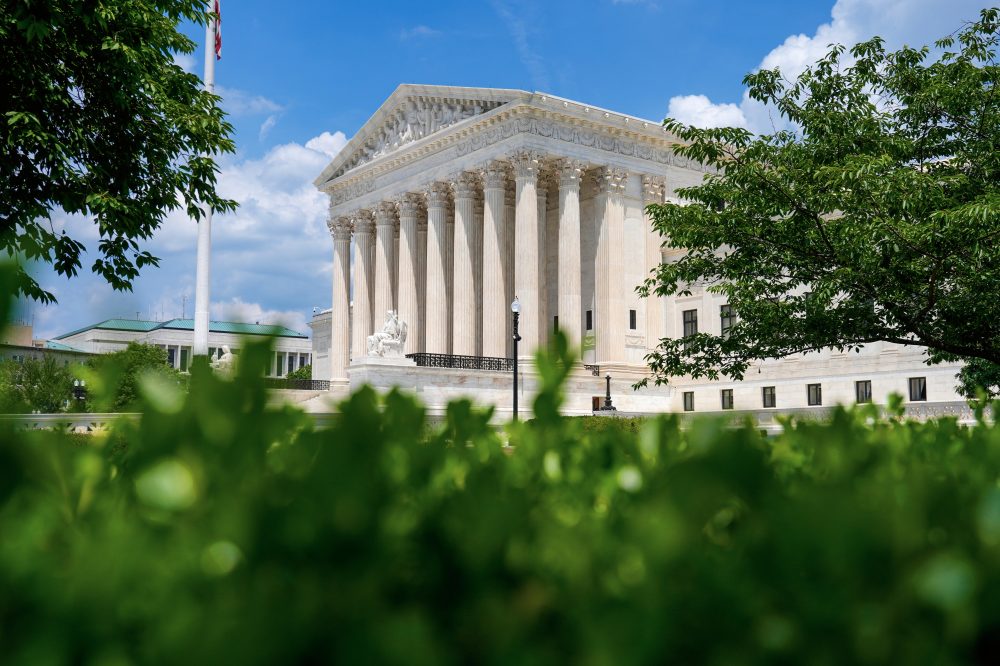

WASHINGTON — The U.S. Supreme Court has turned down an attempt to overhaul the way tax foreclosure auctions work, rejecting arguments that would have required governments to ensure homeowners receive more money when their properties are sold to settle unpaid tax debts.
The court ruled against a broad legal argument put forward by a Michigan family whose home was auctioned off for less than half of what it would have sold for on the open real estate market — all to satisfy a tax debt of just over $2,000. The family contended that their rights were violated because the property could have sold for nearly $200,000 through normal real estate channels.
In a unanimous decision, the justices concluded that property owners have no legal entitlement to receive a “hypothetical fair market value” when their homes are sold at tax auctions. Justice Samuel Alito, writing for the court, explained that tax auctions are intended to be a fast method of recovering unpaid taxes, and that forcing local governments to achieve open-market prices could be so burdensome that they would have to abandon the auction process altogether.
“The traditional rule, under which the taxpayer receives only the difference between the auction sale price and unpaid taxes, is ‘just,’” Alito wrote.
However, the court also made clear that the auction process itself must be carried out fairly. The justices sent the Pung family’s case back to lower courts so that the conduct of Isabella County’s auction process could be reviewed more closely.
Larry Salzman, vice president for litigation at the Pacific Legal Foundation, which represented the family, said the outcome is not a final defeat. “The case isn’t over,” he said. “The Pungs won the right to continue their fight in the lower courts.”
Isabella County had argued that auction prices are inherently lower than open-market sales, partly because buyers at tax auctions are typically required to pay in full with cash rather than financing through a mortgage. The county also warned that requiring foreclosure sales to match open-market prices would effectively eliminate the auction system and make it far more difficult for governments to collect unpaid taxes.
This ruling comes roughly three years after a separate landmark foreclosure decision in which the Supreme Court sided against local governments, finding that counties cannot keep proceeds from tax sales that exceed what the property owner actually owed. That earlier case involved a 94-year-old Minnesota woman whose county kept approximately $40,000 from the sale of her condominium after she failed to pay around $2,300 in property taxes.