Representatives from Google’s operations in Taiwan have traveled to China this month to discuss purchasing advanced cooling equipment for artificial intelligence data centers, according to sources familiar with the meetings.
The tech giant is reportedly negotiating with Envicool, a Shenzhen-based company, along with other Chinese manufacturers to secure liquid cooling systems that circulate water or other fluids around computing equipment. These specialized cooling systems have become essential for AI data centers because the intense computational power generates far more heat than traditional air conditioning can manage.
Sources who requested anonymity because they weren’t authorized to discuss the meetings said Google’s procurement team has already met with Envicool and plans additional meetings with at least one other company. The discussions underscore the tight supply situation for these critical components.
Both Google and Envicool declined to respond to requests for comment about the negotiations.
The talks illustrate how the worldwide push to construct AI infrastructure has created shortages not only for advanced computer chips but also for supporting equipment. They also demonstrate Chinese suppliers’ expanding influence in global data center development, even amid strained U.S.-China relations.
Market analysts predict explosive growth in this sector. JPMorgan forecasts the global AI server liquid cooling market will more than double from $8.9 billion last year to over $17 billion in 2026, fueled by demand from Nvidia and cloud computing companies deploying specialized AI processors.
Envicool, established in 2005 and currently valued at 98 billion yuan ($14 billion), reported a 40% revenue increase during the first three quarters of this year. At a recent industry conference, the company displayed a coolant distribution unit designed specifically to Google’s requirements. These units serve as crucial components that channel coolant to server racks.
Goldman Sachs analysts noted in a recent report that Envicool anticipates quarterly growth in liquid cooling revenue this year, with a project pipeline that may include orders from Google for fifth-generation coolant distribution units and additional components.
The company has announced plans to expand production capacity at a new facility in Guangdong province while continuing to develop operations in Thailand and the United States.
The liquid cooling industry remains highly segmented, with numerous suppliers providing various system components. Chinese manufacturers have steadily increased their market presence, capitalizing on robust domestic demand. The country’s extensive data center construction projects have enabled these companies to scale production and reduce costs.
Other prominent Chinese suppliers in this space include Lingyi iTech and Feilong Auto Components, as well as server manufacturers like Lenovo. In Taiwan, major suppliers serving Google’s Asian operations include Foxconn, Auras, and Delta Asia.
Additional Chinese component manufacturers benefiting from AI data center expansion include optical transceiver producers Innolight and Eoptolink. Chinese companies also control much of the printed circuit board market, with firms such as Victory Giant Technology serving clients including Nvidia and Google.
The International Monetary Fund is expressing worry that Ukraine could lose access to a critical $8.1 billion aid package due to legislative delays in the country’s parliament, according to a Bloomberg News report released Tuesday citing an IMF official with knowledge of the situation.
Ukraine’s lawmakers face a deadline at the end of March to approve legislative changes that would increase taxes on both businesses and households, a requirement under the four-year loan agreement that received approval in February, the report indicated.
The IMF previously provided $1.5 billion to Ukraine in February to support government operations as the nation continues its defense against Russia’s invasion, now entering its fifth year.
Reuters was unable to independently confirm the Bloomberg report, and the IMF has not yet responded to requests for comment on the matter.
According to the anonymous source cited by Bloomberg, IMF staff members under the leadership of mission chief Gavin Gray are scheduled to begin meetings with Ukrainian legislators starting March 18. The source requested anonymity due to the confidential nature of the discussions.
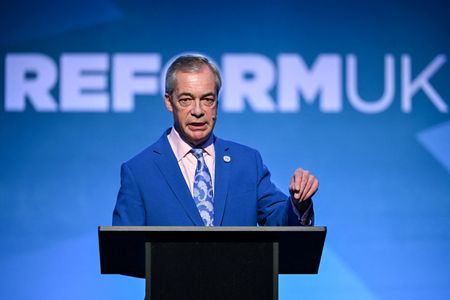
NEWPORT, Wales – Britain’s political landscape could be heading for dramatic transformation as Reform UK leader Nigel Farage positions his populist movement to challenge the country’s established order.
Speaking to Reuters during his party’s policy rollout in Newport, Wales on March 5, the 61-year-old political maverick outlined an ambitious agenda that includes implementing large-scale deportations, abandoning international human rights agreements, and dramatically reducing foreign aid spending.
“The world is changing,” Farage stated, describing his vision for dismantling what he characterizes as a liberal establishment promoting “a progressive, woke ideology” that has caused British citizens to feel embarrassed about their nation.
Reform UK has surged ahead in British opinion surveys, establishing a commanding lead over Prime Minister Keir Starmer’s Labour government. This momentum has strengthened Farage’s argument that his five-year-old party could capture control in the next general election scheduled by 2029.
The former Brexit champion drew parallels between himself and other global figures he considers agents of change, including his ally Donald Trump, Hungary’s Viktor Orban, and Argentina’s Javier Milei, describing them as leaders bringing “very, very big changes” worldwide.
Farage noted a shifting reception during his recent appearance at the World Economic Forum in Davos, contrasting current interest with previous hostility. “I would say a third of the delegates I met there were genuinely interested in who I was, what I was, what I was trying to do,” he explained. “And next year it will be 50%.”
The Reform leader criticized conventional politicians as outdated, specifically targeting the current prime minister. “Keir Starmer is stuck in a mindset that is 15 years out of date,” Farage declared.
However, the party faces significant obstacles in convincing voters of their governing readiness, holding just eight seats in Britain’s 650-member parliament and lacking substantial government experience. Controversial statements about migrant “invasions” and racism allegations that resulted in member expulsions have alienated some potential supporters concerned about increased social tensions.
Adding to these challenges, a former Reform Wales leader received a prison sentence in November for accepting bribes to deliver pro-Russian speeches, actions the party condemned as “reprehensible, treasonous and unforgivable.”
Tim Bale, a politics professor at Queen Mary University London, highlighted this paradox: “Reform’s biggest strength is also its biggest weakness – namely, Nigel Farage. He’s adored by those who are absolutely determined to vote Reform but hated by those determined to vote against it – and disliked and distrusted by far too many who might otherwise be tempted to move in its direction.”
Reform’s expanding policy framework, gathered through Reuters interviews with Farage and ten current and former advisors, encompasses eliminating diversity programs and climate targets, maximizing domestic oil and gas extraction, drastically reducing Britain’s civil service, and establishing the country as a cryptocurrency center.
Critics have characterized this agenda as merely copying Trump administration policies, a comparison Farage disputes. He describes Reform’s approach as grounded in “simple values” centered on “family, community, country.”
Labour officials have questioned the party’s policy coherence, with one stating: “Reform don’t have a proper policy platform. Their ideas don’t make sense.”
Farage’s advisors frequently discuss sweeping away liberal elites who maintain the “rules-based international order.” Alan Mendoza, Reform’s global affairs chief advisor, emphasized this transformation: “You need to be asking: What is your new destination? Because the old, the old world, has gone. It’s over.”
James Orr, the party’s new policy director and Cambridge University philosophy professor who maintains friendship with U.S. Vice-President J.D. Vance, offered insight into Farage’s appeal. “I’m hesitant to use the word philosophy about Nigel,” the 47-year-old explained during an interview at a London private club. “He has instincts, not ideology.”
Orr’s skepticism toward elites developed during the 2016 Brexit referendum period, when he described being the “only out-of-the-closet Brexiteer” among Oxford University academics while finding support from “the porters, the butlers, the maintenance department and the gardeners and the groundsmen.”
Farage’s political influences include figures he encountered in Brussels: Italian comedian Beppe Grillo, who co-founded the anti-establishment 5-Star Movement, and social media strategist Roberto Casaleggio. A longtime advisor noted Farage’s understanding of digital communication: “Grillo weaponised social media and Nigel gets it. For a man who has never really turned on a computer in his life, he really gets it.”
Both major opposition parties dismiss Reform’s policy development capabilities. Conservative leader Kemi Badenoch told a party gathering on March 7: “Reform are not serious people and they are not going to solve any of your problems. Reform have absolutely no idea what they want Britain to look like in the 2030s.”
Reform officials emphasize their American connections as potential governing assets. “With this administration, I happen to know most of the members of cabinet on a personal basis and have for many, many years,” Farage told Reuters.
He expressed alignment with Trump on major issues including global security, recognizing “Iran is the bad actor in the Middle East” and understanding “China wants to take over and dominate our lives,” along with shared positions on border control and domestic energy production.
However, Farage rejected suggestions that he copies Trump’s MAGA movement. “To some extent they copy what we were doing back in the run-up to the referendum,” he countered. “I have always gone for bells and whistles and fireworks and fun, and whilst we believe in what we’re doing, we have a good time as well.”
According to sources familiar with Reform operations, party officials regularly travel to Washington seeking financial support and business backing, particularly targeting British businesses and entrepreneurs who have relocated abroad due to UK tax policies. These efforts helped Reform raise 5.5 million pounds in the fourth quarter of last year, contributing to total 2025 donations of 18 million pounds, with Electoral Commission data showing at least two-thirds coming from overseas donors.
Mendoza argued that Britain must demonstrate value to Washington through substantial defense investment and expanded global engagement to maintain meaningful security partnerships, countering Trump administration perceptions of Britain as “a weak and feeble country.”
Nigel Farage’s Reform UK political movement continues to dominate British polling data ahead of upcoming local elections in May and the next national election scheduled by 2029, surpassing both the ruling Labour government and Conservative opposition with a controversial policy agenda.
The populist party has unveiled a comprehensive platform centered around strict border enforcement, economic restructuring, and cultural nationalism.
BORDER ENFORCEMENT AND MASS REMOVALS
Under the leadership of former Goldman Sachs executive Zia Yusuf, who oversees domestic policy, Reform UK proposes launching a comprehensive five-year initiative called “Operation Restoring Justice” designed to locate, detain and remove undocumented immigrants while discouraging future arrivals through rapid enforcement.
The party intends to establish Secure Immigration Removal Centres within 18 months, creating capacity to remove up to 24,000 undocumented individuals monthly. Reform UK estimates it could remove as many as 600,000 asylum seekers, including families with children, during its first term in office.
Reform UK also plans to withdraw from the European Convention on Human Rights, claiming the Strasbourg-based tribunal prevents Britain from conducting removals. The party would eliminate the Human Rights Act 1998, which incorporates ECHR protections into British law, replacing it with domestic legislation.
The party, which frequently characterizes unauthorized immigration as an “invasion,” proposes establishing a new Deportation Command modeled after U.S. Immigration and Customs Enforcement.
Simultaneously, Reform UK would attract wealthy foreign investors through a “Britannia investor visa” program, offering 10-year residency permits for £250,000 ($334,000) with exemptions from UK taxation on international earnings.
FISCAL RESTRUCTURING AND JOB CUTS
Former Conservative minister Robert Jenrick leads Reform UK’s economic policy development, proposing a restructured financial framework governed by “strict fiscal rules” to control mounting national debt through targeted spending reductions.
The party would terminate benefit payments to foreign nationals, increase immigration health charges, and limit foreign aid expenditures.
Additional savings would come from eliminating 68,500 government positions, reducing welfare distributions, and shifting new public employees from guaranteed pension benefits to contribution-based retirement plans.
While respecting Bank of England autonomy, Reform UK would seek greater business representation on monetary policy committees. The party would delay tax reductions until achieving “fiscal headroom necessary” but promises cuts when financially feasible.
ENERGY EXPANSION AND CLIMATE POLICY REVERSAL
Richard Tice, a former property developer directing business, trade and energy policy, advocates maximizing domestic oil and gas production while rapidly expanding nuclear power generation.
Reform UK would eliminate net-zero carbon targets and zero-emission vehicle requirements. The party supports “buying British” policies for government procurement and would impose “tight quotas and significant tariffs” to prevent Chinese electric vehicle market dominance.
Reform UK opposes Labour’s 2025 Employment Rights Bill, arguing the legislation destroys youth employment by increasing business costs through expanded sick pay, parental leave, and restrictions on dismissal practices.
HOSPITALITY SECTOR SUPPORT
Under the slogan “save our pubs,” Reform UK proposes reducing hospitality VAT to 10% and eliminating employer National Insurance increases. The party would cut beer duty by 10% and gradually eliminate business rates for all public houses.
EDUCATIONAL NATIONALISM AND VOCATIONAL TRAINING
Former Conservative Home Secretary Suella Braverman oversees education policy, advocating for a “patriotic, balanced curriculum” to foster British pride while opposing “woke ideology.” The party supports stricter school discipline and prohibiting social and gender transitioning for students.
At the university level, Braverman wants to redirect young people away from “Mickey Mouse courses” by establishing a target for 50% of youth to enter trades, addressing shortages in nursing, construction and caregiving. She has not identified which academic programs Reform UK considers inadequate.
As equalities policy director, Braverman would eliminate diversity, equity and inclusion requirements, claiming they promote left-wing ideology, and would repeal the Equality Act of 2010, which strengthened anti-discrimination protections. The party would also abolish the government equalities minister position.
CRYPTOCURRENCY ADVANCEMENT
Reform UK proposes introducing a Cryptoassets and Digital Finance Bill to encourage cryptocurrency adoption, including reduced capital gains taxation on digital assets and establishing a bitcoin reserve fund at the Bank of England.
Traffic is being rerouted around a section of Adams Dam Road after a fallen tree became entangled in electrical wires, prompting officials to close the roadway completely.
The road closure affects both lanes of traffic between Brandywine Creek State Park and West Rockland Road while utility crews work to safely remove the tree and address any power line damage.
Motorists are advised to seek alternate routes until the obstruction can be cleared and the roadway reopened to normal traffic flow.
ROME (AP) — Decomposing bodies continue appearing on shorelines. Family members cannot reach loved ones by phone. Migration camps sit empty after overnight departures.
People attempting to reach Europe are disappearing in massive numbers through what experts call “invisible shipwrecks,” while nations responsible for maritime rescue operations are restricting access to crucial information.
The early months of 2026 represent the most lethal period on record for Mediterranean crossings — with 682 confirmed deaths through March 16 — according to data from the United Nations’ International Organization for Migration. However, the actual number of fatalities is likely far greater.
Advocacy organizations face growing challenges in documenting casualties as Italy, Tunisia and Malta have quietly limited access to information regarding migrant rescue operations and maritime disasters along the world’s most dangerous migration corridor. These stories rarely reach major news outlets, partly because the lack of openness makes it difficult for reporters to substantiate claims.
“It’s a strategy of silence,” stated Matteo Villa, a migration and data specialist at the Italian Institute for International Political Studies think tank.
The group Refugees in Libya along with other advocacy organizations have raised urgent concerns since late January, documenting over 1,000 missing persons following Cyclone Harry’s impact on the area. Government officials have neither confirmed nor disputed these figures.
Following the storm, more than 20 decomposed remains appeared on beaches in Italy and Libya, while additional human remains were observed floating at sea.
For relatives of missing migrants, the uncertainty creates unbearable anguish.
“Europe should know that these people who got drowned in the sea have family members, have dreams, have passions,” Josephus Thomas, a Sierra Leone migrant and community organizer in Tunisia’s coastal community of El Amra, explained to AP.
Even the U.N.’s migration division struggles increasingly to confirm reports of deaths in these “invisible shipwrecks” due to diminishing information availability.
During the previous year, at least 1,500 individuals were documented as missing whose circumstances IOM could not substantiate, according to Julia Black, who oversees the organization’s Missing Migrants Project. This problem continues into 2026.
“We started a new secondary data set of what we are calling unverifiable cases because it’s just become so many,” Black explained. This year alone, they have documented over 400 missing cases they cannot confirm.
Numerous humanitarian groups that previously helped bridge information gaps can no longer perform this function due to widespread funding reductions and government-imposed limitations throughout the region.
“We’ve seen the restriction of access for humanitarian actors, which is not right. And now we’re seeing even the restriction of information,” Black noted.
The Associated Press made repeated inquiries to officials in Tunisia, Italy and Malta regarding their policies on sharing migrant rescue information at sea. None provided responses.
Mediterranean authorities have progressively limited migrant-related information over time. However, their silence became particularly notable in late January following Cyclone Harry, which brought intense rainfall, 100 kph (62 mph) winds, and 9-meter-tall (30 feet) waves.
Hundreds of individuals had left Tunisia’s Sfax coastal area and vanished, based on data collected by Refugees in Libya from migrants in Tunisia and their overseas relatives.
The organization admitted difficulty in providing exact numbers “because there is no central system recording departures, losses, or recoveries,” while warning the death count was probably even higher.
“We are looking at boats that never counted how many kids are inside,” David Yambio, founder of Refugees in Libya, told AP.
AP submitted five email requests to Italian coast guard officials seeking details about missing vessels and search operations but received no replies. A phone representative stated the coast guard lacked “any further verified and confirmed information regarding the circumstances.” AP also submitted a Freedom of Information request, which remains pending.
Coast guard officials also refused to discuss a January 24 alert asking ships traveling between Italy’s Lampedusa island and Tunisia to watch for eight distressed small boats carrying approximately 380 people. Italian journalist Sergio Scandura made this alert public.
Only one confirmed survivor exists from boats reported missing during Cyclone Harry. A merchant ship rescued him from the water on January 22. The man informed crew members he had traveled with 50 others, some of whose bodies were visible in rescue footage. His account allowed their deaths to be counted in IOM’s official records.
The ship’s captain reported the survivor was taken to Malta. Maltese Armed Forces did not respond to numerous inquiries about their role or reports they recovered the man and bodies.
Tunisia’s Foreign Ministry and National Guard have not answered multiple information requests via email and telephone.
Frontex, a European Union border surveillance agency, informed AP it identified eight boats with roughly 160 migrants between January 14 and 24 during the cyclone. Six boats were rescued by Italian forces, but the remaining two boats’ fate stays unknown.
On February 8, migrants held prayers and wept during a memorial service in olive groves near Sfax, assuming their relatives could not survive after weeks without contact.
“All of us here are in deep trauma, are in deep agony,” Dr. Ibrahim Fofana, a migrant in Tunisia whose family members disappeared in late January, said in footage shared by Refugees in Libya. He urged authorities to identify bodies that appeared on Italian shores.
Through mid-2024, Tunisian officials routinely published migrant interception numbers at sea, demonstrating to European partners their compliance with a 2023 agreement to reduce migration in return for financial assistance. However, this deal also preceded harsh enforcement actions against migrants on land, resulting in thousands being detained or abandoned in desert areas.
Organizations like the Tunisian Forum for Economic and Social Rights, known by its French initials FTDES, which previously compiled and distributed migrant interception data, were also affected by the crackdown.
In June 2024, Tunisia’s Interior Ministry ceased releasing migrant information, claiming security concerns, said Romdhane Ben Amor, FTDES spokesperson. However, he believes the reasons were political. The statistics contradicted Tunisia’s position that it was not serving as Europe’s border patrol, he explained.
Italy’s information restrictions on migrant rescues predate Tunisia’s policies. Italian coast guard previously published comprehensive monthly migrant rescue data. Monthly reports became quarterly before ending entirely in 2020, Villa noted. In 2022, earlier reports were also deleted from the coast guard’s website.
This year, Italian coast guard has not issued any migration-related press statements despite nearly 5,000 migrants arriving on Italian coasts, according to Italy’s Interior Ministry data.
“It is very clearly a political strategy to repress as much information as possible from the public,” Villa concluded.
Motorists in Sussex County are facing travel delays as utility crews have shut down a key intersection for infrastructure work.
The closure affects Dairy Farm Road at its intersection with both Lewes Georgetown Highway and Beaver Dam Road, creating detours for drivers in the area.
Delaware Department of Transportation officials have not provided an estimated timeline for when the roadway will reopen to normal traffic flow.
Drivers are advised to seek alternate routes and expect additional travel time when navigating through the affected area.
Traffic is being rerouted around a section of Marsh Road after a tree toppled into electrical wires, forcing authorities to close the roadway completely.
The Delaware Department of Transportation reports that both lanes of Marsh Road are blocked between Afton Drive and Hettering Road while crews work to clear the fallen tree and address the downed power lines.
Motorists are advised to find alternate routes while utility workers and road crews address the situation. No timeline has been provided for when the roadway will reopen to traffic.
BUENOS AIRES, Argentina — The wine industry in Argentina is experiencing its most severe downturn in over 15 years, marked by historically low domestic consumption, declining export numbers, and poor crop yields.
Despite these challenging circumstances, wine lovers gathered in Mendoza last week for the 90th annual National Wine Harvest Festival, celebrating with traditional dance performances, live entertainment, and the crowning of a new festival queen in the country’s premier wine-producing region.
Data from the National Institute of Viticulture reveals that Argentines consumed just 15.7 liters (4.1 gallons) of wine per person in 2025 — the lowest figure on record. This represents a dramatic decline from 1970, when annual per-capita consumption reached 90 liters (24 gallons).
The industry has also seen 1,100 vineyards cease operations nationwide, with grape-growing areas shrinking by 3,276 hectares (8,095 acres).
Fabián Ruggieri, who leads the Argentine Wine Corp trade organization, points to economic hardship as a primary factor. He cites a “sharp decline in purchasing power” beginning in 2023, particularly affecting middle- and lower-income households that historically enjoyed wine as part of their daily routine.
Federico Gambetta, who oversees operations at the mid-sized Altos Las Hormigas winery in Mendoza, believes changing consumer habits have worsened the situation.
“People no longer consume wine en masse,” Gambetta explained, emphasizing that today’s buyers want “coherence” and meaningful purpose behind their purchases.
Generational preferences have also shifted significantly. While previous generations preferred high-alcohol, robust wines, younger drinkers now value “approachability, freshness and lightness” — characteristics more commonly found in white wines and rosés.
Despite recognition for his Malbec Los Amantes 2022, which earned 41st place among the world’s top 100 wines, Gambetta has adapted his production methods since 2010, moving away from traditional heavy styles to accommodate evolving tastes.
“Everything has mutated,” Gambetta observed. “If you’re not dynamic, you’re lost.”
Similar trends are emerging in the United States, where older wine enthusiasts are aging out of the market while younger consumers fail to replace them. Research from Silicon Valley Bank shows that millennial and Generation Z drinkers diversify across multiple beverage categories while consuming less alcohol overall, especially those under 29.
International sales provide little consolation for Argentine producers. As the world’s 11th-largest wine exporter, Argentina recorded export volumes of 193 million liters (51 million gallons) in 2025 — representing a 6.8% annual decrease and the smallest volume since 2004, according to institute data.
Ruggieri identifies several obstacles hindering export growth, including financing challenges, expensive logistics, and competitive disadvantages from foreign tariffs. While neighboring Chile benefits from free trade agreements with more than 60 countries — often accessing markets like China with minimal tariffs — Argentine wines face tariff rates between 10% and 20% in most international markets.
Small-scale producers like Gabriel Dvoskin, whose 10-hectare Canopus winery produces roughly 50,000 bottles annually, also contend with inflation pressures.
Dvoskin, who ships to 15 countries with the United States as his primary market, recognizes that Argentina’s elevated production costs and persistent inflation put his wines at a competitive disadvantage.
“Our inflation makes us a bit expensive,” Dvoskin noted. “My equivalent in France has a much lower cost for dry inputs — bottles, corks, etc. — than I do.”
For Gambetta, the ongoing crisis underscores an essential industry principle: maintaining product excellence remains crucial.
“Right now, everything is very delicate, and one wrong step can bankrupt you,” Gambetta warned.
SAN FRANCISCO — Final arguments begin Tuesday in a courtroom battle between Elon Musk and Twitter investors who allege the billionaire deliberately misled them while attempting to abandon his $44 billion acquisition of the social media company in 2022.
The class-action lawsuit was filed in San Francisco just before Musk completed his purchase of Twitter in October 2022, which he subsequently rebranded as X. The deal, valued at $54.20 per share, came six months after his initial agreement to acquire the struggling platform. The purchase amount represents a small fraction of the Tesla chief executive’s current estimated wealth of $839 billion.
Testimony during the trial has largely revolved around Musk’s assertions regarding automated accounts on Twitter. During his court appearance, Musk maintained his longstanding position that the platform harbored significantly more fake and spam profiles than the 5% figure reported in official company documents. He pointed to what he characterized as Twitter’s false representation of bogus account numbers as justification for attempting to withdraw from the acquisition.
Following Musk’s effort to abandon the purchase, Twitter pursued legal action in Delaware courts to compel him to complete the original transaction. Musk ultimately changed direction again and fulfilled his initial commitment just as that litigation was about to proceed to trial.
The issue of automated and fraudulent accounts on Twitter predated Musk’s acquisition negotiations. The company had previously paid $809.5 million in 2021 to resolve allegations that it had inflated growth metrics and monthly user statistics. Twitter had also regularly reported its bot calculations to the Securities and Exchange Commission for years while acknowledging that its estimates could be understated.
However, Musk argued the actual percentage was far higher, potentially reaching 20% based on some expert analysis. He described stating the bot percentage was at least this elevated as equivalent to “saying the grass is green or the sky is blue.”
Former Twitter Chief Financial Officer Ned Segal challenged this assertion during his testimony, stating the actual figure was approximately 1%.
When questioned whether Twitter had ever submitted inaccurate SEC documents regarding spam account numbers, Segal denied any wrongdoing. However, he acknowledged that the company had previously corrected its financial reports after discovering an error in how it calculated daily active users. In 2017, Twitter revealed it had mistakenly inflated its monthly user counts by including users from a third-party application that should have been excluded.
During Monday’s proceedings, both legal teams reviewed jury instructions with the court. Judge Charles R. Breyer observed that numerous potential jurors had expressed unfavorable opinions about Musk. Nevertheless, he emphasized that individuals who are “not universally liked” still merit fair legal proceedings and should not face discriminatory or biased treatment.
The United Arab Emirates temporarily shut down its airspace Tuesday following what military officials described as missile and drone threats originating from Iran, according to the state-run WAM news agency.
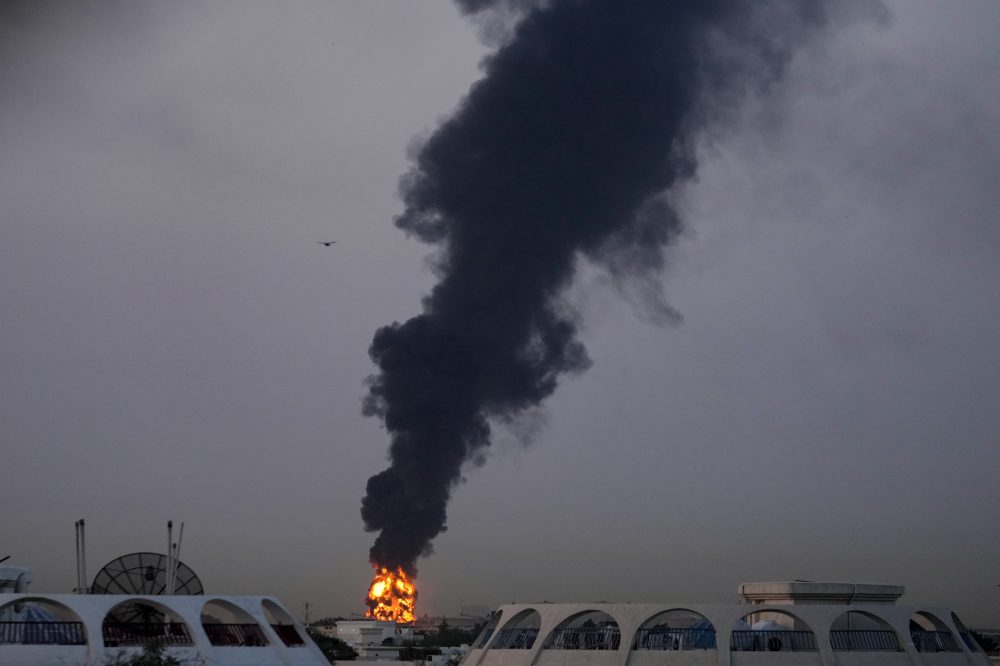
The airspace closure coincided with a drone strike that ignited a blaze at an oil storage facility in Fujairah, an eastern emirate along the Gulf of Oman that has faced repeated attacks. Officials reported no casualties from the incident.
Meanwhile, Israeli forces conducted fresh military operations targeting both Tehran and Beirut on Tuesday, with strikes in the Lebanese capital aimed at Hezbollah fighters, according to Israeli military statements.
The escalating conflict has also reached Qatar, where a fire erupted in an industrial zone Tuesday morning after defense systems intercepted an incoming missile, the interior ministry announced. An Associated Press reporter in the area documented explosions as air defense systems near Doha engaged Iranian projectiles.
Dubai residents in the UAE received missile warning alerts around the same timeframe as the Qatar incident.
On Monday, President Donald Trump indicated that multiple nations have committed to assisting with security operations in the Strait of Hormuz, though he criticized some countries for what he characterized as insufficient cooperation in mutual defense arrangements with the United States.
The ongoing warfare has resulted in significant casualties across the region, with at least 1,300 fatalities reported in Iran, 850 in Lebanon, and 12 in Israel, based on official counts from each nation. U.S. military officials report 13 American service members killed and approximately 200 injured.
BANGKOK (AP) — Asian stock markets displayed uneven performance Tuesday following Monday’s temporary drop in oil costs that helped deliver Wall Street its strongest session since Middle East hostilities commenced.
The relief in crude pricing proved brief, as Brent crude surged almost 3% during early Tuesday trading to reach $103.17 per barrel. American benchmark crude similarly advanced to $96.20 after falling to approximately $93 per barrel the previous day.
American futures contracts retreated, with both S&P 500 and Dow Jones Industrial Average futures declining 0.3%.
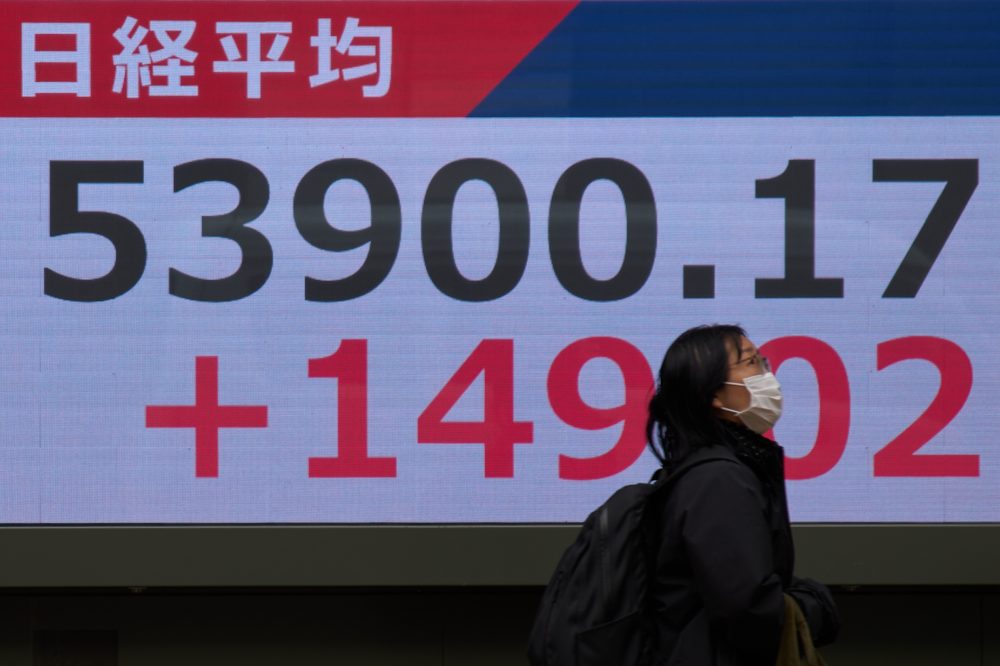
During Asian market hours, Japan’s Nikkei 225 advanced 0.4% to 53,928.25 while South Korea’s Kospi soared 2.4% to 5,683.61.
Hong Kong’s Hang Seng climbed 1% to 26,088.07, whereas Shanghai’s Composite index dipped slightly under 0.1% to 4,083.03.
Australia’s S&P/ASX 200 rose 0.3% to 8,606.60 following the central bank’s decision to raise its key interest rate to 4.1%.
Australia’s Reserve Bank increased the cash rate Tuesday from the 3.85% level established at its February 3 meeting, responding to escalating inflation pressures and referencing elevated fuel costs. This marked Australia’s first rate increase since November 2023.
Taiwan’s Taiex climbed 1.4% while India’s Sensex gained 0.1%.
Monday saw the S&P 500 rise 1% to 6,698.38, marking its largest increase in five weeks. The Dow Jones Industrial Average grew 0.8% to 46,946.41, while the Nasdaq composite surged 1.2% to 22,374.18.
Oil pricing has become the primary market driver, with costs jumping from around $70 before American and Israeli military operations against Iran began. Iran has responded by nearly blocking passage through the strategic Strait of Hormuz, where one-fifth of global oil typically travels from Persian Gulf producers to worldwide customers. This blockade has forced oil producers to reduce output since their crude cannot reach markets.
Financial markets worry that prolonged closure of the strait could remove sufficient oil from global supply to push inflation to economically damaging levels.
“The panic is still there, just dialled down a notch as crude slipped off the boil. Brent easing back toward $100 flipped the tape from bunker mentality to opportunistic risk-taking in a heartbeat,” Stephen Innes of SPI Asset Management said in a commentary.
President Donald Trump demanded over the weekend that other nations affected by the Strait of Hormuz closure “take care of that passage” and pledged his country “will help – A LOT!”
American and Israeli forces continue striking what they characterize as military installations in Iran’s capital, while Israel has intensified operations against Iran-supported fighters in Lebanon. Over one million Lebanese residents have been forced from their homes — approximately 20% of the country’s population — as United Nations peacekeepers report Israeli ground forces gathering near the border.
Questions about the conflict’s extent and timeline have disrupted financial markets since fighting started over two weeks ago, though markets historically recover relatively quickly from military conflicts. Many professional investors anticipate similar recovery this time, provided oil prices don’t remain excessively high for extended periods. This expectation has helped maintain U.S. stock values near record highs.
Rising prices complicate the Federal Reserve’s efforts to balance economic growth and inflation control as President Donald Trump pressures the central bank to reduce interest rates. Market participants don’t anticipate Fed rate cuts at this week’s policy meeting concluding Wednesday.
Nvidia, whose processors drive much of the global artificial intelligence transition, increased 1.6% Monday as CEO Jensen Huang promoted AI potential at a conference, projecting $1 trillion in AI chip demand through 2027. The company provided the strongest boost to S&P 500 performance.
In early Tuesday currency trading, the U.S. dollar strengthened to 159.32 Japanese yen from 159.05 yen. The euro weakened to $1.1496 from $1.1507.
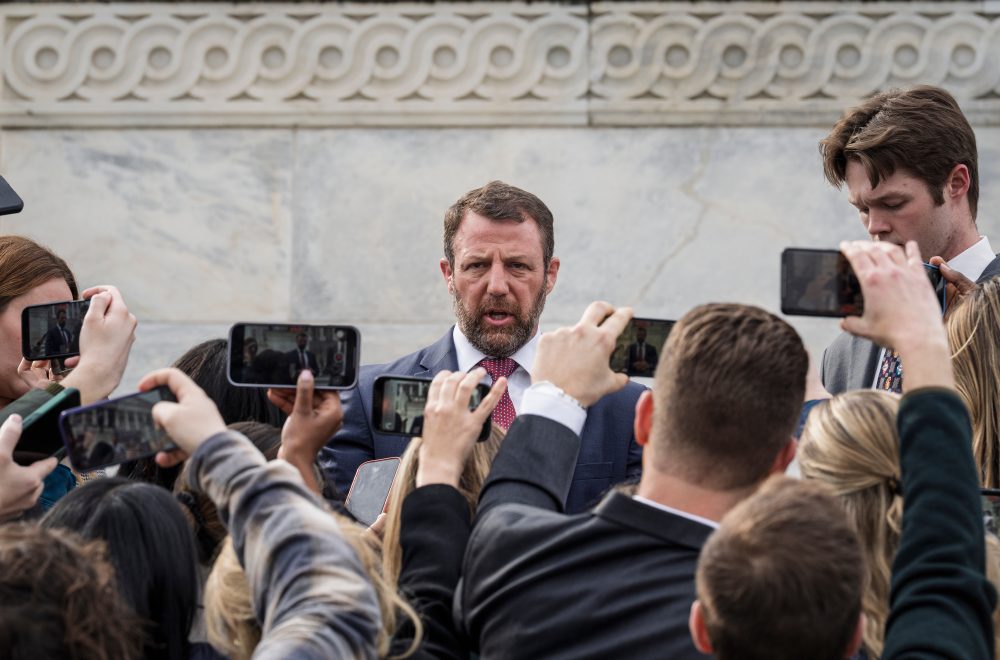
WASHINGTON — Oklahoma Senator Markwayne Mullin faces substantial obstacles awaiting him if confirmed as the nation’s next Homeland Security Secretary, stepping into leadership of a department struggling with multiple crises.
The agency responsible for border security finds itself at a critical juncture. States recovering from natural disasters express frustration over delayed federal aid. Air travelers endure extended security checkpoint waits as a month-long congressional funding dispute affects staffing.
The Oklahoma lawmaker would replace departing Secretary Kristi Noem, who began her tenure with President Trump’s support but whose social media-focused approach to managing the nation’s third-largest federal agency ultimately led to her exit.
Louisiana Republican Senator John Kennedy emphasized the department’s management difficulties, stating: “We’ve got serious management problems at DHS, and we need somebody steering the ship.” Kennedy mentioned telling the Oklahoma senator that a comprehensive departmental review is necessary.
The former mixed martial arts competitor has built a reputation for his confrontational style in the Senate. With over a decade of congressional experience, he enjoys support from colleagues and is anticipated to align with White House policy objectives. His confirmation proceedings are scheduled for Wednesday.
Among Mullin’s primary responsibilities would be overseeing the administration’s signature mass deportation initiative, which has led to increased immigrant arrests, created community anxiety, and raised questions about detention and enforcement methods.
Twelve months of prominent enforcement actions produced significant arrest statistics but also drew criticism regarding officer conduct. Federal law enforcement’s fatal shooting of two demonstrators in Minneapolis prompted demands for immigration agency reforms.
Public support for Trump’s immigration policies has declined since his second term began, with polling showing most Americans believe Trump has “gone too far.” This shifting public sentiment may require Mullin to adjust how agencies under his authority execute deportation efforts.
Since his nomination announcement, Mullin has remained silent about his departmental leadership plans and has avoided media questions.
He appears positioned to serve as a loyal Trump supporter in this new capacity. During his Senate tenure, he has prioritized serving as an unofficial White House advocate rather than focusing on legislative work — maintaining frequent presidential contact and promoting administration messages both publicly and privately on Capitol Hill.
He has consistently championed Immigration and Customs Enforcement personnel and supported last summer’s congressional appropriations that significantly expanded immigration enforcement capabilities.
After the fatal Minneapolis shootings, he defended law enforcement while criticizing local officials for rhetoric he claimed had “emboldened” demonstrators.
John Sandweg, who previously served as acting ICE director under President Obama, explained that Mullin must navigate competing internal administration pressures regarding future enforcement strategies — whether to increase deportations through widespread arrest operations or maintain more focused enforcement targeting individuals with criminal records.
“He’s going to have to reconcile … are we about numbers or about quality?” Sandweg observed. “And I think he’ll face a lot of pressure to also deliver on numbers.”
Mullin also enters ongoing conflicts with congressional Democrats seeking ICE reforms, which have caused the month-long DHS funding interruption.
Senate Democrats demand immigration enforcement modifications before approving additional funding. Their requirements include prohibiting masks for deportation officers, ending roving immigrant patrols, and mandating judicial warrants for home entries. Republicans have rejected these conditions.
The prolonged standoff forces thousands of Homeland Security employees to work without compensation, including airport security personnel. Several airports report extended security lines, raising concerns about screeners calling in sick, seeking additional employment, facing transportation costs, or leaving their positions entirely.
In his prospective role, Mullin is expected to strengthen congressional relationships, where Republicans viewed Noem skeptically. He maintains close ties with House Speaker Mike Johnson of Louisiana and Senate Majority Leader John Thune of South Dakota.
Republicans hope replacing Noem with Mullin will satisfy Democratic demands for departmental funding.
“This is what the Democrats have been clamoring for. They wanted a new change and shake-up in the leadership, and it’s now happening,” Thune stated.
However, Democrats continue demanding comprehensive changes.
“I like Markwayne personally, but I don’t think it’s a question of who is at the helm, it’s a question of law,” said Hawaii Democratic Senator Brian Schatz.
Mullin will also assume control of a Federal Emergency Management Agency experiencing turmoil and uncertainty due to administration efforts to transfer disaster responsibilities to states and Trump’s threats to eliminate the agency.
Under Noem’s leadership, DHS implemented numerous policies pursuing this goal, delaying funding, causing staff departures, and generating lawsuits over the homeland security secretary’s FEMA authority, while the agency continues operating without permanent leadership.
Noem established a policy requiring her personal approval for expenditures exceeding $100,000, which critics argued delayed billions in disaster recovery funding. State emergency officials hope for quick policy reversal and preparedness grant funding release, according to National Emergency Management Association spokesperson Karen Langdon.
More than $2.2 billion in recovery and mitigation projects remain pending DHS approval as of Friday, based on official data obtained by The Associated Press.
The Trump-appointed FEMA Review Council, led by Noem, is months behind schedule releasing anticipated recommendations after the outgoing secretary disagreed with other members about reform extent.
While Mullin’s FEMA positions remain unclear, he has previously questioned federal disaster response effectiveness.
“It’s not FEMA that’s going to respond,” he stated on Fox Business following 2024’s Hurricane Helene. “It’s the local people that are going to respond, and we’re going to be fighting with FEMA to get reimbursed if they ever do reimburse.”
Lawmakers and states generally support reforms streamlining disaster assistance and reducing bureaucratic obstacles, but state and local governments require reliable leadership and preparation time for changes, said Carnegie Endowment for International Peace senior fellow Sarah Labowitz.
“What we want to see going forward is predictability,” Labowitz emphasized. “There’s a lot of work to be done to re-earn trust.”
A major Finnish elevator manufacturer is reportedly pursuing a massive acquisition deal worth nearly $29 billion, according to a Bloomberg News report released Monday.
Kone Oyj has entered negotiations to purchase competitor TK Elevator, which had been making preparations for a public stock offering, sources familiar with the discussions told Bloomberg.
The potential transaction carries a price tag of up to 25 billion euros, equivalent to $28.74 billion when including debt obligations, according to the report.
Bloomberg’s sources indicate that Kone hopes to finalize an agreement within the next few weeks. Meanwhile, TK Elevator’s ownership group continues advancing their public listing preparations while simultaneously engaging in sale discussions.
The elevator company’s current owners, private equity firms Advent International and Cinven, had been developing plans for an initial public offering. However, recent instability in stock markets has made a direct sale appear more attractive, the Bloomberg report noted.
When Reuters reached out for comment, representatives from Cinven, Advent, Kone, and TK Elevator all declined to provide statements.
Last year, Reuters reported that TK Elevator’s ownership was considering the United States as a potential location for their IPO. Industry sources at that time suggested the company would likely receive a valuation exceeding 20 billion euros.
Iranian football officials are working with FIFA to relocate their upcoming World Cup matches away from the United States and into Mexico, citing player safety concerns, according to statements made Monday by Iran’s football federation president Mehdi Taj.
The push for relocation comes after President Donald Trump indicated last week that while Iran could participate in the tournament, it may not be suitable for their team to compete on American soil due to safety considerations.
“When Trump has explicitly stated that he cannot ensure the security of the Iranian national team, we will certainly not travel to America,” Taj stated in a message posted on the Iranian embassy in Mexico’s X social media account.
“We are negotiating with FIFA to hold Iran’s World Cup matches in Mexico,” he added.
FIFA, soccer’s international governing organization, has not yet provided a response to requests for comment regarding the proposed venue changes.
Questions surrounding Iran’s tournament participation have intensified amid ongoing military conflicts involving one of the host nations. The international soccer championship is set to begin June 11 across the United States, Canada, and Mexico, with Iran originally scheduled for two group stage games in Los Angeles and another in Seattle.
Iran’s sports minister indicated last week that Iranian athletes could not compete in the tournament following U.S. and Israeli military strikes against Tehran that resulted in the death of the Islamic Republic’s supreme leader.
Should Iran officially withdraw, it would mark the first such departure in the tournament’s modern history and would require FIFA to quickly identify a replacement team.
The Asian Football Confederation stated Monday that they have not been formally notified of any Iranian withdrawal from the competition.
“At the end of the day, it’s the federation who should decide if they’re playing, and as of today, the federation has told us that they are going to the World Cup,” AFC General Secretary Windsor John explained to reporters in Kuala Lumpur.
A stretch of Peterkins Road has been shut down to all traffic after trees and electrical wires came down across the roadway, according to Delaware Department of Transportation officials.
The road closure affects the section between Evergreen Drive and Haven Drive, forcing motorists to find alternate routes until cleanup crews can safely remove the debris.
DelDOT has not provided an estimated time for when the roadway will reopen to normal traffic flow. Drivers are advised to avoid the area and use alternative routes until further notice.
BANGKOK (AP) — The ongoing conflict with Iran is creating worldwide energy shortages, compelling nations to make difficult decisions about where to reduce consumption or absorb rising costs while managing limited fuel supplies.
Asian countries face the greatest impact due to their heavy dependence on imported energy, with much of it transported through the currently blocked Strait of Hormuz. This critical waterway near Iran serves as the primary shipping route for one-fifth of the world’s crude oil and liquified natural gas trade.
Regional leaders are rapidly implementing adjustments — calculating petroleum stockpiles, reducing energy consumption, vying for available supplies, and attempting to moderate pricing. These measures involve challenging compromises: reducing electricity usage may harm business operations, while prioritizing household cooking gas can damage restaurants and other commercial enterprises.
“Even relatively modest constraints on energy use can create a drag on industrial activity,” said Linh Nguyen, with the consultancy Control Risks. She pointed to Vietnam’s energy-intensive export industries and warned that higher fuel costs or conservation measures could quickly raise production costs or slow factory output.
Experts caution that these same difficult decisions may soon extend beyond Asia to fuel-dependent economies in Africa and other regions as nations compete for limited resources.
“The situation is common across the board,” said Putra Adhiguna of the Jakarta-based Energy Shift Institute. “There is no easy decision for the short term.”
Despite strategic reserve releases, petroleum prices continue climbing, prompting Southeast Asian nations to extend their diminishing energy stockpiles by encouraging homes, companies, and government departments to dramatically reduce electricity consumption.
Philippine authorities have implemented a four-day work schedule to decrease fuel usage and lower government energy consumption by 20 percent. Offices have received instructions to power down computers during lunch periods and maintain air conditioning temperatures at no less than 24°C (75°F). Vietnam has encouraged remote work arrangements, while Thailand’s prime minister has requested officials use stairways rather than elevators.
However, these measures carry significant consequences.
Dieu Linh, a vegetable seller in Hanoi, said even a 10% rise in fuel costs will eat into her thin margins. “If my costs go up by even a little, the profit is almost gone,” she said.
Simultaneously, regional nations are competing for scarce supplies at elevated prices.
Vietnam has requested that refineries and fuel distributors maintain high inventory levels, while Thailand is extending its approximately two-month petroleum reserve and exploring alternative domestic energy options. Both countries are implementing price supports to protect households from increasing costs.
Thailand suspended exports to preserve its limited stockpiles, contributing to shortages that have forced nearly one-third of Cambodia’s approximately 6,000 gas stations to close.
According to the U.S. Energy Information Administration, over 80 percent of the liquefied natural gas that traveled through the Strait of Hormuz in 2024 was destined for Asia, with significant portions going to Japan, South Korea, and Taiwan.
Japan’s primary defense mechanism is its extensive strategic petroleum stockpile, containing approximately 254 days’ worth of supplies. This reserve system was established following the disruptions from the 1970s Arab oil crisis.
Japan initiated the release of roughly 45 days’ worth of petroleum reserves this week to prevent fuel price spikes as crude oil imports decrease. The country previously released reserves following Russia’s Ukraine invasion in 2022.
This action will help maintain operations for Japan’s energy-dependent industries, including automotive, steel production, and heavy machinery sectors. Corporations such as Toyota, Mitsubishi, and Nippon Steel require consistent fuel availability.
South Korea intends to release 22.46 million barrels from its stockpiles as part of the International Energy Agency’s largest-ever coordinated reserve withdrawal.
However, experts indicate that accessing reserves represents only a temporary solution.
This will provide refineries “some buffer” against disruptions. But this does not increase a country’s overall supply unless it can buy oil released by other nations, said Muyu Xu of the energy consultancy Kpler.
Should the crisis persist, crude oil shortages may return. The releases might sustain refinery operations for several additional weeks, but companies may need to reduce production if disruptions continue, she explained.
“The fundamental difficulties will not be solved by this action,” said Mika Ohbayashi of the Renewable Energy Institute in Japan, adding that renewable energy was a long-term solution but the Japanese government was uninterested.
Japanese Prime Minister Sanae Takaichi is scheduled to meet with U.S. President Donald Trump later this month, and Japan’s plans to purchase additional American LNG and restart nuclear facilities are expected to be discussed, according to analysts.
India is giving priority to household requirements for its restricted supply of liquefied petroleum gas or LPG, which powers cooking appliances and vehicles.
The country has absorbed more than half of the increase driven by global market disruptions under a federal scheme to keep prices low for poor households, said Indian Petroleum Minister Hardeep Singh Puri.
However, shortages are already affecting restaurants and hotels in the world’s second-largest LPG importing nation, as dining establishments reduce operating hours, temporarily close, or remove slow-cooked curries and deep-fried items from their offerings.
The magnitude of demand in India, the world’s most populous country, restricts how long it can maintain price controls to protect consumers. The situation may deteriorate within a week if government subsidies expire, said Duttatreya Das of the think tank Ember, noting gas supplies were the most immediate concern.
“You can’t store a lot of gas,” Das said, adding that fertilizer factories and small industries will feel the pinch first.
Indonesia, home to 287 million residents and Southeast Asia’s largest population, also confronts difficult decisions.
While government officials have pledged to maintain fuel pricing throughout Eid al-Fitr, the Muslim celebration concluding the Ramadan fasting period, Adhiguna of the Energy Shift Institute said there is “no clarity about what will happen after that,” adding that this implies fuel prices could increase.
Thailand also faces a challenging situation. Ending subsidies that maintain low prices would cause living expenses to surge and potentially trigger panic if reserves decline further, said Areeporn Asawinpongphan of the Thailand Development Research Institute.
Should the conflict persist, Indonesia must choose between maintaining subsidies that protect consumers or reducing expenditures to meet budget constraints. However, this approach could increase inflation. Given Indonesia’s limited 20-day reserve, Adhiguna warned that price changes in Indonesia’s fuel market will occur rapidly.
“It will eventually reach a breaking point,” Adhiguna said.
The European Union is intensifying its long-term renewable energy approach to reduce consumption and control prices across the 27-member alliance, which have increased significantly since the conflict began. Officials convened in Brussels this week to explore methods for enhancing the region’s energy security.
“We are looking at how we can reduce people’s energy bills,” said European Commissioner for Energy Dan Jørgensen. “We are working on immediate measures to help businesses and our most vulnerable citizens.”
Amber Walcker unleashed a powerful cry that echoed across the Puget Sound waters, joining approximately twelve other participants in West Seattle as they released their built-up tensions into the evening air.
This marked only the beginning. Two additional group sessions followed, each building in duration and intensity, helping Walcker process the emotional weight of her recent unemployment. The stress of parenting two small children seemed to melt away as her voice mixed with the sounds of nearby waves, leaving her with a profound sense of peace.
“I had such a sense of feeling grounded. In that same moment, all your senses are heightened,” Walcker said. “From then on out, I was hooked.”
That September gathering launched Seattle’s branch of Scream Club, which has become part of a nationwide movement featuring 17 locations that have emerged within the past year across cities including Austin, Texas; Chattanooga, Tennessee; Atlanta; Detroit; and San Juan, Puerto Rico.
The original Chicago location emerged from relationship challenges experienced by its creators.
Founders Manny Hernandez and Elena Soboleva had recently begun living together following eighteen months of maintaining a long-distance relationship. During a lakefront walk along Lake Michigan, Hernandez, who works as a breathwork practitioner and men’s coach, proposed they release their relationship tensions by shouting from a pier’s edge.
After requesting permission from nearby bystanders, the entire group decided to participate, their collective voices carrying their emotions across the water.
“After we did it, some people were crying, including Elena,” Hernandez said. “That’s when we looked at each other and said, ‘This is probably something that we should start.’”
Chapter meetings vary between weekly and monthly schedules depending on location, but consistently occur in parks or waterfront areas to reduce noise complaints. Each session starts with members documenting their concerns on environmentally-friendly paper.
Participants then engage in coordinated breathing exercises and voice preparation activities, including humming techniques combined with controlled breathing patterns.
“You can really strain your throat if you just do it,” said Soboleva, a personal brand and business mentor. “So it’s gradual, breathing from your diaphragm and carefully starting off slow and warming up to louder and louder.”
The group performs three synchronized screaming rounds with breathing breaks between each session, while discarding their written concerns into the water.
“That third scream, you have to feel it in your body,” said Walcker, who established the club’s Seattle chapter. “Get down, be in a primal stance, whatever it feels like to you in that moment.”
These Scream Club methods draw from primal scream therapy concepts developed by Los Angeles psychoanalyst Arthur Janov during the 1960s. Janov theorized that early life trauma generated adult psychological issues, which could be addressed by accessing painful emotions and expressing them through screaming and tears under professional guidance.
Subsequent decades of research have not validated scream therapy as an effective mental health treatment, according to Ashwini Nadkarni, a psychiatry professor at Harvard Medical School.
However, the practice offers excellent stress reduction benefits.
Nadkarni explained that screaming stimulates brain circuits within the amygdala and hippocampus — “the oldest part of our brain” responsible for managing stress and emotions. The act also triggers the sympathetic nervous system’s fight-or-flight response. When screaming concludes, the parasympathetic system activates, instructing the body to enter rest mode.
“It’s the same cycle of regulation that happens when you exercise,” she said. “Your heart’s racing, you get short of breath, and then you relax and you feel that calm.”
Beyond physical benefits, the communal aspect of gathering with others provides additional advantages.
“The idea of people getting together to enhance community in ways that help them blow off some steam is incredible,” she said.
Hernandez noted that while publicly discussing personal motivations isn’t required, many participants stay afterward to discuss their struggles. Chicago chapter attendees have included individuals grieving recent losses, someone facing cancer for a second time, and many dealing with relationship difficulties.
Walcker observed that some participants even attend to express joy through screaming. Regardless of motivation, the Seattle group typically gathers before sunset to observe the sun setting over the water following their sessions.
“It’s kind of like putting everything to rest,” she said. “And that everyone knows that that’s the end of that, and we can all start fresh.”
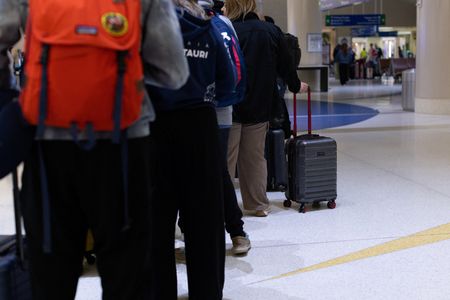
Air travelers encountered widespread disruptions Tuesday as the aftermath of severe winter weather continued to wreak havoc on flight schedules nationwide, with airport security delays made worse by an ongoing partial government shutdown affecting federal workers.
The travel chaos comes during peak season for air travel, with spring break vacationers and college basketball fans heading to March Madness tournaments filling airports just as the February 14th government shutdown has created staffing challenges at security checkpoints.
Flight tracking data from FlightAware showed more than 550 domestic flights were cancelled by early Tuesday, with an additional 460 experiencing delays throughout the day.
Major transportation hubs including New York, Chicago and Atlanta saw significant disruptions Monday as a powerful storm system brought heavy snowfall to the Midwest before moving toward the Atlantic coast, prompting National Weather Service warnings about dangerous winds and possible tornadoes.
Colorado resident Kelly Price found herself sleeping on the airport floor in Orlando after her Sunday evening departure was cancelled without notice until Monday morning. “By that time the only place for us to sleep was the airport floor. So we’re all tired and frustrated,” Price explained, noting her family couldn’t secure another flight until Tuesday afternoon.
Monday’s nationwide flight disruptions hit hardest at Chicago O’Hare with approximately 600 cancellations, Atlanta’s Hartsfield-Jackson International with over 470, and New York’s LaGuardia Airport with more than 450 cancelled departures, FlightAware data revealed.
Federal Aviation Administration officials implemented ground stops at both Hartsfield-Jackson and Charlotte Douglas International Airport due to dangerous weather conditions, while imposing ground delays at JFK and Newark Liberty International Airport.
Tampa resident Danielle Cash became stranded in St. Louis Sunday while returning from a Las Vegas weekend trip, forcing her to spend hundreds of extra dollars on hotel accommodations in snowy conditions she hadn’t prepared for. “It was 80 degrees in Tampa when I left and then going to Vegas,” Cash noted. “And it was 90 degrees in the desert.” She managed to book a connecting flight through Tennessee that should get her home by Tuesday afternoon.
The weather-related travel problems coincided with Transportation Security Administration workers missing their first complete paycheck during the weekend due to the current partial government shutdown targeting the Department of Homeland Security, TSA’s parent agency.
Congressional Democrats have indicated Homeland Security funding will remain blocked until new limitations are imposed on federal immigration enforcement following the deadly shootings of Alex Pretti and Renee Good in Minneapolis this year.
This marks the third government shutdown in twelve months to leave TSA employees without pay temporarily, though workers will receive retroactive compensation once operations resume.
Airport officials across the country have documented extended security checkpoint wait times as staffing shortages grow worse, with TSA workers taking additional employment, unable to afford transportation to work, or leaving their positions entirely. Department of Homeland Security officials report more than 300 TSA agents have resigned since the shutdown began.
Union representatives for TSA workers gathered Monday outside Atlanta’s Hartsfield-Jackson International Airport to warn travelers about potentially longer security delays as the shutdown persists, though they emphasized many officers continue working despite increasing financial hardship.
Aaron Barker, representing the American Federation of Government Employees locally, described how TSA employees “are coping with eviction notices, vehicle repossessions, empty refrigerators and overdrawn bank accounts.” Demonstrators behind him displayed signs reading “We want a paycheck, not a rain check.”
New Orleans’ Louis Armstrong International Airport advised passengers Sunday and Monday to arrive three hours before departure “due to impacts from the federal government’s partial shutdown,” while Austin’s airport shared social media footage from 5:30 a.m. showing security lines extending outside onto sidewalks.
Atlanta traveler Mel Stewart and his spouse arrived four hours ahead of their scheduled departure to account for extended TSA processing times. “I think it’s being politicized way too much — way too much,” Stewart commented Monday regarding the shutdown. “And these people are working. They work hard, and for TSA people not to get paid, that’s silly.”
READING, Mass. — When St. Patrick’s Day approached, residents of a Massachusetts neighborhood got an unexpected surprise: a genuine Irish pub materialized overnight in someone’s driveway, complete with flowing Guinness and live music.
The mobile tavern, called “The Wee Irish Pub,” represents the creative vision of brothers Matt and Craig Taylor, who operate Tiny Pubs — a unique enterprise that delivers authentic Irish drinking establishments on wheels to celebrations throughout New England.
These portable pubs feature genuine antique signage, salvaged church pews for seating, electric fireplaces, and bars constructed from the front section of an 1864 piano, all designed to capture the authentic atmosphere of traditional Irish taverns while fitting perfectly into residential driveways.
“It’s really just a time to forget about whatever’s going on in the world,” explained Mark Cote, who welcomed the pub to his Andover driveway for a recent Friday celebration. “That’s what pubs are supposed to be — for people coming together and having fun.”
Cote’s annual holiday gathering brought together approximately 20 guests from five neighboring families whose children had grown up as friends, all cramming into the roughly 20-foot-long mobile venue that successfully recreated the feeling of an authentic neighborhood tavern.
The concept originated during COVID-19 restrictions, when the Taylor brothers — both retired from corporate finance careers — found themselves longing for their beloved Irish pub experiences.
Their initial prototype was constructed in Matt Taylor’s Reading driveway, located 12 miles north of Boston.
“When we were building the pub in this neighborhood, neighbors thought a pub was going to be living here full time,” he recalled. “We had to kind of settle them down a little bit.”
The brothers worked frantically until approximately 1 a.m. before their inaugural rental. Matt admitted to concerns about potential window damage during highway transport, but the maiden voyage proceeded without incident.
What started as a pandemic hobby has evolved into a successful enterprise featuring four different bars, including two Irish-themed establishments, with bookings filling most weekends year-round.
The brothers prioritized authenticity over novelty in their designs, aiming for genuine pub atmosphere rather than stereotypical party decorations.
“We have Irish friends who told us, ‘You better not have leprechauns and stuff in there,’” Craig Taylor explained. “So we said, ‘No — it’s going to be authentic.’”
Their research included visits to numerous Irish establishments across New England during the design phase, ultimately selecting traditional color schemes featuring jasper green and Irish cream.
Every interior element carries significance, from the piano-panel bar to church pews rescued from a local congregation for guest seating.
Horseshoes from an Ipswich farm hang above the entrance for good fortune: pointing downward as guests arrive and upward when they depart.
A hymn rack displays a book containing Irish family names where visitors can mark their heritage, often leaving dollar bills on relevant pages, which frequently sparks discussions about ancestral connections.
Imported Scampi Fries — a genuine Irish pub snack — are available, alongside a bulletin board displaying patches from police and fire departments, reflecting the tradition of first responder gathering places common in authentic pubs.
Craig Taylor noted that guest reactions serve as validation of their authenticity efforts, particularly when visitors begin recognizing familiar elements — the Scampi Fries, family surnames, or beloved songs — transforming the experience from novelty to personal connection.
Guinness has contracted the Taylor brothers’ establishments for extended periods. Political figures, including a state senator, have utilized them during South Boston’s St. Patrick’s Day parade. The venues have even served memorial celebrations following funeral services.
Jarred Guthrie of Swampscott has become a repeat customer, renting the original pub annually for his family’s established St. Patrick’s Day tradition.
Guthrie’s celebration attracts approximately 125 attendees, featuring an Irish band performing inside the house while guests circulate between indoor rooms, the mobile pub, and the waterfront yard overlooking the ocean.
Visitors crowd inside to take bartending turns, share stories, and spontaneously burst into song — often traditional Irish melodies or Gaelic verses that Guthrie says rarely surface outside family gatherings.
“People feel emboldened,” he observed. “There’s a lot of singing that happens in that pub. It’s a place where people naturally come together.”
Prior to each event, the brothers customize the space with personalized posters frequently incorporating family crests that designate the host as the pub’s temporary “proprietor.”
“It’s a special thing for a lot of people to be able to come into an authentic Irish pub,” Matt Taylor reflected. “Maybe they’re not able to get back to the old country, so it’s meaningful to them.”
Celebrations continue regardless of weather conditions — rain, heat, or snow. Each establishment includes both heating and air conditioning systems for year-round comfort.
The Taylors ensure everything is perfectly prepared — dimmed lighting, background music, functioning taps — before permitting guests to enter their miniature establishment.
Craig Taylor described first-time visitor reactions: “it’s like Christmas morning.”
He explained that initial moment often feels like transportation to another place, connected to memories of family heritage, tradition, and Ireland itself.
“People say you’re like Santa Claus,” Craig Taylor noted. “You’re delivering joy every day.”
When celebrations wind down, the brothers avoid rushing removal of their establishment.
“We never want to kick anybody out of an Irish pub,” Matt Taylor emphasized.
Rather than late-night pickup, they return the following morning.
Craig Taylor revealed that when he inquires about party duration, hosts typically provide identical responses: “Like, three in the morning.”
When the brothers arrive for morning retrieval, “there’s sometimes people sleeping on the pew,” he joked.
WASHINGTON — A national advocacy organization plans to invest $50 million supporting Democratic candidates who champion child care and elder care affordability, connecting caregiving expenses to broader economic concerns facing American families.
The Campaign for a Family Friendly Economy, established ten years ago, seeks to elevate caregiving issues as key election topics. This initiative launches amid escalating child care expenses and lengthening waitlists for federal assistance programs that help low-income working families.
According to Sondra Goldschein, who leads the campaign and its political action committee, caregiving costs represent a crucial affordability challenge, particularly since child care expenses now surpass housing costs for many families. She highlighted additional strain on middle-aged Americans simultaneously caring for children and aging parents.
“When child care can cost more than your rent or a mortgage, or you have to sacrifice a paycheck in order to be able to take care of a loved one,” Goldschein explained, that influences voting decisions. “Each election cycle, we see candidates recognizing that more and more.”
Goldschein believes this message will connect with families confronting multiple rising expenses, including increased fuel costs linked to Middle Eastern conflicts that concern many voters.
The organization intends to concentrate Democratic support in Senate contests across North Carolina, Georgia, Michigan, Maine and Ohio, plus House races throughout Iowa and Pennsylvania. Volunteers will also engage directly with voters about caregiving challenges.
The National Republican Congressional Committee has not yet provided comment on this initiative.
While Republicans increasingly recognize child care as vital for workforce expansion, their proposals typically offer more modest approaches than Democratic alternatives. Last year, President Donald Trump’s One Big Beautiful Bill expanded child care tax credit eligibility to approximately 4 million additional families. The legislation also boosted military family child care assistance and employer tax incentives for workplace child care services.
Prior to 2020, political candidates seldom addressed child care concerns. However, the pandemic exposed both the vulnerability and essential nature of child care services. Early childhood programs faced pressure to remain operational so frontline workers, particularly healthcare professionals, could continue working.
Former President Joe Biden successfully secured $39 billion in child care assistance through Congress in 2021, enabling states to serve more families and increase child care worker compensation. Biden later proposed establishing universal prekindergarten nationwide and dramatically expanding child care subsidies to limit family costs to 7% of household income. However, this broader proposal failed narrowly in Congress. Following the expiration of pandemic assistance, families now face renewed financial pressure from rising costs.
Currently, multiple candidates have made child care affordability central to their campaigns. New York Mayor Zohran Mamdani, a democratic socialist elected on promises to improve middle-class affordability, campaigned on universal child care. Democratic Governors Mikie Sherrill of New Jersey and Abigail Spanberger of Virginia won office after promising expanded child care subsidies.
This election cycle features candidates promoting universal child care commitments, including Democrats Janeese Lewis George, seeking Washington D.C. mayor, and Francesca Hong, pursuing Iowa’s governorship. New York Governor Kathy Hochul, facing reelection, has pledged support for Mamdani’s initiatives and eventual statewide universal child care expansion.
Neither the White House nor the Department of Health and Human Services, which manages federal child care programs, responded to comment requests. During his 2024 campaign address to the Economic Club of New York, Trump suggested increased foreign tariffs would address child care expenses. This proposal has not yet been implemented.
Trump’s current administration has primarily focused on combating fraud, following viral allegations that Somali-operated child care centers in Minneapolis fraudulently billed the government for unserved children.
Although child care subsidy fraud prosecutions have occurred, state inspectors debunked the Minneapolis video’s main accusations. Nevertheless, the Trump administration attempted freezing child care funding for Minnesota and five other Democratic-controlled states until courts mandated the funding’s release.
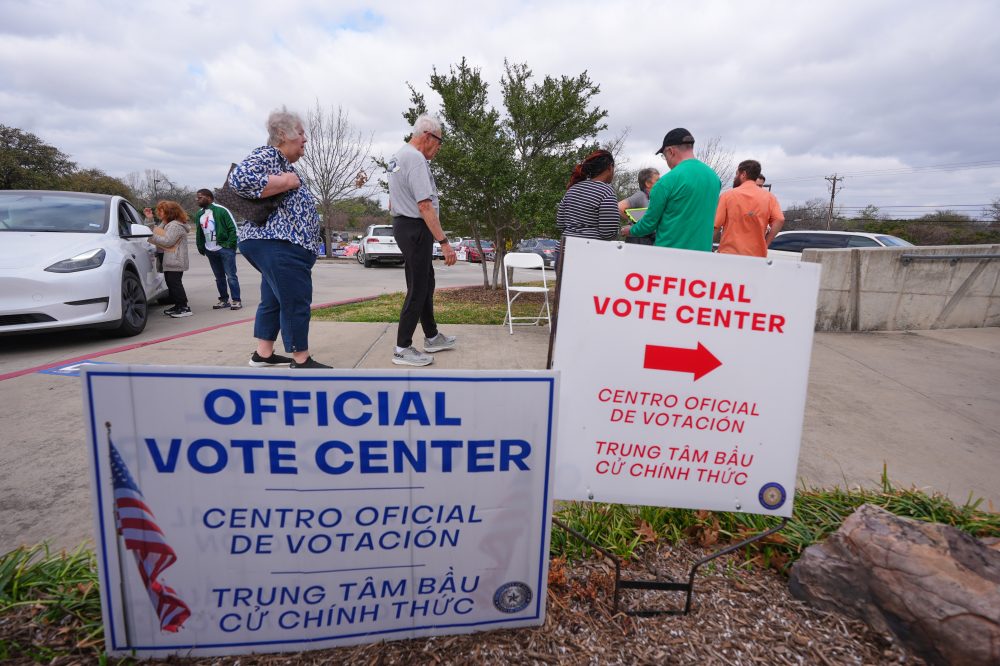
WASHINGTON — A controversial measure demanding citizenship documentation from new voter registrants has emerged as a priority for President Donald Trump, who believes the legislation will “guarantee the midterms” for Republicans this November.
The Senate plans to consider the measure as soon as Tuesday, establishing new mandates for citizenship verification during registration and identification requirements at voting locations. These provisions represent part of Trump’s broader push for increased federal oversight of electoral processes.
While existing federal statutes already mandate U.S. citizenship for participation in national elections, this proposed legislation would establish stringent new documentation standards for voters to verify their eligibility.
Democratic lawmakers stand united in opposition to the measure and are anticipated to prevent its advancement through the Senate. They argue the legislation would prevent millions of eligible American voters from participating in elections if they lack readily accessible birth certificates or similar documentation.
Trump has urged Senate Majority Leader John Thune to advance the bill despite slim chances of success, even suggesting Republicans should eliminate the filibuster or pursue alternative methods for passage. Thune has consistently stated insufficient Senate support exists for such tactics.
Republican leadership instead plans extended floor debate lasting a week or longer, attempting to satisfy Trump while forcing Democrats to justify their opposition.
“The bill would require Americans to demonstrate that they’re eligible to vote,” Thune stated last week. “And that they are who they say they are.”
The Safeguard American Voter Eligibility, or SAVE America Act, would mandate Americans prove citizenship during voter registration, primarily through valid U.S. passports or birth certificates.
Standard driver’s licenses from most states would prove insufficient. The legislation specifies identification must comply with REAL ID standards and indicate U.S. citizenship — requirements few state licenses currently meet.
Alternative documentation includes passports or birth certificates. Military personnel could present military identification alongside service records showing birthplace.
Most registration applicants would need to submit documents personally at election offices, including mail-in voters. Opposition advocacy organizations warn the legislation would devastate voter registration efforts before this year’s elections.
The measure would establish new penalties for election officials who register applicants lacking documentary citizenship proof. Critics say this provision could intimidate workers into rejecting legitimate applicants while discouraging polling place volunteers. The bill would also permit private citizens to sue election officials under certain circumstances.
Although federal law mandates voter citizenship, no current nationwide requirement exists for identification at polling places. Presently, 36 states maintain voter identification laws of varying strictness, according to the National Conference of State Legislatures.
The legislation would mandate valid identification from voters in all states, with mail-in voters required to submit photocopies. Overseas military personnel and certain qualified disabled individuals would receive exemptions.
Republican advocates frequently emphasize this provision when promoting the bill’s passage. Thune argued last week that requiring identification to obtain library cards makes showing ID “not too much to ask voters” for federal elections.
The measure would require states to share voter information with the Department of Homeland Security for citizenship verification of registered voters — providing unprecedented federal access to state voter databases. Many states are already engaged in legal battles with the Trump administration over voter information demands.
Proponents of state-federal information sharing say it would enable DHS to cross-reference state data with immigration status verification databases.
However, Senate Democratic leader Chuck Schumer predicted that providing names to federal authorities would allow DHS to “purge tens of millions of people from the voter rolls.”
Senate Republicans expect to propose floor amendments during their extended debate supporting the bill. Trump has requested additional provisions, including mail-in ballot prohibitions used by numerous states.
Trump has consistently criticized mail-in voting, making it central to his unfounded fraud allegations regarding the 2020 election he lost to Democrat Joe Biden. However, voting organizations and lawmakers from both parties have traditionally supported the practice for increasing voter accessibility.
The president also seeks two unrelated transgender rights provisions — banning individuals born male from women’s sports participation and blocking sex reassignment surgeries for certain minors.
If enacted, the SAVE America Act’s new registration and polling identification requirements would take immediate effect. Trump claims Republican necessity for midterm election victories — despite the party’s 2024 success in capturing Congress and the White House without this legislation.
With primary elections beginning next month, critics argue implementation would prove difficult and expensive for state election officials while potentially confusing voters.
Democratic elections attorney Marc Elias said he isn’t “aware of any state that currently requires what this would require.”
“If it’s passed tomorrow, the day after states would need to implement this,” Elias said.
The Trump administration is escalating its campaign to influence news coverage of Middle Eastern conflicts, using criticism, warnings, and regulatory threats to pressure journalists into reporting stories according to the White House’s preferred narrative.
President Trump has expressed anger on social platforms about unfavorable coverage and confronted reporters during flights. Meanwhile, the nation’s chief media regulator has cautioned television stations they could face license revocation for broadcasting what he terms ‘fake news.’ Both Trump and Defense Secretary Pete Hegseth have challenged the patriotic credentials of media organizations based on their reporting practices.
The president has criticized war reporting through various channels. On social media, he claimed news organizations overstated damage to aircraft hit during an Iranian attack at a Saudi Arabian airport. He also criticized ‘Corrupt Media Outlets’ for believing artificial intelligence-generated misinformation from Iran and accused the press of reluctance to highlight U.S. military successes.
While friction between presidential administrations and journalists is typical due to the media’s oversight function in democracy, recent events demonstrate an unusual antagonism toward being questioned that potentially conflicts with First Amendment protections.
During a Sunday evening flight from Florida to Washington aboard Air Force One, Trump criticized ABC News reporter Mariam Khan’s inquiry about a fundraising message featuring imagery from a military ceremony honoring fallen service members.
When Khan identified herself as representing ABC, Trump responded: ‘I think it’s maybe the most corrupt news organization on the planet. I think they’re terrible.’
FCC Chairman Brendan Carr referenced Trump’s social media post about the Saudi Arabia incident while cautioning news organizations about their reporting standards.
‘Broadcasters that are running hoaxes and news distortions — also known as fake news — have a chance now to correct course before their license renewals come up,’ Carr posted on X during the weekend. ‘The law is clear. Broadcasters must operate in the public interest, and they will lose their license if they do not.’
Court precedents spanning decades have typically favored press freedom over government content regulation attempts. However, Carr argued that reforms would benefit traditional media companies given widespread public distrust.
Carr’s regulatory power remains constrained. The FCC lacks direct oversight of major networks CBS, NBC, and ABC, though it can deny license renewals for individual affiliate stations. Cable channels CNN, Fox News Channel, and MSNBC operate outside FCC jurisdiction. Trump’s message that Carr shared specifically named The New York Times and The Wall Street Journal, both beyond FCC authority as print publications.
Penalizing television affiliates for war reporting that Carr opposes would likely violate legal standards, First Amendment lawyer Floyd Abrams explained in a Monday interview.
‘The broadcast media is always at risk of a sort that newspapers are not. But at its core, they are protected by the First Amendment,’ Abrams stated, ‘and these statements by the chairman seem to me are directly threatening First Amendment interests and First Amendment principles.’
Abrams argued that comprehensive war reporting represents exactly the public service work television stations should pursue to merit their licenses.
Intimidation could be Carr’s goal, according to former CNN Pentagon reporter Barbara Starr. The concern extends beyond pressuring outlets to moderate their coverage. ‘The risk is the climate they create,’ she explained. ‘Are people going to be afraid to talk to reporters? Some of them will be, and that’s a serious matter.’
Trump celebrated Carr’s actions on social media, expressing enthusiasm about examining licenses of ‘highly corrupt and highly unpatriotic News organizations.’ Fox News Channel’s ‘Fox & Friends’ morning program endorsed these efforts Monday.
‘The president has said enough with this coverage, from other networks that are not telling you the truth, that are so negative about what is going on,’ Fox host Ainsley Earhardt stated without naming specific outlets. ‘This is a pro-America fight, and every network needs to get on board with that.’
During his latest Pentagon briefing, Hegseth directly targeted CNN. Under his leadership, most established news organizations have lost their designated Pentagon press room access after refusing to accept new restrictions he claims limit their work. Some reporters from excluded outlets attend briefings, though Hegseth rarely acknowledges their questions. Photography during briefings has been prohibited without explanation.
Hegseth dismissed a CNN report about administrative unpreparedness for potential Iranian attacks on global oil infrastructure as absurd. He displayed his suggested headlines that a ‘patriotic press’ should adopt.
‘The sooner that David Ellison takes over that network, the better,’ Hegseth commented, referencing the Paramount Global executive whose company is expected to acquire CNN ownership. The administration anticipates this change will produce more favorable coverage.
CNN Chief Executive Mark Thompson defended the network’s journalism. ‘Politicians have an obvious motive for claiming that journalism which raises questions about their decisions is false,’ he stated. ‘At CNN, our only interest is telling the truth to our audiences in the U.S. and around the world, and no amount of political insults and threats is going to change that.’
Despite restricted access and hostile treatment under the current administration, journalists continue breaking important stories, according to Starr, who recently retired from Pentagon reporting.
‘That has always been the case,’ she noted. ‘The level of intimidation has definitely ramped up and, in response to that, the commitment to the First Amendment and quality journalism has ramped up even further.’
CHICAGO (AP) — Tuesday’s primary elections in Illinois marked a pivotal moment as voters selected candidates for six vacant congressional positions, setting the stage for fresh Democratic leadership in the state’s predominantly blue delegation.
Senator Dick Durbin’s decision to step down after serving five terms has created an intense battle for his seat, with current House representatives and the state’s lieutenant governor among those seeking the position. The campaign has featured aggressive tactics and substantial fundraising efforts, while also serving as a measure of Democratic Governor JB Pritzker’s political clout — a billionaire whose name surfaces in discussions about potential 2028 presidential candidates.
Multiple House members choosing not to seek reelection has resulted in vacant positions with packed primary fields throughout the Chicago metropolitan area. These races carry significant weight since primary victors in this Democratic stronghold are likely to secure victory in the general election.
Organizations including the American Israel Public Affairs Committee and political action committees backing cryptocurrency and artificial intelligence sectors have invested heavily in several competitions.
Following Durbin’s announcement that he would not seek a sixth term as the Senate’s second-ranking Democrat, sixteen candidates entered the race — ten Democrats and six Republicans.
The Democratic field has been dominated by three leading contenders: Chicago-area Representatives Raja Krishnamoorthi and Robin Kelly, along with Lieutenant Governor Juliana Stratton.
Krishnamoorthi has led in both fundraising and advertising presence, becoming the first candidate to air television commercials in July. Campaign finance documents show he began 2026 with more than $15 million available after spending over $6 million and collecting more than $3.5 million during the final quarter of last year.
In contrast, Stratton entered the year with $1 million after raising approximately the same amount while spending just under $1 million in the last three months of 2025. However, Pritzker contributed $5 million to a super PAC primarily designed to support her candidacy last month.
Stratton has centered her campaign around Pritzker’s backing and has criticized Krishnamoorthi during debates, focusing particularly on the five-term representative’s voting history and contributions from a contractor connected to U.S. Immigration and Customs Enforcement.
“That is not the example of somebody who’s going to stand up to Donald Trump and fight for all of our communities,” Stratton said during a debate in January. “I want to abolish ICE.”
Krishnamoorthi, who has advocated for dismantling the agency, stated he contributed the funds to immigrant advocacy organizations. He contended that Stratton targeted him because she “didn’t have any policy ideas. She had to attack.”
Kelly has criticized Pritzker’s participation in the race, maintaining that an incumbent governor should remain neutral.
Campaign messaging has emphasized connections to notable Chicago figures including former President Barack Obama and the late Reverend Jesse Jackson, who passed away last month. A posthumous endorsement that Stratton promoted created controversy when Jackson’s family retracted it Monday, explaining the draft was not intended for public distribution.
Election administrators are hoping for increased voter participation after 2024 primary turnout reached just 19%, marking the lowest level in more than fifty years.
Roosevelt Jones, 67, cited Social Security and public safety as his primary concerns when he voted early for Stratton in Chicago.
“She seems to be the one to take care of things,” he said.
The Republican primary features six contenders, including former Illinois Republican Party chairman Don Tracy and attorney Jeannie Evans. Illinois has not elected a Republican senator in ten years, since Mark Kirk lost to current Democratic Senator Tammy Duckworth.
Numerous candidates are competing for five vacant House positions in the Chicago area, where funding from organizations supporting Israel and the cryptocurrency sector has significantly influenced the races.
Kelly’s 2nd District, which encompasses portions of Chicago’s South Side, suburban areas, and extends into central Illinois agricultural regions, has drawn ten Democrats and one Republican. Democratic candidates include former Representative Jesse Jackson Jr., son of the late civil rights leader, Cook County Commissioner Donna Miller, and state Senator Robert Peters.
Krishnamoorthi’s suburban 8th District seat has attracted eight Democratic hopefuls, including former Representative Melissa Bean and Cook County Commissioner Kevin Morrison.
Two additional longtime House members are stepping down from their positions.
Representative Danny Davis’s 7th District, encompassing downtown areas, the West Side, and suburbs, is being vacated after his 1996 election. Leading Democratic candidates to succeed him include state Representative La Shawn Ford, City Treasurer Melissa Conyears-Ervin, developer Jason Friedman, and community organizer Kina Collins. Two Republicans are also seeking the position.
Representative Jan Schakowsky is departing after fourteen terms, creating the most competitive primary field for her 9th District position. The fifteen Democratic candidates include Evanston Mayor Daniel Biss, digital content creator Kat Abughazaleh, and state Senator Laura Fine. Four Republicans are competing for the nomination.
Representative Jesus “Chuy” Garcia’s seat became available when he announced he would not run again due to health concerns. The primary became uncontested after Garcia strategically arranged for his chief of staff, Patty Garcia, who shares no family relation with the congressman, to file candidacy papers before the deadline. This maneuver prevented other Democrats from having sufficient time to gather petition signatures before Garcia withdrew.
Pritzker, who inherited wealth from the Hyatt Hotel empire and faces no primary opposition, is attempting to become the first governor since the 1980s to win a third consecutive term.
As one of President Donald Trump’s harshest critics, Pritzker featured a campaign advertisement this month showcasing efforts to resist the intensive federal immigration enforcement operations in Chicago last year.
“I will always stand up for the law and the constitution,” he said. “Because that’s what we do in the state of Illinois.”
Pritzker has also taken verbal shots at Republican candidate Darren Bailey, a former state senator he decisively defeated in 2022.
Bailey, one of four Republicans seeking the nomination, claims he is adopting a different approach. He has concentrated more attention on Chicago voters by selecting running mate Aaron Del Mar, who chairs the Republican Party in Cook County.
Bailey has attacked Pritzker’s leadership abilities, including holding him responsible for increasing expenses.
“He’s just another billionaire who has never once felt the pain he’s inflicted,” he said.
Other Republican primary candidates include Ted Dabrowski, a real estate developer; Rick Heidner, a video gambling entrepreneur; and DuPage County Sheriff James Mendrick.
President Donald Trump voiced his displeasure with several Western nations after they declined his request to deploy naval vessels for escorting oil tankers through the Strait of Hormuz, while the ongoing conflict between Iran and Israel enters its third week.
The vital shipping corridor, which handles approximately 20% of global oil and liquefied natural gas transport, remains effectively blocked due to Iranian drone operations and naval mines. This closure has contributed to rising energy costs and growing concerns about inflation worldwide.
Several key U.S. allies, including Germany, Spain, and Italy, have stated they have no immediate intentions to deploy ships to help restore access to the crucial waterway.
German Chancellor Friedrich Merz explained his country’s position during remarks in Berlin, stating: “We lack the mandate from the United Nations, the European Union or NATO required under the Basic Law.” He also noted that Germany was not consulted before Washington and Israel initiated military action.
During a White House gathering in Washington, Trump acknowledged that while many nations expressed willingness to assist, he remained disappointed with certain longtime allies.
“Some are very enthusiastic about it, and some aren’t,” Trump remarked, declining to name specific countries. “Some are countries that we’ve helped for many, many years. We’ve protected them from horrible outside sources, and they weren’t that enthusiastic. And the level of enthusiasm matters to me.”
CONTINUED MILITARY OPERATIONS ACROSS THE REGION
Military strikes from both nations showed no signs of decreasing early Tuesday, with Israeli forces announcing they were hitting “Iranian regime infrastructure” throughout Tehran, along with Hezbollah positions in Beirut. This came one day after Israel announced detailed military plans extending at least three additional weeks.
Iran conducted overnight strikes against Israel, demonstrating that more than two weeks into the conflict, Tehran maintains its ability to execute long-distance attacks. Iranian forces also struck the United Arab Emirates, forcing temporary airspace closures and hitting an oil facility in Fujairah, a crucial Emirati oil export hub, for the second straight day.
Monday saw Dubai International Airport, normally among the world’s busiest, shut down for several hours. Oil loading activities in Fujairah were suspended, and operations at Abu Dhabi’s Shah gas field were halted following drone attacks.
Iran has claimed that weekend U.S. strikes on military installations at Kharg Island, a critical oil export hub, originated from UAE territory. Tehran has warned it will attack oil and gas infrastructure in any nation used as a launching point for U.S. operations against the island.
Iranian officials have also threatened to target American industrial facilities throughout the Middle East and advised residents near U.S.-owned facilities to evacuate.
Early Tuesday, rockets and at least five drones struck the U.S. embassy in Baghdad, according to Iraqi security officials, who described it as the most severe attack since hostilities began. Two American officials reported no casualties thus far.
‘WE WERE SHOCKED’
Trump revealed Monday that Iran’s retaliatory attacks against neighboring countries including Qatar, Saudi Arabia, the United Arab Emirates, Bahrain, and Kuwait caught his administration off guard.
“They (Iran) weren’t supposed to go after all these other countries in the Middle East,” he explained. “Nobody expected that. We were shocked.”
Despite this claim, intelligence sources indicate Trump received warnings that striking Iran could provoke retaliation against U.S. Gulf partners, according to one U.S. official and two sources with knowledge of intelligence briefings.
Oil markets climbed more than 2% during early Tuesday trading, recovering some of Monday’s losses due to supply concerns, while Asian stock markets also rebounded following Monday’s decline.
The conflict has resulted in at least 2,000 deaths across the Middle East since U.S. and Israeli forces attacked Iran on February 28, including at least 200 Iranian children, according to Iranian Foreign Minister Abbas Araqchi.
At an Iranian burial ground Monday, Marzia Rezaei mourned her son Erfan Shamei, who perished in an explosion at a military training facility just days before his scheduled leave.
“Just an hour before he was martyred, he spoke with me and then I never saw him again. He was supposed to come today,” she said.
A dramatic transformation has occurred in South Asian geopolitics as Pakistan now wages military campaigns against the very group it helped create and support for over thirty years – the Afghan Taliban.
The latest escalation occurred Monday evening when Pakistani forces conducted an airstrike targeting Afghanistan’s capital city of Kabul, representing the most recent episode in growing hostilities between these neighboring nations.
Taliban officials claim the strike against a drug treatment facility resulted in at least 400 deaths and 250 wounded individuals. However, Pakistani authorities dispute these casualty figures, stating their forces “targeted military installations and terrorist support infrastructure.”
The deteriorating relationship has reached such severity that Pakistan’s defense minister described the mounting tensions as an “open war” between the two Islamic nations last month. Additional Pakistani airstrikes occurred on February 22, targeting militant positions throughout Afghanistan.
These aerial and ground operations struck Taliban military facilities, command centers, and weapons storage sites across multiple border regions, following what officials described as Afghan attacks on Pakistani frontier forces.
Previous border confrontations in October resulted in dozens of military casualties before diplomatic intervention by Turkey, Qatar, and Saudi Arabia established a temporary ceasefire agreement.
This current animosity represents a complete reversal from Pakistan’s historical backing of the Taliban movement. During the 1990s, Islamabad actively supported the Taliban’s emergence as part of a strategy to gain “strategic depth” in its regional competition with India.
When the Taliban regained control of Afghanistan in 2021, Pakistan initially celebrated the development. Former Prime Minister Imran Khan proclaimed that Afghans had “broken the shackles of slavery.”
However, Pakistan’s expectations of Taliban cooperation quickly proved unrealistic.
Pakistani officials now assert that leaders and fighters from the militant organization Tehreek-e-Taliban Pakistan (TTP) operate from Afghan territory. They also claim that separatist insurgents seeking independence for Pakistan’s southwestern Balochistan province use Afghanistan as a sanctuary.
Data from Armed Conflict Location & Event Data, an international monitoring organization, shows militant activity has increased annually since 2022, with both TTP and Baloch insurgent attacks growing more frequent.
Afghan Taliban leadership consistently denies permitting militants to use their territory for cross-border attacks against Pakistan. They counter-accuse Pakistan of harboring Islamic State fighters, which Pakistani officials reject.
The recent February military strikes followed Pakistani security officials’ claims of possessing “irrefutable evidence” linking Afghan-based militants to a series of attacks and suicide bombings targeting Pakistani military and police forces.
These sources identified seven planned or executed militant operations since late 2024 with alleged Afghan connections. One particularly deadly assault in Bajaur district killed 11 security personnel and two civilians, reportedly carried out by an Afghan national and claimed by the TTP.
The TTP, established in 2007 through a coalition of militant groups operating in northwest Pakistan, has become commonly known as the Pakistani Taliban. This organization has conducted attacks on civilian markets, religious sites, airports, military installations, and police facilities while seizing territory along the Afghan border and within Pakistan proper, including the Swat Valley.
The group gained international notoriety for its 2012 attack on schoolgirl Malala Yousafzai, who later received the Nobel Peace Prize. The TTP previously fought alongside Afghan Taliban forces against U.S.-led coalition troops and provided sanctuary for Afghan fighters within Pakistan.
Despite multiple Pakistani military operations against the TTP achieving limited success, a major offensive concluding in 2016 significantly reduced attacks until recent years.
Military analysts predict Pakistan will likely escalate its campaign, while Afghan retaliation may involve border post raids and increased guerrilla-style cross-border operations targeting security forces.
Although Chinese diplomatic intervention previously helped reduce tensions due to Beijing’s positive relationships with both nations, fighting has resumed amid broader regional conflicts involving the United States and Israel against Iran.
The military balance heavily favors Pakistan on paper. Taliban forces number approximately 172,000 personnel, less than one-third of Pakistan’s military strength. While the Taliban possess at least six aircraft and 23 helicopters, their operational status remains unclear, and they lack fighter jets or an effective air force.
Pakistan’s armed forces include over 600,000 active personnel, more than 6,000 armored combat vehicles, and over 400 military aircraft, according to 2025 International Institute for Strategic Studies data. Pakistan also maintains nuclear weapons capability.
Federal officials announced Monday that electric car manufacturer Tesla has partnered with South Korean battery maker LG Energy Solution to construct a massive $4.3 billion lithium iron phosphate battery production plant in Lansing, Michigan, with operations expected to commence in 2027.
According to the U.S. Department of the Interior, “American-made cells will power Tesla’s Megapack 3 energy storage systems produced in Houston, creating a robust domestic battery supply chain.”
The partnership announcement came as part of President Donald Trump’s administration’s Indo-Pacific Energy Security Summit, where multiple energy deals were showcased.
Reuters previously reported in July that LG Energy Solution had entered into the multi-billion dollar agreement with Tesla to provide energy storage batteries, as the electric vehicle company seeks to decrease its dependence on Chinese battery imports amid ongoing trade tariffs.
When the deal was initially revealed, the South Korean battery manufacturer confirmed a $4.3 billion three-year global contract for LFP batteries but declined to name the customer or specify whether the batteries would be used in electric vehicles or energy storage applications.
LG Energy Solution represents one of the limited number of lithium iron phosphate battery manufacturers operating in the United States. Chinese companies have historically controlled the LFP battery market but maintain minimal operations within American borders.
JPMorgan Chase has successfully recruited a senior Goldman Sachs executive to bolster its Asian operations, according to an internal company memo reviewed by Reuters on Tuesday.
Yi Zhang will assume the role of co-head of China investment banking this summer, working in partnership with Michelle Wang, who will continue in her existing co-leadership position, the memo revealed.
A JPMorgan representative verified the memo’s contents and noted that the financial institution has brought on more than twelve investment banking professionals over the past year.
This recruitment drive reflects the heightened competition for skilled professionals as initial public offering activity surges in Hong Kong and merger and acquisition deals flourish across Japan and Australia.
Zhang brings extensive expertise to his new position, having most recently managed China industrials coverage at Goldman Sachs with 22 years of investment banking experience under his belt, the internal communication stated.
Goldman Sachs chose not to provide comment on Zhang’s departure, and Zhang himself has not responded to outreach attempts through LinkedIn.
The personnel changes also include a promotion for David Lau, JPMorgan’s existing China investment banking co-head, who will transition to a broader position as vice chair of investment banking for the Asia Pacific region, according to the memo.
In his expanded capacity, Lau will manage relationships with several major Hong Kong-based clients, strengthen connections with Hong Kong regulatory authorities, and maintain oversight of the bank’s Asia Pacific healthcare division, the document outlined.
JPMorgan’s recruitment efforts extend beyond Zhang’s appointment. In December, the bank secured Yu Chikami, another former Goldman professional, to serve as Japan co-head of investment banking.
Additional notable 2025 hires include Jane Wu as head of China healthcare investment banking and Dragi Ristevski, recruited from Macquarie to serve as co-head of general industrials and head of financial sponsors for Australia and New Zealand.
The competitive hiring landscape extends across Wall Street, with institutions including Morgan Stanley and Citi also expanding their teams to handle the growing volume of financial transactions.
Reuters previously reported in August 2025 that JPMorgan had added more than 300 banking professionals between January and April across its worldwide banking division.
Delaware State University’s softball team experienced a challenging outing on the diamond, falling to Norfolk State University by a score of 9-3 in recent action.
While the final score reflected a decisive victory for Norfolk State, the contest featured notable individual contributions from Hornets players Terrell and Lopez, who provided bright spots during an otherwise difficult game for Delaware State.
The loss adds to Delaware State’s season record as the team continues to work through their competitive schedule. The Hornets will look to bounce back from this setback and build on the positive individual performances demonstrated in the matchup against Norfolk State.
PANAMA CITY BEACH, Fl. – Fourth-ranked Salisbury University’s women’s lacrosse squad defeated eighth-ranked William Smith College 17-11 Monday evening, with Audrey Harrington delivering a standout performance during the SpringFling tournament.
The Sea Gulls secured the victory over the Herons at Publix Park during the 28th edition of the annual SpringFling event. The win showcased Salisbury’s offensive prowess in the high-scoring matchup between two top-ten ranked programs.
Harrington’s exceptional play helped propel the Sea Gulls to their commanding six-goal margin of victory in the nationally significant contest held in Florida.
Weather officials from the National Weather Service’s Mount Holly, New Jersey office issued a severe thunderstorm warning on March 16th, alerting residents to dangerous weather conditions.
The warning took effect at 10:13 PM EDT on March 16th and remained in place until 11:15 PM EDT the same evening, covering just over one hour of severe weather activity.
The alert was distributed through the National Weather Service’s emergency notification system to keep the public informed of potentially hazardous storm conditions in the area.
Relief pitcher Mason Miller helped secure Team USA’s spot in the World Baseball Classic championship game by closing out Sunday’s semifinal victory, but his availability for Tuesday’s title game remains up in the air.
The decision ultimately rests with the San Diego Padres organization, which will assess Miller’s readiness after his recent performance against the Dominican Republic.
“Not ruled out, not decided,” Padres manager Craig Stammen told reporters Monday from the team’s Arizona spring training facility. “How we do with every pitcher, we evaluate them after their outing, see how they feel and then calculate when their next outing’s going to be. So he’s in that same boat.”
Miller delivered a clutch performance Sunday evening, striking out Geraldo Perdomo with 22 pitches to seal Team USA’s semifinal triumph. However, taking the mound Tuesday would mark his third appearance in just five days.
Team USA will need bullpen depth for the championship contest, as starter Nolan McLean of the New York Mets is expected to pitch only 60-65 pitches. McLean joined the WBC roster late due to vertigo issues but reports being completely healthy.
The situation highlights the delicate balance between international competition and MLB team interests, according to Stammen.
“They’re managing that team right now, but they’re not the manager of the player overall in Major League Baseball,” Stammen explained. “Definitely a tough position for (DeRosa and USA pitching coach Andy Pettitte) managing the pitching staff. They’ve been very communicative with us and understanding of our situation with Mason and, I’m sure, with the rest of the pitchers.”
Team USA manager Mark DeRosa may face additional roster constraints if Yankees reliever David Bednar is also held back due to workload concerns. Bednar has thrown 79 pitches across four appearances, while Miller has accumulated 73 pitches through his four outings.
Weather officials from the National Weather Service Mount Holly office in New Jersey issued a severe thunderstorm warning on March 16th, alerting residents to dangerous conditions in the area.
The warning went into effect at 10:07 PM EDT and remained active until 11:00 PM EDT on the same evening, giving residents nearly an hour to prepare for severe weather conditions.
The alert was part of the National Weather Service’s ongoing efforts to keep communities informed about potentially hazardous weather events that could impact public safety.
Weather officials from the National Weather Service Mount Holly office in New Jersey issued a tornado warning on March 16th at 10:45 PM EDT.
The severe weather alert remained active until 11:00 PM EDT on the same date.
The warning was part of the National Weather Service’s emergency notification system to alert residents of potentially dangerous tornado conditions in the area.
Weather officials from the National Weather Service’s Mount Holly, New Jersey office issued a severe thunderstorm warning on the evening of March 16th.
The weather alert went into effect at 11:10 PM EDT on March 16th and remained active until 11:45 PM EDT that same night, lasting approximately 35 minutes.
The warning was part of the National Weather Service’s ongoing efforts to alert residents about potentially dangerous weather conditions in the region.
Local residents received a severe thunderstorm warning from the National Weather Service’s Mount Holly, New Jersey office on the evening of March 16th.
The weather alert was issued at 10:44 PM EDT and remained active until 11:15 PM EDT on the same date.
The warning originated from the National Weather Service facility in Mount Holly, which monitors weather conditions for the region and issues alerts when dangerous conditions develop.
Weather officials have issued a severe thunderstorm watch for the region, warning residents to prepare for potentially dangerous storm conditions.
The National Weather Service office in Mount Holly, New Jersey issued the alert on March 16th at 11:03 PM Eastern Daylight Time. The watch will remain active until 12:00 AM EDT on March 17th.
Residents should monitor weather conditions closely and be prepared to take shelter if severe thunderstorms develop in their area during the watch period.
Hong Kong’s Chief Executive John Lee expressed significant worry Tuesday about escalating energy costs resulting from ongoing Middle Eastern conflicts involving the United States, Israel and Iran, warning that the Asian financial center will experience economic turbulence alongside the broader region.
During a Tuesday news briefing, Lee outlined government efforts to maintain steady energy access while improving public information sharing regarding supply chains and fuel pricing.
“There are, of course, risks because the conflict is creating disruption to the supply of oil,” Lee stated, noting that officials are actively working to reduce potential impacts and track price changes.
“The government has also been in touch with local airlines and also will be meeting fuel suppliers, petrol fuel suppliers, so as to ensure that they will know their social responsibility,” Lee explained.
The ongoing Middle Eastern turmoil has created worldwide business uncertainty and pushed energy prices upward, particularly affecting aviation companies through increased jet fuel expenses and supply concerns. Many carriers have responded by implementing higher fuel surcharges while others have reduced flight schedules.
Hong Kong’s national airline, Cathay Pacific Airways, has continued its halt of all service between Hong Kong and both Dubai in the United Arab Emirates and Riyadh in Saudi Arabia through March 31.
Despite acknowledging these challenges, Lee suggested the Middle Eastern crisis “highlighted the strengths of Hong Kong” and could generate fresh business prospects for the Chinese territory.
“Investors and businesses looking for diversification at the same time looking for investment security will definitely look to Hong Kong,” he said.
WASHINGTON – Intelligence sources are contradicting President Donald Trump’s Monday statements that Iranian attacks on Gulf allies came as a shock, revealing he received advance warnings about potential retaliation before military operations began.
According to a U.S. official and two intelligence sources speaking on condition of anonymity, pre-conflict assessments outlined possible Iranian responses to U.S. action. While the intelligence didn’t guarantee Iran’s reaction, “it certainly was on the list of potential outcomes,” one source explained.
During two separate Monday appearances, Trump expressed surprise at Iran’s retaliatory operations targeting Qatar, Saudi Arabia, the United Arab Emirates, Bahrain and Kuwait. Speaking at a Kennedy Center board meeting, he stated: “They (Iran) weren’t supposed to go after all these other countries in the Middle East. Nobody expected that. We were shocked.”
These latest assertions add to a pattern of administration statements that intelligence reporting has not supported, including claims about Iran’s missile capabilities and nuclear weapons timeline. Such allegations have been cited among various justifications for Trump’s decision to join Israel in launching air operations against Iran on February 28.
Intelligence briefings also warned Trump that Tehran would likely attempt to shut down the Strait of Hormuz, a critical shipping route, according to two additional sources with knowledge of the briefings.
Iranian forces have spent the past two weeks launching drone and missile attacks throughout Gulf nations, hitting American military installations, an Emirates facility housing French personnel, plus civilian targets including hotels, airports, and energy infrastructure.
Iran has effectively stopped nearly all maritime traffic through the Strait of Hormuz, which handles 20% of global oil transport, driving energy costs higher worldwide.
Following administration war briefings last week, Democratic congressional members reported hearing no evidence of immediate threats requiring the U.S.-Israeli military campaign.
Neither the White House nor the Office of the Director of National Intelligence provided responses to requests for comment.
Intelligence officials specifically briefed Trump that military strikes against Iran risked sparking wider regional warfare, including Iranian attacks on Gulf capitals, particularly if those nations appeared to support or approve American operations, the U.S. official confirmed.
When questioned Monday during an Oval Office ceremony about whether he was surprised by the lack of briefings on Gulf state retaliation risks, Trump responded: “Nobody, nobody, no, no, no. The greatest experts, nobody thought they were going to hit.”
The intelligence community had assessed that Israel’s strategy of targeting senior Iranian leadership would likely prompt retaliation against American military and diplomatic facilities, according to the second source familiar with the matter.
Diplomatic personnel evacuations from regional embassies only began after air strikes commenced, rather than in advance.
Intelligence analysts also cautioned that Iran “could” expand its retaliatory campaign to include American regional partners, the source added.
A Los Angeles federal jury has found a former Syrian prison administrator guilty of torture charges, marking a significant legal victory in the pursuit of justice for Assad-era crimes, the U.S. Justice Department announced Monday.
Samir Ousman Alsheikh, 73, was found guilty on four counts including conspiracy to commit torture and three individual torture charges stemming from his time overseeing Damascus Central Prison, commonly called Adra Prison, according to federal prosecutors.
The defendant served as prison director from 2005 through 2008 and had entered a not guilty plea to all charges. Following Monday’s verdict, Alsheikh’s attorneys expressed their disappointment and stated that he “will pursue all appellate and post-trial relief.”
Federal prosecutors also secured convictions against Alsheikh for deceiving U.S. immigration officials about his criminal history, illegally securing permanent residency status, and making fraudulent attempts to become a naturalized American citizen.
The charges, filed in late 2024, alleged that Alsheikh directed prison staff to inflict serious physical and psychological harm on political detainees and other inmates. Federal authorities said he sometimes participated directly in these abusive acts.
According to the Justice Department, these torture practices were designed to suppress resistance to Assad’s government.
Court records show Alsheikh maintained various roles within Syria’s security establishment and held membership in Assad’s Syrian Ba’ath Party. In 2011, the now-deposed Syrian leader named him provincial governor of Deir Ez-Zour.
Each of the four torture-related convictions carries a potential 20-year prison sentence, while the immigration fraud charges could result in up to 10 years behind bars. Alsheikh will remain detained while awaiting sentencing, which has yet to be scheduled.
The Assad family’s control over Syria ended in late 2024 when rebel forces successfully completed a rapid military campaign. The country’s civil war, which lasted more than ten years, resulted in hundreds of thousands of deaths, created a massive refugee crisis, and devastated Syrian cities.
Current Syrian President Ahmed al-Sharaa, who previously commanded al Qaeda forces, assumed power following Assad’s removal and has worked to strengthen relationships with Western nations.
Two Iranian women’s soccer players who decided to stay in Australia after requesting asylum have started training with a professional club as they establish new lives in the country.
Midfielder Fatemeh Pasandideh and defender Atefeh Ramezanizadeh were part of a group of seven Iranian delegation members who received humanitarian visas due to concerns about potential persecution upon returning to Iran following their participation in the women’s Asian Cup tournament held in Australia.
Safety concerns arose when the athletes refused to sing Iran’s national anthem prior to their first match on Queensland’s Gold Coast. Iranian government media called them “wartime traitors,” with their tournament participation occurring during U.S. and Israeli airstrikes against Iran.
However, five members from the original group later reconsidered Australia’s asylum protection and chose to go back to Iran.
The Brisbane Roar A-League team from Queensland shared on social media that the two remaining players joined their women’s squad for practice on Monday.
“Brisbane Roar officially welcomed both Fatemeh Pasandideh and Atefeh Ramezanizadeh to the club’s training facilities…and remain committed to providing a supportive environment for them whilst they navigate the next stages,” stated CEO Kaz Patafta.
Club photographs showed both athletes meeting Brisbane Roar team members and participating in shooting practice exercises.
“Thank you for everything,” Ramezanizadeh, age 33, commented on the club’s Instagram post.
The 21-year-old Pasandideh shared an Instagram story on Monday featuring a photograph with FIFA Chief Football Officer Jill Ellis in Brisbane, adding the message “everything will be fine.”
Meanwhile, their previous teammates departed Malaysia heading back to Iran. The squad was observed at Kuala Lumpur International Airport on Monday evening boarding an Oman Air flight, though their final destination remained unconfirmed.
BEIJING – Chinese technology conglomerate Alibaba Group introduced a new artificial intelligence system for business customers on Tuesday, escalating rivalry in the nation’s booming AI agent marketplace amid widespread enthusiasm for automated technology solutions.
The enterprise-focused system, named Wukong, enables multiple AI agents to work together on sophisticated business operations such as document creation, data spreadsheet management, meeting notes, and research activities through one unified interface. The platform is currently being offered through an invitation-only testing phase.
This announcement followed Alibaba’s Monday reveal of its corporate restructuring under the newly formed Alibaba Token Hub (ATH) division, demonstrating the company’s comprehensive commitment to business-oriented AI agents. Wukong represents the primary offering from the Wukong Business Unit within ATH.
Business customers can utilize Wukong either as an independent desktop software or via DingTalk, Alibaba’s workplace collaboration service that currently supports over 20 million business users.
According to company statements, the system will integrate with additional communication platforms such as Slack, Microsoft Teams, and WeChat.
This development occurs as OpenClaw, an open-source AI agent application, has captivated China over recent weeks, sparking widespread interest among users wanting to test agent-based products.
The phenomenon has encouraged technology companies to enter the market despite government warnings about potential security concerns. Major firms including ByteDance, Tencent, and AI company Zhipu have similarly introduced comparable products.
A federal lawsuit filed Monday in California targets Elon Musk’s artificial intelligence company xAI, with three Tennessee residents claiming the company’s Grok image creation tool was intentionally built to produce sexually explicit content using actual photographs of real people.
The case, submitted to federal court in San Jose, California, seeks class-action designation for Americans who can be “reasonably identifiable” in sexual images or videos that Grok created from their actual photographs. Two of the three people bringing the lawsuit were underage at the time.
Reuters reached out to the AI company for a response but has not received a reply.
Following public criticism about sexually explicit material produced by its chatbot technology, xAI announced in January it had prevented all users from modifying images showing “real people in revealing clothing” and stopped generating such images of people in “jurisdictions where it’s illegal.”
The legal filing accuses xAI of failing to implement proper protections to stop its technology from creating sexual content featuring minors. According to the lawsuit, all three people filing suit were under 18 when the images were allegedly produced.
The plaintiffs claim their authentic photographs were digitally manipulated into explicit material and distributed across online platforms, resulting in emotional harm and creating what they call a public nuisance.
They want unspecified monetary compensation, coverage of attorney costs, and a court order forcing xAI to stop the alleged behavior.
“These are children whose school photographs and family pictures were turned into child sexual abuse material,” stated Annika Martin, the plaintiffs’ attorney from Lieff Cabraser Heimann & Bernstein. “Elon Musk and xAI deliberately designed Grok to produce sexually explicit content for financial gain, with no regard for the children and adults who would be harmed.”
Government officials and regulatory bodies worldwide have initiated investigations, implemented prohibitions, and required protective measures as part of an expanding effort to limit illegal and harmful content.
Delaware Department of Transportation crews are responding to a tree that has fallen across Interstate 95 southbound at Exit 7B, forcing officials to close the exit ramp.
The obstruction is blocking traffic from accessing the exit, creating potential delays for motorists traveling through the area.
DelDOT has not provided an estimated time for when the exit will reopen to normal traffic flow. Drivers are advised to seek alternate routes until the tree can be removed and the roadway cleared.
No additional details about what caused the tree to fall or whether any vehicles were involved have been released at this time.
Delaware State University’s softball squad kicked off their series against Norfolk State with mixed results, claiming one win while suffering one loss on the opening day of competition.
The Hornets managed to secure a narrow 7-6 triumph over Norfolk State after taking command early in the matchup. DSU established their advantage during the second inning and successfully held onto their lead for the remainder of the game.
The victory showcased the team’s ability to maintain pressure once they gained momentum, demonstrating solid execution when it mattered most against their conference rivals.
The split result sets up an intriguing continuation of the series as both teams look to gain the upper hand in upcoming games.
Weather officials from the National Weather Service’s Mount Holly, New Jersey office issued a severe thunderstorm warning on the evening of March 16th.
The weather alert went into effect at 10:56 PM EDT and remained active until 11:15 PM EDT on the same date.
The warning was distributed through the agency’s official alert system to notify residents of potentially dangerous weather conditions in the area.
Weather officials issued a tornado warning on the evening of March 16th, alerting residents to take immediate precautions.
The National Weather Service office in Mount Holly, New Jersey, issued the warning at 10:55 PM on March 16th. The alert remained active until 11:15 PM that same night.
Tornado warnings are issued when a tornado has been spotted or indicated by weather radar, requiring immediate protective action from residents in the affected area.
Weather officials from the National Weather Service’s Mount Holly, New Jersey office issued a severe thunderstorm warning on March 16th, alerting residents to dangerous weather conditions.
The warning took effect at 10:52 PM EDT on March 16th and remained active until 11:45 PM EDT the same evening, lasting nearly an hour.
The alert was designated with the official identifier urn:oid:2.49.0.1.840.0.55ddedb57186f4fb72b27a043eadd2e2feed881f.002.1.cap in the National Weather Service alert system.
The National Weather Service office in Mount Holly, New Jersey issued a tornado warning on March 16th that remained in effect for approximately 31 minutes during the evening hours.
The warning was activated at 10:44 PM Eastern Daylight Time and continued until 11:15 PM on the same date, according to official weather service records.
The alert was distributed through the National Weather Service’s emergency notification system as part of their severe weather monitoring and public safety protocols.
Weather officials from the National Weather Service’s Mount Holly, New Jersey office issued a severe thunderstorm warning on the evening of March 16th, alerting residents to dangerous storm conditions in the area.
The warning went into effect at 10:39 PM on March 16th and remained active until 11:30 PM the same evening, giving residents nearly an hour of advance notice about the approaching severe weather.
The alert was distributed through the National Weather Service’s official warning system, which uses a standardized identification protocol to track and manage weather advisories across the region.
Residents were advised to monitor local conditions and take appropriate safety precautions during the warning period as the severe thunderstorm moved through the area.
Weather officials from the National Weather Service’s Mount Holly, New Jersey office issued a severe thunderstorm warning on March 16th, beginning at 10:34 PM Eastern Daylight Time.
The warning remained active until 11:45 PM EDT on the same date, providing residents with over an hour of advance notice about potentially dangerous weather conditions.
The alert was distributed through the official National Weather Service alert system, which provides critical weather information to communities across the region.
Weather officials from the National Weather Service office in Mount Holly, New Jersey activated a tornado warning on March 16th during the evening hours.
The warning went into effect at 10:37 PM Eastern Daylight Time and remained active until 11:00 PM EDT on the same date.
The Mount Holly National Weather Service office, which provides weather forecasts and warnings for portions of New Jersey, issued the alert as part of their severe weather monitoring responsibilities.
Tornado warnings are issued when weather radar indicates rotation in thunderstorms or when trained spotters report tornado activity in the area.
Weather officials issued a severe thunderstorm warning for the region on March 16th, alerting residents to dangerous weather conditions moving through the area.
The National Weather Service office located in Mount Holly, New Jersey released the warning at 10:32 PM on March 16th, with the alert scheduled to remain active until 11:00 PM that same evening.
The 28-minute warning window provided residents with advance notice of the approaching severe weather system that posed potential threats to the region during the late evening hours.
KABUL, March 17 – The deputy spokesman for Afghanistan’s Taliban government announced Tuesday that a Pakistani air strike on a drug rehabilitation center in Kabul resulted in the deaths of at least 400 people and left 250 others wounded.
Pakistani officials dismissed these allegations as inaccurate and deceptive, stating they “precisely targeted military installations and terrorist support infrastructure” during Monday evening’s operation.
The conflicting accounts highlight ongoing tensions between the neighboring countries as both sides offer dramatically different versions of what occurred during the strike on Afghanistan’s capital city.
Weather officials issued a tornado warning for a brief period on the evening of March 16th, alerting residents to potentially dangerous conditions.
The National Weather Service facility in Mount Holly, New Jersey activated the tornado warning at 10:30 PM Eastern Daylight Time on March 16th. The emergency weather alert remained active until 11:00 PM EDT the same night, spanning a 30-minute timeframe.
The warning was distributed through the official weather alert system, providing residents with advance notice of the severe weather threat in the affected area.
The chairman of South Korea’s SK Group delivered a sobering forecast Monday, predicting that the global semiconductor wafer shortage will extend through the end of this decade as artificial intelligence technology continues driving demand far beyond available supply.
Chey Tae-won made the announcement while speaking with media representatives at Nvidia’s GTC Conference in San Jose, California. He also revealed that SK Hynix is considering launching American Depositary Receipts to attract more international investors, while company leadership prepares to announce strategies for stabilizing memory chip costs.
SK Hynix serves as Nvidia’s primary supplier of high-bandwidth memory chips, commanding 57% of that specialized market and holding 32% of the worldwide DRAM memory market as the industry’s second-largest competitor, according to Counterpoint research.
“AI actually wants to have a lot of HBM, and once you make the HBM…we have to use a lot of wafers,” Chey explained when discussing the wafer supply constraints.
“So we need some time to build up more wafers, at least four to five years. The current shortage could continue until 2030, so we expect more than a 20% shortage of the wafers,” he stated.
The executive indicated that SK Hynix plans to develop approaches for bringing stability to DRAM pricing fluctuations.
“So I cannot just announce right here, but I guess that our CEO is going to announce a new plan for how to stabilise the price of the DRAM,” Chey commented.
Regarding questions about increasing semiconductor production capacity within the United States, where most of SK Hynix’s client companies operate, Chey emphasized that building international manufacturing facilities demands sufficient electrical power, water access, suitable construction environments, and skilled engineering personnel. He noted these requirements cannot be easily fulfilled on short notice, explaining that the company remains concentrated on Korean production operations.
Concerning the potential American stock listing, Chey suggested this approach could help SK Hynix diversify its ownership beyond Korean borders, providing greater access to U.S. and global investment markets while enhancing the company’s international profile.
Chey additionally mentioned that Middle Eastern conflicts have generated significant challenges through elevated energy costs, prompting the corporate group to investigate alternative power supply options.
SK Hynix stock prices climbed 2.7% during Tuesday morning trading in Seoul, outperforming the benchmark KOSPI index’s 2.4% increase.
Weather officials from the National Weather Service’s Mount Holly, New Jersey office issued a severe thunderstorm warning on the evening of March 16th.
The warning went into effect at 10:24 PM EDT and remained active until 11:45 PM EDT on the same date.
The alert was distributed through the National Weather Service’s official alert system to notify residents of potentially dangerous weather conditions in the affected areas.
A United Nations human rights specialist believes Haiti now has its best opportunity to combat widespread gang violence, thanks to an expanded international security force beginning deployment and leadership committed to offering alternatives to young gang members.
William O’Neill, the UN’s human rights expert for Haiti who recently visited the country, stated Monday that “We’re in a place now where the next few months are going to be crucial.” He added, “And I think it can turn around, because the gangs, at the end of the day, are not that powerful.”
The UN Security Council authorized a significantly larger 5,550-member force on September 30th through a US-Panama sponsored resolution, granting expanded authority to combat escalating gang violence in Haiti. This initiative aims to transform the existing Kenya-led multinational force, which arrived in June 2024 with approximately 1,100 troops, into a “gang suppression force” with arrest powers that the current mission lacks.
O’Neill informed UN reporters that support operations and other components of the gang suppression force are already establishing themselves in Haiti, with initial troop deployments scheduled for early April. Additional contingents will arrive in subsequent months, with the complete force expected to be operational by September. Several units from the current Kenya-led mission, including forces from El Salvador, Guatemala and Jamaica, are anticipated to remain.
Gang influence has expanded dramatically following President Jovenel Moïse’s 2021 assassination. These criminal organizations now dominate 90% of Port-au-Prince, the capital, and have extended their operations throughout rural areas, engaging in theft, kidnapping, sexual violence and rape. Haiti has remained without a president since the assassination, while Haitian police and the UN-backed multinational force have been unable to contain the violence.
O’Neill called on the UN Security Council to implement sanctions against additional gang leaders and corrupt officials and business leaders connected to criminal organizations. He emphasized that stopping the weapon flow, primarily from the United States, is crucial because “the gangs literally run out of bullets, and they lose their strength.”
The Haiti specialist, appointed by the UN high commissioner for human rights, expressed frustration that nearly five years after Moïse’s death, gang power has continued growing. However, he now feels “more than hope” with the incoming gang suppression force and a prime minister leading a Cabinet focused on delivering results for citizens, particularly creating opportunities for youth and gang members.
Currently, he noted, gang leaders constantly use social media to display expensive jewelry and designer athletic clothing while boasting about their activities. “Kids see this and they say, ‘That’s how I become rich, that’s how I become a big shot.’”
However, O’Neill referenced a disturbing video released recently showing a gang leader using a baseball bat to attack 10 to 15 young boys lying on the ground because they were suspected of attempting to leave the gang territory.
He suggested that removing several key gang leaders could significantly impact violence reduction, as others motivated by money and power would receive a clear message.
“Haiti is facing a difficult yet promising moment. If we can help Haiti address insecurity, fight corruption and impunity and protect human rights, then everyone will prosper,” O’Neill concluded. “We just can’t let them down.”
BAGHDAD — The American diplomatic compound in Baghdad faced a coordinated assault early Tuesday morning when militants fired rockets and launched at least five unmanned aircraft at the embassy, according to Iraqi security officials who characterized the incident as the most severe attack since regional hostilities commenced in late February.
A Reuters correspondent observed no fewer than three drones flying toward the embassy complex. The facility’s C-RAM defense system successfully intercepted two of the aircraft, but a third penetrated the compound’s defenses and struck within the embassy grounds, causing flames and smoke to rise from the impact site.
The sound of an explosion echoed through Iraq’s capital city, according to another Reuters witness on the scene.
Embassy officials could not be reached for comment as their mobile phones appeared to be turned off when contacted by Reuters.
Pro-Iranian militia groups have been targeting American assets throughout Iraq as payback for the ongoing conflict that started on February 28.
Just one day earlier, the Iran-affiliated organization Kataib Hezbollah confirmed the death of a high-ranking commander and official spokesman, while Popular Mobilization Forces reported that aerial bombardments resulted in the deaths of at least eight of their fighters in al-Qaim, an Iraqi border town near Syria.
In response to the embassy attack, Iraqi military personnel have been positioned throughout sections of the capital city and have sealed off Baghdad’s heavily protected Green Zone, the secure area that contains government offices and foreign diplomatic missions, including the American embassy.
International currency trading remained unstable Tuesday as financial markets continued to react to the ongoing conflict involving Iran, with rising oil prices creating ripple effects across global economies.
During Asian trading sessions, the euro declined 0.12% to $1.1492, while the British pound fell 0.1% to $1.33, reversing gains from Monday’s trading. The dollar index showed minimal movement at 99.913.
Market confidence took another hit when several American allies declined President Donald Trump’s appeal to deploy naval vessels for protecting oil tanker routes through the Strait of Hormuz, raising additional concerns about when energy supply chains might stabilize.
Rising crude oil costs stemming from the U.S. and Israel’s military actions against Iran have heightened investor concerns about inflation, leading to significant adjustments in interest rate expectations worldwide. These developments have strengthened the U.S. dollar relative to most other currencies.
Financial attention has turned to Australia’s Reserve Bank meeting scheduled for later in the Asia-Pacific trading day, with market analysts calculating approximately a 78% probability of a quarter-point rate increase.
The Australian dollar traded at $0.706, dropping 0.16%, while New Zealand’s currency fell 0.24% to $0.5848.
“The policy response to the crisis will begin to crystallise in the coming days” with market pricing shifting to reflect either imminent hikes or at least less easing than what was expected prior to the crisis, said Kyle Rodda, a senior analyst at capital.com.
Rodda noted that policy uncertainty has increased, predicting disagreement among central bank officials regarding whether monetary policy should respond to supply disruptions or maintain current course.
Australia’s central bank meeting launches a week of monetary policy gatherings that investors will monitor closely to understand how policymakers view the war’s effects on both inflation and economic growth.
Japan’s yen declined to 159.35 against the dollar, approaching the critical 160 threshold despite verbal intervention warnings from Japanese officials Tuesday. Market experts believe intervention thresholds may be higher due to elevated oil prices.
The yen has lost over 2% against the dollar since hostilities began in late February.
“While the sharp rise in the oil price is helping drive a bid for USDs, the yen is coming under pressure simply because high oil prices and Japan’s heavy reliance on energy imports risks stoking inflation and a significant deterioration in its trade balance,” said Prashant Newnaha, senior rates strategist at TD Securities.
“At some point authorities will need to determine whether to protect the yen or the bond market. They can’t have both.”
The Edmonton Oilers face a significant challenge as they prepare to compete without their star player Leon Draisaitl for an undetermined period.
Head coach Kris Knoblauch confirmed the news to media on Monday, offering limited details about the injury that occurred during Sunday’s matchup with the Nashville Predators when Draisaitl absorbed a significant body check.
“He had his doctor’s appointment this morning while we were on the ice and I haven’t heard anything since,” Knoblauch said. “I think we’ll be some time without him. I’m not sure if it’s one or two (games) or how long it’s going to be. I don’t have much information right now.”
The 30-year-old forward currently ranks fourth league-wide with 97 points and has been on fire recently, recording 17 points through six goals and 11 assists during his current nine-game scoring run.
The incident occurred when Nashville’s Ozzy Wiesblatt delivered the hit during the opening period. While Draisaitl managed to return for two brief appearances before the first period ended, he remained absent for the remainder of the contest.
Superstar teammate Connor McDavid, who leads the league with 114 points on 37 goals and 77 assists, defended his injured partner while acknowledging the physical nature of the play.
“It’s not the dirtiest check in the world, but it’s just who you hit and the result of it, unfortunately. If you want to hit our top guys, there’s going to be a response,” McDavid stated.
Currently positioned third in the Pacific Division standings, just two points behind the division leader, Edmonton faces a crucial homestand with upcoming contests against San Jose on Tuesday, followed by Florida on Thursday and Tampa Bay on Saturday.
Coach Knoblauch emphasized the team’s cautious approach while recognizing the importance of each remaining game.
“We don’t want to aggravate it and make it worse,” Knoblauch said. “Obviously we’re looking at the big picture, but the games are important. There’s nothing for sure right now making the playoffs and we need to win hockey games, but obviously if he’s not healthy to play, he’s not going to play.”
Asian financial markets showed positive momentum during Tuesday’s early trading session, marking a second consecutive day of upward movement as investors prepare for a busy week of central bank announcements while monitoring escalating Middle East tensions.
Financial markets remain nervous as they attempt to assess the economic consequences of President Donald Trump’s conflict with Iran and potential policy responses from global monetary authorities.
The MSCI Asia-Pacific stock index excluding Japan advanced 0.9%, with South Korea’s Kospi leading gains at 2.4% higher. Japan’s Nikkei 225 increased 0.3%, though S&P 500 futures declined 0.3%.
Monday’s Wall Street session saw the S&P 500 climb 1.0%, ending a four-day decline thanks to artificial intelligence stock gains, although the index remains 3% lower than pre-conflict levels.
“The rally still has the feel of a positioning squeeze rather than the start of a new directional trend,” commented Chris Weston, head of research at Pepperstone Group Ltd in Melbourne. “I remain reluctant to buy dips at this stage.”
Oil prices surged with Brent crude jumping 2.7% to $102.89 per barrel following several U.S. allies’ rejection of Trump’s Monday request to deploy naval vessels for tanker escorts through the Strait of Hormuz, a critical passage handling one-fifth of global energy shipments.
The Reserve Bank of Australia will reveal its latest interest rate decision at 0330 GMT Tuesday, with economist surveys anticipating the central bank will implement its second rate increase this year to 4.1%.
Australia’s central bank leads a parade of major monetary institutions meeting this week, including the Federal Reserve, European Central Bank, Bank of England and Bank of Japan, all evaluating the worldwide economic ramifications of the Iran war, though policy changes are not anticipated.
The Bank for International Settlements advised policymakers Monday against hasty responses to Iran crisis-related global energy price increases, describing it as a classic example of when to “look through” a supply disruption.
Federal funds futures indicate a 99.1% likelihood that the U.S. central bank will maintain current rates following its two-day meeting concluding Wednesday, based on CME Group’s FedWatch tool.
“The Federal Open Market Committee is likely to defer action until it becomes clear whether the output or price effects are dominant,” stated Steve Englander, global head of G10 FX research at Standard Chartered in New York.
“We would be surprised if the FOMC indicated a strong direction on the impact of the war, as it has no way of knowing how long the war will last or whether the biggest response will be on activity or inflation.”
The 10-year U.S. Treasury bond yield increased 1.8 basis points to 4.236%.
The dollar index, tracking the currency against six major counterparts, edged 0.1% higher to 99.963 after breaking a four-day winning streak Monday.
Japan’s yen declined 0.2% to 159.415 against the dollar, approaching the significant 160 threshold despite Tuesday warnings from Japanese officials.
Market analysts anticipate higher intervention thresholds due to rising oil costs. Bank of Japan Governor Kazuo Ueda noted Tuesday that core inflation was steadily moving toward the central bank’s 2% objective.
Gold remained relatively stable, gaining 0.1% to $5,011.53. Bitcoin jumped 2.0% to $75,705.24, while ethereum rose 0.7% to $2,362.25.
Crude oil markets experienced a sharp upward swing Tuesday morning, with prices climbing more than 2% as traders remained concerned about global energy supplies amid the continuing conflict involving Iran.
Brent crude futures climbed $2.48, representing a 2.5% increase to reach $102.69 per barrel by early GMT trading, while U.S. West Texas Intermediate crude advanced $2.42, or 2.6%, settling at $95.92.
This uptick reversed Monday’s significant declines, when Brent futures dropped 2.8% and U.S. West Texas Intermediate crude tumbled 5.3% after some shipping vessels managed to navigate through the contested waterway.
The Strait of Hormuz, which serves as a critical passage for approximately 20% of global oil and liquefied natural gas commerce, has faced major disruptions due to the ongoing U.S.-Israeli military action against Iran, now entering its third week. These developments have sparked widespread concerns about potential energy shortages, escalating fuel costs, and increased inflation pressures.
Multiple U.S. allies declined President Donald Trump’s Monday request to deploy naval vessels for protecting commercial shipping through the Strait of Hormuz, prompting sharp criticism from Trump, who condemned Western partners for showing ingratitude following decades of American support.
“The risks remain stark: It only takes one Iranian militia to fire a missile or plant a mine on a passing tanker to reignite the entire situation,” IG market analyst Tony Sycamore said in a note.
Meanwhile, Iran has requested that India release three oil tankers that were confiscated in February, as part of ongoing negotiations aimed at ensuring safe transit for Indian-flagged vessels and India-bound shipments through the Gulf via the Strait of Hormuz, according to three sources familiar with the discussions who spoke to Reuters.
The practical shutdown of the strait has compelled the United Arab Emirates, which ranks as the third-largest oil producer within the Organization of the Petroleum Exporting Countries, to halt production operations, cutting its output by more than 50%, two sources confirmed to Reuters.
In response to mounting energy costs, the International Energy Agency’s leadership has proposed that member nations consider releasing additional oil supplies, supplementing the 400 million barrels they have already committed to withdrawing from strategic reserves.
Several financial institutions have revised their long-term price forecasts upward, anticipating extended supply disruptions. Bank of America increased its 2026 Brent crude projection to $77.50 per barrel from the previous $61 estimate, while Standard Chartered elevated its forecast to $85.50 from $70.
Bank of America explained in their analysis that their updated projections consider two scenarios with equal probability: a rapid resolution restoring normal shipping flows by April that would bring Brent prices near $70, or extended disruptions continuing into the second quarter that could push prices toward $85.
Israeli officials announced they have comprehensive military plans extending at least three additional weeks as their forces conducted overnight strikes targeting locations throughout Iran.
A group of three teenage girls from Tennessee has filed legal action against xAI, the artificial intelligence company owned by Elon Musk that develops the Grok chatbot platform.
According to the lawsuit, the plaintiffs allege that an individual exploited xAI’s artificial intelligence image creation technology to generate explicit, non-consensual nude photographs of the minors.
The legal complaint centers on claims that the company’s AI-powered image generation capabilities were misused to produce what amounts to digitally-created child sexual abuse material featuring the three girls without their permission or knowledge.
This case highlights growing concerns about the potential misuse of rapidly advancing AI technology, particularly tools that can create realistic images and the risks they pose to minors when used maliciously.
The lawsuit represents one of the emerging legal challenges facing AI companies as lawmakers and courts grapple with how to regulate and hold accountable the developers of these powerful new technologies.
WASHINGTON — During two separate occasions on Monday, President Donald Trump claimed that an unnamed former commander-in-chief had privately admitted to regretting their failure to take aggressive action against Iran similar to Trump’s current approach over the past two weeks.
However, there’s a significant issue with this account: spokespeople for all four living ex-presidents — including three Democrats and one Republican — have stated that none have had recent conversations with Trump.
When pressed by journalists to identify which former president he spoke with, Trump refused to provide a name, stating he wouldn’t want to “embarrass him.”
The Republican commander-in-chief initially shared this account during lengthy comments about the Iran conflict while opening a Kennedy Center board of trustees meeting. As board chairman, Trump conducted the session at the White House.
Trump reiterated his position that Iran has posed a danger to America for decades, but claimed he alone among presidents has shown the determination to address it.
“Look, for 47 years, no president was willing to do what I’m doing, and they should have done it a long time ago,” Trump stated. “It would have been a lot easier. There’s no president that wanted to do it.”
“And yet every president knew. I’ve spoken to a certain president, who I like, actually, a past president, a former president. He said, ‘I wish I did it, I wish I did,’ but they didn’t do it. I’m doing it,” Trump added.
When reporters inquired about the identity of this former president, Trump responded: “I can’t tell you that. I don’t want to embarrass him. It would be very bad for his career, even though he’s got no career.”
Spokespeople for former Presidents Bill Clinton, George W. Bush, Barack Obama and Joe Biden each confirmed they had not engaged in recent discussions with Trump. These individuals requested anonymity as they lack authorization to discuss the former presidents’ private communications.
The White House did not provide an immediate response when contacted for comment after learning that representatives for all former presidents denied recent conversations with Trump.
Trump and the four previous presidents were most recently in the same location during his January 20, 2025 inauguration — occurring well before the current conflict.
Trump has consistently criticized both Biden and Obama harshly, frequently labeling Biden the “worst president in the history of our country” and condemning Obama for negotiating what he calls a “horrible deal” regarding Iran’s nuclear program. During his first presidency, Trump pulled America out of that agreement.
However, the Republican leader recently expressed more favorable views toward Clinton, saying it “bothers” him that the former president was required to provide congressional testimony regarding his association with convicted sex offender Jeffrey Epstein.
“I liked Bill Clinton. I still like Bill Clinton,” Trump remarked during a February 4 NBC News interview. “I liked his behavior toward me. I thought he got me, he understood me.”
Trump retold his account about the Iran discussion with a former president later Monday in the Oval Office, during an announcement that Vice President JD Vance would head a newly formed task force targeting fraud in federal benefit programs.
“Was it George W. Bush?” one reporter inquired.
“No,” Trump replied.
“Was it Bill Clinton?” the journalist continued.
Trump responded: “I don’t want to say. I don’t want to say,” before adding that “it’s somebody that happens to like me. And I like that person, who’s a smart person. But that person said, ‘I wish I did it,’ OK, but I don’t want to get into who, OK. I don’t want to get them into trouble.”
Federal officials report that more than one in ten Transportation Security Administration workers were absent from their posts Sunday, as the partial government shutdown reaches its 30th day with no resolution in sight.
The ongoing political standoff has left 50,000 airport security personnel working without paychecks, creating travel delays and prompting executives from America’s biggest airlines to demand swift congressional action during the busy spring break travel season.
According to the Department of Homeland Security, TSA worker absences typically stay below 2%, but Sunday’s rate exceeded 10% nationwide. The situation has been particularly severe at major hubs including Atlanta, New York’s JFK, and Houston, where roughly 20% of staff have been missing since funding expired on February 14.
The department also reported that 366 TSA employees have quit their jobs entirely during the shutdown period. Weekend absences surged dramatically, with Houston seeing over 50% of workers absent, while New Orleans and Atlanta experienced absence rates above 30%, forcing travelers to endure security wait times of two hours or more.
In response to the mounting crisis, chief executives from the nation’s major carriers issued an urgent appeal to lawmakers Sunday.
“Too many travelers are having to wait in extraordinarily long – and painfully slow – lines at checkpoints,” stated the joint letter from leaders of American Airlines, United Airlines, Delta Air Lines, Southwest Airlines, JetBlue Airways, Alaska Air, and other major carriers.
White House officials convened a Monday conference call with travel industry representatives, including Airlines for America CEO Chris Sununu, as pressure mounts to resolve the impasse. The industry group chose not to provide public comment on the discussion.
The airline executives drew parallels to a previous 43-day shutdown last fall that caused widespread flight disruptions and forced the Federal Aviation Administration to mandate a 10% reduction in flights at major airports. “Once again air travel is the political football amid another government shutdown,” the CEOs stated in their letter.
Bipartisan efforts in the Senate fell short Thursday when competing proposals to restore TSA funding failed to gain sufficient support.
Department of Homeland Security funding expired February 13 after lawmakers couldn’t agree on immigration enforcement changes sought by Democratic legislators.
The timing couldn’t be worse for the aviation industry, which anticipates a record-setting spring travel season with 171 million passengers expected to fly – a 4% increase compared to the same period last year.
Some airports have been forced to shut down security checkpoints entirely, while others are organizing fundraising efforts to help unpaid TSA workers purchase food and basic necessities as they continue working without compensation.
The Cuban government made a surprising announcement Monday, welcoming Cuban Americans and other exiles to invest in and own businesses on the Communist-controlled island, despite decades of hostility between the two sides.
Cuban Deputy Prime Minister Oscar Perez-Oliva Fraga, who leads the foreign commerce ministry, declared on state television that “there are no limitations” for Cuban exiles seeking to invest in their homeland.
This represents a dramatic reversal for Cuba, which has historically viewed the exile community with deep mistrust, particularly since many Cuban Americans have long supported the U.S. trade embargo against the island nation.
The announcement comes as Cuba faces a severe economic crisis, worsened by U.S.-imposed oil restrictions and sanctions that have resulted in widespread power outages and shortages of essential goods including fuel, food, and medical supplies.
While Cuban nationals living on the island have been permitted to establish private businesses since 2021, those residing outside the country were previously barred from such opportunities.
“We have reiterated on several occasions that Cuba’s doors are open to investment from the Cuban community residing abroad. And when we say that, we’re not just referring to small ventures. We’re also referring to the possibility of investing in larger projects,” Perez-Oliva Fraga stated.
The deputy prime minister indicated that exiles could “participate fully in the various areas of the country’s development,” with the scope depending on the size of their business ventures.
Cuban officials expressed particular interest in agricultural investments, similar to arrangements with Vietnamese companies that produce rice on the island under agreements where the government retains land ownership.
The timing of this policy change is notable, occurring just days after Cuba confirmed it had initiated discussions with the United States, while Trump administration officials have privately indicated they would seek economic opportunities as part of any future agreement.
More than one million Cubans have left the island since 2021, creating the largest migration wave since Fidel Castro’s 1959 revolution and representing a significant pool of potential investors that remains largely unused.
Cuba also announced it was eliminating barriers for U.S. companies seeking to invest, though officials acknowledged that American laws still prohibit such trade and investment under the ongoing economic embargo designed to pressure the Havana government.
President Donald Trump has recently intensified pressure on Cuba by cutting off Venezuelan oil shipments and threatening tariffs on any nation that sells oil to the island, further damaging Cuba’s already struggling economy.
Trump escalated his statements Monday, claiming he expected to have the “honor” of “taking Cuba in some form” and asserting that “I can do anything I want” regarding the neighboring country.
A federal appeals court has ruled against the Trump administration’s attempt to halt trillions of dollars in government assistance programs, backing state officials who challenged the unprecedented policy.
The 1st U.S. Circuit Court of Appeals in Boston on Monday affirmed a lower court’s decision that prevented what judges called an improper freeze on federal funding. The ruling favored attorneys general from 22 states and Washington D.C. who filed suit against the administration.
Chief Circuit Judge David Barron criticized the White House’s Office of Management and Budget, stating it “directed the agency defendants to freeze such funds without considering an obvious aspect of the problem — namely, the reliance interests of the recipients of the obligated federal funds that were to be frozen.”
Judge Barron, appointed during a Democratic administration along with his fellow panel members, referenced a district court finding that federal agencies had not properly evaluated whether payments were legally mandated or justified on an individual basis.
The appeals court mostly supported U.S. District Judge John McConnell’s March 2025 order that stopped the policy, though it reversed portions requiring agencies to send payments to the plaintiff states. This change followed a Supreme Court decision from last year indicating that lawsuits for government contract and grant money must go through specialized courts.
The White House has not provided a response to requests for comment on the decision.
The legal challenge began after the Office of Management and Budget issued guidance in January 2025, following Trump’s return to office, instructing federal agencies to temporarily halt spending on assistance programs.
The directive stated the suspension was needed while officials examined grants and loans to verify they matched Trump’s executive directives, including those eliminating diversity, equity and inclusion initiatives and suspending climate change project funding.
The policy potentially affected as much as $3 trillion in federal assistance.
Although the OMB later rescinded the memo amid legal challenges, including the case before Judge McConnell, the states maintained that withdrawing the memo did not necessarily end the underlying policy.
A Palestinian activist walked free from a Texas immigration facility Monday after spending more than a year in detention, marking the end of what her legal team describes as the final case from the Trump administration’s enforcement actions against Gaza war protesters.
Leqaa Kordia, 33, departed the Prairieland Detention Center in Alvarado, Texas, and headed back to rejoin her family in New Jersey, according to her attorneys. The West Bank native had been held at the facility since early 2025.
Federal immigration officials took Kordia into custody for remaining in the country beyond her student visa’s expiration date, though her lawyer maintains she was working to obtain permanent legal status. Authorities say local law enforcement initially arrested her during pro-Palestinian demonstrations at Columbia University in 2024 as protests erupted over Israel’s military campaign in Gaza.
Immigration Judge Tara Naselow-Nahas granted Kordia’s release Friday after setting bond at $100,000, though her immigration proceedings will move forward. The ruling came after two earlier bond approvals were blocked by government appeals.
During Friday’s hearing, Judge Naselow-Nahas criticized the government’s opposition to Kordia’s release, calling their arguments “disingenuous.”
Kordia required emergency medical treatment last month after suffering a seizure while in custody. She has described the detention facility’s conditions as “filthy” and “inhumane.” New York City Mayor Zohran Mamdani brought her situation directly to President Donald Trump’s attention.
The Trump administration has targeted pro-Palestinian campus demonstrations, labeling them as antisemitic and pursuing deportation proceedings against foreign nationals who participated while also threatening to cut federal funding to universities.
Kordia and fellow demonstrators, including members of Jewish advocacy organizations, argue that officials are incorrectly framing legitimate criticism of Israel’s Gaza operations and Palestinian territory occupation as antisemitic sentiment, while portraying Palestinian rights advocacy as extremist activity.
The Los Angeles Dodgers have only seen Shohei Ohtani in action once during spring training as they prepare for the upcoming regular season.
The two-way superstar recorded one hit in three plate appearances during his sole spring training game before departing to represent Japan in the World Baseball Classic. Ohtani was unable to pitch for his national team, which suffered an unexpected quarterfinal defeat to Venezuela on Saturday, ending their tournament run sooner than anticipated.
With Ohtani returning to the Dodgers camp ahead of schedule, manager Dave Roberts indicated there’s a good possibility the star player will take the mound either this week or in the early days of next week.
“Last year, we had the plan to start from one inning to keep him with us active and playing. I think this year, we’re certainly north of that,” Roberts said. “I don’t see how we won’t be able to get three or four innings from him in a Major League game. So that’s certainly a better jumping-off point than last year. We’ll see how it goes.”
During his time with Team Japan, Ohtani completed a four-inning simulated game in Miami last week. Roberts explained that since Ohtani isn’t beginning his preparation from zero, the organization feels confident about including him in their starting rotation when the regular season begins.
In 2025, Ohtani took the mound for 14 regular-season games and four playoff contests for the Dodgers. His regular-season performance included 62 strikeouts and a 2.87 earned run average across 47 innings, while his postseason statistics showed a 2-1 win-loss record with a 4.43 ERA and 28 strikeouts over 20 1/3 innings. The previous season in 2024, Ohtani was sidelined from pitching duties for the Dodgers following surgical repair of an injured ulnar collateral ligament in his right elbow.
Philadelphia Phillies center fielder Johan Rojas will miss half the upcoming season after Major League Baseball handed down an 80-game suspension Monday for breaking the league’s drug prevention and treatment policies.
The 25-year-old outfielder failed a drug test that detected Boldenone, a banned performance-enhancing substance, according to MLB’s official announcement.
The punishment takes effect when the 2025 regular season begins. Philadelphia is set to host the Texas Rangers for their season opener on March 26, and Rojas will be eligible to return by June 25 when the team visits the Washington Nationals for what would be their 81st game.
“The Phillies fully support Major League Baseball’s Joint Prevention and Treatment Program and are disappointed to hear today’s news of Johan’s violation,” the team stated in their official response.
This marks a significant setback for Rojas, who was preparing for his fourth major league campaign, all spent with Philadelphia. During the 2025 season, he participated in 71 contests, posting a .224 batting average alongside one home run, 18 runs batted in, and 12 stolen bases. Throughout his 250-game major league career, the outfielder has compiled six home runs, 73 RBIs, and 51 stolen bases while maintaining a .252 batting average.
Twenty state attorneys general are pushing back against a Trump administration plan they say would effectively eliminate a $5 billion federal electric vehicle charging program by making its requirements impossible to meet.
The Democratic officials, representing states like California, Colorado, Arizona, New York, Virginia, Illinois and Michigan, argue that a Transportation Department proposal to increase “Buy America” standards from 55% to 100% for charging station components would be unachievable for manufacturers and would slow or stop federally-funded EV charger installation across the country.
Neither the Transportation Department nor the White House provided immediate responses to requests for comment on the criticism.
Earlier this year, federal Judge Tana Lin determined the Trump administration illegally paused funding designated for electric vehicle charging infrastructure expansion, ruling in favor of 20 Democratic-controlled states that challenged the action in court.
The group of Democratic attorneys general, along with Kentucky Governor Andy Beshear, believe the Transportation Department’s new charging station content requirements represent another attempt to implement the president’s goal of stopping congressionally-approved EV infrastructure funding.
While the states back the concept of Buy America policies, they maintain the Transportation Department’s specific proposal cannot be implemented in practice.
“There are currently no 100% domestically produced chargers available for purchase, there is not enough demand for 100% domestically produced chargers to justify investing in domestic production, and some critical components of the chargers are simply not produced in the United States,” the officials wrote in their letter.
The legal challenge followed the Transportation Department’s suspension of the $5 billion National Electric Vehicle Infrastructure Formula Program, which originated from infrastructure legislation passed by Congress in 2021 during Joe Biden’s presidency.
The new standards would become effective immediately after final approval. Environmental group Sierra Club characterized the proposal as another disingenuous effort by the Trump administration to eliminate the program and block fund usage.
The current administration has implemented multiple policies aimed at increasing gasoline vehicle sales while reducing electric vehicle benefits for both manufacturers and buyers.
Congressional legislation passed in January redirected $879 million previously allocated under Biden for EV charging networks toward different infrastructure projects.
The artificial intelligence company behind ChatGPT is preparing a significant strategic overhaul that will concentrate efforts on coding and business customers, according to a Wall Street Journal report published Monday.
The company’s leadership team is working to finalize plans for this major directional change, the newspaper reported. Fidji Simo, who serves as OpenAI’s applications chief, discussed the upcoming modifications with staff during a company-wide meeting.
During that presentation to employees, Simo indicated that key leaders, including CEO Sam Altman and chief research officer Mark Chen, are actively evaluating which business areas should receive less priority moving forward, the Journal reported.
According to the newspaper’s sources, company staff members should expect to receive official notification about these strategic changes within the next few weeks.
When contacted for verification, OpenAI had not provided a response to requests for comment about the reported strategy shift.
The University of Oklahoma, widely regarded as the strongest team shut out of March Madness, has committed to participate in the College Basketball Crown’s second annual tournament in Las Vegas, organizers announced Monday.
The Sooners will take on Colorado in their opening matchup on April 1st. Seven other universities – Baylor, Creighton, Minnesota, Rutgers, Stanford, and West Virginia – have also committed to the Fox Sports-sponsored alternative tournament.
Tournament organizers unveiled the complete bracket on Monday, scheduling two sets of opening round contests for April 1st and 2nd at the MGM Grand Garden Arena. The final four and championship rounds will take place April 4th and 5th at T-Mobile Arena, the home venue for the Vegas Golden Knights hockey team.
This year’s tournament has been scaled back from 16 participating schools to eight following last year’s inaugural event, which saw Nebraska claim the championship along with a $300,000 NIL prize package. UCF earned $100,000 as the tournament runner-up, while Boise State and Villanova each received $50,000 for reaching the semifinals.
Multiple universities chose not to participate in this year’s event. The tournament’s selection process automatically invites the two highest-ranked teams from the Big Ten, Big 12, and Big East conferences that missed the NCAA tournament, using final NET rankings as the determining factor. All three conferences maintain broadcasting partnerships with Fox.
Notable programs including Indiana, Cincinnati, and Seton Hall – the top available schools from their respective leagues – opted out of participation. San Diego State from the Mountain West Conference also reportedly declined invitations to both the Crown and NIT tournaments.
Rutgers enters the field with the weakest NET ranking at No. 134, despite posting a 14-19 record for the season.
Oklahoma finished 19-15 after winning six consecutive games down the stretch in an attempt to secure an NCAA tournament berth, before losing to eventual SEC tournament champion Arkansas in the quarterfinal round.
The National Weather Service office in Mount Holly, New Jersey has issued a severe thunderstorm watch beginning at 8:23 PM on March 16 and continuing until midnight on March 17.
The weather alert warns residents to remain vigilant for dangerous storm conditions that could develop during the overnight hours. Severe thunderstorms can produce damaging winds, large hail, and heavy rainfall that may lead to flooding.
Residents should monitor local weather conditions closely and be prepared to take shelter if severe weather develops in their area. The watch remains in effect until 12:00 AM EDT on March 17.
DEARBORN HEIGHTS, Mich. — New details have emerged about the Michigan synagogue attacker after a local television station obtained a 911 recording revealing his former spouse contacted authorities expressing concern about his mental state on the day of the assault.
WXYZ-TV reported that Ayman Ghazali’s ex-wife reached out to Dearborn Heights police around the time he launched his attack on Temple Israel and its early childhood learning center in West Bloomfield Township last Thursday. Federal investigators say Ghazali engaged in a shootout with security personnel before taking his own life inside his burning pickup truck.
The emergency call recording shows no evidence that the woman was aware of her former husband’s plan to target the religious facility, located approximately 25 miles from where he lived.
“I feel like he’s really upset,” the caller explained to dispatchers, according to the television station’s report of the 911 recording.
The woman informed police that Ghazali, a naturalized American citizen, had recently experienced the loss of relatives killed during an Israeli military strike on March 5 in Lebanon. The family held memorial services at the Islamic Institute of America in Dearborn Heights.
“He’s like suicidal,” his former wife warned officers during the call, adding that his “voice is not stable. I just want to make sure he’s OK.”
When asked about weapons, she said she had no knowledge of whether he possessed any. Police responded to Ghazali’s residence but found it empty.
According to federal authorities, Ghazali positioned himself outside the synagogue for two hours in his vehicle before crashing through the building where dozens of young children were present. Fortunately, no children suffered injuries during the incident.
Israeli military officials announced Sunday that Ibrahim Ghazali, the attacker’s brother who perished in the recent airstrike, served as a Hezbollah commander in Lebanon. The FBI’s Detroit field office, which is leading the synagogue attack investigation, has not provided comment regarding this characterization.
The Los Angeles Dodgers have selected World Series MVP Yoshinobu Yamamoto to take the mound for their season opener against the Arizona Diamondbacks on March 26, marking his second consecutive year earning the prestigious Opening Day assignment.
The 27-year-old right-hander delivered an outstanding performance during the 2025 postseason, playing a crucial role in the Dodgers’ championship run.
“It is a pretty easy decision, considering that it’s an honor to be the Opening Day starter,” Dodgers manager Dave Roberts told reporters Monday. “He started for us last year on the road. But for him to get that start on Opening Day at home, I think it’s going to be special.”
Los Angeles aims to achieve something no team has accomplished since the 1998-2000 New York Yankees: capturing three consecutive World Series titles.
During the 2025 World Series against the Toronto Blue Jays, Yamamoto claimed three victories in what became a dramatic seven-game championship series.
His postseason heroics included delivering a complete-game four-hitter in Game 2, followed by six solid innings in Game 6 to force a deciding seventh game. Working on zero days’ rest, he then came out of the bullpen in Game 7 and threw 2⅔ scoreless innings to secure the victory in an 11-inning thriller.
Yamamoto’s postseason numbers were exceptional, posting a 5-1 record with a 1.45 ERA across six appearances, including five starts.
His regular season performance was equally impressive, finishing 12-8 with a 2.49 ERA over 30 starts, earning him third place in National League Cy Young Award voting and a selection to the NL All-Star team.
Currently in his third year of a massive 12-year, $325 million deal, Yamamoto has compiled a 19-10 record with a 2.66 ERA in 48 starts during his two seasons in Los Angeles. His postseason statistics are even more remarkable, showing a 7-1 record with a 2.25 ERA in 10 playoff appearances.
The leader of South Korea’s SK Group delivered a sobering forecast Monday, predicting the worldwide semiconductor wafer shortage will continue for the remainder of this decade as artificial intelligence applications drive demand far beyond manufacturing capacity.
Chairman Chey Tae-won shared his outlook with media representatives during Nvidia’s GTC Conference in San Jose, California, where he indicated the supply crunch will likely extend through 2030.
During the same discussion, Chey revealed that SK Hynix is considering launching American Depositary Receipts on U.S. exchanges as part of efforts to expand its international investor reach. The company’s chief executive is also expected to announce strategies for stabilizing memory chip pricing while the conglomerate investigates renewable energy options.
Mining company Rio Tinto announced Monday it has secured control of Arizona property necessary for developing the Resolution Copper mine, concluding a lengthy legal battle that has stretched over two decades with Native American opposition.
The development signals the likely conclusion of an intricate court dispute that placed the spiritual rights of San Carlos Apache communities against increasing copper demand for clean energy initiatives and federal goals to reduce dependence on international mineral sources.
The Anglo-Australian mining corporation transferred 5,400 acres of Arizona territory to the U.S. Forest Service, receiving access to 2,400 acres containing over 40 billion pounds of copper reserves. This metal serves as an essential component for electric car manufacturing, electrical wiring, and various electronic products.
The property exchange proceeded after federal appeals courts rejected blocking attempts last week, and the Supreme Court declined to intervene with emergency action.
Rio Tinto plans to begin a $500 million exploration drilling program to assess the mineral deposit, which represents a required phase before determining potential copper production timelines.
San Carlos Apache representatives and their legal counsel were unavailable for immediate response. The tribal nation has maintained that federal authorities lacked legitimate rights to the exchanged territory, even filing a property claim in 2021.
“This responsible mining project fulfills President Trump’s vision of American mineral independence,” stated U.S. Agriculture Secretary Brooke Rollins on Monday. The Forest Service operates under Agriculture Department oversight.
Apache communities and supporting groups have battled for years against the congressional land arrangement from 2014, citing concerns that mining operations will eventually destroy Oak Flat, known as Chi’chil Biłdagoteel in Apache language, where tribal members conduct religious ceremonies.
Various judicial bodies, including the nation’s highest court, have consistently dismissed attempts to halt the Resolution project.
Former President Trump expressed public backing for the initiative last August, writing on his Truth Social platform that project opponents “are Anti-American, and representing other copper competitive Countries.”
Rio Tinto and partner company BHP Group have invested over $2 billion in the venture without generating copper output.
“As demand for copper continues to grow, projects like Resolution can play an important role in strengthening domestic supply chains,” commented Katie Jackson, who leads Rio’s copper operations.
BHP, holding a 45% stake compared to Rio’s 55% ownership, described Resolution as positioned “to be an engine for economic growth in the U.S., creating thousands of high-value, local jobs and billions in economic activity nationwide.”
CHISINAU, March 16 – Water supplies have been completely shut off to Moldova’s second-largest city after a Russian missile strike on a Ukrainian power facility caused widespread environmental contamination, government officials announced Monday.
The attack on the Novodnistrovsk hydroelectric station in southern Ukraine on March 7 resulted in an oil leak that has contaminated the Dniestr River system, affecting water quality across the border in Moldova. Balti, home to 90,000 residents, along with three smaller communities, will remain without water service for at least another 12 hours extending into Tuesday, according to Moldova’s Environment Ministry.
Educational institutions have been forced to close, with students switching to remote learning as authorities work to address the crisis.
Moldovan officials implemented a 15-day environmental emergency on Sunday as the full scope of the contamination became clear.
“We declared environmental alert and are acting to protect our people,” President Maia Sandu stated on social media. “Russia bears full responsibility.”
Sandu, who has set a goal of bringing Moldova into the European Union before 2030, directly blamed Moscow for the river pollution. The leader of one of Europe’s most economically disadvantaged nations has consistently criticized Russia’s 2022 military invasion of Ukraine and has accused the Kremlin of attempting to overthrow her administration. Russian officials counter that Sandu is promoting anti-Russian sentiment.
Since Sandu took office in 2020, the European Union has offered substantial financial assistance to Moldova. EU Commissioner for Enlargement Marta Kos announced the bloc’s readiness to provide support in addressing the pollution crisis.
“This is a reminder that Russia’s war does not stop at Ukraine’s borders,” Kos posted on X. “We stand in solidarity with the Republic of Moldova.”
A former Pentagon advisor who lost his job amid a leak investigation has landed a new position within the nation’s intelligence community, according to reports from The New York Times.
Dan Caldwell, who previously served as a senior advisor to Defense Secretary Pete Hegseth, will join the Office of the Director of National Intelligence in an advisory capacity. His Pentagon tenure ended abruptly when he was removed from the building and put on administrative leave due to what officials described as unauthorized information sharing.
Following his departure, Caldwell joined two other Pentagon officials in questioning the validity of the investigation against them. In their joint statement, they declared: “Unnamed Pentagon officials have slandered our character with baseless attacks on our way out the door.”
According to The New York Times, Caldwell’s upcoming position will involve providing guidance to senior intelligence officials who oversee coordination between various federal intelligence organizations and help prepare President Donald Trump’s daily intelligence reports.
An administration source indicated that Caldwell has not yet begun his duties at the intelligence office and that his position will be primarily administrative in nature.
The Office of the Director of National Intelligence addressed the hiring in an official statement: “Any individual who is hired by ODNI goes through an extensive background review, including record checks and personal interviews, with a trained official to ensure the individual is trustworthy and does not pose a threat to national security.”
Throughout his time in Washington, Caldwell has attracted notice for his foreign policy perspectives, which detractors have labeled as isolationist while supporters argue they represent a more balanced approach to America’s defense commitments.
MAIDUGURI, Nigeria — Three devastating explosions rocked Nigeria’s northeastern city of Maiduguri Monday evening, resulting in numerous deaths and hundreds of injuries in what authorities suspect were coordinated suicide attacks.
The deadly blasts struck the entrance to the University of Maiduguri Teaching Hospital along with two busy commercial areas — the Post Office market and Monday Market — according to Sirajo Abdullahi, who leads operations for Nigeria’s National Emergency Management Agency in the region.
“There are casualties and they are still managing the causalities at the hospital,” Abdullahi stated. “We can’t give the actual figure until we count.”
The attacks occurred in Borno state’s capital, an area that has endured more than ten years of violent insurgency from the homegrown extremist organization Boko Haram.
Witness Bagoni Alkali, who helped transport injured victims for medical care, described the horrific scene to reporters.
“Right now, over 200 people have been injured and are receiving care in the accident and emergency department,” Alkali reported.
“While I could tell you so many people have died, to be honest, many lost their lives at the scene immediately after the bomb exploded. It’s disheartening,” he continued.
Mohammed Hassan, a volunteer who regularly supports security forces in their fight against armed extremists, recovered ten bodies from the market locations.
“Many victims were rushed to the emergency ward, but some died at the hospital. We’re in dire need of blood,” Hassan explained. “This attack’s been one of the deadliest in Maiduguri in years.”
So far, no organization has taken credit for the suspected bombing campaign.
Earlier Monday, Nigerian military forces successfully fought off assaults by suspected Islamic militants on Maiduguri’s outskirts during the early morning hours, according to an official military statement.
Nigeria continues to face ongoing security challenges from various armed factions, particularly across the country’s northern regions.
Extremist jihadi organizations, including Boko Haram and its affiliated groups, have intensified their assault on Nigerian military installations throughout the northeast this month. However, such attacks within Maiduguri itself have become uncommon in recent years following increased military operations in Borno state, the center of Nigeria’s 17-year battle against armed extremist movements.
Borno Governor Babagana Umara Zulum issued a statement Monday strongly denouncing the explosions.
“My thoughts and prayers are with the families of the victims and those injured as a result of the blast. The act is utterly condemnable, barbaric and inhumane,” Zulum declared.
The governor urged citizens to stay calm, continue their daily routines, and alert security forces about any suspicious activities or movements in their communities.
Secretary of State Marco Rubio has issued orders for American diplomatic personnel stationed around the globe to lobby international partners into formally labeling Iran’s Islamic Revolutionary Guard Corps and the Lebanese organization Hezbollah as terrorist entities, according to confidential State Department communications obtained by Reuters.
The March 16 instruction, distributed to every American diplomatic facility worldwide, directs embassy staff to communicate this request to foreign officials “at the highest appropriate level” before March 20. The document specifies that these lobbying activities should be synchronized with Israeli diplomatic efforts.
The Trump White House is working to gain support from hesitant international partners for its military actions, particularly after many nations received no advance warning about the American-Israeli air campaign that began two weeks earlier.
Demonstrating the challenges facing this diplomatic push, multiple American allies announced Monday they would not deploy naval vessels to assist in reopening the Strait of Hormuz, declining Trump’s request to help maintain access to the crucial oil transport route.
The diplomatic cable emphasizes urgency, stating: “With the elevated risk of attack from Iran and its partners and proxies, all governments must move expeditiously to diminish the capabilities of Iran and Iran-aligned terrorist groups from attacking our respective nations and citizens.”
Iran’s Revolutionary Guard represents an elite military branch tasked with safeguarding the country’s Shiite Muslim religious leadership while maintaining significant control over Iran’s economic sectors. Both the Revolutionary Guard and Hezbollah, a Shiite Muslim militant organization based in Lebanon, already carry terrorist designations from Washington and several other nations.
While the State Department communication lacks specific details about the heightened threat level, it references Tehran’s previous attacks against neighboring Middle Eastern countries and calls for coordinated international response.
The cable argues: “We assess that the Iranian regime is more sensitive to collective action than unilateral action, and that joint pressure is more likely to compel behavior change by the regime than unilateral actions alone.”
Officials believe such international designations would intensify pressure on Iran’s government while restricting its capacity “to sponsor terror activities” globally.
A State Department representative stated: “President Trump is focused on securing peace in the Middle East. The IRGC, Hezbollah, and other Iranian backed proxies destabilize governments and undermine regional peace.”
Diesel fuel prices across the United States have climbed to $5 per gallon, marking just the second occurrence of this milestone as ongoing conflict in the Middle East creates supply shortages for the critical industrial fuel, data from GasBuddy revealed Monday.
Economic experts are raising concerns that escalating diesel costs could hamper global economic growth, given the fuel’s essential role in manufacturing and transportation sectors. As expenses for producing and shipping goods increase, these costs typically get transferred to consumers. The rising fuel costs may also create significant political challenges for President Donald Trump and the Republican Party heading into November’s midterm elections.
Monday’s milestone represents only the second instance diesel has exceeded the $5 threshold, according to GasBuddy tracking data. The previous occurrence happened in December 2022, when international oil markets were still experiencing volatility following Russia’s military action in Ukraine.
The ongoing U.S.-Israeli conflict with Iran, now entering its third week, has created major disruptions in worldwide diesel distribution networks. This region serves as a crucial source for both the fuel itself and the specific crude oil varieties best suited for diesel production.
Iran’s extensive blockade of the Strait of Hormuz is affecting approximately 10% to 20% of worldwide maritime diesel shipments. Additionally, reduced Middle Eastern crude oil deliveries to Asian refineries have forced many facilities to decrease output, further limiting global diesel supplies.
Various actions taken by Trump and international leaders, including an unprecedented release from strategic oil reserves by developed nations, have failed to significantly reduce climbing fuel costs.
Regular gasoline prices nationwide reached $3.76 per gallon as of 6:10 p.m. EDT, representing the highest levels since October 2023, GasBuddy information indicated.
“Until we see a meaningful resumption of oil flows through the Strait of Hormuz, upward pressure on fuel prices is likely to persist,” stated Patrick De Haan, head of petroleum analysis at GasBuddy, in Monday’s blog post.
North Korea’s state media announced Tuesday that the country’s newly elected parliament will gather for its inaugural session this Friday, March 22, to discuss potential constitutional changes and evaluate progress on a comprehensive five-year national strategy.
The Supreme People’s Assembly serves as the nation’s legislative body and oversees government policy across all sectors, though its decisions typically rubber-stamp measures already approved by the dominant Workers’ Party leadership.
Officials and experts in South Korea are closely monitoring whether North Korea’s constitutional amendments might formally classify South Korea as a distinct and enemy nation, which would undermine Seoul’s efforts to promote diplomatic engagement and peaceful reunification.
According to the Korean Central News Agency, the roster of newly elected parliamentary representatives includes Kim Jong Un’s powerful sister, who analysts view as a key spokesperson for the leader on international matters.
The legislative session will select the head of the State Affairs Commission along with other top government positions while considering constitutional modifications, the state news agency reported.
Lawmakers will also examine progress on implementing a new five-year strategic plan that the Workers’ Party approved last month, which featured Kim’s commitment to expanding the country’s nuclear arsenal and building more advanced long-range missile systems.
Notably absent from the list of 687 newly elected representatives from the March 15 election was Kim Jong Un himself.
Kim maintains control over the nation through his roles as Workers’ Party general secretary, State Affairs Commission president, and supreme commander of the military forces. Political observers anticipate he will secure reappointment to lead the Commission.
Moscow’s mayor announced Monday that Russian defense systems successfully intercepted 67 Ukrainian drones that were targeting the Russian capital, according to official reports from the city.
Mayor Sergei Sobyanin initially reported 38 drone interceptions on Monday morning. Throughout the day, he provided updates via Telegram posts, revealing that defense forces had shot down an additional 29 drones beginning around 8 a.m. local time (0500 GMT).
The mayor also disclosed that defense systems had destroyed approximately 250 Ukrainian drones attempting to reach Moscow during the previous 48-hour period.
Russia’s Defense Ministry provided separate figures, stating that air defense forces had eliminated 59 Ukrainian drones between 4 p.m. and 8 p.m. across various regions of the country, with 13 of those drones specifically aimed at Moscow.
British Finance Minister Rachel Reeves announced Monday that the United Kingdom will invest as much as 1 billion pounds ($1.33 billion) in advanced quantum computing technology as part of efforts to strengthen the nation’s quantum industry and stimulate broader economic growth.
This new purchasing initiative represents half of a comprehensive 2 billion-pound strategy aimed at enhancing Britain’s quantum technology capabilities, which includes 1 billion pounds in previously committed funding, according to the finance ministry.
These advanced quantum computing systems have the ability to process multiple potential solutions at the same time, offering the potential to accelerate innovation across various fields including medical diagnosis, environmental monitoring of greenhouse gases, and secure communication systems.
Both Reeves and Prime Minister Keir Starmer had promised voters during the 2024 election campaign that they would work to jumpstart Britain’s sluggish economic performance. However, growth has continued to lag and faces potential challenges from ongoing Middle Eastern conflicts.
During a scheduled Tuesday address in London’s financial district, Reeves was expected to announce the April launch of a 500 million-pound “Sovereign AI Fund” that was previously announced last year to support British artificial intelligence companies.
The finance ministry indicated she would also emphasize that strengthening relationships with Europe and promoting regional economic development are key components of the government’s overall strategy, alongside their technology initiatives.
Prime Minister Starmer aims to minimize trade and cooperation obstacles with the European Union that emerged after Brexit. However, he has dismissed the possibility of rejoining the EU’s single market, focusing discussions instead on specific areas like business regulations and expanded mobility opportunities for young people.
Wall Street finished Monday with impressive gains driven by technology stocks, as crude oil prices declined amid optimism that Middle Eastern supply disruptions could be resolved in the near future.
The market rally occurred alongside a weakening dollar and dropping bond yields, with investors betting that supply shortages from the Middle East conflict might be temporary rather than long-lasting.
This week marks a historically significant period for monetary policy, as the world’s four major central banks convene for meetings – the first time this has happened since 2021. Market analysts are questioning whether the global interest rate adjustments following the outbreak of Middle Eastern conflict have been too dramatic.
Key market performance showed mixed results across Asia, with South Korea climbing 1.7% while Japan declined 0.5%. European markets gained 0.5%, and U.S. exchanges saw solid increases with the S&P 500 up 1% and Nasdaq rising 1.2%.
All eleven sectors within the S&P 500 posted gains, led by technology’s 1.4% increase and consumer discretionary stocks advancing 1.3%. Notable individual performers included Meta with a 2.2% jump and Nvidia gaining 1.6%.
Currency markets saw the dollar index fall 0.6% in its steepest decline in over a month. Australian and New Zealand dollars led gains among major currencies, both climbing 1.4%, while emerging market currencies from Brazil, South Africa, and Mexico rose 1.5%. Bitcoin surged 4%.
Bond markets experienced significant movement as U.S. yields dropped as much as 7 basis points, with the yield curve flattening slightly. Traders are now fully pricing in Federal Reserve rate reductions by year’s end.
Commodity markets showed oil declining 3%-5%, while gold remained steady. Platinum and palladium both jumped 4%. Average U.S. gasoline prices reached $3.72 per gallon, representing a 27% increase over the past month.
Several traditional U.S. allies have declined to support American efforts to reopen the Strait of Hormuz, which would restore tanker traffic and potentially reduce oil prices. Countries including Germany, Italy, and Spain have rejected President Trump’s requests for assistance.
German Chancellor Friedrich Merz explained there is no authorization from the UN, EU, or NATO for such action, noting that Washington failed to consult Germany before initiating military action. Trump’s earlier threats regarding Greenland have strained relationships with European and NATO partners, making future cooperation more challenging.
The dollar’s significant decline Monday was attributed to falling Treasury yields and traders repositioning for potential Fed rate cuts. Losses against the Australian and New Zealand dollars were particularly pronounced.
However, currency volatility is expected to remain high this week as the Federal Reserve and seven other major central banks hold policy meetings. The Reserve Bank of Australia meets first on Tuesday, and even without rate changes, markets will have substantial guidance to process.
U.S. Treasury Secretary Scott Bessent and Chinese Vice Premier He Lifeng conducted what officials described as ‘candid and constructive’ discussions in Paris, outlining potential agreements for a Trump-Xi summit scheduled for March 31-April 2 in Beijing.
The timing of that summit is now uncertain, as Bessent and White House officials indicated it might be delayed if Trump needs to remain in Washington to manage the conflict with Iran. With two weeks remaining, the situation could evolve significantly.
Looking ahead, market-moving factors include Middle East developments, energy market fluctuations, Australia’s interest rate decision with Governor Michele Bullock’s press conference, Indonesia’s rate decision, Germany’s ZEW investor sentiment index, U.S. pending home sales data, a $13 billion Treasury auction of 20-year bonds, and the start of the Federal Reserve’s two-day policy meeting.
Delaware residents will have the opportunity to learn about flood preparedness next week as the state observes its annual flood awareness initiative.
Governor Matt Meyer has officially designated March 16 through 20 as Delaware Flood Awareness Week, working in partnership with the Delaware Department of Natural Resources and Environmental Control (DNREC) and the Delaware Emergency Management Agency (DEMA).
As part of the week-long educational campaign, state officials will host a special webinar on Wednesday, March 19, 2026, focused on helping Delawareans prepare for potential flooding situations.
The collaborative effort between DNREC and DEMA aims to increase public awareness about flood risks and provide residents with essential information on how to protect themselves and their property during flood events.
A heated debate erupted in Israel’s parliament after Communications Minister Shlomo Karhi disclosed that President Trump’s direct intervention led to the removal of a major provision from the country’s media reform legislation.
Speaking to the Knesset committee overseeing the media reform bill, Karhi explained that the decision came straight from Prime Minister Benjamin Netanyahu following conversations with the U.S. president. “The prime minister decided to remove it because this is a demand that came from the president of the United States,” Karhi stated during the session.
The eliminated provision would have mandated that international streaming services operating in Israel allocate a percentage of their local earnings toward funding original Israeli content. Major platforms including Netflix, Amazon Prime Video, Apple TV+, and Disney+ would have been subject to this requirement.
Karhi informed committee members that this issue arose during broader economic discussions between Israel and the United States. “This is a demand from the United States as part of negotiations for an economic agreement,” he explained to lawmakers.
The proposed requirement had gained significant support from Israel’s entertainment industry. Advocates argued that international streaming services now directly compete with Israeli broadcasters while facing fewer regulatory requirements. Local television networks already must invest substantial portions of their revenue in domestic programming to support Israel’s entertainment sector.
Opposition lawmakers immediately challenged both the decision and the degree of American influence over Israeli lawmaking. Yesh Atid party member MK Shelly Tal Meron expressed outrage during the proceedings: “The most shocking thing is that the president of the United States is determining Israel’s broadcasting law. What are we even sitting here for?”
Industry representatives attending the committee meeting to support the provision reacted with dismay. Many warned that eliminating this requirement removes a crucial funding source for Israeli productions during a time when international platforms increasingly dominate the market.
ACT organization CEO Giora Vala directly confronted lawmakers during the heated discussion. “Are we the fifty-first state of the United States?” Vala questioned as the room erupted in shouting.
This controversy emerged within Israel’s comprehensive effort to modernize its media oversight system. Karhi’s reform initiative aims to restructure current regulations and create a new supervisory body for both traditional broadcasters and digital platforms.
Government supporters maintain that Israel’s regulatory framework was built for an era dominated by television channels and hasn’t adapted to the rapid growth of global streaming and online content distribution.
However, opposition members and media oversight organizations express concern that portions of the reform could undermine regulatory independence and shift the power balance between government and media companies.
The streaming investment clause’s removal adds an unexpected international element to the domestic policy debate. U.S. concerns about Israeli regulations affecting American businesses had emerged previously. In May 2025, U.S. Ambassador to Israel Mike Huckabee cautioned Israeli officials against policies that might damage major American corporations operating there.
During those statements, Huckabee specifically mentioned companies like Chevron and streaming platforms including Netflix, encouraging policymakers to carefully consider measures affecting American businesses. Karhi’s committee remarks indicated these concerns remained active in ongoing Israeli-American discussions.
For Israel’s television industry, the implications are straightforward. International streaming platforms will continue serving the local market without any legal obligation to support Israeli content creation. Industry producers warn that without such requirements, local creators may face increasing challenges as global platforms expand and audiences shift toward digital streaming.
The timing of this change is particularly significant since the government had previously endorsed the bill with the investment clause intact. The legislation successfully passed preliminary review and cleared first and second Knesset readings with the streaming requirement still included. Only during committee review was the provision eliminated following Netanyahu’s directive.
Committee deliberations on the remaining reform elements are scheduled to continue over the coming weeks as lawmakers examine other sections before the bill returns for final Knesset consideration.
SANTIAGO, Chile — Chile’s newly elected conservative President José Antonio Kast has moved quickly to fulfill one of his most prominent campaign pledges.
Just days after taking office, Kast traveled to the northern border region of Chacalluta on Monday to launch construction of a barrier designed to prevent unauthorized border crossings from Peru. The area has become a major entry point for migrants seeking to reach one of South America’s most economically stable countries.
Kast outlined his comprehensive ‘Border Shield’ initiative, which includes building physical obstacles such as trenches and fencing along Chile’s northern frontier. The plan also calls for drone surveillance and military personnel to monitor the border zone.
The initial work appeared modest, with a single bulldozer visible cutting through desert terrain to create a trench.
However, Kast emphasized the significance of the moment, telling reporters that “for all of Chile, this is a milestone.”
“We have taken clear and concrete decisions to close our border to illegal immigration, drug trafficking and organized crime,” he stated. “We want to implement this without any delay.”
Similar to his political ally, former U.S. President Donald Trump, Kast has utilized executive authority during his first week in office to sign multiple orders focused on strengthening border enforcement and removing individuals who entered the country without authorization.
Chile has experienced significant demographic changes, with its immigrant population growing by 100% from 2017 to 2024. Officials estimate that more than 300,000 undocumented foreigners currently reside in Chile, with many originating from Venezuela.
While many newcomers are families escaping political turmoil and economic hardship, criminal organizations from Venezuela and other nations have also established operations in Chile recently. Despite Chile maintaining relatively low murder rates compared to regional neighbors, incidents including vehicle thefts, abductions, and targeted killings have become more common, creating public anxiety and leading some citizens to associate these problems with recent immigration.
Kast’s election represents Chile’s sharpest conservative shift since 1990, when the nation returned to democratic governance following nearly two decades of military dictatorship under General Augusto Pinochet — a regime Kast supported during his younger years.
MIAMI (AP) — As Team USA prepares for the World Baseball Classic championship game, players are addressing criticism about their reserved style while showing respect for their opponents’ more theatrical approach.
Team captain Aaron Judge’s steady leadership style has shaped the atmosphere in the American clubhouse as they prepare for Tuesday night’s championship match against either Venezuela or Italy. While the Americans maintain their composed approach, they express admiration for the dramatic celebrations of Latin stars like Juan Soto and Vladimir Guerrero Jr.
“You guys would all think it’s silly if we shuffled like Soto or did Vladdy’s little wiggle,” American outfielder Pete Crow-Armstrong commented following Sunday night’s 2-1 victory over the Dominican Republic. “That’s them and if I had enough swag to do that I would probably do that, too. … We have fun in our own way, but we definitely have fun out there.”
Judge’s leadership approach has established the team’s culture, similar to his influence with the New York Yankees.
The 6-foot-7 captain commands respect from his teammates for more than just his physical stature.
“It’s been cool to see how he goes about his business,” commented standout pitcher Paul Skenes, who stands 6-foot-6 as the team’s second-tallest player. “He’s not faking anything. He’s playing as Aaron Judge, so that’s just his personality in the clubhouse and off the field. Obviously it shows up on the field, too.”
Manager Mark DeRosa revealed that Judge declined wearing a captain’s “C” on his jersey.
“Leader of men. Classy in every decision he makes,” DeRosa commented. “A lot of decisions that I’ve made throughout the course of the WBC I have made with his recommendations.”
The American squad has faced criticism for their sometimes restrained demeanor, including when catcher Cal Raleigh avoided shaking hands with Seattle teammate Randy Arozarena during pool play against Mexico. The team has also incorporated military connections throughout the tournament, with players saluting after wins. Both Skenes and Griffin Jax attended the Air Force Academy, and the team hosted Robert J. O’Neill, a former Navy SEAL who claims responsibility for killing Osama bin Laden in 2011, as a clubhouse speaker.
“You never want it to get lost why you’re doing this, whatever that why is,” DeRosa explained. “And a lot of people — like Paul Skenes said to me when he signed up for this, ‘I want to do this for every serviceman and woman who protects our freedom,’ and that’s why we wear USA across our chest.
“So I thought it would just be a time to redirect and get these guys to understand that, although this is an unbelievable event and you get a chance to share the locker room with the game’s greats, there’s a reason why we’re doing it and a reason why people protect our freedom at night. I just wanted to honor that. So that’s why he came in to talk.”
DeRosa acknowledged his earlier mistake when he prematurely claimed the United States had secured advancement to the quarterfinals before playing Italy, calling it simply an “overly confident statement” and confirming Thursday that he understood nothing was guaranteed then.
The manager faced criticism for declaring before the Italy loss that “our ticket’s punched to the quarterfinals.” This proved incorrect, and the U.S. only secured advancement after Italy defeated Mexico 9-1 on the group’s final day.
“I misspoke,” DeRosa subsequently acknowledged. “I completely misread the calculations.”
This marks the third consecutive WBC final appearance for the United States, as they pursue their second championship following their 2017 victory. The team fell 3-2 to Japan in the 2023 final.
Bryce Harper, now 33 and a 14-year veteran, recalled attempting to play with Latin-influenced style early in his major league career. He remembered drawing attention with gray bats, unique cleats, and dramatic eye black.
“I kind of got pounded for it,” he recalled. “So there’s an American way of baseball everybody talks about, right? But I think that’s so far from the truth. Obviously, when we grow up, we play a different style. But we learn from other people’s styles, as well.”
The Dominican Republic received tremendous energy from their passionate supporters.
“One hit for them got the crowd out of their seat. A 3-0 count got the crowd out their seat,” Crow-Armstrong observed. “You don’t necessarily see that with fans from the U.S. all the time.”
Nolan McLean, a 24-year-old rookie right-handed pitcher with only eight major league appearances, will take the mound for Team USA. He previously surrendered two home runs across three innings in the March 10 group stage loss to Italy, departing with a 3-0 deficit that nearly resulted in first-round elimination.
“Obviously I got clipped there a couple times … but overall I felt really good,” he said Monday. “It’s just kind of a dream come true to be able to get the ball in such a big moment, and it’s something I want to do.”
COLUMBIA, S.C. — After more than thirty years in the nation’s capital, Senator Lindsey Graham has achieved his political goals: direct access to President Donald Trump, military engagement with Iran, and strong financial backing for his reelection bid in South Carolina.
The question now facing Republicans and Americans is what price these achievements will exact during an election year where Congressional control remains uncertain. The Middle East conflict has drawn widespread criticism with unclear objectives, while oil costs climb and hostilities expand across the region.
Graham, who submitted paperwork Monday for his fifth Senate term, expressed no reservations when addressing campaign supporters at his headquarters. The senator revealed he had conversations with Trump both Sunday evening and Monday morning while defending his role in advocating for military engagement.
“We haven’t underestimated Iran at all,” he said. “We’re crushing them.”
For over ten years, Graham has championed direct military confrontation between the United States and Tehran. He opposed the Iran nuclear agreement crafted during Barack Obama’s presidency, applauded Trump’s decision to target nuclear facilities last year, and brushed aside bipartisan concerns about his aggressive language.
“If the radical cleric in Iran had a nuclear weapon, he would use it just as certainly as Hitler were to use it. He would kill all the Jews, and we’re next,” Graham said Monday. “I’ll put my efforts to make sure the military has what they need to win the wars we’re in, ahead of anybody in the United States Senate.”
Graham typically encounters minimal opposition during reelection cycles, and this year appears no different. Nevertheless, the war’s outcome could influence midterm elections and define Graham’s reputation as one of Washington’s most vocal military advocates.
“You’re seeing essentially a child on Christmas morning who has gotten everything that he’s ever dreamed of,” said Jon Hoffman, a research fellow in defense and foreign policy with the Cato Institute, a libertarian leaning think tank. “And that’s not best for the country, obviously, but it’s best for Lindsey Graham’s ideology.”
Iran has remained Graham’s primary target for decades. During his House service in the 1990s, he supported measures designed to isolate the nation and restrict its missile and nuclear capabilities.
Following his 2002 Senate election as Iraq war preparations began, Graham consistently cautioned that Iran was exploiting the situation to strengthen its regional position.
In 2015 comments at the U.S. Council on Foreign Relations, Graham expressed his desire for American forces to “stop them and make them pay a price so they’ll never want to do it again.”
“Let’s make sure that their air force, their navy and their army is a shell of its former self,” Graham said. “And let’s be ready to respond when they hit us.”
Graham’s hawkish foreign policy initially appeared incompatible with Trump’s “America First” philosophy, which questions overseas military involvement, and their partnership has varied over time. Nevertheless, they’ve developed a friendship through golf and shared support for decisive military operations.
This position has created tension among some Republicans.
“Lindsey hasn’t seen a fist fight he hasn’t wanted to turn into a bombing raid,” complained Rep. Tim Burchett of Tennessee when asked about Graham’s interest in expanding its bombing campaign to Lebanon.
During February, as Graham made numerous cable news appearances promoting military action, conservative opponents labeled him insensitive and worried about his sway over Trump.
“When did Lindsey Graham become our president?” Megyn Kelly, the former Fox News host, posted on social media.
“Let’s get real. The problem with Lindsay Graham isn’t (just) that he’s a homicidal maniac, it’s that Trump likes and is listening to him, and Trump’s favorite channel” — a reference to Fox News — “is parading him around like a Hefner bunny in stockings on every show,” she said.
White House press secretary Karoline Leavitt said Trump “hears from lawmakers all the time on a number of issues” and he has “very good and candid” rapport with Graham.
“Republicans are supportive of President Trump’s bold decision to launch combat operations and end the threat posed by the Iranian terrorist regime,” Leavitt said in a statement.
Over the years, Graham has confronted and decisively beaten conservative primary opponents who questioned his South Carolina credentials, with detractors claiming he was too willing to compromise and work with Democrats on matters like immigration alongside his close friend, the late Arizona Republican Senator John McCain.
During campaign seasons, Graham typically highlights his conservative record. In 2020, while facing Democrat Jaime Harrison, Graham regularly reminded voters of his vigorous defense of Supreme Court nominee Brett Kavanaugh during confirmation proceedings.
Monday’s event saw Graham reinforce his backing of Trump’s Iran strikes, stating he believes “morale is high” within U.S. military ranks, and that returning him to Washington would help “give them what they need to win a war they can’t afford to lose.”
“I’m running for the Senate to build up a military and use it wisely. I’m running for the Senate to help President Trump, not standing in his way,” Graham said. “Do you think a Democratic candidate would help Trump do what he needs to do?”
A Palestinian woman who spent an entire year in immigration custody following the Trump administration’s targeting of pro-Palestinian demonstrators walked free Monday after posting a $100,000 bond.
Leqaa Kordia, 33, originally from the West Bank and a New Jersey resident since 2016, had been confined at a Texas immigration facility since March of last year. She was part of approximately 100 individuals taken into custody during demonstrations outside Columbia University in 2024.
“I don’t know what to say. I’m free! I’m free! Finally, after one year,” an elated Kordia declared to media representatives as she exited the detention facility.
Three separate immigration judges had previously granted her bond release. Federal authorities appealed the initial two decisions, but chose not to contest the third ruling, allowing her freedom on Monday.
Medical concerns arose recently when Kordia required a three-day hospital stay after experiencing a seizure when she collapsed and struck her head at the private detention center.
“We are overwhelmed with relief and gratitude at the release of our beloved Leqaa Kordia,” her cousin Hamzah Abushaban expressed through her legal team. “This past year has taken an unimaginable toll on Leqaa and our entire family.”
While expressing excitement about returning home and embracing her mother, Kordia pledged to continue advocating for others remaining in detention.
“There is a lot of injustice in this place,” she stated. “There is a lot of people that shouldn’t be here the first place.”
Kordia explained her participation in the 2024 protests came after Israeli forces killed numerous family members in Gaza, where she maintains strong connections. “My way of helping my family and my people was to go to the streets,” she previously told The Associated Press in October.
Criminal charges from her protest involvement were dropped and sealed. However, the New York City Police Department later shared her arrest information with the Trump administration, claiming it was requested for a money laundering probe.
Immigration officials apprehended Kordia during a routine March 13, 2025 appointment with U.S. Immigration and Customs Enforcement in New Jersey. She was immediately detained and transported to Prairieland Detention Center near Dallas.
Her case was part of broader immigration enforcement actions targeting non-citizens who had spoken out against or demonstrated regarding Israel’s Gaza military operations, particularly affecting university students and academics.
Mahmoud Khalil, a former Columbia University graduate student, faced similar circumstances, spending three months in a Louisiana immigration facility before his release last March.
Unlike campus activists such as Khalil who received public support and official condemnation of their arrests, Kordia’s situation received minimal attention since she wasn’t affiliated with student organizations or advocacy groups.
Government officials allege Kordia violated her visa terms while investigating money transfers she made to Middle Eastern relatives. Kordia maintains these funds were humanitarian assistance for family members affected by the conflict.
An immigration judge determined there was “overwhelming evidence” supporting Kordia’s explanation of the financial transfers.
During Friday’s proceedings, Kordia’s legal representatives highlighted her deteriorating neurological condition during incarceration, which increased her seizure risk. They emphasized her ability to reside with U.S. citizen relatives and argued she posed no flight danger.
Immigration Judge Tara Naslow concurred with the assessment.
“I’ve heard testimony. I’ve seen thousands of pages of evidence presented by the respondent, and very little evidence presented by the government in any of this,” Naslow observed.
Department of Homeland Security attorney Anastasia Norcross maintained government opposition to Kordia’s release regardless of bond amount, though she didn’t indicate whether a third appeal would be filed.
A 61-year-old man walked out of a Brooklyn courthouse Monday as a free man after spending nearly two decades imprisoned for a robbery worth approximately $550 that he never committed.
Kenneth Windley expressed relief despite losing almost 20 years of his life to wrongful imprisonment. “It cost me 20 years, but they said they corrected it now. So that’s all that matters. So I’m good with that,” Windley stated as he exited the courthouse, experiencing freedom for the first time since his 2007 conviction.
The judge vacated Windley’s conviction and completely dismissed his case following a joint request from both prosecution and defense attorneys. District attorneys revealed that fresh evidence, including admissions of guilt from two other men who had been convicted in similar robbery cases, validated Windley’s consistent claims of innocence.
Brooklyn District Attorney Eric Gonzalez, a Democrat, acknowledged the system’s failure after meeting with Windley outside the courthouse. “This case is really a cautionary tale of how things can seem one way but, without careful analysis, not be what it purports to be,” Gonzalez explained.
“Had we known what the evidence was, this case should have never happened,” the district attorney continued, noting that he had offered Windley a private apology.
The case began in 2005 when Windley was taken into custody after purchasing an appliance for his mother using a money order that had been stolen.
The money order was part of items taken from Gerald Ross, a 70-year-old victim who was followed to his home by two criminals after visiting a bank and post office. The perpetrators restrained Ross in a chokehold before stealing his money orders, cash, and bank book, according to Monday’s prosecutorial report.
Ross frequently obtained money orders at the same post office for rent and insurance payments, which created a traceable record that authorities used to investigate the theft. This paper trail ultimately pointed to Windley, who had provided his identification, driver’s license, and home address when making the appliance purchase.
Throughout the ordeal, Windley maintained his innocence regarding the robbery. He explained that he had purchased the $542.77 money order at a reduced price from two people he knew, who assured him the document was legitimate but claimed they couldn’t use it due to administrative complications.
Defense attorney David Shanies told the court Monday that “He was duped.”
Ross picked Windley out of a police lineup as one of his attackers, leading to a jury conviction in 2007 on robbery charges. Due to previous felony convictions on his record, Windley received a sentence of 20 years to life imprisonment. His subsequent appeals were unsuccessful.
From the beginning, Windley provided prosecutors with details about the individuals who sold him the money order, including their street names and partial information about their real identities. Following his conviction, a friend and private investigators assisted him in determining the men’s full identities and convincing them to reveal the truth about the incident, the district attorney’s report states.
In official sworn declarations and later during questioning by district attorney’s office staff, both men admitted to robbing Ross together and confirmed that Windley had no involvement in the crime, the report indicates. Officials described their confessions as “compelling.”
The report protects their identities, identifying them only as “Suspect 1” and “Suspect 2.” Both individuals are currently incarcerated for separate robbery convictions, according to the district attorney’s office. These other convictions all involved elderly male victims in their 60s and beyond who were stalked from banks and check-cashing businesses throughout Brooklyn during 2005 and 2006.
Prosecutors determined that if the jury had been aware of these men’s identities and criminal histories involving similar robberies, this information would probably have created reasonable doubt about Windley’s guilt.
No additional charges will be filed in this matter. The statute of limitations expired years ago, and victim Gerald Ross has passed away.
As Windley departed Monday afternoon to reunite with his family for a celebration, he expressed no resentment about his ordeal.
A Goldey-Beacom College baseball player has earned recognition from the Central Atlantic Collegiate Conference this week.
Sophomore infielder Zach Smethers, who hails from Nazareth, Pennsylvania, was selected for the CACC Weekly Honor Roll for Baseball. Smethers plays for the Lightning baseball team at the Wilmington-based college.
The conference honor recognizes outstanding performance by student-athletes in collegiate baseball across the CACC member institutions.
Workers at Samsung Electronics are preparing for a potential strike that could severely impact global semiconductor supplies, according to the head of the company’s largest labor union.
The Samsung Electronics Labour Union (SELU) is moving forward with plans for an 18-day work stoppage beginning May 21, pending ongoing negotiations with management. Union members are currently voting on the strike proposal through Wednesday.
“I expect there would be production disruption,” stated Choi Seung-ho, who leads the union representing thousands of Samsung workers.
The proposed strike could affect approximately half of the production at Samsung’s massive semiconductor facility in Pyeongtaek, located south of Seoul. This disruption comes at a critical time when global chip demand for artificial intelligence data centers has already strained supplies across multiple industries, from automotive to smartphones and computers.
Samsung, as the world’s leading memory chip producer, plays a crucial role in the global semiconductor supply chain. Any significant production halt could worsen existing supply bottlenecks affecting various technology sectors.
The labor dispute centers on compensation disparities between Samsung and its competitors. Workers have grown increasingly frustrated after rival chipmaker SK Hynix agreed to significant compensation reforms last September, including lifting bonus caps and dedicating 10% of operating profits to employee bonuses.
“The chip industry is booming, but those gains aren’t trickling down to us. That’s why we’re fighting,” Choi explained.
The union is demanding a 7% increase in base wages, elimination of the current 50% cap on performance pay relative to annual base salary, and implementation of a profit-sharing bonus system to replace what they describe as outdated compensation criteria.
Employee frustration has led to significant turnover, with more than 100 union members leaving Samsung for competitors like SK Hynix in recent months, according to Choi.
The union represents roughly 66,000 members, including 51,000 from Samsung’s chip division. About 90,000 unionized employees from Samsung’s 125,000-person South Korean workforce are eligible to participate in the strike vote.
Samsung has attempted to address worker concerns through what the company called “unprecedented” compensation proposals in an internal memo earlier this month, including a 6.2% pay increase and special bonuses. A company spokesperson indicated Samsung would continue engaging with employees “in a sincere manner.”
However, company officials express concern about the financial implications of removing bonus caps, citing the need to fund future investments in the capital-intensive semiconductor industry.
“If even a single strike halts production lines and damages trust with customers, it could take years” to recover, warned a Samsung official who requested anonymity due to the sensitive nature of the negotiations.
The current labor tensions represent a significant shift for Samsung, which maintained a “no-union” policy until Chairman Jay Y. Lee pledged to change that approach in 2020. The company’s first worker walkout occurred in 2024.
Business administration professor Seo Ji-yong from Sangmyung University noted that Samsung lacks experience managing labor relations compared to other major Korean industrial groups like Hyundai Motor.
“If the management is stuck in the past and ignores union demands, the disputes could throw cold water on Samsung’s earnings momentum,” Seo warned.
The compensation gap between Samsung and its competitors has become a significant recruitment challenge. According to union calculations, a Samsung chip division employee earning a base salary of 76 million won ($50,800) would receive 38 million won in performance pay for 2025, compared to significantly higher compensation for similarly-paid SK Hynix employees.
The competitive pressure extends beyond traditional rivals, with Tesla CEO Elon Musk recently encouraging Korean chip industry workers to apply for positions at his company as it expands into AI chips for autonomous vehicles and robotics.
“If we’re number one, we should be treated like number one,” Choi emphasized, arguing that better compensation would motivate employees and strengthen Samsung’s competitive position.
Samsung reported record fourth-quarter profits in 2025, with analysts projecting annual operating profits could more than quadruple to exceed 200 trillion won ($134 billion) this year, highlighting the financial success that workers want reflected in their compensation packages.
Iraqi officials confirmed Monday that an unmanned aircraft struck a prominent Baghdad hotel without resulting in any injuries or significant property damage.
The Al-Rasheed hotel, situated within Baghdad’s heavily secured Green Zone, was hit by the drone as witnesses reported seeing flames and smoke in the area, according to security officials. The Green Zone serves as home to various government facilities and the United States embassy.
Iraq’s interior ministry revealed following their investigation that the unmanned aircraft had struck the hotel’s upper perimeter fence. Ministry officials expressed strong opposition to any efforts aimed at targeting foreign diplomatic personnel operating within Iraq.
Security officials also reported that two Katyusha rockets were launched toward the American embassy compound in Baghdad during the same timeframe.
Golf icon Tiger Woods will be absent from Tuesday’s TGL semifinal showdown between Jupiter Links and Boston Common, raising questions about whether the 15-time major winner will compete at all during the indoor golf league’s second season.
Meanwhile, TGL co-founder Rory McIlroy has confirmed his participation for Boston Common on Tuesday, after initially being uncertain following his 46th-place finish at The Players Championship this past Sunday. McIlroy has been managing back spasms that caused him to pull out of the Arnold Palmer Invitational two weeks prior.
Jupiter Links will field Max Homa, Akshay Bhatia and Tom Kim in the 9 p.m. ET showdown against McIlroy, Keegan Bradley and Adam Scott at the SoFi Center in Palm Beach Gardens, Florida. The evening’s action begins at 6:30 p.m. with defending champions Atlanta Drive facing off against Los Angeles Golf Club in the opening semifinal.
Justin Thomas won’t compete for Atlanta after participating in back-to-back tournaments following a four-month break due to back surgery recovery. Los Angeles will be without Collin Morikawa, who pulled out before The Players Championship’s opening round because of his own back problems.
Atlanta’s lineup includes Patrick Cantlay, Chris Gotterup and Billy Horschel, while Los Angeles counters with Tommy Fleetwood, Sahith Theegala and Justin Rose.
The championship finals, scheduled to begin March 23 in a best-of-three format, may be Woods’ last chance to compete alongside his teammates this season.
The 50-year-old Woods has been recovering since his seventh back operation in October and hasn’t indicated whether he plans to compete in next month’s Masters Tournament. Some speculation arose about a possible Jupiter Links appearance after his private aircraft was reportedly seen at Augusta Regional Airport during the weekend.
Woods had Achilles surgery in March 2025 and hasn’t competed since the 2024 PNC Championship alongside his son Charlie. His last PGA Tour appearance was at the 2024 Open Championship.
Left-handed pitcher Chris Sale delivered a commanding performance on the mound, going six full innings as the Atlanta Braves demolished the Tampa Bay Rays 11-2 during Monday’s spring training action in North Port, Florida.
The tall left-hander, who recently inked a contract extension running through 2027, surrendered five hits while recording three strikeouts and issuing no walks. Sale delivered 53 strikes out of 75 total pitches and gave up just one run – a solo home run by Nick Fortes with one out in the sixth inning.
Atlanta put up four runs in the second inning and held an 8-0 advantage after five frames. Eli White, who posted a career-high 10 homers in 2025, launched a two-run home run in the fourth after recording a single in the second. White is batting .414 during spring play. Mike Yastrzemski finished 3-for-4 with two runs scored, boosting his spring average to .448, while Drake Baldwin connected on a three-run homer in the eighth inning.
Tampa Bay starter Nick Martinez, who inked a one-year, $13 million contract last month, struggled against Atlanta’s offense, surrendering seven runs on 10 hits across four innings. The 35-year-old utility pitcher now carries a 9.90 ERA this spring.
Blue Jays 5, Marlins 4 (6)
George Springer opened the contest with a leadoff home run as Toronto added four more runs in the third inning to defeat Miami in a weather-shortened contest that ended after six innings in Jupiter, Florida.
Daulton Varsho sparked the four-run rally with a two-run double down the right-field line. The veteran outfielder has collected five doubles this spring while maintaining a .432 batting average in Florida.
Miami got home runs from Otto Lopez, who went deep for a solo shot in the first, and Daniel Johnson, who connected for a solo blast in the fifth. Janson Junk, who became a dependable starter for the Marlins in 2025, was charged with four runs on four hits while walking two and striking out two in two innings of work.
Twins 5, Pirates 1
Making just his second spring appearance, probable Opening Day starter Joe Ryan went four innings as Minnesota beat Pittsburgh in Fort Myers, Florida.
Ryan allowed one run on five hits and one walk while striking out six Pirates batters in a 68-pitch outing. Luke Keaschall broke a 1-1 deadlock with a three-run blast in the third inning, followed two batters later by Victor Caratini’s solo home run.
Pittsburgh starter Noah Davis, who appeared in four games with Boston in 2025, was tagged for all five Minnesota runs in four innings. Henry Davis drove in a run with a single in the third inning for the Pirates.
Tigers 13, Phillies 6
Top prospect Kevin McGonigle launched a three-run home run to cap a seven-run Detroit first inning as the Tigers rolled past Philadelphia in Lakeland, Florida.
Spencer Torkelson added a solo homer in the second inning while Jahmai Jones (2-for-4, 5 RBIs) cleared the bases with a double in the third. Detroit starter Jack Flaherty was charged with five runs on five hits over five innings.
Philadelphia minor leaguer Charles King was hammered for 10 earned runs in just 1 2/3 innings. Felix Reyes and Otto Kemp each hit three-run homers to account for all the Phillies’ scoring.
Red Sox, Orioles, canceled
Monday evening’s scheduled matchup between Boston and Baltimore was called off due to approaching weather in Sarasota, Florida. The game will not be rescheduled.