Author: Admin

  • Lebanon Breaks Decades-Long Taboo, Offers Direct Talks With Israel Amid War

    Lebanon Breaks Decades-Long Taboo, Offers Direct Talks With Israel Amid War

    BEIRUT (AP) — As Israeli bombardments shake Beirut and ground forces push forward against Hezbollah fighters, Lebanon’s leadership has shattered a longstanding diplomatic barrier by offering unprecedented direct negotiations with Israel — the first such proposal in more than four decades. However, Lebanese authorities insist the violence must cease before any dialogue begins, and that opportunity may already be slipping away.

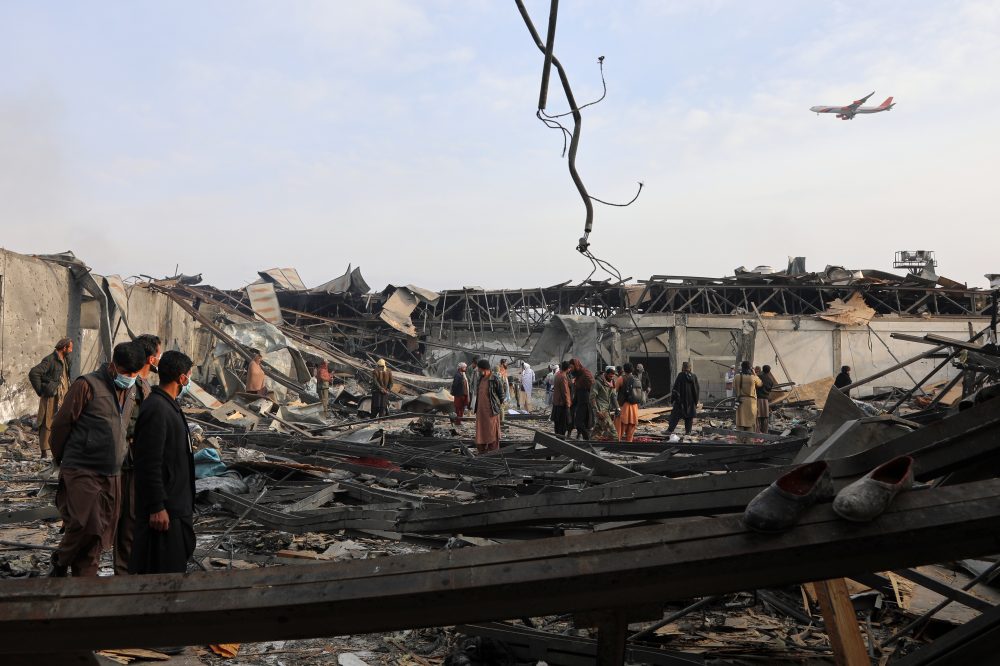
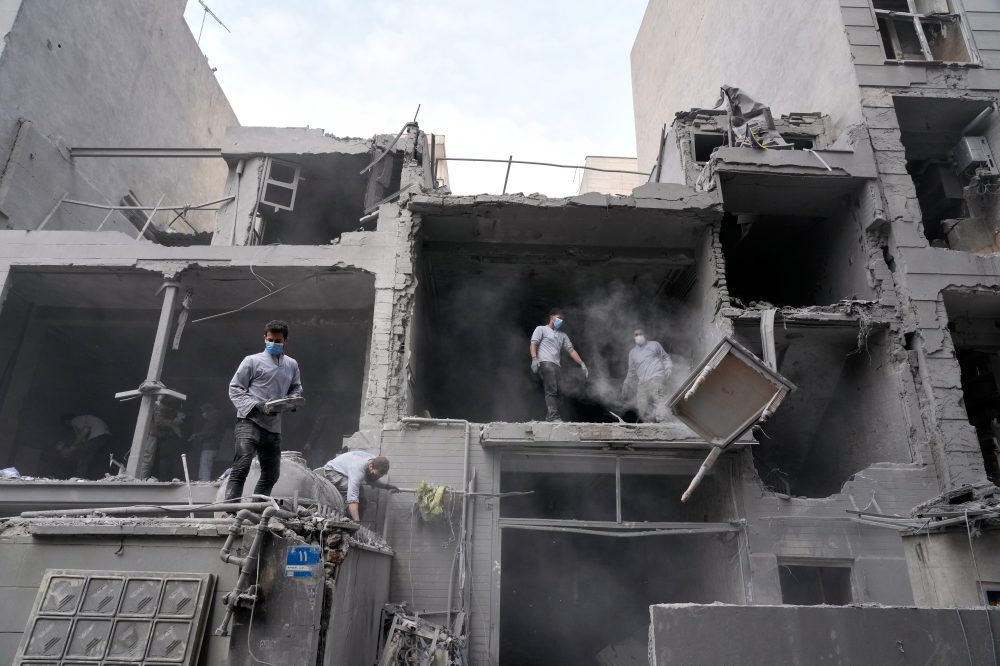
    Hezbollah’s choice to join the broader Iran conflict by launching rocket attacks against Israel has triggered devastating Israeli bombing campaigns across southern Lebanon and Beirut’s southern districts, resulting in approximately 850 Lebanese deaths and forcing more than one million residents to flee their homes.

    The Iranian-supported Hezbollah considers this latest conflict a fight for survival, while Israel threatens expanded ground operations, territorial occupation, and the demolition of Lebanon’s essential civilian infrastructure.

    The United States, which previously served as a mediator during earlier conflicts, has demonstrated little appetite for playing that role in the current crisis.

    Lebanese President Joseph Aoun announced his willingness to engage in face-to-face negotiations with Israel last week — marking the first such overture since Israel’s 1982 invasion during Lebanon’s civil conflict. Aoun simultaneously requested increased financial support for Lebanese military forces and renewed his pledge to dismantle Hezbollah’s arsenal, a long-sought goal of both Israeli and American officials.

    However, Lebanon demands an end to hostilities before entering any discussions with Israel, according to three Lebanese diplomatic and government sources with knowledge of the situation. These officials requested anonymity because they lacked authorization to speak publicly.

    Israeli representatives did not reply to requests for comment regarding the negotiation proposal. Israeli Foreign Minister Gideon Saar, while visiting an Israeli community struck by Iranian missiles, rejected claims that any discussions were being planned.

    The peace accord that concluded Lebanon’s 1975-1990 civil war mandated the dissolution of all militia groups, yet Hezbollah uniquely retained its weaponry, claiming these arms were essential for defending Lebanon against Israel, which maintained control over southern Lebanon until 2000.

    Consecutive Lebanese administrations, including those led by Hezbollah’s political opponents, avoided direct confrontation with the organization, which was commonly perceived as more formidable than Lebanon’s official military. Concerns persisted that any forcible attempt to disarm Hezbollah might reignite civil conflict.

    This calculation began shifting in 2024, as Israel eliminated most of Hezbollah’s senior leadership and devastated its military capabilities, potentially creating space for Lebanese officials to assert greater authority.

    Aoun, a former military commander, and Prime Minister Nawaf Salam, both assuming office in early 2025, committed to dismantling Hezbollah’s weapons — a stance enjoying broad backing among Lebanon’s conflict-weary citizens.

    During the months preceding the war, government forces deployed throughout extensive areas of southern Lebanon and reported dismantling more than 500 Hezbollah storage facilities and military installations. However, it avoided direct confrontation with the group.

    Following Hezbollah’s missile barrage against Israel in the days after the unexpected U.S.-Israeli strike on Iran, Lebanon’s government criticized the militant organization, banned its operations, and detained several fighters accused of illegal weapons possession.

    Yet by that point, the nation had already descended into another war.

    Hezbollah, which has continued launching missile and drone attacks against northern Israel since its initial strike, maintains its position as Lebanon’s sole credible defender.

    The group claims Israel violated a 2024 U.S.-mediated ceasefire by continuing regular air attacks that frequently killed civilians and refusing to withdraw from five strategic border locations. Hezbollah likely also feels compelled to assist Iran, its primary backer, during this critical period.

    Israel contends that Hezbollah has broken previous agreements requiring disarmament and that the airstrikes targeted potential attack preparations. It has consistently accused Lebanese officials of failing to neutralize the group and warned it would take action itself, potentially at enormous cost to Lebanon.

    Israeli Defense Minister Israel Katz stated last week that Lebanon’s government “will pay an increasing price in infrastructure damage and territorial loss until the commitment to disarm Hezbollah is fulfilled.”

    Hezbollah leaders have condemned the direct negotiation offer with Israel and criticized the government for failing to halt Israeli strikes or end border occupation.

    Mahmoud Qamati, a senior member of Hezbollah’s political bureau, called the negotiation offer “a concession and a big mistake” given “the ongoing occupation and aggression.”

    “This move would be stabbing the resistance in the back. The state cannot make any promises without the resistance’s approval,” he told the Al Jazeera network.

    During previous escalations, Lebanon typically sought assistance from the United States, which maintains influence over Israel and provides substantial aid to Lebanese military forces. However, Washington appears focused on the broader conflict and its global economic implications.

    “There is no senior official in the White House focusing on Lebanon,” said Randa Slim, director of the Middle East Program at the Washington-based Stimson Center. Thomas Barrack, serving as White House envoy to Turkey, Syria and Lebanon, characterized Lebanon as a “failed state” last year.

    Slim suggested the negotiation proposal was unlikely to succeed or prevent an Israeli invasion.

    Israel and the United States had anticipated more decisive action from Lebanon’s military following the previous war, despite its limited resources and financial constraints, and the dangers of directly challenging Hezbollah. They may be reluctant to provide another opportunity.

    “They had been very clear with the Lebanese on how important it was to control Hezbollah from doing anything offensively,” said Ed Gabriel, president of the American Task Force on Lebanon, a nonprofit organization promoting stronger U.S.-Lebanon relations.

    “Hezbollah’s actions have now set back for the time being any resolution of this war and created a lack of confidence by U.S. officials that the (Lebanese armed forces) can control and disarm Hezbollah,” he said.

    Israeli forces continue advancing deeper into southern Lebanon in preparation for an anticipated larger ground operation. The Israeli military has targeted and destroyed bridges and critical roadways, and issued evacuation orders for territory extending dozens of miles north of the border.

    Lebanon’s government, struggling with a severe, prolonged financial crisis, is working frantically to provide housing and assistance for nearly one million displaced individuals. It is also appealing to the international community to pressure Israel to protect essential infrastructure, including Beirut’s airport and seaport, according to one Lebanese official.

    Aoun, previously optimistic about disarming Hezbollah with minimal conflict, continues his intensive diplomatic efforts from the mountaintop presidential palace. Drones patrol overhead, explosions resound in the distance, and smoke clouds rise from the south.

  • Israel Claims Killing of Top Iranian Security Leaders in Overnight Strike

    Israel Claims Killing of Top Iranian Security Leaders in Overnight Strike

    DUBAI, United Arab Emirates — Israeli military forces announced Tuesday they eliminated Ali Larijani, a prominent Iranian security leader who many believed was effectively governing the nation amid ongoing turmoil following the death of Iran’s supreme leader and escalating regional conflict.

    The Israeli military also reported killing Iranian General Gholam Reza Soleimani, who commanded a formidable internal security force responsible for suppressing numerous mass demonstrations against Iran’s Shiite religious government.

    Iranian officials have yet to verify or dispute these reported deaths. Supreme Leader Ayatollah Ali Khamenei and additional high-ranking security personnel were eliminated in unexpected joint U.S. and Israeli operations that initiated the current conflict. Khamenei’s successor, his son Mojtaba, has remained absent from public view, with Israeli intelligence suggesting he may have sustained injuries.

    Despite the elimination of key leadership figures, the warfare continues unabated as Iran’s Revolutionary Guard maintains its missile attacks against Israel and neighboring Arab Gulf nations. Iran has successfully blocked the Strait of Hormuz, a critical waterway handling twenty percent of global oil trade, causing petroleum prices to surge and destabilizing international markets.

    Larijani belonged to one of Iran’s most prominent political dynasties, which news organizations have likened to America’s Kennedy family. His brother Sadeq held the position of Iran’s chief judge, while another sibling, Mohammad Javad, worked as a high-ranking diplomat who provided foreign policy counsel to the deceased Khamenei.

    Throughout his career, Larijani maintained conservative positions within Iran’s religious government structure, delivering progressively aggressive statements over the years. During the 1990s, he held Iran’s culture ministry position, implementing stricter censorship policies. From 2008 to 2020, he led the parliamentary body, and recently directed the Supreme National Security Council.

    Beyond politics, Larijani authored no fewer than six philosophical works, including three volumes examining German philosopher Immanuel Kant’s theories.

    He received appointments to counsel Khamenei regarding nuclear negotiation strategies with the Trump administration and journeyed to Oman for diplomatic meetings just fourteen days before the U.S. and Israeli assault began. Similar to other senior Iranian officials, he faced extensive American sanctions related to violent suppression of January mass demonstrations.

    While ineligible for supreme leader status due to his non-clerical background, he was anticipated to serve in a senior advisory capacity, with widespread belief that he was effectively governing as U.S. and Israeli attacks forced Iran’s leadership into hiding.

    Seven days ago, following President Donald Trump’s warning to strike Iran “TWENTY TIMES HARDER” if Tehran blocked oil transport through the Strait of Hormuz, Larijani issued a response via social media platform X.

    “The sacrificial nation of Iran doesn’t fear your empty threats. Even those bigger than you couldn’t eliminate Iran,” he posted. “Be careful not to get eliminated yourself.”

  • Scotland Parliament Weighs Historic Assisted Dying Vote

    Scotland Parliament Weighs Historic Assisted Dying Vote

    Scottish Parliament members will cast ballots Tuesday on historic legislation that could make Scotland the first region within the United Kingdom to permit terminally ill adults to receive medical assistance in ending their lives.

    The Edinburgh-based legislature has designated this as a conscience vote, allowing representatives to decide based on personal beliefs rather than following party directives. This approach makes predicting the results challenging, with the decision anticipated after 10 p.m. GMT.

    As one of four nations comprising the United Kingdom along with England, Wales and Northern Ireland, Scotland operates under a semi-autonomous government with jurisdiction over numerous policy areas, including healthcare matters.

    Should the legislation pass, Scottish residents with six months or fewer to live could request medical assistance to end their lives. The proposal requires confirmation from two physicians that the individual has a terminal diagnosis and possesses the mental competency to make such a decision.

    Liberal Democrat representative Liam McArthur, the bill’s author, made an impassioned plea for support from his fellow lawmakers.

    “If you believe that dying people should not have to suffer against their will and you have heard, like I have, of the many instances where they have been simply failed by the lack of compassion and safety in our current law, you now have to back this bill,” he said. “It is time to look terminally ill Scots in the eye and make this change.”

    Critics of assisted dying legislation contend that vulnerable populations including disabled individuals, seniors, sick patients and those battling depression might face coercion to end their lives to avoid burdening family members.

    Scottish National Party Deputy First Minister Kate Forbes announced her intention to oppose the measure. Several medical associations, including the Royal College of Psychiatrists and the Royal Pharmaceutical Society, have also expressed opposition.

    “Doctors, psychiatrists, pharmacists and palliative care specialists — the people who would be tasked with implementing this — are asking us not to do it,” Forbes said. “They think this bill is unsafe.”

    Parallel legislation seeking to authorize assisted dying in England and Wales faces obstacles in the British Parliament located in London.

    While the House of Commons gave approval to The Terminally Ill Adults (End of Life) Bill in June, more than 1,000 proposed amendments have stalled progress in the House of Lords. Bill supporters characterize this as deliberate obstruction by opponents, though some chamber members maintain they are conducting essential review to improve the legislation.

    The measure appears unlikely to gain passage from both parliamentary chambers before the current session concludes in May. Should this occur, the bill would expire and future assisted dying legalization efforts would need to begin anew.

    The British Crown dependencies of Jersey and the Isle of Man have enacted comparable laws awaiting formal approval from King Charles III. While these small territories govern themselves, they depend on the United Kingdom for defense and certain international relations.

    Medical assistance in dying operates legally in numerous countries including Australia, Belgium, Canada, Luxembourg, the Netherlands, New Zealand, Portugal, Spain, Switzerland and several U.S. states, with eligibility requirements differing across jurisdictions.

  • Mexican Mezcal Industry Boom Transforms Rural Communities, Raises Environmental Concerns

    Mexican Mezcal Industry Boom Transforms Rural Communities, Raises Environmental Concerns

    SOLEDAD SALINAS, Mexico — Indigenous craftspeople in Mexico’s Oaxaca Central Valleys are witnessing dramatic changes as mezcal, a spirit historically associated with poverty, gains worldwide recognition far from its traditional roots.

    The international surge in popularity has generated fresh revenue streams for remote communities, yet it has simultaneously driven manufacturing toward mass production levels, creating strain on woodland resources, water supplies, and time-honored production techniques.

    Throughout the last ten years, mezcal consumption has experienced explosive growth as international companies marketed its handcrafted appeal. Manufacturing volumes have skyrocketed from 1 million liters (260,000 gallons) in 2010 to over 11 million (2.9 million gallons) in 2024, with the United States serving as the primary international consumer.

    The alcoholic beverage originates from the agave plant, locally called maguey throughout Mexico. Commercial producers typically utilize agave espadin because of its comparatively quick six-year growing cycle, while higher-end varieties feature rare wild species including cuish and tobala.

    Most mezcal currently produced in Oaxaca, which accounts for roughly 90% of Mexico’s total output, ends up served in establishments spanning from New York to Tokyo.

    Seven industry workers recently shared their perspectives on how the spirit’s dramatic evolution has affected their personal lives, local communities, and surrounding environment.

    One producer explained the challenges facing smaller operations: “In my case, I have had a brand for six years, but it is very difficult to export it, to have a distributor. That is why the big brands come and, basically, they undercut us very easily, because they already have the entire market.”

    A community member described the economic transformation: “Before, people in this town lived in houses with thatched roofs. Then we were able to build with sheet metal, and now they are made of cement. We survived because of the maguey. My children could go to university because of the maguey.”

    Another worker discussed market changes: “There was a time when we sold a lot of maguey pineapples to Jalisco. They came here and bought entire truckloads. Now they have not come for some time, but we sell to big brands which can ask for 50 tons of pineapple a week.”

    One farmer highlighted economic challenges: “Mezcal is not a business for us, but a means of survival. So many years of planting maguey, of caring for it and cultivating it, to sell one liter for 150 pesos ($8), is no business.”

    Environmental concerns were also raised: “There are people who criticize us for what we do that affects the forest, and yes, we know it has an impact, but we have to look for a livelihood and food. If the government gave us more support after all the taxes we pay, we would not have to rely only on maguey.”

    Conservation efforts vary by location: “From one day to the next, entire mountains were cut down to plant espadin. Here in our community that does not happen because we have a protected area that we are working on.”

    A younger worker emphasized the industry’s local importance: “I’ve been working on maguey for five years now. We will cut eight tons today, but sometimes we do 20. Most of us live off it, and it benefits the entire town because we have more economic stability than when I was a kid.”

  • Anti-Doping Agency Considers Banning Trump, US Officials From Major Sports Events

    Anti-Doping Agency Considers Banning Trump, US Officials From Major Sports Events

    What seems like an unthinkable scenario could become reality as the World Anti-Doping Agency considers a controversial new policy.

    Officials at WADA are contemplating a rule change that would prevent President Donald Trump and other U.S. government representatives from attending major international sporting competitions — including those held on U.S. territory.

    Several massive events could potentially be affected: this summer’s World Cup, the 2028 Los Angeles Olympics, and the 2034 Winter Olympics in Utah.

    This confrontation wasn’t initiated by Trump, but rather by WADA leadership, which has faced widespread criticism from both political parties in Congress, previous and current presidential administrations, and the U.S. Anti-Doping Agency throughout most of the past decade.

    The measure, scheduled for discussion at Tuesday’s WADA executive committee meeting, represents the most drastic step yet in an ongoing battle of words, warnings, and disputes between all involved parties. The conflict originated from America’s decision to withhold its yearly WADA membership fees.

    America has withheld $7.3 million across 2024 and 2025 as a form of protest against WADA’s management of various controversies, particularly a recent incident involving Chinese swimmers who were permitted to compete after positive tests for prohibited substances. WADA accepted Chinese officials’ explanation that the athletes had experienced accidental contamination.

    WADA representative James Fitzgerald stated the regulation, if approved, would “not (be) applied retroactively so World Cup, LA and SLC Games would not be covered.” Nevertheless, the draft proposal obtained by The Associated Press contains no such exemption language.

    Fitzgerald remained silent on multiple follow-up inquiries sent Monday, including questions about how a rule under consideration this year wouldn’t apply retroactively to future events that haven’t occurred yet. Fitzgerald mentioned last week that the final determination wouldn’t come until November, following the World Cup, though communications between WADA and European representatives suggested the decision might arrive earlier.

    Here’s an examination of how this situation developed and potential future developments.

    WADA was established in 1999 with the mission of creating anti-doping regulations for sports and ensuring proper implementation.

    During recent years, as more serious and complicated doping scandals emerged, WADA has expanded its role in investigating doping accusations — a responsibility traditionally handled by numerous organizations that monitor performance-enhancing drug use across different nations and sports.

    WADA receives equal funding from two sources — governments of nations participating in the Olympic movement and the International Olympic Committee. Representatives on WADA’s primary decision-making panels are typically split evenly between sports and government officials.

    Participation in major international competitions like the Olympics and World Cup requires all participants to commit to following WADA’s regulations, whether they concern doping directly or administrative matters like the current proposal addresses.

    Athletic organizations — including the IOC and individual sport governing bodies — are considered “signatories” to the WADA code.

    Governments connect to WADA through an agreement signed with the United Nations Educational, Scientific and Cultural Organization (UNESCO). Similar to sports organizations, the UNESCO arrangement requires governments to pay membership fees and comply with WADA’s regulations.

    Enforcement appears highly questionable. Rahul Gupta — the drug policy director under the Biden Administration who criticized WADA as strongly as his replacement, Sara Carter — described the concept as “ludicrous.”

    Gupta explained this isn’t simply because restricting the U.S. president’s movements would be logistically impossible, but it would also communicate the wrong message to a host nation, which manages the games and ensures appropriate investments in security, facilities, and other infrastructure.

    “That’s the responsibility of the government, not so much WADA,” Gupta said. “It’s clear that WADA attempting to propagate any rules-based system that interferes with a government, especially a host government — that would be a concern to any government.”

    Although Trump hasn’t commented on this specific issue, Carter, his drug policy director, stated the U.S. government “will continue to stand firm in our demand for accountability and transparency from WADA to ensure fair competition in sport.”

    WADA has achieved the unusual result of uniting politicians from opposite political parties. Legislation implementing the anti-doping Rodchenkov Act, which WADA strongly opposed in key sections, received unanimous approval in Congress six years ago.

    Recent efforts to hold WADA responsible, leading to the suspended dues payments, have gained bipartisan backing in both congressional chambers.

    Following the latest developments, Sen. Marsha Blackburn, R-Tenn., posted on social media that the proposal provided “Further proof we’re doing the right thing by demanding accountability and defunding WADA.”

    WADA operates with approximately $57.5 million annually, and the American contribution is substantial, though not the only missing payment recently. An analysis of membership payments obtained by the AP revealed that only 49% of African nations had paid their 2025 WADA dues.

    However, no nation has criticized WADA more harshly than the United States, which has considered withholding payments since 2020 and actually implemented this strategy two years ago.

    That’s accurate.

    WADA has studied this concept since 2020 — approximately when American threats intensified. In 2024, the proposal actually reached the executive committee. Gupta served on that panel then and spearheaded the effort to defeat it. The U.S. currently lacks representation on the executive committee.

    WADA hasn’t provided clear answers to this question, beyond stating the rule wouldn’t apply “retroactively” and that the World Cup, LA and Utah Olympics would remain unaffected.

    WADA indicates the next foundation board meeting — the body that must formally approve any executive committee recommendation — won’t occur until November, four months following the World Cup’s conclusion.

    However, in a question-and-answer session with European representatives regarding the rule, a document obtained by AP showed WADA informed officials that such a regulation “could be implemented without due delay.”

    European officials posed that identical question to WADA. The rule’s future had been assigned to a WADA “discussion group” that was expected to report back to the executive committee but hasn’t completed this task.

    WADA’s response indicated that legal complications involving penalties for countries that don’t pay dues have been resolved (the penalty sections have been eliminated).

    “Little meaningful progress was made in the latest meetings of the Discussion Group and there is no reason (given the foregoing) not to bring this matter to the ExCo as a decision-making organ of WADA,” it stated.

  • UK Parliament Strengthens Internet Pornography Restrictions

    UK Parliament Strengthens Internet Pornography Restrictions

    Britain’s upper legislative chamber has approved new restrictions targeting online pornography, extending prohibitions that already exist for physical materials to digital platforms. The House of Lords voted to ban images showing children and violent content from internet pornography sites.

    These latest amendments bring online regulations in line with existing laws that already govern traditional pornographic materials, closing what lawmakers saw as a regulatory gap. The United Kingdom has been steadily tightening controls on internet adult content over the past several years.

    The legislative efforts have drawn attention from religious leaders and family advocacy groups in the United States, who have expressed hope that American lawmakers might adopt similar measures to restrict online adult content.

  • Christian Organization Calls for Global End to Blasphemy Laws

    Christian Organization Calls for Global End to Blasphemy Laws

    An international religious freedom organization is pushing for worldwide action to eliminate laws that make it a crime to express personal beliefs.

    Global Christian Relief has issued a new report calling on world leaders to take decisive action against legislation that targets individuals for their faith-based convictions. The organization believes it’s time for decisive governmental leadership on this issue.

    According to the GCR study, “The United States should intensify bilateral and multilateral engagement to press for the repeal or non-enforcement of blasphemy laws, which remain on the books in nearly half of the world’s countries and are fundamentally incompatible with freedom of religion.”

    The report highlights how these types of laws continue to exist across approximately half of all nations globally, creating what the organization sees as a direct conflict with religious liberty principles.

  • New Survey Shows Strong Support for Faith Sharing Across America

    New Survey Shows Strong Support for Faith Sharing Across America

    A new nationwide survey has found overwhelming support among Americans for the freedom to share religious beliefs, with three out of four adults endorsing the right to discuss faith with others.

    The Religious Freedom Index, released by the Becket Fund, indicates that 75 percent of adults across the nation back people’s ability to communicate their religious convictions to others. Organization officials note this figure represents among the strongest support levels ever documented for such religious expression.

    The survey results suggest that growing interest in spiritual matters among younger generations is helping fuel this trend. Becket Fund representative Lori Windham explained the broader implications of these findings.

    “Religious freedom isn’t limited to only what happens in houses of worship. It’s about how people live their lives and build their communities,” Windham stated.

  • EU Foreign Policy Chief Dismisses Belgium’s Push for Russian Energy Ties

    EU Foreign Policy Chief Dismisses Belgium’s Push for Russian Energy Ties

    The European Union’s foreign policy leader firmly rejected suggestions Tuesday to rebuild diplomatic ties with Russia and resume purchasing inexpensive Russian energy supplies.

    Kaja Kallas, the EU’s chief diplomat, dismissed remarks made by Belgian Prime Minister Bart De Wever in a weekend interview with L’Echo newspaper, where he advocated for restoring normal relations with Moscow.

    De Wever’s position contradicts established EU policy, which maintains strict sanctions against Russia following its military invasion of Ukraine and seeks to eliminate dependence on Russian fossil fuels.

    The Belgian leader claimed that European officials privately support his view but “no one dares to say it out loud.”

    Speaking with Reuters in Brussels, Kallas disputed this characterization, stating she has witnessed no such sentiment during high-level discussions.

    “I’ve been … behind those closed doors, when we talk about leaders’ meetings, and I don’t see this appetite,” Kallas explained, referencing her participation in European Council gatherings with EU heads of state and government.

    The former Estonian prime minister emphasized the importance of establishing clear objectives before engaging with Russia.

    “When we talk to Russia, of course, the most important thing is to first agree what we want to talk to them about,” Kallas noted.

    She cautioned against premature diplomatic outreach, warning: “If we just go back to business as usual, we will have more of this – more wars. We have seen this before, so we have to be very vigilant and not to actually give Russia what they want because their appetite will only grow.”

    Oil prices worldwide have jumped approximately 40% since conflicts involving the United States and Israel with Iran began, reaching levels not seen since 2022.

    Following criticism from coalition partners over his weekend statements, De Wever has attempted to clarify his position, indicating he would only support normalized relations after a peace agreement ends the Ukrainian conflict.

  • Qualcomm Announces Massive $20 Billion Share Repurchase Initiative

    Qualcomm Announces Massive $20 Billion Share Repurchase Initiative

    Mobile processor manufacturer Qualcomm announced Tuesday it will launch a massive $20 billion share repurchase initiative, adding to the company’s current $2.1 billion stock buyback authorization that remains active.

    The semiconductor company, known for designing chips used in smartphones, revealed the substantial financial program as part of its ongoing capital allocation strategy.

  • Australian Firm Abandons $7B Kuwait Oil Deal Due to Regional Conflict

    Australian Firm Abandons $7B Kuwait Oil Deal Due to Regional Conflict

    An Australian investment firm has abandoned its pursuit of a multibillion-dollar oil infrastructure deal in Kuwait, becoming among the first major investors to retreat from Gulf region opportunities due to the escalating Iran conflict.

    Macquarie informed Kuwait Petroleum Corporation on Friday that it would no longer participate in the bidding process for the country’s oil pipeline network, valued at up to $7 billion, according to two individuals with knowledge of the situation. The company cited the ongoing war and unpredictable regional conditions as reasons for its departure.

    The decision signals growing investor wariness toward Gulf investments as the conflict has effectively blocked the Strait of Hormuz, leaving millions of barrels of oil unable to reach markets. Kuwait depends entirely on this narrow passage between Iran and Oman for its crude exports, with the waterway typically handling one-fifth of worldwide oil supplies.

    Despite these challenges, Kuwait Petroleum Corporation and its financial advisors are attempting to move forward with the transaction. The sale was launched just hours before Iranian missiles initially targeted Gulf cities last month, a third source revealed. Even though KPC has declared force majeure and reduced production, its banking partners continue pursuing the deal.

    Investment banks have distributed offering materials to prospective buyers and are requesting preliminary bids by April 7, sources confirmed. Previous reports indicated interest from major firms including BlackRock and KKR, though their current participation status remains unclear given concerns about future oil volumes and the pipeline system’s location near Iranian military installations.

    When contacted for comment, KPC and BlackRock did not respond immediately, while Macquarie and KKR declined to provide statements.

    Other regional transactions are proceeding with increased caution. Saudi Arabia’s King Abdullah Financial District is marketing its district cooling operations for over $500 million, with initial offers submitted during the first week of March, two additional sources disclosed. Meanwhile, Saudi infrastructure company SISCO Holding continues advancing a water asset sale valued at approximately 1 billion riyals ($266 million).

    Industry professionals acknowledge the challenging environment for deal completion. One source noted that establishing rigid timelines appears unrealistic when investors must make decisions while facing military strikes and economic instability.

    Some investment firms are examining material adverse change provisions in their agreements, which provide exit options, while securing financing may become more difficult if lenders increase interest rates for regional corporate exposure.

    “We are seeing a degree of caution, particularly around transactions that were already underway, with some clients taking a little more time to progress to completion,” said Anshul Gupta, KPMG’s partner and head of deal advisory for the Middle East, noting that client discussions remain ongoing.

    “We also expect capital to remain available, although pricing is likely to reflect broader market conditions in the near term.”

    Imad Ghandour, co-founder and managing director of private equity firm CedarBridge Capital Partners, indicated his company was moving ahead with several transactions despite current circumstances.

    “We strongly believe that GCC macro trends will persist,” he stated, referencing the six-nation Gulf Cooperation Council.

  • Travel Chaos Continues as Storms and Government Shutdown Disrupt Flights

    Travel Chaos Continues as Storms and Government Shutdown Disrupt Flights

    Air travel disruptions persisted Tuesday following Monday’s powerful storm system that battered the eastern United States, leaving travelers stranded and frustrated across major airports nationwide. The weather-related chaos is compounded by ongoing staffing challenges at airport security checkpoints due to a partial government shutdown that began February 14.

    Flight tracking data from FlightAware showed more than 750 domestic flights were cancelled by early Tuesday morning, with approximately 1,300 additional flights experiencing delays. The timing couldn’t be worse, as airports are packed with spring break vacationers and college basketball fans traveling to March Madness tournament games.

    Monday’s storm system brought heavy snowfall to the Midwest before racing eastward with wind gusts reaching nearly 50 mph in portions of New York, according to the National Weather Service. Major aviation hubs bore the brunt of the disruptions, with Chicago O’Hare International Airport cancelling around 600 flights, Atlanta’s Hartsfield-Jackson International seeing over 470 cancellations, and New York’s LaGuardia Airport grounding more than 450 flights.

    The Federal Aviation Administration implemented ground stops at both Hartsfield-Jackson and Charlotte Douglas International Airport while imposing ground delays at JFK and Newark Liberty International Airport due to dangerous weather conditions.

    Kelly Price, attempting to return to Colorado after an Orlando family vacation, experienced the cascading effects firsthand when her Sunday night flight wasn’t cancelled until early Monday morning. “By that time the only place for us to sleep was the airport floor. So we’re all tired and frustrated,” Price explained, noting that her family couldn’t secure another flight until Tuesday afternoon.

    Similarly, Danielle Cash found herself unexpectedly stranded in St. Louis while returning to Tampa, Florida, from a Las Vegas weekend trip. Now she’s spending hundreds of extra dollars on hotel accommodations in a snowy climate she wasn’t prepared for. “It was 80 degrees in Tampa when I left and then going to Vegas,” Cash said. “And it was 90 degrees in the desert.” Her rescheduled itinerary now routes through Tennessee before finally reaching Tampa Tuesday afternoon.

    The travel nightmare coincided with TSA workers missing their first complete paycheck over the weekend due to the ongoing partial government shutdown affecting the Department of Homeland Security, which oversees the Transportation Security Administration. Congressional Democrats have indicated that Homeland Security funding will remain blocked until new limitations are imposed on federal immigration enforcement, following the deadly shootings of Alex Pretti and Renee Good in Minneapolis this year.

    This marks the third government shutdown in under twelve months that has left TSA employees temporarily unpaid, with workers having to wait for retroactive compensation once operations resume. Airport security lines have grown longer as staffing shortages worsen, with TSA agents either taking second jobs, unable to afford transportation to work, or leaving the agency entirely. The Department of Homeland Security reports that over 300 TSA agents have resigned since the shutdown began.

    At Hartsfield-Jackson on Monday, TSA union representatives held a press conference outside the airport, cautioning that security wait times could become increasingly lengthy as the shutdown drags on. Despite financial hardships, union officials emphasized that many officers continue reporting to work.

    Aaron Barker, a local representative with the American Federation of Government Employees, described how TSA workers “are coping with eviction notices, vehicle repossessions, empty refrigerators and overdrawn bank accounts.” Demonstrators behind him displayed signs declaring, “We want a paycheck, not a rain check.”

    Louis Armstrong International Airport in New Orleans advised passengers departing Sunday and Monday to arrive at least three hours early “due to impacts from the federal government’s partial shutdown.” Austin’s airport shared social media footage from 5:30 a.m. local time showing security lines extending onto the outdoor sidewalk.

    At Atlanta’s Hartsfield-Jackson, traveler Mel Stewart and his wife arrived four hours ahead of their usual schedule to account for extended TSA processing times. “I think it’s being politicized way too much — way too much,” Stewart commented regarding the shutdown. “And these people are working. They work hard, and for TSA people not to get paid, that’s silly.”

  • Far-Right Parties Gain Ground in French Municipal Elections

    Far-Right Parties Gain Ground in French Municipal Elections

    French far-right political movements secured notable victories across southeastern regions during Sunday’s initial round of municipal voting, while leadership battles in major metropolitan areas including Paris remain unresolved before next week’s decisive runoff elections.

    The electoral contest is being closely watched as an indicator of political sentiment ahead of France’s 2027 presidential campaign.

    Approximately 35,000 communities participated in the voting process, with roughly 93% choosing their local leaders outright in the first round, primarily featuring independent candidates without party affiliations.

    Participation levels hit just above 57%, surpassing the 2020 election held amid pandemic restrictions but falling short of 2014 numbers, Interior Ministry data shows.

    Key developments before the March 22 second round:

    Marine Le Pen’s National Rally demonstrated continued regional expansion, especially throughout France’s southeastern territories.

    Party deputy leader Louis Aliot secured a decisive victory in Perpignan, his established political base.

    Marseille’s current left-leaning mayor Benoît Payan finds himself in a virtual tie with National Rally challenger Franck Allisio heading into the runoff.

    Along the French Riviera in Nice, Éric Ciotti, who departed conservative ranks to establish his own far-right movement in 2024 while partnering with the National Rally, positioned himself as the leading contender for the final round.

    Right-wing candidates also gained strong footing in Nîmes and the Mediterranean naval hub of Toulon.

    Thousands of municipal positions across France await determination, including leadership roles in Paris and other significant urban centers.

    Where three or more contenders advanced to runoffs, candidate negotiations to combine voter lists concluded by Tuesday’s 6 p.m. deadline, potentially improving their chances for victory.

    Political partnerships have sparked intense discussions between moderate leftist parties and the radical France Unbowed movement, headed by longtime activist Jean-Luc Mélenchon, which performed well in several metropolitan areas.

    France Unbowed previously collaborated with Socialist, Green, and Communist parties, but the coalition fractured amid accusations that the hard-left group tolerated anti-Jewish rhetoric. Critics also blamed the far-left for escalating tensions following last month’s fatal beating of a far-right activist in Lyon.

    Despite tensions, some electoral agreements emerged on individual race bases.

    In Lyon, France’s third-largest municipality, current Green mayor Grégory Doucet partnered with France Unbowed in a competitive battle against right-wing candidate Jean-Michel Aulas, a business leader and former soccer club executive.

    Anti-racism organization SOS Racisme urged mainstream political groups to collaborate against far-right advancement. Group president Dominique Sopo stated: “No alliance should be ruled out if it helps prevent this party from taking control of new municipalities.”

    Le Pen’s organization maintains limited influence in several major urban areas, showing weak support in cities like Paris and Lyon.

    Paris mayoral competition features left-wing candidate Emmanuel Grégoire leading after the initial vote, though the runoff against conservative opponent Rachida Dati promises to be competitive.

    Dati, a high-profile politician who recently served as France’s culture minister, aims to break 25 years of leftist control at City Hall. However, her career faces scrutiny as she prepares for a September corruption and influence-peddling trial.

    Grégoire, who previously served as deputy to departing mayor Anne Hidalgo, leads a coalition combining Socialists, Greens, and Communists. He declined to partner with France Unbowed, whose candidate also qualified for round two, creating uncertainty about the outcome.

    Departing Paris mayor Anne Hidalgo, who won office in 2014 and secured reelection in 2020, decided against pursuing a third term after guiding the city through the 2015 terrorist attacks and hosting the 2024 Olympics.

    Political attention increasingly focuses on the 2027 presidential contest, as municipal elections represent the final nationwide voting before the campaign for France’s highest office begins, offering all parties opportunities to strengthen local foundations. Current President Emmanuel Macron cannot pursue a third consecutive term under constitutional restrictions.

    In the northern coastal city of Le Havre, sitting mayor Édouard Philippe, who finished first Sunday, seeks a runoff win that could boost his standing as a potential presidential candidate. The center-right politician served as Macron’s prime minister for three years.

    The National Rally views key mayoral victories as demonstrations of the party’s governing capabilities.

    Marine Le Pen had been viewed as a top presidential prospect until her embezzlement conviction last year, which included a five-year ban from public office. She is challenging the verdict, with a crucial court ruling expected July 7. Should the ban stand, her protégé Jordan Bardella would become the party’s presidential nominee.

    Multiple prominent politicians across the political spectrum have expressed presidential interest, but no clear frontrunner has emerged.

  • GOP Plans Extended Senate Floor Debate on Voting Requirements Bill

    GOP Plans Extended Senate Floor Debate on Voting Requirements Bill

    WASHINGTON — Senate Republicans are preparing to take over the chamber floor for what could be an extended debate lasting a week or more on voting legislation they acknowledge cannot pass under current circumstances.

    The marathon floor session, set to begin Tuesday, represents an extraordinary political theater aimed at drawing public focus to legislation that would impose new voter registration requirements. The move comes as former President Donald Trump continues pressuring congressional Republicans to advance the measure ahead of November’s midterm elections.

    Senate Majority Leader John Thune faces a challenging balancing act between Trump’s demands for action and unified Democratic resistance to the proposal. While Trump has called on Thune to eliminate the legislative filibuster or devise alternative methods to pass the bill, Thune has consistently stated he lacks sufficient support for such moves.

    The Republican strategy involves staging an extended public demonstration of support for the Safeguard American Voter Eligibility Act, commonly called the SAVE America Act. The legislation would mandate that Americans provide proof of citizenship during voter registration and present identification when casting ballots, among other requirements.

    This approach carries significant political risks, with no assurance it will satisfy Trump’s expectations. The former president has declared he will not sign other pending legislation until the SAVE Act becomes law.

    The prolonged debate will ultimately conclude with a failed procedural vote. Republicans control 53 Senate seats but need 60 votes to move the bill forward, while all 45 Democrats and both independents who align with Democrats oppose the measure.

    Nevertheless, the extended discussion will “put Democrats on the record,” Thune explained last week.

    Trump has claimed without supporting evidence that Democrats can only succeed in midterm elections through fraudulent means, stating explicitly that Republicans require the SAVE America Act to prevail in November. The House approved this legislation earlier this year, but Senate consideration stalled when it became apparent Republicans lacked the necessary votes.

    However, Trump expressed dissatisfaction with the delay and demanded Senate action. The Republican leader has maintained his position against signing other measures, including bipartisan housing legislation supported by the White House, until the voting bill advances.

    The proposed legislation includes numerous provisions that Trump and his closest allies have championed as part of a broader initiative to establish federal oversight of elections. The bill would mandate nationwide proof of citizenship requirements for voter registration and acceptable identification for ballot casting.

    Additionally, the measure would establish new penalties for election officials who register voters without citizenship verification and require states to provide voter information to the Department of Homeland Security for screening of potentially ineligible voters.

    Trump has also requested additional provisions, including restrictions on most mail-in voting options.

    “It’ll guarantee the midterms,” Trump stated regarding the legislation last week. “If you don’t get it, big trouble.”

    Democratic lawmakers and voter advocacy organizations argue there is minimal evidence of non-citizen voting and contend the bill would prevent millions of eligible voters, including Republicans, from participating by creating excessive citizenship verification requirements.

    While voting without U.S. citizenship is already prohibited by law, the bill would establish stringent new documentation requirements for voter registration. Critics argue these documents are often difficult to obtain for many citizens.

    “There is no new problem to solve here,” stated Janai Nelson, president and director-counsel of the Legal Defense Fund, a civil rights advocacy organization. “There is an apparatus already to ensure that elections are safe and secure and that only eligible voters are casting ballots in our elections.”

    Senate Democratic Leader Chuck Schumer indicated Democrats do not oppose voter identification requirements but argued “this is about purging the voter rolls in a massive way, so you never even get the chance to show a voter ID when you showed up to vote because you’d be knocked off the rolls.”

    Trump, supported by Republican Senator Mike Lee of Utah, has advocated for a talking filibuster that would compel Democrats to speak continuously for days or weeks to prevent the bill’s passage. However, Thune and the broader Republican conference dismissed this approach, arguing it would ultimately fail while providing Democrats a platform and opportunity to propose unlimited amendments that could add their priorities to the legislation.

    Instead, Republicans plan to control the floor through their own speeches, following standard procedures but operating beyond the typical time constraints usually observed during legislative debates. Democrats are expected to respond with their own procedural tactics, potentially requiring Republicans to remain available for votes at all hours, forcing them to stay near the Senate throughout the process.

    Lee acknowledged last week that the outcome remains uncertain. He believes Trump “understands that we need to put in an aggressive effort here.”

    “And a lot of that,” he explained, “is going to have to be determined in real time as we go about it.”

    The degree of Trump’s satisfaction with the process, Lee noted, “will depend on whether, in his view, we gave it everything we have.”

    On Monday evening, Lee was mobilizing Trump’s supporters on social media.

    “Once we’re on this bill,” he posted, “we must stay on it until it’s passed into law.”

  • Ukraine’s Zelenskyy Meets UK Leader, NATO Chief in London for War Talks

    Ukraine’s Zelenskyy Meets UK Leader, NATO Chief in London for War Talks

    Ukrainian President Volodymyr Zelenskyy touched down in London Tuesday for high-level discussions with UK Prime Minister Keir Starmer, according to British government officials. The visit comes as European nations work to maintain global focus on Russia’s ongoing invasion of Ukraine while world attention shifts to escalating Middle East conflicts.

    NATO Secretary-General Mark Rutte joined the meeting at 10 Downing Street, where leaders focused on peace initiatives for Ukraine and “the need to maintain sanctions pressure on Russia,” Starmer’s office announced.

    The London summit follows recent U.S. decisions to temporarily lift certain Russian oil sanctions aimed at stabilizing global energy markets disrupted by Middle East warfare, which began with joint American-Israeli operations against Iran on February 28.

    Zelenskyy condemned Washington’s sanctions relief, arguing it would give Moscow additional resources to continue its assault on Ukraine.

    President Donald Trump has expressed intentions to broker a peace agreement ending what he calls Europe’s largest conflict since World War II, causing concern among European leaders who believe Russia may present a serious security threat to the EU within the decade.

    However, U.S.-mediated negotiations between Russian and Ukrainian representatives have stalled, showing little advancement on critical matters as Middle East crises dominate international attention.

    Trump has also rejected Zelenskyy’s proposal to assist the United States and Gulf allies in countering Iranian drone attacks, despite Ukraine’s emergence as a global leader in producing advanced, combat-proven drone defense systems.

    UK officials report that Russia and Iran are working together on drone technology and strategies in the Middle East region. British and Ukrainian drone warfare specialists have been deployed to help Iran’s neighboring countries defend against drone strikes.

    The UK and Ukraine will formalize an agreement combining “Ukraine’s expertise and the U.K.’s industrial base to manufacture and supply drones and innovative capabilities,” according to Starmer’s office. Britain is also financing an “AI Center of Excellence” in partnership with Ukraine’s Defense Ministry.

    “More security and opportunities for Ukraine” are his main goals, Zelenskyy posted on X when announcing his London arrival.

    “Drones, electronic warfare and rapid battlefield innovation are now central to national and economic security, and that has only been further magnified by the conflict in the Middle East,” Starmer stated.

    “By deepening our defense partnerships, we are strengthening Ukraine’s ability to defend itself from Russia’s brutal, ongoing attacks, while ensuring the U.K. and our allies are better prepared to meet the threats of the future.”

    Russian Defense Ministry officials reported Tuesday that their air defense systems shot down 206 Ukrainian drones during overnight operations across Russian territories, the occupied Crimean Peninsula, and Azov Sea areas. Forty of those intercepted drones were heading toward Moscow, ministry statements indicated.

    When questioned about increased Ukrainian drone operations targeting Moscow in recent days, Kremlin spokesperson Dmitry Peskov characterized Kyiv authorities as “continuing absolutely futile resistance” against Russia’s invasion.

    Ukrainian forces’ counteroffensives at eastern and southern front positions have disrupted Moscow’s planned March offensive, Zelenskyy claimed Monday evening.

    While his statements could not be independently confirmed, the Washington-based Institute for the Study of War noted Monday that Ukrainian counterattacks “are likely constraining” certain Russian offensive activities.

    Ukraine’s air force reported that Russia deployed 178 long-range drones of different types nationwide overnight beginning late Monday, with 154 either intercepted or disrupted electronically while 22 additional drones reached their intended targets.

    A Russian attack damaged a Nova Poshta terminal in southern Ukraine’s Zaporizhzhia, injuring eight people, according to regional military administration head Ivan Fedorov. Nova Poshta is Ukraine’s largest private delivery service.

  • New Tax Rules Could Boost Small Donors But Cut Overall Charity Funding

    New Tax Rules Could Boost Small Donors But Cut Overall Charity Funding

    Recent federal tax legislation could lead to a paradoxical outcome for charitable organizations: while millions more Americans may start giving to nonprofits, the total amount donated could drop significantly, according to fresh analysis from researchers.

    A study released Tuesday by Indiana University Lilly Family School of Philanthropy reveals how heavily charitable giving depends on major donors and corporations, whose contributions have a disproportionate effect on overall donation trends, explained Jon Bergdoll, the school’s interim director of data and research partnerships who spearheaded the study.

    The research indicates that new tax incentives available to most taxpayers will motivate between 6 and 8.7 million additional Americans to contribute to charitable causes over time. Despite this increase in donors, total nonprofit contributions are projected to decline by approximately $5.6 billion each year due to new restrictions affecting corporations and high-income individuals.

    Bergdoll emphasized that these effects won’t be immediate, noting that broader economic conditions will likely have greater influence on 2026 donation totals than the new legislation, known as the One Big Beautiful Bill.

    “Giving I could imagine going in so many different directions this year,” Bergdoll stated. “And so this is not saying, ‘Giving will absolutely go down in 2026.’ It just there’s this little extra weight dragging it down.”

    The projected $5.6 billion decrease would account for less than 1% of the $592.50 billion donated to nonprofits in 2024, based on Giving USA data. The Treasury Department has not yet responded to requests for comment regarding the new tax law’s impact on charitable contributions.

    The primary driver encouraging increased donations is a new charitable deduction allowing individuals to claim up to $1,000 and married couples up to $2,000. This benefit applies to the 87% of taxpayers who use the standard deduction rather than itemizing.

    Bergdoll noted that public awareness of this new deduction may develop slowly.

    “That behavior will only change based off of households becoming aware,” he explained. “And the stakeholders that have the most to gain by those households becoming aware are nonprofits.”

    Conversely, two provisions in the new legislation affecting wealthy contributors are expected to suppress donations. The first establishes a reduced cap on total deductions for high earners. Taxpayers in the highest bracket who itemize can now only claim total deductions equal to 35% of their income, down from the previous 37%.

    “Because of the nature of giving, because of how much giving is coming from those top marginal income households, this actually has the largest effect of anything we’ve looked at,” Bergdoll observed.

    A second modification affects all taxpayers who itemize deductions, roughly 11% of filers, by creating a minimum threshold. Under the updated rules, these households must donate more than 0.5% of their income to receive tax benefits. Contributions below this level won’t qualify for deductions.

    The legislation also establishes a minimum threshold for corporate charitable donations at 1% of pre-tax profits. Companies giving less than this amount can no longer claim charitable deductions for those contributions.

    The Lilly School analysis found this corporate change will likely reduce business giving by around $1.5 billion annually, though this figure is lower than researchers initially anticipated, Bergdoll said.

    Comprehensive corporate giving data at the individual company level remains limited, he noted. However, researchers utilized information from Chief Executives for Corporate Purpose (CECP), which suggested that most charitable donations come from companies already giving above the new threshold.

    Sheila Bravo, president and CEO of Delaware Alliance for Nonprofit Advancement, which supports nonprofits throughout the state, said major businesses she communicates with, including banks, don’t expect the new deduction floor to affect their giving patterns.

    “Here in Delaware, the shifts that we’re seeing in corporate giving are not specific to that tax law as much as there’s other factors that are influencing corporate giving,” Bravo explained. These factors might include increased operational costs, business environment uncertainty, and internal changes in how companies make charitable giving decisions.

    Bergdoll stressed that these projections represent the most probable outcomes from the tax law modifications rather than definitive predictions. However, across all scenarios examined, researchers found overall giving would likely decrease.

    “At the very worst of things, we see giving dropping by almost $12 billion,” he said. “And at the lighter end of things, we see giving dropping by about $2.5 billion.”

  • J. Anthony Lukas Project Awards Honor Authors Tackling Social Issues

    J. Anthony Lukas Project Awards Honor Authors Tackling Social Issues

    NEW YORK — Authors exploring topics ranging from America’s housing crisis to the influence of ancient civilizations have been recognized with this year’s J. Anthony Lukas journalism awards, honoring the legacy of the renowned investigative reporter.

    Columbia Journalism School and Harvard University’s Nieman Foundation for Journalism revealed the recipients on Tuesday, continuing a tradition that celebrates outstanding literary journalism.

    The $10,000 Lukas Book Prize was awarded to Jeff Hobbs for “Seeking Shelter: A Working Mother, Her Children, and a Story of Homelessness in America,” recognizing works that demonstrate “literary grace, commitment to serious research and social concern.” William Dalrymple earned the Mark Lynton Prize for history, also worth $10,000, for his book “The Golden Road: How Ancient India Transformed the World,” which meets the same criteria for combining scholarly rigor with compelling storytelling.

    Two authors received the more substantial Work-in-Progress Awards, each carrying $25,000 grants. danah boyd was honored for “Data Are Made, Not Found: A Story of Politics, Power, and the Civil Servants Who Saved the U.S. Census,” while Karim Zidan received recognition for “In the Shadow of the Cage.”

    Since their inception in 1998, these awards have recognized distinguished writers including Robert Caro, Isabel Wilkerson, and Jill Lepore.

  • Investment Firm Demands Medical Device Company OraSure Explore Sale Options

    Investment Firm Demands Medical Device Company OraSure Explore Sale Options

    An investment firm is demanding that medical device manufacturer OraSure Technologies consider putting itself up for sale, claiming the company could be worth twice its current market value, according to correspondence obtained by Reuters on March 17.

    Altai Capital Management, an activist hedge fund, also requested board representation to oversee any strategic review process and warned it would continue its proxy battle if no agreement is reached.

    In a Tuesday letter to OraSure’s board of directors, Altai President and Chief Investment Officer Rishi Bajaj stated: “OraSure is worth significantly more in a sale than as a standalone company.”

    Bajaj’s correspondence detailed the firm’s valuation estimates, writing: “After deducting transaction costs, we estimate OraSure is worth $4.54 to $6.60 per share if sold — a 42% to 109% premium to today’s price.”

    The medical device company has experienced significant financial struggles, with its stock value plummeting 73% during the past five years as demand for COVID-19 rapid testing products declined.

    OraSure has not provided a response to requests for comment regarding Altai’s demands.

    Altai, which holds roughly 5% ownership in OraSure, is intensifying its campaign following unsuccessful negotiations with company leadership and board members, according to Bajaj’s letter. The firm is requesting that Bajaj and another executive be added to OraSure’s six-member board.

    The Bethlehem, Pennsylvania-based company reported a 29% decline in fourth-quarter revenue compared to the prior year, announcing in February that it expects regulatory approval for new diagnostic products by 2026.

    Since Altai formally nominated Bajaj and industry veteran John Bertrand for board positions in mid-January, OraSure’s stock has risen approximately 18%.

    Healthcare industry entrepreneur Ron Zwanziger has also expressed renewed interest in acquiring OraSure this year, according to sources with knowledge of the situation who were not authorized to speak publicly. Last June, Zwanziger made an unsuccessful bid to purchase the company for $3.50 to $4 per share, which was rejected. OraSure shares closed at $3.07 on Monday.

    Both Zwanziger and Altai have confirmed they are not collaborating on their respective efforts.

    In his letter, Bajaj argued that new board leadership is necessary because the company has “dramatically underperformed.” He criticized the board for not holding management accountable for the stock price decline and pointed out that CEO Carrie Eglinton Manner’s compensation package is largely disconnected from share price performance.

    Bajaj also questioned the company’s 2024 purchase of Sherlock Biosciences to enhance its molecular diagnostics capabilities and its investment in Sapphiros for exclusive distribution agreements on future products.

    OraSure announced in 2024 that the Sherlock acquisition would broaden its rapid diagnostic offerings for sexually transmitted infections, targeting what it described as a market exceeding $1.5 billion for Chlamydia trachomatis and Neisseria gonorrhoeae testing. The company noted at the time that these tests still required regulatory clearance.

    Given that OraSure is currently utilizing only about 30% of its manufacturing capacity, based on comments from CFO Kenneth McGrath during a recent earnings call, Bajaj suggested the company should have acquired an established business capable of utilizing that capacity rather than “early-stage ventures with no near-term production volumes,” referring to Sherlock.

    The letter emphasized: “It is imperative for the Company to reduce its cash burn and safeguard itself against further misuses of cash, including additional value-destructive investments and acquisitions.”

    Point-of-care diagnostic companies provide immediate, accurate testing results for various conditions including cholesterol levels, influenza, and pregnancy. However, the sector remains highly fragmented, with major corporations like Abbott Laboratories, Danaher, Siemens, Roche, and Thermo Fisher Scientific dominating market share.

  • Sudan Medical Crisis Worsens as Middle East Conflict Disrupts Aid Shipments

    Sudan Medical Crisis Worsens as Middle East Conflict Disrupts Aid Shipments

    Healthcare facilities across Sudan are facing a dire shortage of medical supplies that could reach critical levels within the next two weeks, according to warnings from the international charity Save the Children.

    The organization reports that ongoing conflict in the Middle East has severely disrupted shipping routes and supply chains, leaving approximately $600,000 worth of crucial medications stranded at Dubai ports.

    Willem Zuidema, Save the Children’s global director of supply chain safety, explained to Reuters that nearly 90 government-operated medical facilities throughout Sudan depend entirely on their organization’s medication deliveries to serve around 400,000 patients.

    “We have a couple of weeks to do this rerouting before the country’s stocks run out. The clock is ticking,” Zuidema stated, warning that patients will lose access to fundamental healthcare services once emergency reserves are depleted.

    The stranded medical supplies include critical treatments such as antibiotics, antimalarial drugs, deworming medications, pain relievers, fever reducers, and pediatric injectable medicines. These shipments typically arrive through Port Sudan before being transported overland to regions including Darfur.

    The escalating conflict between the U.S., Israel, and Iran has created widespread disruption to international supply networks, forcing airspace restrictions and halting maritime traffic through the Strait of Hormuz.

    UN humanitarian chief Tom Fletcher recently highlighted how the Middle East crisis is placing enormous strain on aid distribution systems, with sub-Saharan Africa and Gaza experiencing particularly severe impacts.

    The World Health Organization has also issued warnings about increasing medical supply shortfalls affecting various regions of Sudan. WHO regional director Hanan Balkhy noted, “Right now there’s a huge crunch in Sudan, of course, and there’s also a bigger crunch in medical commodities going into certain provinces.”

    Financial pressures are intensifying the crisis as transportation expenses surge while aid organizations face significant budget reductions from major donors. Container shipping rates have climbed 25-30% as maritime companies redirect vessels around the Cape of Good Hope, extending delivery schedules by several weeks.

    Zuidema warned that the current disruption may prove more damaging than challenges faced during the early phases of the Ukraine conflict and COVID-19 pandemic, primarily because aid organizations have fewer resources available following recent funding cuts.

    “Demand will go up, but the means for us to respond — especially with the increasing fuel prices driving up cost — will go down. That’s extremely worrying,” he explained.

    Save the Children has experienced a $4 million reduction in their annual budget, bringing their total funding down to $98 million for this year.

    Sudan continues to grapple with a three-year internal conflict that has forced millions from their homes and created one of the planet’s most severe humanitarian emergencies.

  • Two Men Charged in Kenya for Illegal Ant Smuggling Operation

    Two Men Charged in Kenya for Illegal Ant Smuggling Operation

    NAIROBI – Two individuals faced formal charges in a Kenyan courtroom Tuesday for allegedly operating an illegal wildlife trafficking scheme involving thousands of live ants.

    Zhang Kequn, a 27-year-old Chinese national, was apprehended at Nairobi’s Jomo Kenyatta International Airport last Tuesday as he tried to board an outbound flight carrying more than 2,000 living ants, according to court records. Immigration authorities had previously placed a stop order on his passport following his successful evasion of arrest in Kenya the previous year.

    A second defendant, Charles Mwangi, was brought before the court Monday on accusations of providing live ants to international smuggling networks. Officials connected Mwangi to an ant shipment that authorities intercepted in Bangkok on March 10, which had been sent from Kenya’s coastal city of Mombasa.

    Both Zhang and Mwangi entered not guilty pleas before Senior Principal Magistrate Irene Gichobi on charges that include handling protected wildlife species without proper authorization. The magistrate ordered both defendants to remain in jail custody while the case proceeds, with the next court appearance scheduled for March 27.

    Collectors who keep ant colonies as a hobby often pay substantial amounts to house them in large glass containers called formicariums, which allow observation of the insects’ intricate social behaviors and organizational systems.

    This case follows a similar prosecution last year where four individuals each received $7,700 fines for attempting to smuggle thousands of ants that play important roles in Kenya’s natural environment. Wildlife protection experts noted that such cases represent a shift in illegal animal trade from high-profile targets like elephant tusks to less conspicuous species.

  • British Parliament Demands Answers After Bank Customers See Others’ Accounts

    British Parliament Demands Answers After Bank Customers See Others’ Accounts

    LONDON – A British parliamentary committee is demanding detailed answers from Lloyds Banking Group following a technical malfunction that allowed customers to access other people’s banking information through the company’s digital platforms.

    The data breach occurred on March 12, when some Lloyds customers were able to view transaction details belonging to other account holders while using the bank’s online services and mobile applications.

    Committee chair Meg Hillier expressed serious concerns about the incident in a March 17 correspondence to Lloyds CEO Charlie Nunn, stating: “On the face of it, this is an alarming breach of data confidentiality.”

    The banking giant acknowledged the problem at the time, stating it had launched an investigation into what caused the malfunction and had quickly fixed the technical issue.

    Hillier has demanded comprehensive information from the financial institution, including specific details about what caused the system failure, a complete timeline showing how the bank responded, exactly what private customer information was accidentally revealed, and the company’s plans for compensating customers who were affected.

    This security breach occurs as British financial institutions face increased examination of their digital infrastructure reliability. Banks across the UK have been reducing their physical locations to lower operational expenses while encouraging customers to conduct their banking through online platforms.

    According to the Treasury Committee’s findings from last year, nine major UK banking institutions and building societies experienced a combined total of at least 803 hours of unexpected technology failures and system breakdowns from January 2023 through February 2025, preventing millions of customers from accessing their funds.

  • Pfizer’s New Breast Cancer Treatment Shows 40% Reduction in Disease Progression

    Pfizer’s New Breast Cancer Treatment Shows 40% Reduction in Disease Progression

    Pharmaceutical company Pfizer announced Tuesday that a new experimental drug combination showed promising results in treating breast cancer patients, demonstrating a 40% reduction in the risk of disease progression or death.

    The treatment pairs Pfizer’s investigational drug atirmociclib with fulvestrant, an established hormone therapy. Researchers conducted the mid-stage clinical trial on patients whose breast cancer had metastasized and who had undergone previous treatments.

    The study compared this new drug combination against standard treatment options including fulvestrant alone or a combination of everolimus and exemestane, which represents a commonly prescribed targeted therapy approach for postmenopausal women diagnosed with the most prevalent form of breast cancer.

    Trial participants included patients whose cancer had returned quickly following treatment with CDK4/6 inhibitors, a patient population that typically presents greater treatment challenges. More than 90% of study participants began taking atirmociclib within three months after discontinuing their previous cancer medication.

    According to Pfizer, the experimental treatment demonstrated a tolerable safety profile, with only 6.4% of patients discontinuing the therapy due to adverse effects. The company noted that overall survival statistics, which serve as a secondary endpoint, remain preliminary and insufficient for drawing definitive conclusions at this time.

    The positive trial results will support Pfizer’s plans to evaluate atirmociclib in earlier stages of breast cancer treatment, including first-line therapy and early-stage disease, where extended disease management could benefit a larger patient population.

    Atirmociclib functions as an oral medication that specifically targets CDK4, a protein involved in cell cycle regulation that promotes tumor development. Pfizer has already initiated a comprehensive late-stage clinical study examining the drug’s effectiveness in patients recently diagnosed with metastatic breast cancer.

  • Route 9 Shut Down Between Dairy Farm and Beaver Dam Roads Due to Downed Power Lines

    Route 9 Shut Down Between Dairy Farm and Beaver Dam Roads Due to Downed Power Lines

    Delaware transportation officials have shut down a portion of Route 9 after storm conditions brought down several power lines across the roadway.

    The complete closure affects all traffic traveling between Dairy Farm Road and Beaver Dam Road while crews work to clear the fallen utility poles and restore safe passage.

    DelDOT has not provided an estimated timeline for when the roadway will reopen to normal traffic flow. Motorists are advised to seek alternate routes until further notice.

    The power line failures appear to be weather-related, though officials have not specified which recent weather event caused the infrastructure damage.

  • New Drug Company Raises $77.5M to Develop Kidney Disease Treatment

    New Drug Company Raises $77.5M to Develop Kidney Disease Treatment

    A new pharmaceutical company announced Tuesday that it has officially started business with $77.5 million in initial funding and exclusive development rights for a treatment targeting elevated phosphate levels in patients with chronic kidney disease.

    R1 Therapeutics obtained the licensing agreement for AP306 from China-based Alebund Pharmaceuticals. The drug is being developed as a standalone treatment for hyperphosphatemia in dialysis patients.

    Company CEO Krishna Polu noted that regulatory agencies have “worked hard to identify pathways for accelerated approval of drugs around surrogate endpoints,” which has created increased momentum in kidney treatment development that is attracting more attention from investors and pharmaceutical companies and “provides opportunities to get new medicines to patients faster.”

    Surrogate endpoints refer to indirect measurements such as laboratory results or medical imaging that are used in place of direct outcomes like extended life expectancy or improved quality of life.

    According to Polu, R1’s primary objective is advancing AP306 into mid-stage clinical trials during the first half of 2026, with results anticipated in the first half of the following year.

    Should the trials prove successful, the company expects to begin late-stage development by the conclusion of 2027 and will secure additional funding to support the complete program, handle regulatory filings, and prepare for market launch.

    The current funding should support the program through mid-stage testing and initial preparations for late-stage development.

    Polu explained that current treatment options have seen minimal changes over the past 60 years and typically require patients to take multiple pills with food, often resulting in digestive issues.

    In contrast, AP306 works as a single pill taken two to three times per day by blocking all three known active phosphate transporters in the digestive system, he noted.

    R1 plans to handle AP306 commercialization independently in the United States while pursuing partnerships for distribution in Europe, the United Kingdom, and Japan.

    Polu mentioned that Medicare’s Transitional Drug Add-on Payment Adjustment, which provides temporary coverage for new dialysis medications while the agency gathers data for future coverage decisions, will support the treatment’s commercial prospects.

    The funding round received co-leadership from Carlyle’s Abingworth, DaVita’s Venture Group, and F-Prime, with additional participation from Curie.Bio, SymBiosis, and U.S. Renal Care.

  • European AI Giant Nebius Seeks $3.75 Billion After Major Meta, Nvidia Partnerships

    European AI Giant Nebius Seeks $3.75 Billion After Major Meta, Nvidia Partnerships

    Europe’s leading artificial intelligence infrastructure company, Nebius, announced Tuesday its plans to secure $3.75 billion through a convertible loan program.

    This financing effort comes on the heels of significant business developments for Nebius in recent weeks, including securing a contract with Meta valued at up to $27 billion to supply AI computing capabilities, along with obtaining a $2 billion investment from chip giant Nvidia.

    According to the company, funds raised through the convertible loan will be directed toward expanding its primary AI cloud services operations.

    The rapidly expanding company disclosed its fourth-quarter financial results in February, showing a net loss of $250 million against revenues of $228 million. Nebius projects its revenue will reach an annual rate between $7 billion and $9 billion by year’s end, marking a significant jump from the $1.25 billion recorded at the close of 2025.

    Company officials confirmed Monday that their financial projections for 2026 remain unaltered.

  • Siberian Farmers Clash with Officials Over Mass Cattle Culling During Disease Emergency

    Siberian Farmers Clash with Officials Over Mass Cattle Culling During Disease Emergency

    Authorities in Russia’s Siberian Novosibirsk region have implemented emergency protocols to combat livestock disease outbreaks, but the aggressive response has sparked widespread anger among local farmers who say their livelihoods are being destroyed.

    Regional Agriculture Minister Andrei Shindelov announced the emergency measures would enable “effective coordination of actions and the containment of the movement of animals and animal products,” according to state news agency TASS.

    Health officials have documented five cases of pasteurellosis—a serious bacterial lung infection—along with 42 instances of rabies throughout the region, prompting the mass removal of farm animals.

    Video footage and social media posts have captured thousands of cattle and other livestock being incinerated as part of disease containment efforts, while residents physically confront law enforcement and government representatives attempting to seize their animals.

    One particularly dramatic confrontation involved local farmer Svetlana Panina from Novoklyuchi village, who pursued Minister Shindelov through a government building’s hallways, expressing her desperation about mounting financial hardship.

    “Why are you running away? Go and hide in a toilet from us people,” Panina confronted the official. She reported losing 200 animals, including three camels, and discovered they had been removed while she was away from her property.

    Although TASS reported the emergency declaration occurred a month prior, numerous farmers claim they received no notification and argue that pasteurellosis can be successfully treated with antibiotics rather than requiring complete herd elimination.

    The enforcement actions have disproportionately targeted smaller farming operations while leaving major agricultural corporations largely unaffected, further intensifying farmer resentment.

    The emergency status does provide a pathway for farmers to receive financial compensation for destroyed livestock, and local authorities indicate initial payments are now being processed.

    Novosibirsk ranks as Russia’s 15th most populous region with over 2 million residents, sharing a border with Kazakhstan and positioned approximately 600 kilometers from China.

    Federal agricultural oversight agencies attribute the outbreak’s severity to Siberia’s brutal winter conditions, which compromised animal immune systems, while warning farmers against using feed from unverified sources.

    Additional Siberian regions have reported smaller disease incidents or placed their areas under heightened surveillance.

    “There are some cases when a fast reaction is needed,” Kremlin spokesperson Dmitry Peskov explained to media representatives, noting that affected regions are maintaining coordination with Moscow.

    While several individuals faced brief detention, authorities have not launched any major crackdowns against the protesting farmers.

    The federal agriculture ministry has not provided responses to media inquiries about the situation.

  • Delta Airlines Boosts Revenue Outlook Despite Rising Fuel Costs

    Delta Airlines Boosts Revenue Outlook Despite Rising Fuel Costs

    Delta Air Lines announced Tuesday that it maintains confidence in its first-quarter earnings projections while boosting revenue forecasts, even as jet fuel costs surge due to ongoing Middle East tensions.

    The Atlanta-based airline reported that both leisure and business travel demand has strengthened throughout March, with robust performance across standard, premium, and frequent flyer program revenues.

    Investor confidence responded positively, with Delta’s stock price climbing 3.55% during pre-market trading sessions.

    The carrier has revised its first-quarter revenue growth projection upward to high single-digit percentages, surpassing its previous estimate of 5% to 7% growth.

    Delta continues to target adjusted earnings per share between 50 cents and 90 cents for the quarter.

    Company officials stated they remain strategically positioned to handle current market conditions and are prepared to adjust flight capacity if fuel costs remain high.

    Aviation fuel prices have skyrocketed more than 50% following U.S. and Israeli military actions against Iran in late February, as Iranian retaliation across the oil-rich region has disrupted supply chains and closed critical shipping lanes.

    For airlines, fuel represents the second-highest operational cost behind employee wages, generally comprising 20% to 25% of total operating expenses. Current jet fuel prices range between $150 and $200 per barrel, a significant increase from approximately $100 per barrel before the conflict began.

  • Traffic Alert: Flaggers Direct Federal School Lane Traffic Until 3PM

    Traffic Alert: Flaggers Direct Federal School Lane Traffic Until 3PM

    Drivers using Federal School Lane are encountering traffic delays today as flagging crews direct vehicles through a work zone.

    The flagging operation is taking place along the stretch of Federal School Lane that runs between River Road (Route 9) and Chaddwyck Boulevard, according to DelDOT traffic information.

    Officials indicate the flaggers will continue managing traffic flow in the area through 3:00 PM this afternoon.

    Motorists are advised to allow extra travel time when using this route and to follow the directions of flagging personnel for safe passage through the work zone.

  • Deadly Violence Continues in Nigeria’s Borno State: Recent Attack Timeline

    Deadly Violence Continues in Nigeria’s Borno State: Recent Attack Timeline

    Nigerian police confirmed Tuesday that suspected suicide bombers killed no fewer than 23 individuals and left more than 100 others injured during Monday evening attacks in Maiduguri, located in the country’s northeastern region.

    The violence marks one of the most devastating incidents to strike the capital city of Borno state, a region long plagued by conflict, in recent memory.

    The following chronology outlines significant fatal attacks that have occurred throughout Borno over the past five years:

    Militants believed to be affiliated with Boko Haram launched rocket-propelled grenades into crowded sections of Maiduguri, striking locations including a university campus and a children’s play area, resulting in no fewer than 10 deaths.

    Women carrying explosive devices struck a marriage ceremony, burial service, and medical facility in synchronized assaults throughout Gwoza town, claiming at least 32 lives and wounding more than 100 others. While no organization took credit for these attacks, authorities typically link suicide bombing tactics to Boko Haram operations.

    An individual detonated an explosive-laden vehicle after ramming into a Nigerian military convoy that was conducting operations against Islamic State fighters in the isolated community of Malam-Fatori, killing the attacker along with numerous soldiers.

    A bomber targeting a dining establishment in Konduga town killed at least 10 individuals and wounded multiple others in the blast.

    Boko Haram fighters conducted a nighttime assault on Darul Jamal village, killing more than 60 residents who had recently relocated from a displacement camp back to their community.

    An explosive device detonated during religious services at a Maiduguri mosque, claiming five lives in what authorities characterized as a probable suicide bombing.

    Militants suspected of Boko Haram ties killed seven Nigerian military personnel and took 13 others captive during an ambush targeting troops conducting patrols near Damasak in Borno.

    Several suicide bombers struck Maiduguri simultaneously, hitting a medical facility and two commercial markets, killing at least 23 people and injuring more than 100 others.

  • UN Report Warns of Possible ‘Ethnic Cleansing’ in West Bank Palestinian Displacement

    UN Report Warns of Possible ‘Ethnic Cleansing’ in West Bank Palestinian Displacement

    GENEVA — United Nations human rights officials issued a stark warning Tuesday about what they describe as potential “ethnic cleansing” taking place in the occupied West Bank, where more than 36,000 Palestinians have been forcibly displaced amid accelerated Israeli settlement expansion.

    The comprehensive report from UN High Commissioner for Human Rights Volker Türk examines a 12-month period ending in October, documenting escalating violence from Israeli settlers and security forces targeting Palestinian communities.

    According to Türk, Israeli officials are “playing the central role in directing, participating in or enabling this conduct,” with the report condemning systematic harassment, intimidation and the destruction of Palestinian agricultural land and residences.

    Israeli Foreign Ministry officials and the Geneva embassy have not yet responded to requests for comment on the allegations.

    The majority of displaced Palestinians come from northern West Bank regions, where Israeli forces launched extensive military operations in early 2025. Israeli government officials justify these actions as necessary to eliminate militant organizations operating in those areas.

    The UN document states that the displacement “appears to indicate a concerted Israeli policy of mass forcible transfer throughout the occupied territory, aimed at permanent displacement, raising concerns of ethnic cleansing.”

    Simultaneously, Israel’s conservative government has accelerated new settlement development throughout the West Bank. While international law widely prohibits such settlements, the Trump administration has shown greater acceptance of the construction projects. Israel’s current leadership includes prominent settler advocates and their political supporters.

    UN officials report that Israeli authorities have approved or advanced nearly 37,000 new housing units in occupied east Jerusalem, plus over 27,000 additional units in other West Bank locations.

    Türk demanded immediate cessation of settlement activities and reversal of their effects, including complete settler evacuation and “an end to the occupation of the Palestinian territory.”

    This construction surge coincides with increased settler attacks on Palestinian civilians. Israeli officials characterize such violence as actions by a small extremist faction, but Palestinian representatives and human rights organizations argue that Israeli military forces rarely intervene to stop these incidents, and perpetrators face minimal consequences.

    Three Palestinians died earlier this month during violent confrontations with settlers near Khirbet Abu Falah, located east of Ramallah. In an unusual response, Israeli military leadership issued strong condemnation of the settler violence.

    Though occurring after the UN report’s timeframe, Palestinian Authority officials accused Israel of “exploiting the atmosphere of war” and reduced international focus on West Bank issues to increase intimidation tactics, violence and forced population displacement.

  • GOP Plans Extended Senate Floor Debate on Voting Legislation Trump Demands

    GOP Plans Extended Senate Floor Debate on Voting Legislation Trump Demands

    WASHINGTON — Senate Republicans are set to begin an extraordinary floor debate Tuesday on voting legislation they acknowledge cannot pass, in a bid to draw public focus to election law changes demanded by President Donald Trump before November’s midterm contests.

    The extended debate could stretch for a week or more, possibly through the weekend, as Senate Majority Leader John Thune balances Trump’s demands with unified Democratic resistance. While Trump has pressed Thune to eliminate the legislative filibuster requiring 60 votes in the 100-member chamber or find alternative paths forward, Thune has consistently stated he lacks sufficient support for such moves.

    Rather than changing rules, Republicans plan to stage an extended, vocal demonstration supporting the measure, which would mandate Americans verify citizenship before voter registration and present identification when casting ballots, along with additional requirements. The approach carries political risks, with no assurance it will satisfy Trump, who has threatened to block other legislation until the Safeguard American Voter Eligibility Act — known as the SAVE America Act — becomes law.

    The floor proceedings are anticipated to conclude with a failed vote. Republicans control 53 seats but need 60 votes to advance the measure, while all 45 Democrats plus two independents who align with Democrats oppose the legislation.

    Nevertheless, the debate will “put Democrats on the record,” Thune stated last week.

    Trump claims without supporting evidence that Democrats can only succeed in midterms through fraudulent means and has explicitly stated Republicans require the SAVE America Act for November victories. The House approved the legislation earlier this year, but Senate consideration stalled when it became apparent Republicans lacked necessary votes.

    However, Trump expressed dissatisfaction and demanded Senate action. The Republican president has declared he will not sign other measures, including bipartisan housing legislation supported by the White House, until the voting bill passes.

    The legislation includes numerous provisions Trump and his strongest allies have promoted as part of broader efforts to establish federal election oversight. It would mandate nationwide proof of citizenship for voter registration and require accepted identification for ballot casting.

    The measure would also establish new penalties for election officials who register voters without citizenship verification and compel states to provide voter information to the Department of Homeland Security for federal screening of potentially ineligible voters.

    Trump additionally seeks new provisions in the bill, including restrictions on most mail-in voting.

    “It’ll guarantee the midterms,” Trump said of the legislation last week. “If you don’t get it, big trouble.”

    Democrats and numerous voter access organizations argue minimal evidence exists of non-citizen voting and contend the bill would prevent millions of voters — including Republicans — from participating by establishing new citizenship verification obstacles.

    While non-citizen voting is already prohibited, the bill would establish stringent new documentation requirements for voter registration. Critics argue such documents are often unavailable to many citizens.

    “There is no new problem to solve here,” said Janai Nelson, president and director-counsel of the Legal Defense Fund, a civil rights law advocacy group. “There is an apparatus already to ensure that elections are safe and secure and that only eligible voters are casting ballots in our elections.”

    Senate Democratic leader Chuck Schumer stated Democrats do not oppose voter identification but “this is about purging the voter rolls in a massive way, so you never even get the chance to show a voter ID when you showed up to vote because you’d be knocked off the rolls.”

    Trump, supported by Republican Sen. Mike Lee of Utah, has advocated for a talking filibuster requiring Democrats to speak continuously for days or weeks to prevent passage. However, Thune and most GOP members rejected this approach, arguing it would ultimately fail while providing Democrats a platform and opportunity to propose unlimited amendments, potentially incorporating their priorities.

    Instead, Republicans plan to control floor time with their own speeches, following standard procedures but operating beyond typical time constraints for legislative debate. Democrats are expected to respond with procedural tactics, potentially forcing Republicans to remain available for votes at all hours, requiring them to stay near the Senate throughout.

    Lee acknowledged last week uncertainty about how events will unfold. He believes Trump “understands that we need to put in an aggressive effort here.”

    “And a lot of that,” he said, “is going to have to be determined in real time as we go about it.”

    Trump’s satisfaction with the process, Lee noted, “will depend on whether, in his view, we gave it everything we have.”

    Monday evening, Lee mobilized Trump’s supporters on social media.

    “Once we’re on this bill,” he wrote, “we must stay on it until it’s passed into law.”

  • Canadian Bank Plans Major West Coast Expansion with 130+ New Branches

    Canadian Bank Plans Major West Coast Expansion with 130+ New Branches

    Bank of Montreal announced Tuesday its ambitious plan to establish more than 130 new financial centers throughout California and approximately 15 additional locations in Arizona during the next five years, marking a significant westward expansion following last year’s strategic branch divestiture.

    The Canadian banking giant, which ranks third by market capitalization among Canada’s financial institutions, revealed in October its decision to divest 138 branch locations to First Citizens Bank, redirecting resources toward markets demonstrating stronger customer engagement and superior long-term growth potential.

    The financial institution’s strategic growth blueprint calls for launching 150 new branch locations over the coming five years, with primary emphasis on U.S. markets and concentrated focus on California’s lucrative banking landscape.

    Major American financial institutions have been investing heavily in establishing branches within affluent communities as a strategy to attract new clientele, build consumer confidence, and deliver premium services including mortgage lending and wealth management solutions.

    Bank of Montreal completed its largest acquisition in company history during 2023, purchasing BNP Paribas’ American division, Bank of the West, for $16.3 billion. This transformative deal provided access to approximately 2 million customers, roughly 500 retail banking locations, and commercial plus wealth management offices spanning the Midwest and Western United States.

    The institution’s 2026 expansion timeline includes launching three new financial centers throughout Greater Los Angeles, establishing two locations in the Bay Area, and opening an additional two facilities in San Diego. According to the bank, this growth initiative will generate hundreds of employment opportunities while expanding access to personalized, advisory-focused banking services.

    Currently operating more than 220 financial centers across California, BMO’s planned additions would expand its statewide presence by over 50 percent.

    BMO stock has climbed slightly above 7 percent year-to-date in 2026, surpassing the performance of its larger competitor, Royal Bank of Canada.

  • Frontier Airlines Reviews Annual Projections Due to Rising Fuel Costs

    Frontier Airlines Reviews Annual Projections Due to Rising Fuel Costs

    Frontier Airlines announced Tuesday that the company is reassessing its annual financial projections as airlines across the industry face mounting pressure from soaring jet fuel costs linked to Middle Eastern conflicts.

    The budget carrier revealed that fuel expenses have climbed dramatically since the airline released its previous financial outlook. Current projections show jet fuel costs are anticipated to reach approximately $3.00 per gallon during the opening quarter of 2026, according to company officials.

    The airline industry continues to navigate challenges as geopolitical tensions in the Middle East contribute to volatile energy markets, forcing carriers to recalculate their financial expectations for the coming year.

  • Global Markets Wobble as Oil Prices Rise, Australia Hikes Interest Rates

    Global Markets Wobble as Oil Prices Rise, Australia Hikes Interest Rates

    Global financial markets are experiencing renewed turbulence as Middle East tensions continue to drive oil prices higher and central banks around the world grapple with monetary policy decisions.

    Following Monday’s unexplained surge in market optimism, investor sentiment has shifted negative again as conflicts involving Iran persist and crude oil costs climb back upward.

    The S&P 500 gained 1% during Monday’s trading session, though futures contracts have since retreated from those levels. Asian markets showed mixed results Tuesday, with South Korea’s KOSPI index jumping 2.3% while Japan’s Nikkei remained unchanged. The U.S. dollar strengthened after declining slightly the previous day.

    Monday’s Wall Street gains were partially attributed to a significant drop in crude oil prices, as hopes emerged for safe passage of vessels bound for India, China and Pakistan through the Strait of Hormuz. Brent crude dropped nearly 3% to approximately $100 per barrel.

    However, that relief proved temporary. With limited progress in resolving the regional conflict and President Donald Trump facing challenges in building a NATO coalition to protect tanker traffic through the strait, oil prices surged again. Brent crude jumped above $104 per barrel before moderating slightly.

    Trade discussions between the United States and China in Paris may have provided some market support, with both nations engaging in productive conversations regarding agricultural products and rare earth materials.

    Technology stocks also contributed to Monday’s rally as artificial intelligence themes returned to prominence during Nvidia’s annual GTC developer conference in San Jose. The world’s most valuable corporation projected that its AI chip revenues could reach $1 trillion by 2027, while announcing more aggressive competition in inference computing. Previously, Nvidia processors have primarily dominated AI model training applications.

    Meanwhile, South Korea’s SK Hynix cautioned that robust AI demand might extend the global semiconductor wafer shortage through 2030.

    In central banking developments, Australia’s Reserve Bank delivered an interest rate increase following an unexpectedly close 5-4 board vote, leaving future monetary tightening uncertain. The Australian dollar traded erratically Tuesday in response to the narrow decision margin.

    Attention now turns to other major central bank announcements this week, including the Federal Reserve’s policy meeting beginning today. While Trump urged the Fed Monday to hold emergency sessions and reduce rates, the central bank faces the challenge of managing potential inflation pressures from sustained oil price increases.

    Australia’s monetary authorities raised borrowing costs for the second consecutive month Tuesday in a closely contested decision, citing “material” inflation risks as policymakers navigate an unstable global environment amid escalating Middle East warfare. Other major world central banks convene later this week, though they’re anticipated to maintain current policy positions.

    Key developments to monitor include the Federal Reserve’s two-day Federal Open Market Committee meeting beginning today, along with U.S. government bond auctions for 12-month and 20-year securities.

  • African Kingdom Launches Revolutionary Twice-Yearly HIV Prevention Shot

    African Kingdom Launches Revolutionary Twice-Yearly HIV Prevention Shot

    The small African kingdom of Eswatini has launched distribution of a revolutionary HIV prevention medication that requires just two injections annually, health officials announced Wednesday.

    Since December, approximately 2,000 residents have received the innovative treatment called lenacapavir, making Eswatini one of only eight nations worldwide to deploy this cutting-edge prevention method.

    “People have been very receptive,” stated Sindy Matse, who manages Eswatini’s National AIDS Programme. She noted that initial demand was so strong that supplies were nearly depleted.

    The breakthrough medication, developed by California-based Gilead Sciences, addresses significant challenges faced by traditional daily HIV prevention pills known as PrEP. Many patients struggle with remembering daily doses or maintaining consistent access to medication supplies.

    Health authorities plan to expand availability across all 206 medical facilities currently providing PrEP services throughout the kingdom, formerly known as Swaziland.

    The United States, where researchers created the drug, along with seven African nations experiencing high HIV rates, have also introduced the twice-yearly injection program.

    Eswatini faces one of the world’s most severe HIV challenges, with approximately 25% of residents aged 15-49 carrying the virus according to 2023 data from the U.S. Centers for Disease Control. However, the nation has made remarkable progress, reducing new infections by nearly 75% between 2010 and 2024 – dropping from 14,000 annual cases to 4,000 through improved prevention and treatment efforts.

  • Spanish Energy Watchdog Says Blackout Investigation Won’t Place Fault

    Spanish Energy Watchdog Says Blackout Investigation Won’t Place Fault

    MADRID, March 17 – Spain’s energy and competition regulatory authority CNMC announced Tuesday that its forthcoming investigation into last year’s extensive power failure across the Iberian Peninsula will not determine fault or responsibility for the incident.

    The widespread electrical outage on April 28 plunged extensive areas of Spain and Portugal into darkness for as long as 10 hours, affecting millions of residents.

    During testimony before senators on Tuesday, CNMC Director Cani Fernandez explained that while the investigation will provide recommendations and findings, it will stop short of assigning culpability. Fernandez stated that the current regulatory and technical tools available to CNMC are adequate for proper system oversight.

  • Amazon Rolls Out Ultra-Fast 1-Hour Delivery Service to Compete with Walmart

    Amazon Rolls Out Ultra-Fast 1-Hour Delivery Service to Compete with Walmart

    The online retail giant Amazon has expanded its rapid delivery capabilities by introducing 1-hour and 3-hour shipping options across numerous U.S. markets, including major cities like Los Angeles and Chicago, as part of its ongoing battle against retail competitor Walmart in the e-commerce space.

    Speedy delivery services have become a cornerstone of Amazon’s strategy to encourage larger purchases and more frequent shopping among customers. The company previously unveiled “Amazon Now” in December, a separate program designed to bring groceries and daily necessities to customers within 30 minutes in select markets such as Seattle and Philadelphia.

    “We saw an opportunity to use our unique operational expertise and delivery network to help make customers’ lives a little easier while unlocking even more value for Prime members,” stated Udit Madan, Amazon Senior Vice President of Worldwide Operations, in a company announcement.

    The Washington state-based online retailer announced Tuesday that customers can now receive over 90,000 items within one hour, ranging from daily necessities and children’s toys to bathroom tissue, utilizing the company’s current same-day shipping infrastructure. The one-hour delivery service has been rolled out to both large metropolitan regions and smaller communities like Boise, Idaho, while the three-hour option is now accessible in over 2,000 cities and towns nationwide. Fresh grocery items are offered in certain locations, according to the company.

    To meet the demanding timeframes for these expedited orders, Amazon has established specialized workstations dedicated to these quick deliveries within their current same-day fulfillment facilities, implemented distinctive yellow package labels for easy recognition, and installed new directional signage to guide delivery personnel efficiently through the facilities.

    The premium delivery service requires additional payment beyond standard shipping costs. Prime subscribers must pay an extra $9.99 for one-hour delivery and $4.99 for three-hour service, while customers without Prime memberships face charges of $19.99 for one-hour orders and $14.99 for three-hour deliveries.

  • Five Years Later, Inflation Still Haunts Fed and Frustrates Americans

    Five Years Later, Inflation Still Haunts Fed and Frustrates Americans

    WASHINGTON – America’s most severe inflation crisis in decades has now persisted for five years, marking a pivotal economic challenge that continues to shape policy decisions, political discourse, and Federal Reserve strategies as officials work to bring price growth back to their 2% goal following a significant overshoot.

    The inflation saga began when plummeting prices during the early COVID-19 pandemic sparked fears of a dangerous deflationary cycle. Officials actually welcomed it when various price measures started climbing above 2% annually in March 2021. Federal Reserve leadership even planned to support this emerging pattern by maintaining low interest rates.

    “We want inflation at 2%, and not on a transitory basis,” Federal Reserve Chair Jerome Powell stated during a press conference that month – words that would later prove prophetic in an unfortunate way. Central bank leaders anticipated inflation would exceed their target that year but expected only modest increases, deciding to delay any economic cooling measures through rate increases until the upward trend proved lasting.

    However, price growth continued gaining momentum. By December’s end, the Personal Consumption Expenditures price index – the Fed’s preferred measurement tool – was climbing at an annual rate exceeding 6%, three times their target. The peak didn’t arrive until surpassing 7% in June 2022, forcing the Fed into a frantic catch-up mode with aggressive, consecutive rate increases. The separate Consumer Price Index reached above 9% that same month, representing the fastest pace since 1981, when the Fed was working to control an even more severe price spiral.

    The resulting damage – across political, financial, and economic spheres – will take time to heal.

    Here’s an examination of inflation’s impact over the past five years:

    ESSENTIAL GOODS VERSUS EARNINGS

    “People hate inflation” became a common refrain among Fed officials as they shifted toward historically aggressive rate increases in 2022 to combat rising prices, despite knowing tighter credit conditions would create difficulties by making new homes and vehicles unaffordable for some buyers due to financing expenses. Monetary policy functions partly by reducing demand through increased borrowing costs, with decreased demand relieving upward pressure on prices.

    An even greater concern was a “hard landing” scenario resulting from inflation, potentially causing increased unemployment or recession. This outcome was avoided this time, though many leading economists considered it unavoidable.

    Fed officials’ willingness to accept such risks becomes understandable, however. Inflation functions like a tax, making everyone financially worse off. Throughout the past six years, inflation has negated most personal income gains, affecting lower-income individuals most severely. Today’s dollar holds approximately the same purchasing power as 79 cents from January 2020.

    HOMEBUYERS FACE PAINFUL REMEDY

    Economists occasionally suggest that inflation’s cure is additional inflation, since eventually elevated prices will reduce demand. For the Fed, however, inflation’s remedy involves higher interest rates. When they raise short-term policy rates, various other borrowing costs increase, especially home mortgages.

    The Fed’s rate increases beginning in 2022 occurred at an unprecedented moment. Relaxed central bank policies implemented during the 2007-2009 financial crisis had accustomed American consumers to exceptionally low mortgages over more than ten years – lower than any recent historical period. The sudden return to historically typical financing costs created shock waves. Since expectations significantly influence economics and politics, the public continues adapting to the reality that “inexpensive money” has temporarily disappeared.

    Mortgage rates jumping from under 3% to over 6% add hundreds of dollars to monthly payments and can frustrate those discovering their incomes no longer qualify them for home purchases.

    THE STRUGGLE PERSISTS

    As the Fed convenes this week, anticipated to maintain current interest rates, America continues dealing with consequences from what economists recognized as a clash between pandemic-restricted supply chains and demand stimulated by trillions in COVID-era federal expenditures. Meanwhile, the Fed’s preferred inflation indicator remains approximately one point above target at roughly 3%, monetary policy stays somewhat restrictive, and potential new price shocks may emerge with oil prices exceeding $100 per barrel due to U.S.- and Israel-led conflict with Iran, plus gasoline prices surpassing $3.70 – about 25% higher since hostilities commenced February 28.

    President Donald Trump, who leveraged frustration over inflation and elevated prices as a potent campaign message in 2024, continues facing voter concerns regarding “affordability,” with food prices still increasing, home mortgage rates remaining above 6%, and healthcare plus other major expenses straining family finances.

    Trump pledged prices would decrease. They haven’t. They seldom do.

  • Federal Judge Blocks Kennedy’s Vaccine Policy Changes After Pediatricians Sue

    Federal Judge Blocks Kennedy’s Vaccine Policy Changes After Pediatricians Sue

    CHICAGO, March 17 – A federal judge has temporarily blocked Health Secretary Robert F. Kennedy Jr.’s sweeping changes to childhood vaccination policies, but public health experts warn that months of controversy have already undermined confidence in vaccines.

    “The genie is out of the bottle. We’re going to have to live with that,” said Michael Osterholm, director of the University of Minnesota’s Center for Infectious Disease Research and Policy.

    The ruling came in response to a legal challenge filed by the American Academy of Pediatrics and other groups against Kennedy and the Health Department. The decision overturns significant portions of Kennedy’s efforts to overhaul national vaccine policy, which included cutting back on childhood immunization recommendations.

    However, the victory could be short-lived if federal officials choose to challenge the court’s decision.

    U.S. District Judge Brian Murphy determined that Kennedy illegally restructured his Advisory Committee on Immunization Practices after dismissing all 17 independent public health and infectious disease specialists who previously served as vaccine advisers.

    Public health officials had warned that these personnel changes could undermine the nation’s immunization program and damage public confidence when the dismissals were first announced. In his Monday decision, Judge Murphy described the majority of Kennedy’s 15 personally selected panel members as “distinctly unqualified.”

    Richard Hughes IV, who represented the American Academy of Pediatrics in court, recognized that harm had already occurred despite their legal win. The lawsuit was essential to “stop the continued destruction of science‑based policy for vaccines,” he said.

    A representative from the U.S. Department of Health and Human Services responded: “HHS looks forward to this judge’s decision being overturned.”

    KENNEDY REDUCES VACCINE RECOMMENDATIONS

    Throughout the past year, Kennedy’s modifications to vaccine policy frequently bypassed the government’s established evidence-based review procedures.

    During the reconstituted panel’s September session, Kennedy’s appointees decided to eliminate routine COVID vaccine recommendations, instead advising individuals to discuss vaccination decisions with their healthcare providers – an approach known as shared clinical decision-making.

    In December, the panel chose to end the long-standing policy of universal hepatitis B vaccination for newborns, despite data showing this practice had decreased hepatitis B infections in children by 99%. The change was made without supporting scientific evidence.

    Kennedy unilaterally reduced the federal childhood immunization schedule in January without consulting the panel or providing scientific justification. He moved four vaccines from routine recommendations to shared clinical decision-making status. As a result, the Centers for Disease Control and Prevention now broadly recommends 11 vaccines, down from the previous 17.

    Health experts noted that parents have always been able to discuss vaccines with their doctors, but changing vaccines from routine recommendations to shared decision-making creates unnecessary concerns about vaccine safety, according to Osterholm.

    “It creates doubt if you now have to discuss it with your doctor,” he explained.

    STATES ABANDON CDC VACCINE RECOMMENDATIONS

    The policy changes have prompted numerous states to reject CDC childhood vaccination guidelines.

    According to a March 10 survey by the nonprofit health policy organization KFF, approximately 30 states plus the District of Columbia announced they would not follow the updated CDC recommendations for at least some childhood vaccines. Among these, 27 states said they would completely disregard CDC guidance for all childhood vaccines.

    Most of these states have indicated they will instead adopt recommendations from the American Academy of Pediatrics, which has provided vaccine guidance since the 1930s, decades before the CDC’s advisory committee was established in 1964.

    While the AAP previously coordinated its vaccine schedules with federal guidelines, the pediatric organization abandoned this practice last year, declaring that ACIP’s process was “no longer credible.”

    Dr. Demetre Daskalakis, who previously directed the CDC’s National Center for Immunization and Respiratory Diseases before leaving the agency in August alongside three colleagues in opposition to Kennedy’s vaccine policies, expressed satisfaction that they successfully sounded the alarm.

    “Now we need to repair the damage these HHS actions have caused and the disease that they have allowed to propagate,” he stated.

    CONFLICTING POLICIES CONFUSE PARENTS

    Medical professionals report that the shifting policies have created conflicting messages and increased uncertainty among parents, with some now questioning even standard newborn care like vitamin K administration.

    Healthcare providers are fielding calls from confused parents unsure about vaccination decisions, said Alison Barkoff, a health law and policy specialist at George Washington University who supported the AAP’s legal brief.

    A February KFF survey revealed that public trust in the CDC for dependable vaccine information has dropped to its lowest level since the COVID-19 pandemic began.

    According to Jen Kates, a senior analyst at KFF, a court-mandated reversal cannot immediately undo months of politically charged discussions.

    “It’s not like you can flip a switch and say, ‘OK, let’s go back to where we were,’” she said.

  • Minority-Owned Contractors Face Business Threats from Federal Program Changes

    Minority-Owned Contractors Face Business Threats from Federal Program Changes

    Business owners from minority communities across the nation report mounting challenges to their operations following significant changes to a federal transportation contracting program, with many facing reduced profits, workforce cuts, and project postponements.

    The modifications stem from a federal court decision last October in Kentucky that permitted the current administration to eliminate automatic qualification assumptions for the Transportation Department’s Disadvantaged Business Enterprise program. This 42-year-old federal initiative was designed to help minority and women-owned companies compete for infrastructure repair contracts.

    The changes affect a program tied to the 2021 bipartisan Infrastructure Investment and Jobs Act worth $1.2 trillion, which established a national objective for the Transportation Department to direct no less than 10% of surface transportation, public transit, and highway safety research funding toward disadvantaged enterprises.

    Approximately 50,000 companies nationwide must now provide “personal narratives” alongside financial documentation for recertification under the modified regulations. These businesses must prove social and economic disadvantage through individual experiences without referencing race or gender, detailing specific instances of hardship, systemic obstacles, and missed opportunities.

    The certification process operates at the state level where federal transportation funding gets allocated, creating varying timelines and procedures across states while suspending participation objectives for major infrastructure initiatives.

    The U.S. Department of Transportation stated in a communication to Reuters that it “did not mandate” specific timing or methods for states to make certification decisions for the Disadvantaged Business Enterprise program, though decisions “cannot be based on race or sex.”

    More than 25 interviews with minority contractors revealed that the alterations in state and federal contracting threaten their enterprises and income sources, already contributing to decreased earnings, job cuts, and project setbacks.

    Companies previously holding disadvantaged business certification must now reapply, with some awaiting responses from state agencies for several months.

    Throughout the extended review period, minority and women-owned enterprises can still submit contract bids but compete against larger, better-funded companies, which undermines the program’s intended purpose of creating equal opportunities in transportation contracting, according to four procurement advisors and attorneys.

    “Prime contractors and general contractors do not use women and minorities unless they have to,” stated Joann Payne, president of Women First, an advocacy organization for women-owned businesses in transportation and construction. “Taking away the goals has devastated the program.”

    The recertification uncertainty affects major infrastructure projects nationwide. Minnesota transportation officials removed their minority participation objective from a $1.8 billion bridge replacement project, the state’s largest in history. Before the October ruling, the project established an 8.6% participation goal for minority contractors, according to an unpublished Minnesota Department of Transportation document.

    Minnesota began reviewing contractor certifications in November but has not indicated completion timing or numbers. Pippi Mayfield, spokesperson for the Minnesota Department of Transportation, said she expects participation goals will return eventually, but “we do not know when.” Meanwhile, minority-owned companies can bid on contracts without disadvantaged certification, she noted.

    In February, the current administration paused the $16 billion Gateway Tunnel project between New York and New Jersey to verify funding wasn’t connected to diversity, equity and inclusion initiatives deemed unconstitutional. A federal court ordered fund release nearly two weeks later.

    New Jersey initiated disadvantaged business reevaluations on January 12 but provided no completion timeline. The New York State Department of Transportation did not respond to comment requests.

    A Gateway Development Commission spokesperson stated they “will continue to ensure the Hudson Tunnel Project adheres to the latest federal regulations.”

    Florida, receiving $16.7 billion under the Infrastructure Investment and Jobs Act, advocates for complete federal Disadvantaged Business Enterprise program repeal. A November 20, 2025 memo from Florida Department of Transportation Secretary Jared W. Perdue stated “Florida firmly believes” the federal program “must be repealed entirely and replaced with a program whose primary purpose is advocating for improving economic competitiveness and small business development.”

    Perdue and the Florida Department of Transportation did not respond to comment requests.

    The $1.2 trillion Bipartisan Infrastructure Law intended to channel federal dollars through state and local agencies for local job creation. However, minority contractors argue that without the Disadvantaged Business Enterprise program, those funds won’t reach minority and women-owned enterprises.

    “These businesses build jobs, they pay taxes and they build communities,” said Don Cravins, CEO of the National Minority Supplier Development Council.

    Former program participants argue the initiative has been incorrectly portrayed as a quota system when it actually established participation objectives encouraging genuine efforts to include minority-owned companies in taxpayer-funded projects.

    Texas contractor Gregory Cody, 63, who worked as prime and subcontractor for multiple government agencies over 20 years, said some Republican-led states treated objectives as “performative” to secure federal funding, “but now they’re saying we don’t need you anymore.”

    Cody submitted recertification paperwork in October, but the Texas Department of Transportation hasn’t indicated if or when he’ll be recertified. A department spokesperson confirmed no companies have been recertified since beginning reevaluations in February.

    Terrell Johnson, 35, who operates a trucking company in Portsmouth, Virginia, said there was always a “lack of genuine opportunities” even when certified as a Disadvantaged Business Enterprise under previous regulations.

    “It seems like the same contractors in my area are always awarded the big jobs. They controlled and monopolized work from smaller firms,” he explained.

    Johnson decided against reapplying for disadvantaged business certification in Virginia. Virginia did not respond to Reuters’ comment request about Johnson’s claims, which could not be independently verified. The department stated it works to “complete reevaluations as soon as practicable.”

    Sean Link, 55, a dump-truck contractor in North Carolina, described forced recertification as “10 steps backwards” for minority-owned companies already competing for limited opportunities in his field.

    Link held disadvantaged business certification under previous regulations and applied for recertification in North Carolina.

    Jamie Kritzer, North Carolina Department of Transportation spokesperson, said the state began recertification March 16. “Businesses will have 60 days to submit materials to apply for recertification, and the state aims to complete the reevaluations by June,” he wrote in an email.

    Link plans to diversify by bidding on federal contracts beyond hauling, including office and cleaning product supplies.

    “You have to find other ways in this industry to survive,” he said.

  • Amazon Launches Ultra-Fast Delivery Service with 1-Hour and 3-Hour Options

    Amazon Launches Ultra-Fast Delivery Service with 1-Hour and 3-Hour Options

    The Seattle-based online retail giant announced Tuesday it has rolled out premium delivery options across the United States, bringing thousands of products to customers’ doorsteps in record time for an additional fee.

    The new expedited shipping service covers household essentials, apparel, non-prescription medicines, cleaning products and electronic devices from a curated selection of 90,000 items.

    Customers residing in over 2,000 communities nationwide can now select three-hour delivery windows. Prime subscribers pay $4.99 for this service, while non-members are charged $14.99.

    The one-hour delivery option reaches customers in several hundred locations, spanning large cities like Los Angeles, Chicago and Washington, as well as smaller urban centers including Des Moines, Iowa and Boise, Idaho. This premium service costs Prime members $9.99, with non-subscribers paying $19.99.

    The retail behemoth began piloting this rapid delivery program in late 2023 before expanding operations this month.

    “We saw an opportunity to use our unique operational expertise and delivery network to help make customers’ lives a little easier while unlocking even more value for Prime members,” stated Udit Madan, senior vice president of worldwide operations at Amazon.

    Since launching its Prime membership service in 2005 with complimentary two-day shipping on one million products mainly consisting of DVDs, CDs, and books, the program has expanded dramatically. Today’s Prime members can access more than 300 million products spanning 35 different categories, with millions of items qualifying for free same-day or next-day shipping.

    The corporation has implemented robotic systems and artificial intelligence solutions to accelerate order processing. Additionally, dividing its domestic delivery infrastructure into eight regional zones has contributed to shorter shipping times.

    Amazon is also experimenting with an even faster delivery service promising arrivals within 30 minutes. This Amazon Now program operates in select cities across India, Mexico and the United Arab Emirates, while undergoing trials in various U.S. and United Kingdom communities.

    Competing retailer Walmart has similarly prioritized rapid delivery services. The Arkansas-headquartered company reports providing same-day delivery within three hours to 95% of Americans, up from 76% three years prior.

  • Chilean Copper Giant’s Production Plummets, Raising Questions About Year-End Numbers

    Chilean Copper Giant’s Production Plummets, Raising Questions About Year-End Numbers

    Chile’s government-owned copper mining corporation Codelco has experienced a dramatic production decline to begin this year, prompting industry experts and former company leaders to challenge the validity of the massive output surge reported at year’s end that allowed the firm to achieve its annual production goals.

    Chile’s state copper oversight agency Cochilco announced last week that Codelco generated 91,000 metric tons in January, marking the company’s fourth-weakest monthly performance this decade. This January total shows a 1.8% decrease compared to the same month last year and plunged 47% from December’s figures.

    The mining company had announced December production of 172,300 metric tons, representing its strongest monthly performance of the current decade and significantly surpassing the 105,600-ton monthly average recorded from January through November.

    Industry professionals are raising concerns about how this dramatic increase was accomplished, whether the numbers reflect completely processed copper, and what implications this has for the company’s ambitious plan to reach 1.7 million tons annually by 2030.

    “Figures are always embellished across the industry to better meet targets, but there are significant differences here that are at least questionable,” a former senior executive at Codelco told Reuters, speaking on the condition of anonymity due to his current work in the industry.

    “At the very least, there was poor planning,” the former executive said. Reuters spoke to four former Codelco executives who expressed doubts about the figure and the company’s 2030 goal.

    The mining giant’s output fell to its lowest point in 25 years during 2023, attributed to deteriorating ore quality and complications with major construction initiatives aimed at modernizing critical mining operations. The company managed to increase production in 2024 and exceeded that total by 3,000 tons in 2025, reaching 1.33 million tons.

    Internal production records reviewed by Reuters show December oxide production at Codelco’s Chuquicamata facility hit 25,000 tons, exceeding the anticipated 4,000 tons by more than six times.

    The company’s Andina operation achieved its strongest monthly output since 2014, while the smaller Salvador facility generated 11,500 tons, well above the projected 4,600 tons.

    When questioned about these numbers, Codelco explained that its production increase resulted from greater utilization of stored inventory, unexpected material sources, and enhanced performance across several divisions.

    “This result is especially significant considering the contingencies faced, confirming the corporation’s technical and human capacity to sustain its productive performance,” the company told Reuters.

    The corporation stated that accessing leach yard stockpiles at Chuquicamata contributed to higher production volumes, while Andina’s success came from superior ore quality and increased processing capacity.

    Regarding Salvador, Codelco cited assistance from the expanding Rajo Inca project and materials accumulated during a June shutdown of its Potrerillos smelting facility.

    Juan Ignacio Guzmán, CEO of mining consultancy GEM, acknowledged that year-end production increases are typical but believes such dramatic variations should raise concerns or suggest computational mistakes.

    “When expectations differ widely from reality, an internal audit is needed to understand what went wrong in the original estimate and to improve future forecasts,” Guzmán said.

    The oversight commission informed Reuters that it conducts regular audits of Codelco but lacks publicly accessible information explaining operational, technical, or management factors behind production variations at individual facilities.

    Cochilco emphasized its legal obligation to maintain confidentiality regarding much of its supervisory activities.

    Juan Carlos Guajardo, director of consultancy Plusmining, explained that utilizing leach stockpiles contributed to increased year-end production, noting Codelco’s unusually heavy reliance on inventory during November and December since 2022.

    “Another factor is the year-end operational push, reinforcing a pattern of December rebounds seen in previous years,” he said.

    Despite these production gains, Codelco continues facing persistent challenges with declining ore quality. Major infrastructure projects intended to address this issue have experienced setbacks and budget overruns, hampering overall output.

    Guzmán suggested the mining company struggles to match private sector competitors due to administrative inefficiencies and lack of strategic focus.

    “Codelco’s production has fallen, among other reasons, because these projects haven’t even been close to come together how they should have and that’s due in part to Codelco’s projects not being developed competitively,” Guzman said.

    “When companies stop competing and adopt practices that aren’t market-competitive, you start to see ‘kitchen-sink’ accounting so the numbers don’t look as bad,” he said.

    The company suffered a tragic workplace incident at its premier El Teniente mining site in July, resulting in six worker fatalities and prompting a criminal investigation. Multiple underground sections were closed and are gradually resuming operations, while others remain suspended.

    Company officials stated they are reviewing business strategies and development plans to assess potential impacts on future production. Despite the tragedy, El Teniente fell short of its December goal by approximately 900 tons only. Codelco credited this to the mine’s exceptional performance earlier in the year.

    For 2026, Codelco has established a production objective of 1.344 million tons, representing a 0.7% increase over 2025 figures. Industry analysts question whether the company can maintain growth momentum and achieve this target.

    “There is obviously distrust in the business world and in the private sector over whether these (competitiveness) problems at Codelco are also triggering this, or more directly, whether this is yet another symptom of the internal problems it has,” Guzman said.

  • Progressive Democrats Battle for Open Illinois Senate Seat in Tuesday Primary

    Progressive Democrats Battle for Open Illinois Senate Seat in Tuesday Primary

    Tuesday’s Democratic primary in Illinois will serve as a crucial test of progressive influence within the party, as voters choose among eleven candidates seeking to fill the Senate seat being vacated by retiring Senator Dick Durbin, age 81.

    The competitive race reflects a broader shift happening across Illinois, where Durbin’s retirement alongside two other veteran congressional members has sparked multiple heated Democratic primary contests throughout the state on Tuesday.

    As a solidly Democratic stronghold, Illinois races are anticipated to remain uncompetitive come November’s general election, when Republicans under President Donald Trump will work to maintain their congressional control.

    Recent polling shows Trump’s approval rating at 39% in the latest Reuters/Ipsos survey, while Democrats have delivered strong electoral results in recent months, capturing Virginia’s governorship, forcing a runoff in a pro-Trump Georgia district, and selecting a centrist Senate candidate in Texas.

    The primary features three prominent candidates: current Representatives Raja Krishnamoorthi, 52, and Robin Kelly, 69, along with Illinois Lieutenant Governor Juliana Stratton, 60.

    Immigration enforcement under the Trump administration, particularly mass deportations and resulting Chicago protests, has emerged as a central campaign issue.

    Among the leading candidates, Stratton has adopted the most progressive stance, advocating for completely eliminating Immigration and Customs Enforcement. “ICE cannot be reformed,” she stated.

    Kelly took action in January by filing impeachment charges against former Homeland Security Secretary Kristi Noem, who supervised ICE before Trump dismissed her on March 5. Krishnamoorthi supports removing “Trump’s ICE” leadership without permanently dismantling the entire agency.

    On the Republican side, former Illinois Republican Party chairman Don Tracy is viewed as a leading candidate among several seeking the GOP Senate nomination.

    Northwestern University political science professor Laurel Harbridge-Yong expects a tight Democratic contest. “The three (leading) candidates all have served in elective office, are strong candidates by many kinds of metrics; there’s quite a mix of endorsements” among the candidates, she explained.

    Currently, Republicans maintain a 53-47 Senate advantage and control the House 218-214 with three vacant seats. Historical patterns show incumbent presidents’ parties typically lose congressional seats during midterm elections, with analysts suggesting Democrats have favorable House prospects but face steeper Senate challenges.

    Additional competitive races are unfolding as Democratic and Republican candidates seek nominations for seats being vacated by retiring Representatives Danny Davis, 84, and Jan Schakowsky, 81. Both Democrats represent strongly liberal Chicago-area constituencies.

    Several other open House seats are generating significant primary activity, including districts currently held by Krishnamoorthi and Kelly as they pursue Senate campaigns.

    Krishnamoorthi, who immigrated from India as a child, has represented his district for nearly ten years in the House.

    His campaign financing leads all competitors, maintaining $6.6 million in available funds after collecting over $30 million total. As a New Democrat Coalition member representing moderate House Democrats, Krishnamoorthi supports increasing the federal minimum wage to $17 hourly over five years.

    His healthcare agenda includes expanding Medicare coverage for seniors, specifically allowing Americans aged 50 and older to purchase Medicare plans.

    Both Stratton and Kelly are courting progressive supporters by promoting comprehensive “Medicare for all” single-payer healthcare legislation.

    Stratton has received backing from Democratic Governor J.B. Pritzker, who appears frequently in her television advertisements. She proposes raising the current $7.25 federal minimum wage to $25 per hour, compared to her opponents’ $17 target.

    Her campaign has collected $4 million in contributions with $1.3 million remaining available.

    Kelly has represented her House district since 2013 and emphasizes that her Chicago-area constituency, spanning urban, suburban and rural communities, has prepared her to address diverse voter concerns.

    According to Federal Election Commission records, she has raised $3.3 million with nearly $721,000 in remaining campaign funds.

  • UN Reports Massive Civilian Casualties as Lebanon War Escalates

    UN Reports Massive Civilian Casualties as Lebanon War Escalates

    The ongoing conflict in Lebanon is taking a devastating toll on innocent people, with massive casualties and widespread forced evacuations, United Nations officials reported Tuesday from Geneva.

    “Displacement is increasing incredibly quickly. Right now, hundreds of thousands of people left their homes. Many leaving with very little, just the clothes they were wearing,” U.N. Humanitarian Coordinator Imran Riza stated.

    The violence erupted on March 2 when Hezbollah launched attacks against Israel, claiming the strikes were retaliation for the death of Iran’s supreme leader. Israeli forces have since launched a major military campaign that has resulted in over 800 deaths across Lebanon while displacing more than 800,000 residents from their communities.

    Lebanese government data shows nearly 20 percent of the country’s population is now officially registered as displaced persons, with the U.N. warning that these numbers are expected to climb even higher.

  • Trump’s Citizenship Voting Bill May Backfire on His Own Base

    Trump’s Citizenship Voting Bill May Backfire on His Own Base

    President Donald Trump continues pushing Republican lawmakers to approve new voting legislation that would require Americans to show citizenship documents when registering to vote, claiming this measure would “guarantee” GOP success in upcoming midterm elections.

    The proposed SAVE America Act faces significant hurdles in the Senate due to Democratic resistance. However, political analysts warn the legislation might unexpectedly disadvantage Trump’s own voter base if it becomes law.

    The proposed rules would require most Americans to present either a valid U.S. passport or birth certificate during voter registration. Standard identification like driver’s licenses or REAL IDs wouldn’t suffice since they don’t verify citizenship status. Additionally, many voters would need to complete registration at election offices in person.

    Research from the University of Maryland’s Center for Democracy and Civic Engagement indicates approximately 21 million eligible Americans lack convenient access to citizenship documentation.

    Although voting rights organizations argue the bill would create obstacles for all voters, Trump supporters may face particular challenges. Statistical analysis and polling data reveal Republican voters have lower passport ownership rates compared to the general population and are more frequently affected by name changes through marriage, which could cause mismatches with birth certificates.

    Senate Majority Leader John Thune plans to introduce the measure for a floor vote this week, following Trump’s assertion to House Republicans that approval would “guarantee the midterms.” The House approved similar legislation last month after previous attempts in 2024 and 2025.

    Trump has pressured Thune to modify Senate filibuster procedures, allowing Republicans to pass the bill through simple majority vote, threatening to reject all other legislation until this happens. Currently, insufficient Republican support exists for such procedural changes.

    The former president justifies the legislation as preventing non-citizen voting, continuing his unsubstantiated claims about widespread electoral fraud. Current federal law already prohibits non-citizens from participating in elections. Democratic leaders have condemned the proposal as voter suppression.

    Analysis from the Center for American Progress, a left-leaning organization, shows 14 of 17 states with highest passport ownership rates supported Democratic candidate Kamala Harris in 2024. Conversely, all dozen states with lowest passport ownership backed Trump.

    “Republican voters will be disproportionately impacted by the burdens of the SAVE Act,” stated Greta Bedekovics, democracy policy director at the Center for American Progress.

    States with minimal passport ownership tend to be rural, where voters might encounter greater difficulties reaching election offices for in-person registration, according to Nicole Hansen, an attorney with the nonpartisan Campaign Legal Center.

    Republican Senator Lisa Murkowski of Alaska opposes the legislation, highlighting that one-fifth of her state’s population lives off the road system and might need to fly to election offices for registration. “The bill as written would disenfranchise many Alaskans,” she stated in a recent opinion piece.

    Kansas Republican Senator Roger Marshall rejected concerns about unfair burdens on rural residents. “Once a week, once every two weeks, they’re going to the county seat to get groceries, to get healthcare, to buy a car,” Marshall explained to Reuters. “So they’re going there anyway.”

    Survey research demonstrates strong connections between passport ownership and higher education levels. Trump dominated among voters with high school education or less in 2024, while Harris won college-educated voters.

    Critics also suggest the bill could create barriers for married women whose birth certificates might not reflect current names. A 2023 Pew Research Center study found Democratic women were twice as likely as Republican women to retain their maiden names after marriage.

    CNN exit polling from the 2024 presidential election showed married women favored Trump over Harris 52% to 47%, while single women overwhelmingly supported Harris 61% to 38%.

    White House press secretary Karoline Leavitt dismissed concerns about married women being affected, calling it a “huge myth” and saying only a small fraction would need to update documentation.

    The legislation would dramatically reshape election administration nationwide. Federal statistics show over 100 million Americans either registered as new voters or updated existing registrations between 2022 and 2024.

    Not all experts agree Trump voters would bear the greatest impact. Wren Orey, elections project director at the Bipartisan Policy Center, noted that while survey data indicates roughly 12% of Americans lack easy access to passports or birth certificates, Orey’s research found no significant partisan divide. Republicans more often reported having birth certificates, while Democrats more frequently possessed passports.

    “The bill would impact a large portion of Americans across all demographic groups,” Orey concluded.

  • Deadly Border Clashes Between Pakistan and Afghanistan Escalate

    Deadly Border Clashes Between Pakistan and Afghanistan Escalate

    Border violence between Pakistan and Afghanistan has reached devastating new levels, with Tuesday’s Pakistani airstrike reportedly claiming more than 400 lives and injuring 265 others at a drug rehabilitation facility in Kabul, according to Afghanistan’s Taliban government. Pakistani officials dispute this account, stating they targeted a military installation and “terrorist infrastructure.”

    The escalating conflict between these South Asian nations, who were once close partners, has unfolded over several months with multiple failed peace attempts.

    Key Events in the Conflict:

    October 2025: The crisis began on October 12 when dozens of combatants died during nighttime border battles, marking the most severe confrontation since the Taliban assumed control in Kabul. A week later, both countries agreed to halt hostilities following negotiations facilitated by Qatar and Turkey, with plans for additional discussions. However, by October 28, these diplomatic efforts collapsed when neither side could reach an agreement during the second round of mediated talks.

    November-December 2025: Violence resumed on November 25 when Pakistani airstrikes killed nine children and one woman across three eastern Afghan provinces, prompting Taliban officials to promise retaliation. Peace negotiations in Saudi Arabia on December 3 also ended without progress, despite involvement from Qatar, Turkey, and Saudi Arabia, along with Pakistani military, intelligence, and diplomatic representatives.

    Early 2026: The conflict intensified dramatically on February 27 when Pakistani forces struck 22 Afghan military positions. Pakistan’s military reported losing at least 12 soldiers while claiming to have killed 274 Taliban officials and fighters within a 24-hour period. By March 3, fighting had spread to multiple border locations, with the United Nations mission in Afghanistan reporting 42 civilian deaths over six days.

    Recent Developments: Chinese diplomatic intervention showed promise on March 12, with President Xi Jinping’s mediation efforts helping to reduce tensions. This included a February meeting between China’s ambassador to Pakistan, Jiang Zaidong, and Pakistani Prime Minister Shehbaz Sharif, where Xi’s message to end hostilities was delivered. However, violence continued on March 13 when Pakistan bombed a Kam Air fuel depot near Kandahar airport and struck residential areas in Kabul, resulting in four deaths and more than a dozen injuries, according to Taliban authorities.

    The March 17 incident represents the deadliest single attack in this ongoing conflict, with both sides providing conflicting accounts of the target and casualties involved.

  • Iran’s New Supreme Leader Turns Down Peace Talks with US

    Iran’s New Supreme Leader Turns Down Peace Talks with US

    A high-ranking Iranian official revealed Tuesday that Supreme Leader Ayatollah Mojtaba Khamenei has turned down diplomatic overtures designed to ease hostilities with the United States.

    According to the official, two countries acting as intermediaries had delivered proposals to Tehran calling for reduced tensions and a potential ceasefire with America, but these efforts were rebuffed by Iran’s top leader.

    During what was described as Khamenei’s initial foreign policy meeting, the official characterized his position toward seeking retribution against both the United States and Israel as “very tough and serious.” The source did not specify whether the Supreme Leader participated in the session directly or remotely.

  • Your Delmarva Forecast: Tuesday, March 17, 2026

    Your Delmarva Forecast: Tuesday, March 17, 2026

    Good morning, Delmarva! We’re looking at a beautiful but blustery Tuesday across the peninsula. Expect mostly sunny skies with temperatures climbing to a pleasant 42 degrees – perfect for getting outside and enjoying some March sunshine! The main story today is the wind. We’ve got gusty west winds running 15 to 20 mph, with some gusts reaching up to 35 mph. So secure any loose outdoor items and be extra careful if you’re driving a high-profile vehicle. There’s just a slight chance of a light sprinkle, but any rainfall amounts will be minimal. Tonight, we’ll see partly cloudy skies with temperatures dipping to a chilly 26 degrees – so you’ll definitely want that extra blanket! Looking ahead to Wednesday, it’s shaping up to be another nice day with mostly sunny conditions and highs around 41 degrees. Wednesday night stays partly cloudy with lows near 29. Overall, a pretty typical March pattern for our area. Bundle up for those cool mornings, but you can shed some layers by afternoon. Stay safe out there, Delmarva!
  • Fallen Tree Blocks Deep Grass Road Near Milford Harrington Highway

    Fallen Tree Blocks Deep Grass Road Near Milford Harrington Highway

    Traffic is being impacted on Deep Grass Road near the Milford Harrington Highway intersection after a tree fell across the roadway.

    The Delaware Department of Transportation has issued a traffic alert for the incident, which is blocking vehicle access in the area.

    Motorists are advised to seek alternate routes while crews work to clear the obstruction and restore normal traffic flow.

  • Indian Medical Testing Company Neuberg Diagnostics Eyes Public Stock Offering

    Indian Medical Testing Company Neuberg Diagnostics Eyes Public Stock Offering

    A major Indian medical testing company is preparing to enter the stock market, with executives announcing their intention to launch a public offering by late 2025 or early 2027 at the latest.

    Neuberg Diagnostics, headquartered in Chennai, revealed its IPO timeline as the firm positions itself to take advantage of India’s booming healthcare diagnostics sector. The market is forecast to expand dramatically from $16.23 billion in 2023 to $43.57 billion by fiscal year 2032, based on research from Polaris Market Research.

    The company’s strategy centers on expanding its presence in sophisticated radiology and laboratory testing services, as India faces mounting healthcare challenges from demographic shifts and disease patterns. The nation’s elderly population is expected to surge, with those 60 and older projected to represent more than 20% of the total population by 2050, according to United Nations Population Fund data.

    This demographic transformation, combined with increased health consciousness among citizens, is fueling greater demand for medical testing as chronic conditions like diabetes and cardiovascular disease become more prevalent.

    “Our revenue from radiology is around 22% of the total and from advanced pathology is 15%, and we expect radiology to contribute to a third of the revenue and two-thirds from pathology (including advanced),” explained Chairman and Managing Director GSK Velu in an interview with Reuters.

    While Velu confirmed the IPO timeline, he declined to provide specifics regarding the offering’s size or the company’s target market valuation.

    The diagnostics firm operates approximately 200 clinical laboratories plus numerous sample collection facilities throughout India. Market research company Tracxn valued the business at $547 million as of December 2024.

    For comparison, publicly traded competitors Metropolis Healthcare and Thyrocare Technologies currently hold market valuations of 95.06 billion rupees ($1.03 billion) and 57.13 billion rupees respectively.

    Neuberg has set ambitious financial targets, aiming to achieve 20 billion rupees in revenue by fiscal 2027, representing significant growth from the 16 billion rupees the company anticipates earning in fiscal 2026. Beyond India’s borders, the firm also provides services in South Africa and operates a genetics laboratory in the United States, Velu noted.

  • European Union Learns to Expect the Unexpected from America, Top Diplomat Says

    European Union Learns to Expect the Unexpected from America, Top Diplomat Says

    BRUSSELS – Europe’s top diplomat says the European Union has learned to anticipate erratic behavior from the United States following a year of surprising policy decisions from Washington.

    EU foreign policy chief Kaja Kallas spoke with reporters Tuesday about how European leaders have adjusted their expectations when working with American officials.

    “Of course, we are allies with America, but we don’t really understand their moves recently,” Kallas explained during the interview.

    The Estonian diplomat described how European officials have changed their mindset over the past twelve months since working with the current U.S. administration.

    “I think it is pretty clear after this one year that the word that we have to take into account is unpredictability. So we are now more calm because we are expecting the unpredictable things to happen all the time, and take it as it is, put some ice in our hats and be calm and stay focused,” she stated.

    Kallas suggested that European leaders have developed a more patient approach to transatlantic relations, preparing themselves for sudden shifts in American foreign policy positions.

  • EU Leader Pushes Diplomacy Over Military Force in Critical Shipping Lane

    EU Leader Pushes Diplomacy Over Military Force in Critical Shipping Lane

    BRUSSELS – The European Union’s top foreign policy official emphasized Tuesday that peaceful negotiations must be pursued to maintain open access through the critical Strait of Hormuz waterway, responding to President Donald Trump’s requests for allied nations to deploy naval forces in the region during Iran’s ongoing conflict.

    Kaja Kallas, who leads EU foreign policy, told Reuters in an exclusive interview that military deployment isn’t the preferred approach for European nations.

    “Nobody is ready to put their people in harm’s way in the Strait of Hormuz. We have to find diplomatic ways to keep this open so that we don’t have a food crisis, fertilizers crisis, energy crisis as well,” Kallas stated during the Tuesday interview.

    The strait serves as a crucial shipping corridor for global commerce, making its security a significant concern for international trade and supply chains.

  • Three European Nations Plan Joint Military Equipment Purchases by 2027

    Three European Nations Plan Joint Military Equipment Purchases by 2027

    Three European allies are working together on a plan to pool their resources for buying military equipment and weapons as global tensions continue to rise due to conflicts in Ukraine and the Middle East.

    The United Kingdom, Finland, and the Netherlands announced Tuesday they are developing a collaborative approach to defense procurement that could be operational by 2027. According to a British government statement, additional unnamed partner countries are also participating in discussions about this new framework.

    The announcement comes as British Prime Minister Keir Starmer prepares to host Ukrainian President Volodymyr Zelenskiy in London on Tuesday, with NATO Secretary General Mark Rutte also expected to participate in the meetings.

    This proposed partnership would work alongside current NATO and European Union defense programs rather than replacing them.

    “By joining forces, we get more security with the same resources and we strengthen our alliances as well,” Dutch Finance Minister Eelco Heinen stated in the announcement.

    British Finance Minister Rachel Reeves emphasized the importance of expanding partnerships with allied nations while building up domestic defense manufacturing capabilities.

    Reeves plans to outline her vision for stronger European Union relationships later Tuesday, building on comments she made last month about how European defense collaboration could deliver better value through improved equipment compatibility and shared purchasing power.

  • Israel Targets Iran’s Top Security Official in Military Strike

    Israel Targets Iran’s Top Security Official in Military Strike

    Four Israeli officials have confirmed that Iran’s security chief Ali Larijani was among the targets of overnight military strikes conducted by Israeli forces across Iran, though his current status remains unknown.

    The officials speaking to Reuters said it remains unclear whether Larijani was killed or wounded in the attacks that took place last night.

    Iranian authorities have yet to issue any statement regarding these reports.

    Should Larijani’s death be verified, he would represent the highest-ranking Iranian official eliminated since Supreme Leader Ayatollah Ali Khamenei, who perished on the conflict’s opening day.

    A former nuclear negotiator who maintained close ties with Khamenei, Larijani was publicly observed in Tehran on Friday participating in Quds Day demonstrations.

    That same Friday, the United States announced a bounty of up to $10 million for intelligence on top Iranian military and security leaders, with Larijani among ten individuals connected to the Islamic Revolutionary Guard Corps on the list.

    Israeli news sources have also reported that the strikes aimed at Gholamreza Soleimani, who leads the Basij Resistance Force, along with other high-ranking Basij commanders, though the results of these operations are still under evaluation.

  • Online Review Company Trustpilot Sees Massive Profit Surge Thanks to AI Boom

    Online Review Company Trustpilot Sees Massive Profit Surge Thanks to AI Boom

    The global review website Trustpilot announced Tuesday that its yearly earnings jumped more than 400%, powered by artificial intelligence search technology that generated a massive 1,490% spike in website traffic and established the platform as a crucial information source for AI systems.

    The company’s stock price surged nearly 19% during early market hours following the announcement.

    The review platform has found itself in an advantageous position as AI technology expands, with its user reviews increasingly showing up in web searches and AI-generated results. Digital companies that host large amounts of user content are seeing benefits from the artificial intelligence revolution, as these advanced language systems rely on review websites to respond to customer questions.

    RBC financial analysts praised the performance, stating: “This is a very strong set of results in our view, with material consensus upgrades expected at the adjusted EBITDA line, with both results and LLM citations reinforcing our view that Trustpilot is an AI winner.”

    The platform reported that traffic from AI-powered searches skyrocketed 1,490% compared to the previous year, with Trustpilot earning recognition as the fifth most-referenced website globally on ChatGPT during January, based on information from data tracking company Promptwatch.

    Looking ahead, the London-based company projects revenue growth in the high-teens percentage range for 2026, along with a 2-3 percentage point boost in its adjusted EBITDA margin, supported by robust booking numbers for 2025.

    The company faced controversy in December when investment firm Grizzly Research took a short position against Trustpilot and claimed the platform was generating false user accounts to post harmful reviews, allegedly pressuring businesses into purchasing paid memberships. Trustpilot has denied these accusations.

    For the 2025 fiscal year, the company posted operating earnings of $16 million, representing a 320% increase from the previous year’s $3.8 million.

  • Citi Slashes Bitcoin Price Predictions as Crypto Rules Remain Stuck in Congress

    Citi Slashes Bitcoin Price Predictions as Crypto Rules Remain Stuck in Congress

    A major Wall Street financial institution has dramatically reduced its cryptocurrency price predictions as federal lawmakers continue to struggle with digital asset regulations.

    Citigroup announced Monday it was slashing its one-year Bitcoin projection to $112,000 from a previous estimate of $143,000. The bank also cut its Ethereum forecast to $3,175 from $4,304, citing delays in Washington that could limit institutional investment growth.

    The revised predictions come as cryptocurrency market legislation remains gridlocked in the U.S. Senate. The proposed Clarity Act faces diminishing prospects for approval, with lawmakers divided over stablecoin regulations and time running out before 2026.

    “Regulatory catalysts will drive further adoption and flows but the window of opportunity for U.S. legislation this year is narrowing,” Citi strategist Alex Saunders wrote in Monday’s research note.

    The banking giant outlined multiple scenarios for digital asset prices. In a worst-case economic downturn, Bitcoin could fall to $58,000 while Ethereum might drop to $1,198. However, under optimistic conditions with strong investor demand, Bitcoin could soar to $165,000 and Ethereum to $4,488.

    As of Tuesday morning, Bitcoin was trading around $74,298 while Ethereum hovered near $2,346.

    “ETH will be especially sensitive to user activity metrics, which have been weak recently, but stablecoin and tokenization trends may increase interest and usage,” Citigroup analysts noted.

    Political dynamics could further complicate legislative efforts. If Democrats expand their Congressional representation in November’s midterm elections, crypto legislation faces even steeper hurdles since Democratic representatives remain more skeptical about overhauling federal cryptocurrency rules.

    Any crypto bill requires backing from at least seven Senate Democrats to advance. Some party members want provisions preventing elected officials from profiting through cryptocurrency ventures – a concern heightened by scrutiny of the Trump family’s World Liberty Financial initiative. Such requirements could make President Trump less likely to sign the legislation.

    “Bitcoin is likely to range-trade anticipating legislative news flow with (about) $70,000 an important level representing the pre-U.S. election price,” Citi analysts stated.

    Additional lawmakers are pushing for stronger anti-money laundering provisions in any final bill, adding another layer of complexity to negotiations.

  • Fallen Tree Blocks Rose Valley School Road Near Hazlettville

    Fallen Tree Blocks Rose Valley School Road Near Hazlettville

    Motorists traveling through the Rose Valley School Road area will need to find alternative routes after a fallen tree forced road closures near the intersection with Hazlettville Road.

    The Delaware Department of Transportation reports the roadway remains impassable due to the tree obstruction. No timeline has been provided for when the thoroughfare will reopen to traffic.

    Drivers are encouraged to use alternate routes and exercise caution when navigating around the closure area while cleanup efforts are underway.

  • Fallen Tree Blocks Westville Road Near Mahan Corner Road Intersection

    Fallen Tree Blocks Westville Road Near Mahan Corner Road Intersection

    Motorists traveling on Westville Road will need to find alternative routes after a fallen tree forced officials to block traffic near the Mahan Corner Road intersection.

    The Delaware Department of Transportation reports the roadway remains impassable while crews work to remove the tree blocking the travel lanes.

    Drivers are encouraged to use alternate routes until the obstruction can be cleared and normal traffic flow restored to the area.

  • Court Blocks Trump Administration’s Childhood Vaccine Policy Changes

    Court Blocks Trump Administration’s Childhood Vaccine Policy Changes

    A federal court has temporarily blocked the Trump administration from moving forward with significant modifications to childhood vaccination guidelines, including proposed reductions in recommended immunizations for young people.

    The preliminary injunction stops the implementation of the administration’s comprehensive revision of current vaccine protocols while legal proceedings continue.

    The court action comes as health officials and advocacy groups have raised concerns about potential impacts on public health and childhood disease prevention programs.

  • NYC Mayor Joins Muslim Inmates for Ramadan Meal at Rikers Island

    NYC Mayor Joins Muslim Inmates for Ramadan Meal at Rikers Island

    New York City Mayor Zohran Mamdani spent Monday evening at the city’s Rikers Island correctional facility, where he joined Muslim inmates for Iftar, the traditional evening meal that breaks the daily fast during Ramadan.

    The mayor’s participation in the religious observance represents part of his broader initiative to highlight and reshape perceptions of Muslim communities throughout New York City.

  • Emergency Teams Search Wreckage Following Fatal Kabul Hospital Attack

    Emergency Teams Search Wreckage Following Fatal Kabul Hospital Attack

    Emergency response teams continue searching through debris at a drug treatment center in Afghanistan’s capital city on Tuesday, following what local authorities describe as a nighttime Pakistani military attack that claimed hundreds of lives at the medical facility.

    The overnight strike targeted the rehabilitation hospital, leaving rescue workers to navigate through collapsed structures as they work to recover victims from the destruction.

    This report includes a collection of photographs selected by Associated Press photo staff documenting the aftermath and ongoing recovery efforts.

  • Federal Food Safety Agency Seeks to Extend Public Health Data Collection System

    Federal Food Safety Agency Seeks to Extend Public Health Data Collection System

    The Food Safety and Inspection Service has announced it will seek to extend its Public Health Information System data collection program, which is set to expire at the end of November 2026.

    Following federal requirements under the Paperwork Reduction Act of 1995 and guidelines from the Office of Management and Budget, the agency has formally declared its plans to continue the existing information gathering system without any modifications.

    The Public Health Information System serves as a key tool for the Food Safety and Inspection Service to monitor and track food safety data across the nation. The agency’s request indicates it will maintain the current structure and processes of the information collection program.

    The renewal process follows standard federal procedures for extending approved data collection systems that support public health monitoring and food safety oversight activities.

  • Overnight Russian Strike Hits Ukraine’s Southern Ports and Power Grid

    Overnight Russian Strike Hits Ukraine’s Southern Ports and Power Grid

    Ukrainian officials reported Tuesday that overnight Russian strikes targeted key infrastructure across the Odesa region along the Black Sea, knocking out electricity to multiple communities in the area’s southern districts.

    Oleh Kiper, the regional governor, announced via Telegram that the bombardment hit industrial complexes, port facilities, and power infrastructure throughout the coastal region. According to Kiper, emergency crews rapidly contained resulting blazes, and the assault produced no casualties.

    “Critical infrastructure has been switched to backup power,” Kiper stated.

    The strategic port city of Izmail, Ukraine’s largest Danube River shipping hub located directly across from NATO ally Romania, bore the brunt of what local officials characterized as an intense overnight drone bombardment.

    Izmail’s mayor reported through social media channels that the strikes caused significant damage to both infrastructure systems and civilian housing throughout the municipality.

    Romanian defense officials announced Tuesday they were conducting searches for reported drone debris near the border village of Plauru, situated on the opposite bank of the Danube from the targeted Ukrainian areas.

  • Two Indian Drug Companies Partner on Diabetes Medication Production Deal

    Two Indian Drug Companies Partner on Diabetes Medication Production Deal

    Two major Indian pharmaceutical companies announced Tuesday they have formed a partnership to jointly distribute diabetes and weight-loss medication injections throughout India as a key patent approaches expiration.

    Zydus Lifesciences and Lupin revealed their licensing and supply agreement on March 17, positioning themselves to capitalize on the upcoming patent expiration for semaglutide, a medication that helps regulate blood sugar levels and appetite control.

    The drug belongs to a class called GLP-1 receptor agonists, primarily prescribed for managing Type 2 diabetes but increasingly used for weight management purposes.

    India’s massive population and high diabetes rates make it an attractive market for pharmaceutical companies. The country ranks second globally in the number of adults living with diabetes, trailing only China, which has created intense competition among drugmakers to develop affordable generic alternatives.

    Under their new arrangement, Lupin will receive semi-exclusive distribution rights to sell Zydus’s injection under two brand names: Semanext and Lupin’s own Livarise label. Lupin will provide Zydus with initial licensing payments plus additional fees tied to sales milestones.

    Zydus plans to produce the medication at its manufacturing plant located in Ahmedabad, Gujarat, while marketing the drug under three different brand names: Semaglyntm, Mashematm, and Alterme.

    The companies highlighted a key innovation in their product design. Rather than requiring patients to use multiple single-dose pens like current treatments, Zydus has developed an adjustable pen system that allows users to select various dosage amounts, potentially reducing treatment expenses.

    Indian health regulators granted Zydus permission in January to manufacture and distribute generic versions of the weight-loss medication. Meanwhile, another major Indian pharmaceutical company, Dr Reddy’s Laboratories, is expected to introduce its own generic semaglutide injection this month under the brand name Obeda, according to previous reports.

  • UK Extends Broadband Rules for Final Push to Connect All Homes

    UK Extends Broadband Rules for Final Push to Connect All Homes

    LONDON, March 17 – British telecommunications regulators announced Tuesday they will continue oversight of BT Openreach’s nationwide broadband infrastructure for an additional five-year period, implementing expanded price controls to boost competition and bring fiber internet to the remaining one-fifth of properties across the country.

    The regulatory approach established by watchdog agency Ofcom in 2021 has delivered remarkable results, with nearly 80% of households now able to access full-fiber broadband service – a dramatic increase from fewer than 25% just five years earlier.

    While approximately three-quarters of consumers can now choose between two providers – typically Openreach paired with either Virgin Media or a smaller alternative network – Ofcom determined that Openreach maintains substantial market dominance, making complete deregulation premature.

    Under the new framework, regulators will impose price limits on what Openreach can charge retail companies such as Vodafone or Sky – which rent access to its network infrastructure – for download speeds reaching 80Mbit/s, expanding from the current 40Mbit/s threshold.

    However, pricing for premium high-speed services will continue without regulatory constraints, creating financial motivation for companies to invest in infrastructure capable of delivering faster connection speeds, officials explained Tuesday.

  • Trump Postpones Beijing Summit with Xi Jinping Over Iran Conflict

    Trump Postpones Beijing Summit with Xi Jinping Over Iran Conflict

    President Donald Trump’s decision to postpone his scheduled meeting with Chinese President Xi Jinping in Beijing has created uncertainty in U.S.-China relations, though experts believe the delay won’t significantly damage diplomatic progress made since their October meeting.

    The postponement demonstrates how the Iranian conflict has disrupted Trump’s international diplomatic priorities, adding military concerns to the existing challenges of trade disputes and Taiwan tensions between the world’s largest economies.

    This delay interrupts efforts to reshape bilateral relationships just after both nations finished important trade discussions in Paris on Monday, which were meant to prepare for Trump’s Beijing visit originally planned for late March.

    These talks occurred following Washington’s launch of new probes into “unfair trade practices” designed to increase trade pressure on nations worldwide, including China, after the Supreme Court overturned Trump’s global tariff policies last month.

    “The situation is not in jeopardy, and Beijing still wants to organise the summit, but the U.S.-Iran conflict and the Supreme Court ruling on tariff policies have complicated these efforts,” stated Zhao Minghao, an international relations specialist from Shanghai’s prestigious Fudan University. “It makes U.S.-China interactions this year more difficult because of Trump’s ‘war of choice’ in Iran.”

    Zhao noted that the delay could also provide opportunity for additional trade measures.

    “The White House says it will continue its tariff policy, but without a doubt, we could see new uncertainties in this regard that impact Beijing’s calculations on dealing with the U.S.,” he explained.

    A person with knowledge of the Paris discussions told Reuters before the second day of negotiations that China demonstrated willingness to potentially increase purchases of American agricultural products, including poultry, beef, and crops other than soybeans.

    Both countries also addressed the supply of rare earth minerals primarily controlled by China and explored new methods for managing trade and investment relations.

    Government-controlled China Daily characterized the discussions in a Tuesday editorial as “constructive,” while cautioning Trump that Beijing’s “openness should not be mistaken for acquiescence.”

    “The U.S. side should refrain from taking any further actions that could disrupt or undermine a stable China-U.S. economic relationship. Actions that inject uncertainty — whether tariffs, restrictive measures or unilateral investigations — do just that,” the editorial stated.

    American officials have provided conflicting explanations for the postponement. On Sunday, Trump informed Britain’s Financial Times he might delay the meeting unless China assisted in reopening the Strait of Hormuz.

    However, on Monday, Treasury Secretary Scott Bessent indicated Trump may need to postpone due to war coordination responsibilities, not because of requests for China’s help with the strait or trade disagreements.

    Nevertheless, analysts say both nations prioritize maintaining stable relations and continuing preparations for an eventual successful visit. They emphasized that for China’s export-dependent economy, managing increasing global economic uncertainty remains the top concern.

    “Trump is preoccupied with a war in Iran that has not been resolved as quickly as predicted, so he is keen to ensure that the military and economic fallout from that is contained within the next couple of weeks or so … which means planning a successful visit to Beijing is next to impossible,” explained Neil Thomas, a Chinese politics fellow at the Asia Society.

    “From China’s perspective, there’s been a lot of concern in Beijing about the lack of preparations from the American side for the summit so Chinese policymakers wouldn’t mind an extra few weeks to prepare for a more substantive visit.”

    Chinese foreign ministry spokesperson Lin Jian reflected this position on Monday when questioned about Trump’s weekend comments. “Diplomacy between heads of state plays an irreplaceable role in providing strategic guidance to China-U.S. relations,” Lin stated, noting that both sides were discussing the trip arrangements.

  • Power Lines Block Traffic on Daisey Street in Delaware

    Power Lines Block Traffic on Daisey Street in Delaware

    Delaware transportation officials have blocked off a portion of Daisey Street after electrical wires came down across the roadway.

    The street closure spans from Railroad Avenue to US-113, preventing motorists from traveling through that section until utility crews can safely remove the downed power lines.

    Drivers in the area should seek alternate routes while crews work to clear the hazardous wires and restore normal traffic flow.

  • Wil King Road Shut Down After Tree Falls Into Power Lines

    Wil King Road Shut Down After Tree Falls Into Power Lines

    Traffic is being rerouted around a portion of Wil King Road after a tree fell and became entangled in overhead power lines.

    The roadway has been shut down at the intersection with Kendale Road while crews work to clear the obstruction and address any electrical hazards.

    Motorists are advised to find alternate routes until the tree and wire situation can be safely resolved and the road reopened to normal traffic flow.

  • Traffic Alert: Two Left Lanes Blocked on I-495 South Near Pennsylvania Border

    Traffic Alert: Two Left Lanes Blocked on I-495 South Near Pennsylvania Border

    Motorists traveling on southbound Interstate 495 are experiencing significant delays this morning due to a vehicle collision near the Pennsylvania border.

    Delaware Department of Transportation officials report that the two left lanes of I-495 southbound remain blocked at the state line while emergency crews respond to the crash scene.

    Drivers are advised to use caution when approaching the area and allow extra travel time. Traffic is being diverted to the right lanes as cleanup efforts continue.

    The cause of the accident and extent of any injuries have not yet been released by authorities. DelDOT crews are working to reopen all lanes as quickly as possible.

  • Fallen Tree Forces Road Closure at Fork Landing and Carpenter Bridge

    Fallen Tree Forces Road Closure at Fork Landing and Carpenter Bridge

    Motorists will need to find alternate routes after a fallen tree brought down power lines, forcing the closure of Fork Landing Road at Carpenter Bridge Road.

    Delaware Department of Transportation officials report the roadway is completely blocked due to the tree entangled in electrical wires, creating a safety hazard for drivers and pedestrians.

    Utility crews are working to clear the obstruction and restore power to any affected lines. No timeline has been provided for when the road will reopen to traffic.

    Drivers are advised to use alternative routes and exercise caution in the area while cleanup efforts continue.

  • Fallen Tree Blocks Eagles Nest Landing Road in Delaware

    Fallen Tree Blocks Eagles Nest Landing Road in Delaware

    Delaware transportation officials have closed a portion of Eagles Nest Landing Road after a tree toppled into electrical wires.

    The roadway is currently impassable between Walker School Road and Deer Run Road while crews work to address the situation.

    Motorists are advised to seek alternate routes while cleanup efforts are underway. DelDOT has not provided an estimated time for when the road will reopen to traffic.

  • Nigeria Bombing Attack Kills 23, Injures Over 100 in Maiduguri

    Nigeria Bombing Attack Kills 23, Injures Over 100 in Maiduguri

    Nigerian authorities are investigating a series of deadly explosions that claimed the lives of at least 23 people and left more than 100 others injured Monday evening in Maiduguri, located in the country’s northeastern region. Officials believe suicide bombers were responsible for what has become one of the most devastating attacks the conflict-torn city has witnessed in recent years.

    The blasts occurred in heavily populated areas throughout Maiduguri, which serves as the capital of Borno state. Emergency responders and local residents reported that three separate explosions rocked the city, with detonations occurring at a busy marketplace and near the main entrance to the University of Maiduguri Teaching Hospital.

    “Regrettably, a total of 23 persons lost their lives, while 108 others sustained varying degrees of injuries,” Borno police spokesperson Nahum Kenneth Daso said in a statement that blamed the attacks on suspected suicide bombers.

    While no organization has stepped forward to take credit for the coordinated assault, authorities and residents immediately pointed to the Boko Haram extremist organization as the likely perpetrator. The militant group began its violent campaign in northeastern Nigeria back in 2009, seeking to impose their extreme version of Islamic law across the region.

    Over the years, Boko Haram has expanded its operations and now includes thousands of militants operating under various factions, including the Islamic State West Africa Province, which receives support from the broader Islamic State organization.

    Despite being the epicenter of years of violent conflict, Maiduguri had recently enjoyed a period of relative calm, even as surrounding rural areas continued to face regular attacks from extremist forces.

    Local residents described the panic and confusion that erupted following the explosions. Mohammed Hassan, who volunteers with a civilian group that supports security forces in their fight against extremists, characterized the scale of the violence. “This attack’s been one of the deadliest in Maiduguri in years,” Hassan explained. “We’re in dire need of blood,” he added while describing the urgent medical situation hours after the bombings occurred.

    Security officials note that extremist groups have recently escalated their offensive operations against Nigerian military installations, resulting in the deaths of multiple high-ranking officers and soldiers while also allowing militants to seize significant quantities of weapons and ammunition from overrun bases.

  • Afghan Hospital Strike Leaves 400 Dead as Pakistan Conflict Escalates

    Afghan Hospital Strike Leaves 400 Dead as Pakistan Conflict Escalates

    KABUL, Afghanistan (AP) — Emergency workers continued pulling victims from the wreckage of a drug treatment center in Afghanistan’s capital Tuesday, following what Afghan authorities described as a devastating Pakistani airstrike that claimed at least 400 lives at the medical facility.

    Pakistani officials have rejected Afghanistan’s claims that they deliberately struck a hospital, asserting that their military operations conducted Monday in eastern Afghanistan avoided all civilian locations.

    Monday evening’s attacks represent a significant intensification of hostilities that erupted between the neighboring countries in late February, featuring repeated border skirmishes and aerial bombardments within Afghan territory. Efforts by the international community to broker a ceasefire have been unsuccessful.

    Afghanistan’s deputy government spokesperson Hamdullah Fitrat announced on X late Monday that the bombing struck the Omid Addiction Treatment Hospital, which houses 2,000 beds in Kabul, around 9 p.m. local time. He reported that substantial portions of the complex were leveled, with casualties reaching 400 deaths “so far” and approximately 250 wounded. No updated casualty figures were available early Tuesday.

    Video footage shared by local news outlets on X depicted security personnel using flashlights to evacuate victims while firefighters battled blazes throughout the destroyed structure’s remains.

    The hospital bombing occurred following earlier border exchanges that Afghan officials said killed four people in Afghanistan, as the most severe fighting between these nations in years continued into its third week.

    Afghan government spokesperson Zabihullah Mujahid denounced the attack on X, charging Pakistan with “targeting hospitals and civilian sites to perpetrate horrors.” He described the victims as “innocent civilians and addicts.”

    “We strongly condemn this crime and consider such an act to be against all accepted principles and a crime against humanity,” he stated in another X post.

    Pakistani Prime Minister Shehbaz Sharif’s spokesperson, Mosharraf Zaidi, rejected these accusations as unfounded, maintaining that no medical facility was attacked in Kabul.

    Pakistan’s Information Minister Attaullah Tarar wrote on X early Tuesday that Pakistani forces had “carried out precision airstrikes” against military targets in Kabul and Nangarhar province in the east. He claimed that “technical support infrastructure and ammunition storage facilities” at two Kabul locations were eliminated.

    “All targeting has been done with precision only at those infrastructures which are being used by Afghan Taliban regime to support its multiple terror proxies,” he posted.

    Pakistan’s Information Ministry earlier labeled Mujahid’s accusations as “false and misleading,” designed to inflame public opinion and conceal what it called “illegitimate support for cross-border terrorism.” The ministry insisted Pakistan’s operations were “precise and carefully undertaken to ensure no collateral damage is inflicted.”

    The bombing followed a unanimous U.N. Security Council resolution calling on Afghanistan’s Taliban government to intensify counterterrorism efforts immediately. Pakistan maintains that Kabul provides sanctuary to militant organizations, especially the Pakistani Taliban, which allegedly conducts attacks within Pakistani borders.

    While the Security Council resolution didn’t specifically mention attacks in Pakistan, it condemned “in the strongest terms all terrorist activity including terrorist attacks.”

    Pakistan’s administration alleges that Afghanistan shelters the Pakistani Taliban, designated as a terrorist group by the United States, along with banned Baloch separatist organizations and other militants who regularly attack Pakistani military and civilian targets nationwide. Afghanistan disputes these allegations.

    The current violence — the most intense between these neighbors — started in late February when Afghanistan launched cross-border operations responding to Pakistani airstrikes within Afghanistan that Kabul claimed killed civilians. The fighting shattered a Qatar-mediated ceasefire from October that followed earlier battles killing dozens of soldiers, civilians and suspected militants.

    Pakistan has announced it is engaged in “open war” with Afghanistan. The escalation has concerned the international community, especially given the region’s continued presence of other militant groups, including al-Qaida and the Islamic State, which have been attempting to reestablish themselves.

    Pakistani President Asif Ali Zardari declared Saturday that Afghanistan’s Taliban leadership crossed a “red line” by deploying drones that wounded several Pakistani civilians last week.

  • Fallen Tree Blocks Major Road in New Castle County

    Fallen Tree Blocks Major Road in New Castle County

    A fallen tree has created a traffic headache for New Castle County drivers after it came down across power lines, forcing officials to completely block off a busy roadway.

    Delaware Department of Transportation crews have shut down Ebenezer Church Road between Route 15 and Vandyke Greenspring Road while they work to clear the obstruction safely.

    The tree became entangled in electrical wires when it fell, creating a potentially dangerous situation that requires coordination between DelDOT workers and utility crews to resolve.

    Motorists are being advised to find alternate routes while the cleanup operation continues. Officials have not provided an estimated time for when the roadway will reopen to traffic.

  • Hiroshima Atomic Bomb Survivor Who Met Obama Passes Away at 88

    Hiroshima Atomic Bomb Survivor Who Met Obama Passes Away at 88

    A Hiroshima atomic bomb survivor who gained worldwide recognition when former President Barack Obama embraced him during a groundbreaking 2016 visit has passed away at age 88, according to Japanese media reports.

    Shigeaki Mori died March 14 at a Hiroshima hospital, Jiji Press announced Tuesday. The emotional moment when Obama held the tearful survivor at Hiroshima Peace Memorial Park became an iconic image from the first-ever presidential visit to the site by a sitting U.S. leader.

    Mori was just eight years old on August 6, 1945, when American forces detonated the atomic bomb over Hiroshima, devastating the entire city and rendering him unconscious from the explosion’s tremendous force.

    Three decades after surviving the attack, Mori dedicated himself to a lengthy mission to locate victims who had been cremated at his school’s playground. Through his tireless research efforts, he also discovered the identities of 12 Americans who lost their lives in the bombing.

    Survivors of the nuclear attacks, called “hibakusha” in Japanese, continue working to preserve the memories of Hiroshima and Nagasaki despite their aging population and decreasing numbers. These remain the only two cities in history to experience nuclear warfare. Officials estimate approximately 550,000 people have died from the attacks, including those who succumbed to radiation-related illnesses in subsequent years.

  • Ukrainian President Zelenskyy Meets UK Leader to Expand Military Tech Partnership

    Ukrainian President Zelenskyy Meets UK Leader to Expand Military Tech Partnership

    Ukrainian President Volodymyr Zelenskyy traveled to London Tuesday for high-level discussions with British Prime Minister Keir Starmer, focusing on strengthening defense cooperation between their nations, according to the British government.

    The meeting centers on finalizing an enhanced partnership agreement for collaborative development and manufacturing of unmanned aircraft and additional military equipment, Downing Street announced.

    Officials indicated that both Ukraine and Britain will explore possibilities for expanding defense technology partnerships with additional allied nations.

    NATO’s top official, Secretary General Mark Rutte, is scheduled to join the London discussions with Starmer and Zelenskyy, addressing European security concerns and strategies for achieving sustainable peace in Ukraine, British officials confirmed.

    “Drones, electronic warfare and rapid battlefield innovation are now central to national and economic security, and that has only been further magnified by the conflict in the Middle East,” Starmer said in the statement.

  • Kabul Hospital Survivor Describes ‘Doomsday’ Scene After Pakistani Airstrike

    Kabul Hospital Survivor Describes ‘Doomsday’ Scene After Pakistani Airstrike

    A survivor of Monday night’s devastating airstrike in Kabul has described watching helplessly as flames consumed his fellow patients at a drug rehabilitation facility, calling the horrific scene “doomsday.”

    Ahmad, a 50-year-old patient who also worked as a volunteer security guard at the hospital, was the lone survivor among 26 men sharing his dormitory when Pakistani forces launched their attack. The men had just finished evening prayers and gathered in their shared living space when the strikes began.

    “The whole place caught fire. It was like doomsday,” Ahmad said, identifying himself by only his first name.

    According to Afghanistan’s Taliban government, the Monday evening assault claimed at least 400 lives and wounded 250 others. However, Pakistani officials dispute targeting the medical complex, stating their military operations focused on armed installations and “terrorist support infrastructure.”

    The deadly attack represents the most recent escalation in mounting tensions between the neighboring Islamic countries during the sacred period of Ramadan.

    Mohammad Mian, an employee in the hospital’s radiology unit, explained that numerous young patients receiving treatment resided in large shipping containers throughout the facility grounds. He said very few of these residents survived the bombardment.

    “It was extremely terrifying,” Mian recalled. “Those who survived were the ones whose rooms were not destroyed and were fortunate. But the places where the bombs were dropped, everyone there was killed.”

    Reuters journalists who visited the devastated site Tuesday morning found charred walls on single-story buildings that still showed signs of the intense fires from hours earlier.

    Other areas of the complex had been completely flattened into heaps of brick, twisted metal, and splintered wood. Personal items belonging to patients – including pillows, shoes, and clothing – were strewn throughout the wreckage.

    In Ahmad’s former dormitory, some bunk beds remained standing against walls, their bedding still neatly arranged, while the destroyed ceiling left the room exposed to open sky above.

    Dr. Ahmad Wali Yousafzai, a medical officer at the facility that housed approximately 2,000 patients when the attack occurred, remembered hearing three separate explosions. The force of the blasts threw several of his coworkers from wall to wall, he said.

    When fires broke out immediately afterward, screams and pleas for assistance came “from all directions,” according to Yousafzai.

    “We were too few in number to save all of them,” the doctor added.

    Haji Fahim, who drives ambulances, spent five hours transporting at least eight bodies to the nearby Afghan-Japan hospital following the attack.

    “Now we have come again … there are still bodies under the rubble,” Fahim said Tuesday as recovery efforts continued.

  • Hawks Extend NBA’s Hottest Streak to 10 Games, Stop Magic’s Run

    Hawks Extend NBA’s Hottest Streak to 10 Games, Stop Magic’s Run

    Nickeil Alexander-Walker delivered a spectacular performance with 41 points, leading the Atlanta Hawks to their tenth straight victory in a 124-112 triumph over the Orlando Magic on Monday night.

    The Hawks now possess the NBA’s longest current winning streak and their best stretch since a franchise-record 19-game run during the 2014-15 campaign. Atlanta’s victory brought an end to Orlando’s impressive seven-game winning streak.

    Since the All-Star break, Atlanta has compiled an outstanding 11-1 record, pulling even with the Philadelphia 76ers for the eighth position in the Eastern Conference standings.

    Alexander-Walker connected on 12 of 22 field goal attempts and knocked down a career-best nine three-pointers on 15 tries, marking his 36th game this season with at least 20 points. He also contributed seven rebounds, five assists and two steals. Jalen Johnson recorded his 13th triple-double of the campaign with 24 points, 15 rebounds and 13 assists.

    For Orlando, Paolo Banchero posted 18 points and 10 rebounds, while Desmond Bane contributed 18 points and Wendell Carter Jr. added 17 points.

    Lakers 100, Rockets 92

    Luka Doncic led all scorers with 36 points as Los Angeles defeated Houston on the road.

    The victory evened the season series between the teams before their final matchup Wednesday in Houston. Los Angeles also expanded its advantage over Houston for the Western Conference’s third seed to 1.5 games. LeBron James contributed 18 points, five rebounds and five assists for the Lakers.

    Jabari Smith Jr. scored 22 points and grabbed eight rebounds, helping Houston take an 88-85 advantage before the Rockets collapsed. Los Angeles employed aggressive double-teams against Kevin Durant, who finished with 18 points and seven turnovers, and Houston couldn’t counter the strategy. The Rockets managed just 12 points in the final quarter.

    Spurs 119, Clippers 115

    Victor Wembanyama recorded 21 points and 13 rebounds while Stephon Castle contributed 23 points and eight assists, powering San Antonio past Los Angeles in Inglewood, California, as the Spurs maintained their impressive late-season momentum.

    Devin Vassell scored 20 points and De’Aaron Fox added 18 as San Antonio improved to a league-best 18-2 record since February began. The Spurs seized control during the second quarter, outscoring Los Angeles 37-15.

    Darius Garland finished with 25 points and 10 assists for the Clippers, who played without top scorer Kawhi Leonard due to a left ankle sprain suffered in Saturday’s loss to Sacramento. Jordan Miller matched a career-high with 22 points and collected nine rebounds.

    Trail Blazers 114, Nets 95

    Deni Avdija and Toumani Camara each scored 18 points as Portland controlled the game from start to finish in a road victory over Brooklyn.

    Camara shot 7 of 9 from the field after connecting on just 5 of 20 attempts in his previous two contests. Scoot Henderson provided 16 points off the bench while Donovan Clingan recorded 14 points and 11 rebounds for his 29th double-double this season. Kris Murray added 14 points and Jerami Grant chipped in 12 for Portland.

    With leading scorer Michael Porter Jr. sidelined by an ankle injury along with other key players, rookie Chaney Johnson paced Brooklyn with 17 points. Tyson Etienne and rookie Ben Saraf each contributed 15 points as the Nets continued giving extended minutes to younger players.

    Bulls 132, Grizzlies 107

    Matas Buzelis erupted for 18 of his 29 points during the third quarter and Josh Giddey delivered 16 points, 15 rebounds and 13 assists, leading Chicago to a commanding home victory over Memphis.

    Giddey has now achieved triple-doubles in five of his seven March appearances. Tre Jones scored 17 points, Rob Dillingham had 15, Jalen Smith contributed 13, Guerschon Yabusele added 13 and Leonard Miller scored 10 for Chicago.

    The defeat extended Memphis’ losing streak to a season-worst eight games. Cedric Coward topped the Grizzlies with 17 points, while Taylor Hendricks and Jaylen Wells each scored 16.

    Celtics 120, Suns 112

    Jaylen Brown exploded for 41 points, seven rebounds and six assists, guiding Boston to victory over Phoenix at home.

    Brown converted 19 of 21 free throw attempts, with both the makes and attempts representing career-high marks. The Celtics got 21 points each from Jayson Tatum and Derrick White, plus 19 from Payton Pritchard.

    Devin Booker paced Phoenix with 40 points and Jalen Green added 21. The Suns held a 110-106 edge with 4:46 remaining but failed to score another field goal.

    Warriors 125, Wizards 117

    Kristaps Porzingis returned to a former team and scored 30 points in just 26 minutes, while De’Anthony Melton added 27 points as Golden State handed Washington its 12th consecutive defeat.

    Gui Santos contributed 18 points for the Warriors, who shot 50.5% from the field to snap a five-game losing streak in coach Steve Kerr’s 600th regular-season victory.

    Trae Young had 21 points and five assists in 21 minutes for Washington before suffering a bruised right quadriceps in the third quarter and not returning. Bilal Coulibaly and Will Riley each scored 21 points for the Wizards.

    Pelicans 129, Mavericks 111

    Zion Williamson scored 27 points and Saddiq Bey added 23 as New Orleans defeated Dallas at home for its third victory in four games.

    Trey Murphy III and Jeremiah Fears each contributed 17 points for the Pelicans. Yves Missi grabbed 10 rebounds and tied his career high with five blocks in his return to the starting lineup, replacing Dejounte Murray who was sidelined with illness.

    Naji Marshall posted 32 points, eight rebounds and seven assists for Dallas, which suffered its 10th loss in 12 games. Cooper Flagg recorded 21 points, eight assists and seven rebounds, while P.J. Washington added 18 points.

  • Final Campus Protest Detainee Freed After Year in Immigration Custody

    The final individual detained during former President Trump’s enforcement actions against campus protesters has been freed from federal immigration custody.

    Leqaa Kordia, age 33, walked out of the Prairieland Detention Center in Alvarado, Texas on Monday, March 16, 2026, where she had been held since last March. The West Bank native, who has made New Jersey her home since 2016, was greeted by family members, friends and supporters upon her release.

    Kordia’s detention marked the end of a nearly year-long period in federal immigration custody following the campus protest enforcement measures implemented during the previous administration.

    The emotional reunion outside the Texas facility concluded what advocates described as an extended separation from her community and support network in New Jersey.

  • Centerville Road Shut Down at Turnstone Drive for Utility Repairs

    Centerville Road Shut Down at Turnstone Drive for Utility Repairs

    Motorists will need to find alternate routes as a portion of Centerville Road remains blocked off at Turnstone Drive while utility crews perform necessary maintenance work.

    The Delaware Department of Transportation has issued the road closure notice to alert drivers of the temporary traffic disruption in the area.

    No timeline has been provided for when the roadway will reopen to normal traffic flow. Drivers are advised to plan accordingly and seek alternative routes until the utility work is completed.

  • Century-Old Freight Trams Still Rolling Strong in Budapest

    Century-Old Freight Trams Still Rolling Strong in Budapest

    BUDAPEST, Hungary (AP) — Accompanied by horn blasts, bell chimes, and the whoosh of pneumatic brakes, a distinctive rail car emerges from a Budapest maintenance facility to continue its century-long service to Hungary’s capital transit network.

    These specialized freight vehicles, called mukis, draw power from overhead electrical lines while navigating Budapest’s extensive tram system — among the world’s most active. However, unlike the hundreds of recognizable yellow passenger cars throughout the fleet, these workhorses don’t transport riders.

    The city purchased these wooden-bodied vehicles in 1926 out of urgent need: They hauled cargo and materials to Budapest’s industrial sites after World War I had devastated much of the region’s freight transportation infrastructure.

    “Transportation engineers of that era created an electric propulsion system primarily using components salvaged from war-damaged vehicles, along with parts taken from cars already marked for disposal,” explained Ádám Zadravecz, who oversees tram vehicle development and technology at BKV, Budapest’s public transportation authority.

    “While freight hauling was their original mission, following World War II, these same vehicles helped clear away wartime debris,” Zadravecz noted.

    As Hungary rebuilt, the mukis adapted to new roles. During the 1960s, several of the initial 40-vehicle fleet received snowplow attachments, allowing them to keep tram routes clear during winter months — a duty they continue performing today.

    The vehicles also conduct overnight maintenance operations and tow disabled passenger trams back to repair facilities.

    Through the decades, various components were swapped out, creating vehicles with mixed parts from different eras. By 2018, the mukis needed major renovation work.

    “When originally constructed in the 1920s, these were remarkably basic, no-frills machines,” said Nándor Meixner, who heads vehicle maintenance at Budapest’s Ferencváros facility. “During our restoration project, we focused on improving working conditions for our staff. For instance, we installed an operator’s seat so drivers could finally sit while working.”

    The renovation also included adding cabin heating systems.

    Even after a full century of modifications, Zadravecz emphasized that the trams’ fundamental character hasn’t changed.

    “Operating expenses are practically nothing because these vehicles are incredibly easy to service. Unlike today’s sophisticated electronic systems, there’s very little that can malfunction,” he explained. “Folks joke that you can fix them using just a hammer and file, and they’re absolutely right.”

    Operating these vintage vehicles does require specialized instruction, plus what Meixner described as developing an intuitive connection with the machinery.

    “Simply knowing how to drive and understanding signals isn’t sufficient — you must truly understand the vehicle’s personality. We always told operators they needed to feel the tram through their entire body,” he said.

    From the original 40-vehicle mukis fleet, just six have survived Budapest’s century of changes, with three still actively working.

    “These vehicles’ worth comes exactly from their straightforward design and the remarkable fact that they continue existing and serving our needs,” Zadravecz concluded.

  • Middle East Conflict Escalates as Israel Strikes Iran, Tehran Targets Gulf Nations

    Middle East Conflict Escalates as Israel Strikes Iran, Tehran Targets Gulf Nations

    DUBAI, United Arab Emirates (AP) — People living in Dubai and Doha, Qatar, were awakened by the sound of explosions on Tuesday morning as military defense systems worked to shoot down fresh waves of Iranian missiles and drones, while Israeli forces conducted new bombing operations against Iran and Lebanon in an escalating Middle Eastern conflict.

    Dubai’s international airport temporarily closed its airspace after military officials announced they were “responding to incoming missile and drone threats” targeting the major travel hub.

    Israeli defense forces announced early Tuesday they had initiated a “wide-scale wave of strikes” throughout Iran’s capital city while simultaneously intensifying attacks against Iran-supported Hezbollah fighters in Lebanon. Israeli officials also confirmed two separate Iranian missile barrages launched before sunrise toward Tel Aviv and other locations, plus additional Hezbollah rockets aimed at northern Israel.

    Tehran continued targeting energy facilities belonging to Gulf Arab nations, striking an oil installation in Fujairah, a UAE emirate located on the nation’s eastern coastline along the Gulf of Oman that has faced repeated attacks. Government-controlled WAM news agency confirmed no casualties resulted from the drone assault.

    In Abu Dhabi, one person died from falling debris after the capital’s air defense systems destroyed an incoming missile, marking the eighth fatality in the UAE since hostilities began, according to official sources.

    Tehran’s assault on Gulf states and its control over the Strait of Hormuz, a waterway carrying one-fifth of global oil shipments, has sparked growing fears of a worldwide energy shortage. Early Tuesday morning, Iranian forces struck a tanker positioned near Fujairah’s coast, adding to approximately 20 vessels attacked since Israel and the United States initiated military action against Iran on February 28.

    As Washington faces mounting pressure regarding climbing oil costs, Brent crude prices stayed above $100 per barrel, representing a more than 40% increase since fighting commenced.

    President Donald Trump announced he had requested roughly half a dozen nations to deploy naval vessels to maintain Strait of Hormuz navigation. However, his requests received no immediate commitments, with many countries expressing reluctance to join a conflict lacking a clear conclusion strategy and doubting their ability to exceed U.S. Navy capabilities.

    The UAE temporarily closed its airspace early Tuesday after military leaders reported they were “responding to missile and drone threats from Iran.” Officials quickly reopened the airspace, followed shortly by explosion sounds as forces intercepted incoming attacks.

    The sudden airspace closure highlighted the difficult situation facing Emirati officials attempting to maintain operations for their major airlines, Emirates and Etihad, while Iranian strikes continue threatening the country.

    Saudi Arabia’s Defense Ministry confirmed intercepting twelve drones Tuesday morning above the kingdom’s expansive Eastern Province, which houses critical oil infrastructure.

    In Qatar, explosion sounds echoed across the capital during early morning hours as defensive systems worked to stop incoming fire. Qatar’s Defense Ministry later announced successfully preventing a missile attack on the city, though a fire erupted in an industrial zone from debris of a destroyed projectile.

    Attacks from Iranian-affiliated groups persisted in Iraq, with the U.S. Embassy in Baghdad receiving shrapnel damage from intercepted drones.

    Embassy air defense systems successfully destroyed all four drones targeting the compound, according to two Iraqi security officials who requested anonymity when discussing intelligence information.

    A separate attack hit a residence within Baghdad’s heavily secured Presidential Compound in the al-Jadriya neighborhood, the officials reported. The perpetrators of both attacks remained unclear, though Iranian-allied militias have consistently targeted American installations throughout Iraq since the conflict started.

    Israeli military forces announced early Tuesday they had launched fresh attacks across Tehran alongside strikes in Lebanon’s capital targeting Hezbollah militants.

    Over 1,300 people have died in Iran since fighting began, according to the Iranian Red Crescent.

    Israeli operations have also forced more than 1 million Lebanese residents to flee their homes — approximately 20% of the nation’s population — according to Lebanese government figures, which report roughly 850 deaths.

    Some Israeli ground forces have advanced into southern Lebanon, raising concerns about preparations for a large-scale invasion.

    Military chief of staff Lt. Gen. Eyal Zamir stated Monday during a northern border visit that Israel’s army is “determined to deepen the operation until all of our objectives are achieved” and confirmed additional soldiers are reinforcing the military’s Northern Command.

    Israel confirmed two Iranian missile volleys fired early Tuesday toward Tel Aviv and an area south of the Sea of Galilee. Additional launches from Lebanon were also documented.

    In Israel, 12 people have been killed by Iranian missile strikes. At least 13 U.S. military personnel have died.

    The effective closure of the Strait of Hormuz is disturbing global economic stability, pushing up energy costs, threatening food supplies in developing nations, destabilizing vulnerable countries and complicating central bank efforts to reduce consumer prices.

    A small number of vessels have managed passage, mainly Iranian but also from countries including India and Turkey, with Iranian Foreign Minister Abbas Araghchi stating: “from our perspective it is open” — excluding the United States, Israel and their allies.

    Highlighting the risks of approaching the strait, a tanker anchored off the United Arab Emirates’ eastern shore was struck by a projectile early Tuesday morning.

    The United Kingdom Maritime Trade Operations center, operated by British military forces, confirmed the attack, noting the vessel was positioned in the Gulf of Oman near Fujairah. Officials reported the tanker suffered “minor structural damage” with no injuries.

    On Monday, Trump claimed “numerous countries” had told him “they’re on the way” to assist with Strait of Hormuz security, but no evidence of such deployment emerged.

    European nations have criticized the U.S. and Israel for not clearly defining their war objectives and have indicated preference for diplomatic solutions rather than military involvement in the conflict.

    Japan and Australia confirmed Monday they had not received requests to help protect the strait and currently have no plans to do so, while Italy’s Foreign Minister Antonio Tajani said his nation supports strengthening anti-piracy and defensive operations in the Red Sea but opposes expanding activities in the Strait of Hormuz.

    British Prime Minister Keir Starmer indicated his country might deploy mine-hunting drones already stationed in the region but “will not be drawn into the wider war.”

  • Cuba Experiences Third Major Power Outage in Four Months

    Cuba Experiences Third Major Power Outage in Four Months

    HAVANA, Cuba — The entire nation of Cuba lost electrical service on Monday, marking another chapter in the country’s ongoing energy emergency that has left its electrical infrastructure in shambles. This widespread power failure represents the third significant outage to hit the island in just four months.

    The latest electrical disruption comes barely a week after another major power failure knocked out service across western portions of the island, leaving millions of residents in darkness.

    Cuban President Miguel Díaz-Canel disclosed on Friday that the nation has been without petroleum deliveries for more than three months, forcing the country to depend on alternative energy sources including solar panels, natural gas, and deteriorating thermal power facilities. Cuban leadership has attributed the ongoing electrical emergency to what they describe as a U.S. energy embargo, while U.S. President Donald Trump issued warnings in January about potential tariffs against any nation that provides petroleum products to Cuba.

  • Fallen Tree Blocks Rockland Road in Both Directions Near Montchanin

    Fallen Tree Blocks Rockland Road in Both Directions Near Montchanin

    Traffic is being rerouted around a section of Rockland Road after a fallen tree created dangerous conditions by bringing down power lines.

    Delaware Department of Transportation officials have shut down the roadway in both directions between Montchanin Court and Montchanin Road while crews work to clear the obstruction.

    The tree collapse has left electrical wires across the roadway, prompting the complete closure as a safety precaution for motorists.

    Drivers are advised to seek alternate routes while utility crews and road maintenance teams work to restore normal traffic flow to the area.

  • Google Seeks Chinese Suppliers for AI Data Center Cooling Equipment

    Google Seeks Chinese Suppliers for AI Data Center Cooling Equipment

    Representatives from Google’s operations in Taiwan have traveled to China this month to discuss purchasing advanced cooling equipment for artificial intelligence data centers, according to sources familiar with the meetings.

    The tech giant is reportedly negotiating with Envicool, a Shenzhen-based company, along with other Chinese manufacturers to secure liquid cooling systems that circulate water or other fluids around computing equipment. These specialized cooling systems have become essential for AI data centers because the intense computational power generates far more heat than traditional air conditioning can manage.

    Sources who requested anonymity because they weren’t authorized to discuss the meetings said Google’s procurement team has already met with Envicool and plans additional meetings with at least one other company. The discussions underscore the tight supply situation for these critical components.

    Both Google and Envicool declined to respond to requests for comment about the negotiations.

    The talks illustrate how the worldwide push to construct AI infrastructure has created shortages not only for advanced computer chips but also for supporting equipment. They also demonstrate Chinese suppliers’ expanding influence in global data center development, even amid strained U.S.-China relations.

    Market analysts predict explosive growth in this sector. JPMorgan forecasts the global AI server liquid cooling market will more than double from $8.9 billion last year to over $17 billion in 2026, fueled by demand from Nvidia and cloud computing companies deploying specialized AI processors.

    Envicool, established in 2005 and currently valued at 98 billion yuan ($14 billion), reported a 40% revenue increase during the first three quarters of this year. At a recent industry conference, the company displayed a coolant distribution unit designed specifically to Google’s requirements. These units serve as crucial components that channel coolant to server racks.

    Goldman Sachs analysts noted in a recent report that Envicool anticipates quarterly growth in liquid cooling revenue this year, with a project pipeline that may include orders from Google for fifth-generation coolant distribution units and additional components.

    The company has announced plans to expand production capacity at a new facility in Guangdong province while continuing to develop operations in Thailand and the United States.

    The liquid cooling industry remains highly segmented, with numerous suppliers providing various system components. Chinese manufacturers have steadily increased their market presence, capitalizing on robust domestic demand. The country’s extensive data center construction projects have enabled these companies to scale production and reduce costs.

    Other prominent Chinese suppliers in this space include Lingyi iTech and Feilong Auto Components, as well as server manufacturers like Lenovo. In Taiwan, major suppliers serving Google’s Asian operations include Foxconn, Auras, and Delta Asia.

    Additional Chinese component manufacturers benefiting from AI data center expansion include optical transceiver producers Innolight and Eoptolink. Chinese companies also control much of the printed circuit board market, with firms such as Victory Giant Technology serving clients including Nvidia and Google.

  • Ukraine Faces Potential Loss of $8.1B in Aid Due to Legislative Delays

    Ukraine Faces Potential Loss of $8.1B in Aid Due to Legislative Delays

    The International Monetary Fund is expressing worry that Ukraine could lose access to a critical $8.1 billion aid package due to legislative delays in the country’s parliament, according to a Bloomberg News report released Tuesday citing an IMF official with knowledge of the situation.

    Ukraine’s lawmakers face a deadline at the end of March to approve legislative changes that would increase taxes on both businesses and households, a requirement under the four-year loan agreement that received approval in February, the report indicated.

    The IMF previously provided $1.5 billion to Ukraine in February to support government operations as the nation continues its defense against Russia’s invasion, now entering its fifth year.

    Reuters was unable to independently confirm the Bloomberg report, and the IMF has not yet responded to requests for comment on the matter.

    According to the anonymous source cited by Bloomberg, IMF staff members under the leadership of mission chief Gavin Gray are scheduled to begin meetings with Ukrainian legislators starting March 18. The source requested anonymity due to the confidential nature of the discussions.

  • British Populist Leader Farage Outlines Radical Agenda to Challenge Establishment

    British Populist Leader Farage Outlines Radical Agenda to Challenge Establishment

    NEWPORT, Wales – Britain’s political landscape could be heading for dramatic transformation as Reform UK leader Nigel Farage positions his populist movement to challenge the country’s established order.

    Speaking to Reuters during his party’s policy rollout in Newport, Wales on March 5, the 61-year-old political maverick outlined an ambitious agenda that includes implementing large-scale deportations, abandoning international human rights agreements, and dramatically reducing foreign aid spending.

    “The world is changing,” Farage stated, describing his vision for dismantling what he characterizes as a liberal establishment promoting “a progressive, woke ideology” that has caused British citizens to feel embarrassed about their nation.

    Reform UK has surged ahead in British opinion surveys, establishing a commanding lead over Prime Minister Keir Starmer’s Labour government. This momentum has strengthened Farage’s argument that his five-year-old party could capture control in the next general election scheduled by 2029.

    The former Brexit champion drew parallels between himself and other global figures he considers agents of change, including his ally Donald Trump, Hungary’s Viktor Orban, and Argentina’s Javier Milei, describing them as leaders bringing “very, very big changes” worldwide.

    Farage noted a shifting reception during his recent appearance at the World Economic Forum in Davos, contrasting current interest with previous hostility. “I would say a third of the delegates I met there were genuinely interested in who I was, what I was, what I was trying to do,” he explained. “And next year it will be 50%.”

    The Reform leader criticized conventional politicians as outdated, specifically targeting the current prime minister. “Keir Starmer is stuck in a mindset that is 15 years out of date,” Farage declared.

    However, the party faces significant obstacles in convincing voters of their governing readiness, holding just eight seats in Britain’s 650-member parliament and lacking substantial government experience. Controversial statements about migrant “invasions” and racism allegations that resulted in member expulsions have alienated some potential supporters concerned about increased social tensions.

    Adding to these challenges, a former Reform Wales leader received a prison sentence in November for accepting bribes to deliver pro-Russian speeches, actions the party condemned as “reprehensible, treasonous and unforgivable.”

    Tim Bale, a politics professor at Queen Mary University London, highlighted this paradox: “Reform’s biggest strength is also its biggest weakness – namely, Nigel Farage. He’s adored by those who are absolutely determined to vote Reform but hated by those determined to vote against it – and disliked and distrusted by far too many who might otherwise be tempted to move in its direction.”

    Reform’s expanding policy framework, gathered through Reuters interviews with Farage and ten current and former advisors, encompasses eliminating diversity programs and climate targets, maximizing domestic oil and gas extraction, drastically reducing Britain’s civil service, and establishing the country as a cryptocurrency center.

    Critics have characterized this agenda as merely copying Trump administration policies, a comparison Farage disputes. He describes Reform’s approach as grounded in “simple values” centered on “family, community, country.”

    Labour officials have questioned the party’s policy coherence, with one stating: “Reform don’t have a proper policy platform. Their ideas don’t make sense.”

    Farage’s advisors frequently discuss sweeping away liberal elites who maintain the “rules-based international order.” Alan Mendoza, Reform’s global affairs chief advisor, emphasized this transformation: “You need to be asking: What is your new destination? Because the old, the old world, has gone. It’s over.”

    James Orr, the party’s new policy director and Cambridge University philosophy professor who maintains friendship with U.S. Vice-President J.D. Vance, offered insight into Farage’s appeal. “I’m hesitant to use the word philosophy about Nigel,” the 47-year-old explained during an interview at a London private club. “He has instincts, not ideology.”

    Orr’s skepticism toward elites developed during the 2016 Brexit referendum period, when he described being the “only out-of-the-closet Brexiteer” among Oxford University academics while finding support from “the porters, the butlers, the maintenance department and the gardeners and the groundsmen.”

    Farage’s political influences include figures he encountered in Brussels: Italian comedian Beppe Grillo, who co-founded the anti-establishment 5-Star Movement, and social media strategist Roberto Casaleggio. A longtime advisor noted Farage’s understanding of digital communication: “Grillo weaponised social media and Nigel gets it. For a man who has never really turned on a computer in his life, he really gets it.”

    Both major opposition parties dismiss Reform’s policy development capabilities. Conservative leader Kemi Badenoch told a party gathering on March 7: “Reform are not serious people and they are not going to solve any of your problems. Reform have absolutely no idea what they want Britain to look like in the 2030s.”

    Reform officials emphasize their American connections as potential governing assets. “With this administration, I happen to know most of the members of cabinet on a personal basis and have for many, many years,” Farage told Reuters.

    He expressed alignment with Trump on major issues including global security, recognizing “Iran is the bad actor in the Middle East” and understanding “China wants to take over and dominate our lives,” along with shared positions on border control and domestic energy production.

    However, Farage rejected suggestions that he copies Trump’s MAGA movement. “To some extent they copy what we were doing back in the run-up to the referendum,” he countered. “I have always gone for bells and whistles and fireworks and fun, and whilst we believe in what we’re doing, we have a good time as well.”

    According to sources familiar with Reform operations, party officials regularly travel to Washington seeking financial support and business backing, particularly targeting British businesses and entrepreneurs who have relocated abroad due to UK tax policies. These efforts helped Reform raise 5.5 million pounds in the fourth quarter of last year, contributing to total 2025 donations of 18 million pounds, with Electoral Commission data showing at least two-thirds coming from overseas donors.

    Mendoza argued that Britain must demonstrate value to Washington through substantial defense investment and expanded global engagement to maintain meaningful security partnerships, countering Trump administration perceptions of Britain as “a weak and feeble country.”

  • Reform UK Surges in Polls with Hardline Immigration, Economic Platform

    Reform UK Surges in Polls with Hardline Immigration, Economic Platform

    Nigel Farage’s Reform UK political movement continues to dominate British polling data ahead of upcoming local elections in May and the next national election scheduled by 2029, surpassing both the ruling Labour government and Conservative opposition with a controversial policy agenda.

    The populist party has unveiled a comprehensive platform centered around strict border enforcement, economic restructuring, and cultural nationalism.

    BORDER ENFORCEMENT AND MASS REMOVALS

    Under the leadership of former Goldman Sachs executive Zia Yusuf, who oversees domestic policy, Reform UK proposes launching a comprehensive five-year initiative called “Operation Restoring Justice” designed to locate, detain and remove undocumented immigrants while discouraging future arrivals through rapid enforcement.

    The party intends to establish Secure Immigration Removal Centres within 18 months, creating capacity to remove up to 24,000 undocumented individuals monthly. Reform UK estimates it could remove as many as 600,000 asylum seekers, including families with children, during its first term in office.

    Reform UK also plans to withdraw from the European Convention on Human Rights, claiming the Strasbourg-based tribunal prevents Britain from conducting removals. The party would eliminate the Human Rights Act 1998, which incorporates ECHR protections into British law, replacing it with domestic legislation.

    The party, which frequently characterizes unauthorized immigration as an “invasion,” proposes establishing a new Deportation Command modeled after U.S. Immigration and Customs Enforcement.

    Simultaneously, Reform UK would attract wealthy foreign investors through a “Britannia investor visa” program, offering 10-year residency permits for £250,000 ($334,000) with exemptions from UK taxation on international earnings.

    FISCAL RESTRUCTURING AND JOB CUTS

    Former Conservative minister Robert Jenrick leads Reform UK’s economic policy development, proposing a restructured financial framework governed by “strict fiscal rules” to control mounting national debt through targeted spending reductions.

    The party would terminate benefit payments to foreign nationals, increase immigration health charges, and limit foreign aid expenditures.

    Additional savings would come from eliminating 68,500 government positions, reducing welfare distributions, and shifting new public employees from guaranteed pension benefits to contribution-based retirement plans.

    While respecting Bank of England autonomy, Reform UK would seek greater business representation on monetary policy committees. The party would delay tax reductions until achieving “fiscal headroom necessary” but promises cuts when financially feasible.

    ENERGY EXPANSION AND CLIMATE POLICY REVERSAL

    Richard Tice, a former property developer directing business, trade and energy policy, advocates maximizing domestic oil and gas production while rapidly expanding nuclear power generation.

    Reform UK would eliminate net-zero carbon targets and zero-emission vehicle requirements. The party supports “buying British” policies for government procurement and would impose “tight quotas and significant tariffs” to prevent Chinese electric vehicle market dominance.

    Reform UK opposes Labour’s 2025 Employment Rights Bill, arguing the legislation destroys youth employment by increasing business costs through expanded sick pay, parental leave, and restrictions on dismissal practices.

    HOSPITALITY SECTOR SUPPORT

    Under the slogan “save our pubs,” Reform UK proposes reducing hospitality VAT to 10% and eliminating employer National Insurance increases. The party would cut beer duty by 10% and gradually eliminate business rates for all public houses.

    EDUCATIONAL NATIONALISM AND VOCATIONAL TRAINING

    Former Conservative Home Secretary Suella Braverman oversees education policy, advocating for a “patriotic, balanced curriculum” to foster British pride while opposing “woke ideology.” The party supports stricter school discipline and prohibiting social and gender transitioning for students.

    At the university level, Braverman wants to redirect young people away from “Mickey Mouse courses” by establishing a target for 50% of youth to enter trades, addressing shortages in nursing, construction and caregiving. She has not identified which academic programs Reform UK considers inadequate.

    As equalities policy director, Braverman would eliminate diversity, equity and inclusion requirements, claiming they promote left-wing ideology, and would repeal the Equality Act of 2010, which strengthened anti-discrimination protections. The party would also abolish the government equalities minister position.

    CRYPTOCURRENCY ADVANCEMENT

    Reform UK proposes introducing a Cryptoassets and Digital Finance Bill to encourage cryptocurrency adoption, including reduced capital gains taxation on digital assets and establishing a bitcoin reserve fund at the Bank of England.

  • Fallen Tree Blocks Adams Dam Road Near Brandywine Creek State Park

    Fallen Tree Blocks Adams Dam Road Near Brandywine Creek State Park

    Traffic is being rerouted around a section of Adams Dam Road after a fallen tree became entangled in electrical wires, prompting officials to close the roadway completely.

    The road closure affects both lanes of traffic between Brandywine Creek State Park and West Rockland Road while utility crews work to safely remove the tree and address any power line damage.

    Motorists are advised to seek alternate routes until the obstruction can be cleared and the roadway reopened to normal traffic flow.

  • Mediterranean Migrant Deaths Surge as Governments Block Information Access

    Mediterranean Migrant Deaths Surge as Governments Block Information Access

    ROME (AP) — Decomposing bodies continue appearing on shorelines. Family members cannot reach loved ones by phone. Migration camps sit empty after overnight departures.

    People attempting to reach Europe are disappearing in massive numbers through what experts call “invisible shipwrecks,” while nations responsible for maritime rescue operations are restricting access to crucial information.

    The early months of 2026 represent the most lethal period on record for Mediterranean crossings — with 682 confirmed deaths through March 16 — according to data from the United Nations’ International Organization for Migration. However, the actual number of fatalities is likely far greater.

    Advocacy organizations face growing challenges in documenting casualties as Italy, Tunisia and Malta have quietly limited access to information regarding migrant rescue operations and maritime disasters along the world’s most dangerous migration corridor. These stories rarely reach major news outlets, partly because the lack of openness makes it difficult for reporters to substantiate claims.

    “It’s a strategy of silence,” stated Matteo Villa, a migration and data specialist at the Italian Institute for International Political Studies think tank.

    The group Refugees in Libya along with other advocacy organizations have raised urgent concerns since late January, documenting over 1,000 missing persons following Cyclone Harry’s impact on the area. Government officials have neither confirmed nor disputed these figures.

    Following the storm, more than 20 decomposed remains appeared on beaches in Italy and Libya, while additional human remains were observed floating at sea.

    For relatives of missing migrants, the uncertainty creates unbearable anguish.

    “Europe should know that these people who got drowned in the sea have family members, have dreams, have passions,” Josephus Thomas, a Sierra Leone migrant and community organizer in Tunisia’s coastal community of El Amra, explained to AP.

    Even the U.N.’s migration division struggles increasingly to confirm reports of deaths in these “invisible shipwrecks” due to diminishing information availability.

    During the previous year, at least 1,500 individuals were documented as missing whose circumstances IOM could not substantiate, according to Julia Black, who oversees the organization’s Missing Migrants Project. This problem continues into 2026.

    “We started a new secondary data set of what we are calling unverifiable cases because it’s just become so many,” Black explained. This year alone, they have documented over 400 missing cases they cannot confirm.

    Numerous humanitarian groups that previously helped bridge information gaps can no longer perform this function due to widespread funding reductions and government-imposed limitations throughout the region.

    “We’ve seen the restriction of access for humanitarian actors, which is not right. And now we’re seeing even the restriction of information,” Black noted.

    The Associated Press made repeated inquiries to officials in Tunisia, Italy and Malta regarding their policies on sharing migrant rescue information at sea. None provided responses.

    Mediterranean authorities have progressively limited migrant-related information over time. However, their silence became particularly notable in late January following Cyclone Harry, which brought intense rainfall, 100 kph (62 mph) winds, and 9-meter-tall (30 feet) waves.

    Hundreds of individuals had left Tunisia’s Sfax coastal area and vanished, based on data collected by Refugees in Libya from migrants in Tunisia and their overseas relatives.

    The organization admitted difficulty in providing exact numbers “because there is no central system recording departures, losses, or recoveries,” while warning the death count was probably even higher.

    “We are looking at boats that never counted how many kids are inside,” David Yambio, founder of Refugees in Libya, told AP.

    AP submitted five email requests to Italian coast guard officials seeking details about missing vessels and search operations but received no replies. A phone representative stated the coast guard lacked “any further verified and confirmed information regarding the circumstances.” AP also submitted a Freedom of Information request, which remains pending.

    Coast guard officials also refused to discuss a January 24 alert asking ships traveling between Italy’s Lampedusa island and Tunisia to watch for eight distressed small boats carrying approximately 380 people. Italian journalist Sergio Scandura made this alert public.

    Only one confirmed survivor exists from boats reported missing during Cyclone Harry. A merchant ship rescued him from the water on January 22. The man informed crew members he had traveled with 50 others, some of whose bodies were visible in rescue footage. His account allowed their deaths to be counted in IOM’s official records.

    The ship’s captain reported the survivor was taken to Malta. Maltese Armed Forces did not respond to numerous inquiries about their role or reports they recovered the man and bodies.

    Tunisia’s Foreign Ministry and National Guard have not answered multiple information requests via email and telephone.

    Frontex, a European Union border surveillance agency, informed AP it identified eight boats with roughly 160 migrants between January 14 and 24 during the cyclone. Six boats were rescued by Italian forces, but the remaining two boats’ fate stays unknown.

    On February 8, migrants held prayers and wept during a memorial service in olive groves near Sfax, assuming their relatives could not survive after weeks without contact.

    “All of us here are in deep trauma, are in deep agony,” Dr. Ibrahim Fofana, a migrant in Tunisia whose family members disappeared in late January, said in footage shared by Refugees in Libya. He urged authorities to identify bodies that appeared on Italian shores.

    Through mid-2024, Tunisian officials routinely published migrant interception numbers at sea, demonstrating to European partners their compliance with a 2023 agreement to reduce migration in return for financial assistance. However, this deal also preceded harsh enforcement actions against migrants on land, resulting in thousands being detained or abandoned in desert areas.

    Organizations like the Tunisian Forum for Economic and Social Rights, known by its French initials FTDES, which previously compiled and distributed migrant interception data, were also affected by the crackdown.

    In June 2024, Tunisia’s Interior Ministry ceased releasing migrant information, claiming security concerns, said Romdhane Ben Amor, FTDES spokesperson. However, he believes the reasons were political. The statistics contradicted Tunisia’s position that it was not serving as Europe’s border patrol, he explained.

    Italy’s information restrictions on migrant rescues predate Tunisia’s policies. Italian coast guard previously published comprehensive monthly migrant rescue data. Monthly reports became quarterly before ending entirely in 2020, Villa noted. In 2022, earlier reports were also deleted from the coast guard’s website.

    This year, Italian coast guard has not issued any migration-related press statements despite nearly 5,000 migrants arriving on Italian coasts, according to Italy’s Interior Ministry data.

    “It is very clearly a political strategy to repress as much information as possible from the public,” Villa concluded.

  • Sussex County Road Closure: Utility Work Blocks Dairy Farm Road Intersection

    Sussex County Road Closure: Utility Work Blocks Dairy Farm Road Intersection

    Motorists in Sussex County are facing travel delays as utility crews have shut down a key intersection for infrastructure work.

    The closure affects Dairy Farm Road at its intersection with both Lewes Georgetown Highway and Beaver Dam Road, creating detours for drivers in the area.

    Delaware Department of Transportation officials have not provided an estimated timeline for when the roadway will reopen to normal traffic flow.

    Drivers are advised to seek alternate routes and expect additional travel time when navigating through the affected area.

  • Fallen Tree Blocks Marsh Road Between Afton Drive and Hettering Road

    Fallen Tree Blocks Marsh Road Between Afton Drive and Hettering Road

    Traffic is being rerouted around a section of Marsh Road after a tree toppled into electrical wires, forcing authorities to close the roadway completely.

    The Delaware Department of Transportation reports that both lanes of Marsh Road are blocked between Afton Drive and Hettering Road while crews work to clear the fallen tree and address the downed power lines.

    Motorists are advised to find alternate routes while utility workers and road crews address the situation. No timeline has been provided for when the roadway will reopen to traffic.

  • Argentina’s Wine Industry Faces Worst Crisis in Over 15 Years

    Argentina’s Wine Industry Faces Worst Crisis in Over 15 Years

    BUENOS AIRES, Argentina — The wine industry in Argentina is experiencing its most severe downturn in over 15 years, marked by historically low domestic consumption, declining export numbers, and poor crop yields.

    Despite these challenging circumstances, wine lovers gathered in Mendoza last week for the 90th annual National Wine Harvest Festival, celebrating with traditional dance performances, live entertainment, and the crowning of a new festival queen in the country’s premier wine-producing region.

    Data from the National Institute of Viticulture reveals that Argentines consumed just 15.7 liters (4.1 gallons) of wine per person in 2025 — the lowest figure on record. This represents a dramatic decline from 1970, when annual per-capita consumption reached 90 liters (24 gallons).

    The industry has also seen 1,100 vineyards cease operations nationwide, with grape-growing areas shrinking by 3,276 hectares (8,095 acres).

    Fabián Ruggieri, who leads the Argentine Wine Corp trade organization, points to economic hardship as a primary factor. He cites a “sharp decline in purchasing power” beginning in 2023, particularly affecting middle- and lower-income households that historically enjoyed wine as part of their daily routine.

    Federico Gambetta, who oversees operations at the mid-sized Altos Las Hormigas winery in Mendoza, believes changing consumer habits have worsened the situation.

    “People no longer consume wine en masse,” Gambetta explained, emphasizing that today’s buyers want “coherence” and meaningful purpose behind their purchases.

    Generational preferences have also shifted significantly. While previous generations preferred high-alcohol, robust wines, younger drinkers now value “approachability, freshness and lightness” — characteristics more commonly found in white wines and rosés.

    Despite recognition for his Malbec Los Amantes 2022, which earned 41st place among the world’s top 100 wines, Gambetta has adapted his production methods since 2010, moving away from traditional heavy styles to accommodate evolving tastes.

    “Everything has mutated,” Gambetta observed. “If you’re not dynamic, you’re lost.”

    Similar trends are emerging in the United States, where older wine enthusiasts are aging out of the market while younger consumers fail to replace them. Research from Silicon Valley Bank shows that millennial and Generation Z drinkers diversify across multiple beverage categories while consuming less alcohol overall, especially those under 29.

    International sales provide little consolation for Argentine producers. As the world’s 11th-largest wine exporter, Argentina recorded export volumes of 193 million liters (51 million gallons) in 2025 — representing a 6.8% annual decrease and the smallest volume since 2004, according to institute data.

    Ruggieri identifies several obstacles hindering export growth, including financing challenges, expensive logistics, and competitive disadvantages from foreign tariffs. While neighboring Chile benefits from free trade agreements with more than 60 countries — often accessing markets like China with minimal tariffs — Argentine wines face tariff rates between 10% and 20% in most international markets.

    Small-scale producers like Gabriel Dvoskin, whose 10-hectare Canopus winery produces roughly 50,000 bottles annually, also contend with inflation pressures.

    Dvoskin, who ships to 15 countries with the United States as his primary market, recognizes that Argentina’s elevated production costs and persistent inflation put his wines at a competitive disadvantage.

    “Our inflation makes us a bit expensive,” Dvoskin noted. “My equivalent in France has a much lower cost for dry inputs — bottles, corks, etc. — than I do.”

    For Gambetta, the ongoing crisis underscores an essential industry principle: maintaining product excellence remains crucial.

    “Right now, everything is very delicate, and one wrong step can bankrupt you,” Gambetta warned.

  • Musk Twitter Trial Nears End as Shareholders Seek Damages

    Musk Twitter Trial Nears End as Shareholders Seek Damages

    SAN FRANCISCO — Final arguments begin Tuesday in a courtroom battle between Elon Musk and Twitter investors who allege the billionaire deliberately misled them while attempting to abandon his $44 billion acquisition of the social media company in 2022.

    The class-action lawsuit was filed in San Francisco just before Musk completed his purchase of Twitter in October 2022, which he subsequently rebranded as X. The deal, valued at $54.20 per share, came six months after his initial agreement to acquire the struggling platform. The purchase amount represents a small fraction of the Tesla chief executive’s current estimated wealth of $839 billion.

    Testimony during the trial has largely revolved around Musk’s assertions regarding automated accounts on Twitter. During his court appearance, Musk maintained his longstanding position that the platform harbored significantly more fake and spam profiles than the 5% figure reported in official company documents. He pointed to what he characterized as Twitter’s false representation of bogus account numbers as justification for attempting to withdraw from the acquisition.

    Following Musk’s effort to abandon the purchase, Twitter pursued legal action in Delaware courts to compel him to complete the original transaction. Musk ultimately changed direction again and fulfilled his initial commitment just as that litigation was about to proceed to trial.

    The issue of automated and fraudulent accounts on Twitter predated Musk’s acquisition negotiations. The company had previously paid $809.5 million in 2021 to resolve allegations that it had inflated growth metrics and monthly user statistics. Twitter had also regularly reported its bot calculations to the Securities and Exchange Commission for years while acknowledging that its estimates could be understated.

    However, Musk argued the actual percentage was far higher, potentially reaching 20% based on some expert analysis. He described stating the bot percentage was at least this elevated as equivalent to “saying the grass is green or the sky is blue.”

    Former Twitter Chief Financial Officer Ned Segal challenged this assertion during his testimony, stating the actual figure was approximately 1%.

    When questioned whether Twitter had ever submitted inaccurate SEC documents regarding spam account numbers, Segal denied any wrongdoing. However, he acknowledged that the company had previously corrected its financial reports after discovering an error in how it calculated daily active users. In 2017, Twitter revealed it had mistakenly inflated its monthly user counts by including users from a third-party application that should have been excluded.

    During Monday’s proceedings, both legal teams reviewed jury instructions with the court. Judge Charles R. Breyer observed that numerous potential jurors had expressed unfavorable opinions about Musk. Nevertheless, he emphasized that individuals who are “not universally liked” still merit fair legal proceedings and should not face discriminatory or biased treatment.

  • Middle East Tensions Escalate as UAE Closes Airspace, Qatar Intercepts Missiles

    Middle East Tensions Escalate as UAE Closes Airspace, Qatar Intercepts Missiles

    The United Arab Emirates temporarily shut down its airspace Tuesday following what military officials described as missile and drone threats originating from Iran, according to the state-run WAM news agency.

    The airspace closure coincided with a drone strike that ignited a blaze at an oil storage facility in Fujairah, an eastern emirate along the Gulf of Oman that has faced repeated attacks. Officials reported no casualties from the incident.

    Meanwhile, Israeli forces conducted fresh military operations targeting both Tehran and Beirut on Tuesday, with strikes in the Lebanese capital aimed at Hezbollah fighters, according to Israeli military statements.

    The escalating conflict has also reached Qatar, where a fire erupted in an industrial zone Tuesday morning after defense systems intercepted an incoming missile, the interior ministry announced. An Associated Press reporter in the area documented explosions as air defense systems near Doha engaged Iranian projectiles.

    Dubai residents in the UAE received missile warning alerts around the same timeframe as the Qatar incident.

    On Monday, President Donald Trump indicated that multiple nations have committed to assisting with security operations in the Strait of Hormuz, though he criticized some countries for what he characterized as insufficient cooperation in mutual defense arrangements with the United States.

    The ongoing warfare has resulted in significant casualties across the region, with at least 1,300 fatalities reported in Iran, 850 in Lebanon, and 12 in Israel, based on official counts from each nation. U.S. military officials report 13 American service members killed and approximately 200 injured.

  • Oil Prices Jump Back Above $100 as Asian Markets Show Mixed Results

    Oil Prices Jump Back Above $100 as Asian Markets Show Mixed Results

    BANGKOK (AP) — Asian stock markets displayed uneven performance Tuesday following Monday’s temporary drop in oil costs that helped deliver Wall Street its strongest session since Middle East hostilities commenced.

    The relief in crude pricing proved brief, as Brent crude surged almost 3% during early Tuesday trading to reach $103.17 per barrel. American benchmark crude similarly advanced to $96.20 after falling to approximately $93 per barrel the previous day.

    American futures contracts retreated, with both S&P 500 and Dow Jones Industrial Average futures declining 0.3%.

    During Asian market hours, Japan’s Nikkei 225 advanced 0.4% to 53,928.25 while South Korea’s Kospi soared 2.4% to 5,683.61.

    Hong Kong’s Hang Seng climbed 1% to 26,088.07, whereas Shanghai’s Composite index dipped slightly under 0.1% to 4,083.03.

    Australia’s S&P/ASX 200 rose 0.3% to 8,606.60 following the central bank’s decision to raise its key interest rate to 4.1%.

    Australia’s Reserve Bank increased the cash rate Tuesday from the 3.85% level established at its February 3 meeting, responding to escalating inflation pressures and referencing elevated fuel costs. This marked Australia’s first rate increase since November 2023.

    Taiwan’s Taiex climbed 1.4% while India’s Sensex gained 0.1%.

    Monday saw the S&P 500 rise 1% to 6,698.38, marking its largest increase in five weeks. The Dow Jones Industrial Average grew 0.8% to 46,946.41, while the Nasdaq composite surged 1.2% to 22,374.18.

    Oil pricing has become the primary market driver, with costs jumping from around $70 before American and Israeli military operations against Iran began. Iran has responded by nearly blocking passage through the strategic Strait of Hormuz, where one-fifth of global oil typically travels from Persian Gulf producers to worldwide customers. This blockade has forced oil producers to reduce output since their crude cannot reach markets.

    Financial markets worry that prolonged closure of the strait could remove sufficient oil from global supply to push inflation to economically damaging levels.

    “The panic is still there, just dialled down a notch as crude slipped off the boil. Brent easing back toward $100 flipped the tape from bunker mentality to opportunistic risk-taking in a heartbeat,” Stephen Innes of SPI Asset Management said in a commentary.

    President Donald Trump demanded over the weekend that other nations affected by the Strait of Hormuz closure “take care of that passage” and pledged his country “will help – A LOT!”

    American and Israeli forces continue striking what they characterize as military installations in Iran’s capital, while Israel has intensified operations against Iran-supported fighters in Lebanon. Over one million Lebanese residents have been forced from their homes — approximately 20% of the country’s population — as United Nations peacekeepers report Israeli ground forces gathering near the border.

    Questions about the conflict’s extent and timeline have disrupted financial markets since fighting started over two weeks ago, though markets historically recover relatively quickly from military conflicts. Many professional investors anticipate similar recovery this time, provided oil prices don’t remain excessively high for extended periods. This expectation has helped maintain U.S. stock values near record highs.

    Rising prices complicate the Federal Reserve’s efforts to balance economic growth and inflation control as President Donald Trump pressures the central bank to reduce interest rates. Market participants don’t anticipate Fed rate cuts at this week’s policy meeting concluding Wednesday.

    Nvidia, whose processors drive much of the global artificial intelligence transition, increased 1.6% Monday as CEO Jensen Huang promoted AI potential at a conference, projecting $1 trillion in AI chip demand through 2027. The company provided the strongest boost to S&P 500 performance.

    In early Tuesday currency trading, the U.S. dollar strengthened to 159.32 Japanese yen from 159.05 yen. The euro weakened to $1.1496 from $1.1507.

  • Senator Mullin Faces Major Challenges If Confirmed for Homeland Security Role

    Senator Mullin Faces Major Challenges If Confirmed for Homeland Security Role

    WASHINGTON — Oklahoma Senator Markwayne Mullin faces substantial obstacles awaiting him if confirmed as the nation’s next Homeland Security Secretary, stepping into leadership of a department struggling with multiple crises.

    The agency responsible for border security finds itself at a critical juncture. States recovering from natural disasters express frustration over delayed federal aid. Air travelers endure extended security checkpoint waits as a month-long congressional funding dispute affects staffing.

    The Oklahoma lawmaker would replace departing Secretary Kristi Noem, who began her tenure with President Trump’s support but whose social media-focused approach to managing the nation’s third-largest federal agency ultimately led to her exit.

    Louisiana Republican Senator John Kennedy emphasized the department’s management difficulties, stating: “We’ve got serious management problems at DHS, and we need somebody steering the ship.” Kennedy mentioned telling the Oklahoma senator that a comprehensive departmental review is necessary.

    The former mixed martial arts competitor has built a reputation for his confrontational style in the Senate. With over a decade of congressional experience, he enjoys support from colleagues and is anticipated to align with White House policy objectives. His confirmation proceedings are scheduled for Wednesday.

    Among Mullin’s primary responsibilities would be overseeing the administration’s signature mass deportation initiative, which has led to increased immigrant arrests, created community anxiety, and raised questions about detention and enforcement methods.

    Twelve months of prominent enforcement actions produced significant arrest statistics but also drew criticism regarding officer conduct. Federal law enforcement’s fatal shooting of two demonstrators in Minneapolis prompted demands for immigration agency reforms.

    Public support for Trump’s immigration policies has declined since his second term began, with polling showing most Americans believe Trump has “gone too far.” This shifting public sentiment may require Mullin to adjust how agencies under his authority execute deportation efforts.

    Since his nomination announcement, Mullin has remained silent about his departmental leadership plans and has avoided media questions.

    He appears positioned to serve as a loyal Trump supporter in this new capacity. During his Senate tenure, he has prioritized serving as an unofficial White House advocate rather than focusing on legislative work — maintaining frequent presidential contact and promoting administration messages both publicly and privately on Capitol Hill.

    He has consistently championed Immigration and Customs Enforcement personnel and supported last summer’s congressional appropriations that significantly expanded immigration enforcement capabilities.

    After the fatal Minneapolis shootings, he defended law enforcement while criticizing local officials for rhetoric he claimed had “emboldened” demonstrators.

    John Sandweg, who previously served as acting ICE director under President Obama, explained that Mullin must navigate competing internal administration pressures regarding future enforcement strategies — whether to increase deportations through widespread arrest operations or maintain more focused enforcement targeting individuals with criminal records.

    “He’s going to have to reconcile … are we about numbers or about quality?” Sandweg observed. “And I think he’ll face a lot of pressure to also deliver on numbers.”

    Mullin also enters ongoing conflicts with congressional Democrats seeking ICE reforms, which have caused the month-long DHS funding interruption.

    Senate Democrats demand immigration enforcement modifications before approving additional funding. Their requirements include prohibiting masks for deportation officers, ending roving immigrant patrols, and mandating judicial warrants for home entries. Republicans have rejected these conditions.

    The prolonged standoff forces thousands of Homeland Security employees to work without compensation, including airport security personnel. Several airports report extended security lines, raising concerns about screeners calling in sick, seeking additional employment, facing transportation costs, or leaving their positions entirely.

    In his prospective role, Mullin is expected to strengthen congressional relationships, where Republicans viewed Noem skeptically. He maintains close ties with House Speaker Mike Johnson of Louisiana and Senate Majority Leader John Thune of South Dakota.

    Republicans hope replacing Noem with Mullin will satisfy Democratic demands for departmental funding.

    “This is what the Democrats have been clamoring for. They wanted a new change and shake-up in the leadership, and it’s now happening,” Thune stated.

    However, Democrats continue demanding comprehensive changes.

    “I like Markwayne personally, but I don’t think it’s a question of who is at the helm, it’s a question of law,” said Hawaii Democratic Senator Brian Schatz.

    Mullin will also assume control of a Federal Emergency Management Agency experiencing turmoil and uncertainty due to administration efforts to transfer disaster responsibilities to states and Trump’s threats to eliminate the agency.

    Under Noem’s leadership, DHS implemented numerous policies pursuing this goal, delaying funding, causing staff departures, and generating lawsuits over the homeland security secretary’s FEMA authority, while the agency continues operating without permanent leadership.

    Noem established a policy requiring her personal approval for expenditures exceeding $100,000, which critics argued delayed billions in disaster recovery funding. State emergency officials hope for quick policy reversal and preparedness grant funding release, according to National Emergency Management Association spokesperson Karen Langdon.

    More than $2.2 billion in recovery and mitigation projects remain pending DHS approval as of Friday, based on official data obtained by The Associated Press.

    The Trump-appointed FEMA Review Council, led by Noem, is months behind schedule releasing anticipated recommendations after the outgoing secretary disagreed with other members about reform extent.

    While Mullin’s FEMA positions remain unclear, he has previously questioned federal disaster response effectiveness.

    “It’s not FEMA that’s going to respond,” he stated on Fox Business following 2024’s Hurricane Helene. “It’s the local people that are going to respond, and we’re going to be fighting with FEMA to get reimbursed if they ever do reimburse.”

    Lawmakers and states generally support reforms streamlining disaster assistance and reducing bureaucratic obstacles, but state and local governments require reliable leadership and preparation time for changes, said Carnegie Endowment for International Peace senior fellow Sarah Labowitz.

    “What we want to see going forward is predictability,” Labowitz emphasized. “There’s a lot of work to be done to re-earn trust.”

  • Finnish Elevator Giant Kone Pursues $28.7B Deal for Competitor TK Elevator

    Finnish Elevator Giant Kone Pursues $28.7B Deal for Competitor TK Elevator

    A major Finnish elevator manufacturer is reportedly pursuing a massive acquisition deal worth nearly $29 billion, according to a Bloomberg News report released Monday.

    Kone Oyj has entered negotiations to purchase competitor TK Elevator, which had been making preparations for a public stock offering, sources familiar with the discussions told Bloomberg.

    The potential transaction carries a price tag of up to 25 billion euros, equivalent to $28.74 billion when including debt obligations, according to the report.

    Bloomberg’s sources indicate that Kone hopes to finalize an agreement within the next few weeks. Meanwhile, TK Elevator’s ownership group continues advancing their public listing preparations while simultaneously engaging in sale discussions.

    The elevator company’s current owners, private equity firms Advent International and Cinven, had been developing plans for an initial public offering. However, recent instability in stock markets has made a direct sale appear more attractive, the Bloomberg report noted.

    When Reuters reached out for comment, representatives from Cinven, Advent, Kone, and TK Elevator all declined to provide statements.

    Last year, Reuters reported that TK Elevator’s ownership was considering the United States as a potential location for their IPO. Industry sources at that time suggested the company would likely receive a valuation exceeding 20 billion euros.

  • Iran Seeks to Move World Cup Games from US to Mexico Over Safety Fears

    Iran Seeks to Move World Cup Games from US to Mexico Over Safety Fears

    Iranian football officials are working with FIFA to relocate their upcoming World Cup matches away from the United States and into Mexico, citing player safety concerns, according to statements made Monday by Iran’s football federation president Mehdi Taj.

    The push for relocation comes after President Donald Trump indicated last week that while Iran could participate in the tournament, it may not be suitable for their team to compete on American soil due to safety considerations.

    “When Trump has explicitly stated that he cannot ensure the security of the Iranian national team, we will certainly not travel to America,” Taj stated in a message posted on the Iranian embassy in Mexico’s X social media account.

    “We are negotiating with FIFA to hold Iran’s World Cup matches in Mexico,” he added.

    FIFA, soccer’s international governing organization, has not yet provided a response to requests for comment regarding the proposed venue changes.

    Questions surrounding Iran’s tournament participation have intensified amid ongoing military conflicts involving one of the host nations. The international soccer championship is set to begin June 11 across the United States, Canada, and Mexico, with Iran originally scheduled for two group stage games in Los Angeles and another in Seattle.

    Iran’s sports minister indicated last week that Iranian athletes could not compete in the tournament following U.S. and Israeli military strikes against Tehran that resulted in the death of the Islamic Republic’s supreme leader.

    Should Iran officially withdraw, it would mark the first such departure in the tournament’s modern history and would require FIFA to quickly identify a replacement team.

    The Asian Football Confederation stated Monday that they have not been formally notified of any Iranian withdrawal from the competition.

    “At the end of the day, it’s the federation who should decide if they’re playing, and as of today, the federation has told us that they are going to the World Cup,” AFC General Secretary Windsor John explained to reporters in Kuala Lumpur.

  • Peterkins Road Shut Down Between Evergreen and Haven Due to Storm Damage

    Peterkins Road Shut Down Between Evergreen and Haven Due to Storm Damage

    A stretch of Peterkins Road has been shut down to all traffic after trees and electrical wires came down across the roadway, according to Delaware Department of Transportation officials.

    The road closure affects the section between Evergreen Drive and Haven Drive, forcing motorists to find alternate routes until cleanup crews can safely remove the debris.

    DelDOT has not provided an estimated time for when the roadway will reopen to normal traffic flow. Drivers are advised to avoid the area and use alternative routes until further notice.