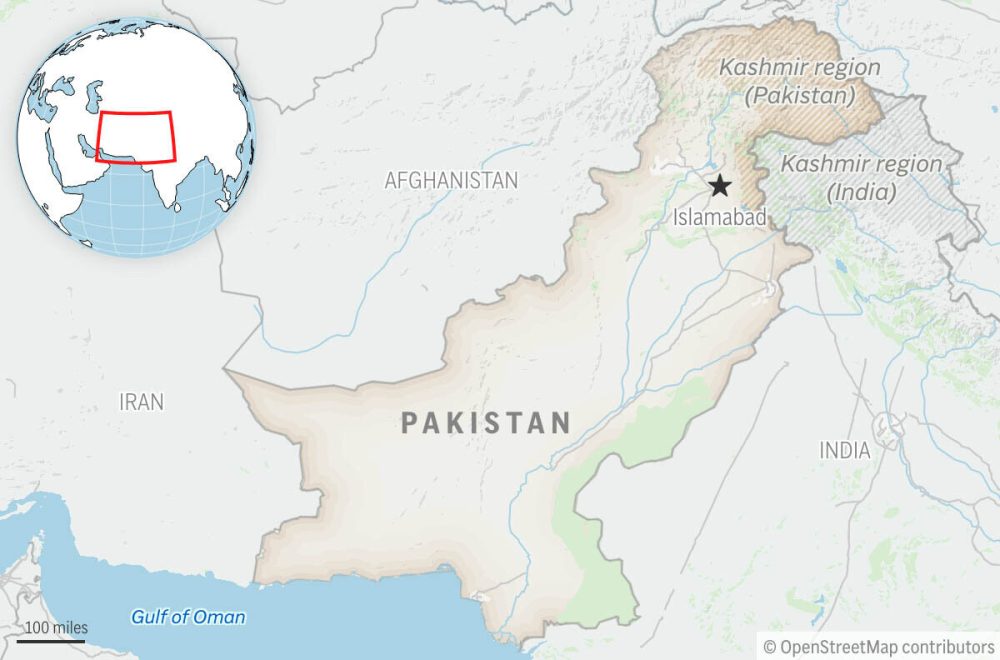
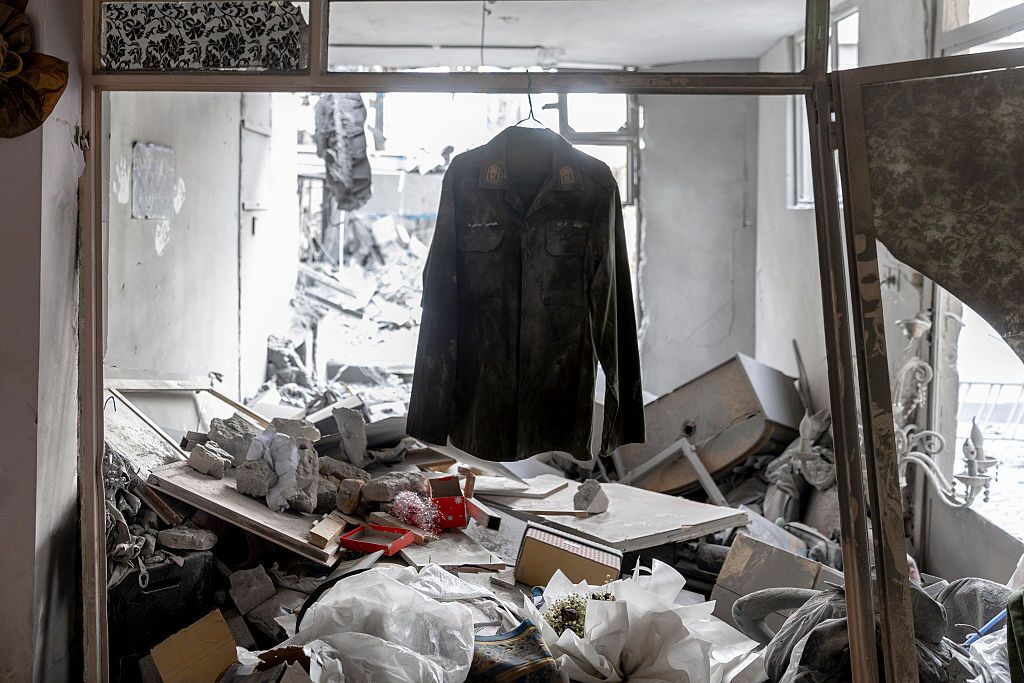
Two children died and 10 people suffered injuries when Pakistani military forces fired mortar rounds into Afghanistan’s Khost province overnight, according to Afghan officials who reported the violence Monday as border hostilities entered their third straight week.
Mustaghfar Gurbaz, who speaks for the provincial governor, confirmed that the mortar bombardment from Pakistan destroyed multiple residential buildings in villages throughout the southeastern region.
The deadly incident followed Pakistan’s report Sunday that an Afghan mortar strike hit a residence in the northwestern Bajaur district, resulting in four family members’ deaths and injuring two others, including a young child aged 5. Local residents and Pakistani officials stated their military retaliated Monday by attacking Afghan border positions where the previous day’s assault originated, inflicting significant casualties.
Afghan authorities have not yet responded to requests for comment regarding the retaliatory strikes.
These border confrontations, which have featured several Pakistani aerial bombardments targeting Afghanistan’s capital city of Kabul, represent some of the most severe violence between the neighboring countries in recent memory.
Pakistani leadership has characterized the current situation as an “open war.” President Asif Ali Zardari declared that Afghanistan’s Taliban government violated a “red line” when they deployed drone aircraft that injured multiple Pakistani civilians during the previous week.
Pakistan’s air force responded to those drone incidents over the weekend by bombing equipment storage facilities and what they termed “technical support infrastructure” located in Afghanistan’s southern Kandahar province, claiming these sites supported attacks within Pakistani territory. Kabul officials confirmed Pakistan struck two separate locations: an unoccupied security installation and a drug treatment facility that sustained minimal damage.
Afghanistan’s administrative Deputy Prime Minister Abdul Salam Hanafi declared overnight in Kabul that protecting national sovereignty becomes every citizen’s responsibility when territorial integrity faces violation.
During discussions with political commentators and journalists, Hanafi expressed sorrow regarding civilian deaths from recent Pakistani military actions, stating that warfare had been forced upon Afghanistan.
Pakistan, however, maintains that Kabul provides sanctuary to extremist organizations, specifically the Pakistani Taliban, which allegedly conducts terrorist operations on Pakistani soil. Afghan officials reject these accusations, insisting they prohibit their territory from being utilized for attacks against neighboring nations.
The current military confrontation began in late February when Afghanistan initiated cross-border assaults responding to Pakistani airstrikes within Afghan territory that Kabul claimed killed innocent civilians. These clashes shattered a Qatar-mediated truce established in October following earlier violence that resulted in dozens of military personnel, civilian, and suspected militant deaths.
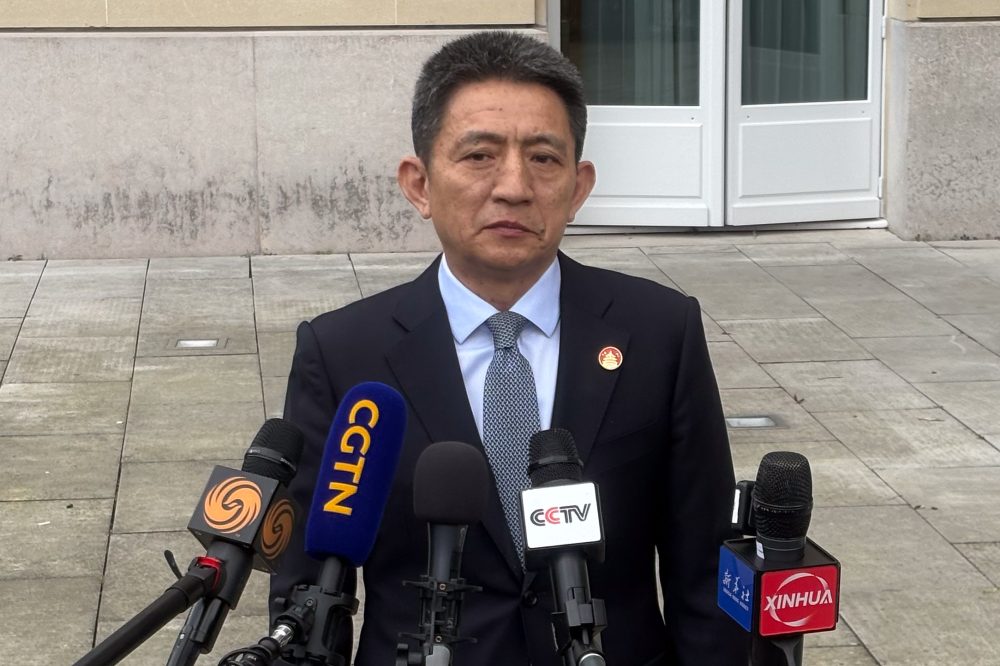
PARIS (AP) — Beijing issued a stern warning Monday regarding President Donald Trump’s recent trade policy actions, expressing fears they could undermine bilateral economic relationships following diplomatic meetings in the French capital.
During the discussions, Li Chenggang, serving as China’s international trade representative, voiced Beijing’s deep concerns about new manufacturing investigations targeting foreign production that the Trump administration initiated following the Supreme Court’s rejection of previous tariff measures.
“We are concerned that the possible results of such investigations may interfere with or damage the hard-won and stable China-U.S. economic and trade relations,” Li stated to members of the press.
These diplomatic talks were designed to lay groundwork for Trump’s anticipated journey to China, scheduled for approximately two weeks from now, although the president has indicated the trip might face postponement. Li avoided discussing the visit’s timing and declined to field reporters’ questions.
The ongoing Iran conflict has surfaced as a potential obstacle precisely when Washington and Beijing were rebuilding their partnership after a destructive tariff battle that saw import duties climb into triple-digit territory. Both nations subsequently reached agreement on a twelve-month ceasefire.
Treasury Secretary Scott Bessent, heading the American delegation in Paris, indicated that any postponement of Trump’s China visit would not stem from disputes over the Iran situation or initiatives to reestablish access through the Strait of Hormuz, a vital corridor for international maritime commerce.
Should Trump proceed with the China trip, it would mark his first presidential visit to the nation since his 2017 journey during his initial term. The visit would occur five months following his meeting with President Xi Jinping in Busan, South Korea.
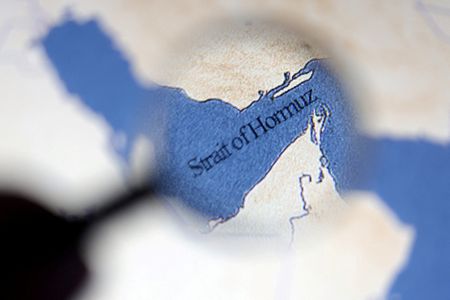
European allies are declining President Donald Trump’s appeal for military assistance to reopen the Strait of Hormuz, a critical shipping route that Iran has effectively shut down following recent U.S.-Israeli military operations.
The strategic waterway, which handles approximately one-fifth of the world’s oil shipments, was blocked by Iran using drones, missiles, and mines after Tehran retaliated against attacks by U.S. and Israeli forces.
NATO member countries, many of whom have faced Trump’s criticism in recent months, are showing hesitation about getting involved in the confrontation with Iran, despite typically being cautious about defying Washington.
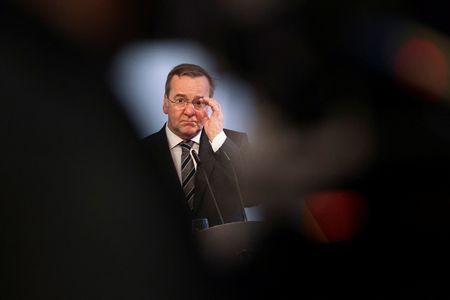
German Defence Minister Boris Pistorius expressed skepticism about the request during remarks in Berlin on Monday. “What does Donald Trump expect a handful or two handfuls of European frigates to do in the Strait of Hormuz that the powerful U.S. navy cannot do?” Pistorius questioned, dismissing Trump’s warnings about potential consequences for NATO members who refuse to assist.
“This is not our war, we have not started it,” Pistorius stated.
A German government spokesperson, Stefan Kornelius, emphasized that the situation falls outside NATO’s scope and that Germany will not participate. “Neither the United States nor Israel consulted us before the war, and Washington explicitly stated at the outset of the war that European assistance was neither necessary nor desired,” Kornelius explained.
However, some European officials indicated limited willingness to contribute to a solution.
EU foreign policy chief Kaja Kallas revealed that the bloc is exploring options with the United Nations, potentially modeling efforts after agreements that have allowed Ukrainian grain exports during the ongoing conflict with Russia.
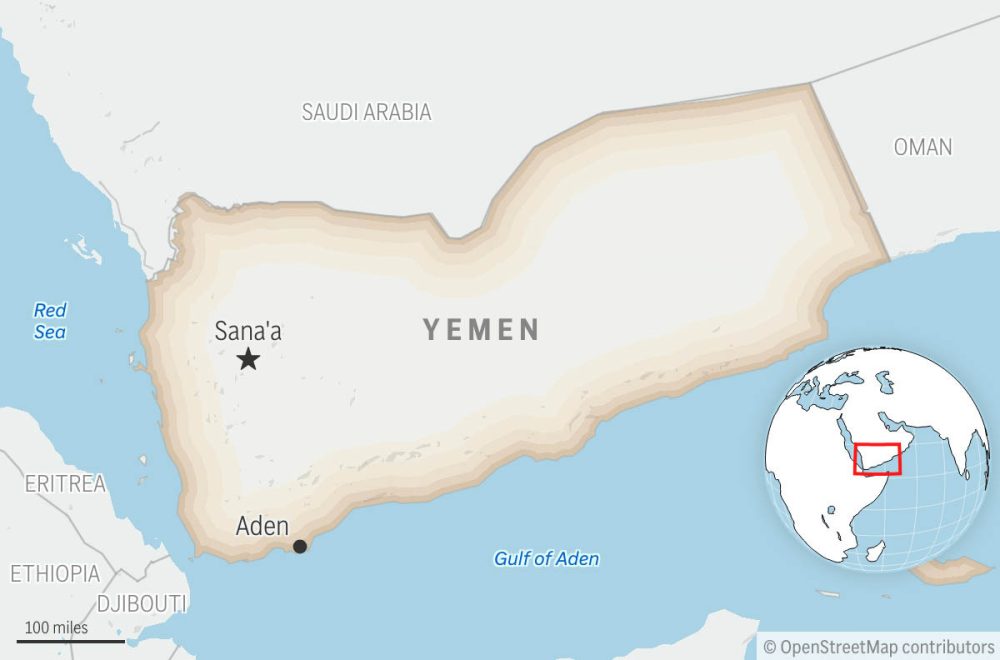
The European Union is also considering whether to expand its existing Middle East naval operation, Aspides, which currently safeguards vessels in the Red Sea from Houthi attacks, to cover the Strait of Hormuz region, according to Kallas.
Greece, however, which oversees the Aspides mission, announced through government spokesman Pavlos Marinakis that it will restrict its Middle Eastern involvement to Red Sea operations only.
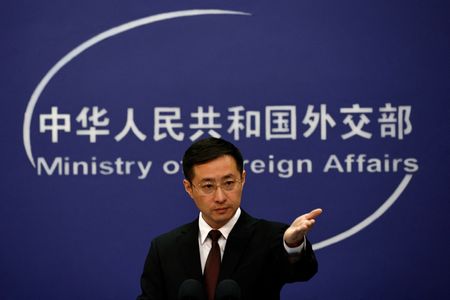
China’s foreign ministry announced Monday that Beijing is engaging with all parties involved in an effort to reduce tensions surrounding the strait.
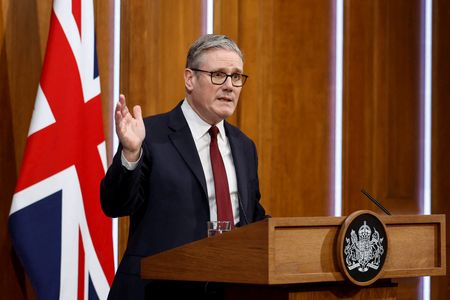
British Prime Minister Keir Starmer committed to collaborating with allies on a joint approach to ensure safe passage through the waterway, though he acknowledged the challenges ahead and reiterated that the United Kingdom would avoid involvement in a broader conflict. Starmer mentioned that Britain possesses autonomous mine-detection technology that could prove useful.
Denmark’s position suggested the EU should pursue reopening the strait regardless of disagreements with the conflict itself. “Even if we don’t like what’s going on, I think it’s wise to keep an open mind on whether Europe in some way can contribute, but with a view towards de-escalation,” said Danish Foreign Minister Lars Lokke Rasmussen.
Several other European nations firmly rejected involvement. Spain indicated it would avoid any actions that might intensify the conflict, while Italian Deputy Prime Minister Matteo Salvini warned that deploying military vessels to a combat zone would constitute joining the war.
“Italy is not at war with anyone and sending military ships in a war zone would mean entering the war,” Salvini told reporters in Milan.
WASHINGTON – The United States Postal Service plans to deliver an urgent message to lawmakers Tuesday: without dramatic changes, the agency could exhaust its cash reserves in under 12 months.
During testimony before a House Oversight subcommittee, Postmaster General David Steiner will outline the agency’s dire financial situation and request permission to implement sweeping changes to keep operations afloat.
Among the cost-cutting measures Steiner will propose: eliminating Saturday mail delivery, shuttering postal facilities, and dramatically increasing the price of first-class stamps from the current 78 cents to potentially more than one dollar.
According to written testimony obtained by Reuters, Steiner will emphasize the critical nature of expanding the postal service’s borrowing authority.
“In order to ensure our survival beyond next year, we need to increase our borrowing capacity so that we don’t run out of cash,” Steiner’s prepared remarks state. “The failure to do this could lead to the end of the Postal Service as we know it now.”
The postal service’s financial troubles highlight ongoing challenges facing the government agency as it struggles to adapt to changing mail delivery demands and rising operational costs.
VATICAN CITY – In an uncommon move, Pope Leo held a private audience Monday with a British investigative journalist whose recent book makes serious allegations against the Catholic organization Opus Dei.
The pontiff met with Gareth Gore, who published a 2024 investigation into the religious group that counts approximately 85,000 members worldwide across 70 nations. Following their discussion, Gore revealed he had requested the pope initiate an official investigation into the organization.
Vatican officials explained that the pope arranged the meeting to personally hear Gore’s claims. Though the pontiff regularly meets various individuals, private audiences with journalists are considered rare.
Established in 1928 by a Spanish cleric, Opus Dei – meaning “Work of God” – encourages Catholics to pursue spiritual devotion through their professional lives. The majority of members are laypeople who follow rigorous spiritual disciplines and frequently choose celibacy.
The organization maintains significant connections within Vatican operations, with numerous employees holding membership, including at least two former Vatican press office directors.
Gore’s book contains accusations that the group exercises psychological manipulation over members and leverages its power for financial misconduct.
Opus Dei has vehemently disputed these charges, issuing a 2024 response calling Gore’s publication “littered with twisted facts.” The organization did not provide immediate comment regarding Monday’s papal meeting.
The group maintains considerable influence in Peru, where Pope Leo worked as a missionary for many years before his papal election. Opus Dei describes its purpose as advancing Christian doctrine globally.
Tech giant Apple introduced its long-awaited second-generation AirPods Max headphones on Monday, carrying a $549 price tag more than half a decade after the original model hit the market.
This represents the company’s first significant overhaul of its premium over-ear headphones since they initially launched in 2020, as Apple works to strengthen its position in the high-end audio market currently led by competitors like Sony Group from Japan, along with Bose and Sennheiser.
The refreshed headphones run on Apple’s proprietary H2 processor, the same chip that powers the company’s newest AirPods lineup. Customers can place orders starting March 25 across more than 30 nations worldwide, with products hitting store shelves in early April, according to the company’s announcement.
The second-generation AirPods Max brings several enhancements, including superior active noise cancellation technology, an upgraded microphone array, and fresh capabilities such as Adaptive Audio, Conversation Awareness, and Live Translation functionality.
The Live Translation feature, which Apple first rolled out with the AirPods Pro 3 last September, allows users to translate real-time conversations between different languages through Apple Intelligence, the company’s artificial intelligence system.
Apple also noted that the new AirPods Max 2 delivers high-resolution lossless audio quality when users connect via USB-C, specifically designed for music professionals and content creators who need superior sound fidelity.
The Ocean City Museum Society has unveiled plans to offer their beautifully renovated facility for private bookings, transforming the historic building into a rental venue for community events.
Located at 217 South Baltimore Avenue in the heart of downtown Ocean City, Maryland, the Museum of Ocean City now welcomes inquiries for private functions following its recent restoration work.
The organization announced that the distinctive historic location provides an ideal backdrop for a variety of occasions, including business meetings, celebratory events, and other special occasions requiring a memorable venue.
The museum’s transformation into an event space represents a new chapter for the cultural institution, allowing the community to experience the restored building in an intimate setting while supporting the museum’s mission.
Delaware transportation officials have announced temporary lane restrictions coming to a stretch of Route 299 in Odessa as crews prepare to conduct soil testing operations.
The Delaware Department of Transportation says drivers should prepare for intermittent lane restrictions along Route 299 from Front Street to Old Corbitt Road beginning Monday, March 23rd and continuing through Friday, April 3rd.
Work crews will be drilling to collect soil samples during weekday hours from 9 a.m. until 4 p.m., with operations dependent on favorable weather conditions.
Transportation officials are advising drivers to reduce speeds when traveling through the construction zone and to plan for possible minor delays during the two-week period.
Additional details about the project can be found on DelDOT’s official website at www.deldot.gov.
Delaware Department of Transportation officials report that a traffic accident has resulted in the closure of two lanes on Interstate 95 northbound in the vicinity of Naamans Road.
The incident is causing significant delays for commuters traveling through the area. DelDOT crews are currently on scene managing the situation.
Motorists are advised to expect delays and consider alternate routes when possible. The department has not yet provided an estimated time for when the affected lanes will reopen to traffic.
This is a developing situation and updates will be provided as more information becomes available from transportation officials.
A traffic accident has resulted in significant lane restrictions on US Route 13 at Beeson Road, with left lanes blocked in both northbound and southbound directions.
The collision is causing delays for commuters traveling along this busy corridor. Drivers are advised to use caution when approaching the area and allow extra time for their commute.
Traffic is being directed around the incident scene while emergency responders and cleanup crews work to clear the roadway. Motorists may want to consider using alternative routes until normal traffic flow is restored.
The Delaware Department of Transportation is monitoring the situation and working to reopen all lanes as quickly and safely as possible.
Twenty years ago, Tom McGee started using stairwells for workouts as a strategy to quit smoking. The 69-year-old Chicago-area market researcher has faced an unexpected challenge: security guards who view his exercise routine with suspicion.
“I’ve gotten kicked out of about every hotel in the city,” McGee explained.
While stair climbing has gained recognition in fitness recommendations, regular practitioners report difficulties accessing stairwells due to building management restrictions in office towers.
Medical professionals strongly advocate for this form of exercise. Dr. Luis Rodriguez, a 66-year-old semi-retired pediatric pulmonologist who competes in stair-climbing competitions, emphasized the comprehensive workout benefits.
“You are working your legs. You are working your heart. You are working your lungs,” Rodriguez noted. “You can get a lot more benefit than just walking, because gravity is working against you.”
Scientific studies support these claims, showing that four minutes of stair climbing equals approximately 10 minutes of fast-paced walking or 20 minutes of leisurely walking.
Federal fitness guidelines updated in 2018 began encouraging brief activity bursts, such as consistently choosing stairs over elevators at work. These recommendations highlight how small activities throughout the day can accumulate meaningful health improvements without requiring lengthy workout sessions.
Virginia Tech exercise specialist Stella Volpe observed that many individuals “don’t realize that they don’t have to exercise all in one bout for it to be effective.”
University of Georgia public health researcher Jennifer Gay noted additional benefits, explaining that stair climbing may boost mental wellness and increase energy levels.
Medical experts advise that individuals with mobility concerns should consult physicians before beginning stair climbing routines.
The American Lung Association organizes annual “Fight for Air” fundraising events in office buildings nationwide each spring. While these events are enjoyable, organizers explain the name references the breathlessness participants experience after ascending multiple floors, similar to symptoms of respiratory conditions.
Property owners often restrict stair access due to liability concerns. Legal advisors warn landlords and building operators about potential lawsuits if individuals slip or fall on staircases. Hazardous conditions like inadequate lighting, wet steps, and damaged railings can lead to injury claims.
Many facility managers have implemented emergency-only stair policies based on such legal guidance.
A 2018 study examining hospital emergency visits found over one million annual stair-related injuries nationwide, with fractures occurring more frequently among elderly individuals. Women comprised more than 60% of those injured.
However, Gay’s research indicates minimal injury risk for people climbing upward. Descending stairs presents greater danger, and building managers “can’t make it a one-way street,” she added.
Health advocates have spent over ten years pushing for improved stair access. In 2013, ChangeLab Solutions, a California health policy organization, published guidelines encouraging property owners to unlock stairwells, arguing they present no higher liability than other shared building areas.
Gay and her research team estimate that 60% of American workers are employed in multi-floor buildings containing stairwells. However, no data exists showing what portion of these structures limit stair usage.
Stair climbing enthusiasts frequently share stories about struggling to locate accessible staircases.
Lisa Bai, a New York real estate professional, cannot access her office building’s stairs. While this should provide convenient exercise opportunities, sometimes “it’s not,” she said.
Bai and others seek alternative stepping solutions. Exercise machines like StairMasters can simulate stair climbing workouts, though tower climb participants say these devices don’t match the intensity of actual stairs.
Creative solutions become necessary when home or public stair access is limited.
Detroit suburban residents Carmen Erickson and Vivian Dawson have maintained a stair climbing partnership for roughly ten years, typically meeting three times weekly at a local park.
Travel presents additional challenges. During joint vacations, they deliberately book top-floor rooms in tall hotels to utilize stairwells. They also seek out hills and hospital parking structures.
The pair successfully negotiated after-hours building access by signing liability waivers and checking in with security personnel during each visit.
“If you connect with the right people and tell them what they’re doing and agree to the rules, it hasn’t really been a problem for us,” said Erickson, 53.
Dawson, 64, added: “You have to really want to do it.”
Tehran has requested the return of three oil tankers that Indian authorities captured last month, according to sources familiar with ongoing discussions between the two nations about securing safe maritime routes through the strategically important Strait of Hormuz.
Indian officials detained the Iran-connected vessels in February near their territorial waters, claiming the ships had disguised their identities and participated in unauthorized fuel transfers at sea.
According to an Iranian government source, Tehran has also requested medical supplies and pharmaceutical equipment as part of the negotiations. Iran’s diplomatic representative in New Delhi held discussions with Indian foreign affairs officials on Monday regarding these matters.
The sources requested anonymity given the delicate nature of the diplomatic talks.
Neither India’s external affairs ministry, Iran’s embassy in New Delhi, nor Tehran’s foreign ministry provided immediate responses to requests for comment.
Iranian authorities recently permitted two Indian liquefied petroleum gas carriers to navigate through the strait, with one vessel arriving back at India’s western coast on Monday. Maritime traffic has virtually ceased in the waterway since regional warfare began.
When questioned about discussions to guarantee safe passage for Indian ships, foreign ministry spokesman Randhir Jaiswal stated Monday that recent vessel movements demonstrated a “history of engagement, of dealing with each other.”
During his regular press conference, Jaiswal emphasized that no formal exchanges were taking place.
Following the commencement of American and Israeli military operations against Iran in late February, Tehran has launched retaliatory strikes throughout the region, including attacks on vessels attempting to cross the Strait of Hormuz that resulted in three Indian crew members’ deaths and one person missing.
Indian officials reported Monday that no fewer than 22 Indian-registered ships and 611 Indian maritime workers remain stranded in Gulf waters.
An Indian government source revealed that six of the trapped vessels carry LPG cargo, and the country prioritizes their safe return to address domestic cooking fuel shortages. Approximately 90% of India’s LPG imports originate from Gulf nations.
Indian maritime authorities confiscated the tankers Asphalt Star, Al Jafzia and Stellar Ruby, alleging the vessels had falsified their identities and movements while conducting prohibited ship-to-ship fuel transfers.
While Stellar Ruby flies an Iranian flag, the remaining two ships are registered under Nicaraguan and Malian flags.
A February 15 Indian Coast Guard criminal complaint obtained by Reuters alleged that Asphalt Star smuggled heavy fuel oil that was transferred to Al Jafzia, while bitumen was moved to Stellar Ruby. All three vessels currently remain anchored near Mumbai.
During the seizure period, Iranian state broadcasters quoted the National Iranian Oil Company denying any association with the three captured tankers.
Jugwinder Singh Brar, whom Washington accuses of operating a shipping network that facilitates Iranian oil transportation, confirmed he served as a consultant for all three seized vessels and maintained their operations were legitimate.
“We were transporting bitumen and there is nothing illegal in doing this. My ships have been there for 40 days and I have faced losses,” Brar stated in a telephone interview, adding he was unaware of any negotiations concerning the tankers.
LONDON, March 16 – A leading international banking organization is advising the world’s central banks to exercise restraint following dramatic energy price increases linked to the Iran crisis, describing the situation as a classic example of when monetary policymakers should avoid hasty reactions.
Energy markets have experienced significant turbulence this month, with oil prices jumping 40% and wholesale gas costs climbing nearly 60%. These sharp increases have drawn parallels to 2022’s inflationary period, when Russia’s military action in Ukraine combined with post-pandemic economic recovery to drive prices dramatically higher.
Major monetary authorities, including America’s Federal Reserve and the European Central Bank, responded to that earlier crisis by implementing their most aggressive interest rate increases in decades. However, they faced criticism for delayed action after initially misjudging the situation as short-lived.
Financial markets have rapidly adjusted their forecasts this time around, with investors anticipating that central banks will want to avoid repeating previous errors. Despite this market sentiment, the Bank for International Settlements has issued guidance recommending a measured approach.
“If it’s a supply shock, and certainly if it’s a temporary one, these are the textbook examples where you should look through and not react with monetary policy,” stated Hyun Song Shin, the organization’s chief economic advisor.
The guidance arrives during a pivotal week for global markets, as the Federal Reserve, European Central Bank, Bank of England, and Bank of Japan are all scheduled to conduct their first policy meetings since the Middle East crisis began on February 28.
Shin noted that the swift changes in market interest rate expectations might reflect current conditions, given the recent memories of 2022’s challenges.
Market expectations have already shifted dramatically, with traders now anticipating only one Federal Reserve rate reduction this year instead of two, while fully expecting a European Central Bank increase by July and assigning an 85% probability to a second hike before year’s end.
“It’s a kind of a knee-jerk reaction,” Shin observed, pointing out that primary inflation indicators haven’t shown similar movement yet, creating “a very confusing picture” overall.
The BIS quarterly report also examined how central banks have modified their public communication strategies following recent global disruptions. The analysis revealed that more institutions are now employing scenario-based illustrations to demonstrate potential risk impacts, supplementing traditional methods like fan charts and qualitative risk assessments.
Many central banks have also moved away from traditional forward guidance about future rate directions, instead publishing their own rate forecasts within the framework of alternative scenarios.
The organization’s current market risk assessment also addressed other volatility episodes from this year, including significant declines in artificial intelligence-related stocks and challenges within private credit markets.
“We have to watch this,” said Frank Smets, deputy head of the BIS monetary and economic department. “But we don’t see any major disruptions at this point.”
Motorists traveling on northbound Interstate 95 should expect to see cleanup crews working in the median today as Delaware Department of Transportation teams conduct litter removal operations.
The cleanup activity is taking place along the northbound lanes from Exit 5B at Route 202 and extends all the way to the Pennsylvania state line. DelDOT officials say the litter removal work is scheduled to conclude by 4:30 PM this afternoon.
Drivers are advised to use caution when passing through the work zone and may experience minor delays as crews complete their operations in the median area.
Representatives from President Donald Trump’s “Board of Peace” conducted discussions with Hamas officials in Cairo over the weekend, working to preserve the Gaza ceasefire amid mounting pressures from the ongoing Iran conflict, according to three sources who spoke with Reuters.
This marks the first reported diplomatic contact between the Palestinian militant organization and Trump’s newly-established international oversight body since U.S. and Israeli forces began their bombing campaign against Iran. The Board of Peace, which Trump personally leads, has been given responsibility for managing post-conflict Gaza operations.
In what appears to be a direct outcome of the Cairo discussions, Israel announced Sunday its intention to reopen the Rafah border crossing – the only pedestrian passage between Gaza and Egypt – which had been closed since the Iran military operations commenced. One source indicated this Israeli decision stemmed directly from the weekend talks.
Before the Iran conflict erupted, Trump’s Gaza reconstruction and peace strategy represented his primary Middle East policy achievement.
During the Cairo meeting, Hamas delegates cautioned Trump’s representatives that the organization might withdraw from previous ceasefire commitments if Israel continues enforcing the new Gaza restrictions implemented during the Iran war, sources revealed.
Israeli authorities closed all Gaza border points when military operations launched on February 28, citing safety concerns for crossing operations. While limited merchandise and humanitarian supplies later resumed flowing, the Rafah pedestrian crossing on Gaza’s southern border remained shuttered until Sunday’s announcement promised its reopening this week following completed “security assessment” procedures.
Previous Reuters reporting indicated that discussions regarding Hamas disarmament – intended as a central component of Trump’s next-phase planning – have been suspended since the Iran conflict began.
According to one source, Aryeh Lightstone, an American assistant to Trump’s special representative Steve Witkoff, participated in the Hamas discussions on behalf of the Board of Peace. Two additional sources confirmed Lightstone’s scheduled involvement, though they could not verify his actual attendance.
Additional diplomatic sessions are anticipated this week. All sources requested anonymity due to lack of authorization for public statements.
A U.S. official confirmed Lightstone’s participation in Gaza-focused Cairo meetings during recent days, while declining to verify any direct Hamas contact. The official added that American negotiators continue engaging regional allies to advance Trump’s comprehensive 20-point Gaza framework.
Israeli government officials have not responded to inquiries about whether the Rafah reopening decision resulted from the Cairo diplomatic session. Hamas representatives declined comment requests.
Trump’s Gaza strategy commenced with an October ceasefire arrangement that left Israeli forces controlling over half the territory, while Gaza’s 2 million-plus residents remain concentrated in a narrow Hamas-controlled coastal area.
The peace initiative had shown increased progress during the month preceding the Iran conflict, including fresh reconstruction commitments and the initial Rafah reopening.
Israeli military forces have maintained Gaza operations throughout the broader regional conflict, including Sunday strikes that resulted in 12 fatalities, among them nine police personnel. Military officials cite ongoing Hamas threats and hostile fire as justification for continued attacks.
A Palestinian official familiar with the Cairo negotiations stated that Hamas believes Israel is using the Iran war as cover to abandon commitments under Trump’s peace framework. Israeli authorities dispute this characterization.
The success of Trump’s Gaza plan depends significantly on whether Hamas fighters will surrender their weapons in exchange for amnesty provisions, a crucial step designed to enable reconstruction efforts and additional Israeli military withdrawals.
None of the sources indicated whether weapons surrender discussions would feature in this week’s scheduled Cairo meetings.
Traffic is being rerouted around a section of Cedar Lane Road after a utility pole toppled over, bringing down power lines across the roadway.
Delaware Department of Transportation officials report the road remains impassable in both directions between Marl Pit Road and Coverdale Lane while utility crews work to remove the fallen infrastructure.
Motorists are advised to seek alternate routes until the roadway can be safely reopened. No timeline has been provided for when the cleanup will be completed.
Virginia’s Department of Wildlife Resources has launched an underwater camera system that provides real-time viewing of shad fish during their annual migration season.
The live streaming camera, positioned in Virginia waters, captures footage of American shad as they make their way upstream for spawning during the spring months. This technology allows wildlife enthusiasts and researchers to observe the natural behavior of these fish without disturbing their habitat.
The shad migration represents a critical time in the species’ life cycle, as adult fish return from ocean waters to freshwater rivers and streams to reproduce. Virginia wildlife officials use this monitoring system to better understand fish populations and migration patterns.
Viewers can access the live camera feed through the Virginia Department of Wildlife Resources’ website, providing an educational opportunity to witness this natural phenomenon from home. The camera operates during daylight hours when fish activity is most visible.
This initiative supports ongoing conservation efforts for American shad, a species that has faced population challenges in recent decades due to various environmental factors including dam construction and water quality issues.
The National Basketball Association has abandoned plans for a promotional event at an Atlanta strip club after facing criticism from one of its own players. The league had been promoting an upcoming event at Magic City, an Atlanta establishment known for adult entertainment and exotic dancing. However, San Antonio Spurs player Luke Kornet publicly challenged the partnership through social media, questioning whether the NBA should associate with such venues. In a post on Medium, Kornet expressed his concerns, stating “The league should promote an atmosphere that is protective and respectful of the daughters, wives, sisters and mothers we know and love.” The player’s public stance appears to have influenced the league’s decision to cancel the promotional arrangement.
New data from the Pew Research Center reveals that roughly two-thirds of American teenagers between ages 13 and 17 are now using AI chatbots, raising concerns among experts about the implications for young people.
While teenagers report primarily using these artificial intelligence tools to assist with homework and school assignments, studies show many are also seeking guidance on significant personal matters through these digital platforms. Experts argue these serious life discussions should instead involve trusted adults like parents or religious leaders.
Adding to the concern, some chatbot platforms have been configured to deliver what researchers describe as “erotic content” to users, creating additional risks for young people accessing these services.
The city of Portland, Oregon has updated its anti-discrimination ordinance to include protections for polyamorous relationships. This type of arrangement involves romantic partnerships between three or more individuals.
The Pacific Northwest city, known for its progressive policies, has taken this step as part of broader inclusivity efforts. City leaders point out that Portland ranks second only to San Francisco in terms of LGBT population among major American cities.
This move places Portland among a growing number of municipalities nationwide that have begun extending legal recognition to multi-partner relationship structures. The updated ordinance reflects the city’s position within Oregon, a state known for its liberal political climate.
MULTAN, Pakistan — A deadly building collapse claimed the lives of at least eight women and left more than 50 others injured Monday when a shop’s roof caved in during a government welfare distribution in eastern Pakistan, according to police and emergency responders.
The tragedy unfolded in Rahim Yar Khan, located in Punjab province, when more than 100 women had assembled to receive government financial aid in preparation for Eid al-Fitr, the celebration that concludes the Islamic holy month of Ramadan. Emergency worker Ashiq Mahmood explained that the structural failure occurred after the shop owner directed some women to climb onto the roof while others stayed inside the building, causing the roof to buckle under the excessive weight.
The women were there to collect funds from the Benazir Income Support Program, a government initiative honoring the late Prime Minister Benazir Bhutto, who died in a 2007 assassination involving gunfire and explosives. This program distributes financial aid to millions of Pakistan’s poorest families, with eligible households receiving quarterly payments of 13,000 rupees, equivalent to approximately $45.
Such dangerous overcrowding incidents frequently happen throughout Pakistan during Ramadan, as government organizations, charitable groups, and private companies hand out food supplies and monetary assistance to impoverished families. A similar tragedy struck in 2023 when at least 11 women and children lost their lives in a deadly crowd surge at a Ramadan aid distribution facility in Karachi, where hundreds of people had rushed to obtain assistance outside a manufacturing plant.
Delaware Department of Transportation crews are currently conducting debris removal activities along the southbound lanes of Route 1, also known as Korean War Veterans Memorial Highway.
The litter cleanup operation is taking place between exit 93 and exit 98, with work expected to wrap up by 12:30 PM this afternoon.
Motorists traveling through the area should expect possible delays and are advised to use caution when passing through the work zone.
CHICAGO (AP) — Illinois voters will head to the polls Tuesday for primary elections featuring several compelling political narratives, including potential comebacks, departing long-serving officials, and implications for the 2028 presidential contest.
The primary ballot includes contests for governor, U.S. Senate, House of Representatives, state legislature positions, and various local offices.
The marquee contest centers on replacing Democratic Senator Dick Durbin, who is stepping down after serving five terms. Democratic contenders include Representatives Robin Kelly and Raja Krishnamoorthi, along with Lieutenant Governor Juliana Stratton, who has received Governor JB Pritzker’s backing. On the Republican side, former state party chairman Don Tracy and attorney Jeannie Evans are among those seeking the nomination.
Financial reports from late February showed Krishnamoorthi significantly outpacing all other candidates in fundraising, maintaining approximately $6.6 million after moving over $19 million from his House campaign war chest. Tracy led Republican fundraising efforts with roughly $1.8 million available.
Durbin’s Senate seat has experienced far less volatility than the state’s other Senate position, which recently saw five consecutive holders serve brief tenures. Since assuming office in 1997, Durbin represents just the second person to occupy this seat over more than four decades.
Governor Pritzker faces no Democratic opposition in his renomination effort. Trump’s presidential return has elevated Pritzker’s national standing, positioning the two-term governor among Democrats frequently mentioned for potential 2028 presidential campaigns.
Four Republican candidates aim to challenge Pritzker this fall, including former state Senator Darren Bailey, who previously faced defeat against Pritzker in 2022’s gubernatorial contest.
Cook County, home to Chicago, typically serves as the decisive battleground in both party primaries due to its massive voter base. However, in the Senate race, eight of ten Democratic candidates hail from Chicago or surrounding Cook County suburbs, potentially weakening any regional advantages.
Democratic statewide primary victors generally enter November elections with strong prospects, as the party has captured recent major statewide races with margins exceeding 55%.
House primary races have drawn significant attention due to Kelly’s and Krishnamoorthi’s Senate campaigns, plus the retirements of veteran Democratic Representatives Danny Davis and Jan Schakowsky, creating opportunities for numerous candidates.
Two former Democratic lawmakers are attempting political resurrections. In the 2nd Congressional District, Jesse Jackson Jr. seeks to reclaim Kelly’s seat — the same position Jackson lost in 2013 following his campaign fraud conviction. Jackson is the son of civil rights icon Reverend Jesse Jackson, who passed away February 17. His primary challengers include Cook County Commissioner Donna Miller and state Senators Robert Peters and Willie Preston.
The 8th Congressional District Democratic primary features former Representative Melissa Bean pursuing Krishnamoorthi’s seat against candidates including Neil Khot, Junaid Ahmed, and Dan Tully. Durbin has endorsed his former staffer Yasmeen Bankole in this contest.
The Associated Press maintains strict standards for declaring winners, only making calls when trailing candidates cannot mathematically overcome deficits. Uncalled races receive continued coverage of significant developments, with clear explanations of why winners haven’t been declared.
Illinois lacks automatic recount provisions. Candidates receiving at least 95% of the winner’s vote total may request paid recounts, though results remain non-binding and cannot alter outcomes. Courts may order recounts through election challenge proceedings. The AP may declare winners in recount-eligible races when leads appear insurmountable.
Voting concludes at 7 p.m. local time (8 p.m. Eastern).
The AP will report results and announce winners in competitive primaries for Senate, House, governor, secretary of state, comptroller, and legislative seats, plus select local races in Cook, DuPage, Kane, and Will counties. Additional statewide offices like attorney general and treasurer appear on ballots but lack contested races beyond write-in options.
Illinois operates open primaries, allowing any eligible voter to participate in either party’s contest. Same-day voter registration is permitted.
Current registration stands at approximately 8,976,000 voters as of Friday, with no party affiliation tracking.
The 2022 Democratic Senate primary drew about 857,000 votes, while Republicans cast roughly 715,000 ballots. Early voting comprised about 33% of total turnout.
More than 535,000 ballots were already submitted by Friday.
During 2024’s presidential primaries, Illinois results first appeared at 8:09 p.m. Eastern, nine minutes after poll closing. Final updates came at 2:11 a.m. Eastern with approximately 92% of votes tallied.
Most counties will integrate early and absentee ballots with Election Day results throughout the evening or near the end of counting, though some may release early totals initially.
Tuesday marks 231 days until the 2026 midterm elections.
PORTLAND, Maine — Marine biologists working at Cape Cod’s Woods Hole Oceanographic Institution have uncovered what they believe to be the earliest known audio capture of whale vocalizations, a finding that could advance our understanding of marine mammal communication patterns.
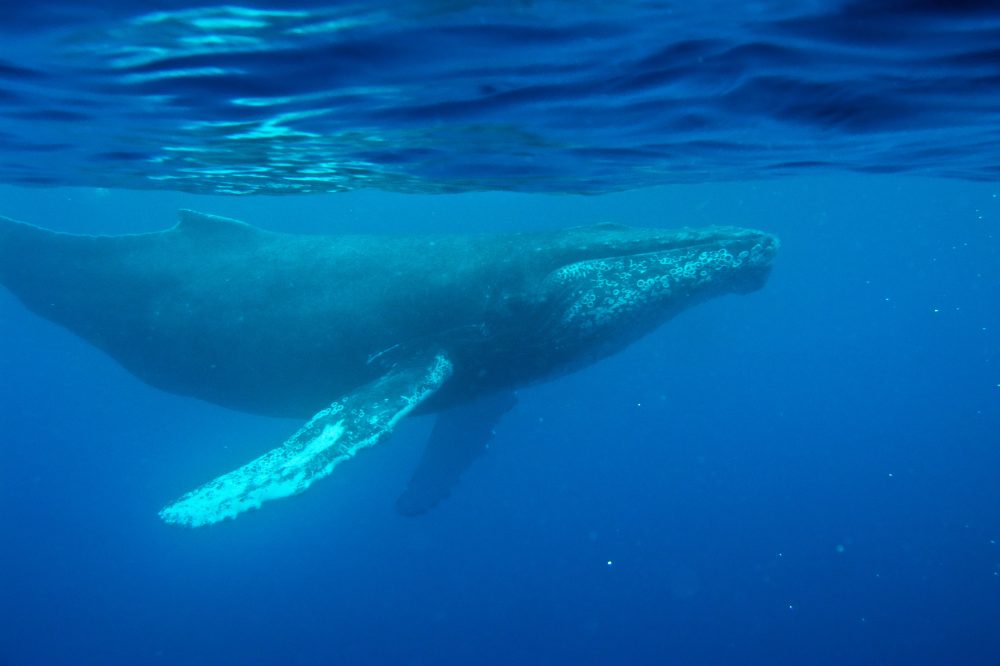
The audio features the complex song of a humpback whale, documented in March 1949 during research operations near Bermuda waters. Scientists at the Falmouth, Massachusetts facility say this discovery holds significant value because it preserves whale communication from an era when ocean environments were considerably less noisy.
This remarkable find actually precedes scientist Roger Payne’s formal identification of whale song patterns by almost two decades. The original recording occurred when Woods Hole researchers aboard a research vessel were conducting sonar testing and acoustic studies in partnership with the U.S. Office of Naval Research.
The audio survived decades because researchers used basic recording technology but stored the sounds on a plastic disc rather than magnetic tape, allowing the material to endure through time.
Marine scientists note that over 90 different species of whales, dolphins and porpoises produce various sounds as part of their daily lives. These vocalizations are essential for survival, serving multiple purposes including social interaction and navigation.
The sounds these marine mammals create include clicking noises, whistling calls, and complex vocalizations. Researchers studying whale behavior explain that these audio communications help the animals locate food sources, navigate ocean waters, find other members of their species, and interpret their marine environment.
Ocean noise pollution has become a growing concern, with some marine areas now experiencing sound levels 10 times higher than those recorded in the 1960s. Studies conducted by the Scripps Institution of Oceanography in the mid-2000s revealed that underwater noise pollution off California’s southern coast had increased dramatically compared to 1960s levels.
The newly discovered recordings from Woods Hole capture whale songs from a much quieter ocean period. This baseline audio could help marine biologists better assess how modern human-generated sounds, particularly from commercial shipping, impact whale communication behaviors.
Humpback whales rank among the ocean’s most skilled vocalists, despite their massive size that can exceed 55,000 pounds. Their haunting, melancholic songs have been captured for human audiences over many years, with listeners often describing the sounds as deeply moving.
Roger Payne’s 1970 release “Songs of the Humpback Whale” became a cultural phenomenon, selling over 100,000 copies and earning recognition as the top-selling environmental album in history. The recording emerged during the early days of the environmental movement and played a crucial role in building public support for ending commercial whale hunting practices worldwide.
PORTLAND, Maine — Marine researchers believe they’ve uncovered the earliest known recording of whale song, a discovery that may shed new light on how these massive ocean creatures communicate with one another.
Scientists at Woods Hole Oceanographic Institution in Falmouth, Massachusetts, found the ethereal humpback whale vocalizations on vintage audio equipment, with the sounds originally captured in March 1949 near Bermuda waters. These gentle giants, known for their acrobatic breaches and calm demeanor around whale watching boats, left behind what researchers describe as a haunting musical legacy.
What makes this discovery particularly valuable is not just the whale’s voice, but the acoustic environment surrounding it, explained Peter Tyack, a marine bioacoustician and emeritus research scholar at Woods Hole. The ocean soundscape of the late 1940s was significantly quieter than today’s seas, offering scientists a unique baseline for comparison.
“The recovered recordings not only allow us to follow whale sounds, but they also tell us what the ocean soundscape was like in the late 1940s,” Tyack explained. “That’s very difficult to reconstruct otherwise.”
This historical audio could prove crucial for understanding how modern human activities, particularly increased maritime traffic and shipping noise, have altered the way whales communicate. According to National Oceanic and Atmospheric Administration research, these marine mammals adjust their calling patterns based on environmental noise levels.
The recording significantly predates Roger Payne’s groundbreaking whale song research by almost two decades. Woods Hole researchers aboard a vessel were conducting sonar testing and acoustic studies with the U.S. Office of Naval Research when they accidentally captured these sounds, according to Ashley Jester, who directs research data and library services at Woods Hole.
The original scientists had no idea what they were documenting, but their curiosity led them to preserve the mysterious sounds anyway, Jester noted.
“And they were curious. And so they kept this recorder running, and they even made time to make recordings where they weren’t making any noise from their ships on purpose just to hear as much as they could,” Jester said. “And they kept these recordings.”
The whale song came to light during Woods Hole’s digitization project for archived audio materials last year. Jester located the recording on a remarkably well-preserved disc made by a Gray Audograph, a dictation device common in the 1940s era.
Though the underwater recording technology would seem primitive compared to modern equipment, it represented the cutting edge of its time, Jester explained. The plastic disc format proved particularly fortunate, as most recordings from that period used tape that has since degraded beyond use.
Sound production serves as a vital survival tool for whales, enabling them to socialize and maintain contact across vast ocean distances. These vocalizations include clicks, whistles, and calls that help the animals locate food sources, navigate their environment, find companions, and interpret their surroundings, according to NOAA marine scientists.
Multiple whale species create repetitive sound patterns resembling songs. Humpback whales, which can exceed 55,000 pounds in weight, stand out as the ocean’s premier vocalists, producing intricate sounds that can seem otherworldly or deeply melancholic.
Hansen Johnson, a research scientist at the Anderson Cabot Center for Ocean Life at the New England Aquarium, believes this rediscovered recording from a quieter era could serve as a foundation for better understanding contemporary whale communication.
“And, you know, it’s just beautiful to listen to and has really inspired a lot of people to be curious about the ocean, and care about ocean life in general,” said Johnson, who wasn’t part of the research team. “It’s pretty special.”
Teresa Younger will conclude her leadership of the Ms. Foundation in June, wrapping up her time at the helm of America’s pioneering women-focused philanthropy during a period marked by significant social and political upheaval under Donald Trump’s return to the presidency.
While acknowledging current challenges in achieving political equality for all people – a core mission of the Ms. Foundation – Younger remains committed to continuing her advocacy work beyond her CEO role.
“I believe feminism is still alive and well,” Younger told The Associated Press during a recent interview. “In fact, it has been the one thing that has been the preservation of democracy and our constitutional rights in some way over the past 12 years.”
During her leadership, Younger addressed domestic violence issues involving NFL players, broadened the organization’s support for community-based groups across Southern and Midwestern states, and successfully secured more than $100 million for the foundation’s permanent fund. In 2018, the organization adopted a new approach prioritizing investments in programs serving girls and women of color – a shift that carried special significance under Younger’s guidance as a leader with Black and Indigenous heritage.
“The institution was explicit in our strategic plan to say that we want to center women and girls of color as a point of inclusion, not exclusion,” Younger explained. “And now we are sitting in a spot where quote-unquote DEI is looked at as bad. And we refuse to accept that.”
This strategic pivot led to the foundation’s 2020 research study titled “Pocket Change: How Women and Girls of Color Do More with Less,” which challenged other charitable organizations to reconsider both their funding priorities and methods.
The study revealed that charitable foundations allocated approximately $356 million to organizations serving women and girls of color in 2017 – representing less than 0.05% of all foundation grants distributed in 2018.
Beyond exposing this minimal investment in some of America’s most underserved communities, the research uncovered significant disconnects between funders and organizations led by women of color. Many of these nonprofits employ comprehensive approaches, combining services like childcare and diaper distribution with reproductive rights advocacy. However, funders often compartmentalize their grants by specific populations, strategies, or issues, choosing to support only portions of these organizations’ work.
The study recommended that foundations offer flexible, long-term financial support, align their strategies with recipient organizations, actively seek feedback from grant recipients, and back intermediary organizations with strong connections to these groups.
This approach has historically defined the work of women’s funds and the Ms. Foundation within the philanthropic sector. These organizations both assist grassroots groups serving marginalized communities and develop innovative funding and partnership models that other funders later adopt as standard practices.
The first women’s funds in America emerged during the 1970s, with the Ms. Foundation becoming the initial national organization dedicated to supporting women’s groups and feminist causes. Gloria Steinem, Patricia Carbine, Letty Cottin Pogrebin, and Marlo Thomas established it in 1973.
Sunny Fischer, who helped establish the Chicago Foundation for Women, explained that the women who created it around 1983 sought to serve women differently than many large social service organizations were doing at that time.
Instead of advising women facing domestic violence to return home and repair their marriages, Fischer noted, “There were new groups that were trying to help women where they were, to really understand what was going on in the home and to try to give women choices about what they could do if they were in an abusive situation.”
Lucia Woods Lindley, a photographer and heir to a wealthy Nebraska family whose wealth originated from telecommunications and coal industries, was another Chicago Foundation for Women founder whom Fischer remembered as “a great planner.”
In 2023, the Ms. Foundation revealed that Woods Lindley had bequeathed $50 million through her estate – the largest donation the organization had ever received. This gift comprised nearly half of the $106 million the foundation eventually secured for its endowment.
During an interview at that time, Younger said the Ms. Foundation had not anticipated Woods Lindley’s bequest would be so substantial.
“She trusted and believed that Ms. (Foundation)’s role as the national public women’s foundation was critical to the thought leadership that needed to happen in philanthropy around feminism and around challenging the field and around growing and asking the right kinds of questions,” Younger said.
Despite these gains, the financial resources managed by women’s funds remain small compared to major foundations’ assets and the largest individual philanthropists’ wealth. Melinda French Gates stands as a notable exception, having pledged billions of dollars to benefit women and girls.
The Women’s Philanthropy Institute at Indiana University’s Lilly Family School of Philanthropy has monitored charitable giving to women and girls, finding that over a decade, their share of overall philanthropic support increased from 1.59% in 2012 to 2.04% in 2023, with a peak of 2.18% in 2022.
“The vast majority of philanthropic dollars are going to the general population and based on need rather than identity,” said Jacqueline Ackerman, the institute’s director. However, she noted they monitor giving to historically underfunded groups to determine whether these patterns are shifting.
The Ms. Foundation will announce Younger’s successor this spring, while Younger has not yet revealed her future plans. Speaking with visible emotion, Younger expressed her love for her work with the foundation while expressing confidence it will thrive under new leadership.
“I want to look back and see somebody who’s built on what I’ve been able to do and take it to the next level,” she said. “And I will sit back with pride in what they are able to accomplish.”
Federal consumer protection officials are sounding the alarm about a dramatic surge in tax season fraud targeting Americans, including Delaware residents. The Federal Trade Commission’s consumer protection division reports that fraudulent robocalls, text messages, and phishing emails have increased significantly compared to previous tax seasons, with artificial intelligence technology making these schemes more convincing and widespread.
Consumer advocates and federal officials are urging taxpayers to exercise extreme caution when receiving unexpected communications and to remember that the Internal Revenue Service never initiates contact through text messages or phone calls.
The IRS annually publishes its “Dirty Dozen” list of the most prevalent tax scams targeting Americans. Leading this year’s list is fraudsters pretending to be IRS agents through various communication channels. During the current fiscal year 2025, the tax agency has identified more than 600 fake social media accounts impersonating the IRS, warning taxpayers to avoid “clicking links or opening attachments from unexpected messages.”
The IRS emphasizes that the agency “does not leave urgent, threatening prerecorded messages, call to demand immediate payment, or threaten arrest.”
According to the IRS, criminals frequently employ threatening language and QR codes to direct victims to fraudulent websites designed to trick taxpayers into “verifying” their accounts or providing sensitive personal information. These malicious links can also install harmful software, including ransomware that can lock users out of their files and private data. The agency notes that “AI-enabled IRS impersonation by phone (robocalls, voice mimicry, and spoofed caller ID)” is becoming increasingly common. Advanced phone scams now utilize artificial intelligence to create realistic computer-generated voices and fake caller identification systems that appear legitimate.
Rosario Mendez, an attorney with the FTC’s consumer protection bureau, identifies identity theft as among the most widespread forms of tax season fraud. Mendez describes this crime as the unauthorized use of someone’s Social Security number or other personal details, typically to claim their tax refund illegally.
“People usually discover this when they go to file their tax returns and discover someone else has already filed,” she said. “For the records of the IRS, that is, it’s already happened. But it’s not the person — it’s an identity thief.”
Eva Velasquez, who leads the Identity Theft Resource Center as CEO, confirms her organization has documented rising numbers of scam attempts and identity theft cases in recent years, likely enhanced by AI-generated communications.
“We’re seeing an uptick in phishing emails, fake texts, and even phone calls,” Velasquez said. “Scammers are trying to get you to engage in any manner – talk to them, click the link, share your personal data, or share access to your devices or accounts.”
Velasquez believes the “sheer volume and level of sophistication” indicates artificial intelligence is being utilized by criminals.
“‘Deluge’ is the best word I can think of, because it’s relentless,” she said.
Velasquez recommends a “Type, don’t tap” approach when dealing with suspicious messages. Instead of clicking any links in questionable communications, she advises manually entering the official IRS website address (IRS.gov) or the legitimate website of whatever agency allegedly sent the message.
“Go to the source. Don’t click any of those links,” she said. “If you didn’t initiate the contact, don’t engage.”
Kathy Stokes, who directs fraud prevention programs for AARP, notes an interesting pattern in scam reporting: younger Americans more often report being targeted by scammers, while older victims typically lose larger amounts of money.
“That’s because they have more money to lose,” she said.
When suspicious messages arrive, Stokes stresses the value of pausing and consulting with others. She explains that when people receive notifications that seem unusual, frightening, or urgent, taking time to discuss it with trusted friends or family members usually helps identify scam attempts.
“That’s also going to inoculate the people you share it with from falling for the scam,” she said.
For taxpayers who discover someone has fraudulently used their Social Security number to file a return ahead of them, immediate action is crucial. Victims should notify the IRS and visit IdentityTheft.gov to file an official report. This process generates a personalized recovery plan from the government.
“If a scammer has used your social security number to file a tax return, it’s possible the same thief could use it to open bank accounts, credit cards, or file for unemployment,” she said. “Another worthwhile step is to monitor your credit report and freeze credit accounts so they can’t be misused.”
Alan Butler, executive director of the Electronic Privacy Information Center, supports these recommendations and encourages scam victims to consider identity monitoring services moving forward. However, he cautions against expensive services that may themselves be questionable, advising thorough research before purchasing protection.
“People can be victimized not only once with the theft of their identity, but a second time, because the monitoring services are trying to up-sell them,” he said.
Stokes also recommends that financial fraud victims consider filing reports with local police departments.
“Even if you get pushback from local law enforcement, you should insist on the report,” she said. “There may be a means of restitution for fraud victims down the road, and they would want that as a point of proof of what happened.”
Shares of Meta Platforms climbed 3% on Monday after reports emerged that the company is considering eliminating at least 20% of its workforce to help balance massive investments in artificial intelligence technology.
Should Meta proceed with cutting one-fifth of its staff, it would represent the company’s largest workforce reduction since its major restructuring in late 2022 and early 2023, which the company called its “year of efficiency” and resulted in approximately 21,000 job eliminations.
The social media company has been investing heavily to compete in the artificial intelligence sector after initially falling behind competitors, constructing data centers and competing aggressively for top talent. Meta anticipates spending as much as $135 billion by 2026, nearly twice what it invested last year.
These expenditures aim to secure the computing power necessary for training and operating AI systems, with Meta agreeing Monday to spend up to $27 billion on cloud services from Nebius.
Although the increased spending has enhanced Meta’s advertising tools and driven revenue growth, the company has not yet launched an AI system capable of competing with industry frontrunners OpenAI, Anthropic, and Google.
The company has been developing a new AI system called Avocado, though this model’s capabilities have not met internal expectations.
Rosenblatt Securities analyst Barton Crockett estimated that eliminating 20% of staff could save approximately $6 billion, potentially increasing adjusted core earnings by 5%.
“This doesn’t have to stop at 20%. There could be more down the road if AI is truly this impactful on staff productivity,” Crockett noted.
Meta employed 79,000 workers as of December’s end and responded to inquiries Friday by stating, “this is speculative reporting about theoretical approaches.”
The company’s shares were trading at $631.50 in premarket activity. The stock has dropped 7% year-to-date following a nearly 13% gain in 2025.
Artificial intelligence-related job cuts have been increasing worldwide, with companies announcing more than 61,000 AI-linked layoffs since November, including cuts at Amazon and Australia’s Wisetech.
Discussion about AI displacing human workers intensified after Block CEO Jack Dorsey announced plans last month to eliminate nearly half his company’s workforce, claiming the technology has transformed “what it means to build and run a company.”
Some industry observers suggest the layoffs also reflect excessive hiring during previous periods. OpenAI CEO Sam Altman commented last month that certain companies were using AI as justification for job cuts they would have implemented regardless.
“Is AI a convenient scapegoat for cuts that might have happened anyway? Perhaps. But we believe the market will quickly see through companies using AI as camouflage,” Bernstein analyst Mark Shmulik wrote in a research note.
Shmulik added that Meta was “probably the best placed incumbent to pivot to an AI-enabled organization,” citing the success of its post-pandemic organizational changes.
The cruise industry is navigating turbulent financial waters as escalating oil prices drive up operational costs, with industry experts pointing to Carnival Corporation as potentially facing the steepest financial impact through 2026.
Unlike its major competitors, Carnival stands alone among U.S. cruise operators in not using fuel hedging strategies to shield against volatile energy prices.
Energy costs have skyrocketed more than 35% since Middle Eastern conflicts began, driven by strikes on petroleum infrastructure and shipping disruptions affecting the Strait of Hormuz. These developments have sparked widespread concerns about worldwide oil availability.
Brent crude futures reached $100 per barrel on Friday, a significant jump from the pre-conflict price of $72.48. Iranian officials have suggested oil could potentially reach $200 per barrel.
Most cruise companies protect themselves against fuel price volatility by using hedging strategies – financial agreements that lock in fuel costs. Carnival Corporation breaks from this industry standard.
Company financial documents reveal that a 10% shift in fuel costs per metric ton would decrease Carnival’s 2026 earnings by $145 million, while competitor Royal Caribbean would see only a $57 million reduction.
Norwegian Cruise Line indicated it hasn’t modified its fuel hedging position since early March earnings reports. A 10% fuel cost increase would reduce their annual earnings per share by 7 cents, translating to approximately $90 million in lost income, based on Morningstar Research calculations.
CFRA analyst Alex Fasciano noted, “During 2022’s oil spike, Carnival’s fuel costs rose more rapidly than its peers.”
The 2022 Ukraine conflict provided a preview of current challenges. During that period, Carnival’s fuel expenses represented 17.7% of total revenue, compared to Royal Caribbean’s 12.1% and Norwegian’s 14.2%.
“Carnival also owns a larger fleet, meaning the level of consumption is also higher than their counterparts,” Fasciano explained.
Carnival defended its approach in a statement to Reuters, saying, “Our best hedge against fuel costs is to use less, so we focus on using less fuel in the first place.”
The company highlighted efficiency improvements, stating, “We’ve cut our fuel use by 18% since 2011 despite increasing capacity by roughly 38% during that time.” Carnival added that it doesn’t anticipate long-term advantages from hedging strategies.
Carnival is scheduled to release first-quarter financial results on Friday. Royal Caribbean did not provide comment to Reuters.
The timing presents additional challenges as the industry operates during “wave season” from January through March – the sector’s peak booking period when companies offer promotional deals and discounts for upcoming voyages.
While major cruise operators serve global destinations, Caribbean and transatlantic routes represent substantial portions of their capacity and customer demand. No major cruise lines had vessels operating in Middle Eastern waters when conflicts began, minimizing immediate regional operational risks.
Barclays analyst Brandt Montour observed, “Despite zero direct exposure to the Middle East, shocks like this one have the potential to step up consumer hesitation in the booking process, especially for Americans thinking of traveling abroad.”
Goldman Sachs analyst Lizzie Dove suggested the situation could particularly affect American travelers’ European bookings, especially transatlantic voyages, which typically command premium pricing.
These European cruises generally operate during the third quarter and generate disproportionately significant revenue for cruise companies, she noted.
Dutch authorities are examining a second explosion in Amsterdam that struck an office building Monday, with the same extremist organization taking credit for both this incident and a recent bombing at a Jewish educational facility, according to police officials.
Law enforcement representatives confirmed they are working to determine whether the office building has any connection to Amsterdam’s Jewish community.
The blast resulted in a small fire that building security personnel quickly put out, causing only minimal damage to the structure, police reported. Investigators are working to verify if both incidents are truly connected to the same group.
Sienna Investment Managers, the company that oversees the damaged building, has not responded to requests for comment.
The earlier incident on Saturday targeted a Jewish school and also resulted in minor damage. Both Amsterdam Mayor Femke Halsema and Dutch Prime Minister Rob Jetten publicly denounced that attack.
The organization has additionally taken responsibility for previous attacks on synagogues in Rotterdam and in the Belgian city of Liege. These incidents have already prompted increased security measures at Jewish facilities throughout Amsterdam.
Justice Minister David van Weel stated Saturday that authorities cannot rule out connections between the Amsterdam and Rotterdam explosions, though he stopped short of confirming the group’s social media claims.
Fears about potential attacks targeting Jewish communities worldwide have increased amid recent military actions involving the United States and Israel against Iran, followed by Tehran’s retaliation.
Israeli military forces have advanced into additional areas of southern Lebanon as part of an expanded ground operation targeting Hezbollah strongholds, military officials announced Monday.
Lieutenant Colonel Nadav Shoshani, an Israeli military spokesperson, confirmed during a press briefing that troops were operating in “new locations that our troops were not operating yesterday.”
Shoshani characterized the latest military actions as “limited and targeted,” but refused to specify how far into Lebanese territory the forces would penetrate or whether troops would establish permanent positions.
The Israeli military has maintained five positions in southern Lebanon following a November 2024 ceasefire agreement with Hezbollah. Additional forces were deployed after Hezbollah launched a rocket barrage on March 2, escalating tensions and drawing Lebanon deeper into a widening regional conflict.
According to Hezbollah, their March 2 attack was a response to the assassination of Iran’s supreme leader on February 28, marking the beginning of what they call a U.S.-Israeli war against Iran. Israel has countered with an intensive aerial bombardment campaign across Lebanon.
The conflict has resulted in more than 800 Lebanese deaths and displaced over 800,000 people from their homes, particularly in southern regions and areas surrounding Beirut, the capital.
Lebanese security sources reported to Reuters that Israeli troops surrounded the strategically important southern Lebanese town of Khiyam over the weekend. The town sits approximately 6 kilometers north of the Israeli border.
Israeli forces have gained effective control of Khiyam and are now moving westward toward the Litani River, according to sources. This advancement could potentially place significant portions of southern Lebanon under Israeli control while severing connections to the rest of the country.
Israeli military leadership has justified the ground offensive, which began after the March 2 rocket attacks, as a defensive strategy to shield Israel from ongoing Hezbollah assaults. Officials report that Hezbollah has been launching an average of at least 100 rockets and drones daily.
Two Israeli soldiers have lost their lives in combat operations within southern Lebanon during the current military campaign.
Israeli officials indicated Sunday that Israel and Lebanon are anticipated to engage in discussions in the coming days to negotiate a lasting ceasefire agreement that would require Hezbollah’s disarmament.
While Beirut began assembling a negotiating team last week for potential talks, Lebanese officials told Reuters over the weekend that they have not received confirmation regarding the scheduling of such meetings.
The November 2024 ceasefire agreement required Hezbollah to withdraw from southern Lebanon while Lebanese military forces would assume control of the region. In return, Israel was to halt its bombardment of Lebanese territory.
Israeli officials maintain that Lebanon has failed to honor its commitments under the agreement, leading Israel to continue conducting nearly daily airstrikes against what it identifies as Hezbollah positions and weapons facilities.
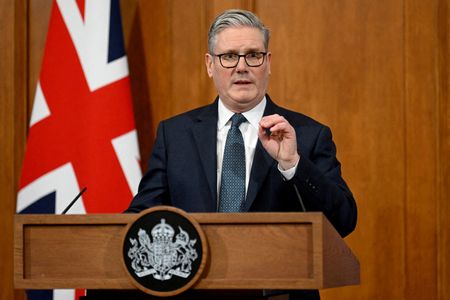
British Prime Minister Keir Starmer declared Monday that his nation will avoid getting pulled into an expanded conflict with Iran, while simultaneously working alongside international partners to develop a coordinated strategy for reopening the strategically vital Strait of Hormuz.
During a press conference, Starmer acknowledged the challenging nature of restoring access to the waterway but emphasized its importance for stabilizing global energy markets. The Prime Minister indicated he has been in discussions with European, Gulf, and American allies regarding a plan to ensure navigational freedom, clarifying that NATO would not lead such an operation.
President Donald Trump has publicly criticized Starmer for initially declining to back U.S.-Israeli military actions against Tehran. Over the weekend, Trump suggested that Britain, along with China, France, Japan, and South Korea, should deploy naval vessels to the region to help reopen the shipping route.
The British government announced its first domestic financial assistance related to the crisis: a 53-million-pound ($70.30 million) aid package targeting vulnerable households that depend on heating oil, which has seen dramatic price increases due to the ongoing conflict.
“Ultimately, we have to reopen the Strait of Hormuz to ensure stability in the (oil) market. That is not a simple task,” Starmer explained to journalists.
“So we’re working with all of our allies, including our European partners, to bring together a viable collective plan that can restore freedom of navigation in the region as quickly as possible and ease the economic impact,” he continued.
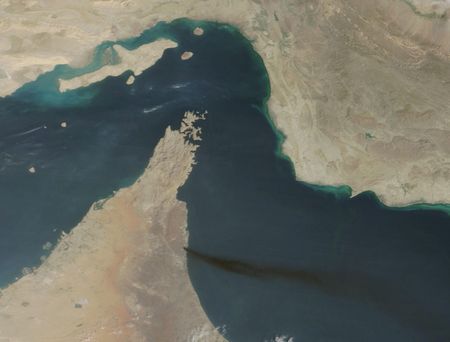
The narrow waterway between Iran and Oman typically handles approximately one-fifth of the world’s oil and liquefied natural gas transportation. Tehran’s effective closure of the strait has driven oil prices above $100 per barrel.
While confirming that Britain was “taking the necessary action to defend ourselves and our allies, we will not be drawn into the wider war,” Starmer emphasized the country’s limited military involvement.
When questioned about Britain’s military capabilities after withdrawing its final minehunter from the region this month, the Prime Minister noted that autonomous mine-detection systems remain deployed in the area.
Starmer explained that Britain and its partners are evaluating available resources for a collective contribution, seeking to involve as many nations as possible in the effort.
Addressing his relationship with Trump, Starmer revealed they discussed the strait situation during a Sunday evening phone call. He dismissed concerns that the conflict had strained relations with America, describing their conversation as occurring “in the way that you would expect between two allies and two leaders” and affirming his “good relationship” with the U.S. president.
Fallen electrical wires have prompted officials to close the right lane of Delaware Route 72 at Dawson Drive, according to DelDOT traffic reports.
The lane closure is currently in effect as crews work to address the downed power lines. Drivers traveling through the area should expect delays and exercise caution while navigating around the closure.
Authorities have not provided an estimated time for when the lane will reopen to traffic. Motorists are advised to seek alternate routes if possible or allow extra travel time when passing through the affected area.
Young people interested in careers in public safety now have the opportunity to apply for New Castle County’s summer youth initiative focusing on police work and emergency medical services.
The no-cost program will take place from July 6 through July 17, 2026, running Monday through Friday from 8:00 AM to 4:00 PM each day.
New Castle County Police and Paramedic departments are welcoming applications for this career-exploration opportunity that provides participants with an exclusive behind-the-scenes experience in both law enforcement operations and emergency medical response.
The program aims to give young participants direct exposure to the daily responsibilities and challenges faced by police officers and paramedics serving the community.
Interested applicants can find more information about the application process and program requirements through New Castle County’s official channels.
BUENOS AIRES – While models strut down runways displaying the latest designs from Argentina’s fashion elite, the country’s textile industry faces an unprecedented collapse that threatens to destroy decades of manufacturing tradition.
The glamorous spectacle of Buenos Aires Fashion Week masks a harsh reality: Argentina’s clothing and textile sector is experiencing its most severe downturn in generations, overwhelmed by an avalanche of ultra-low-cost imports primarily from Chinese fast-fashion giants.
The crisis has intensified under President Javier Milei’s free-market reforms designed to increase competition and reduce consumer costs. His administration slashed import duties on clothing and shoes from 35% to 20% last year while easing restrictions on international online shopping by raising the tax-free limit for courier deliveries to $400 in 2024.
While Milei’s economic policies have successfully curbed inflation and boosted certain sectors like agriculture, they’ve delivered a crushing blow to domestic textile manufacturers struggling to survive against foreign competition.
“The atmosphere feels different now. Everyone seems more depressed and anxious. Making ends meet has become increasingly difficult,” explained wedding dress designer Valentina Schuchner while preparing her fourth collection for BAFWEEK this month.
Despite her personal success at the fashion showcase, the 29-year-old designer expressed concern about the disappearing landscape of local brands around her.
“Revenue has plummeted, and consumer spending has collapsed. People simply lack disposable income for clothing or non-essential purchases,” Schuchner observed.
Officials from Milei’s trade ministry refused to provide comment on the industry’s struggles.
CHINESE PLATFORMS DOMINATE MARKET
According to Argentina’s clothing industry association, direct-to-consumer shipments from overseas suppliers nearly quadrupled during the previous year. China has emerged as the primary winner, with its portion of textile and apparel imports jumping from approximately 55% in 2022 to 70% in 2025, largely due to platforms like Shein and Temu, according to Priscila Makari from industry organization Fundacion Pro Tejer.
This development occurs as the United States pressures regional allies to reduce Chinese economic influence, creating diplomatic challenges for pro-American leaders like Milei and Chile’s new president Jose Kast.
Many Argentine consumers welcome the expanded options and lower prices. Sarah Alcaje, 24, represents countless shoppers who previously struggled with limited selection and expensive local merchandise, particularly outside major metropolitan areas.
Alcaje recalls traveling across the border to Chile from Mendoza to find reasonably priced clothing. Today, she completes her shopping with simple smartphone clicks.
“These digital marketplaces make purchasing footwear, apparel and other items incredibly convenient. The costs are extremely reasonable, and the rapid delivery is fantastic,” Alcaje said.
MASSIVE JOB LOSSES HIT WORKERS
Local manufacturers find themselves unable to match foreign competitors’ pricing. Argentina’s textile sector eliminated 16% of its workforce between 2023 and late last year, dropping from approximately 121,000 to 102,000 employees, based on industry statistics released in February.
David Kim, who runs the family-owned Amesud textile facility in San Martin’s industrial district outside Buenos Aires, reports his factory operates at merely 30% capacity.
After spending $10 million on imported equipment over ten years to serve major clients including Nike, Puma and domestic children’s brand Mimo & Co., most machinery now remains unused.
“This represents the most devastating crisis we’ve ever experienced,” Kim stated from his factory floor, where numerous machines sat silent during a weekday afternoon.
“We’re prepared to compete fairly, but we can’t survive being overwhelmed by taxation, employment expenses, and union obligations that don’t burden manufacturers in other nations,” he continued.
As contracts disappeared, Kim reduced his workforce from roughly 420 employees to about 240 and cut production from five days weekly to four.
“We fear reaching a point where we cannot meet basic operational expenses,” Kim warned. “We worry that numerous businesses in our industry will cease to exist.
“Hopefully, we won’t be among them.”
Fundacion Pro Tejer argues that Milei’s policy adjustments have created additional disadvantages for domestic textile manufacturers already weakened by dramatically reduced consumer spending.
“Every participant, from individual entrepreneurs to established fashion houses, faces extremely challenging circumstances,” Pro Tejer’s Makari explained.
“Argentina possesses tremendous capability, extensive heritage, exceptionally talented designers and workers, plus strong family business traditions. Watching employment disappear and enterprises shut down is truly devastating.”
SAN JOSE, California, March 16 – The head of tech powerhouse Nvidia will outline the company’s upcoming technology roadmap before thousands of attendees at their yearly developer gathering in San Jose, California this Monday.
Jensen Huang, the company’s chief executive, will deliver his presentation at a hockey venue that holds over 18,000 people, where he’s anticipated to explain how the leading artificial intelligence processor manufacturer plans to navigate the rapidly evolving AI industry.
The corporation, which holds the distinction of being the globe’s highest-valued publicly traded entity with a worth exceeding $4.3 trillion, will likely introduce their upcoming AI processor dubbed Feynman, honoring the late American scientist Richard Feynman, during the four-day event. Huang’s address will also cover server facilities, the company’s chip programming platform CUDA, digital helper technologies called AI agents, and physical artificial intelligence applications like robotics.
The presentation will also spotlight Groq, a processor startup that Nvidia acquired technology from for $17 billion last December. Groq focuses on rapid and cost-effective “inference” processing tasks, where AI systems apply their training to respond to queries or generate predictions instantly.
Following massive investments totaling hundreds of billions in recent years for AI model development chips, major companies including OpenAI, Anthropic, and Meta Platforms are now prioritizing service delivery to hundreds of millions of users accessing their AI platforms. The chip manufacturer encounters stronger rivalry in the inference-computing processor market compared to AI-training chips, with industry experts predicting the company will strengthen its position against competitors seeking to reclaim market territory lost to Nvidia recently.
Even with heightened competition, including from Nvidia’s own clients developing proprietary chips, the company maintains its pivotal role in the worldwide AI infrastructure.
Countries like Saudi Arabia are developing specialized AI frameworks for their citizens using Nvidia’s technology, and the company stands among the few major American corporations continuing to distribute open-source AI programs, representing a growing competitive arena between the United States and China.
Huang’s presentation begins at 11 a.m. Pacific Time (2 p.m. Eastern Time).
Oil shipment activities have restarted at a major United Arab Emirates port facility following a drone strike that caused operations to halt earlier Monday, according to two industry sources speaking to Reuters.
The Fujairah port, situated along the Gulf of Oman near the Strait of Hormuz, serves as a crucial shipping point for approximately 1 million barrels daily of the UAE’s Murban crude oil – representing about 1% of worldwide petroleum demand.
Emergency response crews worked to extinguish the fire that erupted in the emirate’s petroleum industrial area, according to a statement from Fujairah’s government media office. Officials confirmed no injuries occurred during the incident.
This temporary shutdown represents the second significant interruption at the important fuel distribution center within recent days. The facility had just returned to normal operations Sunday after recovering from another drone attack that occurred over the weekend.
These incidents occur amid ongoing tensions as the U.S.-Israeli conflict with Iran creates challenges for maritime traffic through the Strait of Hormuz, the narrow passage between Iran and Oman that typically manages one-fifth of global oil transportation.
A deadly shelling struck a village in northern Yemen on Sunday, claiming the lives of at least 10 people, with six of the victims being children, while more than 30 others sustained injuries, government officials reported Monday. Yemen’s government is pointing the blame at Iran-backed Houthi rebels for the fatal bombardment.
According to the Information Ministry, the rebels launched their attack against civilians who had come together for iftar, the traditional evening meal that ends the daily fast during Ramadan, in Hajjah province. While the Houthis maintain control over most of this province, certain sections remain under the authority of Yemen’s internationally recognized government, which operates from Aden.
Details surrounding Sunday’s bombardment remain murky, and Houthi representatives have refused to provide any statement regarding the incident.
Hajjah province has been a battleground between Houthi forces and government troops since Yemen descended into civil conflict in 2014. That year marked when the Houthis took control of Sanaa, the capital city, along with large portions of northern Yemen, forcing the government into exile. The following year saw a Saudi-led coalition, which includes the United Arab Emirates, step in militarily in hopes of reinstating the government.
This ongoing war has brought Yemen’s economy to near-total collapse and created “severe” food shortages in northern regions, including Hajjah, the World Food Program reports.
In an official statement, the Information Ministry warned that fatalities could climb higher, noting that several of those injured remain in critical condition.
WASHINGTON — The Department of Homeland Security stands ready for fresh leadership, creating a potential turning point for President Donald Trump’s immigration strategy or an opportunity to intensify his campaign pledge to execute America’s most extensive deportation effort.
During a recent gathering at Trump’s Florida golf resort, the White House political director advised Republican legislators to concentrate immigration enforcement efforts on criminal offenders, marking a shift from the sweeping deportation platform Trump campaigned on. House Speaker Mike Johnson acknowledged that aggressive enforcement actions have caused a “hiccup” for Republicans, prompting what he termed a “course correction.”
However, evidence suggests Trump’s deportation initiative is expanding rather than slowing, with billions allocated for hiring additional Immigration and Customs Enforcement personnel, constructing warehouse-style detention facilities, and pursuing the administration’s target of removing approximately one million immigrants from the United States this year.
“We are at an interesting moment where it has been an inflection point — the public has finally seen what mass detention and mass deportation mean,” said Sarah Mehta, who monitors the issue for the American Civil Liberties Union.
“This is not an agency that’s slowing down,” she continued. “They’re really going forward with some of the cruelest policies.”
White House spokesperson Abigail Jackson stated that the president’s approach has resulted in immigrants leaving the United States, whether through forced removal or voluntary departure, while securing the border with Mexico.
“Nobody is changing the administration’s immigration enforcement agenda,” she declared.
These developments place Homeland Security at a critical juncture. Current Secretary Kristi Noem is departing, while Trump’s chosen successor, Oklahoma Senator Markwayne Mullin, faces Senate confirmation proceedings this week.
Following intensive deportation operations in Minneapolis and other metropolitan areas — along with the deaths of at least three American citizens during enforcement actions — Democratic legislators are withholding standard funding unless the department modifies its approach.
Simultaneously, supporters who believe Trump secured the presidency based on his mass deportation promise express frustration that the administration fell short of its objectives last year and demand improved performance.
“There has been a lot of talk in Congress and now in the White House about kind of backing away from President Trump’s, candidate Trump’s, mass deportation promise,” said Rosemary Jenks, co-founder of the Immigration Accountability Project, which advocates for deportations.
“We believe that now is an opportunity,” she added. “We’ve got to get the deportation numbers up.”
This discussion unfolds as the United States marks its 250th anniversary, balancing its heritage as an immigrant nation against scenes of masked federal agents smashing vehicle windows and detaining individuals suspected of lacking proper legal status.
The Republican-controlled Congress allocated approximately $170 billion in last year’s tax legislation to support these efforts, more than tripling ICE’s budget.
Missouri GOP Senator Eric Schmitt delivered a passionate defense against Democratic restrictions. “This question about deporting illegal immigrants was on the ballot. President Trump was not bashful,” he stated. “And the American people supported the idea that we are going to deport people.”
Nevertheless, divisions within Trump’s coalition are emerging. Some Republicans favor what one described as a more compassionate approach and are sharing these perspectives with Mullin.
Wisconsin Senator Ron Johnson, typically a strong opponent of illegal immigration, noted that immigrants handle most dairy operations in his state, and restaurant associations have informed him they depend on immigrant workers.
“Can we just turn back the clock and have these all these people who came in here illegally, just be back home?” he questioned.
“In terms of actually implementing that, it’s a lot tougher — particularly, in fact, when you realize a lot of these people, most of them, came here to seek opportunity, wanting freedom,” he explained. “They’re working, supporting their family, contributing to organizations and community.”
The Mass Deportation Coalition, comprising conservative organizations including the Heritage Foundation and Blackwater founder Erik Prince, recently formed to maintain administration focus.
The group characterizes last year’s emphasis on removing violent criminal immigrants as “phase one” and proposes “phase two” should target immigrants beyond those with violent criminal backgrounds this year.
Mark Morgan, who led ICE and Customs and Border Protection during Trump’s initial presidency and participates in the coalition, clarified this doesn’t involve random sweeps through Home Depot parking areas. Instead, it involves strategic enforcement targeting workplace violators, visa overstays, and individuals already ordered removed by judges.
However, they encounter resistance from within Republican ranks, Morgan noted, particularly from those seeking to limit deportations primarily to criminals and business interests wanting reduced workplace enforcement.
“The Republicans that are saying that their definition of targeted enforcement is only criminal, they’re wrong. They’re on the wrong side of this,” he stated.
“That’s why you see some of the base that’s really becoming apoplectic because they’re like, ‘Wait a minute. You’re talking about only removing criminals now?’ That’s not what you promised,’” Morgan explained.
Both deportation supporters and immigrant rights advocates recognize that the Trump administration’s best opportunity for achieving its objectives involves creating conditions so unwelcoming that immigrants voluntarily leave — commonly termed self-deportation.
ACLU’s Mehta anticipates the administration will increase efforts to terminate temporary permissions allowing immigrants to remain in the United States — especially refugees and asylum seekers — while their cases proceed through the system. She described it as a “deliberate attempt to make people undocumented — to take away lawful status — and then to be able to enforce against them.”
California Senator Alex Padilla expressed concern that more nonviolent immigrants will be detained to fill newly constructed warehouse facilities as the Trump administration pursues its deportation targets.
Such actions are unacceptable, he said, and represent “the key questions that Senator Mullin will have to answer at his confirmation hearing.”
TOKYO (AP) — Government weather officials in Japan declared Monday that cherry blossom season has officially begun after confirming the first blooms in three cities across the country.
Meteorological experts inspected designated Somei Yoshino cherry trees in Kochi in southwestern Japan, along with Gifu and Yamanashi in the nation’s central region. They confirmed finding more than five blossoms on each monitored tree, meeting the threshold needed to make the seasonal announcement.
Kochi’s cherry tree bloomed ahead of the others for the third consecutive year, appearing six days sooner than typical, according to the Japan Meteorological Agency. The trees in Gifu and Yamanashi flowered nine days ahead of their usual schedule.
“Low rainfall during the winter and longer hours of sunshine might have helped the early blooming,” Shinobu Imoto from Kochi Meteorological Agency explained to TBS television.
The beloved cherry blossoms, known as “sakura” in Japanese, typically reach full bloom from late March through early April, coinciding with the nation’s new academic and business calendar year. Countless Japanese citizens participate in traditional activities like strolling and having outdoor meals beneath the flowering trees.
However, recent years have brought challenges as areas surrounding popular cherry blossom destinations have reported problems including trash accumulation, excessive noise, and other complications related to too many tourists visiting these sites.
For hundreds of years, sakura blossoms have held significant cultural importance throughout Japanese society.
LONDON, March 16 – The United Kingdom is coordinating with international partners to develop a joint strategy for reopening the Strait of Hormuz and restoring safe passage through Middle Eastern waters, though the effort presents significant challenges, British Prime Minister Keir Starmer announced Monday.
Speaking to the press, Starmer emphasized the critical importance of clearing the waterway for global economic stability. “Ultimately, we have to reopen the Strait of Hormuz to ensure stability in the (oil) market. That is not a simple task,” the Prime Minister stated.
The British leader outlined efforts to build an international coalition to address the shipping crisis. “So we’re working with all of our allies, including our European partners, to bring together a viable collective plan that can restore freedom of navigation in the region as quickly as possible and ease the economic impact,” Starmer explained.
Discount chain Dollar Tree issued a weak sales outlook for the coming year on Monday, citing reduced consumer spending as families deal with financial pressures.
The retailer’s stock price fell 3% during pre-market trading following the announcement.
American consumers are grappling with higher living expenses and signs that job market conditions are worsening.
February’s unemployment rate climbed to 4.4%, up from 4.3% the previous month. Consumer prices are also expected to have risen in February, driven by tariff impacts and higher fuel costs linked to Middle East conflicts.
Competitor Dollar General issued a similar weak sales projection last week, indicating reduced demand as price-conscious customers become more choosy about purchases.
Dollar Tree projects fiscal 2026 revenue between $20.5 billion and $20.7 billion, falling short of the $20.69 billion that Wall Street analysts had anticipated, according to LSEG data.
The company anticipates adjusted earnings per share for fiscal 2026 to range from $6.50 to $6.90, which aligns closely with analyst expectations of $6.69.
A Colorado-based senior housing company announced Monday its plans to go public, seeking to generate up to $740 million through its stock market debut.
Janus Living, headquartered in Denver, revealed it will offer 37 million shares with pricing set between $18 and $20 per share. The real estate investment trust specializes in senior housing properties and is being spun off from healthcare-focused REIT Healthpeak Properties.
The timing comes as new stock offerings have significantly decreased in recent weeks, with ongoing Middle East tensions creating market uncertainty that has made investors cautious and discouraged companies from moving forward with public offerings.
Bank of America Securities and J.P. Morgan will serve as the primary underwriters managing the stock offering. Once complete, Janus Living plans to begin trading on the New York Stock Exchange using the ticker symbol ‘JAN’.
Financial markets are bracing for a pivotal week as major central banks prepare to meet while oil prices surge past $100 per barrel due to the escalating Iran conflict entering its third week.
The weekend saw U.S. forces strike Kharg Island, Iran’s primary oil export facility, while President Trump worked to build international support for ensuring safe passage through the strategically vital Strait of Hormuz, which remains blocked.
This week brings a packed schedule of central bank policy meetings, including the Federal Reserve, European Central Bank, Reserve Bank of Australia, and Bank of England, all facing the challenge of responding to rapidly changing economic conditions.
The situation at the Strait of Hormuz remains fluid, with India successfully securing safe passage for two oil tankers over the weekend. However, Trump’s efforts to rally NATO partners and China for naval assistance have met mixed results, as several nations indicated Monday they have no immediate plans to deploy vessels to the region, despite reports that the administration may soon announce a coalition agreement.
Asian markets showed mixed performance Monday, with Japan’s Nikkei declining 0.3% while South Korea’s KOSPI gained more than 1% following last week’s losses. European markets opened lower, though U.S. futures pointed to gains before the opening bell.
The dollar, which surged over 1% against major currencies last week, retreated slightly Monday while gold prices remained stable.
The Federal Reserve faces particular scrutiny when it meets Wednesday, with no rate changes anticipated but investors closely watching for commentary on inflation threats from sustained oil price increases and labor market concerns.
Recent economic data highlights the central bank’s dilemma: core inflation climbed to 3.1% in February based on personal consumption expenditures figures released Friday, while fourth-quarter GDP growth was revised downward to just 0.7%. Though these numbers predate the Iran crisis, they illustrate the dual risks of higher inflation and slower growth from an oil shock.
Market expectations have shifted dramatically, with a second Fed rate cut this year now eliminated from futures pricing, and the remaining anticipated cut pushed back to December.
Among this week’s central bank meetings, Australia may be the only one to adjust rates, potentially implementing its second increase this year, while others are expected to maintain a cautious stance.
China released stronger-than-expected retail and industrial data for January-February Monday, consistent with robust trade figures for those months, though these numbers also precede the recent oil price spike.
U.S.-China trade discussions in Paris entered their final day Monday, led by Treasury Secretary Scott Bessent. These talks precede a planned U.S. state visit to China later this month, though Trump suggested the visit could be postponed if China doesn’t assist with resolving the Hormuz blockade.
In corporate news, Meta is reportedly considering layoffs affecting up to 20% of its workforce, according to three sources familiar with the situation.
The global transportation sector continues facing severe disruption after Dubai’s international airport was struck by another drone Monday, forcing flight suspensions despite authorities quickly controlling the resulting fire. Air travel remains heavily impacted by the Iran conflict, which has forced closure of major Middle Eastern hubs including Dubai, Doha, and Abu Dhabi, leaving tens of thousands of passengers stranded.
Key economic releases Monday include U.S. February industrial production data and Canada’s February consumer price index figures.
French voters participated in the initial round of mayoral elections on Sunday, offering insights into the nation’s current political climate ahead of next week’s runoff contests.
The far-right National Rally achieved notable victories in its established territories, securing Perpignan in the opening round and placing second in Marseille. A potential win in Marseille, the country’s second-most populous city, would represent a significant milestone for the party.
However, the party’s influence remains confined to specific regions. In France’s largest metropolitan areas beyond its Mediterranean base, the National Rally struggled to gain traction, earning less than 8% support in Paris, Lyon, Toulouse, Nantes, Strasbourg and Bordeaux. This pattern indicates the party’s efforts to broaden its mainstream appeal have not yet succeeded in wealthy, diverse urban areas.
The hard-left France Unbowed party, under Jean-Luc Mélenchon’s leadership, exceeded predictions and demonstrated continued strength despite facing campaign challenges. The party secured Saint-Denis, the Paris region’s second-largest municipality, in the first round and appears positioned to win Roubaix in northern France.
These victories occurred despite recent setbacks, including controversy surrounding the death of far-right activist Quentin Deranque in Lyon and antisemitism allegations following Mélenchon’s comments about individuals with Jewish-sounding names.
The party’s success creates complications for moderate left-wing groups as they prepare for next year’s presidential race. How Socialists and Greens approach potential partnerships with France Unbowed in upcoming runoffs will signal the left’s unity or division heading into national competition.
Environmental parties, which capitalized on global climate activism to win major cities in 2020, faced difficulties replicating their previous success. Economic pressures and international tensions appear to have shifted voter priorities away from environmental concerns. This change was evident as Strasbourg’s Green mayor finished third, while Green candidates in Bordeaux and Lyon face uncertain prospects in next Sunday’s decisive votes.
President Emmanuel Macron’s centrist coalition, historically weak at the local level, entered these elections with limited expectations following disappointing 2020 results. However, one contest held national importance: former Prime Minister Edouard Philippe’s campaign to regain his Le Havre mayoral position.
Philippe exceeded polling forecasts by capturing 43.8% of first-round votes, positioning himself favorably against Communist and National Rally opponents in the runoff. Success would strengthen his credentials as a leading centrist candidate for the 2027 presidential election and potentially pressure other potential candidates, including former prime minister Gabriel Attal, to support his bid.
In Paris, left-wing parties appear likely to maintain their quarter-century control of the capital. Socialist Emmanuel Grégoire topped the first round with 38% support, leading conservative opponent Rachida Dati by more than 10 percentage points, effectively endorsing the environmental policies of the departing mayor.
The Paris race’s surprise came from nationalist candidate Sarah Knafo, who has built international recognition and attended U.S. President Donald Trump’s inauguration ceremony. Her 10% vote share qualified her for the second round, illustrating the strategic dilemma facing traditional conservatives before the presidential election: whether to isolate the far right and risk electoral defeat, or pursue collaboration with these groups.
Contact: Dover Police Department Public Information Officer Lieutenant Mark Hoffman Email: [email protected]
UPDATE: Dover police have called off the Gold Alert for Eliseyah Morales after the teenager was found unharmed on Sunday evening (March 15th).
Background: Dover Police had activated a Gold Alert for 15-year-old Eliseyah Morales after she disappeared from her Dover neighborhood. The teen was last spotted around 5:32 p.m. on Friday in the 400 block of Harmony Lane in Dover, Delaware. Police efforts to reach or find Morales were unsuccessful, prompting officials to express concern for her safety and welfare. Authorities described Morales as an African American female standing 5 feet 6 inches tall and weighing 110 pounds. When last seen, she was dressed entirely in black clothing and carried a leopard print bag. She was also wearing Jordan brand sneakers and had long braided hair. Morales lives in the Dover area. Police had asked anyone with information about her location to contact them at 302-736-7111.
BRUSSELS — European Union leaders announced Monday they are exploring ways to maintain access through the Strait of Hormuz as the three-week conflict involving Iran, Israel and the United States continues to drive up global energy and commodity costs.
Speaking before a gathering of foreign ministers from the 27-member alliance in Brussels, EU foreign policy chief Kaja Kallas emphasized the importance of keeping the waterway accessible. “It is in our interest to keep the Strait of Hormuz open, and that’s why we are also discussing what we can do in this regard from the European side,” Kallas stated.
President Donald Trump has reached out to international partners including France, China, Japan, South Korea and Britain, requesting assistance in securing the strait for worldwide maritime commerce.
According to Kallas, the EU is considering two primary approaches: extending their existing Aspides naval operation from the Red Sea into the Persian Gulf, or establishing a voluntary alliance where member countries would provide military resources as needed.
The conflict, which began with February 28 airstrikes conducted by Israel and the United States, has caused global energy costs to surge, with Brent crude oil prices climbing more than 40%. Beyond petroleum, the war has disrupted international supply networks, impacting Indian pharmaceuticals, Asian semiconductors, and Middle Eastern oil-based products including fertilizers.
Maritime vessels are either stranded in the Gulf or taking significantly longer routes around Africa’s southern coast. Aircraft transporting goods from Middle Eastern locations remain grounded. Extended fighting increases the likelihood of product shortages and price hikes across numerous sectors.
French President Emmanuel Macron has indicated his country is collaborating with European, Indian and Asian allies on a potential international escort mission for ships traversing the strait, though he stressed such action must occur “when the circumstances permit” and fighting has decreased.
German Foreign Minister Johann Wadephul emphasized the need for the United States and Israel to clarify “when they consider the military aims of their deployment to have been reached.” Speaking before joining his EU counterparts in Brussels, he added, “we need more clarity here” from both nations.
Wadephul also characterized the Iranian government as presenting a serious threat to regional stability, shipping freedom and the global economy, stating “this danger definitely must not continue.” He expressed support for sanctions targeting those responsible for blocking the strait, though he provided no additional specifics.
The German minister suggested that once U.S.-Israeli objectives become clear, discussions should focus on establishing “a security architecture for this whole region,” which would include dialogue with Iran.
Luxembourg Foreign Minister Xavier Bettel noted the EU has not committed to military involvement. “The fact is, for the moment, the EU is not directly part of the situation. So we need to decide if we are going to be part or not. That’s an important decision,” Bettel explained.
The Aspides mission was originally created to counter shipping attacks in the Red Sea by Somali pirates and Yemen’s Iran-supported Houthi rebels, who have not yet entered the current conflict. Saudi Aramco operates pipeline infrastructure that circumvents the Strait of Hormuz, delivering oil to the Red Sea port of Yanbu.
“If we want to have security in this region, then it would be easiest to actually already use the operation that we have in the region and maybe change a bit,” Kallas explained. “There is also talk of coalition of the willing in this regard, but we also need to see what could be the fastest to provide this opening for the Strait of Hormuz, but of course, as you can see, it’s not easy.”
EU officials are concerned about a possible refugee crisis emerging from Iran if hostilities persist. European Commission President Ursula von der Leyen addressed this concern in a Sunday statement: “Although for now, the conflict has not translated into immediate migratory flows toward the EU, what the future holds remains unclear and necessitates the full mobilization of every migration diplomacy tool we have at our disposal.”
MIAMI (AP) — Following a thrilling semifinal matchup that showcased baseball’s elite talent and kept spectators on edge until the closing moments, New York Yankees captain Aaron Judge declared the World Baseball Classic has evolved into baseball’s premier competition.
“It’s bigger and better than the World Series,” Judge stated following Team USA’s narrow 2-1 victory against the Dominican Republic in a contest decided on the final pitch of Sunday evening. “The passion that these fans have, representing their country, representing some of their favorite players, there’s nothing like it.”
The matchup highlighted contrasting styles, with the United States displaying traditional restraint under the leadership of Judge and Bryce Harper, while their opponents brought Latin energy featuring stars like Juan Soto and Vladimir Guerrero Jr. When Junior Caminero launched a home run off Paul Skenes to give the Dominicans an early advantage in the second frame, he marked the moment with a dramatic overhead bat toss.
This sixth edition of the tournament, which debuted in 2006, featured starting rosters containing 17 All-Stars with a combined 56 All-Star selections among the 20 opening-game players. The talent pool included five MVP winners, one Cy Young recipient, five Rookie of the Year honorees, and three batting champions.
Playing before 36,337 spectators at loanDepot park, the Americans erased their early deficit through fourth-inning home runs by Gunnar Henderson against Luis Severino and Roman Anthony off Gregory Soto.
Anthony, the youngest American participant at 21, had purchased admission to witness the 2023 WBC championship in Miami, watching from the stands as Japan defeated the United States 3-2.
“Coming to the WBC here, you dream of representing this country and being here the next time around,” Anthony reflected.
The American bullpen dominated with two hits allowed across 4 2/3 shutout innings, culminating with Mason Miller exceeding 100 mph on 13 of his 22 deliveries. Miller’s final pitch appeared low for what could have been ball four to Geraldo Perdomo, but home plate umpire Cory Blaser decisively called strike three.
“Just a game we’ll remember forever, right?” U.S. skipper Mark DeRosa commented. “We understood this was going to be a talked-about game, probably one of the most watched games of all time.”
Spectacular defensive plays occurred throughout the contest.
While trailing by one run in the third inning, Judge fired a 95.7 mph throw from right field to third base, eliminating Fernando Tatis Jr. for the frame’s final out. Judge followed with a spectacular diving catch to deny Soto, his former Yankees colleague, in the fourth.
Julio Rodríguez robbed Judge of a potential home run with a spectacular leaping grab at the center-field barrier in the fifth inning, 407 feet from home plate.
“I was like, OK, maybe we got a shot here,” Judge remembered. “But hit it to a guy like J-Rod, who’s one of the best if not the best center fielder in the game, he’s going make exciting plays like that in big moments.”
Shortstop Bobby Witt covered significant ground toward the right field territory to field Soto’s weak grounder in the fifth, hustled back to touch second base and delivered an off-balance throw to first for an inning-ending twin killing. The following inning, Witt threw out Manny Machado at first from the outfield grass.
The pitching performances provided equally memorable moments.
Dominican starter Luis Severino left runners at second and third during the third inning after striking out Judge and Kyle Schwarber, while Skenes worked out of a bases-loaded situation in the fourth when Austin Wells flew out.
Wells doubled with one out in the seventh inning, but the relatively slow-footed backstop was held at third on Perdomo’s single to Crow-Armstrong in center field. David Bednar then struck out Tatis Jr. and Ketel Marte on breaking pitches below the strike zone.
Before Miller secured the final strikeout in the ninth, Perdomo had fouled off two full-count offerings.
“The whole world saw in two teams some of the best players in the game,” stated Dominican manager Albert Pujols, a probable future Hall of Fame inductee.
Team rosters featured 18 of the 41 players who earned MVP consideration last season.
Judge addressed his teammates in a postgame speech, focusing on Tuesday’s championship game against either Venezuela or Italy. He recognized the special atmosphere from the evening’s opening moments.
“You get chills standing there on the line, hearing them announce all the names,” he explained. “It was like an All-Star team they got over there.”
As the conflict with Iran stretches into its third week, President Trump is calling on NATO member nations and China to provide assistance in securing the strategically critical Strait of Hormuz, as oil prices soared to nearly $105 per barrel on Monday.
The president’s appeal comes as the ongoing military engagement continues to impact global energy markets and shipping routes through one of the world’s most important oil transit points.
WASHINGTON – Federal Reserve policymakers will gather this week to navigate the economic turbulence caused by the Iran conflict, which has disrupted roughly 20% of the world’s oil supply and created uncertainty about the path forward for interest rates.
The central bank faces a challenging balancing act as they determine whether the Middle East crisis will primarily harm economic expansion, fuel more stubborn price increases, or create a troublesome combination of slower growth alongside rising inflation.
Given how supply chain disruptions during the pandemic led the Fed to miss its 2% inflation goal for five consecutive years, central bankers are expected to adopt a more cautious or aggressive stance this week. Current inflation remains about one percentage point above their target and could climb further, especially if crude oil prices that surged nearly 50% over two weeks stay at elevated levels.
“A question that was almost unthinkable two weeks ago is now being more heavily debated: Could the Fed raise rates in 2026?” Matthew Luzzetti, chief U.S. economist for Deutsche Bank Securities, wrote last week. While some Fed officials were prepared to consider this possibility even at their previous meeting, Luzzetti determined rate hikes remain improbable without a clear spike in inflation expectations.
Central bankers must also evaluate whether the emerging economic disruption – expected to manifest through higher costs, stricter financial conditions, declining asset values and increased uncertainty – will finally break the economy’s remarkable durability.
“Just when it seemed the worst of the policy chaos was over, there is the Iran war to deal with,” Dario Perkins, chief economist for global macro at TS Lombard, wrote last week. He outlined the repeated challenges the economy has weathered from the pandemic through inflation and aggressive Fed rate increases, followed by tariff and immigration policy changes since President Donald Trump returned to office. “Our baseline assumption is that the conflict will be short-lived and ‘this too shall pass.’ But..could the energy crisis be one shock too many?”
Vulnerable areas include February’s job loss of 92,000 positions, middle and lower-income households already strained by expensive goods, and worries about tighter lending conditions, particularly if asset values continue dropping.
By Sunday, average U.S. gasoline prices had risen almost 25% to their highest point since October 2023 during the two weeks following U.S. and Israeli strikes on Iran, according to AAA data. This prompted American officials to predict the hostilities would conclude relatively quickly.
“I think that this conflict will certainly come to the end in the next few weeks – could be sooner than that. But the conflict will come to the end in the next few weeks, and we’ll see a rebound in supplies and a pushing down in prices after that,” U.S. Energy Secretary Chris Wright told ABC’s “This Week” program on Sunday.
The Fed is anticipated to maintain current interest rates during its Tuesday and Wednesday policy meeting. Information gathered since their last session revealed minimal changes to the fundamental economic picture, and the central bank is transitioning to new leadership under Kevin Warsh, Trump’s nominee who is expected to gain Senate approval to replace current Chair Jerome Powell after mid-May.
However, the latest economic data appears outdated following two weeks of intensive American and Israeli air campaigns and Iranian retaliation that have effectively blocked the crucial Strait of Hormuz. Trump has not established clear goals or a timeline for concluding the conflict.
Fed officials will nevertheless provide updated economic forecasts, making their best assessment of whether upcoming developments will demand a firm anti-inflation stance with continued restrictive monetary policy or rate reductions to counter economic weakness.
During the first Fed meeting after Russia’s Ukraine invasion in 2022, Powell outlined the considerations at hand.
The impact is “highly uncertain,” Powell said at the time. “In addition to the direct effects from higher global oil and commodity prices, the invasion and related events may restrain economic activity abroad and further disrupt supply chains—which would create spillovers to the U.S. economy through trade and other channels. The volatility in financial markets, particularly if sustained, could also act to tighten credit conditions and affect the real economy.”
The current situation presents even greater complexity, with the United States directly involved in combat and significant portions of global oil production and other goods unable to move through normal channels.
Some questions being raised are impossibly broad yet consequential, including whether rising Treasury yields indicate diminished U.S. standing in international markets, expectations of higher inflation, or other factors. Analysts are discussing various scenarios rather than making concrete predictions, with the “base case” typically assuming a brief conflict and eventually declining oil prices, while more harmful outcomes involve prolonged tensions between the U.S. and Iran.
Fed officials were caught off guard last year by how effectively the economy handled increased tariffs, labor market disruptions and an unpredictable environment under Trump. Throughout these challenges, U.S. economic output continued expanding even as job creation decelerated and inflation stayed above target levels.
Given present uncertainties, the simplest strategy may involve staying close to December’s projections, which showed a median prediction of just one rate reduction this year.
However, the range of individual forecasts may reveal important insights: Released after the Fed lowered rates by a quarter percentage point at the December meeting, six of 19 officials suggested rates should have remained higher. This hawkish sentiment intensified in January when meeting minutes showed several policymakers were prepared to consider rate increases this year, “reflecting the possibility that upward adjustments to the target range for the federal funds rate could be appropriate if inflation remains at above-target levels.”
Inflation worries have only grown since then, while concerns about economic growth and potential breaking points may also escalate – creating the most challenging scenario for central bankers to forecast or communicate effectively.
“The economic outlook has turned murkier as the conflict drags on and oil prices remain high and volatile,” Subadra Rajappa, head of research at Societe Generale, wrote last week. “While our base case continues to assume a timely resolution and no sustained economic fallout from this conflict…higher inflation and deteriorating labor market conditions make it difficult for the Fed to balance its dual mandate.”
BRUSSELS – The European Union plans to target nine individuals with sanctions over alleged war crimes linked to the massacre in Bucha, Ukraine, according to France’s top diplomat.
French Foreign Minister Jean-Noel Barrot announced the sanctions decision Monday while arriving for a gathering of European Union foreign ministers in Brussels.
The sanctions relate to war crimes accusations stemming from the Bucha massacre that occurred during the ongoing conflict in Ukraine.
BAKU – An Azerbaijani court handed down a 10-year prison sentence Monday to a French national convicted of conducting espionage activities for his home country, according to reports from Russian state media RIA.
Officials in Azerbaijan say Martin Ryan, who was taken into custody in December 2023, was engaged in gathering classified intelligence regarding the nation’s defense partnerships with Turkey and Pakistan.
Authorities also allege Ryan worked to identify and enlist French-speaking residents of Azerbaijan to serve as informants for France’s intelligence services.
The defendant entered a partial guilty plea to the espionage charges brought against him.
MOSCOW, March 16 – Russian officials have imposed a substantial financial penalty of 35 million roubles, equivalent to $432,366, against the Telegram messaging platform for allegedly refusing to delete prohibited material, according to Monday reports from Russia’s Interfax news service.
Government officials have consistently criticized Telegram, which ranks among Russia’s most widely-used messaging applications, claiming the platform permits the distribution of illegal and extremist material through its services.
The messaging company disputes these allegations and has countered by claiming Russian authorities are intentionally disrupting its operations in an effort to compel users to migrate to MAX, a government-controlled messaging application.
The fine was calculated using an exchange rate of 80.95 roubles per U.S. dollar.
Good morning, Delmarva! We’re tracking an active weather day across the peninsula with storms and significant temperature changes ahead.
Today brings a 90% chance of showers and thunderstorms, with the most intense activity expected between 1pm and 5pm. Some storms could turn severe with heavy downpours, so keep those umbrellas handy! We’re looking at a high of 69°F, but don’t let that fool you – gusty south winds will reach 15-20 mph with gusts up to 45 mph. Expect a quarter to half inch of rainfall.
The big story is tonight’s dramatic temperature drop! As storms continue this evening, temperatures will plummet to a chilly 32°F – that’s a 37-degree swing from today’s high.
Tuesday brings much better news with mostly sunny skies and a high of 43°F. Tuesday night stays mostly clear but cold at 25°F, so you’ll definitely want to protect any sensitive plants.
Stay weather-aware today, folks, and bundle up tonight! I’m tracking your complete seven-day outlook coming up at noon.
Aviation officials in Vietnam are alerting the country’s airlines to brace for substantial flight cuts beginning next month as fuel export restrictions from neighboring countries threaten to create widespread shortages.
The crisis stems from China and Thailand’s decision to halt jet fuel exports due to regional conflicts, leaving Vietnam scrambling to secure adequate aviation fuel supplies. The country relies heavily on imports for more than two-thirds of its aviation fuel requirements, with 60 percent traditionally sourced from these two nations, based on regulatory documents and importer records reviewed by Reuters.
Vietnam’s Civil Aviation Authority issued a stark warning in a March 9 memo to transportation officials, stating: “There are risks of jet fuel shortages for Vietnamese airlines from the beginning of April and the following months.”
The regulatory agency has directed airlines to reassess their operational schedules, particularly for domestic flights, while instructing airport facilities to arrange additional aircraft parking areas for Vietnamese carriers. Supply disruptions have also affected shipments from Singapore, according to official documentation.
Two major fuel importers, Petrolimex and Skypec, indicated in separate communications that they can only assure aviation fuel availability through March. Skypec has recommended that authorities limit air transportation to critical domestic routes should the regional situation continue to deteriorate.
These warnings followed China’s initial guidance to refineries against new export agreements earlier this month, which later escalated to a complete prohibition on refined fuel exports effective March 11. Thailand implemented its own ban on refined petroleum product exports, including aviation fuel, on March 6, with exceptions only for Myanmar and Laos.
Neither the aviation regulator, transportation ministry, nor the importing companies provided responses to requests for comment. Vietnam’s leading carriers, Vietnam Airlines and VietJet, also declined to offer statements.
According to Chinese customs records, Vietnam ranked as the third-largest purchaser of aviation kerosene from China in the previous year, trailing only Australia and Japan.
Vietnamese officials have initiated diplomatic discussions with both affected supplier nations. During a previously scheduled meeting in Hanoi on Sunday, Foreign Minister Le Hoai Trung requested “close coordination to ensure energy security” from his Chinese counterpart Wang Yi, as reported by the Vietnamese government’s official news platform.
A representative from China’s foreign ministry indicated on Monday that Beijing remains prepared to enhance cooperation with Vietnam and other nations in addressing energy security challenges.
Prime Minister Pham Minh Chinh also appealed to Thailand for assistance during a Friday meeting with the Thai ambassador to Vietnam, according to state media coverage.
Vietnam’s aviation authority has suggested exploring alternative supply sources, identifying South Korea, Japan, Brunei, and India as possible options. However, officials acknowledged that “in the current context it is difficult to find new suppliers.”
The country’s two domestic refineries face constraints in expanding jet fuel production due to pressure to increase output of other petroleum products, further complicating the supply situation.
Beyond supply concerns, escalating fuel costs are creating additional industry challenges, with many flight routes becoming financially unviable due to price increases.
Both Petrolimex and Skypec have reported that surging jet fuel prices are pushing them toward credit limits, prompting requests for more flexible banking arrangements until market stability returns.
Current jet fuel trading prices in Singapore have reached approximately $157 per barrel on a cost and freight basis, representing more than a 50 percent increase from pre-conflict levels, according to LSEG pricing information.
Dense fog has settled across Delaware, creating hazardous visibility conditions for motorists throughout the state, according to transportation officials.
The fog has developed with different levels of thickness in various locations across Delaware, prompting concerns about driving safety during the reduced visibility conditions.
Drivers are advised to exercise extreme caution when traveling and to reduce speeds when encountering areas where the fog has significantly limited visibility on roadways.
Voters in Kazakhstan have decisively backed constitutional amendments that expand presidential authority in the Central Asian nation, according to preliminary election results announced Monday.
Kazakhstan’s Central Election Commission reported that more than 87% of voters who participated in Sunday’s referendum endorsed the constitutional revisions. Voter participation surpassed 73% of eligible citizens.
The approved changes will consolidate Kazakhstan’s bicameral parliament into a single legislative body and grant the president authority to select important government positions with parliamentary consent, including reestablishing a vice presidential role.
Additionally, the amendments establish a new governmental entity called the People’s Council, which will operate alongside parliament and possess the authority to propose laws and referendums. The president will have sole appointment power for all council positions.
This marks Kazakhstan’s second constitutional revision in four years, both initiated under President Kassym-Jomart Tokayev’s leadership. Political observers suggest these modifications could create a pathway for Tokayev to extend his tenure beyond his current term’s conclusion.
The 72-year-old leader, who previously worked as a Soviet administrator and Kazakhstani ambassador before serving at the United Nations, faces a single seven-year term restriction ending in 2029. Political experts theorize Tokayev might leverage this referendum to restructure presidential term limitations, following patterns seen in other former Soviet nations including Russia, Belarus, Uzbekistan, and Tajikistan, where leaders have modified constitutions to alter term restrictions.
The constitutional revisions also redefine marriage specifically as a union between a man and woman, rather than simply between two individuals. Political analysts indicate this language was incorporated following legislation that prohibits what government officials consider LGBTQ+ “propaganda.”
Tokayev, who has navigated carefully between Moscow and Western nations amid sanctions imposed on Russia for its Ukrainian invasion, frames these constitutional modifications as necessary for rapid decision-making in an evolving global landscape.
“This step is of exceptional importance, especially in the current period when the geopolitical situation is unstable and challenges and threats to national security are becoming increasingly tangible,” Tokayev stated last week.
Kazakhstan’s opposition lacks representation in governmental institutions and has struggled to meaningfully impact public opinion during the month since referendum plans were announced.
The referendum occurred during challenging economic circumstances for Kazakhstan, with inflation hitting 11.7% in February and tax hikes generating public frustration.
Political analysts warn that economic difficulties might spark renewed demonstrations similar to the 2022 nationwide protests triggered by fuel price increases, which resulted in dozens of deaths among protesters and law enforcement officers. Experts suggest Tokayev aims to prevent such unrest by concentrating governmental authority under his control.
A tragic boating accident near a disputed US military installation site in Japan claimed two lives Monday when vessels carrying high school students from Kyoto overturned in waters off Okinawa.
According to Japan Coast Guard officials, twenty-one people were aboard two watercraft that capsized near Henoko, where construction of a controversial US base relocation project continues. The victims included a 17-year-old female student and the captain of one of the boats, named Fukutsu.
Eighteen students from a Kyoto high school were participating in a peace education field trip to observe the Henoko area. Ten students traveled on the vessel Heiwa Maru, while eight others rode on the smaller Fukutsu boat.
Emergency responders successfully rescued all 21 individuals from the water, but efforts to save the two victims were unsuccessful. Two additional people sustained injuries, though medical officials report their conditions are stable.
The vessels overturned approximately one kilometer east of Henoko during conditions that included a wave advisory, though officials noted the seas were relatively calm and showed no evidence of a collision between the boats. Coast Guard investigators are working to determine what caused the accident.
The location holds significance as the proposed site for relocating US Marine Corps Air Station Futenma, a plan that has faced nearly three decades of legal challenges and community opposition from Okinawan residents and Tokyo officials.
While Henoko frequently attracts protesters opposing the base relocation, authorities emphasized the students were not participating in any demonstration activities.
The island of Okinawa hosts approximately 25,000 of the 50,000 American military personnel stationed throughout Japan under existing security agreements. Local residents have long expressed concerns about safety risks, environmental impact, noise pollution, and criminal activity associated with the military presence.
BEIJING – Chinese officials confirmed Monday that discussions are ongoing with Washington regarding President Donald Trump’s upcoming diplomatic visit, following Trump’s recent comments suggesting the trip could face delays over Strait of Hormuz security concerns.
In remarks published Sunday by the Financial Times, Trump emphasized that nations relying on the strategic waterway for shipping should contribute to its protection. “I think China should help too because China gets 90% of its oil from the Straits,” Trump stated to the publication, noting he wanted clarity on Beijing’s stance before proceeding with the scheduled visit. “We may delay,” he indicated regarding the planned trip.
The White House has announced Trump’s visit to China will take place from March 31 through April 2, marking a significant diplomatic summit with Chinese President Xi Jinping.
During a routine press briefing, Chinese foreign ministry spokesperson Lin Jian addressed Trump’s statements, emphasizing the importance of high-level diplomatic engagement. “Head of state diplomacy plays an irreplaceable role in providing strategic guidance to China-U.S. relations,” Lin explained, confirming that both nations are maintaining dialogue about the upcoming visit.
Beijing also indicated that Secretary of State Marco Rubio, expected to join Trump’s delegation, would be welcome in China despite sanctions previously levied against him in 2020 related to his statements on Hong Kong and Xinjiang during his Senate tenure.
“China’s sanctions were aimed at Mr. Rubio’s words and deeds concerning China during his tenure in the United States Senate,” Lin clarified when questioned about whether the restrictions would prevent Rubio from traveling to China.
Meanwhile, Chinese and American officials are conducting meetings in Paris this week, exploring potential cooperation areas including agriculture, critical minerals, and managed trade arrangements that could feature prominently in discussions between Trump and Xi during the Beijing summit.
Fragments from Russian drones scattered across Ukraine’s capital city on Monday following an aerial assault, with local authorities confirming no casualties despite multiple impacts across three neighborhoods.
According to Kyiv Mayor Vitali Klitschko, pieces of destroyed drones landed in the central Shevchenkivskyi district, which serves as a busy area of the city center. Additional debris struck the western Svyatoshynskyi district, where fragments ignited a grass fire in an open space, and the adjacent Solomianskyi district, where wreckage hit an area without residential buildings.
Residents throughout the city reported hearing numerous explosions during the attack. City military officials had previously announced an air raid alert via Telegram, warning citizens of incoming Russian drone threats targeting the Ukrainian capital.
BRUSSELS, March 16 — The European Union’s top diplomat revealed Monday that she has been exploring with United Nations officials the possibility of establishing a shipping agreement similar to Ukraine’s wartime grain corridor to restore vital oil and gas transport through the blocked Strait of Hormuz.
Speaking before a gathering of EU foreign ministers in Brussels, foreign policy chief Kaja Kallas disclosed her conversations with U.N. Secretary General Antonio Guterres regarding potential solutions to clear the strategic waterway, which remains blocked due to the ongoing Iran conflict.
“I had talks with Antonio Guterres about whether it was possible to also have the same kind of initiative like we had (with) the Black Sea Initiative,” Kallas stated.
The Strait of Hormuz has been effectively sealed by Iran during the third week of the U.S.-Israeli conflict with Iran. Iranian military forces have launched attacks against vessels navigating the narrow waterway separating Iran and Oman, cutting off one-fifth of worldwide oil supplies in what represents the most significant disruption on record.
The EU official characterized the strait’s closure as “really dangerous” for energy deliveries to Asia while also highlighting concerns about fertilizer production impacts.
“And if there is a lack of fertilisers this year, there’s going to be also food deprivation next year,” Kallas warned, though she offered no additional specifics.
Kallas indicated that ministers would examine potential modifications to the European Union’s Middle Eastern naval operation, known as Aspides, which presently concentrates on safeguarding vessels in the Red Sea against attacks from Yemen’s Houthi rebel forces.
“It is in our interest to keep the Strait of Hormuz open and that’s why we are also discussing what we can do in this regard from the European side,” she explained.
When questioned about German Foreign Minister Johann Wadephul’s doubts regarding Aspides’ effectiveness in the Strait of Hormuz region, Kallas acknowledged the need for consensus.
“Of course we need to also have the member states on board,” she responded.
“If the member states say that we are not doing anything with this, then of course it’s their decision, but we have to discuss how we help to keep the Strait of Hormuz open.”
BRUSSELS, March 16 – Cyprus will proceed with hosting European Union informal council meetings in person from April through June, according to the island nation’s Energy Minister Michael Damianos, who made the announcement Monday.
The Mediterranean country, currently serving its term as the rotating EU presidency, had shifted all March gatherings to virtual formats or delayed them following a drone attack on a British military installation amid heightened tensions involving Iran earlier this month. Government officials from Cyprus identified the weapon as a Shahed drone manufactured in Iran, believed to have been deployed by the Iran-supported Hezbollah organization operating from Lebanese territory.
Speaking before a European foreign affairs gathering in Brussels, Damianos declared: “Things are all back to normal. All business, including your business resumes and all informal councils to be held in Cyprus between April and June will be held in the normal way.”
An Indian financial technology company with ties to retail giant Walmart has decided to postpone its stock market debut due to worldwide economic uncertainty and international conflicts.
PhonePe announced Monday that it has temporarily shelved plans for its initial public offering, pointing to ongoing geopolitical conflicts and unpredictable conditions in international financial markets as the driving factors behind the decision.
The fintech company, which operates in India’s digital payments sector and receives backing from Walmart, made the announcement as global markets continue to experience turbulence from various international tensions and economic pressures.
Residents and visitors along Delaware’s coast should prepare for minor flooding starting this afternoon, as the National Weather Service has issued a Coastal Flood Advisory effective from 2 PM today through 2 AM Tuesday.
Up to one foot of water above ground level is expected in low-lying areas near shorelines and tidal waterways, particularly around Rehoboth Bay and Little Assawoman Bay in Inland Sussex and Delaware Beach communities.
Gale force southerly winds developing this afternoon will prevent water from properly draining during low tide, causing elevated water levels especially along the northern ends of both bays. The flooding will primarily impact lots, parks, and vulnerable roadways, with isolated road closures possible.
Officials urge drivers to avoid parking in flood-prone locations and never attempt to drive through standing water, which may be deeper than it appears. The most vulnerable roadways are expected to flood first.
While this is considered minor flooding, residents should stay alert and avoid unnecessary travel in affected low-lying coastal areas during the advisory period. The advisory expires at 2 AM Tuesday morning.
For real-time water level information, visit the National Water Prediction Service online.
Residents and visitors along Delaware’s coast should prepare for minor flooding as a Coastal Flood Advisory remains in effect from 2 PM today through 2 AM Tuesday morning.
The National Weather Service expects up to one foot of water above ground level in low-lying areas near shorelines and tidal waterways, particularly around Rehoboth Bay and Little Assawoman Bay in Inland Sussex and Delaware Beaches areas.
Gale force southerly winds developing this afternoon will prevent water from properly draining from the bays during low tide, leading to elevated water levels. The northern ends of both bays are expected to see the most significant impacts.
While flooding will primarily affect lots, parks, and roads with only isolated closures expected, officials urge caution. Motorists should avoid parking in flood-prone areas and never attempt to drive through standing water, which may be deeper than it appears.
The most vulnerable roadways typically flood first during these events, potentially causing travel delays for evening commuters and those traveling early Tuesday morning.
The advisory expires at 2 AM Tuesday. Residents can monitor current water levels and additional flood information at the National Water Prediction Service website. TV Delmarva will continue monitoring conditions and provide updates as needed.
The National Weather Service office in Mount Holly, New Jersey has issued a coastal flood advisory affecting Delaware’s coastal regions, beginning Saturday, March 16 at 4:20 AM and continuing until Sunday, March 17 at 2:00 AM.
Weather forecasters are warning residents and visitors in coastal Delaware to prepare for potential minor flooding in vulnerable low-lying areas during this timeframe.
The advisory covers shoreline communities where tidal conditions and weather patterns may combine to create flooding concerns over the weekend period.
Residents in affected coastal zones should monitor conditions closely and take appropriate precautions during the advisory period.
JAKARTA – Law enforcement officials in Indonesia have launched an investigation into a brutal acid assault targeting a prominent human rights advocate who has spoken out against military involvement in civilian governance.
Andrie Yunus, who serves as deputy coordinator for the Commission for Missing Persons and Victims of Violence (KontraS), sustained severe chemical burns across a quarter of his face and arms when two unknown attackers on a motorcycle doused him with acid on March 12.
The assault occurred shortly after Yunus had finished recording a podcast discussing the military’s growing influence in civilian matters, according to KontraS officials. The activist has been an outspoken opponent of this trend.
Concerns about weakening democratic institutions have mounted in Indonesia under President Prabowo Subianto’s leadership. The retired general’s administration has overseen a notable expansion of military participation in civilian sectors and government-operated enterprises.
These tensions contributed to widespread civil unrest that swept across Indonesia last August and September, which escalated after security personnel fatally shot a motorcycle taxi driver during a protest, sparking riots and mass detentions.
United Nations human rights chief Volker Turk condemned the assault in a social media post Saturday, calling it “horrific” and demanding justice for what he termed a “cowardly act of violence.”
A coalition of more than 170 Indonesian civil society organizations, including Amnesty International, has accused the perpetrators of attempting to murder Yunus as part of a campaign to intimidate human rights defenders.
Jakarta police spokesman Iman Imanuddin confirmed Monday that investigators are reviewing security camera recordings that captured the suspects trailing Yunus before the attack.
A parliamentary human rights oversight committee characterized the assault as a breach of Prabowo’s human rights pledges, while Justice Minister Yusril Ihza Mahendra described the incident last week as “an assault on democracy itself.”
“Human rights activists work for the interests of the people and the state, as the protection of human rights and democracy is a constitutional mandate,” Mahendra stated.
Made Supriatma, a research fellow at Singapore’s ISEAS-Yusof Ishak Institute, suggested the attack might have been designed to intimidate critics and discourage future demonstrations.
“It’s a warning shot for us all,” Supriatma observed.
BANGKOK – Thailand’s legislative body is scheduled to meet Thursday, March 19, for a crucial vote to select the country’s next prime minister, according to an announcement Monday from House Speaker Sophon Zaram. The session follows the nation’s general elections held last month.
Current caretaker Prime Minister Anutin Charnvirakul aims to secure his return to the top government position when the newly-elected parliament casts their ballots. His political party, Bhumjaithai, achieved a decisive win during the February 8 electoral contest, positioning him as the leading candidate for the role.
Italy’s UniCredit bank announced Monday it is making a strategic move to increase its ownership stake in Germany’s Commerzbank beyond 30 percent, a threshold that triggers mandatory takeover provisions under German financial regulations.
The Italian financial institution currently holds a 26 percent equity position in Commerzbank, plus an additional 4 percent through total return swap agreements. Despite crossing the 30 percent mark, UniCredit emphasized it has no intention of pursuing complete control of its German counterpart.
“It is expected that UniCredit will achieve a stake in Commerzbank in excess of 30% without reaching control,” the Italian bank stated in its official announcement.
The company further explained its strategy, saying “The offer is designed to overcome the 30% cliff-edge that exists under German takeover law and foster constructive engagement with Commerzbank and its stakeholders in the coming weeks.”
According to UniCredit, German market regulators will establish the final offer price. The bank anticipates the exchange rate will be set at 0.485 UniCredit shares for each Commerzbank share, which translates to approximately 30.8 euros per Commerzbank share. This represents a 4 percent increase over Commerzbank’s March 13 closing stock price.
Ukrainian President Volodymyr Zelenskyy announced that his nation expects financial compensation and technological transfers in exchange for providing drone defense expertise to Middle Eastern countries facing Iranian aerial attacks.
Speaking to reporters on March 15, Zelenskyy revealed that Ukraine has deployed three specialist teams to conduct evaluations and train regional forces on effective anti-drone operations. These teams were dispatched to Qatar, the United Arab Emirates, Saudi Arabia, and a U.S. military installation in Jordan.
“This is not about being involved in operations. We are not at war with Iran,” Zelenskyy stated.
The Ukrainian leader indicated that broader, long-term agreements for drone defense systems could be established with Gulf nations, though the specific terms of compensation remain under discussion.
“For us today, both the technology and the funding are important,” Zelenskyy emphasized.
Gulf nations have depleted substantial stockpiles of air defense missiles while combating Iran’s Shahed drone attacks. Ukraine has developed cost-effective countermeasures, using smaller interceptor drones and electronic jamming systems to neutralize Russian drone strikes on a nightly basis.
According to Zelenskyy, nations from the United States, Europe, the Middle East, and Africa have all requested Ukrainian assistance in developing anti-drone capabilities.
Despite this international interest, President Donald Trump has stated that America does not require Ukraine’s help with drone defense operations.
Zelenskyy expressed confusion about Washington’s reluctance to finalize a substantial drone defense contract that Ukraine has been promoting for several months, questioning whether any agreement will materialize.
“I wanted to sign a deal worth about 35–50 billion dollars,” he revealed.
The Ukrainian president also criticized unnamed domestic companies and foreign governments for attempting to negotiate anti-drone equipment contracts without official authorization from Kyiv.
Zelenskyy voiced concerns that prolonged Middle Eastern conflicts could impact Ukraine’s access to critical air defense missiles.
“We would very much not like the United States to step away from the issue of Ukraine because of the Middle East,” he told reporters.
Peace negotiations involving Moscow, Kyiv, and Washington, originally scheduled to occur in the UAE, were delayed following U.S. and Israeli military strikes against Iran that escalated regional tensions two weeks ago.
While Washington has proposed conducting the talks in the United States next week, Zelenskyy noted that Russian representatives have rejected meeting on American soil.
“Either they will change the country where we meet, or the Russians must confirm (a meeting in) the U.S.,” he explained.
Regarding military developments, Zelenskyy reported that Ukrainian forces believe Russia’s planned spring offensive has “already failed,” as Moscow had intended for major operations to be fully operational by this time.
Delaware State University’s women’s tennis squad broke through for their season-opening victory Wednesday, defeating Rider University in a closely contested 4-3 match on March 11.
The triumph marked a significant milestone for the Hornets, who had been searching for their first win of the campaign. The narrow margin of victory demonstrated the competitive nature of the contest between the two programs.
The hard-fought victory provides momentum for Delaware State’s tennis program as they continue their season schedule.
Citizens of Kazakhstan overwhelmingly endorsed constitutional reforms in a nationwide referendum held this week, with the Central Election Commission announcing Monday that 87.15% of voters supported the changes.
Nearly three-quarters of eligible voters participated in the referendum, with turnout reaching 73.12%, according to election officials.
The approved constitutional amendments reorganize Kazakhstan’s Parliament structure and restore the vice president position, which the country eliminated in 1996. Under the new framework, the president gains authority to select the vice president along with numerous other senior government positions.
The rapid pace of the constitutional drafting process has led some political observers within Kazakhstan to speculate about President Kassym-Jomart Tokayev’s future plans. Some analysts suggest he may be positioning to name a successor as vice president and step down before his term expires, while others believe he intends to remain in power with the new constitution potentially resetting his term limitations.
Speaking to reporters after casting his ballot in Astana, the nation’s capital, Tokayev addressed questions about whether the constitutional changes signal an upcoming leadership transition. He stated that the next presidential election would occur in 2029 when his current term concludes.
British youth find themselves caught in a complicated relationship with social media platforms, recognizing their harmful effects while opposing government efforts to restrict access.
The United Kingdom is exploring options to limit social media usage among children, potentially implementing restrictions similar to Australia’s under-16 ban. Officials have launched a public consultation running through May, seeking input from all stakeholders.
Students aged 16-18 from a south London school told reporters that platforms like Snapchat, Instagram, and TikTok serve important roles in their social lives, helping them connect with others and discover new information about the world around them.
However, these same students acknowledged significant drawbacks, including feelings of unhappiness and fatigue, exposure to cyberbullying and dangerous content, and awareness that the applications are specifically engineered to maintain user engagement.
Awand Khdir, 17, described his summer usage habits: “During the summer, I’d spend around eight hours a day on just TikTok. But now it’s more like three or four hours. It’s still not good.” He added that “doom scrolling is an issue on its own, but… the content that you see sometimes, especially on TikTok, there’s a lot of dodgy stuff.”
Platform representatives highlighted their safety measures for teenage users. Snapchat implements age-appropriate protections for users 13-17, including default private accounts and restricted access to public profiles for younger teens. Instagram’s Teen Accounts feature sensitive content controls and parental supervision tools. TikTok automatically limits screen time to 60 minutes for teen accounts and prompts users to log off after 10 p.m., while age-restricting potentially inappropriate material.
Despite these protections, the interviewed students reported being able to circumvent the controls.
While parents and politicians often support restrictions, some mental health experts and researchers question their effectiveness. University of Cambridge Research Professor Amy Orben emphasized that social media’s influence varies widely among users, noting that while some teenagers encounter serious dangers, many others find valuable connections through these platforms.
“The online world, like the offline world, is very complex and its impacts will be very dynamic,” Orben explained.
Sumiksha Senthuran, 16, described “mindlessly scrolling” as helpful relief from academic pressure. Elizabeth Alayande, 17, highlighted social media’s role in building self-confidence and personal identity: “You can express yourself by posting videos or just relating with other people… and I don’t think it’s the biggest waste of time if you spread it out evenly with other priorities.”
However, students also reported exposure to disturbing material and online harassment. Teyanna Charley, 17, said “sometimes it’s quite negative because all you see is bad stuff… it’s quite tiring.” Vish Ragutharan, 16, who maintains a film blog, noted that his posts attract both positive and negative feedback, calling this “a real disadvantage.”
Body image content particularly affects some users. Joelle Azebaze Ayangma, 18, observed: “When you see other girls on TikTok, you kind of want to look like them. And that’s really crushing people’s self-esteem.”
Despite recognizing these risks, most students opposed implementing a ban. Ali Raza, 16, relies on apps to maintain contact with overseas family members. Dua Arshia, 16, worried that restrictions might drive young people toward platforms “where there’s more dangerous things.” Leah Osando, 17, questioned enforcement feasibility, stating “even if children get banned… they’ll go onto the dark web or use a VPN.”
Students also expressed concern about increasingly sophisticated AI-generated content that becomes harder to identify.
Three experts who have advised lawmakers on children’s internet safety stated that clear evidence supporting ban effectiveness remains lacking. Industry data revealed that one-fifth of Australian teenagers under 16 continued using social media two months after their country’s ban took effect, raising questions about platform age-verification methods.
These experts advocate for pressuring social media companies to develop safer platforms, particularly as algorithm-driven feeds become more addictive and sometimes direct children toward content promoting eating disorders or self-harm.
“These are commercial platforms,” Orben noted. “They are designed to harness attention, and… young people are increasingly saying that they struggle to get off.”
University of East London Professor Julia Davidson, a child online safety expert, suggested that intervention may come too late for children over 13. British regulator Ofcom reported in 2022 that six out of ten children aged 8-12 maintained social media profiles, despite most platforms requiring users to be at least 13.
“How are we going to enforce a ban with 14 and 15-year-olds who have grown up with it and built extensive networks?” Davidson questioned.
Professor Sonia Livingstone from the London School of Economics’ Digital Futures for Children centre warned that policymakers risk choosing inappropriate solutions, describing a ban as “a very blunt hammer to crack a nut.”
Livingstone urged politicians to demand “safety by design… without eliminating children’s access to the digital world, which is what they want and have a right to.”
She recommended that government focus on addressing big tech companies through targeted approaches: “Why don’t we say: Snapchat is the one where the randomers can get in touch with you. Instagram is the one where you can see the self-harm content. And TikTok is the one that wants you on so long that you can never get to sleep or do your homework.”
PARIS, March 16 – Nicolas Sarkozy, the former French president, returned to court Monday to challenge his criminal conspiracy conviction tied to allegations he sought illegal campaign financing from Libya, which resulted in a five-year prison term last year.
The conviction marked a historic low point for Sarkozy, making him France’s first post-World War II president to face imprisonment – a dramatic fall from grace for the politician who governed the nation between 2007 and 2012. He began serving time at La Sante prison in Paris last October but was released after three weeks when a court granted his release under judicial monitoring, which prohibited him from traveling outside France.
The conviction represented the culmination of extensive legal proceedings surrounding claims that his victorious 2007 presidential campaign received millions in illegal funding from Libya under the regime of deceased dictator Muammar Gaddafi.
Throughout the proceedings, Sarkozy has consistently maintained his innocence regarding accusations that he struck an agreement with Gaddafi in 2005, while serving as France’s interior minister, to secure campaign money in return for backing the internationally isolated Libyan regime.
Court officials determined there was insufficient evidence that Sarkozy directly negotiated such an arrangement with Gaddafi, or that Libyan funds actually reached his campaign accounts, despite acknowledging the timing was “compatible” and the money’s routing was “very opaque.”
However, judges found Sarkozy guilty of criminal conspiracy spanning 2005 to 2007 for allowing his close associates to contact Libyan officials in attempts to secure campaign financing.
“The fight against corruption is not just a matter of integrity: it is a prerequisite for protecting the rule of law and maintaining effective democracy,” stated advocacy organizations Sherpa, Anticor and Transparency International France in a Friday release.
Sarkozy’s attorney Christophe Ingrain declined to provide comment before the appeal proceedings began.
Regional authorities in southern Ethiopia report that fatal landslides have now claimed 125 lives, marking a significant increase from earlier casualty reports.
Intense rainfall last week caused multiple landslides across various areas within the Gamo Zone, creating widespread devastation throughout the region. Initial reports from officials last Thursday had confirmed 70 fatalities, but the South Ethiopia regional government updated that figure to 125 on Sunday.
The disaster has forced more than 11,000 residents to flee their homes, according to an announcement posted on the regional government communications office’s Facebook page.
Ethiopian Prime Minister Abiy Ahmed traveled to the affected areas on Saturday to offer condolences to grieving families and community members. During his visit, he promised government assistance for those impacted by the tragedy, sharing details of his trip on his X social media account.
In a thrilling conclusion at TPC Sawgrass on Sunday, Cameron Young captured The Players Championship with a narrow one-stroke triumph, securing the second PGA Tour victory of his career in dramatic fashion.
The 28-year-old from New York found himself trailing England’s Matt Fitzpatrick by one shot heading into the final two holes, but managed to pull even with a crucial birdie on the notorious par-3 17th hole. Young’s precise tee shot landed just 9 1/2 feet from the pin, setting up the birdie that would prove decisive. He then sealed the victory with a steady par on the 18th hole, finishing with a final-round 68 and a tournament total of 13-under 275.
Fitzpatrick, seeking his third PGA Tour victory, saw his chances slip away when his tee shot on the final hole found pine straw among the trees to the right of the fairway. The former U.S. Open champion managed to get his ball back into play but could only manage a bogey 5. His hopes for a playoff were dashed when an 8 1/2-foot par putt on 18 slipped past the right side of the cup, leaving him in second place after also shooting 68.
“I feel like we just kept ourselves in a really good spot all day today, really all week,” Young commented following his victory. “The nerves kicked in over the 8-inch putt on the last. That hole looked really, really small there from pretty close range. So happy to have finished it off, and just really excited to have played the way I did.”
The triumph marks Young’s second tour win, following his victory at the 2025 Wyndham Championship. He expressed particular satisfaction in conquering The Players Championship, widely regarded as golf’s unofficial fifth major due to its elite field and prestigious status.
“To have now put my name on two different tournaments, and a big one like The Players, I mean, it’s incredibly special and I’m hoping that I can continue that throughout the season,” the champion said with a smile.
Two-time major winner Xander Schauffele claimed third place at 11-under with a closing 69, finishing one shot ahead of Scotland’s Robert MacIntyre, who also carded 69 to take fourth at 10-under.
The final round began with Sweden’s Ludvig Aberg holding a three-shot overnight lead, but his championship hopes crumbled spectacularly on the back nine. After maintaining a two-shot advantage through eight holes, Aberg’s round fell apart with a bogey at the 11th hole, where his second shot found water, followed by a devastating double-bogey at the 12th after his drive hooked left into another water hazard. He ultimately settled for a tie for fifth place at 9-under after shooting 76.
“Obviously I’m really disappointed,” Aberg reflected. “I felt like I was striking it OK early on. But overall pleased with the week. Today the back nine was not good, but that’s the way it goes sometimes.”
Fitzpatrick had surged into contention early in the final round with three birdies in his first four holes. He grabbed the outright lead with consecutive birdies at the 12th and 13th holes, the latter coming after a superb tee shot to four feet on the par-3.
“I just felt like I did a ton of really good stuff,” Fitzpatrick said after his round that featured six birdies and two bogeys. “It’s obviously frustrating not to come away with a little bit better.”
The Englishman defended his strategy on the crucial 18th tee shot, explaining that he anticipated the wind conditions would help his ball draw back toward the fairway. “I know Cam hits a draw,” Fitzpatrick noted. “His moved a little bit, as well. Figured mine would do the same… but mine has just gone dead straight there and just run through. Like I say, I felt like I hit a good drive, and once you’re out of position it’s difficult to make your par.”
World No. 1 Scottie Scheffler, who won The Players Championship in both 2023 and 2024, concluded his week with a 71 to finish tied for 22nd at 5-under par. Defending champion Rory McIlroy struggled throughout the week, finishing even par in a tie for 46th after a final-round 71.
McIlroy, who had withdrawn from the previous week’s Arnold Palmer Invitational due to a back injury, arrived at the tournament without playing any practice rounds. “Happy I got through four days and my body feels good,” the Northern Irishman said. “I feel like my game sort of progressively got a little bit better as the week went on, even though the scores probably didn’t reflect it over the weekend.”
Chad Ramey provided one of the tournament’s highlights with a hole-in-one at the par-3 13th, using a 7-iron from 169 yards for his first ace on the PGA Tour. “I was hitting kind of a smooth 7-iron and it landed perfectly, almost pin high right on the slope and fed right down to the hole,” the 33-year-old American explained. “It was great, especially in the moment. I couldn’t get any putts to fall, so to not have to putt, that was nice.”
The National Weather Service office in Mount Holly, New Jersey has issued a wind advisory that went into effect at 2:27 AM on Saturday, March 16th and will remain active until 2:00 AM on Sunday, March 17th.
Local residents should prepare for strong wind conditions throughout the advisory period. The weather service is warning of potentially hazardous winds that could impact outdoor activities and travel plans.
Those with weekend outdoor plans should monitor conditions closely and take appropriate precautions. Loose objects should be secured, and drivers should exercise extra caution, especially in high-profile vehicles.
The advisory covers the region under the Mount Holly forecast office jurisdiction. Residents are encouraged to stay updated on current conditions as the weather situation develops.
The National Weather Service office in Mount Holly, New Jersey has issued a wind advisory for the region that took effect at 2:27 AM on Saturday, March 16th and will remain in place until 2:00 AM on Sunday, March 17th.
Meteorologists are warning residents to prepare for strong wind conditions that could impact outdoor activities and travel throughout the weekend. The advisory covers areas under the jurisdiction of the Mount Holly forecast office.
Residents are advised to secure any loose outdoor items and exercise caution when driving, especially in high-profile vehicles. The windy conditions are expected to persist for approximately 24 hours before subsiding early Sunday morning.
MIAMI (AP) — A controversial umpire’s call has reignited discussions about baseball’s human element versus technology, as the Dominican Republic’s World Baseball Classic journey ended on a disputed strike three that many believed was outside the zone.
With the potential tying run on third base and a full count, Dominican shortstop Geraldo Perdomo watched what appeared to be a low slider from Team USA’s Mason Miller and began walking toward his dugout, expecting ball four. Instead, home plate umpire Cory Blaser emphatically called strike three, securing a 2-1 victory for the United States and sending them to the championship game.
“He knew he was wrong,” Perdomo stated after the game. “I knew it was 100% wrong.”
The timing of the controversial call is particularly noteworthy, as Major League Baseball’s Automated Ball-Strike Challenge System launches March 25 when the regular season begins. This technology, which will likely be implemented in future World Baseball Classic tournaments, would have allowed the Dominican Republic to challenge the call if they had appeals remaining.
Team USA outfielder Pete Crow-Armstrong acknowledged the pitch’s questionable location but expressed relief about the outcome. “It looked a little down. Yes, I’m glad we had no ABS,” Crow-Armstrong commented. “I’m happy that the human element was in full effect.”
The dramatic moment unfolded when Perdomo, after hearing the strike call, raised his bat overhead in disbelief while still gripping it. Despite his frustration with the final pitch, the Arizona star maintained perspective about the loss.
“We didn’t lose the game there,” Perdomo remarked.
MLB announced last September that the automated system will be fully implemented for regular season and postseason play in 2026, following extensive testing in minor league baseball since 2019.
Dominican manager Albert Pujols chose to focus on the bigger picture rather than dwelling on the final call. “I don’t want to focus on the last pitch,” Pujols explained. “I’m disappointed about the way that the game ends, but I don’t want to criticize any of that. It just wasn’t meant to be for us.”
Miller dominated the final inning, throwing 13 pitches at 100 mph or faster out of his 22 total deliveries. After allowing a one-out walk to Julio Rodríguez, who reached third base on a wild pitch and Oneil Cruz’s groundout, Miller faced Perdomo in the crucial at-bat.
The Dominican batter fell behind 1-2 in the count, worked it full, then fouled off two consecutive fastballs exceeding 100 mph before Miller delivered the decisive slider.
Team USA first baseman Bryce Harper kept his reaction simple regarding the final call. “He called strike three. That’s all I care,” Harper said.
POZNAN, Poland — Three decades ago, Polish citizens faced rationed sugar and flour while earning just one-tenth of what their West German counterparts made. Now, the nation’s economy has surpassed Switzerland to claim the 20th spot globally with more than $1 trillion in yearly economic output.
This remarkable transformation from Communist-era devastation in 1989-90 to Europe’s current growth leader offers valuable insights about creating widespread prosperity, according to economists. The Trump administration has suggested Poland deserves recognition through participation in this year’s Group of 20 major economies summit.
The dramatic change can be seen through individuals like Joanna Kowalska, an engineer from Poznan — a city of 500,000 residents located between Berlin and Warsaw — who returned to Poland after spending five years in America.
“I get asked often if I’m missing something by coming back to Poland, and, to be honest, I feel it’s the other way around,” Kowalska said. “We are ahead of the United States in so many areas.”
Kowalska now works at the Poznan Supercomputing and Networking Center, where teams are creating Poland’s first artificial intelligence facility and connecting it with a quantum computer — one of ten across the continent funded through European Union initiatives.
After completing her studies at Poznan University of Technology, Kowalska took what she considered a “dream come true” position with Microsoft in America.
However, she found herself longing for a “sense of mission,” she explained.
“Especially when it comes to artificial intelligence, the technology started developing so rapidly in Poland,” Kowalska added. “So it was very tempting to come back.”
The G20 summit invitation carries mainly symbolic weight; no guest nation has achieved full membership since the group’s 1999 formation at the finance minister level, requiring unanimous approval from existing members. Additionally, original member selection considered not only GDP rankings but also “systemic significance” in global economics.
Nevertheless, the invitation reflects concrete progress: Over 35 years — roughly one career span — Poland’s per capita gross domestic product climbed to $55,340 in 2025, reaching 85% of the EU average. This represents a massive jump from $6,730 in 1990, when it stood at just 38% of the EU average and now approximately matches Japan’s $52,039, based on International Monetary Fund data adjusted for Poland’s lower living costs.
Since joining the EU in 2004, Poland’s economy has expanded at an average annual rate of 3.8%, significantly outpacing Europe’s 1.8% average.
According to Marcin Piątkowski from Warsaw’s Kozminski University, who authored a book about the nation’s economic ascent, multiple factors contributed to Poland escaping the poverty cycle.
Building robust business institutions quickly proved crucial, he explained. This included establishing independent judicial systems, creating anti-monopoly agencies to maintain fair competition, and implementing strong banking regulations to prevent credit disruptions.
Consequently, the economy avoided the corruption and oligarch control that plagued other former Communist nations.
Poland also received substantial EU financial support both before and after its 2004 membership, gaining access to the bloc’s massive unified market.
Most importantly, broad political consensus across party lines focused on EU membership as Poland’s ultimate objective.
“Poles knew where they were going,” Piątkowski said. “Poland downloaded the institutions and the rules of the game, and even some cultural norms that the West spent 500 years developing.”
Despite its oppressive nature, communism helped eliminate traditional social barriers and expanded higher education access to factory and farm workers previously excluded. A post-Communist educational surge means half of young people now hold degrees.
“Young Poles are, for instance, better educated than young Germans,” Piatkowski said, but earn half what Germans do. That’s “an unbeatable combination” for attracting investors, he said.
Solaris, established in 1996 in Poznan by Krzysztof Olszewski, exemplifies Poland’s success through entrepreneurship and risk-taking innovation. The company now ranks among Europe’s top electric bus manufacturers with approximately 15% market share.
Olszewski, who received engineering training under Communist rule, initially operated a car repair business using West German parts for Polish vehicles. While most enterprises faced nationalization, authorities permitted small private workshops to function, according to Katarzyna Szarzec, an economist at Poznan University of Economics and Business. “These were enclaves of private entrepreneurship,” she said.
In 1996, Olszewski established a subsidiary of German bus manufacturer Neoplan and began serving the Polish market.
“Poland’s entry to the EU in 2004 gave us credibility and access to a vast, open European market with the free movement of goods, services and people,” said Mateusz Figaszewski, responsible for institutional relations.
A bold 2011 decision to manufacture electric buses proved pivotal when few European companies were exploring the technology. Figaszewski explained that larger Western corporations faced greater risks from unsuccessful electric vehicle transitions. “It became an opportunity to achieve technological leadership ahead of the market,” he said.
Poland still confronts significant challenges. Declining birth rates and population aging mean fewer workers will support retirees. Wages remain below EU averages. While small and medium businesses thrive, few have achieved global brand recognition.
Poznan Mayor Jacek Jaśkowiak views domestic innovation as Poland’s third economic development phase following socialism’s end. Initially, foreign companies established Polish factories in the early 1990s, utilizing skilled local workers.
Around 2000, he noted, Western firms brought more sophisticated operations including finance, information technology and engineering.
“Now it’s the time to start such sophisticated activities here,” Jaśkowiak says, emphasizing university investment as a top priority.
“There is still much to do when it comes to innovation and technological progress,” added Szarzec, the Poznan economist. “But we keep climbing up on that ladder of added value. We’re no longer just a supplier of spare parts.”
Szarzec’s students identify ongoing needs including reducing urban-rural disparities, improving housing affordability and supporting young families. They emphasize recognizing immigrants’ economic contributions, particularly millions of Ukrainians who fled Russia’s 2022 invasion, in an aging society.
“Poland has such a dynamic economy, with so many opportunities for development, that of course I am staying,” said Kazimierz Falak, 27, one of Szarzec’s graduate students. “Poland is promising.”
NAIROBI, Kenya — Financial powerhouses from Gulf nations are expected to maintain their substantial investments in Africa’s clean energy sector, even as regional conflicts with Iran create market uncertainty, according to industry experts who cite compelling long-term strategic motivations behind the funding.
Oil and gas-rich nations in the Middle East have been channeling increasing amounts of capital into African renewable energy ventures, drawn by the continent’s surging power needs, expanding urban centers, and its emerging importance in global supply networks for essential minerals and production.
Data from the Clean Air Task Force’s recent study revealed that Gulf states had invested more than $101.9 billion in African renewable energy initiatives through the end of 2024. Leading contributors include the United Arab Emirates, Saudi Arabia, Qatar, Kuwait and Bahrain, with most investments targeting North Africa, Southern Africa and select East African regions, while West Africa has received comparatively fewer funds.
“Africa remains one of the few regions where demand growth is unequivocal,” said Matthew Tilleard, chief executive of CrossBoundary Energy, a Nairobi-based firm that develops and operates renewable energy projects. “Short-term shocks may delay individual transactions, but the biggest infrastructure opportunities require a long-term view of risk and value.”
The continent confronts one of the planet’s most severe electricity shortages, with approximately 600 million residents still without power access and countless others experiencing inconsistent service. African governments have increasingly relied on private sector financing for solar, wind and combination energy developments to boost generation capabilities while avoiding strain on government budgets.
This energy deficit has opened doors for Gulf investors seeking to expand beyond traditional petroleum sectors.
“Ultimately, Gulf investments in Africa tend to be driven by pragmatic national interests and strategic returns,” said Louw Nelson, a political analyst at Oxford Economics. “There is currently a significant amount of energy investment underway across Africa, which are long-term projects that have been years in the making, so we don’t anticipate major disruptions.”
International renewable energy investments represent components of wider economic diversification plans among Middle Eastern nations adapting to worldwide movement toward sustainable energy sources.
Energy and development analyst Joel Okanda suggested that supply chain disruptions from the Iranian conflict might actually reinforce arguments for renewable energy investment by highlighting the fragility of traditional fuel transportation routes.
“These companies, many of them state-owned, hold significant capital but also understand that the world is gradually transitioning away from fossil fuels,” Okanda said. “Investing in renewable energy allows them to diversify their portfolios and position themselves for the energy systems of the future.”
Africa’s energy landscape occupies a central position amid multiple global economic transformations, including the shift toward clean energy and rising demand for materials like cobalt and gold essential for advanced technology manufacturing.
“For investors, renewable power projects can provide strategic access to industries beyond electricity generation,” Tilleard said. “Power plants built to supply mines, or large industrial operations can position Arab investors close to supply chains for minerals used in batteries and other technologies.”
Okanda noted that investment location decisions continue to be influenced by perceived challenges including currency instability and regulatory unpredictability, particularly in West African markets.
“Generating power is only one part of the equation,” Okanda said. “You also need transmission systems and a functioning electricity market where the electricity can actually be sold and paid for.”
BEIRUT, Lebanon (AP) — The Lebanese capital shook from massive blasts in the early hours of Monday as Israeli forces targeted the city. Meanwhile, Israeli military operations expanded with fresh strikes against Tehran, and Dubai’s major airport shut down temporarily after an Iranian drone struck a fuel storage facility.
Following attacks by the United States and Israel over two weeks ago, Tehran has maintained a steady campaign of drone and missile strikes against Israeli targets, American military installations, and energy facilities throughout Gulf Arab nations.
The Islamic Republic has also brought shipping through the Strait of Hormuz to a virtual standstill. This critical waterway handles one-fifth of global oil transport, sparking mounting concerns about a worldwide energy shortage and increasing political pressure on Washington as fuel costs burden American consumers.
International oil benchmark Brent crude held firm above $100 per barrel Monday morning. Trading opened at $104, marking a nearly 45% increase since the February 28 U.S.-Israeli offensive against Iran began. Prices have reached peaks of approximately $120 throughout this conflict.
President Donald Trump revealed he has reached out to roughly seven nations requesting naval vessels to maintain open passage through the Strait of Hormuz, though these requests have yielded no firm pledges. Republican leadership grows increasingly worried that escalating consumer prices could damage the party’s prospects in upcoming fall elections.
“I’m demanding that these countries come in and protect their own territory, because it is their own territory,” Trump told reporters as he flew back to Washington from Florida aboard Air Force One. He did not identify the countries, but has previously appealed to China, France, Japan, South Korea and Britain.
Iranian Foreign Minister Abbas Araghchi dismissed suggestions that Tehran might pursue diplomatic resolution to end hostilities as “delusional,” posting on social media early Monday that his nation wanted neither “truce nor talks.”
“Our Powerful Armed Forces will keep firing until POTUS realizes that illegal war he’s imposing on both Americans and Iranians is wrong and must never be repeated,” he wrote on X.
Monday morning brought a drone attack on fuel storage near Dubai International Airport, the globe’s busiest hub for international passenger travel, igniting a substantial fire.
Emergency crews successfully controlled the flames without reported casualties, but airport operations ceased temporarily. Emirates airline, which operates its primary hub from this facility, announced all flights were “suspended until further notice.”
Subsequently, the UAE’s Defense Ministry reported its forces were engaging another wave of incoming Iranian missiles and drones.
Tehran has launched hundreds of projectiles toward Gulf nations hosting American military assets since fighting commenced. UAE officials report most attacks have been neutralized by defensive systems, though debris and some drones have penetrated the country.
Iranian leadership recently claimed the UAE permits its territory for launching attacks against Iran. Emirati officials have dismissed these accusations as false and emphasized their actions remain purely defensive.
Saudi Arabia reported intercepting 35 Iranian drones targeting its eastern provinces, where major petroleum facilities operate.
Israeli military confirmed early Monday that Iran had fired missiles toward Israeli territory.
According to Israeli forces, Iran deploys cluster munitions capable of bypassing certain air defense systems and dispersing smaller explosives across wide areas.
Thunderous explosions resonated through Beirut as Israel conducted pre-dawn attacks on the Lebanese capital, claiming to target infrastructure connected to Iran-allied Hezbollah militants.
Israeli military has ordered evacuations across numerous Beirut neighborhoods and southern Lebanon regions. More than 800,000 residents have been forced from their homes due to Israel’s Lebanese operations.
Israeli strikes have claimed at least 850 lives, including 107 children and 66 women.
Shortly after Israeli military announced new strikes on Tehran targeting infrastructure, explosions echoed through Iran’s capital and surrounding areas.
Red Cross figures indicate over 1,300 Iranian casualties so far.
Within Israel, Iranian missile attacks have killed 12 people with additional injuries, including three on Sunday. At least 13 American service members have died, with six perishing in an Iraqi plane crash last week.
Aboard Air Force One, Trump declined to specify which nations might join his proposed Strait of Hormuz security coalition to safeguard oil tankers and commercial vessels.
However, he warned he would remember countries that refuse assistance. He specifically mentioned British Prime Minister Keir Starmer, who Trump said initially refused to deploy British aircraft carriers “into harm’s way.”
“Whether we get support or not, but I can say this, and I said to them: We will remember,” Trump said.
Japanese Prime Minister Sanae Takaichi informed parliament Monday that her administration “has not heard anything” from Washington regarding Trump’s naval assistance request for Strait of Hormuz protection.
Japan relies on Middle Eastern sources for over 90% of its crude oil imports, and she noted discussions about protecting Japanese vessels “regardless of a U.S. request.”
Defense Minister Shinjiro Koizumi stated he has no intentions of deploying warships to the Strait of Hormuz given current security conditions.
Japan initiated emergency oil reserve releases Monday to address supply shortage concerns and rising prices.
Trump predicted price decreases but avoided directly confirming whether his administration considers selling oil futures to limit surging costs, despite his interior secretary mentioning this possibility.
“The prices are going to come tumbling down as soon as it’s over. And it’s going to be over pretty quickly,” he told reporters.
Oil markets experienced significant volatility Monday as ongoing conflict in the Gulf region pushed Brent crude prices close to $105 per barrel, with Iran launching additional attacks as the confrontation enters its third week.
International benchmark Brent crude climbed 1.6% to reach $104.73 per barrel, though it retreated from earlier highs above $106. Since hostilities began, this oil standard has surged more than 40%.
The U.S. oil benchmark also posted gains, rising 1% to $99.68 per barrel. This domestic standard has jumped nearly 50% since the conflict started.
Global stock markets showed mixed results during Monday’s trading session. Japan’s Nikkei 225 dropped 0.4% to close at 53,609.49, while South Korea’s Kospi index advanced 0.6% to 5,521.17.
Hong Kong’s Hang Seng index posted a 1.1% gain to 25,755.53, contrasting with mainland China’s Shanghai Composite, which declined 0.7% to 4,066.40.
Australia’s S&P/ASX 200 fell 0.4% to 8,583.50. Taiwan’s Taiex managed a modest 0.1% increase, while India’s Sensex slipped 0.1%.
American market futures pointed to a positive opening, with S&P 500 contracts rising 0.5% and Dow Jones Industrial Average futures gaining 0.4%.
Last Friday saw Wall Street extend its losing streak as the conflict once again drove oil costs above the $100 threshold, intensifying concerns about global inflation.
The S&P 500 dropped 0.6% to 6,632.19, bringing its year-to-date decline to 3.1%. The Dow Jones Industrial Average fell 0.3% to 46,558.47, while the Nasdaq composite lost 0.9% to finish at 22,105.36. All three major indices recorded their third consecutive weekly decline.
Iran’s response to strikes by Israel and the United States has essentially blocked commercial shipping through the critical Strait of Hormuz, a narrow waterway that typically handles one-fifth of global oil transport. This blockade has forced oil companies to halt production as their crude cannot reach markets.
Independent research firm Rystad Energy reports that over 12 million barrels of oil equivalent per day have been removed from global supply in just over a week since the strait’s closure.
Despite the blockade, some tanker vessels have reportedly managed to navigate through the strait, creating additional market uncertainty.
“The truth is that at this point, much of the market is operating in the fog,” Stephen Innes of SPI Asset Management said in a commentary. “For context, the strait normally handles roughly 25 oil and LNG tankers every single day.”
Continued disruption to Persian Gulf oil production and shipping could trigger a harmful spike in global inflation rates.
International Energy Agency member nations are releasing a record 400 million barrels from emergency oil stockpiles, though this measure has failed to calm market concerns.
Rising inflation expectations are complicating Federal Reserve plans to reduce interest rates and support economic growth. The central bank is not anticipated to lower rates during this week’s policy meeting.
Recent consumer spending data released Friday revealed inflation increased in January, even before the Iran conflict caused energy prices to soar.
The Commerce Department’s Friday report showed consumer prices climbed 2.8% in January compared to the previous year. However, core prices excluding volatile food and energy costs rose 3.1%, marking the steepest increase in nearly two years.
Despite rising prices, consumers maintained solid spending with a 0.4% increase in January, while incomes grew at the same rate, the report indicated.
The University of Michigan’s latest consumer sentiment survey released Friday showed confidence dropped slightly to the year’s lowest level as gasoline prices have risen since the Iranian conflict began.
Wall Street also received updated information on fourth-quarter economic performance. The economy, hampered by last fall’s 43-day government shutdown, expanded at a weak 0.7% annual rate, below the initial estimate from last month.
In Monday’s early currency trading, the U.S. dollar weakened to 159.47 Japanese yen from 159.55 yen. The euro strengthened to $1.1442 from $1.1425.
Pharmaceutical companies worldwide are scrambling to find new shipping routes for life-saving medications as Middle East conflicts force the closure of major cargo airports, threatening the supply of temperature-sensitive cancer treatments and other critical drugs.
The escalating tensions, which began with U.S. and Israeli military actions against Iran two weeks ago followed by retaliatory Iranian strikes across the region, have effectively shut down crucial aviation hubs and maritime passages that serve as lifelines for medical supplies reaching Gulf nations.
Although significant medication shortages haven’t materialized yet, industry leaders warn this could rapidly change if hostilities continue. Gulf countries depend heavily on imported pharmaceuticals, many of which have limited shelf lives and require precise temperature control during transport, making lengthy ground transportation impractical.
Drug company officials report they’re actively pursuing backup routes into Gulf regions and transporting medications by truck from alternative airports including those in Jeddah and Riyadh, Saudi Arabia. Additional routing options include facilities in Istanbul and Oman.
Critical aviation centers such as Dubai, Abu Dhabi and Doha have suspended operations due to Iranian military responses to earlier U.S. and Israeli strikes. These airports serve as vital cargo connections between Europe, Asia and Africa, with carriers like Emirates and Etihad, plus logistics companies including DHL, specializing in transporting medications requiring strict temperature maintenance for safety and effectiveness.
According to Wouter Dewulf, a professor at Antwerp Management School, industry statistics reveal that more than 20 percent of worldwide air freight – the primary transportation method for urgent or life-saving medications and vaccines – faces potential Middle East-related disruptions.
One industry leader warned that establishing alternative “cold-chain corridors” – temperature-regulated pathways for sensitive pharmaceuticals – requires significant time and isn’t always feasible.
A pharmaceutical company representative revealed their organization has formed specialized teams to prioritize shipments crucial for patient care, including cancer therapies, noting that some temperature-controlled cargo might miss scheduled connections without proper storage and handling arrangements.
A medical equipment company official explained their initial response involves tracking shipments currently in transit or awaiting departure, then determining which cargo requires rerouting and whether new shipping plans are necessary.
This executive, who requested anonymity when discussing internal procedures, noted that Europe-to-Asia freight normally passing through Dubai or Doha airports is being redirected through China or Singapore. Ocean transport isn’t viable due to extended travel times and Iran’s closure of the strategically important Strait of Hormuz.
“If you have an urgent surgery with a patient waiting for treatment, you have to choose the faster mode of transport,” the executive said.
Prashant Yadav, a senior fellow for global health at the Council on Foreign Relations, explained that inventories of medications with short shelf lives, temperature requirements and higher costs typically last about three months, with cancer drugs – particularly monoclonal antibodies – facing the greatest risk.
Delivery delays for cancer medications can have devastating effects on patients, potentially forcing them to begin treatment programs over again or allowing their condition to deteriorate.
Yadav confirmed the disruption is already impacting some companies, with certain clients indicating they may face supply shortages within four to six weeks without improvement.
More than 100 pharmaceutical and logistics industry representatives participated in a webinar hosted by Pharma.Aero, a life sciences logistics organization, to address the Gulf crisis and its effects on supply chains and transportation.
Some logistics companies report the industry is managing the current situation. Dorothee Becher, who oversees air logistics for healthcare at freight company Kuehne+Nagel, said carriers are operating flights to Jeddah, Riyadh and Oman while utilizing ground transportation to reach final destinations.
“I do not see any risk yet that the inventory would go dramatically down,” she said, noting that healthcare cargo receives priority handling.
However, maintaining shipment flow requires constant effort.
Doaa Fathallah, chief operating officer at biopharma logistics company Marken, confirmed that cold-chain cargo continues moving, but only through continuous rerouting as airspace restrictions change rapidly.
The rerouting results in extended transit periods and increased fuel expenses, raising transportation costs and requiring additional dry ice to maintain medication temperatures.
Industry executives emphasize that risks increase if disruptions continue, as Gulf and Asian supplies diminish.
Transportation complications could also impact products that indirectly affect drug supplies, including shortages of vial stoppers, IV bag materials and packaging components.
“It’s not always a shortage of the medicine itself,” said David Weeks, who monitors the supply chain industry for ratings agency Moody’s. “In some cases, it’s the little stopper on the vial where the dosage is extracted.”
The New York Knicks orchestrated their most impressive comeback of the season Sunday evening, rallying from a 21-point second-quarter deficit to defeat the Golden State Warriors 110-107 at home.
Jalen Brunson led the charge for New York with 30 points and nine assists, while the team delivered an exceptional performance from the charity stripe, converting 22 of their 23 free-throw attempts. This marked the third occasion this season the Knicks have missed just one or no free throws while attempting at least 20.
Karl-Anthony Towns contributed a double-double performance with 17 points and 12 rebounds for the Knicks. OG Anunoby chipped in 14 points, including the game-sealing free throws with 6.2 seconds remaining on the clock.
Golden State was led by Brandin Podziemski’s 25 points, but the Warriors were severely depleted due to injuries. The team played without top scorers Stephen Curry, Jimmy Butler III, and De’Anthony Melton, plus injured veterans Draymond Green, Seth Curry, and Al Horford. The loss extended Golden State’s losing streak to five games.
Thunder 116, Timberwolves 103
Shai Gilgeous-Alexander delivered 20 points, with 10 coming in the final quarter, as Oklahoma City defeated Minnesota at home to extend their winning streak to eight games.
Chet Holmgren contributed 21 points for the Thunder, while Isaiah Joe scored 20, Alex Caruso added 17, and Isiah Hartenstein pulled down 12 rebounds.
Minnesota was paced by Julius Randle’s 32 points, while Anthony Edwards managed 19 points on 6-of-17 shooting. Ayo Dosunmu provided 18 points off the bench for the Timberwolves, who suffered their fourth defeat in five games following an impressive 8-1 run.
Mavericks 130, Cavaliers 120
First-year player Cooper Flagg recorded 27 points and 10 assists, while Naji Marshall contributed 25 points as Dallas defeated Cleveland on the road, evening their two-game series.
P.J. Washington tallied 20 points and 11 rebounds for Dallas, which built a commanding 111-90 advantage in the fourth quarter. The victory marked just their second win in 11 games. Rookie John Poulakidis notched his first 10 NBA points.
Cleveland received 26 points and 11 assists from Donovan Mitchell. Max Strus scored 24 points and connected on 6-of-7 three-point attempts in his first game back from left foot surgery. Evan Mobley recorded 18 points, 11 rebounds, and four blocks.
Raptors 119, Pistons 108
Brandon Ingram exploded for 34 points as Toronto defeated Detroit at home, snapping the Pistons’ seven-game winning streak in the series.
RJ Barrett added 27 points and Jakob Poeltl posted 21 points with a season-high 18 rebounds for the Raptors, winners of two straight. Scottie Barnes recorded 14 points, 10 rebounds, eight assists, and three blocks.
Detroit was led by Cade Cunningham’s 33 points and nine assists. Tobias Harris scored 21 points while Jalen Duren delivered 20 points and 11 rebounds.
76ers 109, Trail Blazers 103
Quentin Grimes erupted for a season-best 31 points as Philadelphia topped visiting Portland.
Justin Edwards contributed 21 points for the Sixers, who have captured three of their past four contests. First-year player VJ Edgecombe added 18 points and 12 rebounds, while Andre Drummond secured 17 rebounds.
Portland was paced by Deni Avdija’s 25 points in the opener of their five-game road swing. He distributed nine assists but committed seven of the team’s 19 turnovers. Jerami Grant scored 20 points, while Donovan Clingan had 11 points and 15 rebounds.
Bucks 134, Pacers 123
Giannis Antetokounmpo scored 31 points and Bobby Portis added 29 off the bench as Milwaukee defeated visiting Indiana.
Antetokounmpo nearly achieved a triple-double with 14 rebounds and eight assists. Ryan Rollins contributed 20 points and seven assists. The Bucks matched their season high with 23 three-pointers while committing just nine turnovers, one more than their season low.
Indiana, again without Pascal Siakam due to a knee injury, was led by Aaron Nesmith’s 32 points. Jay Huff added 16 while Jarace Walker scored 14 with eight rebounds and six assists as the Pacers dropped their fifth consecutive game to Milwaukee.
Kings 116, Jazz 111
DeMar DeRozan posted season highs of 41 points and 11 assists as Sacramento defeated Utah at home, handing the Jazz their 11th loss in 13 games.
Precious Achiuwa contributed 20 points and 11 rebounds while Killian Hayes had 16 points and eight assists for the Kings, winners of four of their last five. Nique Clifford scored 10 points before fouling out, and reserve Daeqwon Plowden also added 10 points.
Utah received a career-high 34 points from Cody Williams, who also grabbed seven rebounds and dished seven assists. Brice Sensabaugh scored 22 points, Isaiah Collier added 21, and Elijah Harkless contributed 13 for the Jazz.
Global financial markets remained volatile Monday as President Trump continues diplomatic efforts to build an international naval coalition for escorting commercial vessels through the strategically crucial Strait of Hormuz.
Initial White House reports suggested several countries had committed to providing naval security for the vital shipping corridor, though discussions continue over timing relative to current military operations in the region.
However, those early claims have shifted to Trump conducting preliminary discussions with seven nations about potential escort missions, with no formal agreements yet secured. The countries under consideration include France, Japan, South Korea, Britain, and notably China – a choice likely to generate significant diplomatic controversy.
Interestingly, China possesses more appropriate naval assets for such missions than the United States, which lacks sufficient frigates and minesweeping capabilities. The prospect of Chinese naval forces successfully reopening the Strait where American forces have struggled could serve as leverage in ongoing U.S.-China trade negotiations currently taking place in Paris.
European officials are scheduled to meet today regarding the Strait situation, though Trump may have damaged relationships by appearing to threaten NATO’s future if allies decline participation.
The waterway remains essentially closed, creating mounting problems throughout global supply chains beyond just crude oil. Multiple countries, including China, have restricted exports of refined petroleum products to protect domestic reserves, sending shockwaves across Asian markets. Australia faces particular challenges with diesel shortages that could severely impact mining and agricultural operations.
Even if a coalition agreement emerges, serious questions remain about whether naval vessels alone can ensure safe passage through such confined waters, given Iran’s strategic position along the northern coastline. Any attempt to secure the northern shore would require ground forces and risk substantial casualties.
These concerns have pushed Brent crude oil prices up more than 1% during Asian trading, with continued market volatility expected.
The crisis presents unwelcome complications for central banks meeting this week, effectively eliminating hopes for monetary policy easing. Market analysts now expect rate increases from the European Central Bank, Bank of England, Bank of Canada, and Sweden’s Riksbank, while Australia’s Reserve Bank appears likely to raise rates for the second consecutive meeting.
Federal Reserve expectations have also shifted, with only one rate reduction currently anticipated, though upcoming policy guidance may eliminate even that possibility.
Monday’s key economic events include trade discussions between U.S. Treasury Secretary Scott Bessent and Chinese Vice Premier He Lifeng in Paris, along with releases of the Empire State PMI, February industrial production data, and NAHB housing sentiment indicators.
MOSCOW – Russian authorities reported Monday that Ukrainian forces conducted a large-scale drone assault on Moscow during the weekend, deploying more than 100 unmanned aircraft in successive waves targeting the capital.
Moscow Mayor Sergei Sobyanin’s office confirmed that air defense systems intercepted over 100 drones across a two-day period as the long-range “kamikaze” aircraft approached the city.
A defense ministry source told TASS news agency that air defenses destroyed at least 145 drones during overnight operations, with 53 of those intercepted specifically over the Moscow region.
Russian aviation authorities reported that Moscow’s primary airports implemented flight restrictions during the drone assault.
The Moscow metropolitan area, including surrounding regions, houses approximately 22 million residents. Ukrainian officials have not yet responded to Russia’s claims about the reported drone attack.
NAYPYITAW, Myanmar (AP) — For the first time in over five years, Myanmar’s legislature convened Monday following recent elections that excluded key opposition groups, solidifying the military’s control over the government.
Myanmar’s military prevented the previous parliament from meeting after overthrowing Aung San Suu Kyi’s democratically elected administration in February 2021, ruling without legislative oversight ever since. Military leaders have promoted the December and January elections as progress toward restoring democratic governance.
Yet the military and allied parties secured approximately 90% of parliamentary positions across both chambers, as Myanmar’s former governing National League for Democracy and other significant opposition movements were either barred from participation or boycotted what they considered rigged conditions.
Lawmakers dressed in ceremonial clothing gathered in Naypyitaw, the nation’s capital, Monday as the 373-member lower chamber began its session within the heavily protected legislative facility, recently rebuilt following severe earthquake damage last year.
Armed forces cordoned off routes to the parliament building, with all vehicles undergoing explosive device inspections before entry.
The 213-member upper chamber will begin proceedings Wednesday, followed by 14 regional assemblies starting Friday.
Myanmar’s military-drafted constitution automatically allocates one-fourth of the combined 586 upper and lower house positions — totaling 166 seats — to armed forces representatives, while the military-supported Union Solidarity and Development Party captured 339 additional seats. Twenty-one smaller parties divided the remaining one to 20 seats among themselves.
The legislative session follows staggered voting conducted during December and January across 263 of Myanmar’s 330 townships.
Opponents characterized the military-organized elections as an attempt to validate their authority. The 2021 takeover sparked widespread resistance that plunged Myanmar into ongoing civil conflict.
Tom Andrews, a special rapporteur working with the U.N. human rights office, has urged the international community to reject the election results and any power arrangements that follow.
The newly formed legislature’s initial responsibility involves selecting speakers for both chambers, followed by choosing a president and two vice presidents.
Senior Gen. Min Aung Hlaing, who currently leads the military administration, is anticipated to assume the presidential role.
Nevertheless, constitutional provisions prohibit a president from simultaneously serving as the military’s commander-in-chief — Myanmar’s most influential position — creating uncertainty about whether he would surrender that authority.
Suu Kyi, Myanmar’s 80-year-old former leader, is serving a 27-year prison term on charges widely viewed as spurious and politically motivated. Her party won landslide victories in the 2015 and 2020 elections, but was forced to dissolve in 2023 after refusing to register under new military rules.
An opposition shadow parliament, formed by elected lawmakers who were blocked from taking their seats when the military seized power in 2021, also held an online session on Monday.
The Committee Representing Pyidaungsu Hluttaw claims it is the country’s sole legitimate parliament.
President Donald Trump has requested that roughly seven nations deploy naval vessels to ensure the Strait of Hormuz remains accessible for shipping, while Iranian attacks persist against Gulf region nations during the early hours of Monday.
Operations at Dubai International Airport, which handles more air traffic than any other facility globally, were temporarily halted following a drone attack on a fuel storage tank that ignited a blaze. Officials reported the fire was rapidly extinguished with no casualties.
Iran has alleged that the United States is utilizing “ports, docks and hideouts” within the United Arab Emirates to conduct attacks on Kharg Island, the location of Iran’s primary oil export facility, though no evidence was presented for these claims as petroleum prices climbed.
The President indicated the U.S. is in discussions with nations that depend heavily on Middle Eastern petroleum to form an alliance that would patrol the shipping channel through which approximately 20% of global oil trade typically passes, though he refused to identify these countries.
Simultaneously, Israeli military actions have worsened Lebanon’s humanitarian situation, resulting in more than 850 fatalities and displacing over 850,000 individuals.
The UAE’s Defense Ministry reported that military forces were actively countering Iranian missiles and unmanned aircraft Monday morning.
Trump indicated he might postpone his highly anticipated China visit scheduled for month’s end as he intensifies efforts to pressure Beijing into assisting with reopening the Strait of Hormuz and stabilizing oil markets.
During a Sunday interview with the Financial Times, Trump noted that China’s dependence on Middle Eastern oil should motivate its participation in his proposed coalition aimed at restoring oil tanker movement through the strait following Iranian threats that have disrupted global petroleum flows.
“We’d like to know” before the trip whether Beijing will help, Trump stated.
“We may delay,” Trump said in the interview.
These remarks from Trump occurred while U.S. Treasury Secretary Scott Bessent conducted meetings with Chinese Vice Premier He Lifeng in Paris on Monday for renewed trade discussions intended to prepare for Trump’s planned Beijing visit.
Saudi Arabia’s Foreign Ministry announced in an early Monday statement that Mohammed bin Salman and Mohamed bin Zayed Al Nahyan held a telephone conversation regarding current regional developments.
Both leaders characterized the ongoing “Iranian attacks against Gulf Cooperation Council countries” as “a dangerous escalation that threatens regional security and stability,” while affirming that GCC nations will maintain defensive efforts for their territories.
UAE officials have blocked the primary roadway and tunnel accessing Dubai International Airport.
Dubai Police advised motorists to utilize alternate routes.
Officials previously confirmed a drone struck an airport fuel tank, creating a fire without causing injuries.
Saudi Arabia’s Defense Ministry announced early Monday that forces successfully intercepted an additional wave of 35 drones over the kingdom’s eastern territory, a sparsely populated area near Iran containing significant oil facilities.
This increases the total drone interceptions to no fewer than 60 within recent hours.
The ministry has not yet disclosed information about casualties or property damage.
Australia’s government stated it will not dispatch a warship to the Middle East for maintaining Strait of Hormuz shipping access.
Following Trump’s announcement that he requested approximately seven countries to send warships for keeping the strait operational amid continued Iranian strikes on Gulf nations, Australia’s Transport Minister Catherine King informed Australian Broadcasting Corp. on Monday that she was unaware of Australia receiving such a request.
“We won’t be sending a ship to the Strait of Hormuz. We know how incredibly important that is, but that’s not something that we’ve been asked or that we’re contributing to,” King said.
Australia announced last week it would supply the UAE with an air force surveillance aircraft and air-to-air missiles for defense against Iranian attacks.
However, a government statement clarified Australia was “not taking offensive action against Iran.”
A Colorado woman who assisted in one of the nation’s most disturbing funeral home scandals will learn her fate Monday as she faces potential decades behind bars for defrauding grieving families.
Carie Hallford, 48, could receive up to 20 years in federal prison after admitting to stealing more than $130,000 from families while operating a fraudulent funeral business. In many instances, bereaved relatives received urns containing concrete powder rather than their loved ones’ ashes. Investigators also discovered that incorrect bodies were buried in two separate cases.
The shocking scheme unraveled when authorities discovered nearly 200 rotting corpses at the Return to Nature funeral home in Colorado Springs in 2023. Bodies were stacked so densely they blocked doorways, with insects and maggots present throughout the facility. Containers had been positioned to collect bodily fluids leaking from the remains.
In August, Hallford entered a guilty plea to conspiracy to commit wire fraud, acknowledging that she and former husband Jon Hallford not only deceived customers but also illegally obtained almost $900,000 in federal pandemic relief funds.
Hallford’s defense attorney, Robert Charles Melihercik, argues his client was a victim of domestic abuse who acted out of “fear and severe anxiety.” According to court filings, Carie Hallford filed for divorce in November 2024 after being jailed, which freed her from her ex-husband’s constant communication and allowed the “fog in her mind from the years of abuse” to clear.
The defense claims Jon Hallford employed “classic instruments of domestic violence” to maintain control, including threats of suicide and murder. Melihercik contends these tactics motivated his client’s participation in the scheme.
However, federal prosecutors are pushing for a 15-year sentence, arguing that Hallford exploited families during their most vulnerable moments. While sentencing guidelines suggest up to eight years due to her clean criminal record, government lawyers want harsher punishment given the severity of the crimes.
The former couple had marketed “green burials” without embalming but instead used the pandemic loan money for luxury purchases including vehicles, cryptocurrency, high-end items from Gucci and Tiffany & Co., and cosmetic procedures.
Victims of the scheme have endured lasting psychological trauma, experiencing guilt, shame, nightmares, and panic attacks since learning the truth about their loved ones’ treatment.
Emma Williams, whose family used the funeral home for her father’s services in 2022, rejects the abuse defense. “She continued to stay with the business and take advantage of us out her own greed,” Williams stated.
Crystina Page, whose son’s remains were abandoned at the facility after his 2019 death, believes Hallford spent four years “feeding the monster” by continuing to accept new clients. “She is just as guilty as he is, except that he couldn’t have done it without her bringing him the bodies,” Page said.
Defense documents claim much of the extravagant spending resulted from “love-bombing” as Jon Hallford tried to make amends. While Carie Hallford reportedly urged purchasing cremation equipment with the loan funds, she was allegedly too frightened to insist on it.
“Although she will be behind bars for the next decade or more, she finally feels free,” Melihercik wrote, adding that a reduced sentence would enable Hallford to eventually work and compensate victims.
Hallford also faces 25 to 35 years when sentenced on state charges next month. Both she and her ex-husband pleaded guilty in December to nearly 200 counts of corpse abuse in state court, with plea agreements allowing concurrent federal and state sentences.
Jon Hallford received 20 years federally and 40 years in state court. During his state sentencing, he expressed remorse, saying: “I had so many chances to put a stop to everything and walk away, but I did not. My mistakes will echo for a generation. Everything I did was wrong.”
WASHINGTON — President Donald Trump is considering postponing his planned visit to China at month’s end while pushing Beijing to assist with reopening the Strait of Hormuz amid rising oil costs during the ongoing Iran conflict.
During a Sunday Financial Times interview, Trump pointed to China’s dependence on Middle Eastern oil as reason for their involvement in his proposed coalition aimed at restoring oil tanker passage through the strait following Iranian threats that have disrupted global petroleum flows. Trump indicated he wants to know Beijing’s position before traveling. “We may delay,” Trump stated during the interview.
This development highlights how significantly the recent U.S.-Israeli military actions against Iran have altered international relations over the past two weeks. Canceling the planned meeting with Chinese President Xi Jinping could trigger substantial economic repercussions, given the already strained Washington-Beijing relationship marked by mutual tariff threats throughout the past year.
The White House has not yet provided comment on the matter.
Trump’s remarks coincided with Treasury Secretary Scott Bessent’s Monday meeting in Paris with Chinese Vice Premier He Lifeng for trade discussions designed to prepare for Trump’s Beijing visit. While both nations have maintained a truce preventing reciprocal tariff implementation, significant risks remain.
Initially, Trump had announced U.S. naval vessels would provide tanker escorts through the strait while minimizing Iran’s threat level. However, escalating oil prices have prompted his administration to explore alternative approaches, including this weekend’s proposal for international military cooperation. No countries have officially committed to participation yet.
Speaking to reporters on Air Force One during his return from Florida, Trump revealed discussions with “about seven” nations regarding military assistance. He declined to identify these countries and avoided direct questions about China, though later implied extending such an invitation to Beijing.
“China’s an interesting case study,” he observed, referencing their Gulf oil dependency. “So I said, ‘Would you like to come in’ and we’ll find out. Maybe they will, maybe they won’t.”
The Iranian conflict has driven oil prices sharply higher, increasing costs for American consumers as midterm elections approach. China faces its own economic challenges, recently reducing its 2026 growth projection to 4.5-5%, marking the slowest anticipated expansion since 1991. Extended strait disruptions could significantly impact Beijing’s long-term economic outlook.
Prior to Trump’s trip postponement suggestion, a Chinese Embassy spokesperson in Washington remained noncommittal regarding Trump’s request for international strait assistance.
“The Strait of Hormuz and waters nearby are an important route for international goods and energy trade. Keeping the region safe and stable serves the common interests of the international community,” the spokesperson stated. “All parties have the responsibility to ensure stable and unimpeded energy supply.”
The spokesperson continued: “As a sincere friend and strategic partner of Middle Eastern countries, China will continue to strengthen communication with relevant parties, including parties to the conflict, and play a constructive role for de-escalation and restoration of peace.”
PARK CITY, Utah — Final arguments are scheduled for Monday in the murder trial of a Utah woman who authored a children’s book about coping with loss following her husband’s death, only to later face charges for allegedly killing him.
The trial, originally planned to span five weeks, concluded unexpectedly last week when Kouri Richins chose not to take the stand and her defense team suddenly ended their case without presenting any witnesses. Her lawyers expressed confidence that the prosecution failed to present sufficient evidence during three weeks of testimony to secure a murder conviction.
According to prosecutors, 35-year-old Richins mixed five times the deadly amount of fentanyl into a drink she prepared for her husband Eric Richins, leading to his death in March 2022 at their residence near the upscale ski community of Park City.
Additional charges include fraudulent insurance claims following her husband’s death, an alleged earlier murder attempt on Valentine’s Day using a fentanyl-laced sandwich that caused him to lose consciousness, and several other felony counts, court records show. Richins has entered not guilty pleas to every charge.
The primary charge of aggravated murder could result in a prison sentence ranging from 25 years to life.
The prosecution plans to emphasize their theory that Richins murdered her husband for financial gain while planning a life with her alleged lover.
Defense lawyers are anticipated to contend that the state’s case contains significant gaps and relies heavily on conjecture.
Prosecutors revealed that Richins, who worked in real estate focusing on property renovation, owed $4.5 million and incorrectly assumed she would inherit her husband’s estate valued at over $4 million upon his death. Without his awareness, she had secured multiple life insurance policies on her husband totaling approximately $2 million in benefits, according to prosecutors.
The jury viewed text exchanges between Richins and Robert Josh Grossman, the man she allegedly had an affair with, where she discussed dreams of leaving her marriage, obtaining millions through divorce, and eventually marrying Grossman.
A computer forensics expert presented internet searches from Richins’ device, including queries for “what is a lethal.dose.of.fetanayl” [sic], “luxury prisons for the rich America,” and “if someone is poisned” [sic] what does it go down on the death certificate as.”
Before her arrest in May 2023, Richins independently published a children’s book about loss designed to help her sons understand their father’s passing. Her promotion of “Are You with Me?” on regional television and radio programs has been cited by prosecutors as evidence of premeditation and an attempted cover-up.
Summit County Sheriff’s detective Jeff O’Driscoll, who led the investigation, testified that Richins hired a professional writing service to create the book.
O’Driscoll revealed that authorities received an unmarked package following Richins’ arrest containing the book and an accompanying message: “There are two sides to every story. This is a true Kouri, a devoted wife and adoring mother. Thought you should know.”
Amazon records later revealed that Richins’ mother had sent the package.
The defense team worked to undermine the credibility of the prosecution’s primary witness, Carmen Lauber, the family’s housekeeper who testified about selling fentanyl to Richins multiple times.
Defense attorney Wendy Lewis argued that Lauber never dealt fentanyl and was incentivized to provide false testimony for legal benefits. The defense highlighted that Lauber initially denied selling the synthetic opioid but changed her story after investigators revealed Eric Richins died from a fentanyl overdose.
At the time of her arrest in this case, Lauber was participating in drug court as an alternative to jail time for separate charges and had violated certain program requirements.
The defense presented footage of law enforcement telling Lauber they could revoke her drug court arrangement and that she might receive an extended prison term.
“Give us the details that will ensure Kouri gets convicted of murder,” a voice in the recording stated.
Lauber received immunity in exchange for her cooperation and testified that she felt compelled to “step up and take accountability of my part in this.”
Prosecutors presented portions of a document discovered in Richins’ jail cell that they claim contains instructions for testimony from her mother and brother. The six-page document directs her brother to inform her previous lawyer that Eric Richins had told him about obtaining fentanyl from Mexico and “gets high every night.”
Defense attorneys maintained the document was part of a fictional story Richins was developing. They have claimed that Eric Richins struggled with painkiller addiction and requested his wife to obtain opioids for him.
Nevertheless, body camera evidence shown in court revealed that Richins told officers on the evening of her husband’s death that he had no background with illegal drug use.
Delaware Department of Transportation officials have implemented temporary speed reductions along Interstate 495 as rainfall creates potentially hazardous driving conditions throughout the area.
The speed limit has been lowered to 55 miles per hour on the major highway as a safety precaution while wet weather persists. Transportation authorities routinely adjust speed limits during adverse weather events to help prevent accidents and protect motorists.
Drivers traveling on I-495 should expect the reduced speed limits to remain in effect until weather conditions improve and roadways are deemed safe for normal traffic speeds.
DelDOT encourages all motorists to exercise extra caution when driving in wet conditions, maintain safe following distances, and adjust their speed according to road conditions regardless of posted limits.
The current conflict in Iran serves as a stark warning about the dangers of fossil fuel dependency, according to the United Nations’ top climate official who addressed European Union leaders on Monday.
Simon Stiell, who heads the UN’s climate change division UNFCCC, spoke to EU officials and government ministers in Brussels about how the Middle Eastern crisis has sent shockwaves through global energy markets. European gas prices have climbed 50% since the two-week conflict began, despite Europe being thousands of miles from the fighting.
“Fossil fuel dependency is ripping away national security and sovereignty, and replacing it with subservience and rising costs,” Stiell told the gathering of European leaders.
The UN official pointed out that Europe faces particular vulnerability in this area. “Europe is more reliant on fossil fuel imports than almost any other major economy,” he stated, warning that this dependence leaves consumers “at the mercy of geopolitical shocks and price volatility.”
The numbers support his concerns. The European Union purchases more than 90% of its oil from other countries and imports 80% of its natural gas supply.
European leaders are now scrambling to develop emergency plans to protect consumers from the latest energy price surge. They hope to prevent a repeat of the 2022 energy emergency, when Russia dramatically reduced gas shipments to Europe, causing prices to reach unprecedented levels.
The European Commission believes its long-term climate strategy offers a solution. By transitioning from fossil fuels to domestically produced renewable and nuclear energy, officials say member countries can achieve energy independence while avoiding unpredictable fuel costs.
However, some European governments, including Italy and Hungary, are pushing Brussels to scale back climate policies to provide immediate financial relief for businesses and industries.
Stiell strongly opposed this approach, calling such moves “completely delusional.” He argued that embracing renewable energy sources like wind and solar power would deliver lower energy costs, create employment in emerging clean-technology sectors, and guarantee reliable energy supplies.
“Meek dependence on fossil fuel imports will leave Europe forever lurching from crisis to crisis,” the UN climate secretary warned. “Renewables turn the tables. Sunlight doesn’t depend on narrow and vulnerable shipping straits.”
Myanmar’s legislative body held its first meeting Monday since military forces overthrew the civilian government five years ago, marking another step in what critics call a superficial transition back to democratic governance while the armed forces maintain firm authority.
The parliamentary session follows recent elections where the military-supported Union Solidarity and Development Party secured overwhelming victories amid sparse voter participation and an absence of meaningful opposition candidates.
Retired brigadier-general Khin Yi, who chairs the USDP, secured the position of lower house speaker during Monday’s proceedings. Political observers had anticipated his selection for this key role, which analysts view as crucial for military leadership to pursue their political objectives.
The Southeast Asian nation has endured ongoing civil conflict and a widespread humanitarian emergency impacting millions of citizens since military commanders executed their 2021 takeover against Nobel Prize winner Aung San Suu Kyi’s administration, which had been preparing to begin its second term after winning decisive electoral support.
International governments across the West have condemned the recent voting process as fraudulent theater intended to solidify military authority and provide legitimacy to generals who have faced isolation, economic penalties, and exclusion from major global gatherings for half a decade.
The military-established USDP, founded in 2010, captured 81% of contested legislative positions and will share the two-chamber parliament with numerous military personnel directly chosen by the armed forces, which constitutional provisions guarantee one-fourth of all legislative positions.
This substantial military presence combined with their sway over the USDP essentially places the legislature under armed forces direction, providing military leadership the authority to select the president, with junta leader and coup architect Min Aung Hlaing anticipated to claim the position.
“This level of control makes it clear that one can expect nothing substantial from this body; it is evidently a parliament that will operate solely at the whim of the military leader,” said Htin Kyaw Aye, an independent analyst.
“It is merely a manoeuvre by the military leadership to shift power from their left hand to their right hand,” he said.
Additionally, military leadership plans to create a five-person committee called the Union Consultative Council, which experts have labeled a “superbody” designed to allow Min Aung Hlaing to preserve his authority over both military and civilian governance structures.
Military leadership has rejected international criticism of their electoral process, claiming it accurately represented citizen preferences. They have announced plans to establish a new government in April while predicting reduced sanctions and improved international relations and foreign business investment.
Monday’s state-controlled Global New Light of Myanmar published commentary regarding parliament’s formation, stating the nation hopes for optimal political circumstances prioritizing national interests.
“In carrying out political activities, they must act courageously for the good of the nation, free from personal bias, party bias, and feelings of favouritism or hostility,” it said.
Transportation company inDrive announced strong financial performance for the past year, with CEO and founder Arsen Tomsky reporting net revenue climbed nearly one-third as the company improved its profit margins per trip following years of aggressive growth.
The privately-owned company, based in the United States, is now pursuing expansion into delivery services across developing nations through strategic purchases, having already acquired online grocery delivery platforms in Pakistan and Kazakhstan over the past two years, Tomsky explained during a Friday interview.
“Gradually, through these purchases, we are entering this new sphere,” he said.
The platform distinguishes itself from competitors like Uber and Grab by enabling passengers and drivers to bargain over trip prices, attracting budget-minded customers in emerging economies.
Annual revenue climbed 31% to reach $601.6 million in 2025 versus the previous year, according to Tomsky.
“Our primary region is Latin America. Slightly more than half of our entire business is located there,” he said.
“We are a better fit for people who want to keep everything under control. People for whom it is very important to save money, who value every cent. And for this reason, we started in developing countries.”
The company operates one of its major employee centers in Kazakhstan, where Tomsky – a Russia-born executive who gave up his Russian citizenship in 2024 – has obtained Kazakh citizenship.
Since launching in 2013, inDrive reports its transportation app has been downloaded over 400 million times globally.
A star-studded psychological thriller featuring Elisabeth Moss, Kerry Washington and Kate Mara is launching on Apple TV under the title “Imperfect Women,” while fresh musical releases from both BTS and Luke Combs highlight this week’s new entertainment arrivals across streaming platforms.
Additional noteworthy content hitting your screens includes a brand new “Peaky Blinders” film titled “The Immortal Man,” the season’s most anticipated video game release called Crimson Desert, and Bradley Cooper’s latest directorial effort “Is This Thing On?” featuring Will Arnett and Laura Dern.
Cillian Murphy returns as Tommy Shelby in “The Immortal Man,” the latest “Peaky Blinders” installment arriving on Netflix Friday, March 20. Series originator Steven Knight penned the screenplay while Tom Harper took the director’s chair, with Rebecca Ferguson and Barry Keoghan joining the cast. All six previous seasons remain available on Netflix for viewers wanting to revisit or catch up on the series.
Bradley Cooper takes on directing duties for “Is This Thing On?,” his third directorial project starring Will Arnett and Laura Dern in a story about a divorcing man who discovers stand-up comedy. The film draws inspiration from Manchester comedian Joseph Bishop’s real experiences. Associated Press reviewer Jocelyn Noveck described it as “a deeply felt film about one teetering marriage, and a work whose power sneaks up on you slowly.” The movie debuts on Hulu Friday, March 20.
“Wicked: For Good,” the dramatic finale of Jon M. Chu’s two-part adaptation, arrives on Peacock Friday, March 20. The cast returns with Cynthia Erivo, Ariana Grande, Michelle Yeoh, Jonathan Bailey, Jeff Goldblum and others for this darker second installment, which received less favorable reviews than its predecessor and garnered no Oscar nominations. AP Film Writer Jake Coyle noted in his review that “‘Wicked: For Good,’ rather than conjuring Oz anew, always feels like it’s jumping from one set piece to another. Maybe this is a silly gripe for a fantasyland. (‘I don’t have any idea where the offices of the Lollipop Guild are!’) But I rarely found myself lifted into a movie world, but rather sat watching it — sometimes with admiration, rarely with delight — from the mezzanine. The rub of going for maximum effect all the time is that the actors never have a chance to simply be.”
The highly awaited return of BTS happens Friday, March 20, with “ARIRANG” marking their first complete album since all seven members—RM, Jin, Jimin, V, Suga, Jung Kook and j-hope—finished South Korea’s required military service. Their devoted fanbase, known as ARMY, has reached peak excitement levels. Adding to the celebration, supporters can watch their live comeback show on Netflix Saturday, called “BTS THE COMEBACK LIVE ‘ARIRANG,’” broadcasting from Seoul’s Gwanghwamun Square.
Luke Combs faces the challenge of matching his own massive success, having achieved pop crossover status largely through his widely popular version of Tracy Chapman’s “Fast Car.” His answer comes in the form of a new album, “The Way I Am,” releasing Friday. The tracks “Be By You” and “Sleepless in a Hotel Room” have already become country radio favorites, positioning the album to become one of the year’s major country releases.
“Imperfect Women” brings together Elisabeth Moss, Kerry Washington and Kate Mara in an Apple TV psychological thriller about three close friends whose relationship crumbles following a criminal incident. Moss and Washington serve as executive producers for this series adapted from Araminta Hall’s novel. The supporting cast features Joel Kinnaman, Corey Stoll, Leslie Odom Jr., Sheryl Lee Ralph and Ana Ortiz. The eight-episode series launches Wednesday with its first two episodes.
“The Lady” debuts Wednesday on Britbox as a limited series dramatizing Jane Andrews’ true story—a former dresser for the Duchess of York who was imprisoned for killing her boyfriend. This four-part production stars Mia McKenna-Bruce as Andrews and Natalie Dormer as Sarah Ferguson.
Following the success of the awkward yet brilliant comedy “Jury Duty” in 2023, many questioned whether a second season could work. The original followed Ronald, who believed he was serving on an actual jury for a real case being filmed by documentarians, unaware that everyone except him were actors. Season two introduces Anthony, a temporary worker at a family hot sauce company who doesn’t realize his coworkers are performers and every situation is scripted during a company retreat. “Jury Duty Presents: Company Retreat” premieres Wednesday on Prime Video.
The beloved Hallmark series “When Calls the Heart” gets a prequel called “Hope Valley: 1874” exclusively for Hallmark+. Bethany Joy Lenz portrays Rebecca Clarke, a Chicago woman who travels with her daughter to start fresh in the Canadian frontier. When their wagon fails, she must rely on assistance from an unmarried local rancher. Jill Hennessy co-stars in this series premiering Saturday, March 21 on Hallmark+.
Lisa Kudrow reprises her role as struggling actress Valerie Cherish in HBO’s “The Comeback” for a third and final season. Each of the show’s three seasons has been separated by roughly a decade, chronicling a woman’s efforts to remain relevant in Hollywood’s constantly evolving entertainment industry. The new episodes find Cherish starring in an AI-written television series. This dark comedy begins streaming Sunday, March 22 on HBO Max.
Crimson Desert represents spring’s most talked-about gaming release, an expansive role-playing adventure from South Korean developer Pearl Abyss. Players follow Kliff, a warrior in the medieval-inspired realm of Pywel who embarks on a revenge quest after he and his allies are attacked. Expect battles against typical fantasy enemies including witches, demons, ogres and dragons, with promotional footage even showing a flying mechanical unit. The game launches Thursday for PlayStation 5, Xbox X/S and PC.
Baseball enthusiasts received an early season bonus with this year’s World Baseball Classic, making it fitting that Team USA captain Aaron Judge graces the cover of MLB The Show 26. This year’s version allows players to recreate the WBC alongside unlimited Major League seasons, whether controlling an entire organization or developing a single player from minor leagues to the Hall of Fame. New additions include “Bear Down Pitching” and “Big Zone Hitting” for crucial moments, plus the ability to dispute ball and strike calls. The game releases Monday for PlayStation 5, Xbox X/S and Switch.
France is significantly expanding its naval operations in the Middle East, sending an aircraft carrier along with additional warships to the region as President Emmanuel Macron conducts diplomatic outreach with regional powers, including Iran, to secure France’s role in upcoming peace discussions.
The French president emphasized that his nation’s military deployment serves purely “defensive” purposes and is designed to prevent France from becoming directly involved in the conflict.
Following the death of a French service member in a Thursday drone strike in Iraq, Macron reinforced this stance.
“We are not at war with anyone,” Macron declared.
However, France’s extensive naval deployment — which Macron characterized as “unprecedented” — has established the country as Europe’s most visible military presence in the region.
During a recent visit to the Charles de Gaulle aircraft carrier, Macron stated that its Mediterranean positioning showcases “France’s strength: a balancing power, a force for peace.”
The French military deployment encompasses eight warships, two helicopter carriers, and the nuclear-powered Charles de Gaulle aircraft carrier equipped with 20 Rafale fighter aircraft in the eastern Mediterranean and broader Middle East region.
The French vessel Languedoc has positioned itself near Cyprus, a European Union partner nation, to strengthen drone and missile defense capabilities. France and Cyprus established a new strategic alliance in December. Additionally, Macron confirmed that two French frigates have been sent to the Red Sea to support maritime security and protect shipping lanes.
According to Macron, the naval deployment enables France “to respond to emergency situations” and conduct evacuations of French citizens when needed.
France maintains the largest European civilian population in the Middle East with over 400,000 nationals — including more than half residing in Israel and approximately 60,000 in the United Arab Emirates.
Several European nations, including Spain, Italy, the Netherlands, and Greece, have also positioned frigates in the area.
France’s rapid naval response stands in contrast to the United Kingdom’s delayed deployment of the HMS Dragon destroyer, which departed Portsmouth, England, on March 10.
British opposition leaders have criticized Prime Minister Keir Starmer’s administration for responding too slowly to protect British installations in Cyprus and regional allies. The U.K. has also deployed Typhoon and F-35 aircraft, helicopters, and air defense equipment to help intercept Iranian missiles and drones.
France maintains crucial defense partnerships with multiple regional nations, including Qatar, Kuwait, and the UAE, where it operates a permanent military installation in Abu Dhabi. French military forces, including air and naval units, have increased their Rafale fighter presence at the base from six to 12 aircraft.
French officials confirmed that Rafale aircraft have intercepted drones targeting the UAE since the conflict began.
“We stand by the side of our allies and our friends,” Macron stated during his Charles de Gaulle visit. “There have been some interceptions that have continued in recent days.”
“We do so within the framework of our partnerships,” he added, declining to provide additional specifics.
French military personnel are also stationed in Jordan and Iraq.
A French soldier was killed Thursday with several others wounded in a drone attack near Irbil in northern Iraq. The troops were conducting training operations with Iraqi forces as part of an international counterterrorism mission.
Former President François Hollande, who served from 2012 to 2017, acknowledged the importance of France demonstrating its ability to safeguard its citizens and support allies, while cautioning about potential dangers.
“We must be careful — it’s always a risky operation — to make sure our warships are not targeted,” Hollande warned. “Because if they are attacked, we have to fire back.”
Macron is spearheading diplomatic initiatives to end the Lebanese conflict, where more than 850 people have died and hundreds of thousands have been displaced as Hezbollah militants engage in renewed combat with Israel. Macron has called on Hezbollah to cease hostilities and urged Israel to abandon plans for a ground invasion.
France backs the Lebanese military as officials have committed to “take control” of Hezbollah-held territories and assume complete security responsibilities, Macron explained. Hezbollah’s weapons stockpile includes explosive drones similar to those employed by Iran.
France has historically served as Lebanon’s primary international supporter, given Lebanon’s past as a French protectorate, and contributes 800 personnel to the U.N. peacekeeping mission there. The French government has supplied the country with armored vehicles and operational military assistance.
French authorities reported sending 60 tons of emergency supplies to Lebanon last week via humanitarian aircraft to Beirut. The shipment contained medical supplies, equipment, a portable health facility, shelter materials, essential items, and baby formula.
Macron became the first Western leader to communicate with Iranian President Masoud Pezeshkian since the conflict started.
He reported urging Iran to stop attacking regional countries. Since their March 8 telephone conversation, this request has received no response.
Macron emphasized that “a diplomatic solution” is essential to halt the escalation and noted that he and Pezeshkian agreed to maintain communication.
Macron has also held discussions with Israeli Prime Minister Benjamin Netanyahu and U.S. President Donald Trump, though no signs of reduced tensions have emerged.
France anticipates that diplomatic initiatives may succeed once the conflict’s most intense period ends, which could require weeks or months.
Macron is also advocating for an international initiative to protect the Strait of Hormuz, a vital energy passage, ensuring oil, gas, and goods can move freely again “when circumstances permit.” He has proposed that nations could deploy warships to escort tankers and cargo vessels once fighting diminishes.
Political expert Bertrand Badie, an international relations professor at Sciences Po Paris, noted that Macron has consistently worked to strengthen France’s global influence.
With declining domestic approval ratings and approximately one year remaining in his presidency, Macron may benefit more than other European leaders from pursuing diplomatic solutions, Badie observed.
“At this point, we are forced to scale back our expectations — drastically,” he stated. “From a diplomatic standpoint, what leverage does France really have?”
“My assessment is that this crisis cannot be resolved by French remedies,” Badie concluded. “There is no point in having any illusions.”
Daily cross-border commerce worth more than $4 billion flows between the United States and its North American neighbors — from auto components traveling to Mexican manufacturing plants to Canadian aluminum processed into soup cans and Mexican avocados shipped to California grocery stores.
This extensive duty-free trade operates under the US-Mexico-Canada Agreement (USMCA), a deal President Donald Trump secured with neighboring countries during his initial presidency.
However, uncertainty surrounds the USMCA’s future, which became effective on July 1, 2020, as the three nations embark on what may prove to be challenging renewal discussions this year. American officials are seeking modifications to the agreement, with the chief U.S. trade representative telling Politico in December that Trump would consider withdrawing from the arrangement if his demands aren’t met. Trump also floated the possibility last autumn of pursuing individual agreements with Canada and Mexico, potentially dismantling the North American trading partnership that earlier administrations viewed as essential for economic competition against China and the European Union.
Discussions commence Monday between American and Mexican trade representatives.
The North American partners could choose to extend the USMCA unchanged for an additional 16 years — though this outcome seems doubtful. Alternatively, they could continue working toward improvements; the complex renewal framework gives them until 2036 to reach consensus or face expiration.
Meanwhile, any participating nation may exit the agreement with six months’ advance notification — an option that Canada and Mexico, both heavily reliant on American trade, worry the unpredictable Trump might ultimately select.
The negotiations involve $1.6 trillion in yearly merchandise trade between America and its USMCA allies. Mexico and Canada significantly outpace China in both shipments to and purchases from the United States. American agricultural producers particularly want the agreement renewed: they exported almost $31 billion in farm products to Mexico and $28 billion to Canada last year.
Canadian and Mexican imports largely avoided Trump’s 2025 tariff increases; numerous USMCA-compliant products continued entering America without duties. However, certain items didn’t receive protection from U.S. levies, including medium and heavy trucks facing 25% tariffs. A 50% tariff on steel, aluminum and copper stays active, along with a 17% levy on Mexican tomatoes.
The USMCA superseded the 1994 North American Free Trade Agreement that President George H.W. Bush negotiated and President Bill Clinton enacted.
Trump and other opponents had denounced NAFTA as destructive to American employment because it incentivized U.S. businesses to move operations south of the border for cheaper Mexican wages while shipping products back to America tariff-free.
The USMCA, approved by Congress with unusual bipartisan backing, closely resembled NAFTA. However, it included measures intended to promote higher regional wages and ensure greater North American content in manufactured goods.
The updated agreement modernized North American commerce regulations for the internet era. The USMCA prohibits the United States, Mexico and Canada from imposing import duties on electronically distributed music, software, games and similar products.
Trump proudly called the USMCA “the fairest, most balanced and beneficial trade agreement we have ever signed.”
Yet the president’s support appears diminished. In January, he showed minimal interest in the approaching renewal discussions. The process, he stated, offered “no real advantage to us. It’s irrelevant to me.”
The USMCA failed to address one of Trump’s primary concerns: America’s goods trade deficit with Mexico, which reached a record $197 billion last year as the United States decreased Chinese import dependence. The U.S. also maintained a merchandise trade deficit with Canada of $46.4 billion last year, down from 2024.
“Improvements are required for it to deliver the high-wage U.S. manufacturing powerhouse and balanced trade (Trump) promised and we need,” said Lori Wallach, director of the Rethink Trade program at the American Economic Liberties Project.
America plans to advocate for several modifications, including enhanced provisions to prevent Chinese goods from entering the United States through USMCA channels; to promote increased domestic production; and to secure greater access to Canada’s restricted dairy market for U.S. farmers.
Mexico’s primary objectives include preventing major agreement revisions and creating more flexible origin requirements — permitting component imports from beyond North America when regional sources are unavailable. Mexican negotiators also seek guarantees that any agreements will remain stable, protecting against Trump’s volatility and his preference for tariffs.
Mexico aims to reduce tariffs wherever possible. Mexican Economy Secretary Marcelo Ebrard said Mexico wants to strengthen the existing treaty dispute resolution mechanism. While this wouldn’t eliminate tariff possibilities, it would establish clear, rapid channels for addressing problems when they emerge, he explained.
Mexican President Claudia Sheinbaum’s government must simultaneously handle current security challenges, which continue following the late February killing of the Jalisco New Generation Cartel’s leader, and these issues could affect economic discussions.
Mexico expects Canada to participate in talks eventually, but its immediate focus involves reaching agreements and preserving duty-free trade with the United States, its primary commercial ally.
Mexico promotes the concept that the treaty benefits America as well. “The integration of our countries is an absolute prerequisite for the United States to remain competitive,” Ebrard said recently. “We must move forward together; otherwise, we will not succeed.”
Rising fuel costs continue to strain household budgets across the nation, making every trip to the gas station more expensive. However, automotive specialists say drivers can combat higher prices by adopting smarter driving techniques that maximize fuel efficiency.
“It’s a hard one to swallow, right? You gotta put gas in to go about your day and get to work and pick the kids up from school,” explained Michael Crossen, who manages auto testing at Consumer Reports.
Industry professionals have compiled seven practical strategies to help motorists get more miles from each tank:
**Maintain Optimal Highway Speeds**
Cars perform most efficiently at moderate highway velocities, according to Sean Tucker, who serves as managing editor for vehicle categories at Kelley Blue Book.
“Stick to 65 (mph, 105 kph) on the highway,” Tucker advised. “Today’s cars are geared to be most efficient at that speed, and you lose quite a bit of fuel efficiency the faster you go.”
Research indicates that reducing speed can boost gas mileage by as much as 14 percent.
“If you have a hard time doing that, cruise control is your friend,” Tucker noted. This technology maintains consistent vehicle velocity, reducing the need for gas pedal adjustments and preventing wasteful acceleration patterns or sudden braking.
Specialists also suggest gliding toward traffic signals, whether approaching a red light or a green signal likely to change.
**Utilize Start-Stop Technology**
Automotive professionals recommend taking advantage of automatic start-stop systems that turn off engines during idle periods and restart when the accelerator is engaged.
“If you’re stuck in traffic and you see it bumper to bumper for a while and you have start-stop, don’t turn that off,” stated David Bennett, senior automotive manager at AAA. “Allow the engine to turn on and off as it’s needed.”
This approach proves particularly effective when air conditioning isn’t essential during extended waiting periods.
**Remove External Accessories**
Roof carriers and rear-mounted bike racks create aerodynamic resistance that significantly impacts fuel consumption, potentially costing several miles per gallon.
“If you’re not actually using those devices, it’s like dragging a parachute behind your car,” Crossen observed. “Any other type of accessories that basically cause drag, you want to lose those.”
Additionally, removing unnecessary heavy items from passenger areas, trunks, or truck beds can improve efficiency.
**Monitor Tire Pressure**
Proper tire inflation, based on manufacturer specifications, plays a crucial role in fuel economy. Experts suggest checking tire pressure every second fill-up.
“Lower-inflated tires will increase the resistance on the road, so properly inflated, the vehicle is going to drive a little bit smoother and be able to accelerate properly,” Bennett explained. Incorrect tire pressure can impact gas mileage by up to 10 percent.
**Schedule Vehicle Maintenance**
Auto service centers can implement basic adjustments to enhance fuel performance.
“If you’re finding that you are not getting close to what you’re supposed to, then you need to go to the mechanic,” Tucker recommended.
Technicians might replace air filters or oxygen sensors that regulate fuel mixture ratios.
**Plan Efficient Routes**
Organizing carpools effectively divides transportation costs among participants.
Strategic trip planning can also minimize overall driving requirements.
“Don’t make unnecessary stops. Don’t drive all the way across town just to save a dollar on eggs,” Crossen advised. “Plan your trips. Don’t drive if you don’t have to.”
**Choose Appropriate Fuel Grade**
While some vehicles require premium gasoline, many drivers purchase higher-octane fuel unnecessarily when regular grade would perform adequately, experts say.
Regardless of octane selection, motorists should consider stations offering “Top Tier gas” – fuel containing additives designed to remove carbon buildup from engines. Though not essential during price spikes, this choice benefits long-term vehicle health.
Mobile applications like GasBuddy help compare local fuel prices and costs along travel routes.
Professionals advise refueling around the half-tank mark, providing flexibility to monitor for better prices.
**Consider Vehicle Upgrades**
With average vehicle age reaching approximately 12 years, newer models offer superior fuel efficiency compared to older alternatives. While new car purchases aren’t feasible for everyone, shoppers might consider hybrid options as a stepping stone before fully electric vehicles.
For those ready to eliminate gasoline dependence entirely, electric vehicles – including numerous used models – are increasingly available.