Motorists should expect delays on Northeast Boulevard today as construction crews have shut down the right lane of northbound traffic.
The lane closure affects the stretch of Northeast Boulevard that passes over Brandywine Creek, specifically between East 11th Street and East 12th Street.
According to DelDOT officials, the construction work is expected to wrap up by 3 PM this afternoon, at which point normal traffic flow should resume.
Drivers are advised to allow extra travel time and consider alternate routes if possible during the construction period.
The Georgian Orthodox Church is mourning the loss of its longtime spiritual leader, Ilia II, who died Tuesday at age 93 after nearly five decades of leadership that transformed the religious institution from Soviet oppression to national prominence.
Metropolitan Shio, a senior church official, confirmed that the Catholicos-Patriarch passed away after being hospitalized Monday evening for severe internal bleeding. Church leaders now have 40 days to select his successor through the Holy Synod of senior bishops.
Born Irakli Ghudushauri-Shiolashvili on January 4, 1933, in Russia’s North Caucasus region, he came from a Georgian family originally from the mountainous Kazbegi area. His religious education took place at Moscow’s Theological Academy, where he received ordination under the name Ilia despite Soviet restrictions on religious teaching.
After completing his theological training, he returned to Georgia and advanced through church leadership, ultimately becoming Catholicos-Patriarch in 1977. At that time, he took control of an organization devastated by Soviet anti-religious policies, including violent persecution of clergy and destruction of sacred sites.
Georgia embraced Christianity as its official religion in the early 300s, and faith remains central to the nation’s identity today. Research from the Pew Center in 2017 showed that 89% of Georgians consider themselves Orthodox Christians.
The church’s modern influence was solidified through a 2002 agreement with Eduard Shevardnadze, Georgia’s first leader after Soviet rule ended. This pact granted the church special authority over education and cultural preservation, plus significant tax benefits.
When the Soviet system collapsed in 1991, the Georgian Orthodox Church stepped into the resulting ideological void, becoming a cornerstone of national identity as citizens searched for new meaning beyond communist doctrine. Public opinion surveys consistently ranked the church as Georgia’s most trusted institution, with Ilia II personally earning recognition as the country’s most respected figure in a 2008 poll.
Under Ilia II’s leadership, the church became central to Georgia’s ongoing tension between traditional conservative values and aspirations for closer European ties. Some clergy viewed Western liberal ideologies as incompatible with Georgia’s spiritual mission and cultural heritage.
The patriarch maintained deeply conservative positions on social matters. He opposed abortion rights and characterized homosexuality as a “disease,” comparing LGBT individuals to those struggling with addiction. In 2013, he urged government officials to prohibit a gay rights demonstration. When the event proceeded, thousands of counter-protesters led by Orthodox priests violently confronted participants, injuring 17 people according to Amnesty International.
Critics argued that Ilia II allowed the Georgian church to fall under Russian Orthodox influence, particularly concerning given President Vladimir Putin’s use of religious institutions to support the Ukraine conflict. This Russian connection remains politically sensitive in Georgia, which lost a brief war with Russia in 2008.
When Russia launched its full invasion of Ukraine in 2022, Ilia II expressed “deep heartache” about the violence and later joined other global religious leaders, including Pope Francis, in calling for a ceasefire.
However, in his final years, Ilia II controversially involved himself in church politics surrounding Russia and Ukraine. In 2023, as Ukraine moved to ban a Russian-affiliated Orthodox faction for alleged Moscow collaboration, Ilia II urged the leader of Eastern Orthodox Christianity to “reduce tensions” and promote “mutual rapprochement.”
This stance coincided with Georgia’s ruling Georgian Dream party strengthening economic relationships with Moscow while abandoning its Western-oriented policies.
In his 2023 Easter message, delivered one year after the Ukraine war began, Ilia II reflected on conflict and peace.
“We live in difficult times, explosive times, when the threat of a nuclear catastrophe is real,” he stated. “Therefore, we reflect especially on peace, which is a priceless gift of God.”
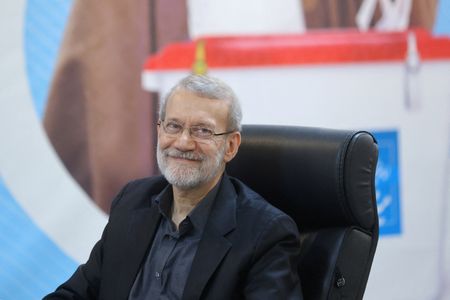
Iranian state media outlets confirmed Tuesday that Ali Larijani, the nation’s security chief, has died.
Multiple Iranian news organizations reported Larijani’s death on March 17th, though details surrounding the circumstances were not immediately provided.
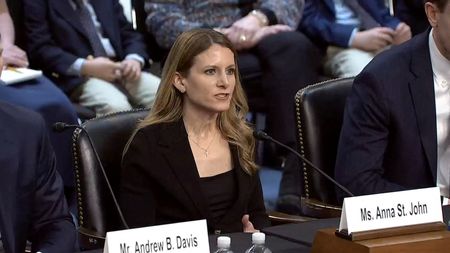
The U.S. Senate approved a contentious judicial nominee Tuesday, voting 51-45 to place Anna St. John on the federal bench in Louisiana’s Eastern District Court despite fierce opposition from Democrats and an unexpected critic – former Fox News personality Gretchen Carlson.
St. John, who serves as president and general counsel for the Hamilton Lincoln Law Institute, faced scrutiny over her 2021 congressional testimony where she argued against banning mandatory arbitration in workplace sexual assault and harassment cases.
President Trump had announced St. John’s nomination via social media in January, praising her “strong record of tirelessly fighting to protect Free Speech, champion Religious Liberty, and keep men out of women’s sports.”
The New Orleans attorney has spent nearly a decade at Ted Frank’s Center for Class Action Fairness, which later became part of the Hamilton Lincoln Law Institute, where she has challenged class action settlements that the organization claims benefit attorneys while providing minimal relief to affected consumers.
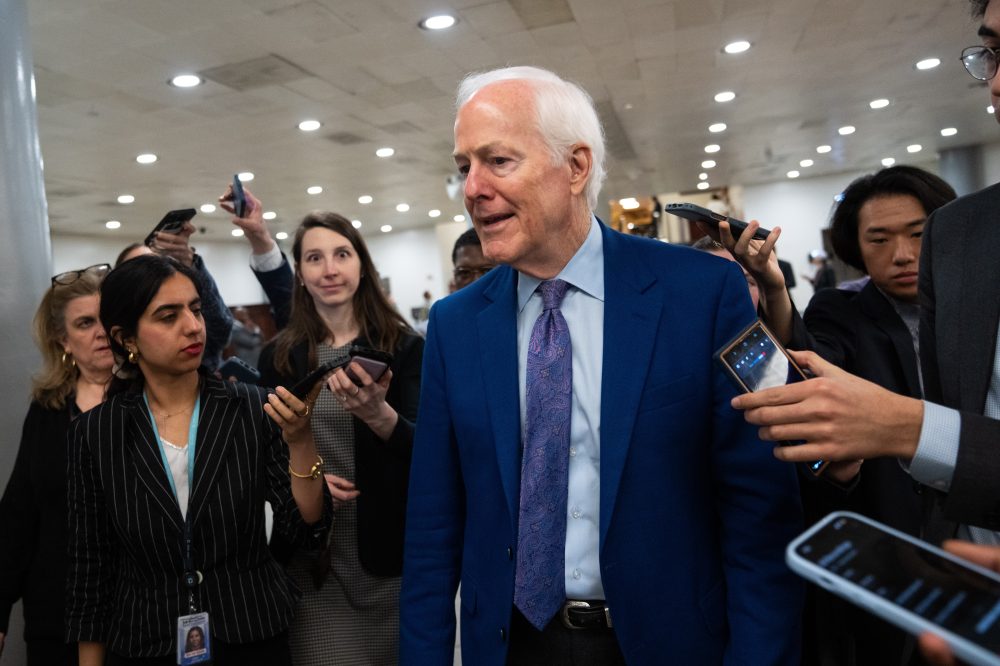
Louisiana Republican Senator John Kennedy, who sits on the Judiciary Committee, praised the confirmation Tuesday, stating: “She knows our Constitution like the back of her hand and has the smarts and experience to be a great, fair judge.”
However, Senate Judiciary Committee ranking Democrat Dick Durbin strongly criticized the nomination during recent hearings, arguing that her “record reflects a partisan ideology and raises serious questions about her ability to impartially administer justice.”
Durbin highlighted opposition from Carlson, who gained national attention a decade ago when she filed a prominent sexual harassment lawsuit against former Fox News CEO Roger Ailes. Ailes, who passed away in 2017, had denied those allegations.
In a January 29 opinion piece published by Alliance for Justice Action, Carlson accused St. John of attempting to “gaslight” women who sought to eliminate forced arbitration during the #MeToo era.
The dispute centers on legislation that Congress ultimately passed in 2022 – the Ending Forced Arbitration of Sexual Assault and Sexual Harassment Act – which prohibits companies from requiring employees to resolve sexual assault or harassment claims through arbitration rather than the court system.
During her November 2021 House Judiciary Committee testimony opposing the bill, St. John argued in written statements that arbitration offers a quicker and more cost-effective method for resolving disputes, “even when serious harms such as sexual harassment and assault are at issue.”
When questioned about her position during a February 4 hearing, St. John maintained her stance, asserting that arbitration “can be beneficial and that it can result, and often does result, in much higher recoveries for plaintiffs and sexual assault survivors.”
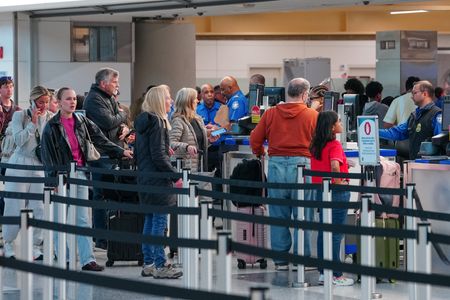
Air passengers nationwide are facing significant disruptions as multiple challenges converge to create travel chaos across American airports.
The combination of unfavorable weather conditions, airline operational issues, and lengthy security screening processes is creating a perfect storm of delays for those trying to reach their destinations.
These widespread transportation problems are affecting airports from coast to coast, leaving many travelers stranded or facing extended wait times as they attempt to complete their journeys.
Motorists traveling through New Castle County should expect delays on Old Orchard Road northbound today due to construction activity.
Delaware Department of Transportation reports that intermittent lane restrictions are in effect along the northbound stretch of Old Orchard Road between East Edgemoor Street and the Lewes Georgetown Trail.
The construction-related lane closures are scheduled to remain in place until 5:00 PM today. Drivers are advised to allow extra travel time and consider alternate routes if possible.
DelDOT continues to monitor traffic conditions in the area as work progresses.
Motorists traveling on Andries Road should expect delays as intermittent lane restrictions remain in effect through this evening.
The temporary lane closure affects the stretch of roadway from Red Mill Road to the cul de sac, with traffic impacts expected to last until 6 PM today.
Drivers are advised to allow extra travel time or consider alternate routes to avoid potential delays in the area.
Motorists traveling on Upland Court at South Skyward Drive should plan for potential delays as intermittent lane restrictions remain in effect until 5:30 PM today.
The ongoing lane closures are causing periodic traffic disruptions in the area as crews work to complete their operations. Drivers are advised to allow extra travel time and use alternate routes when possible.
The restrictions are expected to be lifted by 5:30 PM this evening, returning normal traffic flow to the intersection.
SALEM, Ore. – Salisbury University’s men’s tennis squad continued their successful road trip through the Pacific Northwest, dominating Willamette University with a decisive 6-1 victory on Tuesday at the Willamette University Tennis Courts.
The Sea Gulls secured their second straight win in as many days on the West Coast, showcasing strong performance across the lineup against the Bearcats.
The lopsided result demonstrates the team’s solid preparation and execution as they compete away from home during their spring schedule.
Drivers using Gerald Drive are experiencing intermittent lane restrictions today as construction crews work along the roadway between Ralph Road and Powderhorn Road.
According to DelDOT traffic information, the temporary lane closures are expected to continue until 5 PM this evening. Motorists are advised to allow extra travel time and use caution when navigating through the construction zone.
The intermittent nature of the closures means lanes may open and close periodically throughout the day as work progresses. Drivers should be prepared for potential delays and consider alternate routes if possible.
The Caribbean island nation of Cuba finds itself in the grip of severe economic hardship and mounting political pressure as President Donald Trump makes increasingly bold statements about potential U.S. intervention.
This week marked the third major power grid collapse since December, leaving the island in widespread darkness and prompting Trump to declare he might have the “honor of taking Cuba.”
“I mean, whether I free it, take it. I think I could do anything I want with it,” Trump stated on Monday.
The island nation faces a crippling energy crisis as U.S. sanctions have effectively blocked oil deliveries for the past three months, creating devastating consequences for Cuba’s 11 million citizens.
Residents battle to prevent food from rotting without refrigeration, medical facilities have postponed surgical procedures, and the country’s premier university has scaled back academic programs due to power failures and transportation breakdowns.
On Tuesday, the State Department characterized the ongoing electrical failures as evidence that Cuba’s leadership cannot meet citizens’ fundamental requirements.
During a White House gathering Tuesday, Trump consulted Secretary of State Marco Rubio, whose parents emigrated from Cuba, about the situation.
Rubio declared that Cuba’s existing governmental structure cannot address the nation’s challenges. “So they have to change dramatically,” Rubio stated.
The current administration is insisting that Cuba free imprisoned dissidents and embrace political and economic reforms before sanctions will be removed.
For several months, Trump has indicated Cuba’s leadership is nearing collapse and has referenced a potential “friendly takeover” following the U.S. removal of former Venezuelan leader Nicolás Maduro, though he hasn’t explained what such action would entail.
Cuban leader Miguel Díaz-Canel acknowledged last week that conversations with Washington have occurred.
Though he declined to share specifics about these discussions, he indicated they focused on resolving “bilateral differences between our two nations.”
Trump has implied that Cuban officials should learn from Maduro’s experience, who was detained during a U.S. military action in January.
According to anonymous U.S. officials and sources familiar with Washington-Havana communications, the Trump administration seeks Díaz-Canel’s departure from office, though no preferred successor has been identified.
Cuba’s energy shortage intensified after the U.S. removed Venezuela’s government, cutting off vital petroleum imports. Trump subsequently warned of tariffs against any nation providing Cuba with oil.
The country now depends on domestic natural gas, solar energy, and local oil reserves for its power plants, but these sources cannot satisfy national energy needs.
The consequences have been devastating. Public transportation has reduced service, fuel distribution is severely limited, and Cuban officials report the healthcare system is on the brink of failure.
These problems compound existing shortages of essential items like food and medical supplies.
Cuba’s deteriorating electrical infrastructure has become increasingly unreliable over recent years. Daily power interruptions and frequent major blackouts have become routine.
The nation’s aging power generation facilities receive minimal upkeep. Government representatives say U.S. economic restrictions have blocked purchases of replacement equipment and technical components.
Limited availability of fuel oil and diesel has further restricted electricity generation capacity.
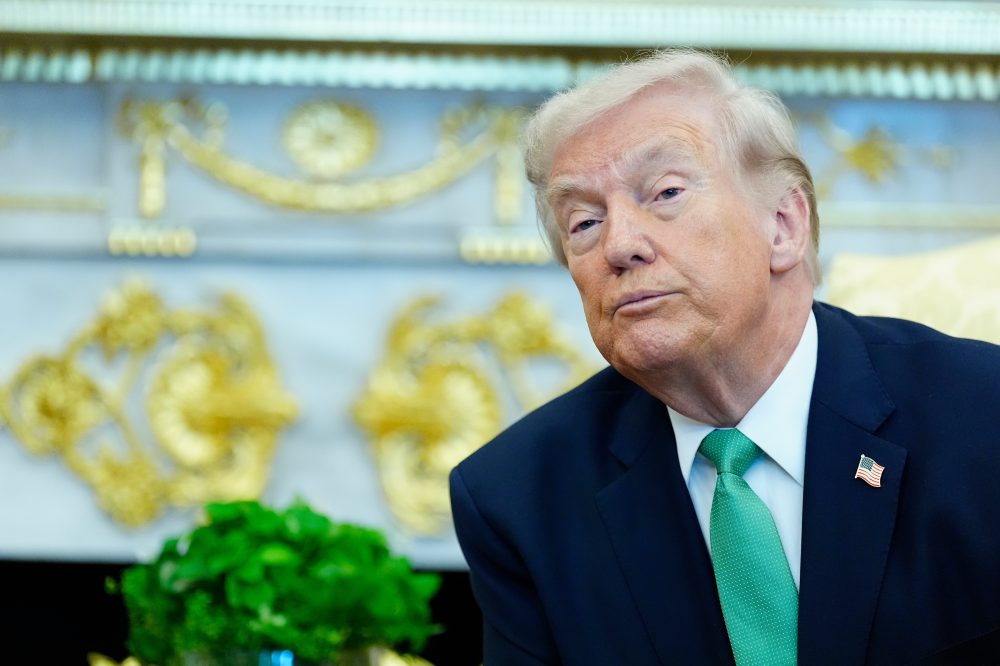
WASHINGTON — During a Tuesday White House meeting, President Donald Trump voiced his displeasure after NATO and allied nations turned down his requests for assistance in protecting the Strait of Hormuz, expressing frustration that international partners won’t support what he describes as efforts benefiting global security.
The President, who has been seeking allied participation in safeguarding the vital shipping lane that serves as a crucial route for regional oil transportation, criticized the lack of backing “despite the fact that we helped” NATO “so much,” arguing that preventing Iran from obtaining nuclear capabilities serves allies’ interests as well.
Trump’s frustrated reaction to the rejection highlights how the three-week conflict, which is creating ripple effects throughout the global economy, has become something the international community expects the U.S. leader to handle independently after he initiated it without consulting partners.
“You would have thought they would have said, ‘We’d love to send a couple of minesweepers.’ That’s not a big deal,” Trump said. “It doesn’t cost very much money. But they didn’t do that.”
Despite his disappointment with traditional American allies, Trump indicated he accepts the developing situation where responsibility for the conflict will fall primarily on his administration alone.
Although Israeli Prime Minister Benjamin Netanyahu had been encouraging this approach for months, Trump has increasingly argued that the path to confrontation was his individual decision. He has stated it began with what Trump called a “feeling” about Iran’s threat level, and he maintains it will conclude when his instincts indicate the time is right.
“We don’t need any help, actually,” Trump declared to reporters while welcoming Ireland’s Prime Minister Micheál Martin during a St. Patrick’s Day White House visit.
The President pointed out that NATO members have relied on tens of billions in American support for Ukraine’s defense against Russian aggression, yet failed to reciprocate by assisting the U.S. and Israel in efforts to neutralize Iran’s regional threats. He emphasized that America has invested hundreds of billions in strengthening European and Asian security.
Trump’s relationship with the alliance has been inconsistent, viewing the post-World War II security framework as overly dependent on American resources. He has consistently criticized member nations for insufficient spending and has questioned U.S. commitment to NATO’s mutual defense provision that treats attacks on one member as attacks on all.
While NATO functions as a defensive rather than offensive alliance and has stated it won’t participate in the U.S.-led Iran conflict, the organization did maintain an 18-year presence in Afghanistan and conducted a 2011 air campaign that helped remove Libya’s former leader Moammar Gadhafi.
“We will protect them, but they will do nothing for us, in particular, in a time of need,” Trump posted on social media.
The President noted that partners in Japan, Australia, and South Korea — along with China — have also declined his requests to help secure the waterway, which typically handles approximately 20% of global crude oil shipments daily. Asian nations face the greatest exposure to trade disruptions due to their heavy dependence on imported fuel transported through the strait.
The European Union’s chief diplomat responded to Trump’s criticism, stating the 27-member bloc refuses involvement in the U.S.-Israel conflict with Iran and rejected demands to deploy warships to the Strait of Hormuz.
“This is not Europe’s war. We didn’t start the war. We were not consulted,” EU foreign policy chief Kaja Kallas stated Tuesday, following discussions among member nations about Trump’s naval deployment request.
“We don’t know what are the objectives of this war,” Kallas added. “The member states do not have the wish to be dragged into this.”
Trump characterized the situation as a “great test” for NATO and declared the alliance was making “a very foolish mistake” in rejecting his appeal.
When asked whether he might reconsider America’s NATO relationship given the Iran conflict response — or potentially consider withdrawing from the military alliance — Trump replied: “It’s certainly something that we should think about. I don’t need Congress for that decision.”
He continued, “I have nothing currently in mind, but I’m not exactly thrilled.”
Questions remain about Trump’s ability to unilaterally exit NATO. Congressional legislation from 2023 requires legislative approval to leave the military alliance. Legal experts suggest Trump might attempt to find workarounds, possibly invoking presidential foreign policy authority to circumvent the requirement.
Trump’s argument that America’s longstanding NATO support should be reciprocated now that the U.S. seeks assistance with Iran is encountering significant resistance.
French President Emmanuel Macron indicated his nation’s willingness to help secure the Strait of Hormuz, but only through a mission separate from the current Middle East conflict.
“We are not a party to the conflict, and therefore France will never take part in operations to reopen or liberate the Strait of Hormuz,” Macron declared.
Trump dismissed Macron’s stance, saying “Well, he’ll be out of office very soon,” referring to the French president’s second five-year term ending in May 2027.
Although Trump may have concluded that America no longer requires external military assistance for strait security, the State Department has contacted multiple countries requesting support in isolating Iran through terrorist designations of the Islamic Revolutionary Guard Corps and Hezbollah, which would trigger sanctions against these organizations and their members.
A Monday cable distributed to all U.S. diplomatic missions instructed American diplomats in countries without such designations to pursue them quickly, given Iran’s widespread retaliation for the U.S.-Israeli military operation over the past two weeks.
“Now is the time for other nations to take concrete action against Iran, including by designating the Islamic Revolutionary Guard Corps (IRGC) and its proxy. Hezbollah, as terrorist organizations,” stated the cable obtained by The Associated Press.
Drivers traveling on Armory Road should expect delays this evening due to a fallen utility pole that has forced authorities to close the right lane of traffic.
The lane closure affects the stretch of Armory Road running between Omar Road and Lecates Road, according to Delaware Department of Transportation officials.
Transportation authorities indicate the right lane will remain blocked to traffic until approximately 8 PM tonight while crews work to address the downed pole situation.
Motorists are advised to use caution when traveling through the area and allow extra time for their commute due to the reduced traffic capacity.
A growing number of residents in Galveston County, Texas are making the decision to call their boats home, driven by both the appeal of waterfront living and mounting financial pressures from traditional housing costs.
This floating lifestyle has gained popularity in the coastal community as individuals seek alternatives to expensive apartments and houses. The boat-dwelling trend represents both a creative housing solution and a way to embrace life on the water in this Gulf Coast region.
Former President Donald Trump continues to delay his promised endorsement in the Texas Republican Senate runoff, while incumbent Senator John Cornyn and state Attorney General Ken Paxton refuse to exit the race ahead of Tuesday’s withdrawal deadline.
Both candidates are doubling down with fresh attack advertisements targeting each other, setting the stage for more than two months of expensive and divisive campaigning that party leaders hoped to avoid.
Trump informed NBC News on Saturday that he expects to make an endorsement this week. However, it has already been two weeks since he initially pledged to support a candidate “soon” and encourage the other to exit the race “for the good of the Party.”
In the March 3 primary election, Cornyn led Paxton but failed to capture the majority required to prevent a runoff.
When questioned about the possibility of Cornyn withdrawing, campaign spokesperson Matt Mackowiak responded “of course not” and noted “we’ve already started our campaign.”
Cornyn’s campaign unveiled an advertisement Tuesday focusing on allegations of Paxton’s extramarital affair and his impeachment by the Republican-majority Texas House. While Paxton was subsequently cleared of charges and has rejected corruption claims, another Cornyn ad characterized these same allegations as violations of the Ten Commandments.
Regarding Paxton’s potential withdrawal, campaign spokesperson Nick Maddux refused to provide comment. However, the attorney general rolled out a new attack advertisement against Cornyn on Friday and is set to address the Conservative Political Action Committee’s annual gathering this month, indicating no intention to quit.
Paxton’s advertisement features news footage showcasing Cornyn’s previous criticism of Trump, particularly regarding the former president’s unfounded claims about the 2020 election being fraudulent, while positioning Paxton as the MAGA-supporting contender.
A super PAC supporting Paxton has attempted to capture Trump’s notice by broadcasting an advertisement with similar themes in West Palm Beach, Florida, where Trump’s Mar-a-Lago resort is located.
Despite being a more conventional Republican, Cornyn is not backing away from the battle over MAGA loyalty, with his campaign website leading with the statement “Cornyn votes with President Trump 99% of the time.”
Trump shared with NBC News that he has great affection for “both candidates very much” and is confident either could defeat Democratic nominee state Representative James Talarico in the general election.
Although Cornyn narrowly outperformed Paxton in the initial primary, the runoff election could benefit the attorney general since these contests typically attract the most conservative and engaged Republican voters.
“Cornyn has always had a weakness with the most conservative voters in the electorate,” explained Joshua Blank, research director for the Texas Political Project at the University of Texas, Austin, which conducts statewide polling.
However, Blank noted that Cornyn’s primary campaign seemed to address some of that disadvantage and “illustrate for the Republican primary electorate what kinds of vulnerabilities that Ken Paxton has.”
Veteran Texas Republican strategist Dave Carney emphasized that television advertisements carry less weight in runoff elections. The smaller, more focused voter pool requires campaigns to concentrate on identifying specific supporters and reaching them through targeted digital outreach and text messaging.
“Whoever has good data and knows who their supporters are and turns them out will win,” Carney stated.
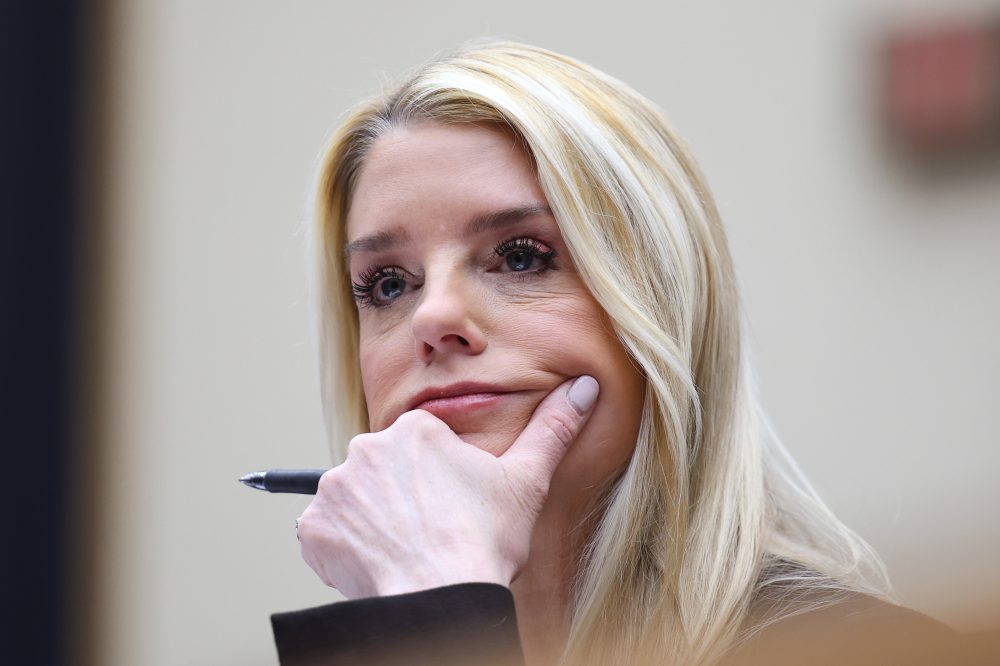
WASHINGTON — A congressional committee has issued a subpoena compelling Attorney General Pam Bondi to testify about how the Justice Department has managed Jeffrey Epstein investigation documents and the agency’s handling of millions of records connected to the convicted financier.
The House Committee on Oversight and Government Reform has mandated that Bondi appear for questioning on April 14, following a committee vote from earlier this month that received backing from five Republican members.
The Justice Department’s inability to block the subpoena from the GOP-controlled committee highlights growing frustration within President Donald Trump’s own political supporters regarding Bondi’s oversight of reviewing and releasing the extensive collection of documents from Epstein’s criminal case.
Committee Chairman Rep. James Comer explained the reasoning in correspondence to Bondi, stating: “The Committee has questions regarding the Department of Justice’s handling of the investigation into Jeffrey Epstein and his associates and its compliance with the Epstein Files Transparency Act.”
Comer further noted in his letter: “As Attorney General, you are directly responsible for overseeing the Department’s collection, review, and determinations regarding the release of files pursuant to the Epstein Files Transparency Act, and the Committee therefore believes that you possess valuable insight into these efforts.”
The Justice Department responded Tuesday by characterizing the subpoena as “completely unnecessary.” Officials indicated that Bondi and Deputy Attorney General Todd Blanche were scheduled to conduct a closed-door briefing with committee members on Wednesday.
Department representatives emphasized in their statement: “Lawmakers have been invited to view the unredacted files for themselves at the Department of Justice, and the Attorney General has always made herself available to speak directly with members of Congress.” The agency expressed its commitment to “continuing to provide policymakers with the facts.”
The Trump administration has encountered ongoing political challenges since document releases commenced in December, with detractors claiming the department has concealed certain records and excessively censored materials. Additionally, some victims have criticized the agency for careless redaction work that exposed their private information.
Department officials have vigorously defended their approach to the Epstein document process, asserting they operated with maximum speed and thoroughness to examine and publish the millions of records mandated by federal law. The agency has rejected claims that redactions were used to shield specific individuals or that materials were inappropriately withheld, and has stated it promptly addressed any redaction mistakes brought to their attention by victims.
A Marine Corps investigation has determined that an extraordinarily rare equipment failure during a live artillery demonstration at Camp Pendleton caused metal fragments to shower Interstate 5, damaging two California Highway Patrol vehicles last October.
The incident happened during a military celebration marking the Marine Corps’ 250th anniversary, with Vice President JD Vance and Defense Secretary Pete Hegseth in attendance. Debris from the malfunctioning shell scattered across the closed interstate, hitting both a patrol car and motorcycle.
According to a comprehensive 666-page investigation report released December 19 and first disclosed Monday, military officials found “no definitive answer” for why the M795 high explosive round detonated prematurely at approximately 1,480 feet above ground. The report states such early detonation goes “beyond reasonable expectations and should not have happened, but it did.”
“It is manufactured to a tolerance of one defect in a million,” the investigation states. Officials determined no Marine personnel acted negligently or improperly.
Following the mishap, 26 California House representatives and both state senators wrote to Hegseth demanding answers about who authorized firing live rounds over the freeway and what safety measures were implemented.
The incident intensified tensions between President Donald Trump and California officials, including Governor Gavin Newsom. Some Republicans initially criticized Newsom for shutting down a 17-mile section of the highway before the exercise, while local leaders questioned the unconventional military display they believed was staged for Trump administration officials.
“We’re thankful to the Marines for their thorough and precise investigation — in stark contrast to the dangerous and performative demands by JD Vance and Pete Hegseth to shoot live ammunition over a civilian area for their entertainment,” Diana Crofts-Pelayo, a Newsom spokesperson, stated Tuesday.
Prior to the celebration, Newsom had criticized the highway closure, characterizing the live-fire exercise as an intimidation tactic against Trump critics who were holding “No Kings” demonstrations throughout San Diego that day.
“Firing live rounds over a busy highway isn’t just wrong — it’s dangerous,” Newsom stated at the time.
The Marine investigation identified multiple possible contributing factors to the malfunction, including howitzer cannons positioned too closely together during firing and the “potential presence of anomalous electromagnetic energy in the vicinity.”
The October 18 demonstration at Marine Corps Base Camp Pendleton showcased aircraft, naval vessels, and amphibious vehicles for the anniversary event. The planned artillery display involved 60 rounds fired across the coastal highway, according to an October CHP incident report.
“It will be a good show regardless of who shows up,” Gen. Eric Smith, Marine Corps commandant, wrote in an October 14 email to Brig. Gen. Garrett “Rainman” Hoffman from the White House Military Office.
Military and public safety officials noted the location was atypical. While live-fire training occurs regularly, it typically happens on designated ranges within the 195-square-mile base located north of San Diego.
The initial round fired at 1:46 p.m. from M777 howitzers positioned on a beach west of Interstate 5 failed to clear the roadway and exploded mid-flight near southbound I-5, sending fragments toward protective details assigned to the vice president. Officials immediately stopped the exercise and fired no additional munitions, CalMatters reported in October.
One officer reported hearing sounds like “pebbles” hitting his CHP BMW motorcycle, while other fragments struck an unoccupied Ford patrol vehicle. The two officers who had been using that vehicle discovered a 2-inch by ½-inch shrapnel piece on the hood, creating a small dent. Incident report photographs show the damaged patrol car and an officer holding the metal fragments.
In a December 5 statement included in the military report, an unnamed Marine said the Secret Service requested the I-5 closure for security reasons involving a “Very Very Important Person” — the president — due to proximity to the demonstration viewing area. Trump ultimately did not attend the event.
JASPER, Ga. — Authorities responded to gunfire at a Veterans Affairs medical facility Tuesday afternoon in this Georgia mountain community, resulting in one victim being flown to a hospital and the alleged gunman being wounded by police officers.
Law enforcement arrived at the VA medical facility at approximately 1:30 p.m. on Tuesday, according to an official city statement posted on social media. When officers found the alleged shooter, they engaged the individual, resulting in the suspect being wounded by gunfire, the announcement stated.
Phone attempts to reach the Pickens County VA facility on Tuesday were unsuccessful, with calls being directed to automated message systems.
The medical facility provides outpatient services to veterans, including primary medical care and specialized treatments such as lab work, remote healthcare consultations, and psychological support services, based on information from the clinic’s official website.
The community of Jasper, home to approximately 5,000 residents, sits about 60 miles north of Atlanta’s city center. Local highway markers identify the town as Georgia’s “First Mountain City” as travelers encounter the beginning of the Appalachian mountain range.
Images published by the Pickens Progress, the area’s local publication, captured numerous law enforcement personnel at the incident location, with officers in protective gear positioned near a shopping center in the community.
The medical facility began operations during summer 2020, according to a Department of Veterans Affairs announcement celebrating its opening.
“The new Pickens County VA Clinic will increase access and ensure that our Veterans continue to receive the high-quality health care that they have earned and deserve closer to their home,” officials said in the release.
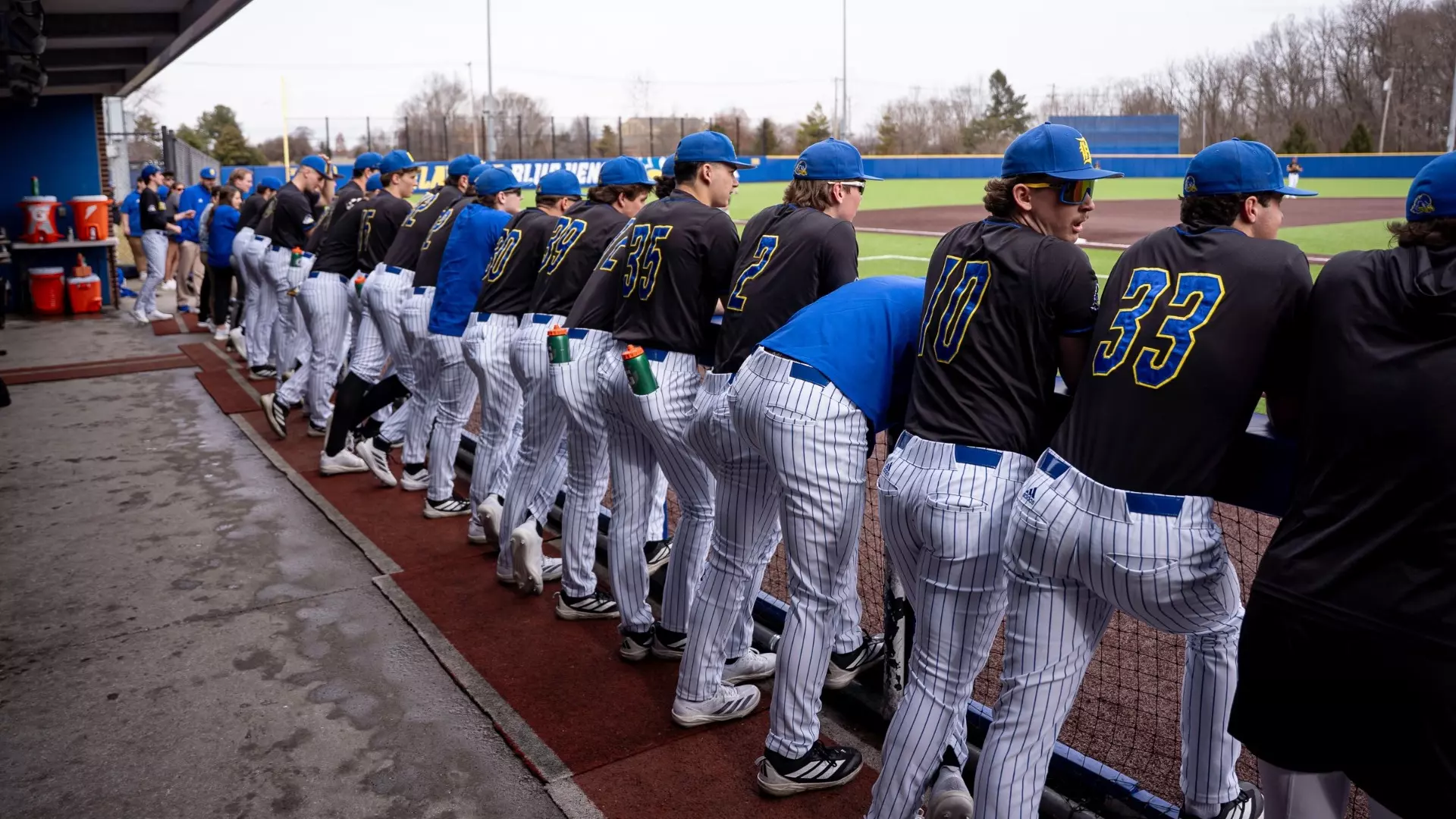
The University of Delaware baseball program is gearing up to host Saint Joseph’s University in a non-conference clash this week.
The midweek contest provides both teams with an opportunity to face competition outside their regular conference opponents, offering valuable game experience as the season progresses.
Details about the specific game time and additional matchup information are expected to be announced by the Blue Hens athletics department.
National Public Radio host Mary Louise Kelly conducted an interview with Christopher Sununu, who serves as president and chief executive officer of Airlines for America, an industry trade organization. The conversation centered on the impact that a partial federal government shutdown is having on thousands of Transportation Security Administration workers across the country.
The discussion highlighted concerns about how the funding disruption is affecting airport security personnel nationwide during the ongoing government closure.
New York City Mayor Zohran Mamdani is making deliberate efforts to bring Islamic practices into the mainstream of city life as he publicly observes Ramadan. His push to integrate Muslim traditions faces opposition from multiple fronts, including pushback from some members of the Jewish community and resistance from far-right groups.
The mayor’s efforts to make Muslim life more visible and accepted in the city have also been met with serious security concerns, including a recent bomb threat targeting him.
Alabama basketball guard Aden Holloway was taken into custody Monday after law enforcement officers discovered more than two pounds of marijuana during a search of his residence, according to ESPN reporting based on court documents filed Tuesday.
The 21-year-old junior now faces serious felony drug charges just four days ahead of Alabama’s first NCAA Tournament matchup against 13th-seeded Hofstra scheduled for Friday in Tampa, Florida. The Crimson Tide earned the fourth seed in the Midwest Region bracket.
University officials announced Monday evening that Holloway has been “removed from campus” and will not travel with the basketball team while an investigation proceeds.
The cannabis seized during the search weighed nearly one kilogram at 2.1 pounds, falling just 0.1 pounds below Alabama’s threshold for drug trafficking charges, which begin at 2.2 pounds.
According to ESPN’s report, investigators found marijuana scattered throughout multiple areas of the residence, including inside a backpack, luggage, within a television entertainment center, and stored in a bedroom dresser drawer. Officers also seized cash, unprescribed sedative medication, drug paraphernalia for rolling, and materials used for packaging.
During questioning, Holloway told authorities he “only smokes” the substance and does not engage in selling drugs, ESPN reported.
The junior guard was formally charged with first-degree marijuana possession not intended for personal use, classified as a Class C felony in Alabama. Additionally, he received charges for failing to affix a required tax stamp, which represents a second felony count. After posting $5,000 bond, Holloway was released from custody Monday morning.
The tax stamp violation stems from Alabama law requiring individuals who distribute, sell, or transfer controlled substances to pay specific taxes on those transactions.
Each felony count carries potential penalties of up to 10 years imprisonment and $15,000 in fines if Holloway is ultimately convicted.
Head coach Nate Oats discussed the situation during his Monday evening radio program.
“We’re certainly disappointed in his behavior. But that being said, we still love him, he’s still our guy,” Oats stated. “We’re helping him get the help that he needs and we’re going to continue to help him whatever way we can. But as far as our team goes, I thought we had a great practice. We’re preparing to play without him this weekend.”
A new Wall Street Journal report indicates that Russia has been deepening its military alliance with Iran through the provision of satellite intelligence and enhanced drone capabilities, according to sources familiar with the intelligence sharing arrangement.
The March 17 report suggests this collaboration is designed to help Iran more effectively target American military personnel deployed throughout the Middle East region.
The expanded partnership between Moscow and Tehran represents a significant escalation in their defense cooperation, with Russia reportedly offering both surveillance imagery from space-based assets and technological improvements to Iran’s unmanned aircraft systems.
Reuters has not been able to independently confirm the details outlined in the Wall Street Journal’s reporting at this time.
A United Nations internal investigation has concluded that Israeli military tank rounds struck a UN peacekeeping facility in southern Lebanon earlier this month, injuring three Ghanaian soldiers, according to a Western military source familiar with the findings.
The preliminary investigation results from the March 6 incident at the al-Qawzah base indicate that three direct strikes came from an Israeli battle tank’s main weapon system, the source revealed. The tank fired 120-mm M339 HE-MP-T ammunition during the attack.
“Israeli involvement in the attack against UNIFIL is undeniable, given that these munitions are manufactured by Israel Military Industries (IMI),” the source stated.
The UN peacekeeping force, known as UNIFIL, operates in southern Lebanon to oversee tensions along the border with Israel, an area that has become a flashpoint for confrontations between Israeli forces and Hezbollah militants backed by Iran.
When the incident occurred on March 6, UNIFIL officials described the wounding of Ghanaian peacekeepers during intense fighting as “unacceptable” but did not initially identify who was responsible for the attack.
UNIFIL spokesperson Kandice Ardiel confirmed the investigation remains ongoing. “That investigation is not yet complete. Once it is finalized, it will be shared with the parties, per usual practice,” Ardiel said.
“Nonetheless, we reiterate the obligation of all actors to ensure the safety and security of peacekeepers and avoid harm to civilians. Any deliberate attack on peacekeepers is a grave violation of international humanitarian law and a violation of resolution 1701,” she added.
Israeli military officials have not yet provided a response to requests for comment regarding the incident. Israel Military Industries and Elbit Systems, the defense contractor that owns IMI, also have not responded to inquiries. Lebanese government officials similarly have not commented.
The military source explained that the specialized ammunition used can target personnel, helicopters, equipment, armored vehicles, and structures. The three rounds were fired within a five-minute timeframe, suggesting deliberate targeting rather than an accidental stray shot.
The source emphasized that all military forces in the region know the exact location and coordinates of the UN base, which raises significant safety concerns for international personnel stationed there.
“This escalation, far from being isolated, is part of a worrying dynamic, severely testing UNIFIL’s ability to carry out its peacekeeping mission,” the source explained.
The incident highlights growing dangers facing UN peacekeepers as Israeli military operations continue to expand in the region. Lebanon became involved in the broader Middle East conflict when Hezbollah launched rocket attacks against Israel, prompting Israeli military responses against the group.
UNIFIL reported another concerning incident on Sunday, stating that peacekeepers likely came under fire three separate times from “non-state armed groups,” though no injuries occurred in those attacks.
The peacekeeping mission, scheduled to conclude at the end of 2026, has repeatedly found itself caught between Israeli forces and Hezbollah fighters. Israeli officials maintain control of five positions within Lebanese territory and continue conducting airstrikes in southern Lebanon, claiming they target Hezbollah militants.
UN Security Council Resolution 1701 specifies that only UN peacekeepers and Lebanese military forces should operate in southern Lebanon. Israeli officials have consistently accused Hezbollah of attempting to rearm while criticizing Lebanese forces for failing to disarm the militant organization.
A new federal report reveals that Maryland’s outdoor recreation sector delivered a massive $10.6 billion economic boost to the state in 2024, accounting for 1.9% of Maryland’s total gross domestic product. The Bureau of Economic Analysis found that activities ranging from boating and fishing to hiking, hunting, cycling, RVing, camping, and skiing supported more than 85,000 jobs while providing over $5 billion in worker compensation for the first time.
“The latest data reinforces what we see every day across Maryland — outdoor recreation is an economic engine and a quality-of-life asset,” said Sandi Olek, Director of the Maryland Office of Outdoor Recreation. “In a state defined by vibrant urban centers and treasured natural resources, investing in outdoor access, sustainable infrastructure, local businesses, and stewardship ensures that our communities remain healthy, resilient, and economically competitive for years to come.”
The Maryland Office of Outdoor Recreation, created in 2021, has been working to boost this expanding sector through conferences, community gatherings, and efforts to improve access for adaptive users and underserved populations. Last year, the office unveiled the Maryland Outdoor Recreation Business Directory, an interactive online map featuring more than 650 recreation-focused businesses statewide. The Department of Natural Resources aims to use this directory to link consumers with Maryland companies and drive additional economic expansion.
These outdoor businesses create employment opportunities across numerous fields, from equipment manufacturers and trail construction crews to mechanics, boat operators, instructors, guides, park staff, and retail workers.
According to the Bureau of Economic Analysis data, boating and fishing activities alone contributed more than $700 million in economic value to Maryland. The complete economic breakdown by recreational activity is available through the bureau’s official website.
“Our Chesapeake Bay is unique, and it is certainly a big part of who we are and why we live here,” said John Stefancik, Executive Director, Marine Trades Association of Maryland. “With 3,190 miles of shoreline, our waterways and watersports are explored and fished by boaters who have a $4.2 billion economic impact in Maryland and support an industry of 16,871 jobs throughout the state.”
The federal data shows Maryland’s outdoor recreation economy is expanding more rapidly than the national trend. The sector’s contribution to Maryland’s gross domestic product jumped 5.6% from 2023 to 2024, outpacing the 4% national growth rate. The Bureau of Economic Analysis operates under the U.S. Department of Commerce.
“The State of Maryland, our counties, towns, local communities, residents and small independent businesses all benefit greatly from the immense dollars spent on camping, RV’ing and other outdoor recreation in our beautiful state,” said Deb Carter, Executive Director of the Maryland Association of Campgrounds. “Camping attracts people from all walks of life looking for a time to create memories, reduce stress and reconnect with nature. After all, camping just comes naturally in Maryland!”
The state’s Outdoor Recreation Business Directory covers 30 different recreational categories, including newly added sections for history and heritage to commemorate Maryland 250, plus an agritourism section highlighting the office’s collaboration with the Department of Agriculture. Users can search results by county and business category.
Looking ahead to 2026, the Office of Outdoor Recreation plans to support MD 250 events marking the nation’s 250th anniversary, three AgriTrails programs: Sip & Shuck (February-March), Maryland’s Best Ice Cream Trail (Memorial Day-Labor Day), and Bikes & Brews (September-November); plus the Maryland Outdoor Recreation Summit scheduled for Ocean City in September.
WASHINGTON – Trump administration officials assured lawmakers Tuesday that military operations in Iran have not interrupted weapons deliveries to Taiwan or altered American policy toward the island democracy.
“Have we delayed moving things to Taiwan? We haven’t,” Stanley Brown, principal deputy assistant Secretary of State for Political-Military Affairs, told members of the House Foreign Affairs Committee during testimony.
The reassurance addresses growing concerns that America’s defense manufacturing sector might struggle to meet increased demand following the U.S.-Israeli air campaign against Iran that began February 28. Some officials worried this could force slower deliveries to nations like Taiwan, which continues facing mounting military threats from China.
Even before the Iran conflict began, Taiwan faced a multi-billion-dollar backlog in American arms shipments. Brown indicated the administration is exploring methods to speed up these deliveries, though he did not elaborate on specific plans.
The congressional hearing occurred on the same day President Trump announced he would postpone his planned summit with Chinese President Xi Jinping in Beijing. Taiwan was expected to be among the key topics during those discussions.
Beijing considers Taiwan part of Chinese territory and has not ruled out military force to bring the island under its control. Taiwan’s government disputes China’s territorial claims, maintaining that only Taiwan’s citizens should determine their future.
Chinese military exercises around Taiwan last occurred in December, while Beijing’s naval vessels and aircraft routinely patrol near the island.
According to recent reports, a significant American weapons package for Taiwan worth approximately $14 billion awaits Trump’s signature. This deal, featuring advanced interceptor missiles, would represent the largest arms sale ever to the democratic island. The postponed China trip may affect the timing of this agreement.
Congressional Republicans and Democrats continue clashing over Trump’s use of national emergency declarations to bypass legislative oversight of international weapons sales. This includes the recent expedited $650 million bomb sale to Israel.
During the hearing, Committee Chairman Brian Mast of Florida and fellow Republicans criticized Democrats for allegedly delaying vital support to key allies facing international threats.
New York Representative Gregory Meeks, the committee’s ranking Democrat, argued that circumventing congressional review of major deals undermines human rights oversight.
Marine scientists have made an extraordinary discovery in the Pacific Ocean, finding what appears to be the world’s largest coral structure within the Mariana Islands region.
The enormous coral formation spans an astounding 14,500 square feet and was located inside an underwater volcanic crater during a research expedition conducted by NOAA scientists in May 2025.
The remarkable find was made within the protected waters of the Mariana Trench Marine National Monument, where researchers were conducting underwater surveys of marine life and coral ecosystems.
This massive coral structure represents a significant scientific discovery, as its size surpasses any previously documented coral formation of its type. The finding highlights the incredible biodiversity that exists in some of the world’s most remote ocean locations.
NOAA researchers documented their discovery through underwater photography and video, capturing images of divers swimming alongside the colossal coral to demonstrate its impressive scale.
The discovery was made possible through advanced underwater exploration techniques that allow scientists to study deep-sea environments that were previously inaccessible to researchers.
This finding adds to the growing body of knowledge about coral ecosystems in protected marine areas and underscores the importance of conservation efforts in preserving these unique underwater habitats.
Emergency dispatchers across Ohio and Pennsylvania were flooded with 911 calls Tuesday morning after a spectacular meteor created a thunderous explosion and brilliant fireball streaking across the sky, according to meteorologists and space scientists.
The dramatic celestial display occurred around 9 a.m. Eastern Time and was witnessed as far away as Virginia and Canada, prompting confused local emergency officials to contact the National Weather Service for answers, said meteorologist Bill Modzelewski from the NWS Pittsburgh office.
“We’re receiving reports across western Pennsylvania and eastern Ohio of a loud boom and a fireball in the sky. Our satellite data suggest it was possibly a meteor entering the atmosphere,” the weather service announced on social media.
Scientists believe the space rock touched down in Medina, located approximately 40 miles southwest of Cleveland, according to Laurence Garvie, who serves as a research professor and curator at Arizona State University’s Buseck Center for Meteorite Studies. He expects meteorite hunters searching the area will discover numerous small black stone fragments.
The explosive sound occurred when the celestial object shattered the sound barrier while traveling at speeds ranging from 25,000 to 160,000 miles per hour, Garvie explained. The American Meteor Society documented over 100 witness reports of the fireball sighting, as reported by the astronomy website EarthSky.
“I’ve been getting calls and texts all morning. This is very exciting for us,” Garvie said. “They may just look like black stones on the ground, but you can actually hold something older than the Earth. Something from outer space. And we can learn new things from them.”
Amazon’s chief executive believes artificial intelligence will dramatically boost the company’s cloud computing revenues, potentially reaching $600 billion annually by 2036.
During a company-wide employee meeting this week, CEO Andy Jassy shared his updated revenue projections for Amazon Web Services, the tech giant’s cloud division.
“I’ve been thinking for the last number of years that AWS, call it 10 years from now, could be about a $300 billion annual revenue, run rate business,” Jassy told staff members. “I think what’s happening in AI that AWS has a chance to be at least double that.”
The Tuesday gathering was part of Amazon’s routine employee briefings, where leadership discussed various business units including drone delivery services, advertising revenue, and Amazon Fresh grocery operations.
Amazon Web Services generated $128.7 billion in revenue during 2025, marking a 19% increase from the previous year. Jassy’s ambitious forecast would require maintaining an average annual growth rate of approximately 17% over the coming decade.
The CEO did not provide specifics about how these projected revenues might be allocated across different services. Amazon representatives have not yet responded to requests for additional details.
Following the news, Amazon’s stock price climbed roughly 1% to reach $213.87 per share.
The death of Iran’s Supreme Leader Ayatollah Ali Khamenei has sparked renewed debate about America’s role in assassinating foreign officials, raising fundamental questions about democratic principles and international law.
Advanced technological capabilities made it possible for the United States and Israel to carry out the operation that killed Iran’s top leader, but the action has revived long-standing ethical concerns about whether democratic nations should engage in targeted killings of foreign leaders.
The assassination has prompted discussions among policymakers, legal experts, and ethicists about the appropriate limits of covert operations and whether such actions undermine the moral authority that democracies claim to uphold on the global stage.
In Baghdad’s Sadr City district, Iraqi Shiite Muslims held a symbolic funeral ceremony the day following the killing, with mourners carrying images of the deceased Iranian leader as they processed through the streets.
The incident highlights the ongoing tension between national security objectives and democratic values, as officials grapple with questions about accountability, international law, and the long-term consequences of state-sponsored assassinations.
During the final week leading up to March Madness, BYU freshman AJ Dybantsa exploded for 40 points in his Big 12 Tournament debut, surpassing a single-game freshman scoring record previously held by NBA legend Kevin Durant.
“I’m just trying to win games,” Dybantsa said afterward.
Meanwhile, by Selection Sunday, Darius Acuff Jr. had powered through a dominant three-game stretch in the Southeastern Conference Tournament, delivering Arkansas its first conference title in over two decades.
“Downhill was working all weekend and today,” he said.
This exceptional freshman class, packed with future NBA talent, has consistently made remarkable performances appear effortless throughout the season — creating such buzz that NBA executives worry about teams deliberately losing games to improve their draft positioning for June.
Featuring headliners like Dybantsa, Acuff, Duke’s Cameron Boozer, and Kansas’ Darryn Peterson, this potential draft class ranks among the most talent-rich in recent memory, assuming all pursue the anticipated one-and-done path.
These standout players have now reached college basketball’s premier showcase event. March Madness has transformed into a freshman showcase, potentially extending all the way to the Final Four in Indianapolis.
“I know most of those guys. They’re all having great years,” Acuff commented during his SEC Tournament run. “They’re playing special. It’s great to see all the young guys playing great.”
The East Region features top overall tournament seed Duke, anchored by the imposing 6-foot-10, 250-pound Boozer, who contributes 22.5 points and 10.2 rebounds while spearheading a devastating offensive attack.
The East also showcases Peterson, a potential top overall draft selection — the 6-6 guard has maintained a 19.8-point average despite missing time throughout the season for the fourth-seeded Jayhawks. Additionally, sixth-seeded Louisville features potential top-10 talent in 6-5 guard Mikel Brown Jr.
The West Region highlights the 6-foot-9 Dybantsa, who has strengthened his position as the longtime frontrunner for the NBA draft’s first overall pick while leading the nation with 25.3 points per game for the sixth-seeded Cougars. Acuff joins him there — the 6-3 point guard recently established an SEC Tournament scoring record by averaging 30.3 points while dominating wherever he chose to attack, playing 117 of 120 possible minutes for the fourth-seeded Razorbacks.
West Region leader Arizona features its own promising NBA freshman prospects: 6-4 guard Brayden Burries (15.9 points) and 6-8 forward Koa Peat (13.6 points).
South Region second seed Houston is guided by 6-4 guard Kingston Flemings (16.4 points), while third-seeded Illinois discovered a star in four-star recruit Keaton Wagler — a 6-6 guard leading the team with 17.9 points per game.
The Midwest Region includes sixth-seeded Tennessee’s lean 6-10 forward Nate Ament, who has posted 20.3 points per game since mid-January while coach Rick Barnes has praised his improvement in physical situations.
The tournament’s freshman talent could have been even more impressive if South sixth seed North Carolina hadn’t lost 6-foot-10 freshman Caleb Wilson (19.8 points, 9.4 rebounds) to a season-ending thumb injury in early March.
Tuesday’s Associated Press All-America team announcements highlighted the freshman dominance. Boozer earned unanimous first-team recognition, joining Dybantsa and Acuff in the elite top five. Wagler and Wilson received second-team honors, while Flemings made the third team.
“You knew they were extremely talented, but you just never know how they’re going to adjust moving to this level,” Tar Heels coach Hubert Davis observed about the freshman class. “I know a lot of people think going from high school to playing at this level, the transition is easy. It is not.”
However, freshmen have made the adjustment appear seamless throughout the season, extending well beyond the high-profile professional prospects.
Currently, 24 freshmen are averaging at least 16.0 points according to Tuesday’s NCAA leaderboard statistics. This represents nearly triple the annual average from the 2011-12 season through last year (8.8), with no season during that period producing more than 15 players reaching that benchmark.
These numbers had been particularly suppressed in recent years, as college basketball aged with players who competed during the COVID-19 pandemic utilizing extra eligibility to extend their careers to five seasons. During that period, only 17 freshmen achieved the 16-point threshold across the previous three seasons combined.
This season, freshmen have produced 10 games of 40 or more points, compared to just seven such performances in the previous seven seasons combined.
Acuff topped that list with 49 points in a double-overtime defeat at Alabama, while Wagler exploded for 46 against eventual Big Ten champion Purdue. Louisville’s Brown scored 45 against N.C. State, breaking the Atlantic Coast Conference freshman single-game record previously held by last year’s top NBA draft pick, Duke’s Cooper Flagg. Flemings contributed 42 points against NCAA Tournament participant Texas Tech.
Dybantsa accomplished the feat twice, first scoring 43 against Utah in January before last week’s 40-point performance against Kansas State. He subsequently shattered Durant’s overall Big 12 Tournament scoring record despite a loss to Houston.
“I coached six years in the NBA,” Cougars coach Kelvin Sampson explained. “So I sat on the front of that bench and watched everybody from Allen Iverson to Rip Hamilton, to LeBron, Derrick Rose, Kevin Durant, Dubinski, Jason Kidd, all of those guys.
“You know, some of them just have the bucket gene. I don’t think you can teach that. For us, we have to recruit it. For the NBA, they have to draft it. … But Dybantsa has got the gene.”
ESPN analyst Fran Fraschilla believes this freshman-dominated draft class could rank as the strongest since the 2003 group that featured LeBron James, Carmelo Anthony, Chris Bosh and Dwyane Wade among the top five selections.
“If you don’t get a top-3 pick, there’s going to be a lot of consolation prizes for the tankers right down to probably 8 or 9 or 10,” he said. “That’s a good thing.”
Fraschilla ranks Dybantsa, Boozer and Peterson as his premier prospects, while Acuff — whose potential he compares to NBA star Damian Lillard — along with Wilson and Flemings form the next tier of a top group expected to provide “instant production” professionally.
He also believes Burries and Brown could develop into all-star caliber players, and he’s optimistic about Ament’s long-term potential as he builds strength to handle physical play.
Fraschilla estimates most NBA teams have completed “75% of the way home” in their draft prospect evaluations, though he notes: “There are still guys that can help themselves.”
“A piece of it is the NCAA Tournament, a piece of it will be interviews and background, a piece of it might be talking to these kids at the combine,” Fraschilla explained. “Here’s the way I’d put it: the NCAA Tournament is like getting an extra-credit question on your final exam. … You can go from a B to an A.”
Perhaps that’s true, but this freshman class appears to have earned Dean’s List recognition long ago.
EDMONTON, Alberta — The Edmonton Oilers announced Tuesday that superstar Leon Draisaitl will be sidelined for the remainder of the NHL regular season due to a lower-body injury, forcing the two-time defending Western Conference champions to battle for playoff positioning without one of hockey’s premier talents.
Draisaitl will be unavailable for Edmonton’s final 14 regular season contests, which conclude on April 16.
Team officials have not disclosed the specific nature of the injury or indicated whether the German forward might return in time for playoff action, which is scheduled to begin during the April 18-19 weekend.
The injury occurred during Sunday’s matchup against the Nashville Predators when Draisaitl took a hard hit from Nashville’s Ozzy Wiesblatt in the opening period. He was unable to continue playing after the collision.
Following their victory over Nashville, Edmonton currently holds third place in the Pacific Division standings, trailing Vegas by one point and Anaheim by two points, although both the Golden Knights and Ducks have played one fewer game.
The 30-year-old Draisaitl has been instrumental in Edmonton’s playoff push this season. He currently sits fourth league-wide in scoring with 97 points across 65 games, ranking second on his team behind only Connor McDavid, who leads the NHL with 114 points.
Draisaitl captured the Hart Trophy as the league’s Most Valuable Player in 2020 and finished as runner-up for the award last season. He recently represented Germany at the Olympics, leading his national team in scoring with seven points over five games.
Draisaitl joins Toronto’s Auston Matthews as the second high-profile NHL player ruled out for the regular season’s remainder, with Matthews sidelined by a torn medial collateral ligament in his left knee.
Delaware Department of Transportation crews are conducting construction work that has resulted in a temporary lane closure on eastbound Park Avenue today.
The affected area spans from Springfield Road to the Lewes Georgetown Highway, also known as Route 9, where traffic is being reduced to a single lane.
DelDOT officials indicate the lane restriction will remain active until 5 PM this evening. Motorists traveling through the area should expect potential delays and are advised to allow extra travel time or consider alternate routes if possible.
A Belgian court made an unprecedented decision Tuesday, ruling that a 93-year-old former diplomat must face trial for his alleged involvement in the 1961 murder of Patrice Lumumba, Congo’s first prime minister and celebrated independence leader, media outlets reported.
Lumumba became the driving force behind Congo’s liberation from Belgian colonial rule in June 1960. The mineral-rich nation’s inaugural prime minister was just 35 when he was murdered, serving only three months in office before being ousted and killed the following year.
The defendant, Etienne Davignon, worked as a young diplomatic intern in Kinshasa during that period and represents the final living person among 10 Belgians suspected of participating in Lumumba’s death.
Davignon, who later became a vice president of the European Commission, has 14 days to challenge the charges and has consistently maintained his innocence.
Belgian federal prosecutors are pursuing charges against Davignon for “participation in war crimes” related to his alleged role in Lumumba’s “unlawful detention and transfer.”
The legal action stems from a 2011 lawsuit brought by Lumumba’s children in Belgium, seeking accountability for their father’s January 1961 killing by separatist forces. While Congolese individuals carried out the actual murder, suspicions have long surrounded potential Belgian and American involvement due to Lumumba’s suspected communist connections.
Lumumba’s remains were never recovered and are believed to have been destroyed with acid.
A federal court has thrown out a civil rights lawsuit filed by a Tennessee family who claimed law enforcement and emergency responders used deadly force on their son during a medical emergency.
The case centered on the 2017 death of Austin Hunter Turner, a 23-year-old Bristol, Tennessee man who died after police and paramedics responded to a seizure call at his apartment. On Monday, a federal judge sided with the city of Bristol and its employees, determining that too much time had passed before Turner’s family brought their legal challenge.
Turner’s death was among more than 1,000 cases nationwide identified in an Associated Press investigation where individuals died following police use of non-lethal force methods.
The victim’s mother, Karen Goodwin, didn’t file her lawsuit until 2024 after AP journalists provided her with police body camera footage she had never seen before. This video evidence led the family to question the official autopsy findings that attributed Turner’s death to multiple drug toxicity. The family’s legal team has announced plans to challenge the dismissal.
The heart of the lawsuit involved discrepancies between what the body camera footage showed and officers’ accounts of the incident inside Turner’s residence after his girlfriend requested emergency medical assistance.
Legal representatives for Bristol city officials, emergency medical personnel, and the involved officers chose not to provide statements when contacted by the AP this week.
According to police reports, officers deployed a Taser and held Turner face-down because he was allegedly resisting paramedics. However, the lawsuit contended that the video evidence revealed Turner wasn’t striking or kicking anyone and couldn’t follow commands because he was experiencing a seizure.
The legal filing described how the footage showed law enforcement and medical personnel applying “significant pressure on the back of Mr. Turner’s head and upper back while Turner was face-down, in the prone position, with a spit sock covering his airway, hands cuffed behind his back and legs shackled.”
Family attorney David Randolph Smith expressed disagreement with the court’s timing interpretation in his statement to the AP.
“In our case, the state’s official autopsy affirmatively and incorrectly attributed Austin’s death to ‘multiple drug toxicity as a consequence of recreational drug use’ and it was not until 2023 — when body‑camera footage surfaced and a forensic pathologist reviewed the evidence — that Karen Goodwin first learned restraint‑induced asphyxia, not drugs, caused his death,” Smith stated. “We intend to appeal and will ask the Court of Appeals to hold that families in this position are entitled to their day in court when they could not reasonably have discovered the true cause of death until long after the fact, through no fault of their own, but because of misinformation and omissions by government actors.”
The Associated Press investigation revealed that in similar cases examined, officers failed to follow established safety protocols for restraining individuals, including positioning people face-down in ways that could impair breathing or using Tasers excessively.
Defense attorneys representing the city, police department, and paramedics maintained that since Goodwin witnessed officers using force against her son, she had only one year from that incident to initiate legal proceedings.
The family’s legal team argued their case involved a cover-up that should have extended their filing deadline. They contended the statute of limitations shouldn’t begin until AP reporters provided the police video to the family in August 2023, during their collaborative investigation with FRONTLINE PBS and the Howard Centers for Investigative Journalism at the University of Maryland and Arizona State University.
MADISON, Wis. — Wisconsin lawmakers have reached agreement on a $133 million initiative to address contamination from persistent chemicals known as PFAS, sending the bipartisan legislation to Governor Tony Evers on Tuesday and concluding years of political disputes between the Democratic governor and GOP legislators.
Governor Evers indicated he would sign the measures into law immediately following the Senate’s approval Tuesday afternoon. This uncommon cross-party agreement provides hope for numerous Wisconsin municipalities dealing with PFAS contamination in their water supplies.
“Beautiful,” said Campbell Town Supervisor Lee Donahue regarding the Senate’s decision. Citizens in this community of 4,300 people have relied on bottled water since 2021 when state health authorities alerted them that over 500 wells contained contamination. “This has been a long time coming. This is definitely a day for celebration.”
PFAS chemicals — per- and polyfluoroalkyl substances — are synthetic compounds that resist natural breakdown. These substances appear in numerous consumer goods, from cookware to stain-resistant fabrics, and were previously common in aviation firefighting foam. Research has connected these chemicals to health issues such as low birth weight, cancer, liver disease, and reduced vaccine effectiveness.
Towns near industrial facilities and military installations across America face PFAS contamination challenges. Federal estimates indicate nearly half of American households have detectable PFAS levels in their water supply, whether from private wells or municipal systems. However, while federal authorities have established stringent standards for utility-provided water, these regulations don’t cover approximately 40 million Americans who depend on private wells.
Multiple Wisconsin communities are battling PFAS groundwater contamination, including Marinette, Madison, Peshtigo, Wausau, Stella, and Campbell. Green Bay’s waters also show contamination.
In Stella, private wells suffered severe PFAS contamination from fertilizer containing these chemicals that was applied to agricultural land. State resources for assistance have been limited, with restricted free testing availability and only modest grant programs for well replacement.
The governor and Republican legislators have disagreed for years about the best approach to tackle this pollution. Wisconsin’s 2023-25 budget established a $125 million trust fund for PFAS remediation, but both sides couldn’t reach consensus on spending priorities.
Two years ago, Evers rejected a Republican proposal that would have allocated funds for grants to municipalities, property owners, and waste facilities for PFAS testing in treatment plants and wells. The governor argued the legislation restricted state regulators’ ability to pursue polluter accountability, and environmental organizations supported his veto.
During the political impasse, the fund has increased to $133.4 million, according to Legislative Fiscal Bureau data.
The original bill’s primary sponsors, Republican Senator Eric Wimberger and Representative Jeff Mursau, introduced two revised proposals in January following consultations with the state Department of Natural Resources, which reports to Evers.
The first measure allocates $132.2 million from the PFAS trust fund for community grants, well replacements, airports, and industrial sites, plus $1.3 million from the general fund for 10 additional Department of Natural Resources staff positions to oversee the program.
The second bill creates a liability exemption list for contamination, resembling the 2024 legislation Evers vetoed. Exemptions include individuals who spread PFAS while following permits that didn’t address PFAS; property owners whose land was contaminated under permit conditions; owners of contaminated industrial sites who didn’t cause the pollution; and fire departments that used PFAS-containing foam. However, businesses operating facilities that have used PFAS or spread industrial waste could still face liability.
The Assembly approved both bills unanimously on the final day of its two-year session in February. The Senate passed the legislation by overwhelming margins, with one bill receiving a 33-0 vote and the other passing on a voice vote with minimal debate.
“I’m incredibly proud we were able to work across the aisle to get this done — and get it done right,” Evers stated.
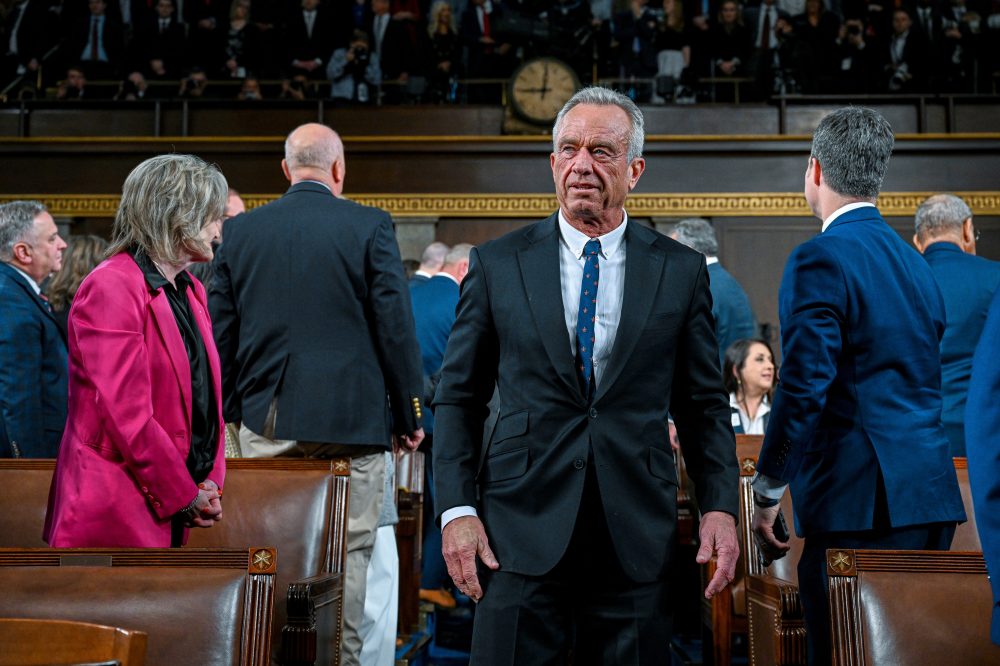
BOSTON — A federal judge’s temporary order has brought Health Secretary Robert F. Kennedy Jr.’s sweeping vaccine policy changes to an abrupt stop, dealing a significant blow to his anti-vaccine agenda during his first year in the Trump administration.
Kennedy had achieved several major victories for “medical freedom” advocates, including dismissing all 17 members of the Advisory Committee on Immunization Practices (ACIP), appointing vaccine skeptics as their replacements, and substantially reducing the recommended childhood vaccination schedule — moves that alarmed pediatricians nationwide.
However, Judge Brian Murphy’s Monday ruling in Boston has temporarily blocked each of these controversial actions.
The decision disrupts Kennedy’s progress at a crucial political time, as the White House and Department of Health and Human Services had been shifting their focus from vaccines to less controversial healthy food initiatives before November’s midterm elections.
It’s unclear whether this setback will mobilize Kennedy’s supporters to mount a stronger defense, give the administration reason to permanently abandon vaccine policy changes, or perhaps both.
HHS spokesperson Andrew Nixon stated that the department “looks forward to this judge’s decision being overturned.” Deputy Attorney General Todd Blanche announced plans to appeal and referenced another Murphy ruling on immigration deportations that was overturned by a federal appeals court the same day.
“How many times can Judge Murphy get reversed in one year?” Blanche posted on X. “We will keep appealing these lawless decisions, and we will keep winning. The question is, how much embarrassment can this Judge take?”
Kennedy’s current position stems from his decision to abandon his independent presidential campaign and endorse Trump two years ago. Trump promised to reward this support by allowing Kennedy to “go wild” on health, food and medicine issues.
The health secretary has delivered on this promise, rapidly transforming public health guidelines and restructuring established vaccine policymaking procedures throughout the past year.
In his Monday decision, Judge Murphy determined that Kennedy ignored established government procedures, particularly when rebuilding the scientific committee that provides vaccine guidance to the Centers for Disease Control and Prevention, in ways that likely broke federal law.
“There is a method to how these decisions historically have been made – a method scientific in nature and codified into law through procedural requirements,” Murphy stated in his order. “Unfortunately, the Government has disregarded those methods and thereby undermined the integrity of its actions.”
Mark Gorton, who leads the Kennedy-supporting MAHA Institute, criticized the judge for treating pre-Kennedy HHS bureaucratic procedures as “some sort of ideal.”
“You’ve had all sorts of ACIP decisions for decades, and you never had a judge standing up and saying that his judgment is superior to that of the panelists, even though the ACIP members for years have been incredibly corrupt and incredibly conflicted,” Gorton argued.
Dr. Robert Malone, among Kennedy’s new vaccine advisory committee appointments, labeled Murphy a “rogue” judge and demanded his impeachment.
Malone encouraged the Trump administration to continue pursuing Kennedy’s vaccine reforms, writing on Substack that the temporary order “is a delay, not a defeat.”
Jeffrey Tucker, who founded the nonprofit Brownstone Institute and has championed Kennedy’s cause, views the ruling as beneficial. He calls it a “clarifying moment” that could unite MAHA activists following recent internal disputes and disagreements.
“It makes the battle lines really, really obvious to everybody,” Tucker explained. “It’s an opportunity for moral courage, strategic intelligence and doubling down in dedication to the agenda of medical freedom above all else.”
The ruling arrives as Republican polling experts have cautioned that Kennedy’s vaccine positions might hurt the party in midterm races — precisely when the White House and HHS had begun focusing on less divisive issues.
A White House official, speaking anonymously about internal administration strategy, revealed earlier this week that Kennedy had already accomplished most of his vaccine-related objectives, with the administration now prioritizing food policy for this year.
White House representatives did not immediately respond to questions Tuesday regarding how the court decision might alter this strategic direction.
Sara Rosenbaum, who teaches health law and policy at George Washington University, believes the judge’s decision coincided with the administration’s growing awareness that “Kennedy had gotten them into a very bad place.”
“I think it hopefully will toughen their resolve to keep getting vaccines off the agenda for now,” she commented.
AKRON, Ohio — An Ohio jury started deliberations Tuesday to decide whether two former FirstEnergy Corporation leaders are guilty of corruption in a massive bribery scandal involving $60 million that led to a profitable nuclear plant rescue package.
Chuck Jones, the company’s former chief executive, and Michael Dowling, a former senior vice president, are facing corruption, bribery, conspiracy and aggravated theft charges. Prosecutors allege they paid $4.3 million to Sam Randazzo, who later became Ohio’s top utility regulator and helped craft the bailout legislation called House Bill 6 while providing other benefits to the company. Both defendants have entered not guilty pleas.
Prosecutors spent two days making their final case, emphasizing that Jones and Dowling deliberately bought off Randazzo, who was destined to chair the Public Utilities Commission of Ohio, to serve their own interests. They argued that obtaining Randazzo’s assistance in securing valuable legislative and regulatory benefits improved the Akron utility company’s financial performance, which directly boosted Jones and Dowling’s pay.
“They rigged a process that was supposed to be fair for everyone. Their corruption here was using power, influence and money for personal and corporate greed,” Special Assistant Attorney General Matthew Meyer told jurors Monday. “By cleverly structuring the timing and labels of their payoff to Sam Randazzo, these two captains of industry behaved like they were untouchable.”
Defense lawyers dismissed this argument as absurd, maintaining their stance that the money given to Randazzo in early January 2019, before he became a candidate for the Public Utilities Commission of Ohio, was a legitimate legal settlement.
“Chuck Jones did not bribe Sam Randazzo,” Jones’ attorney Carole Rendon told jurors on Tuesday. “He made a legitimate business decision to terminate a settlement agreement that was for Sam Randazzo’s clients, the members of IEU-Ohio.” Industrial Energy Users-Ohio was one of Randazzo’s businesses.
Prosecutors presented text messages between the former executives and their discussions about how to approach then-Governor-elect Mike DeWine and then-Lieutenant Governor-elect Jon Husted, now a U.S. senator who testified during the trial. Evidence from post-election meetings was also introduced to support prosecutors’ claims that the two men had an elaborate scheme to enrich themselves at Ohioans’ expense.
Steven Grimes, representing Dowling, argued Monday that the state didn’t meet the burden of proving guilt beyond reasonable doubt. He contended that prosecutors’ arguments relied heavily on assumptions that Dowling planned for the $4.3 million to reach Randazzo, which he said the evidence contradicts.
Grimes accused prosecutors of selectively choosing events from years past to create a narrative that Dowling conspired with Randazzo and Jones, but said the evidence didn’t definitively prove this occurred.
“I’ve been fighting for Mike for a long time. And this is it. I’m done fighting. I get to turn it over to now,” he told jurors. “You guys are the safeguards. You’re the constitutional protection that Mike has. You’re what he’s got. And so when you go back there in your jury room, please demand the details. Don’t compromise. Listen. Respect your fellow jurors. Talk it out. But don’t accept these assumptions. Keep up the fight for Mike. Send him home.”
FirstEnergy acknowledged in a 2021 nonprosecution agreement that it funded the $60 million scheme where former Ohio House Speaker Larry Householder installed allies, gained control, passed the nuclear bailout legislation, and then protected it from a citizen referendum through underhanded tactics.
Householder received a racketeering conviction along with lobbyist and former Ohio Republican Party chair Matt Borges in 2023. The jury gave Householder 20 years for leading the scheme while Borges received five years. Two additional political operatives admitted guilt for their participation, and a dark money organization acknowledged in court that it funneled the money. Neil Clark, a fourth Householder associate charged in the scheme and influential Statehouse lobbyist, took his own life in 2021.
Randazzo died by suicide in 2024 after entering not guilty pleas to numerous state and federal charges. Summit County Common Pleas Judge Susan Baker Ross, who has presided over the Jones and Dowling case for six weeks in Akron, kept some of the more disturbing details that emerged over the past five years from the jury.
Iranian state television reported Tuesday that Gholamreza Soleimani, who served as the leader of Iran’s paramilitary Basij organization, died in joint military operations conducted by American and Israeli forces.
Earlier on Tuesday, Israeli officials had announced they had successfully targeted and eliminated Soleimani in the coordinated strike.
The Basij force operates as a volunteer paramilitary organization within Iran’s military structure, reporting to the Islamic Revolutionary Guard Corps.
Tesla CEO Elon Musk and federal securities regulators are working to reach an agreement that could resolve their ongoing legal battle over his Twitter stock purchases from 2022.
According to court documents filed Monday, both Musk and the Securities and Exchange Commission stated they are “engaged in discussions of a potential resolution that would mean further proceedings might not be necessary.”
The two parties have requested that the judge postpone their deadline for scheduling future court proceedings from March 18 to April 1 to allow more time for negotiations.
Representatives for both the SEC and Musk’s legal team were not available for immediate comment on the settlement discussions.
Federal regulators filed their lawsuit against Musk in January 2025, alleging that he violated securities laws by waiting 11 days before publicly disclosing his initial 5% ownership stake in Twitter during late March and early April 2022. According to the SEC, this delay allowed Musk to purchase more than $500 million worth of additional shares while prices remained artificially depressed.
The government agency is seeking financial penalties and wants Musk to return the estimated $150 million they claim he improperly saved at other investors’ expense. Musk has maintained that his failure to disclose the purchases on time was an unintentional mistake.
A prominent Senate Democrat is demanding transparency from the White House regarding reports of a massive $10 billion payment arrangement to the U.S. Treasury tied to TikTok’s corporate restructuring.
On Tuesday, Senator Mark Warner, who serves as the leading Democrat on the Senate Intelligence Committee, called on the administration to clarify details surrounding the financial agreement that emerged from negotiations during the previous Trump presidency over TikTok’s American business operations.
Warner referenced reporting from the Wall Street Journal indicating that major stakeholders in the restructured TikTok partnership have already transferred $2.5 billion to federal coffers, with plans to deliver an additional $7.5 billion through scheduled payments over time. The investor group reportedly includes technology giant Oracle, private equity firm Silver Lake, Abu Dhabi’s sovereign wealth fund MGX, along with additional financial backers.
Earlier this year in January, ByteDance announced that TikTok USDS Joint Venture LLC would implement comprehensive safeguards to protect American user information, applications, and underlying technology through enhanced data protection and cybersecurity protocols.
LIMA – Peru’s government underwent a major shakeup Tuesday when Prime Minister Denisse Miralles stepped down from her post, according to an announcement from the presidential office, creating uncertainty just weeks before the nation heads to the polls on April 12.
The departure automatically triggers the resignation of Peru’s entire cabinet under the country’s legal framework, which mandates that all 18 ministers must vacate their positions when the prime minister, who leads the cabinet, resigns.
President Jose Balcazar now faces the decision of whether to reappoint the existing ministers or replace them with new appointees as the country approaches its general election.
The presidential office provided no explanation for why Miralles chose to leave her position at this critical time.
In a statement posted on social media platform X, Balcazar’s administration expressed gratitude for her service: “The presidency of the Republic of Peru thanks Ms. Denisse Miralles for the services rendered to the nation as president of the council of ministers during an important period for the country, and wishes her success in her professional career and in her future endeavors.”
Rush out immediately or miss your chance! That’s usually the urgent call when birdwatchers pursue an unusual species visiting from distant lands.
However, one exceptionally rare bird classified as Code-4 by the American Birding Association – previously documented just once on the East Coast – has been leisurely residing at Virginia’s Great Falls Park, feasting on wintercreeper berries while overlooking the stunning Potomac River since the start of the year.
This female red-flanked bluetail (Tarsiger cyanurus), whose natural habitat spans the opposite side of the globe, was initially discovered by Phil Kenny, a birdwatcher from Fairfax County, Virginia. Following that sighting, hundreds of enthusiasts from as far as Florida and New York have journeyed to this national park located nine miles upstream from Washington D.C., bypassing the park’s photogenic waterfalls to observe this diminutive creature. The author made seven separate visits.
Wildlife experts remain puzzled about what drew this energetic bird to Virginia for its inaugural state visit. Red-flanked bluetails normally spend winter months in Japan, Korea, southern China, Thailand, and Myanmar, while their breeding territories extend across Japan, Siberia, and Finland. Although these birds have appeared in Alaska and western states, only one previous Eastern United States sighting occurred – along New Jersey’s coast in December 2023. Scientists theorize that wind patterns may have carried them eastward, or perhaps a genetic anomaly affected their migratory instincts.
This specific bird, bearing resemblance to a compact version of our familiar eastern bluebird, has clearly found adequate sustenance in Northern Virginia to survive even during this winter’s harsh, snowy conditions. Her diet consists of red wintercreeper euonymus seeds, oriental bittersweet berries, and additional treats that grow naturally in China, matching her typical winter habitat. These plants are considered invasive species in America, yet the bluetail thrives on them. “It’s like an American tourist going to Paris and eating at McDonalds. It’s something from back home,” the author explained to Washington Post reporter Dana Hedgpeth for her March 8 article about this displaced winter guest.
As both a former journalist and current Virginia Master Naturalist, the author enjoys educating others about remarkable wildlife discoveries. Despite preferring later hours, she agreed to accompany Dana and photographer John McDonnell to the park at dawn, searching for this needle-in-a-haystack bird. She had already observed it four times previously – typically with assistance from fellow birders who helped locate the 5.5-inch beauty.
On this solo mission during a fog-shrouded morning when the river remained invisible, spotting a small, light-brown bird featuring twin orange patches along its sides presented significant challenges. Fortunately, a dedicated birder joined their search party. Together they navigated the muddy pathway to the bird’s regular territory, and suddenly – within minutes – his keen eyesight located the creature perched prominently on a thick, fallen log within the compact winter range she appears to have claimed. She typically moves throughout approximately two-tenths of a mile along a narrow corridor between the river and granite cliffs. Cornell University ornithologist and migration specialist Andrew Farnsworth noted that some birds naturally prefer confined areas. Even within that limited space, this frequent flyer often vanishes among tangled vegetation and moss-covered rocks.
Without her characteristic blue tail movement, locating her challenges even seasoned birdwatchers. She regularly darts between the riverbank and ridge (displaying typical flycatcher behavior), venturing to the forest floor to hunt insects beneath decomposing leaves. During this misty morning, however, she remained unusually motionless for an extended period, almost as if aware that a Washington Post photographer would soon make her famous.
Following the newspaper’s publication, additional visitors flocked to observe her. Both amateur enthusiasts and professionals sometimes spotted her immediately, while others searched the trails for hours unsuccessfully. Some wondered how long the bluetail might remain, considering March 1 marked spring’s meteorological beginning and warmer temperatures had already arrived. New Jersey’s bluetail reportedly departed around late March. Perhaps this one will leave when her overwintering companions like kinglets, hermit thrushes, and white-throated sparrows head north for breeding season.
The author will miss this celebrity bird, wishing she could tell her: “Don’t hurry home! Back home you’re just an ordinary bird, but in Virginia, you’re a superstar.”
While bats typically don’t draw crowds when hanging on walls, over 350 attendees flocked to The Gallery at Main Street Station in Richmond, Virginia on March 6 to admire artistic interpretations of the Rafinesque’s big-eared bat (Corynorhinus rafinesquii) during the 2026 Restore the Wild Artwork Competition opening celebration.
The annual contest received more than 250 submissions from artists across Virginia and neighboring states, all focusing on this year’s featured species – the Rafinesque’s big-eared bat. This state-endangered mammal calls the Coastal Plain’s bottomland hardwood forests and swamplands home, and its distinctive oversized ears and prominent facial glands presented artists with a fascinating creative challenge that they tackled using diverse artistic techniques and styles.
Competition judges awarded prizes across multiple categories: Natural History Illustration, Artistic Expression, and two Youth divisions, plus selected pieces for promotional use throughout 2026. The winners received recognition at the March 6 opening event, which featured educational presentations, fundraising activities including a silent auction and raffle for Restore the Wild, and live bat demonstrations courtesy of Bat Conservation and Rescue of Virginia. Every single submission from the competition is displayed in the comprehensive exhibition.
Virginia Secretary of Natural and Historic Resources David Bulova addressed the packed reception, celebrating the intersection of art and conservation efforts.
Fairfax resident Michelle Gates claimed victory in the Natural History Illustration division with her painting titled “Echolocation,” which challenged artists to create authentic depictions of the species within its native environment. An avid outdoor enthusiast who enjoys underwater exploration, paddling, hiking, and wildlife photography, Gates also cultivates native plants in her garden to support local ecosystems.
“Winning the Natural History Illustration category feels validating as both a naturalist and as an artist. I put a lot of research into this,” Gates explained. “I wanted to show [the bat] hunting moths (~90 percent of its diet). I ultimately decided on the angle wing emerald [moth] because they’ll eat bald cypress as caterpillars. I was intrigued to find out that this [bat] species’ historical range seems to coincide with historical range for cypress swamps. Now that we’ve cut down and drained a lot of those areas, the bats have moved into human-made structures.”
The Artistic Expression category, which welcomed creative interpretations of the species and habitat, went to Cassandra Picard from Broadlands, Virginia, for her ink pen drawing “Happy Hunting.” “Being one of the winners in this competition is very exciting! Being able to contribute to conservation through a passion of mine is a dream come true,” Picard shared. “I was so excited to learn the focal species this year, as wings and winged creatures are some of my favorite things to draw. Bats have always been adorable to me, so this was a perfect opportunity!” Picard works professionally as a biologist specializing in threatened and endangered tortoise species. “I do my best to spread the word about protecting them and all threatened wildlife,” she added.
Young artists also shined in the competition’s youth categories. Emma Bridges from Brambleton, Virginia, earned top honors in the 11-17 age group, while Madison’s Ellie Chapman dominated the 10 and Under division. Both winners share a love for nature exploration and outdoor adventures. Bridges’ colored pencil creation “I’m All Ears” captivated the judging panel. “I completely fell in love with the Rafinesque’s big-eared bat as soon as I saw a picture,” Bridges said. “I’m happy I was able to do him justice. [This win] means so much to me because I put a lot of time and energy into my art, and I’m very passionate about every piece I make. I learned that the Rafinesque’s big-eared bat’s diet consisted mainly of moths and bugs, so I wanted to include that in the drawing. I had to read through research papers to find the type of moths they eat, so I could make it as realistic as possible and I chose the lettered sphinx moth.”
Chapman drew inspiration from the possibility that her graphite and colored pencil piece “In the Forest by the Creek” might help raise awareness about the Rafinesque’s big-eared bat. “I decided to draw the bat and enter the competition because when my mom showed me the bat online I thought he was really cute,” she explained. “When I learned that the bat is endangered, I thought maybe my picture might help more people like them and then that would help the bats be less endangered someday.”
Joyce Cornelius from Hurt, Virginia, saw her watercolor and acrylic creation “Twilight Trio” selected as the official 2026 Restore the Wild Fine Art Print. “It is gratifying to know that others admire something I’ve created. I hope this piece of art will be enjoyed by many,” Cornelius remarked.
“I was inspired by the subject matter as I’ve always been interested in bats. Since I usually try to incorporate trees into my painting, this combination was a great opportunity. Having never done a nighttime painting before I tried to make it a striking contrast of light and dark. One of the interesting things I learned about the Rafinesque’s big-eared bat was that they are distinguished from other big eared bats by the white hair on their belly, gray/brown back, and that the hair on their toes extends past the claws. This was the main reason I chose to paint three bats, so I could show the back, belly, and toes.” Cornelius actively participates in habitat restoration by cultivating native pollinator wildflowers and grasses for seed collection, which supports restoration projects aimed at reestablishing damaged ecosystems.
Richmond artist Grace Mae Huddleston’s vibrant “Rafinesquii in the Taxodium,” created using liquid ink and acrylic paint pen, was chosen from the Artistic Expression entries to become the 2026 Restore the Wild sticker. “As a lifelong lover of science and nature, it has been a joy to spend much of my art career exploring these topics from realistic and fantastical angles,” Huddleston said. “The Rafinesque’s big-eared bat is such a charismatic creature, and I had so much fun learning about its roosting and feeding habits. Knowing that the art piece I made about this bat will be used to draw attention to the species, to help spread knowledge, awareness, and joy is such a privilege. As for the inky style with fantastical colors—I am an avid reader of comics and sci fi, [and] those aesthetics naturally make their way into my art as a way to convey the fantastical sense of awe I feel for the special real-life creatures I depict.”
Virginia faces challenges with more than 900 wildlife species experiencing population declines, primarily due to habitat loss affecting their access to essential food, water, and shelter. The Department of Wildlife Resources serves as Virginia’s primary agency for wildlife and habitat conservation. Through the Restore the Wild initiative, DWR expands its efforts to preserve, establish, and maintain critical wildlife habitats while protecting Virginia’s natural areas. Contributions to Restore the Wild and purchases of related merchandise directly fund DWR habitat projects benefiting Virginia’s wildlife, including Species of Greatest Conservation Need.
The public can learn more about DWR’s Restore the Wild initiative and support habitat restoration through donations or merchandise purchases. The complete Restore the Wild Artwork Exhibition remains open at The Gallery at Main Street Station, located at 1500 E. Main St., Richmond, VA 23219, daily from 8:00 a.m. to 5 p.m. through Sunday, March 29.
Delaware Department of Transportation officials have implemented a lane restriction on a busy stretch of Route 1 southbound today.
The right lane is currently blocked to traffic between Cave Neck Road and Janice Road, creating potential delays for commuters and travelers in the area.
According to DelDOT, the lane closure will remain active until 5 PM this evening. Motorists are advised to expect slower traffic conditions and allow extra travel time when using this section of the highway.
Drivers should use caution when approaching the work zone and merge safely into the available left lane.
Delaware lawmakers are moving forward with legislation that would significantly restructure the governing board of the Delaware Institute for Dental Education and Research.
Senate Bill 191 introduces sweeping changes to how the institute’s board of directors operates, including modifications to both voting and non-voting member positions. The proposed law would establish new term limits for board positions and revise the process for choosing the board’s Chair and Vice Chair.
Under the new requirements, every board member would be mandated to undergo diversity training as part of their service. The legislation also specifies that university consultants brought in to help with official board matters would not have voting privileges.
The bill represents the latest effort to modernize the institute’s governance structure, with lawmakers making additional minor adjustments to the board’s stated mission and responsibilities. The Delaware Institute for Dental Education and Research plays a key role in advancing dental education and research initiatives throughout the state.
The measure updates existing language in Title 16 of the Delaware Code that originally established the board’s framework and operational guidelines.
Delaware legislators are considering modifications to state regulations governing community-owned power generation facilities through proposed legislation known as Senate Bill 210.
The proposed measure would alter existing language in Delaware’s legal code that defines what qualifies as a “Community-owned energy generating facility.” Under the new requirements, these facilities would need to connect to the electrical grid at locations within service territories overseen by utilities that fall under Public Service Commission oversight.
The legislation specifically targets Section 1001(5) of Title 26 in Delaware’s legal code, which covers public utility regulations. The change would add geographic restrictions to where these community energy projects can link into the power grid.
Currently, the bill is under review by state lawmakers as part of the legislative process.
Motorists should expect delays on a busy stretch of Janice Road today as construction crews have closed one southbound lane between Nassau Commons Boulevard and Siham Road.
According to DelDOT officials, the lane restriction will remain active until 4:00 PM as work continues in the area.
Drivers are advised to plan alternate routes or allow extra travel time when navigating through the construction zone during the afternoon hours.
Paralympic champion Oksana Masters has returned from Italy carrying five new para Nordic skiing medals, further cementing her position as the United States’ most successful Winter Paralympic competitor in history.
The remarkable athlete now holds 24 Paralympic medals total from both summer and winter competitions, with 14 of those being gold medals. Her latest achievements in Italy add to an already impressive collection that spans multiple sports and seasons.
Masters competes in both summer and winter Paralympic events, demonstrating exceptional versatility across different athletic disciplines. Looking ahead, she has already set her sights on the 2028 Los Angeles Paralympics, continuing her competitive journey on home soil.
Despite her extraordinary medal count and record-breaking achievements, Masters prefers to focus conversations on the setbacks and defeats she has experienced throughout her career, viewing these moments as equally important to her athletic story.
Her success in Italy reinforces her dominance in winter Paralympic sports while highlighting her ongoing commitment to excellence as she prepares for future competitions.
Delaware Department of Transportation maintenance crews are currently conducting litter removal operations along a stretch of northbound Interstate 95 near the state’s northern border.
The cleanup activities are taking place between Harvey Road and the Pennsylvania state line, with crews expected to wrap up their work by 4:30 PM this afternoon.
Motorists traveling through the area should be aware of the ongoing maintenance operations and exercise caution when passing work zones.
CLEVELAND, Ohio — Residents across the Cleveland region experienced a startling wake-up call Tuesday morning when a meteor blazed through the sky, producing a thunderous sound that rattled windows and shook buildings throughout the area.
Despite occurring at 9 a.m. in broad daylight, the brilliant space object was spotted by observers across hundreds of miles, with sightings reported from as far as Wisconsin down to Maryland, according to the American Meteor Society.
Carl Hergenrother, executive director of the American Meteor Society, confirmed the celestial visitor’s authenticity. “This one really does look like it’s a fireball, which means it’s a meteorite — a small asteroid,” Hergenrother explained.
He distinguished this event from typical space debris, noting, “So much stuff is being launched that a lot of times what you see burning up is just reentering satellites. But usually those don’t get especially bright.”
According to Hergenrother’s assessment, the space rock likely measured somewhere between a softball and basketball in diameter, possibly even larger, and would have been traveling at “many tens of miles per second” when it entered Earth’s atmosphere.
Workers at Cleveland’s National Weather Service office personally experienced the phenomenon, both hearing the explosive sound and feeling the resulting vibrations. They also believe a meteor was responsible for the disturbance, though no debris has been recovered in the immediate aftermath.
“There could be some small fragments, but a lot of it would have burned up in the atmosphere,” stated NWS meteorologist Brian Mitchell.
Such cosmic events occur more frequently than many realize, with Hergenrother noting that meteors typically impact somewhere in the United States approximately once daily, while tiny space particles may fall as often as ten times each hour. While scientists monitor these phenomena through specialized camera networks designed to observe the night sky, increasing numbers of ordinary citizens are documenting them using mobile phones and personal security systems.
“Now we’re seeing them, and there’s dozens of videos popping up all the time,” Hergenrother observed.
Bank of America has reached a preliminary agreement to settle litigation alleging the financial giant turned a blind eye to questionable money transfers connected to Jeffrey Epstein during his years of sexual exploitation of hundreds of victims.
Court documents filed Monday in Manhattan federal court disclosed the potential resolution, coinciding with the originally planned deposition date for billionaire Leon Black in the matter. Financial details of the agreement remain confidential, and bank representatives have refused to provide comment.
While Black is not named as a defendant in the litigation, attorney Sigrid McCawley, representing Epstein’s victims, recently characterized him as a “critical witness” in the proceedings.
At a court session last week, Black’s legal representative Michael Carlinsky successfully convinced Judge Jed S. Rakoff to delay the deposition by 10 days, citing imminent settlement negotiations. Carlinsky has not responded to requests for comment on Tuesday.
McCawley released a statement honoring the “brave and fearless voices” of those victimized by Epstein, noting their “road to justice” has been lengthy and difficult, but describing the Bank of America resolution as “one more step on the road to much deserved justice.”
The litigation, filed in October, claimed the bank overlooked $170 million that Black transferred from his Bank of America account to Epstein allegedly for “tax and estate planning advice.”
According to the suit, the financial institution disregarded “numerous red flags” indicating improper monetary activities and “went far beyond what a non-complicit bank would have done and instead assisted Epstein in setting up the necessary financial structure to operate his sex-trafficking venture.”
The legal action, filed on behalf of an anonymous woman referred to as Jane Doe and “all others similarly situated,” states the victim was residing in Russia when she encountered Epstein in 2011 and was “coerced into a cult-like life.”
The complaint details how she received payments from Epstein via a Bank of America account while being controlled “financially, emotionally, and psychologically” by Epstein from 2011 through 2019 as he sexually assaulted her on no fewer than 100 occasions, including rape and forcing her into sexual acts with other women for his gratification.
The suit further alleged that Epstein covered her housing costs and provided income from a fraudulent employment arrangement through a Bank of America account, while using her immigration status “over her head, until her ultimate escape when Jeffrey Epstein died.”
Epstein passed away in federal custody in August 2019 while awaiting trial on sex trafficking allegations. Officials determined his death was suicide. He was notorious for his relationships with wealthy and influential individuals, which the lawsuit claimed he exploited in his attacks on women.
Recent Justice Department disclosure of millions of documents from law enforcement investigations into Epstein reveal he maintained regular communication with corporate executives, media figures, scientists and high-profile politicians well after his 2008 state court conviction in Florida on sex crime charges.
Analysis of the documents by The Associated Press and other media outlets showed Black’s name surfaced 8,200 times, though this number likely includes duplicate entries.
In March 2021, Black resigned as CEO of Apollo Global Management, stating he wished to concentrate on his family, health, and “many other interests.”
A company board committee had released a report two months prior concluding that Epstein had provided Black with personal counsel on estate planning, tax matters, charitable contributions and managing his “family office,” but offered no services to Apollo or made no investments in Apollo funds.
The report also stated the review — which Black had requested — discovered “no evidence” that he participated in Epstein’s alleged criminal conduct “in any way” or “at any time.”
In a Tuesday statement, Senator Ron Wyden, an Oregon Democrat serving on the Senate Finance Committee, called the bank’s settlement decision a “step towards justice and a vindication of my staff’s investigation into how major Wall Street banks enabled Epstein’s crimes.”
Wyden stated the bank “willfully looked the other way” as Black transferred the $170 million to Epstein through “huge wire transfers,” frequently in $10 million or $20 million amounts.
BOSTON — Historical reenactors wearing period military uniforms and three-cornered hats gathered at one of America’s most historic Catholic churches Tuesday, later discharging muskets and parading through local streets to commemorate 250 years since British forces left the city.
Participants with men on horseback and even livestock traveled across South Boston’s terrain in the morning breeze while local residents observed from their doorsteps — many still in sleepwear and covered with blankets, seemingly roused by the sounds of drumming and bagpipe music.
The observance honors Evacuation Day on March 17, 1776, when British military units departed Boston. This turning point occurred after General George Washington strengthened Dorchester Heights using cannons transported from Fort Ticonderoga by Colonel Henry Knox, forcing the British withdrawal.
This milestone represented the Continental Army’s initial significant triumph in the Revolutionary War, concluding an 11-month blockade of Boston and claiming the city for American forces.
The date traditionally coincides with St. Patrick’s Day, a combination that has influenced Boston’s festivities for generations and was celebrated again with a joint parade in South Boston over the weekend.
Tuesday’s observance started at St. Augustine Chapel and Cemetery, where attendees participated in Mass at the 1818 structure before creating a procession that traveled through South Boston toward Dorchester Heights, the elevation where colonial troops placed cannons overlooking the harbor. A memorial at that location, recently restored through a $37 million renovation, has reopened for public visits.
Ronald White from Milton, wearing colonial clothing, joined reenactors discharging replica firearms in the church cemetery after the service and explained the anniversary holds personal significance.
As a New Hampshire Sons of the American Revolution member, he connects his family history to an ancestor who served in the conflict. His eyes filled with tears Tuesday while discussing his admiration for the country’s founding fathers.
“To think that 250 years ago Henry Knox made such a courageous stand, I get choked up thinking about it,” White said. “They really were going up against a force — it was kind of a suicidal idea to stand up against Great Britain. And we did it. Here we are remembering it.”
Richard Vige, a Boston area resident, explained he visited Dorchester Heights for his first time to observe the 250th anniversary, despite maintaining a lifelong fascination with American history.
“I’ve always been interested in history, really since grade school,” he said. “I’ve visited many of the sites along the Freedom Trail, but I had never been here before. I wanted to take advantage of the 250th to see what was going on.”
He noted that participating in the commemoration provided an opportunity to consider the nation’s progress since its establishment — from a group of Atlantic coastal colonies to a country with over 340 million citizens.
Greta Gaffin, a Boston University theology student researching American religious history, found the Catholic ceremony historically contradictory.
Conducting a Catholic Mass for the anniversary represents a scenario the nation’s founders likely never envisioned. Colonial Massachusetts historically limited Catholic religious practices, and churches didn’t establish themselves in Boston until after the Revolution, as religious liberties grew and Irish immigration transformed the city.
“I’m here because I think having a Catholic Mass in honor of Evacuation Day is conceptually absurd,” she said. “They would have hated this — I had to see it.
“And I love parades,” she added.
Anti-Catholic attitudes were common in colonial New England, though this began changing during the Revolutionary War, when the American movement depended partly on Catholic France. The Quebec Act, which safeguarded Catholicism in nearby Quebec, was viewed by some colonists as dangerous and is mentioned in complaints within the Declaration of Independence.
Delaware transportation officials have announced a multi-day road closure in Wilmington that will affect traffic through early next week.
The Delaware Department of Transportation says a stretch of Glenrich Avenue will be completely shut down from Friday, March 20th until Tuesday, March 24th. The affected area runs from Howard Street to Lake Street.
DelDOT crews will be replacing drainage pipes at the intersection and conducting repairs on manholes during the closure period.
Transportation officials are urging drivers to reduce their speed when traveling through construction zones and to plan for potential traffic delays in surrounding areas.
Additional details about the project can be found on DelDOT’s official website at www.deldot.gov.
Veteran offensive lineman Wyatt Teller has signed a two-year contract worth $16 million with the Houston Texans, according to Tuesday reports from NFL Network.
The agreement includes performance-based incentives that could boost the total value to $23 million, sources indicate.
The 31-year-old guard appeared in 13 games last season for Cleveland, starting each contest. Throughout his NFL career spanning stops with Buffalo (2018) and Cleveland (2019-25), Teller has started 101 of his 109 total appearances. His stellar play earned him three consecutive Pro Bowl selections between 2021 and 2023.
Houston general manager Nick Caserio had initially pursued Elgton Jenkins according to the Houston Chronicle, but the Browns secured the two-time Pro Bowl left guard with a two-year, $24 million deal on March 10.
Eastern Michigan University has selected Billy Donlon, a current assistant coach at Clemson, to become their new men’s basketball head coach, according to a CBS Sports report released Tuesday.
The announcement follows the university’s decision to dismiss head coach Stan Heath on March 8th.
The 49-year-old Donlon will inherit a program that struggled during the recent season, posting a 10-21 overall record and going 4-14 in Mid-American Conference play.
Donlon brings substantial head coaching experience to the position. He compiled a 109-94 record while leading Wright State from 2010 through 2016, then worked as an assistant coach under John Beilein at Michigan and Chris Collins at Northwestern. In 2019, he returned to head coaching at Kansas City, where he achieved a 49-39 record across three seasons.
Most recently, Donlon joined Brad Brownell’s coaching staff at Clemson prior to the 2022 season.
The departing Heath, a Detroit native who played for Eastern Michigan, compiled a 57-99 record during his tenure with his former school.
First-year college basketball players made history Tuesday when three freshmen earned spots on the Associated Press All-America first team, with Duke’s Cameron Boozer, BYU’s AJ Dybantsa, and Arkansas’s Darius Acuff Jr. receiving the prestigious honor.
Rounding out the top five selections were Michigan senior Yaxel Lendeborg and Texas Tech junior JT Toppin.
Boozer achieved unanimous recognition, appearing on all 61 voting ballots. This marks the second consecutive year a Duke freshman has earned universal acclaim, following Cooper Flagg’s perfect selection last season. Dybantsa garnered 57 first-team votes while Acuff secured 47.
The Blue Devils, led by Boozer’s stellar play, captured both the Atlantic Coast Conference regular season championship and tournament crown, earning them the top overall seed in March Madness. Boozer has posted impressive numbers with 22.5 points and 10.2 rebounds per contest.
Dybantsa tops the nation’s scoring charts at 25.3 points per game while contributing 6.7 rebounds. His selection makes him just the third BYU player to earn first-team honors, joining Danny Ainge and Jimmer Fredette. The Cougars enter the tournament as a sixth seed.
Arkansas hasn’t celebrated a first-team All-American since Sidney Moncrief claimed the distinction in 1978-79. Acuff has delivered 22.9 points and 6.5 assists per game for the fourth-seeded Razorbacks.
Lendeborg has helped propel Michigan to a No. 1 tournament seed, becoming the first Wolverines player to earn first-team recognition since Trey Burke accomplished the feat in 2012-13. He contributes 14.6 points, 7.0 rebounds and 3.2 assists per game.
Toppin earned second-team All-America honors last year when Texas Tech advanced to the Elite Eight. Now the program’s first-ever first-team selection, he unfortunately suffered a torn right ACL and will miss the tournament despite averaging 21.8 points and 10.8 rebounds across 25 games for the fifth-seeded Red Raiders.
The second team features Purdue’s Braden Smith, Michigan State’s Jeremy Fears Jr., Illinois’s Keaton Wagler, Iowa State’s Joshua Jefferson, and North Carolina’s Caleb Wilson.
Third-team selections include Gonzaga’s Graham Ike, Houston’s Kingston Flemings, Texas Tech’s Christian Anderson, Alabama’s Labaron Philon Jr., and Florida’s Thomas Haugh.
Honorable mention recognition went to Arizona’s Jaden Bradley and Brayden Burries, Iowa’s Bennett Stirtz, Kansas’s Darryn Peterson, St. John’s Zuby Ejiofor, Florida’s Rueben Chinyelu, Ohio State’s Bruce Thornton, Butler’s Michael Ajayi, Kansas State’s P.J. Haggerty, Stanford’s Ebuka Okorie, and Vanderbilt’s Tyler Tanner.
French President Emmanuel Macron and German Chancellor Friedrich Merz are scheduled to address the struggling FCAS fighter aircraft program during their meeting ahead of this week’s European Union summit, according to two sources with knowledge of the situation.
The ambitious $100 billion initiative to create an advanced air combat system alongside Spain faces potential collapse as French aerospace giant Dassault Aviation and Airbus clash over project leadership and control.
While Macron’s office has verified the planned meeting between the two leaders before the March 19-20 summit, officials would not confirm whether the fighter program will be part of their discussions.
The initiative was originally launched by Macron and former German Chancellor Angela Merkel in 2017, with Spain becoming a partner at a later date.
The ambitious program envisions a digitally integrated network of piloted fighter aircraft and unmanned combat drones designed to succeed the Dassault Rafale and Airbus-supported Eurofighter beginning in 2040. However, the participating companies have reached an impasse regarding the upcoming phase that includes building a test aircraft.
Dassault is demanding greater authority over the primary fighter aircraft component, including supplier selection rights, while proposing to grant Airbus similar autonomy in areas where it currently leads. Airbus maintains that current agreements establishing equal partnership should remain unchanged.
The relationship between these aerospace companies has deteriorated significantly, with most project participants doubting its continuation. However, the ultimate decision rests with national leadership, and Macron appears to oppose German industry calls to terminate the program.
During a trip to New Delhi last month, Macron rejected the notion that corporate disagreements should influence government decisions regarding strategic defense development.
“There have been frictions between companies; that’s the life of business and of human organisations. But should that decide the strategy of states? The answer is no,” he told a news conference.
Should the French-German-Spanish initiative, known by its French acronym SCAF, fail, it would likely prompt a reorganization of partnerships within Europe’s divided defense manufacturing sector.
Germany has historically collaborated with Britain on advanced fighter development, though Britain is now participating in the rival GCAP fighter program with Japan and Italy.
Sweden, manufacturer of the independent Saab Gripen aircraft, is evaluating its future position in the fighter market and could potentially partner with Airbus if the FCAS program fails.
Delaware State University has established a new memorial scholarship fund to commemorate the life and work of Arnise R. Malcom, according to an announcement from President Allen.
The Arnise Malcom Memorial Scholarship Fund has been created to honor Malcom’s legacy of supporting student athletes in their pursuit of excellence both academically and athletically.
University officials stated that Malcom devoted her career to ensuring student athletes succeeded not only in their sports but also in their educational endeavors.
The scholarship fund represents the university’s commitment to continuing Malcom’s mission of helping student athletes achieve their full potential in all aspects of their college experience.
Agricultural organizations across America are closely monitoring upcoming trade discussions as the United States, Mexico, and Canada prepare to negotiate renewal of their trilateral commerce agreement. Tony Rice, who serves as senior director of trade policy for the National Milk Producers Federation, emphasized the critical importance of the USMCA for America’s dairy sector and export operations.
Rice highlighted the significance of the U.S. dairy industry’s relationship with its North American neighbors, noting their status as top export destinations. “They’re number one and two, respectively, and the USMCA agreement has brought a tremendous number of benefits in growing our exports to Mexico, and simultaneously to Canada, while servicing the demand in those two markets,” he said.
Salisbury officials are ready to showcase their latest community investment with a ceremonial ribbon-cutting at Woodcock Park’s brand-new playground this Thursday at 4 p.m.
The Department of Field Operations spearheaded the renovation project, which involved removing outdated play structures and installing contemporary equipment aimed at creating a safer and more exciting recreational space for area families and children.
This playground transformation demonstrates Salisbury’s ongoing dedication to enhancing public recreational facilities and strengthening neighborhood amenities across the city.
“Woodcock Park has been a long-term asset of the Pinehurst/Camden neighborhood for years. It is now receiving a much-deserved makeover to be sure it is well-positioned to be enjoyed for many generations to come. Neighborhood parks are critical component of quality livability and these kinds of improvements are vitally important,” said Mayor Randy Taylor.
Residents are encouraged to join the celebration and experience the park’s enhanced features firsthand. Local officials, city personnel, and community partners will come together to commemorate this neighborhood investment. Kona Ice will provide complimentary frozen treats for those attending the ceremony.
City leaders anticipate the upgraded playground will bring fresh vitality to the area as families create new memories and children discover the exciting play opportunities for years ahead.
Event Details:
Woodcock Park Playground Ribbon Cutting
Thursday, March 19, 2026
4:00 p.m.
Woodcock Park
803 Riverside Road
For additional information about City parks and recreation updates, please visit https://salisbury.md/ or follow the City of Salisbury on social media.
Delaware authorities have taken a 32-year-old Bronx resident into custody on charges of check fraud and stealing thousands of dollars from an elderly Milford resident.
According to investigators, the case began when a 75-year-old woman from Milford contacted Delaware State Police on February 2, 2026, to report suspicious activity on her bank account. The victim told officers she had sent a check through the mail to cover a bill, but the intended recipient never received her payment. She subsequently discovered that someone had drained $6,000 from her account.
Detectives determined that someone had stolen the woman’s check from the mail, modified it, and deposited the altered document at a financial institution in New York. Through their investigation, law enforcement officials identified Michael Smith as the person responsible and secured an arrest warrant.
Smith voluntarily surrendered to authorities at Justice of the Peace Court 2 on March 16, 2026. Following his arrest, he was processed at Troop 7 headquarters and formally charged with two felony offenses:
Forgery 2nd Degree – Alters Written Instrument of Another Person without Authority (Felony)
Theft $1,500 or Greater and the Victim is 62 Years of Age or Older (Felony)
After appearing before a Justice of the Peace, Smith was released from custody after posting a $5,000 unsecured bond.
The Food and Drug Administration’s CORE Network has released comprehensive yearly reports documenting foodborne illness outbreaks and health incidents they investigated throughout each calendar year.
These annual publications provide detailed accounts of contamination events and health emergencies connected to food products under FDA oversight that the network examined during their investigations.
The reports also document the specific public health measures and safety actions implemented as a direct result of these food safety investigations.
The CORE Network’s annual documentation serves as a record of their response efforts to protect consumers from foodborne illness outbreaks and contaminated products in the food supply.
WASHINGTON — President Donald Trump has pushed back a long-scheduled diplomatic visit to China by several weeks as he concentrates on addressing the ongoing conflict in Iran and seeks international military support for Middle Eastern shipping lanes.
During a Tuesday meeting with Irish Prime Minister Micheál Martin at the White House, Trump announced he would travel to China in five to six weeks rather than at month’s end. The president described his plans as “resetting” the visit with Chinese President Xi Jinping, though he provided no additional details.
The China visit represents a crucial chance to strengthen the delicate trade agreement between the world’s two largest economies, but it has become complicated by Trump’s efforts to resolve the Iranian situation. After calling on China and other countries over the weekend to deploy naval forces to safeguard Middle Eastern oil transit routes, Trump suggested his travel schedule remained uncertain, while also stating Tuesday that America could handle the situation without international assistance.
Speaking to the Financial Times on Sunday, Trump expressed his desire to determine Beijing’s willingness to help secure the strait before departing for what was originally planned as a late-March meeting. A day later, he informed reporters that he had asked to postpone the trip approximately one month due to wartime responsibilities.
“I think it’s important that I be here,” Trump said. “And so it could be that we delay a little bit. Not much.”
Treasury Secretary Scott Bessent, who conducted discussions with Chinese Vice Premier He Lifeng in Paris this week as part of preparations for Trump’s visit, maintained that any schedule modifications stemmed from logistical considerations rather than attempts to pressure Beijing.
Trump continues advocating for nations dependent on Middle Eastern petroleum to assist in monitoring the Strait of Hormuz, a critical passage handling roughly 20 percent of global oil trade. He has specifically highlighted China’s situation, pointing out that the nation imports approximately 90 percent of its oil through the strait compared to minimal U.S. imports from the region. Similar requests have been made to Japan, South Korea, Britain, and France, though no countries have agreed to participate, with China remaining uncommitted.
“We strongly encourage other nations whose economies depend on the strait far more than ours,” Trump stated at the White House Monday. “We want them to come and help us with the strait.”
The president characterizes the Iranian conflict as a service to the global community being performed by America and Israel, arguing that other nations should contribute to strait protection efforts. Several international leaders have rejected this approach and criticized U.S. military tactics.
Trump’s Chinese visit holds significant international importance as both countries work toward stability following a trade dispute that resulted in elevated tariffs before tensions decreased. Trump and Xi reached a one-year trade agreement last fall, leading to Trump’s commitment to a state visit to Beijing. He previously visited China in 2017 during his initial presidential term.
China’s foreign minister stated last week that his country anticipates a “landmark year” in U.S.-China relations. He emphasized that China maintains “a positive and open attitude,” noting that “the key is for the U.S. side to meet us halfway.”
Trump’s focus has shifted as the conflict drives oil prices higher during a challenging midterm election year where cost of living concerns already dominated voter priorities. Beyond postponing his China trip, he has also removed sanctions on Russian oil and authorized releases from national petroleum reserves, despite previously opposing such measures.
ROME — Italy’s most famous ancient landmark has received a stunning makeover that brings visitors closer to experiencing what Romans saw two millennia ago.
The Colosseum’s exterior plaza has been transformed through a restoration project that uses authentic travertine marble to mark the exact locations where massive columns once towered 164 feet into the sky. These same quarries supplied building materials to ancient Roman architects.
The arena continues to mesmerize people from around the globe, drawing 9 million tourists in 2025 and maintaining its status as Italy’s top visitor destination. Centuries ago, crowds of Romans gathered in this same space to witness gladiator combat and battles with wild beasts.
The renovation concentrated on the curved plaza area where ancient spectators once congregated beneath two grand arcade structures supported by towering marble pillars. These waiting areas allowed people to queue before entering the arena to find their designated seats.
Natural disasters and ground instability caused these magnificent archways to crumble over many centuries. However, visitors today can rest on substantial travertine blocks positioned precisely where the original supports once stood, while examining replicas of Roman numerals that once guided spectators to their seating areas.
Italian architect Stefano Boeri, who created the plaza design, explained the project’s vision: “These blocks of travertine marble are placed, located exactly where the pillars, the original pillars were based. The idea we had was to give back to the public the perception of the proportion of the arcades and the proportion of the vaults of the arches that were used to enter in the center of the Colosseum.”
The surrounding area had deteriorated significantly, becoming cluttered with rubble fragments and overgrown vegetation.
Workers excavated approximately three feet down to reach the original travertine pavement that once covered the entrance zone. Archaeological discoveries during the dig included ancient coins, sculptural pieces, animal remains, and a golden ring. Further excavation revealed Emperor Commodus’s private underground tunnel, which allowed him to access the Colosseum without encountering ordinary citizens. This hidden passageway opened for public tours last year.
The restoration team obtained fresh travertine slabs from identical quarries that supplied ancient Roman builders. These same stone sources continue providing materials for contemporary religious structures, financial institutions, cultural venues, government facilities, and residential properties.
Fabrizio Mariotti, whose family business Mariotti Carlo has specialized in travertine craftsmanship for four generations in Tivoli, expressed his enthusiasm while seated on one of the new stone pieces: “From the beginning we understood only one thing and that was that we wanted to be involved. For a family like ours that has been working with travertine for four generations, working at the Colosseum, which is the symbol not only of Rome but also of this material, is so important.”
Rome recently inaugurated two additional subway stations this year, including one located deep beneath the Colosseum, completing a multi-billion euro transit expansion. Officials confirmed that funding for the Colosseum’s perimeter restoration came from compensatory money allocated for the metro construction project.
WASHINGTON — The ongoing conflict involving Iran has created complications for Federal Reserve policymakers as they weigh decisions about interest rates and economic policy, potentially pushing back any reduction in borrowing costs that would benefit consumers seeking loans for homes and vehicles.
Rising fuel costs have created a challenging situation for Fed officials who are already split on policy direction as they wrap up their important policy meeting on Wednesday. Higher gasoline prices typically drive up inflation in the near term, which would normally prompt the central bank to maintain or increase interest rates to control price growth. However, if energy costs climb too high or remain elevated for an extended period, economic damage and rising joblessness could occur, which would typically lead the Fed to lower rates instead.
At this point, the most straightforward approach for the 12-person policy committee, under Chairman Jerome Powell’s leadership, appears to be maintaining current rates while monitoring economic developments. The central bank is anticipated to leave rates unchanged on Wednesday and may continue this approach through their late April and June gatherings. Economic analysts now predict the initial rate reduction of the year may not occur until September or beyond.
“With Iran and the oil shock, I think the committee’s room for maneuver here is pretty limited,” stated Nathan Sheets, Citi’s chief global economist and former Fed senior economist. “I think they’ve got to wait and see how this plays through.”
The Fed must also publish quarterly economic forecasts that present their own challenges. Last December, officials predicted inflation would decline to 2.6% by year’s end, with core inflation minus food and energy dropping to 2.5%. However, these numbers were already climbing before the Iran situation developed, with core prices increasing 3.1% in January compared to the previous year, marking the largest jump in over two years.
December forecasts also indicated one rate cut this year, but maintaining that projection becomes more difficult if the committee simultaneously increases its inflation predictions. The Fed implemented three cuts last year before stopping in January.
SGH Macro’s chief economist Tim Duy believes the Fed should increase its core inflation forecast, using their preferred measurement, to at least 2.8% by year-end. Such an adjustment would argue against any reductions this year.
“Any reasonable forecast for inflation now should not have a cut” in the Fed’s projections, Duy explained. “And it’s almost ludicrous that it might.”
Most economists view the decision of whether to maintain the single rate cut forecast or eliminate it entirely as uncertain. Several prominent Fed members — including governors Chris Waller, Stephen Miran, Michelle Bowman, and potentially Powell — are hesitant to abandon rate reduction possibilities. Waller recently stated in a television appearance that inflation is moving toward the Fed’s 2% goal, with the Iran conflict likely representing only a short-term disruption.
However, another faction of Fed officials — including Cleveland Federal Reserve Bank President Beth Hammack and Chicago Fed President Austan Goolsbee — were already concerned about inflation’s persistence before the Iran conflict began. The possibility of increased fuel costs will likely heighten their worries.
Home loan rates have already increased following the conflict, probably because markets anticipate higher inflation will prevent Fed cuts in the near future. The typical 30-year mortgage rate rose to 6.1% last week from 6%, though it remains below the nearly 6.7% level from a year ago.
Beyond economic disruptions, the Fed faces a significant leadership change. Powell’s chairmanship concludes May 15, and President Donald Trump has selected former top Fed official Kevin Warsh as his replacement. Warsh’s confirmation has been delayed in the Senate due to Republican senators’ objections to a Justice Department probe of Powell regarding his testimony about a building renovation.
Last Friday, a judge dismissed two Justice Department subpoenas issued to the Fed, weakening the investigation, though U.S. Attorney Jeannine Pirro announced plans to appeal the decision.
The Fed also faces pressure from pandemic-era inflation experiences. Normally, the central bank would essentially ignore supply disruptions like Middle Eastern oil supply interruptions. Once resolved, resulting inflation typically subsides without requiring rate increases, allowing the Fed to maintain or even reduce rates to support employment.
However, as the economy recovered from the pandemic in 2021, inflation surged as Americans dramatically increased spending, supported by stimulus payments and pandemic savings. Powell initially characterized inflation as “transitory” and expected it to diminish as normalcy returned. Instead, it reached a four-decade peak in June 2022.
With inflation remaining high, many Fed officials are cautious about repeating past errors, making cuts less probable while inflation stays elevated.
“I think they are a little scarred from the blowback they got from the word ‘transitory,’” observed Derek Tang, an economist at consulting firm Macro Policy Analytics.
PORTLAND, Maine — A heated battle for the Democratic Senate nomination in Maine escalated Tuesday when Governor Janet Mills’ campaign launched a new attack advertisement targeting her primary opponent Graham Platner over his controversial social media history.
Both candidates are vying for the Democratic ticket to challenge incumbent Republican Senator Susan Collins, a contest that could prove crucial for Democrats hoping to regain control of the Senate.
The Mills campaign’s new video features women reading aloud from Platner’s previous online posts that appeared to minimize sexual assault. According to the advertisement’s narrator, Platner had written on Reddit that individuals shouldn’t drink so heavily “they wind up having sex with someone they don’t mean to.”
The women featured in the ad label him “a bully” and declare there’s “no way” they would support him. The commercial concludes with a voiceover stating: “Graham Platner: the closer you look, the worse it gets.”
Platner, who works as an oyster farmer and served as a Marine veteran from rural Maine, had previously issued an apology several months ago when these deleted posts first came to light. He explained that he made the comments while dealing with mental health struggles following his military service. The controversial posts included support for political violence, dismissive remarks about military sexual assault, and criticism of law enforcement and rural communities.
Platner’s campaign manager Ben Chin fired back, calling Mills’ advertisement a “desperate attempt for relevance.”
“It’s why people hate politics and why not enough real people run for office: D.C. insiders who are so obsessed with their own power and threatened by someone who is building an actual movement of working people, that they launch a barrage of attacks to try to tear Graham down,” Chin stated.
Mills’ campaign responded by saying Platner’s remarks demonstrate him “minimizing sexual assault and blaming survivors.” They also distributed statements from multiple Maine women condemning Platner.
“Graham Platner’s comments aren’t just disgusting or disturbing, they are disqualifying,” stated Peggy Schaffer of Vassalboro, a former vice chair of the Maine Democratic Party, in materials shared by the Mills campaign. “These comments make him unelectable in any general election.”
The primary contest features Mills, age 78, a longtime Democratic figure with backing from Senate Minority Leader Chuck Schumer, facing off against the significantly younger and less politically experienced Platner, 41. Despite his inexperience, Platner has drawn crowds to town halls throughout the state with his populist messaging focused on housing costs and healthcare affordability. He has secured endorsements from Vermont Independent Senator Bernie Sanders and Arizona Democratic Senator Ruben Gallego.
Platner has also faced scrutiny regarding a skull-and-crossbones tattoo that resembles Nazi imagery. He claims he received the tattoo during a drinking episode and only recently learned of its Nazi connections. He has since had the tattoo altered with a different design.
Earlier this month, Mills took a subtle dig at her opponent by posting on social media: “for what it’s worth, I don’t have any tattoos.”
Platner countered Tuesday with his own advertisement featuring an endorsement from a Maine resident named Susan Collins, who shares no relation to the Republican senator. This Collins calls the incumbent a “D.C. insider” while describing Platner as a “Democrat with backbone.”
Senator Collins’ campaign chose not to respond to the competing advertisements or the dispute between her potential challengers. Collins, now 73, has held her Senate seat since 1996 and has successfully defeated multiple Democratic challengers over her career.
Democrats need to gain four additional seats to reclaim Senate control, with strategists eyeing potential victories in Maine, North Carolina, Alaska, and Ohio.
A longtime Trump supporter who stood by the former president through election challenges and January 6th has now broken ranks over military action in Iran, stepping down from his top counterterrorism role on Tuesday.
Joe Kent, who served as director of the National Counterterrorism Center, departed his position citing disagreements with the administration’s Iran policy. Despite his previous unwavering loyalty to Trump, Kent stated Iran “posed no imminent threat to our nation” and claimed “we started this war due to pressure from Israel and its powerful American lobby.”
The 45-year-old former special forces operator had been viewed as one of Trump’s most reliable allies in a crucial national security position. His departure highlights a significant rift within the administration over Middle East strategy.
Kent’s reasoning directly contradicts Trump’s justification for military action against Iran. On February 28, when U.S. and Israeli forces began their bombing campaign, Trump declared that Iran’s “menacing activities directly endanger the United States, our troops, our bases overseas, and our allies throughout the world.”
In his resignation letter to the president, Kent argued that “high-ranking Israeli officials and influential members of the American media deployed a misinformation campaign … to encourage a war with Iran.”
These comments about Israeli influence and American media reflect Kent’s history of controversial associations with extremist groups. His remarks echo antisemitic conspiracy theories suggesting Jewish Americans wield excessive control over news coverage.
During Senate confirmation proceedings, Kent admitted that a campaign advisor arranged a phone call that included Nick Fuentes, a far-right personality who has praised Hitler and made inflammatory statements about Jewish people controlling America.
Kent’s 2022 House race involved payments to Graham Jorgensen, a Proud Boys member, for campaign consulting. He also collaborated with Joey Gibson, who founded the Christian nationalist organization Patriot Prayer, and received backing from various extremist figures.
Prior to his congressional campaigns, Kent promoted unfounded theories that government agents orchestrated the January 6th Capitol attack and falsely claimed Trump defeated Joe Biden in 2020. He has demanded Biden’s impeachment, called for investigating the election results, and advocated defunding the FBI following the Mar-a-Lago document search.
Kent eventually distanced himself from some extremist connections and stated he opposes “racism and bigotry.” However, during Senate hearings, he refused to abandon his election conspiracy claims.
The Senate confirmed Kent in July by a 52-44 margin, with nearly all Democrats opposing his nomination due to his radical associations. Republican Senator Thom Tillis of North Carolina was the only GOP member to vote against confirmation.
In his role, Kent oversaw an intelligence organization established following 9/11 to identify and analyze terrorist threats. The agency maintains the government’s database of known and suspected terrorists.
Prior to confirmation, Kent served as chief of staff to Director of National Intelligence Tulsi Gabbard. The former Green Beret completed 11 combat deployments, primarily in Iraq, during two decades of Army service.
Following his 2018 military retirement, Kent joined the CIA as a paramilitary officer and advised Trump’s 2020 reelection effort on counterterrorism matters. He frequently appeared on conservative television programs and podcasts while pursuing congressional seats in 2022 and 2024.
Kent’s first wife, Shannon Smith, died in a 2019 suicide bombing while serving as a Navy cryptologist fighting ISIS in Syria.
Smith’s death transformed Kent into a critic of American military interventions worldwide.
“That is why I have a skepticism of our federal government,” he explained regarding his wife’s death, stating she died because “Republicans and Democrats consistently lied to the American people to keep us engaged in wars abroad.”
During America’s troubled 2021 Afghanistan exit, Kent harshly criticized the defense establishment and Washington’s “permanent ruling class.” He suggested some nation-building advocates were misguided while others pursued selfish interests.
“It speaks to our hubris,” Kent told reporters during his congressional campaign. “For us not to have learned from all this just shows that there are people making money and making their careers at the other end of it. They’ve been doing it on the backs and dead bodies of U.S. soldiers.”
Trump praised Kent enthusiastically when announcing his nomination in February 2025.
“Joe will help us keep America safe by eradicating all terrorism, from the jihadists around the World, to the cartels in our backyard,” Trump posted on social media.
During confirmation hearings, Kent emphasized Latin American drug cartels rather than Middle Eastern threats.
“President Trump is committed to identifying these cartels and these violent gang members and making sure that we locate them and that we get them out of our country,” Kent informed Senate Intelligence Committee members.
While working under Gabbard, Kent instructed an intelligence analyst to modify a report about Venezuela’s government and transnational gangs. The changes supported Trump’s claims that gang members could be expelled using the Alien Enemies Act, typically reserved for wartime situations.
Democratic senators questioned Kent extensively about his involvement in a Signal messaging group used by Trump’s national security team to discuss classified military operations.
The Signal conversation accidentally included an Atlantic magazine journalist and revealed Defense Secretary Pete Hegseth sharing precise details about warplane departures and bombing schedules for March 2025 attacks on Yemen’s Houthis. This sensitive information was disclosed before pilots had even taken off.
The incident created significant embarrassment for the administration, though Trump imposed no penalties on Hegseth, Kent, or other officials involved.
DUBAI, United Arab Emirates (AP) — New space-based photography is providing an initial look at the extensive destruction caused by the ongoing conflict with Iran, revealing burning vessels at Iranian harbors and demolished structures at American military installations.
Details about the extent of destruction throughout the Middle East have remained limited, especially regarding damage within secure military compounds, since hostilities commenced on February 28.
The photographs originate from Planet Labs PBC, a San Francisco-based company that supplies imagery to news organizations, including The Associated Press. Planet Labs implements a two-week waiting period before making its images publicly available due to worries that “adversarial actors” might misuse the footage.
Additional high-quality images have been released by rival companies. Other sources, such as the U.S. Geological Survey, have also made available lower-quality imagery that has proven valuable.
American and Israeli forces have been attacking numerous targets, including key leaders, military installations, missile and air defense locations, and positions belonging to the paramilitary Revolutionary Guard along with its volunteer unit, the Basij. Iran has retaliated using drone and missile attacks aimed at Israel and neighboring Gulf Arab countries.
The following examines what can be observed in selected Planet Labs photographs, along with images from other sources.
Among the most striking photographs from Planet Labs have emerged from Bandar Abbas, which houses a significant Iranian naval facility adjacent to the vital Strait of Hormuz linking the Persian Gulf with the Arabian Sea.
Pictures captured on March 2 reveal vessels on fire at the harbor. The U.S. military’s Central Command has been focusing on Iran’s naval resources and reports it has destroyed or damaged over 100 Iranian ships during the conflict.
The island nation of Bahrain, which hosts the U.S. Navy’s 5th Fleet, has experienced intense Iranian attacks targeting military bases and petroleum facilities. A March 1 photograph taken by Planet Labs reveals a major structure at the base has been destroyed, along with two radomes — dome-shaped structures protecting radar equipment — presumably from Iranian missile and drone attacks.
The Navy has not provided detailed information about the total damage sustained at the base, though Iran has consistently claimed responsibility for attacking it. Internet videos have also captured incoming fire directed at the facility. During the 12-day conflict in June, Iran struck and demolished a comparable radome at Al Udeid Air Base in Qatar that was used for protected communications.
In Abu Dhabi, the UAE’s capital city, damage is visible at France’s Camp de la Paix naval installation. Space imagery from March 3 displays destruction to two large warehouse-style structures at the site. The facility is located near Zayed Port in Abu Dhabi, and in proximity to its Cultural District housing the Louvre Abu Dhabi and other significant museums, both operational and under development.
The U.S. Geological Survey’s Landsat satellites have also proven essential for identifying large fires. Landsat imagery captured on Monday revealed a blaze at Dubai International Airport following an Iranian drone attack that ignited a fuel truck at the world’s most active airport for international flights, creating a cloud of toxic black smoke.
Another fire was observed on Monday at Oman’s southern harbor in Salalah, which was attacked by suspected Iranian drones on March 11, although Tehran has disputed launching them as part of its campaign against Gulf Arab nations. The fire appears to have continued burning since that time.
A tragic construction accident in Vienna, Austria has claimed four lives after scaffolding gave way at a building site, according to reports from the Austrian news agency APA on Tuesday.
The fatal incident occurred in Vienna’s affluent ninth district at a construction location. Emergency responders treated one man with severe injuries from the accident, according to a representative from the city’s ambulance service.
Vienna police officials were not immediately available to provide additional details about the circumstances surrounding the scaffolding failure.
The National Oceanic and Atmospheric Administration has forged a crucial partnership to maintain vital tsunami detection capabilities across the Pacific Ocean through a new funding arrangement with Alaska-based seismic monitoring operations.
Through this collaboration with the Alaska Mesonet and the University of Alaska-Fairbanks Alaska Earthquake Center, NOAA will financially support nine earthquake monitoring stations that deliver essential real-time tsunami warning data.
“Seismic stations are an important dataset for NOAA’s Tsunami Warning Centers to provide real-time warnings that save lives amid tsunamis and related hazards,” said Neil Jacobs, Ph.D., NOAA administrator. “NOAA’s National Weather Service is committed to providing the fastest hazard warnings possible to Americans.”
The partnership ensures continuous data transmission for communities across Alaska, particularly those in the Aleutian Islands where tsunami waves can reach shore in just minutes, as well as Pacific Northwest coastal areas and the broader Pacific region. NOAA’s financial support will cover essential operations including computer system upkeep, around-the-clock emergency response capabilities, data quality verification, ongoing station oversight, and facility maintenance.
Alaska’s congressional delegation praised the initiative’s life-saving potential. “The Alaska Earthquake Center is an unparalleled resource, helping to keep Alaskans safe from natural disasters—on land or at sea,” said Senator Lisa Murkowski. “In partnership with the National Tsunami Warning Center in Palmer, funding for seismic sensors in the Aleutians strengthens real-time warnings across the region. I appreciate NOAA’s work to find a solution to continue the important monitoring capacities that save lives.”
Senator Dan Sullivan emphasized Alaska’s unique vulnerability to seismic events. “The Alaska Earthquake Center is essential to keeping Alaska’s people, communities, and infrastructure safe,” said Senator Dan Sullivan. “Alaska sits in one of the most seismically active regions in the world, facing constant risk from earthquakes, tsunamis, and landslides. Our communities rely on the National Weather Service and its partners—including the Alaska Earthquake Center—for timely and accurate data, research, and monitoring that enable swift public communication and effective preparedness for all hazards.”
The partnership became official on March 1, 2026, operating under the National Weather Service’s National Mesonet Program. This initiative acquires observational information from various monitoring networks managed by private companies and state-university partnerships, enhancing NOAA’s existing observation infrastructure to strengthen weather and water forecasting models nationwide and globally.
Multiple media sources confirmed Tuesday that the Philadelphia Eagles have secured wide receiver Marquise ‘Hollywood’ Brown on a one-year deal.
Brown’s arrival comes amid speculation surrounding the potential exit of fellow receiver A.J. Brown, creating an interesting situation where one Brown may replace another. While the Eagles retain DeVonta Smith, their receiving corps lacks significant depth beyond Jahan Dotson, recovering player Johnny Wilson, and Darius Cooper.
Last season with the Kansas City Chiefs, the 28-year-old Brown hauled in 49 receptions for 587 yards and found the end zone five times across 16 games, starting six of those contests.
According to NFL Network, Brown’s Philadelphia contract carries a maximum value of $6.5 million.
Throughout his professional career spanning 90 games with 72 starts, Brown has accumulated 371 receptions for 4,322 yards and 33 touchdowns. His journey began when Baltimore selected him 25th overall in the 2019 draft, followed by stints with the Ravens through 2021, the Arizona Cardinals from 2022-23, and most recently Kansas City in 2024-25.
South Carolina health officials documented another measles infection on Tuesday, pushing the state’s total number of cases to 997, according to new data released by the state health department.
The latest figure represents an increase of one case since Friday’s report. Health authorities are cautioning that this expanding outbreak may continue for an extended period, potentially lasting several weeks or even months, as vaccination rates remain below optimal levels in affected areas.
The United Arab Emirates is considering participation in an American-led international coalition focused on protecting the Strait of Hormuz, according to a senior diplomatic official.
Anwar Gargash, who serves as a diplomatic adviser to the UAE president, made the announcement Tuesday during a virtual event hosted by the Council on Foreign Relations, an American policy research organization.
Gargash also revealed that the UAE is not currently engaged in active diplomatic discussions with Iran.
The statements arrive as maritime security threats in the Strait of Hormuz continue to raise international alarm about safe passage for commercial vessels through the strategic waterway.
Small-scale farmers and urban agricultural operations in Maryland can now apply for state grants designed to support environmentally beneficial farming practices.
The Maryland Department of Agriculture announced on March 17, 2026, that registration has opened for its Small Acreage Cover Crop Program. The application window began March 16 and will remain open until April 24, 2026.
This initiative targets agricultural operations working with fewer than 10 acres, providing financial incentives for implementing cover crop strategies that benefit soil health and environmental conservation.
The program represents Maryland’s continued commitment to supporting sustainable agricultural practices among smaller farming operations and urban growing facilities throughout the state.
Drivers in the Hockessin area will need to find alternative routes this week as the Delaware Department of Transportation tackles an infrastructure project.
DelDOT has announced that a portion of Old Wilmington Road will be completely shut down from Tuesday, March 24 through Friday, March 27 to allow crews to replace crossroad pipes. The affected section runs from Loveville Road to Brackenville Road.
The four-day closure is scheduled to proceed as planned, though DelDOT notes the work is weather dependent. Officials are warning drivers to plan ahead by using different routes and to anticipate some minor traffic delays in nearby areas during the construction period.
Additional details about this and other DelDOT projects can be found on the department’s website at www.deldot.gov.
Denver has completed a significant trade with Miami, bringing in wide receiver Jayden Waddle along with a fourth-round draft selection in exchange for first-, third-, and fourth-round picks, according to ESPN’s Tuesday report.
This move provides Broncos quarterback Bo Nix with an additional elite receiving threat to complement two-time Pro Bowl wideout Courtland Sutton. During the previous season, Sutton topped Denver’s receiving statistics with 74 receptions, 1,017 yards, and seven touchdown catches.
The trade leaves Miami with seven total selections within the opening three rounds of the 2026 NFL Draft, including the 30th overall first-round pick they received from Denver.
The 27-year-old Waddle hauled in 64 passes for 910 yards and six scores across 16 starts last season while playing for the rebuilding Miami franchise. His contract carries $68.6 million remaining over the next three years.
Throughout his professional career since Miami selected him sixth overall in the 2021 NFL Draft, Waddle has accumulated 373 catches for 5,039 yards and 26 touchdowns across 78 games, all as a starter.
Two major aerospace manufacturing companies announced Tuesday they are working to expand their production capabilities to handle surging orders from both commercial airlines and defense contractors.
Leaders from Honeywell Aerospace and Howmet Aerospace spoke at industry conferences about the challenge of meeting increased demand driven by both a recovering airline industry and military buildups worldwide.
The aerospace supply industry is experiencing strong orders from major aircraft manufacturers Boeing and Airbus, who are boosting production of new planes. Meanwhile, military spending is increasing globally as conflicts in Ukraine and Iran have reduced weapons inventories.
Aircraft manufacturers are consulting with suppliers and airline customers to assess potential impacts from the U.S.-Israeli conflict with Iran, which has pushed oil prices near $100 per barrel and affected flight routes and shipping operations.
John Plant, CEO of Howmet, which produces aircraft castings and fasteners, said his company can handle Boeing and Airbus plans to increase production of smaller, single-aisle aircraft. However, he noted that additional demand for larger long-distance aircraft would strain current capabilities.
“I don’t think we could support all of that at the moment,” Plant stated at the Bank of America Global Industrials Conference in London. “My suspicion is that we would actually have to put more capacity down to achieve that level of production.”
Honeywell Aerospace, scheduled to become an independent company in the third quarter of 2026, anticipates defense sector growth in the high single digits to low double digits, with commercial aviation growing in the high single digits this year.
“We don’t see the defense demand … waning at all,” said Honeywell Aerospace CEO Jim Currier during the J.P. Morgan Industrials Conference in Washington, D.C.
“The heightened geopolitical concerns and conflicts that are happening around the world, and have been for quite some time, are fueling a substantial amount of investment in the defense sector,” Currier explained.
Honeywell Aerospace produces engines for business aircraft and navigation systems, among other components for both commercial aviation, representing approximately 60% of operations, and defense contracts, which make up the remaining 40%.
The company announced last year plans to split its aerospace and automation divisions into separate companies, in addition to previously announced plans to spin off its advanced materials division.
Denver has completed a major trade with Miami, landing veteran wide receiver Jaylen Waddle in exchange for multiple draft selections, according to a source familiar with the transaction who spoke to The Associated Press on Tuesday.
The source requested anonymity since the teams have not yet made an official announcement. Miami will receive Denver’s first-round selection (30th overall) in the upcoming NFL draft, plus third and fourth-round picks. The Broncos will get Waddle and a fourth-round selection from the Dolphins.
The addition of Waddle provides quarterback Bo Nix with another elite receiving option alongside Courtland Sutton, strengthening an aerial attack that ranked 11th league-wide during the previous campaign.
Denver earned the top seed in the AFC last season but fell to New England in the conference championship after losing Nix to an ankle injury suffered during their divisional playoff victory over Buffalo.
Selected in the first round during 2021, Waddle posted three consecutive 1,000-yard receiving campaigns to start his professional career, though he has not achieved that milestone since the 2023 season.
The 27-year-old receiver has compiled career averages of 81 catches, 1,098 receiving yards and six touchdown receptions across his five NFL seasons.
NAIROBI, Kenya — Two individuals appeared in a Nairobi courtroom Tuesday facing wildlife trafficking charges after being caught with nearly 2,300 live ants packaged in specialized containers.
Zhang Kequn, a Chinese citizen, and Charles Mwangi, a Kenyan resident, were formally charged with illegally trafficking wildlife species and conspiracy to commit a felony following their March 10 arrest.
According to court documents, authorities discovered the men possessing 1,948 garden ants housed in specialized tubes, plus another 300 ants concealed within tissue rolls. Neither suspect held the necessary permits required by Kenya’s wildlife protection statutes for handling or trading such species.
Prosecutors allege Kequn purchased the insects from Mwangi in two separate transactions — paying 60,000 Kenyan shillings ($463) for 600 ants initially, then 70,000 shillings ($540) for a second batch of 700 ants. Mwangi faces an additional charge after allegedly being discovered with more live ants.
Both defendants remain in jail pending further proceedings.
David Lusweti, representing Kequn, told The Associated Press the men were unaware they were violating any laws. “They have seen potential that they are able to sell outside the country, they believe that they can make a living out of it,” he explained.
This arrest represents the latest incident in what Kenyan officials describe as an expanding illegal trade involving ant smuggling to European and Asian markets. Authorities have not disclosed whether the insects are desired as exotic pets or serve other commercial purposes.
In 2023, two Belgian teenagers faced similar wildlife trafficking charges after being caught with 5,000 ants in test tubes. Kenyan authorities estimated those insects’ value at 1 million shillings ($7,700).
The Kenya Wildlife Service previously stated that such illegal exports “not only undermines Kenya’s sovereign rights over its biodiversity but also deprives local communities and research institutions of potential ecological and economic benefits.”
Another case from last year involved a Kenyan citizen and Vietnamese national who were similarly charged with illegal trafficking after being found with 400 ants.
BUDAPEST, Hungary — Two Eastern European nations have reached a new agreement to construct an oil products pipeline in an effort to strengthen regional fuel security, Slovakia’s Energy Ministry announced Tuesday.
The proposed 79-mile pipeline will connect Hungary’s Százhalombatta refinery with Slovakia’s Bratislava refinery, creating capacity to move 1.5 million tons of gasoline and diesel annually, according to ministry officials.
Construction linking the two facilities, both operated by Hungary’s Mol Group, is scheduled for completion during the first half of 2027, Hungarian Foreign Minister Péter Szijjártó announced Monday from Brussels, where officials signed the deal.
The fuel connection would “add further value from the perspective of Hungary’s energy supply and diesel supply, while helping to counter the effects of wars around the world,” Szijjártó stated.
The partnership emerges amid ongoing tensions between the two EU nations and Ukraine regarding oil pipeline access. Hungary and Slovakia remain the only European Union members still receiving Russian crude oil imports.
Deliveries through the Druzhba pipeline system have been halted since late January following what Ukraine describes as Russian drone damage to critical infrastructure. Ukrainian officials report that repair work poses safety risks to maintenance crews.
Ukrainian authorities warn that even if repairs are completed, the pipeline infrastructure remains at risk for additional Russian military strikes.
Both Hungarian and Slovak leadership have criticized Ukraine for allegedly blocking Russian crude shipments intentionally, promising strong responses until deliveries restart. Hungary has already prevented a 90-billion euro ($104 billion) EU loan package to Ukraine over the supply interruptions.
Slovakia’s Energy Ministry stated that the supply disruptions have “highlighted the vulnerability of energy infrastructure and the need to diversify supply routes and sources.”
“The new pipeline should therefore improve supply flexibility and enable more efficient fuel transfers between refineries in both countries,” the ministry explained.
BOGOTA, Colombia — Ecuador’s leader has firmly denied accusations that his nation’s military is conducting bombing strikes across the border into Colombia, as diplomatic tensions between the neighboring South American countries continue to worsen.
President Daniel Noboa took to social media platform X on Tuesday to clarify his administration’s position, stating that his government “is fighting narco terrorism in all its forms” and “bombing places that serve as hideouts for those groups, of which many are Colombian,” but emphasized these operations occur exclusively on Ecuadorian soil.
The Ecuadorian president’s statement came in direct response to Colombian President Gustavo Petro, who had made explosive claims the previous day suggesting Ecuador was launching attacks on Colombian territory near their mutual border. During a televised government meeting, Petro declared, “We are being bombed from Ecuador, and it’s not rebel groups who are doing it.” He mentioned that Colombian authorities had discovered explosive devices but offered no supporting evidence for his accusations.
Petro also revealed he had contacted U.S. President Donald Trump, requesting American intervention to convince Noboa to halt what Colombia believes are unauthorized military operations on its territory.
This diplomatic crisis unfolds as Colombia approaches its May presidential elections, with relations between these once-allied nations continuing their downward spiral. The countries previously maintained strong commercial ties and coordinated security efforts.
Earlier this year, Noboa implemented harsh economic measures against Colombia, first establishing a 30% import tariff in January before escalating it to 50%. The Ecuadorian leader justified these duties as a “security tax,” arguing that Colombia has failed to prevent drug trafficking organizations and rebel forces from infiltrating Ecuador. He has indicated these tariffs will remain until Colombia demonstrates more aggressive action against criminal networks.
Colombian officials have pushed back against suggestions they are not adequately addressing drug trafficking, particularly the flow of Colombian cocaine through Ecuadorian ports. In retaliation, Colombia has implemented its own tariffs on Ecuadorian products.
The conservative Noboa has faced significant challenges in addressing Ecuador’s escalating drug-related violence, where murder rates have increased fivefold over the past half-decade. His administration has resorted to implementing nighttime curfews across four provinces as part of broader crime-fighting efforts.
Recently, Noboa’s forces collaborated with American military units in a major operation targeting a drug trafficking facility near the Colombia-Ecuador border, utilizing unmanned aircraft, helicopters, and watercraft in the mission.
Meanwhile, Petro, a former leftist rebel turned politician, has pursued negotiations with Colombia’s remaining insurgent organizations through his “total peace” initiative.
However, critics argue that these ceasefire agreements have actually strengthened these groups’ control over rural areas, as they compete for territories previously held by the FARC guerrilla organization, which signed a peace agreement with Colombia’s government in 2016.
HAVANA — Cuba’s electrical grid failed again Tuesday, marking the third major power outage to strike the Caribbean nation in just four months and highlighting the island’s worsening energy shortage and economic troubles amid escalating diplomatic friction with President Donald Trump.
Power restoration efforts were underway at medical facilities and for portions of Cuba’s 11 million citizens, though government officials cautioned that the deteriorating electrical infrastructure remains vulnerable to additional failures.
The island’s outdated power system has significantly deteriorated over recent years, resulting in routine daily outages and increasingly frequent major blackouts affecting large areas.
Cuban authorities attribute their energy difficulties to what they call a U.S. energy embargo, following Trump’s January announcement threatening tariffs against nations that sell or supply oil to Cuba.
Following Cuba’s latest plunge into darkness, Trump declared Monday that he expects to have the “honor of taking Cuba.”
“I mean, whether I free it, take it. I think I could do anything I want with it,” he said. Trump has characterized Cuba as a “very weakened nation.”
The Trump administration is insisting that Cuba free political detainees and pursue political and economic reforms as conditions for removing sanctions. Trump has also mentioned the potential for a “friendly takeover of Cuba.”
Essential oil deliveries from Venezuela ceased after the United States launched an attack on the South American nation in early January and detained its former president, Nicolás Maduro.
Although Cuba generates 40% of its own petroleum and produces its own electricity, this output falls short of meeting national demand as the electrical infrastructure continues deteriorating.
Cuba’s Ministry of Energy and Mines announced on X that electrical service had been restored in the western municipality of Pinar del Rio and the southeastern Holguin province, with several “microsystems” beginning operations across different regions.
Government-controlled media outlets reported that by Monday evening, power had returned to 5% of Havana residents, affecting approximately 42,000 customers.
Residents of the capital city worry about food spoilage and struggle to navigate their homes without illumination.
“The power outages are driving me crazy,” said 48-year-old Dalba Obiedo. “Last night I fell down a 27-step staircase. Now I have to have surgery on my jaw. I fell because the lights went out.”
The Ministry of Energy and Mines reported earlier that the nation’s electrical system experienced a “complete disconnection,” stating that no equipment malfunctions occurred in the operating units when the grid collapsed.
Lázaro Guerra, the ministry’s electricity director, informed state media Monday that repair teams were working to restart multiple thermoelectric facilities, which are essential for power restoration.
Havana resident Tomás David Velázquez Felipe, 61, said the continuous outages make him believe that Cubans who are able should simply leave the island. “What little we have to eat spoils,” he said. “Our people are too old to keep suffering.”
A College Republicans chapter at the University of Florida has taken legal action against the school’s administration, claiming their constitutional rights were violated when the organization was shut down following allegations of antisemitic conduct by members.
The student group filed their federal lawsuit Monday targeting interim president Donald Landry, seeking to halt the university’s enforcement of the deactivation and regain access to campus facilities in Gainesville.
“The University of Florida punitively deactivated and shut down the UFCR, in response to alleged viewpoints expressed by a member of UFCR, and in an effort to silence the club and chill its future speech,” the organization stated in their legal filing.
University spokesperson Cynthia Roldan Hernandez declined to discuss the matter in an email response, citing the institution’s policy against commenting on active litigation.
According to university administrators, they received notification over the weekend from the Florida Federation of College Republicans that the state organization had dissolved the campus chapter. The federation determined that certain members had “engaged in a pattern of conduct that violated its rules and values, including a recent antisemitic gesture,” university officials explained.
The school has indicated its willingness to help reestablish the campus organization once the state federation is prepared to move forward with different student leadership.
In their legal challenge, the College Republicans argue that the shutdown was not grounded in any established university regulations or policies, but rather stemmed solely from a member’s expression of views “which was alleged to be antisemitic.”
The lawsuit also contends that university officials failed to provide proper notification to the chapter and denied them the chance to present their perspective on the situation.
This incident represents the second occasion this month where a Florida public university has moved against a Republican student organization over accusations of racist or antisemitic conduct.
Florida International University in Miami recently opened an inquiry into a group chat created by a Miami-Dade Republican Party official that contained violent racial epithets, antisemitic remarks, and offensive language targeting women. The conversation included both students and prominent conservative figures at the Miami institution.
Similar controversies have emerged beyond Florida’s borders. Last autumn, New York’s Republican State Committee suspended a Young Republican group after a group chat surfaced containing inappropriate jokes about sexual assault and casual references to gas chambers.
WASHINGTON – A top Pentagon official disclosed Tuesday that military operations targeting suspected narcotics trafficking boats have resulted in the deaths of 157 people believed to be connected to drug organizations.
Joseph Humire, a senior Defense Department official overseeing homeland defense and Americas security matters, provided the casualty figure in written testimony to Congress. The operations have taken place across 45 separate military actions against suspected drug vessels since September 2025.
The military campaign has focused on the Caribbean Sea and Eastern Pacific Ocean regions, with forces destroying a total of 47 boats suspected of transporting illegal narcotics, according to Humire’s statement.
These deadly operations represent a key component of the current administration’s strategy to disrupt illegal drug supply chains, officials say. However, the campaign has drawn criticism from legal scholars and Democratic members of Congress who have raised concerns about the lawfulness of such strikes.
Humire described the military actions as having a “significant and profound” effect on drug trafficking operations. He reported that vessel movements linked to narcotics smuggling dropped by 20% in Caribbean waters and declined by 25% in the Eastern Pacific.
Despite releasing video footage of most strikes on social media platforms, military officials have shared limited additional information about the operations. Details remain scarce regarding the types and quantities of drugs aboard the targeted vessels, as well as information about the individuals who were killed.
A deadly dispute has erupted between the leaders of Colombia and Ecuador after bombing attacks along their shared border resulted in 27 charred remains being discovered, according to Colombian President Gustavo Petro’s announcement Tuesday.
The Colombian leader took to social media platform X to clarify his country’s role in the attacks, stating “I didn’t give that order,” and emphasizing that Colombian security forces were not responsible for conducting the bombings.
Ecuador’s President Daniel Noboa fired back at his Colombian counterpart earlier Tuesday, writing on X: “President Petro, your declarations are false, we are acting in our territory, not yours.” This response came after Petro had suggested Monday evening that Ecuador had conducted bombing operations within Colombian borders.
According to Noboa, the targeted sites were being used as safe houses by organizations connected to narco-terrorism, with the majority of those involved being Colombian nationals. “We will continue to clean up and rebuild Ecuador,” the Ecuadorean president declared.
Ecuador’s government initiated nationwide operations against criminal organizations beginning Sunday evening, though officials have not provided updates on military activities specifically at the border region.
The South American nation has indicated that its counter-narcotics efforts are receiving assistance from partner nations, including the United States.
Ecuadorean government officials have not yet responded to requests for information about the discovered remains.
DAMASCUS – Washington has urged Syria’s new leadership to deploy military forces into eastern Lebanon to assist in dismantling Hezbollah, though Syrian officials remain wary of such an operation due to concerns about being drawn into regional warfare and sparking religious conflicts, according to five individuals with knowledge of the discussions.
The suggestion to Syria’s pro-American administration demonstrates escalating efforts to neutralize the Iran-supported militant organization, which began attacking Israel in solidarity with Tehran on March 2, triggering Israeli military operations in Lebanon.
According to two Syrian government officials and two other knowledgeable sources, American and Syrian representatives initially explored this concept last year. All sources requested anonymity given the delicate nature of these discussions.
American officials brought up the proposal again around the period when the U.S. and Israel launched their military campaign against Iran. The Syrian officials indicated the American request arrived shortly before hostilities commenced, while a Western intelligence contact said it came just after fighting began.
Reuters consulted ten sources for this report – six Syrian government officials and advisors, two Western diplomatic representatives, one European official, and one Western intelligence contact. All confirmed that Syria’s Sunni Islamic-led administration had been carefully weighing a cross-border military action while maintaining reservations.
Neither American support for Syrian intervention in eastern Lebanon nor Syria’s reluctance to proceed have been previously disclosed.
A State Department representative refused to discuss “private diplomatic communications” and directed inquiries to Syrian and Lebanese authorities regarding their military activities.
DAMASCUS PROVIDES GUARANTEES TO LEBANON
Despite longstanding hostility toward Hezbollah and Iran – both supported Bashar al-Assad throughout Syria’s 2011-24 civil conflict – Syrian President Ahmed al-Sharaa has proceeded carefully since U.S.-Israeli air operations against Iran commenced February 28.
A senior Syrian government source revealed that Damascus and its Arab partners agreed Syria should avoid the conflict and implement only protective actions.
Since early February, Damascus has positioned rocket batteries and thousands of soldiers along the Lebanese border, describing these deployments as defensive measures.
Syria’s foreign affairs and information ministries did not respond to comment requests.
When questioned by Reuters, Lebanon’s presidential office stated it had received no “indication or notification from the U.S., Western nations, Arab countries or Syria” regarding American-Syrian talks about potential cross-border operations.
Lebanese President Joseph Aoun conducted a bilateral conversation with Sharaa and participated in a three-way call including France’s president, during which Sharaa affirmed Syria’s respect for Lebanese sovereignty and denied intervention intentions, the presidency reported.
Lebanon coordinates with Syria on border arrangements but has never discussed Hezbollah matters with Damascus, according to the statement.
Lebanon’s armed forces said coordination channels with Syria remain active “within the scope of managing border matters and shared security concerns,” aiming to prevent tensions or incidents while ensuring border region stability.
Prime Minister Nawaf Salam said Sharaa informed him that “the strengthening of military presence along the Syrian-Lebanese border serves only to enhance border security and preserve internal Syrian safety,” emphasizing the importance of ongoing coordination.
Aoun has pursued policies designed to achieve Hezbollah’s disarmament, but Beirut has proceeded carefully given Hezbollah’s powerful weapons arsenal and substantial backing among Lebanese Shiite Muslims.
Sharaa has expressed support for Aoun’s disarmament initiatives.
DAMASCUS PERCEIVES RISK OF IRANIAN STRIKES, MINORITY UNREST
The senior Syrian official revealed Washington had authorized an operation into eastern Lebanon to assist Lebanese disarmament efforts – when conditions are appropriate.
However, Damascus identified risks including potential Iranian missile strikes and possible unrest among minority Shiites, threatening efforts to stabilize Syria following sectarian violence last year.
Two Western diplomatic sources also confirmed Washington had endorsed the concept of Syrian cross-border action against Hezbollah. The Western intelligence source and European official said America had requested Syria’s military take a more aggressive role countering Hezbollah in Lebanon, including through possible eastern incursions.
The Western intelligence source and European official noted Syria’s leadership was cautious about entering Lebanon as this could worsen bilateral relations.
A Syrian military official said no final determination had been made regarding any potential Lebanese operation, but the possibility of intervention during a conflict between the Lebanese state and Hezbollah remained under consideration.
SYRIAN CONTROL UNDER THE ASSADS
Syria extensively controlled Lebanon under Assad family rule, deploying forces in 1976 during the 1975-90 civil war following President Suleiman Frangieh’s invitation and managing Lebanon’s post-war political landscape until withdrawing in 2005.
Any Syrian military action could intensify sectarian conflicts in both Syria and Lebanon, nations containing diverse religious communities including Sunnis, Christians, Druze and Shiites.
During a March 13 interview with Lebanese network MTV, Syrian Defense Ministry spokesman Brigadier General Hassan Abdel Ghani characterized the border buildup as a protective measure. He noted extensive coordination with Lebanon’s military and said Sharaa supported establishing Lebanese governmental control throughout Lebanon.
Recently, Syria’s army reported Hezbollah artillery rounds struck a border village. Hezbollah claimed it had defeated an Israeli infiltration attempt from the same location. Israeli authorities said they were unaware of any such mission. Syria’s military stated it was “evaluating suitable options to implement necessary responses.”
General Motors and its battery manufacturing partner LG Energy Solution announced Tuesday they are converting their Tennessee facility to produce energy storage batteries instead of electric vehicle batteries.
The companies will bring back 700 workers who were previously let go, with production of lithium-iron phosphate batteries set to begin in the second quarter. Through their partnership called Ultium Cells, the companies had furloughed employees at the Tennessee location and an Ohio facility in January due to declining electric vehicle sales, with layoffs originally planned through mid-2026.
The shift comes as battery manufacturers look for ways to utilize excess production capacity originally intended for electric vehicles. Energy storage systems are increasingly in demand, particularly to power the growing number of artificial intelligence data centers.
LG has been converting some of its electric vehicle battery production lines to energy storage applications, joining competitors like SK On in making similar transitions following policy changes under President Trump that have dampened EV market enthusiasm.
General Motors has scaled back its electric vehicle manufacturing plans, reducing its need for battery cells. The automaker recently sold its ownership stake in a Michigan battery facility to LG and has slowed construction on another plant being built with Samsung in Indiana.
Kurt Kelty, GM’s vice president overseeing battery, propulsion and sustainability operations, told Reuters in January: “We don’t have enough demand to fill three factories.”
Regarding the energy storage sector, Kelty explained: “right now, the demand exceeds supply tremendously, and it’s going to continue to exceed it for the next several years.”
The University of Delaware has released their weekly athletics roundup, highlighting recent developments across Blue Hens sports programs.
The athletics department’s regular update covers various Delaware sports teams and their recent activities, providing fans and supporters with the latest information on Blue Hens athletics.
The weekly summary serves as a comprehensive overview of Delaware’s athletic programs and their ongoing competitions and achievements.
Registration is now available for the Delaware Farm Bureau Foundation’s 13th Annual Milk Run/Walk, scheduled for Saturday, May 16, 2026, at Ramsey’s Farm in Wilmington. The fundraising event has generated more than $266,000 throughout its 12-year history to help feed Delaware families and promote farming education statewide.
This year’s event expands its offerings with three distance options: a 2-mile health walk, a 5k trail run, and a new 10k trail run. Participants can register for $35 until May 8, with fees increasing to $40 afterward. Same-day registration starts at 8:00am, and all events begin at 9:00am. The fundraiser welcomes participants of every age and fitness level.
Money raised through the event benefits multiple hunger relief and educational initiatives throughout Delaware. The Ministry of Caring’s “Milk for Children Fund” supplies milk for meals distributed to individuals facing food insecurity in the Wilmington region. The Food Bank of Delaware’s Backpack Program guarantees students receive nutrition during weekends and school breaks. Additionally, the Delaware Farm Bureau Foundation delivers interactive farming education directly to classrooms statewide to enhance agricultural awareness in local communities.
Local businesses and organizations interested in supporting the cause can explore various sponsorship packages. For sponsorship details, contact Joseph Poppiti, DEFB Executive Director, at 302-697-3183 or [email protected]. Registration is available at https://defb.org/foundation/milk-run/.
Cuban authorities announced early Tuesday that they have successfully restored electrical connections across most of the island nation, following a complete power grid failure that plunged approximately 10 million residents into darkness on Monday.
The Energy and Mines Ministry reported that power lines have been reestablished from the western province of Pinar del Rio extending eastward to Holguin. However, Santiago de Cuba, the nation’s second-most populous city, continues to experience outages.
The nationwide blackout occurred amid severe fuel shortages stemming from U.S. sanctions that have blocked oil shipments from Venezuela and threatened penalties against nations supplying fuel to the Caribbean island.
Even with grid restoration efforts underway, electricity production remains severely limited due to aging infrastructure and insufficient fuel supplies, offering little respite to Cuban citizens who have endured months of extended power outages.
Prior to Monday’s complete system failure, residents throughout Cuba, including those in Havana, were experiencing daily blackouts lasting 16 hours or longer, straining the endurance of a population long familiar with economic challenges.
“It affects every aspect of our lives,” Havana resident Carlos Montes de Oca explained, describing how the outages have disrupted basic necessities like food storage and water access. “All we can do is sit, wait, read a book… otherwise the stress gets to you.”
Cuban officials have not disclosed what triggered Monday’s system-wide power failure, marking the first total grid collapse since Washington severed Cuba’s Venezuelan oil supply and imposed sanctions on fuel shipments to the island.
Weather conditions may have contributed to the crisis, as overcast skies from an approaching cold front reduced output from solar facilities that provide roughly one-third of the nation’s daytime electricity generation.
Shipping data indicates Cuba has received only two small oil tankers this year, highlighting the severity of the fuel shortage.
The power crisis has coincided with diplomatic discussions between Cuban and American officials aimed at addressing what many consider the most serious tensions between the nations since 1959. While neither government has revealed specifics about the ongoing negotiations, President Trump has suggested Cuba is eager to reach an agreement.
In what appears to be a diplomatic overture during the talks, Cuba extended an invitation to Cuban Americans and other expatriates to invest in and establish businesses on the island, though this announcement was overshadowed by the electrical emergency.
Despite the mounting hardships, Cuban residents are displaying their characteristic resilience in the face of adversity.
“We still don’t have power at my house,” Havana resident Juana Perez noted. “But we’ll take it in stride, as we Cubans always do.”
WASHINGTON, D.C. (March 17, 2026) – The poultry industry is expressing gratitude to the Trump administration for postponing a regulation from the previous administration that would have affected payment structures for chicken farmers nationwide.
Harrison Kircher, who serves as President of the National Chicken Council, praised the decision in a statement released today. “We applaud Secretary Rollins and the Trump administration for their thoughtful review of this Biden-era regulation and for listening to chicken farmers across the country who oppose it,” Kircher stated.
The industry representative emphasized the organization’s backing of the current administration’s approach to regulatory reform. According to Kircher, the National Chicken Council fully endorses the administration’s dedication to eliminating unnecessary regulatory barriers.
Slovenia’s leader is pointing fingers at outside interference as the country prepares for a crucial election this Sunday, following explosive allegations about a secretive Israeli intelligence company’s activities in the European nation.
Prime Minister Robert Golob made strong accusations Tuesday about “foreign services” meddling in the upcoming vote after investigators claimed that operatives from Black Cube, a private Israeli spy organization, traveled to Slovenia in December for meetings with his main political rival.
The 8 March Institute, a group comprising journalists and activists, published findings suggesting that Black Cube executives, including company head Dan Zorella and consultant Giora Eiland, who previously led Israel’s National Security Council, held discussions with opposition figure Janez Jansa on December 22 in Ljubljana. Their conclusions stem from airline travel documentation and additional intelligence gathering.
Slovenia’s domestic intelligence service verified Monday that Black Cube personnel did enter the country during December, though they stopped short of confirming any meeting occurred with Jansa, whose conservative SDS party currently leads in polling data.
Neither Black Cube nor Jansa have provided responses to the allegations, with the opposition leader flatly rejecting claims of any such encounter.
The potential political implications extend far beyond Slovenia’s borders, particularly regarding Middle Eastern policy. If Jansa’s pro-Israel SDS party captures victory Sunday, it could dramatically shift the nation’s stance on Palestinian issues, contrasting sharply with Golob’s liberal Freedom Movement party, which has championed Palestinian causes.
During Golob’s tenure, Slovenia formally recognized Palestinian statehood and implemented restrictions last year preventing imports of products manufactured in Israeli-controlled Palestinian areas.
Speaking to reporters Tuesday, Golob expressed outrage over the situation: “The fact that … foreign services are interfering in the elections of a democratic member state of the European Union is something unheard of.”
During a televised confrontation between the two candidates Monday night, Golob characterized the matter as the “biggest scandal we have witnessed in Slovenia since independence.”
Jansa countered by suggesting that Golob was attempting to deflect attention from corruption within his own political circle.
Slovenia’s President Natasa Pirc Musar, who maintains political neutrality, has voiced serious concerns about the revelations.
“The extent of the activities of external actors has not yet been fully disclosed or explained, but the activities presented to date seriously undermine the democratic foundations of the Republic of Slovenia, regardless of who leads the government or who is in the opposition,” she stated.
Black Cube gained international notoriety in 2017 when it issued public apologies for conducting covert surveillance operations for Hollywood mogul Harvey Weinstein, who faced sexual misconduct allegations from more than 50 women. Weinstein has consistently denied all accusations of assault or non-consensual encounters.
LinkedIn reported in 2023 that Black Cube orchestrated a hidden camera operation targeting Hungarian journalists and activists before that nation’s 2022 elections.
The intelligence firm, which describes itself on its website as established in 2011 by former members of Israel’s elite spy agencies, previously stated it exclusively handles litigation matters and white-collar criminal cases while following all legal guidelines.
Borut Mekina, a reporter for Mladina weekly magazine who helped compile the investigation, emphasized the timing’s significance: “It’s important for the politics and the people that this was revealed before the election.”
ANKARA, Turkey — Canadian Foreign Minister Anita Anand declared Tuesday that Ottawa had no advance warning about the U.S.-Israeli military strikes against Iran that ignited the current Middle East war and will not take part in any offensive combat operations.
Speaking by phone with The Associated Press before meeting with Turkish Foreign Minister Hakan Fidan in Ankara, Anand emphasized that Canada’s main focus remains reducing tensions in the region and safeguarding civilian populations.
The Canadian foreign minister traveled to Turkey for regional discussions as fighting continues across the Middle East.
Last week, U.S. President Donald Trump urged NATO members and other major nations to assist in reopening the Strait of Hormuz, cautioning that the alliance could face dire consequences if they decline to help. Iran has shut down the crucial shipping route since hostilities began, causing fuel costs to surge and creating disruptions in global commerce and transportation.
“Canada was not consulted, did not participate in the military action, and has no intention of participating in the offensive military operation,” Anand stated. “Our foreign policy is focused on de-escalation and the protection of civilians and humanitarianism generally.”
The minister noted that during her discussion with Turkish Vice President Cevdet Yilmaz, both officials concurred that “de-escalation is of the utmost priority and that the war in the Middle East needs to end in the interests of civilian lives.”
Throughout the conflict, NATO defensive systems have successfully stopped three ballistic missiles launched by Iran toward Turkish airspace. These incidents prompted the alliance to station an additional Patriot missile defense battery on Turkish soil.
In a separate AP interview earlier this week, Fidan stated that Turkey’s primary goal is staying out of the conflict and dismissed the possibility of a military response for now, noting that NATO’s protective measures have proven successful.
When questioned about whether Canada would respond if a NATO member came under attack, Anand replied: “We will take all decisions concerning the alliance in conjunction with the alliance.”
Canadian Prime Minister Mark Carney originally supported the Iranian strikes but subsequently said he endorsed them “with some regret” because they exemplified an extreme breakdown of global order.
Anand maintained that Canada’s international policy remains unchanged.
“It has been our long-standing position that Iran is a destabilizing force in the Middle East and in particular, Iran’s proliferation of its nuclear capacity,” she explained. Anand clarified that Carney’s shift wasn’t about changing that position, but rather about promoting regional peace, supporting Gulf nations under attack, and putting civilians and infrastructure first.
The Canadian minister also voiced alarm about the fighting between Israel and Hezbollah in Lebanon, noting that Lebanese citizens “are bearing the brunt of the ongoing war.”
On Monday, Canada joined France, Germany, Italy, and the United Kingdom in releasing a joint statement cautioning about the serious ramifications of increasing violence in Lebanon. The declaration warned that a major Israeli ground campaign could result in catastrophic humanitarian impacts and that extended fighting “must be averted.”
“And we very much are concerned with Hezbollah’s attacks on Israel and the targeting of civilians,” Anand said. “We want to ensure that there is meaningful engagement by Israeli and Lebanese representatives to negotiate a sustainable political solution.”
ROME (AP) — A Vatican appeals court delivered a major blow to Pope Francis and church prosecutors Tuesday, ordering a complete retrial in a high-profile financial crimes case after finding serious procedural violations.
The three-judge panel issued a 16-page decision declaring that both the Pope and Vatican prosecutors made critical errors that invalidated the original charges against Cardinal Angelo Becciu and co-defendants. The new trial is scheduled to start June 22.
Legal experts called the decision historically significant, marking the first time a Vatican tribunal has declared a papal action invalid.
The ruling represents a major victory for defense attorneys and a crushing defeat for church prosecutors who had promoted the 2023 convictions as proof of Francis’ commitment to fighting Holy See corruption.
Attorneys for Becciu celebrated the appeals court’s findings, saying it vindicated their claims of unfair treatment from the beginning.
“It shows that from the first moment, we were right to raise the violation of the right to defense and to request that the law be respected to have a fair trial,” attorneys Fabio Viglione and Maria Concetta Marzo stated.
The complex case centered on the Vatican’s 350 million euro ($413 million) investment in London real estate. Church prosecutors claimed middlemen and Vatican officials defrauded the Holy See of millions in fees and commissions during the property acquisition, then demanded an additional 15 million euros ($16.5 million) to transfer control.
The investigation expanded to include charges against Becciu, formerly a powerful cardinal and potential papal successor. He received a conviction for embezzlement and a 5½-year prison sentence. Eight additional defendants were found guilty of various charges including embezzlement, abuse of office, and fraud, with courts ordering millions in restitution payments.
All defendants denied wrongdoing and filed appeals following a two-year trial that exposed embarrassing Vatican secrets, including alleged ransom payments to Islamic militants, internal feuds, surveillance operations, and other sensitive matters.
Throughout the original proceedings, Becciu’s legal team argued prosecutors violated fair trial rights by withholding evidence from the defense. Prosecutors had censored documents, kept cellphone records of a key witness secret, and redacted communications between case figures, claiming such steps protected other ongoing investigations.
Defense lawyers also challenged four confidential papal decrees that granted prosecutors broad investigative authority, arguing these violated defendants’ rights. The defense only discovered these decrees shortly before trial began since they were never made public.
The appeals tribunal sided with both defense arguments in its ruling.
The court determined that one of Francis’ decrees constituted law, and his failure to publish it rendered it invalid. The panel also found that prosecutors’ refusal to share all evidence with the defense nullified their original charges.
Defense attorneys expressed satisfaction with the decision.
“The historic decision by the Court of Appeals—which, for the first time in Vatican history, ruled that a papal rescript was invalid and void due to failure to publish it—in our view results in the complete nullity of the entire investigation and trial,” said lawyers Massimo Bassi and Cataldo Intrieri, representing former Vatican official Fabrizio Tirabassi.
“We are confident that we will be able to reach a swift conclusion to the trial with a largely acquittal verdict.”
Archbishop Alejandro Arellano Cedillo’s tribunal ordered prosecutors to submit all documentation “in their original form” by April 30, giving defense teams until June 15 to file motions before the retrial begins.
This marks the second significant setback for prosecutors since appeals proceedings began last year.
In January, the Vatican’s top Court of Cassation rejected the prosecutor’s appeal of the initial trial due to a basic procedural mistake by prosecutor Alessandro Diddi.
That same day, Diddi abandoned months of objections and suddenly quit the case rather than risk court-ordered removal.
The controversy involved Diddi’s participation in notorious WhatsApp conversations that questioned the entire trial’s integrity. These messages revealed a lengthy behind-the-scenes campaign targeting Becciu and suggested improper behavior by Vatican police, prosecutors, and Francis himself.
Tuesday’s ruling came days after Pope Leo XIV addressed Vatican judicial officials at the start of the court year. The canon law expert met Saturday with judges and prosecutors overseeing the Vatican City State’s unique legal system, which combines century-old Italian law with church canon law.
In his speech, Leo described justice as a tool for promoting church unity, emphasizing the need for truth-seeking combined with compassion. He also discussed justice’s role in building institutional credibility, which some interpreted as addressing how the Becciu case had damaged the Holy See’s reputation through its irregularities.
“The observance of procedural safeguards, the impartiality of the judge, the effectiveness of the right of defence and the reasonable duration of proceedings are not merely technical instruments of the judicial process,” Leo stated. “They constitute the conditions through which the exercise of the judicial function acquires particular authority and contributes to institutional stability.”
TOKYO – Shigeaki Mori, the Japanese historian who survived the atomic bombing of Hiroshima and gained worldwide recognition when President Barack Obama embraced him during a landmark 2016 visit, has passed away at age 88.
Mori was just 8 years old in 1937 when he lived through the devastating August 6, 1945 atomic blast while located just 1½ miles from ground zero. Three decades later, he discovered a tragic irony – American prisoners of war detained in Japan had also perished in the bombing carried out by their own nation.
While maintaining his regular job at a company, Mori dedicated himself to investigating both American and Japanese government records. Through his painstaking research, he identified 12 American POWs who died in the attack and reached out to their grieving families in the United States, many of whom had never learned the circumstances of their relatives’ deaths.
The atomic strike on Hiroshima immediately leveled the city and claimed tens of thousands of lives. By year’s end, the death count reached 140,000. The subsequent bombing of Nagasaki resulted in another 70,000 fatalities.
In 2008, Mori published his findings in a Japanese book titled “The Secret of the American POWs Killed by the Atomic Bomb.” The work earned him the distinguished Kikuchi Kan Prize and was subsequently published in English translation.
According to the English edition’s publishers, Mori passed away on Sunday. Japanese news outlets confirmed he died at a hospital in Hiroshima.
His decades of investigation ultimately resulted in official U.S. acknowledgment of the 12 American servicemen’s deaths in the bombing.
“The research I spent more than 40 years was not about people from the enemy country. It was about human beings,” Mori reflected in later years.
When Obama made history in 2016 as the first sitting U.S. president to visit Hiroshima’s Peace Memorial Park, he referenced “a dozen Americans held prisoner” among the bombing victims in his address. Obama praised Mori for reaching out to the American families, recognizing that their grief matched his own experience, and concluded their meeting with an emotional embrace.
WASHINGTON — Defense attorneys for a Virginia man accused of placing explosive devices outside political party headquarters are claiming that President Donald Trump’s comprehensive pardons for January 6th Capitol rioters should also cover their client’s case.
Lawyers for Brian J. Cole Jr. filed court documents Monday requesting dismissal of charges against their client, arguing that Trump’s broad clemency actions should extend to Cole because his alleged actions on January 5, 2021, are “inextricably tethered” to the Capitol events that occurred the next day. They’ve petitioned U.S. District Judge Amir Ali to dismiss the case before it goes to trial.
Federal prosecutors have not yet filed a written response to this defense motion. However, in earlier court documents, prosecutors noted that Cole denied any connection between his alleged actions and the January 6th Capitol proceedings when questioned by FBI investigators.
During his first day returning to office in January, Trump issued pardons, reduced sentences, and ordered case dismissals for all 1,500-plus individuals charged in connection with the attack by his supporters.
Cole was taken into custody nearly a year later on allegations that he positioned two explosive devices outside both the Republican National Committee and Democratic National Committee offices in Washington, D.C., during the evening before the riot. Law enforcement discovered the unexploded devices on January 6th.
Defense attorneys contend that the Justice Department’s own case presentation has directly connected Cole’s alleged January 5th actions to the following day’s events, when rioters interrupted the congressional session certifying President Joe Biden’s election victory over Trump.
“That is not happenstance sequencing in time. It is the government’s theory of Mr. Cole’s alleged motive and context,” defense lawyers wrote. “According to the government, the timing was chosen because of what was scheduled to occur at the Capitol on January 6.”
The defense team also maintains that prosecutors’ motive theory places Cole’s alleged actions “in the same political controversy that animated the January 6 crowd.”
According to court documents, prosecutors state that Cole admitted his actions to investigators following his December 4th arrest. He reportedly told FBI agents he felt “bewildered” by conspiracy theories surrounding the 2020 presidential election and “something just snapped” after “watching everything, just everything getting worse,” according to prosecutors.
Cole has been held in custody since his arrest. His legal team has challenged Ali’s decision to deny Cole’s release before trial. No trial date has been scheduled.
The 30-year-old Woodbridge, Virginia resident has been diagnosed with autism and obsessive-compulsive disorder. His lawyers note he has no prior criminal history.
Law enforcement officials say they used cellular phone records and additional evidence to identify him as a suspect in a case that had puzzled the FBI for more than four years.
French President Emmanuel Macron announced Monday that his nation will refuse to participate in any military actions aimed at reopening the Strait of Hormuz during ongoing Middle East conflicts.
Speaking at the opening of a cabinet session focused on Middle Eastern tensions, Macron emphasized France’s neutral stance in the regional disputes.
“We are not party to the conflict and therefore France will never take part in operations to open or liberate the Strait of Hormuz in the current context,” Macron stated.
The French leader indicated his government is instead focusing efforts on building an international coalition designed to ensure safe passage through the vital shipping lane once the current hostilities conclude.
Macron’s comments came during discussions with his cabinet about the escalating situation across the Middle East region.
WASHINGTON – Federal transportation officials are warning that continued budget disputes in Washington could lead to the closure of smaller airports nationwide as security staff shortages reach critical levels.
Transportation Security Administration personnel have been working without receiving their paychecks for an entire month due to the ongoing partial government shutdown. The situation has become so dire that approximately 5,000 of the 50,000 TSA security screeners failed to report for their shifts this past Sunday, representing a 10 percent absence rate.
Adam Stahl, who serves as Acting Deputy Administrator for the TSA, warned during a Fox News interview that the situation could deteriorate further without resolution. “As the weeks continue, if this continues it’s not hyperbole to suggest that we may have to quite literally shut down airports — particularly smaller ones if callout rates go up,” Stahl stated.
The warning highlights the growing impact of the federal funding standoff on essential transportation services across the country.