
ROME (AP) — A Vatican appeals court delivered a major blow to Pope Francis and church prosecutors Tuesday, ordering a complete retrial in a high-profile financial crimes case after finding serious procedural violations.
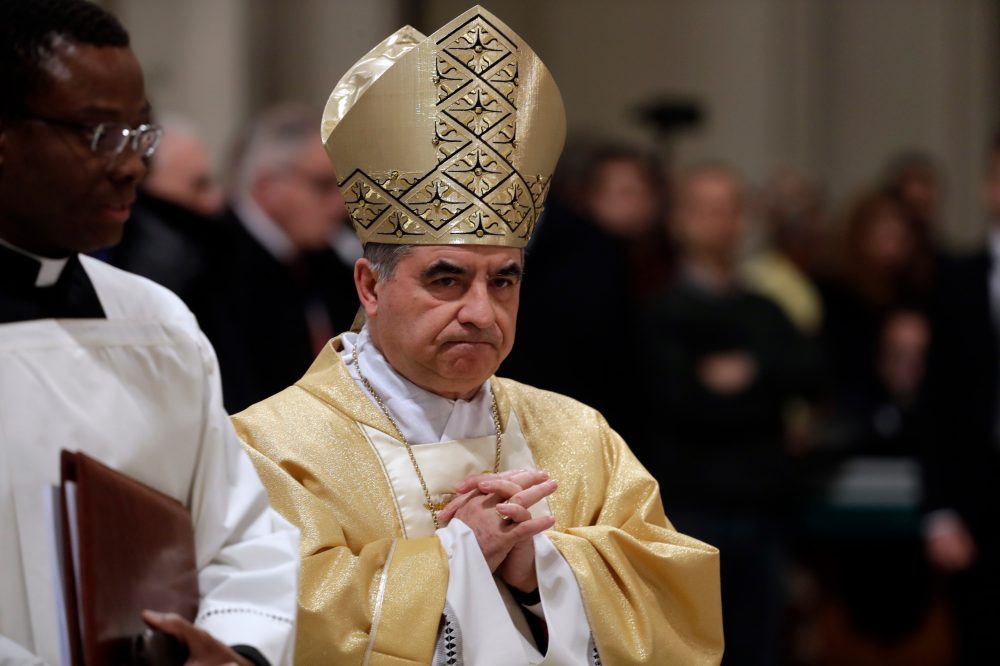
The three-judge panel issued a 16-page decision declaring that both the Pope and Vatican prosecutors made critical errors that invalidated the original charges against Cardinal Angelo Becciu and co-defendants. The new trial is scheduled to start June 22.
Legal experts called the decision historically significant, marking the first time a Vatican tribunal has declared a papal action invalid.
The ruling represents a major victory for defense attorneys and a crushing defeat for church prosecutors who had promoted the 2023 convictions as proof of Francis’ commitment to fighting Holy See corruption.
Attorneys for Becciu celebrated the appeals court’s findings, saying it vindicated their claims of unfair treatment from the beginning.
“It shows that from the first moment, we were right to raise the violation of the right to defense and to request that the law be respected to have a fair trial,” attorneys Fabio Viglione and Maria Concetta Marzo stated.
The complex case centered on the Vatican’s 350 million euro ($413 million) investment in London real estate. Church prosecutors claimed middlemen and Vatican officials defrauded the Holy See of millions in fees and commissions during the property acquisition, then demanded an additional 15 million euros ($16.5 million) to transfer control.
The investigation expanded to include charges against Becciu, formerly a powerful cardinal and potential papal successor. He received a conviction for embezzlement and a 5½-year prison sentence. Eight additional defendants were found guilty of various charges including embezzlement, abuse of office, and fraud, with courts ordering millions in restitution payments.
All defendants denied wrongdoing and filed appeals following a two-year trial that exposed embarrassing Vatican secrets, including alleged ransom payments to Islamic militants, internal feuds, surveillance operations, and other sensitive matters.
Throughout the original proceedings, Becciu’s legal team argued prosecutors violated fair trial rights by withholding evidence from the defense. Prosecutors had censored documents, kept cellphone records of a key witness secret, and redacted communications between case figures, claiming such steps protected other ongoing investigations.
Defense lawyers also challenged four confidential papal decrees that granted prosecutors broad investigative authority, arguing these violated defendants’ rights. The defense only discovered these decrees shortly before trial began since they were never made public.
The appeals tribunal sided with both defense arguments in its ruling.
The court determined that one of Francis’ decrees constituted law, and his failure to publish it rendered it invalid. The panel also found that prosecutors’ refusal to share all evidence with the defense nullified their original charges.
Defense attorneys expressed satisfaction with the decision.
“The historic decision by the Court of Appeals—which, for the first time in Vatican history, ruled that a papal rescript was invalid and void due to failure to publish it—in our view results in the complete nullity of the entire investigation and trial,” said lawyers Massimo Bassi and Cataldo Intrieri, representing former Vatican official Fabrizio Tirabassi.
“We are confident that we will be able to reach a swift conclusion to the trial with a largely acquittal verdict.”
Archbishop Alejandro Arellano Cedillo’s tribunal ordered prosecutors to submit all documentation “in their original form” by April 30, giving defense teams until June 15 to file motions before the retrial begins.
This marks the second significant setback for prosecutors since appeals proceedings began last year.
In January, the Vatican’s top Court of Cassation rejected the prosecutor’s appeal of the initial trial due to a basic procedural mistake by prosecutor Alessandro Diddi.
That same day, Diddi abandoned months of objections and suddenly quit the case rather than risk court-ordered removal.
The controversy involved Diddi’s participation in notorious WhatsApp conversations that questioned the entire trial’s integrity. These messages revealed a lengthy behind-the-scenes campaign targeting Becciu and suggested improper behavior by Vatican police, prosecutors, and Francis himself.
Tuesday’s ruling came days after Pope Leo XIV addressed Vatican judicial officials at the start of the court year. The canon law expert met Saturday with judges and prosecutors overseeing the Vatican City State’s unique legal system, which combines century-old Italian law with church canon law.
In his speech, Leo described justice as a tool for promoting church unity, emphasizing the need for truth-seeking combined with compassion. He also discussed justice’s role in building institutional credibility, which some interpreted as addressing how the Becciu case had damaged the Holy See’s reputation through its irregularities.
“The observance of procedural safeguards, the impartiality of the judge, the effectiveness of the right of defence and the reasonable duration of proceedings are not merely technical instruments of the judicial process,” Leo stated. “They constitute the conditions through which the exercise of the judicial function acquires particular authority and contributes to institutional stability.”