
Rush out immediately or miss your chance! That’s usually the urgent call when birdwatchers pursue an unusual species visiting from distant lands.
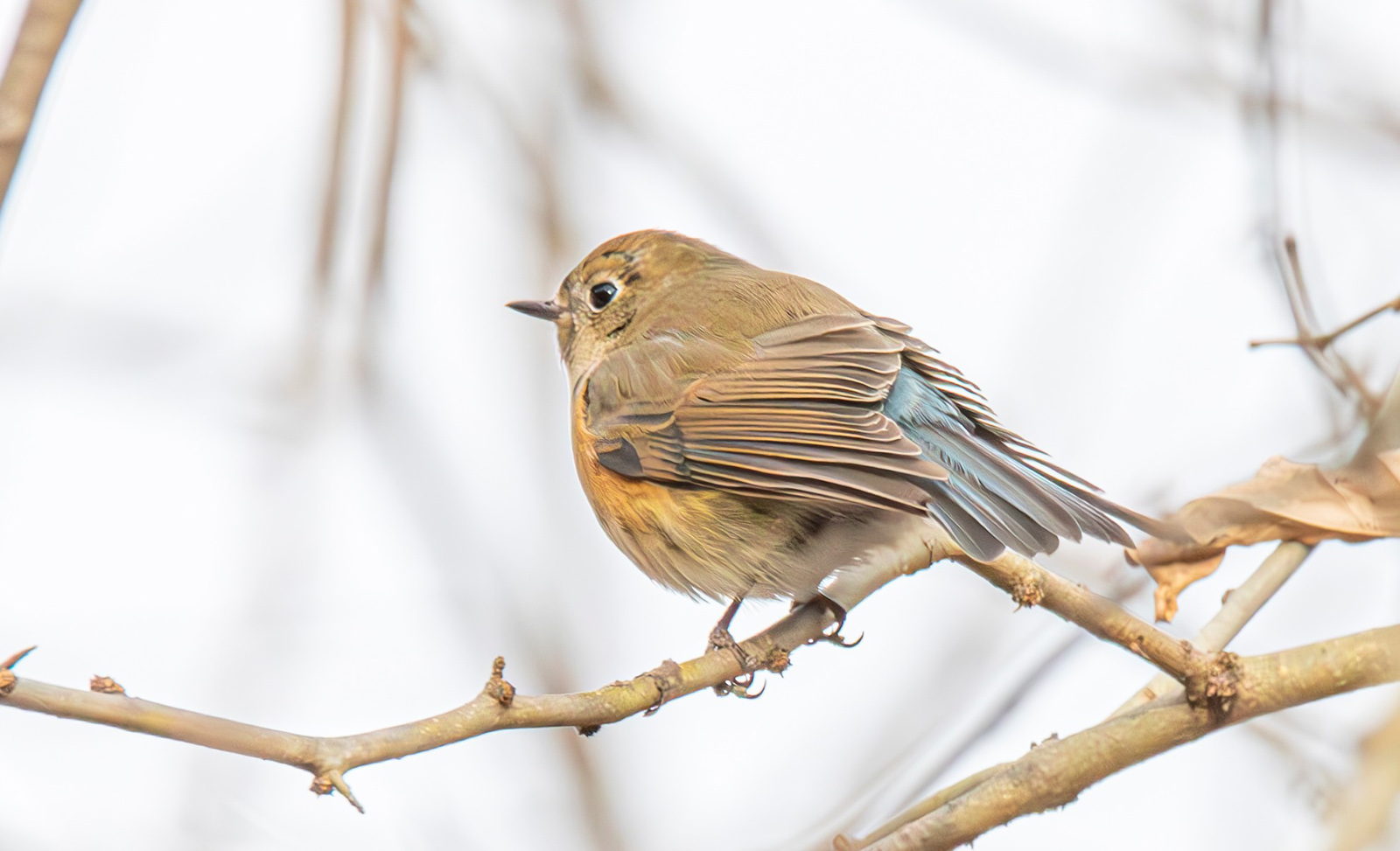
However, one exceptionally rare bird classified as Code-4 by the American Birding Association – previously documented just once on the East Coast – has been leisurely residing at Virginia’s Great Falls Park, feasting on wintercreeper berries while overlooking the stunning Potomac River since the start of the year.
This female red-flanked bluetail (Tarsiger cyanurus), whose natural habitat spans the opposite side of the globe, was initially discovered by Phil Kenny, a birdwatcher from Fairfax County, Virginia. Following that sighting, hundreds of enthusiasts from as far as Florida and New York have journeyed to this national park located nine miles upstream from Washington D.C., bypassing the park’s photogenic waterfalls to observe this diminutive creature. The author made seven separate visits.
Wildlife experts remain puzzled about what drew this energetic bird to Virginia for its inaugural state visit. Red-flanked bluetails normally spend winter months in Japan, Korea, southern China, Thailand, and Myanmar, while their breeding territories extend across Japan, Siberia, and Finland. Although these birds have appeared in Alaska and western states, only one previous Eastern United States sighting occurred – along New Jersey’s coast in December 2023. Scientists theorize that wind patterns may have carried them eastward, or perhaps a genetic anomaly affected their migratory instincts.
This specific bird, bearing resemblance to a compact version of our familiar eastern bluebird, has clearly found adequate sustenance in Northern Virginia to survive even during this winter’s harsh, snowy conditions. Her diet consists of red wintercreeper euonymus seeds, oriental bittersweet berries, and additional treats that grow naturally in China, matching her typical winter habitat. These plants are considered invasive species in America, yet the bluetail thrives on them. “It’s like an American tourist going to Paris and eating at McDonalds. It’s something from back home,” the author explained to Washington Post reporter Dana Hedgpeth for her March 8 article about this displaced winter guest.
As both a former journalist and current Virginia Master Naturalist, the author enjoys educating others about remarkable wildlife discoveries. Despite preferring later hours, she agreed to accompany Dana and photographer John McDonnell to the park at dawn, searching for this needle-in-a-haystack bird. She had already observed it four times previously – typically with assistance from fellow birders who helped locate the 5.5-inch beauty.
On this solo mission during a fog-shrouded morning when the river remained invisible, spotting a small, light-brown bird featuring twin orange patches along its sides presented significant challenges. Fortunately, a dedicated birder joined their search party. Together they navigated the muddy pathway to the bird’s regular territory, and suddenly – within minutes – his keen eyesight located the creature perched prominently on a thick, fallen log within the compact winter range she appears to have claimed. She typically moves throughout approximately two-tenths of a mile along a narrow corridor between the river and granite cliffs. Cornell University ornithologist and migration specialist Andrew Farnsworth noted that some birds naturally prefer confined areas. Even within that limited space, this frequent flyer often vanishes among tangled vegetation and moss-covered rocks.
Without her characteristic blue tail movement, locating her challenges even seasoned birdwatchers. She regularly darts between the riverbank and ridge (displaying typical flycatcher behavior), venturing to the forest floor to hunt insects beneath decomposing leaves. During this misty morning, however, she remained unusually motionless for an extended period, almost as if aware that a Washington Post photographer would soon make her famous.
Following the newspaper’s publication, additional visitors flocked to observe her. Both amateur enthusiasts and professionals sometimes spotted her immediately, while others searched the trails for hours unsuccessfully. Some wondered how long the bluetail might remain, considering March 1 marked spring’s meteorological beginning and warmer temperatures had already arrived. New Jersey’s bluetail reportedly departed around late March. Perhaps this one will leave when her overwintering companions like kinglets, hermit thrushes, and white-throated sparrows head north for breeding season.
The author will miss this celebrity bird, wishing she could tell her: “Don’t hurry home! Back home you’re just an ordinary bird, but in Virginia, you’re a superstar.”