
In the weeks leading up to Jeffrey Epstein’s death by suicide at a deteriorating Manhattan detention facility in 2019, guards discovered him on his cell floor – conscious but bearing neck injuries.
The disgraced financier later made a shocking accusation: A corrections officer reported that Epstein blamed his cellmate, Nicholas Tartaglione, for attempting to murder him.
Though Epstein later withdrew these claims, Tartaglione had already become a key figure in the puzzling circumstances surrounding the former financier’s wounds.
Tartaglione, an ex-law enforcement officer facing trial for four murders, offered his own account of what happened. He informed his attorney that Epstein had hidden what appeared to be a suicide note within a book.
While Tartaglione’s legal team received the note, its existence received minimal attention in subsequent years – even following Epstein’s later death, which prompted federal investigation and widespread public doubt.
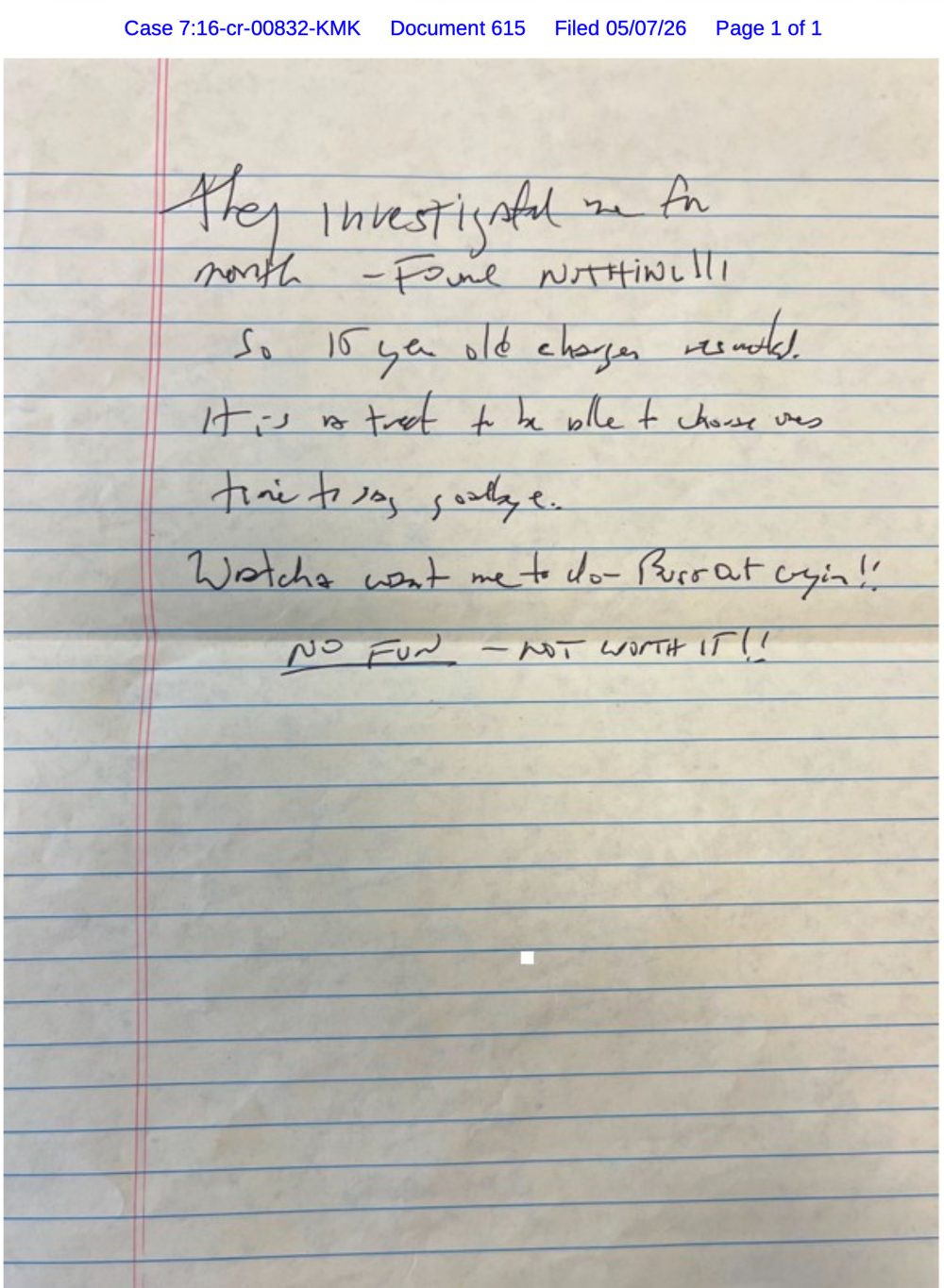
This Wednesday marked the first public disclosure of the note Tartaglione claimed to discover, after a judge ordered its release from years of courthouse storage during an unrelated legal matter.
Questions persist about the document’s legitimacy, the timing of its creation, and whether its mysterious wording constitutes a suicide message, as Tartaglione maintains.
Following his 2008 disability retirement from police work, Tartaglione allegedly entered drug trafficking and eventually planned the abduction and killing of four individuals in 2016, according to authorities.
Prosecutors state that Tartaglione suspected one victim of stealing money intended for cocaine purchases. The muscular former officer allegedly lured the man to a tavern, tortured him while searching for the missing funds, and ultimately killed him using a zip tie, officials said.
Three companions and family members present at the scene were fatally shot, with all four bodies interred on Tartaglione’s land, prosecutors alleged.
Following his December 2016 arrest, Tartaglione remained in pre-trial detention for three years before becoming Epstein’s cellmate at the Metropolitan Correctional Center.
Tartaglione received his conviction in 2023 and subsequently received four consecutive life sentences.
Jail documentation shows Epstein was discovered in their shared cell at approximately 1:30 a.m. on July 23, 2019. Officials then transferred Epstein to suicide prevention monitoring in a different area. According to the officer’s account, Epstein then sat upright and blamed Tartaglione for the attack, claiming extortion attempts and physical threats.
News of Epstein’s assault allegations spread rapidly, with NBC News reporting within 24 hours that jail administrators were questioning Tartaglione and examining whether an attack occurred.
However, during a follow-up interview with facility personnel one week later, Epstein denied having problems with Tartaglione, stated he felt no threats, and refused to “fabricate something that isn’t there,” according to documentation. He also denied having suicidal thoughts.
Following 31 hours under suicide prevention protocols, Epstein’s status was reduced to psychological monitoring. He had no cellmate when found deceased on August 10, 2019. Authorities discovered a handwritten document in his cell, but it seemed to catalog complaints about unsanitary jail conditions rather than serve as a suicide note. The facility has since shuttered.
Officials determined Epstein died by suicide and concluded the initial incident represented a missed chance to prevent his subsequent fatal attempt.
A timeline within recently disclosed Justice Department documents regarding Epstein’s case indicated Tartaglione contacted his lawyer about the note four days following the suspected July 23 suicide attempt.
Jail personnel failed to reference the note in their report documenting Tartaglione’s late-month interview. “Tartaglione stated he does not understand Epstein’s motive and what he is trying to do,” the document noted. Tartaglione believed Epstein was experiencing cardiac distress.
The document was subsequently entered as evidence in Tartaglione’s drug murder trial and sealed during a disagreement about his legal representation.
During a prison podcast interview last year, Tartaglione referenced the note while attempting to counter persistent conspiracy theories suggesting Epstein didn’t commit suicide. “It was in my book. When I got back into the cell, I opened my book to read, and there it was,” Tartaglione explained.
The short note’s meaning remains unclear.
“They investigated me for month — found nothing!!!” the document states.
“It is a treat to be able to choose” the “time to say goodbye,” it continues. “Watcha want me to do — Bust out cryin!!”
After seven years filled with shocking developments and unresolved questions, the document adds to the confusion and disappointment felt by some accusers.
“It is hurtful to me because I don’t know if Jeffrey Epstein really wrote it, and if he did, when he wrote it,” stated actor and model Alicia Arden, who filed a 1997 police complaint against him that received no action.
Arden questions why the note’s release occurred now. Her attorney, Gloria Allred, noted that while Epstein’s victims seek truth and openness, the note “simply deepens the mystery.”
Jennifer Freeman, representing other survivors, argued the document diverts attention from efforts to examine the government’s management of Epstein’s case and pursue accountability for his enablers.
“We cannot allow the narrative to become muddied by speculation over whether this note is real,” Freeman stated.