
WASHINGTON — Despite President Donald Trump’s ongoing warnings that ‘Cuba is next’ and his suggestions about positioning American naval vessels near the Caribbean island, federal officials confirm no immediate military intervention against Havana is currently being planned.
Government sources involved in early-stage discussions with Cuban leadership told reporters they hold little hope that Cuba’s communist administration will agree to accept an American proposal worth tens of millions of dollars. The package includes humanitarian assistance, two years of complimentary Starlink internet service for Cuban citizens, farming support, and infrastructure development.
However, these officials noted that Cuba has not yet completely rejected the proposal, even after the Trump administration implemented additional economic penalties on Thursday targeting Havana. The aid package comes with requirements that Cuba’s government has historically opposed.
Speaking anonymously to discuss confidential negotiations, the sources emphasized that time remains for Cuba’s leadership to consider the offer. They warned that Trump maintains the flexibility to alter his approach and that military alternatives remain available.
The new economic penalties followed Trump’s executive order from last week that broadened his administration’s power to impose restrictions on Cuba. Both the Treasury and State departments announced these measures.
Cuba’s Foreign Minister Bruno Rodríguez characterized the sanctions as ‘collective punishment’ and criticized what he called the U.S. government’s ‘genocidal intent against Cuba.’
‘These actions rely on the assumption that the United States can impose its will on the world while threatening foreign citizens and businesses with illegitimate coercion,’ Rodríguez wrote on X.
During a Friday speech following the executive order signing, Trump referenced that ‘Cuba’s got problems’ and hinted at potential military demonstrations near the island.
He said one of the U.S. aircraft carriers on its way back from the Middle East could ‘come in, stop about 100 yards offshore, and they’ll say: Thank you very much. We give up.’
An official participating in the discussions explained that the expanded sanctions authority was designed to communicate to Cuban leaders that the Trump administration’s primary objective is ‘not regime change, but changing the regime’s failed policies.’
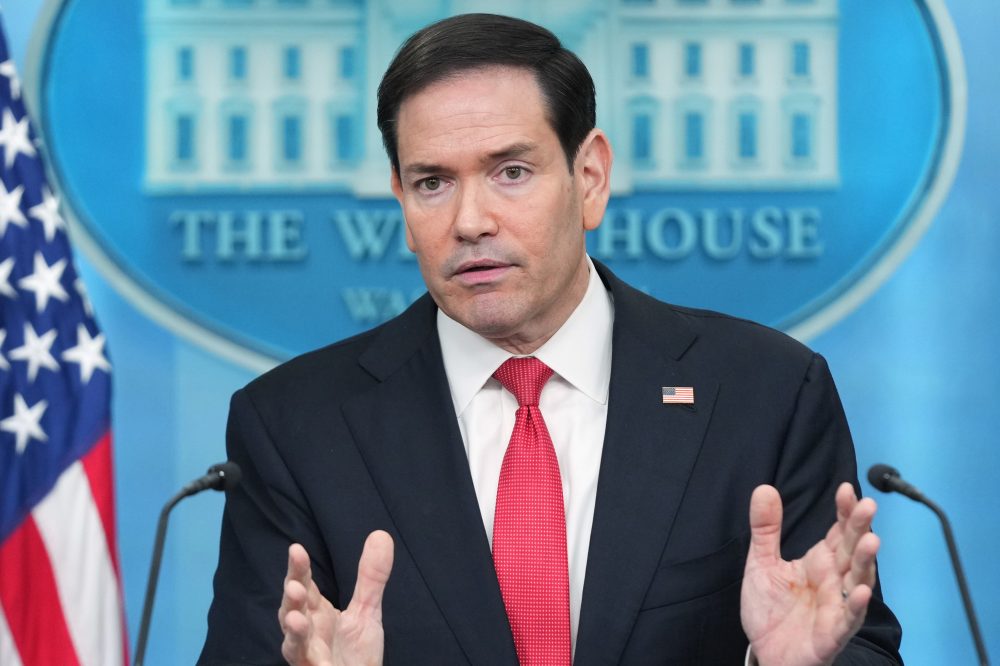
Secretary of State Marco Rubio, whose parents emigrated from Cuba and who has consistently opposed Cuba’s current leadership, has repeatedly stated that the island’s government has been unsuccessful. This week, he argued that Cuba’s economic system is broken and current leaders ‘can’t fix it.’
‘And the reason that they can’t fix it is not just because they’re communist. That’s bad enough,’ he told reporters Tuesday at the White House. ‘But they’re incompetent communists. The only thing worse than a communist is an incompetent one.’
Rubio is currently visiting Rome and Vatican City, scheduled to meet Pope Leo XIV on Thursday partly to address Cuban matters, where the Catholic Church maintains considerable influence.
One federal official described uncertainty about whether Cuba’s senior leadership would agree to American requirements, which encompass freeing political detainees, ending political and religious oppression, and allowing American private sector investment.
Simultaneously, the official indicated that opportunities for dialogue remain open that could benefit both nations given Cuba’s geographic closeness to America. The United States views China and Russia’s growing presence on the island as a national security concern, including intelligence gathering and logistical cooperation.
Cuban representatives firmly maintain that the country’s internal governance remains non-negotiable.
‘Negotiations on issues like regime change or removing the president are out of the question,’ Cuban Ambassador to the United Nations Ernesto Soberón Guzmán told reporters last week. ‘No internal affairs of Cuba are on the table.’
Guzmán also informed reporters last month that Havana would not comply with any American ‘ultimatums’ regarding political prisoner releases and that Cuban leadership is ‘preparing for all scenarios’ should Trump follow through on intervention threats.
The White House did not immediately respond when asked about potential military action concerning Cuba.
Communication between the Trump administration and Cuba has intensified, including an earlier meeting this year in St. Kitts and Nevis between Rubio and Raúl Guillermo Rodríguez Castro, who reportedly holds substantial influence in Havana as the grandson of former Cuban leader Raúl Castro.
More recently, two high-ranking State Department officials — Jeremy Lewin, who oversees all American foreign assistance, and Michael Kozak, the senior U.S. diplomat for Latin America — headed a delegation to Havana on April 10 and met with Castro’s grandson, according to one federal official familiar with the encounters.
The senior State Department participants had not been previously disclosed. This marked the first U.S. government aircraft to land in Cuba outside of the U.S. Naval Base at Guantanamo Bay since 2016, during former President Barack Obama’s period of improved relations with the island.
The meeting was described as ‘professional and cordial’ but failed to yield concrete outcomes, leaving American delegates doubtful that Cuban leadership would consider even minor reforms that might improve worsening humanitarian circumstances, the official stated.
American officials have frequently dismissed Cuban assertions that the U.S. trade embargo and, more recently, the Trump administration’s energy restrictions are causing the country’s difficulties.
However, Cuba’s problems have worsened following the energy restrictions, implemented after the U.S. removed Nicolás Maduro as Venezuela’s leader in January, eliminating Cuba’s primary energy source.
Cuban officials have condemned American dismissal of their grievances.
‘Traveling 4,500 miles to meet with the Pope, supposedly to request his good offices in delivering U.S. humanitarian assistance to the Cuban people through the Church, while at the same time claiming that the blockade does not exist, is a blatant insult to human intelligence,’ Guzmán said Thursday in a statement.