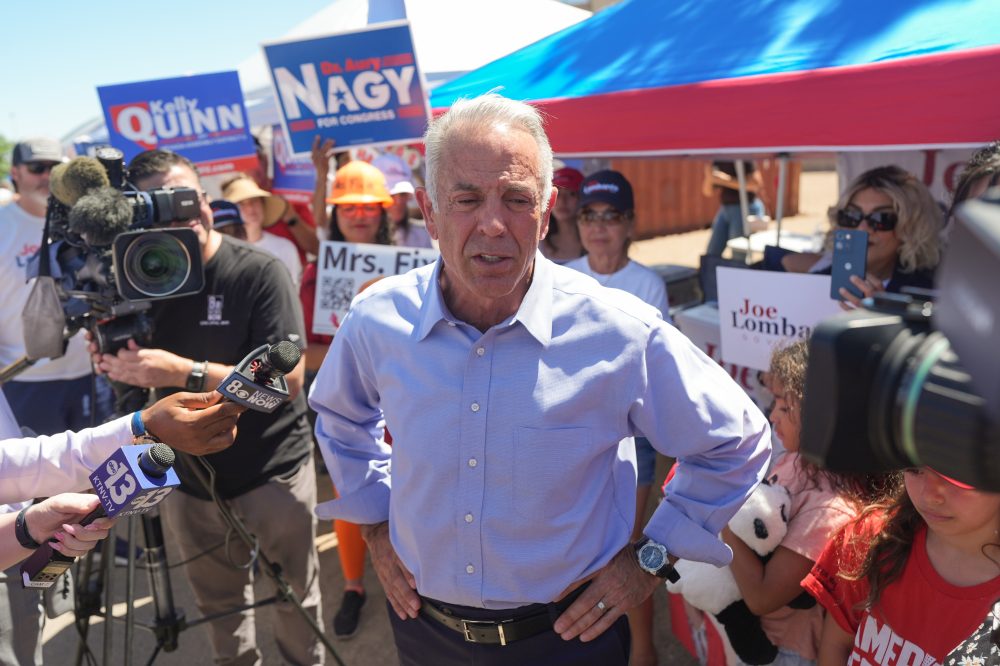

OKLAHOMA CITY — The friendship between President Trump and his Homeland Security Secretary nominee, Senator Markwayne Mullin, began during one of the most frightening moments of the Oklahoma Republican’s life — when his teenage son sustained a devastating brain injury during a high school wrestling competition in 2020.
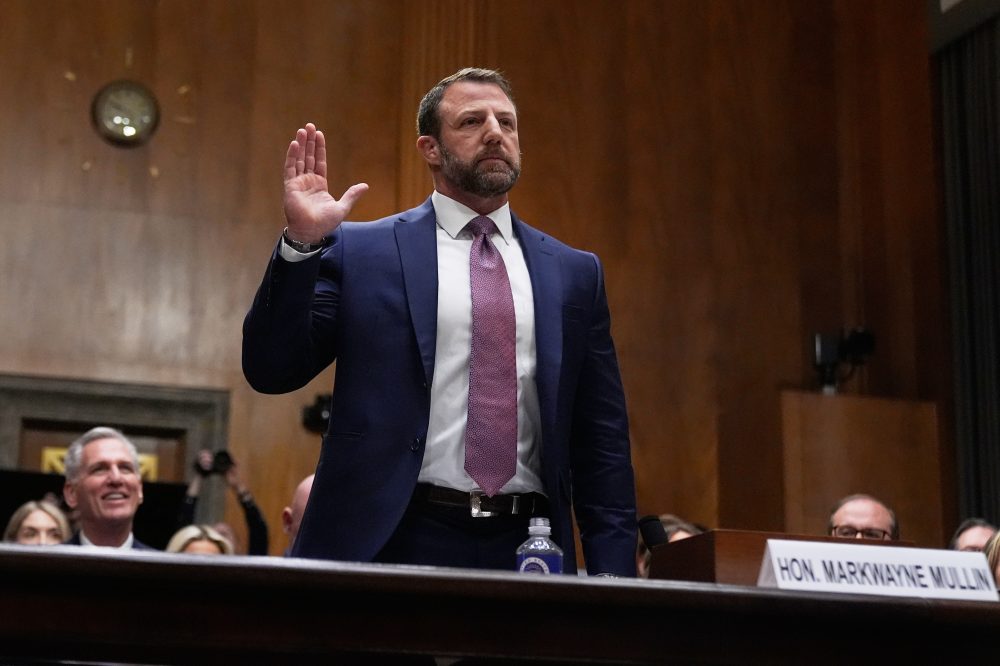
During his Senate confirmation hearing Wednesday, Mullin recounted how Trump took a personal interest in his family’s crisis, even inviting the senator and his injured son onstage at a political rally that year. The president asked 15-year-old Jim Mullin to sit with him and discuss his recovery process, while privately offering to arrange flights to medical experts and cover treatment costs.
“You know, someone loves your kids, you’re going to love that guy forever,” Mullin declared at a 2024 campaign event. “He’s a friend of yours.”
Now 48, Mullin is positioned to lead the Department of Homeland Security, taking over the sprawling agency after Kristi Noem was dismissed earlier this month amid growing criticism of immigration enforcement policies. Trump’s choice reflects his preference for personal loyalty and trusted relationships, particularly as he seeks to implement his signature mass deportation agenda.
During Wednesday’s confirmation proceedings, Mullin struggled with emotion as he described the aftermath of his son’s accident. The teenager awakened as a “different kid,” unable to perform simple tasks like touching his nose or solving basic math problems, while battling short-term memory issues.
“He was running in one of the toughest elections he had been in, and the guy was still that concerned about my son,” Mullin testified. “We were acquaintances before that. We’ve been friends ever since.”
According to Mike Stopp, Mullin’s former chief of staff, the senator maintains an unusual ability to challenge Trump while preserving their friendship. “He has no problem telling the president what he thinks,” Stopp noted. “They’re at that point in their relationship.”
Mullin entered politics in 2012 at age 34, transitioning from running a successful plumbing business to seeking an open House seat in Oklahoma’s expansive 2nd Congressional District, which spans from the Ozark foothills to the Texas border. His political awakening came partly from frustration with Affordable Care Act requirements that would have forced him to provide employee health coverage.
“Markwayne was fed up,” recalled Trebor Worthen, his campaign consultant at the time.
His blue-collar background and cattle ranching experience connected with voters across party lines in the rural district. Worthen, who spent a year crisscrossing the area with Mullin in a red diesel truck, observed: “Anybody who lives in Oklahoma or who has family in Oklahoma, you know somebody like Markwayne Mullin.”
After winning decisively, Mullin pledged to serve only three House terms but reversed course in 2018, admitting he “didn’t understand politics” when making the original commitment. Despite some backlash, he secured reelection and completed five House terms before moving to the Senate in 2023.
In Washington, Mullin built bipartisan relationships through early-morning workout sessions in the members-only House gymnasium. The former mixed martial arts competitor and college wrestler bonded with colleagues from both parties during these fitness gatherings, including former Massachusetts Democratic Representative Joe Kennedy III, current Director of National Intelligence Tulsi Gabbard, and Noem.
“What I like about him is he’s willing to not just share his views but to listen to yours, which really helps when you’re trying to get something done, especially in a bipartisan way,” said Democratic Representative Josh Gottheimer of New Jersey, who attended Mullin’s confirmation hearing in support.
Another surprising supporter present was Sean O’Brien, president of the International Brotherhood of Teamsters, who nearly came to blows with Mullin during a heated 2023 Senate hearing. O’Brien sat directly behind Mullin Wednesday as the nominee called him a “close friend” and said they had resolved their differences.
Since joining the Senate, Mullin has become one of Trump’s most vocal advocates on Capitol Hill, defending controversial cabinet selections like Noem and Defense Secretary Pete Hegseth. He frequently serves as a liaison between Senate Republican leadership and House colleagues.
Mullin backed Trump’s unsuccessful efforts to challenge the 2020 election results, maintaining his support even after personally confronting Capitol rioters on January 6th. He helped other Republicans barricade House chamber doors as lawmakers sheltered inside, later speaking through shattered glass to convince rioters to withdraw. He subsequently visited injured police officers from the attack.
“They weren’t cowards. They stood the line and took a beating,” Mullin told C-SPAN in 2021.
On immigration issues, Mullin has championed border wall construction and defended federal agents involved in controversial incidents, including fatal shootings of U.S. citizens in Minnesota. During a “Meet The Press” appearance last summer, he argued that American-born children of undocumented immigrants should face deportation alongside their parents.
Stopp noted that Mullin’s business experience includes employing visa holders and helping them navigate the citizenship process, something the senator took pride in accomplishing.
As a Cherokee Nation citizen, Mullin would make history as the first Native American DHS Secretary. This role would grant him oversight of federal immigration agent training, addressing ongoing concerns about agents improperly stopping tribal citizens or questioning tribal identification documents.
Patrice Kunesh, a former Biden administration Native Americans commissioner and Brookings Institution senior fellow, emphasized the importance of tribal consultation. “He should meet with tribal leaders and say, ‘Let me hear your concerns,’” she suggested, hoping Mullin would improve Immigration and Customs Enforcement training on recognizing tribal IDs.
“Direct consultation with tribal governments, tribal leaders, would be incredibly important,” Kunesh added.