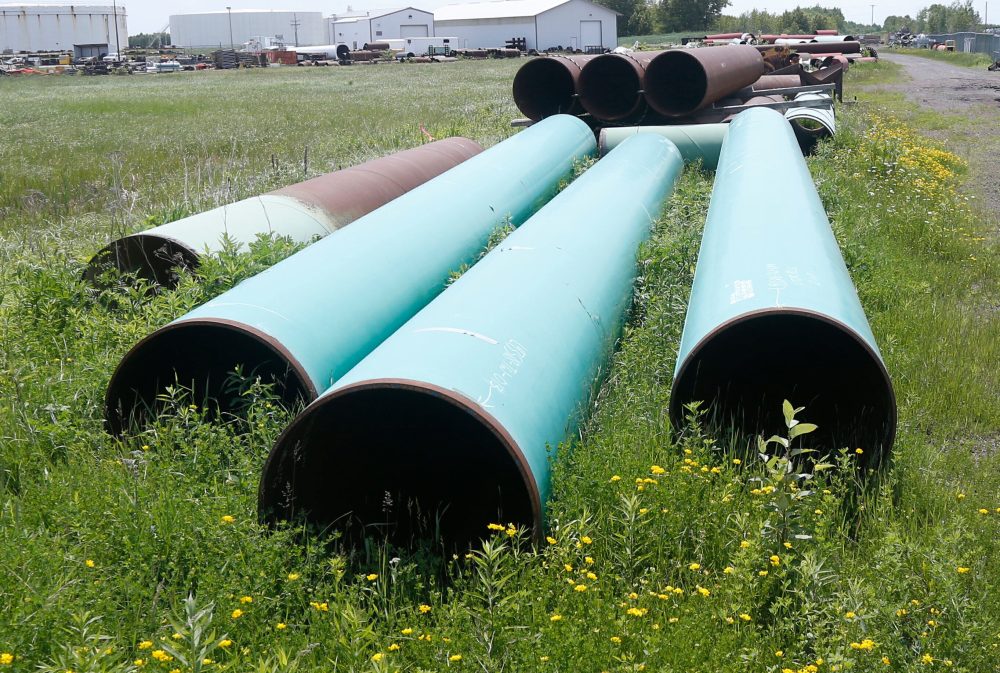

MADISON, Wis. — Following seven years of courtroom battles, energy giant Enbridge has commenced construction work to redirect an aging oil pipeline away from a tribal reservation in northern Wisconsin, even as fresh legal challenges threaten to halt the project.
The current route sends approximately 12 miles of Enbridge’s Line 5 pipeline through the Bad River Band of Lake Superior’s reservation near Lake Superior’s shoreline. In 2019, the tribe initiated legal action against Enbridge to force removal of the pipeline section, contending that land use agreements had lapsed six years prior and the 73-year-old infrastructure posed risks of a major environmental disaster.
A court ruling in 2023 established a June deadline for the company to extract the pipeline segment from tribal lands. The Bad River tribe and environmental advocates have pushed for complete shutdown of the line while pursuing ongoing legal strategies to block the rerouting effort. On February 13, an administrative law judge validated Enbridge’s state wetlands authorization, eliminating the final legal obstacle and allowing construction to proceed.
Company representative Juli Kellner confirmed that work crews began tree removal along the proposed new corridor on Tuesday.
This month, the Bad River tribe and a group of environmental organizations submitted separate legal actions in Iron County Circuit Court requesting immediate suspension of the wetlands authorization, claiming officials failed to properly assess construction-related environmental harm.
“The Bad River watershed is not an oil pipeline corridor that exists to serve Enbridge’s profits. It is our homeland. We must protect it,” Elizabeth Arbuckle, the Bad River tribal chair, said in a statement announcing the tribe’s filing.
Both cases await judicial decisions, with a hearing in the Bad River matter set for Thursday.
Enbridge representative Kellner argued that requesting a construction halt lacks justification considering the extensive review process and public energy needs. She emphasized that the pipeline supplies 10 refineries and propane facilities serving millions throughout the Midwest and Great Lakes area.
The Calgary, Alberta-based company has operated Line 5 to move crude oil and natural gas liquids from Superior, Wisconsin, to Sarnia, Ontario, since 1953.
Line 5 faces additional controversy in Michigan, where environmental groups and tribal nations worry about a 4.5-mile underwater section beneath the Straits of Mackinac that could fail. The straits connect Lake Michigan and Lake Huron, where a rupture could create an environmental catastrophe.
Enbridge has suggested installing the underwater segment within a protective tunnel. Construction requires approvals from the U.S. Army Corps of Engineers and Michigan’s Department of Environment, Great Lakes and Energy. Neither agency has granted permission, though the corps has expedited its review process following President Donald Trump’s 2025 energy emergency directive.
Separately, Michigan Governor Gretchen Whitmer and Attorney General Dana Nessel have pursued legal action to invalidate the agreements permitting pipeline operations in the straits.
A federal judge dismissed Whitmer’s case in December, but the governor has filed an appeal with the 6th U.S. Circuit Court of Appeals. The U.S. Supreme Court is considering whether Nessel’s case should proceed in state or federal court.