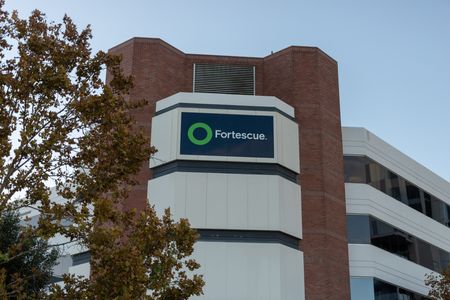

Australian mining company Fortescue announced Wednesday that its first-half earnings climbed 23%, boosted by unprecedented iron ore shipments and rising commodity values that enabled the firm to distribute shareholder dividends exceeding market predictions.
Stock prices for the company surged up to 3.8%, performing better than mining competitors BHP and Rio Tinto in trading activity.
As the globe’s fourth-biggest iron ore producer, Fortescue is concentrating on reducing operational expenses to generate cash returns for investors from its profitable iron ore operations, while preparing for a period of reduced expansion and substantial capital investments through the 2030s.
The company is working to expand into metals anticipated to see strong demand in technology and renewable energy sectors, following its decision last year to abandon worldwide green hydrogen initiatives due to expensive production costs and insufficient market interest.
Fortescue’s two primary expansion ventures – iron ore operations in Gabon and copper mining in Peru – are not expected to begin production until the following decade.
During an earnings conference call, when questioned about growth prospects this decade, Energy Division Head Agustin Pichot highlighted the company’s efforts to branch out into critical minerals and copper.
These initiatives encompass a rare earths venture in Brazil and copper exploration activities in Australia, Canada and Kazakhstan, where the company is accelerating drilling operations.
ONGOING CHINA NEGOTIATIONS
For the six-month period ending December 31, Fortescue recorded underlying net earnings after taxes of $1.91 billion, rising from $1.55 billion in the previous year, though falling short of the Visible Alpha projection of $1.98 billion.
The company announced an interim dividend of 62 Australian cents per share, representing 65% of earnings, an increase from the 50 cents distributed last year and surpassing analyst expectations of approximately 60 cents.
These financial results coincided with the mining company achieving unprecedented iron ore shipment volumes during the first half, accompanied by a 3% reduction in iron ore production costs and a 6.6% increase in realized pricing.
Investment firm Jarden anticipated strong trading performance for Fortescue shares, citing improved margins and cash flow from reduced costs, combined with an interim dividend that exceeded projections.
Company leadership declined to provide details about supply contract discussions with China’s government-backed iron ore purchasing entity, describing them only as “phased discussions that are ongoing.”
China Minerals Resources Group (CMRG) has limited shipments from larger competitor BHP during annual contract talks as it attempts to secure more favorable terms for its processing facilities.
“Our products are moving well. We expect that to continue,” stated Metals and Operations Chief Executive Officer Dino Otranto during the results conference call.
According to Otranto, Fortescue is implementing artificial intelligence technology to improve shipment scheduling efficiency, while anticipating that switching from diesel to renewable energy sources will reduce iron ore costs by $2-$4 per ton by 2030.