Author: Admin

  • Maryland Official Works to Simplify Rules for Farm Businesses

    Maryland Official Works to Simplify Rules for Farm Businesses

    ANNAPOLIS, Md. — Martin Proulx took on a brand new position at the Maryland Department of Agriculture in 2023, tackling a challenge many farmers across the region know well: while agricultural producers are being pushed to expand their operations, the regulations surrounding those expansions haven’t evolved to match.

    Farm operations that go beyond traditional growing — such as processing products on-site, welcoming visitors for agritourism activities, or serving prepared food — require farmers to navigate a maze of different government agencies. These ventures bring health departments, zoning boards, environmental agencies, and building code officials into the picture, often creating more confusion than clarity for farm owners.

    Proulx joined the department from local economic development work as Maryland’s inaugural value-added agricultural specialist, tasked with helping farmers work through these regulatory challenges. This past January, his responsibilities grew when he became chief of marketing and agricultural development, incorporating value-added farming support into broader business development and promotional efforts.

    The core issues he addresses haven’t changed much with his expanded role.

    “When you talk about value-added agriculture being the processing of raw agricultural product, the serving overall of cooked foods, whether it be agritourism, food service, sampling at farmer’s markets, you realize that there are a number of other regulatory agencies that enter into the equation,” Proulx said.

    Traditional farming typically operates under one set of rules, but diversified farm businesses find themselves caught between multiple regulatory systems that weren’t created with these hybrid operations in mind.

    During his initial two years, Proulx traveled throughout Maryland, visiting each county to meet with zoning administrators, environmental health workers, building code inspectors, and economic development representatives. Instead of addressing specific farm conflicts, his mission was to learn how different localities interpret and apply regulations.

    “It was really important to flip the script, if you will,” he said.

    While Maryland operates under one state agriculture department, it contains 24 separate local governments — including Baltimore City — each maintaining distinct zoning laws and land-use definitions. Agricultural activities might be classified differently for environmental compliance, tax purposes, and zoning requirements. These varying definitions typically don’t create problems until farms attempt to diversify their operations.

    “As value-added agriculture continues to expand in popularity and be an economically viable option for many of these diversifying farms, or maybe even new beginning farms, you realize that agriculture and commercial are two terms that become water and oil when you’re talking about land use and zoning,” Proulx said.

    This conflict becomes most apparent in the licensing process. State permits for processing or food service are typically written in broad terms, applying the same standards to a farm using an existing outbuilding and a manufacturer in an industrial complex. Local authorities, however, might handle these identical activities very differently based on how “commercial” operations are defined within agricultural districts.

    According to Proulx, this creates a regulatory framework that doesn’t always work well for farming operations. Infrastructure demands add another complication.

    Requirements for permanent bathroom facilities, septic installations, and waste management systems might be reasonable for year-round commercial businesses, but they can be financially overwhelming for farms testing seasonal or limited-scale projects.

    “Very frequently, the infrastructure investment for permanent restrooms or permanent waste disposal, septic systems, can often come with a very, very hefty price tag that small and diversifying farm operations may not be able to necessarily take on right away,” Proulx said.

    These discoveries formed the basis for a comprehensive statewide guidance and analysis document about value-added agriculture and agritourism that the department released in October. Instead of recommending major regulatory overhauls, the document outlined the current system, identified common obstacles, and pinpointed opportunities where increased flexibility or clearer guidelines could help farms succeed.

    Proulx reports that some improvements have emerged since the document’s publication. The department has internally reorganized to officially connect value-added agriculture with marketing and business development functions. Additionally, proposed regulatory modifications and legislative measures designed to create more adaptable, seasonal alternatives for on-farm food service are being reviewed.

    For Proulx, this effort ultimately centers on keeping farms economically sustainable in a state experiencing development pressures and agricultural land loss.

    “With all of the challenges facing Maryland’s agriculture, whether that be development pressure (or) loss of farmland, it’s really, really encouraging to see the passion and the patience within the industry in diversifying and finding these new opportunities for future generations,” he said.

  • Global Corn Production Surges 15% as China, Brazil Expand Agricultural Output

    Global Corn Production Surges 15% as China, Brazil Expand Agricultural Output

    (Editor’s note: John Hall is a professional commodities analyst.)

    Agricultural economists presenting at the Ag Forum Outlook conference on Feb. 19-20 announced their findings: “The U.S. corn outlook for 2026-27 is for reduced production, domestic use, exports and ending stocks.”

    Forecasters anticipate the corn harvest will reach 15.8 billion bushels, representing approximately a 7 percent decrease compared to the previous year’s production.

    Farmers are expected to plant corn on 94.0 million acres, a reduction of 4.8 million acres from last year’s totals. Yield estimates of 183.0 bushels per acre are based on assumptions of typical planting schedules and average summer weather conditions.

    Despite higher beginning inventory levels from the previous season, total corn supplies are predicted to reach 17.9 billion bushels, down from the record 18.6 billion bushels recorded in 2025-26.

    The situation involves multiple declining factors: fewer planted acres, reduced production, and decreased usage, combined with substantial carryover inventory from the prior year.

    Overall U.S. corn consumption for 2026-27 is expected to drop roughly 2 percent due to lower domestic demand and reduced export volumes.

    Food, seed, and industrial consumption remains steady at 7 billion bushels. Ethanol production is projected to utilize 5.6 billion bushels, reflecting expectations of stable gasoline consumption and export levels.

    Feed and residual usage is anticipated to decline about 3 percent to 6 billion bushels based on reduced supply availability.

    Export volumes are forecast to decrease by 200 million bushels to 3.1 billion.

    America’s share of global corn trade is expected to shrink slightly as South American competitors increase their exports and worldwide demand growth remains modest.

    The global corn landscape has undergone dramatic transformation!

    Here’s the broader context. In my Feb. 17 analysis, I examined worldwide corn production patterns. The data revealed a clear trend using 2017-18 as the baseline year.

    Evidence clearly demonstrates that global corn expansion began accelerating in 2021-22.

    International corn production has expanded 15 percent since 2017-18, fundamentally altering the marketplace.

    Where has this growth originated?

    Analysis of the three largest global corn producers reveals significant insights, using 2016-17 as the comparison baseline.

    Data clearly indicates substantial production increases in Brazil and China beginning in 2021-22. Research published last summer by Dr. Joana Colussi from Purdue University’s Center of Commercial Agriculture examined Brazil’s agricultural expansion.

    While the study mentioned China’s growth, the scale became apparent later: China added approximately 4.6 million acres of farmland between 2020 and late 2024 through land reclamation projects and high-quality farmland development.

    China’s total cultivated area reached nearly 319.57 million acres in 2024.

    What drives this expansion? China’s enormous appetite for pork provides the answer.

    Reports from April 2025 showed China maintaining 427 million head of pigs, compared to the European Union’s 132 million head and the United States’ 76 million head during the same period.

    This massive livestock population explains their substantial corn requirements for feed production, as well as their soybean needs for protein supplementation in pig feed.

    As noted in my Feb. 17 analysis, China’s grain reserves represent almost two-thirds of global ending stocks.

    Their food security approach has transformed from rigid government-controlled self-sufficiency (1949-1970s) to market-based strategies emphasizing “absolute security of staple foods.”

    Under President Xi Jinping’s leadership, the strategy emphasizes 95 percent grain self-sufficiency, stringent farmland preservation, and agricultural technology advancement, shifting focus from quantity alone to quality and diversification.

    Beginning in 2004, policy evolved to prioritize “guaranteed supply” through international commerce while maintaining tight oversight of domestic wheat and rice production.

    Consequently, the government maintains a year’s worth of grain reserves, distributing supplies to farmers gradually.

    This system also enables government control over farmer pricing.

    Given China’s position as the world’s largest grain purchaser, we must analyze President Xi Jinping’s statement about “95 percent grain self-sufficiency, strict farmland protection, and agricultural technology, transitioning from mere quantity to quality and diversification.”

    This suggests they have made substantial investments in domestic agricultural expansion and intend to reduce import dependency.

    Taking this analysis further, this likely explains their significant investments in Brazilian agriculture to achieve this “self-sufficiency.”

    What triggered this strategic shift? Many attribute it to Trump’s trade tariffs. However, examining the timeline reveals Trump’s first presidency spanned 2017-20.

    What other major event occurred? COVID-19 was initially identified in China during December 2019, rapidly spreading globally thereafter.

    COVID-19 severely damaged global food security by disrupting supply networks, forcing factory shutdowns, and limiting transportation, resulting in widespread hunger and revealing vulnerabilities in food production and distribution systems.

    Lockdown measures and economic disruptions amplified these problems, exposing more populations to food insecurity.

    The chronology suggests COVID-19 served as the primary catalyst for President Xi Jinping’s strategic thinking shift. If accurate, this altered perspective has transformed the global commodity grain marketplace. This deserves serious consideration!

    Returning to U.S. corn utilization completes this analysis. Recent data shows usage patterns for the past two years and projections for the upcoming season.

    The information indicates usage has remained relatively stable. As noted, U.S. corn projections for 2026-27 anticipate reduced production, domestic consumption, exports, and ending inventory, which current data confirms.

    In conclusion, effective marketing requires understanding both customers and competitors. I detected market changes this past year due to unusually flat price patterns.

    This research helps explain the underlying causes. Assuming this data proves accurate, don’t anticipate significant price improvements without major drought conditions.

    Additionally, the market appears unable to absorb increased production.

    It seems reducing planted acres might support pricing? Is this feasible for producers?

    (Note: I research material from Allendale, DTN, USDA, University Land Grants and other credible sources in compiling this article. It is not merely my opinion, but rather a consensus of experts in the trade. Looking for a marketing coach or someone to discuss strategies with? Contact me at [email protected], or call 410-708-8781.)

  • Israeli Leaders Warn US-Israel Alliance Faces Growing Challenges Despite Strong Ties

    Israeli Leaders Warn US-Israel Alliance Faces Growing Challenges Despite Strong Ties

    Israeli lawmakers gathered Wednesday to honor America’s approaching 250th anniversary, but their celebration carried an urgent warning: the decades-old partnership between the two nations cannot be taken for granted.

    The conference, hosted by the Knesset’s Israel-US caucus, featured repeated declarations that while the alliance remains robust and active, it faces unprecedented challenges that demand constant attention and effort.

    US Ambassador to Israel Mike Huckabee described the event to The Media Line as “a wonderful opportunity to once again celebrate the partnership between the US and Israel.” With America’s milestone anniversary approaching, he called it “quite appropriate” to acknowledge Israel as “our most trusted and cherished partner in the world.”

    Knesset Speaker Amir Ohana, a senior Likud party member, established the conference’s tone early in his remarks. “Today, Israel, the Jewish people, and the entire free world, face the twin threats of terrorism and antisemitism,” he declared. “Those who chant ‘death to America’ also chant ‘death to Israel’.”

    Ohana highlighted what he characterized as extraordinary cooperation between Jerusalem and Washington, noting that “President Trump has met with Prime Minister Netanyahu seven times in 13 months, unprecedented by any measure.” He praised Ambassador Huckabee for defending Israel publicly “with the courage and composure of Daniel in the lion’s den.”

    While the anniversary celebration provided the official purpose for the gathering, speakers delivered a more strategic message about emerging threats to the relationship – not diplomatic or military divisions, but subtler, longer-lasting challenges.

    Ambassador Huckabee emphasized the mutual benefits of the partnership, explaining that the annual $3.8 billion aid package represents just “0.005% of the US budget.” He stressed it’s “not a one-way street. It is a two-way street,” noting that ammunition used by Israeli forces is manufactured “just outside of Little Rock, Arkansas, where I live,” and Israeli missile defense components are also produced in his home state.

    However, Huckabee moved beyond economic arguments, saying “Let’s not put it in economic terms. Let’s put it in something more important, something even deeper.” He argued that the countries share a “Judeo-Christian foundation.”

    Likud lawmaker Ohad Tal reinforced the investment argument, stating bluntly, “The $3.8 billion that the US gives to Israel every year isn’t aid. It is America’s smartest and highest return investment.” Quoting former Secretary of State Alexander Haig, Tal called Israel “the largest American aircraft carrier in the world that cannot be sunk” and “America’s most cost-effective aircraft carrier that does not need to be moved.”

    Yet Tal warned that support for Israel faces pressure across the political spectrum. The alliance, he said, is “constantly challenged in college campuses, in the streets of Western capitals, in the media, in think tanks, in civil society organizations, and even in parts of Washington.” He specifically named American right-wing figures, saying “Candace Owens, Nick Fuentes, Tucker Carlson, and others have joined the radical left and Islamists in their hatred for Jews.”

    Deputy Foreign Minister Sharren Haskel, also from Likud, emphasized the partnership’s ideological foundation. “This is not charity. This is partnership,” she said, adding that “Israel has never had a better friend in the White House than President Donald J. Trump.”

    Foreign Minister Gideon Sa’ar praised Trump’s regional impact following the Gaza conflict. President Trump, Sa’ar said, “has proven time and again that he deserves the title, the leader of the free world,” claiming his leadership “made our region and the world a safer place.”

    Sa’ar credited the Trump-supported 20-point plan with ending the war, stating it “helped bring about the release of all our hostages.” He said “at the heart of this plan are the disarmament of Hamas and Islamic Jihad” along with Gaza’s demilitarization and Palestinian society’s deradicalization.

    Despite the praise for current cooperation, concerns about the future emerged throughout the event. Yesh Atid party member Michal Shir told The Media Line that while “the very strong relationship and friendship … is crucial for the future of both nations,” she cautioned that “the world is changing” with “tectonic plates shifting since we haven’t seen since World War II.”

    She warned that younger generations are “being influenced by social media” and that rising antisemitism is changing public opinion. “We see the numbers. These are not good numbers,” she said. In her conference remarks, she described antisemitism as “a test of Western civilization itself,” adding that “the fight against antisemitism is not Israel’s fight alone.”

    Carole Nuriel from the Anti-Defamation League provided troubling statistics to support these concerns. “For the Jews in the diaspora, and certainly in the US, there is no ceasefire,” she said. “We are talking about 10,000 [antisemitic] events a year in the US.”

    She reported that Americans holding antisemitic views have increased from “11-12%” historically to “24%” currently. “One out of four Americans,” she said, maintains “significant antisemitic attitudes.”

    Rotem Oreg-Kalisky, founder of Israeli NGO Librael, shared polling data highlighting the challenge. He said “53% of Americans hold a negative opinion on Israel,” while among Americans under 30, “Only 24% hold a positive opinion on Israel.”

    He observed that arguments about technology innovation or military cooperation fail to connect with audiences focused on human rights, because those who cannot support Israel based on values like “justice, peace, equality, and human rights” are not interested in Israel’s technology sector.

    While calling President Trump “a true friend of the State of Israel,” Oreg-Kalisky added, “The bad news, he will not be president for a long time,” urging preparation “for every scenario.”

    Yasmin Lukatz, executive director of the Israel Collaboration Network, described a fundamental shift in how the alliance is discussed. “The discussion used to be how to strengthen the connection between Israel and the United States,” she said. “It turned into the question: Why do we even need the connection?” She maintained the relationship remains “win-win” based on shared values and mutual interests, but acknowledged the debate has reached schools, campuses, and boardrooms.

    Former Israeli ambassador to the US Michael Herzog cautioned against confusing current strength with permanent security. “For the American Jewish community, added to the traumatic date of October 7th, is October 8th,” he said, describing “an unprecedented wave of antisemitism.” He warned that “we should never take our relations for granted” and called for “a long-term strategy” and continued bipartisan investment.

    The most personal testimony came from Orna and Ronen Neutra, parents of Omer Neutra, an American-Israeli soldier killed on October 7 whose body was kidnapped and later returned for burial. They described raising their son with “Jewish-Zionist education” and “a close and ongoing connection to the State of Israel,” saying he “chose to come to Israel, to enlist in the IDF, and to become a combat officer out of a sense of responsibility.”

    Because Omer held American citizenship, they acted quickly in Washington, with a letter about his case reaching the White House on October 8, 2023. “Within a few days, we understood that the struggle for the release of the hostages does not take place only in Israel,” they said. “It takes place also in the United States, and mainly in Washington.”

    They described initial “listening, openness and identification” across party lines, but noted that “as the war continued, we saw cracks, mainly among the younger generation. Less connection, less identification, less sense of partnership.”

    Other lawmakers invoked history and tradition to emphasize continuity. National Religious Party member Simcha Rothman referenced early American precedent, distinguishing between tolerance and belonging while insisting the bond should remain “forever strong.” Yesh Atid’s Moshe Tur-Paz, the caucus co-chair, used Purim imagery to stress unity against current threats. “We say to Haman, we say to Iran, we are not scattered,” he declared. “We are together.”

    Former Israeli ambassador to the UK Tzipi Hotovely described “a war of values,” adding “identity” as a third pillar alongside the traditional diplomatic focus on security and prosperity.

    Boaz Bismuth from Likud, who chairs the Knesset’s Foreign Affairs and Defense Committee, rejected narratives of isolation. “Israel is not alone,” he said. Still, he acknowledged regional uncertainty. “These are very, very challenging days,” he said, adding, “I am very anxious to know what tomorrow will bring.”

    Israeli Druze politician Afif Abed of Likud addressed the conference in Hebrew, highlighting what he called the historic bond between the Druze community and Israel. He referenced the longstanding “blood covenant” between Druze citizens and the Jewish state, discussing Druze villages under attack in the north and thanking Israel for supporting the community during crises.

    Abed connected the US-Israel alliance’s strength to regional stability, arguing that close Washington ties strengthen Israeli security and, consequently, the security of minority communities whose futures are linked to the state.

    The anniversary provided the framework for the gathering, but the real discussion centered on deeper concerns. While Huckabee spoke of trust and partnership, others presented polling data, antisemitic incidents, and generational changes. The relationship appears solid at the government level, but whether that strength extends throughout American society remained an unresolved question hanging over the proceedings.

  • Cattle Prices Drop $5 in Kansas as Livestock Trading Activity Picks Up

    Cattle Prices Drop $5 in Kansas as Livestock Trading Activity Picks Up

    Livestock trading activity ramped up Friday across several major cattle-producing states, with transactions occurring at prices below last week’s levels.

    In Kansas, cattle deals were completed at $244 per hundredweight, representing a $5 decrease compared to the previous week’s weighted average prices. Nebraska also saw trading activity with several transactions reported at $243 on a live weight basis.

    Meanwhile, in Texas, packers have offered $244 per hundredweight for live cattle, but producers have declined these bids so far. The rejection of these offers suggests Texas ranchers may be holding out for higher prices despite the downward trend seen in other states.

    The price movements reflect ongoing market dynamics in the cattle industry as producers and packers negotiate terms for livestock sales across the region.

  • Farmers Await Dicamba Approval as Planting Season Approaches

    Farmers Await Dicamba Approval as Planting Season Approaches

    As the planting season approaches, farmers are focusing on developing comprehensive crop protection strategies. According to Ty Witten, who serves as vice president for commercial LTO at Bayer, seventeen states have already given their approval for Dicamba registration.

    “Hopefully over the next 30 days we’ll have that product available and place so growers can have a good season,” Witten stated.

    Witten noted that producers planning to utilize over-the-top applications should be preparing their management programs accordingly as they gear up for the upcoming growing season.

  • Military Cargo Plane Carrying Cash Crashes in Bolivia, Killing 15

    Military Cargo Plane Carrying Cash Crashes in Bolivia, Killing 15

    A military cargo aircraft transporting freshly printed currency went down Friday near La Paz, Bolivia, striking a highway and causing at least 15 fatalities while injuring others, according to officials.

    The Hercules C-130 aircraft was carrying newly minted Bolivian banknotes when it “landed and veered off the runway” at El Alto airport, which sits next to Bolivia’s capital city, before crashing into an adjacent field, Defense Minister Marcelo Salinas reported. Emergency crews successfully extinguished the fire that consumed the aircraft.

    Fire department chief Pavel Tovar confirmed the death toll of at least 15 individuals, though he did not specify whether the victims were aboard the aircraft or in vehicles on the roadway.

    Salinas declined to provide specific casualty numbers and stated that investigators are looking into what caused the accident.

    According to Bolivian Air Force Gen. Sergio Lora, search teams had not located two of the aircraft’s six crew members by Friday evening. He noted the plane had been traveling from Santa Cruz in eastern Bolivia after collecting its monetary cargo there.

    Social media footage revealed aircraft wreckage, demolished automobiles, and victims along the roadway. Tovar reported that no fewer than 15 vehicles sustained damage in the incident.

    The military aircraft had been transporting paper money from La Paz, and online videos showed civilians scrambling to gather the scattered currency at the crash location while riot police worked to clear the area.

    Central Bank President David Espinoza confirmed the banknotes had been brought to Santa Cruz from overseas but declined to reveal the monetary value of the cargo being moved.

    Airport officials halted all incoming and outgoing flights temporarily following the incident.

  • Ex-Major League Pitcher Gets Life Sentence for Killing In-Laws

    Ex-Major League Pitcher Gets Life Sentence for Killing In-Laws

    A former Major League Baseball pitcher will spend the rest of his life behind bars after being sentenced Friday for the deadly shooting of his wife’s parents at their Lake Tahoe home in 2021.

    Daniel Serafini, 51, received life in prison without the possibility of parole following his July conviction on charges of first-degree murder, attempted murder, and first-degree burglary. The former left-handed pitcher killed his father-in-law Gary Spohr and shot his mother-in-law Wendy Wood, who survived the attack but passed away one year later.

    Placer County District Attorney Morgan Gire emphasized the devastating impact on the victims’ loved ones, describing Spohr and Wood as devoted grandparents whose deaths deeply affected their family and community.

    “The impact of this attack has extended far beyond the immediate victims, deeply affecting family members and the broader community, and highlighting the lasting harm caused by deliberate violence,” Gire said.

    At his sentencing hearing, Serafini continued to deny responsibility for the crimes, telling the court he was out with his wife the evening of the shooting. He characterized himself as a “broken, imperfect man that makes mistakes,” according to MyNews4.

    Serafini’s baseball career spanned over a decade after being selected by the Minnesota Twins in 1992. The pitcher went on to play for several major league teams including the Chicago Cubs, San Diego Padres, Pittsburgh Pirates, Cincinnati Reds, and Colorado Rockies.

    Court proceedings revealed Serafini harbored intense animosity toward his affluent in-laws, with prosecutors presenting evidence that he had stated his willingness to pay $20,000 to have them murdered. The prosecution also displayed hostile email exchanges and text messages between Serafini and the victims to demonstrate their troubled relationship.

    Defense attorney David Dratman maintained throughout the six-week trial that no physical evidence connected his client to the crime scene. He argued that despite the strained family dynamics, Serafini lacked sufficient motive to commit murder.

    After his conviction, Serafini made several unsuccessful attempts to secure a new trial through various legal motions. He will now serve his sentence within the California Department of Corrections and Rehabilitation system.

  • Federal Agents Accused of Posing as Police with Fake Missing Child Story

    Federal Agents Accused of Posing as Police with Fake Missing Child Story

    A Thursday morning incident at Columbia University has ignited debate over federal immigration enforcement tactics after agents allegedly impersonated police officers to carry out an arrest.

    Campus security received a 911 report at 6:32 a.m. about two suspicious individuals in dark clothing loitering in a university residential building. When New York Police Department officers responded, they discovered U.S. Immigration and Customs Enforcement agents conducting what officials described as an unusually complex operation.

    University officials stated that the federal agents had deceived their way into the building by claiming to be police officers searching for a missing 5-year-old child. The agents reportedly showed a flyer featuring the supposed missing child to a campus security officer to gain entry.

    This deception enabled the agents to reach the apartment of Ellie Aghayeva, an international student from Azerbaijan whom immigration authorities allege violated her visa terms by overstaying. NYPD officers arrived after the agents had already entered her residence, confirmed their federal status, and departed the scene.

    The incident has drawn sharp criticism from Democratic officials and calls for investigation, while President Donald Trump intervened to secure Aghayeva’s release following discussions with New York City Mayor Zohran Mamdani on Thursday.

    The operation threatens to strain relationships between local police and ICE, as federal agents increasingly adopt disguises including utility workers, delivery personnel, and other uniformed roles to advance Trump’s expanded deportation efforts.

    Though these deceptive practices aren’t prohibited by law, former law enforcement officials describe the Columbia incident as a concerning escalation that could severely damage public confidence in legitimate emergency situations.

    “When police genuinely need to locate an endangered child, citizens may now hesitate to provide assistance,” explained Michael Alcazar, a former NYPD hostage negotiator. “This type of ICE deception will immediately complicate police work.”

    Department of Homeland Security spokesperson Tricia McLaughlin challenged aspects of the university’s account, asserting that federal agents “identified themselves verbally and displayed visible badges” while being admitted by a property manager.

    McLaughlin avoided answering repeated inquiries about whether agents used the missing child pretense to access the apartment.

    Columbia’s acting president Claire Shipman confirmed Thursday that security footage “recorded the agents displaying photographs of the alleged missing child in the hallway,” calling the situation “completely unacceptable.”

    The university has not yet released the surveillance video, while NYPD has also withheld body camera footage from their response. Police officials stated their officers acted lawfully by not interfering with an ongoing federal investigation.

    The arrest has triggered campus demonstrations and created anxiety among students. Aghayeva’s supporters describe her as a final-semester neuroscience and politics student on an international visa. Her legal representatives filed an emergency petition stating she received no explanation for her detention.

    DHS officials claim Aghayeva’s visa was revoked in 2016 for class attendance violations. Despite her release, she continues facing deportation proceedings.

    Columbia law professor Jeffrey Fagan, who researches policing practices, noted that studies demonstrate deceptive law enforcement tactics particularly damage public trust when they result in arrests “viewed as unwarranted.”

    “Anyone examining this situation will immediately consider it unjustified,” he stated. “This will diminish community trust when officers next require public cooperation.”

    Peter Moskos, a criminal justice professor at John Jay University and former Baltimore police officer, shared similar concerns. He emphasized that sanctuary policies were designed to improve public safety by fostering trust between immigrant communities and police.

    “The concept relies on trusting police and calling them when needed without deportation fears,” he explained. “However, ICE appears determined to destroy that trust.”

  • U.S. Continues Ban on Mexican Cattle Imports Due to Screwworm Threat

    U.S. Continues Ban on Mexican Cattle Imports Due to Screwworm Threat

    The United States will continue blocking live cattle imports from Mexico for the foreseeable future, Agriculture Secretary Brooke Rollins announced during the Commodity Classic conference. The ongoing ban stems from concerns about New World screwworm remaining too close to American borders.

    Speaking to reporters at the agricultural event, Rollins explained the daily monitoring process behind the import restrictions. “Every day, I get an update and every day, I have to make the decision to continue to protect livestock,” she stated.

    The Agriculture Secretary emphasized that officials currently have no timeline for when the import suspension might be lifted, citing the persistent proximity of the dangerous parasite to U.S. territory.

  • OpenAI Chief Backs Rival’s Military AI Restrictions Amid Pentagon Dispute

    The head of OpenAI has voiced agreement with a competitor’s strict limitations on how artificial intelligence technology can be utilized by military forces, as tensions mount between AI companies and defense officials.

    Sam Altman, who leads OpenAI, indicated his company aligns with the boundaries established by Anthropic regarding military applications of AI systems. These restrictions come as Anthropic finds itself in an intensifying disagreement with Pentagon leadership over the use of advanced AI models.

    The dispute highlights growing concerns within the tech industry about the appropriate role of artificial intelligence in military operations and weapons systems. Both companies have implemented policies designed to prevent their AI technologies from being used in ways they consider inappropriate or dangerous.

    The conflict between Anthropic and the Defense Department underscores broader questions about how AI companies should balance national security interests with ethical considerations around their technology’s potential military applications.

  • Major Investors Line Up for SoftBank’s PayPay Stock Market Debut

    Major Investors Line Up for SoftBank’s PayPay Stock Market Debut

    Several major international investment firms are positioning themselves to pour more than $200 million into the upcoming American stock market debut of PayPay, the Japanese digital payments company owned by SoftBank, according to sources with knowledge of the deal.

    The investment group includes Qatar Holdings (part of the Qatar Investment Authority), payment giant Visa, and the Abu Dhabi Investment Authority, two individuals familiar with the situation revealed. These cornerstone investors are expected to help anchor what could become the largest Japanese company listing on U.S. stock exchanges.

    PayPay is aiming for a market valuation reaching $14 billion through this offering, one source indicated. The company plans to begin trading on the Nasdaq exchange next month, though the original December timeline was pushed back due to a lengthy U.S. government shutdown that delayed regulatory approvals.

    Sources requested anonymity since the details haven’t been made public yet. They emphasized that final agreements haven’t been signed, and both investment amounts and company valuation remain under discussion and subject to change.

    Representatives from PayPay, SoftBank, Qatar Holdings, Visa, and ADIA have not responded to requests for comment. Reuters initially reported more than two years ago that SoftBank was exploring an American listing for PayPay.

    This stock offering arrives at a crucial time for SoftBank Group, which has made artificial intelligence its primary focus. The Japanese technology conglomerate recently committed $30 billion to OpenAI, adding to approximately $41 billion it invested in December for an estimated 11 percent ownership stake, according to Reuters reporting.

    To finance these AI investments, CEO Masayoshi Son has been selling off major assets, including the company’s $5.8 billion Nvidia holdings and $4.8 billion worth of T-Mobile U.S. stock. The PayPay public offering represents the first U.S. listing for a SoftBank-controlled company since Arm Holdings went public, potentially providing much-needed capital for the conglomerate.

    Earlier this month, PayPay announced a new partnership with Visa as the Japanese payments firm looks to enter the American market.

    Created through a joint venture between SoftBank and Yahoo Japan in 2018, PayPay has played a significant role in Japan’s shift toward digital payments, using mobile app rebates to encourage consumers to move away from traditional cash transactions. In just over seven years of operation, PayPay has become one of Japan’s most popular payment platforms, accumulating approximately 72 million registered users by the end of December.

  • Argentina’s Senate Passes Major Labor Reform in Victory for President Milei

    Argentina’s Senate Passes Major Labor Reform in Victory for President Milei

    BUENOS AIRES – In a major legislative victory for Argentina’s libertarian President Javier Milei, the nation’s Senate has given final approval to comprehensive labor reforms on Friday, clearing the way for the controversial measures to become law.

    The Senate voted 42 in favor, 28 opposed, with two lawmakers abstaining on the sweeping changes that Milei’s government says will attract investment and boost formal employment opportunities. However, labor organizations argue the reforms strip away crucial worker safeguards, including strike protections.

    Political observers view the bill’s passage as evidence that Milei possesses sufficient legislative support to push forward his broader free-market economic agenda. The reforms are also anticipated to strengthen investor confidence in the president’s business-friendly policies.

    Since assuming office, Milei has achieved notable economic progress, stabilizing currency exchange rates and dramatically reducing inflation from double-digit monthly increases to 2.9% in January – earning praise from the International Monetary Fund.

    Among the most disputed elements of the new law is the creation of a company-funded severance account using money previously designated for the national retirement system. Critics in the opposition warn this provision could simplify the firing process for employers while potentially draining pension fund resources.

    Additional changes include loosened employment regulations, modifications to vacation policies, expansion of the standard work shift from eight to twelve hours, and authorization for companies to pay wages in international currencies.

    Labor unions, who have organized demonstrations and a countrywide work stoppage in protest, particularly oppose new restrictions on striking that mandate essential services continue basic operations during labor disputes.

    This labor overhaul represents just one component of Milei’s legislative agenda. Parliament is simultaneously considering modifications to laws governing Andean glacier protection – a proposal the administration claims will open mining opportunities but environmental advocates fiercely resist.

  • AI Company Anthropic Plans Legal Fight Against Pentagon Risk Label

    AI Company Anthropic Plans Legal Fight Against Pentagon Risk Label

    An artificial intelligence company plans to take the Pentagon to court over a security designation that could impact its federal business relationships.

    On Friday, Anthropic announced its intention to legally contest the Defense Department’s classification of the AI firm as a supply-chain security risk. The company’s decision to pursue litigation came just hours after President Donald Trump issued a directive ordering all federal agencies to halt their work with Anthropic.

    The dual actions represent a significant escalation in tensions between the AI company and the federal government, with potential implications for how artificial intelligence firms interact with government agencies moving forward.

  • Goldman Sachs Outperforms Rivals Despite AI Concerns in Private Credit Market

    Goldman Sachs Outperforms Rivals Despite AI Concerns in Private Credit Market

    Goldman Sachs’ investment management division is telling investors it’s weathering the storm better than competitors in the private credit sector, where concerns about artificial intelligence disrupting technology companies have created market turbulence.

    According to an investor communication obtained by Reuters this Friday, the financial giant reported that Goldman Sachs Private Credit Corp maintained robust investor demand through December, with money flowing in at rates 11% higher than the yearly average. The firm’s fourth-quarter redemption rate stood at 3.5%, significantly better than the industry average exceeding 5%.

    The private credit industry, which serves as a major funding source for technology firms, is experiencing upheaval as investors worry that artificial intelligence could diminish software companies’ profitability and their capacity to repay debts. This anxiety has led investors to reconsider their exposure levels and evaluate potential risks.

    Adding to market concerns are fresh complications at Blue Owl regarding asset transactions, which sparked a dramatic decline in stock prices for alternative investment managers operating in private credit markets.

    These developments are challenging a segment of the alternative investment world that has expanded to approximately $2 trillion in recent years.

    Goldman Sachs acknowledged the challenging environment ahead, stating: “As we enter 2026, the private credit landscape is facing volatile macroeconomic conditions, shifting flows in the traded and non-traded BDC (Business Development Company) market, and accelerating technological change – particularly around AI.”

    The investment firm revealed that GS Credit held roughly 15.5% exposure to enterprise software lending by the end of the third quarter, positioning it at the lower end compared to similar companies.

    Market participants have spent weeks wrestling with potential AI-related disruption, with growing numbers viewing the technology as shifting from a beneficial force for software efficiency to a possible existential challenge.

    Goldman indicated it has spent years analyzing AI’s effects on the software industry and declined its first transaction due to AI-related concerns back in October 2023.

    The firm expressed agreement “with the perspective that AI is significantly lowering development costs which will lead to increased competitive intensity for incumbent software companies,” according to the investor letter.

    Goldman emphasized its focus on investing in companies with “structural advantages and incumbency moats” that would be challenging for newcomers to overcome.

    The company revealed it implemented its initial internal system for assessing AI disruption risks in early 2025, adding: “We do not underestimate the risk of AI disruption.”

  • LSU’s Nussmeier, Alabama’s Simpson Battle for Second QB Spot in 2026 NFL Draft

    LSU’s Nussmeier, Alabama’s Simpson Battle for Second QB Spot in 2026 NFL Draft

    An oblique muscle injury suffered during the second day of fall practice completely disrupted Garrett Nussmeier’s final season as LSU’s starting quarterback in 2025.

    The muscle strain prevented Nussmeier from throwing effectively, causing severe pain with every pass attempt throughout the campaign. LSU head coach Brian Kelly initially kept details of the injury private until facing questions about his quarterback’s condition, though Kelly was dismissed before the season concluded.

    “My injury occurred in fall camp — Day 2, practice two of fall camp. How much did it affect me? I think it was pretty evident,” Nussmeier explained regarding how the injury impacted his play. “I really wasn’t able to throw the football. I had a stabbing pain in my ab every time I went to go throw the football.”

    The quarterback, whose father Doug Nussmeier serves as the Saints’ offensive coordinator and played in the NFL, compiled impressive career statistics with the Tigers, recording 52 touchdown passes against 24 interceptions while accumulating 7,699 passing yards.

    LSU benched Nussmeier for the final three regular season games in 2025, ending his campaign with 12 touchdowns and five interceptions. The disappointing finish came after he had deliberated whether to return to Baton Rouge following an outstanding 2024 season.

    Now Nussmeier is working to establish himself as the second quarterback selected in the 2026 NFL Draft during Senior Bowl activities. His primary competition for that distinction comes from SEC conference opponent Ty Simpson from Alabama. Simpson reported positive feedback from his meeting with New York Jets leadership, including head coach Aaron Glenn and offensive coordinator Frank Reich.

    The Jets hold the second overall draft selection, trailing only the Las Vegas Raiders at number one. Most draft analysts expect Las Vegas to choose Heisman Trophy recipient Fernando Mendoza from Indiana with the top pick.

    Draft experts continue debating whether any other quarterback in this year’s class merits first-round consideration. Simpson expressed confidence in his readiness after leading Alabama for one season as the starting quarterback.

    “First off, I think I’m ready. I’m a franchise quarterback,” Simpson declared. “Alabama prepares you the most for the NFL … The Alabama locker room is as close to an NFL locker room as you can get.”

    NFL teams evaluating Nussmeier want confirmation of his recovery while also assessing whether his smaller frame can withstand professional football and if his arm strength meets starting quarterback standards.

    Nussmeier explained that healing the injury during the season proved impossible because the weekly game schedule prevented the necessary rest and rehabilitation process.

    “It was a frustrating deal, and it wasn’t LSU’s fault. It wasn’t the doctor’s fault. They did a great job of taking care of me and the trainers there,” Nussmeier said. “It was just a rare deal. It was just a thing that we really didn’t figure out what it was until about two months ago.”

    The LSU signal-caller has made significant physical progress recently, rebuilding core strength over the past month.

    “Feeling much more like myself, which has been exciting,” Nussmeier noted. “Learning how to retrain myself, get rid of the bad habits that I had created and just to be able to get to throw the football like I know I can.”

  • Chile Blocks Chinese Medical Ship Services Amid Rising US Tensions

    Chile Blocks Chinese Medical Ship Services Amid Rising US Tensions

    Chilean authorities have rejected a request to permit a Chinese hospital vessel to offer medical treatment to local citizens aboard the ship, according to officials in Santiago on Wednesday.

    The vessel, known as the Silk Road Ark, reached the waters near Chile’s port city of Valparaiso on Wednesday as part of a multi-country tour spanning approximately twelve nations.

    According to Chile’s Health Ministry, officials had been evaluating a proposal submitted through diplomatic channels at the close of 2025 requesting permission for the ship to provide onboard healthcare services to Chilean residents. However, authorities ultimately decided against granting the necessary permits.

    “We determined that it is not appropriate to authorize this health operation to function on the ship’s facilities,” the health ministry stated, citing domestic health regulations that limit such medical services to healthcare professionals who have received proper accreditation within Chile.

    Chinese embassy representatives in Chile have not yet provided a response to requests for comment regarding the decision.

    The rejection occurs as Chile finds itself managing increasing diplomatic tensions with the United States regarding its relationship with China.

    Washington has announced plans to implement visa restrictions targeting three Chilean government officials, claiming they have compromised essential telecommunications infrastructure and weakened regional security measures.

    Chilean Foreign Minister Alberto van Klaveren explained that a proposal from two Chinese corporations to construct an underwater cable system connecting Chile with Hong Kong has raised concerns in Washington, with U.S. officials viewing the project as a potential security risk.

    Chilean government representatives have emphasized that the cable project remains in preliminary phases and has not received final approval.

  • Atlanta Falcons Terminate Assistant Coach Amid Rape Allegations

    Atlanta Falcons Terminate Assistant Coach Amid Rape Allegations

    Multiple news sources confirmed Friday that the Atlanta Falcons have terminated assistant defensive line coach LaTroy Lewis following rape allegations against him in Michigan.

    The termination occurred after Darko State News published details about alleged violent conduct and displayed screenshots of electronic messages between Lewis and the woman making the accusations. These alleged incidents occurred during Lewis’s tenure as an assistant coach at the University of Michigan between 2023 and 2024.

    Prior to Lewis’s dismissal, the Falcons released a public statement addressing the situation.

    “We are aware of allegations regarding LaTroy Lewis,” the organization stated. “We are in the process of gathering information and will have no further comment at this time.”

    The 32-year-old Lewis joined the Falcons organization on February 10 under newly appointed head coach Kevin Stefanski.

    A native of Ohio, Lewis had a brief NFL playing career as a linebacker, appearing in two games for the Houston Texans during the 2017 season. He transitioned to coaching at the collegiate level beginning in 2020. Most recently, Lewis served as Toledo’s defensive line coach during the previous season.

  • British Lender’s Collapse Sends Shockwaves Through Wall Street Financial Markets

    British Lender’s Collapse Sends Shockwaves Through Wall Street Financial Markets

    A little-known British mortgage company’s dramatic failure sent tremors through Wall Street on Friday, sparking fresh worries about hidden risks lurking within the massive private credit sector.

    Market Financial Solutions Ltd, a London-based lender specializing in property-backed loans, entered administration this week after creditors discovered what court documents describe as financial misconduct and poor management practices.

    The fallout hit major financial institutions hard. Jefferies saw its stock plummet 10.7% during Friday trading, building on Thursday’s 3.5% drop as news of the investment bank’s ties to the failed UK firm spooked investors. Barclays shares declined 4.2%, significantly worse than the broader market’s performance, while Santander dropped nearly 5%.

    Court filings reveal a potentially massive shortfall in backing for the company’s loans. Administrators discovered that MFS may have been engaging in “double pledging” of assets, leaving creditors facing a potential $1.25 billion gap in collateral.

    The documents show that while MFS had outstanding loans totaling 1.16 billion pounds, only 230 million pounds in “true value” existed in collateral accounts to back those obligations.

    Multiple major financial players find themselves exposed to the crisis. According to court records, Barclays, Santander, Wells Fargo, Jefferies, and Apollo Global Management-backed Atlas SP Partners all provided funding to MFS, which had borrowed more than $2.69 billion total.

    Atlas SP Partners acknowledged roughly $540 million in exposure to the mortgage provider, representing about 1% of its total portfolio. “Following a breach of contractual terms by Market Financial Solutions, Atlas proactively put two warehouses into default last week and is pursuing all legal avenues to maximize recoveries,” an Atlas spokesperson stated.

    The crisis represents another setback for Jefferies, which was already dealing with fallout from its involvement in the First Brands auto parts supplier bankruptcy that occurred last year.

    Market analysts are watching closely for signs of broader problems in the private credit industry, where specialized funds make direct loans to companies. This sector has experienced explosive growth in recent years.

    The current situation echoes warnings from JPMorgan CEO Jamie Dimon, who cautioned months ago that more “cockroaches” could emerge from Wall Street’s multi-trillion-dollar lending operations, following the First Brands and Tricolor auto lender failures.

    MFS operated from London’s upscale Mayfair district, marketing itself as a specialist in buy-to-let mortgage lending and bridge financing. Company records show it employed 149 people and reported net assets of about $21.4 million as of December 31, 2024, with a loan portfolio worth approximately $3.2 billion.

    The company was established by CEO Paresh Raja, though MFS has not responded to requests for comment about the administration proceedings.

    Two creditor companies, Amber Bridging Limited and Zircon Bridging Limited, initiated the legal action that forced MFS into administration. Their court filings cited “real and serious concerns about the mismanagement of the company” and related entities within the MFS Group.

    These creditors reported irregularities in payments owed to their accounts and successfully petitioned for independent administrators to take control of the failing company.

    News reports suggest Barclays faces exposure of approximately $809 million to MFS, with the British bank reportedly among those that arranged the original lending agreements. However, financial analysts caution that banks often sell portions of their loan exposure after arranging such deals.

    “Arranging a loan is very different to retaining that risk on balance sheet,” Citi analysts noted. “Also not clear if/how much could already be provisioned against.”

    Some experts sought to calm fears about Jefferies’ total losses. BMO Capital Markets estimated the bank’s MFS exposure at roughly $135 million, noting that “the entire balance is unlikely at risk.”

    The broader market selloff in financial stocks and alternative asset managers on Friday reflected growing investor anxiety about potential credit market problems and deteriorating lending standards across the industry.

  • Trump Media Explores Separating Truth Social Into Standalone Public Company

    Trump Media Explores Separating Truth Social Into Standalone Public Company

    Trump Media & Technology Group is exploring the possibility of separating its Truth Social platform into an independent publicly traded entity, according to a Friday announcement from the company.

    The media company, established by President Donald Trump, is currently in talks with TAE Technologies and Texas Ventures Acquisition III regarding this potential restructuring.

    The proposed plan would involve distributing shares of the newly independent company to current TMTG stockholders, followed by a merger with a special purpose acquisition company.

    This restructuring would effectively divide TMTG’s social media operations from its recently revealed fusion energy business, creating two separate public companies with different business focuses.

    TMTG, which operates the Truth Social platform targeting conservative users, has encountered difficulties expanding its media operations while competing against established social networks and dealing with inconsistent user engagement.

    The company is now looking to expand beyond its primary Truth Social business and capitalize on investor enthusiasm for new energy technologies.

    Company officials noted that no final agreement has been finalized regarding the separation, and negotiations continue.

    TMTG stock declined more than 3% during afternoon market activity.

    Last December, TMTG announced plans to combine with TAE through an all-stock transaction worth over $6 billion, representing a strategic shift toward fusion energy and establishing a public company dedicated to building commercial-scale power facilities to address growing electricity needs, particularly from artificial intelligence data centers.

    TAE Technologies, based in California, is a private enterprise developing cutting-edge nuclear fusion technology that has secured over $1 billion in funding from backers including Google’s parent company Alphabet and energy giant Chevron.

    The company specializes in fusion technology engineered to generate electricity while minimizing neutron radiation output, thereby reducing radioactive waste production.

  • Traffic Alert: Route 12 Shut Down in Both Directions After Vehicle Accident

    Traffic Alert: Route 12 Shut Down in Both Directions After Vehicle Accident

    A vehicle collision has forced the complete closure of Delaware Route 12, with both directions of traffic blocked between Berrytown Road and Sportsman Road.

    The Delaware Department of Transportation reports that all lanes remain shut down as emergency responders work at the crash scene. No timeline has been provided for when the roadway will reopen to traffic.

    Motorists are advised to seek alternate routes and expect delays in the area until further notice.

  • Guinea Frees 16 Sierra Leone Security Personnel After Border Standoff

    Guinea Frees 16 Sierra Leone Security Personnel After Border Standoff

    CONAKRY, Guinea — Sixteen military personnel and police officers from Sierra Leone have been freed by Guinea following their detention earlier this week amid tensions along the disputed border between the two West African nations, according to Sierra Leonean officials.

    Sierra Leone’s Ministry of Information announced on Facebook that “All security officers arrested by the Guinean authorities have been safely handed over to Sierra Leone.”

    The personnel were released after Foreign Minister Alhaji Timothy Kabba led a diplomatic mission to Conakry, Guinea’s capital, the ministry reported.

    According to Sierra Leone’s government, multiple security personnel, including a commanding officer, were detained and taken across the border by Guinea’s armed forces on Tuesday.

    Guinea’s military defended the arrests in their own statement, claiming the Sierra Leonean team had crossed into Guinea without proper authorization and “set up a tent and raised their national flag” approximately one mile inside Guinea’s territorial boundaries.

    The two neighboring nations have maintained an ongoing territorial disagreement for over twenty years, dating back to Sierra Leone’s brutal civil conflict from 1991 to 2002. During that war, Sierra Leone requested Guinea’s military assistance to protect its eastern frontier, but Guinea’s forces never completely departed after the conflict ended.

    Monday’s confrontation took place in Kalieyereh, located in Sierra Leone’s Falaba District, where Sierra Leone says its military and police personnel were “making bricks for the construction of a border post and accommodation facility.”

    This marks another chapter in the continuing border tensions, following last year’s incident when Guinea’s military moved into a mineral-rich border community in Sierra Leone, raising alarm throughout the region.

  • Fatal Boat Shooting Near Cuba Raises Questions About Florida Exile Groups

    Fatal Boat Shooting Near Cuba Raises Questions About Florida Exile Groups

    MIAMI (AP) — A hijacked vessel carrying 10 individuals and armed with weapons left the Florida Keys bound for Cuba, but deadly violence broke out before the boat could reach its destination. Cuban authorities claim the passengers were terrorists attempting to enter their nation illegally.

    The deadly incident occurred Wednesday as U.S.-Cuba relations remain strained. With the Trump administration taking a harder line against Venezuelan President Nicolás Maduro, focus has returned to Cuba as America’s longtime ideological opponent in the region. This has renewed scrutiny of Florida’s Cuban exile community, particularly radical factions that have historically pursued violent means to topple the island’s communist regime.

    Military-style operations, attention-grabbing demonstrations and legally questionable protests have occurred for generations across the Florida straits. These activities typically involve hardline exiles, including some who initially fought alongside Fidel Castro’s revolutionary forces in 1959 but later turned against him when he aligned Cuba with the Soviet Union.

    However, such aggressive approaches have diminished since the Cold War ended, prompting many Miami residents to question whether Cuban intelligence services manufactured the armed assault story.

    “Cuban Americans today are, whether on the left or on the right, really focused on trying to influence U.S. policy rather than thinking that somehow paramilitary action by small groups are gonna overthrow the Cuban government,” said William LeoGrande, an American University government professor who specializes in Cuba.

    The gunfight resulted in four fatalities and numerous unanswered questions. Cuban officials characterized most boat occupants as dangerous criminals. U.S. Secretary of State Marco Rubio, whose political career developed within Miami’s Cuban exile community, quickly questioned Cuba’s version of events, promising American authorities would examine what he called a “highly unusual” maritime confrontation.

    Anti-revolutionary organizations — including groups like Alpha 66 and Omega 7 — maintained small memberships but reached peak influence during the 1970s and 1980s. Their power diminished after the Reagan administration imprisoned their leadership for domestic terrorist activities, including a failed Castro assassination attempt during his 1979 United Nations visit and the murder of a Cuban diplomat in New York one year later.

    Antonio Tang enlisted with Alpha 66 after escaping Cuba and seeking refuge in Canada in 1981.

    He received military training and guerrilla warfare instruction with the volunteer organization at an Everglades facility named Rumbo Sur — Direction South. Most of their operations failed before beginning, he explained.

    “We were kind of amateurs — and no match for the Cuban military and interior ministry,” said Tang. “They always knew in advance what we were doing. Many folks ended up in jail.”

    Ernesto Díaz, deputy secretary general of Alpha 66, described the 10 men as martyrs.

    “It is an act of compassion for a Cuban people who are suffering,” Diaz, 86, said. “It was a sacrifice that has demonstrated the nobility and sensitivity towards freedom in Cuba.”

    Former Cuban intelligence officer Enrique Garcia said a well-funded Cuban intelligence department — called Q-2 — spent decades co-opting armed resistance groups. In some cases, Cuban agents would fund weapon purchases and drive unsuspecting exiles into plots.

    Agents infiltrated Brothers to the Rescue, which lost four members in 1996 when Cuban fighter jets shot down their airplanes in the Florida straits.

    “This strategy —seemingly still in place— sought to portray the Cuban exile community as extremist and link the U.S. government and agencies to such activities,” said Garcia, who defected to the U.S. in 1989. “The U.S. intelligence community is aware and must have documented in its archives that this was a permanent modus operandi of the Cuban intelligence service.”

    Garcia said he can’t remember any covert act of the sort Cuba has denounced in at least three decades.

    He also finds the timing of the attack suspicious. The Trump administration has asserted almost unprecedented pressure on Havana to open its economy and relinquish almost seven decades of single-party rule.

    Marina Luz Padron, whose ex-husband, Hector Cruz Correa, was among those reported killed, appealed for privacy as the family mourns. She described her ex-husband as an excellent father to their 4-year-old child, who still hasn’t been told about his fate.

    “If he went to Cuba it was because he wanted freedom for his country,” Padron told The Associated Press in a brief interview.

    Other family members spoke to Spanish language influencers in Miami describing their loved ones as peaceful and far removed from what Cuban officials denounced as a “terrorist” incursion.

    Ibrahim Bosch, president of the Republican Party of Cuba, another exile group, said that Michel Ortega Casanova, one of those killed, was the leader of his party in Tampa for a while until he requested to be replaced so he could spend more time to with his family.

    “He was an excellent person, very hardworking, very dedicated to his family,” Bosch said. “He always had the hope of freedom for Cuba.”

    But Florida resident Misael Ortega Casanova said his brother — an American citizen who has lived in the U.S. for more than 20 years and still agonizes over the suffering that Cubans endure — was on an “obsessive and diabolical” quest for Cuba’s freedom.

    “They became so obsessed that they didn’t think about the consequences nor their own lives,” Misael told The Associated Press.

  • LA Schools Chief Suspended After FBI Raids Home and District Offices

    LA Schools Chief Suspended After FBI Raids Home and District Offices

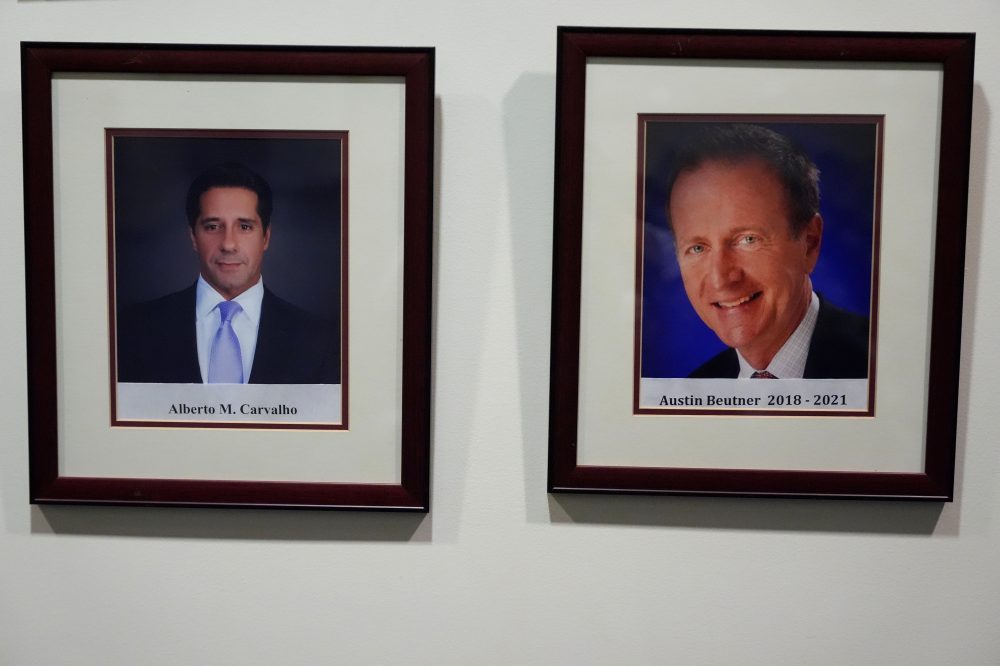
    Federal agents conducted searches at the residence and district offices of Alberto Carvalho, who leads the Los Angeles public school system, prompting the school board to suspend him with pay on Friday.

    The FBI executed search warrants on Wednesday at Carvalho’s home and the headquarters of the Los Angeles Unified School District, though investigators have not disclosed the specific nature of their probe or filed any charges against the superintendent.

    Following two days of private discussions, the school board voted without opposition to suspend Carvalho pending the completion of the federal investigation. The district educates over 500,000 students, making it America’s second-largest school system.

    Carvalho took charge of the Los Angeles district in 2022 after previously serving as superintendent in Miami’s public schools.

    Andres Chait, who serves as the district’s chief of school operations, will assume leadership responsibilities during Carvalho’s absence, according to district officials.

    “Our focus remains clear: to ensure stability, continuity, and strong leadership for our students, families, and employees,” Chait said in a statement.

    Carvalho has not issued any public response to requests for comment. Federal agents also conducted a search Wednesday at a third property located near Miami. According to the Miami Herald, this Florida location belongs to Debra Kerr, who had professional connections to AllHere, an educational technology firm that previously held a contract with Los Angeles schools before the company’s collapse and its chief executive’s fraud indictment.

    During 2024, Carvalho promoted extensively a partnership with AllHere for an artificial intelligence chatbot called “Ed” intended to assist students. However, approximately three months after introducing the technology and paying AllHere $3 million, the district terminated its relationship with the company, which subsequently filed for bankruptcy. Later, company founder Joanna Smith-Griffin faced charges including securities fraud, wire fraud, and identity theft.

    District officials stated Wednesday that they “are cooperating with the investigation and we do not have further information at this time.”

    According to the Los Angeles Times, Carvalho has disputed having personal involvement in choosing AllHere as a vendor. Following Smith-Griffin’s indictment, Carvalho announced plans to establish a task force to review the district’s failed project, though no public updates have been provided since.

    Kerr, who works as an education technology sales representative connecting companies with school districts, reportedly never received her $630,000 commission for facilitating the AllHere agreement with Los Angeles schools, according to The 74, a publication that covered the company’s bankruptcy proceedings in 2024.

    The 74 also reported that Kerr maintained established professional relationships with Carvalho dating back to his tenure in Florida, and that her son, who was employed by AllHere, presented the technology to Los Angeles school officials after Carvalho assumed leadership there. The Associated Press could not contact Kerr for comment.

    During his five years leading Los Angeles schools, Carvalho has received recognition for improving the district’s academic outcomes. He earned similar acclaim while directing Miami-Dade County Public Schools, Florida’s largest school system, where the national superintendents association honored him as Superintendent of the Year in 2014.

    Spain awarded knighthood to the Portugal-born educator in 2021 in recognition of his efforts to expand Spanish-language educational programs within Miami-Dade County schools.

    Shortly afterward, Carvalho accepted the California position and became an outspoken opponent of the Trump administration’s strict immigration enforcement policies, particularly following raids conducted in Los Angeles last year.

    Carvalho joined the Los Angeles district during a pivotal period, as the system benefited from substantial state and federal COVID-19 relief funding while still addressing pandemic-related challenges including educational setbacks and reduced student enrollment. He had previously clashed with Florida Republican Governor Ron DeSantis regarding the governor’s directive prohibiting mandatory mask requirements in schools during the pandemic.

    Officials from the Miami-Dade school system acknowledged awareness of the investigation concerning Carvalho but declined to provide additional comment at this time.

  • Yastrzemski Powers Braves Past Red Sox 15-8 in Spring Training Slugfest

    Yastrzemski Powers Braves Past Red Sox 15-8 in Spring Training Slugfest

    Atlanta delivered a powerful offensive display Friday, crushing Boston 15-8 in spring training action at North Port, Florida, led by Mike Yastrzemski’s two-homer performance and Ronald Acuna Jr.’s grand slam.

    Yastrzemski, grandson of Red Sox Hall of Famer Carl Yastrzemski, connected for home runs in both the second and fourth innings, bringing his spring total to three long balls in four contests. The Braves erupted for an explosive 11-run third inning, with Acuna and Matt Olson both going deep to build a commanding 13-3 advantage.

    Atlanta pitcher Chris Sale struggled in his outing, surrendering three runs on three hits across 2 2/3 innings, though he outperformed Boston’s Brayan Bello, who was hammered for five runs in just two frames. The Red Sox managed five home runs from Jarren Duran, Ceddanne Rafaela, Marcelo Mayer, Nathan Hickey and Tyler McDonough.

    In other spring action, the Yankees demolished Minnesota 17-5 in Fort Myers, with Spencer Jones joining four other New York players in the home run parade. Jones drove in three runs and scored twice, launching his third spring homer. New York seized control early with an 8-1 second-inning lead on homers by Jasson Dominguez and J.C. Escarra, while Luis Gil earned the victory with one run allowed over 2 1/3 innings.

    Pittsburgh rallied late to defeat Baltimore 6-1 in Bradenton, despite an impressive debut from Orioles newcomer Shane Baz. The right-hander, acquired from Tampa Bay in December for four prospects and a draft pick, was flawless through 2 1/3 hitless innings with four strikeouts. Pirates starter Mitch Keller matched that performance with four strikeouts over 2 1/3 scoreless frames, and Termarr Johnson delivered a crucial two-run single in a five-run seventh inning.

    Tampa Bay edged Toronto 6-5 in Port Charlotte, with former Oriole Cedric Mullins making an impact in his new uniform. Mullins drove in two early runs and hit his first home run as a Ray in the third inning. Junior Caminero contributed a two-run single in the first, and Ryan Vilade provided the game-winner with an eighth-inning sacrifice fly.

    The Mets overwhelmed St. Louis 14-3 in Jupiter, powered by MJ Melendez’s back-to-back home runs and four RBIs. A.J. Ewing also homered while driving in three runs for New York, which received three shutout innings from Freddy Peralta. Cardinals prospect JJ Wetherholt, ranked as the organization’s top prospect, homered for his first spring hit.

    Philadelphia’s split squad defeated Miami 10-2 in Clearwater behind 14 hits, including two each from Trea Turner and Adolis Garcia. The Phillies collected six doubles and got contributions from 10 different hitters while building a 4-0 first-inning lead for veteran Aaron Nola. Meanwhile, Detroit’s other split squad crushed Philadelphia 16-8 in Lakeland with an 11-run sixth inning explosion.

    Los Angeles Angels narrowly beat Cincinnati 4-3 in Goodyear, with Logan O’Hoppe’s two-run homer leading the way. Denzer Guzman added an RBI double, and Brent Suter held the Reds to one run over two innings. Chicago’s White Sox split squad topped Texas 3-1 in Glendale on LaMonte Wade Jr.’s two-run blast.

    Colorado walked off against San Diego 3-2 in Scottsdale as Zac Veen delivered his second spring training walk-off homer. The 24-year-old outfielder, who gained attention for adding 43 pounds in the offseason, has become a fan favorite after overcoming substance abuse challenges.

    Milwaukee defeated Chicago’s other split squad 5-2 in Phoenix, with Luis Rengifo driving in two runs including a solo homer. The Cubs topped Cleveland 8-6 in Mesa behind Dansby Swanson’s three RBIs, while Kansas City edged Oakland 7-6 in Surprise on Bobby Witt Jr.’s three-run homer. San Francisco capped the day with a 12-4 rout of the Dodgers in Scottsdale, collecting 14 hits including Victor Bericoto’s three-run blast.

  • Australian PM Calls Terror Plot Arrest ‘Deeply Shocking’

    Australian PM Calls Terror Plot Arrest ‘Deeply Shocking’

    Australia’s Prime Minister Anthony Albanese has condemned the detention of a young man from Western Australia who allegedly planned terrorist attacks, calling the situation deeply disturbing.

    Law enforcement officials took a 20-year-old resident of Bindoon, located approximately 39 miles north of Perth, into custody on Friday. Authorities subsequently filed charges against him for plotting terrorist activities. According to police reports, the suspect had authored a written manifesto outlining his intentions to carry out mass casualty attacks against Islamic worship centers, the state’s police headquarters, and the parliamentary building.

    Taking to social media platform X on Friday evening, Albanese expressed his dismay: “The arrest of a WA man over an alleged racially-motivated terrorist plot is deeply shocking.”

    The Prime Minister continued his statement by saying: “Allegations the man was planning to target the Muslim community through attacks on mosques — as well as attacks on the WA police and parliament — are particularly distressing. He should face the full force of the law.”

    This incident represents another entry in Australia’s recent string of terrorism-related cases, including a failed bombing attempt at a Perth demonstration on January 26, where protesters had gathered to oppose the nation’s official holiday.

    Additionally, in December, two armed attackers targeted a Hanukkah gathering at Sydney’s Bondi Beach, resulting in 15 fatalities in what became Australia’s most devastating mass killing in almost three decades. Intelligence officials determined the attackers drew inspiration from the Islamic State extremist organization.

  • Environmental Group Greenpeace Hit with $345 Million Court Ruling Over Pipeline Protests

    Environmental Group Greenpeace Hit with $345 Million Court Ruling Over Pipeline Protests

    A North Dakota court has upheld a massive financial penalty against environmental organization Greenpeace, ordering the group to pay $345 million in damages related to protests over the Dakota Access Pipeline construction.

    Judge James Gion made the ruling official on Friday, maintaining his earlier decision from October that had already reduced the original jury award by nearly half. The March jury verdict had initially set damages at approximately $667 million.

    The environmental organization plans to challenge the decision, with representatives calling the legal action “a blatant attempt to silence free speech.”

    “Speaking out against corporations that cause environmental harm should never be deemed unlawful,” stated Marco Simons, who serves as interim general counsel for both Greenpeace USA and the Greenpeace Fund.

    Pipeline operator Energy Transfer defended the court’s decision, describing it as “an important step in this legal process of holding Greenpeace accountable for its unlawful and damaging actions against us during the construction of the Dakota Access Pipeline.”

    The company indicated it is “analyzing possible next steps that we may choose to take to make sure they are held fully accountable.”

    The controversial Dakota Access Pipeline project was constructed between 2016 and 2017 near the Standing Rock Indian Reservation. The completed pipeline now carries approximately 40% of crude oil from North Dakota’s Bakken shale formation.

    Environmental activists and tribal groups mounted significant opposition to the project, arguing it would contaminate local water sources and worsen climate change impacts.

    Energy Transfer, headquartered in Texas, initiated legal proceedings against Greenpeace in federal court in 2017, claiming the organization disseminated false information about the pipeline and financially supported protesters who interfered with construction activities.

    The jury’s March decision included financial penalties for defamation, property trespassing, and conspiracy charges.

    In a separate legal maneuver, Greenpeace filed a countersuit against Energy Transfer in the Netherlands this past February, utilizing European legislation designed to prevent harassment lawsuits targeting activists. That case remains active in the court system.

  • Salisbury Sea Gulls Basketball Season Ends in Coast-to-Coast Semifinal Loss

    Salisbury Sea Gulls Basketball Season Ends in Coast-to-Coast Semifinal Loss

    SANTA CRUZ, California – Salisbury University’s men’s basketball squad watched their season slip away Thursday night after a devastating second-half collapse against the University of Mary Washington Eagles in the Coast-to-Coast Conference semifinals.

    The Sea Gulls, seeded fourth in the tournament, entered the locker room at intermission with momentum on their side, holding an advantage over the eighth-ranked and top-seeded Eagles. However, the second twenty minutes told a completely different story.

    Mary Washington dominated the final half of play, outpacing Salisbury by a margin of 34-17 to secure a 55-46 victory at West Field House. The loss eliminated the Sea Gulls from championship contention and brought their season to a close.

    Despite carrying a lead into the break, Salisbury was unable to sustain their first-half performance against the highly-ranked Eagles, who used their second-half surge to advance in the tournament.

  • Blue Hens Baseball Dominates Rider 13-8 in Newark Season Opener

    Blue Hens Baseball Dominates Rider 13-8 in Newark Season Opener

    NEWARK, Del. – The University of Delaware baseball squad delivered an offensive explosion Friday night, overwhelming Rider University 13-8 in the opening contest of their weekend series.

    The Blue Hens collected an impressive 17 hits during the victory at home in Newark, improving their season record to 3-7. The loss drops Rider’s record to 3-1 for the young season.

    Delaware’s bats came alive throughout the evening as they built a commanding lead against the visiting Broncs. The offensive showcase marked a strong start to what promises to be an exciting weekend series between the two programs.

  • Canadian Asset Manager’s AI Company Hits $1.3B Valuation After UK Merger

    Canadian Asset Manager’s AI Company Hits $1.3B Valuation After UK Merger

    A newly formed artificial intelligence infrastructure company backed by Canadian asset manager Brookfield has reached a $1.3 billion valuation after completing a combination with a London-based cloud computing startup, according to three sources familiar with the transaction and documents reviewed by Reuters.

    The company, called Radiant, was established by Brookfield Asset Management to offer on-demand access to artificial intelligence processing chips. Tuesday’s announcement of the merger with Ori Industries did not include financial details of the transaction.

    Sources indicate that all existing Ori investors have transferred their ownership stakes into the combined entity, while Brookfield provided additional funding to the new venture. The specific portion of the valuation attributed to Ori’s contribution could not be determined.

    Documents show the $1.3 billion valuation was determined earlier in February, though it’s unclear whether this figure has been adjusted since then. Both Brookfield and Ori representatives declined to provide comment on the matter.

    The sources requested anonymity since the deal terms were not disclosed publicly.

    Corporate filings reveal that Ori held 42.5 million pounds ($57.2 million) in total assets minus current liabilities at the close of 2024. The company’s total debt increased to 11.3 million pounds from 4.4 million pounds the previous year.

    This transaction occurs as investors compete to construct the data center facilities, power systems, and chip infrastructure required for advanced artificial intelligence applications, driven by a scarcity of high-performance computing resources.

    Ori’s founder Mahdi Yahya, whose startup received backing from Saudi Aramco’s investment division, will assume the role of president at Radiant.

    “For more than seven years we have been designing software to support AI infrastructure at scale, and it was clear Brookfield was the right partner,” Yahya stated Tuesday. “Through Radiant we can help address the supply-demand imbalance that has defined AI since 2023.”

    Radiant’s executive chair Vishal Padiyar explained that the company combines infrastructure and software solutions to serve government agencies and large corporations, with goals of reducing computing expenses and enhancing performance capabilities.

    Radiant represents one of the initial projects supported by Brookfield’s AI infrastructure investment fund, which is pursuing $10 billion in investor commitments and plans to expand to as much as $100 billion through additional co-investment and financing arrangements.

    The fund allocates up to $5 billion for Bloom Energy to deploy up to 1 gigawatt of behind-the-meter power solutions for data centers and AI manufacturing facilities, while semiconductor company Nvidia provided initial capital contributions and will supply processing chips to Radiant.

    The United Kingdom is accelerating data center development and intends to increase national computing capacity by 20 times before 2030, as data centers receive classification as critical infrastructure.

    International technology giants including Google and Microsoft have committed multi-billion-pound investments in the UK sector, alongside up to 2 billion pounds ($2.70 billion) in government funding through the UK’s Compute Roadmap initiative.

  • Agricultural Commodity Markets Show Mixed Results Thursday

    Agricultural Commodity Markets Show Mixed Results Thursday

    Agricultural commodity markets displayed mixed trading results at Thursday’s closing bell on February 27, 2026, with grain prices showing strength while livestock futures faced downward pressure.

    March corn contracts finished the day at $4.38¾ per bushel, climbing 5½ cents from the previous session. Soybean futures for March delivery posted even stronger gains, advancing 9½ cents to settle at $11.57¼ per bushel.

    However, soybean-related products showed divergent performance. March soybean meal contracts dropped $2.10 to close at $315.50, while March soybean oil remained flat at 61.29 cents.

    Chicago wheat futures demonstrated significant strength, with March contracts surging 19½ cents to end trading at $5.91¼ per bushel.

    Livestock markets faced selling pressure across most sectors. April live cattle futures declined $4.67 to $232.22 per hundredweight, while March feeder cattle dropped $6.22 to $355.42. April lean hog contracts bucked the trend by remaining unchanged at $95.72.

    These market movements reflect ongoing volatility in agricultural commodities as traders assess supply and demand factors affecting both grain and livestock sectors.

  • Corn Farming Expected to Bounce Back Despite Rising Costs

    Corn Farming Expected to Bounce Back Despite Rising Costs

    Despite rising farming expenses, one agricultural specialist believes corn production is poised for a significant comeback this season. Alex Case, who works as a retail sales agronomist with Brevant Seeds in the Eastern Corn Belt region, anticipates that elevated input costs won’t discourage many farmers from planting corn this year.

    According to Case, southeastern Indiana could experience a robust corn growing season if weather conditions remain favorable. He noted that corn acreage had declined in the previous year, setting the stage for this anticipated recovery.

    “Last year we were off some corn acres just because,” Case explained, suggesting that various factors had contributed to reduced plantings in the prior season.

    The prediction comes as farmers across the Midwest prepare for spring planting decisions, weighing factors such as commodity prices, weather forecasts, and production costs when determining their crop allocations for the upcoming growing season.

  • Defense Secretary Issues Warning to Scouting America Over Policy Changes

    Defense Secretary Issues Warning to Scouting America Over Policy Changes

    Defense Secretary Pete Hegseth has issued a formal warning to Scouting America, giving the organization six months to address Pentagon concerns about recent policy changes.

    In a video message shared on social media, Hegseth announced that the Defense Department will spend the next half-year evaluating its ongoing relationship with the youth organization, which was previously known as the Boy Scouts of America.

    The warning comes after the Pentagon expressed dissatisfaction with the organization’s diversity and inclusion initiatives, as well as policies that center programming around female participants.

    Hegseth’s announcement represents a temporary reprieve for the scouting organization, which had faced the possibility of losing its longstanding partnership with the military entirely.

    The Defense Department’s review will determine whether the relationship between the Pentagon and Scouting America will continue beyond the six-month evaluation period.

  • Cattle Futures Plummet on Chicago Exchange as Market Trading Intensifies

    Cattle Futures Plummet on Chicago Exchange as Market Trading Intensifies

    Livestock futures took a major hit during Friday’s trading session at the Chicago Mercantile Exchange, with both live and feeder cattle contracts experiencing substantial losses. The downturn came as direct cattle trading activity intensified throughout the week, while broader market volatility added additional pressure to agricultural commodities.

    Live cattle contracts saw steep declines across multiple delivery months. The April contract dropped by $4.67, settling at $232.22 per hundredweight, while the June contract fell $4.25 to close at $229.15. Feeder cattle futures were hit even harder, with March contracts tumbling $6.22 to $355.42 per hundredweight, and April contracts also posting significant losses.

    Market analysts pointed to two primary factors driving the sell-off: increased direct cattle trading activity during the week and substantial losses in the Dow Jones Industrial Average during Friday’s session. The combination of these market forces created downward pressure on cattle futures throughout the trading day.

  • Michigan Farmer Receives 2026 Master Pork Producer Recognition

    Michigan Farmer Receives 2026 Master Pork Producer Recognition

    A Michigan agricultural producer has been honored with the state’s top recognition in pork production for 2026. Andy White, who manages a complete hog operation from breeding to finishing along with 3,200 acres of row crop farming in Cass County, received the Michigan Master Pork Producer designation.

    White expressed optimism about maintaining profitable operations through the upcoming year as industry forecasts suggest. However, he remains cautious about market uncertainties that could quickly shift the agricultural landscape.

    “That could all change with a tweet,” White noted, highlighting the volatile nature of modern agricultural markets. “That could all change with any announcement. We export…” he added, referencing the importance of international trade to the pork industry.

    The White family operation represents the type of diversified farming that combines livestock production with substantial crop cultivation, a common approach in Michigan’s agricultural sector.

  • Ohio Program Connects High School Students to Agricultural Career Paths

    Ohio Program Connects High School Students to Agricultural Career Paths

    High school students in Ohio are getting hands-on experience in agricultural careers through a new partnership program. Ohio 4-H has teamed up with Ohio State University’s College of Food, Agricultural, and Environmental Sciences to launch an initiative designed to connect young people with potential career paths in farming and related fields.

    The program, known as Spark EXPO, takes a unique approach to career preparation by allowing teenagers to tackle real-world challenges in areas that interest them most. According to Margo Overholt-Seckel from Ohio 4-H, the initiative showcases various academic departments to give students comprehensive exposure to different opportunities.

    “We try to feature all of our academic units to help students learn about” the diverse career possibilities available in agriculture and environmental sciences, Overholt-Seckel explained.

    The collaborative effort represents a growing trend of educational institutions working together to bridge the gap between classroom learning and practical career preparation, particularly in agricultural sectors that face workforce development challenges.

  • Heisman Winner Mendoza Commands Spotlight at NFL Combine

    Heisman Winner Mendoza Commands Spotlight at NFL Combine

    INDIANAPOLIS — The spotlight shines brightest on Heisman Trophy recipient Fernando Mendoza as quarterback prospects showcase their talents at the NFL’s annual scouting combine.

    The former Indiana signal-caller brings everything professional teams seek in a cornerstone quarterback. His intelligence, mobility, rapid decision-making, and quick release complement his powerful arm and ideal physical dimensions. Three seasons as a starter and a national title further enhance his resume.

    Despite being lightly recruited initially, Mendoza refuses to assume anything is guaranteed. The widely projected first overall selection in April’s draft welcomes the pressure that comes with high expectations. Even if the quarterback-hungry Las Vegas Raiders look elsewhere, the Massachusetts native plans to channel his football idol’s approach.

    “Whatever team drafts me, I’m grateful — whether it’s the No. 1 pick or whether it’s the 199th pick,” Mendoza stated, referencing the exact position where Raiders minority owner and seven-time Super Bowl champion Tom Brady was chosen in 2000.

    Few expect Mendoza to fall nearly that far, although draft surprises aren’t unprecedented.

    Carson Beck entered 2024 as the projected top selection before a late-season elbow injury requiring surgery prompted his move from Georgia to Miami. During last February’s combine, Shedeur Sanders and Cam Ward appeared destined for early selection. Ward ultimately went first to Tennessee, while Sanders waited until Cleveland selected him 144th overall.

    This year presents a clearer picture, with Mendoza firmly established as the class leader.

    His elevated status brings unique opportunities. Mendoza recently trained alongside two-time Super Bowl champions Peyton and Eli Manning, plus Daniel Jones, Indianapolis’ former starting quarterback. He even had a brief phone conversation with Brady during meetings with Raiders executives.

    Media attention followed him constantly Friday, from photographers at his press conference to television interviews and cameras tracking his movements through the Indiana Convention Center. He won’t participate in Saturday evening’s throwing session, citing insufficient preparation time following Indiana’s 16-game championship run. Instead, he’ll demonstrate his arm strength at his April 1 Pro Day.

    “It’s been hectic,” Mendoza explained. “A lot of our teammates were joking we played the natty on Jan. 19, and Jan. 23 we had three days of celebrating with a parade. Then it was all off to training. Everybody was going to Miami, Phoenix, Los Angeles, Chicago to go train. That process of being dispersed so quickly shows why you need to be enabled in the present moment, how much it matters to be in the present moment and how much you’ve got to really enjoy the good times while they last.”

    Several quarterbacks in attendance relate to Mendoza’s whirlwind experience.

    Beck dedicated last spring and summer to rehabilitation, working to demonstrate his return to pre-injury form. His efforts paid off as he guided Miami to the national championship game in their home venue, rebuilding his draft value while positioning himself as a potential first-round selection.

    “You look at the beginning of the 2024 season, going into it, nobody envisioned that season to go that way, starting with myself,” Beck reflected. “I didn’t know I was going to get injured at the end of the season. I didn’t know I was going to end up coming back to college for another year. That was never the plan, right? So when the injury happened, I had declared for the draft. I was going to go through the process and from that point, I’m gone. It’s like ‘OK, Gunner (Stockton) is next up.’ So when I decided to not go to the NFL, it was like, ‘I’m going to go somewhere else.’”

    Drew Allar faces his own rehabilitation challenge on an accelerated timeline.

    He chose to return to Penn State last fall instead of entering the professional ranks, hoping to capture a national championship. The season deteriorated quickly for the preseason top-ranked team, culminating in head coach James Franklin’s midseason dismissal.

    In mid-October, Allar sustained a broken left ankle requiring season-ending surgery. Now he’s working to convince NFL evaluators of his complete recovery.

    “As soon as I really got back to school and started my rehab process my whole focus has been getting to this point, being healthy enough to have the chance to put myself out there and throw,” Allar said. “So I am really excited to go out there on Saturday and just cut it loose.”

    Unlike Mendoza, Allar intends to throw but won’t participate in running drills.

    For Mendoza, this represents a unique platform to demonstrate his readiness to follow Brady’s path and become a franchise cornerstone. His immediate goal, however, remains securing employment.

    “Right now, I’m unemployed,” he acknowledged. “So this is my job interview and like everyone says, it’s the most important job interview of your life. So right now, I’m just trying to do everything to hopefully get employed.”

  • Haiti Police Chief: Election Plans Moving Forward Despite Ongoing Gang Violence

    Haiti Police Chief: Election Plans Moving Forward Despite Ongoing Gang Violence

    PORT-AU-PRINCE, Haiti — Haiti’s interim police chief revealed Friday that law enforcement officials are developing strategies to conduct general elections safely this year, even as criminal gangs continue terrorizing the Caribbean nation.

    André Jonas Vladimir Paraison, who took over as temporary head of the National Police in August, declined to share specifics but promised additional details would be released shortly.

    “We have a plan for the election, but it’s still in the kitchen and has not finished cooking yet,” he said.

    When pressed about whether Haiti would be prepared to conduct elections in 2024, Paraison avoided giving a direct answer.

    Government officials have announced intentions to conduct general elections in late August, followed by runoff voting in early December. The Provisional Electoral Council stated Friday that political party and candidate registration will begin March 2 and continue through March 12.

    The troubled nation hasn’t conducted general elections in more than ten years, with criminal violence escalating dramatically following President Jovenel Moïse’s assassination at his home in July 2021.

    Paraison described Haiti’s current situation as having “exploded,” while emphasizing that law enforcement personnel are working to restore security and allow citizens to return to normal life.

    Criminal organizations have forced a record 1.4 million residents from their homes in the nation of nearly 12 million people, with armed groups maintaining control over approximately 90% of Port-au-Prince and claiming large portions of the country’s central areas.

    The widespread violence has shuttered thousands of businesses and forced hundreds of schools to close their doors.

    United Nations data shows more than 5,900 people lost their lives last year, with over 2,700 others suffering injuries.

    Paraison expressed hopes of increasing officer numbers to better safeguard Haitian citizens. He recently supervised the graduation of nearly 900 new cadets but acknowledged that additional personnel are necessary.

    U.N. representatives have noted that Haiti in recent years maintained fewer than two officers per 1,000 residents, falling significantly short of international benchmarks.

    Even with limited resources, Paraison has directed recent missions into gang-controlled areas, successfully reclaiming locations such as Carrefour-Aéroport, an important intersection.

    Law enforcement agencies are also releasing more frequent updates about suspected gang members eliminated during these operations.

    Paraison observed that criminal groups possess extensive weaponry and ammunition supplies. “Don’t forget, Haiti doesn’t make weapons. The weapons here come from somewhere else,” he said.

    Security analysts have previously estimated that up to half a million small arms may be present in Haiti, while a 2023 U.N. investigation discovered that increasingly advanced weapons, including .50 caliber sniper rifles and belt-fed machine guns, are being smuggled into the country primarily from the United States, particularly Florida.

    Haiti’s National Police are collaborating with a U.N.-supported mission headed by Kenyan officers that remains inadequately funded and staffed while battling criminal organizations. A specialized gang suppression unit is anticipated to take over the mission’s responsibilities in the coming months.

  • Customers Sue FedEx, Ray-Ban Maker Over Tariff Refunds After Supreme Court Ruling

    Customers Sue FedEx, Ray-Ban Maker Over Tariff Refunds After Supreme Court Ruling

    Customers who paid extra fees due to import tariffs are now taking major companies to court, demanding they share any refunds they might receive after the Supreme Court determined those taxes were illegally imposed.

    Two separate class-action cases have emerged in federal courts targeting shipping giant FedEx and EssilorLuxottica, the French company behind Ray-Ban eyewear. These consumer lawsuits come as more than 1,000 businesses, including major retailers like Costco and Revlon, have already filed their own claims in the U.S. Court of International Trade seeking reimbursement.

    The Supreme Court struck down the tariffs on February 20, ruling that former President Trump lacked legal authority to implement them under the International Emergency Economic Powers Act. The invalidated import taxes are estimated to be worth between $130 billion and $175 billion.

    Government agencies are still developing procedures for processing refund claims in the coming weeks and months, as numerous lawsuits move through the court system. Many companies have filed preventive legal actions to protect their right to reimbursement.

    FedEx released a statement Thursday promising to pass along any tariff refunds to the shippers and customers who originally paid the fees. However, Miami resident Matthew Reiser, who filed suit against the delivery company on Friday, argues this commitment “creates no legally enforceable obligation and is expressly contingent on future government and court guidance that may never materialize.”

    Reiser’s complaint details how he paid $36 in tariff and customs fees for tennis shoes shipped through FedEx from Tennis Warehouse Europe, a German-based online retailer located in Schutterwald. FedEx has not yet provided a response to requests for comment.

    In the second lawsuit filed this week, New York resident Nathan Ward claims he bought Ray-Ban sunglasses from the company’s website in August 2025, paying inflated prices that included tariff surcharges.

    According to Ward’s legal filing, “Despite seeking an order entitling it to a refund of the duties collected as a result of the subject tariffs, EssilorLuxottica continues to collect and has not refunded the tariff surcharges it collected from consumers.” The eyewear company has also not responded to comment requests.

    Legal expert Barry Appleton, who co-directs the Center for International Law at New York Law School, predicts many similar consumer cases will emerge, particularly against businesses that provided detailed receipts showing tariff charges. While the legal strength of these cases remains uncertain, Appleton notes they create pressure on companies to distribute any tax refunds they successfully obtain.

    “What we are watching is the predictable next chapter of the IEEPA story,” Appleton said. “The Supreme Court told the White House it overreached, the major importers lined up for refunds, and now ordinary consumers are asking the obvious question — if those duties were illegal, why shouldn’t we get our money back too?”

  • Wisconsin Man Sentenced to 16½ Years for Fake Trump Threats to Frame Victim

    Wisconsin Man Sentenced to 16½ Years for Fake Trump Threats to Frame Victim

    MADISON, Wis. — A Wisconsin man received a 16½-year prison sentence Friday after orchestrating an elaborate scheme to frame his robbery victim by creating fake threatening letters against President Donald Trump aimed at triggering the man’s deportation.

    Demetric DeShawn Scott, 52, was convicted in January by a Milwaukee County jury on charges including felony identity theft, witness intimidation, bail jumping and reckless endangerment. Judge Kristy Yang handed down sentences totaling 16½ years: 18 months for identity theft, five years for intimidation, and 10 years for endangerment, plus credit for 882 days already served on the bail jumping charge.

    The case began in September 2023 when Scott attacked Mexican immigrant Ramon Morales Reyes while he was cycling in Milwaukee. Court records show Scott knocked Morales Reyes from his bicycle, slashed him with a box cutter, and stole the bike. Scott was already free on bond for a separate burglary case at the time of the attack.

    Following his arrest, Scott crafted multiple letters while incarcerated, impersonating Morales Reyes and threatening to assassinate Trump at a political rally. The fabricated correspondence reached state and federal officials, ultimately leading to Morales Reyes’ detention by immigration authorities in May as he dropped his daughter at school.

    The case gained national prominence when U.S. Department of Homeland Security Secretary Kristi Noem publicized Morales Reyes’ photograph and excerpts from the supposed threat letter on social media. The White House and Trump supporters highlighted the arrest as evidence of successful immigration enforcement efforts.

    Authorities eventually uncovered the deception when they realized Morales Reyes lacked sufficient English skills to compose the letters and his handwriting didn’t match the documents. Investigators also discovered Scott discussing the letter-writing plan during recorded jail phone calls, including his strategy to have Immigration and Customs Enforcement detain someone to derail his own trial. Scott eventually confessed to authoring the false threats.

    Representing himself since December, Scott continued asserting his innocence as deputies removed him from the courtroom after sentencing. “I had never stolen a bike from anybody, and so I did what I did because he was trying to get a visa and get, become a citizen,” Scott told WDJT-TV while being escorted to an elevator. When asked about regrets, he responded, “No, I don’t.”

    The DHS website still displays Noem’s original news release featuring Morales Reyes’ photo, though it now carries a disclaimer noting he’s no longer under investigation for threatening Trump while remaining in ICE custody facing deportation. The release indicates he illegally entered the U.S. nine times from 1998 to 2005 and has prior arrests for felony hit and run, property damage, and domestic-related disorderly conduct.

    Morales Reyes was released on $7,500 bond in June. His deportation defense lawyer, Cain Oulahan, reported in January that his client was living with family in Milwaukee and had filed for a U-visa, which permits crime victims and their relatives to stay in the United States.

    While Oulahan declined Friday to discuss Scott’s sentencing, he noted the U-visa process can extend up to eight years. His legal team plans to pursue an order to dismiss the deportation proceedings entirely.

    According to his attorneys, Morales Reyes immigrated from Mexico during the 1980s, works as a dishwasher in Milwaukee, and is married with three U.S. citizen children. A review of online court records revealed no state or federal criminal cases in Wisconsin listing Morales Reyes as a defendant.

  • Federal Workers at IRS Lose Union Contracts Under Trump Administration Move

    Federal Workers at IRS Lose Union Contracts Under Trump Administration Move

    WASHINGTON — Federal employees at the Internal Revenue Service have lost their union representation after the Treasury Department canceled their collective bargaining agreement Friday, marking a significant step in President Donald Trump’s effort to reshape the federal government workforce.

    The Treasury Department also ended the union contract for Bureau of the Fiscal Service employees earlier this week, according to two sources with knowledge of the decision who requested anonymity since they weren’t permitted to discuss the matter publicly.

    Both the IRS and the fiscal service bureau, which handles government payment processing, have employees represented by the National Treasury Employees Union. Agency officials notified these workers that Treasury had dissolved their collective bargaining agreements, citing a Trump executive order from last March as justification for the action.

    IRS Chief Human Capital Officer Alex Kweskin wrote to IRS staff Friday that the decision “deepens our commitment of operating as one IRS, a collaborative team focused on serving American taxpayers,” according to a letter obtained by The Associated Press.

    These contract cancellations follow guidance from Scott Kupor, who leads the Office of Personnel Management, who sent a directive to agency heads this month instructing them to follow Trump’s March directive and inform labor organizations “that they are terminating any applicable CBAs (collective bargaining agreements), whether represented by the National Treasury Employees Union (NTEU) or another labor union.”

    The labor organization had filed a lawsuit against the federal government last year challenging Trump’s executive directive.

    Although a Washington D.C. court granted a preliminary injunction blocking the government’s action, that ruling was suspended while an appeal proceeds. On Thursday, a three-judge panel from the U.S. Court of Appeals for the 9th Circuit ruled in a related case, opening the door for Trump’s executive order to move forward.

    National Treasury Employees Union President Doreen Greenwald argued Friday that the IRS “cannot unilaterally end” its agreement with the labor organization. She stated that federal sector labor law mandates the IRS maintain a collective bargaining agreement “with the exclusive representative of its bargaining unit employees.”

    The National Treasury Employees Union serves as the representative for approximately 150,000 workers across 37 federal departments and agencies.

  • Antique Store Shoppers Discover Sleeping Owl Napping on Store Shelf

    Antique Store Shoppers Discover Sleeping Owl Napping on Store Shelf

    Customers browsing through an antique shop in upstate New York made an unexpected discovery this month when they came across a living owl taking a nap on one of the store’s shelves.

    According to the New York State Department of Environmental Conservation, the unusual encounter took place February 21st at The Market Place in East Durham, a small community located roughly 127 miles north of Manhattan.

    Officials report that patrons noticed what appeared to be “something extremely lifelike” displayed on a shelf and brought it to the attention of store employees.

    When environmental conservation police responded to the scene, they discovered a brown and white owl sitting on a shelf with its eyes closed, positioned right beside a chicken-shaped cookie jar.

    Officers carefully handled the drowsy bird to escort it out of the shop, then set it free in a nearby forest where it took flight and landed in a tree.

    The animal was identified as an eastern screech owl, a species that is active during nighttime hours and usually makes its home in hollow trees.

    How the owl managed to enter the antique store remains a mystery. Store ownership was contacted for comment on Friday.

  • Minnesota Judge Blocks Trump Policy Targeting Legal Refugees

    Minnesota Judge Blocks Trump Policy Targeting Legal Refugees

    MINNEAPOLIS — A federal judge in Minnesota has made permanent a protective order shielding legal refugees from arrest and deportation, delivering sharp criticism of a Trump administration policy that he says transforms the ‘American Dream into a dystopian nightmare.’

    U.S. District Judge John Tunheim on Friday approved a request from refugee advocates to convert a temporary restraining order he issued in January into a preliminary injunction as the legal case continues to unfold.

    While the ruling only covers Minnesota, it comes amid broader concerns about a new Department of Homeland Security policy announced February 18 that was discussed during a court hearing the following day.

    ‘Minnesota refugees can now live their lives without fear that their own government will snatch them off the street and imprison them far from loved ones,’ said Kimberly Grano, an attorney with the International Refugee Assistance Project, in comments to The Associated Press.

    The Trump administration claims authority to detain potentially tens of thousands of refugees nationwide who entered legally but haven’t yet obtained green cards. A recent Homeland Security memo reinterprets immigration law to require refugees seeking green cards to return to federal custody one year after their admission to the U.S. for application review.

    Judge Tunheim voiced strong skepticism in his 66-page ruling.

    ‘This Court will not allow federal authorities to use a new and erroneous statutory interpretation to terrorize refugees who immigrated to this country under the promise that they would be welcomed and allowed to live in peace, far from the persecution they fled,’ Tunheim wrote.

    The judge emphasized that the U.S. made commitments decades ago to refugees escaping persecution, promising them opportunities to rebuild their lives following thorough background screenings.

    ‘We promised them the hope that one day they could achieve the American Dream,’ Tunheim stated. ‘The Government’s new policy breaks that promise — without congressional authorization — and raises serious constitutional concerns. The new policy turns the refugees’ American Dream into a dystopian nightmare.’

    Neither Homeland Security nor U.S. Citizenship and Immigration Services provided immediate responses to requests for comment Friday.

    During last week’s court proceedings, Justice Department attorney Brantley Mayers argued the government should retain the authority to arrest refugees one year after their entry, though he suggested this wouldn’t occur in every case.

    Tunheim highlighted the case of one refugee, referred to as D. Doe, who was detained in January after being told someone had damaged his vehicle.

    ‘He was immediately flown to Texas, where he was interrogated about his refugee status. He was kept in ‘shackles and handcuffs’ for sixteen hours. D. Doe was ultimately released on the streets of Texas, left to find his way back to Minnesota,’ the judge noted.

  • Delaware Women’s Tennis Team Dominates Lehigh in Perfect 7-0 Road Victory

    Delaware Women’s Tennis Team Dominates Lehigh in Perfect 7-0 Road Victory

    The University of Delaware women’s tennis team delivered a dominant performance on Friday, shutting out Lehigh University 7-0 in Bethlehem, Pennsylvania.

    The nationally-ranked Blue Hens, currently sitting at No. 62, extended their winning streak to three matches with the commanding road victory. Delaware swept all seven matches against the Mountain Hawks, showcasing their depth and skill across both singles and doubles competition.

    The perfect team performance highlights the strong momentum Delaware has built as they continue their season. The Blue Hens demonstrated their competitive strength by not dropping a single match during Friday’s contest.

    This latest triumph adds to Delaware’s impressive recent form as the team looks to build on their current three-game winning streak moving forward in their schedule.

  • Bolivian Military Aircraft Crashes on Busy Street While Carrying Cash

    Bolivian Military Aircraft Crashes on Busy Street While Carrying Cash

    EL ALTO, Bolivia – A military transport aircraft belonging to Bolivia’s Air Force went down Friday evening on a crowded street in El Alto, located adjacent to the nation’s capital of La Paz, as reported by local television outlets.

    The Hercules transport plane was carrying freshly printed currency destined for distribution throughout Bolivia’s interior regions, according to local news outlet Unitel, which referenced information from Bolivia’s Defense Ministry.

    Video clips circulating on social platforms revealed pandemonium at the crash location, with crowds of people rushing to collect scattered banknotes from the pavement after the incident. Emergency responders at the site used water cannons to disperse the gathering crowds. Reuters could not verify the authenticity of these images.

    Officials have yet to release information regarding casualties or deaths from the incident. Bolivia’s central banking authority was scheduled to hold a press briefing later Friday evening.

    Following the crash, El Alto International Airport suspended operations temporarily, according to a statement from Bolivia’s national carrier, Boliviana de Aviacion. The airline clarified that the crashed aircraft was not part of their fleet.

    Television footage from local news sources revealed extensive damage to the military aircraft, along with significant destruction to multiple cars parked along the street where the plane came down.

  • US Ambassador Mike Huckabee Tells Embassy Staff to Exit Israel Immediately

    US Ambassador Mike Huckabee Tells Embassy Staff to Exit Israel Immediately

    US Ambassador to Israel Mike Huckabee has directed non-essential embassy personnel to depart the country immediately, sending an urgent message Friday morning as the Trump administration evaluates possible military responses to rising tensions with Iran.

    According to The New York Times, three embassy employees confirmed receiving Huckabee’s email at 10:24 a.m. local time Friday, directing staff planning to leave Israel to do so “today.” The ambassador cautioned that the directive “will likely result in high demand for airline seats today” and encouraged recipients to book any available outbound flight that would enable travel back to Washington. “The first priority will be getting expeditiously out of the country,” Huckabee stated in the message, the Times reported.

    While attempting to calm concerns, Huckabee stressed the urgency of the situation, writing “there is no need to panic” but noting that staff members thinking about leaving should move swiftly. “For those desiring to leave, it’s important to make plans to depart sooner rather than later,” he stated.

    The embassy communication arrives as US leadership evaluates various options for responding to heightened Iranian tensions, while maintaining diplomatic dialogue. ABC News reported Thursday that Admiral Brad Cooper, who leads US Central Command, is preparing to present President Donald Trump with briefing materials on potential American military strikes against Iran. The report cited sources close to the president and another person with knowledge of the discussions.

    General Dan Cain, Chairman of the Joint Chiefs of Staff, has also participated in the briefing preparations. ABC’s sources indicated that a coordinated US-Israeli military operation targeting Iran remains among the possibilities being actively reviewed by the administration.

    Meanwhile, diplomatic efforts persist. MSNBC reported that Omani Foreign Minister Badr Al Busaidi, who has been acting as an intermediary in US-Iran discussions, is set to meet Friday in Washington with Vice President JD Vance and additional high-ranking US officials. These scheduled discussions underscore ongoing attempts to maintain negotiations that have achieved minimal advancement thus far.

  • Caribbean Nation Discovers Massive Rare Earth Deposits Worth 150 Million Tons

    Caribbean Nation Discovers Massive Rare Earth Deposits Worth 150 Million Tons

    The Dominican Republic announced Friday it has discovered massive rare earth mineral deposits that could transform the Caribbean nation into a major supplier of materials essential for high-technology manufacturing.

    President Luis Abinader revealed during his annual congressional address that initial research shows the country possesses more than 150 million tons of rare earth elements in gross deposits. These 17 specialized metals are crucial components in semiconductor production, aerospace technology, and defense equipment manufacturing.

    Abinader outlined an ambitious timeline to complete mineral deposit evaluations by the end of this year, with plans to certify the reserves in early 2025. This certification process represents a crucial milestone before any large-scale mining and processing operations can begin.

    Officials have not yet determined what portion of the 150 million tons would be economically feasible to extract and process for commercial use.

    The president connected the mineral development plans to his administration’s broader environmental and economic strategy, emphasizing what he called “responsible use of natural resources.” He stated this approach would enhance Dominican sovereignty, reduce the nation’s reliance on foreign resources, lower carbon emissions, and improve the country’s competitive position globally.

    The mineral deposits are situated in Pedernales province along the Dominican border, and they have already attracted significant attention from the United States government.

    U.S. Secretary of State Marco Rubio addressed the discovery in February of last year, emphasizing that global access to such resources will be critical for developing essential technologies throughout this century. Rubio made clear that the rare earth materials “belong to the Dominican Republic and its people,” while extending American partnership and support for their development.

  • Shipping Customers File Lawsuit Against FedEx Seeking Tariff Refunds

    Shipping Customers File Lawsuit Against FedEx Seeking Tariff Refunds

    A class-action lawsuit has been filed against FedEx in federal court, representing customers who want their money back following a recent U.S. Supreme Court decision that declared former President Donald Trump’s emergency tariffs illegal.

    The legal action, filed Friday in Miami federal court, represents potentially millions of customers who paid import duties and associated fees on items that attorneys argue should have entered the country without any tariffs.

    In response to the lawsuit, FedEx released a statement Friday saying: “If refunds are issued to FedEx, we will issue refunds to the shippers and consumers who originally bore those charges.”

    However, the lawsuit argues that FedEx’s commitment cannot be legally enforced. Attorney John Yanchunis, representing Miami resident Matthew Reiser, stated: “Our goal is to return to American consumers every penny they were improperly charged.”

    The shipping giant joins over 2,000 other companies already pursuing legal action against the federal government in the U.S. Court of International Trade to reclaim tariffs paid under the International Emergency Economic Powers Act, or IEEPA. The Supreme Court determined on February 20 in a 6-3 ruling that Trump exceeded his legal authority when he used emergency powers legislation to implement widespread tariffs.

    The lead plaintiff, Reiser, claims FedEx charged him $36 for tennis shoes he ordered from Germany – including $21 in IEEPA duties and $15 in brokerage and processing fees. According to the lawsuit, no duty payment should have been necessary.

    Toy manufacturer Hasbro also joined the growing list of companies Friday seeking tariff refunds from the government through the U.S. Court of International Trade. Other major companies pursuing similar legal action include French cosmetics company L’Oreal, British appliance maker Dyson, contact lens producer Bausch + Lomb, and retailers like Costco and J. Crew.

  • Washington Backs Pakistan’s Defense Against Taliban After ‘Open War’ Declaration

    Washington Backs Pakistan’s Defense Against Taliban After ‘Open War’ Declaration

    Washington has thrown its support behind Pakistan following a dramatic escalation in cross-border violence that Pakistani officials are calling an ‘open war’ with Afghanistan’s Taliban government.

    On Friday, the State Department issued a statement backing Pakistan’s defensive actions after days of intensifying military clashes between the two neighboring nations.

    ‘The United States supports Pakistan’s right to defend itself against attacks from the Taliban, a Specially Designated Global Terrorist group,’ a State Department spokesperson said in an emailed statement.

    The current crisis began when Pakistan conducted airstrikes against Taliban positions in major Afghan cities last weekend. Afghanistan’s Taliban leadership responded with cross-border attacks on Thursday, marking a significant escalation in longstanding tensions between the countries.

    Pakistan’s Defense Minister Khawaja Muhammad Asif characterized the violence as ‘open war’ as both nations reported substantial casualties from the fighting.

    The conflict centers around Pakistan’s allegations that Afghanistan provides safe haven for Pakistani Taliban militants – claims that Afghanistan’s government firmly rejects. Afghan officials maintain that Pakistan is attempting to shift blame for its own internal security problems.

    Despite Pakistan’s nuclear capabilities and superior military technology compared to Afghanistan, the Taliban forces bring extensive guerrilla warfare experience gained through decades of combat against U.S.-led coalition forces before reclaiming power during America’s chaotic 2021 withdrawal.

    Washington, which maintains Pakistan as a key non-NATO partner, expressed concern about the deteriorating situation. The State Department spokesperson acknowledged awareness of the ‘escalation in tensions and outbreak of fighting between Pakistan and the Afghan Taliban,’ while noting the U.S. was ‘saddened by the loss of life.’

    American officials also criticized the Taliban’s security record, stating ‘The Taliban have consistently failed to uphold their counterterrorism commitments,’ and adding that ‘terrorist groups use Afghanistan as a launching pad for their heinous attacks.’

    The Taliban indicated Friday they remained open to diplomatic negotiations despite the ongoing military confrontation.

  • Route 1 Southbound Blocked at Johnson Road Following Vehicle Accident

    Route 1 Southbound Blocked at Johnson Road Following Vehicle Accident

    Delaware State Route 1 southbound has been completely shut down at Johnson Road following a vehicle collision, according to DelDOT traffic reports.

    The crash has blocked all southbound lanes, forcing officials to close the roadway to traffic while emergency responders work at the scene.

    Drivers traveling south on Route 1 should expect significant delays and are advised to use alternative routes until the roadway reopens.

    No information has been released regarding the cause of the accident, number of vehicles involved, or potential injuries.

    DelDOT continues to monitor the situation and will provide updates as the incident is cleared.

  • Senate Agriculture Committee Plans Own Farm Bill Review in Coming Months

    Senate Agriculture Committee Plans Own Farm Bill Review in Coming Months

    The Senate Agriculture Committee is preparing to develop its own farm bill legislation over the next several months, according to Committee Chairman John Boozman in an interview with Agri-Pulse.

    Boozman indicated that the committee’s schedule will be influenced by the progress of House deliberations on their farm bill version, which are set to take place next week.

  • Agricultural Experts Urge Farmer Communication as Dicamba Returns in 2026

    Agricultural Experts Urge Farmer Communication as Dicamba Returns in 2026

    As dicamba herbicide prepares to return for the 2026 growing season, agricultural experts are emphasizing the need for extensive preparation and coordination among farming communities.

    Kevin Bradley, a weed scientist at the University of Missouri, is advising farmers who are considering over-the-top dicamba applications for weed control to prioritize careful preparation and open dialogue with neighboring operations.

    “Talk, talk, talk. You’ve got to talk to your neighbors about what you intend to do with planting so there can at least be [coordination],” Bradley stated, highlighting the critical importance of communication in agricultural planning.

    The expert’s recommendations focus on three key areas: comprehensive training, strict adherence to regulatory guidelines, and thorough advance planning before implementing dicamba treatments during the growing season.

  • Pierce County Wisconsin Rejects New Farm Restrictions After Producer Pushback

    Pierce County Wisconsin Rejects New Farm Restrictions After Producer Pushback

    Local farmers in Wisconsin successfully fought off new regulatory measures after a county board rejected proposed restrictions on agricultural operations. The Pierce County Town of Rock Elm Board voted down an ordinance that had been recommended by a CAFO study committee.

    According to Erin Tomasik from the Dairy Business Association, agricultural producers actively engaged in the local political process to voice their concerns. “We’re super appreciative that the” farmers took initiative to participate in the discussion, Tomasik told Brownfield.

    The proposed regulations would have imposed additional requirements on concentrated animal feeding operations in the area, but the board ultimately sided with the farming community’s opposition to the new rules.

  • Weakened Syrian Prison Security Sparks Fears of ISIS Fighter Escapes

    Weakened Syrian Prison Security Sparks Fears of ISIS Fighter Escapes

    Deteriorating prison security in northeastern Syria has sparked international alarm as intelligence reports indicate ISIS detainees have broken free from detention facilities over recent months, raising the specter of terrorist group resurgence seven years after the collapse of their so-called caliphate.

    A high-ranking Syrian security official with access to classified intelligence briefings revealed to The Media Line: “There are indications that some ISIS detainees managed to escape from certain prisons during the past months.” Speaking on condition of anonymity, the source noted that while these breakouts weren’t widespread, they highlight critical vulnerabilities in facility security.

    Intelligence estimates place the total number of ISIS prisoners held across northeastern Syria between 9,000 and 12,000 individuals, housed in detention centers throughout Al-Hasakah, Raqqa, and al-Shaddadah. American officials have characterized many of these captives as “the worst of the worst” due to their roles in large-scale terrorist attacks dating back to 2014.

    The Ghwayran facility in Al-Hasakah alone confines approximately 3,000 to 5,000 prisoners, while al-Shaddadah holds roughly 1,500 detainees and al-Aqtan prison houses about 2,000. Additionally, the al-Hol displacement camp shelters around 43,000 individuals, predominantly women and children connected to ISIS members. European intelligence data shows that between 700 and 800 prisoners possess European citizenship, including 450 French nationals, 90 Dutch citizens, 77 Germans, 55 Belgians, and 27 British subjects, creating complex diplomatic and legal complications.

    Jihadist group specialist Mahana Jamal warned The Media Line that “the opportunities available for the escape of the organization’s members reflect weak local security coordination, and any limited escape could constitute a nucleus for the reformation of sleeper cells, whether in Syria or across the border into Iraq.”

    Confronting the threat of mass prisoner breakouts involving roughly 6,000 dangerous detainees, the United States initiated an extraordinary series of airlift missions described as having no historical precedent. The operation involved approximately 50 flights conducted over several weeks, relocating around 6,000 prisoners, including 500 to 600 foreign nationals.

    These emergency transfers utilized military cargo planes and helicopters to guarantee swift and secure transport, with daily coordination among US Central Command, the Pentagon, and intelligence services under National Intelligence Director oversight. American officials characterized these missions as preventing “a catastrophe that would have changed the region and perhaps the world overnight,” emphasizing that prison system collapse would have enabled immediate terrorist organization reconstitution.

    Simultaneously, management of multiple detention facilities and the al-Hol camp in Raqqa and Al-Hasakah provinces has been progressively handed over to Syrian government institutions. The Syrian military now oversees al-Aqtan prison, while the Interior Ministry manages al-Shaddadah prison through army personnel, and Damascus has assumed supervision of al-Hol camp with plans to relocate some residents elsewhere. This transition marks the conclusion of Syrian Democratic Forces’ exclusive control over prisoner management and questions Syrian authorities’ capacity to maintain order in an unstable post-conflict environment.

    Iraq, having endured ISIS territorial control across vast regions in 2014, considers these developments a direct national security threat. All relocated prisoners, regardless of citizenship, will face Iraqi court proceedings under established legal frameworks with comprehensive crime documentation. Baghdad is also working with European nations on citizen repatriation while focusing on preventing mass escapes and terrorist group reformation within Iraqi borders.

    European anxieties are mounting given hundreds of their citizens remain among the detainee population, as potential “illegal return” through smuggling networks and sleeper cell reconstruction poses immediate European national security risks. The challenge encompasses both domestic security risk management and addressing legal and political questions surrounding foreign fighter prosecution and rehabilitation.

    The al-Hol camp represents the most significant long-term challenge, housing approximately 43,000 people including thousands of children and women, many holding foreign citizenship. The facility presents serious security and social concerns due to extremist influence networks capable of perpetuating ISIS ideology, particularly among children raised amid violence and radicalization.

    With rehabilitation and reintegration programs remaining limited and roughly 18,000 Iraqi citizens awaiting gradual transfers to their home regions, the camp lacks a comprehensive legal and humanitarian framework.

    Current developments reflect intersecting regional and international priorities. The United States aims to prevent ISIS resurgence while avoiding long-term military commitment. Iraq works to secure borders and prevent repeating the 2014 collapse, while Syria views camp and prison control as reinforcing sovereignty and domestic security.

    European nations meanwhile confront complex legal and political challenges regarding citizen repatriation and prosecution. Russia, Turkey, and Iran also monitor the situation closely as part of broader regional power competition in eastern Syria.

    Recent actions have achieved short-term success in preventing worst-case scenarios. High-risk leaders were relocated and immediate security breakdown was averted. However, containment alone doesn’t constitute a lasting solution.

    Substantial vulnerabilities persist, particularly among remaining detainees and the broader camp population, including women and children exposed to extremist influence. Without more comprehensive approaches, these weaknesses could enable organizational reemergence.

    A sustainable response would demand an integrated strategy combining security, legal, humanitarian, and educational elements. Without such coordination, current arrangements risk collapse under renewed pressure.

    The international community now faces challenges more complex than the earlier military campaign. Attention has shifted to detention, legal proceedings, and social rehabilitation, where the capacity to definitively close this chapter and prevent ISIS-related security threat reemergence is being tested regionally and internationally, particularly in Europe and neighboring countries.

  • Grain Markets Rise as Dollar Drops, Weather Concerns Mount

    Grain Markets Rise as Dollar Drops, Weather Concerns Mount

    Agricultural commodity markets closed higher Friday, with wheat posting strong gains driven by a declining U.S. dollar and persistent weather-related concerns affecting global crop conditions.

    Soybean markets also moved upward, supported by short covering activities and technical purchasing patterns that helped secure a positive weekly close. Market analysts are closely monitoring weather conditions across key South American growing regions in Argentina and Brazil, which could impact global supply chains.

    The soybean market faces significant uncertainty as traders await potential renewed purchasing activity from China. Current market dynamics are complicated by ongoing tariff concerns and Brazil’s competitive pricing advantage over U.S. exports, creating challenges for American grain producers.

    Industry observers are anticipating the U.S. Department of Agriculture’s upcoming market reports for additional guidance on supply and demand fundamentals in the coming weeks.

  • Iowa Senator Supports Agriculture Secretary’s Plan to Sell USDA Building

    Iowa Senator Supports Agriculture Secretary’s Plan to Sell USDA Building

    Iowa Senator Joni Ernst is throwing her support behind Agriculture Secretary Brooke Rollins’ proposal to put the USDA’s South Building on the market. The Republican senator criticized the previous administration’s handling of the property, stating “The previous administration’s USDA denied their ghost town, but Secretary Rollins took action on this.”

    According to Ernst, the Department of Agriculture no longer requires the South Building, describing it as predominantly unoccupied. The Iowa lawmaker argues that disposing of the underutilized federal property makes fiscal sense for taxpayers.

  • Canadian Official to Meet OpenAI CEO Over Safety Concerns After Mass Shooting

    Canadian Official to Meet OpenAI CEO Over Safety Concerns After Mass Shooting

    Canada’s artificial intelligence minister announced Friday that he will sit down with OpenAI Chief Executive Sam Altman next week to address safety concerns following a deadly school shooting in British Columbia.

    The meeting comes after Canadian officials pressed OpenAI to strengthen its safety measures and warned that new laws could be enacted if changes aren’t made. The pressure mounted when the company revealed it had previously banned an account linked to suspected shooter Jesse Van Rootselaar but failed to notify law enforcement.

    “While we note their willingness to strengthen law enforcement referral protocols, establish direct points of contact with Canadian authorities, and enhance safeguards, we have not yet seen a detailed plan for how these commitments will be implemented in practice,” Minister Evan Solomon stated.

    Solomon’s comments came in response to correspondence he received Thursday from OpenAI’s global policy vice president. In the letter, the artificial intelligence company pledged to create a direct communication channel with Canadian police and improve its ability to identify users who repeatedly violate policies against violent content.

    The minister said his upcoming discussion with Altman aims “to seek further clarity and to ensure that the commitments made are translated into concrete action.”

    Van Rootselaar, an 18-year-old suspect, allegedly killed eight individuals on February 10 in Tumbler Ridge before dying by suicide. OpenAI has confirmed it previously suspended her ChatGPT access due to policy breaches.

    Solomon indicated he plans additional meetings with other major technology platforms operating in Canada over the coming weeks.

    “All options remain on the table as we assess what further steps may be necessary,” he concluded.

  • Delaware Farmers Face March 15 Deadline for 2026 Crop Insurance Coverage

    Delaware Farmers Face March 15 Deadline for 2026 Crop Insurance Coverage

    Delaware farmers are running out of time to secure crop insurance protection for the 2026 growing season, with the sales deadline fast approaching on March 15th.

    According to Shelby Twenter, who serves as Vice President of Crop and Livestock Insurance at FCS Financial, agricultural producers need to take immediate action to ensure they have adequate coverage in place. Twenter recently outlined several critical updates that farmers should be aware of for the upcoming policy year.

    Key steps that Delaware growers must complete before the deadline include refreshing their business entity details with insurance providers and providing their 2025 harvest yields to ensure premium calculations reflect accurate production history. This yield information is essential for obtaining precise coverage quotes and determining appropriate protection levels.

    Farmers are also encouraged to carefully evaluate their coverage alternatives to select policies that best match their operation’s specific needs and risk tolerance. Insurance experts recommend consulting with local agricultural insurance representatives to navigate the various options available and ensure compliance with all requirements before the March 15th cutoff date.

  • Delaware State Police Seeking Public’s Help Finding Missing Sex Offenders

    Delaware State Police Seeking Public’s Help Finding Missing Sex Offenders

    Delaware State Police’s Sex Offender Apprehension and Registration Unit (SOAR) is requesting public assistance in locating multiple sex offenders who have violated registration requirements.

    Authorities are actively searching for five individuals who either failed to complete their initial registration or did not update their address information as mandated by law. The wanted offenders include Charles A. Fulton, John A. Martz, Mollie Anne Schonwit, Roy Stevens, and Michael A. Viscount, all classified as Tier 2 moderate risk offenders.

    Anyone with information about the whereabouts of these individuals is urged to contact SOAR at (302) 739-5882. Tips can also be submitted anonymously through Delaware Crime Stoppers at (800) 847-3333.

    Police emphasize that these five represent just a fraction of currently wanted sex offenders. The complete list is available on the Delaware Sex Offender Registry website.

    Additionally, SOAR has issued public notifications for three homeless registered sex offenders: James Bullins, Brandon Hicks, and James McCray. These individuals are not wanted for registration violations but are currently without permanent housing.

    If residents have information indicating any of the homeless offenders are staying at a specific residence, they should contact the same phone numbers.

    State police note that the homeless offenders listed are those recently reported without housing and represent only a portion of all homeless sex offenders currently tracked by the registry.

    Complete profiles and additional information for all individuals can be accessed through the Delaware Sex Offender Registry website.

  • Trump Weighs Military Action Against Iran as Nuclear Talks Stall

    Trump Weighs Military Action Against Iran as Nuclear Talks Stall

    President Donald Trump is receiving military briefings on possible strikes against Iran while diplomatic efforts to resolve nuclear tensions continue to face obstacles, according to multiple reports.

    Admiral Brad Cooper, who leads U.S. Central Command, is set to present Trump with potential American military responses targeting Iran, ABC News reported Thursday. Sources familiar with the matter told the network that General Dan Cain, Chairman of the Joint Chiefs of Staff, is also involved in these briefing preparations. Officials indicate that a coordinated U.S.-Israeli military operation against Iran remains under active consideration.

    Despite the military planning, diplomatic efforts are still underway. Omani Foreign Minister Badr Al Busaidi, who has been facilitating negotiations between the U.S. and Iran, is expected to meet with Vice President JD Vance and other top American officials in Washington on Friday. These discussions aim to prevent potential U.S. military action against Iran.

    In a Washington Post interview, Vance addressed the situation directly, stating there is “absolutely no chance” that any Trump-ordered strikes on Iran would result in an extended conflict. While Vance acknowledged he doesn’t know what decision Trump will ultimately make, he outlined potential approaches, including military action “to ensure that Iran does not obtain nuclear weapons,” or finding a solution “through diplomatic means.”

    The New York Times reported Thursday that any military response currently being discussed would be narrowly targeted, concentrating on Iran’s nuclear facilities and missile capabilities. American officials quoted by the newspaper expressed doubt about Iran’s commitment to finalizing an agreement, while suggesting that precision strikes could pressure Iranian leadership to make compromises during ongoing Geneva negotiations.

    Thursday marked the conclusion of those Geneva talks. Al Busaidi characterized the discussions as productive and announced that technical negotiations will resume next week in Vienna. The American negotiating team included special envoy Steve Witkoff and Jared Kushner, President Trump’s son-in-law. Rafael Grossi, who heads the International Atomic Energy Agency, also took part in the discussions.

    Iranian Foreign Minister Abbas Araghchi described the talks as making “good progress,” noting that negotiators found common ground on certain matters while acknowledging that significant differences remain unresolved.

  • Trade Commission Reviews Fertilizer Tariffs Amid Rising Prices

    Trade Commission Reviews Fertilizer Tariffs Amid Rising Prices

    Federal trade officials have begun a mandatory assessment of penalties imposed on phosphate fertilizer imports from Morocco and Russia, as agricultural producers continue to struggle with elevated costs and ongoing commercial disputes.

    The International Trade Commission is conducting this required five-year evaluation of countervailing duties that were placed on phosphate fertilizers originating from these two nations. The review process occurs amid a challenging environment of soaring fertilizer prices and international trade tensions affecting the agricultural sector.

  • Former VP Harris Backs Texas Rep in Key Democratic Senate Primary

    Former VP Harris Backs Texas Rep in Key Democratic Senate Primary

    Ex-Vice President Kamala Harris threw her political weight behind Congresswoman Jasmine Crockett on Friday, backing the Texas Democrat in her bid for the U.S. Senate nomination in a move that provides significant establishment support amid concerns about Crockett’s ability to appeal to moderate voters in November.

    Harris delivered her support through a recorded phone message, according to a Crockett campaign representative who confirmed the endorsement on Friday.

    The congresswoman faces off against Texas State Representative James Talarico in Tuesday’s Democratic primary, with Talarico positioning himself as the candidate better able to attract Republican crossover votes in a state where the GOP holds significant power.

    Crockett has gained nationwide recognition for her aggressive debating style in Congress and has galvanized Democratic voters who want leaders prepared to confront President Donald Trump and conservative Republicans head-on.

    The Texas Democratic primary represents the opening major political battle of the 2026 midterm election cycle.

    Harris announced her support on the same day President Trump made an appearance in Corpus Christi, though Trump has remained silent on whether he supports current Senator John Cornyn or any of the Republican challengers who claim to be more loyal Trump supporters.

    While Democrats face an uphill battle for the Texas Senate seat, some party leaders believe conditions could favor their candidate in the fall general election.

    The Texas Tribune first broke the news of Harris’s endorsement.

  • Death Penalty Off Table for UnitedHealthcare CEO Murder Suspect

    Death Penalty Off Table for UnitedHealthcare CEO Murder Suspect

    NEW YORK — Government attorneys confirmed Friday they will not challenge a federal judge’s decision that removes the death penalty from consideration in the case against Luigi Mangione, accused of murdering UnitedHealthcare CEO Brian Thompson.

    Deputy U.S. Attorney Sean Buckley informed Judge Margaret Garnett in a written communication that federal prosecutors will not request the 2nd U.S. Circuit Court of Appeals to overturn her ruling, paving the way for a September federal trial. Mangione’s state murder proceedings are slated to commence in June.

    Last month, Garnett dismissed a federal murder charge involving firearm use that would have allowed prosecutors to pursue capital punishment, determining the charge was legally insufficient.

    The judge explained her decision was made to “foreclose the death penalty as an available punishment to be considered by the jury” during deliberations on Mangione’s guilt in the December 2024 Manhattan slaying.

    Garnett, a former Manhattan federal prosecutor nominated by President Joe Biden, also eliminated a weapons charge while maintaining stalking charges that could result in life imprisonment.

    For capital punishment eligibility, prosecutors were required to demonstrate that Mangione killed Thompson during the commission of another “crime of violence.” In her 39-page decision, Garnett determined that stalking does not meet this legal standard, referencing established case law and judicial precedents.

    The decision derailed the Trump administration’s effort to execute Mangione for what Attorney General Pam Bondi described as a “premeditated, cold-blooded assassination that shocked America.” This marked the Justice Department’s first death penalty case during President Donald Trump’s second administration.

    The 27-year-old Mangione has entered not guilty pleas in both federal and state proceedings. State charges also potentially carry life sentences. During a recent court appearance, he objected to facing consecutive trials, stating to the judge: “It’s the same trial twice. One plus one is two. Double jeopardy by any commonsense definition.”

    Thompson, age 50, was fatally shot on December 4, 2024, while walking to a midtown Manhattan hotel for UnitedHealth Group’s yearly investor meeting. Security footage captured a masked shooter firing at him from behind. Authorities report that “delay,” “deny” and “depose” were inscribed on the bullets, echoing terminology used to criticize insurance companies’ claim denial practices.

    Mangione, a University of Pennsylvania alumnus from an affluent Maryland family, was apprehended five days after the shooting when someone recognized him eating breakfast at a McDonald’s restaurant in Altoona, Pennsylvania, approximately 230 miles west of Manhattan.

    Defense attorneys contend that law enforcement compromised his case by creating a “Marvel movie” spectacle around his arrest, including having armed personnel escort him along a Manhattan pier following his flight to New York, and by publicly announcing their intention to seek his execution before formal charges were filed.

    Federal jury selection is planned for September 8, with opening arguments and witness testimony beginning October 13. State trial proceedings are set for June 8, though Judge Gregory Carro indicated that date might have been delayed until September 8 had federal prosecutors challenged the death penalty decision.

    In her written opinion, Garnett recognized that her ruling “may strike the average person — and indeed many lawyers and judges — as tortured and strange, and the result may seem contrary to our intuitions about the criminal law.”

    However, she emphasized it represented her “committed effort to faithfully apply the dictates of the Supreme Court to the charges in this case. The law must be the Court’s only concern.”

  • Kansas Transgender Men Challenge Law Voiding Their Driver’s Licenses

    Kansas Transgender Men Challenge Law Voiding Their Driver’s Licenses

    TOPEKA, Kan. — A legal battle has erupted in Kansas after two transgender men filed a federal lawsuit challenging new state legislation that rendered their driver’s licenses invalid along with roughly 1,700 others belonging to transgender residents.

    The lawsuit was submitted Thursday, coinciding with the law’s implementation date. The plaintiffs contend the legislation violates constitutional protections including privacy rights, individual autonomy, and proper legal procedures outlined in Kansas state law. Their legal challenge also targets enhanced enforcement measures related to a three-year-old state policy preventing transgender individuals from accessing public restrooms and single-gender facilities that match their gender identity.

    The legal action seeks to halt enforcement of the law, which simultaneously invalidated approximately 1,800 birth certificates belonging to transgender Kansans. The case was filed in Douglas County district court, where both plaintiffs reside in an area known for its liberal politics within the predominantly conservative state and home to the University of Kansas main campus.

    “The Kansas Constitution prohibits the Kansas Legislature’s targeting of transgender individuals for this discriminatory and dehumanizing treatment,” the lawsuit says.

    Kansas’s highest court established in 2019 that the state’s Bill of Rights includes protections for bodily autonomy — a ruling that safeguarded abortion access in the state.

    The contested legislation became law last week after Republican lawmakers, holding a supermajority, successfully overturned a veto from Democratic Governor Laura Kelly. Judge James McCabria, who will oversee the case, received his appointment in 2014 from former Republican Governor Sam Brownback and has been retained by Douglas County voters in three subsequent elections.

    Previous legislation from 2023, also passed despite Kelly’s opposition, established legal definitions of male and female based on individuals’ “biological reproductive system” present at birth. The Kansas Supreme Court has not yet examined that earlier law.

    The current law establishes significant financial penalties for municipalities, counties, educational institutions, and government agencies that fail to enforce restrictions on transgender facility usage. It also creates potential fines and criminal charges for transgender individuals who violate these restrictions, while allowing private citizens to file lawsuits against transgender people for alleged violations.

    Republican state lawmakers defended the new legislation as protective measures for girls and women, frequently referring to transgender women and girls using male terminology.

    “Kansans expect clarity, not confusion,” House Speaker Dan Hawkins, a Wichita Republican, said after the law was enacted. “They expect leadership, not surrender to radical activists.”

    The legislation prohibits any gender designation on driver’s licenses and birth certificates other than what was determined at birth, automatically voiding existing documents that don’t meet this requirement. State officials have begun mailing notifications to transgender residents informing them their licenses are no longer valid and requiring immediate replacement.

    While at least eight additional states prevent transgender individuals from modifying one or both identity documents, Kansas stands alone in retroactively invalidating previously modified records.

    The two Lawrence residents bringing the lawsuit, located approximately 40 miles west of Kansas City, are receiving representation from American Civil Liberties Union lawyers. Court documents identify them as Daniel Doe and Matthew Moe, with both citing concerns about potential discrimination, harassment, and violence as reasons for maintaining anonymity.

  • Four Juveniles Now Charged in Fatal Somerset County Shooting

    Four Juveniles Now Charged in Fatal Somerset County Shooting

    PRINCESS ANNE, MD – Authorities have taken two more juveniles into custody on murder charges related to the deadly January shooting of Derrick Knox in Somerset County, Maryland State Police announced.

    The latest arrests involve a 14-year-old and 16-year-old male, both now facing first-degree murder charges along with additional counts including second-degree murder and robbery. Both suspects are being detained without bond at the Somerset County Detention Center.

    Police apprehended the younger suspect on February 10 in Princess Anne, while U.S. Marshals captured the 16-year-old in Chula Vista, California on February 4. The older teen was brought back to Maryland last week to face charges.

    These arrests bring the total number of juvenile suspects to four. Authorities had previously detained a 17-year-old female and another 16-year-old male from Salisbury in connection with Knox’s death. Both earlier arrestees also remain jailed without bond.

    The deadly incident unfolded just after 2 p.m. on January 26 when Somerset County Sheriff’s deputies and Maryland State Police troopers responded to a shooting report on the 11000 block of Dryden Lane in Princess Anne. Officers discovered two gunshot victims inside a 2026 Kia Seltos SUV stopped in the road.

    Knox, a 46-year-old Salisbury resident, was declared dead at the scene. The second victim, Kevin Pillar, 41, also of Salisbury, suffered injuries and was airlifted to a trauma center by state police helicopter.

    After consulting with Somerset County prosecutors, all four juveniles now face identical charges of first-degree felony murder, second-degree murder, robbery, and related offenses.

    The Maryland State Police Homicide Unit continues leading the investigation with support from the Somerset County Sheriff’s Office and local prosecutors.

    Investigators are asking anyone with information about the case to contact Sergeant Joe Meier with the Maryland State Police Homicide Unit at 443-515-0034. Tips can remain anonymous.

  • FDA Clears New Weekly Treatment for Children with Rare Growth Disorder

    FDA Clears New Weekly Treatment for Children with Rare Growth Disorder

    A pharmaceutical company has received federal approval for a groundbreaking treatment targeting children who suffer from a rare genetic condition that results in dwarfism.

    On Friday, the Food and Drug Administration granted authorization to Ascendis Pharma for their innovative once-weekly therapy, according to company officials. The treatment is specifically designed to help children diagnosed with the uncommon genetic disorder.

    The newly approved medication represents a significant development in treating this rare condition that affects children’s growth and development.

  • Federal Court Halts Virginia’s New Social Media Restrictions for Minors

    Federal Court Halts Virginia’s New Social Media Restrictions for Minors

    A federal court has temporarily halted Virginia’s enforcement of legislation designed to shield minors from social media addiction through mandatory age verification and daily usage limits.

    On Friday, U.S. District Judge Patricia Tolliver Giles in Alexandria ruled in favor of the technology industry group NetChoice, determining the organization would likely succeed in proving the statute violates constitutional free speech protections for adults, minors, and member companies such as Google, Meta Platforms, Netflix, Reddit and X.

    The preliminary injunction prevents implementation of Senate Bill 854, which former Republican Governor Glenn Youngkin signed into law last May. The legislation, which became effective January 1, 2026, would have restricted social media usage to one hour daily for users under 16.

    NetChoice has mounted legal challenges against comparable legislation in multiple states, including California.

    State officials defended the measure as appropriately designed to shield children from social media’s “addictive features” and combat a youth mental health emergency.

    However, Judge Giles determined the law was simultaneously too broad by mandating age verification for all users, including adults, and too narrow by excluding potentially habit-forming interactive gaming from its scope.

    The judge also noted the legislation creates unequal treatment of “functionally equivalent” content by preventing minors from accessing educational, historical, or religious programming beyond one hour on social platforms while allowing unlimited access to identical content on streaming services.

    “The court recognizes the Commonwealth’s compelling interest in protecting its youth from the harms associated with the addictive aspects of social media,” Giles wrote. “However, it cannot infringe on First Amendment rights, including those of the same youth it aims to protect.”

    Following the ruling, Rae Pickett, representing Democratic Attorney General Jay Jones, stated: “We look forward to continuing to enforce laws that empower parents to protect their children from the proven harms that can come through social media.”

    Paul Taske, co-director of the NetChoice Litigation Center, praised the decision in a statement: “This ruling reaffirms that the government cannot ration access to lawful speech – even if it has noble intentions. Fundamentally, parents must stay in the driver’s seat when it comes to decisions about their families.”

  • Emergency crews work to contain oil refinery fire in southern Russia

    Emergency crews work to contain oil refinery fire in southern Russia

    Emergency crews are working to extinguish a fire that erupted at an oil refinery facility in southern Russia early Saturday morning, according to regional authorities.

    Officials from the Krasnodar region’s operational headquarters reported via Telegram that the fire ignited at the refinery located in Novominskaya, a town situated north of the regional capital city of Krasnodar.

    According to the official statement, emergency responders have sent 39 firefighters to the scene where flames have engulfed a storage tank and the area around it. Crews are currently working to bring the situation under control.

  • Trump Floats Cruz for Supreme Court, Jokes Congress Would Approve to Remove Him

    Trump Floats Cruz for Supreme Court, Jokes Congress Would Approve to Remove Him

    Former President Donald Trump revealed Friday that he’s contemplating nominating Senator Ted Cruz of Texas for a potential Supreme Court vacancy, despite Cruz indicating last month he has no interest in such a position.

    Speaking at a political rally in Corpus Christi, Texas, Trump praised the Republican senator as “an amazing guy” while making light of the situation. The former president suggested Cruz would sail through the confirmation process because both parties in Congress would be eager to remove him from the Senate.

    “He’s the only guy I know, he’ll get 100% of the Democrat vote, 100% of the Republican vote. They want to get him out of there. He is such a pain in the ass, but he’s so good and so talented,” Trump remarked to the crowd.

    The comments came as Trump introduced Cruz during the Friday evening event, highlighting the Texas lawmaker’s abilities while acknowledging his reputation as a divisive figure among his Senate colleagues.

  • Paramount Faces Regulatory Hurdles in Warner Bros. Acquisition Bid

    Paramount Faces Regulatory Hurdles in Warner Bros. Acquisition Bid

    The battle for Warner Bros. Discovery has entered a new phase as Paramount, fresh off its victory over Netflix, now must navigate the complex world of federal regulatory approval.

    Following an extended and chaotic bidding process, the entertainment conglomerate emerged victorious against its streaming rival, but the real challenge may lie ahead. Federal regulators must now determine whether this massive consolidation would damage consumer interests.

    The scale of regulatory concerns is substantial. Unlike Netflix’s bid for only portions of Warner Bros., Paramount seeks to acquire the complete operation, a move that would fundamentally alter Hollywood’s structure and the broader entertainment industry.

    The Department of Justice must still evaluate this major combination, which could grant Paramount significant control over movie pricing and content distribution, potentially harming consumers. Both the DOJ and Federal Trade Commission have previously derailed numerous mergers by filing lawsuits demanding modifications or blocking deals entirely.

    Even with federal approval, state regulators in California and international authorities in countries where both companies operate could create additional barriers that might prove impossible to overcome.

    President Donald Trump adds another unpredictable element to the equation.

    While presidents typically avoid interfering in antitrust matters to prevent political influence in business decisions, Trump has shown willingness to involve himself in areas usually handled by government attorneys and regulators.

    This Paramount-Warner Bros. combination would shrink the remaining major movie studios from five to four while creating the industry’s dominant player.

    Paramount’s catalog features major hits including “Top Gun,” “Titanic” and “The Godfather.” The century-old Warner Bros. studio has created everything from “Harry Potter” and “Superman” to “Barbie” and “One Battle After Another.”

    Paramount recently completed its own $8 billion acquisition of Skydance just months earlier. Warner Bros. completed its $43 billion merger with Discovery four years prior.

    Regulators face a fundamental question: What constitutes excessive market concentration?

    During Netflix and Warner’s negotiations, both companies argued that merging Paramount and Warner, two entities with nearly identical assets, created greater risks for employment losses and competitive issues.

    Warner’s chief revenue and strategy officer Bruce Campbell testified before a Senate antitrust committee that “one of the reasons that the Netflix offer appeals to us so much” stemmed from the streaming company’s lack of comparable film studio and production facilities. He explained that a Netflix purchase would preserve those operations without forced regulatory sales, enabling growth in the film division of the merged entities.

    Warner must now advocate for combining both studios.

    Employee welfare presents additional concerns.

    Industry organizations have spent months warning that any agreement could trigger significant job cuts — concerns amplified by the enormous debt Paramount must assume to fund its proposal.

    While some analysts believe layoffs won’t attract antitrust attention, related issues exist. Northwestern University’s Pritzker School of Law professor Jim Speta noted regulators might object if they determine the merged entity becomes large enough to dictate worker compensation.

    Beyond conventional film production, a merged Paramount and Warner would wield considerable influence in television and streaming competition.

    Paramount controls networks like CBS, MTV and Nickelodeon, plus the Paramount+ streaming platform. Warner’s portfolio includes CNN, Discovery and HBO Max.

    Paramount contends that joining with Warner would enable delivery of expanded content libraries to customers while competing against much larger streaming competitors. According to streaming guide JustWatch, the combined entity would control 20% of U.S. on-demand subscriptions — matching Netflix’s current individual market share.

    However, questions remain about consumer benefits. Critics argue the merged company would possess sufficient power to manipulate prices and increase subscription requirements for accessing specific content.

    Democratic Senator Elizabeth Warren, a prominent antimonopoly advocate, described a Paramount-Warner merger as “an antitrust disaster threatening higher prices and fewer choices for American families.”

    Regulatory discussions will likely center on market definition and whether it extends far beyond traditional boundaries to include competitors like Google’s YouTube.

    Netflix previously argued it competes against all online video content, not exclusively streaming services, claiming a Warner combination wouldn’t create excessive market power.

    Just weeks earlier, Paramount CEO David Ellison characterized that reasoning as Netflix “trying to mask its dominance.” He may now adopt Netflix’s previous arguments.

    Regulators will also examine whether housing CNN and CBS under one corporate structure damages competition crucial to news operations.

    Some experts doubt news concerns will carry equal weight with streaming and content library issues in the antitrust review. Nevertheless, a CNN-CBS combination will likely receive scrutiny.

    Similar to expanding streaming market definitions, merger supporters will probably highlight broader media options beyond traditional television news, including social media information sharing.

    The president initially suggested involvement in any Warner transaction before retracting those comments and stating that regulatory approval remains with the Justice Department.

    Paramount benefits from Trump’s close ties to billionaire Oracle founder Larry Ellison, father of Paramount CEO David Ellison, who serves as both a Trump contributor and major financial supporter of Paramount’s Warner acquisition bid.

    Under new Skydance leadership, Paramount has implemented changes Trump might favor. The company has moved to attract more conservative audiences in news programming, including appointing Free Press founder Bari Weiss as CBS News editor-in-chief. If the Warner acquisition succeeds, many anticipate similar changes at CNN — developments Trump would likely welcome given his frequent criticism of the network’s coverage.

    “The president does not like CNN, and he’s made that very clear — and he’s even suggested that changes to CNN might be relevant to review of the merger,” Northwestern’s Speta explained.

    However, Trump’s unpredictability could still derail the agreement.

    Despite new CBS management and Paramount’s $16 million settlement with Trump over a lawsuit regarding a CBS “60 Minutes” program he considered unfair, the president continues criticizing Paramount over the show’s editorial choices.

  • Iranian University Students Continue Anti-Government Protests Despite Crackdown

    Iranian University Students Continue Anti-Government Protests Despite Crackdown

    CAIRO (AP) — Seven weeks have passed since Iran’s government violently crushed massive nationwide demonstrations. However, opposition to the Islamic Republic continues to smolder across Iranian university campuses.

    According to an Iranian activist in exile who monitors student movements, four student eyewitnesses, and social media footage confirmed by The Associated Press, anti-government rallies occurred at no fewer than 10 universities during the previous week.

    The students, who requested anonymity due to fear of government reprisals, described growing fury toward Iranian leadership on their campuses and uncertainty about their nation’s future direction.

    These campus tensions are escalating while Iran’s government, under Supreme Leader Ayatollah Ali Khamenei, confronts potential U.S. military action regarding the country’s nuclear activities.

    Iran’s religious government is intensifying intimidation tactics against students and university officials. A government representative cautioned students this week against crossing a “red line,” while a conservative cleric leading Iran’s judicial system warned that “crimes” would face punishment if administrators failed to control campus demonstrations.

    Numerous universities have closed their physical locations and transitioned to online instruction.

    This move to virtual classes echoed measures taken by authorities in the previous year. When December demonstrations at Tehran’s main bazaar over deteriorating economic conditions rapidly expanded to communities nationwide, officials mandated remote learning in early January, cut internet access, and launched a violent suppression campaign.

    A comprehensive count of victims from the crackdown has been delayed due to internet limitations imposed by the government.

    The Human Rights Activists News Agency reports confirming over 7,000 deaths while investigating thousands of additional cases. Government figures acknowledge more than 3,000 fatalities, though officials have historically undercounted or failed to report deaths from previous unrest.

    Ali Taghipour, an exiled Iranian activist monitoring student movements, reported that at least 128 university students perished during the nationwide upheaval. “It was the biggest massacre of university students” under the Islamic Republic, he stated.

    “By the time the state made universities in-person again, it coincided with the (40 day) memorials of the killings of the January protests,” Taghipour explained. He noted that some campus memorial services triggered fresh anti-government demonstrations.

    Disturbances broke out last Saturday at Sharif University of Technology and Amir Kabir University. Online videos authenticated by AP documented confrontations on both campuses between apparent government supporters and demonstrators shouting, “Shameless! Shameless!” This chant frequently targets security personnel and undercover agents like the Basij, the volunteer branch of Iran’s Revolutionary Guard that maintains campus presence through student organizations.

    At the women-only Al Zahra University in northern Tehran, students voiced anti-government slogans on Monday, based on AP-verified videos. The same day, students at the University of Tehran’s College of Foreign Languages conducted a boisterous demonstration, stomping and chanting, “For each person killed, a thousand stand behind them!” This gathering originated as a memorial for a student killed during January protests.

    These demonstrations have sparked concerns about renewed government suppression. Tuesday saw government spokeswoman Fatemeh Mohajerani warning students to avoid crossing a “red line,” according to the semi-official Mehr news agency, while an Iranian state television anchor read a statement attributed to Sharif university’s president apologizing for “inappropriate” campus events.

    Wednesday brought comments from Gholamhossein Mohseni Ejehi, the judicial chief, stating that legal authorities would pursue “crimes” on campuses if educational leaders couldn’t maintain control, according to state media reports. Ejehi has emerged as the face of Iran’s recent suppression efforts, advocating for expedited punishments for demonstrators.

    Iranian universities have banned certain students from campus and conducted disciplinary proceedings, Taghipour reported. Historical precedent shows such hearings have resulted in expulsions and prohibitions from future university enrollment.

    Iran’s university students have historically driven anti-government movements.

    In 1999, Tehran university students initiated some of the earliest demonstrations against the Islamic Republic. Campus unrest also significantly contributed to protests supporting Iran’s reform-minded leaders in 2008-2009, and sustained openly anti-government demonstrations in 2022 that evolved into calls for overthrowing Iran’s religious government.

    The inflexibility of Iran’s hardliners regarding policy modifications, combined with the destruction of the country’s middle class through decades of Western sanctions and economic mismanagement, has convinced many college-aged students that the Islamic Republic cannot undergo reform, according to a University of Tehran doctoral candidate.

    This vacuum has created opportunities for Reza Pahlavi — son of the shah removed in 1979 — to become “a serious political cause for some people in Iran,” the student observed. Public memories of the shah’s authoritarian governance remain conflicted, though nostalgia for that era’s economic success has increased.

    Years of oppression have undermined organized opposition capabilities within the country. The suppression has also reduced campus space for political discussion and organizing, noted a Tehran university social sciences student. “After 2022, around 70% of student associations were closed,” he said, including a progressive student group he had directed.

    The student expressed uncertainty about potential outcomes from current student protests given foreign military threats and the government’s readiness to suppress dissent through lethal force.

    “On the one hand, we are facing a government that isn’t afraid of killing anyone, and on the other hand, we are facing outside powers that support people being killed.”

    A student from a university in the northern city of Babol described rising campus anxiety about potential warfare consequences for the country.

    The student expressed personal hopes for a “democratic secular republic” in Iran, while worrying that armed conflict might cause additional suffering and “increase the risks of the country’s disintegration.” Iran already faces challenges maintaining adequate basic services like electricity and water in certain regions.

    The Babol university has maintained remote courses since early January, the student reported, preventing campus gatherings. He said many students have boycotted online classes as protest.

    At the University of Tehran, the social sciences student expressed disagreement with students supporting Pahlavi, partially because the exiled opposition leader has advocated for U.S. strikes against Iran.

    “I’ll never understand a person who sits in London yelling for America to bomb Iran. How will they accept responsibility for what happens tomorrow?”

  • Pakistan Declares ‘Open War’ Against Taliban Following Cross-Border Strikes

    Pakistan Declares ‘Open War’ Against Taliban Following Cross-Border Strikes

    Pakistan’s military launched overnight strikes against Taliban government positions in Afghanistan, leading to retaliatory attacks and an official declaration of warfare from Islamabad as fighting escalated along the countries’ shared frontier, government officials from both nations confirmed Friday.

    AFP journalists in Kabul reported hearing at least three explosions just after midnight, with a military aircraft spotted flying overhead moments before the blasts occurred. Gunfire could also be heard throughout the area. These explosions came after the Taliban had earlier announced it conducted attacks on Pakistani border positions.

    Military officials from Pakistan confirmed their forces targeted Taliban locations across multiple Afghan cities. Pakistani security sources informed Reuters that the operation involved air-to-ground missile strikes aimed at Taliban military headquarters and outposts in Kabul, Kandahar, and Paktia provinces, accompanied by ground combat in various border sectors. Pakistani authorities characterized these actions as responses to Taliban aggression.

    Taliban representatives stated they conducted what they called retaliatory attacks against Pakistani military facilities. Both nations reported significant casualties, though they provided vastly different casualty counts that Reuters noted could not be independently confirmed.

    Following the military strikes, Pakistani Defense Minister Khawaja Asif declared his nation was now engaged in open warfare with Afghanistan’s Taliban leadership. “Our patience has reached its limit,” he posted on X, stating: “This is now an open war between us.” He reinforced this message later, writing: “Our cup of patience has overflowed. Now it is open war between us and you (Afghanistan).”

    Russia responded to the growing violence by calling for an immediate end to hostilities. The Russian Foreign Ministry urged both nations to “immediately cease the attacks,” and stated, “If the parties request, we will consider mediating between them,” according to Russian news agency RIA.

    Relations between Kabul and Islamabad have deteriorated due to Pakistan’s persistent allegations that Afghanistan provides sanctuary to militants conducting cross-border attacks. Taliban officials have dismissed these accusations, maintaining that Pakistan’s security challenges are internal issues.

  • NY Businesswoman Gets 9 Years for $30M Scheme Targeting Trump Fundraiser

    NY Businesswoman Gets 9 Years for $30M Scheme Targeting Trump Fundraiser

    A federal judge in Central Islip, New York handed down a nine-year prison sentence Friday to a businesswoman who orchestrated an elaborate financial fraud that bilked foreign investors out of more than $30 million and illegally directed portions of those funds toward American political campaigns, including events supporting former President Donald Trump.

    Sherry Xue Li, 54, of Oyster Bay, must also surrender $31.5 million along with properties in three different locations and compensate her victims through restitution payments.

    Li, who has remained in custody since authorities arrested her in 2022, entered guilty pleas last year to charges of money laundering conspiracy and conspiring to defraud the United States by interfering with Federal Election Commission oversight of campaign finance regulations.

    Her accomplice, Lianbo Wang, also admitted guilt to comparable charges and received a five-year prison term.

    While Li’s attorney did not respond to requests for comment Friday, U.S. Attorney Joseph Nocella declared that she “faces justice for her cynical schemes.”

    “She peddled false promises and outright lies to her many investors and stuffed her pockets while they suffered devastating losses,” he said in a statement.

    Federal prosecutors detailed how Li and Wang spent years targeting investors, particularly those from China, convincing them to contribute $500,000 apiece to a nonexistent development venture while falsely guaranteeing the investments would secure permanent U.S. residency status.

    Rather than funding any legitimate project, the pair, both naturalized American citizens, diverted millions from these investments to cover lavish personal spending on designer clothes, expensive jewelry, luxury homes, exotic vacations, and fine dining experiences, according to federal authorities.

    Prosecutors revealed that Li and Wang marketed access to American political figures to their victims and converted the proceeds into unlawful political contributions.

    In a particularly brazen example, the duo collected $93,000 from each investor for tickets to a 2017 Trump campaign fundraising event, then converted that money into $600,000 in prohibited donations to the organizing committee.

    Li managed to pose for a photograph with Trump and First Lady Melania Trump during the gathering, later exploiting that image to attract additional investments for her fraudulent development scheme, prosecutors stated.

    Federal authorities emphasized that the political campaigns and committees had no knowledge of the illegal activity, and no criminal charges were filed against any political organizations.

  • Traffic Alert: Park Avenue Lane Closed for Construction Through 5 PM

    Traffic Alert: Park Avenue Lane Closed for Construction Through 5 PM

    Motorists traveling eastbound on Park Avenue (Route 431) should expect delays this afternoon as construction crews have closed one lane of traffic.

    The lane closure affects the stretch of Park Avenue between Wood Branch Road (Route 321) and Nanticoke Avenue, according to DelDOT traffic information.

    Officials say the construction-related lane restriction will remain active until 5 PM today. Drivers are advised to allow extra travel time and consider alternate routes if possible.

  • Surveillance Footage Shows Refugee’s Final Moments Before Death in Buffalo

    Surveillance Footage Shows Refugee’s Final Moments Before Death in Buffalo

    BUFFALO, N.Y. — Surveillance footage has captured the final known movements of a visually impaired refugee from Myanmar who died just five days after federal agents released him at a Buffalo donut shop in the middle of the night.

    The video, obtained by the Investigative Post, shows 56-year-old Nurul Amin Shah Alam carefully navigating an empty parking lot in jail-issued footwear after Border Patrol officers left him at a Tim Hortons on February 19. The footage reveals him pulling his hood up against the cold weather as he walks past the drive-through window before disappearing into the darkness.

    Shah Alam’s body was discovered on Tuesday morning outside the downtown arena where the Buffalo Sabres play hockey. A passerby called 911 after finding him on the sidewalk. Authorities are still investigating how he traveled several miles from the restaurant to the location where he died.

    Buffalo Mayor Sean Ryan confirmed the Tim Hortons was closed when agents dropped off Shah Alam. The surveillance footage shows him trying the locked front entrance before the Border Patrol vehicle drives away.

    U.S. Customs and Border Protection defended their actions this week, stating agents selected “a warm, safe location” for the release.

    The agency described the transportation as “a courtesy ride” to an area near where Shah Alam’s relatives had previously resided. Officials said he agreed to the ride and displayed no signs of distress or physical limitations. CBP has not responded to recent requests for additional comment.

    The Erie County medical examiner is working to determine the cause of death, while Buffalo police continue reviewing security cameras across the city to trace Shah Alam’s movements during his final days.

    Shah Alam had spent a full year in the Erie County jail following a 2024 incident that led to his arrest. Body camera footage released Thursday shows police confronting him in a snowy backyard where he was holding what appeared to be curtain rods.

    In the video, officers repeatedly yell “What are you doing?” and “Put it down” as Shah Alam approaches them. Family advocates say he had wandered onto the wrong property and couldn’t understand the English commands.

    The footage shows an officer threatening “I’m going to shoot you, dude” before deploying Tasers and wrestling Shah Alam to the ground. Police report that he bit two officers during the arrest.

    Shah Alam initially faced serious charges including felony assault, burglary, and criminal mischief. An immigration hold was placed on him following the arrest.

    The Legal Aid Bureau of Buffalo made “a strategic decision” to keep him in jail rather than post bail, fearing immigration officials would immediately detain him. However, lawyers told his family it was safe to post bond after he accepted a plea deal on February 9 for two reduced misdemeanor charges.

    He was released from the Erie County Holding Center on February 19 after posting bail. The sheriff’s department notified Border Patrol of his upcoming release due to the immigration detainer, and agents were waiting when he was freed.

    That same evening, he was transported to the Tim Hortons where the surveillance video begins.

  • College Sports Lawsuits Continue Despite Revenue-Sharing Settlement

    College Sports Lawsuits Continue Despite Revenue-Sharing Settlement

    Legal battles involving college athlete compensation and eligibility requirements appear destined to continue indefinitely unless federal lawmakers establish clear regulations or the entire collegiate sports system undergoes major restructuring, according to industry experts.

    Several universities including Duke and Cincinnati have taken legal action against their former quarterbacks, seeking financial compensation for what they claim are violations of revenue-sharing agreements when the players entered the transfer portal. Washington similarly threatened court action against its quarterback before the player ultimately decided to stay with the Huskies.

    Meanwhile, numerous college athletes have launched their own legal challenges to extend their competitive careers and earning opportunities. This trend began with Vanderbilt’s Diego Pavia in 2024 and most recently includes Virginia quarterback Chandler Morris this week, both seeking to overturn traditional eligibility restrictions.

    University of Illinois professor Michael LeRoy, who specializes in labor and sports law, noted this week how college sports officials previously celebrated the House vs. NCAA settlement as the start of a more stable period since it permitted schools to pay athletes directly.

    “That,” LeRoy said, “has been a spectacular miscalculation.”

    When third-party payments to college athletes for their name, image and likeness began in 2021, most observers expected these arrangements would provide students with modest spending money. Few anticipated the substantial financial opportunities now available to elite athletes in 2026 through both revenue-sharing deals and NIL contracts.

    Athletes now have strong incentives to extend their college careers to maximize their earning windows, while the prospect of greater financial rewards elsewhere motivates players to abandon existing revenue-sharing agreements with their current schools.

    While it might appear obvious that athletes who sign revenue-sharing contracts with penalty clauses should be held accountable for breaking those agreements, the legal reality proves more complex.

    Philadelphia contract law specialist Andrew Hope, who advises educational institutions on NIL issues, explained the nuanced nature of these disputes.

    “As a general matter of contract law, liquidated damages are typically enforced to the extent they are considered a good-faith effort to estimate a loss to one of the parties in case of a breach. They are not supposed to be punitive in nature,” said Hope.

    Since revenue-sharing contracts compensate athletes for their NIL rights rather than athletic performance, Hope noted that players contend penalty clauses don’t genuinely represent the actual value lost by schools when they transfer. Universities naturally disagree with this interpretation.

    Duke pursued legal action to prevent quarterback Darian Mensah from transferring and signing with another institution, reaching a negotiated resolution within a week. Cincinnati demanded $1 million in damages from quarterback Brandon Sorsby for abandoning the second year of his contract when he moved to Texas Tech.

    Kansas City-based sports attorney Mit Winter expects most contract disagreements will conclude through negotiated settlements, as neither schools nor athletes want to endure the time and costs associated with prolonged court proceedings.

    Hope observed that traditional employee contracts would include non-compete provisions requiring departing workers to pay damages.

    “But you can’t have that,” he said, “because these students aren’t employees.”

    Winter believes three potential developments could halt the wave of lawsuits challenging the standard four-seasons-over-five-years eligibility framework.

    Federal legislation granting the NCAA antitrust protection represents one possibility. Current eligibility lawsuits claim the NCAA restricts economic opportunities by limiting how long individuals can earn money as college athletes. While the proposed SCORE Act in Congress would provide such antitrust protection, the legislation’s prospects remain uncertain.

    Winter suggested the Supreme Court might uphold existing NCAA eligibility regulations. However, the high court unanimously ruled against the NCAA in 2021’s NCAA vs. Alston case. Justice Brett Kavanaugh notably wrote that NCAA rules would likely struggle against future antitrust challenges, adding that “The NCAA’s business model would be flatly illegal in almost any other industry in America.”

    LeRoy argued that private equity firms’ growing involvement in college athletics further undermines the NCAA’s case for antitrust exemption.

    “The eligibility disputes really come down to: Do you characterize the market for college players as people seeking a degree while concurrently playing a sport? That’s the NCAA’s view,” LeRoy said. “But courts more often than not accept the players’ characterization that it’s a market for athletic services, it’s commercial in nature. If a court uses the word ‘commercial,’ it’s over for the school and the NCAA.”

    Winter identified collective bargaining as the third potential solution for eligibility disputes, though this would require recognizing athletes as employees with union representation.

    Winter predicted that football and basketball players in Power Four conferences will eventually gain employee status.

    “There are more and more people in college athletics who are getting behind an idea like that — some athletic directors and for sure some coaches,” he said. “The NCAA itself is still opposed to it. It’s always possible the schools break off from the NCAA and do their own thing.”

    Should the Power Four conferences, or specifically the influential Big Ten and Southeastern conferences, separate from the NCAA in football and basketball, collective bargaining could resolve questions about eligibility duration, whether athletes with professional backgrounds can return to college competition, and numerous other issues that have become problematic gray areas for the NCAA.

  • Defense Secretary Bans Military from Attending Elite Universities Including Yale, Columbia

    Defense Secretary Bans Military from Attending Elite Universities Including Yale, Columbia

    WASHINGTON — Military service members will be barred from enrolling at several elite universities beginning with the upcoming academic year, Defense Secretary Pete Hegseth declared in a social media announcement Friday.

    The prohibition targets prestigious institutions including Yale, Columbia, Brown, Princeton, and the Massachusetts Institute of Technology, which Hegseth characterized as centers that foster anti-American attitudes.

    In his video statement, Hegseth claimed these academic institutions have transformed into environments that work against core military principles, though he provided no supporting evidence for his assertions.

    “For decades, the Ivy League and similar institutions have gorged themselves on a trust fund of American taxpayer dollars, only to become factories of anti-American resentment and military disdain,” he said. “They’ve replaced the study of victory and pragmatic realism with the promotion of wokeness and weakness.”

    This latest announcement follows Hegseth’s decision three weeks earlier to sever military ties with Harvard University. He referenced “many others” in his ban but did not specify additional institutions affected by the policy.

    Pentagon officials did not respond immediately to requests for clarification about the scope and implementation of these restrictions.

    Pentagon records from Friday showed that Columbia, Brown, MIT and Harvard remained on the approved list for the military’s Tuition Assistance program, which provides full tuition coverage for active personnel. Recent data indicates Harvard enrolled 39 military participants in 2023, while Columbia had nine and MIT had two.

    The Harvard restriction specifically targets graduate-level professional military education, fellowship opportunities, and certificate programs. Questions remain about whether programs like Harvard’s Reserve Officers’ Training Corps will be affected.

    Harvard has developed specialized programs for Pentagon personnel, including professional development courses and degree programs designed for military members. The university launched a new master’s program in public administration for active-duty service members and veterans last year. Notably, Hegseth himself holds a Harvard master’s degree, though he ceremonially returned his diploma during a 2022 Fox News broadcast.

    Military officers typically receive graduate education opportunities through both military-operated war colleges and civilian academic institutions like Harvard.

    These elite universities have become frequent targets of criticism from President Donald Trump’s administration, which alleges they promote excessive “woke” ideology. The administration has withdrawn billions in research funding and imposed various penalties on these institutions, often citing investigations into how campus officials handled antisemitism concerns.

    Hegseth’s declaration represents a setback for universities that appeared to have found common ground with the administration recently. Both Columbia and Brown were among the first institutions to negotiate agreements with the White House, accepting various conditions to restore their federal funding.

    Harvard has chosen to challenge these demands through legal action, filing lawsuits that claim the government is unlawfully punishing the university for rejecting its ideological positions. Trump indicated last summer that a deal with Harvard was imminent, but those discussions seem to have collapsed. Earlier this month, Trump increased his demands, stating Harvard must pay $1 billion to the government as part of any agreement, doubling his previous requirement.

  • Parents Share Memories of Daughter Killed in Minneapolis Immigration Raid

    Parents Share Memories of Daughter Killed in Minneapolis Immigration Raid

    The parents of a woman fatally shot during immigration enforcement activities in Minneapolis are sharing fond memories of their daughter while hoping her tragic death can bring about positive change.

    Renee Good, 37, had a passion for celebrations, glittery things, and bringing joy to others around her. Her mother, Donna Ganger, described her daughter’s unique ability to make people feel valued during a Friday interview with Associated Press reporters in Denver.

    “She had this way of making you feel special and loved that I didn’t even understand that until we lost her,” Donna Ganger reflected about her daughter, who died January 7 when an immigration officer opened fire during federal operations in Minneapolis.

    Tim Ganger, Good’s father, characterized his daughter as someone who was “slow to anger, quick to love, quick to care,” adding “That’s the essence of who she was.”

    The mother of three was among those killed during widespread immigration raids that swept through Minneapolis, triggering demonstrations throughout the area. Her death, along with that of another American citizen Alex Pretti in the following weeks, generated nationwide anger and demands for immigration enforcement reform.

    Good’s parents, along with her brothers Brent and Luke Ganger, sat down with AP reporters Friday for an extensive conversation about their loss.

    “It’s going to be hard in the future,” Donna Ganger expressed. “It’s going to be kind of a constant pain.”

    According to her family, Good had completed her college education as an adult learner and was serving as a volunteer in local schools while working as a substitute teacher at the time of her death.

    “She was working so hard to get her education, and then she was finally able to use it, and I could just tell how happy she was and how fulfilled,” her mother recalled.

    The family expressed their desire that Good’s death and their public discussion of her life might encourage positive transformation in a divided nation.

    Luke Ganger told Congress that their family represents “a very American blend,” explaining “We vote differently, and we rarely completely agree on the finer details of what it means to be a citizen of this country.”

    Despite their differences, “we have always treated each other with love and respect,” he testified.

    The family believes they might encourage others to find common ground, they said during Friday’s interview.

    “Our purpose through this whole tragic, difficult, unbelievable time, is to have something good come out of this,” Tim Ganger explained. “Otherwise the senselessness of this is overwhelming.”

    While the family chose not to elaborate on their political disagreements, Donna Ganger mentioned seeking spiritual guidance, saying “Before all this happened I said ‘Make me a wise woman.’”

    “Sometimes I’m just silly, you know, and I joke with them and I’m goofy,” she shared, her voice heavy with grief. “But I want to be able to talk about hard things — and that’s hard sometimes with your own family to talk about hard things that maybe you don’t agree on. And I don’t want there to be any hardships between us or hurt.”

    “But it’s important that we learn to be careful with our words, but share them in a deep way,” she continued. “It’s really important.”

    According to Good’s partner, Becca Good, they had pulled over on the morning of the fatal incident to show solidarity with neighbors during an immigration enforcement action as raids and demonstrations erupted citywide.

    Footage reveals Renee Good positioned in a red SUV, partially blocking the roadway while repeatedly sounding her horn.

    Two immigration agents exited their vehicle, with one commanding Good to open her door. She backed up momentarily before turning the wheel as the officer repeated, “get out of the car.” At nearly the same moment, Becca Good, who was standing in the street, yelled, “drive, baby, drive!”

    As Good began moving forward, an ICE agent positioned in front of her vehicle drew his firearm and discharged at least two rounds into the car, fatally wounding Good.

    Good had recently moved to Minneapolis from Kansas City, Missouri, with her 6-year-old son and partner — the couple wasn’t legally wed but considered themselves married, according to family legal counsel — settling in a quiet residential area known for its activist community.

    On social media platforms, Good identified herself as a “poet and writer and wife and mom.” Her Pinterest profile featured a smiling photo of her embracing a young child, alongside posts about body art, hair styling, and interior design.

  • Blue Hens Add New Punter Austin LaBellman to Football Roster

    Blue Hens Add New Punter Austin LaBellman to Football Roster

    NEWARK, Del. – The University of Delaware’s football program has welcomed a new addition to their special teams unit with the recruitment of punter Austin LaBellman, according to an announcement made Friday by head coach Ryan Carty.

    LaBellman, an incoming freshman, will become part of the Fightin’ Blue Hens squad following his graduation from Winter Park High School later this spring.

    The signing represents another step in Coach Carty’s efforts to strengthen the team’s roster as they prepare for upcoming seasons.

  • Delta Airlines Expands Fleet with 34 New Fuel-Efficient Jets

    Delta Airlines Expands Fleet with 34 New Fuel-Efficient Jets

    Delta Air Lines announced Friday its purchase of 34 additional Airbus A321neo aircraft, continuing the airline’s strategy to modernize its fleet with more fuel-efficient planes that feature expanded premium seating.

    Deliveries of the newly ordered aircraft will begin in 2029, according to the Atlanta-based carrier.

    This latest purchase brings Delta’s total A321neo commitment to 189 planes. The airline currently operates 92 of these aircraft, with 97 additional jets already on firm order and options for 36 more.

    Friday’s announcement represents Delta’s third major aircraft purchase this year. The carrier ordered 30 Boeing 787-10 jets in January, followed by a subsequent order for 31 Airbus widebody planes.

    Major airlines including Delta have been investing in newer aircraft models that deliver better fuel efficiency while offering increased premium cabin seating.

    The carrier has indicated that future capacity expansion will primarily focus on higher-priced premium seats rather than standard economy seating.

    Delta plans to deploy the A321neo primarily on domestic routes and shorter international flights as part of this premium-focused strategy.

    According to Delta, the A321neo offers the most cost-effective operation per seat among its single-aisle aircraft and provides more first-class and extra-legroom seating than any other narrowbody plane in its current fleet.

    The newly ordered aircraft will feature RTX’s Pratt & Whitney GTF engines for power.

  • Warner Bros Discovery Sold to Paramount in Massive $110B Entertainment Merger

    Warner Bros Discovery Sold to Paramount in Massive $110B Entertainment Merger

    Warner Bros Discovery will be purchased by Paramount Skydance in a massive $110 billion transaction, concluding an intense corporate battle after Netflix withdrew from competing offers, the companies announced Friday.

    The entertainment merger, valued at $81 billion in equity, is scheduled for completion during the third quarter of 2026. The agreement came after Netflix chose not to match Paramount’s enhanced $31-per-share proposal on Thursday, which Warner Bros considered more attractive than the streaming company’s previous $27.75-per-share bid for the studio and streaming properties.

    “Netflix had the legal right to match the PSKY offer. As you all know, they ultimately decided not to do that. That then resulted in a signed agreement with PSKY as of this morning. So that’s where everything stands,” Bruce Campbell, Warner Bros’ chief revenue and strategy officer, explained during a company-wide meeting.

    Financial backing for the acquisition includes $47 billion in equity from the Ellison Family and RedBird Capital Partners, along with $54 billion in debt commitments from Bank of America, Citigroup and Apollo. Paramount also intends to offer existing shareholders up to $3.25 billion in Class B stock through a rights offering.

    The combined entertainment giant expects to achieve over $6 billion in cost reductions through technology consolidation, corporate streamlining and operational improvements, according to both companies.

    This merger will create a film collection exceeding 15,000 titles, bringing together beloved properties including “Game of Thrones,” “Mission Impossible,” “Harry Potter,” and the DC Universe under one corporate umbrella.

    Despite Paramount’s victory in the acquisition battle, the deal faces regulatory examination. California officials are preparing an intensive review of the $110 billion transaction that could significantly alter Hollywood’s landscape.

    David Ellison, son of tech billionaire Larry Ellison, leads Paramount and maintains strong political ties to the Trump administration, potentially smoothing federal regulatory approval processes.

    California State Attorney General Rob Bonta announced Thursday that his office is already examining the deal and promised a “vigorous” evaluation.

    European Union antitrust clearance appears likely with minimal required asset sales, industry sources indicated Friday.

    This transaction ranks among Hollywood’s most significant corporate restructurings and will establish one of the world’s largest film studios. The deal enables Paramount to access Warner’s extensive intellectual property portfolio, including “Fantastic Beasts” and “The Matrix” franchises.

    The merger also strengthens Paramount’s streaming capabilities, potentially combining HBO Max and Paramount+ platforms to better compete with industry leader Netflix for market dominance.

    Paramount pursued Warner Bros since late last year through an aggressive campaign, consistently increasing offers to secure the acquisition from the streaming competitor.

    In its final proposal, Paramount increased the termination penalty from $5.8 billion to $7 billion should regulatory approval fail. The company also covered the $2.80 billion termination fee Warner Bros owed Netflix, according to regulatory documents filed Friday.

    Activist investor Ancora Holdings, holding a minority Warner Bros stake, had pressured the company to engage more seriously with Paramount’s proposals.

    Political leaders from both parties have expressed concerns that acquiring Warner Bros could limit consumer options and increase entertainment costs.

    Theater operators worry that consolidating major Hollywood studios might eliminate jobs and reduce the number of films released for theatrical distribution.

  • Avian Flu Kills 7.4 Million Chickens in Pennsylvania Over Past Month

    Avian Flu Kills 7.4 Million Chickens in Pennsylvania Over Past Month

    Pennsylvania officials are dealing with a catastrophic avian influenza outbreak that has killed 7.4 million chickens across the state in just the past month, marking one of the most severe losses the region has experienced.

    The massive die-off continues a nationwide bird flu crisis that started four years ago and has now claimed 196 million birds across the United States. This highly contagious virus, typically carried by migrating wild birds, has also jumped to farm workers and affected poultry and other animals worldwide.

    “We are obviously in crisis mode,” Pennsylvania Governor Josh Shapiro declared during a public forum this week, emphasizing that infections were happening “dramatically earlier in the season than what we expected.”

    According to Shannon Powers, a spokesperson for the Pennsylvania Department of Agriculture, snow geese and other wild birds that remained in Pennsylvania through the winter months are believed to be the source of the poultry outbreaks.

    The state ranks as America’s fourth-largest producer of eggs, making these losses particularly significant for the national food supply.

    Experts believe this winter’s extreme cold played a crucial role in the outbreak’s severity. Dr. Megan Lighty, a veterinarian with Penn State University, explained that the harsh temperatures likely forced wild birds away from their usual habitats as rivers and ponds froze over.

    “The theory is that they were looking for sources of food and may have ventured closer to farms than they normally would,” Lighty explained on Friday, though she noted she couldn’t definitively confirm this scenario occurred.

    The hardest-hit area has been Lancaster County, located roughly an hour west of Philadelphia, where numerous farms operate in close proximity to each other.

    Chris Herr, who serves as executive vice president of PennAg, a Pennsylvania agricultural business association, observed unusual bird behavior this winter. “We had birds in this area maybe a little bit earlier than we normally would have had,” Herr said, referring to the wild bird populations.

    “In some cases, they got stuck here. They were looking for open water,” he added.

    Historically, poultry farms face the greatest risk of viral infections during spring and fall seasons when waterfowl migrate through the region.

    However, 2025 has broken that pattern. Pennsylvania recorded its first commercial outbreak of the year in February, ending more than a year without any reported cases, according to federal government data. The current surge began when a farm housing 1.5 million egg-laying hens reported an infection in late January, following a positive test at a commercial duck operation in December 2025.

    Standard protocol requires the destruction of all birds at any infected facility. Since January 28, Pennsylvania farms housing more than 7 million birds combined have confirmed outbreaks, federal data shows.

    Looking ahead, Dr. Lighty expressed concern about what spring migration season might bring. “If things are this bad now, once spring migration starts and we’ve got more birds moving through the area… my gut feeling is it’s probably going to get worse,” she warned.

  • Federal Aviation Administration to Cut Chicago O’Hare Flights This Summer

    Federal Aviation Administration to Cut Chicago O’Hare Flights This Summer

    Federal aviation officials will impose flight restrictions at Chicago’s O’Hare International Airport this summer after determining that major carriers have scheduled excessive operations that could overwhelm airport systems.

    The Federal Aviation Administration announced Friday it will hold a meeting with airline executives on March 3 to address schedule reductions for the upcoming summer travel period, which begins March 29 and continues until October 25.

    Aviation authorities report that carriers have planned more than 3,080 daily flights during peak summer days, representing a substantial jump from the 2,680 daily operations recorded last summer. Officials warn this “increase is significant and would stress the runway, terminal, and air traffic control systems.”

    Currently, O’Hare manages approximately 100 departures and 100 arrivals per hour, totaling roughly 2,800 daily operations. The FAA describes this level as workable “given the current infrastructure and staffing resources.”

    Federal officials propose maintaining the 2,800 daily operation ceiling throughout the summer season “to prevent large-scale operational disruption while also allowing air carriers to operate within the airport’s demonstrated manageable capacity.”

    United Airlines has announced intentions to run 780 daily flights from O’Hare this month, a significant increase from its average of 541 daily flights last year. The carrier plans to boost its mainline departures by 20 percent compared to last summer.

    American Airlines revealed in December it would introduce 100 additional daily departures to over 75 destinations from O’Hare in preparation for spring break travel, marking a 30 percent rise in spring departures versus 2025.

    American expects to reach 500 daily departures from O’Hare in March, bringing flight levels back to pre-pandemic numbers.

    FAA Administrator Bryan Bedford expressed concerns to airline representatives during a private meeting about O’Hare’s capacity to handle the increased flight volume this summer. He referenced similar action taken last year when the agency organized schedule reduction discussions and decreased flights at Newark Airport to address congestion issues.

  • College Student Refuses U.S. Return Flight After Deportation Threat

    College Student Refuses U.S. Return Flight After Deportation Threat

    A college freshman who was wrongfully sent back to Honduras has turned down a government flight meant to return her to the United States after federal officials indicated they might immediately arrest and deport her once more.

    Any Lucia Lopez Belloza, age 20 and a student at Babson College in Massachusetts, was sent back to Honduras – a nation she departed at age 8 – following her detention at Logan International Airport in Boston while she was traveling to visit family in Texas for Thanksgiving.

    The young woman was transported to Honduras on November 22, even though a Massachusetts judge had issued an order the day before preventing her deportation or transfer from the state for three days. A federal attorney later expressed regret for what he termed a “mistake.”

    Federal Judge Richard Stearns in Boston issued a ruling on February 13 directing the Trump administration to correct their error by Friday through arranging Lopez Belloza’s return to the country.

    Lopez Belloza shared with media that she initially felt thrilled Thursday when learning the government had organized a flight to bring her back.

    “Hours later, that excitement turned into a nightmare,” Lopez Belloza said.

    She explained that an Immigration and Customs Enforcement official deceived her by consistently claiming Thursday that boarding the aircraft would result in her release once she landed in America.

    “I believed him for a second,” she said. “I pictured stepping off of the plane and finally being free.”

    However, in legal documents submitted Thursday afternoon, federal officials revealed plans to pursue her deportation again upon arrival. They stated they possessed authority to hold her if she accepted the ICE flight from Honduras to Texas, citing an existing final removal order issued when she was just 11 years old.

    “I won’t mince words,” Lopez Belloza said during a virtual press conference. “I am angry. I am sad.”

    Her attorney, Todd Pomerleau, criticized the government’s approach as “gamesmanship” and promised to persist with her legal battle.

    “I’m not stopping until she’s back here, but she’s not coming back in handcuffs,” he said.

    In legal paperwork filed Friday, federal officials stated that Lopez Belloza failed to appear for a scheduled meeting regarding her departure and did not take the planned flight, despite previously agreeing to meet at an airport in San Pedro Sula, Honduras.

    Christina Sterling, a representative for U.S. Attorney Leah Foley’s office, which has been opposing Lopez Belloza’s legal challenge, explained in a statement that the ICE flight was designed to restore the previous situation.

    “The status quo that existed prior to her removal was that she was subject to a final order of removal and as the government argued throughout this case, ICE has statutory authority to detain an individual to effectuate such removal,” Sterling stated.

  • Traffic Alert: Route 13 South Blocked at State Street Following Vehicle Accident

    Traffic Alert: Route 13 South Blocked at State Street Following Vehicle Accident

    Motorists are being advised to avoid southbound Route 13 at State Street due to a vehicle accident that has prompted a complete road closure in the area.

    The Delaware Department of Transportation reported the crash and subsequent road blockage, urging drivers to find alternative routes while emergency responders and cleanup crews work at the scene.

    No additional details about the collision, including potential injuries or the number of vehicles involved, have been released at this time.

    Drivers should expect delays and plan accordingly until the roadway can be safely reopened to traffic.

  • Colorado Changes Rules to Help Woman Without Birth Certificate Gain Legal Identity

    Colorado Changes Rules to Help Woman Without Birth Certificate Gain Legal Identity

    For her entire life, a woman from Colorado has lived without any official proof of her existence – no birth certificate has ever been issued in her name because her parents opposed obtaining such documentation. She has never attended school, held employment, or traveled by airplane due to her lack of legal identification.

    However, new regulatory changes in Colorado will soon allow her to officially establish her legal identity. The updated policies are designed to assist individuals who find themselves in similar circumstances, making the process more accessible for those seeking to prove their existence through official channels.

    The woman’s situation highlights the challenges faced by people who grow up without standard government documentation, which is typically required for basic activities like employment, education, and travel.

  • Reporter Who Broke Epstein Story Early Discusses Document Release Impact

    Reporter Who Broke Epstein Story Early Discusses Document Release Impact

    A veteran reporter who helped bring Jeffrey Epstein’s criminal activities to light years before his arrest recently shared her thoughts on the impact of newly released court documents in the case.

    Journalist Tina Brown, recognized as one of the earliest media figures to investigate and report on Epstein’s sexual abuse crimes, discussed the continuing consequences of the Epstein document releases during a conversation with NPR’s Juana Summers.

    The interview focused on Brown’s perspective regarding the ongoing revelations and their broader implications as more details from the Epstein case continue to emerge through court filings.

  • Trump Orders Federal Agencies to Stop Using Anthropic AI Tools Within 6 Months

    President Trump has issued an order requiring all federal agencies to halt their use of Anthropic’s artificial intelligence technology within a six-month timeframe.

    The directive means government departments across the country will need to find alternative AI solutions or cease using such tools altogether as they phase out Anthropic’s systems.

    Federal agencies currently utilizing the AI company’s technology will have until late August to comply with the new restrictions and transition away from Anthropic’s platforms.

    The announcement represents a significant shift in how the federal government approaches AI technology partnerships and could impact various government operations that have integrated these tools into their workflows.

  • Blue Hens Basketball Set to Face Kennesaw State in Upcoming Matchup

    Blue Hens Basketball Set to Face Kennesaw State in Upcoming Matchup

    The University of Delaware Blue Hens men’s basketball squad is gearing up for their upcoming contest against Kennesaw State University.

    The matchup will feature the Blue Hens hosting their opponents as they continue their current season campaign. Delaware will be looking to put forth a strong performance in front of their home crowd.

    The game represents another opportunity for the Blue Hens to showcase their skills and compete at the collegiate level as they work through their schedule of games.

  • CNN Boss Tells Staff to Stay Calm as Paramount Takeover Looms

    CNN Boss Tells Staff to Stay Calm as Paramount Takeover Looms

    CNN’s top executive is working to reassure worried employees after news broke that Paramount has emerged as the likely buyer of Warner Bros. Discovery, the network’s parent company.

    Mark Thompson, CNN’s chief, quickly sent an internal message to staff essentially telling them to stay focused and not panic about the corporate shake-up.

    The acquisition has created significant uncertainty about CNN’s future, including questions about potential staff changes and whether the network’s editorial approach might shift under new ownership. Many are analyzing how Paramount has managed CBS News as a preview of what could happen at CNN.

    Thompson advised his team in the internal communication not to make assumptions based on media speculation. “Despite all the speculation you’ve read during this process, I’d suggest that you don’t jump to conclusions until we know more,” Thompson stated, encouraging staff to concentrate on delivering quality journalism.

    Warner Bros. Discovery’s chief executive David Zaslav acknowledged during a company meeting Friday that Paramount’s victory over Netflix in the bidding process “feels a little whiplashy,” as reported by CNN’s Brian Stelter. Zaslav estimated the transaction would require approximately six months to finalize. David Ellison, who leads Paramount, has remained silent about his intentions for the news network.

    The uncertainty comes at a challenging time for the media industry, and the potential impact could be substantial.

    CNN pioneered round-the-clock cable news coverage when Ted Turner launched the network 45 years ago. Today, its domestic audience trails behind Fox News, which primarily attracts conservative viewers, and MS NOW (previously MSNBC), which appeals mainly to liberal audiences. President Trump has been a vocal critic, and his attacks during his first presidency significantly hurt CNN’s reputation among conservative viewers.

    Last December, Trump accused CNN of spreading “poison and lies,” declaring that “I think the people who have run CNN for the last long period of time are a disgrace. I think it’s imperative that CNN be sold.”

    Both David Ellison and his wealthy father Larry have connections to Trump. David Ellison was present in the gallery Tuesday when the president gave his State of the Union speech.

    After Paramount gained control of CBS News last summer, the company reached a settlement in Trump’s lawsuit against “60 Minutes.” The president, who avoided the program during his reelection campaign, participated in an interview last fall and another on the “CBS Evening News” in January.

    Under Ellison’s leadership, CBS appointed a Republican operative as ombudsman to monitor potential bias, though his activities have remained largely out of public view. Bari Weiss, an opinion writer and creator of the Free Press website, took over as CBS News editor-in-chief, with observers closely watching her decisions for signs of a rightward shift. Weiss has stated her goal is to attract viewers from across the political spectrum.

    Critics’ suspicions intensified in December when Weiss directed that a “60 Minutes” segment criticizing Trump’s immigration deportation policies should include additional administration response. The piece eventually broadcast a month later.

    Whether Ellison plans to combine CBS News and CNN operations remains unclear, though such mergers have been considered previously. The Wall Street Journal reported in December that Ellison told Trump administration representatives he would implement “sweeping changes” at CNN if he acquired it. Paramount has not responded to requests for comment.

    Trump has publicly criticized every host in CNN’s prime-time schedule at various times.

    In 2023 social media posts, he claimed Erin Burnett broadcast false information about him, suggesting her program should be canceled. He has repeatedly used derogatory language about Anderson Cooper, who is gay, by calling him by a woman’s name. This month, he labeled Kaitlan Collins “the worst reporter” after she questioned him about the Epstein documents at the White House. Last year, he described Abby Phillip as “strictly 3rd rate” on social media.

    Just two weeks ago, Cooper announced his departure from “60 Minutes,” where he split time with his CNN duties, and he may now find himself working under Weiss’s leadership again.

    Tom Johnson, who served as network president during the 1990s, expressed his concerns: “Since its founding by Ted Turner in 1980, CNN has provided news that viewers can trust. News that is accurate and fair. I truly hope the new CNN owner will maintain its journalistic independence and excellence. I am deeply worried that he will not.”

    However, characterizing CBS News and Paramount as simply pro-Trump would be oversimplified. “60 Minutes” continues producing critical coverage of administration policies. While CBS announced it would end Stephen Colbert’s late-night comedy show in May, Paramount has also renewed contracts for Jon Stewart and the “South Park” creators on Comedy Central.

    Former CNN correspondent Jim Acosta, who departed to launch his own online program after clashing with Trump during the president’s first term, said network employees were already concerned about job security before this announcement.

    “Trump has cracked the code in how to hurt the media,” Acosta observed. “This is bigger than just one company. This is deeply un-American.”

  • Hong Kong Democracy Activist Remains Defiant After Father Jailed 8 Months

    Hong Kong Democracy Activist Remains Defiant After Father Jailed 8 Months

    A Hong Kong democracy advocate living in exile in the United States says she remains committed to her cause despite authorities in Hong Kong sentencing her elderly father to eight months behind bars.

    Anna Kwok, who leads the Washington-based Hong Kong Democracy Council, told The Associated Press that the imprisonment of her 69-year-old father has strengthened her resolve rather than weakened it.

    “I think obviously the (Hong Kong) government wants to use guilt, wants to use a lot of emotions to weight me down, but I’ve found my way to really find my calling in activism for Hong Kong,” Kwok stated during a Friday interview.

    “So I’m not going to back down. I’m just going to be more strategic with more long-term thinking and be more dedicated to the Hong Kong cause,” she added.

    The court decision came Thursday when Hong Kong officials imprisoned Kwok Yin-sang for attempting to access approximately $11,000 from an insurance policy he had purchased for his daughter when she was very young. Kwok gained authority over the policy at age 18, but when her father tried to cancel it and collect the funds in 2025, he was detained and charged with handling money belonging to someone classified as an “absconder.”

    This represents the first instance where family members of wanted pro-democracy figures have been prosecuted under Hong Kong’s 2024 national security legislation.

    The executive director described the punishment as “ridiculous” while acknowledging the personal toll her political work has taken on her loved ones.

    “I did go through this journey of finding out what activism means to me, now with this added layer of … very real personal cost that is not faced by me but faced by my family,” she explained.

    U.S. officials condemned her father’s treatment, with Riley Barnes, the assistant secretary of state for democracy, human rights and labor, demanding Kwok Yin-sang’s immediate freedom. “The targeting of individuals who advocate for basic freedoms in Hong Kong and their families is unacceptable,” Barnes posted on social media Thursday.

    Kwok is one of 34 individuals targeted by Hong Kong police bounties, part of widespread efforts to silence opposition following the massive anti-government demonstrations in 2019. Authorities have placed a 1 million Hong Kong dollar reward (approximately $127,900) for information leading to her capture, while also prohibiting anyone from managing her financial assets.

    Officials accuse her of seeking foreign sanctions and conducting other hostile actions against China and Hong Kong through her meetings with international political leaders and government representatives.

    The activist revealed she can no longer maintain contact with family and friends in Hong Kong. She chose to conduct a televised interview after her father’s conviction to “show my family and people who care about me that I cannot really communicate with that I’m doing okay, please don’t worry too much about me.”

    Kwok emphasized she refuses to allow Hong Kong’s government to succeed in making her feel responsible for endangering her family.

    “I have to constantly remind myself that it’s not my fault, but the regime’s fault and the regime’s purpose, to do something like this,” Kwok concluded.

  • Hollywood Stars, Politicians Blast Paramount-Warner Bros. Merger Plans

    Hollywood Stars, Politicians Blast Paramount-Warner Bros. Merger Plans

    LOS ANGELES — A potential takeover of Warner Bros. Discovery’s entertainment and streaming operations by Paramount is generating significant pushback from politicians and entertainment industry figures across the country.

    Democratic lawmakers are expressing strong opposition to the proposed consolidation, while Hollywood actors are raising concerns about its impact on the creative community and consumers.

    California Senator Adam Schiff is demanding extensive review of any potential agreement, stating the merger “must be subject to the highest levels of scrutiny, free from White House political influence, to determine its impact on American jobs, freedom of speech, and the future of one of our nation’s greatest exports.”

    Actor Tessa Thompson shared her concerns about the deal’s implications for content creators during an Associated Press interview, saying: “It’s worrisome. I would lie if I said — as someone that’s making work and producing work — that it isn’t worrisome. But I think the North Star always has to be: Do you have a story to tell? Is it important to tell it?”

    Mark Ruffalo took to social media platform X to voice his opposition, writing: “Please let’s circle up all the State AG’s and talk about how this is going to kill completion in the industry and drive down wages, and product quality for consumers. There are lots of agents in Hollywood who can tell you how past mergers and consolidations have hurt their clients and business. There is lots of talent that can tell you the same.”

    Massachusetts Senator Elizabeth Warren characterized the potential merger as “an antitrust disaster threatening higher prices and fewer choices for American families,” adding that “a handful of Trump-aligned billionaires are trying to seize control of what you watch and charge you whatever price they want.”

    Connecticut Senator Chris Murphy went further, posting on X: “Paramount should enjoy its growing news monopoly while they have it because when Democrats win back power we are going to break up these anti-democratic information conglomerates. All of them.”

    California Attorney General Rob Bonta emphasized that regulatory approval is far from guaranteed, stating: “Paramount/Warner Bros is not a done deal. These two Hollywood titans have not cleared regulatory scrutiny — the California Department of Justice has an open investigation, and we intend to be vigorous in our review.”

    New Jersey Senator Cory Booker promised congressional oversight, writing on X: “I intend to exercise Congress’ oversight authority and scrutinize this deal just as we did the Netflix transaction. And I will soon be unveiling legislation that would require DOJ & FTC to review all mergers under this Trump Admin and unwind any that are anticompetitive, bad for consumers, or put Americans out of work.”

  • Tributes Begin for Civil Rights Icon Rev. Jesse Jackson Sr.

    Tributes Begin for Civil Rights Icon Rev. Jesse Jackson Sr.

    Commemorative ceremonies have started for Rev. Jesse Jackson Sr., the distinguished civil rights advocate who passed away on February 17 at the age of 84. The tribute events kicked off in Chicago and will continue with additional services planned for Washington, D.C., and South Carolina, his birthplace, celebrating his extensive contributions to the civil rights movement.

    The series of memorial gatherings reflects the nationwide impact of Jackson’s decades-long dedication to advancing social justice and equality throughout America.

  • LA Firefighter Claims He Warned About Smoldering Fire Before Deadly Palisades Blaze

    LA Firefighter Claims He Warned About Smoldering Fire Before Deadly Palisades Blaze

    LOS ANGELES (AP) — New testimony reveals that a Los Angeles firefighter alerted his team about continuing underground heat from a brush fire several days before officials say it flared back to life, becoming the city’s most devastating wildfire on record.

    Los Angeles Fire Department member Scott Pike testified under oath that he informed coworkers the soil remained dangerously hot on January 2nd while assisting with cleanup operations from a New Year’s Day brush fire in the hills surrounding the upscale Pacific Palisades area, according to the Los Angeles Times. Pike’s statements were part of sworn testimony in litigation brought by fire victims, with depositions released publicly this week after city lawyers initially sought to keep them sealed for 30 days.

    “I could feel the heat coming off of it, and I didn’t even want to use my gloved hand because it was hot, so I just kicked it with my boot to kind of expose it. And there was like red hot, like coals,” Pike stated during his deposition, as shown in footage aired by KNBC-TV. “I even heard crackling.”

    “I felt like I got kind of blown off a little bit,” Pike added. “I saw something, I said something.”

    Fire victims’ lawyer Alexander Robertson revealed he secured a judicial order to question twelve firefighters responsible for extinguishing the January 1st fire. Among all those interviewed, Pike was the sole individual who reported that fire department personnel had received warnings about incomplete suppression before crews departed the area, Robertson explained.

    The wildfire claimed 12 lives throughout the hillside communities spanning Pacific Palisades and Malibu, representing one of two major fires that erupted on January 7th, 2025. Combined, these blazes resulted in more than 30 fatalities and eliminated over 17,000 residential and commercial structures during their multi-day rampage across Los Angeles County.

    Officials have determined the fire was a rekindling of the New Year’s Day incident, which federal prosecutors allege was ignited by a local resident. In October, they filed charges against Jonathan Rinderknecht for initiating the Palisades fire. Rinderknecht maintains his innocence, with his legal counsel arguing he’s being made a scapegoat for the Los Angeles Fire Department’s inability to completely extinguish the initial blaze.

    Claims of fire department shortcomings form the foundation of the legal action filed by Palisades fire survivors against the city. The complaint also accuses the municipal water department of failing to supply sufficient water resources for firefighting operations.

    A former interim LA fire chief has previously explained that such fires can persist within root systems and penetrate 15 to 20 feet underground, making detection through thermal imaging equipment impossible.

    Robertson, representing the plaintiffs, accused the fire department and Mayor Karen Bass’s administration of conducting a “cover-up to conceal and suppress the truth about the Palisades Fire.”

    “We will hold them accountable,” he declared.

    Yusef Robb, a Bass advisor, described these revelations as disturbing. Bass has instructed the fire department to authorize an independent investigation into the New Year’s Day fire response.

    “For more than a year, Mayor Bass has been extremely public about her demand for transparency and accountability to inform ongoing Fire Department reforms, and because those affected deserve nothing less,” Robb wrote in an email statement.

    Los Angeles Fire Department Chief Jaime Moore, who assumed the position in October, expressed concern about the conflicting accounts in firefighters’ testimonies, the department stated via email.

    “That concern underscores why the ongoing independent investigation is so important, and why the Chief is fully committed to providing complete cooperation on behalf of himself and the Department,” the email stated.

  • Trump Orders All Federal Agencies to Stop Using Anthropic AI Technology

    Trump Orders All Federal Agencies to Stop Using Anthropic AI Technology

    WASHINGTON – President Donald Trump announced Friday that he’s commanding all federal agencies to immediately stop using artificial intelligence technology from the company Anthropic, with a six-month transition period allowed for departments like Defense that currently depend on these AI systems.

    In a Friday post on his Truth Social platform, Trump declared: “I am directing EVERY Federal Agency in the United States Government to IMMEDIATELY CEASE all use of Anthropic’s technology. We don’t need it, we don’t want it, and will not do business with them again!”

    The president’s order follows an ongoing dispute between the Pentagon and Anthropic, one of the leading artificial intelligence companies, regarding concerns about potential military applications of AI technology in warfare situations. Representatives from Anthropic have not yet provided a response to requests for comment on Trump’s announcement.

  • FCC Green Lights Charter’s $34.5B Purchase of Cox Communications

    FCC Green Lights Charter’s $34.5B Purchase of Cox Communications

    WASHINGTON – Federal regulators on Friday gave their blessing to Charter Communications’ massive $34.5 billion purchase of Cox Communications, the Federal Communications Commission announced.

    The merger, which was first revealed in March 2025, brings together two major cable and internet service providers as they face increasing competition from streaming services and wireless companies.

    According to the FCC, Charter, which operates under the Spectrum brand, has pledged to pour billions into network improvements and faster internet speeds. The company has also made commitments to bring jobs back to the United States and will guarantee Cox employees receive Charter’s $20 per hour minimum starting pay.

    Previous reporting by Reuters indicated this acquisition will establish the country’s biggest cable television and internet service company, with roughly 38 million customers – overtaking current industry leader Comcast.

  • Musk’s SpaceX Eyes Historic Public Stock Offering Worth $1.75 Trillion

    Musk’s SpaceX Eyes Historic Public Stock Offering Worth $1.75 Trillion

    Elon Musk’s space exploration venture SpaceX is reportedly preparing to go public with a potential company valuation that could exceed $1.75 trillion, according to a Bloomberg News report released Friday.

    The aerospace manufacturer may submit confidential paperwork for its initial public offering as early as next month, sources familiar with the plans told Bloomberg. Such a move would position the company among the most valuable public stock debuts in market history.

    However, the timeline remains fluid, and SpaceX may choose to postpone its public listing, the report noted.

    Previous Reuters reporting suggested a June IPO timeline was probable, making a March confidential filing consistent with that schedule.

    The Texas-based space company, headquartered in Brownsville, reportedly earned approximately $8 billion in profits from revenues ranging between $15 billion and $16 billion during the previous year, according to sources cited by Reuters last month.

    SpaceX has not yet provided a response to requests for comment regarding the IPO speculation.

    The company completed its purchase of Musk’s artificial intelligence venture xAI earlier this year through an all-stock transaction, creating a combined business entity worth $1.25 trillion, according to individuals with knowledge of the deal.

    Market observers anticipate a robust year for initial public offerings, with SpaceX joining other high-value technology companies like OpenAI and Anthropic in considering potential stock market debuts that could break records in 2026.

    Meanwhile, Musk plans to conduct a test flight of an upgraded Starship rocket variant in March, featuring hundreds of engineering improvements. The launch will end a several-month pause while the company addressed technical issues with the next-generation spacecraft.

  • Brazil Reverses Some Import Tax Increases After Industry Pressure

    Brazil Reverses Some Import Tax Increases After Industry Pressure

    Brazil’s federal government has walked back portions of a disputed import tax increase that took effect earlier this year, according to an announcement Friday from the Ministry of Development, Industry, Trade and Services.

    The decision eliminates tariffs on products that had previously lost their tax exemptions under policies designed to encourage data center development in Brazil.

    Earlier in February, the administration of President Luiz Inacio Lula da Silva implemented higher import duties on over 1,200 technology and capital goods items.

    Brazil’s Independent Fiscal Institution, a budgetary oversight body connected to the Senate, had projected the tariff increases would bring in an additional 14 billion to 20 billion reais (equivalent to $2.7-3.9 billion) in government revenue during this fiscal year.

    Under the latest changes, 105 products will once again be exempt from import taxes, including cooling compressors and other essential components for internal hardware temperature control, plus electrical substations that link data centers to main power grids.

    Beyond data center-related equipment, the government has also restored tax exemptions for products in other sectors following appeals from various industries, such as textile manufacturing equipment, healthcare devices, and truck-mounted lifting equipment.

    Brazil’s Finance Ministry had originally designed the tariff increases, arguing the policy adjustment was necessary because these imported goods contribute to an ongoing trade deficit in specific sectors and represent high levels of foreign product penetration — a pattern the ministry’s economic policy division characterized as “not merely cyclical, but structural.”

    A government official, speaking without identification, explained that the tax increase was primarily motivated by budget considerations, since additional revenue from import duties — which can be implemented without legislative approval and becomes effective immediately — will be crucial for achieving the government’s fiscal objectives both this year and next.

    The official noted that these revenue discussions are occurring as Brazil prepares its 2027 budget framework legislation, which must be presented to Congress by April.

  • Pentagon Chief Bans Military Officers From Ivy League Schools

    Pentagon Chief Bans Military Officers From Ivy League Schools

    Defense Secretary Pete Hegseth announced Friday that the military will halt all officer enrollment in educational programs at Ivy League universities, calling these elite institutions ‘anti-American.’

    The prohibition takes effect with the 2026-27 school year, Hegseth announced in a social media video on X.

    This decision represents part of the Trump administration’s broader campaign against universities over various issues including diversity initiatives, transgender policies, and pro-Palestinian demonstrations related to Israel’s military actions in Gaza.

    ‘For decades, the Ivy League and similar institutions have gorged themselves on a trust fund of American taxpayer dollars, only to become factories of anti-American resentment and military disdain,’ Hegseth stated in his X video.

    He continued, ‘I’m ordering the complete and immediate cancellation of all Department of War attendance at institutions like Princeton, Columbia, MIT, Brown, Yale and many others starting next academic year.’

    This announcement follows Hegseth’s earlier decision this month to terminate professional military education programs, fellowships, and certificate offerings with Harvard University.

  • Security Guard Accidentally Takes Down Messi While Stopping Field Invader

    Security Guard Accidentally Takes Down Messi While Stopping Field Invader

    Soccer superstar Lionel Messi found himself on the ground Thursday night after a security officer accidentally brought him down while tackling a field invader during Inter Miami’s 2-1 victory against Ecuadorian club Independiente del Valle in Puerto Rico.

    The incident occurred near the final whistle when a shirtless supporter sprinted onto the pitch and managed to embrace the two-time MLS Most Valuable Player at midfield. As security moved in to remove the intruder, the guard inadvertently pulled Messi down along with the fan during the takedown.

    Before security could respond, two additional fans had already made their way to the center of the field – one wearing a Barcelona uniform and another in Miami colors. One managed to snap a photo with the soccer legend while Messi autographed the other fan’s jersey.

    The 38-year-old Argentine star, who entered the match during halftime and scored the game-winning penalty kick in the 70th minute, quickly returned to his feet and showed no signs of injury from the mishap.

    Thursday’s match at Estadio Juan Ramon Loubriel in Bayamon was initially set for February 13 as Miami’s final preseason contest, but organizers had to reschedule after Messi sustained a hamstring injury.

  • Albania Lifts Year-Long TikTok Ban After Platform Improves Safety Measures

    Albania Lifts Year-Long TikTok Ban After Platform Improves Safety Measures

    The social media platform TikTok has returned to Albania following the expiration of a year-long prohibition this month, highlighting the difficulties governments face when attempting to block online platforms and raising concerns about digital freedom and child safety.

    Albanian authorities implemented the restriction last year after a tragic incident involving a 14-year-old student who was fatally stabbed by a classmate, with local news outlets reporting the violence stemmed from an online dispute. TikTok disputed that the conflict began on their platform at the time.

    Officials now say the Chinese-owned video-sharing service has implemented adequate safety protocols to warrant lifting the ban. Prime Minister Edi Rama’s administration told Reuters that TikTok addressed their concerns and that the prohibition effectively pressured the company to make changes.

    “With its correct behavior toward our concerns, TikTok confirmed to us the expression that ‘the devil is not as black as it seems’,” government officials stated, noting the platform has established “important filters for security and language.”

    TikTok representatives chose not to provide comment on the matter. Albanian authorities emphasized there was “no connection” between the platform’s suspension and electoral interference, insisting child protection was the “only goal.”

    The timing of the original ban raised eyebrows, occurring just weeks before crucial parliamentary elections in the politically turbulent nation. Albania has experienced significant unrest over corruption allegations, with Rama’s party holding power for an unprecedented fourth consecutive term.

    Opposition voices have criticized the move as an attempt to suppress political discourse. “The shutdown of TikTok was certainly a move by the Rama government to manipulate public opinion,” stated Edona Haklaj from the Shqiperia Behet party, which has maintained daily demonstrations outside the Prime Minister’s office since December, though she provided no evidence supporting her claim.

    Recent months have seen violent clashes between law enforcement and the main opposition Democratic Party, who are demanding governmental resignation after Deputy Prime Minister Belinda Balluku faced indictment for manipulating public contracts. Rama dismissed Balluku on Thursday, but opposition groups plan to continue protests this Saturday.

    Media freedom advocates worry the TikTok restriction could establish a troubling pattern for future censorship during periods of political tension.

    “This will create a dangerous precedent,” warned Isa Myzyraj, who leads the Association of Albanian Journalists. “Any government could exploit this precedent to block other social networks or even impose a total internet shutdown.”

    Technology expert Brenton Benja, who founded Geek Room Albania and monitored the ban’s effectiveness, noted the restriction had minimal real-world impact since users circumvented controls through virtual private networks (VPNs). This demonstrates the broader challenge of enforcing social media prohibitions against increasingly tech-savvy populations.

    Government officials acknowledged in their statement that completely blocking the platform proved “impossible” due to technical obstacles.

    “The 1.7 million Albanians we knew were using TikTok at the time it was closed continued to use it throughout the year by turning to alternative methods such as VPNs,” Benja explained.