
BUENOS AIRES – In a major legislative victory for Argentina’s libertarian President Javier Milei, the nation’s Senate has given final approval to comprehensive labor reforms on Friday, clearing the way for the controversial measures to become law.
The Senate voted 42 in favor, 28 opposed, with two lawmakers abstaining on the sweeping changes that Milei’s government says will attract investment and boost formal employment opportunities. However, labor organizations argue the reforms strip away crucial worker safeguards, including strike protections.
Political observers view the bill’s passage as evidence that Milei possesses sufficient legislative support to push forward his broader free-market economic agenda. The reforms are also anticipated to strengthen investor confidence in the president’s business-friendly policies.
Since assuming office, Milei has achieved notable economic progress, stabilizing currency exchange rates and dramatically reducing inflation from double-digit monthly increases to 2.9% in January – earning praise from the International Monetary Fund.
Among the most disputed elements of the new law is the creation of a company-funded severance account using money previously designated for the national retirement system. Critics in the opposition warn this provision could simplify the firing process for employers while potentially draining pension fund resources.
Additional changes include loosened employment regulations, modifications to vacation policies, expansion of the standard work shift from eight to twelve hours, and authorization for companies to pay wages in international currencies.
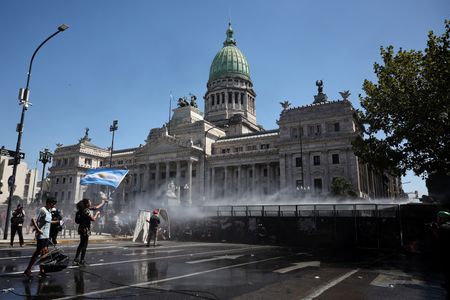
Labor unions, who have organized demonstrations and a countrywide work stoppage in protest, particularly oppose new restrictions on striking that mandate essential services continue basic operations during labor disputes.
This labor overhaul represents just one component of Milei’s legislative agenda. Parliament is simultaneously considering modifications to laws governing Andean glacier protection – a proposal the administration claims will open mining opportunities but environmental advocates fiercely resist.