LOS ANGELES — A potential takeover of Warner Bros. Discovery’s entertainment and streaming operations by Paramount is generating significant pushback from politicians and entertainment industry figures across the country.
Democratic lawmakers are expressing strong opposition to the proposed consolidation, while Hollywood actors are raising concerns about its impact on the creative community and consumers.
California Senator Adam Schiff is demanding extensive review of any potential agreement, stating the merger “must be subject to the highest levels of scrutiny, free from White House political influence, to determine its impact on American jobs, freedom of speech, and the future of one of our nation’s greatest exports.”
Actor Tessa Thompson shared her concerns about the deal’s implications for content creators during an Associated Press interview, saying: “It’s worrisome. I would lie if I said — as someone that’s making work and producing work — that it isn’t worrisome. But I think the North Star always has to be: Do you have a story to tell? Is it important to tell it?”
Mark Ruffalo took to social media platform X to voice his opposition, writing: “Please let’s circle up all the State AG’s and talk about how this is going to kill completion in the industry and drive down wages, and product quality for consumers. There are lots of agents in Hollywood who can tell you how past mergers and consolidations have hurt their clients and business. There is lots of talent that can tell you the same.”
Massachusetts Senator Elizabeth Warren characterized the potential merger as “an antitrust disaster threatening higher prices and fewer choices for American families,” adding that “a handful of Trump-aligned billionaires are trying to seize control of what you watch and charge you whatever price they want.”
Connecticut Senator Chris Murphy went further, posting on X: “Paramount should enjoy its growing news monopoly while they have it because when Democrats win back power we are going to break up these anti-democratic information conglomerates. All of them.”
California Attorney General Rob Bonta emphasized that regulatory approval is far from guaranteed, stating: “Paramount/Warner Bros is not a done deal. These two Hollywood titans have not cleared regulatory scrutiny — the California Department of Justice has an open investigation, and we intend to be vigorous in our review.”
New Jersey Senator Cory Booker promised congressional oversight, writing on X: “I intend to exercise Congress’ oversight authority and scrutinize this deal just as we did the Netflix transaction. And I will soon be unveiling legislation that would require DOJ & FTC to review all mergers under this Trump Admin and unwind any that are anticompetitive, bad for consumers, or put Americans out of work.”
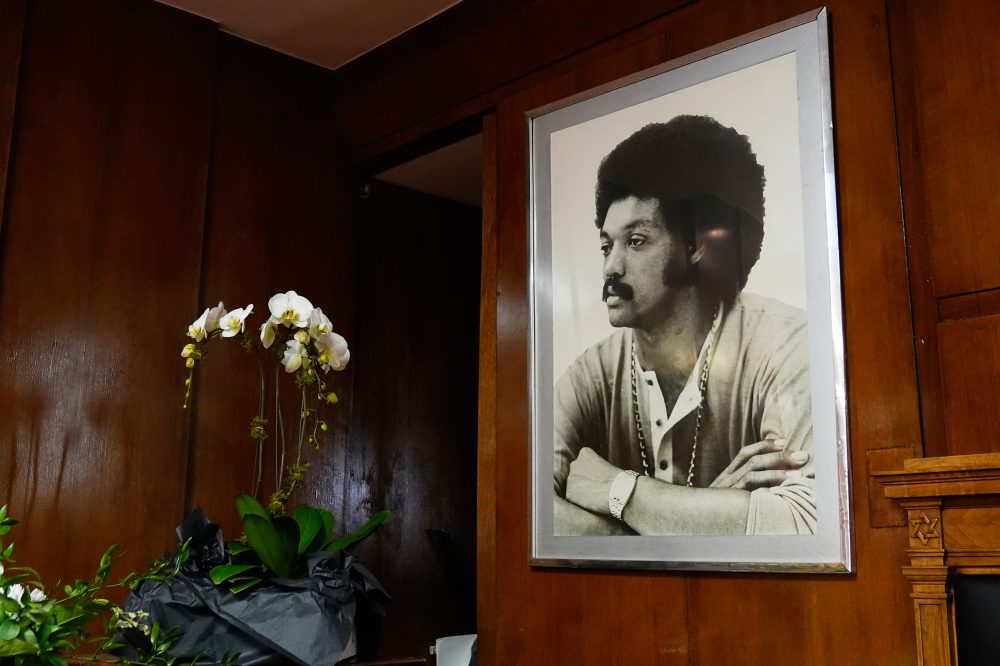
Commemorative ceremonies have started for Rev. Jesse Jackson Sr., the distinguished civil rights advocate who passed away on February 17 at the age of 84. The tribute events kicked off in Chicago and will continue with additional services planned for Washington, D.C., and South Carolina, his birthplace, celebrating his extensive contributions to the civil rights movement.
The series of memorial gatherings reflects the nationwide impact of Jackson’s decades-long dedication to advancing social justice and equality throughout America.
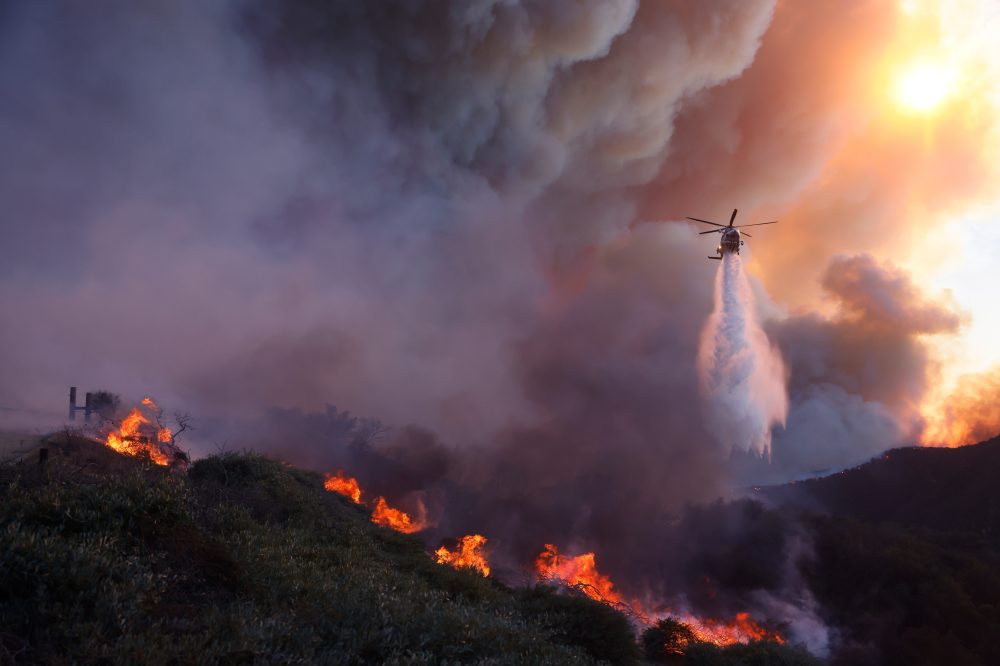
LOS ANGELES (AP) — New testimony reveals that a Los Angeles firefighter alerted his team about continuing underground heat from a brush fire several days before officials say it flared back to life, becoming the city’s most devastating wildfire on record.
Los Angeles Fire Department member Scott Pike testified under oath that he informed coworkers the soil remained dangerously hot on January 2nd while assisting with cleanup operations from a New Year’s Day brush fire in the hills surrounding the upscale Pacific Palisades area, according to the Los Angeles Times. Pike’s statements were part of sworn testimony in litigation brought by fire victims, with depositions released publicly this week after city lawyers initially sought to keep them sealed for 30 days.
“I could feel the heat coming off of it, and I didn’t even want to use my gloved hand because it was hot, so I just kicked it with my boot to kind of expose it. And there was like red hot, like coals,” Pike stated during his deposition, as shown in footage aired by KNBC-TV. “I even heard crackling.”
“I felt like I got kind of blown off a little bit,” Pike added. “I saw something, I said something.”
Fire victims’ lawyer Alexander Robertson revealed he secured a judicial order to question twelve firefighters responsible for extinguishing the January 1st fire. Among all those interviewed, Pike was the sole individual who reported that fire department personnel had received warnings about incomplete suppression before crews departed the area, Robertson explained.
The wildfire claimed 12 lives throughout the hillside communities spanning Pacific Palisades and Malibu, representing one of two major fires that erupted on January 7th, 2025. Combined, these blazes resulted in more than 30 fatalities and eliminated over 17,000 residential and commercial structures during their multi-day rampage across Los Angeles County.
Officials have determined the fire was a rekindling of the New Year’s Day incident, which federal prosecutors allege was ignited by a local resident. In October, they filed charges against Jonathan Rinderknecht for initiating the Palisades fire. Rinderknecht maintains his innocence, with his legal counsel arguing he’s being made a scapegoat for the Los Angeles Fire Department’s inability to completely extinguish the initial blaze.
Claims of fire department shortcomings form the foundation of the legal action filed by Palisades fire survivors against the city. The complaint also accuses the municipal water department of failing to supply sufficient water resources for firefighting operations.
A former interim LA fire chief has previously explained that such fires can persist within root systems and penetrate 15 to 20 feet underground, making detection through thermal imaging equipment impossible.
Robertson, representing the plaintiffs, accused the fire department and Mayor Karen Bass’s administration of conducting a “cover-up to conceal and suppress the truth about the Palisades Fire.”
“We will hold them accountable,” he declared.
Yusef Robb, a Bass advisor, described these revelations as disturbing. Bass has instructed the fire department to authorize an independent investigation into the New Year’s Day fire response.
“For more than a year, Mayor Bass has been extremely public about her demand for transparency and accountability to inform ongoing Fire Department reforms, and because those affected deserve nothing less,” Robb wrote in an email statement.
Los Angeles Fire Department Chief Jaime Moore, who assumed the position in October, expressed concern about the conflicting accounts in firefighters’ testimonies, the department stated via email.
“That concern underscores why the ongoing independent investigation is so important, and why the Chief is fully committed to providing complete cooperation on behalf of himself and the Department,” the email stated.
WASHINGTON – President Donald Trump announced Friday that he’s commanding all federal agencies to immediately stop using artificial intelligence technology from the company Anthropic, with a six-month transition period allowed for departments like Defense that currently depend on these AI systems.
In a Friday post on his Truth Social platform, Trump declared: “I am directing EVERY Federal Agency in the United States Government to IMMEDIATELY CEASE all use of Anthropic’s technology. We don’t need it, we don’t want it, and will not do business with them again!”
The president’s order follows an ongoing dispute between the Pentagon and Anthropic, one of the leading artificial intelligence companies, regarding concerns about potential military applications of AI technology in warfare situations. Representatives from Anthropic have not yet provided a response to requests for comment on Trump’s announcement.
WASHINGTON – Federal regulators on Friday gave their blessing to Charter Communications’ massive $34.5 billion purchase of Cox Communications, the Federal Communications Commission announced.
The merger, which was first revealed in March 2025, brings together two major cable and internet service providers as they face increasing competition from streaming services and wireless companies.
According to the FCC, Charter, which operates under the Spectrum brand, has pledged to pour billions into network improvements and faster internet speeds. The company has also made commitments to bring jobs back to the United States and will guarantee Cox employees receive Charter’s $20 per hour minimum starting pay.
Previous reporting by Reuters indicated this acquisition will establish the country’s biggest cable television and internet service company, with roughly 38 million customers – overtaking current industry leader Comcast.
Elon Musk’s space exploration venture SpaceX is reportedly preparing to go public with a potential company valuation that could exceed $1.75 trillion, according to a Bloomberg News report released Friday.
The aerospace manufacturer may submit confidential paperwork for its initial public offering as early as next month, sources familiar with the plans told Bloomberg. Such a move would position the company among the most valuable public stock debuts in market history.
However, the timeline remains fluid, and SpaceX may choose to postpone its public listing, the report noted.
Previous Reuters reporting suggested a June IPO timeline was probable, making a March confidential filing consistent with that schedule.
The Texas-based space company, headquartered in Brownsville, reportedly earned approximately $8 billion in profits from revenues ranging between $15 billion and $16 billion during the previous year, according to sources cited by Reuters last month.
SpaceX has not yet provided a response to requests for comment regarding the IPO speculation.
The company completed its purchase of Musk’s artificial intelligence venture xAI earlier this year through an all-stock transaction, creating a combined business entity worth $1.25 trillion, according to individuals with knowledge of the deal.
Market observers anticipate a robust year for initial public offerings, with SpaceX joining other high-value technology companies like OpenAI and Anthropic in considering potential stock market debuts that could break records in 2026.
Meanwhile, Musk plans to conduct a test flight of an upgraded Starship rocket variant in March, featuring hundreds of engineering improvements. The launch will end a several-month pause while the company addressed technical issues with the next-generation spacecraft.
Brazil’s federal government has walked back portions of a disputed import tax increase that took effect earlier this year, according to an announcement Friday from the Ministry of Development, Industry, Trade and Services.
The decision eliminates tariffs on products that had previously lost their tax exemptions under policies designed to encourage data center development in Brazil.
Earlier in February, the administration of President Luiz Inacio Lula da Silva implemented higher import duties on over 1,200 technology and capital goods items.
Brazil’s Independent Fiscal Institution, a budgetary oversight body connected to the Senate, had projected the tariff increases would bring in an additional 14 billion to 20 billion reais (equivalent to $2.7-3.9 billion) in government revenue during this fiscal year.
Under the latest changes, 105 products will once again be exempt from import taxes, including cooling compressors and other essential components for internal hardware temperature control, plus electrical substations that link data centers to main power grids.
Beyond data center-related equipment, the government has also restored tax exemptions for products in other sectors following appeals from various industries, such as textile manufacturing equipment, healthcare devices, and truck-mounted lifting equipment.
Brazil’s Finance Ministry had originally designed the tariff increases, arguing the policy adjustment was necessary because these imported goods contribute to an ongoing trade deficit in specific sectors and represent high levels of foreign product penetration — a pattern the ministry’s economic policy division characterized as “not merely cyclical, but structural.”
A government official, speaking without identification, explained that the tax increase was primarily motivated by budget considerations, since additional revenue from import duties — which can be implemented without legislative approval and becomes effective immediately — will be crucial for achieving the government’s fiscal objectives both this year and next.
The official noted that these revenue discussions are occurring as Brazil prepares its 2027 budget framework legislation, which must be presented to Congress by April.
Defense Secretary Pete Hegseth announced Friday that the military will halt all officer enrollment in educational programs at Ivy League universities, calling these elite institutions ‘anti-American.’
The prohibition takes effect with the 2026-27 school year, Hegseth announced in a social media video on X.
This decision represents part of the Trump administration’s broader campaign against universities over various issues including diversity initiatives, transgender policies, and pro-Palestinian demonstrations related to Israel’s military actions in Gaza.
‘For decades, the Ivy League and similar institutions have gorged themselves on a trust fund of American taxpayer dollars, only to become factories of anti-American resentment and military disdain,’ Hegseth stated in his X video.
He continued, ‘I’m ordering the complete and immediate cancellation of all Department of War attendance at institutions like Princeton, Columbia, MIT, Brown, Yale and many others starting next academic year.’
This announcement follows Hegseth’s earlier decision this month to terminate professional military education programs, fellowships, and certificate offerings with Harvard University.
Soccer superstar Lionel Messi found himself on the ground Thursday night after a security officer accidentally brought him down while tackling a field invader during Inter Miami’s 2-1 victory against Ecuadorian club Independiente del Valle in Puerto Rico.
The incident occurred near the final whistle when a shirtless supporter sprinted onto the pitch and managed to embrace the two-time MLS Most Valuable Player at midfield. As security moved in to remove the intruder, the guard inadvertently pulled Messi down along with the fan during the takedown.
Before security could respond, two additional fans had already made their way to the center of the field – one wearing a Barcelona uniform and another in Miami colors. One managed to snap a photo with the soccer legend while Messi autographed the other fan’s jersey.
The 38-year-old Argentine star, who entered the match during halftime and scored the game-winning penalty kick in the 70th minute, quickly returned to his feet and showed no signs of injury from the mishap.
Thursday’s match at Estadio Juan Ramon Loubriel in Bayamon was initially set for February 13 as Miami’s final preseason contest, but organizers had to reschedule after Messi sustained a hamstring injury.
The social media platform TikTok has returned to Albania following the expiration of a year-long prohibition this month, highlighting the difficulties governments face when attempting to block online platforms and raising concerns about digital freedom and child safety.
Albanian authorities implemented the restriction last year after a tragic incident involving a 14-year-old student who was fatally stabbed by a classmate, with local news outlets reporting the violence stemmed from an online dispute. TikTok disputed that the conflict began on their platform at the time.
Officials now say the Chinese-owned video-sharing service has implemented adequate safety protocols to warrant lifting the ban. Prime Minister Edi Rama’s administration told Reuters that TikTok addressed their concerns and that the prohibition effectively pressured the company to make changes.
“With its correct behavior toward our concerns, TikTok confirmed to us the expression that ‘the devil is not as black as it seems’,” government officials stated, noting the platform has established “important filters for security and language.”
TikTok representatives chose not to provide comment on the matter. Albanian authorities emphasized there was “no connection” between the platform’s suspension and electoral interference, insisting child protection was the “only goal.”
The timing of the original ban raised eyebrows, occurring just weeks before crucial parliamentary elections in the politically turbulent nation. Albania has experienced significant unrest over corruption allegations, with Rama’s party holding power for an unprecedented fourth consecutive term.
Opposition voices have criticized the move as an attempt to suppress political discourse. “The shutdown of TikTok was certainly a move by the Rama government to manipulate public opinion,” stated Edona Haklaj from the Shqiperia Behet party, which has maintained daily demonstrations outside the Prime Minister’s office since December, though she provided no evidence supporting her claim.
Recent months have seen violent clashes between law enforcement and the main opposition Democratic Party, who are demanding governmental resignation after Deputy Prime Minister Belinda Balluku faced indictment for manipulating public contracts. Rama dismissed Balluku on Thursday, but opposition groups plan to continue protests this Saturday.
Media freedom advocates worry the TikTok restriction could establish a troubling pattern for future censorship during periods of political tension.
“This will create a dangerous precedent,” warned Isa Myzyraj, who leads the Association of Albanian Journalists. “Any government could exploit this precedent to block other social networks or even impose a total internet shutdown.”
Technology expert Brenton Benja, who founded Geek Room Albania and monitored the ban’s effectiveness, noted the restriction had minimal real-world impact since users circumvented controls through virtual private networks (VPNs). This demonstrates the broader challenge of enforcing social media prohibitions against increasingly tech-savvy populations.
Government officials acknowledged in their statement that completely blocking the platform proved “impossible” due to technical obstacles.
“The 1.7 million Albanians we knew were using TikTok at the time it was closed continued to use it throughout the year by turning to alternative methods such as VPNs,” Benja explained.
Minnesota state lawmakers are advancing legislation that would restore whole milk and 2% milk options to school cafeterias across the state. The proposed measure is currently making its way through the Minnesota legislature.
The legislation matches federal regulations that permit schools to offer students expanded milk variety. State Senator Torrey Westrom, a Republican from Alexandria, describes the proposal as beneficial for both students and the state’s dairy industry.
“Making it easier for students that want an alternative,” Westrom said, highlighting how the measure would provide more options in school lunchrooms while simultaneously supporting Minnesota’s agricultural community.
Agricultural students across Ohio marked National FFA Week by engaging in community service projects designed to showcase their organization’s values and mission. State FFA Secretary Abbey Garland explained that the annual celebration provided young people involved in agriculture nationwide with chances to contribute meaningfully to their local areas.
According to Garland, Ohio’s participation included various service initiatives, with the Veterans Remembrance Program standing out as one example where FFA participants paid tribute to military veterans. The week-long celebration allowed agricultural youth to demonstrate their commitment to community involvement while promoting awareness of their organization’s goals and impact.
Republican legislators in Michigan are advocating for standardized wetland classification criteria following worries that conflicting interpretations could jeopardize farmers’ eligibility for federal agricultural programs and put their operations at risk.
During a recent agricultural committee session in the state House, Representative Gregory Alexander drew from his personal background to illustrate the problem with varying wetland assessments. “As a (former) drain commissioner, and I’ve put in literally hundreds of millions of dollars worth of erosion,” Alexander told committee members during the hearing.
The lawmakers’ concerns center on how inconsistent wetland determinations by different agencies could prevent agricultural producers from accessing vital USDA programs and resources, potentially threatening the long-term sustainability of farming operations across the state.
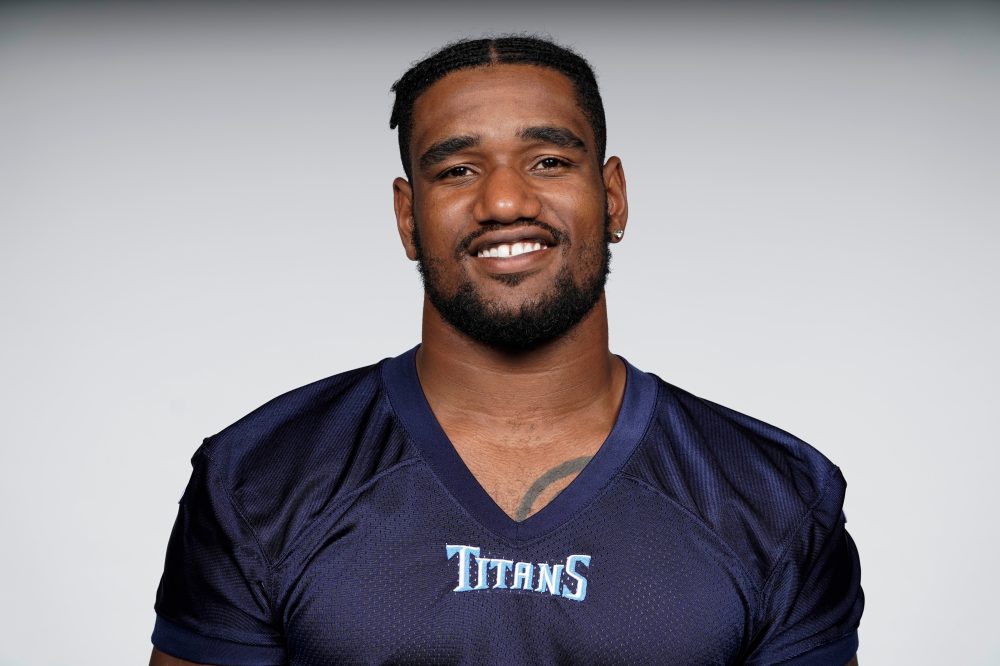
FLOWERY BRANCH, Ga. — Atlanta Falcons officials terminated assistant defensive line coach LaTroy Lewis on Friday following the emergence of sexual assault allegations circulating on social media platforms.
The firing occurred just hours after team management announced they were investigating the accusations that recently came to light online.
“We are aware of allegations regarding LaTroy Lewis,” team officials stated Friday prior to Lewis’s termination. “We are in the process of gathering information and will have no further comment at this time.”
Attempts to reach Lewis for comment through social media messaging were made.
The accusations trace back to Lewis’s tenure at the University of Michigan, where he initially worked as a graduate assistant during the 2022 season before advancing to assistant defensive line coach for two subsequent years.
Following his Michigan stint, Lewis served as Toledo’s defensive line coach for the 2025 season before Atlanta hired him just weeks ago.
Milford Police officials, whom social media reports indicated responded to an emergency call involving Lewis, stated that police documentation was not immediately accessible. Requests have been submitted to Ann Arbor Police for incident reports and protective orders connected to the accusations published online by podcast host Justin Spiro.
“The Ann Arbor Police Department was just recently made aware of allegations regarding a sexual assault reported to have occurred on December 5, 2024,” department spokesman Chris Page stated. “The AAPD Detective Bureau launched an immediate investigation into the incident. This investigation remains active and ongoing.”
Page explained that department protocols prohibit releasing names of individuals unless formal criminal charges are filed.
Lewis previously worked alongside former Michigan head coaches Sherrone Moore and Jim Harbaugh. Moore faced termination in December following an inappropriate relationship with a staff member and subsequently received charges for three criminal offenses, including felony home invasion and stalking.
“As we have noted, the university launched an investigation of the circumstances and conduct leading to Sherrone Moore’s firing, as well as a broader culture review of the athletic department,” Michigan spokesman Paul Corliss stated Friday. “We continue to urge anyone with relevant information to reach out to the law firm conducting the investigation.
“The work is ongoing, and we will be able to share more when it is completed.”
Lewis, age 32 and originally from Akron, Ohio, distinguished himself as a linebacker at Tennessee and appeared in two NFL contests with the Houston Texans during the 2017 season.
MILAN (AP) — Against a backdrop of classical sculptures, designer Demna unveiled his debut collection for Gucci during Milan Fashion Week on Friday, launching with form-fitting white mini-dresses and sleek muscle tees that highlighted the human physique.
The designer described these pieces as “palette cleansers,” while models strutted with confident, casual attitudes. The body-hugging designs evolved into fitted pants and tops for men, plus leggings and form-fitting long dresses for women — clearly drawing inspiration from Tom Ford’s sensually-charged era at Gucci.
Several homages appeared to former Gucci designer Alessandro Michele, now Valentino’s creative director who watched from the front row and previously worked with Demna during his Balenciaga tenure. These acknowledgments featured a flower-printed dress, a day outfit with a bow-tie collar, and fuzzy slip-on footwear.
Demna fully embraced archetypal designs, and his interpretation of timeless sensuality emerged through an off-balance white dress that flowed and opened with a dramatic side split. Traditional Gucci staples like overcoats and formal suits were notably absent. The line also featured minimal Gucci logo placement.
Additional character types referenced included the “sciura” — affluent Milanese society women wearing elegant dresses with eco-fur wraps — contrasted against the “maranza,” working-class suburban men recognized by their distinctive haircuts (long on top, buzzed sides), baggy pants, and relaxed posture — all represented on Gucci’s catwalk.
Kate Moss concluded the presentation wearing a sparkling evening dress with a dramatic back cutout that revealed designer logo underwear. Moss walked seductively along the extended, dimly-lit runway, savoring the experience.
Demna named his inaugural Gucci runway presentation “Primavera,” the Italian word for “spring,” indicating both a fresh beginning while drawing from Sandro Botticelli’s famous artwork displayed in Florence’s Uffizi gallery, which inspired Gucci’s floral designs — most prominently featured in the Gucci evening wear.
The designer immediately rejected any academic interpretation of his creative message and severed connections between Gucci and haute couture.
In his designer notes, Demna stated the collection “is built around a sense of pragmatism.” He expressed wanting his Gucci “to become lighter, softer, more refined, more elaborate, more emotional, even senseless sometimes. I don’t want Gucci to be intellectual, but I want Gucci to be a feeling.”
This translates to: Gucci targets mainstream consumers — at least those with purchasing power — rather than the exclusive couture market. Accordingly, Gucci announced immediate availability of select collection pieces through their see-now, buy-now approach.
“My vision of Gucci is about the coexistence of heritage and fashion … Gucci only exists when both are in sync,” Demna explained. “This first Gucci show introduces a universe of people, archetypes, consumers and dress codes that will shape my design language moving forward.”
Notable front-row attendees included Paris Hilton, Nicky Hilton, Donatella Versace and Demi Moore — who appeared in a tailored leather outfit while carrying her dog Pilaf.
Iowa Senator Chuck Grassley is keeping close watch on rising agricultural bankruptcy numbers throughout the United States, expressing concern about the psychological impact on farming families. The Republican lawmaker addressed the issue during his regular weekly agriculture media briefing.
“I think the number of bankruptcies are up over the long-term, but still way short of what we had in previous farm crisis,” Grassley stated, while emphasizing that additional mental health support services are essential for agricultural communities facing financial hardship.
Delaware transportation officials have shut down all northbound traffic on US Route 13 at South Heald Street following a vehicle collision in the area.
The closure is currently in effect as emergency responders and cleanup crews work at the crash site. DelDOT has not yet provided details about the severity of the accident or an estimated timeline for reopening the roadway.
Drivers traveling north on this busy corridor should plan for significant delays and consider using alternative routes until the situation is resolved.
This is a developing story and TV Delmarva will provide updates as more information becomes available from state transportation authorities.
The space agency has announced major changes to its Artemis lunar exploration initiative, altering the mission timeline and approach for returning astronauts to the moon’s surface.
Under the restructured plan, NASA will delay the crewed lunar landing that was originally scheduled for the Artemis III mission. Instead, astronauts are now expected to touch down on the moon during the Artemis IV mission.
The revised strategy bears similarities to the Apollo program structure that successfully landed humans on the moon during the 1960s. This shift represents a significant adjustment to NASA’s current lunar exploration roadmap.
The changes come as NASA teams have encountered technical challenges, including helium flow problems that required removing the Artemis II rocket from its launch position at Kennedy Space Center in Cape Canaveral, Florida. The rollback process took more than ten hours to complete on February 25th.
The mobile launcher, which houses both the Space Launch System rocket and Orion spacecraft, was transported back to the Vehicle Assembly Building while engineers address the identified issues.
CARACAS, Venezuela — A Venezuelan political figure who was imprisoned for more than a year after disputing his country’s 2024 presidential election outcomes is now pushing for cooperation between opposing political forces following the removal of former President Nicolás Maduro from power.
Enrique Márquez made his appeal on Friday, encouraging both opposition groups and the ruling party to set aside their differences and collaborate on rebuilding Venezuela. His message to “lock up egos in a drawer” came after his unexpected presence at U.S. President Donald Trump’s State of the Union speech this week. Márquez gained his freedom shortly after American military forces apprehended Maduro in Venezuela’s capital city and transported him to New York to face drug trafficking accusations.
“We have been killing each other in a relentless political war,” Márquez stated during a press conference that resembled a political campaign launch. “If we don’t break the rearview mirror and look ahead, we won’t find our way.”
Márquez competed in the 2024 presidential race, where Venezuela’s National Electoral Council, which supports the ruling party, announced Maduro as the victor despite substantial reliable evidence showing he had been defeated by opposition contender Edmundo González. Márquez disputed the council’s announcement and petitioned the nation’s supreme court to invalidate the presented results.
The former National Electoral Council member was arrested in January 2025. During Friday’s press briefing, he revealed that his initial week in custody involved being handcuffed continuously while facing non-stop questioning. He remained cut off from outside contact for 10 months, with three of those months spent without access to sunlight.
Officials charged him with terrorism, inciting hatred, and treason. He explained that he never went to trial for these fabricated charges, ultimately receiving amnesty when acting President Delcy Rodríguez signed legislation this month permitting such pardons.
Rodríguez assumed the interim presidency after Maduro’s arrest on January 3rd. Márquez praised her decision to advocate for amnesty legislation and restructure Venezuela’s petroleum sector since taking office. He also confirmed he has not communicated with opposition leader María Corina Machado since his release from a detention facility where human rights organizations have extensively documented torture and other mistreatment of prisoners.
When asked about potential future presidential ambitions, he avoided giving direct answers but indicated he doesn’t anticipate elections occurring in the near future.
“My intention is to become a unifying force,” he explained regarding his potential role as a mediator between opposition and ruling party factions. “The role I want to play, and hope to be able to play, is that of a builder, helping to build the future.”
For the first time in Olympic history, the United States claimed both hockey gold medals at the Winter Olympics, with each team defeating Canada 2-1 in overtime while maintaining perfect tournament records.
The historic achievement quickly became entangled in political controversy:
— Women’s Hockey: The female athletes largely avoided political discussions. Most players said they didn’t even notice Vice President JD Vance and his security detail attending two early tournament games, where they sat across from the American bench. After Megan Keller scored the championship-winning goal, the team celebrated their third Olympic gold by draping themselves in American flags.
“We’re America’s team in the best way and through positivity and trying to inspire through sport,” captain Hilary Knight said. “And whatever political climate is going on, we’re just trying to have a positive impact through our play, and obviously show up and represent our country to the best of our ability, because we are proud Americans and there’s great unity that we can find through sport together.”
— Men’s Hockey: The celebration after Jack Hughes scored the winning goal was electric, with Hughes flashing a gap-toothed smile while teammates honored late player Johnny Gaudreau, who passed away in August 2024. FBI Director Kash Patel joined the team in their locker room, and they received a congratulatory phone call from President Donald Trump.
— Men’s Hockey: Trump extended an invitation for the team to attend his State of the Union address two days later, then mentioned he would need to invite the women’s team as well. He joked that failing to invite the women could lead to his impeachment, a remark that drew laughter from players but was widely viewed as inappropriate. Several players joined Trump at the White House on Tuesday and received recognition during his congressional speech.
— Women’s Hockey: The women’s team never received a presidential phone call and only learned about the White House invitation hours after the men’s championship game concluded. They respectfully declined, citing previously arranged travel plans. While Trump indicated the women would visit the White House eventually, no specific date has been set, and the team’s earliest availability would be after the PWHL season concludes in late May. Instead, most team members plan to attend a “She Got Game” event hosted by rapper Flavor Flav in Las Vegas this July.
— Women’s Hockey: Flying commercially on USA Hockey’s budget, the women faced travel delays when their planned route through New York was changed to Atlanta due to weather conditions. They were offered the opportunity to attend the State of the Union but chose to return home instead. Having spent an additional week in Milan due to their earlier tournament start, they were ready to resume the PWHL season, which restarted Thursday.
— Men’s Hockey: The male players traveled on a charter flight funded by the NHL and NHL Players’ Association, flying directly to Miami. The NHL season resumed Wednesday.
Throughout this week, several men’s team members have faced questions about their reaction to Trump’s controversial joke. Many explained they were caught up in the celebration’s excitement. Boston Bruins goaltender Jeremy Swayman acknowledged they “should have reacted differently” to Trump’s comments.
“I just thought the joke was distasteful and unfortunate,” Knight said Wednesday
Despite the political complications, both teams developed strong bonds in the Olympic village and actively supported each other’s championship pursuits, something they’ve highlighted this week.
“We watched other events together,” said Florida Panthers star Matthew Tkachuk. “We went and supported them. We loved the women’s team. The women’s team loved us and we’re so proud that we had a clean sweep of gold medals and just so much respect for them and the other athletes.”
As the controversy seemed to subside, a manipulated TikTok video appeared on the White House social media account showing U.S. player Brady Tkachuk seemingly making derogatory comments about Canadians. Brady Tkachuk, Matthew’s brother who plays for Ottawa in Canada’s capital, objected to the post, which included a disclaimer about AI-generated content.
“I’m not in control of any of those accounts,” he said. “I know that those words would never come out of my mouth.”
Brady Tkachuk also denied being the voice heard yelling “close the northern border” during Team USA’s call with Trump. The identity of that voice remains unknown.
— Men’s Hockey: Players have returned to NHL schedules and playoff competitions, often facing teammates they competed against in Milan. While Matthew Tkachuk brought his gold medal to practice, he kept a low profile to avoid offending his Canadian teammates.
— Women’s Hockey: The PWHL resumed play after a month-long Olympic hiatus, while seven U.S. college players prepare for conference playoffs. The PWHL is experiencing significant growth following the Olympics, marking the biggest boost since the league’s establishment three years ago.
League officials reported their largest in-season ticket sales days on February 24 and 25. February merchandise sales increased by 101% compared to the season’s first two months. The league’s 61 Olympic participants gained 760,000 additional social media followers collectively, and YouTube viewership jumped 200%.
A federal court deadline expired Friday for the U.S. government to bring back a 19-year-old college student who was wrongfully deported to Honduras, while her legal team accused federal authorities of delaying tactics and attempting to pressure her onto a flight that might lead to her detention.
Attorney Todd Pomerleau stated his legal team stands ready to pursue the matter through the appeals process and pledged that Any Lucia Lopez Belloza “is not coming back in handcuffs.”
The Babson College student, who maintains a clean criminal record and has been attending classes online from Honduras, indicated she plans to stay there temporarily while her lawyers continue advocating for her return.
“No one should have to feel this powerless. All I’m asking is for honesty and fairness,” she told reporters during a Friday Zoom call. “I’m asking to be treated like a human with rights.”
Lopez Belloza was apprehended at Logan International Airport in Boston last November as she attempted to travel to Texas for a Thanksgiving family visit. Within 48 hours, she found herself deported to Honduras – a nation she departed when she was just 7 years old – even though a court injunction prohibited her removal while legal proceedings were ongoing. Federal prosecutors subsequently admitted in court that immigration officials had wrongfully deported her.
The Department of Homeland Security previously maintained that Lopez Belloza received proper legal procedures and had been subject to a final removal directive issued years ago by an immigration judge. Immigration authorities did not respond immediately Friday to requests for comment regarding the missed deadline and proposed return arrangements.
Lopez Belloza has stated she was unaware of any removal order against her and was only 11 when the immigration decision was made. Pomerleau noted that his initial review of her immigration files showed no active removal order in the system.
January court documents revealed that an Immigration and Customs Enforcement official failed to properly engage an alert mechanism that should have highlighted the judge’s order preventing her removal. While the administration expressed regret for the mistake, they maintained it did not nullify the previous removal directive.
Earlier this month, U.S. District Judge Richard Stearns directed the government to arrange her return within two weeks, stating that courts – not executive agencies – must decide her rights and whether her removal was legal. The Friday midnight deadline has now passed.
Government lawyers have contended that the federal court in Boston does not have authority to reverse her removal order.
Both Lopez Belloza and her lawyer reported that federal officials attempted to organize a government flight to the United States within the last day but refused to clarify whether she would be freed upon landing. Pomerleau indicated court documents suggest the government intends to hold her in Texas and might attempt another deportation within days.
“They’re interpreting the judge’s facilitation order to the extreme,” Pomerleau explained. “The judge’s order says to facilitate her return to the United States to maintain the status quo. And in their view, the status quo is that she was in handcuffs in a jail in Texas. So they’re going to bring her back, put her in handcuffs and leave her in that same jail in Texas.”
President Donald Trump disclosed on Friday that American officials are engaged in high-level diplomatic conversations with Cuba, floating the idea of what he termed a “friendly takeover” of the island nation, though he provided no specifics about his meaning.
While departing the White House for a Texas visit, Trump informed reporters that Secretary of State Marco Rubio has been conducting discussions with Cuban officials “at a very high level.”
“The Cuban government is talking with us,” the president said. “They have no money. They have no anything right now. But they’re talking to us, and maybe we’ll have a friendly takeover of Cuba.”
He added: “We could very well end up having a friendly takeover of Cuba.”
Trump offered no clarification on his statements but appeared to suggest that circumstances involving Cuba, the communist-controlled nation that has remained one of America’s most hostile adversaries for generations, had reached a pivotal moment. White House officials did not provide additional details when asked Friday.
The president also characterized Cuba as “a failed nation” and stated “they want our help.”
These statements followed by two days Cuba’s report that a speedboat registered in Florida and carrying 10 armed Cubans from the United States fired upon soldiers along the island’s northern coastline. Cuban authorities said four of the armed individuals died and six sustained injuries from return fire, while one Cuban official was also wounded.
Cuba has occupied Trump’s attention since at least early January, following U.S. military operations that removed one of Havana’s key allies, Venezuela’s socialist leader Nicolás Maduro. In the wake of that action, Trump indicated that military intervention in Cuba might be unnecessary since the island’s economy was sufficiently weakened — especially without Venezuelan oil deliveries that ceased after Maduro’s detention — to potentially collapse independently.
“We’ve had a lot of years of dealing with Cuba. I’ve been hearing about Cuba since I’m a little boy. But they’re in big trouble,” he said Friday.
Referencing the Cuban exile population residing in America, Trump suggested something might develop that “I think (is) very positive for the people that were expelled, or worse, from Cuba and live here.” He offered no further explanation.
America has enforced a comprehensive trade embargo against Cuba since 1962, one year following the unsuccessful CIA-backed Bay of Pigs invasion. Despite this, Trump revealed earlier this month that discussions with Cuban representatives were in progress.
Cuban officials acknowledged this week that they were communicating with American authorities after the boat shooting incident. Rubio has stated that the Department of Homeland Security and Coast Guard are examining what occurred.
A late January executive order signed by Trump committed to imposing tariffs on nations supplying oil to Cuba, potentially worsening conditions for a country already experiencing a severe energy shortage, although U.S. officials have since noted that Venezuelan oil can be sold to Cuban entities under certain circumstances.
Carlos Fernández de Cossío, Cuba’s deputy foreign minister, wrote on social media Friday that “the US maintains its fuel embargo against Cuba in full force, and its impact as a form of collective punishment is unwavering.”
“Nothing announced in recent days changes this reality,” he posted on X. “The possibility of conditional sales to the private sector already existed and does not alleviate the impact on the Cuban population.”
Simultaneously, more than 40 American civil society groups delivered a letter to Congress Friday urging lawmakers to “press the Trump administration to reverse its aggressive policy towards Cuba” and warning that attempts to halt oil deliveries to the Caribbean nation would trigger a humanitarian disaster.
Organizations signing the letter included the Alliance of Baptists, ActionAid USA and the Presbyterian Church.
“Policies that deliberately impose hunger and mass hardship on millions of civilians constitute a form of collective punishment, and as such are a grave violation of international humanitarian law,” the letter states.
FORT MYERS, Fla. — Wildlife rescue teams successfully pulled an injured mother manatee and her baby from a Florida waterway this week, transporting both animals to SeaWorld Orlando for medical treatment, according to state officials.
Using drone technology to guide their efforts, rescuers located the pair in the Orange River near Fort Myers on Wednesday. The unmanned aircraft provided overhead surveillance while teams maneuvered their vessel toward the marine mammals and captured the entire operation on video.
Footage released by the Lee County Sheriff’s Office reveals Florida Fish and Wildlife Conservation Commission personnel initially encircling the gentle giants with what appears to be netting to contain them. The animals, commonly known as sea cows, can reach lengths of 10 feet and weigh as much as 1,200 pounds.
The dramatic rescue required approximately six people working together to lift the struggling creatures aboard their vessel, carefully maneuvering both the adult and young manatee onto the boat’s rear deck. Later scenes show at least one of the animals being transferred using a specialized sling at a dock.
The county sheriff’s marine division and technical support teams provided assistance during the operation. Authorities have not released information regarding the nature of the mother’s injuries or provided updates on either animal’s medical status.
Kelly Richmond, Research Communications Director for the state wildlife agency, confirmed the manatees were delivered to SeaWorld Orlando for care.
This rescue adds to a growing list of manatee emergencies in Lee County, where six of these marine mammals have required intervention since February 19th due to cold weather stress, boat strike injuries, and poor nutrition. Across Florida, rescue teams have aided at least 24 additional manatees this year, while the Manatee Rescue and Rehabilitation Partnership has successfully returned more than 20 recovered animals to the wild.
In a separate incident earlier this month, rescue crews retrieved a manatee from a storm drainage system in Melbourne Beach, where the animal had apparently sought refuge in warmer water.
Delaware’s trout farming sector faced economic headwinds as sales revenues fell by 6 percent when compared to the previous year, according to newly released federal agriculture statistics.
The latest data from the U.S. Department of Agriculture’s National Agricultural Statistics Service shows the downturn in trout production value, while also documenting distribution networks and industry losses across the sector.
The report provides insight into the challenges facing aquaculture operations in the region, as trout farmers navigate market conditions that have impacted their bottom line.
The federal statistics track various aspects of the trout industry, including how fish are distributed to markets and the extent of losses experienced by producers during the reporting period.
Delaware’s agricultural sector is feeling the impact of declining egg production, according to new data from the U.S. Department of Agriculture’s National Agricultural Statistics Service.
The latest report shows that shell egg production has fallen by 8 percent compared to the same timeframe in the previous year. This decrease represents a significant shift in one of the region’s important agricultural commodities.
The decline in egg production could have implications for both local farmers and consumers throughout the Delmarva Peninsula, where poultry operations represent a major component of the agricultural economy.
The USDA’s findings highlight ongoing challenges facing the egg industry as producers navigate market conditions and operational demands.
Delaware’s agricultural community is facing economic headwinds as commodity prices dropped significantly last month, according to new federal data released by the U.S. Department of Agriculture.
The Prices Received Index for agricultural products declined by 3.9 percent during January, marking a notable decrease that impacts farming operations throughout the Delmarva Peninsula region.
This price drop affects the income that local farmers receive for their crops and livestock, potentially influencing planting decisions and farm budgets for the coming growing season.
The index, which tracks what farmers earn for their agricultural products, serves as a key indicator of the financial health of the farming sector across Delaware and the broader Mid-Atlantic region.
Local agricultural producers may need to adjust their operations and marketing strategies in response to these changing market conditions as they prepare for spring planting season.
The United States Department of Agriculture has published its yearly analysis of cold storage facility inventories nationwide for 2022, offering a comprehensive look at how food products were stored and managed across the country.
The annual report tracks inventory levels at refrigerated warehouses and storage facilities, providing valuable data for understanding food supply chains and storage patterns throughout the year.
This information serves as an important resource for agricultural producers, food distributors, and industry analysts who monitor trends in food storage and distribution across the United States.
The USDA compiles this data regularly to help track the movement and storage of perishable goods in the nation’s cold storage network, which plays a crucial role in maintaining food supply stability.
Delaware farmers and agricultural producers throughout the region saw their peanut earnings decline during the week that concluded on February 21st, according to new agricultural data.
Payment rates for farmer stock peanuts dropped to an average of 15.6 cents per pound, representing a decrease of 4.3 cents from earlier pricing levels. The weekly pricing report tracks compensation received by agricultural producers for their peanut harvests across all categories of farmer stock varieties.
This pricing decline affects local farming operations throughout Delaware and the broader Mid-Atlantic agricultural region, where peanut cultivation represents an important component of the diverse crop portfolio for many producers.
ANNAPOLIS, Md. — Maryland legislators heard testimony February 19th supporting a proposal to enhance protections for property owners impacted by eminent domain actions, particularly as the state considers a major transmission line project that could affect numerous communities.
Senator Chris West, a Republican from Baltimore County, introduced the legislation following concerns about a planned 67-mile electrical transmission project. The proposed line would stretch from Pennsylvania’s Peach Bottom nuclear facility through northern Maryland to Point of Rocks, ultimately serving data centers in Northern Virginia.
The proposed legislation includes two significant reforms to Maryland’s current eminent domain statutes for overhead power lines. First, it would require courts to cover property owners’ legal expenses and attorney fees in certain condemnation proceedings. Second, it would expand compensation eligibility to nearby homeowners whose property values decline due to transmission line construction, even when their land isn’t directly seized.
“This giant transmission line is in effect a long extension cord,” West explained to the Senate Judicial Proceedings Committee on February 19th. “It carries every electron that goes in at the one end up near Peach Bottom up the Pennsylvania line, travels 67 miles through the extension cord and comes out in Point of Rocks.”
The Maryland Public Service Commission is currently reviewing the transmission project, with a decision expected before the next legislative session concludes. Approval would grant New Jersey-based developer PSEG the authority to use eminent domain for property acquisition along the proposed route.
Agricultural landowners have been particularly vocal in their opposition to the transmission project over the past two years. Large crowds attended public hearings in Baltimore, Carroll, and Frederick counties, with farmers expressing strong concerns about the proposal’s impact on their operations.
These community meetings influenced West’s decision to pursue eminent domain law modifications, he noted. Under existing statutes, property owners may receive fair market value for seized land, but they face significant financial challenges when disputing low government appraisals.
“If they go to court to try to establish the correct just compensation — in this hypo $100,000 — they will have to pay legal fees,” West explained, noting that attorney and expert witness expenses can reach tens of thousands of dollars. “They will end up at the end of the day with no more than about $75,000.”
The proposed legislation would require courts to award reasonable attorney fees and costs to property owners when judicial proceedings or jury verdicts determine that actual property values exceed government appraisals. This provision would apply exclusively to condemnation cases involving overhead transmission lines.
“In short, if the owner is forced to go to court to obtain fair value, they will not be financially penalized for doing so,” West stated.
The bill’s second major component addresses compensation for adjacent property owners. Homeowners living within 300 feet of a transmission line could seek damages if they can prove the project reduced their property’s fair market value.
“But what about the immediate neighbors?” West questioned. “The person who owns the home next door, under our current eminent domain law gets nothing, even though the value of his or her house has been severely diminished because it’s literally in the shadow of the steel tower.”
West emphasized that the legislation would cover measurable economic losses rather than speculative or emotional damages. “This is not speculative or emotional harm,” he said. “It is measurable economic damage and it is only fair.”
Harris Eisenstein, an attorney with 15 years of experience representing Maryland residents and businesses in eminent domain cases, testified in favor of the proposal. He argued that current law fails to consistently provide “true just compensation.”
“Although Maryland condemners must pay just compensation, state law, as it presently exists, does not allow condemnees to fully recover a truly just amount for the life-changing loss of property rights,” Eisenstein testified.
He noted that initial government offers frequently undervalue properties, forcing owners to hire legal representation and expert witnesses to challenge them. “The result is that even if compensation increases, the net recovery is reduced by whatever money they have to spend on attorneys and experts,” Eisenstein said. “This is unjust.”
Eisenstein suggested the legislation would create more balanced proceedings, especially as Maryland faces multiple transmission projects driven by regional power demands.
During committee questioning, Senator Shelly Hettleman inquired about the 300-foot threshold for neighboring property compensation and whether that distance might be extended.
West explained that 300 feet — approximately the length of a football field — was designed to include properties most likely to experience substantial value decreases from large transmission towers. “If the committee wants to increase the distance to 400 or 500 feet, you’re not going to get any objection from me,” he responded.
No witnesses spoke against the proposal during the hearing.
West mentioned two potential amendments, including one requested by the Maryland Department of Transportation to specify that the bill covers only overhead electrical transmission lines, plus another technical modification to clarify references between assessed and appraised values.
West stressed that the legislation wouldn’t prevent infrastructure development from proceeding. “It simply ensures that when the government exercises one of the most powerful authorities available, the power to take or significantly impact private property, Maryland residents are fairly compensated for real economic losses,” he concluded.
Despite challenging profit margins, corn farmers are being encouraged to continue pursuing maximum yields through strategic input choices. Heather Vosburgh, who serves as Strategic Account Manager for Nitrogen Stabilizers at Corteva Agriscience, emphasizes the importance of selecting appropriate crop inputs for optimal results.
“A proven product with a track record of yield and success behind it, and really it’s a lot about risk management. So going into” the growing season, farmers need to focus on products with demonstrated performance, Vosburgh explained.
The fertilizer management expert stresses that maintaining nitrogen protection throughout the entire growing season remains essential for achieving strong corn production, even when economic pressures make input decisions more difficult.
FELTON, Del. – Delaware transportation officials are set to install a new four-way stop at a Kent County intersection next week.
The Delaware Department of Transportation will put all-way stop control in place at the intersection where Canterbury Road (State Route 15) meets Andrews Lake Road on Tuesday, March 10th, assuming weather conditions allow.
Drivers traveling through the area should plan for traffic backups and lane restrictions as work crews install new signage and road markings. Flaggers will be directing traffic during the construction process.
Additional details are available on DelDOT’s official website at www.deldot.gov.
Officials from Guinea released 16 detained security personnel from Sierra Leone on Friday following diplomatic talks aimed at reducing tensions in an ongoing territorial disagreement between the West African neighbors.
The detained individuals were freed after Sierra Leone’s Foreign Minister Timothy Musa Kabba held discussions with Guinea’s Prime Minister Amadou Oury Bah in Conakry, according to two officials who requested anonymity since neither government has made official public announcements yet.
Representatives from Sierra Leone’s information ministry and Guinea’s government have not responded to requests for statements regarding the situation.
Earlier this week, Sierra Leone officials alleged that Guinea had detained multiple members of their security forces. According to Sierra Leone’s information ministry, army and police personnel were building a border checkpoint and additional infrastructure in the Sierra Leonean border town of Kaliyereh when Guinean military forces intervened.
Guinea presented a different account, stating that several dozen armed Sierra Leonean soldiers had crossed into Guinean territory without proper authorization, leading their military to detain 16 individuals and confiscate their equipment.
This border disagreement stems from unresolved territorial issues that began during Sierra Leone’s devastating civil conflict from 1991 to 2002, a period when Guinea sent military forces to assist in fighting rebel groups.
The University of Delaware women’s basketball program will celebrate Senior Day when they welcome Middle Tennessee to campus for their final home contest of the season.
The Blue Hens will honor their graduating players before tip-off, recognizing the contributions these student-athletes have made to the program throughout their collegiate careers.
Senior Day ceremonies traditionally provide an opportunity for families, fans, and teammates to celebrate the achievements of departing players who have dedicated years to representing the university on the court.
The matchup against Middle Tennessee will serve as the final opportunity for Blue Hen supporters to show their appreciation for this year’s senior class at their home venue.
Block CEO Jack Dorsey isn’t just talking about artificial intelligence changing the workplace – he’s acting on it in a way that’s grabbing attention across the business world.
The co-founder made waves Thursday when he announced plans to eliminate more than 4,000 positions, representing nearly half of the fintech company’s staff, as part of a major restructuring to integrate AI throughout the organization.
“Intelligence tools have changed what it means to build and run a company. We’re already seeing it internally. A significantly smaller team using the tools can do more and do it better,” Dorsey stated in his announcement.
He didn’t stop there, delivering a stark message to other business leaders about the technology’s impact. “I don’t think we’re early to this realization. I think most companies are late,” he declared, predicting that other firms will reach similar conclusions within twelve months.
“I’d rather get there honestly and on our own terms than be forced into it reactively,” Dorsey added.
Wall Street responded favorably to the news, with Block’s stock price jumping Friday as investors increasingly favor companies positioning AI as a fundamental business transformation rather than just an experimental tool.
The announcement has intensified an ongoing discussion among business leaders, financial experts, and government officials about AI’s true role: Does it enhance human productivity, or does it enable organizations to operate with dramatically fewer employees?
Data shows AI-related workforce reductions are becoming more common globally. A Reuters analysis reveals that since November, companies have announced over 61,000 job eliminations connected to artificial intelligence implementation, including major corporations like Amazon, Pinterest, and Australia’s Wisetech.
However, Block stands out as one of the most prominent companies to identify AI as the main catalyst for its cuts, rather than treating it as a secondary efficiency measure.
Some market watchers suggest these automation-driven reductions are partially addressing years of excessive hiring practices. Brian Jacobsen, chief economic strategist at Annex Wealth Management, commented Friday that “AI is the new scapegoat.”
Nevertheless, financial markets are growing increasingly concerned about AI’s potential to disrupt employment and corporate earnings amid global economic uncertainty.
A prominent research report released this week by Citrini Research projected a troubling 2028 scenario where unemployment could reach 10.2%, fueled by rapid job displacement in software development, logistics, and delivery sectors.
Despite these concerns, evidence suggests companies are beginning to see concrete returns from their AI investments. Morgan Stanley analysts reported this week that an increasing number of firms are documenting measurable benefits from AI implementation, based on their examination of over 10,000 earnings calls and fourth-quarter conference transcripts.
The analysis showed 21% of S&P 500 companies cited at least one quantifiable advantage, rising from 15% in the third quarter and 10% in the final quarter of 2024. The analysts project that expanded AI usage will increase corporate profit margins by 40 basis points this year.
Until now, most executives and policymakers have taken a more cautious approach than Dorsey when discussing AI’s employment implications.
European Central Bank President Christine Lagarde told a European Parliament committee Thursday: “What we are seeing for the moment is that it’s increasing productivity. But we are not yet seeing consequences in terms of labour market and waves of redundancies that are feared, and that you know we will be extremely attentive going forward.”
At last month’s World Economic Forum, JPMorgan Chase CEO Jamie Dimon acknowledged that jobs would vanish but emphasized that new positions would also emerge.
Bank of America global economists Claudio Irigoyen and Antonio Gabriel stated Friday that AI could ultimately impact 25% of all employment positions. They argued that while the AI transformation will be disruptive for companies that fail to adapt and workers who lose their jobs, the overall economy will benefit through the creation of new employment opportunities and business ventures that were previously unfeasible.
Michael Ashley Schulman, partner and chief investment officer at Running Point Capital Advisors, cautioned against dramatic measures like Block’s approach.
“Dorsey’s strategy suggests that less is more and that human capital has lost its competitive edge,” Schulman observed. “The question is whether the company is resetting to its smaller, nimbler startup days or whether it might lose the creativity and human intuition that built its most iconic products in the first place.”
Two transgender men have taken legal action against Kansas over groundbreaking legislation that wiped out approved gender marker changes on identification documents for more than 1,000 state residents.
The lawsuit, filed Friday in Kansas state court with support from the American Civil Liberties Union, argues the new law breaches constitutional protections for equality, due process, and privacy under state law.
Kansas now stands alone as the only state in America to reverse previously authorized gender marker modifications on official documents, reflecting a wider movement among Republican-controlled state governments to limit transgender rights.
The comprehensive legislation, which became effective Thursday, mandates that Kansas residents update their gender designation on driver’s licenses and birth certificates to match their birth-assigned sex. Additionally, it permanently prohibits future gender marker changes on these official documents.
The law further restricts transgender individuals from accessing multi-occupancy restrooms in government facilities that don’t align with their birth-assigned sex, while empowering private citizens to pursue legal action against violators.
Filing under assumed names, the plaintiffs argue the legislation forces them to reveal their transgender identity whenever showing identification and puts them at risk for harassment and violence in public restrooms. They plan to request a temporary injunction to halt enforcement during litigation.
State officials confirmed Thursday that identification documents for more than 1,000 Kansas residents have been invalidated. Those affected must purchase replacement driver’s licenses at their own expense.
Republican Attorney General Kris Kobach’s office, named as a defendant alongside state agencies responsible for issuing identification and managing government facilities, has not yet responded to requests for comment.
At least eight additional states, including Texas, Florida, and Indiana, have implemented similar restrictions on future gender marker changes, with several facing court challenges.
Transgender Americans are encountering growing limitations at state and federal levels. President Donald Trump has implemented multiple executive orders targeting transgender rights since resuming office.
One presidential directive declares the federal government will acknowledge only male and female as recognized sexes. Additional orders aim to bar transgender athletes from women’s sports and mandate passport applicants list their birth-assigned sex.
In 2023, Kobach’s office had argued that permitting gender marker changes on driver’s licenses violated existing state law, but a state court dismissed those claims last year.
State legislators subsequently introduced the bill that became law after the Kansas legislature successfully overrode Democratic Governor Laura Kelly’s veto.
Following the State of the Union address, Vice President J.D. Vance made a Thursday appearance in Plover, Wisconsin, where he discussed challenges facing agriculture and manufacturing sectors. During his remarks, Vance emphasized the administration’s commitment to addressing the ongoing farm commodity pricing crisis that has affected producers across the country.
The Vice President noted that Agriculture Secretary Brooke Rollins and the current administration have prioritized these agricultural concerns from the beginning of their tenure. “We’ve made very strong efforts and we’re going to keep on working at this with our farmers,” Vance stated during his Wisconsin visit.
INDIANAPOLIS — Vanderbilt quarterback Diego Pavia, who finished second in Heisman Trophy balloting, announced Friday his intention to participate in passing drills at the NFL scouting combine.
Signal-callers are set to complete their workout routines on Saturday. Meanwhile, Heisman champion Fernando Mendoza from Indiana, projected as the top overall draft selection, plans to delay his throwing session until Indiana’s pro day scheduled for April 1.
Pavia revealed he’ll skip other on-field exercises and reserve those activities for Vanderbilt’s pro day on March 18.
Draft analysts project him as a later-round selection primarily due to physical measurements. Pavia stands just under 5-foot-10, while Mendoza towers at 6-5.
However, the Vanderbilt star doesn’t lack self-assurance, though that trait has occasionally created issues. He previously criticized Heisman Trophy voters through social media before issuing an apology.
During Friday’s media session, Pavia stated he didn’t “care what people think about me,” while highlighting his intellectual approach to football.
“I think my mind is just underrated, just the way I process,” Pavia said. “I feel like I’m a fast processor.
“I’m humble, and I get my confidence from my process. And if you saw what, how much I put into this, you would see where I get my confidence from.”
Whether described as confidence or boldness, Pavia led Vanderbilt — traditionally among the Southeastern Conference’s weakest programs — to a No. 9 ranking in The Associated Press poll during last season.
He now aims to translate that success to professional football, and Pavia appeared to joke about his reputation both on and off the field.
“(Vanderbilt) Coach (Clark) Lea always stressed that your frontal lobe isn’t fully developed until you’re 25, and I just turned 24,” Pavia said. “So I’ve got like 360 days to go.”
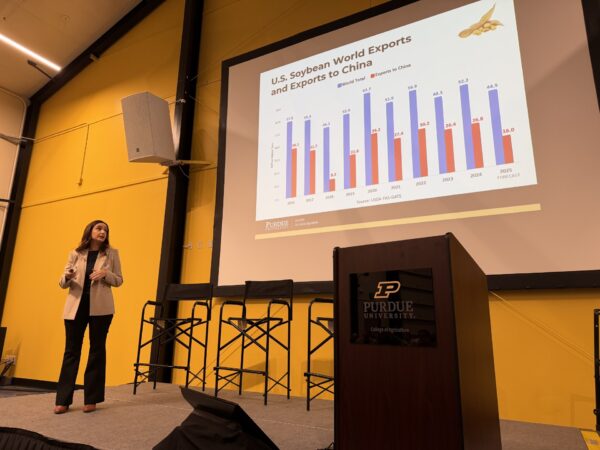
Research conducted by Purdue University reveals that Brazil is positioned to maintain its economic advantage in soybean farming, potentially creating ongoing challenges for American agricultural exports on the global stage.
According to the university’s findings, Brazil operates with significantly reduced production expenses when compared to United States farmers. Researcher Joana Colussi points to several factors contributing to this economic disparity.
“Brazil’s structure is heavily impacted by heavy tropical agriculture and a dependence on imported fertilizers,” Colussi explained. The researcher noted that ongoing agricultural expansion in the region continues to strengthen the country’s position in international soybean markets.
The study suggests this cost differential between Brazilian and American soybean operations is unlikely to diminish in the near future, raising concerns about the long-term competitiveness of U.S. agricultural exports in key international markets.
HEIDELBERG, South Africa — Officials in South Africa launched a nationwide cattle vaccination initiative Friday aimed at controlling a devastating foot-and-mouth disease crisis that poses serious risks to the country’s meat, dairy, and livestock sectors.
The disease crisis, which began escalating in late 2023 and has quickly swept through South Africa’s agricultural regions, has now impacted nearly 297,000 head of cattle. Farmers have been forced to destroy more than 120,000 animals in desperate attempts to prevent further transmission.
The epidemic poses significant risks including widespread meat shortages, substantial employment losses, and revenue losses reaching millions of dollars as nations like China and Zambia have implemented bans on South African meat imports.
On Friday, Agriculture Minister John Steenhuisen initiated the nation’s vaccination campaign, utilizing one million vaccine doses that recently arrived from Turkey.
Additional vaccine shipments are anticipated over the weekend, though officials express worry that current supplies fall far short of what’s needed to inoculate the country’s approximately 12 million cattle.
“The one strategy that we have ultimately adopted is the mass vaccination strategy. So we can get ahead of the foot-and-mouth disease in South Africa and ensure that we can prevent outbreaks from happening rather than reacting to outbreaks,” said Steenhuisen.
KwaZulu-Natal province along the coast has emerged as the primary center of the crisis, with more than 17,000 agricultural operations impacted. Officials have formally designated the situation as a national emergency, creating a legal mechanism that enables the government to direct emergency funding primarily toward vaccine procurement.
The country’s treasury has designated approximately $25 million to combat the outbreak, with most funds earmarked for vaccine purchases.
Agricultural producers and meat processing companies are facing severe challenges, forced to isolate infected livestock and halt all commercial activities and exports while dealing with critical vaccine shortages nationwide.
Dr. Dirk Verwoerd, a veterinary professional with South Africa’s leading meat processing company, Karan Beef, explained that the outbreak’s consequences are affecting every segment of the meat and dairy sectors.
“You have massive damage upstream and downstream,” he told The Associated Press. “You cannot purchase cows, so your primary producers now sit with them. They can’t sell, and we can’t purchase. You cannot slaughter, so the consumer pays the price.”
Karan Beef operates the nation’s largest cattle facility in Heidelberg, spanning 2,300 hectares (5,680 acres) with capacity for more than 140,000 head of cattle.
“It’s an epidemic that is out of control, completely out of control,” said Verwoerd. “Rampant infections happening in all the provinces, daily, there are just more and more reports. The first target is to get stability. And that’s why we need to vaccinate the national herd, the national population.”
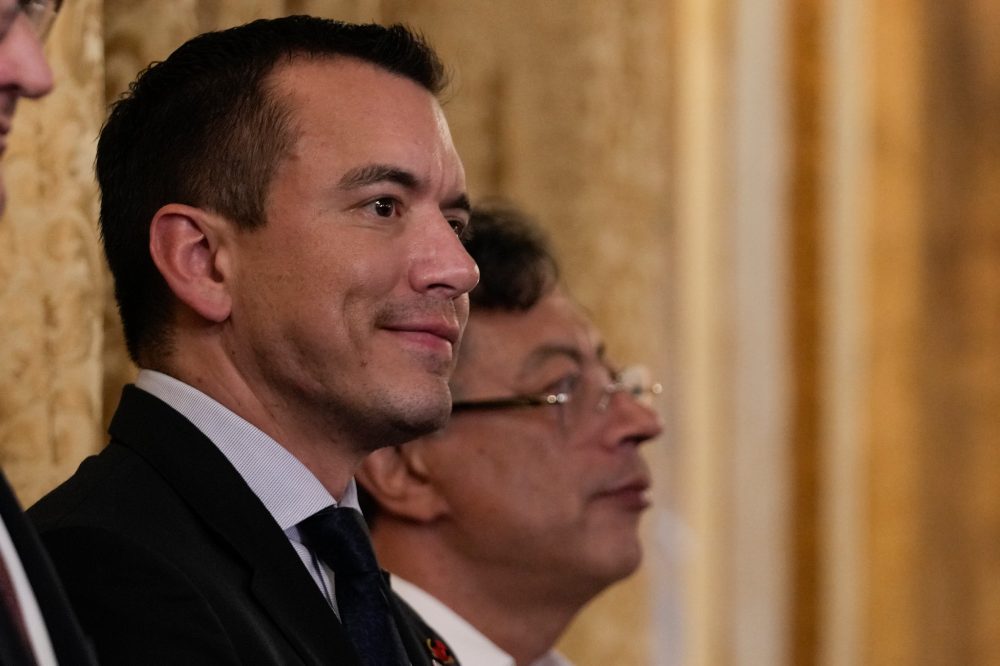
QUITO, Ecuador — A heated trade dispute between two South American nations reached new heights Friday when Ecuador’s President Daniel Noboa defended his decision to impose a 50% tariff increase on Colombian goods, denouncing Colombia as his nation’s most problematic trading partner.
Speaking during a radio interview, Noboa justified the tariff hikes amid growing tensions over trade relations and border security between the neighboring countries.
“Our worst trading partner in the world, in percentage terms, is Colombia,” Noboa stated, highlighting that Ecuador faces a $1.1 billion trade deficit with Colombia.
The dispute began in January when Noboa, a conservative leader seeking stronger relationships with the Trump administration, first implemented a 30% tariff on Colombian products. He cited frustrations with Bogota’s alleged failure to adequately address cocaine smuggling along their mutual border.
Colombia responded by establishing its own 30% tariffs on numerous Ecuadorian products, including rice and automotive components, while also threatening to halt electricity sales to Ecuador.
This week, Noboa escalated the conflict further, announcing Thursday that tariffs would jump from 30% to 50%, effective March 1. He maintained his position that Colombia has not taken sufficient steps to secure their shared border.
Colombian authorities have consistently rejected these claims, pointing to unprecedented cocaine seizure numbers under President Gustavo Petro’s government. Despite these efforts, drug production continues reaching record levels due to improved laboratory operations and expanded cultivation areas.
Business communities in both nations have condemned the escalating dispute, cautioning that these measures will damage economic conditions across the region.
The Ecuadorian Federation of Exporters issued a warning Thursday evening, stating: “At least 40,000 Ecuadorian jobs are at risk because of this situation.” The organization emphasized that Colombia represents Ecuador’s fifth-largest market for non-petroleum exports, generating approximately $65 million monthly, and called for “an urgent dialogue at the highest level” between both governments.
However, Noboa has shown no signs of pursuing diplomatic talks to resolve the crisis.
“We have spoken with Colombia for the last two years, and they have never fulfilled their commitments,” he declared Friday.
Colombian Trade Minister Diana Marcela Morales announced Friday on Blu Radio that her government is considering raising tariffs to 50% on 73 Ecuadorian products currently facing 30% rates.
Authorities in Brazil report that catastrophic flooding and mudslides have resulted in 64 fatalities in Minas Gerais state, with rescue teams continuing their search for survivors.
The disaster began with torrential rainfall late Monday, devastating portions of Juiz de Fora and Uba, communities located approximately 192 miles north of Rio de Janeiro. Emergency responders have spent the week pulling victims from the wreckage and retrieving bodies from the affected areas.
According to the state fire department, five individuals remain unaccounted for, and the disaster has displaced more than 5,500 residents from their homes.
Brazilian President Luiz Inácio Lula da Silva plans to tour the affected areas Saturday for meetings with regional officials, the presidential office announced.
Federal authorities have approved the distribution of approximately 3.4 million reais, equivalent to $660,000, to support rebuilding initiatives and emergency aid.
Weather officials at Inmet, Brazil’s national meteorological service, have issued warnings about “great danger” from additional severe weather threatening parts of Minas Gerais and neighboring states including Rio and São Paulo. Meteorologists caution these regions face continued risks of mudslides, river flooding, and extensive water damage.
Data from Cemaden, a Brazilian disaster monitoring agency, shows that roughly one-fourth of Juiz de Fora’s 540,000 residents live in zones identified as vulnerable to land and water-related natural disasters, according to their 2023 assessment.
Researchers attribute the increasing frequency of such extreme weather events to climate change caused by human activities.
Brazil experienced similar devastation in May 2024 when massive flooding struck Rio Grande do Sul state in the country’s south, killing at least 185 people and causing widespread destruction to businesses, manufacturing facilities, and agricultural operations. Economic damage from that disaster exceeded 10 billion reais, or $1.9 billion.
ST. PAUL, Minn. — High-ranking Catholic Church officials strongly criticized widespread deportation operations taking place in Minnesota, while simultaneously calling for unity and compassionate immigration policies during a special religious service on Friday.
Cardinal Robert McElroy from Washington spoke to growing worries about immigration enforcement during a Mass for migrants, which he conducted alongside fellow church leaders and the Twin Cities’ archbishop. McElroy emphasized the importance of promoting peace on this divisive topic.
McElroy characterized the winter’s enforcement operations as “almost a siege” that occurred in “literally the heartland of our country.”
“Catholic teaching supports the nation’s right to control its border and, in these cases, to deport those who’ve been convicted of serious crimes,” he stated. “Seeking to deport millions of men and women and children — families who often lived here for decades, many children who don’t know other countries — is contrary to Catholic faith and, more fundamentally, contrary to basic human dignity.”
The service brought together McElroy, Cardinal Joseph Tobin from Newark, New Jersey, Cardinal Christophe Pierre who serves as the apostolic nuncio to the United States, Archbishop Bernard Hebda of St. Paul and Minneapolis, and over two dozen additional Catholic bishops. The morning ceremony took place at the University of St. Thomas chapel as part of their demonstration of support for migrants during a conference they were attending.
“I’m very proud, personally, to see our church, you know, be on the side of those who suffer,” Pierre stated, noting that Pope Leo XIV supported the U.S. bishops’ advocacy for migrants.
During his sermon, Hebda expressed his frustration when immigrant communities became too afraid to attend church services while “masked men” — referring to federal law enforcement officers — patrolled neighborhoods and violent incidents occurred during the winter’s immigration enforcement in the Twin Cities area.
However, he encouraged those in attendance — including seminary students, university community members, and school administrators filling the seats — to practice compassion and prioritize peace.
“That ministry of reconciliation has to be ours, in the Twin Cities and around the world,” Hebda declared during his sermon.
Minnesota has become an international focal point for tensions surrounding arrests and deportations. A major enforcement operation brought thousands of federal agents into daily confrontations with activists and demonstrators, resulting in the deaths of two individuals — Renee Good and Alex Pretti, both American citizens — in Minneapolis this year.
Religious leaders from various denominations participated in the protests, including approximately 100 clergy members who were detained after refusing to leave Minnesota’s largest airport during one of the most significant mobilization efforts last month.
The regional Catholic leadership, however, adopted a more diplomatic approach.
Following both deadly incidents, Hebda stressed the importance of reducing “the temperature of rhetoric” and eliminating “the hatreds and prejudices that prevent us from seeing each other as brothers and sisters.” He specifically mentioned this applied equally to “our undocumented neighbors” and “the men and women who have the unenviable responsibility of enforcing our laws.”
During Friday’s event, the church leaders discussed praying for all those impacted — including families of the deceased, migrants and their supporters, and “the ICE men and women, too,” as McElroy put it when referencing Immigration and Customs Enforcement officers.
“We all need to engage in healing and reconciliation,” he continued. “It will take a long time.”
When questioned about whether Catholics — who predominantly supported President Donald Trump in 2024 — might view migrant advocacy as political involvement by the church, the cardinals explained that both religion and politics should focus on society’s welfare.
Tobin emphasized that while their primary loyalty belongs to God, Scripture commands caring for foreigners and welcoming strangers more frequently than loving one’s neighbor.
“The Creator figured that there was a better chance we’d love people who we thought looked like us. We had to be reminded frequently about everybody else,” Tobin explained.
Supporting migrants was a key focus for the late Pope Francis, who had disagreed with Trump regarding U.S. border policies since the former president first sought office ten years ago.
Under Pope Leo, the first American pontiff, the Catholic Church has maintained its calls for compassionate treatment of immigrants worldwide and immigration reform in the United States — an issue that has remained unresolved in Congress for many years.
“The longer we refuse to grapple with this issue in the political arena, the more divisive and violent it becomes,” Hebda had observed in January.
McElroy and Tobin, along with Cardinal Blase Cupich from Chicago, recently criticized the Trump administration regarding foreign policy ethics. In a January statement, they warned that U.S. military involvement in Venezuela, threats concerning Greenland, and reductions in foreign aid could lead to widespread suffering rather than peace.
Federal prosecutors have filed charges against 30 additional individuals connected to a January protest that disrupted services at a Minnesota church, Attorney General Pam Bondi revealed Friday.
Bondi disclosed through social media that authorities had taken 25 people into custody, with additional arrests planned for later that day.
“YOU CANNOT ATTACK A HOUSE OF WORSHIP. If you do so, you cannot hide from us — we will find you, arrest you, and prosecute you,” Bondi declared in her online statement. “This Department of Justice STANDS for Christians and all Americans of faith.”
The newly arrested individuals will face initial hearings before a magistrate judge who will determine their release conditions.
Previous arrests in the case included former CNN anchor Don Lemon, journalist Georgia Fort, and local community organizer Nekima Levy Armstrong. The White House previously shared an altered image showing Levy Armstrong in tears during her arrest. All three have entered not guilty pleas to federal civil rights violations.
The charges now encompass 39 individuals total, each facing accusations of conspiring against religious freedom and obstructing the exercise of religious rights.
The January 18 demonstration took place at Cities Church in St. Paul after activists discovered that one of the church’s ministers also holds a position with Immigration and Customs Enforcement. The disruption of Sunday worship services prompted immediate criticism from Trump administration representatives and conservative figures.
Federal prosecutors describe the incident as a “coordinated takeover-style attack” where “agitators” entered the building and engaged in threatening behavior toward worshippers.
“Young children were left to wonder, as one child put it, if their parents were going to die,” according to the federal charging document.
Church attorney Doug Wardlow commended the Justice Department’s decision to file additional charges.
“The First Amendment does not give anyone — regardless of profession, prominence, or politics — license to storm a church and intimidate, threaten, and terrorize families and children worshipping inside,” Wardlow stated.
The church incident occurred during a period of heightened tension in Minnesota, where federal authorities had deployed thousands of officers for Operation Metro Surge following multiple government fraud investigations primarily involving defendants of Somali heritage. Federal agents routinely used tear gas during confrontations with community activists in residential areas, frequently detaining both protesters and immigrants.
Federal officers fatally shot 37-year-old mother Renee Good in south Minneapolis on January 7. Another deadly shooting occurred one week following the church protest, when federal agents killed 37-year-old nurse Alex Pretti.
These incidents sparked nationwide protests, leading to leadership changes within Operation Metro Surge and the eventual conclusion of the immigration enforcement campaign in mid-February.
The Twin Cities continue to address the lasting effects on local communities and the regional economy. Minneapolis officials reported $203.1 million in damages from the operation, with tens of thousands of residents requiring emergency assistance.
Federal prosecutors have filed criminal charges against 30 more individuals linked to a protest involving immigration enforcement at a Minnesota church, Attorney General Pam Bondi announced Friday.
Bondi revealed that law enforcement officials have already taken 25 of the newly charged individuals into custody under her orders, with plans for additional arrests to continue during the day.
“At my direction, federal agents have already arrested 25 of them, with more to come throughout the day,” Bondi stated in a post on the social media platform X.
The charges stem from a demonstration that took place at a church in Minnesota involving U.S. Immigration and Customs Enforcement operations.
Two sources with direct knowledge of the situation revealed Friday that Paramount Skydance should face minimal obstacles in obtaining European Union antitrust clearance for its Warner Bros Discovery acquisition, with any required asset sales expected to be relatively small.
The sources, speaking on condition of anonymity due to the sensitive nature of the discussions, explained that Paramount’s proposal encounters fewer regulatory challenges compared to Netflix’s previously abandoned attempt. This is because a merged Paramount-Warner Bros entity would control under 20% of market share in every European territory.
EU antitrust officials typically impose stricter scrutiny when companies reach 30% or higher market dominance. While Paramount hasn’t yet filed formal approval paperwork with the EU, the company is currently sharing business information with regulators.
The transaction will also need clearance under the EU’s foreign subsidies regulation, since Middle Eastern sovereign wealth funds are helping finance the deal. These include Saudi Arabia’s Public Investment Fund, Abu Dhabi’s L’imad Holding Company, and the Qatar Investment Authority. This regulation targets potentially unfair foreign government assistance.
Neither Paramount nor the European Commission provided comments when contacted.
According to the sources, while Paramount hopes to win unconditional EU approval, the company stands ready to sell off smaller television channels, particularly children’s programming brands, if regulators demand it. The merger would create overlapping operations including dual film studios and multiple TV networks.
For example, Paramount operates Nickelodeon while Warner Bros controls Cartoon Network.
Industry insiders expect Paramount to submit formal EU approval requests within the next few months, triggering a standard 25-working-day initial assessment period. This timeline can extend by an additional 10 working days if the company proposes remedies near the end of the review window.
However, California regulators may present the biggest challenge to completing the deal. Approvals from both U.S. and UK authorities are also essential requirements.
Since January, Paramount has been actively courting European officials. CEO David Ellison held meetings with French President Emmanuel Macron that month, while Chief Legal Officer Makan Delrahim met with Guillaume Loriot, the European Commission’s senior merger official, during the same period.
Delrahim brings familiarity with Loriot from his previous role as assistant attorney general leading the U.S. Department of Justice’s antitrust division.
European Parliament member Andreas Schwab, who previously criticized Netflix’s bid and has spearheaded negotiations on multiple technology regulations, also met with Delrahim recently. Schwab indicated that Paramount’s proposal raises fewer concerns.
“I think Paramount is something we could accept. It is a concentration in the production of films. There is no risk of a digital champion taking over the video streaming market,” Schwab stated.
A massive entertainment industry consolidation has taken place with Paramount’s successful acquisition of Warner Bros Discovery for $110 billion, as revealed during a company-wide meeting Friday morning.
During the internal discussion, Bruce Campbell, who serves as Warner Bros’ chief revenue and strategy officer, explained the final stages of the transaction. “Netflix had the legal right to match the PSKY offer. As you all know, they ultimately decided not to do that. That then resulted in a signed agreement with PSKY as of this morning. So that’s where everything stands,” Campbell stated during the meeting.
Neither Paramount nor Warner Bros provided immediate responses when contacted for official statements regarding the transaction.
This massive acquisition, which carries approximately $29 billion in debt obligations, represents one of the entertainment industry’s most significant restructuring moves in recent years. The combined entity will form one of the world’s most powerful film studios, giving Paramount access to Warner’s extensive catalog of popular franchises including “Fantastic Beasts” and “The Matrix” series.
The merger will significantly strengthen Paramount’s position in the competitive streaming market, potentially merging HBO Max with Paramount+ to better compete against industry leader Netflix for market dominance.
The successful bid concluded an intense competition after Netflix chose not to counter Paramount’s final offer of $31 per share, which Warner Bros’ leadership viewed as more attractive than Netflix’s previous $27.75 per share proposal.
Paramount had been pursuing Warner Bros since the end of last year through an aggressive acquisition campaign, consistently increasing their financial offers to secure the deal from the streaming giant.
David Ellison, son of technology billionaire Larry Ellison, leads Paramount and successfully convinced Warner’s board to return to negotiations by proposing enhanced cash terms.
In their final proposal, Paramount increased the penalty payment for potential regulatory rejection from $5.8 billion to $7 billion, demonstrating their commitment to completing the transaction.
Ancora Holdings, an activist investment firm holding shares in Warner Bros, had been advocating for the company to seriously consider Paramount’s acquisition proposals.
However, the merger will likely face extensive regulatory review from federal antitrust authorities, international regulators, and various state governments including California, despite the Ellison family’s political connections to President Donald Trump.
Political leaders from both major parties have expressed concerns that consolidating these entertainment companies could limit consumer options and lead to increased pricing.
Movie theater operators are also worried that merging major Hollywood production companies might eliminate jobs and reduce the total number of films available for theatrical release.
WASHINGTON – The Securities and Exchange Commission announced Friday that it has finalized new regulations mandating that executives and directors at foreign corporations listed on American stock exchanges reveal their shareholdings and trading activities, following a congressional directive from late last year.
This development represents another step in what appears to be increasingly strict oversight of international companies operating in U.S. markets. In the previous year, the SEC initiated regulatory proceedings that may force numerous foreign corporations to provide enhanced disclosure information to investors, addressing what regulators described as a regulatory gap that particularly favored Chinese companies.
Beginning March 18, senior executives and board directors at foreign private companies that issue certain registered securities must start reporting their ownership stakes and trading activities under the newly implemented regulations, according to an SEC announcement. These requirements stem from the Holding Foreign Insiders Accountable Act.
The legislation, which Congress passed in December, removes a previous exclusion that had allowed insiders at international companies to avoid the same reporting obligations that senior officials at domestic U.S. corporations must follow.
President Donald Trump suggested on Friday that the United States might pursue what he called a “friendly takeover” of Cuba, stating that Secretary of State Marco Rubio is managing the situation at the highest levels of government.
Speaking to reporters before departing for Texas, Trump indicated that Cuban officials have been in communication with the U.S. government. “The Cuban government is talking with us, and they’re in a big deal of trouble,” Trump stated. “They have no money. They have no anything right now, but they’re talking with us, and maybe we’ll have a friendly takeover of Cuba.”
The president characterized Cuba as a struggling country requiring significant changes, noting he had been aware of the island’s problems since childhood.
“I can see that happening. Marco Rubio is dealing on it and at a very high level,” Trump explained. “They have no money, they have no oil, they have no food. And it’s really right now a nation in deep trouble and they want our help.”
However, Cuban officials have stated they are not engaged in any formal high-level negotiations with the United States. The government has not completely dismissed media reports suggesting U.S. representatives may be conducting informal discussions with Raul Guillermo Rodriguez Castro, who is the grandson of former Cuban leader Raul Castro.
According to Axios reporting earlier this month, Rubio has been conducting confidential discussions with the former leader’s grandson. The Miami Herald reported Thursday that U.S. officials connected to Rubio met with Castro’s grandson again during this week’s Caribbean Community conference in St. Kitts and Nevis.
Relations between the two nations have become more strained following this week’s deadly maritime incident. Cuban military forces killed four Cuban exiles and injured six others when their Florida-registered speedboat entered Cuban waters and fired upon a Cuban patrol vessel. Rubio has stated this was not a U.S.-sponsored operation and confirmed no American government personnel participated.
This confrontation occurred while the United States continues blocking nearly all petroleum deliveries to the island, intensifying economic pressure on Cuba’s Communist leadership. The situation changed further last month when U.S. forces captured Venezuelan President Nicolas Maduro, eliminating a crucial Cuban ally.
In recent weeks, Rubio has strongly criticized Cuba’s government, declaring the current situation unsustainable and insisting the country must undergo “dramatic” transformation.
The Cuban exile community, primarily based in Miami, has historically hoped for the Cuban government’s collapse or overthrow, having previously organized efforts against the regime established by the late revolutionary Fidel Castro.
Trump referenced this community when discussing potential benefits of U.S. involvement in Cuba. He suggested such action could be “something good … very positive” for individuals who were forced to leave the country.
“We have people living here that want to go back to Cuba, and they’re very happy with what’s going on,” Trump commented.
As commodity prices remain stubbornly low, Delaware and regional farmers are expanding their search for profitable alternatives, with many taking a fresh look at grain sorghum.
The crop, also known as milo, has attracted renewed interest from local growers who are planting it on fields where traditional crops like corn and soybeans offer little financial return.
Though the majority of American sorghum acreage lies in the Great Plains, this grain is far from new to the Mid-Atlantic area. Historical USDA records indicate that before genetically modified corn and soybeans took over the agricultural landscape, approximately one million acres of sorghum were cultivated along the east coast. While Delmarva states now grow only a small portion of that amount, each state expanded its sorghum acreage last year beyond the three-year average, federal data shows.
Wicomico County farmer Mike Harcum remembers university researchers promoting sorghum back in the late 1980s.
“They were pushing it as an alternative to corn then,” he said. “Everybody tried it.”
However, many producers were dissatisfied with the crop at that time due to various problems including weed control difficulties, disappointing yields, and harvesting complications. Harcum admits that most seasons, he plants sorghum reluctantly as a last-ditch effort to recover something from fields destroyed by deer.
“We don’t put it on our best ground,” he said. “For me it’s a rotation thing. A lot of it’s got to do with the farm. Weather will dictate some of it.”
But persistent low corn prices and escalating deer pressure have driven farmers back to sorghum in recent years, according to agricultural industry professionals. Genetic improvements over the past decades have enhanced both yields and crop management practices.
Tyler Franklin, who owns Elevated Ag Systems in Eastern Virginia, says sorghum comes up in conversations with nearly every seed customer he visits. Franklin explains that current and projected commodity market conditions have growers considering every available option.
“If corn was $6, we wouldn’t be talking about it,” he said. “The demand is there, but that’s not the driver. The economics is pushing them along.”
Sorghum offers several advantages, including superior heat and drought resistance compared to corn, development of larger root systems, and the ability to interrupt nematode cycles that harm soybean fields. Farmers report it shows promise in double-cropping situations and typically generates substantial biomass that adds to soil organic matter. Despite genetic and agronomic improvements, its greatest appeal remains its unpalatable nature to deer.
“In the last 10 years, deer have become such a problem on some places, you either plant milo or give up farming it,” Harcum said.
Steve Hurley, Harcum’s neighbor and a veteran sorghum producer who plants between 300 and 400 acres each year, initially chose the crop to combat deer damage. He has since invested in on-farm storage facilities for sorghum and established contracts with birdseed manufacturers.
Through years of experience, Hurley says they have conducted extensive experiments with planting timing, seeding rates, and other factors, as the crop’s relatively small local acreage generates limited research compared to more common row crops.
“Every year you learn a little more,” Hurley said. “We’ve had to teach ourselves a lot over the last few years.”
While sorghum requires less labor overall than corn production, Hurley emphasizes that placing it on marginal land doesn’t justify marginal management practices.
“There’s some potential,” Hurley said. “But if you treat it like a stepchild, it’ll pay you like a stepchild.”
Seed technology improvements have enhanced the situation through herbicide tolerance and varieties better adapted to Mid-Atlantic growing conditions.
Following a seven-year development process, Carolina Seed Systems introduced its Launch sorghum variety in 2019 with anthracnose resistance and strong aphid tolerance, later releasing Launch 2.0 with genetic aphid resistance.
Company founder and Chief Technology Officer Zach Brenton reports plans to launch three additional varieties next year featuring improved yield potential, while also developing herbicide tolerance traits.
Since 2021, Corteva, Advanta, and S&W Seed Company have introduced proprietary systems combining herbicide-tolerant varieties with specialized herbicide formulations that enable post-emergence grass control.
Brenton says Carolina Seed System varieties are planted from Pennsylvania to Louisiana, with Maryland showing the fastest acreage growth. He advises farmers that areas where corn consistently produces under 140 bushels per acre or soybeans yield below 30 bushels per acre should seriously consider sorghum.
“Our biggest thing is profitability,” he said. “That’s the only way someone would change what they’re doing. They need to make more money.”
As a plant breeder, Brenton notes that their sorghum focus places his company among a small national group, and an even more exclusive one in the Eastern United States.
“I joke that I’m one of the top 10 sorghum breeders in the country because there’s like eight of us left,” Brenton said.
Despite sorghum’s small acreage relative to corn and soybeans, their regionally-focused breeding program captures between 60-70% of Delmarva’s sorghum acres, according to Brenton.
“There’s no secret sauce, it’s because we breed and test here,” Brenton said. “Plant breeding is like a home field advantage. My germplasm doesn’t work in Kansas and there’s doesn’t work out here.”
With high corn input costs, planting sorghum at roughly half the expense on acres where corn performs poorly or suffers repeated deer destruction has gained increased regional consideration.
Jarrett Hostetter, a grain merchandiser with Hostetter Grain in Oxford, Pennsylvania, observed a definite surge of grower interest.
“There was definitely a groundswell of growers that were interested in it,” said Hostetter. “I expect that to continue.”
Two years ago, Hostetter’s company allocated bin space at their Cochranville facility to accept sorghum from growers in Northern Maryland and Southern Pennsylvania, doubling that capacity the following year.
“It’s more about providing a service for growers that grow the crop,” he said, noting most planted sorghum to address deer pressure. “The demand is definitely there. It’s been pretty consistent.”
Regional demand primarily comes from birdseed companies incorporating sorghum into their products.
T.J. Collins, merchandising manager for Global Harvest Foods, which operates facilities in multiple states including Allentown, Pennsylvania, confirms substantial Mid-Atlantic usage.
“We use a very significant amount in the Mid-Atlantic,” said Collins. “It’s a very economical grain for us.”
Collins explains that over half their national sorghum purchases supply their Pennsylvania and Indiana facilities located near population centers. This proximity allows Global to offer premiums above corn prices, which sorghum typically follows.
“We can’t buy enough out in that area,” he said “The more I can buy locally, the more I can back off on rail.”
Gary Wessner, merchandiser at Albrights Mill in Kempton, Pennsylvania, recalls that decades ago sorghum purchases were much more seasonal, but now he buys year-round.
“It’s more steady today and it does seem like it keeps growing,” he said.
However, farmers caution that advances and demand don’t make sorghum a guaranteed success. Planting on marginal ground affects yields. Weeds, aphids, and anthracnose remain problematic. Harvest complications, from drying issues to bird damage after maturity, create additional challenges. Storage and transportation costs can erode premiums offered by end users. Still, until deer damage is significantly reduced or corn markets return to profitability, sorghum remains a viable alternative.
“If we pick up the weaker acres, our overall profits increase,” Franklin said. “To me, that’s really where we need to start.”
A prominent Venezuelan opposition figure has gained his freedom from house arrest this Friday, marking another development in the ongoing political tensions within the South American nation.
Freddy Superlano, who serves as a key leader within the opposition party Voluntad Popular, had his confinement order rescinded as part of a restricted amnesty measure that lawmakers approved earlier this month. Documentation of his release was shared through a video on his Instagram profile.
The footage captures a national police representative announcing the release directive aloud, followed by a technician who proceeds to detach the electronic monitoring device from Superlano’s ankle.
The opposition leader had been confined to his residence since February 8th, when authorities transferred him from prison to house arrest. His initial detention occurred in the aftermath of Venezuela’s 2024 presidential contest, with video evidence showing security personnel forcing him into an unmarked vehicle while surrounded by armed officers.
A comprehensive trade agreement between India and the European Union has established new frameworks for digital commerce and World Trade Organization compliance, according to draft documents released Friday by India’s trade ministry.
Under the proposed agreement, both nations will receive Most Favored Nation designation once the deal becomes active, creating a five-year period where neither country can provide superior tariff arrangements to other trading partners.
The trade partnership, finalized last month after extended negotiations, seeks to dramatically reduce tariffs on the majority of goods while increasing bilateral commerce during a time of rising international trade disputes.
Following legislative approval, the agreement is anticipated to become operational within one year and could potentially double European exports to India by 2032. The deal eliminates or reduces tariffs on 96.6% of traded merchandise by value, potentially saving European businesses 4 billion euros ($4.7 billion) in duty payments, according to EU officials.
Both governments have specified that agricultural products including soya, beef, sugar, rice and dairy items remain excluded from the trade agreement’s scope.
The draft text reveals commitments from both sides to maintain World Trade Organization standards by avoiding new import or export limitations while expanding digital trade collaboration within the proposed free-trade framework.
To facilitate smoother trade operations, India and the European Union will harmonize food safety and plant health protocols with WTO guidelines while simplifying certification and inspection processes.
The agreement also establishes improved customs coordination and expedited goods clearance procedures, with these obligations becoming legally enforceable following ratification.
Beginning one year after implementation, both parties will share yearly import statistics to track compliance and monitor tariff preference utilization. The agreement also guarantees fair and accessible appeals processes for customs rulings affecting imported, exported or transit goods.
Regarding digital commerce, India and the EU have pledged to eliminate unnecessary obstacles while fostering a transparent and secure digital marketplace.
The draft acknowledges privacy as a basic right while maintaining each party’s jurisdiction over personal data protection and international data transfer regulations.
Additionally, the agreement encourages electronic documentation and legal acceptance of digital contracts, signatures and verification methods.
Under a separate provision, the European Union will provide financial resources and investment support for India’s greenhouse gas reduction initiatives as part of the proposed agreement.
A Missouri Representative has launched an investigation into the National FFA Organization’s business relationship with agricultural corporation Syngenta, specifically questioning their Diversity, Equity and Inclusion programs.
Congressman Jason Smith informed Brownfield that the youth agriculture organization has acknowledged his congressional inquiry and committed to providing information. “They have said they will comply and we’re waiting on their response. This organization is so important for every child who cares about agriculture,” Smith stated.
The National FFA Organization serves students across the country interested in agricultural education and careers, including many from Delaware’s farming communities.
Soybean markets have maintained their upward momentum for weeks as traders remain hopeful about a potential massive purchase agreement with China, according to agricultural market experts.
Industry analysts report that speculation surrounding China’s possible acquisition of 8 million metric tons of American soybeans has provided sustained support for commodity prices beyond what many forecasters anticipated.
“It’s been going since the first week of February,” one market analyst noted, referring to when the price surge began following President Trump’s social media post about agricultural trade discussions with Chinese officials.
The prolonged price strength reflects market confidence that negotiations between the two nations could result in significant soybean exports, providing a boost to American farmers and agricultural markets.
ROME – The Italian government issued an urgent advisory Friday directing its nationals to evacuate Iran immediately due to deteriorating security conditions throughout the Middle East region.
Italy’s foreign ministry released a statement warning that any Italians currently in the country for vacation purposes or non-essential business should depart without delay. The ministry also strongly discouraged any planned travel to Iraq and Lebanon.
“Italians in (Iran) for tourism or whose presence is not strictly necessary are urged to depart,” officials stated in their announcement.
Additionally, Italian citizens currently in Israel received guidance to maintain heightened awareness and exercise extreme caution while in the country.
Italy joins a growing list of nations issuing evacuation orders this week. On Friday, British officials announced they had pulled embassy personnel from Iran and temporarily shuttered their diplomatic mission as regional tensions continue to escalate.
The warnings come as the United States has significantly increased its military footprint throughout the Middle East region, preparing for potential military action against Iran. Meanwhile, diplomatic negotiations between Washington and Tehran regarding Iran’s nuclear program remain stalled with no apparent progress toward resolution.
The maker of Play-Doh and other popular toys has entered the legal battle against the federal government, demanding money back from tariffs collected during Donald Trump’s presidency that were recently ruled unconstitutional by the nation’s highest court.
Hasbro filed its legal claim on Friday, becoming part of a massive wave of more than 2,000 companies pursuing similar lawsuits in the U.S. Court of International Trade since April. The toy manufacturer is seeking complete reimbursement plus interest for payments made under the International Emergency Economic Powers Act, though the company has not revealed the total amount involved.
The legal action follows last week’s Supreme Court decision that invalidated these emergency trade policies. Since that ruling, major corporations have rushed to file claims, including cosmetics giant L’Oreal, vacuum cleaner company Dyson, and eye care manufacturer Bausch + Lomb, all of which submitted their cases on Monday. Ty Inc., the company behind Beanie Babies, also entered a similar claim this week.
Legal representation for Hasbro comes from Sandler, Travis & Rosenberg, the same firm handling cases for Swiss athletic wear brand On and personal care company Conair in their respective tariff disputes. When contacted for additional details, Hasbro representatives had not provided a response.
Drug development company Generate Biomedicines experienced a rocky start on Wall Street Friday, with its stock price dropping 6.25% during its first day of trading on the Nasdaq exchange.
The pharmaceutical firm, which receives backing from investment company Flagship, ended its debut trading session with a market value of $1.91 billion. Market analysts attributed the decline to ongoing uncertainty in financial markets that has made investors wary of newly public companies.
The stock’s performance reflects broader market conditions that have made investors more selective about new investment opportunities, particularly in the biotechnology sector.
Delaware Department of Transportation officials have announced a complete traffic shutdown on a busy section of Montchanin Road due to emergency utility repairs.
The roadway is blocked in both directions between Twaddell Mill Road and Smith Bridge Road, with the closure expected to remain in effect until 6 PM today.
Motorists are advised to seek alternate routes and allow extra travel time while crews complete the necessary utility work in the area.
A Belarusian court has handed down lengthy prison terms to two independent media professionals on high treason charges, marking another escalation in the government’s ongoing suppression of press freedom, according to media rights organizations.
The Regional Court in Brest, located near the Polish border, sentenced 65-year-old Uladzimir Yanukevich to 14 years behind bars and his 44-year-old associate Andrei Pakalenka to 12 years imprisonment. Yanukevich established and ran the widely-read Intex-Press and BAR24 news organizations, which ranked among Belarus’s most popular media platforms.
Court proceedings were conducted without public access, and specific details about the accusations against both men remain undisclosed. Government television reported allegations connecting the journalists to Germany’s diplomatic mission.
“These horrific sentences show that the authorities have no intention of halting the most sweeping repressions against journalists in Europe, now in its sixth year,” Belarusian Association of Journalists head Andrei Bastunets told The Associated Press. “Any dissent is harshly punished by the authorities.”
The journalists’ association reports that Yanukevich, who suffers from significant medical conditions, has been refused adequate healthcare during his detention.
Alexander Lukashenko has controlled Belarus for more than 30 years, using systematic oppression to maintain authority. After the disputed 2020 electoral process sparked massive demonstrations, over 65,000 protesters were detained, thousands suffered physical abuse, and hundreds of independent news organizations and civil society groups were shuttered.
Twenty-eight independent media workers are currently incarcerated in Belarus, Bastunets’ organization reports.
Both journalists were part of a group of seven Intex-Press staff members taken into custody in December 2024 following raids on their workplace and residences. Four others from their newsroom received convictions in August 2025 for supporting “extremist activities” and were assigned to supervised labor programs at state-designated facilities.
Belarusian officials routinely invoke extremism allegations to silence independent reporting.
Friday also saw the opening of proceedings against Pavel Dabravolski, another independent journalist facing high treason accusations at Minsk City Court. Dabravolski, who has reported for both domestic and international news organizations, has remained in detention since January 2025.
“Journalism is not a crime, and the convicted journalists are victims of the authorities who are building a totalitarian state,” exiled Belarusian opposition leader Sviatlana Tsikhanouskaya told AP. “Lukashenko’s regime fears the truth more than anything.”
Western nations have imposed sanctions and diplomatic isolation on Belarus for its repressive policies and for permitting Russia to launch attacks on Ukraine from Belarusian territory in 2022. Despite recent prisoner releases aimed at improving international relations, Lukashenko has continued suppressing opposition voices.
Human rights organization Viasna documents 1,143 individuals currently imprisoned for political reasons in Belarus.
MILAN, Italy — A passenger tram jumped its tracks and crashed into a building in downtown Milan on Friday, leaving one person dead and injuring over 20 others, according to Italian authorities and news reports.
The accident happened on Vittorio Veneto avenue in the city center during Milan’s fashion week, as the Italian fashion capital prepares for upcoming Winter Olympic and Paralympic events.
Video footage aired by Sky TG24 shows the Number 9 tram was traveling at high speed along its regular route through Milan’s financial district when it unexpectedly veered off course at a junction used by another tram line. The tram nearly tipped over as it took the sharp turn before crashing to a halt.
Lombardy welfare official Guido Bertolaso confirmed the fatality and said one injured passenger remains in critical condition, according to LaPresse news agency. Emergency responders deployed numerous ambulances, fire engines and police vehicles to the crash site, helping passengers wrapped in emergency blankets away from the wreckage.
Milan’s public transportation authority ATM confirmed the death in an official statement and said they are working with prosecutors “to precisely establish the cause and dynamic of the incident.”
A federal civil rights agency has rejected a transgender Army employee’s request to use bathroom facilities matching her gender identity, marking a significant policy shift under the Trump administration.
The Equal Employment Opportunity Commission ruled Thursday against an unnamed civilian information technology worker stationed at Fort Riley, Kansas. The employee had notified Army supervisors in summer 2025 that she identified as female and requested access to women’s restrooms and changing facilities, but officials denied her appeal.
Following the Army’s rejection of her internal grievance, the worker brought her case to the EEOC. However, the commission sided against her in a 2-1 vote, referencing President Trump’s recent executive directive that acknowledges only biological male and female categories. Commissioner Kalpana Kotagal, the panel’s lone Democrat, opposed the majority ruling.
This decision represents a dramatic shift from the EEOC’s position ten years ago, when the agency found that denying a transgender Army employee bathroom access and preferred pronouns constituted workplace discrimination. The commission now argues that the Army’s actions don’t breach Title VII of the 1964 Civil Rights Act, which outlaws employment discrimination based on sex, race, religion, and national origin.
EEOC Chairwoman Andrea Lucas has actively implemented Trump’s gender identity directives, withdrawing legal cases supporting transgender and nonbinary employees facing termination or harassment. She has also revised harassment policies to remove language suggesting that intentional misgendering or bathroom restrictions could constitute workplace harassment. Republican legislators have praised these changes while criticizing previous administrations for exceeding the agency’s authority on gender matters.
“Today’s opinion is consistent with the plain meaning of ‘sex’ as understood by Congress at the time Title VII was enacted, as well as longstanding civil rights principles: that similarly situated employees must be treated equally,” Lucas said in a statement. “Biology is not bigotry.”
The commission contended that permitting “trans-identifying” workers to access facilities matching their gender identity would effectively eliminate single-sex spaces altogether.
“All bathrooms would be mixed-sex by law, and every employee would be required to perform bodily and other private functions in the presence of the opposite-sex,” the EEOC wrote.
Kotagal strongly criticized the ruling in a LinkedIn statement.
“I strongly disagree with the decision’s substance and tone. The decision rests on the false premise that transgender workers are not worthy of the agency’s protection from discrimination and harassment and that protecting them threatens the rights of other workers. Worse, it suggests that transgender people do not exist,” Kotagal said.
Multiple transgender and gender-nonconforming federal workers have lodged formal discrimination complaints regarding Trump administration policies, which include removing “gender ideology” content from government websites and reinstating military service restrictions for transgender personnel.
The EEOC serves a quasi-judicial role, reviewing appeals from federal employees whose discrimination complaints were rejected by their agencies’ civil rights departments.
Thursday’s ruling affects all federal agencies but doesn’t apply to private companies, nor does it establish binding legal precedent for courts. For private sector cases, the EEOC investigates complaints and determines whether to pursue litigation but doesn’t issue formal decisions.
The Army employee has 30 days to request EEOC reconsideration or 90 days to file a new case in federal district court.
In her statement, Kotagal referenced the Supreme Court’s 2020 Bostock v. Clayton County decision, arguing it strengthened Title VII protections for transgender workers. She criticized the EEOC for “rushing” its decision while a federal court examines similar issues in a class action lawsuit involving federal employees.
However, the EEOC maintained that Bostock only prevented employers from firing or refusing to hire transgender workers based on gender identity, without addressing bathroom access, locker room usage, or sex definitions.
Reflecting Lucas’s longstanding position, the EEOC argued that allowing transgender employees into their preferred facilities would endanger women by violating privacy expectations. This reasoning relied on the commission’s assertion that the Army employee isn’t actually a woman and was seeking “special treatment” by requesting access to “the opposite sex” facilities.
The EEOC referenced Trump’s executive order and dictionary definitions to support its position that “the complainant’s sex is male, from the moment of his conception and continuing even after he began to identify as transgender.”
While social conservatives have endorsed this viewpoint, the American Medical Association and other leading medical organizations cite extensive research suggesting sex and gender exist on a spectrum rather than in binary categories. Some biologists have criticized Trump’s executive order as scientifically flawed, noting it overlooks variations including intersex individuals who possess physical characteristics outside typical male or female definitions. The EEOC acknowledged intersex people represent “rare and unique circumstances” requiring “case-by-case” evaluation.
The Congressional Equality Caucus and various civil rights organizations, including the Human Rights Campaign and National Women’s Law Center, denounced the decision.
“Andrea Lucas has spent her time leading EEOC undermining enforcement of minority workers’ rights — she’s exactly who the Commission was designed to fight back against,” said Rep. Mark Takano, chair of the Congressional Equality Caucus.
The Defense Department directed inquiries to the Department of Justice and Army, which haven’t responded to comment requests.
WASHINGTON — Travelers at Reagan National Airport got an unexpected surprise Friday when former President Joe Biden found himself dealing with the same flight delays that frustrated hundreds of other passengers.
Foggy conditions over the Washington area created a one-hour ground stop at the airport, backing up flights departing from American Airlines’ Terminal D. Among those waiting was Biden, accompanied by his Secret Service protection team and local law enforcement officers.
The former president, who has kept a relatively low profile since stepping down from office, was traveling to Columbia, South Carolina, for an evening gathering with the state’s Democratic Party.
Fellow travelers looked on with curiosity, wondering why someone who once held the nation’s highest office would subject himself to the same travel inconveniences as ordinary citizens, despite being surrounded by his security detail.
The situation wasn’t entirely surprising for Biden, however. During his Senate years, he earned the nickname “Amtrak Joe” for his dedication to rail travel, consistently choosing the train for his commutes back to Delaware instead of relocating to Washington full-time. Even after his presidency, he’s continued using public transportation, taking photos and conversing with other passengers on trains.
Friday’s flight experience followed a similar pattern. Biden took his seat in the third row of the small first-class section aboard the regional aircraft, boarding early with his security team positioned throughout the plane.
“God bless you, sir,” one female passenger told him as she walked past his window seat, where he sat reading a newspaper.
Another traveler approached to shake his hand, saying, “Thank you for your service.”
The woman assigned to the aisle seat beside the former president initially placed her coffee on their shared armrest and stowed her luggage overhead before realizing who her seatmate was.
Biden helped steady her coffee cup and greeted her as she settled in.
“I feel like I’m about to cry,” she told him as they introduced themselves and continued talking throughout the hour-long journey.
While federal law provides lifetime Secret Service protection for former presidents and their spouses, it doesn’t guarantee access to the premium private transportation options that were standard during their time in office.
In a stunning conclusion to months of corporate warfare, Paramount has successfully outbid Netflix to acquire Warner Bros. in what’s being called one of Hollywood’s most significant consolidations ever.
The streaming giant Netflix withdrew from the competition Thursday, stating the deal was no longer “financially attractive” after Paramount launched an aggressive $31 per share bid worth approximately $111 billion including debt. Netflix’s earlier offer had stood at $27.75 per share.
This latest merger continues Hollywood’s trend toward consolidation. Nearly a decade ago, the industry’s “big six” studios shrank to five when Disney absorbed most of 20th Century Fox. Now that number appears destined to drop to four major players, alongside Universal and Sony.
Netflix co-CEOs Ted Sarandos and Greg Peters released a joint statement explaining their withdrawal: “We believe we would have been strong stewards of Warner Bros.’ iconic brands. But this transaction was always a ‘nice to have’ at the right price, not a ‘must have’ at any price.”
Warner Bros. Discovery had initially supported Netflix’s December proposal right until Thursday evening, when the board simultaneously endorsed Netflix while acknowledging Paramount’s offer was “superior.”
Warner Bros. Discovery CEO David Zaslav expressed enthusiasm about “the potential of a combined Paramount Skydance and Warner Bros. Discovery and can’t wait to get started working together telling the stories that move the world.”
Paramount Skydance’s chairman and CEO David Ellison has outlined ambitious plans to produce more than 30 films annually while maintaining both studios as separate entities. However, the company has also indicated plans to eliminate approximately $6 billion in costs through workforce reductions in “duplicative operations.”
According to SEC filings from last month, Paramount stated: “Our priority is to build a vibrant, healthy business and industry — one that supports Hollywood and creative, benefits consumers, encourages competition, and strengthens the overall job market.”
Paramount executives argue the merger will enhance their ability to compete with larger competitors, particularly in streaming services, while offering expanded content libraries to subscribers.
The announcement comes as Warner Bros. promotes its latest release, “The Bride!” Director Maggie Gyllenhaal shared her thoughts with The Associated Press Friday, saying she discovered the news through social media that morning.
“I don’t have a position but I do feel really deeply supported by (Warner Bros. Motion Pictures Chairs) Pam (Abdy) and Mike (DeLuca) and I feel that they have been taking a slightly different route than most of the other people around them,” Gyllenhaal explained. “They’ve been supporting films that are actually about something while at the same time, I think, encouraging the filmmakers who are making them to reach as big of an audience as possible. That combination is very specific and very precious.”
The timing highlights a stark performance gap between the studios. Warner Bros. earned recognition as one of Hollywood’s most filmmaker-friendly operations, securing 30 Oscar nominations this year through “Sinners,” “One Battle After Another,” and “Weapons.” Paramount received none.
Box office numbers tell a similar story. Warner Bros. films captured 21% of domestic ticket sales in 2025, including major releases like “A Minecraft Movie,” “Superman,” and “Sinners.” Paramount managed only 6% market share, with “Mission: Impossible — The Final Reckoning” as their primary driver, though it failed to crack the top 10 highest-grossing films, landing at 11th place.
Paramount recently committed to releasing at least 15 theatrical films in 2026, up from their typical eight annual releases before the Skydance partnership. However, Skydance’s track record shows heavy reliance on Tom Cruise vehicles, with “Top Gun: Maverick” as their sole billion-dollar success alongside six “Mission: Impossible” installments. Their “Terminator” franchise revival attempts proved less successful.
While Warner Bros. has found success balancing original content with franchise properties, Paramount’s strategy leans heavily toward established intellectual property including “Transformers,” “Scream,” “Sonic the Hedgehog,” and “Paw Patrol.”
Cinema United, representing movie theater operators, had strongly opposed a Netflix acquisition due to concerns about theatrical releases. However, they expressed equal worry about studio consolidation in testimony to a Senate Judiciary subcommittee in February.
“If Paramount or another major studio ends up displacing Netflix as the buyer, our concerns are no less serious,” the organization stated. “A combination of Paramount and Warner Bros., for instance, would consolidate as much as 40% of each year’s domestic box office in the hands of a single dominant studio.”
The theater industry remains fragile since the pandemic, with annual domestic box office revenues struggling to reach pre-2020 levels of over $11 billion. Since 2020, the market has exceeded $9 billion only once.
While 30 guaranteed films annually could benefit theaters, skepticism remains about actual theatrical distribution versus streaming releases. Hollywood historian Mark Harris wrote on social media that “the idea of a Paramount-WB merger producing 30-40 movies a year is an absurd fiction.” He predicted Warner Bros. would eventually become Paramount’s “classy” label before transitioning to specialty or streaming content and ultimately disappearing.
Questions remain about the future of both studios’ streaming services and their potential bundling, similar to Disney’s approach with Disney+ and Hulu.
The acquisition also raises concerns about the fate of two historic studio lots in California, where production activity has declined significantly. Paramount’s legendary Melrose Avenue facility spans 65 acres with 30 stages, hosting productions from “Sunset Boulevard” to “Forrest Gump.” Warner Bros.’ Burbank location covers 110 acres with 31 soundstages and 11 exterior sets, home to “My Fair Lady,” “Gilmore Girls,” and “Friends.” Warner Bros. also operates a major facility in Leavesden, UK.
The deal still requires regulatory approval from the U.S. Department of Justice and international authorities, with reviews already underway.
WILMINGTON — Delaware Governor Matt Meyer released a statement today celebrating the Delaware Supreme Court’s unanimous decision to uphold Senate Bill 21.
“Delaware is the gold standard locale for global companies to do business, as it has been for more than 100 years, and today’s Supreme Court decision further affirms that fact,” Meyer stated. “The Delaware franchise remains strong because of decisions like this one.”
The high court’s ruling comes as Delaware continues to maintain its reputation as a favored jurisdiction for corporate incorporation and business operations nationwide.
WASHINGTON – President Donald Trump announced that further discussions concerning Iran’s nuclear program are planned for Friday, while expressing his displeasure with the current situation involving Tehran.
Before departing for Texas, the President addressed reporters and stated his desire to reach an agreement with Iran, while emphasizing his firm stance that Tehran must not be allowed to develop nuclear weapons.
The ongoing negotiations regarding Iran’s nuclear capabilities have continued throughout this week, occurring alongside a significant increase in U.S. military presence in the region. Trump indicated his preference to avoid military action against Iran, though he noted that force may sometimes become necessary.
According to a source with knowledge of the situation, Oman’s foreign minister traveled to Washington on Friday to serve as a mediator, meeting with U.S. Vice President JD Vance to discuss the matter.
Government officials in the Democratic Republic of Congo have discovered two mass burial sites holding the remains of at least 172 people in the eastern city of Uvira, according to a provincial governor’s announcement this week.
The grim discovery was made after AFC/M23 rebel forces retreated from Uvira, a key transportation center situated on Lake Tanganyika close to the border with Burundi. The rebel group had taken control of the city in December but started pulling out just one week later due to pressure from the United States. Congo’s military forces regained control of Uvira last month.
Jean-Jacques Purusi, who serves as the government-appointed governor of South Kivu province where Uvira is situated, informed local media that the burial sites were located in the Kilomoni and Kavimvira districts. According to his Tuesday statement that was recorded and aired nationally on Thursday, one site held 31 bodies while the other contained 141 remains.
AFC/M23 representatives have not provided any response to requests for comment made on Friday. Local officials have not disclosed the cause of death for those found in the graves, and Reuters could not independently confirm the details surrounding these deaths.
A human rights advocate from the area, Mashauri Mwindule, informed Reuters that additional burial sites have been discovered in Kabimba, a community located approximately 8 kilometers from Uvira.
In December, the advocacy organization Human Rights Watch documented that M23 combatants had conducted executions without trial in Uvira, with bodies discovered across multiple districts, including Kavimvira. The organization based its report on accounts from local residents and a United Nations source.
While AFC/M23 did not address these specific accusations at that time, the group had previously characterized Human Rights Watch as conducting a “disinformation campaign” against their organization.
Human Rights Watch also noted that Congo’s military forces and their allied militia groups committed violations both before the rebels seized the city and during their own retreat.
The AFC/M23 rebel movement currently maintains control over large portions of both North and South Kivu provinces after launching a swift military campaign last year that resulted in their capture of the important cities of Goma and Bukavu.
Rwanda continues to deny accusations from Congo, the United Nations, and Western nations that it provides military equipment and personnel to support M23. Despite ongoing diplomatic efforts by various parties, including Qatar and the United States, armed conflict has persisted in recent weeks across multiple areas of eastern Congo.
The world’s top tequila producer is preparing for a bumpy road ahead as American consumers cut back on hard liquor purchases and the company overhauls how it gets its products to store shelves.
Becle, the Mexican company behind Jose Cuervo and other popular tequila brands, announced it expects a challenging 2026 after ending its distribution partnership with Republic National Distributing Company this month. The split comes as the distributor made a messy departure from California, the nation’s largest state, at the end of last year.
Company executives are now rushing to establish new distribution partnerships while dealing with shrinking demand across their primary North American markets.
“This will be a transition year,” Chief Financial Officer Rodrigo de la Maza explained to industry analysts. “Changes of this scale take time to fully stabilize and may create temporary disruptions, shipping volatility, inventory realignment and added complexity.”
The company anticipates the most significant challenges will occur during the first six months of 2026, with executives hoping to see US market growth resume by 2027.
Becle projects its sales revenue will fall by low single digits in 2026 when accounting for currency fluctuations, while spending between $90 million and $110 million, a decrease from the $130 million budgeted for 2025.
Declining sales throughout Becle’s key North American territories caused revenues to plummet 14% during the final quarter of 2025, which also hurt net profits alongside increased tax obligations.
The disappointing financial results fell short of analyst expectations, causing Becle’s stock price to drop as much as 5% during morning trading before recovering slightly. Shares remain down 16% since the start of the year.
Scotiabank analyst Felipe Ucros described the recent quarter as one “to forget by most measures,” noting that “the start of 2026 doesn’t look too bright either” due to a stagnant tequila market as American drinking preferences shift.
Industry experts blame the downturn on several factors including tighter household budgets, growing interest in healthier lifestyle choices, and competition from legal marijuana sales. Becle has also noted that Canadian consumers are increasingly choosing locally-produced spirits following last year’s trade tariff concerns.
While tequila enjoys exemption from US tariffs under the North American trade agreement currently under review, ongoing trade tensions have still impacted the industry, especially smaller suppliers.
US tequila imports dropped 26% during the first nine months of 2025 compared to the same timeframe in 2024, according to trade association figures, while overall spirits imports declined 17%. Becle’s combined US and Canadian sales fell 4% throughout 2025.
Although sales grew in markets outside North America, which typically generate about one-fifth of the company’s revenue, the gains weren’t sufficient to balance losses in larger markets. A stronger peso also reduced the value of foreign currency earnings.
Despite lower sales volumes last year, Becle managed to improve profit margins by avoiding the aggressive price cuts adopted by competitors.
De la Maza told analysts that while the spirits industry remains weak, Becle continues to outperform the broader market and should benefit from reduced agave costs, though less dramatically than in 2025. Agave is the spiky plant essential for tequila production.
When asked about recent violence in Jalisco state, tequila’s birthplace, following the military killing of Mexico’s most wanted cartel leader, Becle stated its operations remained unaffected and the company doesn’t anticipate any operational challenges.
Four weeks have passed since President Donald Trump announced Kevin Warsh as his choice to lead the Federal Reserve, yet the formal nomination paperwork has still not been submitted to the Senate – an unusual delay that’s creating uncertainty around the nation’s central banking leadership.
The holdup stems from Republican Senator Thom Tillis’s pledge to obstruct any Federal Reserve nominations while the Department of Justice continues investigating current Fed Chairman Jerome Powell over his congressional testimony regarding central bank building renovations in Washington.
Tillis has characterized the investigation as baseless and described it as intimidation tactics by the Trump administration, which has openly criticized Powell for not implementing interest rate cuts as aggressively as desired.
Derek Tang, an analyst with forecasting firm LH Meyer, observed the unusual nature of the situation. “It does strike me as odd that there’s been no forward movement on the Warsh nomination,” Tang noted. “The White House seems no closer to overcoming the Tillis block: that the senator won’t let any nominee for the Fed get past the Senate Banking Committee unless and until the Powell probe goes away.”
The White House has not provided immediate comment on the timeline but has previously stated that Warsh possesses excellent qualifications and expressed eagerness to collaborate with the Senate for swift confirmation.
The Federal Reserve’s independence from immediate political influences and its authority to establish interest rates without presidential interference is broadly viewed as crucial for controlling inflation and maintaining economic stability.
Treasury Secretary Scott Bessent has indicated that the Republican-led Senate Banking Committee is prepared to proceed with confirmation hearings once Warsh receives formal nomination. Committee Republicans, including Tillis, have expressed support for Warsh’s qualifications and suitability for the position.
However, without Tillis’s support to move Warsh’s nomination forward to the full Senate, the committee’s narrow Republican majority cannot overcome unified Democratic resistance.
Both Warsh and Federal Reserve representatives have declined to provide statements.
Powell revealed the Justice Department investigation in January, characterizing it as part of the Trump administration’s “threats and ongoing pressure” to reduce interest rates.
According to a Wall Street Journal report Thursday, the central bank has petitioned a judge to dismiss the government’s subpoenas related to the investigation. The Fed has not commented on this report.
The investigation represents just one obstacle to Trump’s longstanding objective of replacing Powell with a Fed chair more favorable to rate reductions.
With only 11 weeks remaining until Powell’s term concludes on May 15, the timeframe is tighter than what most current Fed governors experienced between nomination and Senate confirmation.
While the timing isn’t necessarily problematic – the Senate confirmed former Trump economic adviser Stephen Miran as a Fed governor in under two weeks last fall – extended delays would place both the nominee and the central bank in an awkward position as the June 16-17 Fed meeting approaches, when rate cut discussions are anticipated.
Trump plans to nominate Warsh for the position currently held by Miran, whose term ended January 31 but who may continue serving until Senate confirmation of his replacement. This change would substitute one rate-cut supporter with another, still leaving Trump appointees one vote shy of controlling the seven-member Fed board.
The president has taken the unprecedented step of attempting to remove Fed Governor Lisa Cook over alleged misrepresentations on her mortgage applications. Cook, appointed by former President Joe Biden, denies any wrongdoing and is challenging her removal in a case now before the Supreme Court. Powell attended January oral arguments, calling it “the most important legal case in the Fed’s 113-year history” due to its implications for central bank independence.
Powell has the option to remain as a Fed governor until January 31, 2028, if he chooses. He has not indicated whether he will leave the board when his chairmanship ends, as nearly all predecessors have done.
Breaking with this tradition would represent an extraordinary decision, signaling Powell’s serious concerns about the Fed’s ability to maintain independence from the administration.
Such concerns stem from Trump’s explicit requirement that Fed nominees support rate cuts and the administration’s unprecedented pressure tactics on central bank leadership, including the Justice Department investigation.
However, remaining on the board would likely attract criticism from the Trump administration and others as a partisan attempt to undermine the president’s authority to appoint new Fed governors.
Even if Powell stayed as a governor, the Federal Open Market Committee would likely follow institutional precedent and select Warsh to chair the policy-making panel.
This scenario would present Warsh with the challenging task of persuading a divided committee to support his preferred rate cuts while navigating the complexities of working alongside his predecessor.
Three major banking institutions are facing legal action from investors who claim the financial giants overlooked clear warning signals about fraudulent activity at a collapsed auto lending company.
Investors filed a lawsuit Thursday evening in Manhattan federal court against JPMorgan Chase, Barclays, and Fifth Third Bank, alleging the institutions failed to heed obvious danger signs while promoting investments tied to Tricolor, a subprime auto lender that has since declared bankruptcy.
The legal action involves investors holding more than $230 million in Tricolor asset-backed securities that were marketed between April 2022 and June 2025. According to the lawsuit, the banks “fueled and perpetuated Tricolor’s Ponzi-like fraud” through their financing and securitization of the company’s auto loans, while also serving as significant lenders to the business.
Court documents reveal that the banking institutions promoted these securities as sound investments despite receiving warnings from audits conducted in 2022 and 2024. These examinations uncovered falsely reported loan receivables and cash flow irregularities, including funds being directed to incorrect accounts or completely fabricated.
The investment notes now trade for less than 10 cents per dollar of their original value, with investor losses potentially reaching hundreds of millions of dollars.
“Rather than risk a massive loss on their warehouse lines and forfeit the millions of dollars of fees and income derived from Tricolor’s fraudulent enterprise, defendants responded by hiding what they had learned and sticking their heads in the sand,” the complaint said.
All three banks – JPMorgan, Barclays, and Cincinnati-based Fifth Third – have refused to provide comments regarding the litigation. The 30 plaintiffs include investment funds managed by Janus Henderson, Ellington Capital Management, and One William Street Capital Management.
Tricolor specialized in providing automotive financing primarily to lower-income Hispanic communities throughout the southwestern United States before filing for Chapter 7 liquidation bankruptcy on September 10 of last year.
This bankruptcy filing occurred just 18 days prior to another significant automotive industry collapse, when parts supplier First Brands also sought Chapter 11 bankruptcy protection.
Both corporate failures have drawn attention to the risks associated with private credit markets, where investment funds and other financial entities provide capital to companies that face less regulatory scrutiny compared to businesses accessing public markets.
In December, federal prosecutors in Manhattan indicted Tricolor Chief Executive Daniel Chu and former Chief Operating Officer David Goodgame on charges of systematically defrauding creditors and lenders through falsified loan data and double-pledging of collateral.
Both Chu and Goodgame have entered not guilty pleas to the charges. The three banks involved have each reported nine-figure financial losses related to their Tricolor exposure, with JPMorgan Chief Executive Jamie Dimon characterizing his institution’s involvement as “not our finest moment.”
Massive traffic jams of soybean-laden trucks are creating significant delays at a major Brazilian port in the Amazon, as the country’s record-breaking harvest of around 180 million metric tons strains the agricultural export system.
The transportation bottleneck at the Miritituba port terminal demonstrates the persistent logistical challenges facing Brazil’s farm supply chain, with much of the crop headed to Chinese markets. Brazil serves as the world’s top soybean producer and exporter.
Truck driver Jeferson Borges da Silva described the situation after waiting two days in a 20-mile line of vehicles following his 1,200-kilometer journey from Mato Grosso state. “It’s a disgrace here in Miritituba,” da Silva told reporters. “We’ve been in line for two days already, this year was the worst yet.”
The Miritituba facility serves as a crucial transfer point, processing about 12 million metric tons of grain each year, including both soybeans and corn. Major agricultural companies like Cargill, Bunge, and Brazil’s Amaggi run river terminals at the location, where crops get transferred to barges for transport to larger ports equipped to load ocean vessels. Heavy traffic typically occurs during harvest season.
INDIGENOUS DEMONSTRATIONS ADD TO EXPORT DIFFICULTIES
The agricultural sector’s problems have been amplified by Indigenous protesters who occupied a Cargill transfer facility in Santarem earlier this month. The activists opposed government plans to dredge and expand shipping routes through the Amazon region.
These demonstrations led officials to cancel a decree on Monday that would have made such waterway improvements easier, creating additional uncertainty for farm exporters.
Driver Wellington Bressan suggested the Indigenous demonstrations may have worsened the Miritituba backup as truckers rushed to secure unloading positions. “Truckers live on commission, if they work, they make money. That’s why they did not want to wait before coming to Miritituba,” Bressan explained.
Cargill temporarily suspended operations at its Santarem terminal during the protests but announced Thursday it was working to restart activities. The company issued a statement thanking workers for their “resilience” and reaffirming its dedication to moving food “safely and reliably.”
INFRASTRUCTURE WORRIES GROW
The canceled government decree could delay efforts to improve transportation infrastructure along the northern export route, according to University of São Paulo logistics specialist Thiago Pera. He cautioned about potential medium and long-term effects on Brazil’s capacity to efficiently manage agricultural exports.
“The scenario is becoming increasingly challenging,” Pera noted, explaining that river dredging would enable larger ships to operate year-round, reducing trucking demands and transportation costs. Approximately 60% of Brazil’s farm exports depend on truck transportation.
Drivers like Sonia da Silva expressed anger about inadequate infrastructure at Miritituba’s terminals. “How are you going to fit 1,000 trucks in a yard that only holds 500, or 200?” she questioned.
Delaware’s Supreme Court has validated controversial changes to the state’s business laws on Friday, backing legislation that critics labeled the “billionaire’s bill” for its protections of corporate executives.
The new statute, identified as SB 21, significantly reduces investors’ ability to take legal action against company deals. The updated rules allow transactions to proceed without court challenges if either a board committee with mostly independent directors approves them, or if public shareholders vote in favor. The previous system demanded both conditions plus entirely independent board committees.
Additional provisions in the legislation make it more challenging to question whether directors are truly independent and restrict shareholder access to company documents when investigating potential conflicts of interest.
State legislators passed these measures in March 2025 as a response to what’s become known as “DExit” – the departure of major companies from Delaware incorporation. This trend threatens a significant revenue source, as corporate fees contribute roughly 20% of the state’s budget, even as Delaware continues to serve as the legal headquarters for most major public corporations.
The new regulations primarily affect businesses with controlling shareholders, such as Meta Platforms under Mark Zuckerberg’s control.
Opposition came from pension funds and other groups who worried the changes would hamper their oversight of potential conflicts, viewing the legislation as favorable treatment for powerful technology company founders.
Legal representatives for shareholders contended that SB 21 violated Delaware’s constitution by removing cases from the Court of Chancery’s authority and blocking judicial review of certain business transactions.
Supporters countered that legislators weren’t eliminating the court’s jurisdiction or specific legal rights, but instead adjusting the standards the Court of Chancery uses to evaluate transaction fairness.
Corporate leaders have grown increasingly frustrated with recent court decisions that challenged established expectations about Delaware’s business law framework.
In January 2024, a Delaware judge struck down Elon Musk’s $56 billion Tesla compensation package. This decision angered Musk, who encouraged businesses to leave Delaware, prompting departures by companies including Dropbox, Roblox, and Coinbase Global.
However, Delaware’s Supreme Court reversed that decision in December, reinstating Musk’s pay package on appeal.
Trading activity for dairy commodities wrapped up Friday with predominantly declining values at the Chicago Mercantile Exchange.
Dry whey experienced a modest decline, dropping half a cent to close at $0.6325 per pound. Market activity included one transaction recorded at the closing price.
Forty-pound blocks of cheese fell by three-quarters of a cent, finishing at $1.5225 per pound, though no trading activity was documented for this commodity. Meanwhile, cheese barrels held their ground at $1.56 per pound with no recorded transactions.
Butter experienced the most significant decline among dairy products, falling 2 cents to settle at $1.84 per pound. This commodity saw the most active trading of the day, with twelve transactions occurring within a price range of $1.83 to $1.85.
Nonfat dry milk maintained its previous level at $1.71 per pound, with one sale completing at that exact price point.
Delaware farmers may soon see relief from mountains of federal paperwork thanks to a new initiative announced by the U.S. Department of Agriculture. Agriculture Secretary Brook Rollins revealed the One Farmer, One File program during this week’s 2026 Commodity Classic in San Antonio, Texas.
The new initiative is designed to make government operations more efficient and reduce the administrative burden on agricultural producers. “I have no idea how these farmers have been dealing with this all these years,” Rollins stated when discussing the current system.
According to the Secretary, the program will modernize digital processes to create a more streamlined experience for farmers who regularly interact with USDA programs and services.
The Department of Housing and Urban Development has unveiled a proposed regulation that would permit local housing authorities and property owners to establish employment mandates and duration restrictions for individuals receiving rental assistance.
According to the proposed changes, these new requirements could be implemented “to encourage self-sufficiency” among program participants.
However, opponents of the measure contend that the majority of rental assistance recipients who are capable of working are already in the workforce, but their earnings remain inadequate to cover housing costs without government support.
The proposed rule represents a significant shift in how rental assistance programs could be administered across the country, potentially affecting thousands of families who rely on federal housing support to maintain stable housing.
Delaware State Police have taken into custody a 52-year-old New Jersey resident following an alleged pepper spray attack at a Newark area Wawa store on Thursday afternoon.
Authorities arrested Aldo Funari II from Carneys Point Township, New Jersey, after responding to reports of an assault at the Wawa on 274 East Chestnut Hill Road around 12:30 p.m. on February 26, 2026.
According to police investigators, the incident began when two motorists got into a heated exchange after one claimed the other had damaged their car in a collision. The confrontation escalated when Funari allegedly used pepper spray on the other individual, striking them in the face.
Emergency responders provided medical attention at the scene to the victim, a 69-year-old Newark resident, who was subsequently cleared to leave.
Police apprehended Funari without resistance and brought him to Troop 6 headquarters. He faces a felony charge of second-degree assault and appeared before Justice of the Peace Court 2 for arraignment. Funari was permitted to leave custody after posting a $2,500 unsecured bond.
Wildlife officials in Maryland have announced a seven-day extension to this year’s muskrat trapping season after harsh winter weather disrupted normal trapping activities across much of the state.
The Maryland Department of Natural Resources made the decision to extend the season until March 22 in most counties, excluding Allegany, Carroll, Frederick, Garrett, Howard and Washington counties. Officials cited severe weather conditions during January and February, particularly widespread ice coverage, that prevented trappers from conducting normal operations and caused financial hardships.
Maryland law provides wildlife officials with the power to extend muskrat trapping seasons by as many as seven days when severe weather significantly disrupts trapping activities and creates economic hardships for trappers. The extension was not applied statewide because some counties had earlier season start dates. Officials noted that no other hunting or trapping seasons received extensions.
Wildlife officials are reminding those interested in trapping that they must obtain a Furbearer Permit before pursuing, hunting, trapping or chasing furbearers. Anyone who did not hold a permit or trapper education certificate prior to August 1, 2007, must also fulfill mandatory trapper education training. Complete details about hunting and trapping regulations can be found in the Maryland Guide to Hunting and Trapping.
Dallas has applied the franchise tag to wide receiver George Pickens this Friday, a strategic decision that will likely secure the player approximately $30 million for the 2026 season as both parties negotiate a potential long-term agreement.
According to a source familiar with the situation who spoke anonymously to The Associated Press, the Cowboys will utilize the non-exclusive franchise tag option. This approach allows Pickens to enter discussions with other NFL teams, though Dallas retains the right to match any competing offers since the tag details have not been officially announced.
The franchise tag application was anticipated since autumn 2024, when Pickens began demonstrating exceptional performance during his standout 2025 campaign after arriving via trade from Pittsburgh, where his professional journey had experienced challenges.
Based on overthecap.com projections, the single-year agreement under the franchise tag designation is estimated at $28.8 million for wide receivers. Both the Cowboys organization and Pickens have until July 15 to reach terms on an extended contract that would supersede the one-year arrangement.
Should Pickens choose to sign with another organization and Dallas opts not to exercise their matching rights under the non-exclusive terms, the franchise would receive compensation equivalent to two first-round draft selections.
While the financial terms become guaranteed upon Pickens signing the single-year deal, he risks potential fines for missing required offseason minicamp sessions or training camp activities if he holds out seeking a more favorable contract.
The receiver, who celebrates his 25th birthday this Wednesday, achieved personal bests last season with 93 receptions, 1,429 receiving yards, and nine touchdown catches as part of one of the NFL’s top offensive units. Despite their offensive success, Dallas struggled defensively and concluded the season with a 7-9-1 record, extending their playoff absence to two consecutive years.
The former Georgia standout, selected in the second round of the 2022 draft, excelled playing alongside CeeDee Lamb, who recently entered the second season of his four-year, $136 million extension. Lamb’s deal currently positions him as the third-highest paid receiver in the league with a $34 million annual average.
Lamb’s contract negotiations resulted in him missing all offseason activities and training camp in 2024 as he held out before signing his extension approximately two weeks prior to the season’s start.
The franchise tag was unavailable for Lamb’s situation because he was entering his fifth-year option, an automatic provision included in all first-round rookie contracts. Second-round selections like Pickens receive four-year deals, and he earned $6.8 million throughout his initial contract.
During his three seasons in Pittsburgh, Pickens displayed considerable athletic ability, but also exhibited concerning behavioral issues that prompted former head coach Mike Tomlin to publicly question his professional maturity.
The Steelers eventually traded Pickens to Dallas in exchange for a third-round draft selection and additional late-round pick swaps between the organizations.
First-year head coach Brian Schottenheimer, who spent 25 years as an NFL assistant before his promotion, avoided publicly criticizing Pickens throughout the season. However, both Pickens and Lamb faced discipline when they were benched for the opening series against Las Vegas after violating team curfew during a casino visit the previous evening.
The Cowboys have also secured running back Javonte Williams with a three-year, $24 million contract extension as a free agent.
Similar to Pickens, the 25-year-old Williams revitalized his professional trajectory during his inaugural Dallas season. His 1,201 rushing yards marked the highest total for a Cowboys running back since two-time rushing champion Ezekiel Elliott accumulated 1,357 yards in 2019.
Iowa’s Agriculture Secretary Mike Naig believes significant benefits await farmers if the Conservation Reserve Program receives much-needed updates. According to Naig, the program must better align with current agricultural practices and priorities.
“And what do I mean by that? We are working heavily, mightily, aggressively towards improving soil conservation (and) improving water quality,” Naig explained when discussing the need for program reforms.
The agriculture official emphasizes that modernizing CRP would create numerous advantages for farming operations while addressing contemporary environmental challenges facing the industry today.
Growing anger among corn farmers is reaching a boiling point as Washington continues to stall on approving year-round sales of E15 ethanol fuel nationwide, according to agricultural leaders.
Ohio farmer Jed Bower, who leads the National Corn Growers Association, addressed the issue during the general session at the 2026 Commodity Classic. Bower expressed his organization’s mounting impatience with federal lawmakers.
“With the lack of work we’re seeing in D.C., we’ve been Midwest nice for too long,” Bower stated during his remarks to the agricultural gathering.
The push for nationwide, year-round E15 availability has been a key priority for corn producers, who see the higher ethanol blend as crucial for expanding markets for their crop. Currently, E15 faces seasonal restrictions that limit its sale during summer months in many areas.
A heartfelt letter from an 8-year-old girl may have played a role in bringing veteran pitcher Max Scherzer back to the Toronto Blue Jays for another season.
Following Scherzer’s agreement to a one-year, $3 million contract on Wednesday, his wife Erica May-Scherzer shared a touching handwritten letter that their daughter Brooke had penned to the baseball team back in December. The youngster had asked her parents to send the note to Toronto, expressing her desire to see her father return to the Blue Jays.
The December 15th letter read: “Dear Blue Jays, I am so sorry that you didn’t win the World Series. I hope that you win next time. I hope my dad is back on the team. My whole family loves spending time in Toronto with our dad. We loved the aquarium, the (CN) Tower and of course the stadium. I am looking forward to come back next season. Love, Max Scherzer daughter”
The 41-year-old right-handed pitcher brings extensive experience to Toronto, boasting eight All-Star selections and a career record of 221-117 with a 3.22 ERA. Throughout his career, Scherzer has played for multiple teams including Arizona, Detroit, Washington, the Los Angeles Dodgers, New York Mets, and Texas before joining Toronto. His 3,489 career strikeouts place him 11th all-time, just 20 strikeouts shy of Hall of Fame legend Walter Johnson.
During his previous stint with the Blue Jays last season, Scherzer compiled a 5-5 record with a 5.19 ERA across 17 starts and 85 innings pitched. He contributed to Toronto’s postseason run with three starts, including a standout performance in Game 4 of the American League Championship Series where the team defeated Seattle 8-2. Scherzer also took the mound for Games 3 and 7 of the World Series against the Los Angeles Dodgers.
KOYA, Iraq (AP) — A bitter public dispute has erupted between Iran’s crown prince in exile and Kurdish opposition organizations, exposing deep fractures within the Iranian resistance movement.
These divisions have become apparent following widespread anti-government demonstrations and violent government suppression, occurring as Iran potentially faces military conflict if nuclear negotiations with the United States collapse.
Five Kurdish organizations declared the establishment of the Coalition of Political Forces of Iranian Kurdistan on Sunday. Their statement outlined goals to “struggle for the overthrow of the Islamic Republic of Iran, to achieve the Kurdish people’s right to self-determination, and to establish a national and democratic entity based on the political will of the Kurdish nation in Iranian Kurdistan.”
Crown Prince Reza Pahlavi, who has lived in exile for almost five decades while positioning himself for potential leadership should Iran’s religious government collapse, sharply criticized the Kurdish declaration.
Although both sides seek to remove Iran’s current leadership, deep animosity exists between Pahlavi and Kurdish factions. Under his father Shah Mohammad Reza Pahlavi’s reign, Kurdish populations faced marginalization and oppression. Meanwhile, Pahlavi’s camp has consistently accused Kurdish organizations of seeking to fragment Iran.
Following the Kurdish alliance announcement, Pahlavi posted on X: “In recent days, several separatist groups — some of whose records include collaboration with both Khomeini and Saddam — have made baseless and contemptible claims against the territorial integrity and national unity of Iran.” His reference targeted Islamic Republic founder Ayatollah Ruhollah Khomenei and deceased Iraqi leader Saddam Hussein.
Pahlavi emphasized that “Iran’s territorial integrity is the ultimate red line.”
The Kurdish alliance responded by labeling Pahlavi’s remarks “hysterical and hateful,” describing his family’s rule as characterized by the “massacre of civilians and suppression of democratic freedoms of the Iranian people, especially the oppressed nations of this country.”
“Why do they think that people oppressed by the dictatorship of the Islamic Republic are willing to bow to him and other like-minded people as part of the alternative for the future Iran?” the coalition questioned.
Following Iran’s 1979 Islamic Revolution, the new theocratic government fought Kurdish rebels. Iranian military forces devastated Kurdish communities during months of conflict that claimed thousands of lives.
“We have been through ethnic cleansing and persecution and dictatorship (both) under the Pahlavi regime and under the Islamic Republic,” stated Karim Parwizi, a senior Kurdistan Democratic Party of Iran official and member of the new coalition.
Speaking with The Associated Press at their northern Iraq camp on Thursday, Parwizi warned about Pahlavi’s potential return to power.
“There’s a threat of fascism returning to Iran, and we’re thinking about how to prevent that from happening,” he said.
Multiple Iranian Kurdish opposition and separatist organizations, including some with military components, have established bases in northern Iraq’s autonomous Kurdish territory.
The Kurdistan Freedom Party (PAK) has openly acknowledged conducting attacks against Iran’s Revolutionary Guard forces in response to Tehran’s harsh protest suppression last month.
Parwizi clarified that the new coalition hasn’t decided on launching military operations within Iran, stating their armed components serve defensive purposes only.
He also rejected claims that the alliance seeks Kurdish independence.
“Every ethnic group should have their land, but we haven’t requested this and we haven’t requested to divide Iran,” Parwizi explained. “We need to work with other ethnic groups to make sure that there will be a place for all of us in the new Iran.”
While measuring Pahlavi’s domestic Iranian support proves challenging, significant protests occurred in early January after he urged public demonstrations, and recent student protest videos captured chants supporting him.
Iran specialist Mehrzad Boroujerdi from Missouri University of Science and Technology described the public conflict between Pahlavi and Kurdish groups as damaging to opposition unity efforts.
“With his open denunciation of these Kurdish groups, I think (Pahlavi) is shooting himself in the foot in that sense, because the Kurds are going to be really an integral part of any serious opposition,” Boroujerdi explained.
He noted that perceptions of Pahlavi’s inability to unite opposition factions have already undermined his Washington support efforts.
“President (Donald) Trump, for example, was not willing to personally meet with him and sort of validate his campaign because of serious concerns that, this guy, if he is not able to unify the opposition now before there is a regime collapse, how is he going to do that after the fact?” Boroujerdi said.
The Kurdish organizations maintain independent Washington connections and advocacy efforts. Parwizi confirmed communications with the State Department and congressional members for political backing while denying any U.S. financial assistance.
PANAMA CITY — A small Central American nation finds itself caught in the middle of escalating tensions between Washington and Beijing after taking control of two crucial shipping facilities that bookend the Panama Canal.
The controversy began when Panama’s highest court determined that agreements allowing a Hong Kong company’s local branch to manage the ports violated the nation’s constitution. Before President Trump even returned to the White House, he had accused China of controlling the vital waterway — claims Panama’s government firmly rejected.
Following the Supreme Court’s ruling in late January, Panamanian officials this week took over operations at both shipping terminals and brought in temporary operators while preparing for new bidding. On Thursday, authorities carried away boxes of records from Panama Ports Co. headquarters.
The response from Beijing was swift and stern, with China warning of serious repercussions for Panama. President José Raúl Mulino fired back on Thursday, cautioning China to “be careful” and declaring: “They need us more than we need them.”
The facilities at the heart of this international standoff serve as crucial links in global trade chains. While Panama’s 4 million residents don’t generate massive import or export volumes, the canal has transformed their country into a vital logistics center for worldwide shipping.
Enormous freight vessels arrive constantly from Asian ports, European harbors, and American coastlines. Most cargo isn’t destined for Panamanian consumers, but containers are transferred at Balboa, Cristobal, and other terminals before continuing to final destinations on smaller vessels.
The Balboa facility on the Pacific side and Cristobal terminal facing the Atlantic together process nearly two-fifths of Panama’s container operations. Approximately 7,000 workers depend on these ports for their livelihoods.
Panama Ports Company, the local arm of Hong Kong’s CK Hutchison conglomerate, has managed both terminals since 1997.
A government audit uncovered problems with how the operating agreement was extended, including allegations that Panama lost substantial revenue. Following the constitutional court’s decision, officials promised a smooth transition to prevent disruptions to port activities.
While situated at canal entrances, these terminals operate independently from the autonomous Panama Canal Authority that manages the waterway itself.
The Chinese company’s control of these strategic locations has long concerned American officials. Secretary of State Marco Rubio chose Panama for his inaugural foreign visit in his new role, delivering an unmistakable message about U.S. opposition. He warned that China could potentially block canal traffic if it chose to do so.
Because the waterway handles both commercial cargo and U.S. military vessels, Washington views the situation through a national security lens. Americans constructed the canal before transferring it to Panamanian control in 1999.
Panama Ports Company has initiated arbitration proceedings following the court ruling. The firm claims Panama’s government conducted a year-long “campaign” against its concession that severely damaged the business.
Company officials argue their investor protections have been violated and are seeking unspecified damages. Economy Minister Felipe Chapman stated the company wants $1.5 billion. The firm’s 25-year operating license was just extended in 2021.
Beijing’s Hong Kong oversight office condemned the court decision, claiming Panamanian leaders were surrendering to “hegemonic powers.”
“Panama’s authorities should recognize the situation and correct their course,” the statement read. “If they persist in their own way and refuse to see reason, they will pay a heavy price both politically and economically!”
This week’s government takeover triggered another wave of Chinese objections. Mulino defended the action as essential for maintaining operations and assessing the ports’ actual worth.
“The more than 7,000 jobs continue without changes,” he emphasized.
Mulino has maintained that the Supreme Court’s ruling is definitive and must be honored.
Despite the legal battle, port operations continue normally.
Chapman noted that arbitration proceedings could stretch on for years. During this period, the government plans to launch the process for selecting new port operators.
At a Virginia resort this week, House Democrats projected optimism about their chances of winning back control in November while working to craft their legislative priorities.
“We’re here at this issues conference to talk amongst each other and with outside stakeholders and experts about a bold, meaningful, transformational path forward,” House Democratic leader Hakeem Jeffries of New York stated.
Following a difficult 2024 election cycle, many Democratic lawmakers believe rising living expenses and public dissatisfaction with President Donald Trump’s second administration have created favorable conditions for them to regain the House majority. However, behind their optimistic outlook lies a significant challenge: creating a cohesive policy platform that can unite a party experiencing both generational shifts and ideological divisions.
Should Democrats win control, they would immediately gain subpoena authority to investigate the Republican administration – power they currently lack as the minority party. Yet while members align on key voter concerns including affordability, immigration enforcement, and countering Trump, divisions persist between the party’s progressive and moderate factions.
“We can’t be just anti-Trump,” Michigan Rep. Debbie Dingell, the caucus’ policy leader, emphasized. “We have to have an agenda.”
Internal party disagreements became apparent during the 2024 campaign and afterward as Democrats debated messaging strategies on immigration, economic issues, and foreign policy matters. However, these disputes diminished when Trump assumed office and began rapidly advancing his priorities, prompting Democrats to unite in opposition.
House Democrats have coordinated their resistance to Trump’s initiatives, successfully pushing votes against tariffs and demanding the public release of Justice Department documents concerning Jeffrey Epstein.
“We have become the most effective minority party in U.S. history,” California Rep. Ted Lieu, vice chair of the House Democratic Caucus, declared.
After spending over three years in the minority, Democrats argue the political landscape is changing in their favor. They cite November’s California ballot measure on congressional redistricting and strong Democratic gubernatorial showings in Virginia and New Jersey as positive indicators.
Democrats also point to recent victories, including flipping a Texas state Senate seat this month in a district Trump carried by 17 points in 2024.
“It’s going to be a sprint” to November 3rd Election Day, Jeffries noted. “House Democrats are on the verge of a takeover.”
Regaining House control would grant Democrats immediate oversight capabilities. Committee chairpersons would obtain subpoena power and authority to compel witness testimony – tools leadership pledges to use aggressively in examining the administration.
“Make no mistake, oversight will be muscular and significant,” Colorado Rep. Joe Neguse, a House Judiciary Committee member, stated.
California Rep. Pete Aguilar, House Democratic Caucus leader, described the oversight opportunities as “a target-rich environment” while acknowledging that investigations alone won’t suffice.
The Department of Homeland Security funding dispute has demonstrated how opposition can unite the caucus, with Democrats maintaining solidarity while leveraging their position to demand accountability measures.
Nevertheless, internal divisions persist.
Progressive members including Reps. Alexandria Ocasio-Cortez of New York, Ilhan Omar of Minnesota, and Ayanna Pressley of Massachusetts have advocated eliminating U.S. Immigration and Customs Enforcement entirely. Party leadership and centrist members prefer substantial reforms instead, creating potential friction points.
“We cannot allow a federal agency — one that was created for one purpose to terrorize — to function as an occupying force in our communities,” Omar said during House floor remarks this month. “Real accountability starts with abolishing ICE.”
Previous government shutdown negotiations highlighted how compromise can test party unity. When Democratic senators agreed to reopen government without securing health care subsidy extensions, progressive members responded with sharp criticism.
“The American people asked us over and over to fight for health care and to lower our costs overall,” Sen. Elizabeth Warren, D-Mass., said at the time. “Obviously that broke apart at the end.”
The week’s policy gathering concluded with limited concrete details about the “bold, meaningful, transformational path forward” Jeffries initially described. Instead, members focused on broad priorities – reducing costs, preserving health care, and contrasting with Trump – while deferring specifics.
“That’s the work that we’re still to do,” Illinois Rep. Nikki Budzinski responded when asked about potential first legislation under Democratic control. “We’ve rolled out nine different frameworks. All of them are equally important, I think, to address affordability, which is our coalition’s goal. It’s hard to say that there’s one silver bullet.”
Historical precedent shows Democrats often finalize campaign messages closer to elections. Their “Six for ’06” platform wasn’t revealed until fall 2006, weeks before winning the majority. In 2018, the party campaigned on “For the People” themes months before converting them into legislation.
“I expect to refresh our core message frame ahead of a closing argument for this fall,” Illinois Rep. Lauren Underwood explained. “The closing argument was 6 for ’06. Closing argument in 2018 was ‘For the People,’ right? So, we’re going to have a closing argument message frame that you all be delighted and wowed by as we head into the fall election season.”
As Democrats grow more confident about reclaiming the majority, developing their agenda becomes increasingly urgent. While oversight may provide immediate tools for a new majority, maintaining power and influencing the party’s long-term direction will require more comprehensive strategies than investigations alone.
“What we tell our members and what we tell candidates who are running is we have to do all of the things,” Aguilar concluded. “We have to do oversight and accountability, and we have to talk about the affordability agenda and how we’re going to make life better for people if we are given the opportunity to lead.”
A bizarre technical glitch at Washington state’s Department of Licensing has left Spanish-speaking callers scratching their heads for months.
When people dial the agency’s customer service line and select option two for Spanish assistance, they don’t get Spanish at all. Instead, they hear an artificial intelligence voice delivering English words with an exaggerated Spanish accent.
Washington resident Maya Edwards discovered this unusual situation last summer when her bilingual Mexican husband attempted to use the Spanish language service for driver’s license information. Facing lengthy wait times for English-speaking representatives, he chose the Spanish option instead.
Edwards compared the experience to something from the satirical TV comedy “Parks and Recreation,” which pokes fun at local government mishaps.
“It was hilarious to us in the moment because it was so absurd,” Edwards explained Thursday. “But at the same time, it has real accessibility issues for people who call in every day and need to speak in a different language other than English.”
The problem persisted for months without resolution. Earlier this month, Edwards tested the system again and found the same error occurring. She recorded the call and shared it on TikTok, where the video gained approximately 2 million views.
Department of Licensing officials have issued an apology and acknowledged they’re working to resolve the technical malfunction. The agency’s statement explained that their self-service system offers assistance in 10 different languages using newer AI-powered technology, though it remains unclear whether other languages have similar problems. Associated Press testing of other language options didn’t reveal additional accented voices.
“DOL apologizes for the error and to its customers for any inconvenience,” officials stated. “An unfortunate byproduct of expanding services is that DOL found problems with the self-service option.”
The department has refused to identify which AI company provides their translation services, redirecting inquiries to WaTech, the state’s technology services agency. WaTech representatives haven’t responded to requests for vendor information.
As of Thursday morning, the phone system continued producing the problematic voice, despite an English-language message acknowledging translation service malfunctions.
When an Associated Press journalist tested the Spanish options, the accented English voice would only pronounce numbers in Spanish while speaking everything else in English.
“Your estimated wait time is less than ‘tres’ minutes,” the voice announced during testing.
MEXICO CITY – Mexican media powerhouse Grupo Televisa experienced its steepest stock decline of the year Friday after announcing it would halt dividend payments for 2026 while pursuing new telecommunications ventures.
The broadcasting giant’s shares plummeted 7.5%, erasing 2.1 billion pesos (approximately $122 million) from its market value following the dividend suspension announcement.
“Considering several opportunities in the telecom sector in Mexico that we’re currently exploring, our Board of Directors approved suspending the payment of our regular dividend in 2026,” Francisco Valim, CEO of Televisa’s Cable and Sky division, explained during an analyst conference call.
Company leadership confirmed they are actively pursuing telecommunications sector investments but declined to provide additional details about specific opportunities under consideration.
Valim projected that Televisa’s capital expenditure-to-sales ratio will reach approximately 25% in 2026.
The dividend cancellation comes on the heels of disappointing fourth-quarter financial results released Thursday. The world’s top producer of Spanish-language programming reported a narrowed net loss of 7.68 billion pesos (roughly $808 million) for the final quarter, falling short of analyst predictions who had anticipated a modest profit of $1.52 million.
Santander analysts characterized Televisa’s performance as showing “challenging top-line growth trends but with a continued improvement in profitability levels.”
The media conglomerate hasn’t recorded an annual profit since 2022. Both 2023 and 2024 saw the company post yearly losses exceeding 8 billion pesos.
Airport security personnel across the nation saw dramatically reduced paychecks on Friday as the current government shutdown continues, raising concerns that more officers may abandon their posts to seek alternative employment or leave the profession entirely.
The Transportation Security Administration lost its funding when Congress couldn’t agree on immigration policy changes that Democrats were seeking, leading to a lapse in Department of Homeland Security operations starting February 13.
While this shutdown affects fewer agencies than the historic 43-day closure from October through November, TSA workers are expressing frustration about facing financial hardship for the second time in just four months. The situation threatens to create staffing shortages and longer wait times at airports nationwide.
Philip Glover, who serves as national vice president of District 3 for the American Federation of Government Employees and represents TSA employees at 19 airports across Delaware and Pennsylvania, warned that morale will decline more rapidly this time around.
“People are going to get discouraged a lot quicker this time,” Glover stated.
Union representatives are bracing for an increase in resignations as workers, many still recovering financially from the previous shutdown, face mounting bills without steady income.
TSA Administrator Ha Nguyen McNeill informed lawmakers earlier this month that approximately 1,110 transportation security officers departed the agency during October and November 2025, representing more than a 25% jump compared to the same months in 2024.
McNeill described the desperate measures workers took during the last shutdown, saying, “We heard reports of officers sleeping in their cars at airports to save money on gas, selling their blood and plasma and taking on second jobs to make ends meet.” She added that the agency is preparing to increase staffing levels in March, April, and May to handle expected travel surges for spring break, summer vacations, and World Cup events.
A nine-year TSA veteran working at Harry Reid International Airport in Las Vegas, who requested anonymity, shared her growing doubts about continuing her career with the agency. The 34-year-old officer explained, “I want to keep this job at least for the medical benefits, but sometimes I think I would be better off to abandon ship to reinvest myself elsewhere.”
Union officials report that management is cracking down on absences even as some employees call in sick to work temporary jobs that will help them pay rent and buy gasoline.
Darrell English, who leads AFGE Local 777 representing TSA workers in Illinois and Wisconsin, observed that employees are seeking other options for financial stability. “Officers are looking at other alternatives just to maintain some kind of stability,” English said. “That’s the backlash that’s coming down the line from these continuous shutdowns.”
In Minnesota, Neal Gosman, treasurer of AFGE Local 899, noted that several experienced colleagues with significant tenure chose to retire shortly after this shutdown began.
“Maybe it’s just coincidence and these are older people who’ve been there a while, but somehow they decided to pull the trigger this week,” Gosman remarked.
Toronto FC has finalized the signing of United States Men’s National Team forward Josh Sargent in a blockbuster deal announced Friday.
The 26-year-old striker joins the MLS club from Norwich City of England’s EFL Championship in a transaction valued at as much as $27 million, marking one of the most expensive signings in league history.
Sargent will take up a designated player position and has committed to the club through the 2030-31 season.
“We are thrilled to welcome Josh to Toronto FC as a foundational piece of what we have been building here at the club since last summer,” general manager Jason Hernandez said. “He brings high-level experience in some of the strongest leagues in the world and an international pedigree at just 26 years old. He is a proven goalscorer, with a winning mentality and the intelligence that will lead our attack for years to come.”
During his professional career, Sargent tallied 71 goals and 24 assists across 240 appearances between Norwich (2021-25) and German Bundesliga club Werder Bremen (2018-21).
The Canadian club secured his rights by purchasing his right of first refusal from St. Louis City for as much as $725,000 in general allocation money.
“I am excited to join Toronto FC and start a new chapter in my life with my family in Toronto,” Sargent said. “I am grateful to everyone at the club for their belief in me and all the support throughout the process to make this move possible.
“From the initial conversations with Toronto FC, what excited me the most about the project was the ambition to be a competitive and winning team. I can’t wait to hit the ground running and play in front of all the fans at BMO Field.”
On the international stage, Sargent has netted five goals in 29 appearances for the United States national team.
Toronto kicked off their 2026 MLS campaign with a 3-2 defeat to FC Dallas last Saturday. The club travels to face the Vancouver Whitecaps this Saturday evening.
The newly formed Cadillac Formula One team announced Friday that their inaugural racing vehicle will carry the designation MAC-26, paying homage to American motorsports legend Mario Andretti, the 1978 world champion.
The racing icon, who turns 86 on Saturday, serves as a board member for the General Motors-supported American squad set to become the eleventh team competing when the new season kicks off March 8 in Australia.
Andretti played a crucial role in obtaining the team’s position on the grid, following resistance from current teams to an earlier bid spearheaded by his son Michael, who eventually withdrew from the project.
The acronym MAC represents Mario Andretti Cadillac.
Team CEO Dan Towriss explained the naming decision in a statement: “Naming our first chassis MAC-26 reflects the spirit Mario carried into Formula One and the belief that an American team belongs on this stage. His story embodies the American dream and inspires how we approach building this team every day.”
The squad will field veteran drivers Sergio Perez from Mexico and Finland’s Valtteri Bottas for the upcoming season.
A United Nations human rights specialist is raising alarm about Taliban policies that are putting Afghan women and children in life-threatening situations by blocking their access to emergency medical care.
Richard Bennett, who serves as the UN Special Rapporteur on Afghanistan, revealed Friday that the Taliban’s healthcare rules force women seeking medical attention to follow strict dress requirements, bring a male escort, and receive treatment only from male healthcare providers.
According to Bennett, women are routinely refused ambulance transportation when they don’t have a male guardian with them.
Bennett’s report to the UN Human Rights Council this week detailed disturbing cases, including a woman who had to deliver her baby alone outside a hospital entrance because she arrived without a male companion. In another tragic incident, a mother watched her four-year-old son die because she couldn’t make the trip to the hospital by herself.
“The Taliban’s restrictions must be reversed, otherwise they will be killing people,” Bennett stated during a Geneva press conference.
“These policies are not isolated measures. They form an institutionalised system of gender discrimination that denies women and girls autonomy over their own bodies, health, and futures,” he added.
Bennett revealed that Taliban officials ignored his attempts to get their response to his findings. The Taliban maintains that their policies honor women’s rights according to their understanding of Islamic teachings.
Since regaining control in 2021, the Taliban has implemented sweeping restrictions on women’s freedom of movement and banned girls from attending school beyond elementary levels through various moral conduct laws that also restrict personal expression and job opportunities.
Data from last year shows women made up roughly 25% of Afghanistan’s healthcare workforce. However, Bennett warned that the prohibition on medical education for women is eliminating the future supply of female healthcare workers needed to treat women patients under the gender separation requirements.
“It’s a completely unjustifiable policy. It puts the entire health system in jeopardy, and unless reversed, it will lead to unnecessary suffering, illness and death,” Bennett emphasized.
Suraya Dalil, Afghanistan’s former health minister, spoke at the same briefing about her growing concerns regarding increasing maternal deaths during childbirth.
“Unfortunately, we expect higher mortality – maternal mortality (and) infant mortality – in the coming years because of the fact that the health workforce are systematically restricted,” Dalil warned.
Nuclear negotiations between the United States and Iran have yielded meaningful headway according to diplomatic sources, though key disputes remain unresolved as military tensions escalate across the Middle East.
Omani Foreign Minister Badr Albusaidi served as an intermediary during the Geneva discussions and confirmed that meaningful advances were achieved. Technical-level negotiations are now set to resume next week in Vienna.
The American negotiating team was headed by special envoy Steve Witkoff and included Jared Kushner, son-in-law to former President Trump. Rafael Grossi, who leads the International Atomic Energy Agency, participated in the discussions, highlighting the monitoring organization’s importance in any potential future agreement.
Iran’s Foreign Minister Abbas Araghchi described the Geneva meetings as achieving “good progress,” noting that negotiators found common ground on certain matters while acknowledging that divisions persist.
These diplomatic efforts unfold against a backdrop of heightened military activity, as President Donald Trump has authorized the most extensive American military deployment to the Middle East since the 2003 Iraq invasion. Iranian leadership has warned that any military action against their nation would trigger a forceful response.
Sources close to the negotiations indicate that Iran’s uranium enrichment activities remain the central sticking point. Tehran maintains its right to continue enriching uranium for what it characterizes as civilian energy needs. Washington has proposed that Iran transfer its current stockpile of approximately 400 kilograms (880 pounds) of enriched uranium to another country.
American negotiators reportedly presented various compromises during the talks, though specific details have not been revealed publicly. According to BBC reporting, one potential framework could permit Iran to restart limited uranium enrichment following a three-to-five-year pause, with international oversight throughout the process.
Speaking on Iranian state television, Araghchi emphasized that his country’s negotiators are seeking the removal of economic sanctions that have severely impacted Iran’s economy as part of any deal. Opposition voices have cautioned that easing sanctions could strengthen Iran’s religious leadership both economically and politically.
Though representatives from both nations expressed commitment to continued diplomatic engagement, no deadline has been established for finalizing an agreement, leaving the potential for preventing military confrontation unclear.
Conflicting stories are emerging about Pakistan’s involvement in President Trump’s Gaza peace efforts, with unconfirmed reports claiming the administration has sidelined the South Asian nation from key discussions.
The allegations suggest Trump excluded Pakistan from the inaugural Gaza Board of Peace meeting and pressured Saudi Arabia to abandon plans for purchasing Pakistani-manufactured fighter aircraft. However, none of these claims have received official confirmation from Washington, Riyadh, or Islamabad.
Sources familiar with the Trump administration’s approach have long characterized Pakistan as a valuable contributor to the Gaza peace initiative, crediting Islamabad with convincing several Muslim nations to participate in the diplomatic effort.
The speculation about Pakistan being marginalized appears connected to the country’s refusal to deploy military forces as part of an international Gaza peacekeeping mission. Pakistani leadership made clear their troops would not participate in disarming Hamas, arguing such responsibility should fall to Palestinian authorities.
Pakistani representatives also informed their American counterparts that domestic political considerations and internal security challenges would make troop deployment to Gaza politically damaging at home.
These diplomatic positions contrast sharply with Trump’s public statements about Pakistani leadership. During the Gaza Board of Peace ceremony, Trump offered praise for the country’s officials.
“Prime Minister Sharif, I like this man, of Pakistan. There was some fighting going on when I got to know him and your field marshal general, great general, great field marshal, a great guy,” Trump stated during his remarks.
The positive tone of these comments appears to contradict suggestions that Washington is diminishing Pakistan’s role in the peace process.
Diplomatic sources in Islamabad, speaking anonymously, suggested the negative reports might stem from Indian lobbying efforts aimed at reshaping perceptions following tensions between India and Pakistan in May 2025.
“Each time President Trump references the May episode and mentions Indian losses in the conflict, it creates discomfort in New Delhi,” one official explained. “There is significant activity, particularly in the United States, aimed at reshaping that narrative.”
During the Gaza peace meeting, Trump positioned himself as instrumental in mediating the India-Pakistan conflict and brokering a ceasefire, though Indian officials have disputed this characterization.
The reports about Saudi Arabia’s fighter jet purchase also remain unverified. In January 2026, discussions reportedly began about converting approximately $2 billion in Saudi loans into a deal for JF-17 combat aircraft, following a mutual defense agreement signed between the two countries in 2025.
However, no finalized purchase agreement has been officially announced, making claims about Trump’s displeasure largely speculative.
Mohammed Alhamed, a Saudi geopolitical analyst and head of Saudi Elite consultancy, rejected suggestions that the US president is pressuring Riyadh to cancel any potential aircraft deal.
“Such baseless geopolitical claims do not accurately reflect the reality of US–Saudi strategic engagement,” Alhamed explained to The Media Line.
Alhamed emphasized that Saudi defense procurement decisions are driven by technical requirements, technology transfer opportunities, and industrial objectives tied to Vision 2030, rather than political pressure.
Dr. Maria Sultan, who chairs the South Asian Strategic Stability Institute University and advises Pakistan’s Defense Ministry, described the evolving security landscape as creating new pressures on traditional partnerships.
“In changing times amid global transformations where war and use of kinetic force has become the norm the threat to traditional alliance partners have become all the more vivid,” Sultan told The Media Line.
Sultan characterized Pakistan-Saudi defense cooperation as based on shared interests and regional familiarity, arguing it strengthens Saudi capabilities without undermining Washington’s interests.
Umar Karim, an associate fellow at the King Faisal Center for Research and Islamic Studies in Riyadh, dismissed suggestions of deteriorating US-Pakistan relations.
Karim told The Media Line that Pakistan and the United States “still maintain a cordial working relationship across almost all relevant matters and files.”
He noted that reports of the Saudi fighter jet purchase remain “largely rumors” and questioned whether Saudi Arabia would actually purchase Pakistani aircraft given their current advanced fleet capabilities.
Muhammad Shoaib, who teaches at Quaid-i-Azam University’s School of Politics and International Relations, argued that Pakistan maintains regional diplomatic relevance despite questions about its Gaza role.
“Pakistan remains an important player in the emerging Middle Eastern equation, but its position on the Palestine conflict and potential role in the stabilization force has been clear,” Shoaib explained to The Media Line.
Shoaib suggested that any marginalization of Pakistan might reflect broader political considerations, including potential Israeli objections, rather than solely Pakistan’s stated limitations.
He identified China’s growing influence as a more significant concern for Washington, particularly regarding Chinese systems integration with US-origin platforms in Saudi Arabia’s defense infrastructure.
As an example of how such dynamics can affect international arms deals, Shoaib referenced Turkey’s S-400 purchase and subsequent removal from the F-35 program, though he suggested this wouldn’t necessarily prevent a Pakistan-Saudi agreement.
A young Pakistani girl’s remarkable cricket abilities captured global attention through a viral video, but the story behind that footage reveals a tragic tale of violence and intimidation in Pakistan’s dangerous North Waziristan region.
Eight-year-old Aina Wazir became an internet sensation when footage of her impressive bowling technique spread across social media platforms, earning praise from professional cricket players worldwide. However, new information reveals the deadly consequences faced by those connected to her story.
Aina’s father, Omar Wazir, worked as both an educator and travel business owner in his community, where neighbors knew him as a gentle, well-respected man. His troubles began approximately eight years ago when he bought a car that hadn’t gone through proper customs procedures. After using the vehicle briefly, he sold it to another local person, and ownership changed hands multiple times over the years.
Several months ago, government officials discovered that a separate car displaying identical registration numbers had been involved in a terrorist incident. Security forces brought Omar Wazir in for interrogation regarding the attack. During questioning, he explained that he had disposed of his original vehicle years before and that criminals had created counterfeit license plates for the car used in the attack. Authorities accepted his explanation and released him.
However, his freedom was short-lived. Unknown gunmen seized Omar Wazir from his home shortly after his release from questioning. Days later, his remains were discovered showing evidence of brutal treatment. Intelligence sources suggest the same terrorist organization responsible for the original attack may have orchestrated his murder.
The person who recorded Aina’s cricket video, Zafran Wazir, also became a target of extremist violence. Members of the prohibited Tehreek-e-Taliban Pakistan organization were enraged by the footage and took action against the cameraman.
Armed militants invaded Zafran Wazir’s residence and kidnapped him. During his captivity, they forced him to record an apology video in which he expressed regret for filming Aina and posting the content online. In the coerced statement, he promised to stop recording females and to avoid social media entirely.
The kidnappers justified their actions by claiming that creating and distributing video content featuring young girls contradicted both Islamic principles and traditional Pashtun cultural values.
Following his release, Zafran Wazir described the horrific abuse he endured while imprisoned. In a social media post, he revealed that his captors inflicted pain on every part of his body and subjected him to profound humiliation throughout his detention.
Despite the violence surrounding her viral fame, Aina Wazir remains in a secure location, according to family members. A relative recently shared footage of the young girl making a direct appeal to Pakistan’s government, requesting better educational access for girls in her situation.
Major retailer Target announced Friday it will exclusively carry cereals free from certified synthetic dyes by May’s end, joining a growing movement among retailers to eliminate artificial colors from food products.
The Minneapolis-based chain has collaborated with both national cereal manufacturers and its own private-label suppliers to reformulate products as necessary. This new policy will affect all cereal products available in Target stores and through online ordering.
Several major food companies including PepsiCo, Campbell’s, and Conagra Brands made similar commitments last year to eliminate artificial dyes. These decisions came in response to the Trump administration’s “Make America Healthy Again” campaign and Health Secretary Robert F. Kennedy Jr.’s push against ultra-processed foods and chemical additives.
“We know consumers are increasingly prioritizing healthier lifestyles, and we’re moving quickly to evolve our offerings to meet their needs,” Cara Sylvester, Target’s chief merchandising officer, said in a statement.
Target indicated it will “continue evaluating opportunities where ingredient evolution aligns with guest expectations.”
This timeline places Target ahead of some cereal brands currently sold in its stores that have set longer deadlines for removing artificial colors. General Mills’ Lucky Charms, for example, won’t eliminate synthetic dyes until 2027.
Competing retail giant Walmart announced in October it would phase out synthetic dyes from its private-label food products by January 2027.
The announcement comes as Target works to recover from an extended period of declining sales under new CEO Michael Fiddelke’s leadership, which has included workforce reductions and management restructuring. The company is scheduled to release quarterly earnings results Tuesday.
Target confirmed earlier this month that it anticipates fourth-quarter 2025 sales and full-year adjusted earnings will meet previously announced projections.
Target’s stock price dropped approximately 2% Friday during broader market declines.
WASHINGTON – December brought a modest uptick in nationwide construction activity, with spending climbing 0.3% as single-family home projects and renovation work provided a boost to the sector.
Friday’s report from the Commerce Department’s Census Bureau showed the December gain followed a 0.2% drop in November spending. The growth matched what economists had predicted, though construction activity remained 0.4% lower than the same period a year earlier. Officials noted the data release was pushed back due to the previous year’s federal government shutdown.
Private construction projects saw spending jump 0.5% in December, reversing November’s 0.2% decline. Residential building investment climbed 1.5% after showing no change the month before. New single-family home construction bounced back with a 1.5% spending increase, while multi-family housing projects – representing a smaller portion of the market – edged up 0.1%.
Home improvement and renovation spending continued its upward trend. However, homebuilding activity overall has remained weak due to elevated mortgage rates, increased costs for building materials stemming from import tariffs, and ongoing worker shortages in the construction industry.
Recent drops in mortgage rates may help stimulate future construction activity, though the availability of buildable lots continues to be limited. Housing investment has now fallen for four consecutive quarters.
Commercial and industrial construction spending fell 0.7% in December, including office buildings and manufacturing facilities. This sector has now seen eight straight quarters of decline, even as data center construction has surged to meet artificial intelligence technology demands.
Government construction projects dropped 0.5% following November’s 0.2% decrease. While state and local government construction spending declined 0.7% in December, federal construction projects increased 1.6%.
Emergency crews responded to two separate bus accidents in Israel’s Negev desert region Thursday morning, with both incidents occurring within just one hour and resulting in injuries to 28 people, according to Israeli authorities.
The second incident happened along Route 40 between the towns of Mitzpe Ramon and Shdema, close to the Ramat Eliezer memorial site, where a passenger bus carrying 50 people flipped over. Medical teams treated 17 individuals at the scene, with most experiencing minor injuries. However, both the driver and one passenger sustained moderate injuries. The accident forced officials to shut down Route 40 in both directions while police and rescue workers managed the emergency response.
About 40 minutes earlier, another accident occurred near Nevatim when a bus collided with a private vehicle. This crash sent 11 people to the hospital, including 10 with minor injuries and a 29-year-old woman who was moderately hurt, emergency responders reported. Law enforcement officers were sent to manage both accident sites on Route 40 and Route 25.
Israel’s national emergency service, Magen David Adom, reported receiving notification of the Nevatim crash at 8:09 a.m. Medical personnel arrived to treat victims before transporting them to hospitals. At 8:47 a.m., emergency dispatchers received another call about the overturned bus south of Mitzpe Ramon, which prompted the deployment of more medical response teams.
All patients requiring hospitalization from both crashes were taken to Soroka Medical Center in Beersheba for continued medical care and evaluation, Magen David Adom confirmed. Emergency medical officials stated that the vast majority of hospitalized patients were in stable condition.
Law enforcement officials said their immediate priorities included making the crash sites safe, controlling traffic flow disruptions, and supporting emergency medical workers. Investigators have begun looking into what caused both accidents, though officials have not yet released any preliminary findings about the causes.
Officials advised drivers traveling through the Negev desert area to drive carefully, especially on the main highways impacted by these crashes, and to obey police directions while road blockages and traffic rerouting continue.
Cattle ranchers across the Western Corn Belt are facing increasingly severe drought conditions with little relief in sight, according to an agricultural weather expert.
Eric Snodgrass, a meteorologist with Nutrient Ag Solutions, reports that livestock producers in the region are urgently awaiting moisture relief. The winter season has brought insufficient precipitation, leaving ranchers struggling with dry conditions.
Weather forecasts suggest that meaningful improvement in drought conditions may not arrive until April or May, extending the challenging period for agricultural operations in the affected areas.
The prolonged dry spell continues to impact cattle operations throughout the Western Corn Belt, where adequate moisture is essential for pasture conditions and livestock management.
HARRINGTON, Del. — Delaware Congresswoman Sarah McBride organized her first-ever Agriculture Summit on February 19, gathering 75 of the state’s farming community members, industry experts, researchers, policymakers and community partners in Harrington for discussions about Farm Bill renewal, agricultural economics and supporting Delaware’s next generation of farmers.
Delaware Agriculture Secretary Donald Clifton delivered opening remarks, painting a concerning picture of the industry’s current state: “The state of agriculture nationally is tenuous. Bankruptcies are up 45 percent. Chronic overproduction is a problem. The cost-price squeeze and effect of tariffs has disrupted the grain market. USDA has a $12 billion assistance package for farmers to mitigate that disruption, but it’s always too little too late. Farmers must adjust or go out of business.”
Kent County Farm Bureau President Jim Minner referenced the December announcement of bridge funding designed to assist farmers until benefits from the One Big Beautiful Bill Act become available, expressing frustration about implementation delays.
“There’s still no plan on how to implement or distribute the money. If you’ve got $12 billion sitting out there, you ought to have a plan,” he said.
USDA Farm Service Agency representative Maryann Reed assured attendees that bridge program details are “coming fast and furious,” adding, “We anticipate money will be in farmers’ accounts in less than One month.”
Secretary Clifton warned about discussions of a “Farm Bill lite” instead of comprehensive legislation. “Renewal of the 2018 Farm Bill is three years late,” Clifton said. “It requires a bipartisan approach. If it becomes partisan, nothing gets done,” he warned.
McBride expressed cautious optimism about bipartisan Farm Bill progress and asked participants directly: “As we work on reauthorizing a Farm Bill, what should I be fighting for, and what makes the biggest difference to Delaware?”
Delaware Farm Bureau President Bill Powers explained the bill’s structure: “The Farm Bill is 80-percent nutrition; 20-percent major crops. Of the 80 percent, 19 percent goes to farmers. If you cut that, you cut specialty crops and protein.”
Powers drew historical parallels, stating, “Things are as bad now as 100 years ago when high tariffs pushed us into depression.”
When McBride inquired about E15 ethanol provisions, Powers responded affirmatively: “Yes, we need your help. E15 eats up a lot of corn. There’s a worldwide glut of corn and wheat. Soon we’ll be trading soy meal, not beans, and we’ll have to use them domestically.”
Staffing shortages emerged as another critical issue. Former Delaware Agriculture Secretary Ed Kee highlighted inspection delays at the Port of Wilmington and within the poultry sector.
“Product can’t move until it is inspected,” he said.
New Castle County Conservation District Coordinator Kevin Donnelly described personnel turnover challenges that hinder relationship-building with farmers. He noted the age gap between typically older farmers and younger staff members, along with widespread competition for qualified employees.
Rising input costs dominated much of the discussion. When McBride asked about primary financial challenges, Minner explained the cost squeeze facing producers.
“When we have a good year, input prices go up. When income falls, prices stay up. Input costs are the single largest factor that we have no control over, especially smaller operators. It’s a matter of scale and leverage. Prices need to fluctuate with the markets.”
Sheep farmer Steve Breeding suggested regulatory changes to reduce costs, while FSA’s Reed identified fertilizer, seed and insurance as immediate profitability threats.
Multigenerational farmer Dave Marvel highlighted farmers’ lack of price control: “Suppliers set prices on inputs; buyers set prices on grains — not farmers in either case. We need to address that.”
Powers shared a revealing exchange from a fertilizer industry meeting where he asked when prices would decrease, receiving the response: “When you can’t pay for it.”
Secretary Clifton addressed market concentration concerns: “Fertilizer is a $64 billion market in the United States, and there are five major players. It’s easier to collude with five than 20.” He noted reduced antitrust enforcement efforts.
McBride characterized the situation bluntly: “My colleagues are frustrated the Farm Bill does not address monopolies. The reality is, monopolization means that they can essentially extort small farmers.”
Insurance challenges particularly affect poultry operations. Delmarva Chicken Association Agricultural Conservation Specialist Liz Warren explained coverage difficulties for older facilities.
“Some companies are no longer covering houses more than 20 years old, and if you can find one that will, the cost is through the roof. Here on Delmarva, about half of our farms have houses over 21 years old. We know all input costs have gone up, but then to have that insurance piece go up or the threat of not being able to continue production without insurance is really hitting our heart.”
Horizon Farm Credit Agricultural Relationship Manager Ben Somers raised avian influenza concerns, noting that neighboring farms suffer economically without receiving disaster assistance when nearby operations are affected.
“Having resources for all those affected is important,” he explained.
Labor issues featured prominently, with particular focus on H2A and H2B worker programs. Breeding estimated significant illegal participation rates and enforcement concerns.
Fourth-generation farmer Jay Baxter described paying employees more than his own income “because they are worth it. They are supporting families.”
Marvel reflected on changing workforce dynamics: “Farming is a tough job. You’ve got to love it to do it. Many family members work off the farm to support the farm. Most people don’t have an appetite for this hard work. Ag-related jobs pay more than actual farming. We’re telling our kids to look elsewhere.”
Minner advocated for expanded vocational training: “There needs to be a federal push on trades. Years ago, a lot of kids could take a tractor apart and put it back together at age 12. That’s gone now, unless they’ve learned at home.”
Smyrna farmer Andrea Haritos, who operates 70 acres, described barriers facing new farmers: “The barrier to entry has never been higher. You can spend a million dollars on a farm and earn the equivalent of a part-time income.” She emphasized the need for consumer behavior changes to support smaller operations.
Kee mentioned a young farmer lending program offering $500,000 at zero percent interest for 30 years, which has assisted 25 to 30 farmers since 2012. Clifton noted the program’s connection to farmland preservation efforts and suggested potential expansion.
Mental health concerns were raised by Breeding, who urged McBride: “Without the farmer, there is no farm. A healthy farmer means a better farm and that brings more profit.”
Technology discussions revealed mixed perspectives. Marvel questioned whether all technological advances increase per-acre productivity, while Baxter expressed concerns about data ownership and cloud storage requirements.
Carvel Research and Education Center Director James Adkins in Georgetown identified information processing challenges: “We’ve made unprecedented gains in information, but there’s a bottleneck in how to turn that information into a decision that turns a profit. The problem is that information gets out before it’s been peer-reviewed.”
He cited drones and biologicals as examples of technologies outpacing proper evaluation and regulation.
Baxter concluded with an inflation perspective, sharing a personal example: “Inflation. It is destroying all industries large and small and crippling agriculture.” He described recently selling corn at $5.05 per bushel while paying $23 for a Dairy Queen meal that cost $7.50 twenty years ago when corn also sold for $5.
University of Delaware Extension Specialist Mark VanGessel emphasized agriculture’s national security importance: “It’s a matter of national security, and we totally take it for granted,” referring to USDA goals of maintaining an efficient, safe and affordable food supply.
ANNAPOLIS, Md. — Maryland lawmakers are considering legislation that would criminalize atmospheric manipulation activities throughout the state.
Republican Senator Johnny Mautz from Talbot County has put forward the proposal, which would ban individuals from introducing chemical materials, substances, or devices into the air with the intent of modifying weather patterns, temperatures, climate conditions, or solar radiation levels.
Under the proposed legislation, the Maryland Department of the Environment would work alongside the Maryland Department of Emergency Management to create a reporting mechanism for citizens to submit complaints about suspected atmospheric modification operations.
Those found guilty of violating the proposed law would face felony charges and monetary penalties reaching $100,000. Pilots or air traffic personnel involved in such activities could receive fines up to $5,000, prison sentences of up to five years, or a combination of both punishments. Money collected from fines would go toward Maryland’s Bay Restoration Fund.
This legislative effort reflects a broader trend among state governments responding to growing citizen concerns and internet discussions regarding atmospheric engineering and aircraft contrails. Federal agencies and scientific experts have consistently stated there is no proof of secret large-scale weather control operations. Multiple states have seen similar legislative proposals in recent years as elected officials address constituent worries about potential environmental and health consequences from atmospheric interventions.
The Senate Education, Energy, and the Environment Committee will conduct the bill’s initial hearing on March 3. Should the measure pass, it would become law on October 1.
The space agency announced Friday it will insert an additional Artemis mission before crews attempt to touch down on the lunar surface, as officials work to address safety concerns and lengthy delays between flights.
This restructuring of NASA’s mission sequence comes just 48 hours after the agency’s massive moon rocket was moved back into its hangar for additional fixes, while a safety advisory group urged the space agency to dial back its ambitious timeline for the first human lunar landing in over 50 years.
The Artemis II mission, which will send four crew members on a trip around the moon, has been delayed until at least April due to ongoing rocket issues.
Originally, the subsequent Artemis III mission was planned to land astronauts near the moon’s southern polar region within the following year or two. However, with extended periods between missions and mounting concerns about the readiness of landing vehicles and spacesuits, NASA Administrator Jared Isaacman revealed this mission will now concentrate on launching a lunar lander into Earth orbit for docking exercises with Orion spacecraft crews in 2027.
Under the updated timeline, actual moon landings by astronauts are scheduled for 2028, with the possibility of two such missions that year.
“This is going to be our pathway back to the moon,” Isaacman stated.
The initial Artemis test mission encountered hydrogen fuel leaks and helium flow issues before its uncrewed launch in 2022, identical problems that affected the Space Launch System rocket at Kennedy Space Center earlier this month.
Isaacman emphasized that “it should be incredibly obvious” that waiting three years between missions is unacceptable, expressing his goal to reduce that timeframe to one year or less.
He pointed to NASA’s historic Apollo program, noting that astronauts’ initial lunar voyage was followed by two additional missions before Neil Armstrong and Buzz Aldrin made their historic landing. Additionally, he highlighted how Apollo missions occurred in rapid sequence, similar to the quick flight schedules of the earlier Mercury and Gemini programs, which sometimes launched just months apart.
“No one here at NASA forgot their history books,” Isaacman remarked. “We shouldn’t be comfortable with the current cadence. We should be getting back to basics and doing what we know works.”
To accelerate the mission schedule and minimize risks, NASA will implement standardized Space Launch System rockets for future moon missions, according to Isaacman.
Earlier this week, the Aerospace Safety Advisory Panel urged NASA to modify its Artemis III objectives “given the demanding mission goals.” The panel emphasized the urgency of these revisions if the United States aims to safely return astronauts to the lunar surface. Isaacman confirmed that the updated Artemis mission plan responds to the panel’s recommendations and has backing from both industry partners and the Trump administration.
GOMA, Congo — Citizens in the eastern Congo city of Uvira are expressing alarm over possible disease outbreaks after local officials announced the discovery of 171 bodies in mass burial sites left behind by departing M23 rebels.
South-Kivu province Governor Jean-Jacques Purusi announced Thursday that the deceased were located in two separate mass burial sites on the city’s periphery, holding the rebel group responsible for the fatalities.
The Associated Press was unable to confirm these allegations independently. Representatives from M23 have not yet responded to requests for comment.
According to Purusi, the victims will remain unburied until medical investigators finish mandatory examinations, and he emphasized that the locations must remain undisturbed during this period.
Local resident Flavien Kalenga Mutumishi reported Friday that he and other community members found approximately twelve decomposing corpses after the rebels departed and immediately contacted authorities.
Mutumishi expressed worry about public health dangers, noting that one burial site sits within a residential area.
“We found bodies that had been poorly and partially buried in shallow pits,” Mutumishi told the AP by phone. “This poses a great danger to nearby communities.”
A second resident confirmed they had also notified officials about decaying remains in the same location.
“That is why we felt compelled to call in health workers to carry out the work. Unfortunately, they were afraid because there was no covering over the grave,” said the resident, who spoke on condition of anonymity out of fear of reprisals.
Community advocacy organizations and other locals reported that officials have limited access to the burial sites and prohibited photography.
Purusi confirmed that legal authorities have begun an investigation and called upon the United Nations Organization Stabilization Mission in the Democratic Republic of the Congo (MONUSCO) and regional organizations to conduct their own inquiries.
MONUSCO representative Ndeye Khady Lo stated the mission cannot verify the mass grave reports independently, citing insufficient detailed and confirmed information regarding locations, victim counts, and circumstances.
The governor and local civil society leaders in Uvira claim M23 executed these individuals under suspicion of ties to Congolese military forces or pro-government militia groups.
Human rights organizations have previously accused both Congolese armed forces and M23 of unlawful executions and other violations.
M23 seized Uvira in December during a swift military campaign. Regional officials report more than 1,500 deaths and approximately 300,000 displaced persons resulted from the takeover.
The rebel organization subsequently retreated from the city, characterizing their departure as a “unilateral trust-building measure” requested by the United States to support peace negotiations.
Congo, the United States, and United Nations experts maintain that Rwanda supports M23, which has expanded from several hundred members in 2021 to roughly 6,500 fighters, according to UN estimates.
Over 100 armed organizations compete for territory in mineral-wealthy eastern Congo, located near the Rwandan border, with M23 being the most significant. This conflict has generated one of the globe’s most severe humanitarian emergencies, displacing more than 7 million people according to the UN refugee agency.
Although Congolese and Rwandan governments signed a US-brokered agreement and ongoing talks between rebels and Congo continue, combat persists across multiple areas in eastern Congo, resulting in substantial civilian and military casualties.
Ghana’s foreign minister disclosed Friday that no fewer than 55 citizens from the West African nation have perished while fighting alongside Russian forces in Ukraine, marking one of the most significant casualty counts among African countries involved in the conflict.
Samuel Okudzeto Ablakwa, Ghana’s Foreign Affairs Minister, revealed that 272 of his countrymen have been deceived into participating in the conflict since 2022, with two additional individuals currently held as prisoners of war, based on intelligence provided by Ukrainian sources.
Speaking during his visit to Ukraine, Ablakwa stated: “Ukrainian authorities revealed that from their credible intelligence gathering (that) they have documented 1,780 Africans from 36 countries who have been lured by criminal trafficking networks to join the war against Ukraine.”
The West African nation joins an expanding roster of African countries raising alarms about their nationals participating in the conflict, with many recruited through deceptive tactics including promises of well-paying employment or professional development opportunities.
Recent intelligence findings indicated that approximately 1,000 Kenyan citizens were enlisted to fight for Russia after being misled with bogus job offers. The Kenyan administration reports that numerous individuals have been either hospitalized or remain unaccounted for.
Ukraine’s intelligence services reported earlier this month that two Nigerian nationals lost their lives fighting for Russia at the close of last year.
On Wednesday, eleven South African citizens who were reportedly tricked into fighting for Russia returned home, arriving at Durban airport.
In South Africa, authorities are investigating Duduzile Zuma-Sambudla, daughter of former President Jacob Zuma, for her suspected role in recruiting over a dozen South African men to Russia.
Ablakwa emphasized: “As a responsible government, we cannot turn a blind eye to these heartbreaking statistics. This is not our war and we cannot allow our youth to become human shields for others.”
The foreign minister announced that Ghana’s administration plans to strengthen public awareness campaigns and work to “track and dismantle all dark web illegal recruitment schemes” active within the nation. He noted that the two imprisoned Ghanaians have urged young people to resist the temptation of financial rewards to participate in the war.