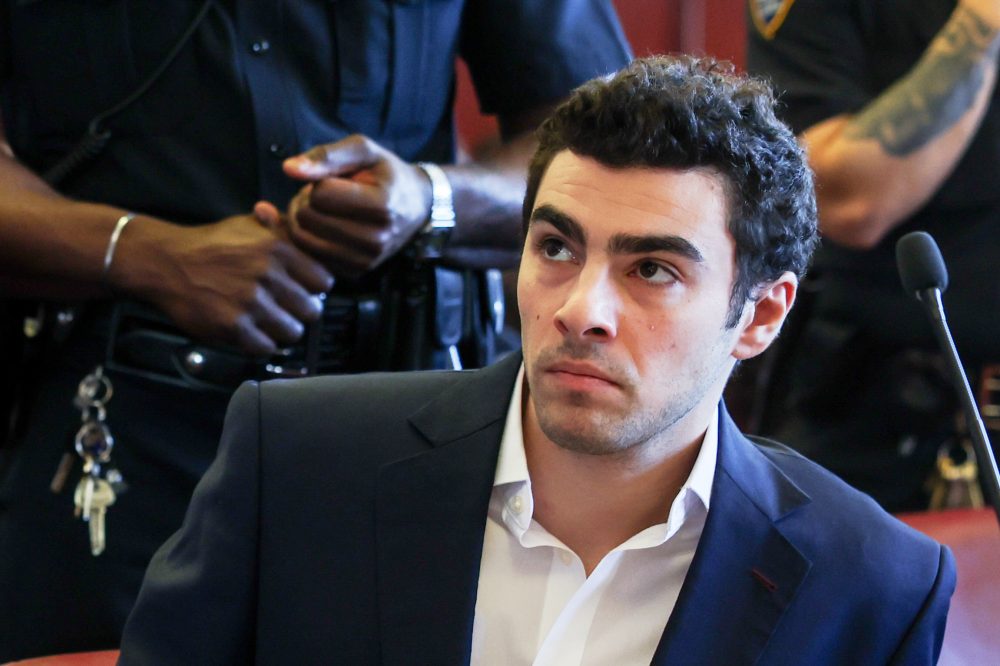

NEW YORK — Government attorneys confirmed Friday they will not challenge a federal judge’s decision that removes the death penalty from consideration in the case against Luigi Mangione, accused of murdering UnitedHealthcare CEO Brian Thompson.
Deputy U.S. Attorney Sean Buckley informed Judge Margaret Garnett in a written communication that federal prosecutors will not request the 2nd U.S. Circuit Court of Appeals to overturn her ruling, paving the way for a September federal trial. Mangione’s state murder proceedings are slated to commence in June.
Last month, Garnett dismissed a federal murder charge involving firearm use that would have allowed prosecutors to pursue capital punishment, determining the charge was legally insufficient.
The judge explained her decision was made to “foreclose the death penalty as an available punishment to be considered by the jury” during deliberations on Mangione’s guilt in the December 2024 Manhattan slaying.
Garnett, a former Manhattan federal prosecutor nominated by President Joe Biden, also eliminated a weapons charge while maintaining stalking charges that could result in life imprisonment.
For capital punishment eligibility, prosecutors were required to demonstrate that Mangione killed Thompson during the commission of another “crime of violence.” In her 39-page decision, Garnett determined that stalking does not meet this legal standard, referencing established case law and judicial precedents.
The decision derailed the Trump administration’s effort to execute Mangione for what Attorney General Pam Bondi described as a “premeditated, cold-blooded assassination that shocked America.” This marked the Justice Department’s first death penalty case during President Donald Trump’s second administration.
The 27-year-old Mangione has entered not guilty pleas in both federal and state proceedings. State charges also potentially carry life sentences. During a recent court appearance, he objected to facing consecutive trials, stating to the judge: “It’s the same trial twice. One plus one is two. Double jeopardy by any commonsense definition.”
Thompson, age 50, was fatally shot on December 4, 2024, while walking to a midtown Manhattan hotel for UnitedHealth Group’s yearly investor meeting. Security footage captured a masked shooter firing at him from behind. Authorities report that “delay,” “deny” and “depose” were inscribed on the bullets, echoing terminology used to criticize insurance companies’ claim denial practices.
Mangione, a University of Pennsylvania alumnus from an affluent Maryland family, was apprehended five days after the shooting when someone recognized him eating breakfast at a McDonald’s restaurant in Altoona, Pennsylvania, approximately 230 miles west of Manhattan.
Defense attorneys contend that law enforcement compromised his case by creating a “Marvel movie” spectacle around his arrest, including having armed personnel escort him along a Manhattan pier following his flight to New York, and by publicly announcing their intention to seek his execution before formal charges were filed.
Federal jury selection is planned for September 8, with opening arguments and witness testimony beginning October 13. State trial proceedings are set for June 8, though Judge Gregory Carro indicated that date might have been delayed until September 8 had federal prosecutors challenged the death penalty decision.
In her written opinion, Garnett recognized that her ruling “may strike the average person — and indeed many lawyers and judges — as tortured and strange, and the result may seem contrary to our intuitions about the criminal law.”
However, she emphasized it represented her “committed effort to faithfully apply the dictates of the Supreme Court to the charges in this case. The law must be the Court’s only concern.”