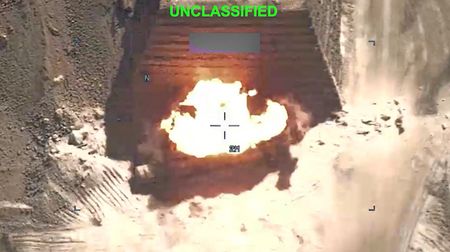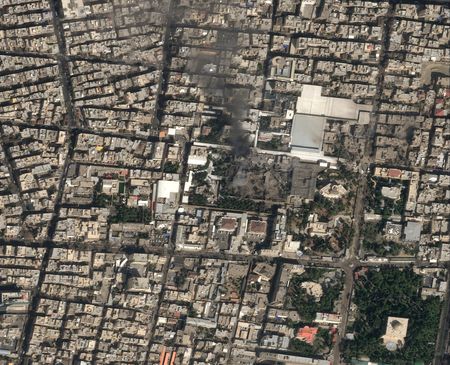

A high-ranking Israeli official reported Saturday that Iran’s Supreme Leader Ayatollah Ali Khamenei died in coordinated military strikes conducted by the United States and Israel, according to Reuters. The 86-year-old leader had transformed Iran into a major anti-American power and expanded its military reach throughout the Middle East during his decades-long rule.
Iranian authorities have not yet verified the reported death of their top leader.
Saturday’s joint American-Israeli military operation targeted Iran’s senior leadership, escalating Middle Eastern tensions as President Donald Trump declared the action would eliminate a security threat to America while providing Iranians an opportunity to overthrow their government.
The ayatollah assumed Iran’s highest position of power in 1989 after the death of the Islamic Republic’s founding leader, Ayatollah Ruhollah Khomeini. In his role as supreme leader, he wielded complete authority over the nation’s political, military and religious systems, directing both domestic affairs and international relations.
Israeli officials had long viewed Khamenei as a destabilizing regional influence, pointing to his support of Iran’s network of militant partners, including Hamas in Palestine and Hezbollah in Lebanon. During a 12-day aerial conflict between Israel and Iran in June 2025, Israeli Defense Minister Israel Katz issued assassination threats against the supreme leader, declaring he “cannot continue to exist.”
The June conflict featured Israel launching a surprise attack on Iran’s underground nuclear facilities, eliminating senior military commanders and nuclear scientists while decimating much of the country’s military leadership. Khamenei’s reported death represents another devastating setback for a nation already struggling with warfare and economic difficulties.
Throughout his tenure, Khamenei maintained the conservative ideology established by his predecessor Khomeini, blocking elected presidents who pursued more liberal domestic and foreign policies. His administration repeatedly suppressed protest movements and marginalized reform-minded politicians advocating for improved Western relations.
Under Khamenei’s leadership, Iran emerged as a dominant regional opponent of American interests, spreading its influence across Middle Eastern nations. He supported the 2015 nuclear agreement negotiated with international powers and pragmatic President Hassan Rouhani, temporarily reducing Iran’s diplomatic isolation. However, relations deteriorated after President Donald Trump withdrew from the agreement in 2018 and restored economic sanctions.
Following Hamas’s October 7, 2023 assault on Israel, Iran witnessed the weakening of its regional partners. Both Hamas and Hezbollah sustained significant damage from Israeli operations, while Syrian President Bashar al-Assad, who had been supported by Tehran, lost power in December 2024.
Iran’s constitution established the Supreme Leader position following the 1979 revolution, granting a senior cleric ultimate power over both the president and parliament. The Assembly of Experts, consisting of 88 clerical members approved by a conservative oversight body aligned with Khamenei, officially chooses the supreme leader.