
Military strikes between the United States, Israel, and Iran on Saturday have triggered widespread condemnation from world leaders who are demanding an immediate end to hostilities in the Middle East.
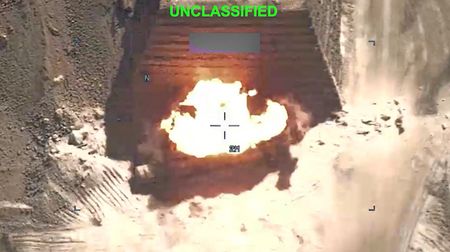
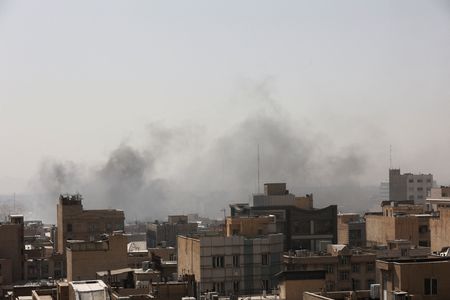
The confrontation began when U.S. and Israeli forces conducted coordinated strikes against Iran. Iranian officials responded by firing missiles toward Israel while denouncing the attacks as both unprovoked and in violation of international law.
UN Secretary-General Antonio Guterres issued a strong rebuke of the military escalation. “I condemn today’s military escalation in the Middle East. The use of force by the United States and Israel against Iran, and the subsequent retaliation by Iran across the region, undermine international peace and security,” Guterres stated.
He continued his call for restraint, saying: “I call for an immediate cessation of hostilities and de-escalation. Failing to do so risks a wider regional conflict with grave consequences for civilians and regional stability. I strongly encourage all parties to return immediately to the negotiating table.”
The UN chief emphasized that “there is no viable alternative to the peaceful settlement of international disputes, in full accordance with international law, including the UN Charter.”
European leaders from Germany, France, and Britain issued a unified response criticizing Iran’s military actions. The three nations stated that Iran must stop conducting indiscriminate military operations.
“We reiterate our commitment to regional stability and to the protection of civilian life,” declared French President Emmanuel Macron, German Chancellor Friedrich Merz, and British Prime Minister Keir Starmer in their collaborative statement, while expressing their desire for renewed diplomatic talks.
Macron separately demanded an emergency UN Security Council session, warning that military conflict involving the United States, Israel and Iran creates “serious consequences” for global peace and security.
“The current escalation is dangerous for everyone. It must stop. The Iranian regime must understand that it now has no other option but to engage in good-faith negotiations to end its nuclear and ballistic missile programs, as well as its actions to destabilise the region,” Macron posted on social media platform X.
UN Human Rights Chief Volker Turk expressed deep concern about civilian casualties from the military operations.
“I deplore the military strikes across Iran this morning by Israel and the United States of America, and the subsequent retaliatory strikes by Iran. As always, in any armed conflict, it is civilians who end up paying the ultimate price,” Turk stated.
He warned that “Bombs and missiles are not the way to resolve differences but only result in death, destruction and human misery.”
Turk appealed for reason, saying: “To avert these terrible consequences for civilians, I call for restraint and implore all parties to see reason, to de-escalate, and for a return to the ‘negotiating table’ where they had been actively seeking a solution only hours earlier.”
He cautioned that continued fighting “risks an even wider conflict, that will inevitably lead to further senseless civilian deaths and destruction on a potentially unimaginable scale, not just in Iran but across the Middle East region.”
Canadian Prime Minister Mark Carney offered backing for U.S. actions, stating that Canada supports America “acting to prevent Iran from obtaining a nuclear weapon and to prevent its regime from further threatening international peace and security.”
Spanish Prime Minister Pedro Sanchez took a different approach, posting on X: “We demand immediate de-escalation and full respect for international law.”
Spain’s Foreign Minister Albares reinforced Madrid’s position by demanding adherence to international law, reduced tensions and diplomatic dialogue, while expressing “support and solidarity with those who are receiving the strikes.”
“The attacks must stop,” the Spanish foreign minister added.
Oman’s Foreign Minister Badr Albusaidi revealed that active diplomatic efforts between Iran and the United States mediated by his nation were “yet again undermined” by the military strikes.
“Neither the interests of the United States nor the cause of global peace are well served by this… I urge the United States not to get sucked in further. This is not your war,” he posted on X.
Lebanese Prime Minister Nawaf Salam declared: “I reiterate that we will not accept anyone dragging the country into adventures that threaten its security and unity.”
Norwegian Foreign Minister Espen Barth Eide questioned the legal justification for the strikes, stating: “The attack is described by Israel as a preventive strike, but it is not in line with international law. Preventive attacks require an immediately imminent threat.”
Ukraine’s Foreign Ministry blamed Iranian leadership for the current crisis, saying: “The cause of the current events is precisely the violence and impunity of the Iranian regime, in particular the killings and repression of peaceful protesters, which have become particularly widespread in recent months.”
Russian Security Council Deputy Chairman Dmitry Medvedev, a former Russian president, offered a cynical assessment of diplomatic efforts.
“The peacemaker once again showed his face,” Medvedev commented. “All negotiations with Iran are a cover operation. No one doubted it. No one really wanted to negotiate anything.”
He concluded with a historical comparison: “The question is who has more patience to wait for the inglorious end of their enemy. The USA is only 249 years old. The Persian Empire was founded more than 2,500 years ago. Let’s see in 100 years…”