
DUBAI, United Arab Emirates (AP) — Iranian forces launched missile attacks targeting Israel and several Gulf nations on Sunday, responding to the death of Supreme Leader Ayatollah Ali Khamenei, who was killed in a coordinated American-Israeli military operation. President Donald Trump has warned Tehran against additional escalation following the strikes.
Tehran confirmed Khamenei’s death occurred during the combined US-Israeli air assault on Saturday at his office complex in the Iranian capital, creating uncertainty about the Islamic Republic’s future and heightening concerns over regional stability.
Iranian state television reported that the 86-year-old leader died at his workplace, stating this “demonstrated his unwavering commitment to remain with his people and fulfill his duties while facing what authorities describe as global tyranny.”
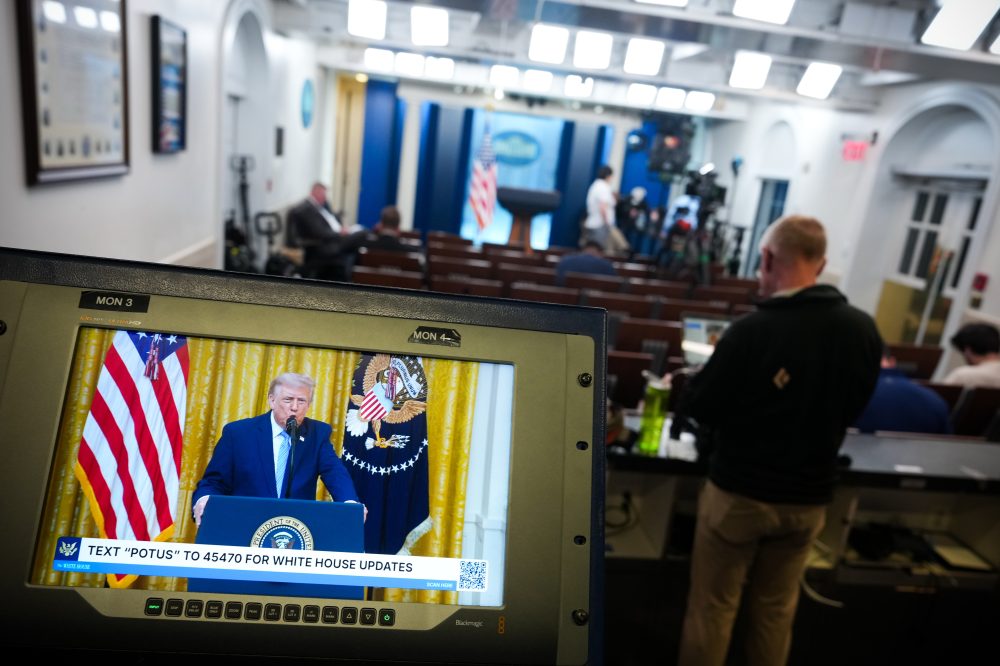
Trump declared that eliminating Khamenei provided Iranians with their “best opportunity” to “reclaim” their nation.
“Khamenei, among history’s most wicked individuals, is deceased,” Trump posted on social media.
Iran’s government pledged this “heinous act will face consequences,” while the paramilitary Revolutionary Guard promised to execute their “most aggressive military campaign” in history, focusing on Israeli and American installations.
“You have violated our boundaries and must face retribution,” declared Iran’s parliamentary speaker Mohammad Bagher Qalibaf during a televised speech Sunday. “We will inflict such crushing defeats that you will find yourselves pleading for mercy.”
“Iran has announced they plan to strike with unprecedented force today,” Trump responded via social media. “THEY HAD BETTER RECONSIDER, BECAUSE IF THEY PROCEED, WE WILL RESPOND WITH POWER NEVER BEFORE WITNESSED!”
Following the initial attacks, Iranian forces immediately deployed missiles and drones against Israeli territory and American military facilities in Bahrain, Kuwait and Qatar. Israeli defense officials reported Iran launched numerous missiles toward Israel, with many successfully intercepted. The Magen David Adom emergency service confirmed Saturday evening that a woman in the Tel Aviv vicinity died from injuries sustained during an Iranian missile strike.
Aviation across the Middle East faced disruptions, while air defense systems activated over Dubai, the UAE’s business hub, with explosions persisting through Sunday morning. Iranian missile fragments striking the UAE capital resulted in one fatality according to state media, while debris from aerial intercepts sparked fires at the city’s primary port and damaged the famous Burj Al Arab hotel’s exterior.
The Iranian operation marks a dramatic escalation in US military involvement, carrying potential for retaliatory attacks and broader warfare, representing a bold display of force from an American president who campaigned on “America First” principles and promised to avoid prolonged conflicts.
Eliminating Khamenei during Trump’s second administration, marking the second Iranian assault in eight months, will likely generate a leadership crisis given no clear successor exists and the supreme leader maintained ultimate authority over major decisions throughout his decades-long rule. He controlled Iran’s religious establishment and Revolutionary Guard, the governing theocracy’s primary power centers.
“This represents the greatest opportunity for Iranian citizens to reclaim their nation,” Trump stated.
Iran rapidly established a governing council to oversee the country while selecting a new supreme leader.
State media additionally reported deaths of Iran’s Revolutionary Guard commander and a senior security advisor to Khamenei in the airstrikes. Major General Mohammad Pakpour assumed leadership of the Guard following Israel’s elimination of the previous commander during last June’s 12-day conflict. The advisor, Ali Shamkhani, had served as a prominent figure within Iran’s security apparatus, IRNA reported.
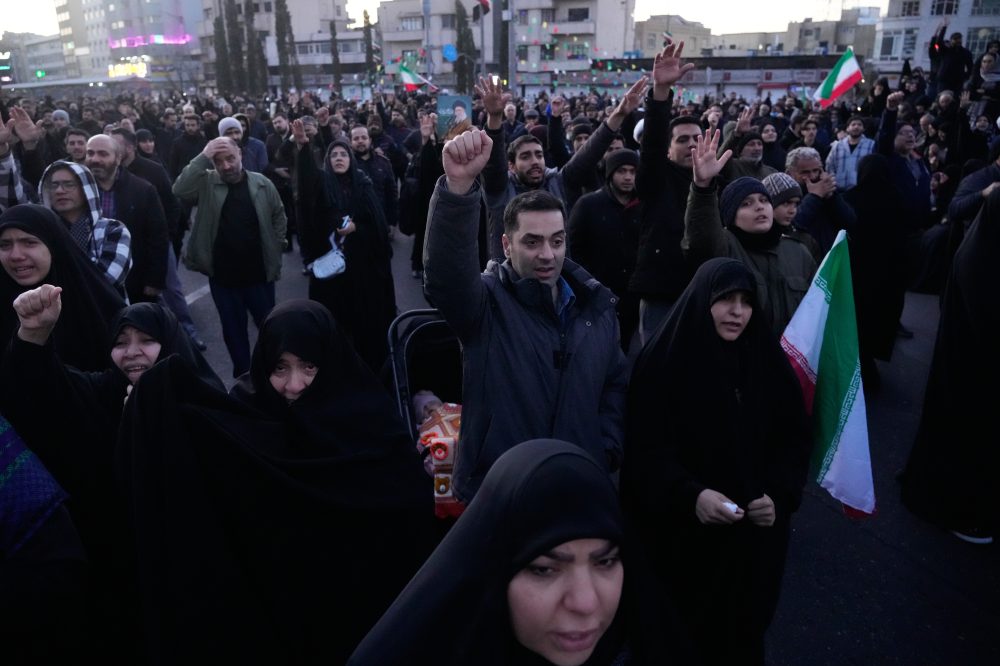
As news emerged regarding Khamenei’s death, witnesses in Tehran informed The Associated Press that some citizens celebrated, shouting from rooftops, sounding whistles and making celebratory calls.
Mourners displayed a black funeral flag above the Imam Reza shrine in Mashhad, Iran’s second-largest city and significant Shiite Muslim pilgrimage destination. Iranian officials announced 40 days of public mourning and a week-long national holiday honoring Khamenei’s death.
The semi-official Fars news agency, considered aligned with the Revolutionary Guard, cited unnamed sources reporting several Khamenei family members also perished, including a daughter, son-in-law, daughter-in-law and grandchild.
The collaborative US-Israel mission, which officials indicate required months of planning, occurred Saturday during Ramadan’s Muslim holy fasting period and Iran’s workweek beginning. It followed tense negotiations and Trump’s warnings, who previously celebrated his administration’s success in dismantling the country’s nuclear capabilities but characterized recent actions as necessary to prevent their restoration.
Approximately 12 hours after attacks commenced, US military officials reported no American casualties and minimal base damage despite “hundreds of Iranian missile and drone assaults.” They stated Iranian targets included Revolutionary Guard command centers, air defense installations, missile and drone launching sites, and military airfields.
Israeli forces reported eliminating the Revolutionary Guard Corps commander and Iran’s defense minister, plus the Iranian Security Council secretary, a close Khamenei advisor.
An Iranian diplomat informed the United Nations Security Council that hundreds of civilians suffered casualties in the strikes. Iran responded by launching missiles and drones toward Israel and US regional military bases, with fighting continuing overnight.
Initial Iranian strikes appeared to impact areas near Khamenei’s offices, the Islamic Republic’s second leader who succeeded Ayatollah Ruhollah Khomeini, who led the 1979 Islamic Revolution. Israeli officials confirmed the death, followed by Trump’s announcement.
Democrats criticized Trump for acting without congressional approval. White House spokesperson Karoline Leavitt stated the administration briefed several Republican and Democratic congressional leaders beforehand.
Tensions escalated recently as the Trump administration assembled the largest American naval and air presence in the Middle East in decades. The president emphasized wanting an agreement limiting Iran’s nuclear program while the country faced growing internal dissent following nationwide demonstrations.
Despite Trump declaring Iran’s nuclear program destroyed in previous strikes, the country was rebuilding lost infrastructure, according to a senior US official speaking anonymously about Trump’s decision-making. Intelligence indicated Iran developed capabilities for producing high-quality centrifuges, crucial for creating highly enriched uranium required for weapons.
Iran expressed hopes to prevent war while maintaining uranium enrichment rights.
Iran claimed no enrichment since June but blocked international inspectors from visiting bombed sites. Associated Press satellite imagery analysis revealed new activity at two locations, suggesting Iran attempts to assess and potentially recover materials.
Israel stated the operation involved months of US coordination. Air Force pilots struck “hundreds of Iranian targets,” Israeli military chief Lieutenant General Eyal Zamir announced.
Israeli campaign targets included Iran’s military, government symbols and intelligence sites, according to an operation-briefed official speaking anonymously about classified attack details.
Trump acknowledged Saturday that American casualties remained possible, stating “that frequently occurs during warfare.” He aimed to “eliminate” Iran’s navy and destroy Tehran-supported regional proxies. He urged Iranian Revolutionary Guard members to surrender, offering immunity or warning of “inevitable death” for resistance.
In southern Iran, at least 115 people reportedly died when a girls’ school was hit, with dozens more injured, the local governor told Iranian state television. US Central Command spokesperson Captain Tim Hawkins said he was “aware of reports” about the school strike and officials were investigating.
Iran’s IRNA news agency reported at least 15 deaths in the southwest, quoting Lamerd region governor Ali Alizadeh stating a sports facility, two residential areas and a school-adjacent hall were struck.
The strikes could disrupt global markets, particularly if Iran threatens Strait of Hormuz commercial shipping. One-third of worldwide seaborne oil exports passed through the strait in 2025.
Saudi Arabia reported repelling Iranian attacks on its capital and eastern regions. Bahrain said missile attacks targeted the US Navy’s 5th Fleet headquarters on the island nation, with three buildings damaged in Manama and Muharraq city by drone strikes and intercepted missile debris.
Kuwait’s aviation authority reported a drone targeting the main international airport, injuring several workers. Kuwait’s state news agency said three soldiers suffered shrapnel injuries from strikes hitting Ali Al-Salem air base. Explosions were also audible in Qatar. Jordan reported “handling” 49 drones and ballistic missiles.