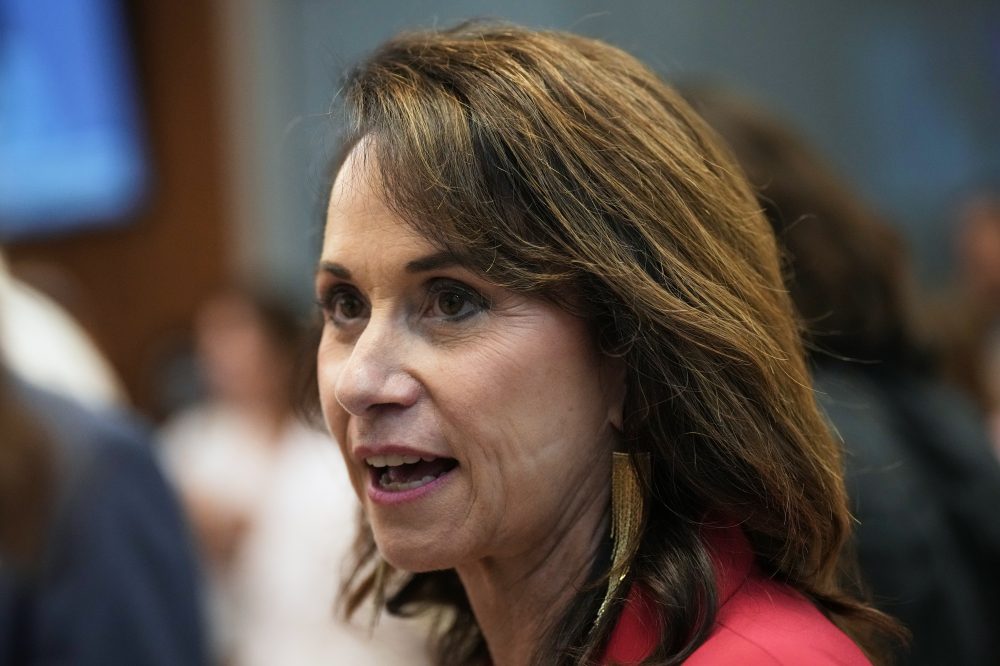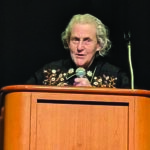

ATLANTIC CITY — Dr. Temple Grandin, a renowned author, inventor, and advocate for individuals with autism, traveled from Colorado to address attendees at the Northeast Ag Expo’s lunchtime session in Atlantic City during late January. The Colorado State University professor, who holds a doctorate in animal science, conducted a book signing following her presentation, featuring her latest work “Thinking In Pictures” along with her other publications.
The accomplished speaker, known for incorporating humor into her presentations, shared personal experiences of growing up with autism during the 1950s and facing harassment throughout her educational journey for being different. Her autism diagnosis didn’t come until her early twenties while she was attending college.
At 78 years old, Grandin was raised in an affluent Boston family. Beyond her extensive writing and the multiple films documenting her life story, she has gained recognition for creating groundbreaking designs that minimize cattle stress at processing plants. Her work has transformed slaughterhouses across America to operate more humanely.
During her youth in the 1950s, Grandin received a “brain damage” diagnosis, but her learning difficulties stemmed from challenges with abstract thinking. She explained that her thought processes were picture-based and heavily visual in nature.
“I never got a chance to try geometry because I failed miserably in Algebra,” she explained. “But I could always do real world, applied practical math. The problem with algebra is it’s too abstract for me to remember.”
According to Grandin, music and arts education provides tremendous benefits for children on the autism spectrum.
She also advocates for allowing teenagers and preteens to begin employment with individuals outside their immediate family circle to build essential life skills.
“We need paper route substitutes nowadays, like walking the neighbors’ dogs, where you are doing something for somebody outside the immediate family, even church or synagogue volunteer jobs, these kids need real jobs,” she emphasized, highlighting the importance of developing life skills.
“I advocate now for getting work skills early on,” she continued. “Let’s say a guy is going into college now with no work skills. Let him slow down, five years [instead of four,] and he’ll gain some work and life skills while he’s there. These are the things I see as I travel around.”
In her younger years, Grandin found employment at a local horse farm, which became her refuge from bullying.
“At 13, my mother got me a job with a lady who works out of her home altering dresses. When I was in college I did internships in research labs and also as an aide for children with autism. How did I get the research job? One of my professors in college had a friend with a research lab. That’s how you get into these places, take these jobs through the back doors. Your 18-year-old needs to get a job,” she shared.
She stressed the importance of teaching all children life skills during elementary school through some form of part-time employment.
“Get your 8-and-9-year-old child out there selling stuff so they learn how to talk to people. This is important!”
Grandin noted that younger children with autism can gain valuable experience and life skills by working with smaller farm animals including goats, sheep, chickens, and rabbits. She expressed frustration with encountering discouraged educators in both public and private schools whose students struggle because they cannot master algebra, trigonometry, or pre-calculus.
“There are some very good programs in low income areas where kids are working with turkeys and raising chickens, so this is something where you can raise an animal and learn from it, and you can always take them to places where you couldn’t keep a lamb,” she noted.
“And I want to commend the 4-H leaders that are in here today because these are really great programs that get young people involved and interested. With construction companies, the big question is how do we get them interested? We can’t take little kids onto construction sites but getting them into a building with a window next to a big construction site is one way to get them interested. I’m a big believer that you have to show [autistic] kids interesting things to get them interested in interesting things. My interest in cows started in high school,” she recalled.
However, the crucial element, she emphasized, involves providing opportunities to face and overcome anxieties and fears.
“Get the kids out and get them doing a lot more real things in real time.”