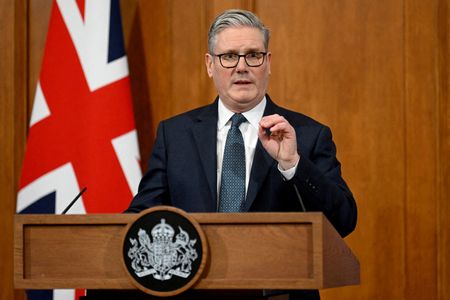

British Prime Minister Keir Starmer declared Monday that his nation will avoid getting pulled into an expanded conflict with Iran, while simultaneously working alongside international partners to develop a coordinated strategy for reopening the strategically vital Strait of Hormuz.
During a press conference, Starmer acknowledged the challenging nature of restoring access to the waterway but emphasized its importance for stabilizing global energy markets. The Prime Minister indicated he has been in discussions with European, Gulf, and American allies regarding a plan to ensure navigational freedom, clarifying that NATO would not lead such an operation.
President Donald Trump has publicly criticized Starmer for initially declining to back U.S.-Israeli military actions against Tehran. Over the weekend, Trump suggested that Britain, along with China, France, Japan, and South Korea, should deploy naval vessels to the region to help reopen the shipping route.
The British government announced its first domestic financial assistance related to the crisis: a 53-million-pound ($70.30 million) aid package targeting vulnerable households that depend on heating oil, which has seen dramatic price increases due to the ongoing conflict.
“Ultimately, we have to reopen the Strait of Hormuz to ensure stability in the (oil) market. That is not a simple task,” Starmer explained to journalists.
“So we’re working with all of our allies, including our European partners, to bring together a viable collective plan that can restore freedom of navigation in the region as quickly as possible and ease the economic impact,” he continued.
The narrow waterway between Iran and Oman typically handles approximately one-fifth of the world’s oil and liquefied natural gas transportation. Tehran’s effective closure of the strait has driven oil prices above $100 per barrel.
While confirming that Britain was “taking the necessary action to defend ourselves and our allies, we will not be drawn into the wider war,” Starmer emphasized the country’s limited military involvement.
When questioned about Britain’s military capabilities after withdrawing its final minehunter from the region this month, the Prime Minister noted that autonomous mine-detection systems remain deployed in the area.
Starmer explained that Britain and its partners are evaluating available resources for a collective contribution, seeking to involve as many nations as possible in the effort.
Addressing his relationship with Trump, Starmer revealed they discussed the strait situation during a Sunday evening phone call. He dismissed concerns that the conflict had strained relations with America, describing their conversation as occurring “in the way that you would expect between two allies and two leaders” and affirming his “good relationship” with the U.S. president.